Take 3: An Affair to Remember (1957) Review

January’s theme for Genre Grandeur seems fitting; “Movies That Celebrate a New Year”. When I learned this was the theme of this edition of Genre Grandeur, I was excited because I don’t often receive an opportunity to review New Year’s themed films. As I was looking for a movie to select, I learned the protagonists in 1957’s An Affair to Remember meet on New Year’s Eve. With this piece of information in mind and because An Affair to Remember was recommended by Maddy (from Maddy Loves Her Classic Films) as well as Emily (from The Flapper Dame), I found the perfect time to check out the 1957 picture! Out of all the actresses I’ve talked about on 18 Cinema Lane, Deborah Kerr is the one I’ve discussed the most. As of early 2026, I have reviewed ten of her films, with An Affair to Remember now being the eleventh film. But some of these pictures have been better than others. How will An Affair to Remember stand against the aforementioned ten titles? Check out my review to find out!
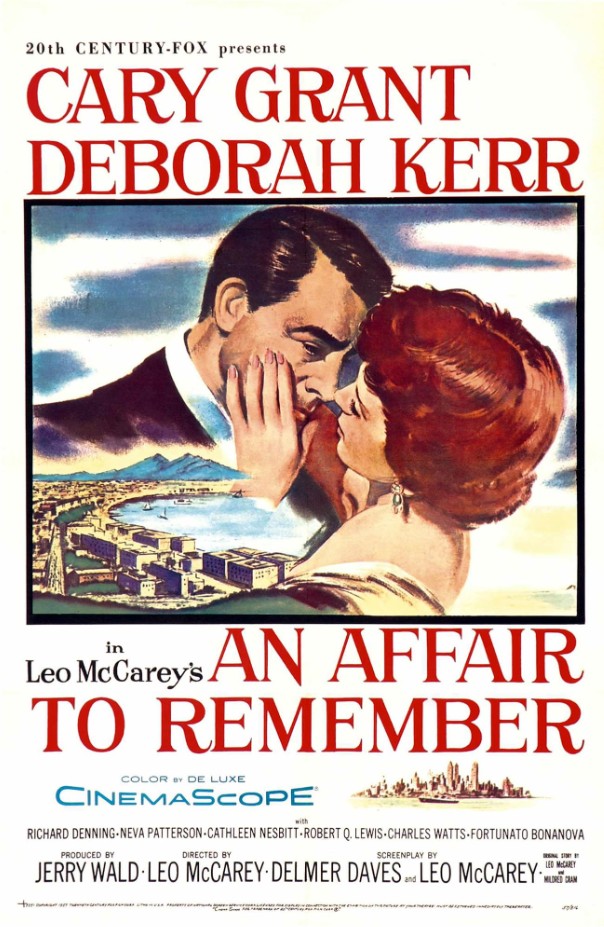
An Affair to Remember (1957) poster created by Jerry Wald Productions and Twentieth Century Fox

Things I liked about the film:

The on-screen chemistry: In a movie like An Affair to Remember, where the story heavily revolves around one romantic relationship, it’s important to cast an actor and actress who possess such strong on-screen chemistry. This element of their combined performance will help them sell the believability of their characters’ relationship to the audience. As soon as their characters, Terry and Nickie, first meet in An Affair to Remember, I could immediately sense the strong on-screen chemistry between Deborah Kerr and Cary Grant! The fluidity of their acting abilities allowed them to compliment each other’s performance. Clever, witty banter also worked in their favor because of how it was written and delivered. Because of the combination of acting, screenwriting, and on-screen chemistry, Cary and Deborah helped create a couple that was captivating to watch!

The dialogue: When a film’s screenwriting is good, the dialogue of the characters can sound realistic. But if the screenwriting is thoughtfully and carefully curated, like in An Affair to Remember, the characters are allowed to say what’s on their minds and hearts in eloquent and even profound ways. As Nickie and Terry visit Nickie’s grandmother, Janou, Terry confesses how she’d like to stay in Janou’s garden forever. Janou then responds by telling Terry, “It [the garden] is a good place to sit and remember, but you have still to create your memories”. By Janou saying this to Terry, she is kindly yet artfully encouraging Terry to create her own space of reflection and tranquility. Later in the movie, when Terry and Nickie are creating their plan to reunite in six months, they agree to meet at the Empire State Building. Terry explains how “It’s the nearest thing to heaven we have in New York”. While I’ve always known the Empire State Building held great importance within New York City, I’ve never heard it described the way Terry described it before. Because the dialogue in An Affair to Remember received such quality screenwriting, I was given the opportunity to see an iconic landmark in a completely new way!

Janou’s garden: As I talked about the dialogue in An Affair to Remember, I brought up how Terry wants to stay in Janou’s garden forever. Reflecting on this part of the set design, I can understand why Terry would fall in love with this space! The enclosed garden prominently displays a large tree with green leaves and red flowers. Bright hues of other flowers burst within the garden. A small circular pond greets visitors, with yellow and white flowers floating over the tranquil water. There’s even a connected chapel both Terry and Nickie retreat to. Though Janou’s garden was shown in An Affair to Remember for only a limited number of scenes, it left a memorable impression!

New York City skyline with letters image created by Freepik at freepik.com. <a href=’https://www.freepik.com/free-vector/new-york-skyline-typographic-silhouette_719554.htm’>Designed by Freepik</a>. <a href=”https://www.freepik.com/free-photos-vectors/background”>Background vector created by Freepik</a>. Image found at freepik.com.

What I didn’t like about the film:

New Year’s Eve’s limited incorporation: I said in the introduction of this review how Terry and Nickie meeting on New Year’s Eve is one of the reasons why I selected An Affair to Remember for this month’s Genre Grandeur. Based on that aforementioned detail, I believed the holiday would play a bigger role in the story. But when I watched the 1957 movie, I discovered New Year’s Eve is actually an afterthought. If it wasn’t for the passengers on the SS Constitution singing “Auld Lang Syne”, I wouldn’t have known Nickie and Terry’s cruise was taking place around New Year’s Eve. Had the SS Constitution’s passengers participated in counting down to midnight or some of the characters talked about their New Year’s resolutions, it would have better established when the story was taking place.

Scenes that feel like padding: IMDB lists An Affair to Remember’s run-time as one hour and fifty-five minutes. However, some scenes feel like they are padding out the story just to satisfy this run-time. The musical number, “The Tiny Scout (He Knows You Inside Out)” easily comes to mind. I recognize this musical number, as well as the musical number, “Tomorrow Land”, were intended to emphasize the direction Terry’s career has taken. But, in my opinion, featuring only one of these musical numbers would have been enough to make this point. If An Affair to Remember’s creative team had cut scenes like “The Tiny Scout (He Knows You Inside Out)” musical number, the film’s run-time would have been trimmed down.

A drawn-out story: Like I just mentioned in this review, an hour and fifty-five minutes is the run-time for An Affair to Remember. This run-time seemed to give the film’s creative team an excuse to draw their story out. The first half of the movie builds up to the affair of Nickie and Terry. Their affair doesn’t come to fruition until the movie’s halfway point. The second half of the movie chronicles how Terry’s and Nickie’s life turned out after their cruise. Personally, I don’t think the affair’s build-up needed to last half the film. With a tighter script, An Affair to Remember not only could have received a short run-time, the story could have also reached its intended points sooner.

Art tools image created by Freepik at freepik.com. <a href=’https://www.freepik.com/free-vector/flar-art-tools-pack_835368.htm’>Designed by Freepik</a>.  <a href=”https://www.freepik.com/free-photos-vectors/paint”>Paint vector created by Freepik</a>. Image found at freepik.com.

My overall impression:

Based on Deborah Kerr’s movies I’ve seen, the quality of these pictures has fluctuated. While I liked The King and I and The Chalk Garden, I wasn’t a fan of Marriage on the Rocks. But I found An Affair to Remember to be just ok. While the on-screen chemistry between Deborah Kerr and Cary Grant was strong and the dialogue was well-written, I didn’t like how drawn-out the story was. Plus, some scenes felt included simply to pad out the script to satisfy the run-time. However, the most disappointing part of An Affair to Remember was how New Year’s Eve was treated as an afterthought. Before seeing the 1957 picture, I was led to believe the holiday would play a larger role in the story. My first movie selected for 2026’s Genre Grandeur was not the best, but not the worst. Hopefully, this year-long blogathon will introduce me to stronger films.

Overall score: 6.2-6.3 out of 10

Have you seen An Affair to Remember? Which film from Deborah Kerr’s or Cary Grant’s filmography would you like to see me review next? Let me know in the comment section!

Have fun at the movies!

Sally Silverscreen
Take 3: To Catch a Thief Review

For The Master Of Suspense Blogathon, I was originally going to review the 1958 classic, Vertigo. I selected this film because it had been recommended by one of my readers. Unfortunately, my plans fell through at the last minute. So, I had to quickly choose an alternative. As I looked back at the blogathon’s participant list, I discovered the 1955 film, To Catch a Thief, hadn’t been selected. That is the film I am now reviewing for The Master of Suspense Blogathon. I have seen some of Alfred Hitchcock’s movies before this event. From what I know of To Catch a Thief, the 1955 production is different from other titles such as Psycho and Rear Window. But will this difference impact the quality of the film? Keep reading my review in order to solve this mystery!

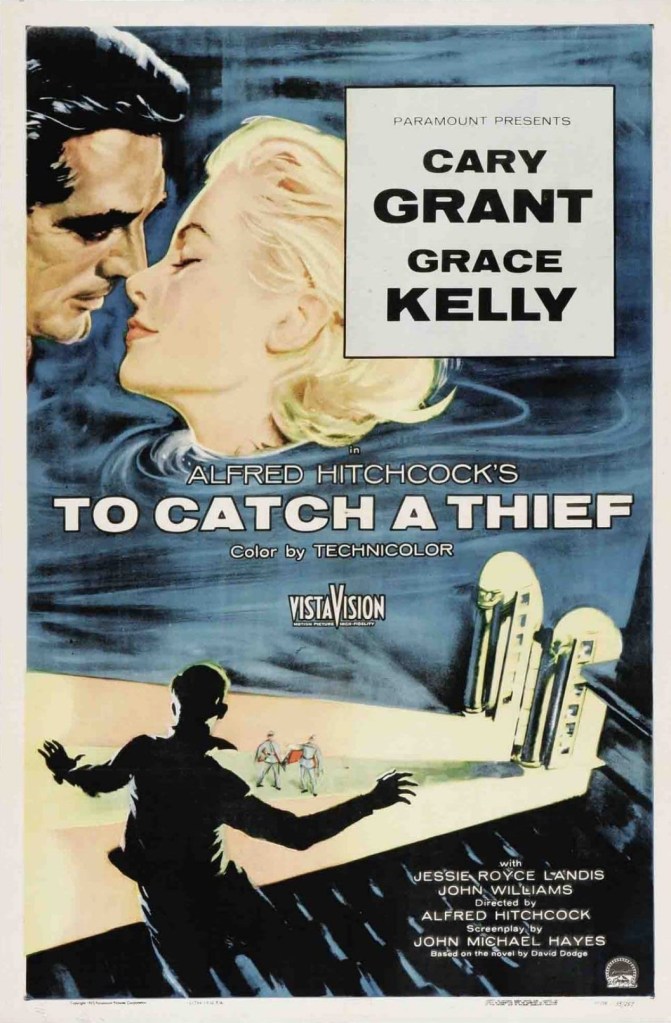
To Catch a Thief poster created by Paramount Pictures

Things I liked about the film:

The acting: In To Catch a Thief, Cary Grant portrayed John Robie, a former jewel thief looking to clear his name. A man of suave charisma, John was afraid of being accused of something he didn’t do. But he never lets this fear get to him. Instead, with the talents of Cary Grant, John was confident and intelligent. Grace Kelly was also cast in To Catch a Thief, portraying Frances Stevens. Frances carried herself with dignified confidence. However, this confidence did not come across as snobbish or arrogant. It added to Frances’ likability, along with her gentle demeanor and respectful elegance. Danielle Foussard is a friend of John’s. Portrayed by Brigitte Auber, Danielle had a spunky streak in her, adding liveliness to her and John’s interactions. A scene I really liked was when John, Frances, and Danielle are swimming in the ocean together. This scene perfectly showcased their personalities, as their banter bounced among each other like a soaring beach ball. What made that scene great to watch was the joining of the acting talents of Cary Grant, Grace Kelly, and Brigitte Auber!

The scenery: Most of the car chases in To Catch a Thief are captured in long, establishing shots. This is very different from car chases in other films, where the chases are shown in medium or close up shots. To Catch a Thief’s approach to car chases emphasizes the scenery surrounding these chases. Looking back on this film’s scenery, I can understand why To Catch a Thief’s creative team would make that decision. With the majority of the production filmed in France, the story shows pieces of the French countryside and seaside. Giant green mountains and deep blue waters present an isolated oasis. A smattering of orange roofed houses perched on these mountains add to the movie’s vibrant color palette. On the French seaside, bright yellow sands welcome the deep blue waters of the ocean. Most of the story’s exterior shots feature a blue sky with a handful of clouds. Even the flowers are appealing bursts of color, boasting shades of red, pink, and even purple. To Catch a Thief is a pretty looking movie and it knows it!

The dialogue: During discussions of Alfred Hitchcock’s movies, use of music, cinematography, and lighting are typically talked about by fans and film enthusiasts. But one area of film-making I feel is overlooked, specifically when it comes to Alfred’s work, is the dialogue. This element of story-telling was a pleasant surprise in To Catch a Thief! It not only suited the characters respectively, it also sounded like the screenwriters put a lot of thought into what the characters told each other. While driving through the French countryside, John and Frances are discussing Frances’ past. As the discussion carries on, John accuses Frances of looking for a husband on her trip. But Frances responds by saying, “The man I want doesn’t have a price”. This statement represented the respectful elegance Grace consistently carried throughout the film. It also hinted at foreshadowing.

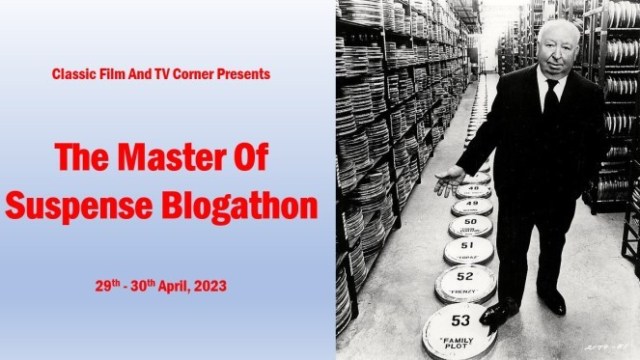
The Master Of Suspense Blogathon banner Maddy from Classic Film And TV Corner

What I didn’t like about the film:

Limited amount of urgency: At the beginning of To Catch a Thief, John learns he is accused of stealing valuable jewelry. He evens claims to have ten days in order to clear his name. You’d think with this tight timeline, there would be a strong sense of urgency in the story. But this urgency to find the truth is, unfortunately, inconsistent. Instead, more emphasis is placed on the scenery, the romance, and the “finer things in life”. While the mystery was resolved, the limited amount of urgency held the story’s suspense and intrigue back.

A small amount of suspense and intrigue: Alfred Hitchcock’s productions are known for incorporating suspense and intrigue. This reputation has earned Alfred the title of “Master of Suspense”. In To Catch a Thief, however, suspense and intrigue were only served in small amounts. Part of this problem results from the limited amount of urgency I previously talked about. Another reason for this problem is how suspense and intrigue were used sparingly instead of evenly spread out throughout the story. It got to the point where I almost forgot this story had a mystery.

Lack of suspects: A typical mystery will include a collection of suspects, individuals who may or may not have a reason to be the guilty party. These characters are presented as uniquely as possible, in order to help the audience remember them and their reasoning. To Catch a Thief lacked this ingredient. Because the mystery was not as prioritized as in other works from Alfred Hitchcock, no room was made to include suspects. There was a red herring in To Catch a Thief, but this reveal felt random. Even the reveal of the mystery’s guilty party wasn’t completely surprising.

Illustration of Paris, France created by Freepik at freepik.com. <a href=”https://www.freepik.com/free-photos-vectors/travel”>Travel vector created by freepik – http://www.freepik.com</a>. Image found at freepik.com.

My overall impression:

As I said in this review, To Catch a Thief is a pretty looking movie and it knows it. While the scenery was the film’s crown jewel, there were other aesthetically pleasing components of this production, like the costume design and the set design. When it comes to the story, though, it wasn’t as suspenseful and intriguing as other Alfred Hitchcock movies. The visuals ended up overshadowing the script. I will give Alfred Hitchcock credit where it’s due, as it seems like he tried to take a different approach to cinematic story-telling. But out of his films I have seen, I prefer titles like Strangers on a Train.

Overall score: 6.3-6.4 out of 10

Have you seen To Catch a Thief? Which titles of Alfred Hitchcock’s do you prefer? Please tell me in the comment section!

Have fun at the movies!

Sally Silverscreen
Take 3: In Name Only Review

One of the reasons why I love participating in blogathons is because it gives me the opportunity to watch films I might have never seen otherwise. In Name Only is a fantastic example! Before signing up for The Carole Lombard Memorial Blogathon, I had no idea that this film existed. After searching Carole’s filmography on IMDB and discovering the ability to rent the movie, I felt that In Name Only was a good choice for this review. Even though I had heard of Carole Lombard before, I had never seen any of her films. My participation in this particular blogathon gave me the opportunity to finally check out her acting work! Another surprise I discovered was that the film is based on a book! The source material for the project is Memory of Love by Bessie Breuer. Similar to my discovery of the film, I was not aware of this book’s existence before I watched the movie. Maybe in the future, I’ll check this story out! But, for now, let’s check out this review of In Name Only!

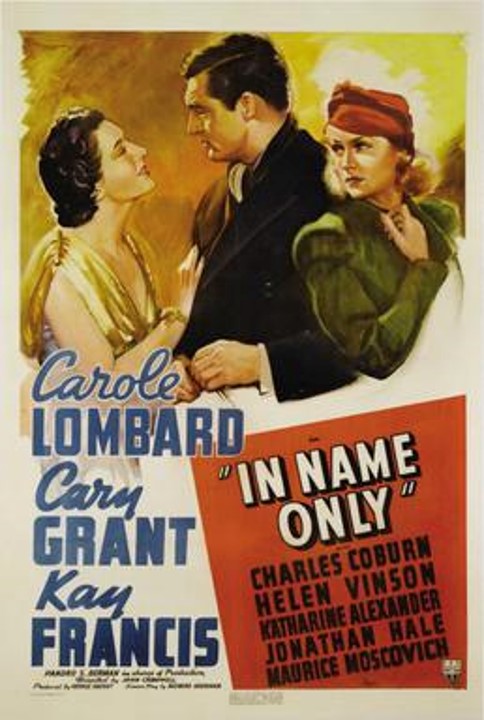
In Name Only poster
In Name Only poster created by RKO Radio Pictures. Image found at en.wikipedia.org/wiki/File:In_Name_Only.jpg

Things I liked about the film:

The acting: Like I said in the introduction, this is the first film from Carole’s filmography I’ve ever seen. Despite this, I was impressed with her performance in this film! Her portrayal of Julie Eden showcased an on-screen personality that appeared down-to-earth. Whenever her character was frustrated by the divorce process, her performance became heart-breaking. Carole’s sad demeanor created the opportunity for audience members to sympathize with Julie. Prior to watching In Name Only, the only film from Cary Grant’s filmography I’d seen was The Philadelphia Story. Because that movie was a romantic-comedy, it gave me the chance to see Cary take on a more dramatic role in this picture. Throughout the story, Cary’s character, Alec Walker, embodied the serious and charming nature of a gentlemen. For more sad and heart-breaking moments, his performance was very captivating to watch. A great example is when Alec is staying at the hospital. Since his health is deteriorating, his mental health is also affected. This is portrayed very well by Cary, as he adopts a distant stare and disjointed speech pattern that reflect his character’s state.


The on-screen chemistry: I enjoyed watching the on-screen performances of Carole Lombard and Cary Grant! One reason is their on-screen chemistry. Every time they appeared in a scene together, there was always a sense of genuine sweetness between them. This allowed their characters to appear like they truly loved one another. It also makes viewers want to see this on-screen couple resolve their issues. For me, the quality of Carole and Cary’s on-screen chemistry helped me stay invested in their characters and their relationship!


How the topic of divorce was handled: In my review of Marriage on the Rocks, I talked about how the movie’s view on divorce made me feel uncomfortable. This was because of the one-sided perspective the movie presented. When it comes to In Name Only, the topic of divorce was handled with maturity and reverence to all the parties involved in the film’s story. While there was an antagonist, this creative choice was meant to show the audience that divorce can sometimes become messy and complicated. Unlike Marriage on the Rocks, In Name Only treats divorce as a realistic yet difficult situation. I’ve never read the book this movie is based on. However, I’m hoping the book handled the subject of divorce as well as the film did.

20191230_135329[1]
When I saw this postcard, I knew it had to make an appearance in this review! Screenshot taken by me, Sally Silverscreen.
What I didn’t like about the film:

A drawn-out conflict: I understand the divorce process can be very time-consuming. But within the context of the film’s story, this conflict was drawn-out for the majority of the run-time. It got to the point where I could see audience members becoming just as frustrated as the protagonists were. Now, I’m not sure if this shared frustration was intentional on the screenwriter’s or author’s part. However, I do know that because of this creative choice, it didn’t leave a lot of room for a pay-off.


Under-utilized characters: As I was watching this film, I came across some under-utilized characters. Maida’s friend, Suzanne, is just one example. The actress who portrayed this character, Helen Vinson, did a really good job with the role she was given. But her character wasn’t able to do much in the story. This caused Helen to have very little material to work with.


Run-time that was a little too long: IMDB says that In Name Only is an hour and thirty-four minutes. However, I feel some minutes could have been shaved off. Had this movie’s run-time been an hour and fifteen or twenty minutes, certain events in the movie could have happened sooner. It also could have gotten rid of scenes that felt like time-wasters. One of these scenes, to give you an example, was when Maida was talking to her in-laws during a car-ride.

Carole Lombard Blogathon banner
The Carole Lombard Memorial Blogathon banner created by Crystal from In The Good Old Days Of Classic Hollywood and Vincent from Carole & Co. Image found at https://crystalkalyana.wordpress.com/2019/09/25/announcing-the-carole-lombard-memorial-blogathon/

My overall impression:

Even though In Name Only is the first film of Carole Lombard’s I have seen, it is a film that I did like! There are aspects of the movie that could have made the overall project stronger. However, its merits overshadow them. The biggest highlight is how the story handles the subject of divorce. Throughout the story, I could sense the creative team knew exactly what they were doing. The screenwriting provided a sense of realism to the narrative, giving the characters thoughts and feelings that might emerge from a situation like this. The divorce itself was also taken very seriously. If you’re interested in watching a film about this topic, please pick In Name Only over something like Marriage on the Rocks. As I’ve said before, I feel that starting or ending a romantic relationship is not something that should be taken lightly. In Name Only not only recognizes that, but highlights that through the interactions of the characters.


Overall score: 7.4 out of 10


Have you ever seen Carole Lombard’s movies? If so, which one is your favorite? Share your thoughts in the comment section!


Have fun at the movies!

Sally Silverscreen