Take 3: To Be or Not to Be (1942) Review

When one of my readers recommends a movie to me, I add that title to my film recommendation board on Pinterest and then write about it in one of my reviews. A movie that has been featured on the board for a while is 1942’s To Be or Not to Be. This presentation was suggested by Patricia (from Caftan Woman), Vincent (from Carole & Co.) and Allen Rizzi. Originally, I was going to select it for an upcoming Blog Follower Dedication Review. But when I learned about Hoofers and Honeys’ Carole Lombard Blogathon, I found a good reason to write about the movie sooner! While I received recommendations of Carole’s films, I’ve only reviewed two of those which she received a starring role. The first picture, In Name Only, was fine and likable. Meanwhile, Twentieth Century, is one of the worst movies I’ve ever seen. Now that To Be or Not to Be is the third film of Carole’s I’m discussing on 18 Cinema Lane, it’ll be interesting to see where I rank this title compared to Twentieth Century and In Name Only.
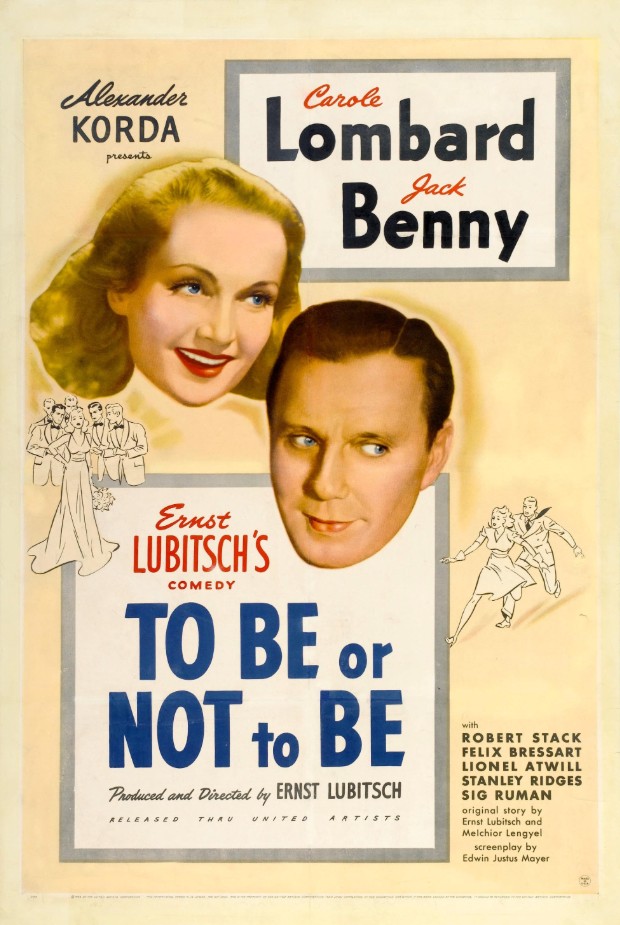
To Be or Not to Be (1942) poster created by Romaine Film Corporation and United Artists

Things I liked about the film:

The on-screen chemistry of Carole Lombard and Robert Stack: In To Be or Not to Be, Carole Lombard portrays a Polish actress named Maria Tura. Toward the beginning of the movie, Maria develops an attraction for a Lieutenant named Stanislav Sobinski. Portrayed by Robert Stack, Stanislav is enthusiastic to meet Maria, especially since he’s never met an actress before. Though they shared very few scenes together, the on-screen chemistry between Carole and Robert was pleasant! The scene where Stanislav and Maria first meet is a perfect example, as their interaction felt so realistic. During the conversation, Maria confidently talks about her career, carrying an easy-going personality. But when Stanislav asks her about a farm she brought up in an interview, she is caught off guard, but uses her acting skills to adapt to what Stanislav told her. Meanwhile, Stanislav is so happy to see Maria. A genuinely bright smile is displayed on his face and his eyes light up. Because of the strength of Carole’s and Robert’s acting abilities, they sold the idea of their characters sharing a mutual relationship.

Clever writing: While good writing receives praise and accolades, clever writing can, sometimes, become underappreciated. This is why I take the time to address when a movie’s script contains clever writing. That was certainly the case for To Be or Not to Be, as I was impressed with some of the writing in the film. A great example can be heard during a conversation between Maria and her husband, Joseph. She accuses him of seeking opportunities to steal attention away from her. Maria even claims, “if we should ever have a baby, I’m not so sure I’d be the mother”. Joseph reassuringly tells his wife, “I’m satisfied to be the father”. The aforementioned conversation could have been straightforward, which would have made it sound typical. But the screenwriting, as well as Jack Benny’s delivery, allowed scenes like this one to be memorable!

How war was incorporated in the film: Some of the opening shots in To Be or Not to Be focus on shops in Warsaw, Poland, specifically the names of those who own these shops. When, later in the movie, war breaks out in Poland, those same shops are burned down, torn to shreds, or collapsed. The names on those shops are also destroyed. These shots are a good representation of how war ruins not just buildings, but livelihoods, daily routines, and human connections. One of the actors who performs alongside Maria and Joseph is Greenberg. When he first observes the destruction in his neighborhood, he quotes Shylock’s monologue from the play, The Merchant Venice. This quote spoken against the backdrop of Poland during World War II changes the context of the quote itself, making it seem relevant to the story of To Be or Not to Be. Through visuals and the script, the film’s creative team addressed the seriousness of war and its impact on anyone of any profession.
The Carole Lombard Blogathon banner created by Kristen from Hoofers and Honeys

What I didn’t like about the film:

A dialogue heavy story: Dialogue is an important component of any movie. It helps the audience learn more about the characters, discover potential plot twists, and follow along with the story. But in the case of To Be or Not to Be, the script was very dialogue heavy. There were long stretches of time where characters shared conversations with each other. This is the result of how much the creative team relied on telling instead of showing. If one isn’t actively paying attention to the story, they may miss important details. Had play performances or more action-focused scenes been evenly sprinkled throughout To Be or Not to Be, it would have created a balance between what the characters say and what the characters do.

The run-time: IMDB lists To Be or Not to Be’s run-time as an hour and thirty-nine minutes. This run-time, to me, seemed much longer. The long stretches of time of characters’ conversations I already mentioned made the film feel drawn-out. There are also parts of the story that don’t lead anywhere, such as Maria’s concerns about Joseph trying to steal attention away from her. If the script had been trimmed down, the run-time of To Be or Not to Be could have been an hour and thirty minutes or less.

Inconsistent sense of urgency: As I discussed earlier in this review, To Be or Not to Be takes place in Poland during World War II. The characters are directly impacted by this global conflict, even going undercover to stop the Nazis. These parts of the story create a sense of urgency. But this sense of urgency isn’t consistent within the 1942 presentation. That flaw was caused by the dialogue-heavy scenes I referenced in my review. These scenes’ length of time takes away from moments where immediate situations can be resolved. The imminent threat of war is also placed to the side because of the dialogue-heavy scenes. Having a more consistent sense of urgency would have strengthened the suspense and intrigue in To Be or Not to Be.

Theater seats image created by weatherbox at freeimages.com. “FreeImages.com/weatherbox.”

My overall impression:

Last year, I reviewed For Me and My Gal, a film I ended up liking. One of the reasons why I gave that movie a good review is because of how World War I was incorporated into the script. With a steady progression and subtle changes, realism was woven into a musical like For Me and My Gal. I’d actually prefer that movieover To Be or Not to Be. Though To Be or Not to Be is a fine, interesting film, the run-time felt longer than an hour and thirty-nine minutes. The story’s sense of urgency was inconsistent and the script was too dialogue-heavy. However, there are merits within the 1942 title. I wish Carole and Robert shared more screen-time together because their on-screen chemistry was pleasant. How war was incorporated in the film allowed the creative team to show the seriousness of war and its impact on anyone of any profession. I also liked the movie’s clever writing. Compared to the other films of Carole’s I’ve written about, Twentieth Century and In Name Only, To Be or Not to Be is somewhere in the middle. With over seventy movies on her IMDB filmography, I have plenty more projects of Carole’s to check out!

Overall score: 7 out of 10

Have you seen To Be or Not to Be? Would you like to see me review more of Carole Lombard’s movies? Let me know in the comment section!

Have fun at the movies!

Sally Silverscreen
Comparing with the Critics – Worst of 1976 – Gable and Lombard

This review is from my series, Comparing with the Critics. If you’d like to learn more about the series, click on the link below.

Introducing my new series, Comparing with the Critics!

In the ‘Best Films of 1976’ episode of Opening Soon…at a Theater Near You, Gene Siskel stated “1976 was a pretty lousy year for movies”. He emphasized that statement by saying “the year was littered with dogs”. Since I haven’t seen a lot of movies from 1976, I can’t agree or disagree with Siskel’s claim. But what I can do is talk about one of Siskel’s choices for worst movies of 1976. As I said in my 1976 introduction of Comparing with the Critics, one episode was primarily focused on discussing the best movies from a given year. This left Siskel and Ebert with only a few minutes to talk about some of the year’s worst films. Despite the 1976 episode’s limited selection of “bad” movies, I chose Gable and Lombard for this edition of Comparing with the Critics Worst of review. What made Gable and Lombard the most interesting title from the episode’s collection of “bad” movies was the story’s emphasis on Clark Gable and Carole Lombard’s relationship. I am somewhat familiar with Clark and Carole, as I have reviewed at least one of their movies on 18 Cinema Lane. Because I hadn’t heard of Gable and Lombard until I saw the ‘Best Films of 1976’ episode of Opening Soon…at a Theater Near You, I viewed the film as a way to expand my cinematic horizons and learn more about Carole and Clark. Now that I have seen the movie for myself, I believe Siskel’s, and even Roger Ebert’s, thoughts on the film were a tad harsh.

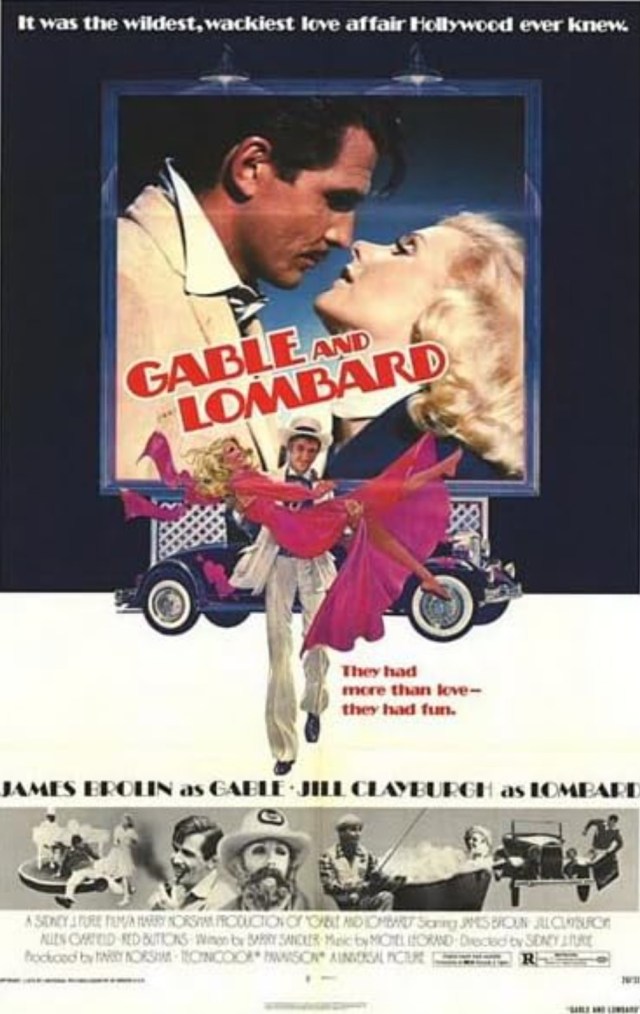
Gable and Lombard poster created by Universal Pictures

Before revealing his choices for the worst movies of 1976, Siskel says the year featured “two kinds of cinematic canines: cheap, lousy pictures and expensive, lousy pictures”. Based on what films he chose, Gable and Lombard was placed in the latter category. According to Wikipedia, the film’s budget was $4.5 million. It appears most of the budget was spent on Gable and Lombard’s set design. One scene took place outside, with the guests at a ball wearing white. Small candles surrounded the pool’s perimeter. In the pool were small islands of white flowers and candles, along with swans peacefully gliding through the water. Overall, this part of the set was absolutely gorgeous! Throughout Gable and Lombard, some scenes took place in Clark or Carole’s dressing room. These dressing rooms looked more like condominiums; distinct spaces that appear livable. Carole’s dressing room boasted a color combination of yellow and white. Featuring design choices like a white dining room set gave the dressing room a feminine style. Meanwhile, dark wood surrounded the fireplace in Clark’s dressing room. There was even a pool table located near the fireplace. These design choices created a more masculine space. Carole and Clark’s dressing rooms provided a good visual representation of how different they were despite having a similar career path.

In Name Only poster created by RKO Radio Pictures. Image found at en.wikipedia.org/wiki/File:In_Name_Only.jpg

While Roger Ebert never shared his thoughts on Gable and Lombard in the ‘Best Films of 1976’ episode, he did write a review for the movie, which can be found on rogerebert.com. In his review, Ebert states “Brolin does, indeed, look a lot like Gable – but imitation here has nothing to do with flattery”. While I agree with Ebert’s opinion on James Brolin’s appearance in the movie, I disagree with the rest of Ebert’s statement. Not only did James look like Clark, he even sounded like him too! It almost felt like James transformed into another person. During Gable and Lombard, James consistently carried an easy-going attitude. This choice in acting and directing showcased Clark’s down-to-earth personality. Meanwhile, Carole was a comedic, life of the party. Portrayed by Jill Clayburgh, Carole’s up-beat personality made her one of the most popular actresses of her time. But behind closed doors, Carole had her doubts and insecurities. In one scene, Carole is sharing with Clark how she feels undeserving of a recent achievement. Her eyes reveal a sense of worry. Concern, even sadness, can be heard in her voice. During her conversation with Clark, Carole looks and sounds truly discouraged. Clark, with a warm smile and calming tone of voice, reassures Carole what’s most important is surrounding herself with people who support her. Jill’s and James’ performance is one of the reasons why this scene is one of my favorites in Gable and Lombard!

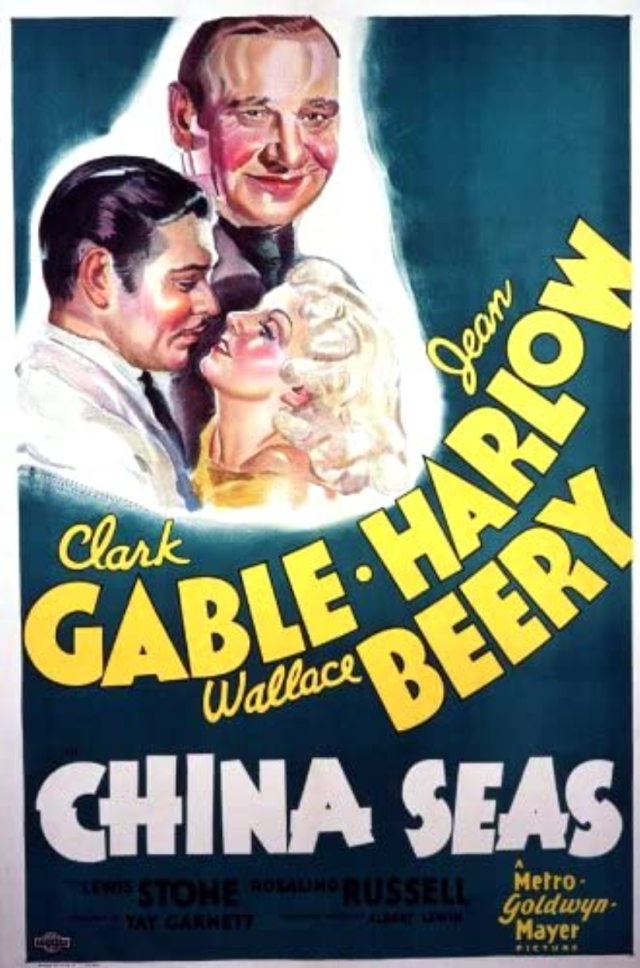
China Seas poster created by Metro-Goldwyn-Mayer.

Sidney J. Furie, the director of Gable and Lombard, chose to make “a movie about just folks”, primarily focusing on the personal lives of Clark Gable and Carole Lombard. While Ebert says this decision gave “the movie a certain originality”, he also criticizes Sidney’s choice, claiming that “by limiting itself to this aspect of their lives the movie never deals with the reasons we find them interesting in the first place”. As I said in this review’s introduction, I am somewhat familiar with Clark and Carole. Because I don’t know which parts of Gable and Lombard are factual or creative liberty, I took the story of Carole and Clark’s relationship with a grain of salt. From the way Louis B. Mayer (portrayed by Allen Garfield) talked to Clark about groups of people demanding certain elements of films be changed due to “indecency”, I knew he was talking about the Breen Code, a series of morality related guidelines enforced in Hollywood from 1934 to 1954. Therefore, I saw Gable and Lombard as a character study of how a portion of the Breen Code era affected the professional and personal lives of the Hollywood landscape, with Carole and Clark serving as just two examples. When Clark is accused of having an affair with a waitress, Carole volunteers to testify in court. Everyone from her inner circle knows if she testifies, she will expose her and Clark’s relationship as well as end her career. While explaining why he doesn’t want Carole to testify, Louis B. Mayer shares with Clark the ugly truth about what happened to some actresses after their careers ended. This scene is honest about the consequences if the Breen Code was broken. By viewing the film from the lens of the Breen Code, Gable and Lombard’s narrative is not only compelling, it is given higher stakes.

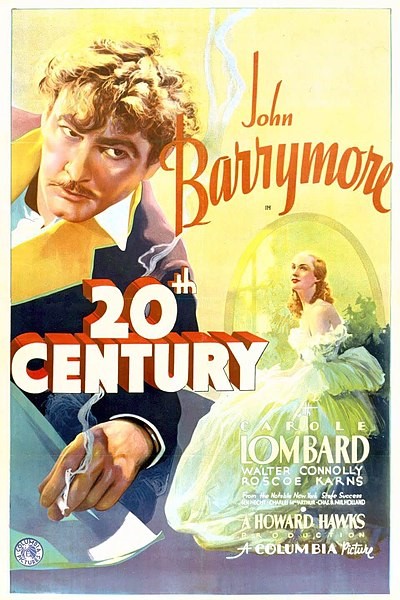
Twentieth Century poster created by Columbia Pictures.

I said earlier in this review how Ebert and Siskel were only given a few minutes to talk about the year’s worst films. This made Siskel’s discussion of Gable and Lombard sound vague, as he states “in real life, you can get arrested for playing around with dead bodies. The same should be true for movie-makers who desecrate the memory of great, dead actors”. Because this review affords me more time to elaborate on my opinion, I will now discuss what I didn’t like about Gable and Lombard. At the beginning of the movie, Clark is told Carole was in a plane crash, but her whereabouts are unknown. The very next scene shows Carole riding in an ambulance, alive and appearing uninjured. That scene took place years before the plane crash happened. With no on-screen text acknowledging the story’s time and place, it was sometimes difficult to figure out the story’s timeline. I liked James’ and Jill’s portrayal of Clark and Carole. However, I found their on-screen chemistry inconsistent. When their story began, Carole and Clark went from enemies to lovers. For the rest of the story, they continuously broke up then got back together. I recognize Gable and Lombard is based on a real-life relationship. But because of the back-and-forth nature of that relationship, I couldn’t stay fully invested in the relationship of Clark and Carole.

Comparing with the Critics banner created by me, Sally Silverscreen. TV show title cards created by WTTW National Productions, WTTW, Public Broadcasting Service (PBS), Lifetime Television, Tribune Entertainment, Buena Vista Television, and Disney-ABC Domestic Television

Looking back on Gable and Lombard, I believe Siskel’s, and even Roger Ebert’s, thoughts on the film were a tad harsh. I wouldn’t call it a “dog” or “lousy”, as the movie does have its merits. But I do believe the marketing is a bit misleading. The quotes on Gable and Lombard’s poster are “It was the wildest, wackiest love affair Hollywood ever knew” and “They had more than love – they had fun”. In the ‘Best Films of 1976’ episode of Opening Soon…at a Theater Near You, Carole dumped salad on Clark’s head, one of the more humorous scenes from the film. While there were comedic moments sprinkled throughout the story, the movie’s marketing presents the false idea it is solely a comedy. Seen from the lens of the Breen Code, Gable and Lombard presents a character study of how a portion of the Breen Code era affected the professional and personal lives of the Hollywood landscape. With the story emphasizing Carole and Clark’s relationship, they navigate complicated decisions, as well as honesty about feelings and emotions. The balance of comedy and tragedy adds a sense of maturity to the overall story. At worst, the movie prioritizes style over substance. as most of the budget seems to be put toward the set design. But, at best, Gable and Lombard is just ok.

This review was brought to you by

Sally Silverscreen

Take 3: Twentieth Century Review

Originally, I was going to write a double feature for The Sixth Annual Barrymore Trilogy Blogathon by reviewing Twentieth Century and Young at Heart. However, due to technical difficulties on my end, I was only able to find the time to publish one review. Because I’ve written about five of Frank Sinatra’s movies this year, I chose to take a break by selecting Twentieth Century. Back in January, I watched and reviewed In Name Only for The Carole Lombard Memorial Blogathon. At the time, it was my first time seeing any film from Carole’s filmography. Despite this, I ended up liking the film! As I have mentioned before, I try to feature movies on my blog that were recommended by visitors and followers of 18 Cinema Lane. Twentieth Century was suggested by Patricia from Caftan Woman and Vincent from Carole & Co.

Twentieth Century poster created by Columbia Pictures.

Things I liked about the film:

The acting: In my review of In Name Only, I praised Carole’s portrayal of Julie Eden, as her on-screen personality was down-to-earth and her overall performance contained the right amount of emotion. Carole portrays Lily in Twentieth Century, a character who is very different from Julie in In Name Only. This is because Lily experiences frustration on several occasions. One example is when Lily is forced to stay late at rehearsal because Oscar wants her to scream. Lily’s emotions spill over, causing her to yell and burst into tears because of her pent-up frustration. These emotions were able to be felt through the screen because of how good Carole Lombard’s talents were in this film! Speaking of Oscar, I liked watching John Barrymore’s performance in Twentieth Century! It showed a transition from a theater director who seemed to have his heart in the right place to a man who let power and influence get to his head. After Lily’s first performance on stage, Oscar visits her in her dressing room. The way he speaks to her indicates he is putting all his attention on her. But when you look and listen closely, there are hints of his possessive mentality. A good example is when Oscar tells Lily she was a diamond who needed some polishing.

The set design: While watching Twentieth Century, there was some impressive set design I noticed! Toward the beginning of the film, Oscar’s office was shown. Dark wood walls surrounded the space, with a medium shot signifying the room’s high ceiling. Eye-catching details helped give the space a unique identity, such as the inclusion of a suit of armor and stained-glass windows. Details in other scenes stood out, stealing the show whenever they appeared on screen. Lily’s bed is just one example, a massive piece of furniture that was shaped like a boat. It’s white woodwork and bedding is paired beautifully with dark wood carvings on the bed. On the train, there are sketches of animals located near the ceiling of the sitting room area. The style of the sketches looked like they came from a storybook from Medieval times.

Carole’s wardrobe:  I really liked seeing Carole’s wardrobe in Twentieth Century! However, there were two outfits that were the most memorable! On the night of Lily’s first performance, she wears an off the shoulder sparkly white dress. Despite the film being presented in black-and-white, the sparkly nature of the dress shown through beautifully! The second outfit was a silk pair of pajamas, complete with fine detailing on the shirt. The pajamas complimented Carole very well, highlighting her true beauty!

Masks of comedy and tragedy images created by freepik at freepik.com. <a href=”https://www.freepik.com/free-photos-vectors/background”>Background vector created by freepik – http://www.freepik.com</a>. Image found at freepik.com.

What I didn’t like about the film:

The mystery: In Twentieth Century, there was an on-going mystery revolving around the appearance of religious stickers on the train. The mystery itself felt randomly placed in the overall story, offering no strong significance within the plot. Had the religious stickers served as a reminder to not lose personal beliefs and values in the quest for fame and fortune, that would have added a meaningful moral to the movie. Sadly, it was a small piece just to keep the plot moving forward. When the guilty party is finally revealed, it seems like the script is providing them with excuses for their destruction of public and personal property. This can be heard through the characters’ dialogue; from the train security saying the guilty party has a “sickness” to describing the guilty party as “a little crazy, but harmless”.

An awful group of characters: I understand characters from any movie are not going to be everyone’s “cup of tea”. However, there is a fine line between personal preference and the characters themselves being awful. Twentieth Century is a perfect example of this, featuring a host of characters that are unlikeable to varying degrees. Oscar treats everyone around him horribly. He “fires” his friends on multiple occasions and he is abusive toward Lily, even after their relationship ends. Despite this, Oscar’s friends still try to help him fix his relationship with Lily, even going so far as to blame her for Oscar’s failures. Meanwhile, Lily turns into a diva after she becomes a movie star. It got to the point where I found myself not caring about the characters’ outcomes because their ugly personalities made me lost investment in them.

Lily and Oscar’s abusive relationship: I briefly mentioned in my previous point that Oscar is abusive toward Lily, even after their relationship ends. In the beginning, when Lily was starting out as an actress, Oscar gives the impression of having her best interests in mind. An example of this is when, after Lily expresses her frustrations over staying late at rehearsal, Oscar reminds her of her dream and how he’ll help her reach that dream. As Lily’s career grows, so does Oscar’s jealousy and obsession. He not only controls Lily’s life, but he also physically harms her, poking her with a pin just to get her to scream on stage. Oscar even goes so far as to threaten suicide if Lily does not stay with him. Even though Lily ends the relationship, Oscar is still obsessed with her. One of his worst actions in Twentieth Century is faking his own death just to trick Lily into signing his contract.

The Sixth Annual Barrymore Trilogy Blogathon banner created by Crystal from In the Good Old Days of Classic Hollywood.

My overall impression:

Back in January, when I reviewed Marriage on the Rocks, I said the film made me feel uncomfortable because of the movie’s one-sided view on marriage and divorce. Watching Twentieth Century made me appalled for several reasons. The abusive nature of Lily and Oscar’s relationship is just one example, especially since it exists throughout the whole film. It also doesn’t help that Oscar doesn’t face any accountability for his actions and behavior.  Another issue is the characters themselves, as all of them are horrible to certain degrees. Despite being poorly treated by Oscar, Oscar’s friends still support him. They even encourage Oscar to get back together with Lily. According to IMDB and Wikipedia, Twentieth Century is labeled as a “romantic comedy”. I will admit there were a handful of moments I found funny. But the aforementioned relationship, random mystery, terrible characters, and the story being ninety one minutes of those same characters complaining about their personal issues overshadows all of the movie’s strengths.

Overall score: 4.4 out of 10

Have you seen any of Carole Lombard’s or John Barrymore’s films? If so, which one do you like the most? Please let me know in the comment section!

Have fun at the movies!

Sally Silverscreen
Take 3: In Name Only Review

One of the reasons why I love participating in blogathons is because it gives me the opportunity to watch films I might have never seen otherwise. In Name Only is a fantastic example! Before signing up for The Carole Lombard Memorial Blogathon, I had no idea that this film existed. After searching Carole’s filmography on IMDB and discovering the ability to rent the movie, I felt that In Name Only was a good choice for this review. Even though I had heard of Carole Lombard before, I had never seen any of her films. My participation in this particular blogathon gave me the opportunity to finally check out her acting work! Another surprise I discovered was that the film is based on a book! The source material for the project is Memory of Love by Bessie Breuer. Similar to my discovery of the film, I was not aware of this book’s existence before I watched the movie. Maybe in the future, I’ll check this story out! But, for now, let’s check out this review of In Name Only!

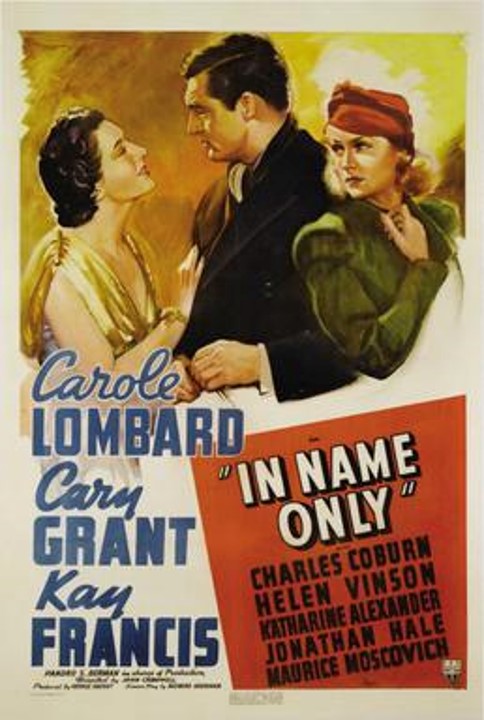
In Name Only poster
In Name Only poster created by RKO Radio Pictures. Image found at en.wikipedia.org/wiki/File:In_Name_Only.jpg

Things I liked about the film:

The acting: Like I said in the introduction, this is the first film from Carole’s filmography I’ve ever seen. Despite this, I was impressed with her performance in this film! Her portrayal of Julie Eden showcased an on-screen personality that appeared down-to-earth. Whenever her character was frustrated by the divorce process, her performance became heart-breaking. Carole’s sad demeanor created the opportunity for audience members to sympathize with Julie. Prior to watching In Name Only, the only film from Cary Grant’s filmography I’d seen was The Philadelphia Story. Because that movie was a romantic-comedy, it gave me the chance to see Cary take on a more dramatic role in this picture. Throughout the story, Cary’s character, Alec Walker, embodied the serious and charming nature of a gentlemen. For more sad and heart-breaking moments, his performance was very captivating to watch. A great example is when Alec is staying at the hospital. Since his health is deteriorating, his mental health is also affected. This is portrayed very well by Cary, as he adopts a distant stare and disjointed speech pattern that reflect his character’s state.


The on-screen chemistry: I enjoyed watching the on-screen performances of Carole Lombard and Cary Grant! One reason is their on-screen chemistry. Every time they appeared in a scene together, there was always a sense of genuine sweetness between them. This allowed their characters to appear like they truly loved one another. It also makes viewers want to see this on-screen couple resolve their issues. For me, the quality of Carole and Cary’s on-screen chemistry helped me stay invested in their characters and their relationship!


How the topic of divorce was handled: In my review of Marriage on the Rocks, I talked about how the movie’s view on divorce made me feel uncomfortable. This was because of the one-sided perspective the movie presented. When it comes to In Name Only, the topic of divorce was handled with maturity and reverence to all the parties involved in the film’s story. While there was an antagonist, this creative choice was meant to show the audience that divorce can sometimes become messy and complicated. Unlike Marriage on the Rocks, In Name Only treats divorce as a realistic yet difficult situation. I’ve never read the book this movie is based on. However, I’m hoping the book handled the subject of divorce as well as the film did.

20191230_135329[1]
When I saw this postcard, I knew it had to make an appearance in this review! Screenshot taken by me, Sally Silverscreen.
What I didn’t like about the film:

A drawn-out conflict: I understand the divorce process can be very time-consuming. But within the context of the film’s story, this conflict was drawn-out for the majority of the run-time. It got to the point where I could see audience members becoming just as frustrated as the protagonists were. Now, I’m not sure if this shared frustration was intentional on the screenwriter’s or author’s part. However, I do know that because of this creative choice, it didn’t leave a lot of room for a pay-off.


Under-utilized characters: As I was watching this film, I came across some under-utilized characters. Maida’s friend, Suzanne, is just one example. The actress who portrayed this character, Helen Vinson, did a really good job with the role she was given. But her character wasn’t able to do much in the story. This caused Helen to have very little material to work with.


Run-time that was a little too long: IMDB says that In Name Only is an hour and thirty-four minutes. However, I feel some minutes could have been shaved off. Had this movie’s run-time been an hour and fifteen or twenty minutes, certain events in the movie could have happened sooner. It also could have gotten rid of scenes that felt like time-wasters. One of these scenes, to give you an example, was when Maida was talking to her in-laws during a car-ride.

Carole Lombard Blogathon banner
The Carole Lombard Memorial Blogathon banner created by Crystal from In The Good Old Days Of Classic Hollywood and Vincent from Carole & Co. Image found at https://crystalkalyana.wordpress.com/2019/09/25/announcing-the-carole-lombard-memorial-blogathon/

My overall impression:

Even though In Name Only is the first film of Carole Lombard’s I have seen, it is a film that I did like! There are aspects of the movie that could have made the overall project stronger. However, its merits overshadow them. The biggest highlight is how the story handles the subject of divorce. Throughout the story, I could sense the creative team knew exactly what they were doing. The screenwriting provided a sense of realism to the narrative, giving the characters thoughts and feelings that might emerge from a situation like this. The divorce itself was also taken very seriously. If you’re interested in watching a film about this topic, please pick In Name Only over something like Marriage on the Rocks. As I’ve said before, I feel that starting or ending a romantic relationship is not something that should be taken lightly. In Name Only not only recognizes that, but highlights that through the interactions of the characters.


Overall score: 7.4 out of 10


Have you ever seen Carole Lombard’s movies? If so, which one is your favorite? Share your thoughts in the comment section!


Have fun at the movies!

Sally Silverscreen