Take 3: Play Misty for Me Review

August’s theme for Genre Grandeur is “Eastwood connected Movies (Clint or his progeny in any capacity)”. As soon I discovered this month’s selected theme, I immediately knew which movie I would choose! For years, I wanted to check out the 1971 film, Play Misty for Me. This is because I had heard Play Misty for Me is the precursor to Fatal Attraction. Since I have seen the 1987 movie, I was curious to see how many similarities or differences Play Misty for Me and Fatal Attraction shared. With this month’s Genre Grandeur theme, I am finally getting that chance! By writing about Play Misty for Me, this is the first time I’m reviewing any of Clint Eastwood’s movies on 18 Cinema Lane. I am familiar with Clint as an actor, so I knew the types of roles he’s typically known for. Therefore, choosing to review Play Misty for Me as the first film of Clint’s covered on my blog is interesting, as it’s quite different from the westerns and action pictures he has usually starred in.
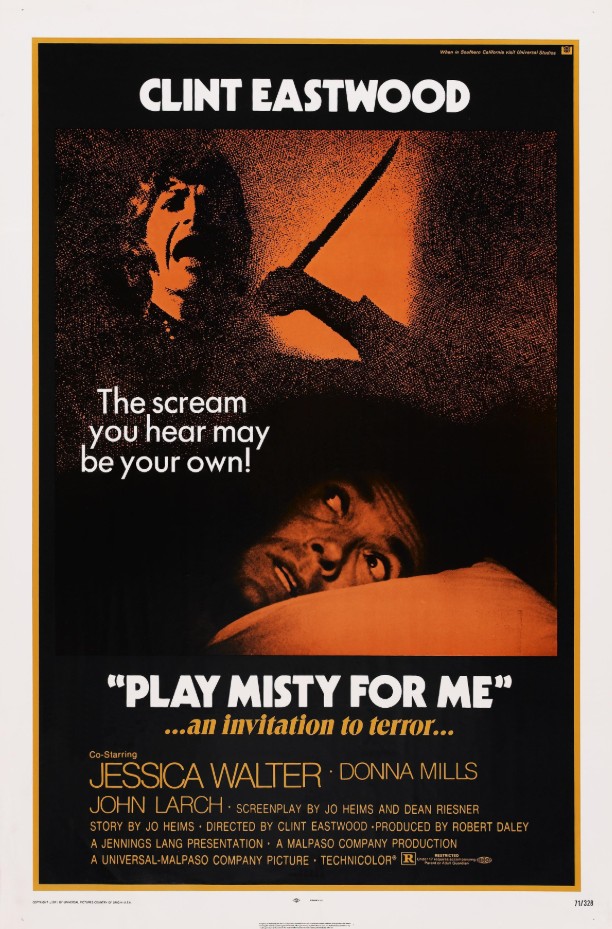
Play Misty for Me poster created by Universal Pictures, Jennings Lang, and The Malpaso Company

Things I liked about the film:

The acting: While I liked the acting as a whole in Play Misty for Me, I have to highlight Clint Eastwood’s and Jessica Walter’s performance. This is because their characters were given the most screen time. Throughout his film career, Clint has gained a reputation for portraying tough, unbreakable heroes. That reputation has been a result of starring in films from the western genre and in titles like Sudden Impact. But in Play Misty for Me, Clint’s character, Dave, adopted a very different persona. The radio disc jockey carries a suave personality with a hint of gentleness. In a great example when Jessica’s character, Evelyn, is restocking Dave’s refrigerator in preparation for dinner, Dave explains to Evelyn how he already has dinner plans. His explanation, however, is calm, which puts Evelyn at ease. Dave’s kind tone of voice, the understanding look in his eyes, and even the relaxed look on his face shows how he isn’t mad at Evelyn. Clint’s versatile acting abilities effectively portray how easy it is to fall in love with Dave!

As I just mentioned in this review, Jessica Walter portrays Evelyn. What I liked about her performance was her ability to seamlessly adopt different emotions. One perfect example is when Evelyn and Dave are having a conversation outside. Before Evelyn leaves Dave’s house, her attitude is friendly. A smile is painted on her face and her personality seems bubbly. But when a neighbor comes outside to complain about the noise, Evelyn immediately becomes very angry. She yells at the neighbor and her entire demeanor is tense. As soon as the neighbor leaves, Evelyn goes back to being friendly like nothing unusual had taken place. Jessica’s ability to seamlessly adopt different emotions was consistent throughout Play Misty for Me. This acting strength made Evelyn an unpredictable character.

The scenery: The biggest pleasant surprise in Play Misty for Me was the scenery! Filmed in Monterey and Carmel, California, the 1971 film features a lot of scenes showcasing the ocean and its surrounding landscape. A perfect example of how photogenic the scenery is can be seen when Dave and Tobie are on a date. One shot proudly displays the ocean at sunset. An orange and yellow sky is met with calm waters shimmering in blue, periwinkle, and lavender. In the foreground, a nearby tree, the edge of a cliff, and the characters’ silhouettes are shadowed, which are contrasted against the lighter colors of the sea. To me, this was one of the most beautiful shots in Play Misty for Me!

The incorporation of jazz music: In movies classified as “psychological thrillers”, the soundtrack primarily consists of suspenseful orchestral music to increase the suspense within that story. The creative team behind Play Misty for Me decided to take a different approach. Jazz tunes provide the main musical sound in the 1971 movie. This is not only because Dave works at a jazz radio station, he also attends a jazz concert. The sounds of this particular music genre invoke a sense of maturity and sophistication. That sophistication and maturity were woven into Play Misty for Me, which allowed the story to be taken seriously. Jazz music also pairs nicely with the oceanic scenery I talked about earlier in this review. The rhythmic movements of the waves and the steady notes of the music create a visual and auditory paradise!

String of musical notes image created by Freepik at freepik.com. <a href=’https://www.freepik.com/free-vector/pentagram-vector_710290.htm’>Designed by Freepik</a> <a href=”https://www.freepik.com/free-photos-vectors/background”>Background vector created by Freepik</a>. Image found at freepik.com. 

What I didn’t like about the film:

A more annoying antagonist: Alex, from Fatal Attraction, is one of the scariest antagonistic characters in film history. While she is emotionally unstable, her attempts to infiltrate Dan’s life are calculated and intentional. A classic example is when Dan discovers the fate of his daughter’s pet rabbit. When I watched Play Misty for Me, Evelyn came across as more annoying than scary. That’s because her efforts to infiltrate Dave’s life are sporadic, whiny, and desperate. These factors caused me to not take Evelyn as seriously as Alex when it comes to being an antagonist.

Inconsistent suspense: Like I said in this review’s introduction, I have heard Play Misty for Me is the precursor to Fatal Attraction. Though it’s been years since I’ve seen the 1987 movie, I remember the story’s suspense being consistent. With all that said, I believed the suspense in Play Misty for Me would be consistent as well. Unfortunately, I was proven wrong. The suspense of Play Misty for Me was sparingly incorporated, only appearing in certain moments of the story. Most of the film features mundane moments with low energy, such as Tobie and Dave’s date, which lasts for about five minutes. That creative decision caused Play Misty for Me to lack a strong amount of adrenaline and intrigue.

A drawn-out film: According to IMDB, Play Misty for Me has a run-time of an hour and forty-two minutes. To me, though, the film felt longer than its run-time. This feeling was the result of some scenes being drawn out longer than necessary. Earlier in this review, I mentioned Dave attending a jazz concert. The scene featuring the concert lasted approximately five minutes. I mentioned Tobie and Dave’s date lasting about five minutes as well. Had these scenes been trimmed down to maybe three minutes or less, more time could have been spent providing Play Misty for Me with more suspenseful moments.

Recording studio image created by Senivpetro at freepik.com. Music photo created by senivpetro – www.freepik.com

My overall impression:

In my review’s introduction, I said I heard Play Misty for Me is the precursor to Fatal Attraction. Now that I’ve seen both movies, I can honestly say I’d prefer Fatal Attraction over Play Misty for Me. From what I remember of the 1987 film, the story’s suspense is consistent. Plus, Alex is a much scarier antagonist than Evelyn. Play Misty for Me contains flaws like inconsistent suspense and the film itself being drawn out. However, the 1971 movie does have its merits. I liked the acting performances, especially those from Clint Eastwood and Jessica Walter. The scenery was the biggest pleasant surprise of the film. Incorporating jazz music was an interesting approach to the psychological thriller genre, giving the story a sense of maturity and sophistication. With everything I’ve been saying, Play Misty for Me is, in my opinion, just ok.

Overall score: 6 out of 10

Have you seen Play Misty for Me? Are there any projects from Clint Eastwood’s or Jessica Walter’s IMDB filmography you’d like to see me cover on 18 Cinema Lane? Let me know in the comment section!

Have fun at the movies!

Sally Silverscreen
Take 3: Vertigo (1958) Review

Alfred Hitchcock is a man who needs no introduction. Director by choice and legend by chance, Alfred has single-handedly become a house-hold name in the world of cinema. While I have seen (and reviewed) some of his films, there are still plenty of titles I have yet to see. One of those films was 1958’s Vertigo, which was recommended by Charity from The Sacred in the Secular! This is a movie I had been meaning to write about for a while. With The 3rd Master Of Suspense Blogathon on its way, I found a great time to finally review Vertigo! As I already mentioned, I have reviewed some of Alfred’s films. While I still think Strangers on a Train is his best movie, The 39 Steps is one of my least favorite. Now, the time has come to share my thoughts on Alfred Hitchcock’s 1958 presentation!

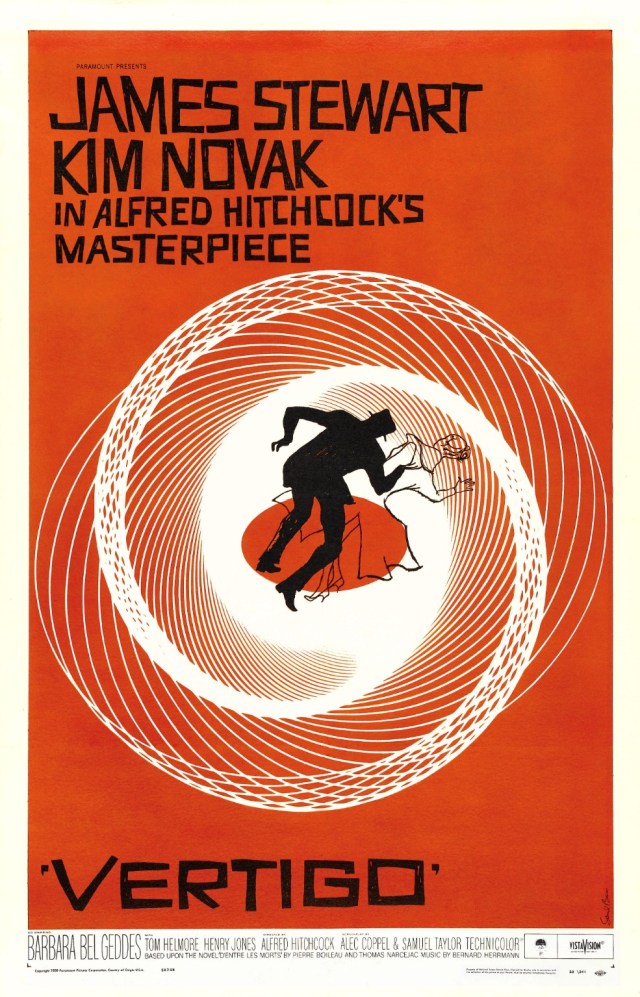
Vertigo (1958) poster created by Alfred J. Hitchcock Productions and Paramount Pictures

Things I liked about the film:

The use of music: Music can be a powerful film-making tool. Through a combination of sound, instrumentals, and even lyrics, music can elevate a scene’s mood, foreshadow parts of the story, or emphasize events happening in a scene. In Vertigo, music was utilized to compliment a scene’s given mood. A perfect example is when Scottie follows Madeleine to a flower shop. While he walks through a flower shop’s storage room, suspenseful orchestral music builds up to the moment Scottie reaches the flower shop’s door. This type of music acknowledges Scottie’s fear of the unknown, as he doesn’t know what he’ll find on the door’s other side. But once he opens the door, he discovers Madeleine is in a flower shop, purchasing a bouquet of flowers. This discovery causes calming, orchestral music to play in the background, stressing how Madeleine and the shop itself are nonthreatening to Scottie.

Incorporation of culture: The mystery in Vertigo revolves around Madeleine being obsessed with a woman named Carlotta Valdes. Scottie follows clues from art and local history in an attempt to solve the mystery. The “local history” in this movie is a fictionalized version of San Francisco’s history. However, the blending of these aforementioned cultural elements gave Vertigo a unique identity from other Hitchcock productions. The creative team’s incorporation of culture can also spark thought-provoking analysis about how culture can influence or even solve mysteries. As someone who reviews mystery films and even has a series called Sally Solves a Mystery, this aspect of Vertigo has made me look at the subject of mysteries somewhat differently.

The set design: There was some impressive set design in Vertigo! One of my favorite examples is Gavin’s office. Wood paneling covers every wall. The entire floor is covered in red carpeting, which actually compliments the wood paneling. A large, dark wood desk with intricate detailing becomes the showstopper of the space! Other design choices, such as a large model of a ship, red chairs, and a huge window overlooking the cargo ship dock emphasize Gavin’s importance in the company he inherited. Artwork and photographs covering every wall presents a glimpse into Gavin’s artistic taste.

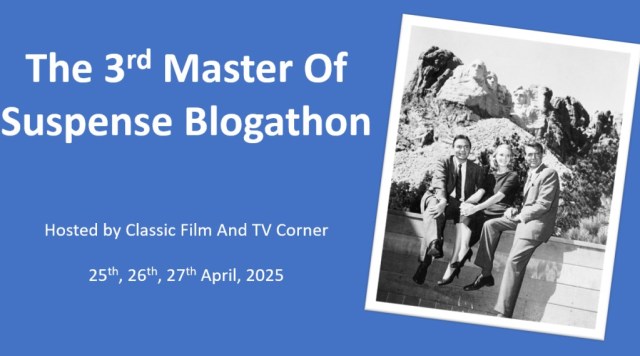
The 3rd Master Of Suspense Blogathon banner created by Maddy from Classic Film And TV Corner

What I didn’t like about the film:

Questions left unanswered: For this part of my review, I will spoil Vertigo. If you have not seen this movie and are planning on watching it, skip to the part titled ‘The underutilization of Barbara Bel Geddes’.

After Madeleine dies, Scottie meets a woman named Judy, believing she looks like his deceased love. Shortly after Judy and Scottie meet for the first time, she writes a letter and confesses being Madeleine. In the letter, Judy claims parts of the story she and Gavin told Scottie were true. But she never specifies which parts of their story they were honest about. The creative team’s decision to leave questions unanswered frustrated me. This is because I was curious to see how the mystery of Madeleine’s psychological connection to Carlotta Valdes would be resolved.

The underutilization of Barbara Bel Geddes: In Vertigo, Barbara Bel Geddes portrays Marjorie ‘Midge’ Wood. A designer who is passionate about art, Midge was engaged to Scottie in the past. Even though their engagement didn’t last, they remain on friendly terms. Barbara’s on-screen chemistry with James was pleasant. Her performance effectively sold the idea Midge was good friends with Scottie. This made me hope Scottie and Midge would work together to solve Vertigo’s mystery. But that did not happen because Barbara was only in a handle of scenes. I think Midge is an interesting character, so this creative decision disappointed me. Not giving Barbara more material to work with was, in my opinion, a missed opportunity.

An unsolved mystery: For this part of my review, I will, once again, spoil Vertigo. If you have not seen this movie and are planning on watching it, skip to the part titled ‘My overall impression’.

At the beginning of Vertigo, Scottie is asked by Gavin to solve the mystery of why Madeleine is obsessed with a woman named Carlotta Valdes. This obsession gets to the point where Madeleine goes to places she has no memories of visiting. Because of how the fictionalized San Francisco culture and supernatural elements were combined in the mystery, I was curious to see how the mystery would be resolved. But, about halfway through Vertigo, Madeleine dies. Shortly after Madeleine passes away, the mystery of Judy’s identity begins. By the end of the movie, this new mystery is solved. If the screenwriters knew their script would contain more than one mystery, they should have resolved the first mystery before moving on the next one. The creative team’s decision to abandon Madeleine’s mystery left several questions unanswered.

Art tools image created by Freepik at freepik.com. <a href=’https://www.freepik.com/free-vector/flar-art-tools-pack_835368.htm’>Designed by Freepik</a>.  <a href=”https://www.freepik.com/free-photos-vectors/paint”>Paint vector created by Freepik</a>. Image found at freepik.com.

My overall impression:

Have you ever watched a movie where you found yourself deceived by the movie’s end? That’s how I felt after watching 1958’s Vertigo. Without spoiling the movie, I will say how even though the story contained two mysteries, only one of them is solved. This is one of the reasons why the script left questions unanswered. I also didn’t like how Barbara Bel Geddes’ acting talents were underutilized. However, there were aspects of Vertigo I liked. The film’s creative team displayed an understanding for how to effectively utilize music. Incorporating culture into the story gave Vertigo a unique identity among Hitchcock’s collection of films. I was impressed by the movie’s set design as well. But when it comes to titles created by Alfred Hitchcock, especially those starring James Stewart, I think Rear Window is stronger than Vertigo. Not only was the talent of Rear Window’s cast well utilized, the mystery was solved as well as prioritized.

Overall score: 6.5 out of 10

Have you seen Vertigo? Which film of Alfred Hitchcock’s is your favorite? Let me know in the comment section below!

Have fun at the movies!

Sally Silverscreen
Word on the Street: Elite Dining Club from Disneyland Receives its Own Film

Disney has had a history of adapting their theme park attractions into live action spectacles. Some of these movies have either made money at the box office or left a special place in people’s hearts, such as the Pirates of the Caribbean franchise or 1997’s Tower of Terror. Other titles have been forgotten by time or were poor performers at the cinema, like The Haunted Mansion and The Country Bears. What all the movies I mentioned have in common, besides the obvious, is how the selected attractions are those the majority of the movie-going audience has either heard of or has experienced themselves. Now Disney is breaking that track record by creating a film around their dining club, Club 33. In an article from The Hollywood Reporter, Borys Kit writes how a movie about Disneyland’s Club 33 is in the pre-production stage. The project even has a synopsis, which is the following:

“…the story centers on a young aspiring detective who receives a mysterious invite to the highly secretive Club 33. In this case, it’s a magical and exclusive dining club whose members are the greatest and most iconic figures from across history. When a murder is committed on the premises, the patrons look to the young detective to solve it”.

Attached to the production are Darren Lemke (who will write the film’s script), Emily Morris (the executive of the studio, 21 Laps Entertainment), as well as Shawn Levy, Dan Levine, and Dan Cohen.

Restaurant waitress and guest image created by Freepik at freepik.com. <a href=”https://www.freepik.com/free-photos-vectors/food”>Food vector created by freepik – http://www.freepik.com</a>. Image found at freepik.com.

If I could describe this piece of movie news in one word, it would be “odd”. As of the publication of this article, Disney’s reputation and finances are not as strong as they were in years past. The financial woes of movie theaters are directly connected to the financial woes of film studios, including Disney. So, Disney’s solution to these problems is to create a movie about a piece of their park’s fabric that the majority of the movie-going audience will never get to experience? Club 33 was founded in 1967 and it is “a dining area where Disney hosted celebrities, dignitaries, and friends”. Throughout Disneyland’s history, Club 33 has earned the reputation of being “an elite stealth club”. What isn’t mentioned in The Hollywood Reporter article is just how exclusive Club 33 is, from membership dues costing thousands of dollars to a several years long wait list.

Carousel image created by Daviles at freepik.com. <a href=”https://www.freepik.com/free-photos-vectors/background”>Background image created by Daviles – Freepik.com</a>. <a href=’https://www.freepik.com/free-photo/carrousel-with-sky-background_954546.htm’>Designed by Freepik</a>. Image found at freepik.com.

Making movies, from a business perspective, is about trying to get as many people as possible to see a given movie. This, hopefully, will lead to that given movie earning as much money as possible. One strategy is to weave a story or theme into a movie that could be relatable for the majority of theater attendants. In my recent review of the 1988 made-for-TV film, Dance ‘Til Dawn, I mentioned how the story’s prom party reminded me of the Disneyland attraction, Videopolis. Though most theater patrons have never experienced or even heard of Videopolis, many people have a sense of longing or nostalgia for theme park attractions, places, and times gone by. Therefore, a movie about one of Disney’s older attractions makes more sense, to me, than a film about Club 33.

What are your thoughts on this piece of movie news? Which theme park attraction would you like to see adapted into a movie? Tell me in the comment section below!

Have fun at the movies!

Sally Silverscreen

Referenced article in this post: https://www.hollywoodreporter.com/movies/movie-news/disney-club-33-movie-darren-lemke-shawn-levy-1235904632/

Take 3: RKO 281 (1999) Review

Once upon a time, in 2019, I saw Citizen Kane for the first time. In my review of the film, and even in my list of ten classic movies I watched because of my blog, I stated how, in my opinion, Citizen Kane is not the flawless masterpiece almost everyone has made it out to be. As you’re reading this introduction, you’re probably wondering, “What does Citizen Kane have to do with July’s theme of Genre Grandeur? That movie isn’t about making movies”. No, it’s not. But the 1999 HBO movie, RKO 281, is. While looking for a title to review for the aforementioned blogathon, I stumbled upon RKO 281, a film I had never heard of prior to the event. When I learned the movie was about the creation of Citizen Kane, I knew I’d appreciate the 1999 project, especially since I saw and wrote about the 1941 film. It also gave me a reason to check out one of HBO’s made-for-tv titles. So, without any delay, let’s start this show of my RKO 281 review!

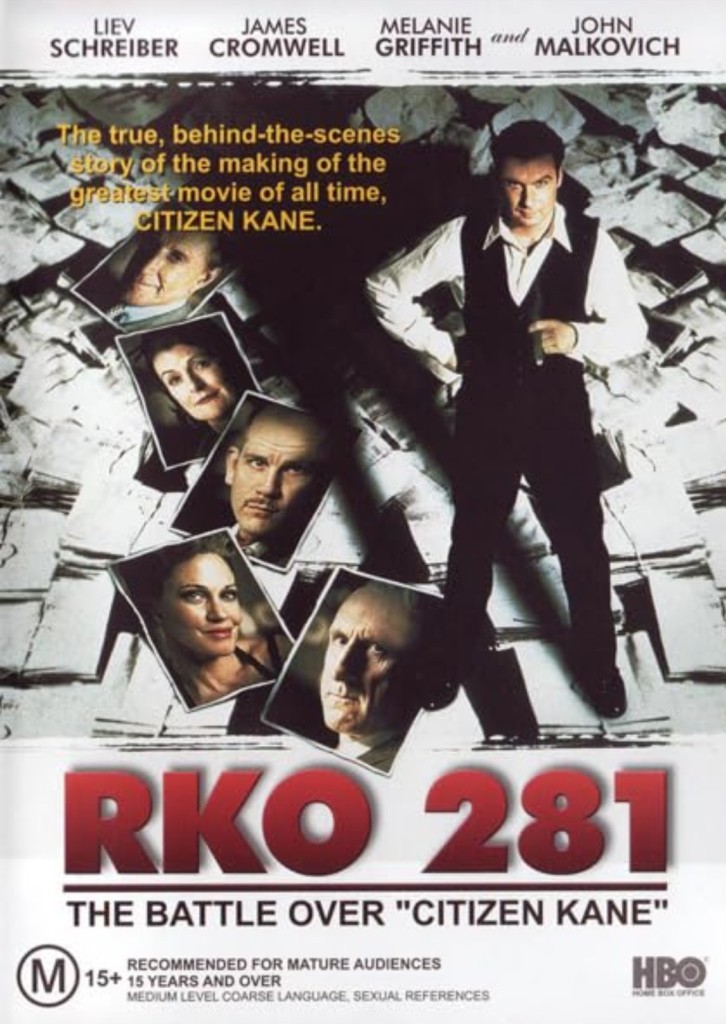
RKO 281 (1999) poster creatd by HBO Pictures, WGBH, Scott Free Productions, Labrador Films, BBC Films, and Home Box Office (HBO)

Things I liked about the film:

The acting: When we think about a name like Orson Welles, it can sometimes be easy to think of him as more than just a man with a dream. As Orson’s name became a staple of cinematic history, it also became what legends are made of. But Liev Schreiber, the actor portraying Orson, brought humanity back to that name, finding the heart of the “genius” and putting some genuine emotion behind it. While apologizing to Herman Mankiewicz after a falling-out between them, Orson shares a personal recollection about his father. After sharing a part of his soul with his friend, a smile appears on Orson’s face, relieved Herman has agreed to work on Citizen Kane. At the same time, you can see a tear has escaped Orson’s eye. This gives another meaning to Orson’s relief; the burdens of guilt and regret have lifted off his shoulders.

Liev Schreiber is not the only actor to use facial expressions and emotion to their advantage. Portraying William Randolph Hearst, James Cromwell was able to use these tools of acting to present William as more than just the story’s antagonist. When he finds out Citizen Kane is based on him, William is upset by this news. While talking about the situation with a woman named Louella, there is a sharpness to his voice, clearly indicating his bitterness toward the film. But the look in his eyes is that of defeat, questioning how someone was able to successfully build a bridge across the moat of his castle. In this scene, William’s face told more than dialogue could share; a man who gave everyone the impression he was in control, but was really unsure of what the future held.

Marion Davies was the mistress of William Randolph Hearst. Introduced to the audience in a party scene, Marion carried herself with a bubbly personality, almost being mistaken for “ditzy”. But Melanie Griffith prevented Marion from becoming a stereotype or caricature. With a variety of emotions, body language, and facial expressions, Melanie showed Marion as, simply, a woman in a complicated situation. One of my favorite scenes in RKO 281 was when Marion confronted William about his spending habits. Though in a drunken state, Marion addresses some excellent points. As she faces William, her voice is pleading. The desperation in Marion’s voice contains brutal honesty, giving her tone of voice some depth. She never breaks eye contact with William, showing how she isn’t afraid of standing up to “Pops”. Even though she does raise her voice, she only does this to emphasis her points. This scene elaborates how easily someone like Marion could be underestimated. While William saw Marion’s part of their conversation as “excessively theatrical”, I saw it as a woman who knew more about the situation than others were led to believe.

The set design: I’ve heard Hollywood referred to as the “Land of Dreams”. If that’s true, then the set design in RKO 281 was meant to visually represent a fairy tale! William Randolph Hearst’s castle is one of the most divine sets I’ve ever seen! So many details went into this location, it makes every space of the castle feel larger than life. From the marble fireplace held up by carved marble statues, to the large stained-glass windows boasting intricate colorful designs, to even a bath room with blue and green hued walls, William’s castle is a place beyond imagination. While the castle certainly stole the show, there were other sets that looked great on camera. During RKO 281, Orson travels to New York. In a scene showcasing Orson’s hotel room, his large, wooden bed was smartly paired with a red and beige blanket. The bed isn’t the only wooden piece of furniture in the room, as the desk, matching bedside tables, and even the walls display a warm shade of wood. Because of the tall window, the illusion of the room having a high ceiling is given to the audience. Filling the room with warm light from the lamps and the wall sconces, this high-end hotel room gave off a cozy atmosphere!

The film-making process: One of my favorite episodes of Murder, She Wrote is ‘Film Flam’. Watching the process of premiering a film is what made that episode fascinating to me. RKO 281 showed a similar process in their story. But this time, the entire film-making process was revealed. Glimpses of how Citizen Kane was made were woven into RKO 281. I learned some things about Citizen Kane because the film-making process was shown. For instance, I didn’t know Orson dug a hole into the floor just to get the shot he wanted. I also didn’t know that filming of Citizen Kane started two days ahead of schedule. It was interesting to see the various components that go into creating a film, especially during a time when technology wasn’t at a film-maker’s disposal. This peek behind Hollywood’s curtain can make one appreciate the work that goes into making a movie.

The dialogue: There is a lot of work that goes into writing a script. One important area of any script is the creation and delivery of dialogue. As I’ve said in past reviews, dialogue can be hit or miss, especially in a made-for-tv movie. In RKO 281, you can tell there was thought put into the dialogue of the script. In fact, I would go so far as to say the dialogue was, at times, profound. Remember when I said one of my favorite scenes was when Marion confronted William about his spending habits? One of the reasons why I like that scene is because of how well the dialogue was written and delivered. During the confrontation between Marion and William, Marion reminds him of the difference between wanting and needing something. She elaborates on this point by questioning how much a nearby statue cost, not caring about details such as where it was made or the style of the statue, details only William would bring up. Even at the very beginning of this scene, when Marion says, “Millions of dollars a year on art and statues, and there is nothing to explain” illustrates how Marion recognizes the severity of the situation. Meanwhile, as William responds to Marion by stating, “We are in no pickle, as you so euphemistically put it”, the script emphasizes William’s choice to use big words to not only belittle Marion’s intelligence, but also brush his problems under the rug.

Image of vintage movie camera created by Macrovector at freepik.com. <a href=”https://www.freepik.com/free-photos-vectors/background”>Background vector created by macrovector – http://www.freepik.com</a>. Image found at freepik.com.

What I didn’t like about the film:

The omission of the Breen Code: If you’ve read my movie reviews, you’d sometimes see the term ‘Breen Code’ mentioned in the text. For those unfamiliar with this concept, the Breen Code is a set of moral guidelines that had to be applied to film-making. Movies released between 1934 and 1954 formed the Breen Code era. Because Citizen Kane was released in 1941, I was hoping the Breen Code would play a role in the process of Citizen Kane’s creation. Unfortunately, the Breen Code wasn’t even mentioned. To me, the Breen Code is an underrated component in cinematic history. It would have been nice to hear it referenced in RKO 281’s dialogue.

Some parts of the story not receiving closure: Louella Parsons works for William Randolph Hearst as his “eyes and ears of Hollywood”. After she sees a rough cut of Citizen Kane, she informs William about the film resembling his life. Louella vows to get revenge against Orson for creating the movie, even going so far as to use blackmail in an attempt to cancel the film. But when William’s financial troubles come to light, her role in William’s life seems to have diminished. What happened to Louella after William’s financial situation was made public? Did she still work for him or did she end up working for someone else? This is just one part of RKO 281 that didn’t receive closure.

Keeping track of who’s who: As I mentioned in this review’s introduction, RKO 281 chronicles the creation of Citizen Kane. Therefore, the story follows those individuals connected to the project itself. Throughout the movie, though, members of the film industry from the late 1930s to the early 1940s were brought up in the dialogue. While I was familiar with some of these people, other names I did not recognize. It almost felt like RKO 281’s creative team expected the audience to know the film industry scene of that time. When I watch a film, I want to be told a story. If I end up learning something valuable by watching a movie, I feel that is time well spent. However, I don’t want to feel like I need to do homework prior to watching the film.

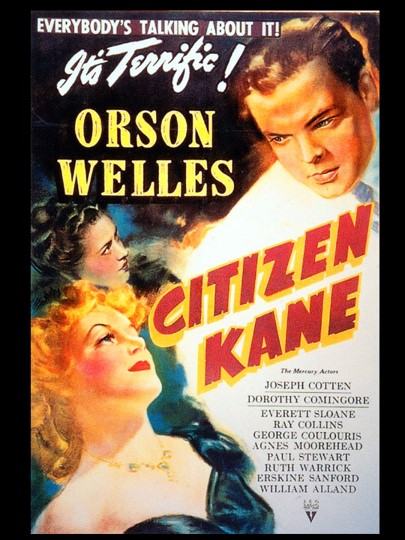
Citizen Kane poster created by Mercury Productions and RKO Radio Pictures. Image found at http://www.tcm.com/tcmdb/title/89/Citizen-Kane/#.

My overall impression:

Not all made-for-tv movies are created equal. Sometimes, a low amount of effort will be given to a made-for-tv production, making a presentation look and feel cheap. But there are made-for-tv projects that are solid, despite the limited resources and finances. RKO 281 is so well-made, it is easy to forget this is an HBO film, as this movie looked and felt theatrical! The creative team behind RKO 281 went above and beyond to make their project the best it could be! From the actors and the screenwriters to the set designers, every person involved with the 1999 movie stepped up their A game and it shows. The style and substance of RKO 281 go hand in hand. While I still don’t believe Citizen Kane is a flawless masterpiece, I’ve gained an appreciation for the efforts it took to make this film exist at all. Toward the end of RKO 281, Orson says “Pretty speeches make history”. If that’s true, then good films leave a lasting impression.

Overall score: 8 out of 10

Have you seen RKO 281 or Citizen Kane? Are there any HBO movies you’d like to see me review? Tell me in the comment section below!

Have fun at the movies!

Sally Silverscreen

Take 3: Double Nickels (1977) Review

When I reviewed The Last Child, I wondered if I would find a made-for-tv movie from the 1970s I liked. So, with this month’s Genre Grandeur on the horizon, I decided to start my quest for a good made-for-tv movie from the ‘70s! As ‘Car Chase Movies’ are the theme of May’s event, I stumbled upon the 1977 title, Double Nickels. Though not a television film, it’s a project I found intriguing. Before this year, I had never heard of the 1977 production. But blogathons can be a time when participants discover films that are new to them. Looking back on my Genre Grandeur reviews from this year, most of the movies I’ve reviewed were just ok, with one film being just fine. Will Double Nickels break that track record? Drive through this review in order to find out!

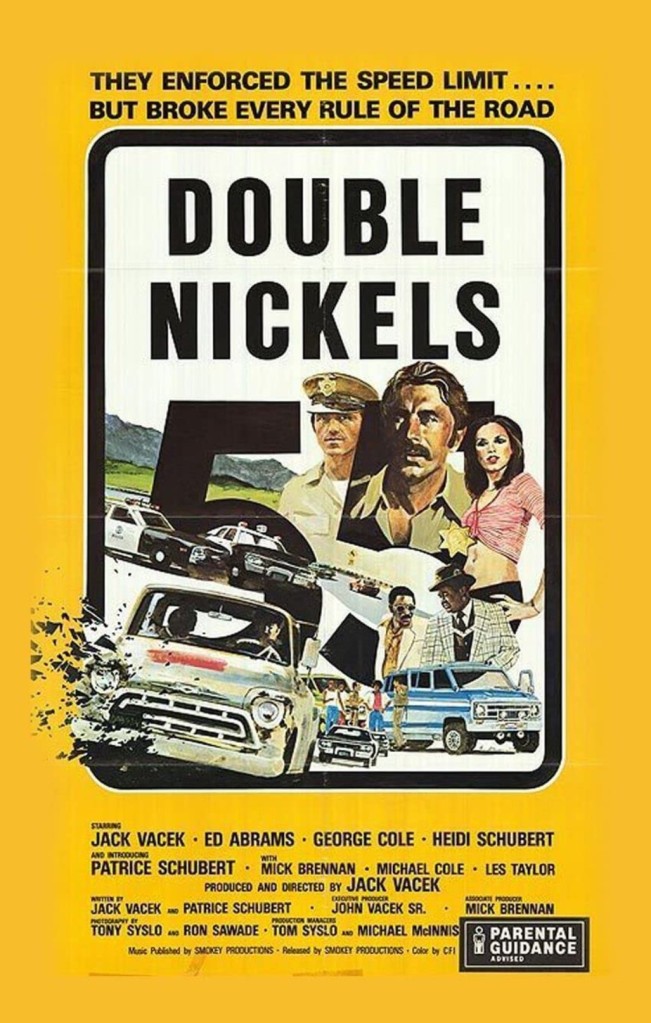
Double Nickels poster created by Smokey Productions

Things I liked about the film:

The use of music: Music is an integral part of film-making, elevating a scene’s tone and attempting to make the audience feel a certain emotion. Even during a car chase, music can heighten the intensity of the moment itself. Double Nickels gives some of their car chases background music. But the music in this film emphasizes the different types of car chases within the story. Smokey, in his police car, chases a dune buggy. When the dune buggy gets away and drives up a nearby dune, a light-hearted banjo tune plays in the scene’s background. At the beginning of the movie, there is a chase involving a motorcycle. For this scene, rock music can be heard as the chase continues. These tunes are determined by the vehicles presented in the scene. Combining these two elements, it feels like the movie’s creative team made thoughtful musical choices for their car chases!

Different types of cars: The story of Double Nickels takes place in Southern California. This particular landscape provides a reason for different types of cars to be present in the movie. When Smokey meets Jordan for the first time, she appears to be driving a red Ferrari. Earlier in the film, Ed and Smokey stop two vans in order to give their drivers a ticket. These vans, a blue one and a green one, look like they’d be found at a beach or on a campsite. The variety of vehicles highlights the diverse preferences of drivers. This creative decision also makes sense with Smokey and Ed’s profession, as they would encounter different types of cars.

Ways of presenting a car chase: There are several car chases featured in Double Nickels. These chases were presented in different ways, providing new paths for cars to travel through. During one chase, two cars drive down a flight of stairs. Another chase shows three cars driving through giant puddles of water, with the water splashing around the cars. While watching Double Nickels, I had to remind myself how this movie was created during a time when CGI and special effects were not at a film-maker’s disposal like it is today. With that in mind, I appreciated the efforts and resources it took to make these car chases look good on screen!

What I didn’t like about the film:

A small sense of urgency: When a movie includes car chases, those car chases are there for a reason. It typically means a character’s life is in danger or a character needs to achieve a mission. No matter the specific situation, a strong sense of urgency would be present, making the audience care about the characters and their story. In Double Nickels, though, the sense of urgency was small. Smokey and Ed repossess cars in order to make extra money. Eventually, they learn their operation is not what it seems. But Smokey and Ed’s entire process is presented in a very nonchalant way, forgetting about the danger that could be lurking behind them. Even when a climactic car chase takes place, I didn’t feel scared for the characters and their well-being. The small sense of urgency also caused the film’s suspense to feel limited.

Weak acting performances: No matter the production, all I can expect out of any actor is for them to try their best with the material they are given. Sometimes, those efforts are strong. But in Double Nickels, I found the acting performances weak. Serving as one example, Smokey and Ed are discussing the idea of repossessing cars. Throughout this scene, Ed and Smokey display a limited number of facial expressions. Their voices carry the same singular tone, with their conversation seeming unusually rushed. Despite Jack Vacek and Edward Abrahms’ efforts with the script, the interaction feels robotic and unnatural. The weakness of the acting performances was, sometimes, distracting.

A drawn-out story: As I’ve already mentioned in this review, Smokey and Ed repossess cars, with their plan turning out differently than expected. The movie itself is an hour and twenty-eight minutes. But the story feels longer than its run-time. The aforementioned small sense of urgency played a role in the story being drawn out. Unnecessary inclusion of story points added to this as well. Tami is in a romantic relationship with Smokey. During the movie, it is revealed she is cheating on Smokey with another man. After this reveal, Tami and her new significant other are never seen or heard from again. Smokey didn’t bring them up either. This is just one example of a part of the story that could have been cut, which would have tightened the script.

Mountain Road Colorado – Colorado Adventure Trip.

My overall impression:

There are many reasons for the creation of a movie. Sometimes, it is because a film-maker has an interesting story to tell. Other times, a studio wants to capitalize on the nostalgia of a well-known title. In the case of Double Nickels, that reason, to me, feels like an excuse to film cool-looking car chases. I will admit the car chases themselves were the highlight of this project. A significant amount of effort and thought was put into their delivery, from the musical selections to the way they were presented on screen. All of the other aspects of this story, though, fall flat. Despite the car chases in the story, the sense of urgency was small. It also didn’t help how the story felt longer than necessary. Double Nickels is the third film from the 1970s I’ve reviewed this year. With this movie being so underwhelming, I haven’t had the best of luck finding a title I like.

Overall score: 5.7 out of 10

Have you seen Double Nickels? Is there a car chase movie you like? Please let me know in the comment section below!

Have fun at the movies!

Sally Silverscreen

Take 3: Charlie Chan at Treasure Island Review

‘Movies featuring beaches or waterfront scenes’ is March’s theme for Genre Grandeur. I could have selected a Hallmark title, but I chose a different film instead. This seems to be a recurring theme on 18 Cinema Lane this year. Back when I published my editorial, Oh, The Places She’ll Go: A Map of Esther Williams’ Travels, Paddy Lee suggested I check out Charlie Chan at Treasure Island. Since then, I’ve been trying to find the right time to watch the film. When I searched through my movie recommendation board on Pinterest, I knew it would be the perfect movie to write about for this month’s Genre Grandeur! Before Paddy Lee’s suggestion, I had never heard of the Charlie Chan series. From what I’ve gathered, this is a mystery series from the 1920s to the 1940s. A made for TV movie, The Return of Charlie Chan, was released in 1972 and the last movie in the series, Charlie Chan and the Curse of the Dragon Queen, premiered in 1981. Starting this journey in the middle of the series, it’s time to review Charlie Chan at Treasure Island!

Charlie Chan at Treasure Island poster created by Twentieth Century Fox

Things I liked about the film:

The acting: I’ve seen a handful of Cesar Romero’s projects from his filmography. Out of those projects, he has carried his character with charisma. In Charlie Chan at Treasure Island, Cesar portrayed a magician named Rhadini. Not only did Rhadini have the charisma I’ve come to expect from Cesar’s performances, he also contained a strong amount of showmanship you’d expect from a magician! Consistency worked in Cesar’s favor, with his performance appearing effortless. Another acting performance that came across as effortless was Victor Sen Yung’s! Portraying Charlie’s son, Jimmy, Victor gave his character a great on-screen personality. His expressions while interacting with other cast members wove together seamlessly. A great example is when Jimmy is helping Charlie get ready for a dinner party. As he is interacting with his father, Jimmy’s emotions transition from pride to confusion to determination without missing a beat! Despite appearing in the film for a limited amount of time, I liked Billie Seward’s portrayal of Bessie Sibley! She had great control over her character’s emotions, allowing her talents to go toe-to-toe with the talents of the other cast members.

The inclusion of magic: As I just mentioned in this review, Rhadini is a magician. He performs magic tricks on a few occasions within the story. These tricks range from a disappearing bird to a levitating table. There were even times when the secrets behind these tricks were revealed, showing the audience how the illusion was achieved. This was a pleasant surprise for me, as I didn’t expect any magic to be featured in the movie. Its inclusion in the story added a unique aspect to the film’s identity!

The humor: In past reviews, I’ve brought up how some mystery films have incorporated humor into their story, as humor gives the audience a break from the heaviness of the mystery itself. Honestly, I was surprised by the inclusion of humor in Charlie Chan at Treasure Island. This is because I was not expecting this aspect to be as strong as it was in the story. In Charlie Chan at Treasure Island, Jimmy was the comic relief. Some of the things he said were genuinely hilarious. During Rhadini’s magic show, Jimmy is recruited to participate in the levitating table trick. Horrified at the idea of being lifted off the ground, Jimmy tells his father, “Oh, but flying makes me seasick, Pop”.

Image of magic show essentials created by Macrovector at freepik.com. <a href=”https://www.freepik.com/free-photos-vectors/card”>Card vector created by macrovector – http://www.freepik.com</a>. Image found at freepik.com.

What I didn’t like about the film:

A misleading title: Charlie’s adventures in Treasure Island are the reason why I chose this movie for March’s Genre Grandeur. Because of the film’s title, I expected Charlie to primarily spend his time at the titular location. But when I watched the movie, I discovered that wasn’t the case. While there was an aerial shot of Treasure Island, not much time was spent there. In fact, the characters talked about Hawaii, specifically Honolulu, more than Treasure Island. With that said, it made me wonder why this movie didn’t take place in Hawaii?

Charlie’s outdated “quirk”: In my editorial, Why ‘Francesca Quinn, PI’ is the Worst Hallmark Movie I’ve Ever Seen, I talked about how fictional detectives have a “quirk”, something that sets a detective apart from other sleuths. Charlie Chan does have his own “quirk”. However, it seems very outdated. Throughout the story, Charlie speaks in proverbs. His speech also sounds like broken English. I know the 1930s was a different time compared to the 2020s. But these factors make Charlie’s “quirk” seem stereotypical.

A limited amount of urgency: The main mystery in Charlie Chan at Treasure Island is a murder mystery, as a guest on a plane mysteriously dies during the trip. Charlie and the San Francisco police department discover a series of deaths that took place around the time of the aforementioned murder. But most of the story focuses on the mystery of who “Dr. Zodiac” is, a physic who is ripping off his clients. This focus caused the overall story to have a limited amount of urgency.

Image of Hawaiian poster created by Freepik at freepik.com. <a href=”https://www.freepik.com/free-photos-vectors/poster”>Poster vector created by freepik – http://www.freepik.com</a>. Image found at freepik.com.

My overall impression:

As someone who actively seeks out programs from the mystery genre, I’m always looking for titles I can recommend to my readers. However, I am aware of how mystery films and shows are not created equally. Charlie Chan at Treasure Island was my introduction to the world of Charlie Chan. Unfortunately, this introduction was not as strong as it could have been. While there were aspects of the movie I liked, such as the acting and the humor, the story itself was weak. The misleading title made me wish the film had taken place in Hawaii. Charlie’s “quirk” also makes the story dated on arrival. I’m not sure if I’ll continue watching this series. Perhaps if a particular title fits a blogathon theme, then maybe I will check another film out.

Overall score: 6.7 out of 10

Have you seen any films from the Charlie Chan series? Are there mystery films you’d like to see reviewed on 18 Cinema Lane? Tell me in the comment section!

Have fun at the movies!

Sally Silverscreen
Redwood Curtain’: From Stage to Screen

The Hallmark Hall of Fame adaptation of Redwood Curtain is based on a Broadway play. It was also released in 1995. With these facts in mind, I found Redwood Curtain to be the perfect subject for the Fifth Broadway Bound Blogathon. Prior to this event, I saw the movie and read the play. This lent itself to an interesting idea. Discussions about film adaptations often feature films adapted from books, short stories, or poems. Movies born from plays aren’t often included in the conversation. So, I decided to write an editorial highlighting the similarities and differences between the Redwood Curtain play and film. This article contains spoilers for the story of Redwood Curtain.

The Fifth Broadway Bound Blogathon banner created by Rebecca from Taking Up Room

Movie-Exclusive Characters

On the stage, Redwood Curtain contains three characters: Lyman, Geri, and Geneva. While there are other characters in the story, they’re only mentioned within the dialogue. Geri’s father, Laird, is one of these characters. According to the script, Laird was a desk-jockey lieutenant in the Vietnam War. This means he “didn’t see a day’s fighting, to come completely unglued in the war.” Laird taught Geri how to play the piano simply to entertain dinner guests. He also developed a dependence on alcohol and died two years prior to the play’s events. Laird is even described as a “drunk.” Because Laird never physically appears in the play, all the information about him is hearsay.

John Lithgow portrays Laird in the film adaptation. The film version of Laird did fight in the Vietnam War, though his specific role was never mentioned. Like in the play, he develops a dependence on alcohol. However, this dependence was Laird’s attempt to cope with war-related trauma. Toward the end of the movie, Geneva shares with Geri how Laird wanted to be a pianist, but didn’t feel he was talented enough. So, he became invested in Geri’s piano career, appearing to live vicariously through his daughter. His presence in the movie shows the audience the strained, yet close relationship between Geri and Laird. Laird’s death within the film’s first half and Geri’s discovery that Laird is her biological father are presented as bittersweet moments.

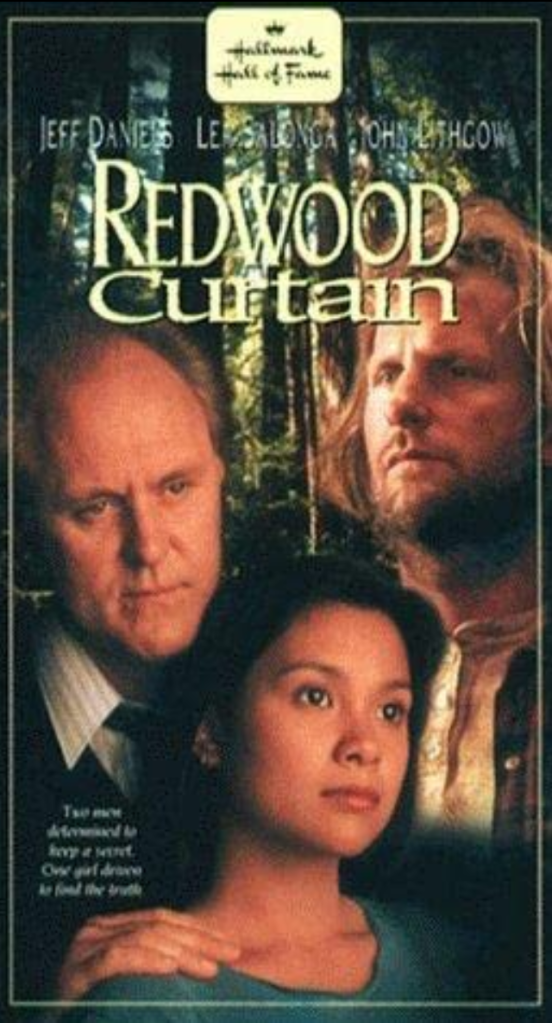
Redwood Curtain poster created by Chris/Rose Productions, Hallmark Hall of Fame Productions, American Broadcasting Company (ABC), and Republic Pictures (II)

Expanding the World

The majority of Redwood Curtain’s story in the play takes place in Arcata’s redwood forest. A few scenes happen in Geneva’s house, Geneva’s car, or a local coffee house. Geri’s first encounter with Lyman is when the play starts, with the lead-up to this moment woven into the dialogue. Events such as Laird’s death take place off stage, prior to the play’s story. The creative team behind a play is given a limited amount of space and time to work with. Therefore, designating a few key locations makes sense among these limitations. In the Redwood Curtain play, Geneva’s house is described as “a large and very fine Victorian house.” The script states her house contains a music room as well. When presenting this play at a theater, only the home’s sitting room and music room would be staged and the style of the house would be heavily implied through décor and set structure.

A plus side to film-making is the freedom to take the story wherever the film-maker chooses. If a movie’s creative team desires to adapt a stage play, that story has the opportunity to grow beyond the boundaries of a stage. In the case of the Redwood Curtain film, the events from the play are contained in the story’s second half. That means the movie’s first half takes place in and around the Riordan family home. This inclusion not only expands the world the characters exist in, but also gives the audience a glimpse into Geri’s world that they wouldn’t have seen otherwise. Filming on location provides benefits to visual storytelling. However, that creative decision has its own limitations. Using Geneva’s house in the movie as an example, a location scout might not be able to secure a location similar to one described in the source material. Even if they succeeded, there’s a process in order to film at a residential building, especially if it’s someone’s real-life home. That’s probably why Geneva’s house is presented as a smaller log cabin with a large deck, but no music room.

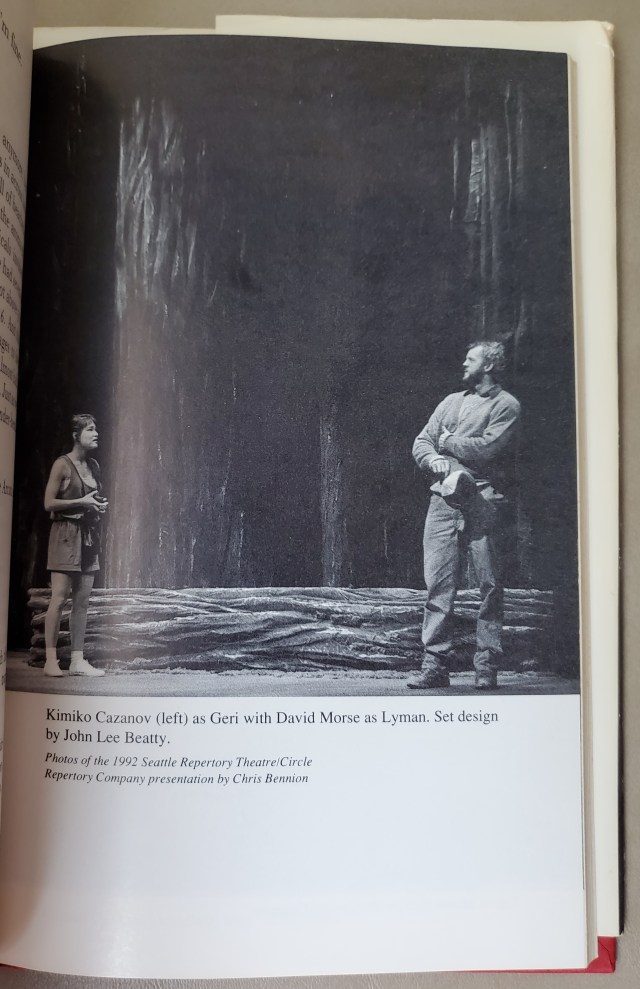
A picture of the Redwood Curtain play from my copy of the play’s script. Screenshot taken by me, Sally Silverscreen

Geri’s Motive

In both the play and movie, Geri attempts to search for her biological father. This attempt is the story’s main conflict. Geri’s reason for her search was different in each version of Redwood Curtain. In the play, Geri knew some information about her past. Prior to the start of the play, Geri discovered Lyman tried to help her and her biological mother get to the United States. The script mentions that Geri began her search when she was twelve. Her search turns into an obsession, to the point of abandoning her musical endeavors. In fact, the play’s synopsis states Redwood Curtain “is a story of obsession and discovery.” Though the information Geri received was partly true, she eventually learns more through her interactions with Lyman.

The movie version of Geri has three motives for her search. Wanting to receive answers about her past was the first motive. The film’s script heavily implies Geri did not know much about her past until the events of the movie. Yes, she was aware she was adopted. But Geri’s belief that Lyman was her biological father stemmed from a photo and a note bearing the name ‘Raymond Farrow’ that Laird gave his daughter after he died. At various moments in the movie, Geri expresses how she feels she doesn’t belong. She even shares these thoughts with the Riordan’s house-keeper, Matilda. These feelings fuel Geri’s journey of self-discovery and finding her biological family. Her third and final motive is her music, which plays a crucial role in Geri’s life. Geri believes if she finds her biological father, she will be able to incorporate more emotion into her musical pieces.

String of musical notes image created by Freepik at freepik.com. <a href=’https://www.freepik.com/free-vector/pentagram-vector_710290.htm’>Designed by Freepik</a> <a href=”https://www.freepik.com/free-photos-vectors/background”>Background vector created by Freepik</a>. Image found at freepik.com. 

Significance of the Redwoods

As I’ve said before on my blog, a film’s title can serve as a promise to the audience. In the case of Redwood Curtain, the audience should expect not only to see redwoods, but also to receive an explanation of what the “redwood curtain” is. The “redwood curtain,” in both the play and movie, is the redwood forest itself, where Vietnam veterans choose to live their lives. This is one of the reasons Geri meets with Lyman in the forest. While Geri learns about the “redwood curtain” in each version of the story, the way she learns about it is different. An Arcata Union reporter provides the explanation for the “redwood curtain” to Geri in the play. In the movie, she is given this same explanation by a gentleman working at Arcata’s veterans’ office.  

As I mentioned above, the majority of Redwood Curtain’s story in the play takes place in Arcata’s redwood forest. The redwood forest in the movie only appears in the story’s second half. Because of how often or little this location appears in the story, its association with the characters and the themes connected to it depend on these appearances. Topics relating to the environment are brought up throughout the play. When Lyman asks Geri why she’s visiting Arcata, she tells him she’s studying horticulture and botany at the local college. Geri also claims to have magical powers, which allow her to do things such as control the weather. Within the play, Geneva talks about how her family’s portion of the redwood forest is being bought out by investors. While this part of the story is also in the movie, it is discussed in more detail in the play, from Geneva bringing up the specifics of the sale itself to describing Arcata’s weather. The theme of family connects with the redwood forest in the movie. The Riordan family owns a portion of the redwood forest. While Geri stays at Geneva’s house, Geneva shows her niece a wall of family photos. These photos showcase various members of the Riordan family in the redwood forest. The number of photos and whether or not the photos are in black-and-white indicate how the forest has been in the family for generations.

Wellbeing of Veterans

When I brought up the movie version of Laird, I mentioned how he depended on alcohol to cope with war-related trauma. I also mentioned how Geri learns about the “redwood curtain” at Arcata’s veterans’ office. These are just two examples of how the movie includes the subject of veterans’ well-being. In the history of Hallmark films, veterans have been presented with a sense of reverence and respect. Veteran-related issues have also been included in Hallmark’s programming. An example is a veteran struggling with trauma in Signed, Sealed, Delivered: Lost Without You. Even though the film adaptation of Redwood Curtain was released a decade before Hallmark debuted the Hallmark Channel, this tradition can be seen and felt in this Hallmark Hall of Fame presentation. At Laird’s funeral, Geri shares with Geneva how she wished the family had addressed Laird’s alcohol dependency sooner. Geneva reminds her niece how Laird had a problem related to his experiences in the war. Geri says the family’s politeness and willingness to skirt the issue are what enabled Laird’s struggles. The points Geri makes to her aunt highlight how seriously these topics are taken in this adaptation.

While veteran-related issues are brought up in the play, it was never enough to be one of the story’s main topics. Compared to the movie, there isn’t the same amount of reverence for veterans. During her first interaction with Lyman, Geri’s personality is pessimistic and bitter. When Lyman asks Geri about the translation of her hometown’s name, Geri responds by saying, “Well, you’re not Spanish. You must belong to the other half of the country’s population.” After Geri learns Laird was her biological father, she says, “You’re right, Lyman, he was the saddest man I’ve ever known.” Geri also says, “And I thought I was joking when I said to follow in my father’s footsteps I had to mope and pine and drink myself to death. Not a very promising path he’s laid out for me to follow.” With the way veterans’ well-being wasn’t addressed, it made the play seem less hopeful. It also seemed like none of the characters were willing to find any solutions.

Children holding American flags during a sunset image created by rawpixel.com at freepik.com. <a href=”https://www.freepik.com/free-photos-vectors/people”>People photo created by rawpixel.com – http://www.freepik.com</a>. Image found at freepik.com.

Lyman, Geri, and Geneva

As mentioned above, I said Lyman, Geri, and Geneva were the only three characters to physically appear in the play. These three characters also serve prominent roles in the movie. Geri’s personality in the play was pessimistic and bitter. She was also disrespectful when talking to Lyman or talking about Laird. In the movie, however, Geri was a more empathetic character. While interacting with Matilda in the Riordan family kitchen, Laird recalls a memory of Geri when she was younger. In this memory, Laird was tearing up as he was chopping onions. Upon seeing this, Geri asks if Laird is sad because the onions are hurt.

Lyman, in both the play and movie, shares parts of his life story with Geri. In the play, though, more of this information is given. Toward the end of the movie, Lyman tells Geri how, before the war, he would fix and race cars with his dad. He also talks about how he never dated a crush he had. Lyman in the play not only drag-raced vehicles, he also worked in his dad’s garage. He recalls owning a Mustang Boss 302 and never having a girlfriend. Geneva’s family’s portion of the redwood forest was being bought out by investors. As a result of this, Geneva, in the play, is planning on moving to Key Biscayne, Florida, with her husband, Barney. In the movie, however, Geneva expresses no interest in moving out of Arcata. In fact, after one of Geri’s piano performances, Geneva tells Laird how she plans on fighting to keep her land. She and Barney are also divorced.

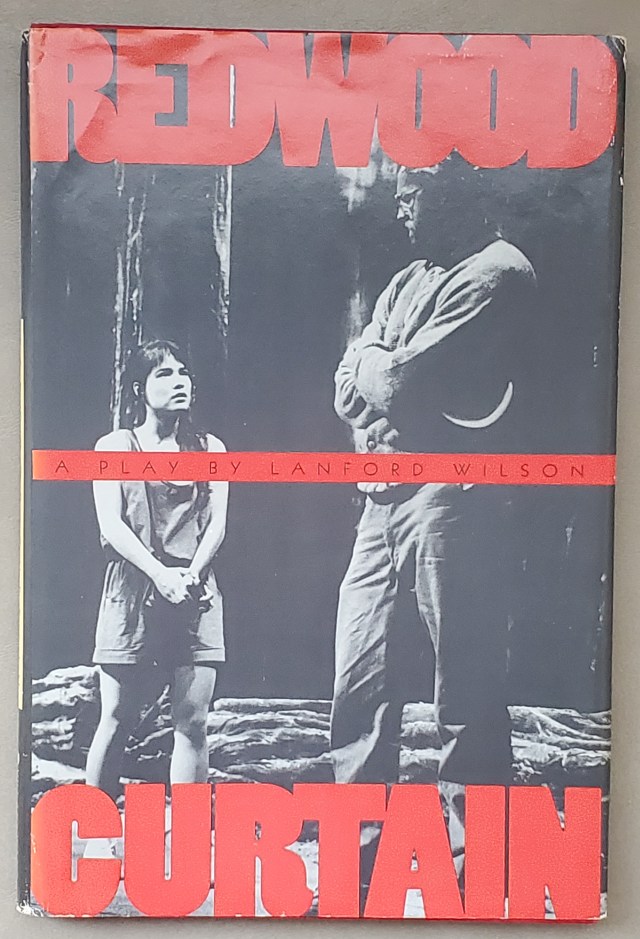
The cover of my copy of the play’s script. Screenshot taken by me, Sally Silverscreen

After I watched and read Redwood Curtain, I ended up liking the movie adaptation over the source material. What worked in the Hallmark Hall of Fame presentation’s favor was how the story was expanded. Not only were more locations added to the characters’ world, more context was given than the play provided. Even though there were more characters added to the film, the cast as a whole was smaller. Through their interactions, the audience gets a more intimate look into the characters’ relationships. The changes to the characters from the play made them more likable, especially Geri. Both the screenwriting and acting allowed Geri to be one of the strongest protagonists in Hallmark movie history. Redwood Curtain reminded me of another Hallmark Hall of Fame movie based on a play: The Boys Next Door. Similar to Redwood Curtain, The Boys Next Door contained multiple locations and provided context to each of the key characters. Since I have seen the 1996 adaptation, but have never read the play, perhaps another comparison and contrast editorial is in order.

Have fun at the movies!

Sally Silverscreen

Take 3: Woman in Gold Review + 440 Follower Thank You

For this Blog Follower Dedication Review, I was originally going to review some episodes of Murder, She Wrote. The two reasons for that decision were a) I haven’t reviewed Murder, She Wrote episodes since 2020 and b) I was going to offer something different for my readers and followers. But since I recently watched Woman in Gold, I chose to write about that movie instead. The 2015 film revolves around the subject of art restoration, specifically art stolen during World War II. When it comes to entertainment media, this subject seems to have received more awareness within the previous decade. Two years after the release of Woman in Gold, the Signed, Sealed, Delivered series tackled this subject in their movie; Signed, Sealed, Delivered: Home Again. In 2014, Robert M. Edsel’s book, The Monuments Men: Allied Heroes, Nazi Thieves, and the Greatest Treasure Hunt in History, was adapted into a film. These are just three movies, with two of them based on a true story. Think of all the other stories like these that haven’t been covered in film yet?

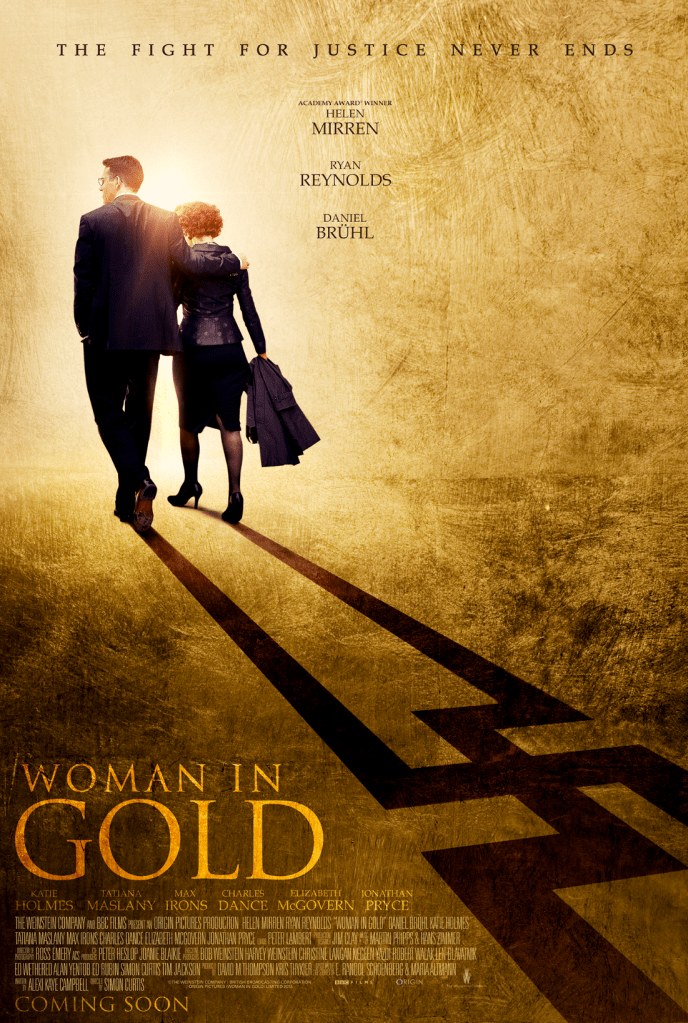
Woman in Gold poster created by BBC Films, Origin Pictures, Entertainment Film Distributors, The Weinstein Company, and Constantin Film

Things I liked about the film:

The acting: Helen Mirren is an actress who has a commanding presence. While I’ve only seen a handful of her movies, the ones I have watched feature her as a lead actress or in a prominent role within an ensemble. In Woman in Gold, Helen portrays Maria, a woman desiring to reunite with a painting of her aunt. Maria was eccentric in the film. But the way she was presented in the movie was pleasant and inviting! On a trip to the airport, Randol ‘Randy’ Schoenberg and his wife are giving Maria a lift. When Randy mentions how much luggage was packed, Maria replies, nonchalantly, how they should arrive in Austria in style. Before meeting with the art museum’s archivist, Maria excitedly tells Randy how their mission is like a James Bond film, with Randy as Sean Connery. This presentation, as well as the on-screen camaraderie, made Maria someone to root for!

In my years of watching and reviewing movies, I have noticed a more successful transition of comedic actors in dramatic roles. This was Ryan Reynolds’ case in Woman in Gold. When Randy first meets Maria, the subject of her recently deceased sister is brought up. After seeing how much stuff Maria inherited from her sister, Randy jokingly remarks how she will no longer have to argue with her roommate. Remembering why Maria has her sister’s belongings, he quickly apologizes for the ill-timed joke. Even when scenes are more light-hearted, Ryan utilized his comedic acting skills. However, it never overshadowed his dramatic efforts!

The more of Daniel Brühl’s movies I see, the more I appreciate his acting talents! So, when I discovered his involvement in Woman in Gold, it piqued my interest in watching the film. Daniel portrayed Hubertus Czernin, a reporter from Austria. Because he supports the art restoration movement, Hubertus uses his resources to help Maria and Randy. The scene where these three characters are interacting for the first time showcases Daniel’s acting skills! While Hubertus is speaking about who he is and why the aforementioned movement is so important to him, you can sense how at ease Daniel is in his role. His mannerisms come across so naturally, the interaction between these three characters felt realistic. With all that said, I wish Daniel had more appearances in this film, as he was only in a handful of scenes.

The historical accuracy: As I’ve said in past reviews, an indicator of a movie’s time period is the inclusion of technology. Some parts of Woman in Gold take place in the late ‘90s. Therefore, bigger, boxier computers are shown at Randy’s law firm. Randy’s cell phone looks like one sold from around that time period, even sporting an antenna. But technology is not the only indicator of when a story takes place. A series of flashbacks show pieces of Maria’s life, including moments from around World War II. In these flashbacks, wardrobe elaborates on that story’s respective time. The World War II segments show Maria wearing sensible blouses and skirts that reach the knees. These parts of the flashbacks even show characters in tailored coats.

The legal side of art restoration: When I think of art restoration, I reflect on the process of restoring a piece to its original form. But because Woman in Gold revolves around restoring art to its original origin, the legal component is explored. A lot of well-known pieces I’m familiar with were acquired by respected museums and institutions. Therefore, I, more often than not, assumed those museums and institutions legally owned those pieces. Even if a museum or institution acquires an art piece, Randy and Maria’s story shows how difficult it is to obtain ownership of such a priceless artifact. Woman in Gold not only highlights United States law, it also addresses Austrian law. This allows the audience to witness the similarities and differences between these two legal systems.

Art tools image created by Freepik at freepik.com. <a href=’https://www.freepik.com/free-vector/flar-art-tools-pack_835368.htm’>Designed by Freepik</a>.  <a href=”https://www.freepik.com/free-photos-vectors/paint”>Paint vector created by Freepik</a>. Image found at freepik.com.

What I didn’t like about the film:

How Randy’s grandfather was an afterthought: Throughout the story, Randy’s grandfather, a renowned composer, is brought up by various characters. Maria even claims to have crossed paths with him. Since the film primarily focuses on Maria’s efforts to reunite with her aunt’s portrait, Randy’s grandfather seems like a footnote within the overall narrative. As a viewer, I get the impression Randy deeply cared about his grandfather. A shot of Randy tearing up at a concert celebrating his grandfather’s work serves as one example of this assumption. Unfortunately, I don’t feel I learned enough about Randy’s grandfather from this story.

Some rushed parts of the story: Another thing I’ve said in past reviews is how there’s only so much story you can tell within a given run-time. In the case of Woman in Gold, the movie is an hour and forty-nine minutes. Because of this and because of how long and complimented the legal process is, some parts of the story were rushed. One example was when Maria and Randy took the Austrian government to court in California. I know that any on-screen court case is going to be abbreviated for the sake of time. However, the aforementioned California case only presented the opening arguments and the end result. As someone who wanted to learn more about the legal side of art restoration, it felt like the script skipped some key elements just to get to the exciting parts of the case.

Weak segues between flashbacks and “present time”: I like how the story incorporated pieces of Maria’s life through flashbacks, giving depth to the overall narrative. Unfortunately, I found the segues between these flashbacks and “present time” weak. In one scene, Maria is looking out a window. All of a sudden, a flashback begins. Several moments later, the flashback ends abruptly. Weak segues like this one caused the flow of these scenes to feel a bit choppy.

Courtroom image created by Macrovector at freepik.com. <a href=”https://www.freepik.com/free-photos-vectors/isometric”>Isometric vector created by macrovector – http://www.freepik.com</a>. Image found at freepik.com.

My overall impression:

Before I share my overall impression, I’d like to thank every follower of 18 Cinema Lane! I appreciate the time you’ve given to reading and engaging with my content! Now, on to my overall impression of Woman in Gold! The subject of restoring art stolen during World War II has, in the past decade, received more awareness within entertainment media. In the case of the aforementioned film, it explores the legal side of that subject. I did learn how complicated the process of art ownership can be. The movie also had its strengths, such as the acting performances and the project’s historical accuracy. But due to the film’s heavier subject matter, the re-watchability rate isn’t as strong as other films I’ve reviewed. The movie had its flaws as well, with some rushed parts of the story as one example. With all that said, Woman in Gold is a film I would recommend, especially if you’re interested in the topics brought up in this review.

Overall score: 7.4 out of 10

Do you see Woman in Gold? Have you seen any films about restoring art stolen during World War II? Let me know in the comment section!

Have fun at the movies!

Sally Silverscreen
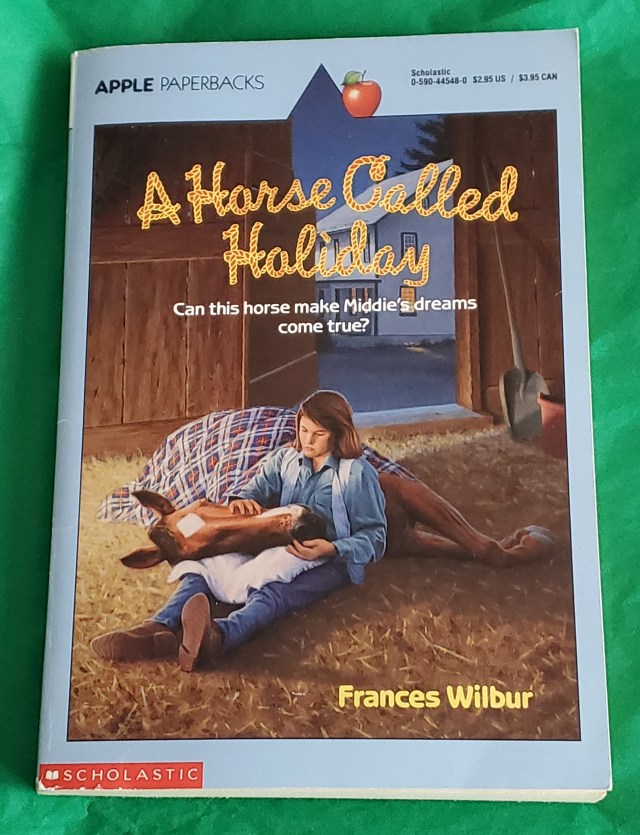
Buzzwordathon 2022 – Review of ‘A Horse Called Holiday’ by Frances Wilbur

June’s theme of Buzzwordathon is ‘All’. This means the word ‘all’ has to appear somewhere in the title. Originally, I was going to read All the Light We Cannot See by Anthony Doerr. But I figured reading a five hundred and thirty plus page book after a three hundred- and forty-three-page book (The Light Between Oceans) put me in a “reading slump” was not a wise decision. Therefore, I decided to read A Horse Called Holiday by Frances Wilbur instead. This is because a) the book is two hundred and three pages and b) the word ‘all’ is found within the word ‘called’.

Here is a photo of my copy of A Horse Called Holiday. Screenshot taken by me, Sally Silverscreen.

Despite this change of plans, there were aspects of the book I liked! Frances took the time to showcase the world of equine sports, specifically show jumping. She goes into detail on how much time, effort, and money it takes to find success in this particular hobby/extracurricular. When it comes to horse-related stories in entertainment media, specifically those for a younger audience, some of them might end up glamorizing the idea of horse ownership. With that said, I appreciate Frances’ realistic approach to equine related activities. I also liked the protagonist, Meredith “Middie” Scott! Even though she has her flaws, Middie has admirable qualities as well. One of them is how hard she works toward her dream of being a successful horse rider. Throughout the story, Middie takes care of other people’s horses. She does this to gain riding experience and earn money to afford a horse of her own. Since A Horse Called Holiday would be classified as a middle grade story, Middie is a good character for younger readers to look up to. At various points in the book, the text is written in italized letters. These passages are from the titular horse’s perspective.  Through these passages, the reader learns more about Holiday’s past, such as why he is so good at jumping fences. Insight into why Holiday reacts the way he does is provided, giving a unique component to this story!

Horse with saddle photo created by Topntp26 at freepik.com. <a href=’https://www.freepik.com/free-photo/stallion-black-equine-race-sky_1104246.htm’>Designed by Freepik</a>. <a href=”https://www.freepik.com/free-photos-vectors/background”>Background image created by Topntp26 – Freepik.com</a>. Image found at freepik.com.

In the book’s synopsis, it states “Middie’s always taken the easy way out”. Some characters remind Middie how she rushes through certain tasks. But throughout the story, these claims didn’t feel consistent. That’s because, over the course of the book, the reader also sees Middie working hard toward her dream. Since there was more evidence for the latter than the former, it felt like the text was giving mixed messages. An overarching issue within Middie’s life was how she felt unappreciated due to her birth being “unexpected”. Because most of the story focuses on Holiday’s training, Frances ends up telling instead of showing the Scott family’s struggles. This emphasis on Holiday’s training also caused the overall conflict to be weaker. While it does provide interesting insight into show jumping, some readers might find A Horse Called Holiday boring due to the limited amount of intrigue.

In my opinion, A Horse Called Holiday is a fine, harmless, horse-related story. In fact, it would be a good introduction to horse-related literature. Without spoiling the book, I will say the resolutions were nice, but expected. However, the story is straight-forward and easier to follow.

Overall score: 3.6 out of 5 stars

Have fun during Buzzwordathon!

Sally Silverscreen
Disclaimer: There is one chapter in A Horse Called Holiday featuring horses getting hurt. One rider is described as “plump” and Holiday’s deafness is described as a “handicap”.

Take 3: Point of Origin Review

When the subject of “disaster films” is brought up, one will usually think of films revolving around over-exaggerated, fictionalized disasters. Whether it’s Sharknado or The Day After Tomorrow, these types of titles have become the faces of the “disaster film” category. But what if a movie depicts a real-life disaster that could be experienced by anyone? This is the case of my Disaster Blog-a-Thon entry, Point of Origin. Last month, I searched on Wikipedia for a title to review for May’s Genre Grandeur. During that search, I stumbled across the aforementioned 2002 HBO production. After reading the film was a “fact-based drama about an arson investigator searching for the perpetrator of a string of deadly fires in 1980s California”, I knew it was the perfect choice for J-Dub and Pale Writer’s event! Before I start this review, I would like to point out how this marks two firsts for 18 Cinema Lane. Not only is this my first time participating in the Disaster Blog-a-Thon, this is also the first HBO film reviewed on my blog!

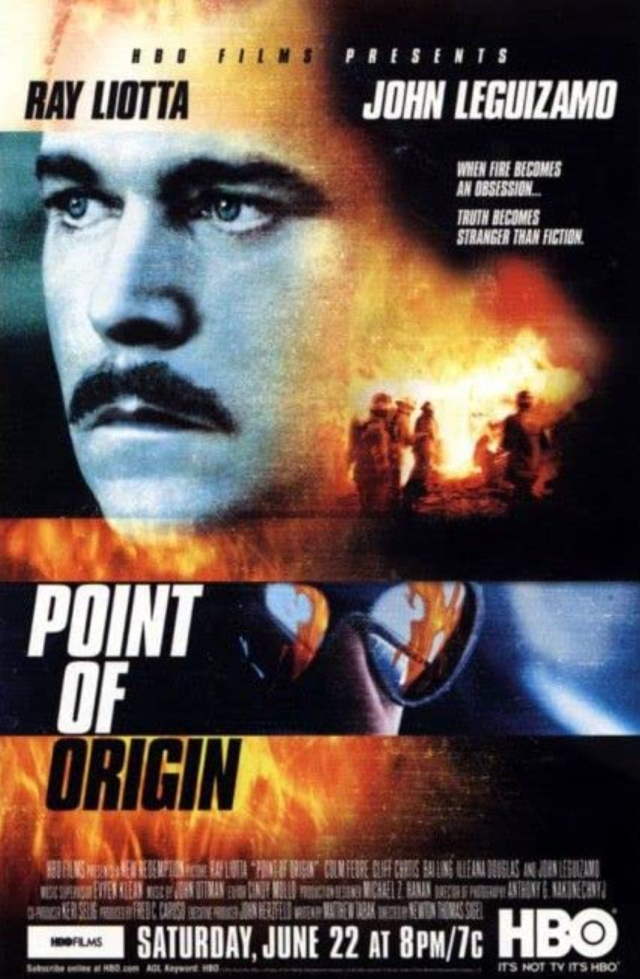
Point of Origin poster created by HBO Films and New Redemption Pictures

Things I liked about the film:

The mystery: For the most part, the mystery in Point of Origin allowed the audience to experience it alongside the characters. What also helps is how the mystery started right at the beginning of the film. This immediately hooked the audience into the story, while also giving them a shared journey with the key players on screen. There was room for viewers to speculate what would happen in the story. That gave them the opportunity to interact with the film’s mystery. Three separate components played a role in the overarching narrative. While I won’t give anything away, it was interesting to see these components come together.

The special effects: When John was investigating a crime scene, he would attempt to figure out how the fire started. Toward the beginning of the film, this thought process was visualized through special effects. As John is recounting the information, the actual fire is played out in reverse on screen. This is very different from other mystery movies, as flashbacks might be utilized to speculate the cause of a crime. When it came to the fires themselves, it appeared as if they actually took place in a given scene. It may have been possible for the movie’s creative team to insert footage of fires through editing or CGI, as Point of Origin was released in 2002. However, practical effects were an interesting choice. This creative decision reminded me of productions like The Crow.

Showcasing the dangers of fire: While investigating a local fire, John and his co-worker, Keith, examine a young boy who died on the crime scene. Despite only the victim’s face being shown, it is blackened due to smoke and flame exposure. Later in the film, John visits a surviving burn victim in the hospital. The victim’s face and part of his hand are covered in burns. He even claims that it hurts to open his eyes. Due to the nature of Point of Origin, the story is heavier in tone. However, the incorporation of the dangers of fire never felt like they were there for “shock value” or as a tactic to scare the audience. If anything, it was shown just enough to get the point across.

The Second Disaster Blog-A-Thon banner created by J-Dub from Dubsism and Pale Writer from Pale Writer

What I didn’t like about the film:

Bai Ling’s limited presence: Bai Ling was cast as John’s wife, Wanda Orr, in the 2002 HBO film. Her involvement in Point of Origin is one of the reasons why I sought out this movie, as she is the top billed actress. When I watched the film, however, I discovered Bai appeared in only a handful of scenes. Compared to some of Bai’s other projects, her talents were under-utilized in Point of Origin. It also seems like the main supporting actress, Illeana Douglas, received more screen-time than Bai. Bai did a good job with the acting material she was given. But this situation is very reminiscent of Katharine Hepburn’s involvement in 1994’s One Christmas, where Katharine appeared in about five scenes despite being that film’s top billed actor.

A confusing time period: As I mentioned in the introduction, Point of Origin takes place in the 1980s. Elements from that decade were incorporated into the film, such as vehicles and a typewriter used by John at various moments in the story. Meanwhile, Bai’s wardrobe looked like it came straight from the early 2000s. There was also a scene where a store patron tells another patron not to smoke in the store. This attitude was more prevalent in the 2000s, as smoking in public places was more accepted in the 1980s. The inconsistency with the film’s historical accuracy was so confusing, it was, on a few occasions, distracting.

An unidentified red-haired man: Throughout the movie, a red-haired man made multiple appearances. I won’t spoil the movie for anyone who hasn’t seen it. But I will say when everything was said and done, I don’t feel like I received a satisfying explanation of who that character is. Yes, I can assume the red-haired man’s identity. However, when it comes to that character, the movie was building up to something without providing a pay-off.

Magnifying glass and fingerprint image created by Alvaro_Cabrera at freepik.com. <a href=’https://www.freepik.com/free-vector/loupe-over-a-fingerprint_853908.htm’>Designed by alvaro_cabrera</a>. <a href=”https://www.freepik.com/free-photos-vectors/glass”>Glass vector created by Alvaro_cabrera – Freepik.com</a>. Image found at freepik.com.

My overall impression:

For the Disaster Blog-a-Thon, I chose to talk about a film that revolved around a real-life disaster. This is because, in my opinion, these types of titles aren’t talked about as much within the realm of “disaster films”. When it comes to Point of Origin specifically, it was a fine, competently made, intriguing movie. But the 2002 HBO project made me feel similarly to Red Corner. This is ironic, as Bai Ling was cast as the lead actress in both films. What I mean by my aforementioned statement is I held higher expectations for each film, only to be somewhat let down by them. As I’ve said before on 18 Cinema Lane, the historical accuracy works when the creative team places emphasis on the details. In Point of Origin, however, it seems like the film’s creative team forgot, at times, their project took place in the 1980s. This is because some aspects of the film reflected the time of the film’s release; the early 2000s. I haven’t seen a lot of HBO films, so I can’t make any comparisons with Point of Origin. But I will say, based on other made-for-TV mystery productions, this one felt closer to the middle of the road.

Overall score: 7.2 out of 10

Have you seen Point of Origin? Are there any HBO films you’d like to see reviewed on 18 Cinema Lane? Please let me know in the comment section!

Have fun at the movies!

Sally Silverscreen