Take 3: Les Enfants Terribles Review (Clean Movie Month — #4)

Several months ago, I recorded the French film, Les Enfants Terribles, on my DVR. Since I don’t watch many foreign films, I wanted to see this film as a way to expand my cinematic horizons. When I found out that this particular movie was released during the Breen Code era, in 1950, I was curious to see if any traces of the Breen Code could be found in the film. So, that is why I chose Les Enfants Terribles for one of my Clean Movie Month reviews! If you read my review of Madeleine, you would know that Les Enfants Terribles is not the first foreign film I reviewed for this blogathon. In fact, I was quite surprised that Madeleine was approved by the Breen Code. An interesting coincidence is both Madeleine and Les Enfants Terribles were released in the same year. So, it’ll be interesting to see how this French film from 1950 compares to the British film, also from 1950!

20190721_222820
I’ve seen other posters for this movie, but I like this one the best! Screenshot taken by me, Sally Silverscreen.

Things I liked about the film:

The acting: The acting in Les Enfants Terribles was one of the finer points of the movie! The two main characters, Paul and Elisabeth, were very interesting to watch because of the lead stars’ acting performances! Nicole Stephane brought the character of Elisabeth to life with a sense of fierceness and strength. These two elements helped her carry the film. She was also able to stand on her own merits when it came to acting among the other actors and actresses! Edouard Dermit portrayed Elisabeth’s brother, Paul. The well-roundedness of his acting talents was very clear to see in this film. Paul goes through a lot in Les Enfants Terribles. In every scene, Edouard brought his A game and even made his character seem like he was a real person. Over the course of this story, Edouard not only incorporates a sense of realism to his character, but also pulls off an acting performance that was mesmerizing to watch!


The music: At certain points in the film, orchestral music could be heard. This type of music would normally come into the movie anytime a new location was introduced. I thought this was an interesting choice because it fit the film’s overall tone. The orchestral music was grand yet sinister, highlighting Paul and Elisabeth’s journey through wealth and growing up. In one scene, Elisabeth’s husband, Michael, sings a song while playing the piano. Not only did the piano music sound good, but the song was also sung well. The music’s role in Les Enfants Terribles brought a special significance to the project!


The dynamics of the characters: Les Enfants Terribles puts more focus on the characters than the story itself. Despite this, it was fascinating to see how the characters interacted with one another. Throughout the film, lives are transformed and relationships are built among Paul, Elisabeth, and the people around them. What makes this part of the movie work is the screen-writing as well as the acting. These two elements provide the perfect combination for making the characters as interesting as they were.
Clean Movie Month banner
Clean Movie Month banner created by Tiffany and Rebekah Brannan from Pure Entertainment Preservation Society. Image found at https://pureentertainmentpreservationsociety.wordpress.com/2019/07/01/cleanmoviemonth85-is-here/.

What I didn’t like about the film:

Lack of explanation for Paul and Elisabeth’s “game”: During the movie, Paul and Elisabeth play a game that only the two of them know about. However, no explanation to what this game is or how it’s played was ever given in the story. While watching the film, I tried to figure out more about the game. But, without an explanation, it was very difficult to understand the importance of it. I also noticed that this game was featured in the story when it was convenient for the plot. This is because the game itself was mentioned on very few occasions.


A misleading premise: According to Turner Classic Movies’ (TCM’s) website, Les Enfants Terribles is about “a brother and sister close themselves off from the world by playing an increasingly intense series of mind games with the people who dare enter their lair”. As I’ve already mentioned, Paul and Elisabeth’s “game” wasn’t well explained or featured in the movie for very long. The sibling relationship of Paul and Elisabeth seemed very toxic, from calling each other names to treating each other horribly. If anything, this movie was about two things: siblings who grow apart and a young woman who slowly becomes obsessed with power and control. Since the movie was different than its synopsis, I found TCM’s description to be misleading.


An unclear time-line: Les Enfants Terribles takes place over the course of several years. But, to me, this movie felt like all the events happened within a year. This was because there were no clear explanations about when certain situations were taking place. Time-cards and any mentions of the year were not found in this movie. Even the narrator didn’t talk about how much time had passed. The film’s time-line became very confusing, leaving me wondering how many years were included in the story. Because of the unclear time-line, the characters appeared as if they were frozen in time.

3 paris
Illustration of Paris, France created by Freepik at freepik.com. <a href=”https://www.freepik.com/free-photos-vectors/travel”>Travel vector created by freepik – http://www.freepik.com</a>. Image found at freepik.com.

My overall impression:

I ended up liking Les Enfants Terribles more than I thought I would! It was an interesting film that had a few surprises in store. The movie itself is a character study/character driven story, showing how they evolve as time goes on. The acting was really good and the characters were well developed, helping this narrative become engaging. As I was watching Les Enfants Terribles, I could see some of the Breen Code’s influence. One example was anytime the doctor came to examine Paul. Either the examination itself was not shown on-screen or the doctor would only be shown listening to Paul’s heartbeat. However, when it came to this film, the Breen Code could have been enforced more. There were several times where characters were swearing, either at each other or just for the sake of it. This shocked me because not only was Les Enfants Terribles released in 1950, but it was also released during the Breen Code era. I was surprised that this movie got away with having this much language in the early ‘50s. Was this particular film the beginning of the end for the Breen Code? That’s definitely a question for another day.


Overall score: 7 out of 10


Have you ever watched a French film? Which foreign film have you always wanted to see? Share your thoughts in the comment section!


Have fun at the movies!

Sally Silverscreen

Take 3: Madeleine Review (Clean Movie Month — #3)

When I discovered the film, Madeleine, on Turner Classic Movies’ (TCM’s) website, the movie’s premise is what caught my attention. I recorded the film on my DVR and saved it for a special occasion. Since Madeleine was released in 1950, during the Breen Code era, I finally found that special occasion. While learning more about the movie, I made some surprising discoveries. The first was who the director is. David Lean not only directed Madeleine, but he also directed Lawrence of Arabia, which I reviewed last November. Another discovery I made was where the film was made. Madeleine was created in the United Kingdom, meaning that it’s considered a foreign film. The fact that this movie was approved by the Breen Code, as the logo can be seen during the opening credits, surprised me. This is because I was given the impression, after reading the article, “The Production Code of 1930’s Impact on America” from Pure Entertainment Preservation Society, that foreign films weren’t directly impacted by the Breen Code. On IMDB, Madeleine is labeled as a crime drama. This detail made me curious as to how the Breen Code would influence this story. Well, the wait is over, as it’s now time to review 1950’s Madeleine!

Madeleine poster
Madeleine poster created by The Rank Organization. Image found at https://en.wikipedia.org/wiki/File:Madeleine_1950.jpg.

Things I liked about the film:

The acting: I liked watching the various acting performances in this film! Everyone did a good job with the acting material they were given! This is especially the case for the star of the movie. Throughout Madeleine, Ann Todd carried the movie with versatility. This helped her portrayal of the titular character be as believable as possible. Another performance that I enjoyed seeing was Ivan Desny’s! The way he portrayed Emile L’Angelier came across very believably. One such example is anytime Emile appeared ill. Like Ann, Ivan brought versatility to his performance. It worked in his favor, as his character was captivating to watch on-screen!


The setting: Like I said about Jersey Boys, the world in Madeleine was well crafted! All of the locations, as well as other aspects of the film, looked and felt like the movie’s respective time period. Even the artwork on the walls of the Smith family home reflected the Victorian era. This showed me that the creative team behind this movie were very detail oriented, caring about what was presented on-screen. Also, like Jersey Boys, the world in Madeleine was very immersive! It made the audience feel like visiting this created world was possible.


The on-screen chemistry: I was pleasantly surprised by the on-screen chemistry of Ann Todd and Ivan Desny! Anytime they were on-screen together, they made the relationship of Madeleine and Emile appear believable. Because of this, it was interesting to watch their relationship evolve as the film went on. Ann and Ivan’s on-screen chemistry kept me invested in their on-screen interactions. Even though I knew the fate of Madeleine and Emile’s relationship, I was curious about which directions they would go in. This aspect of the characters definitely added something interesting to the story!

265038-P4TIN9-926
Envelope with hearts image created by Freepik at freepik.com. <a href=’https://www.freepik.com/free-photo/hearts-and-pink-envelope-for-mothers-day_1950691.htm’>Designed by Freepik</a>. <a href=”https://www.freepik.com/free-photos-vectors/love”>Love image created by Freepik</a>. Image found at freepik.com.

What I didn’t like about the film:

The accents: As I said in my Jersey Boys review, accents in movies can be hit or miss. The characters in Madeleine had accents, but they didn’t reflect where they were from. This story takes place in Glasgow, Scotland. However, every member of the Smith family speaks with a British accent. Emile L’Angelier is known as a Frenchmen. While Ivan tried his best to speak with a French accent, it wasn’t consistent enough to sound believable. More often than not, Ivan could be heard speaking with a British accent. I understand that the film was created in the United Kingdom. But it never felt like an effort was made from the film’s creative team to encourage the appropriate accents for their characters.


A drawn-out plot: Madeleine is about a woman who is accused of murdering her lover. However, the crime itself isn’t featured in the story until the film’s half-way point. The first half of the movie is dedicated to showing the build-up to the crime. Personally, I think this part of the story didn’t need to last that long. At most, the build-up could have been fifteen or twenty minutes. If this was done, the narrative would get straight to the point, expressing the script’s idea sooner. This also could have helped shorten the film’s run-time.


A lack of mystery: When I found out that this film was considered a crime drama, I was looking forward to seeing a mysterious and intriguing story unfold on-screen. Unfortunately, there wasn’t a lot of mystery in this movie. The creative team behind Madeleine tried to incorporate a mystery in the second half of the film. But because the build-up to the crime was featured in the first half of the story, the second half wasn’t as effective as the creative team had hoped. Madeleine should have taken place during Madeleine’s trial, with flashbacks coming into the story during people’s testimonies. With this approach to the story-telling, the audience could have been left wondering throughout the film if Madeleine was, indeed, guilty.

Clean Movie Month banner
Clean Movie Month banner created by Tiffany and Rebekah Brannan from Pure Entertainment Preservation Society. Image found at https://pureentertainmentpreservationsociety.wordpress.com/2019/07/01/cleanmoviemonth85-is-here/.

My overall impression:

Madeleine made me feel the same way that Jersey Boys did. Both films are just ok. There are things about them that I can appreciate. Yet, they were held back from being better than they were. I expected more from Madeleine, thinking I would get an intriguing mystery story. Instead, the narrative was drawn-out and the mystery aspect was poorly executed. But, throughout the movie, I could tell that the creative team behind Madeleine had put in an effort to make the best film they could. Similar to Citizen Kane, I could see the Breen Code’s influence within Madeleine. Anytime Madeleine and Emile kissed, they turned their heads to hide the kiss from the audience. All of their kisses only lasted a few seconds. Madeleine and Emile engaged in an affair throughout the film. But because of how the script was written, their relationship was never labeled as an affair. Also, the word “affair” was never said by any of the characters. After watching this film, I’m now curious to find out what other foreign films were approved by the Breen Code.


Overall score: 6 out of 10


Have you seen any of David Lean’s films? Which foreign film released during the Breen Code era is your favorite? Share your thoughts in the comment section!


Have fun at the movies!

Sally Silverscreen

Take 3: Citizen Kane Review (Clean Movie Month — #2)

For my second review for Clean Movie Month, I decided to talk about Citizen Kane! Yes, the same movie that received a lot of critical acclaim and was placed in the number one spot on AFI’s list of the Top 100 Movies of All Time. This was the first time I had ever seen this film. Since I happened to have this movie on my DVR, I finally had an excuse to watch it. It’s interesting to see how many films from the Breen Code era have become beloved classics. On AFI’s list, twenty-nine films are from the Breen Code era. This tells me that the beliefs of Joseph I. Breen and the way he saw film are not only important to film history, but also to cinema in general. So, without further ado, let’s give this review of 1941’s Citizen Kane a grand welcome!

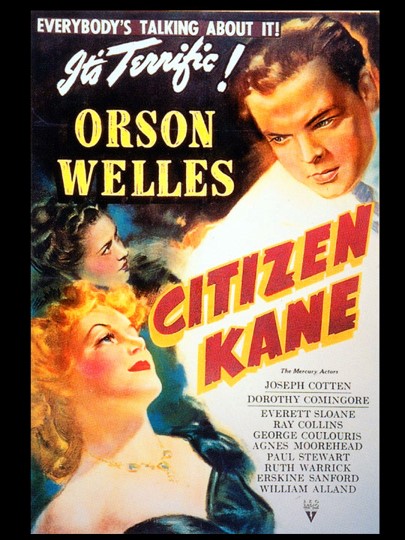
Citizen Kane poster
Citizen Kane poster created by Mercury Productions and RKO Radio Pictures. Image found at http://www.tcm.com/tcmdb/title/89/Citizen-Kane/#.

Things I liked about the film:

The acting: I was pleasantly surprised by the acting performances in Citizen Kane! Before watching this movie, I had never known that Orson Welles was an actor. His portrayal of Charles Kane impressed me more than I expected! Orson’s ability to convey emotions at the right moments enhanced his performance, making his character appear more realistically. Another performance that I was impressed with was Dorothy Comingore’s! She made her character, Susan, interesting by the way she interacted with the other cast members/characters. Her reactions to different situations made Susan feel like she was more than just a character. From performing at the opera to meeting Charles for the first time, Susan came across as a real-life person on-screen.


The evolution of Charles Kane: The majority of this story is about the life of Charles Kane. Throughout the film, the audience gets to witness how he evolves as a person. This evolution is shown in a very believable way! The screen-writing and the acting performance of Orson Welles helped make this part of the story effective. Besides portraying the lead character, Orson co-wrote the film’s script. Because of this, it shows that he appeared to have an understanding of not only the character he was portraying, but also the character he was writing.


The cinematography: Citizen Kane had some interesting cinematography! Toward the beginning of the film, the camera appeared to use a special lens that made the audience feel like they were looking through Charles’ fallen snow-globe. This gave that scene a unique visual perspective. In some scenes, a person was in the foreground and another person was in the background. One example is when Charles is finishing Jedediah’s article about Susan’s opera performance. This was an interesting way of showing who the focus of the scene was. The cinematography in this film made the overall project have a compelling visual aesthetic!

Clean Movie Month banner
Clean Movie Month banner created by Tiffany and Rebekah Brannan from Pure Entertainment Preservation Society. Image found at https://pureentertainmentpreservationsociety.wordpress.com/2019/07/01/cleanmoviemonth85-is-here/.

What I didn’t like about the film:

  • No connection to the characters: When characters are introduced in a film, there is always a chance for the audience to connect with, at least, one of them. An experience that a character has or a character’s unique talent can help make this connection happen. In Citizen Kane, however, I never felt like I was able to connect with any of the characters. Yes, I got to know them over the course of the story. But, getting to know a character and connecting with them are two different things. What didn’t help was having other people share Charles Kane’s life-story. This reminded me of the movie, Edward, My Son, where the audience never gets to connect with the character of Edward, but get to know him through the dialogue of the other characters. The only thing that the audience could do was observe Charles’ story. Charles himself, as well as the other characters, always felt like they kept their distance from anyone watching the film.


  • Drawn-out scenes: There were several scenes in Citizen Kane that lasted longer than they should have. One example is when Emily and Charles’ marriage is deteriorating. I understand that the purpose of this scene was to show how Emily and Charles’ relationship evolved as time went on. However, this idea could have been expressed in a shorter amount of time. Another example is when Susan is putting her puzzles together. Similar to my previous statement, I understand that this scene was meant to show how trapped and isolated Susan felt in her new home. But, again, the visual explanation of this concept could have been shortened.


  • The run-time: The more I review movies on 18 Cinema Lane, the more I notice that a film’s run-time can make or break that film. This goes for Citizen Kane, whose run-time was one hour and fifty-nine minutes. Personally, I think this run-time made the movie feel longer than it was intended. This is probably why some scenes felt drawn-out, as I previously mentioned. I think Citizen Kane could have benefited from having a run-time set at one hour and about twenty minutes. That way, drawn-out scenes are shortened and their ideas would be straight to the point.
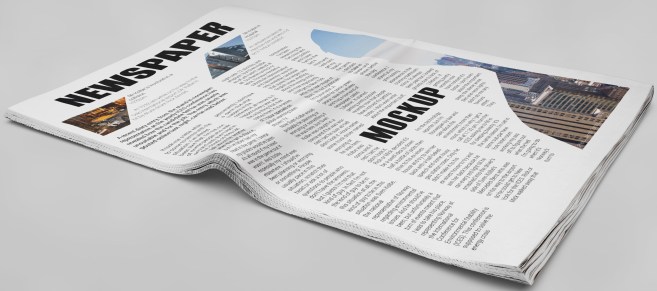
OYHKOT0
Newspaper image created by Zlatko_plamenov at freepik.com. <a href=’https://www.freepik.com/free-psd/newspaper-mockup_1386098.htm’>Designed by Freepik</a>. <a href=”https://www.freepik.com/free-photos-vectors/mockup”>Mockup psd created by Zlatko_plamenov – Freepik.com</a>. Image found at freepik.com.

My overall impression:

So, now that I’ve finally seen Citizen Kane, it’s time for me to share my overall impression of the movie. Personally, I thought it was just decent. It’s not as good or great as other people have claimed it to be. The way I feel about this movie is similar to how I felt about The Christmas Card. There are so many Hallmark fans who like or love that film, yet I think it’s just ok. In my opinion, Citizen Kane has been over-hyped as the years have gone on. But I’m glad I gave this movie a chance because I can now form my own honest opinion about it! The effect of the Breen Code was more obvious in Citizen Kane than in Stowaway. One example is when Charles says “Gosh only knows”. Also, in this story, there’s a subplot about Charles having an affair with Susan. Because of the way the script was written, the idea of an affair or the word itself is never explicitly stated. Even though I didn’t like Citizen Kane as much as other people did, it’s nice to see a Breen Code era film receive a good amount of recognition.


Overall score: 7.1 out of 10


Have you enjoyed my Clean Movie Month reviews so far? Is your favorite Breen Code era film on AFI’s list of movies? Leave your thoughts in the comment section!


Have fun at the movies!

Sally Silverscreen
Why You Should Give the Film, Boys Town, a Chance

For Pure Entertainment Preservation Society’s Favorite Code Film Blogathon, I reflected on all of the Breen Code era movies that I’ve seen and/or reviewed since starting 18 Cinema Lane a year ago. One film, that I watched back in May, that left a good impression on me was 1938’s Boys Town. Before 2019, I had never even heard of this movie. But I’m glad I gave the film a chance, as I thoroughly enjoyed it! Boys Town had the components that I look for in a movie; a good story with likable characters. It’s also based on a real-life person as well as a real-life non-profit organization. This is a film that I think people should give a chance. To explain why, I created a list of reasons to support my opinion. One of my goals for this blog is to encourage others to watch films that they may not have seen before. So, if this post accomplishes that goal, I would feel like I helped someone out.

Favorite Code Film blogathon banner
The Favorite Code Film Blogathon banner created by Tiffany and Rebekah Brannan from Pure Entertainment Preservation Society. Image found at https://pureentertainmentpreservationsociety.wordpress.com/2019/06/07/announcing-the-favorite-code-film-blogathon/.

Fantastic Acting Performances

When I review a film, one of the first things I talk about is the acting. This is because the acting performances are one of the first things you see in a movie. In Boys Town, the actors in this cast gave fantastic acting performances! One of the most notable is Mickey Rooney’s performance as Whitey Marsh. Over the course of the story, Whitey evolves from a self-centered youngster to one of Boys Town’s biggest supporters. Mickey’s portrayal of this character helped make this evolution believable. In fact, this is one of the best performances that Mickey has ever given in his career! That’s not the only acting performance that impressed me. Spencer Tracy’s portrayal of Father Flanagan is consistent in not only Boys Town, but also in the sequel, Men of Boys Town. With the right amount of emotionality, Spencer made his character a likable individual. Father Flanagan was stern when he needed to be, yet selfless and caring toward the residents of Boys Town. Throughout this movie, you can tell that Father Flanagan always has his heart in the right place.


Based on a True Story

As I said in the introduction, Boys Town is based on a real-life person and a real-life non-profit organization. Before watching this movie, I was familiar with Boys Town as a charity. Their mission and the people that have benefited from Boys Town are things that I learned about years prior. When I watched the film, I learned more about Boys Town and the history associated with it. While there were liberties that were taken in this story, the movie is an educational lesson about who Father Flanagan is and what his mission was. Come to think of it, I haven’t seen or heard of many movies that tell the story about an existing non-profit organization. This is something that makes this film truly special!

Boys Town poster
Boys Town poster created by Metro-Goldwyn-Mayer. Image found at https://en.wikipedia.org/wiki/File:Boys_town.jpg.

Good Quality Content

Because Boys Town and its sequel, Men of Boys Town, were released during the Breen Code era, there isn’t any cinematic content this is questionable or offensive. Because of this, I will be talking about the positive content that is featured in this film. A large portion comes from the lessons and messages included in this narrative. Giving second chances is a fluid message, highlighted in Whitey’s subplot. By bringing Whitey to Boys Town, Father Flanagan gives Whitey a second chance at life. Despite Whitey’s negative attitudes toward his new surroundings, Father Flanagan never gives up on him. One important lesson that can be found in Boys Town is putting other people before yourself. During the entirety of this story, Father Flanagan is always looking out for the residents of Boys Town. Even when he receives hundreds of dollars in donations and plenty of praise, he still tries to figure how he can help others to the best of his abilities. Messages and lessons like these can be relatable for all members of the audience!


An Entertaining Sequel

I’ve been saying in this post that Boys Town was given a sequel called Men of Boys Town. Before I watched this film, I was skeptical about its quality. Since its predecessor was based on a true story, I wasn’t sure how the sequel would hold up. I was proven wrong, however, as I was met by a movie that was just as good or better than the first one! While Whitey’s subplot repeats some of the same story-points from Boys Town, the overall narrative of Men of Boys Town expands upon the story from the first film. New characters are introduced, causing new stories to be told. With this comes new ideas and messages, such as trauma, loss, and finding ways to heal. Men of Boys Town is one of the few sequels that actually compliments the film that came before it. If you do give Boys Town a chance, check out Men of Boys Town as well!

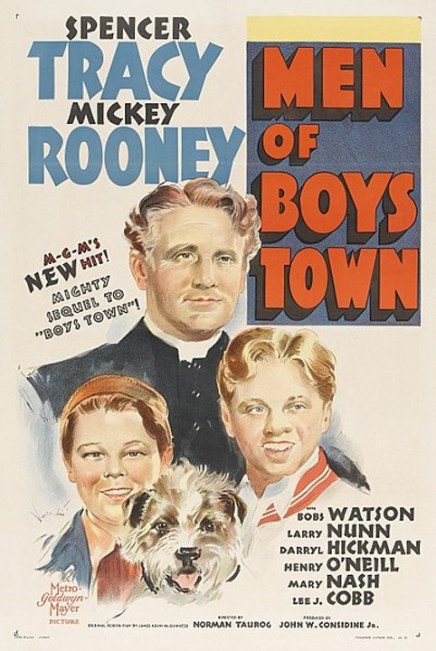
Men of Boys Town poster
Men of Boys Town poster created by Metro-Goldwyn-Mayer. Image found at https://commons.wikimedia.org/wiki/File:Men_of_Boys_Town_poster.JPG.

My Final Statement

In my review of Stowaway, I shared that I would be reviewing a Breen Code era film every week during Clean Movie Month. This gives me a chance to watch even more movies that I haven’t seen before. That’s the great thing about being a movie blogger, as I not only get to watch films that are new to me, but I also get to share these films with others. In the month of July, films that were released between 1934 and 1954, also known as the Breen Code era, are celebrated by anyone and everyone who enjoys movies. Because of Tiffany and Rebekah, from Pure Entertainment Preservation Society, more people can learn about the Breen Code and why it’s an important part of film history. Be sure to stay tuned for the rest of my Clean Movie Month reviews, which will come as July goes on.


Have fun at the movies!

Sally Silverscreen
What the Code Means to Me: Breen, Hallmark, and Me

Dumbo (2019). Men in Black International. Poms. Dark Phoenix. These are a few examples of movies that have, recently, lost their battles in the Cinematic Colosseum. When a film underperforms or doesn’t reach expectations, people always look for reasons why this happened. It is a way of providing a sense of closure to the situation. Some say that the reason why 2019 has seen more cinematic failures than successes is because of an absence of original and innovative ideas. Others say that the creative teams behind these projects put more emphasis on politics than the story itself. Another reason that has been discussed is having too many remakes, sequels, and franchise continuations competing against each other within a short amount of time. Whatever the reason, I think we can all agree that these films probably failed because, simply, movie-goers just weren’t interested in the overall product. This seems very different from the time-period of 1934 to 1954, when the Breen era not only existed, but also thrived. During this particular stretch of time, it feels like more films were both successful and memorable for the right reasons. Take 1939, for example. Within this year alone, movie-goers were given three films that cemented their place in cinematic history; Gone with the Wind, Mr. Smith Goes to Washington, and The Wizard of Oz. The fact that these very distinct films placed in the Top 10 at that year’s box office proves that during the Breen era, there was something for everyone at the cinema. With the Breen Code absent in today’s cinematic world, an interesting media company that, I feel, has embraced Joseph I. Breen’s way of thinking is Hallmark. The more I’ve thought about the Breen Code and its impact on film, the more I see the similarities within the kinds of movies that Hallmark creates. Even though these films are featured on either television or digital services, it proves that there is hope for the Breen Code to make a comeback.

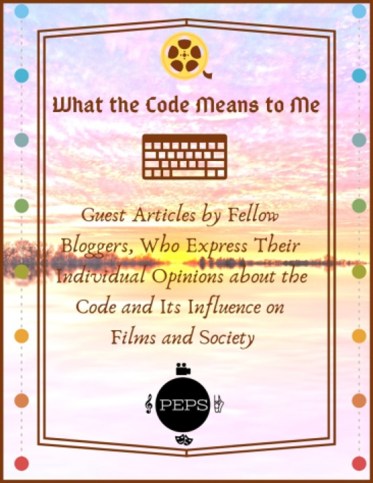
What the Code Means to Me poster
What the Code Means to Me poster created by Tiffany and Rebekah Brannan from Pure Entertainment Preservation Society. Image found at https://pureentertainmentpreservationsociety.wordpress.com/2018/12/17/what-the-code-means-to-me/.

Before discovering the blog, Pure Entertainment Preservation Society, I had never known about Joseph I. Breen and the Breen Code. In fact, I had always believed that the MPAA (the Motion Picture Association of America) was the “end all, be all” when it came to judging a film’s content. It wasn’t until I watched the video, “Why You Shouldn’t Listen to the MPAA (Podcast Excerpt)” from the Youtube channel, Rachel’s Reviews, that I started to change my views about this particular rating system. In this video, Rachel and her friend, Conrado, talk about why movie-goers should form their own self-censorship than solely rely on the MPAA. When I came across Pure Entertainment Preservation Society last October, while looking for upcoming blogathons to participate in, I was introduced to who Joseph I. Breen was as well as the Breen Code itself. In preparation for this article, I read as much as I could about Joseph and his Code. Tiffany and Rebekah Brannan, the creators of Pure Entertainment Preservation Society, have done a wonderful job at educating their readers and followers about the Breen Code and advocating its return to entertainment. Their articles are very informative and interesting to read. After learning all of this information, I feel that a newer and stronger code for judging a film’s content needs to be put in place. While having the MPAA is better than having nothing at all, its rules and guidelines seem to be more on the relaxed side. In the previously mentioned video, Rachel and Conrado discuss some of the ways that a film receives a particular rating. One example is the use of blood within the film’s context. Rachel brings up the example of The Hunger Games receiving a PG-13 rating due to the absence of blood while “contestants” are dying during the event within the story. She feels that because blood isn’t shown during these moments, the film is “dehumanizing the situation”. Had The Hunger Games been created during a time when something similar to the Breen Code existed, either this film would have never seen the light of day or the “contestants” would have died off-screen.

Easter Under Wraps poster
Easter Under Wraps poster created by Crown Media Family Networks and Hallmark Channel. Image found at https://www.crownmediapress.com/Shows/PRShowDetail?SiteID=142&FeedBoxID=845&NodeID=302&ShowType=&ShowTitle=Easter%20Under%20Wraps&IsSeries=False.

The movies and shows from Hallmark make up a large percentage of the content on my blog. Sometimes, I review films from Hallmark Channel, Hallmark Movies & Mysteries, and Hallmark Hall of Fame. In some of my Word on the Street posts, I’ve talked about movie news related to upcoming Hallmark projects. I also conduct two re-cap series for When Calls the Heart and Chesapeake Shores. Hallmark has created a reputation as being a family-friendly company in both appearance and content. As I mentioned in the introduction, things within the Breen Code sound like the type of material that Hallmark creates and distributes on their networks. Within the Hallmark entertainment spectrum, there are three television networks that air movies; Hallmark Channel, Hallmark Movies & Mysteries, and Hallmark Drama. Each network has their own unique and consistent tone, while still maintaining the company’s created image. Hallmark Channel features films that primarily contain light-hearted, romance stories. However, the relationships featured in these movies are wholesome. In the Breen Code, it states that “pictures shall not infer that low forms of sex relationship are the accepted or common thing”. Typical Hallmark Channel films do not feature or talk about sex. The only two films that I can think of that either mention sex or imply that a couple was having sex are A Family Thanksgiving and Audrey’s Rain. Hallmark Movies & Mysteries has a darker tone than Hallmark Channel, as the majority of the network’s content is mystery related. The type of mystery that is common in these movies is the murder mystery. However, this aspect of the story is always handled in a very tasteful way. Not only is a small amount of violence shown, but a limited amount of blood is featured on-screen. The Breen Code contains a whole section about featuring murder in film. One of the points in this section says that “methods of crime should not be explicitly presented”. Sometimes, these films show how a victim is murdered. This is included to introduce the mystery and present the seriousness of the situation. Toward the end of the movie, the guilty party reveals how and why they committed the crime. But the guilty party is never “presented in such a way as to throw sympathy with the crime”. Even though Hallmark Drama has only been around for two years, it has been a network where Hallmark’s more dramatic films can be seen. These types of films are either from Hallmark Hall of Fame or from Hallmark Channel and Hallmark Movies & Mysteries that haven’t be aired in recent years. Some of these projects were created before Hallmark embraced the image they have today, even before the Hallmark Channel was introduced back in 2001. One of these films is Ellen Foster, which is a Hallmark Hall of Fame movie that was released in 1997. In this film, there is one scene where Ellen is being physically abused by her father. If this exact same movie were released by Hallmark today, that scene would never have been featured in the film. The subject of child abuse would have only been implied through the use of dialogue and subtle visual references. This suggestion would fit with the Breen Code and Hallmark’s current image, as the Code itself states that “excessive and inhuman acts of cruelty and brutality shall not be presented. This includes all detailed and protracted presentation of physical violence, torture, and abuse”. Despite this aforementioned detail, Hallmark Drama still features content that is family oriented.

Crossword Mysteries -- A Puzzle to Die For poster
Crossword Mysteries: A Puzzle to Die For poster created by Crown Media Family Networks and Hallmark Movies & Mysteries. Image found at https://www.crownmediapress.com/Shows/PRShowDetail?SiteID=143&FeedBoxID=845&NodeID=307&ShowType=&ShowTitle=Crossword+Mysteries+A+Puzzle+to+Die+For.

The previous paragraph contains some examples of how the Breen Code can be found within Hallmark’s movies. I could provide more examples, but that would mean this article would be longer than it already is. Hallmark’s commitment to providing family friendly content to their audience shows that the Breen Code, or some form of it, can return to the entertainment world. It will most likely happen in a process of events rather than a quick succession. However, this is proof that Joseph I. Breen’s intentions still have a place in our world. In the article, “The Production Code of 1930’s Impact on America” from Pure Entertainment Preservation Society, it was said that “films are merely rated but not censored”. Since this is the case, we, the movie-goers, need to take the initiative to discover a film’s content, understand why a rating was given to a particular film, and form our own choice to view or not view a film. Until the day when Joseph I. Breen’s dream can come true again, this is the only option that movie-goers currently have.

Hallmark Hall of Fame's Love Takes Flight review
Hallmark Hall of Fame’s Love Takes Flight poster created by Crown Media Family Networks and Hallmark Channel. Image found at https://www.crownmediapress.com/Shows/PRShowDetail?SiteID=142&FeedBoxID=845&NodeID=302&ShowType=&ShowTitle=Love+Takes+Flight.

For my two Breening Thursday suggestions, I would like to recommend Wild Oranges and The Trouble with Angels. Wild Oranges is a silent film from 1924 that I reviewed when I received 95 followers on my blog. The Trouble with Angels is one of the films that I reviewed during the Rosalind Russell blogathon earlier this month. It was released in 1966.


Have fun at the movies!

Sally Silverscreen
 

If you want to check out the references I mentioned in this editorial, you can type “Why You Shouldn’t Listen to the MPAA (Podcast Excerpt)”  into Youtube’s search bar or visit Rachel’s Youtube channel, Rachel’s Reviews. You can also visit these links:

The Motion Picture Production Code with Its Revisions

The Production Code of 1930’s Impact on America