Comparing with the Critics – Worst of 1976 – Gable and Lombard

This review is from my series, Comparing with the Critics. If you’d like to learn more about the series, click on the link below.

Introducing my new series, Comparing with the Critics!

In the ‘Best Films of 1976’ episode of Opening Soon…at a Theater Near You, Gene Siskel stated “1976 was a pretty lousy year for movies”. He emphasized that statement by saying “the year was littered with dogs”. Since I haven’t seen a lot of movies from 1976, I can’t agree or disagree with Siskel’s claim. But what I can do is talk about one of Siskel’s choices for worst movies of 1976. As I said in my 1976 introduction of Comparing with the Critics, one episode was primarily focused on discussing the best movies from a given year. This left Siskel and Ebert with only a few minutes to talk about some of the year’s worst films. Despite the 1976 episode’s limited selection of “bad” movies, I chose Gable and Lombard for this edition of Comparing with the Critics Worst of review. What made Gable and Lombard the most interesting title from the episode’s collection of “bad” movies was the story’s emphasis on Clark Gable and Carole Lombard’s relationship. I am somewhat familiar with Clark and Carole, as I have reviewed at least one of their movies on 18 Cinema Lane. Because I hadn’t heard of Gable and Lombard until I saw the ‘Best Films of 1976’ episode of Opening Soon…at a Theater Near You, I viewed the film as a way to expand my cinematic horizons and learn more about Carole and Clark. Now that I have seen the movie for myself, I believe Siskel’s, and even Roger Ebert’s, thoughts on the film were a tad harsh.
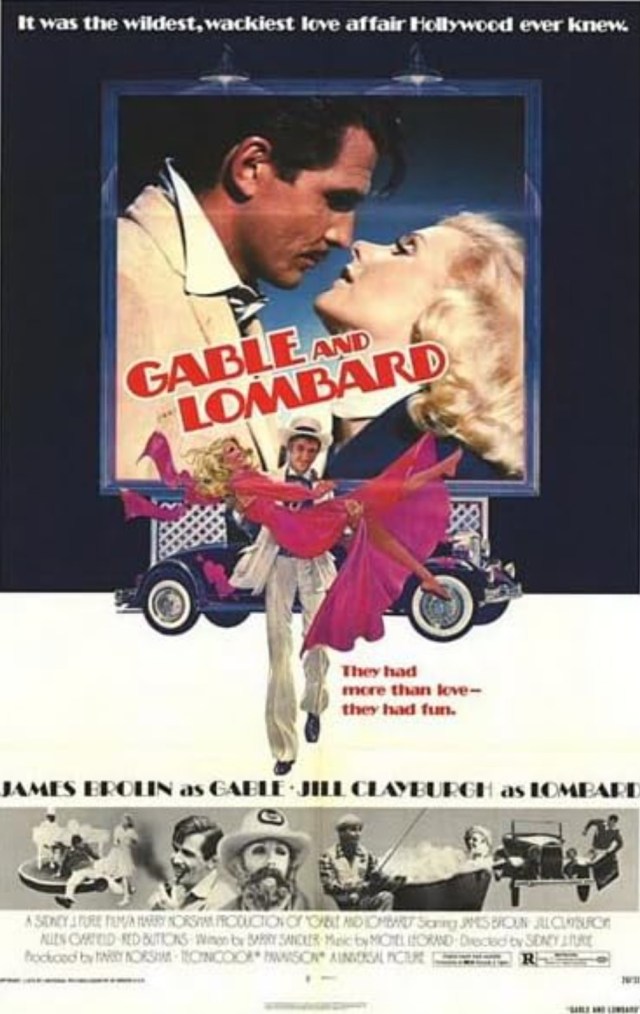
Gable and Lombard poster created by Universal Pictures

Before revealing his choices for the worst movies of 1976, Siskel says the year featured “two kinds of cinematic canines: cheap, lousy pictures and expensive, lousy pictures”. Based on what films he chose, Gable and Lombard was placed in the latter category. According to Wikipedia, the film’s budget was $4.5 million. It appears most of the budget was spent on Gable and Lombard’s set design. One scene took place outside, with the guests at a ball wearing white. Small candles surrounded the pool’s perimeter. In the pool were small islands of white flowers and candles, along with swans peacefully gliding through the water. Overall, this part of the set was absolutely gorgeous! Throughout Gable and Lombard, some scenes took place in Clark or Carole’s dressing room. These dressing rooms looked more like condominiums; distinct spaces that appear livable. Carole’s dressing room boasted a color combination of yellow and white. Featuring design choices like a white dining room set gave the dressing room a feminine style. Meanwhile, dark wood surrounded the fireplace in Clark’s dressing room. There was even a pool table located near the fireplace. These design choices created a more masculine space. Carole and Clark’s dressing rooms provided a good visual representation of how different they were despite having a similar career path.
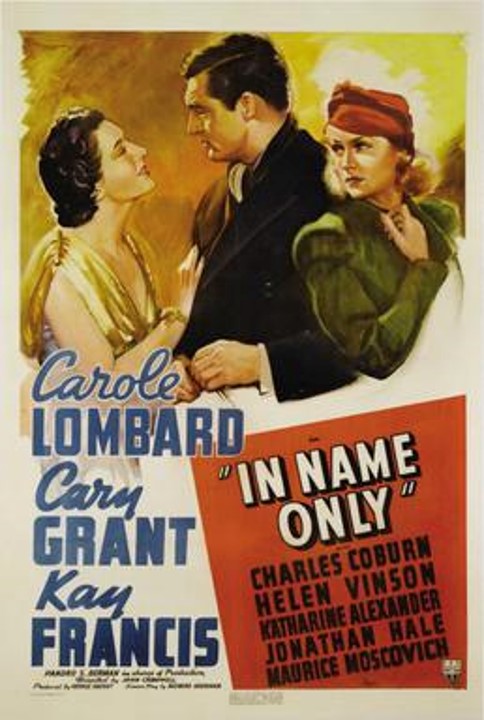
In Name Only poster created by RKO Radio Pictures. Image found at en.wikipedia.org/wiki/File:In_Name_Only.jpg

While Roger Ebert never shared his thoughts on Gable and Lombard in the ‘Best Films of 1976’ episode, he did write a review for the movie, which can be found on rogerebert.com. In his review, Ebert states “Brolin does, indeed, look a lot like Gable – but imitation here has nothing to do with flattery”. While I agree with Ebert’s opinion on James Brolin’s appearance in the movie, I disagree with the rest of Ebert’s statement. Not only did James look like Clark, he even sounded like him too! It almost felt like James transformed into another person. During Gable and Lombard, James consistently carried an easy-going attitude. This choice in acting and directing showcased Clark’s down-to-earth personality. Meanwhile, Carole was a comedic, life of the party. Portrayed by Jill Clayburgh, Carole’s up-beat personality made her one of the most popular actresses of her time. But behind closed doors, Carole had her doubts and insecurities. In one scene, Carole is sharing with Clark how she feels undeserving of a recent achievement. Her eyes reveal a sense of worry. Concern, even sadness, can be heard in her voice. During her conversation with Clark, Carole looks and sounds truly discouraged. Clark, with a warm smile and calming tone of voice, reassures Carole what’s most important is surrounding herself with people who support her. Jill’s and James’ performance is one of the reasons why this scene is one of my favorites in Gable and Lombard!
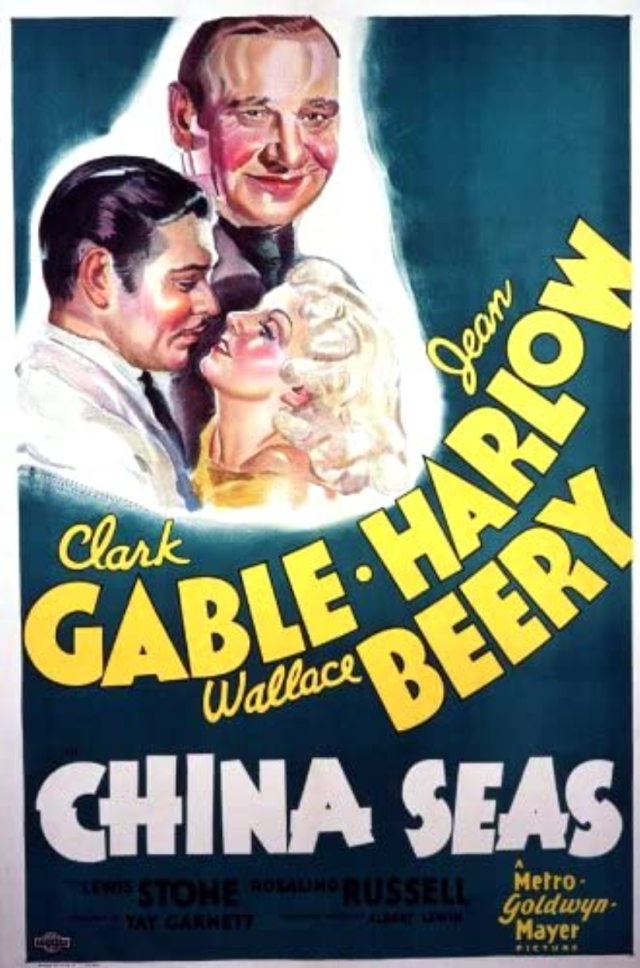
China Seas poster created by Metro-Goldwyn-Mayer.

Sidney J. Furie, the director of Gable and Lombard, chose to make “a movie about just folks”, primarily focusing on the personal lives of Clark Gable and Carole Lombard. While Ebert says this decision gave “the movie a certain originality”, he also criticizes Sidney’s choice, claiming that “by limiting itself to this aspect of their lives the movie never deals with the reasons we find them interesting in the first place”. As I said in this review’s introduction, I am somewhat familiar with Clark and Carole. Because I don’t know which parts of Gable and Lombard are factual or creative liberty, I took the story of Carole and Clark’s relationship with a grain of salt. From the way Louis B. Mayer (portrayed by Allen Garfield) talked to Clark about groups of people demanding certain elements of films be changed due to “indecency”, I knew he was talking about the Breen Code, a series of morality related guidelines enforced in Hollywood from 1934 to 1954. Therefore, I saw Gable and Lombard as a character study of how a portion of the Breen Code era affected the professional and personal lives of the Hollywood landscape, with Carole and Clark serving as just two examples. When Clark is accused of having an affair with a waitress, Carole volunteers to testify in court. Everyone from her inner circle knows if she testifies, she will expose her and Clark’s relationship as well as end her career. While explaining why he doesn’t want Carole to testify, Louis B. Mayer shares with Clark the ugly truth about what happened to some actresses after their careers ended. This scene is honest about the consequences if the Breen Code was broken. By viewing the film from the lens of the Breen Code, Gable and Lombard’s narrative is not only compelling, it is given higher stakes.
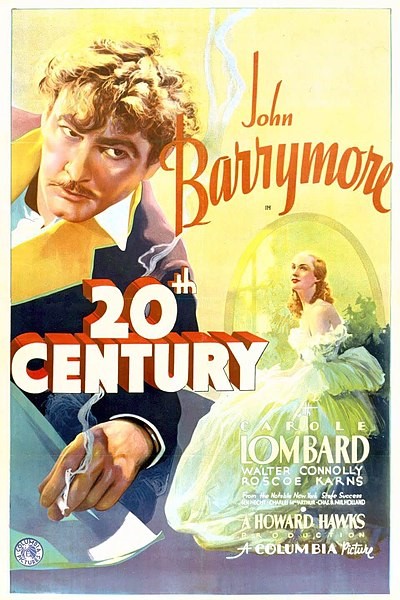
Twentieth Century poster created by Columbia Pictures.

I said earlier in this review how Ebert and Siskel were only given a few minutes to talk about the year’s worst films. This made Siskel’s discussion of Gable and Lombard sound vague, as he states “in real life, you can get arrested for playing around with dead bodies. The same should be true for movie-makers who desecrate the memory of great, dead actors”. Because this review affords me more time to elaborate on my opinion, I will now discuss what I didn’t like about Gable and Lombard. At the beginning of the movie, Clark is told Carole was in a plane crash, but her whereabouts are unknown. The very next scene shows Carole riding in an ambulance, alive and appearing uninjured. That scene took place years before the plane crash happened. With no on-screen text acknowledging the story’s time and place, it was sometimes difficult to figure out the story’s timeline. I liked James’ and Jill’s portrayal of Clark and Carole. However, I found their on-screen chemistry inconsistent. When their story began, Carole and Clark went from enemies to lovers. For the rest of the story, they continuously broke up then got back together. I recognize Gable and Lombard is based on a real-life relationship. But because of the back-and-forth nature of that relationship, I couldn’t stay fully invested in the relationship of Clark and Carole.
Comparing with the Critics banner created by me, Sally Silverscreen. TV show title cards created by WTTW National Productions, WTTW, Public Broadcasting Service (PBS), Lifetime Television, Tribune Entertainment, Buena Vista Television, and Disney-ABC Domestic Television

Looking back on Gable and Lombard, I believe Siskel’s, and even Roger Ebert’s, thoughts on the film were a tad harsh. I wouldn’t call it a “dog” or “lousy”, as the movie does have its merits. But I do believe the marketing is a bit misleading. The quotes on Gable and Lombard’s poster are “It was the wildest, wackiest love affair Hollywood ever knew” and “They had more than love – they had fun”. In the ‘Best Films of 1976’ episode of Opening Soon…at a Theater Near You, Carole dumped salad on Clark’s head, one of the more humorous scenes from the film. While there were comedic moments sprinkled throughout the story, the movie’s marketing presents the false idea it is solely a comedy. Seen from the lens of the Breen Code, Gable and Lombard presents a character study of how a portion of the Breen Code era affected the professional and personal lives of the Hollywood landscape. With the story emphasizing Carole and Clark’s relationship, they navigate complicated decisions, as well as honesty about feelings and emotions. The balance of comedy and tragedy adds a sense of maturity to the overall story. At worst, the movie prioritizes style over substance. as most of the budget seems to be put toward the set design. But, at best, Gable and Lombard is just ok.

This review was brought to you by

Sally Silverscreen

The Top Ten Best Movies I Saw in 2024

For me, 2024 was a better year for movies. That’s because I saw more movies I liked, compared to 2023! Another difference from 2023 is how, on 2024’s list, more movies are theatrical pictures. However, there are still some made-for-TV productions that found a spot on my list. With more likable movies comes the return of the honorable mentions section! In that part of my list, most of the films are television projects. Since I reviewed almost all the movies on this year’s list, I will provide links to those reviews in this post. So, with 2025 on the horizon, let’s begin my list of the top ten best movies I saw in 2024!

Honorable Mentions

Legend of the Lost Locket, My Baby Is Missing, My Mother’s Split Personalities, Christmas on Division Street, and Interstellar

Image by starline on Freepik

10. I Heard the Bells

I Heard the Bells achieved so much in a short amount of time. The 2022 movie was chosen for my 500 Blog Follower Dedication Review. Then, I Heard the Bells became my 400th published movie review, as I recently revealed in my list of the ten movie trends I don’t understand. Now, the film is the only Christmas picture to earn a place on 2024’s best movies of the year list! When I wrote about I Heard the Bells, I compared it to It’s a Wonderful Life. Both titles are not only about more than just the Christmas holiday, they also cared about their overall presentation. I Heard the Bells was a visually immersive movie because of the attention to detail placed on historical accuracy. The strength of the acting performances allowed the story to be engaging. While it’s too early to say right now, I think I Heard the Bells could be a Christmas classic!

Take 3: I Heard the Bells Review + 500 Follower Thank You

9. Easter Parade

If I could choose one word to describe Easter Parade, it would be “colorful”. With the movie’s creative team taking advantage of Technicolor, costumes and décor boasted vibrant hues that complimented the story’s spring season! The musical numbers provide another strength in Easter Parade. From Fred’s festive and creative solo, “Drum Crazy”, to Ann’s energetic and fast-paced solo, “Shakin’ the Blues Away”, the movie’s musical numbers were enjoyable because of their choreography and delivery. The reason the 1948 film is placed lower on my list is due to the premise-driven story and the limited inclusion of Easter. However, Easter Parade’s positives outweigh the negatives!

Take 3: Easter Parade Review

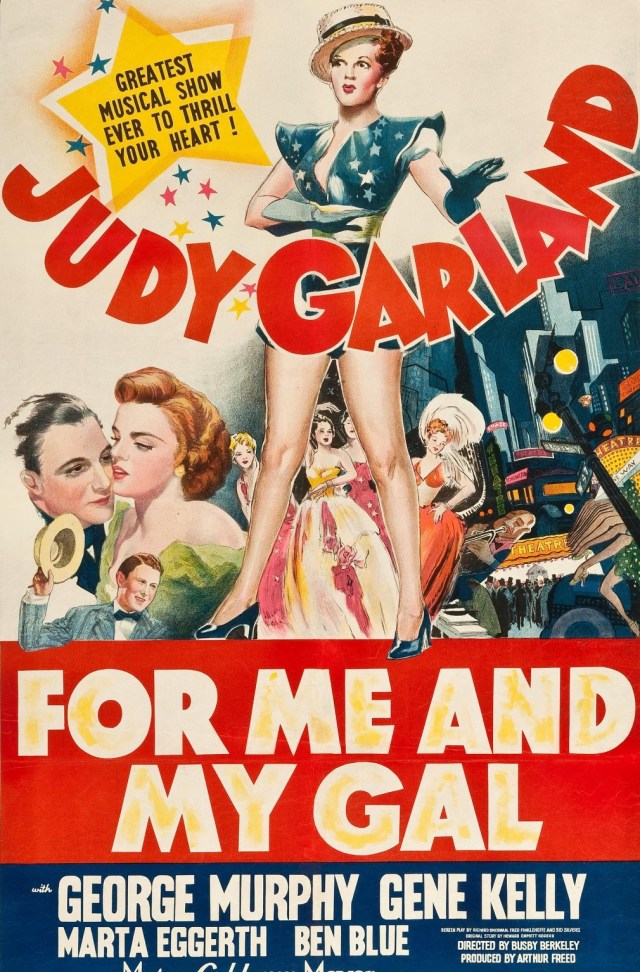
8. For Me and My Gal

In my review of For Me and My Gal, I mentioned how Breen Code era movie musicals contain simpler stories. These simpler stories will typically feature lower stakes. But in For Me and My Gal, the story of Harry and Jo included stakes that were higher. The story wasn’t afraid to show Jo and Harry making difficult decisions when it came to their dreams. Along their journey, the duo even deals with regret and heartbreak. The way World War I was incorporated into For Me and My Gal gave the script a sense of realism. Creative decisions like that one gave the 1942 picture emotional depth!

Take 3: For Me and My Gal Review

7. Willow

When I started my Comparing with the Critics series, I knew there were some movies I would disagree with the critics on. What I didn’t know was how much I would like Willow. Now that I’ve seen the 1988 film, I can understand why some people have given it the coveted title of “classic”. Likable elements, such as humor and unique perspectives on familiar story ideas, provide arguments for the aforementioned claim. The simplistic and straight-forward nature of the story made it easier to follow what was happening on screen. For me, Madmartigan stole the show! Movies like Willow make me thankful for my Comparing with the Critics series.

Comparing with the Critics – Worst of 1988 – Willow

6. Curious Caterer: Forbidden Fruit

2024 saw the premiere of two Curious Caterer films; Curious Caterer: Foiled Plans and Curious Caterer: Forbidden Fruit. Though I liked Curious Caterer: Foiled Plans more than Curious Caterer: Forbidden Fruit, Curious Caterer: Forbidden Fruit was still a good movie. The fifth chapter in the series consistently carried the strong components of the Curious Caterer story, like the acting, humor, and prioritizing the mystery. A peek behind the music industry’s curtain and the incorporation of serious, real-world topics helped make the identity of Curious Caterer: Forbidden Fruit unique. As of the publication of this list, Hallmark has not provided any 2025 dates to the Curious Caterer series. If there are going to be more Curious Caterer films, I hope at least one of them is a seasonal picture.

Take 3: Curious Caterer: Forbidden Fruit Review

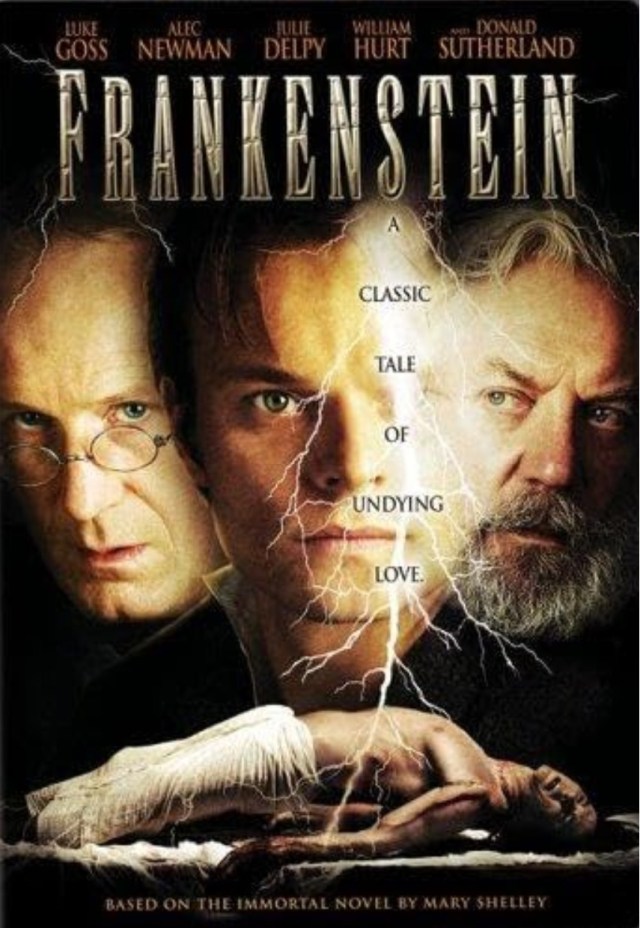
Hallmark’s Frankenstein poster created by Hallmark Entertainment, Hallmark Channel, Silverstar Ltd., Larry Levinson Productions, and RTL

5. Hallmark’s Frankenstein (2004)

Back in March, I called Hallmark’s adaptation of Frankenstein a “hidden gem”. This claim was based on my observation of how a good movie was not only forgotten by time, but also overshadowed by other titles released in 2004. What makes this version of Frankenstein a good movie, in my opinion, is how respectful it was toward Mary Shelley’s novel. One great example is Luke Goss’ portrayal of The Creature, as the way emotion was utilized throughout Luke’s performance highlighted how complicated The Creature is. Hallmark’s adaptation of Frankenstein is another movie where the visual presentation created an immersive experience. Combining set design, costume design, and attention to historical accuracy, the movie made me feel like I was transported to another time and place.

Take 3: Hallmark’s Frankenstein (2004) Review (Double Feature: 2004 Edition Part 2)

4. The Boys in the Boat

If you’re going to create a sports movie involving a team sport, it’s important to make the camaraderie among the team believable. An on-screen team with believable camaraderie helps the audience stay invested in the story, as well as the team’s journey. Because the acting performances were strong in The Boys in the Boat, the camaraderie within the team dynamic felt genuine. The 2023 film also makes rowing look exciting! This was accomplished through cinematography, editing, and music selection. The Boys in the Boat is a “based on a true story” film that, in my opinion, is worth the time! This is yet another production where historical accuracy was a top priority.

3. Amadeus

Out of all the movies I reviewed for my Comparing with the Critics series, Amadeus is, so far, the only movie I agreed with the critics on. While the biopic is a glamourous spectacle, it also contains substance. Thought-provoking material can be found in the script, such as how fame can negatively impact the human soul. The story is an immersive, detail-oriented character study that explores the good and bad sides of the music industry. The creative team’s focus on detail made Amadeus look and feel historically accurate, as can be seen in the costume and set design. F. Murray Abraham and Tom Hulce each gave a strong performance. I can, honestly, say the 1984 movie is one of the best biopics I’ve ever seen!

Comparing with the Critics – Best of 1984 – Amadeus

2. Curious Caterer: Foiled Plans

Remember when I said I liked Curious Caterer: Foiled Plans more than Curious Caterer: Forbidden Fruit? One reason why I said this is Goldy’s consistent involvement in Curious Caterer: Foiled Plans’ case. Other reasons why I liked the fourth chapter in the series are the creativity of the mystery, the quality of the acting performances, and how humor was written into the story. Looking back on Hallmark’s mystery films I saw in 2024, this Curious Caterer movie is pretty unique. That’s because, as I mentioned in my review, it’s a locked room mystery revolving around a costume party. In 2023’s best movies of the year list, I claimed Curious Caterer: Grilling Season was the best film in the series. I certainly changed my mind after I saw Curious Caterer: Foiled Plans!

Take 3: Curious Caterer: Foiled Plans Review

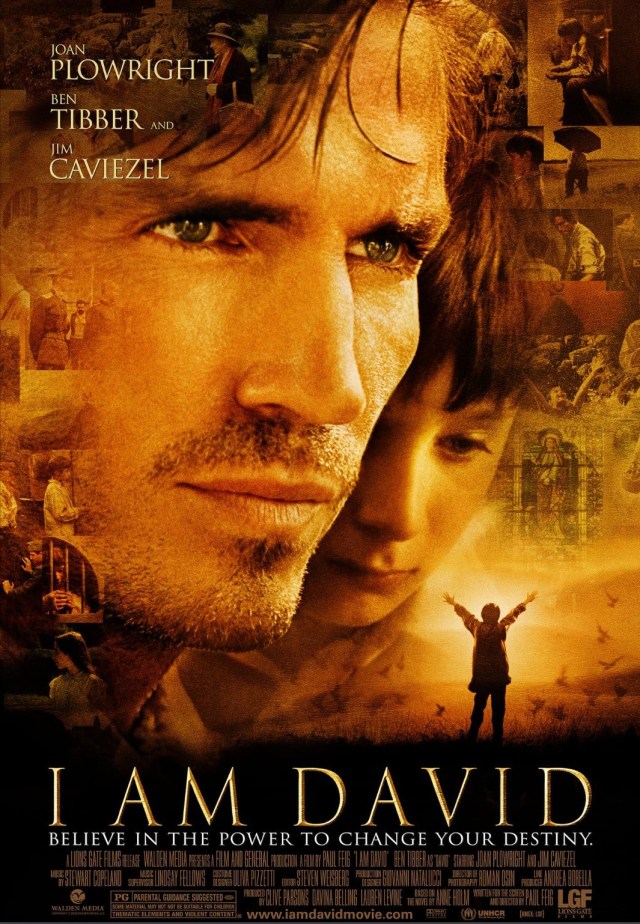
1. I Am David

It’s amazing how I Am David became 2024’s best movie in March and clung on to the number one spot all these months later! This impressive film allowed the story of David and his journey to be told with genuine emotion and sincerity. This was achieved through every aspect of the production, like the acting performances and the screenwriting. Exploring light and darkness, as well as showcasing Europe’s natural landscape, gave the production visual depth. Timeless, universal messages were also woven into the script. As I said in my review, I wish more people knew about this movie. Hopefully, my review or maybe this list can encourage someone to check out I Am David!

Take 3: I Am David Review (Double Feature: 2004 Edition Part 1)

I Am David poster created by Walden Media, Film and General Productions, Lionsgate Films, Artisan Entertainment, and David Productions Ltd.

Have fun in 2025!

Sally Silverscreen

Take 3: For Me and My Gal Review

Looking back on Judy Garland’s movies I’ve seen, I can
honestly say I haven’t seen a movie I didn’t like. Even though some pictures were
better than others, I can’t say any of Judy’s films were “bad”. Hoping this
streak will continue, I joined the Third Judy Garland Blogathon by reviewing For
Me and My Gal
! This film was recommended by the Brannan sisters from Pure
Entertainment Preservation Society. They not only introduced me to this film,
they introduced me to the Breen Code era! Between 1934 to 1954, the Breen Code
served as a set of guidelines for film-makers. These guidelines addressed the
dos and don’ts of movie-making based on a series of morals. Within that period
of time, Hollywood gave their audience films that have stood the test of time
and even become “classics”. But will this statement hold true for For Me and
My Gal
? Keeping reading my review to find out!

For Me and My Gal poster created by Metro-Goldwyn-Mayer (MGM)

Things I liked about the film:

The on-screen chemistry: Since I chose to review this movie
for the Third Judy Garland Blogathon, I want to discuss Judy’s performance in For
Me and My Gal
. However, I want to talk about her performance in relation to
her on-screen chemistry with Gene Kelly. When a movie musical features a
romantic relationship, the on-screen chemistry of the lead actor and actress
can sell the idea their characters truly love one another. This is what Gene
and Judy achieved through their portrayals of Harry Palmer and Jo Hayden! One
perfect example is presented during the musical number, “For Me and My Gal”.
Through facial expressions, the choreography, and their singing abilities, Jo
and Harry realize they share the same dream, despite being complete strangers
only hours ago. This musical number emphasizes how these characters were always
meant to be together.


How World War I was incorporated: For Me and My Gal takes place in the middle of the 1900s, the time when World War I took place. The story revolves around civilian perspectives; vaudeville
performers trying to make their dreams come true. At the beginning of the
movie, newspaper headlines broadcast events related to World War I. But the
newspaper’s front page is turned away from the characters, as they are more
concerned with how their performances were reviewed by the critics. As the
story progresses, World War I starts to take center stage in their lives,
affecting each character differently. This progression is steady and the
changes happen more subtly. The way World War I was incorporated into For Me
and My Gal
felt realistic. Though fictional musical movies require a
certain amount of disbelief to be suspended, it was refreshing for realism to
be woven into the film.


A story with stakes: Movie musicals, especially those from
the Breen Code era, contain simpler stories. These stories range from looking
for another member of a talent group or characters expressing their love for
each other. In For Me and My Gal, the overarching
story focuses on characters working toward their dreams. Throughout the movie,
Jo and Harry experience obstacles and attempt to overcome them. At one point in
the film, Harry receives an offer to perform at The Palace, a theatre in New
York every vaudeville performer aspires to go. While the offer itself sounds
amazing, the problem is Harry would no longer be able to perform with Jo. This
is one example of For Me and My Gal containing a story with stakes. In
the case of the aforementioned conflict, there were stakes not only for Harry’s
career, but also for his relationship with Jo.

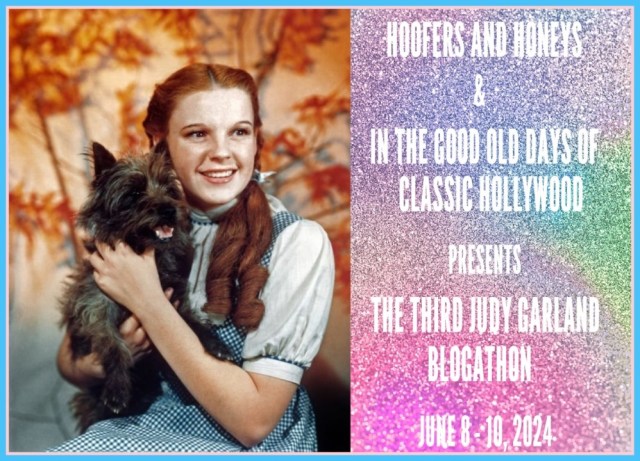
The Third Judy Garland Blogathon banner created by Crystal from In The Good Old Days Of Classic Hollywood and Kristen from Hoofers and Honeys

What I didn’t like about the film:

The “insta-love” trope: In stories where a romantic
relationship in included, part of the story is devoted to showcasing the
progression of that relationship. If a story’s relationship moves too quickly,
it may be difficult for the audience to become invested in that relationship or
determine if the actors have on-screen chemistry. While Judy Garland and Gene
Kelly had good on-screen chemistry, I found their characters’ initial attraction
to happen too quickly. In fact, this attraction happened so quickly, it almost
felt unbelievable. I recognize there’s only so much story to tell in an hour
and forty-four minutes. However, I wish Harry and Jo’s attraction for one
another had taken its time.


An unresolved debt: Toward the beginning of For Me and My
Gal
, Jo’s brother, Danny, pays Jo a visit after one of her shows. During
their conversation, Jo tells Danny she will pay him back after she becomes a
big vaudeville star. But this is the only time throughout the movie where this
debt is mentioned. The debt is not revisited or resolved as the story progresses.
That part of the story ended up becoming a loose end that was left behind by
the end of the movie.


A confusing conflict: For this part of my review, I will
spoil For Me and My Gal. If you have not seen this movie and are
interested in watching it, skip this part of my review and continue reading where
it says “My overall impression”.


After Jo and Harry discover their love for each other, they
receive a telegram congratulating them on their upcoming performance at The
Palace, a theatre in New York they have dreamed about for so long. When they
arrive at The Palace, Harry and Jo learn there was a misunderstanding. They
received a gig at The Palace theatre in Newark, New Jersey. In the telegram, its
sender stated The Palace was in New York. But any performer on the vaudeville
scene would know there’s only one Palace theatre, the one in New York City.
That quote in the telegram references how Eve Minard, a singer Jo and Harry met
on a train trip, brought up the idea of more than one Palace theatre. For Me
and My Gal
was released during the Breen Code era. When a character makes a
poor choice within a film from this time period, they either face accountability
for that choice or learn from their mistake. However, Eve is never confronted
about the telegram. This leaves me confused, wondering if Eve was intentionally
ruining Harry and Jo’s plans or if she was genuinely trying to help, but her
message became lost in translation?

Children holding American flags during a sunset image created by rawpixel.com at freepik.com. <a href=”https://www.freepik.com/free-photos-vectors/people”>People photo created by rawpixel.com – http://www.freepik.com</a>. Image found at freepik.com.

My overall impression:

The term, “The Golden Age of Hollywood”, gets thrown around
from time to time in conversations about the film industry. This term’s
definition depends on who you ask, as film itself can be subjective. In my
opinion, one of Hollywood’s “golden ages” was the Breen Code era. For Me and My Gal serves as one example to prove my point. The 1942 picture sets itself apart from other musical films by
presenting a story with stakes. It also incorporates World War I in a realistic
way. As I’ve stated in past reviews, the strength of a musical movie lies in
its musical numbers. For the most part, For Me and My Gal features
musical numbers that are pleasant to watch! This is the second Judy Garland
production I reviewed this year I was not only recommended, but ended up liking
as well. The streak of enjoyable Judy Garland movies I mentioned in this review’s
introduction is still going strong!


Overall score: 7.6 out of 10


Have you seen For Me and My Gal? What is your
favorite movie of Judy Garland’s? Please let me know in the comment section!


Have fun at the movies!

Sally Silverscreen


Take 3: Easter Parade Review

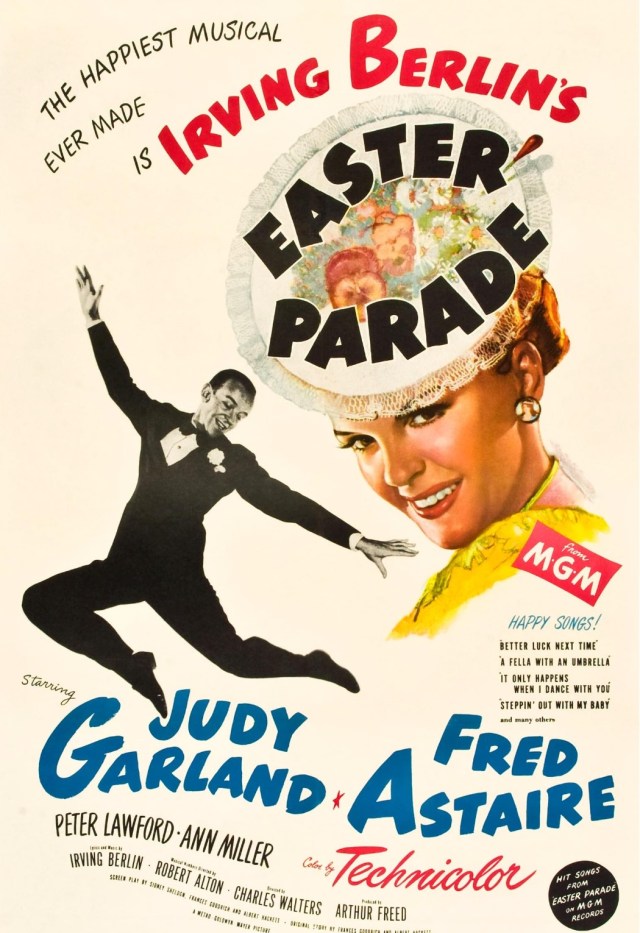
With today being Easter, I’m reviewing the 1948 musical, Easter Parade! But this is not the only reason why I’m writing about this movie. Since the protagonists would be considered a “mismatched couple”, the film was eligible for Realweegiemidget Reviews’ and Cinematic Catharsis’ Mismatched Couples Blogathon. Easter Parade was also recommended by Michaela from Love Letters to Old Hollywood. Prior to this year, the only Easter themed movie I wrote about was the Hallmark production, Easter Under Wraps. While I have reviewed faith-based films, those pictures were not about the Easter holiday. Because this was my first time watching Easter Parade, I was curious how Easter would play a role in this story. I was also curious how the film would compare to other musicals from the Breen Code era. So, without delay, let’s begin this review of Easter Parade!

Easter Parade poster created by Metro-Goldwyn-Mayer and Loew’s, Inc.

Things I liked about the film:

The acting: Fred Astaire portrays Don Hewes in Easter Parade, a veteran dancer who is looking for a new dance partner. In this same movie, Judy Garland portrays Hannah Brown, a singer who is trying to make a name for herself in the entertainment industry. Together, Judy and Fred are an on-screen pair that not only works well together, but also dances well together! One of my favorite scenes is when Don mentions to Hannah how she doesn’t capture men’s attention. In an effort to prove Don wrong, Hannah walks in front of him, at first looking discouraged by her fruitless efforts. A few minutes later, Don sees men are taking notice of Hannah. He looks confused and even baffled at how Hannah could prove him wrong. When Don catches up with Hannah, he discovers she is making funny faces, explaining why men were noticing Hannah. This scene was hilarious because of Fred’s and Judy’s expressions and interactions!

Even though Judy and Fred worked well together, I think Judy and Peter Lawford had strong on-screen chemistry! Despite Hannah being from a small-town farm and Johnny being from the city, their interactions make it seem like they have a deep understanding for one another. While on a dinner date, Hannah confesses she dreams her true love will give her flowers and sweep her off her feet. When she reflects on her time with Don, she realizes Don only gives her flowers and sweeps her off her feet when it relates to dancing. During this reflection, Hannah looks defeated and sad by how she didn’t receive what she wanted the way she wanted it. Meanwhile, Johnny looks genuinely sympathetic toward Hannah. As I watched this scene, I wanted Johnny and Hannah to fall in love with each other!

The use of color: In Easter Parade’s opening credits, Technicolor was revealed to be incorporated into the production. I’m thankful Technicolor was used in this movie because capturing scenes in black-and-white would not have done this picture justice! Because parts of Easter Parade’s story take place around Easter, creative decisions such as costume designs and décor are very colorful. Toward the end of the film, Fred and a large group of dancers perform a number to “Steppin Out with My Baby”. Every performer’s costume boasted bright hues, from one dancer’s yellow shoes to another dancer’s blue gloves. At the beginning of the movie, during the musical number, “Happy Easter”, flowers in vibrant shades are present as Don makes his trip to the store. Though it’s a small detail, these flowers play a role in complimenting the colorful landscape of the story’s spring season!

The musical numbers: Musical numbers can make or break a given film. But in Easter Parade, the musical numbers are a major strength because of the choreography and delivery of the numbers themselves. One of the most creative numbers I’ve ever seen was Fred’s solo, “Drum Crazy”. This solo shows his character, Don, tap dancing and playing drums in an attempt to trick a child into giving him a stuffed bunny toy. The combination of dancing and instrument playing provides a captivating performance that not only highlights Fred’s signature talent, but also pairs dancing with other artistic mediums. Another strong solo was Ann Miller’s solo, “Shakin’ the Blues Away”. While portraying Don’s former dance partner, Nadine, Ann’s solo was a tap number that involved a lot of turning. What makes this musical number so memorable is how the cinematography closely follows Ann during her performance. This focus forces the audience to give their undivided attention to Ann and her number. The number itself is fast-paced and energetic, with Ann consistently delivering the choreography in precise and fluid movements!

Cute Easter image created by Freepik at freepik.com. <a href=”https://www.freepik.com/free-photos-vectors/background”>Background vector created by freepik – http://www.freepik.com</a>. Image found at freepik.com.

What I didn’t like about the film:

A premise-driven story: When I reviewed The National Tree last year, I explained the difference between a premise-driven story and a plot-driven story. After watching Easter Parade, I can confirm the movie has a premise-driven story. The premise of Don transforming Hannah into a star entices viewers to watch Fred and Judy acting and dancing together. But the film doesn’t really make the audience ask “and then what happened”? Even though the story is simpler and easier to follow, the story itself lacked a compelling hook, making it feel less intriguing. I wish the characters were given a conflict to resolve, similar to musicals like Singin’ in the Rain and Anchors Aweigh.

The “insta-love” trope: The romantic-comedy genre carries a collection of tropes and cliches. One of them is the “insta-love” trope, which features characters falling in love in a very short period of time. I understand there’s only so much story you can tell in an hour and forty-three minutes. But I thought Hannah and Don’s relationship progressed too quickly. I even thought the attraction between Hannah and Johnny happened too fast. The fast pace of these relationships made it seem like situations weren’t really resolved. Serious conversations and heart-felt discussions were either conveniently ignored or never brought up. The “insta-love” trope also affected how characters changed over the course of the story. Progressions in character development took place so quickly, it almost seemed too convenient.

Easter’s limited inclusion: With a movie called Easter Parade, I expected Easter to play a significant role in the story. While Easter is included enough to get the point across, I was disappointed by how limited its presence was. There were even scenes I could picture taking place within other holidays. Though the purpose of “Drum Crazy” was for Don to purchase a stuffed bunny toy, I found myself imagining this same musical number set during Christmas. Easter Parade is a story that could take place in almost any time of year and it wouldn’t make much difference.

The Mismatched Couples Blogathon banner created by Gill from Realweegiemidget Reviews and Barry from Cinematic Catharsis

My overall impression:

Some of the best, most iconic musicals were released during the Breen Code era. Their strong musical numbers and their overall timelessness have captured the hearts of viewers for decades. Easter Parade is one of these timeless musicals, showcasing its strengths through various creative departments! The colorful palette sprinkled throughout the story perfectly compliments the springtime atmosphere the film’s creative team was striving to present. Every musical number was well choreographed and performed, which definitely made the movie worth watching. Compared to other Breen Code era musicals, though, Easter Parade’s story was weaker. This flaw was due to the story being more premise-driven. Despite this and its other weaknesses, the 1948 film is an entertaining, mostly joyful production that is an appropriate selection for the Easter holiday!

Overall score: 7.6 out of 10

Have you seen Easter Parade? Is there an Easter themed movie you like to watch? Let me know in the comment section!

Have fun on Easter!

Sally Silverscreen

Take 3: The Grapes of Wrath Review

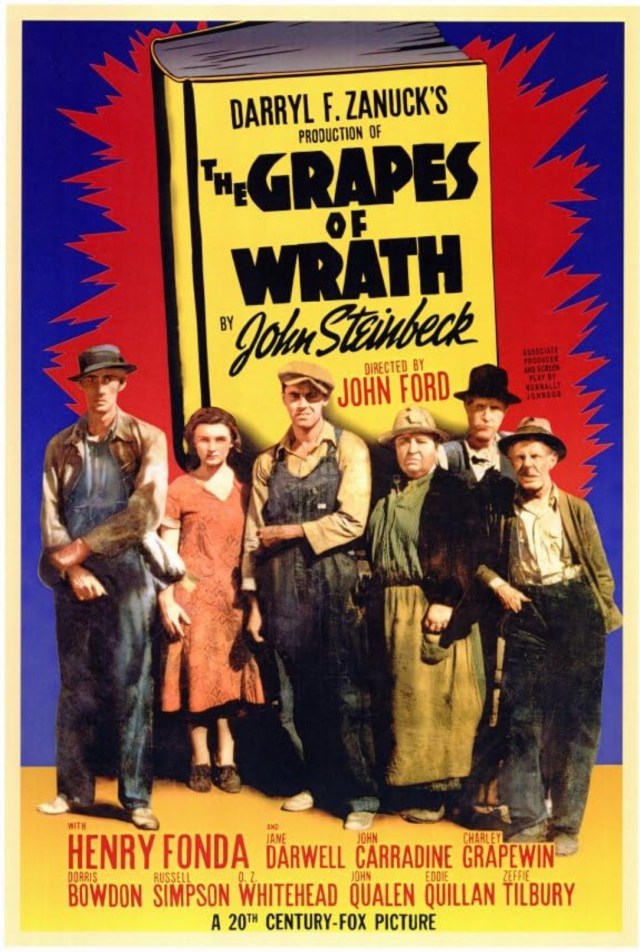
Back in May, I published a late review of John Steinbeck’s The Grapes of Wrath, my choice for the Buzzwordathon readathon. In that review, I stated how I wouldn’t plan on reading the book again, as I found the book mundane. For this year’s Classic Literature on Film Blogathon, hosted by Silver Screen Classics, I figured it would be a good idea to revisit the 1940 adaptation! Years ago, I saw The Grapes of Wrath movie. Because I only had vague recollections of the film, I wasn’t able to give an honest opinion on it. Besides that reason, I was curious to see how different or similar the adaptation was from its source material. Adaptations can be hit or miss, ranging from being unrecognizable from the book to being better than the book. Where does The Grapes of Wrath rank among these adaptations? Turn the page on this review in order to find out!

The Grapes of Wrath poster created by Twentieth Century Fox

Things I like about the film:

The acting: Toward the beginning of the movie, Tom Joad, portrayed by Henry Fonda, is being driven home by a truck-driver. Suspicious of the truck-driver’s possible prejudice against him, Tom is uneasy and irritated. Just as he’s leaving the truck, Tom tells the truck-driver why he went to prison. While Tom is revealing the answer, his eyes are set in a serious stare and his mouth is presented crookedly. Speaking his answer with a loud, serious, even a bit agitated tone, the impression Tom left on the truck-driver and me, as a viewer, was chilling. However, this impression was a strong one, as it allows Tom to stand out and be remembered among the film’s large cast of characters!

A common strength I saw among the movie’s cast was how expressive the actors and actresses were. John Carradine’s portrayal of Casy serves as a great example! When he was telling Tom about his past sermons, Casy’s eyes went wide and his voice sounded animated. He even demonstrated gestures from his former services, such as jumping over a fence after a baptism. While John’s portrayal of Casy was expressive, it never felt over-the-top. This gives the audience a reason to take this character seriously. The audience can also take Ruthie and Winfield, the only children in the Joad family, seriously because their expressions seem genuine. At a fancier camp, Winfield and Ruthie are overwhelmed by the luxurious nature of the communal bathroom. When they flush a toilet for the first time, Ruthie and Winfield run out of the bathroom and hide behind the door frame, a mixture of shock and fear on their faces. The genuineness of these two characters was made possible through the screenwriting, as well as the performances of Shirley Mills and Darryl Hickman!

Similarities to the book: When it comes to film adaptations, there are some that share more similarities than differences with its respective source material. As someone who has read the book, I felt this way about the 1940 adaptation of The Grapes of Wrath! When Tom returns home, he and Casy come across Muley, one of the Joad family’s neighbors. Muley explains how several neighboring families were forced off their land by the bank. Through flashbacks, Muley’s recollection of events shows the heartlessness of land developers and the desperate nature of one tractor-driver. Readers would remember this part of the story as a separate chapter from the main narrative, not relating to any particular character. Adapting this chapter through a secondary character’s perspective was an interesting way for the movie’s creative team to respect their project’s source material!

The music: The story of The Grapes of Wrath takes place during the Great Depression, with the setting being rural. Music that can sometimes be heard in a scene’s background is reflective of the story’s time and setting. String instruments, such as guitars and banjos, make up the film’s soundtrack. These instruments helped elevate the tone of a given scene. As a member of the Joad family passes away, an acoustic guitar melody is softly playing as the Joad family is mourning their loved one. This simple tune emphasized the somberness surrounding the event itself. With the way the music fit so well in the movie, it shows how the film’s creative team cared about the presentation of their film!

The 2023 Classic Literature on Film Blogathon banner created by Paul from Silver Screen Classics

What I didn’t like about the film:

A broken illusion: Because The Grapes of Wrath was released during the Breen Code era, several parts of the story had to be changed from page to screen. Rosasharn’s pregnancy was one of them. Through a variety of medium and close-up camera angles, the cinematographer, Gregg Toland, carried the illusion Rosasharn was pregnant. But audience members can tell Rosasharn wasn’t visibly pregnant due to a handful of medium and long shots. These shots broke the aforementioned illusion, taking away the authenticity of characters’ comments about Rosasharn’s pregnancy.

Things left unexplained: Within the story, and even the dialogue, there were things left unexplained. At the beginning of the movie, the audience is introduced to Tom’s brother, Noah. Halfway through the movie, Noah disappears, with no other character questioning his whereabouts or concerned about his disappearance. For those who have read the book, they would know where Noah went; abandoning his family to live near the river, as he fell in love with that location. Viewers who didn’t read the book would assume Noah’s absence was a result of poor screenwriting.

The run-time: The Grapes of Wrath has a run-time of a little over two hours. Since the story is a “slice-of-life” tale, I, personally, felt this movie didn’t need to be that length of time. There were parts of the film that consisted of shots of the Joad family’s vehicle driving down the road. Some of these shots could have been cut from the movie, as they sometimes seemed like padding. Had that creative decision been made, The Grapes of Wrath might have been about an hour and forty-five to fifty minutes.

The Grapes of Wrath book cover found on Goodreads.

My overall impression:

There are some adaptations where if you’ve seen the movie, you’ve already read the book. This is due to the adaptations’ shared similarities with their source material. After reading The Grapes of Wrath and seeing the 1940 film, I can honestly say my aforementioned statement rings true for the movie. While I appreciate the creative team’s attempts to respect the source material, as well as adapt it during the Breen Code era, it felt like I was consuming the same story again. I also think the movie was a bit drawn out, receiving an unnecessary run-time of a little over two hours. However, the music, set design, and costume design were good visual reflections of the story’s time and place. It did feel immersive, like the audience could be transported to that world. I’m glad to have received the opportunity to re-visit this film! Now, I can form an honest opinion about The Grapes of Wrath.

Overall score: 6-6.1 out of 10

Have you seen or read The Grapes of Wrath? If so, what are your thoughts on the story? Let me know in the comment section!

Have fun at the movies!

Sally Silverscreen

Take 3: Charlie Chan at Treasure Island Review

‘Movies featuring beaches or waterfront scenes’ is March’s theme for Genre Grandeur. I could have selected a Hallmark title, but I chose a different film instead. This seems to be a recurring theme on 18 Cinema Lane this year. Back when I published my editorial, Oh, The Places She’ll Go: A Map of Esther Williams’ Travels, Paddy Lee suggested I check out Charlie Chan at Treasure Island. Since then, I’ve been trying to find the right time to watch the film. When I searched through my movie recommendation board on Pinterest, I knew it would be the perfect movie to write about for this month’s Genre Grandeur! Before Paddy Lee’s suggestion, I had never heard of the Charlie Chan series. From what I’ve gathered, this is a mystery series from the 1920s to the 1940s. A made for TV movie, The Return of Charlie Chan, was released in 1972 and the last movie in the series, Charlie Chan and the Curse of the Dragon Queen, premiered in 1981. Starting this journey in the middle of the series, it’s time to review Charlie Chan at Treasure Island!

Charlie Chan at Treasure Island poster created by Twentieth Century Fox

Things I liked about the film:

The acting: I’ve seen a handful of Cesar Romero’s projects from his filmography. Out of those projects, he has carried his character with charisma. In Charlie Chan at Treasure Island, Cesar portrayed a magician named Rhadini. Not only did Rhadini have the charisma I’ve come to expect from Cesar’s performances, he also contained a strong amount of showmanship you’d expect from a magician! Consistency worked in Cesar’s favor, with his performance appearing effortless. Another acting performance that came across as effortless was Victor Sen Yung’s! Portraying Charlie’s son, Jimmy, Victor gave his character a great on-screen personality. His expressions while interacting with other cast members wove together seamlessly. A great example is when Jimmy is helping Charlie get ready for a dinner party. As he is interacting with his father, Jimmy’s emotions transition from pride to confusion to determination without missing a beat! Despite appearing in the film for a limited amount of time, I liked Billie Seward’s portrayal of Bessie Sibley! She had great control over her character’s emotions, allowing her talents to go toe-to-toe with the talents of the other cast members.

The inclusion of magic: As I just mentioned in this review, Rhadini is a magician. He performs magic tricks on a few occasions within the story. These tricks range from a disappearing bird to a levitating table. There were even times when the secrets behind these tricks were revealed, showing the audience how the illusion was achieved. This was a pleasant surprise for me, as I didn’t expect any magic to be featured in the movie. Its inclusion in the story added a unique aspect to the film’s identity!

The humor: In past reviews, I’ve brought up how some mystery films have incorporated humor into their story, as humor gives the audience a break from the heaviness of the mystery itself. Honestly, I was surprised by the inclusion of humor in Charlie Chan at Treasure Island. This is because I was not expecting this aspect to be as strong as it was in the story. In Charlie Chan at Treasure Island, Jimmy was the comic relief. Some of the things he said were genuinely hilarious. During Rhadini’s magic show, Jimmy is recruited to participate in the levitating table trick. Horrified at the idea of being lifted off the ground, Jimmy tells his father, “Oh, but flying makes me seasick, Pop”.

Image of magic show essentials created by Macrovector at freepik.com. <a href=”https://www.freepik.com/free-photos-vectors/card”>Card vector created by macrovector – http://www.freepik.com</a>. Image found at freepik.com.

What I didn’t like about the film:

A misleading title: Charlie’s adventures in Treasure Island are the reason why I chose this movie for March’s Genre Grandeur. Because of the film’s title, I expected Charlie to primarily spend his time at the titular location. But when I watched the movie, I discovered that wasn’t the case. While there was an aerial shot of Treasure Island, not much time was spent there. In fact, the characters talked about Hawaii, specifically Honolulu, more than Treasure Island. With that said, it made me wonder why this movie didn’t take place in Hawaii?

Charlie’s outdated “quirk”: In my editorial, Why ‘Francesca Quinn, PI’ is the Worst Hallmark Movie I’ve Ever Seen, I talked about how fictional detectives have a “quirk”, something that sets a detective apart from other sleuths. Charlie Chan does have his own “quirk”. However, it seems very outdated. Throughout the story, Charlie speaks in proverbs. His speech also sounds like broken English. I know the 1930s was a different time compared to the 2020s. But these factors make Charlie’s “quirk” seem stereotypical.

A limited amount of urgency: The main mystery in Charlie Chan at Treasure Island is a murder mystery, as a guest on a plane mysteriously dies during the trip. Charlie and the San Francisco police department discover a series of deaths that took place around the time of the aforementioned murder. But most of the story focuses on the mystery of who “Dr. Zodiac” is, a physic who is ripping off his clients. This focus caused the overall story to have a limited amount of urgency.

Image of Hawaiian poster created by Freepik at freepik.com. <a href=”https://www.freepik.com/free-photos-vectors/poster”>Poster vector created by freepik – http://www.freepik.com</a>. Image found at freepik.com.

My overall impression:

As someone who actively seeks out programs from the mystery genre, I’m always looking for titles I can recommend to my readers. However, I am aware of how mystery films and shows are not created equally. Charlie Chan at Treasure Island was my introduction to the world of Charlie Chan. Unfortunately, this introduction was not as strong as it could have been. While there were aspects of the movie I liked, such as the acting and the humor, the story itself was weak. The misleading title made me wish the film had taken place in Hawaii. Charlie’s “quirk” also makes the story dated on arrival. I’m not sure if I’ll continue watching this series. Perhaps if a particular title fits a blogathon theme, then maybe I will check another film out.

Overall score: 6.7 out of 10

Have you seen any films from the Charlie Chan series? Are there mystery films you’d like to see reviewed on 18 Cinema Lane? Tell me in the comment section!

Have fun at the movies!

Sally Silverscreen

Take 3: In The Good Old Summertime Review

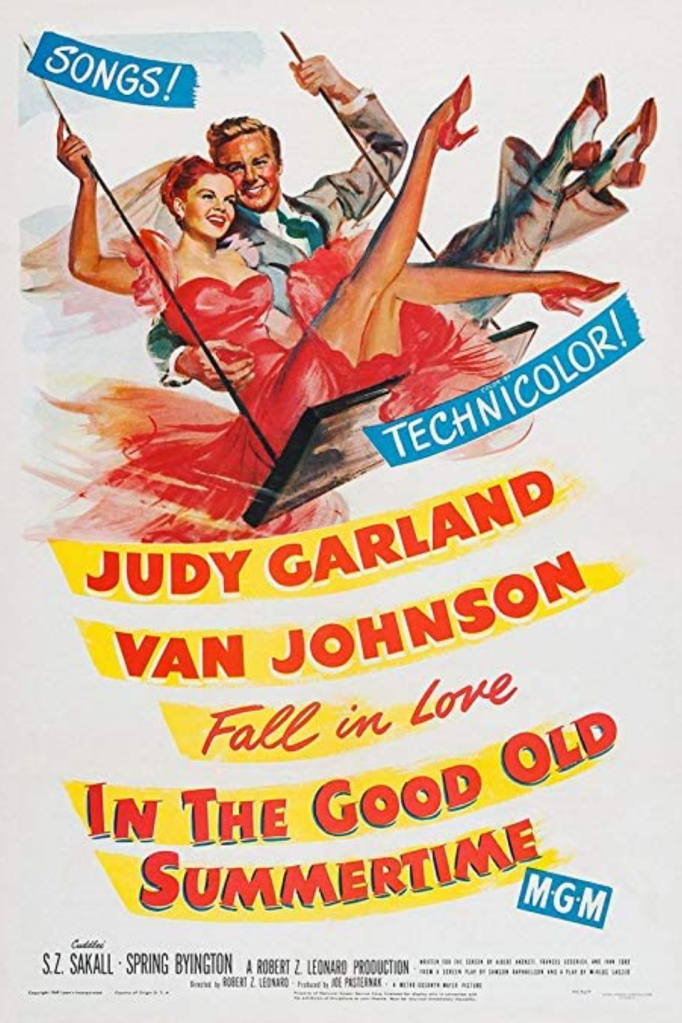
Earlier this month, I said I would review In The Good Old Summertime for the Van Johnson Blogathon. Now, with the arrival of the aforementioned event, it’s time to talk about this film! There are two reasons why I selected the 1949 movie. The first is it was recommended to me by Becky, the same reader who suggested Easy to Wed. The second was how the summer season is winding down. Because the movie is titled, In The Good Old Summertime, I figured it would serve as a sort of last hurrah. As of 2022, the 1949 title is the fourth one of Van Johnson’s I’ve seen. While I found both Plymouth Adventure and Easy to Wed just ok, I was not a fan of Where Angels Go, Trouble Follows. Therefore, it’ll be interesting to see what I thought of In The Good Old Summertime!

In The Good Old Summertime poster created by
Metro-Goldwyn-Mayer

Things I liked about the film:

The acting: As I said in the introduction, In The Good Old Summertime is the fourth film of Van Johnson’s I have seen. Therefore, I knew what to expect from Van, talent wise. While portraying Andrew, Van utilized emotions well. A great example is when Andrew and Veronica are attempting to sell some sheet music to a customer. The sheet music in question was “Put Your Arms Around Me, Honey”. During this song, Andrew looks threatened, like he knows Veronica is doing a better job at selling the music than he would have. Because of the quality of his acting talents, Van was able to make scenes like this one feel believable.

In The Good Old Summertime is the fifth movie of Judy Garland’s I have watched. Looking back on those films, I have noticed how Judy is a more versatile actress than I feel she gets credit for. While waiting for her secret admirer, Veronica, Judy’s character, appears visibly nervous. She’s glancing around the restaurant and constantly readjusting her flower and poetry book. When Andrew arrives, Veronica’s unpleasant feelings toward her co-worker grow stronger. Her face appears troubled, frustrated over the fact he won’t leave. At some points during this interaction, Veronica raises her voice. When she eventually returns home, Veronica appears deflated, her night not going as she expected.

I am not familiar with Spring Byington as an actress. Despite this, I enjoyed her portrayal of Nellie Burke! Her on-screen personality was so pleasant. Even when she was upset at Otto Oberkugen, she was still a character worth rooting for. Spring and S.Z. Sakall had good on-screen chemistry. One good example is when Nellie is trying to explain a misunderstanding. During this conversation, Otto reveals his insecurities as a musician. This explanation comes across as genuine, as a businessman trying to save face. Meanwhile, through gentleness and kind words, Nellie reassures Otto he is the only man she cares about. It was nice to see two older characters fall in love, especially since this type of romance story doesn’t seem as common as those featuring younger couples. Through the acting performances and screenwriting, Spring and S.Z. brought forth a couple that was interesting to watch!

The musical numbers: At Otto’s music store, a harp is introduced among the instrumental stock. In order to sell the harp to a potential customer, Veronica plays the harp to a song called “Meet Me Tonight in Dreamland”. With the combination of Judy’s vocals and the harp instrumental sound, the song exuded the dreamlike tone the film’s creative team was striving for. Even with the inclusion of a piano, these sounds complimented one another. The aforementioned song, “Put Your Arms Around Me, Honey”, was performed in two tempos. At Veronica’s suggestion, the first tempo is slower, providing a romantic tone. But with the second, faster tempo, a jollier tone is presented. Because of this musical, creative decision, it was interesting to hear how one change can make a song sound so different.

The historical accuracy: In The Good Old Summertime takes place around the late 1800s to early 1900s. With that said, there are many aspects of this movie that appeared historically accurate! One of these areas was the wardrobe. Louise Parkson, portrayed by Marcia Van Dyke, is Andrew’s friend. She is attempting to win a prestigious audition. When this audition arrives, Louise wore a white dress with a full, floor length skirt. The sleeves are medium length, covering Louise’s upper arms. The dress also had a higher neckline. These design choices represented modesty in women’s fashion from that time.

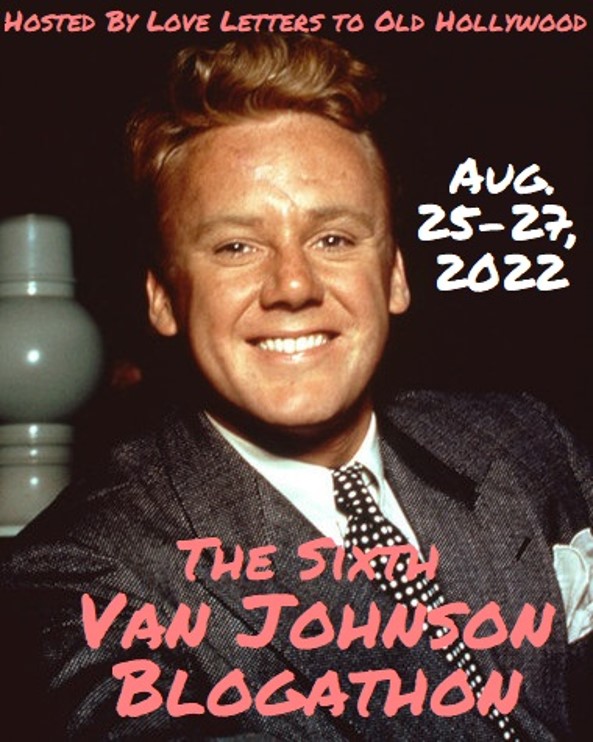
The Sixth Van Johnson Blogathon banner created by Michaela from Love Letters to Old Hollywood

What I didn’t like about the film:

The underutilization of Buster Keaton: I haven’t seen many of Buster Keaton’s films. But based on what I know about his filmography, he seems like he’s a comedic actor who utilizes physical comedy. In In The Good Old Summertime, however, Buster wasn’t given much material to work with. There were two scenes where Buster’s character, Hickey, trips and falls. But these felt like weak attempts at giving Buster something to do. If anything, it seems like Buster was cast in the film just for the sake of it.

A drawn-out plot: The story of In The Good Old Summertime revolves around Veronica’s and Andrew’s search for their respective pen-pals. While this plot can lend itself to a good story, it was drawn-out throughout the entire movie. It got to the point where, after Veronica’s secret admirer was revealed, she was being manipulated into believing the secret admirer is someone else. This was likely done to keep the plot going. But it just felt too cruel for my liking.

No strong subplots: So much time was given to the aforementioned main plot in In The Good Old Summertime. As a result, there were no strong subplots. Some aspects of the narrative could have lent themselves to good side stories. But because the script focused so much on the main plot, these ideas weren’t able to reach their full potential. For example, Otto is experiencing difficulty selling some harps. This felt like a running joke that didn’t lead anywhere. An interesting story idea would have been if a wealthy customer was looking for a specific harp. Otto would then spend the rest of the movie trying to locate this instrument.

String of musical notes image created by Freepik at freepik.com. <a href=’https://www.freepik.com/free-vector/pentagram-vector_710290.htm’>Designed by Freepik</a> <a href=”https://www.freepik.com/free-photos-vectors/background”>Backgroundvector created by Freepik</a>. Image found at freepik.com.

My overall impression:

This is the third time I have participated in the Van Johnson Blogathon. While I reviewed Van’s episodes of Murder, She Wrote the first time around, I wrote about Plymouth Adventure last year. Both Plymouth Adventure and In The Good Old Summertime have one thing in common: there were ok. With the 1949 film, I enjoyed the musical numbers. They were not only entertaining, but creative as well. But there were times where I felt more effort was placed in the musical numbers than the script. This movie adopted the “enemies to lovers” trope, which could work in a story. Unfortunately, this part of the script was drawn-out. While watching In The Good Old Summertime, I kept thinking back to Meet Me in St. Louis. The 1944 musical not only takes place in the early 1900s, but also stars Judy Garland. Personally, I think In The Good Old Summertime is a weaker version of Meet Me in St. Louis.

Overall score: 6.9 out of 10

Have you seen any of Van Johnson’s films? If so, which one is your favorite? Let me know in the comment section!

Have fun at the movies!

Sally Silverscreen

Watching ‘Singin in the Rain’ for the First Time

Throughout my years of movie viewing (and blogging), I have received the opportunity to check out films boasting a “classic” status. This status has, in my opinion, been earned on some occasions, as I gained an understanding for why a particular movie was granted its praise. However, there were certain titles I found myself unable to figure out why it is considered a “classic”. Out of all these “classic” films, I have been meaning to see one specific picture. That title is Singin in the Rain. The 1952 production needs no introduction. From the song, “Good Morning”, being featured in an orange juice commercial to a replica of Gene Kelly’s umbrella in Disney MGM/Hollywood Studios, Singin in the Rain has carved out a slice in America’s pop culture pie. But for someone, like me, who hasn’t seen this iconic film before, these references are going to seem like a company, individual, or creative team is, simply, taking advantage of the movie’s 50+ year popularity. That replica is just used for tourists to have their photo taken. That song was just an appropriate selection to promote a beverage primarily found at breakfast-time. With the arrival and fruition of the Singin in the Rain Blogathon, I finally have a wonderful excuse to watch Singin in the Rain. It also gives me an opportunity to gain more context of the film’s respective songs, images, and quotes.

Singin in the Rain poster created by
Metro-Goldwyn-Mayer and Loew’s Inc.

Creative Musical Numbers

Singin in the Rain is not just one of the most iconic movies of all time, it’s one of the most iconic musicals of all time! A musical with a “classic” status will bring something unique and creative to the table. The Wizard of Oz took on the power of Technicolor, in a time when that specific technology was more of a luxury. Xanadu showed the world roller skating can be magical. When it comes to Singin in the Rain, the creativity lies in the musical numbers themselves, presenting performances that hadn’t really been seen before 1952. Toward the beginning of the film, Gene and Donald perform a duet, “Fit as a Fiddle (And Ready for Love)”, at a vaudeville show. Throughout this musical number, Donald and Gene not only tap danced, but played the fiddle as well. For the 21st century viewer, dancing and playing an instrument at the same time doesn’t seem like a new concept, as Lindsey Stirling has capitalized on those talents. Within the realm of cinematic musicals, however, a routine like Gene and Donald’s isn’t often included.

Gene Kelly’s famous solo isn’t the first musical number featuring rain. Two decades prior, in Just Around the Corner, Shirley Temple performed “I Love to Walk in the Rain”, her film’s big musical number that represented the spirit of the movie. Looking back on “Singin in the Rain”, I, personally, feel Shirley’s number walked (no pun intended) so Gene’s solo could soar! The solo from the 1952 production takes place after Gene’s character, Don, takes Kathy home. Despite it raining outdoors, Don is head-over-heels in love with Kathy. Gene tap danced in his solo. But unlike “I Love to Walk in the Rain”, “Singin in the Rain” felt more immersive, as it wasn’t just a performative routine. Because the number takes place within the story’s context, it feels grounded in reality, a downtown street replacing a glamourized stage. Watching Gene jumping and splashing in puddles added uniqueness to the routine. Even though “Singin in the Rain” wasn’t the big musical number for its respective movie, it represents the film’s spirit, reminding the audience to see the good in a not-so-good situation.

String of musical notes image created by Freepik at freepik.com. <a href=’https://www.freepik.com/free-vector/pentagram-vector_710290.htm’>Designed by Freepik</a> <a href=”https://www.freepik.com/free-photos-vectors/background”>Background vector created by Freepik</a>. Image found at freepik.com. 

Strong Camaraderie

In most of my reviews, I talk about the acting. I will choose a few performances to discuss and write about what I liked about them. For this review, I want to talk about a different acting component. While the overall acting in Singin in the Rain was strong, what stood out to me more was the on-screen camaraderie between Gene Kelly, Debbie Reynolds, and Donald O’Connor! One of my favorite scenes is when Don, Kathy, and Cosmo are concocting a plan to save Don’s film. Each character’s personality shines through during this brainstorming session. Cosmo encourages Don to turn the film into a musical, as he spontaneously breaks out into song. Meanwhile, Kathy attempts to keep the group’s good spirits lifted, her kind demeanor certainly helping the situation. After hearing Cosmo’s idea, Don is open-minded about it, joyously realizing he can use his talents to his advantage. This scene, as well as the “Good Morning” musical number, is just one example of Gene, Debbie, and Donald’s on-screen camaraderie. Through their interactions, it felt like Don, Kathy, and Cosmo had been friends all along. This on-screen bond was so pleasant, I looked forward to each time these characters crossed paths!

Couple performing the waltz image created by Macrovector at freepik.com. <a href=”https://www.freepik.com/free-photos-vectors/background”>Background vector created by macrovector – http://www.freepik.com</a>. Image found at freepik.com.

Learning about Cinema’s Early Years

Singin in the Rain takes place in the 1920s, during the transitional period between silent films and “talkies” (movies with sound). Even though the 1952 film is a musical that takes time to focus on its numbers, it lifts the figurative curtain enough to educate the audience on how film-making was executed in that time period. Don’s respective studio, Monumental Pictures, adopted sound after Warner Bros. took a chance with their film, The Jazz Singer, a high risk that was met with high rewards. Because of that one creative decision, it forever changed the cinematic landscape. As emphasized in the musical number, “Moses Supposes”, actors had to not only memorize their lines, they also had to remember to annunciate those lines. Singin in the Rain also shows the audience how dialogue is incorporated into a movie. As someone who appreciates the film-making process, it was nice to see this part of movie-making shown in steps. This step-to-step process was a good introduction to some of the work that goes on behind the camera.

Image of vintage movie camera created by Macrovector at freepik.com. <a href=”https://www.freepik.com/free-photos-vectors/background”>Background vector created by macrovector – http://www.freepik.com</a>. Image found at freepik.com.

The Context of “Broadway Melody” in Don’s Film

While working to adapt his film, The Dancing Cavalier, into a musical, Don proposes the movie’s new opening scene. This scene is presented as the musical number “Broadway Melody”. As a musical number in Singin in the Rain, I liked this performance! It had colorful set and costume design, as well as strong choreography. But as an opening scene in The Dancing Cavalier, the musical number, in my opinion, doesn’t work. “Broadway Melody” is too long, my guess is ten minutes. The number itself kind of feels like an extension of Don’s past, as his journey to Hollywood came from simpler beginnings. Based on what the characters said about The Dancing Cavalier, Don’s proposed opening scene seems to have little connection to that film’s story. If Don’s movie were a real picture, some audience members might become bored with the film before the story began.

New York City skyline with letters image created by Freepik at freepik.com. <a href=’https://www.freepik.com/free-vector/new-york-skyline-typographic-silhouette_719554.htm’>Designed by Freepik</a>. <a href=”https://www.freepik.com/free-photos-vectors/background”>Background vector created by Freepik</a>. Image found at freepik.com.

No Subplot for Cosmo

As I mentioned earlier in this review, I liked the on-screen camaraderie of Gene, Debbie, and Donald. In fact, I liked Donald’s character, Cosmo! Not only was he hilarious and charming, but he was talented as well! The story of Singin in the Rain primarily revolved around the main plot; Monumental Pictures attempting to save their latest film. There is a subplot in the movie, but it mostly focuses on Lina, Don’s co-star. I would have loved to see Cosmo receive his own subplot. Since his contribution to the studio is musical, Cosmo’s part of the story would have pulled back that figurative curtain a little further to show the audience cinematic work behind the camera. I’ve said in previous reviews how important music is in film. Without it, there isn’t an opportunity for viewers to become emotionally affected by a given scene. Because Cosmo is a musician, that aspect of film-making could have been explored.

Masks of comedy and tragedy images created by freepik at freepik.com. <a href=”https://www.freepik.com/free-photos-vectors/background”>Background vector created by freepik – http://www.freepik.com</a>. Image found at freepik.com.

A Love Interest That Wasn’t Meant to be

In my point about Cosmo not receiving a subplot, I mentioned how Singin in the Rain’s subplot mostly focused on Don’s co-star, Lina. Personally, I think more of that time should have been given to Cosmo. I know Lina is meant to be the film’s antagonist. I also know her actions and choices are intended to fuel the movie’s conflict. But why would Lina receive so much time when she and Don were never meant to be? Before and after the premiere of The Royal Rascal, people speculate about Lina and Don’s relationship. Even Lina carries the assumption she and Don are romantically involved with one another. But Don makes it pretty clear he is not romantically interested in Lina. This part of the story reminded me of a Hallmark movie cliché I’ve talked about in the past: the “protagonist’s ex showing up unannounced” cliché.

The Singin in the Rain Blogathon banner created by Ari from The Classic Movie Muse

In Conclusion

Before the Singin in the Rain Blogathon, I had never seen the event’s namesake. That means if someone were to tell me one of the movie’s quotes or if I heard one of the film’s songs, I wouldn’t have thought much of it. Now that I have finally seen Singin in the Rain, I have gained an understanding and appreciation for it! When Kathy first meets Don, she claims, when referring to films, that “when you’ve seen one, you’ve seen them all”. However, I’d argue the 1952 musical built a solid identity that affords it a distinction from other musical movies. Even though Singin in the Rain was released within the Breen Code era, I was pleasantly surprised by the good messages and themes in the story. When I talked about the movie’s on-screen camaraderie, I shared one of my favorite scenes; where Kathy, Don, and Cosmo were figuring out how to save Don’s film. Through this interaction, the message of being one’s self is stressed. This message also allowed Don to use his talents in his favor. When I reviewed The Bridge on the River Kwai, I wondered what the criteria was for lists such as AFI’s 100 Greatest  American  Movies of All Time. One of my speculations was titles that brought something new to the cinematic table. It should be noted that Singin in the Rain is on AFI’s list. While I don’t know for certain how it got there, I think I have a pretty good idea why it’s there.

Have fun at the movies!

Sally Silverscreen

Take 3: The Princess and the Pirate Review + 435 Follower Thank You

Originally, I was going to review The Princess and the Pirate for The Metzinger Sisters’ MGM Blogathon. This is because my DVD copy of the film features the MGM logo on the cover and the film was released in 1944. However, The Metzinger Sisters informed me that the movie was not an MGM picture. Even Wikipedia claimed it was an RKO Radio Pictures production. Confused by this, I chose to review The Princess and the Pirate as my next Blog Follower Dedication Review instead. Bob Hope is a comedian I have heard of over the years. But, up until this point, I had never seen any of his films. Meanwhile, pirate themed movies are no stranger to 18 Cinema Lane. As of late June 2022, I have reviewed Captain Sabertooth and the Treasure of Lama Rama and China Seas. While I found China Seas to be just ok, I was disappointed by Captain Sabertooth and the Treasure of Lama Rama. What do I think of The Princess and the Pirate? Get ready to set sail as we start this review!

Here is a picture of my DVD copy of The Princess and the Pirate. Screenshot taken by me, Sally Silverscreen.

Things I liked about the film:

The acting: As I said in the introduction, Bob Hope is a comedian I have heard of before. But because I had never seen his movies, I didn’t know what to expect. While watching The Princess and the Pirate, I found Bob’s portrayal of Sylvester pleasant to watch! His expressions, emotions, and body language were fluid, allowing Bob to adapt to any on-screen situation. Bob’s impersonations were also a memorable component to his performance. Among the silliness and humor, Bob also showed a romantic side. In a scene where Sylvester and Margaret are sailing in a boat, he learns more about Margaret’s identity. During their conversation, Sylvester’s demeanor is softer, lowering his guard. This sweetness in Bob’s character was nice to see, as it showed how multi-layered Sylvester was!

Virginia Mayo portrayed Princess Margaret. As I watched this movie, her performance reminded me of Elizabeth Swann from the Pirates of the Caribbean trilogy. This is because she wasn’t afraid to stand her ground and help save the day. Margaret encouraging Sylvester to be brave during an on-deck battle is one example. What made Margaret different from Elizabeth is how, like Bob, Virginia showed a romantic side. Her performance of ‘Kiss Me in the Moonlight’ showcases this well. Even though the singing was performed by Louanne Hogan, Margaret’s facial expressions and body movements embodied the feminine songstress that appeared in musicals of the time of the movie’s release. Virginia’s portrayal prevented her character from becoming one dimensional!

One aspect of The Princess and the Pirate I liked was how the film made fun of status quos in the world of pirate films. The character of Featherhead is one example of this. Portrayed by Walter Brennan, this pirate is seen by his peers as being “dumb”. However, Featherhead’s interactions with Sylvester goes against that aforementioned claim. Walter’s performance was consistent and went toe-to-toe with Bob’s talents. While Featherhead is a more comedic character, he was more than being the film’s “comic relief”. Walter’s talents allowed his character to be memorable. Featherhead also helped progress the plot forward.

The humor: At the beginning of the movie, on-screen text explains who a pirate named The Hook is and what his mission will be. During this collection of text, Bob Hope breaks the fourth wall by explaining how he’s not portraying the character of The Hook. I found this part of the movie hilarious because of its unexpected nature! At one point in the story, Sylvester swims in a bathing pool with a character named La Roche. During this scene, Sylvester is hiding a secret he doesn’t want La Roche to discover. So, while in the pool, Sylvester quickly pops in and out of the water so La Roche doesn’t see him. Because of the scene’s consistency and because of the scene’s length, it was, in my opinion, funny!

The costume design: In the pirate films I’ve seen, costume design seems to have been a top priority. The combination of historical accuracy and design detail have created costumes that were exquisite and aesthetically pleasing. Throughout The Princess and the Pirate, I loved Virginia’s wardrobe! Each dress boasted a pastel palette, from a coral and teal gown Margaret wore on the Mary Ann to a pink and purple dress she was seen wearing toward the end of the film. This pastel palette also complimented Virginia’s hair color and skin tone. While at La Roche’s house, Sylvester wore a fancy suit. The suit jacket’s primary colors were white and fuchsia, a costume piece boasting a bright, fun palette. Embroidered flowers covered the jacket, which added beauty to the piece. Like the other pirate films I’ve watched, it looks like the costume design in The Princess and the Pirate was a top priority as well!

Princess tiara image created by Freepik at freepik.com. <a href=’https://www.freepik.com/free-vector/ornamental-princess-crowns_1109199.htm’>Designed by Freepik</a>. <a href=”https://www.freepik.com/free-photos-vectors/gold”>Gold vector created by Freepik</a>. Image found at freepik.com.

What I didn’t like about the film:

The island of Casarouge: In The Princess and the Pirate, Sylvester and Margaret go to the island of Casarouge, which is inhabited by pirates. Personally, this location didn’t sit well with me. Throughout Margaret and Sylvester’s time on Casarouge, the pirates’ actions and behavior are unsavory. Acts like murder, thief, and even drunkenness are on full display. I know not every fictional pirate is as friendly as Captain Jack Sparrow. I’m also aware The Princess and the Pirate was released during the Breen Code era, a time where the inhabitants’ choices would not be celebrated or glorified on film. In fact, while on Casarouge, Sylvester questions everything taking place around him. But The Princess and the Pirate has a, mostly, light-hearted tone, with some situations being played up for laughs. Because of these factors, the actions and behaviors of Casarouge should have been toned down.

The Hook’s buried treasure: When The Hook is first introduced in The Princess and the Pirate, he and his crew were seen burying a chest full of treasure. Throughout the film, a subplot involved searching for a treasure map. Without spoiling the movie, I will say the aforementioned treasure was never physically brought up again in the story. More emphasis was placed on finding the map than reclaiming the treasure chest. This made me wonder why the film’s creative team would include this in their story if they had no intention to follow through on it?

A confusing time period: While watching The Princess and the Pirate, the costume and set designs felt reminiscent of the Pirates of the Caribbean trilogy. This led me to believe the story was taking place in the 1700s. Yet Bob Hope’s dialog mentioned things that came to be after the presented time period. When crossing paths with The Hook, Sylvester claims the pirate’s hook would make a great beer can opener. However, I know beer cans did not exist until the 18th century had concluded. I’m not sure if these references were the result of Bob Hope’s comedy or the screenwriters wanting the dialog to be more reflective of the time of the movie’s release. No matter the reason, I found it confusing.

Paper Boats in the Sea image created by Freepik at freepik.com. <a href=’https://www.freepik.com/free-vector/background-of-paper-boats-with-hand-drawn-waves_1189898.htm’>Designed by Freepik</a>. <a href=”https://www.freepik.com/free-photos-vectors/background”>Background vector created by Freepik</a>. Image found at freepik.com.

My overall impression:

The Princess and the Pirate is a movie I’ve been meaning to review. Ever since I acquired my DVD copy of the film, I have been trying to find the perfect opportunity to write about it. Thanks to you, my followers, that time has come! Thank you for taking the time to read what I have to say and for paying 18 Cinema Lane a visit! Your interest in my blog means a lot to me. Now, on to my overall impression of The Princess and the Pirate. There are pirate stories that are stronger than this one. But, for it was, I enjoyed the 1944 movie! While I won’t give anything away, I want to mention there is a “bait and switch” ending. But because The Princess and the Pirate made fun of status quos in pirate films, this type of ending worked. What also worked was the acting and the humor. Since this was my first time watching any of Bob Hope’s films, I found this to be a good introduction to his filmography. In the future, I’d like to check out more of his movies.

Overall score: 7.6 out of 10

Have you seen any of Bob Hope’s movies? If so, which ones would you recommend? Let me know in the comment section below!

Have fun at the movies!

Sally Silverscreen

The 4th Annual Gold Sally Awards Has Arrived!

18 Cinema Lane recently celebrated its fourth anniversary! To commemorate such an important milestone, I am, once again, hosting the Gold Sally Awards! As I said last month, each award post will feature two polls at a time. This decision was made to help the voting process move at a faster pace. With that said, this year’s Gold Sally Awards will begin with the Best Movie and Story polls! Because I didn’t post any announcements for the Gold Sally Awards, the first two polls will be available for two weeks; from February 16th to March 2nd. Like years past, you are allowed to vote for more than one nominee. But you can only vote once per person. The link to the polls will be located under each poll. Just click on the word ‘PollMaker’.

Similar to last year, I thought featuring this anniversary image was appropriate for the start of the Gold Sally Awards! Anniversary image created by WordPress.
What was the Best Movie of 2021?
1. The Karate Kid (1984)
2. The Three Musketeers (1948)
3. The Love Letter
4. Perry Mason: The Case of the Telltale Talk Show Host
5. Sincerely, Yours, Truly
6. Rigoletto
7. Holly and Ivy
8. The King and I (1956)
9. A Star Is Born (1937)
10. Poisoned in Paradise: A Martha’s Vineyard Mystery
 
Created with PollMaker
What was the Best Story of 2021?
1. The Karate Kid (1984)
2. The Three Musketeers (1948)
3. The Love Letter
4. Perry Mason: The Case of the Telltale Talk Show Host
5. Sincerely, Yours, Truly
6. Rigoletto
7. Holly and Ivy
8. The King and I (1956)
9. A Star Is Born (1937)
10. Poisoned in Paradise: A Martha’s Vineyard Mystery
 
Created with PollMaker

Have fun voting!

Sally Silverscreen