For the Christmas in July Blogathon from Drew’s Movie Reviews, I knew that I wanted to review a Hallmark Christmas movie. However, I was originally going to talk about Hallmark Hall of Fame’s A Heavenly Christmas. Because I forgot to record that movie and because I have a lot of movies stored on my DVR, I chose to review Christmas Camp instead. This is the latest Christmas movie from Hallmark Movies & Mysteries. Having a new Christmas film air in July is not a new concept, as this has been done on both of Hallmark’s channels in the past. What makes this film sound interesting is the idea of a Christmas-themed camp. This idea has never been featured in a Hallmark movie before, so I wanted to see how it would be executed in the story. Did this movie make me a “happy camper”? Take a sleigh ride through this review of Christmas Camp to find out!
The acting: I was not familiar with Lily Anne Harrison’s acting abilities before watching Christmas Camp. In fact, this was the first Hallmark movie that Lily had ever starred in. Despite this, she did a good job with the acting material she was given! Because of her performance, her character, Haley, came across as a very pleasant individual. Another character that was a pleasant person was Jeff. Bobby Campo also did a good job at bringing this character to life, providing the charm and likability that made his performance enjoyable. The rest of the cast was talented! They complimented one another’s acting abilities and shined on their own merits!
The cinematography: For some of the scenes involving natural landscapes, the cinematography was really good! Anytime a snowy forest was featured in the movie, it looked beautiful on-screen. What stood out to me was a shot of a sunset behind a snowy forest. This was captured very well on film! There was other good cinematography inside the Christmas Camp. In one instance, a close-up of a gorgeous Christmas tree was shown before a scene began. This was a great way to showcase some of the facility’s Christmas decorations!
A pointless plot: The premise of this movie is a businesswoman being sent to Christmas Camp in order to find inspiration for an upcoming business project. But within the first ten minutes of the film, Haley’s boss gives the coveted business project to another employee. This made me wonder why she would entertain the idea of giving Haley the project if she already gave it to someone else? During her time at Christmas Camp, Haley discovers her idea for the aforementioned business project. This idea was found at the local community center, not at the Christmas Camp. It made me ask why she was forced to go to the Camp when she was able to find inspiration elsewhere?
A hypocritical message: The overarching message of Christmas Camp was to uphold Christmas traditions. However, this message ended up coming across as hypocritical. Earlier in the film, Haley shares that her Christmas tradition is taking a family vacation to the Caribbean and watching Christmas movies in the hotel room. Her boss thinks that she needs an “attitude adjustment” because her traditions aren’t “traditional”. Throughout the film, Haley is guilted into changing her Christmas traditions to align more with those of the Camp. Another guest of the Camp shared that one of his Christmas traditions was opening presents on Christmas Eve, due to his father being a professional basketball coach. Shortly after sharing this, the guest’s wife is critical about this particular tradition. Everyone has their own unique and special way of celebrating Christmas. So, for this story to look down on that is very frustrating.
Christmas Camp as an afterthought: The idea of a Christmas-themed camp is something that has never been shown in a Hallmark movie before. Because of this, I was curious to see how this concept would be incorporated into the story. Unfortunately, the Camp itself was treated as an afterthought. The activities associated with Christmas Camp seemed so interesting. Yet, most of these activities were barely shown in the film. One example is when the campers are required to pick out a Christmas tree and decorate it. However, the only person the audience sees doing this activity is Haley. Also, for a place called Christmas Camp, Haley’s bedroom was poorly decorated. It barely featured any Christmas decorations, which made the room look less than festive.
After watching this movie, I’m starting to understand why Hallmark Movies & Mysteries aired Christmas Camp in July and not during their “Miracles of Christmas” line-up. This film had so much potential to do something different from other Christmas movies on the network. There was also potential to share a message that would have been relatable. Unfortunately, all of this potential was not taken advantage of by Christmas Camp’s creative team. Instead, I ended up getting the worst Hallmark movie I’ve seen this year, so far. I’m hoping that during Hallmark Movies & Mysteries’ “Miracles of Christmas” line-up and Hallmark Channel’s “Countdown to Christmas” line-up, movies as disappointing as Christmas Camp will be a rarity.
Before I end this review, I would like to add a name to the invitation list for Drew’s Christmas Party. The actress that I would like to see get invited to Drew’s Christmas party is Karina Arroyave. I’ve seen several of her acting work in various television shows and movies, including two Hallmark Hall of Fame films (Blind Spot from 1993 and Missing Pieces from 2000). I think she’s a very talented actress. But, at the same time, she is also very underrated. By suggesting Karina’s name for Drew’s invitation list, I’m hoping that she can, sooner or later, receive the recognition she deserves!
Overall score: 5.1 out of 10
Have you seen Christmas Camp? Do like watching Christmas movies in July? Leave your thoughts in the comment section!
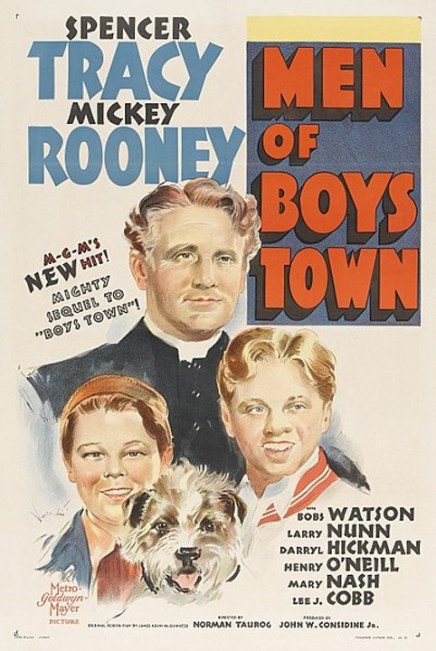
For Pure Entertainment Preservation Society’s Favorite Code Film Blogathon, I reflected on all of the Breen Code era movies that I’ve seen and/or reviewed since starting 18 Cinema Lane a year ago. One film, that I watched back in May, that left a good impression on me was 1938’s Boys Town. Before 2019, I had never even heard of this movie. But I’m glad I gave the film a chance, as I thoroughly enjoyed it! Boys Town had the components that I look for in a movie; a good story with likable characters. It’s also based on a real-life person as well as a real-life non-profit organization. This is a film that I think people should give a chance. To explain why, I created a list of reasons to support my opinion. One of my goals for this blog is to encourage others to watch films that they may not have seen before. So, if this post accomplishes that goal, I would feel like I helped someone out.
When I review a film, one of the first things I talk about is the acting. This is because the acting performances are one of the first things you see in a movie. In Boys Town, the actors in this cast gave fantastic acting performances! One of the most notable is Mickey Rooney’s performance as Whitey Marsh. Over the course of the story, Whitey evolves from a self-centered youngster to one of Boys Town’s biggest supporters. Mickey’s portrayal of this character helped make this evolution believable. In fact, this is one of the best performances that Mickey has ever given in his career! That’s not the only acting performance that impressed me. Spencer Tracy’s portrayal of Father Flanagan is consistent in not only Boys Town, but also in the sequel, Men of Boys Town. With the right amount of emotionality, Spencer made his character a likable individual. Father Flanagan was stern when he needed to be, yet selfless and caring toward the residents of Boys Town. Throughout this movie, you can tell that Father Flanagan always has his heart in the right place.
Based on a True Story
As I said in the introduction, Boys Town is based on a real-life person and a real-life non-profit organization. Before watching this movie, I was familiar with Boys Town as a charity. Their mission and the people that have benefited from Boys Town are things that I learned about years prior. When I watched the film, I learned more about Boys Town and the history associated with it. While there were liberties that were taken in this story, the movie is an educational lesson about who Father Flanagan is and what his mission was. Come to think of it, I haven’t seen or heard of many movies that tell the story about an existing non-profit organization. This is something that makes this film truly special!
Because Boys Town and its sequel, Men of Boys Town, were released during the Breen Code era, there isn’t any cinematic content this is questionable or offensive. Because of this, I will be talking about the positive content that is featured in this film. A large portion comes from the lessons and messages included in this narrative. Giving second chances is a fluid message, highlighted in Whitey’s subplot. By bringing Whitey to Boys Town, Father Flanagan gives Whitey a second chance at life. Despite Whitey’s negative attitudes toward his new surroundings, Father Flanagan never gives up on him. One important lesson that can be found in Boys Town is putting other people before yourself. During the entirety of this story, Father Flanagan is always looking out for the residents of Boys Town. Even when he receives hundreds of dollars in donations and plenty of praise, he still tries to figure how he can help others to the best of his abilities. Messages and lessons like these can be relatable for all members of the audience!
An Entertaining Sequel
I’ve been saying in this post that Boys Town was given a sequel called Men of Boys Town. Before I watched this film, I was skeptical about its quality. Since its predecessor was based on a true story, I wasn’t sure how the sequel would hold up. I was proven wrong, however, as I was met by a movie that was just as good or better than the first one! While Whitey’s subplot repeats some of the same story-points from Boys Town, the overall narrative of Men of Boys Town expands upon the story from the first film. New characters are introduced, causing new stories to be told. With this comes new ideas and messages, such as trauma, loss, and finding ways to heal. Men of Boys Town is one of the few sequels that actually compliments the film that came before it. If you do give Boys Town a chance, check out Men of Boys Town as well!
In my review of Stowaway, I shared that I would be reviewing a Breen Code era film every week during Clean Movie Month. This gives me a chance to watch even more movies that I haven’t seen before. That’s the great thing about being a movie blogger, as I not only get to watch films that are new to me, but I also get to share these films with others. In the month of July, films that were released between 1934 and 1954, also known as the Breen Code era, are celebrated by anyone and everyone who enjoys movies. Because of Tiffany and Rebekah, from Pure Entertainment Preservation Society, more people can learn about the Breen Code and why it’s an important part of film history. Be sure to stay tuned for the rest of my Clean Movie Month reviews, which will come as July goes on.
Unlike the Jean Simmons and Rosalind Russell Blogathon, I was familiar with who Olivia de Havilland was, as an actress, before I signed up for The Fourth Annual Olivia de Havilland Blogathon. Gone with the Wind and The Snake Pit are the only two films of Olivia’s that I’d seen prior to my blogathon participation. I wanted to watch a film within this actress’s filmography that I haven’t seen before. When I found out that Olivia had starred in the film, Hush…Hush, Sweet Charlotte, I decided to choose this movie for this review. Hush…Hush, Sweet Charlotte is a film that I had heard of before. It’s usually put in the same category as a film like What Ever Happened to Baby Jane?, where mystery and suspicion are the common themes within the narrative. I was fortunate to have seen this movie knowing very little about the story. The lack of spoilers helped my movie-viewing experience be as entertaining as possible. Now, let’s figure out what my thoughts are on Hush…Hush, Sweet Charlotte!
The acting: I was a fan of the acting performances in Hush…Hush, Sweet Charlotte! The only other film of Bette Davis’ that I’ve seen is What Ever Happened to Baby Jane?. But even after watching that film and Hush…Hush, Sweet Charlotte, I think that Bette excels at portraying characters that are unsettling and over-the-top. Olivia de Havilland’s portrayal of Miriam Deering was very cool and collected. This helped balance out the differences between Bette and Olivia’s performances! I was also pleasantly surprised by Agnes Moorehead’s performance as Velma Cruther! She made her character so memorable, that her performance still stands out in my mind long after I saw the film.
The cinematography: Hush…Hush, Sweet Charlotte had some really good cinematography! The way some of these scenes are presented made the movie look visually appealing. How the lighting was used in this film was something that caught my attention. For example, during an evening meal, when Charlotte was talking about her father, a portrait of him is shown with the use of a bright light. Certain camera angles made some scenes have a unique look to them. One example is when Charlotte is walking up the stairs. This scene was presented as if the audience was looking down on the set of stairs.
Some unexpected surprises: As I mentioned in the introduction, Hush…Hush, Sweet Charlotte is a story that has a good amount of mystery and suspicion. With this comes some unexpected surprises. I will not be spoiling any of these surprises in this review, especially since some of my readers and followers may not have seen this film yet. But what I will say is that these surprises were very shocking, leaving me completely caught off guard! The surprises kept this story interesting, helping me to stay invested in the overall narrative.
An unnecessary amount of violence: When I was watching this film, I noticed some violence that, in my opinion, didn’t need to be there. For example, early on in the movie, John Mayhew, Charlotte’s love interest, gets his hand chopped off. This act is explicitly featured in the movie. While this was a shocking moment, I don’t think this needed to be shown in the film. If a shadow of the knife falling were seen or if John’s scream were heard in the distance, it would have created the same effect of shocking the audience.
The run-time: Two hours and 13 minutes is the official run-time for Hush…Hush, Sweet Charlotte. Because of this, there were moments that were drawn out a little longer than they should have. One example is this is when Charlotte and Harry Willis meet for the first time. Personally, I think that the film’s run time is a bit too long. Having the movie run at under two hours would have worked better for the narrative. This way, the audience could stay invested in the story without having to feel bored at any moment of the film.
The amount of shocking/surprising moments: Hush…Hush, Sweet Charlotte does have some shocking/surprising moments. However, most of these moments take place within the film’s climax, toward the end of the film. I understand that the narrative is building up to that climatic moment. But, prior to the climax, these shocking/surprising moments are used sparingly. This creative choice caused me to feel that this story was not as mysterious or suspenseful as I had thought it would be. The ratio between shocking/surprising moments and scenes without them were uneven.
Manor with white colored porch image created by Arkadiusz Frankowicz at freeimages.com. “FreeImages.com/Arkadiusz Frankowicz .”
My overall impression:
Though this movie had its flaws, I still found Hush…Hush, Sweet Charlotte to be a good film! It’s one of those movies that gets better as you keep watching, developing into a story that is truly shocking and intriguing. The only movie I can compare this to is What Ever Happened to Baby Jane?, as the structure of each narrative is very similar. After comparing these two films, I would choose Hush…Hush, Sweet Charlotte as the better of the two. It had more interesting components and I found myself being more invested in this particular story. I would definitely recommend giving this film a watch! But, if you choose to watch this film, please avoid spoilers, as it will make your movie-viewing experience that much better.
Overall score: 7.7 out of 10
Have you seen any of Olivia de Havilland’s film? If so, which one is your favorite? Share your thoughts in the comment section!
When I looked through Rosalind Russell’s IMDB filmography in preparation for The Rosalind Russell Blogathon, I discovered that The Trouble with Angels was given a sequel called Where Angels Go, Trouble Follows. This is a movie that I had never seen or heard of. But, since I haven’t created a double feature for a blogathon since last August, I decided to review The Trouble with Angels and Where Angels Go, Trouble Follows! If you read my review for the first film, you would know that I enjoyed it. The synopsis for the sequel sounded interesting and different from the previous movie. This is what caused me to want to give this project a chance. Was this a complimentary story to The Trouble with Angels? Find out in my review of Where Angels Go, Trouble Follows!
The acting: Like in the first movie, the cast of Where Angels Go, Trouble Follows was good! One of things that helped was having some of the actresses who portrayed the nuns in the previous film return for the second one. This kept a sense of continuity between the characters. Also, like in the first movie, Rosalind shined in her role of Mother Superior! Her performance was very consistent with how she portrayed the character in The Trouble with Angels. It continued to make this character just as likable as she was in the previous picture.
The inclusion of Sister George: Because Mary Clancy graduated from St. Francis Academy at the end of The Trouble with Angels, Sister George, portrayed by Stella Stevens, replaced her as a counteracting presence for Mother Superior to interact with. Both Rosalind and Stella gave a strong acting performance, which allowed their talents to compliment one another. These characters were also well-written, both of them providing interesting points to their stance. I found this aspect of the film to be the most interesting. Seeing these characters progress as the movie went on was one of the strengths of this story.
The scenery: I’m glad that the building from The Trouble with Angels made an appearance in the sequel! While there weren’t many scenes that took place inside of the school, a few more exterior shots of the grounds were shown. These outdoor spaces were captured really well on film! It kind of allowed the viewer to explore this location a little bit more. Most of the movie took place on a class field trip, which consisted of traveling through several states in order to reach a peace rally in California. This gave the creative team an excuse of include scenery-heavy scenes in the movie. These scenes were interesting to look at, as they showcased the natural landscapes from each state that the characters traveled through. This was, honestly, one of the more memorable parts of the film.
A weak plot: As I’ve already mentioned, this movie is about the nuns and some of the students of St. Francis Academy going on a field trip to a peace rally in California. Besides the conflict between Sister George and Mother Superior, this story was very weak. A large portion of the scenes in this film consist of the school’s bus traveling through various states. Instead of one overarching story, this narrative was written as a series of short vignettes. Not only were none of these vignettes that interesting, but they seemed to string the movie along just for the sake of keeping this weak plot going.
Scenes lasting for way too long: Throughout this movie, I found several scenes that lasted way too long. One example is when some of the students from St. Francis Academy attend a party that is hosted by an all-boys school. The scene itself felt like a two-minute music video. It didn’t really add anything to the plot or the development of the characters. The length of these scenes feel like they are trying to make up for the weakness of the plot.
Charismatic-less characters: Since Rachel and Mary graduated in the first movie, Marvel Ann, portrayed by Barbara Hunter, and Rosabelle, portrayed by Susan Saint James, acted as their replacements. Barbara and Susan tried the best they could with the acting material they were given. But these characters weren’t as charismatic as Rachel and Mary were. Because of this, it made Marvel Ann and Rosabelle seem unlikable. It also made me not care about their story.
My overall impression:
I was very disappointed by Where Angels Go, Trouble Follows. This movie had interesting ideas that could have lent themselves to a good sequel. However, all of these ideas were wasted on poor execution. When it comes to fictional stories, I am more than willing to suspend my disbelief. But this movie tried to make me suspend more of my disbelief than I had wanted to. The only interesting aspect of this story was the conflict between Mother Superior and Sister George. This part of the film was not only well-acted, but also well-written. Unfortunately, I can’t say the same about the rest of the movie. While I would recommend The Trouble with Angels, I would suggest skipping the sequel.
Before signing up for The Rosalind Russell Blogathon, I had never heard of Rosalind Russell. Like I did to prepare for the 90 Years of Jean Simmons Blogathon, I visited Rosalind’s IMDB filmography. After searching this page, I discovered that Rosalind starred in the film, The Trouble with Angels. This is a film that I’ve heard of, but never seen. So, I used my participation in the blogathon as an excuse to watch this movie! I was also aware that Hayley Mills starred in The Trouble with Angels. Before watching this film, I had seen a few of her movies. In fact, I reviewed The Moon-Spinners earlier this year! So, I was looking forward to seeing what her acting abilities had to offer in this production. Was my movie-viewing experience a blessing or a curse? You can fly through my review of The Trouble with Angels if you want to find out!
The acting: I really liked the cast of The Trouble with Angels! Every actor and actress pulled off a performance that not only appeared realistic, but also was effective. Rosalind Russell’s portrayal of Mother Superior was interesting to watch. This character was strict, yet she always had her heart in the right place. I couldn’t help but find Mother Superior to be a likable character. I also enjoyed seeing Haley Mills in this film! Prior to watching The Trouble with Angels, I have seen The Parent Trap (1961), That Darn Cat and The Moon-Spinners. Hayley’s portrayal of Mary Clancy is somewhat different from her roles in those aforementioned films. However, Hayley’s performance had a sense of maturity to it. This particular role complimented both her age and acting abilities. Because of this, it made Hayley’s portrayal of Mary that much more entertaining to watch!
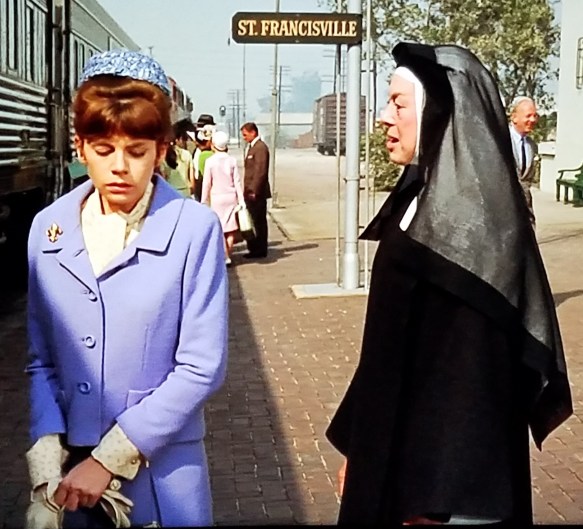
The set/scenery: The Trouble with Angels takes place at St. Francis Academy. According to IMDB, the building that was used in the exterior shots is a real-life facility in Ambler, Pennsylvania. But the interior shots were filmed in a California studio. Despite this difference in filming locations, I thought the scenery/set was absolutely magnificent! The building itself looks like a castle, the footage of it probably doesn’t do this place justice. There were grounds surrounding the building that I liked seeing as well! All four seasons was showcased in the film, which helped highlight the beauty that these grounds had to offer. The set looks like it would compliment the real-life structure. A combination of stone, wood, and stained glass were appealing to the eye. The location scout(s) and set decorator(s) did a great job with bringing this school to life!
A sense of humanity: In this story, there were moments where a sense of humanity shown through. This happened through dialogue and situations amongst the characters. One example is when Mary and Rachel (portrayed by June Harding) try to lie to Mother Superior about their whereabouts. When Mother Superior suspects that Mary and Rachel are making fun of one of their teachers, she shares the truth about this particular teacher with them. Another example is when some of the students visit a Retirement Home during Christmas-time. When Mary overhears some of the residents sharing their loneliness with others, it shows the audience that this specific season might not be the most wonderful time of the year for some people. The incorporation of this sense of humanity felt genuine, like the creative team behind this film had good intentions for including it.
A limited amount of humor: While there were moments of humor found throughout the film, I felt like the story favored the dramatic moments more than the comedic ones. These moments of humor seemed far and few between. Most of the film’s humor came from the pranks and mishaps that are caused by Mary and Rachel. Even though The Trouble with Angels would be classified as a comedy, this movie feels more like a dramedy (a mix of comedy and drama).
Mostly static characters: The Trouble with Angels is primarily about the characters of Mary and Rachel. This story follows them from the beginning of their freshmen year of high school to their graduation. In that time-frame, however, Mary and Rachel didn’t really seem to have that significant of a transition of rambunctious youngsters and responsible young adults. For more than half of the film, Mary and Rachel were static, continuously pulling pranks and despising their peers and teachers. It wasn’t until they joined their school’s band when these characters started to grow as individuals. This part of the story feels a little bit rushed, like the creative team behind this movie was trying to make up for lost time.
Little emphasis on academics: In movies that take place in a school setting, there is usually an emphasis on either an important teacher or an influential school assignment. But that wasn’t the case for The Trouble with Angels. Instead, the story focused on the character development of Mary and Rachel. There were moments that showed these characters in the middle of a school lesson, such as when Mary and Rachel were trying to avoid their swim tests. But these moments didn’t last long enough to have a large impact on the narrative.
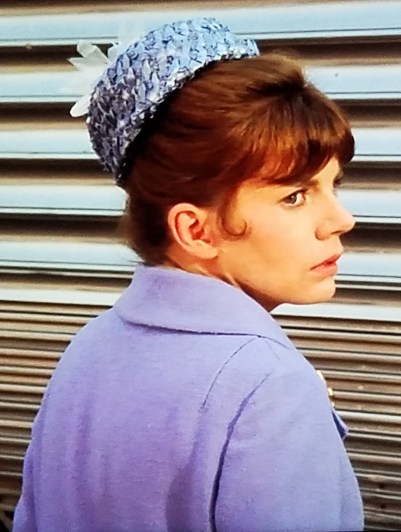
We interrupt this movie review to give you a moment to appreciate Rachel’s hat. Screenshot taken by me, Sally Silverscreen.This is, honestly, the coolest pill-box hat I’ve ever seen in my life! Screenshot taken by me, Sally Silverscreen.As soon as I saw this hat, I knew I had to have it in my life. Screenshot taken by me, Sally Silverscreen.
My overall impression:
The Trouble with Angels is a fine film. This story had more heart and soul than I expected, especially due to the sense of humanity found within the narrative. While this movie could have been stronger, there were elements about it that made the project enjoyable. Rosalind and Hayley definitely helped carry the film! Though these actresses were at different places in their careers, their acting abilities complimented each other. When it comes to films about teenagers, The Trouble with Angels is one of the better ones. The story primarily focused on Mary and Rachel. But, with the incorporation of the teachers and Mother Superior, the best intentions for the students could be seen throughout the story. That’s how I would define this movie; the creative team making this film with the best of intentions.
Overall score: 7.4-7.5 out of 10
Have you seen The Trouble with Angels? Which movie of Rosalind Russell’s would like me to watch next? Please tell me in the comment section!
I know that it’s been two weeks since I last wrote a movie review. Because I was out of town around that time, I chose to reschedule several of my planned blog posts to later dates. But, when it comes to posts relating to blogathons, I always try my best to be a blogger of my word and publish my lists, reviews, or editorials within the blogathon time-frame. When I signed up for the 2nd Annual Broadway Bound Blogathon, I knew, right away, that I would be reviewing the film, Little Nellie Kelly. Before this review, I had never seen or heard of this movie. Plus, the synopsis on Turner Classic Movies’ (TCM’s) website said that this film is about “the daughter of Irish immigrants patches up differences between her father and grandfather and rises to the top on Broadway”. Because I knew that Judy Garland was the star of this production, I figured that I would, at least, find some enjoyment in this movie. Was my prediction correct? Was there enjoyment to be found in Little Nellie Kelly? Please keep reading if you want to find the answer!
The acting: Something I’ve noticed about Judy’s films (specifically the ones that I’ve seen) is that she surrounds herself with a talented cast. This is no different for Little Nellie Kelly. Charles Winninger’s portrayal of Michael Noonan was such a pleasant surprise! He brought so much emotion to his performance that it ended up being effective. Judy’s performance was also great to watch! Her emotions and musicality helped her portrayal of Nellie Kelly be as strong as it was. I also liked George Murphy’s performance as Jerry Kelly! His acting talents helped carry this film alongside his co-stars.
The comedy: In Little Nellie Kelly, there were comedic moments that I truly found to be hilarious. One scene has Nellie telling her father that she’s going to get married to Jerry. As soon as her father hears this, he unexpectedly spits out his coffee and makes a big mess. This moment made me laugh out loud! As I watched the film, I noticed that the majority of these comedic moments were caused by Charles’ character, Michael. Because of this particular actor’s quality of talent, it made the film’s comedy stick the landing.
Some of the montages: There were two montages in Little Nellie Kelly that I really liked. The first one was when Jerry, Nellie, and Michael go through the process of becoming citizens of the United States. When it comes to cinematic stories about people immigrating to the United States, this aspect of the narrative is rarely explored. The second montage I liked showed the process of Jerry becoming a police officer. In film, when a character chooses to be a police officer, they are usually shown either before or after they accept the job. Like the first montage, this process is not always featured in cinematic narratives. Even though these montages didn’t last very long, I’m glad they were included in this story.
An inability to hold an accent: Because some of the characters are from Ireland, hearing accents from them is to be expected. While Charles Winninger did a good job when it came to carrying the accent, I felt that Judy and George’s ability to carry an Irish accent wasn’t as strong. When I watched Little Nellie Kelly, I never heard Jerry talk with an Irish accent. Meanwhile, the only time Nellie spoke with an Irish accent was when she sang “A Pretty Girl Milking Her Cow”. Because of Judy and George’s inability to carry an accent, this prevented a sense of continuity to exist amongst the characters.
A limited amount of musical numbers and comedy: Even though I liked the comedy in this film, there were very few comedic moments to be found. Throughout this one hour and thirty-eight minute picture, there were more dramatic moments than comedic ones. In this movie, there were a total of about four to five musical numbers. That’s a lot less than I was expecting. The film’s opening credits said that Little Nellie Kelly was based on a “musical comedy”. But, if anything, this project felt more like a “dramedy” (a combination of comedy and drama), with an emphasis on drama.
Judy Garland portraying Nellie Kelly Sr. and Jr.: In the movie, Judy portrays two characters; Nellie Kelly and her daughter. While different hairstyles helped, a little bit, to differentiate between the two characters, this creative decision still baffled me. I understand that MGM wanted to utilize Judy’s talent as much as possible. However, I still think that Judy should have portrayed only one character. Because this movie is called Little Nellie Kelly, Judy could have portrayed the daughter, while another, slightly older actress could have portrayed Nellie Kelly Sr. That way, Judy could have still been the leading star of the movie, while the other actress could also receive a significant amount of recognition.
I like Little Nellie Kelly for what it is. There are elements to the film that make it enjoyable, such as the musical numbers and the acting. However, I found this movie to be somewhat misleading. As I said in the introduction, this synopsis said that the protagonist “rises to the top on Broadway”. Not only was this location never mentioned in the film, but Nellie never aspired to be an entertainer. What makes this even more frustrating is how few musical numbers there were and how little comedy there was in the film despite it being called a “musical comedy” in the opening credits. From what I’ve heard, this movie is based on a pre-existing Broadway musical. Because I have never seen the stage version of this story, it’s difficult for me to say if the movie was anything like the play. This kind of reminds me of how I felt about Edward, My Son. Both of these films were based on plays and made me felt like I was misled. I can’t fault the creative teams behind these movies too much, since their job was to adapt their respective plays to the screen. However, a good amount of honesty should have been included into each film’s synopsis.
Overall score: 7.2 out of 10
Have you seen any of Judy Garland’s movies? If so, which one is your favorite? Let me know in the comment section!
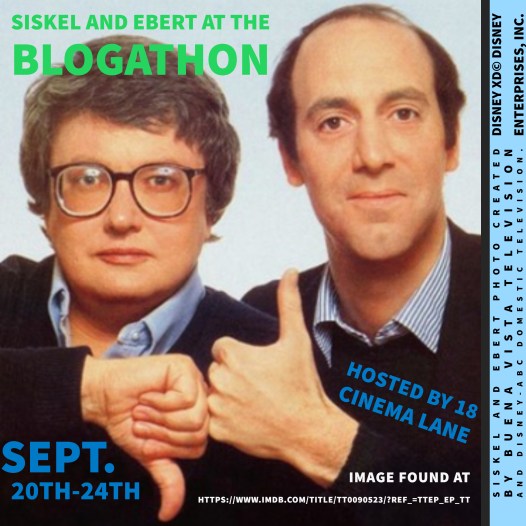
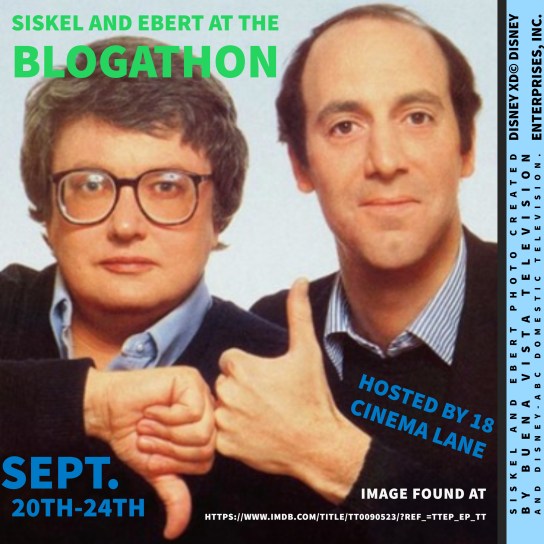
One day, while I was on the internet, I came across some episodes of Gene Siskel and Roger Ebert’s show, At the Movies, on Youtube. As I was watching these episodes, I wondered why there wasn’t a show like this on television anymore. But, when I asked this question, I realized that there kind of is. Though not on television, I can think of several channels on Youtube dedicated to talking about film. There’s also lots of blogs related to movie criticism, especially on WordPress. As a movie blogger myself, I know that the growth of the movie review community might not have been possible without Siskel and Ebert. So, in honor of the Grandfathers of Movie Criticism, I have decided to dedicate my very first blogathon to them! Siskel and Ebert at the Blogathon will take place from September 20th to the 24th. If you would like to participate, you can sign up in one of the following categories:
A. Siskel and Ebert Themselves – This category is for blog entries about Gene Siskel and/or Roger Ebert. Articles about their life, legacy, or career are most certainly welcome. If Siskel and/or Ebert have written any books, editorials, or articles, blog entries about that can be submitted to this category. If you do write an entry for this specific category, all I ask is that you please be respectful when writing about Siskel and/or Ebert. If your post is about how you disagree with their opinion, that’s fine. But please don’t be disrespectful or negative toward anybody.
B. Movies that Siskel and/or Ebert have reviewed or talked about: This category is pretty straight forward. Any movie that Siskel and/or Ebert have reviewed/talked about or that was covered on any of their shows is fair game. To find out which movies would be allowed for this category, you can find episodes of At the Movies on Youtube or search “At the Movies” or “Sneak Previews” on IMDB and look through the listed episodes section.
C. The Show Itself: For this category, you can write about anything related to Siskel and Ebert’s shows. Do you have a favorite episode of Sneak Previews or any version of At the Movies? Share it in your post! Was there a particular host that you were fond of? Feel free to talk about them in your article! Did the show play an important role in your life? Tell your story on your blog! Other topics that would be allowed in this category are trivia about the show, specific segments, and the show’s history, just to name to few.
D. Something movie related that has to do with Chicago: Because Siskel and Ebert were film critics in Chicago, this category is a creative way to honor the Grandfathers of Movie Criticism. For this category, you can talk about movies that either take place or were filmed in Chicago. You may also write about film festivals or movie related events that have been hosted in the Windy City. If you’ve had a movie-going experience in the city of Chicago, feel free to share your story!
The Official Blogathon Rules
As I’ve already mentioned, please be respectful not only when writing about Siskel and Ebert, but also to other bloggers.
If you plan on publishing your post(s) earlier or later than the allotted time-frame (September 20th to the 24th), please let me know in advance.
Only new posts will be allowed for this blogathon.
Three participants at a time are allowed to write about a singular topic. For example, if four people wanted to talk about Roger Ebert’s book, I Hated, Hated, Hated This Movie, only the first three participants would be able to write about the book.
Each participant is allowed to publish a maximum of three entries.
All entries must be original work.
If your interested in participating, please share your idea(s) in the comment section below.
Creativity is encouraged.
Pick one of the five banners and spread the word about Siskel and Ebert at the Blogathon!
Created by me, Sally Silverscreen, on Adobe Spark.Created by me, Sally Silverscreen, on Adobe Spark.Created by me, Sally Silverscreen, on Adobe Spark.Created by me, Sally Silverscreen, on Adobe Spark.Created by me, Sally Silverscreen, on Adobe Spark.
The List of Participants
Category A
Sally from 18 Cinema Lane – (Editorial) Roger Ebert’s Movie Yearbooks: How Relevant are they Anyway?
Ruth from Silver Screenings — (Review) Roger Ebert’s book, The Great Movies
Edirin from Retro Movie Buff — (Editorial) Roger Ebert’s book, Your Movie Sucks
UpOnTheShelf from The Movie Shelf Reviews — (Discussion piece) Siskel and Ebert’s appearance on “The Critic”
Category B
Le from Critica Retro — (Review) Z (1969)
Gill from Realweegiemidget Reviews — (Review) Prizzi’s Honor (1985)
J-Dub from Dubsism — (Review) Casino (1995)
Quiggy from The Midnite Drive-In — (Review) The Silence of the Lambs (1991)
Rebecca from Taking Up Room — (Review) Straight Talk (1992)
Tiffany and Rebekah from Pure Entertainment Preservation Society — (Review) A Star is Born (1954)
Category D
Rob from MovieRob — (Review) About Last Night… (1986), Opportunity Knocks (1990), and Rookie of the Year (1993)
When I first heard about The 5th Annual Great Villain Blogathon, I was originally going to write about a movie, that I haven’t seen yet, where the primary focus was on a villainous character. However, after accepting the Sunshine Blogger Award, I decided to talk about Jiggy Nye from the movie, Felicity: An American Girl Adventure. This film is based on the Felicity series from the American Girl Historical Collection. For almost three decades, the character of Felicity has represented the late 1700s, during the time of the Revolutionary War. In 2005, this particular series was adapted into the aforementioned film. As someone who has read some of Felicity’s stories, as well as seen this movie, I used to think that Jiggy Nye was an effective villain. Over time, I realized that he wasn’t as villainous as I remembered. Within this editorial, I will explain why I feel this way by primarily referencing Felicity: An American Girl Adventure. I will also be making a few references to two of the books in the Felicity series; Meet Felicity and Changes For Felicity. After making my points about why Jiggy’s not an effective villain, I will share some examples of villains and antagonists that are more effective than him. Now, let’s shed some light on Jiggy Nye and talk about why his reputation as a villain isn’t as strong as other cinematic villains and antagonists.
A cinematic trend that I’ve personally noticed in recent years is a realistic-sounding backstory being given to a respective film’s villain or antagonist. While this story-telling aspect can provide depth to this particular type of character, there are times when this concept can be executed poorly. This is the case for Felicity: An American Girl Adventure. A minute and forty seconds after Jiggy was introduced on screen, Edward Merriman (Felicity’s father) and Grandfather Merriman share Jiggy’s backstory with the entire family. Though this explanation is brief, they reveal that he used to be a respected gentleman who was very knowledgeable when it came to horses. After his wife died, Jiggy made some poor life choices that are possibly the result of his grief. This limited amount of information could have been useful in developing Jiggy’s character and helping the audience understand why he is the way he is. However, Jiggy’s backstory was, ultimately, given a “don’t-blink-or-you’ll-miss-it” moment. It’s not only addressed in casual passing, but it’s barely referenced throughout the film. The timing of this backstory also came way too early. Because it was brought up less than two minutes after the audience was introduced to Jiggy Nye, it didn’t give the audience an opportunity to become familiar with Jiggy as a villain. Had they spent, at least, half of the movie seeing Jiggy being a villain and then learned about his backstory before a climatic/important moment, it would have given the audience a chance to process this information as well as consider everything they thought they knew about this character.
It’s no secret that I talk about Bucky Barnes quite a bit on this blog. But, as an example, his involvement in Captain America: The Winter Soldier makes sense within the context of this editorial. In the aforementioned film, the audience spent about half of the movie watching Bucky as the Winter Soldier. The audience wasn’t aware that Bucky was the Winter Soldier until Steve Rogers/Captain America removed the mask from his face at about the halfway point of the film. A few moments after this reveal, the audience learned the shocking truth of how Bucky came to be involved with Hydra. This incorporation of Bucky’s backstory was better executed than Jiggy’s backstory in Felicity: An American Girl Adventure. In Captain America: The Winter Soldier, the audience was given enough time to become familiar with the film’s antagonist. This allowed them to form their own opinion of this character. When the truth about the Winter Soldier is revealed, it makes the audience contemplate these pieces of information as well as re-think everything they thought they knew about him. Because Bucky’s backstory was introduced moments before the film’s climax, it made this reveal more emotional and effective.
Even from the very beginning, Jiggy Nye was the main villain of this series. In fact, his backstory wasn’t introduced until Changes For Felicity. Screenshot taken by me, Sally Silverscreen.
No Substantial Evidence
In Felicity: An American Girl Adventure, some of the characters make statements about Jiggy Nye. However, the film fails to provide evidence to these characters’ claims. One example is the characters’ statements about how Jiggy treats his horse, known in the movie/book series as Penny. Toward the beginning of the film, a customer shares her displeasure about Jiggy to Mr. Merriman, saying “I do believe he beat his last horse to death”. When Jiggy arrives at the Merriman family home to retrieve Penny (a moment that I will talk about later), Mr. Merriman tells him “The only crime committed here, sir, is your mistreatment of the poor beast”. Also, when Felicity is trying to persuade her parents to let her keep Penny, she tells her father, “Father, he beats her…and he starves her”. Despite all of these aforementioned claims, there isn’t any substantial proof that Jiggy treats his horse poorly. In the movie, Penny appears to be well-cared for. This horse does not appear starved and there are no signs of injuries on her. The only things that Jiggy does that come close to being abusive toward Penny are tying her to a post in his yard and saying hurtful things toward and about her. In a story when there are claims made about a film’s villain, but no evidence/proof is given to support these claims, it doesn’t provide the audience with a reason to take this character seriously as a villain. It also doesn’t give the audience an explanation as to why they should dislike or be terrified of this character. Because the claims against Jiggy are not supported by evidence/proof, the characters who made the claims appear to have lost a certain amount of credibility.
The villain group, Hydra, in Captain America: The First Avenger is one that the audience doesn’t want to mess with. That’s because the creative team behind this movie portrayed Hydra as dangerous, evil, and cruel. Though this group was shown in the movie for a limited amount of time, their presence brought home the exact point that this film’s creative team was trying to make. It wasn’t until Captain America: The Winter Soldier that the creative team gave their audience solid evidence to the claims that were made about Hydra back in the first film. Not only does this story present examples of this group causing chaos and destruction, but their abuse toward Bucky also shows just how cruel they can be. Because the creative team behind Captain America: The Winter Soldier put in the effort to add evidence to the claims made about Hydra, this gave the audience reasons to not like this villainous group as well as take them seriously as villains. It also made the story and the creative team behind it seem very credible. This is very different from Felicity: An American Girl Adventure.
I’m sorry that the quality of this picture isn’t the best (because this is a screenshot from a made-for-TV movie from 2005), but I think it clearly shows that Penny doesn’t look mistreated. Screenshot taken by me, Sally Silverscreen.
No Transition
The way that Jiggy is portrayed in both the Felicity series and Felicity: An American Girl Adventure is in a “villain-turned-hero” way. This specific kind of character development isn’t often seen when it comes to cinematic villains or antagonists. Like with Jiggy’s backstory, however, this part of Jiggy’s story was also poorly executed. Within the first thirty-six minutes of the movie, Jiggy is shown as a villainous character. The next time the audience sees him is twenty-three minutes later, when Jiggy is sleeping on the floor of a jail cell, violently coughing and appearing to be ill. Eight minutes after that, it appears Jiggy has been released from prison, casually walking through the streets of Williamsburg, Virginia and looking like he has recovered from his illness. His final appearance in this movie starts eleven minutes later, when Felicity asks for Jiggy’s help as Penny is about to give birth to a foal. When assessing these gaps in time, it seems like there is an obvious pattern. Jiggy is, essentially, placed in the film for plot convenience. Throughout the movie, the audience, to a certain extent, is given the opportunity to get to know Jiggy as a character. But, when it comes to seeing how Jiggy evolves from villain to hero, the audience never gets to see the personal growth and self-discovery that is usually associated with this kind of character development. If anything, Jiggy’s journey from point A to B feels rushed and sudden, with a limited amount of background provided.
Even though Henry Gowen is from a television show, I believe that his story on When Calls the Heart corelates with the subject of this editorial. For three seasons, Henry Gowen was the resident villain of Hope Valley. It wasn’t until the fourth season when Henry’s villainous ways finally caught up to him. Since When Calls the Heart: The Christmas Wishing Tree, Henry has been making a conscious effort to turn his life around. What works in this character’s favor is that his story is a part of an on-going narrative. Because When Calls the Heart is a continuous television show, not a stand-alone film like Felicity: An American Girl Adventure, the screen-writers have more time to explore Henry’s journey of transforming from villain to hero. What also helps is that Henry is a part of the main cast of characters. This allows him to receive a good amount of screen-time and stay involved within the series. With Jiggy, on the other hand, he isn’t directly related to Felicity’s family or any of her friends/acquaintances. Therefore, he wasn’t given as much screen-time as some of the other characters in the film.
In Felicity: An American Girl Adventure, Geza Kovacs did a good job at portraying the character of Jiggy Nye! Screenshot taken by me, Sally Silverscreen.
A Hypocritical Protagonist
When an obvious villain/antagonist is placed within a story, there is usually an obvious protagonist to present a balance between right and wrong. Though the protagonist is not meant to be anywhere near perfect, they’re at least meant to make better decisions than the villain/antagonist. While Felicity’s heart was in the right place in Felicity: An American Girl Adventure, some of her choices seem hypocritical. As I mentioned earlier, Felicity and her father made claims about Jiggy mistreating his horse. However, this movie’s titular character is not as innocent as the film wants you to think. In an effort to “save” Penny, Felicity sneaks out of her family’s home in the early morning hours, breaking family rules and disobeying her parents. She also takes Ben’s (her close friend’s) breeches without his permission, trespasses on Jiggy’s property, and steals his horse due to a misunderstanding. On several occasions, some of Felicity’s family and friends try to help her make the right decisions. For example, while spending some time with her grandfather in the garden, he encourages Felicity’s love of horses. At the same time, Grandfather Merriman reminds her that she mustn’t bother Jiggy and his belongings. Despite her family and friends’ efforts, all of their advice goes in one ear and out the other. After Felicity gets reprimanded for stealing Jiggy’s horse, Felicity goes back to trespassing on Jiggy’s property. This time, she sets Penny free into the wild. Because Felicity seems to be making just as many poor choices as Jiggy within the film, it makes these two characters appear more like individuals just trying to get through life than a conflict between villain and protagonist. Even though she uses her grandfather’s advice about choosing kindness over anger later in the film, she doesn’t really set the best of examples, as a protagonist, at an essential time during Jiggy’s story as a villain.
Throughout his trilogy, Steve Rogers/Captain America has always been known for making good decisions, no matter how difficult they seem. One perfect example of this is in Captain America: Civil War. In this film, one of the over-arcing narratives was about the Sokovia Accords. With this document, the use of a superhero’s powers and abilities would be controlled by the government. Not only did Steve take the time to read the Accords, but he decided not to sign it for personal reasons. He knew that his decision would have consequences, but he still stuck by his beliefs. Steve made the choices he did because he felt it benefitted the people around him as well as himself. Unlike Felicity, Steve thought about his actions and choices before he carried them out. He also used a balance of emotion and logic in order to make these decisions. This is also very different from the aforementioned film’s villain, Helmut Zemo. Because he’s upset about losing his family in the tragic events from the previous film, Avengers: Age of Ultron, Zemo’s feelings and emotions fuel his criminal actions. Since Zemo blames the Avengers for the death of his family, he tries to do whatever he can to drive a wedge between the Avengers, from causing massive amounts of destruction to framing Bucky for a crime he didn’t commit. Unlike Steve, Zemo’s decisions seem very self-centered, his only focus being how he’s going to get revenge for his family.
Though the Felicity stories teach its readers valuable life lessons, its protagonist is far from perfect. Screenshot taken by me, Sally Silverscreen.
Not a Big Enough Threat
Usually, in tv shows and movies, the villain/antagonist has a consistent presence in the story. This is a way of showing that this character poses as a big enough threat to the protagonist. As I mentioned in argument number three, “No Transition”, Jiggy wasn’t given much screen-time compared to the other characters in Felicity: An American Girl Adventure. I also mentioned that it feels like Jiggy is placed in certain moments of the film for the sake of plot convenience. Because of these observations, Jiggy doesn’t seem like he poses as big of a threat to Felicity. During his “villain stage”, Jiggy and Felicity only interacted with each other on three separate occasions. Not only did they barely speak to one another, but no major conflicts were resolved. Another reason why Jiggy doesn’t really pose as big of a threat in this film is because he doesn’t necessarily do anything that’s villainous. Sure, he said some nasty things (including a threat to kill Penny if Felicity showed up on his property again) and tied his horse to a pole in his yard. But he never commits any serious or unspeakable crimes throughout the film. In argument number three, I said that Jiggy was seen in a jail cell. While his reason for being in prison is never mentioned in the movie, it is said in Changes For Felicity that Jiggy went to “debtors’ jail”. If this is the reason why Jiggy is in jail in Felicity: An American Girl Adventure, it seems like he was unable to pay for anything because of a result of his grief, not because he was trying to take advantage of the system in a criminal way.
For this argument, I’m going to be talking about two examples. The first is the Wicked Witch of the West from The Wizard of Oz. A major reason why this character is an effective villain is because she had a more consistent presence in her movie than Jiggy did in his. Even though she doesn’t appear in every scene, the Wicked Witch of the West shows up in enough of them to give the audience the feeling that she is always lurking around the corner. What also helps her case is the music that plays and the special effects that appear whenever she shows up. My other example is Scrooge from A Christmas Carol. While Scrooge is the antagonist at the beginning of the story, the audience never sees or reads about him ever doing anything villainous. Even though being selfish and greedy are not desirable qualities, his choices are not criminal. In fact, Scrooge’s story has similarities to Jiggy’s story, especially since they both transform from villain/antagonist to hero/protagonist. However, Scrooge’s journey is explored more in A Christmas Carol than Jiggy’s is in Felicity: An American Girl Adventure.
Something that both the book series and the movie have in common is Jiggy has a limited presence within the context of the overall narrative. Screenshot taken by me, Sally Silverscreen.
My Final Assessment of Jiggy Nye
In the introduction of this editorial, I said that I would describe why I didn’t believe Jiggy Nye was an effective villain in Felicity: An American Girl Adventure. After explaining my reasons why, I feel that Jiggy is presented more as a victim of his personal situation. As I mentioned in my first argument called “The Incorporation of Jiggy’s Backstory”, Jiggy’s wife passed away and his world was greatly affected by it. However, this important detail was barely referenced in the movie, pretty much getting glossed over. It didn’t seem like most of the characters were willing to connect Jiggy’s choices and behaviors to his grief. Because of this, Jiggy became a scapegoat for the sake of needing a villain/antagonist. While he does get a moment to redeem himself and become a hero, this transition wasn’t shown or explored. I understand that this movie was Felicity’s story (especially since her name is in the title) and that this movie is based on a series of books. But I just feel that this aspect of the narrative could have been better executed. If anything, Jiggy was a more effective villain in the first book, Meet Felicity, than in Felicity: An American Girl Adventure. Valerie Tripp, the author of this book, had an entire story to flesh out the character of Jiggy Nye and provide enough evidence to show that he was not a nice person. Because the movie adapted six books into one cinematic narrative, Jiggy’s part of the story was sacrificed and overshadowed.
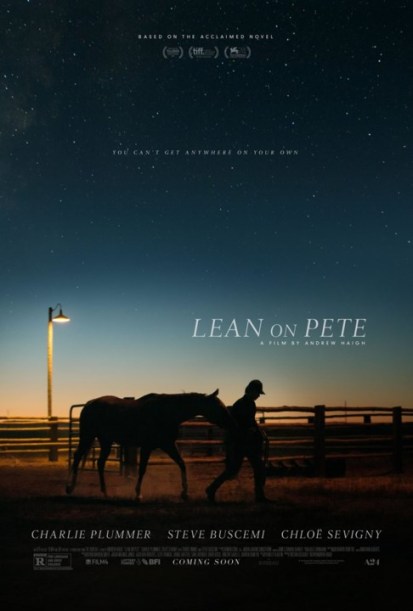
For the It’s a Young World: Teen Movie Blogathon, I didn’t want to talk about a typical “teen movie”. I have nothing against these types of films. But whenever I participate in a blogathon, I try to think outside the box while following the theme. So that’s why I decided to review Lean on Pete. In my Book Adaptation Tag post, I mentioned that when I saw All the Money in the World, Charlie Plummer’s acting performance impressed me. As I read reviews for this movie, some people mentioned a film called Lean on Pete when referencing Charlie’s acting credits. When I looked for reviews of this movie, however, I found very few of them. In fact, on WordPress alone, I was only able to find four Lean on Pete reviews. This was one of the reasons why I chose this movie for the blogathon. My other reason for choosing this movie was because Charlie Plummer was the lead actor in this production. Since he gave a great performance in All the Money in the World, I had a feeling that he would give a good acting performance in Lean on Pete. After I chose this movie to review, an interesting coincidence that I noticed was Charlie’s birthday just so happens to take place in the weekend after this blogathon! So, it seemed like the stars aligned in this review’s favor. But did it really though? Or did the stars fly right past this review, completely leaving it in the dust? The only way to find out is by reading my review of Lean on Pete!
The acting: Though Lean on Pete had a smaller cast, every member of it did a good job portraying their characters! All of the actors and actresses displayed a sense of realism in their performance, making the movie feel like an engaging “slice of life” story. Every interaction between the characters had a good amount of on-screen chemistry. This added to the realism of their performances. But, just like All the Money in the World, Charlie Plummer stole the show! Charlie brings an emotional sincerity to his character, which is something that isn’t often found in cinema. This helped me, as an audience member, stay invested in what was happening to Charlie’s character in the movie.
The incorporation of scenery: What’s interesting about Lean on Pete is how scenery is incorporated into the film. Toward the beginning of the movie, Charlie is jogging throughout the neighborhood. Without the use of dialogue, this scene introduces the audience to the setting, as well as the scenery, where the story will begin. I’ve got to say that Lean on Pete is one of the most well-shot films I have ever seen! Some of the natural landscapes featured in this story were so beautiful, that the color palettes were shone really well on film! The scenery was appealing to the eye and presented an interesting element to the story.
A realistic look at equine sports: When it comes to the presentation of equine sports in film, it is, more often than not, shown through a glamorized, appealing, and an almost glorified lens. In Lean on Pete, the maintenance and preparation of horse racing is given a larger emphasis than the sport itself. This aspect of the story focuses on the employees associated with the sport, including how Charlie reacts to certain situations. It also highlights some of the heavier topics relating to the sport, such as the mistreatment of employees and the fate of race horses. Because this side of equine sports is rarely shown in movies, I found this creative choice to be very interesting.
More scenery focused scenes than character focused scenes: While the scenery in this film was great to look at, it felt like this movie focused more on showcasing the background than the characters in the forefront. In fact, there were less scenes featuring dialogue than there were featuring scenery. There are many parts to a film, so primarily relying on just one aspect of it could cause the movie’s story-telling abilities to be ineffective. This imbalance of character and scenery focused scenes felt like there was more to be desired from the story.
A limited amount of character development: Because more scenes focused on the scenery than the characters, it seems like the character development was sacrificed. In Lean on Pete, there were interesting characters with interesting dynamics and stories. However, there was enough character development to keep the story going, but not enough to satisfy the audience. Whenever the character development seemed to be reaching an intriguing point in the story, the moment would get cut short with a scenery focused scene. This left me wanting more from this narrative.
The night-time scenes: Throughout Lean on Pete, there were a few scenes that took place during the night-time. Within these scenes, very little lighting was used. Because of this, it was difficult to see what was happening on-screen. Emotional situations took place in these scenes. But, since there was little lighting, I couldn’t really see the emotions and expressions of the characters in these moments. This seemed to undermine the emotional intensity contained within these scenes.
Lean on Pete made me feel the exact same way that Queen of the Damned did: it was a decent film that I liked for what it was, but it could have been a stronger film. This movie had merits that made the story interesting. But it also had flaws that held the movie back from being better than what it was. When I think about Lean on Pete, the biggest take-away for me is how you never really know someone unless you take the time to know and understand them. Throughout this story, Charlie’s character deals with several hardships. Because of how this narrative was presented, the audience is given an opportunity to get a glimpse into this character’s life. Another take-away from this movie is how kindness can make a difference. Even if the impact of that kind act only lasts 24 hours, it could still impact someone’s day and maybe even their life. These lessons are relatable to anyone who chooses to watch Lean on Pete.
Overall score: 7 out of 10
Have you seen Lean on Pete? What’s your favorite horse related movie? Share your thoughts in the comment section!
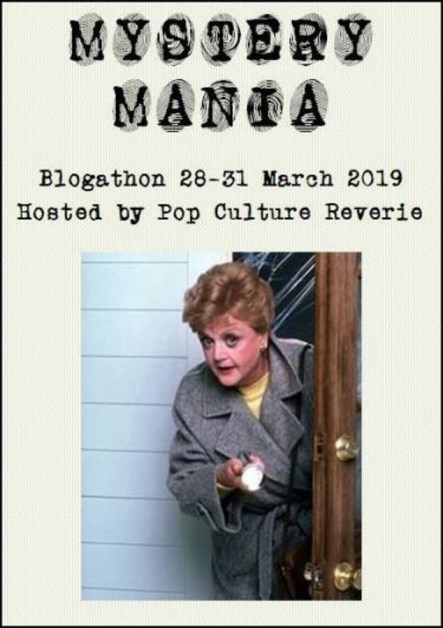
On the Youtube channel, Hallmarkies Podcast, there is a series of videos called “Amber Makes Rachel Watch”. In this series, Amber, one of the hostesses of Hallmarkies Podcast, introduces Rachel, her friend and fellow Hallmarkies Podcast hostess, to television shows that she has never seen before. This inspired me to broaden my television horizons for the Mystery Mania blogathon. You’d think with the amount of content I watch and talk about from Hallmark Movies & Mysteries, I would have gotten around to watching Murder, She Wrote. Well, to say it honestly, I’ve never seen any episodes of the show…until now. For this special post, I will review three episodes of the show that I have chosen at random. Because Hallmark Movies & Mysteries regularly airs re-runs of Murder, She Wrote, I was able to easily access these episodes by recording them on my television. Throughout this blogathon entry, I will break down each episode and share what I liked about it, what I didn’t like about it, the mystery within the episode, and the other factors from the episode. I will also be sharing my overall thoughts not just about each episode, but about the show as a whole, based on the three episodes that I’ve seen. Now that this introduction is finished, let’s have Sally watch Murder, She Wrote!
The title card for “The Legacy of Borbey House”. Screenshot taken by me, Sally Silverscreen.What I liked about this episode:
The acting was definitely one of the stronger components of this episode! Within this cast, there were three actors that gave stand-out performances. The first is David Birney, who portrayed Lawrence Baker. Even though his on-screen appearance was very limited, David did a good job at making his character equally charismatic and suspicious. Roy Dotrice also gave a memorable performance as Dr. Howard Sorenson. All of his reactions appeared believable and Dr. Sorenson’s enthusiasm for the subject of vampires seemed genuine. The last stand-out performance came from Gary Hershberger. His portrayal of Dave Perrin was one of the most well-rounded performances in this entire episode, giving this character the emotional depth that kept me invested in his story.
What I didn’t like about this episode:
When I read the synopsis for this episode, I was excited to see how the subject of vampires would be incorporated within the overall narrative. Before I watched “The Legacy of Borbey House”, I thought this subject would play such a large role in the story, that various characters would have continuous competitions to see who could drop the most vampire related pop cultural references in one sitting. Unfortunately, this was not the case. In the overall context of the episode, the subject of vampires seemed like an afterthought. While it was addressed to a certain extent, it was never explored enough to keep me satisfied. If anything, the most talked about subject in this episode was the various renovations that were taking place in the town of Cabot Cove.
The mystery itself:
Honestly, I was very disappointed in this mystery. The entire first half of the episode was dedicated to exposition and build-up to the mystery. The mystery itself, however, didn’t start until the halfway point. Several moments after this happened, Jessica ends up solving the mystery single-handedly based on one photo she was given from her acquaintance. Because of this, it didn’t give the audience a chance to solve the mystery alongside Jessica. This made the mystery not engaging or interactive.
The other factors from this episode:
There were three things within this episode that stood out to me. They are:
The opening scene when Dr. Sorenson pops out of the grave was so random, that it was hilarious!
Even though the Borbey House wasn’t on-screen for long, its architecture and décor were gorgeous! I have no idea if this is a real-life house or just a television show set.
I really liked the brief discussion about how different people view topics relating to belief systems and the supernatural. This added depth not only for the episode’s story, but also for the characters.
My overall thoughts:
At best, “The Legacy of Borbey House” was just ok. But, at worst, I found it to be disappointing. Instead of an engaging mystery featuring the topic of vampires, I ended up getting an episode that treated renovations as if they represented social status. The mystery in “The Legacy of Borbey House” was not very well-written. In fact, this episode didn’t really talk about the “legacy” that was referenced in the title. Yes, there was a myth about vampires being associated with the Borbey family. However, this concept was not explored in this episode. If this episode were given an honest title, it would be called “The Legacy of Cabot Cove’s Renovations”.
Rating: A low 3 out of 5
This book seems a lot more interesting than the episode I ended up watching. I wonder if this book has a chapter about Lestat and Jesse’s relationship? Screenshot taken by me, Sally Silverscreen.Episode Name: Film Flam
Season 11, Episode 16
Premiere Date: February 19th, 1995
The title card for “Film Flam”. Screenshot taken by me, Sally Silverscreen.What I liked about this episode:
I really liked seeing the different steps that are involved in the process of bringing a movie to its premiere stage. As someone who likes movies and appreciates the movie-making process, I thought this portion of the episode was very interesting and educational. Even though I knew that planning and hosting a movie premiere required a lot of time and effort, this episode opened my eyes to some of the aspects that could affect a movie’s release. In “Film Flam”, the creative, business, and legal areas associated with a particular film were represented. This episode also discussed the various people and situations that could also affect a movie premiere as well as the film itself. I thought this topic was not only well explored, but also effortlessly woven into the overall narrative.
What I didn’t like about this episode:
In this mystery, I thought that the guilty culprit was a little bit obvious. As soon as they introduced themselves and revealed some of their back-story, I immediately knew that they must have something to do with the crime. After everything was said and done, I ended up being correct in my guess of “whodunit”.
The mystery itself:
The mystery in “Film Flam” was much better than in “The Legacy of Borbey House”! While the first half of the episode was still dedicated to exposition and build-up to the mystery, it was also paired with the behind-the-scenes aspect of coordinating a movie premiere. These two elements balanced out the story really well. There was also enough room for the audience to solve the mystery alongside Jessica. This allowed for the mystery to be interactive and intriguing. With various suspects and clues, I thought that “Film Flam” was a well-written mystery story!
The other factors from this episode:
Here are some of the things that caught my attention while I watched “Film Flam”:
Whoever scouted locations for this show did a really good job at choosing gorgeous houses! Fritz’s house in “Film Flam” was beautiful, both in architecture and design/décor.
Whenever Elaine Brown and Darryl Harding appeared on-screen together, I could sense strong on-screen chemistry between Jim Caviezel and Stacy Edwards. Because of this, I was really hoping that Elaine and Darryl would, at least, start a romantic relationship by the end of the episode. While this is only assumed, based on the fact that Darryl and Elaine were holding hands toward the end of “Film Flam”, I’m hoping these two characters appeared in other episodes. That way, there could be a chance for them to receive their “happily-ever-after”.
I won’t spoil anything if you haven’t seen this episode. However, all I will say is when the guilty culprit reveals why they committed the crime, I found their explanation to be very creepy.
My overall thoughts:
I really liked this episode! It combined a well-written mystery story with something that I love; movies. Because this episode centered around the process of a movie premiere, I feel like I gained valuable and educational information about what it takes to coordinate an event like this. “Film Flam” was both intriguing and engaging, things that I think a good mystery should be. While the guilty culprit was a little bit obvious, I still enjoyed the experience of trying to solve the mystery alongside Jessica. Even though I’ve only seen two episodes of Murder, She Wrote so far, I would be willing to guess that this story was one of the show’s stronger episodes.
Rating: A 4.7 out of 5
Honestly, seeing Darryl and Elaine’s relationship progress as this episode went on was, for me, a highlight of “Film Flam”. Screenshot taken by me, Sally Silverscreen.Episode Name: School for Murder
Season 11, Episode 19
Premiere Date: April 30th, 1995
The title card for “School for Murder”. Screenshot taken by me, Sally Silverscreen.What I liked about this episode:
I liked how some of the students of St. Crispin’s Academy were able to play a role within the overall narrative. When reading the description for “School for Murder”, I wasn’t sure if any of the students were going to be prominently featured in the episode. Even though I’ve now only seen three episodes of the show, I’ve noticed that there aren’t many opportunities for young people to be included in the overall story. So, it was nice to see these students incorporated into this episode.
What I didn’t like about this episode:
I wasn’t a fan of St. Crispin’s Academy’s “secret society”. Because of the inclusion of this story element, it felt like there was too much going on in this episode. It also felt like the screenwriters were trying to accomplish too much in one story. While this “secret society” did play a role within the overall narrative, it just seemed like it didn’t need to be there.
The mystery itself:
The mystery in “School for Murder” was very interesting. There was not only a primary mystery, but there were also two sub-mysteries. All three of these mysteries were connected to each other in some way. I thought this was a very unique approach to the story-telling aspect of this episode, especially compared to the previous two episodes that I’ve seen. There were also a few surprises that I did not see coming. Added with enough room for the audience to solve the mystery alongside Jessica, the mystery story of “School for Murder” stood out from the rest.
The other factors from this episode:
In this episode, there were only two things that stood out to me. These are:
I’m sorry if I sound like a broken record, but whoever was the location scout for this show knew what they were doing when it came to choosing the locations for Murder, She Wrote. St. Crispin’s Academy was a really nice-looking facility! Like with the Borbey House in “The Legacy of Borbey House”, I’m not sure if St. Crispin’s Academy is a real place or just a set.
I’m not going to spoil anything if you haven’t seen this episode. But I thought the way the guilty party was written was very interesting. Instead of being deceitful or hateful, like the guilty parties in “The Legacy of Borbey House” and “Film Flam”, the guilty party in “School for Murder” was portrayed in a more human and realistic way. To me, this was a unique departure from the aforementioned episodes.
My overall thoughts:
While “School for Murder” was ok, it wasn’t as disappointing as “The Legacy of Borbey House”. There were too many story elements associated with this episode, which caused this story to feel too jam-packed. However, “School for Murder” did have some merits. One of them is the inclusion of young people in the overall narrative. These merits and strengths added something interesting to this episode. It made “School for Murder” somewhat different from “The Legacy of Borbey House” and “Film Flam”. I wonder if the other episodes of Murder, She Wrote took creative approaches to its use of story-telling?
Rating: A 3.2 out of 5
This facility definitely looked the part of an well-respected, private school. Screenshot taken by me, Sally Silverscreen.My final assessment:
So, now is the moment you’ve all been waiting for. What do I think of Murder, She Wrote? Overall, the show is fine. If I had nothing else to do and if my options for what to watch on television were limited, I would definitely watch an episode or two. Something that I noticed when I watched these episodes was that the overall quality of the show was not consistent. Out of the three episodes that I saw, I really liked only one of them. The other two were just ok. But no television show is perfect and some episodes are bound to be better than others. If you’re like me and have never seen Murder, She Wrote before, I would definitely recommend it! Just pick a few episodes and then decide if this show is for you. The great thing about Murder, She Wrote is that it doesn’t really rely on an over-arcing story. This makes it easy to watch any episode without having to watch its predecessors.
Have you ever watched Murder, She Wrote? Would you like me to review other episodes of the show? Please tell me in the comment section!










![20190605_185743[1]](https://18cinemalane.com/wp-content/uploads/2019/06/20190605_1857431-e1559873358749.jpg?w=398)








![20190525_102927[1]](https://18cinemalane.com/wp-content/uploads/2019/05/20190525_1029271-e1558909265832.jpg?w=408&h=731)
![20190525_104025[1]](https://18cinemalane.com/wp-content/uploads/2019/05/20190525_1040251-e1558908760913.jpg?w=514)
![20190525_104739[1]](https://18cinemalane.com/wp-content/uploads/2019/05/20190525_1047391-e1558909745469.jpg?w=430&h=562)
![20190525_103327[1]](https://18cinemalane.com/wp-content/uploads/2019/05/20190525_1033271-e1558910014689.jpg?w=524&h=638)



![20190320_222829[1]](https://18cinemalane.com/wp-content/uploads/2019/03/20190320_2228291-e1553981567750.jpg?w=636)
![20190320_222201[1]](https://18cinemalane.com/wp-content/uploads/2019/03/20190320_2222011-e1553982351919.jpg?w=617&h=460)
![20190327_225558[1]](https://18cinemalane.com/wp-content/uploads/2019/03/20190327_2255581-e1553982470235.jpg?w=649)
![20190327_230331[1]](https://18cinemalane.com/wp-content/uploads/2019/03/20190327_2303311-e1553982667186.jpg?w=615&h=456)
![20190327_224835[1]](https://18cinemalane.com/wp-content/uploads/2019/03/20190327_2248351-e1553983008591.jpg?w=633)
![20190327_225158[1]](https://18cinemalane.com/wp-content/uploads/2019/03/20190327_2251581-e1553983291459.jpg?w=651&h=462)
 18 Cinema Lane


