Take 3: One Christmas Review

On the first day of The Second Spencer Tracy & Katharine Hepburn Blogathon, it’s the perfect time for me to publish my second review that I mentioned in my post of It’s a Mad, Mad, Mad, Mad World. Because Hallmark has chosen to premiere their Christmas movies in late October, I thought that reviewing One Christmas would be very fitting. Before this blogathon, I had seen parts of this movie but never the whole thing. Choosing this film for the review gives me a second chance to see it in its entirety. While looking through Katharine’s IMDB filmography, it seems like One Christmas is the only Christmas movie that she starred in. Even though Little Women features the characters during Christmas-time, the story itself isn’t revolved around the Christmas holiday. One Christmas was released in 1994 and created by Hallmark Entertainment, yet it was not a Hallmark Hall of Fame production and Hallmark Channel had not existed at that time. I watch and review Christmas movies from both of Hallmark’s networks, so I was curious to see how Katherine’s movie compared to the kinds of films that Hallmark creates today.

20191011_185704[1]
I’m thankful for the availability of this film on DVD, as I able to purchase it for this review. Screenshot taken by me, Sally Silverscreen.
Things I liked about the film:

The acting: In One Christmas, the acting was pretty good. Henry Winkler’s role in this film was very different from his other roles I’ve seen. But he did a very good job at portraying Buddy’s father! Seeing Henry go out of his comfort zone and take on a role that is more villainous shows how versatile of an actor he really is. It also made me appreciate his acting talents even more. Speaking of Buddy, T.J. Lowther also did a good job with his acting performance! Through his portrayal of Buddy, he was able to affectively convey skepticism paired with a child-like sense of wonder. T.J. helped create a character that was naïve yet kind-hearted. Because of this, it made the audience want to see his story unfold.


Christmas in New Orleans: In Christmas movies, New Orleans rarely makes an appearance. These types of movies stick to featuring locations that will present a “traditional” Christmas landscape. Choosing to have One Christmas take place in New Orleans was an interesting idea. While the Christmas aspect of this story was briefly shown, it was great to see garland, Christmas trees, and string lights in and around the buildings in this Louisiana city. It also shows that everyone doesn’t experience the type of Christmas that these movies typically try to display. As I said in my review of Christmas Camp, everyone has their own unique and special way to celebrate this holiday. Locations such as New Orleans play a role in someone’s personal idea of Christmas.


Historical accuracy: The story of One Christmas takes place in 1930. This time-period with the backdrop of New Orleans offered an interesting picture that looked and felt authentic. Things like costuming, buildings, and even the automobiles appeared accurate to that particular period in time. There was an airplane featured in this movie that also looked like it came directly from the late ‘20s to early ‘30s. As I’ve said on several occasions, this film’s historical accuracy shows that the movie’s creative team cared about this specific aspect, especially through the amount of detail that was incorporated. It could be something as simple as a business sign on a nearby barn or a piece of jewelry. These things are proof that nothing was left unnoticed when it came to bringing 1930 back to life. The music that was found in this film also reflected sounds and the atmosphere that specifically come from New Orleans as well as the early ‘30s. It effectively fit the overall tone of the movie.

78758-OFLC5Q-374
Christmas card image created by Freepik at freepik.com. <a href=’https://www.freepik.com/free-vector/christmas-card-with-watercolor-mistletoe-decoration_965555.htm’>Designed by Freepik</a>. <a href=”https://www.freepik.com/free-photos-vectors/watercolor”>Watercolor vector created by Freepik</a>. Image found at freepik.com.

What I didn’t like about the film:

Limited presence of Katharine Hepburn: Katharine Hepburn is one of the reasons why I chose to watch this movie. In fact, she is the top billed actor in One Christmas. However, she only appeared in about five scenes. I understand that this was one of her last films, so she probably could only devote so much time and energy to acting. But to give Katharine the top bill on this movie, yet only allow her to make brief appearances kind of does a disservice to her talents. It also does a disservice to her fans as well as the overall project. When a film’s creative team chooses an actor to be the top billed performer, they make a promise to their audience that this particular actor will be prominently featured in the movie. But in Katharine’s situation, it almost seems that the creative team made a promise they knew they couldn’t keep.


Christmas making a minor appearance: Like I just said, I liked seeing Christmas being showcased in New Orleans. But, in the movie as a whole, this holiday played such a small role. I was hoping to see Christmas traditions and celebrations that are specific to that location, wondering how the project would bring something new to the table of Christmas films. Sadly, Christmas just felt like a glorified extra, with decorations used for background aesthetic and the holiday itself an afterthought. When Christmas Day does arrive, it feels anti-climactic. Because of how little emphasis Christmas was given, it made me question why this story had to take place during this time of year.


A weak conflict: Every Christmas movie contains a conflict that can be resolved within the Christmas season. In One Christmas, however, the main conflict was so complicated and lasted for a long period of time, it seemed like a solution was nowhere in sight. Because this conflict took up the primary focus of the plot, it caused the story to have very few moments of happiness and joy. When the conflict did reach a resolution, it didn’t feel earned or like the story was working up to that moment. Anything happy that ended up happening seemed like it was there just because it had to be there.

Spencer and Katherine Blogathon
The Second Spencer Tracy & Katherine Hepburn Blogathon poster created Crystal from In the Good Old Days of Classic Hollywood and Michaela from Love Letters to Old Hollywood. Image found at https://crystalkalyana.wordpress.com/2019/08/04/announcing-the-second-spencer-tracy-and-katharine-hepburn-blogathon/.

My overall impression:

I’m glad that I was given a second chance to watch One Christmas. However, I found this movie to be ok, at best. At worst, though, it was one of the most depressing Christmas movies I’ve ever seen. It put too much emphasis on a conflict that, realistically, would never get resolved in a month’s time. Another major flaw is how Christmas itself is barely featured in a movie that takes place during Christmas-time. For me, Christmas movies are about stories that rely on the holiday to compliment the narrative. They also try to make me feel good about what I had chosen to watch, either through the story or the messages/themes. Unfortunately, I didn’t get that feeling while watching One Christmas. The film’s attempt to make me feel good about the project didn’t work either. While I liked it more than It’s a Mad, Mad, Mad, Mad World, I was expecting more from One Christmas.


Overall score: 6.2 out of 10


Have you seen any of Katharine Hepburn’s movies? Are there any Christmas films you’d like to see me review? Please tell me in the comment section!


Have fun at the movies!

Sally Silverscreen

31 Spooks of October Update: I Finished California Angel

I was going to publish my second review for The Second Spencer Tracy & Katherine Hepburn Blogathon today. But since I finished the first book for 31 Spooks of October/Spookathon and Sbooktober yesterday, I decided to post my movie review tomorrow. If you read my article called “I’m partaking in 31 Spooks of October!”, you would know that the first book I chose to read was California Angel. When I published this particular post, I was half-way through the book. Now that I’ve completed the novel, I not only met the four challenges that were associated with California Angel, but I will also share my thoughts on it.

20191010_184611[1]
One book read, four more to go! Screenshot taken by me, Sally Silverscreen.
When I read the acknowledgements section that was featured in my copy of the book, the way Nancy Taylor Rosenberg, California Angel’s author, talked about the story made it sound like Touched by an Angel meets a typical Hallmark Movies & Mysteries movie. Since those are programs that I like, I thought that I would thoroughly enjoy this book. Sadly, I was mistaken. California Angel ended up becoming the worst book I’ve ever read. Why, you ask? Well here are a list of reasons why I didn’t like this book:

  • I found the majority of the female characters to be unlikeable. For this post, I’m going to be talking about just two of them. Toy Johnson is one of the worst protagonists I’ve ever read about in literature. She was self-centered, entitled, hypocritical, judgmental, close-minded, and ungrateful. What makes things worse is she used the ideas of selflessness, charity, and even faith as an excuse for her behavior. Let me share a passage from this book to give you an example of how selfish Toy really is. Just to preface, Toy is talking to her husband, Stephen, about how one of her dreams connects to an event that happened within the world of the story.

“No, you’re wrong. It’s something spectacular, something magnificent. Something about me is different from everyone else. I’m being dispatched on missions, like missions of mercy. What else could it be? All these dreams I’ve had. In every one there are children in some kind of grave danger. And I make a difference,” she said proudly, a fanatical fire burning in her eyes. “I feel great. It’s like my whole existence on earth has finally been validated, like I’ve been searching for this all my life”.

You see how often she refers to herself? That’s just one passage, Toy acts like this throughout the entire story. As you read, she is so set in her ways, that she doesn’t allow herself to take other people’s beliefs, views, and perspectives into consideration. A good example of this is her conflict with Stephen. This part of the story felt so one-sided, with Toy making Stephen look like an antagonist just because his way of approaching situations is different from her own. She also has a negative effect on those around her. One of them is Sarah Mendleson, who is the female friend of Raymond, an artist with Autism. Shortly after Sarah meets Toy, she decides to take advantage of Raymond, who, at that point in the book, is facing one of the lowest points in his life.  She disguises herself as Toy, whose encounter with Raymond left a positive impact on him, even going so far as to dye her hair the same shade of red as Toy’s hair. Sarah does this to trick Raymond into thinking she’s Toy and to try to make him her future husband. The sad part is how Sarah’s plan seems to work, as she becomes his girlfriend by the end of the book. Speaking of Raymond, all of the male characters in California Angel are either villainized because of their profession or are used just to, simply, make the female characters look good. Raymond is just one example. He was my favorite character and I found his story to be interesting. However, Raymond’s story ended up getting taken over by Sarah. After a while, his purpose turns into becoming Sarah’s love interest and standing up for Toy.

  • About 90% of this story revolves around Toy. Because of how unlikeable she was, it was difficult for me to get through this book.
  • I found the chapters in this novel to be longer than they should have been. In a typical thriller/mystery book, the pace is faster. This is done in an attempt to keep the audience on the edge of their seat and engaged in the story. But because the chapters in California Angel were too long, this makes it difficult to enjoy the book.
  • In the synopsis listed on the back of the book, it says that Toy, within the story, is accused of being a kidnapper and murderer. However, this part of the novel doesn’t happen until the last five chapters. The book had suspenseful moments sprinkled throughout the story. However, it was not a thrilling narrative from start from finish like I had expected.
  • There are several inconsistencies and flaws in logic that can be found in California Angel. In this book, Toy believes that the only way she can help children is in her dreams, which happen to translate into actual events within her world. However, Toy is a teacher and has provided financial assistance to one of the families that belong to her school community. Therefore, her actions and choices contradict her argument. When Toy receives letters from all over the world, her mother, Ethel, tells her that the letters were written by “little children” and “older people”. But two pages later, she references the letters again, saying, “all of them from lovely little children”. So, were children the primary authors of these letters then?
  • The way that Autism is talked about in California Angel sometimes feels outdated. In at least two parts of the book, Raymond refers to his Autism as an “illness”. After Toy’s encounter with Raymond, that happens in a prologue, it says that “Raymond had simply snapped out of it” and he recovered from Autism. I’m not as educated on this particular subject as other people are. But, based on what I do know, I know that this is not how Autism works. Autism is a neurological disorder that one must live with. Sure, there are ways to manage and even overcome the symptoms associated with this medical condition. However, it’s not something that simply goes away.
  • While reading this book, it felt like Nancy used her story to try to capitalize on Touched by an Angel and the remake of Miracle on 34th Street (which were both released in 1994, a year before California Angel was published) without showing a complete understanding or attempting to show a complete understanding of why people like those stories in the first place. In this novel, there was a courtroom scene that felt like a repeat of the aforementioned Christmas film. Even some of the events leading up to this scene felt reminiscent of that moment from the movie. But the difference between California Angel and Miracle on 34th Street is that Santa, for the entirety of the story, was portrayed as a likable character. This made it easy for the audience to root for him.

Overall score: 0 out of 5

Have fun at the library!

Sally Silverscreen

Take 3: It’s a Mad, Mad, Mad, Mad, World Review

If you’re wondering why I’m publishing this review for The Second Spencer Tracy & Katharine Hepburn Blogathon early, it’s because I will be attending an event during the weekend when the blogathon is taking place. Since I know I’ll have little to no time to complete this post over the weekend, I thought that publishing it early would be a smart idea. For this blogathon, I will be reviewing two films. As you can tell by the title, the first movie is It’s a Mad, Mad, Mad, Mad, World. I saw this movie for the first time several years ago. But I only watched a third of the film before I decided to stop watching it. When I was choosing what to write about for the aforementioned blogathon, It’s a Mad, Mad, Mad, Mad, World came to mind. Had I judged this film too harshly? Now that I’m watching it years later, would I find more enjoyment out of the movie this time? In this review, I will be attempting to answer these questions, especially since the movie stars one of the actors that this blogathon is dedicated to; Spencer Tracy.

It's a Mad, Mad, Mad, Mad World poster
It’s a Mad, Mad, Mad, Mad World poster created by Casey Productions and United Artists. Image found at en.wikipedia.org/wiki/File:It%27s_a_Mad,_Mad,_Mad,_Mad_World_(1963)_theatrical_poster.jpg

Things I liked about the film:

The acting: This movie has one of the largest casts in cinematic history. But what worked in this cast’s favor was that every performer had television or movie experience prior to appearing in this film. This presented the team dynamic that comes from working with a group of people. What I noticed while watching this movie was how consistent each performance was. Some actors and actresses received more screen-time than others. However, the consistency of the characters was maintained from start to finish. Another aspect to this cast was their on-screen chemistry. All of these characters had a very interesting relationship with one another. Because of the performers’ experience with working on other movies and television shows, it helped the cast create a sense of acquaintanceship with each other.


The scenery: California is the primary filming location for this movie. It’s interesting how the various landscapes featured in the Golden State were present within the story. Most of the film takes place in the desert, but there were some unique ways that this location played into the narrative. One example is when Otto Meyer, portrayed by Phil Silvers, drives down a very steep hill. Other landscapes in this movie include the city and the seaside, which also serve an important role in this story. I think it’s great that the creative team behind this film chose to show a more well-rounded view of this state. It reminded me of the movie, Return from Witch Mountain.


The music: All of the music in this film was created by the Los Angeles Symphony Orchestra. Despite this, it worked well with the events that took place on screen. Since this movie is a comedy, most of the music was up-beat in order to fit the overall tone. However, there were times when the music created a mood that felt different from the film’s norm. Going back to the example of Otto Meyer driving down the hill, the music that was incorporated into this scene created a moment that felt suspenseful. There was a song that was performed toward the beginning and end of the movie called “It’s a Mad Mad Mad Mad World”. This song’s score could be heard at various parts of the film.

Spencer and Katherine Blogathon
The Second Spencer Tracy & Katherine Hepburn Blogathon poster created Crystal from In the Good Old Days of Classic Hollywood and Michaela from Love Letters to Old Hollywood. Image found at https://crystalkalyana.wordpress.com/2019/08/04/announcing-the-second-spencer-tracy-and-katharine-hepburn-blogathon/.

What I didn’t like about the film:

The weak story: People from different walks of life trying to find a large sum of money is a story that sounds like it has potential. But, in reality, this idea works better on paper than it does on the screen. The majority of the movie relies on driving scenes and people yelling at one another. The jokes and gags seemed to last longer than necessary, potentially making up for the weak plot. Any time there was a moment for commentary, the screen-writers don’t take advantage of them. Instead, they focus on creating a series of subplots that feel repetitive.


The run-time: It’s a Mad, Mad, Mad, Mad, World is approximately two and a half hours, while IMDB lists the movie at three hours and twenty-five minutes. As I’ve already said, this plot was pretty weak. However, the story itself was also straight-forward. This film’s run-time feels excessive, being drawn-out longer than it needed to be. A film’s run-time can be hit or miss. It all comes down to what the story calls for. Personally, I think It’s a Mad, Mad, Mad, Mad, World should have been about an hour and thirty to fifty minutes. That way, the story could have gotten straight-to-the-point a lot sooner.


The humor: Humor, like film, is subjective. What is funny for one person might not be hilarious for another. For me, there were very few jokes in It’s a Mad, Mad, Mad, Mad, World that I found legitimately funny. One example was when, at the beginning of the film, the man who tells the other characters about the money literally kicks a bucket before he dies. But the majority of the jokes revolved around people getting hurt at the expense of others. Instead of finding the events on the screen hilarious, I kept wondering how the characters were able to survive their ordeals. Something that I’ve already talked about was how, most of the time, the characters end up yelling at one another for a host of reasons. This aspect of the film didn’t add humor to the story either. What it did, instead, was sound like a broken record.

Joshua Tree National Park
Joshua Tree National Park in California image created by Welcomia at freepik.com. <a href=”https://www.freepik.com/free-photos-vectors/tree”>Tree photo created by welcomia – http://www.freepik.com</a>. Image found at freepik.com.

My overall impression:

If there is ever a movie that I haven’t finished or I haven’t watched in several years, I am more than willing to give it a second chance. Since I have this blog, it provides a place where I can analyze and evaluate each title. Unfortunately, It’s a Mad, Mad, Mad, Mad, World did not deserve that second chance. Like I said, humor and film are subjective. This means that this particular film was not for me. Yes, there were things about the movie that I liked. But the negatives ended up out-weighing the positives. The movie, to me, felt like a drawn-out joke that had trouble finding its punch-line. It also seemed like the creative team behind this film put more emphasis on recruiting as many actors and actresses as possible instead of focusing on telling a good story. Since this is a double feature, I’m hoping that the second movie I plan to watch is better than this one.


Overall score: 5 out of 10


Have you seen any of Spencer Tracy’s films? Are you looking forward to the second part of this double feature? Share your thoughts in the comment section!


Have fun at the movies!

Sally Silverscreen

I Participated in the Murder, She Wrote Cookalong + Episode Review!

I first discovered the Murder, She Wrote Cookalong on Wide Screen World. At the time, I thought, “What’s a cookalong”? I learned from Rich, the creator of the aforementioned blog, that a cookalong is pretty much a blogathon. Only this time, participants are required to cook a meal from a list of pre-selected recipes. Since I’ve never heard of on event like this before, I decided to join in on the fun! Out of all the recipes that were selected by Jenny, the creator of the cookalong and the blog, Silver Screen Suppers, I chose to make Martha Scott’s Coffee Ice Cream a la Star! After picking this recipe, I discovered that Martha Scott starred in 1959’s Ben-Hur, the movie that I reviewed back in January. The episode that Martha Scott guest-starred on, “The Days Dwindle Down”, was requested by Robin from Pop Culture Reverie. So, I was very excited to create this dessert and talk about this episode! Since the recipe itself is so short, I decided to review Martha’s episode of Murder, She Wrote. But first, let’s showcase the reason why this article exists: the step to step instructions of how to make the Coffee Ice Cream a la Star!

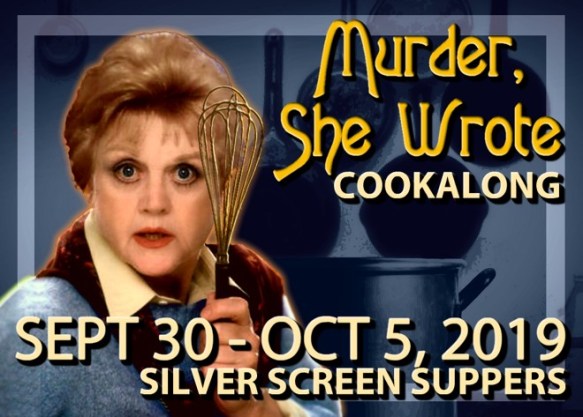
Murder She Wrote Cookalong banner
Murder, She Wrote Cookalong banner created by Jenny from Silver Screen Suppers. Image found at https://www.silverscreensuppers.com/the-murder-she-wrote-cookalong.

Martha Scott’s Coffee Ice Cream a la Star

(all of the pictures in this part are screenshots I took with my phone)

Ingredients

  • Vanilla Ice Cream
  • Instant Coffee

Step 1. Leave vanilla ice cream out of the freezer until it is slightly soft.

Step 2. Put 2 pt. of vanilla ice cream into a bowl

20191004_203946[1]

Step 3. Take another bowl and put 4 teasp. of instant coffee in it.

20191004_204811[1]

Step 4. Put a few tablesp. of ice cream into the same bowl as the instant coffee.

20191004_205224[1]

Step 5. Mix the ice cream and the instant coffee with an electric mixer. After pouring the blend into the bowl with the vanilla ice cream, mix the batch with the electric mixer. It’s important to not let the ice cream melt.

20191004_205515[1]

20191004_205723[1]

Step 6. Pour the blend into an ice cube tray. After that, place the tray in the freezer until the serving is consistent.

20191004_210211[1]

20191004_210312[1]

20191004_211149[1]

I tasted the dessert before I put it in the freezer and I absolutely enjoyed it! It reminded me of a milkshake style coffee drink found in cafes or created by national chain coffee companies. I’m very thankful that I picked this recipe because it was not only easy to make, but it also tasted so good! Now onto the second part of this post, my review of “The Days Dwindle Down”!

Episode Name: The Days Dwindle Down

Season 3, Episode 21

Premiere Date: April 19th, 1987

20191003_165553[1]
Unlike other episodes of Murder, She Wrote, this intro had a lighter tone and style. Screenshot taken by me, Sally Silverscreen.
What I liked about this episode:

Before watching “The Days Dwindle Down”, I was told, by Robin, that this episode was a “sequel” to the 1949 movie, Strange Bargain. I had planned to watch the film prior to the episode. However, I was unable to rent the movie. Fortunately, clips from Strange Bargain were incorporated into “The Days Dwindle Down” as a way to explain what was happening on screen. This helped eliminate any confusion for audience members, like myself, who are not familiar with this story. The movie clips themselves were placed at moments that made sense within the context of the overall narrative. It never felt like Murder, She Wrote was trying to capitalize on the pre-existing material. The way the movie’s story was treated as an event from Jessica’s world and not as a film was very creative.

What I didn’t like about this episode:

The mystery within “The Days Dwindle Down” was a cold case. This means that the climatic moments of this story have already happened. The chosen direction of this episode caused the mystery to not feel as interactive as mysteries from other episodes. Very few clues were featured and the story was dialogue-heavy. While Jessica’s interactions with each suspect played an important role in this narrative, the overall mystery felt observant rather than engaging.

The mystery itself:

As I just said, the mystery in this episode was a cold case. While this type of mystery had its flaws, I liked seeing Murder, She Wrote take a creative risk. In most episodes, the mystery takes place in present time, while a good portion of the story revolves around answering the question of “whodunit”. “The Days Dwindle Down” focused on figuring out the truth behind the mystery’s final verdict. This made the story very unique from others on the show. It also brought a sense of variety to Jessica’s overarching narrative.

The other factors from this episode:

  • In “The Days Dwindle Down”, there was a brief discussion about justice and trying to achieve that idea. Murder, She Wrote is not known for introducing thought-provoking dialogue and encouraging conversation. But the way this concept was incorporated into the story brought some interest into the episode.
  • If you read my post called “Sally Watches…Murder, She Wrote”, you would know how impressed I was by the locations featured in the episodes. The Jarvis house is yet another location that looked appealing on screen. The interior of this house was eye-catching as well, appropriately fitting the role of a regal style for a wealthier group of people. Whoever scouted locations for this show deserves a Lifetime Achievement Award!
  • I like how some of the original cast members from Strange Bargain appeared in this episode! It gave this story a sense of authenticity and it satisfies the role of a continuation.

My overall thoughts:

I found myself liking “The Days Dwindle Down” more than I thought I would! This episode told a type of story that isn’t often found on Murder, She Wrote. Yet, it made this chapter of Jessica’s journey interesting and, at times, thought-provoking. I’ve never seen a tv show try to incorporate a movie into an episode’s story where the movie itself was not treated as a movie, but rather as a part of the tv show’s world. But it helped make “The Days Dwindle Down” stand out from the other episodes. As much as I enjoyed watching this mystery upfold, I’ll be one of the first people to admit it wasn’t perfect. The biggest flaw was how it wasn’t interactive. Despite this, I think this is one of the best episodes I’ve ever seen!

Rating: 4.5 out of 5

20191003_165933[1]
The Jarvis house was so large in scale, that it couldn’t fit in one frame. However, this doesn’t take away it’s grandiose nature, with both interior and exterior. Screenshot taken by me, Sally Silverscreen.

Have fun at the movies!

Sally Silverscreen

Take 3: Stepping Out Review

Shelley Winters is an actress that I was familiar with before joining The Shelley Winters Blogathon. I’ve seen The Diary of Anne Frank, What’s the Matter with Helen?, and Lolita. But out of those three movies, her most memorable role is Helen from What’s the Matter with Helen?. Shelley was able to bring a very haunting element to that character, giving the audience a reason to feel uneasy toward her. As I searched through her IMDB filmography, I came across a film called Stepping Out. When I read the synopsis, it sounded like a very sweet story. Because of this, I choose the 1991 picture for my entry in the blogathon. When it comes to blogathons, I rarely have an opportunity to review musical films. In fact, the last movie musical I reviewed was Summer Magic for A Month Without the Code back in August. I also learned that Stepping Out was based on a pre-existing play. If I hadn’t watched a Youtube video where Gene Siskel and Robert Ebert talk about their least favorite films of 1991, I wouldn’t have discovered this valuable piece of information.

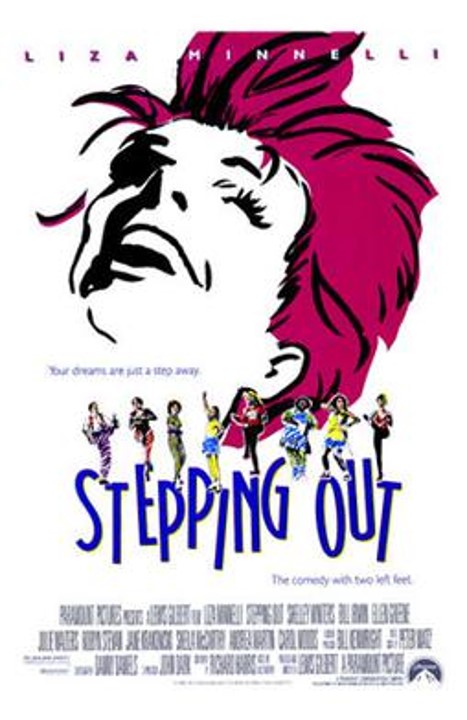
Stepping Out poster
Stepping Out poster created by Paramount Pictures. Image found at en.wikipedia.org/wiki/File:SteppingOutFilmPoster.jpg

Things I liked about the film:

The acting: As I said in my I Remember Mama review, every actor and actress is expected to bring the best of their acting talents in an ensemble cast. With confidence, I can say that all of the actors and actresses in Stepping Out did a fantastic job in their roles! The chemistry between all of the characters was strong, making their relationships feel believable. Andi, portrayed by Sheila McCarthy, and Geoffrey, portrayed by Bill Irwin, are a perfect example of this. During the duration of the film, Andi and Bill develop a friendship that survives outside of the studio setting. Their interactions give the audience the impression that they truly care about one another. Though her role in this movie was smaller than in other movies, Shelley Winters had a memorable on-screen appearance! Her performance was consistent and her sense of humor was subtle yet effective. I also liked hearing her singing performance when she shared, in one scene, that it was Irving Berlin’s birthday. Despite her limited amount of screen-time, Shelley still found a way to make a big impact in this story!


The film’s sweeter moments: Throughout the film, there were sweet, light-hearted moments that I enjoyed seeing. Anytime Mavis encouraged her students and tried to help them become the best dancers they could be, it was very refreshing to see a teacher figure with realistic goals. Even when there were obstacles within the dancing lessons, the students were able to find moments of positivity and humor. One example is when there was a mix-up with their costume hats. It was also nice to see the students trying to help each other outside of the studio environment. When Maxine offers Rose’s son a job, it shows the team dynamic that Mavis strives for during the movie. It also displays how the characters are able to put the needs of others before their own.


The dance numbers: Seeing the dance numbers in Stepping Out was a highlight! Since the story revolves around Mavis and her students, all of the dance numbers are performed by them. Despite this, they are all entertaining! Whether it was Mavis’ solo or the group numbers that appeared toward the end of the film, these dance numbers were well choregraphed. It also helps that a good percentage of this cast had Broadway experience prior to appearing in Stepping Out. Their experience and performance related knowledge worked in their favor, as it brought a sense of realism to the dance numbers.

12 size
Masks of comedy and tragedy images created by freepik at freepik.com. <a href=”https://www.freepik.com/free-photos-vectors/background”>Background vector created by freepik – http://www.freepik.com</a>. Image found at freepik.com.

What I didn’t like about the film:

Some characters receiving more character development than others: In Stepping Out, I found that some characters received more character development than others. Two examples are Andi and Mrs. Fraser. This story gave Andi a fully developed back-story. Meanwhile, Mrs. Fraser’s back-story resides in only two sentences. There are even some characters that don’t receive any character development. Dorothy, portrayed by Andrea Martin, is one of them. I understand that in an ensemble cast, it’s not easy providing a story and character development to every character. But, for me, it left more to be desired.


Some under-utilized actors: I noticed within this cast that some of the actors were under-utilized. One of these actors is Geza Kovacs, who I talked about in my editorial, “Why Jiggy Nye is Not an Effective Villian in Felicity: An American Girl Adventure”. In his role as a club manager named Jerry, he did a good job with the material he was given. However, he was only in the film for two scenes. I know that this particular character didn’t provide as much to the story as other characters did. But I find it frustrating when talented actors and actresses aren’t given an opportunity to fully utilize their talents.


A weaker second half: While watching this movie, I felt the second half was weaker than the first half. This is because some parts of the story were drawn out more than others. A good example is Andi’s story. As I stated before, Andi is a character that received a well-developed back-story. However, it was drawn-out longer than it should have been. To me, this issue is the result of the run-time and a script that wasn’t as tightly written. Even though the film’s second half contained two very entertaining dance numbers, the story itself could have been stronger from start to finish.

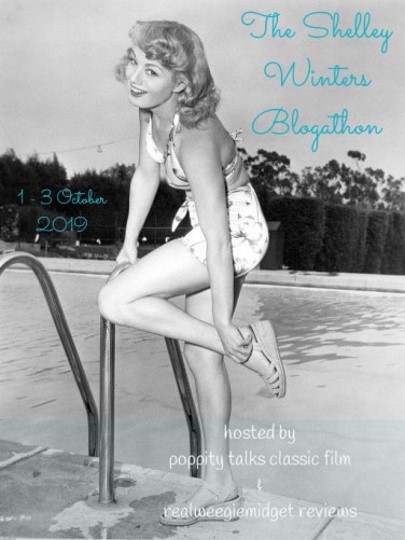
Shelley Winters Blogathon banner
The Shelley Winters Blogathon banner created by Erica from Poppity Talks Classic Film and Gill from Realweegiemidget Reviews. Image found at https://poppitytalksclassicfilm.wordpress.com/2019/07/30/announcing-the-shelley-winters-blogathon/.

My overall impression:

Stepping Out made me feel the exact same way that Moulin Rouge! did. The film had sweet moments and other factors that I liked. But the story as a whole could have been stronger. Some of the downfalls include select characters receiving well-written backstories, some under-utilized actors, and a script that’s not as tightly written as it could have been. However, these elements did not make this movie one of the worst I’ve seen this year. Even though this project had its flaws, the cast, as a whole, shines in the spotlight! This is especially true for Shelley Winters! When we think about actresses who’ve graced the silver screen, Shelley, to me, seems like one of the underrated ones. I don’t hear her name being added to the conversation as I do for other starlets, such as Audrey Hepburn and Bette Davis. But during my year of blogging, I learned that this is the reason why blogathons exist. These events provide a platform to talk about almost anything and everything, so it’s great to see blogathons take the time to give lesser known stars and other movie related topics their “standing ovation”.


Overall score: 6.5 out of 10


Have you seen any of Shelley’s films? If so, which one is your favorite? Share your thoughts in the comment section!


Have fun at the movies!

Sally Silverscreen


If you want to check out the video that I referenced in this review, type “SISKEL & EBERT: The Worst Movies of 1991” into Youtube’s search bar. Just to let you know, there is some language and suggestive topics discussed in this video. The segment about Stepping Out starts at 6:55 and ends at 8:33.

A Thank You from the Blogathon Moderator

Hey everyone! I just wanted to publish this post to say thank you to all of my readers, visitors, and followers who took an interest in ‘Siskel and Ebert at the Blogathon’ by reading and/or liking the articles associated with it! I also want to give a special thank you to all of the blogathon participants! ‘Siskel and Ebert at the Blogathon’ was more successful than I expected. In total, there were ten bloggers who submitted entries! For my first blogathon, this is a great start. As I’ve already told some of the blogathon participants, I will be hosting my second blogathon in 2020! But the theme will be announced in next year’s first half.

Siskel and Ebert Film Reel banner
Created by me, Sally Silverscreen, on Adobe Spark.

Have fun at the movies!

Sally Silverscreen

Siskel and Ebert at the Blogathon is here!

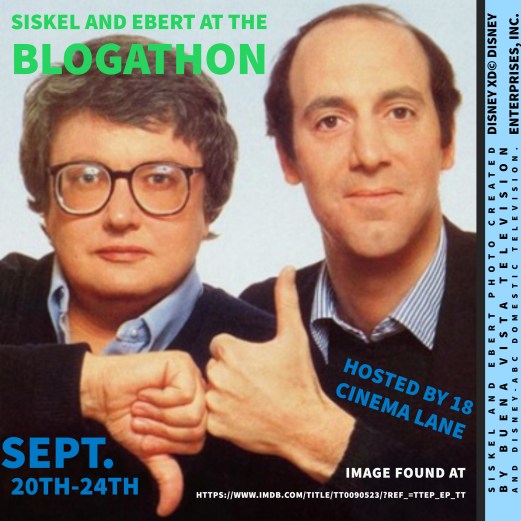
Welcome to my very first blogathon, Siskel and Ebert at the Blogathon! For five days, blogathon participants will share a variety of topics related to Gene Siskel and/or Roger Ebert. All of those posts will be listed on this community post, separated by the categories that were established in the announcement post that was published back in May. Every participant worked very hard on their article, so be sure to check out as many posts as you’d like!

Siskel and Ebert Profile banner
Created by me, Sally Silverscreen, on Adobe Spark.

Collection of Participants

Category A

18 Cinema Lane — Roger Ebert’s Movie Yearbooks: How Relevant are They Anyway?

Silver Screenings — Roger Ebert’s Landmarks of 20th Century Cinema

The Movie Shelf Reviews — Siskel & Ebert Blogathon: The Critic — “Siskel & Ebert & Jay & Alice”


Category B

Critica Retro — Z (1969)

Realweegiemidget Reviews — FILMS…Prizzi’s Honor (1985)

Dubsism — Movies Everybody Loves That I Hate: Episode 5 — “Casino”

The Midnite Drive-In — Make Room for Hannibal

Taking Up Room — Go Ask Shirlee

Pure Entertainment Preservation Society — 52 Code Films — Week #38: “A Star is Born” from 1954; “The Brightest Star” for “Siskel and Ebert at the Blogathon”

Category D

MovieRob — The Siskel and Ebert At The Blogathon – Opportunity Knocks (1990)

The Siskel and Ebert At The Blogathon – About Last Night (1986)

The Siskel and Ebert At The Blogathon – Rookie of the Year (1993)

Siskel and Ebert Film Reel banner
Created by me, Sally Silverscreen, on Adobe Spark.

Roger Ebert’s Movie Yearbooks: How Relevant are They Anyway?

Found in cardboard boxes at garage sales. Seen on shelves at a used book store. Appearing on Amazon’s and Ebay’s pages. Roger Ebert’s Movie Yearbooks, or sometimes known as Roger Ebert’s Movie Home/Video Companion, are records of years gone by. Showcasing movies that have already premiered, the books feature reviews and other movie related material from Roger Ebert himself. From the mid ‘80s to the early 2010s, these yearbooks provided an overview of any given movie year. They correlated with Roger and Gene Siskel’s show, At The Movies. But for the majority of the 2010s, a movie yearbook has not been published. Also, it seems like this concept is not as talked about as it once was. Is this idea that Roger created still relevant anymore? Does it still have a place in our current day and time? This editorial will explore the arguments for and against the revival of the movie yearbook. I will also share my thoughts on the argument as a whole. Since today is the first day of Siskel and Ebert at the Blogathon, let the blogathon begin!

Siskel and Ebert Movie Theater banner
Created by me, Sally Silverscreen, on Adobe Spark.

How Roger’s Movie Yearbooks Are Still Relevent

What do putting up Christmas trees, going trick or treating, and watching the ball drop in Times Square on New Year’s have in common? All of these activities are rooted in tradition. Because these activities have become cherished for many people, they are put into practice year after year. For approximately three decades, Roger Ebert shared his thoughts, opinions, and insight about movies and other subjects related to that topic through his movie yearbooks. Throughout his career and reputation, Roger gained the likeability and respect of his audience. Because he became a cherished figure in the movie community, the publication of his movie yearbooks turned into a tradition. What helped was having continuous segments on his shows with Gene Siskel, such as episodes dedicated to the best and worst movies in a given year. Because these segments took place every year, it helped the show’s audience associate tradition with Roger Ebert.


When I think of a “yearbook”, I picture a hardcover book given at the end of a school year, filled with pictures and short, but thorough explanations about those photos. As I conducted my research about Roger Ebert’s movie yearbooks, I discovered that they did not fit my definition of a “yearbook”. These books are a collection of reviews, interviews, and essays. Despite this, a traditional “yearbook” and Roger Ebert’s movie yearbooks do share one major similarity: they are a collection of records and reflections. A typical school yearbook focuses on the memories and events of a particular school year, reflecting on things such as various school subjects or graduating classes. This publication is usually more visual, where photos are used to tell the story and express ideas. In Roger Ebert’s case, he chose a more verbal approach when it came to the creation of his movie yearbooks. Since movies are a visual medium and images like movie stills and award winners can be found in other publications, pictures are not necessary for these particular books of Roger’s. All of these books discuss the movie year prior to the book’s release. For example, Roger Ebert’s movie yearbook from 1999 will talk about movies from 1998. Like a school yearbook, Roger’s movie yearbooks are a singular place where his collective story can be presented.


Another important component to a yearbook, whether it be a movie yearbook or one from school, is how it creates a shared experience amongst its audience. Because the subject of movies and school is so broad, readers are able to find something in the text that they can relate to. Within the movie yearbooks, Roger Ebert reviews a variety of films that were theatrically released. Different studios and genres are represented throughout the publication. Because of the yearbook’s broad range of movies, there’s a chance that the material is appealing to almost everyone. On his shows with Gene Siskel and in his movie yearbooks, Roger would talk about whether he liked or disliked a particular film. Since they talked about movies that were theatrically released, meaning they are easily accessible for the majority of their audience, a shared experience was allowed to talk place. Just one example is when both Gene and Siskel reviewed the movie, Jurassic Park. This is a movie that a large number of people have seen, so it feels like people watching or reading their review can join a shared conversation.


During the run of Siskel and Ebert’s television shows, as well as their careers, both Gene and Roger created a legacy that outlasted their lives. By reviewing films and making those thoughts accessible to their audience, who also happen to be potential movie-goers, they helped create the concept of movie related entertainment. Gene and Roger also showed that anyone could articulate their thoughts and opinions on film. This contribution has been appreciated by fans and members of the movie community, even encouraging them to become movie critics themselves. Roger’s movie yearbooks make up a part of his legacy, proving to be an essential piece of movie related literature. This concept of looking back on a given movie year through text is something that would continue to be beneficial to movie fans and fellow critics. It may even help make the movie community a better place.

20190919_173650[1]
The cover of Roger Ebert’s first movie yearbook, Robert Ebert’s Movie Home Companion. Screenshot taken by me, Sally Silverscreen.

How Roger’s Movie Yearbooks Are Not Relevant Anymore

The last movie yearbook to be published was Roger Ebert’s Movie Yearbook 2013, which covers the movie years of 2010 to mid-2012. This is because Roger Ebert passed away on April 4th, 2013. Because of this, the movie community lost one of the most unique perspectives in film critic history. It also means that new movie related content from Roger can never be created, since the work would not come directly from him. Making a book called “Roger Ebert’s Movie Yearbook” and not having Roger involved in the project kind of defeats the purpose. Carrying on one of Roger’s long running book series without his consent also seems disrespectful. Sure, we could guess what Roger would think of movies released after April 2013. But it’s better to know than take a guess.


When Roger Ebert passed away six years ago, the world lost one of the faces of the movie community. The other face of the movie community, Gene Siskel, passed away twenty years ago. This means that the movie community currently does not have any one person that represents them. Gene and Roger earned their titles through their appearances on their television shows. Since their first show, Sneak Previews, premiered in 1975, there were not as many voices in the movie community as there are today. Because more people have joined this community, it would be difficult to choose a new representative. How would this person be chosen? What credentials would give this person the title? Who would nominate this person? So many factors would play a role when trying to make a decision like this. But the one question that should be asked is “Does the movie community really need a new representative”?


With the invention of the internet and social media, more people have been given the opportunity to share their thoughts on film. Blogs, websites, and even Youtube channels have provided platforms for more voices to be heard. These inventions helped the movie community grow, gaining more members now than when Gene and Roger first appeared on Sneak Previews. If the concept of the movie yearbook were to come back, it would be difficult to determine whose opinions get included. Do you choose the people who are associated with movie related companies or Youtubers with smaller channels? What about bloggers, would their thoughts be incorporated in the yearbook too? The website, rogerebert.com, is a place where multiple film critics can share their thoughts in one place. Would these people have a say in who’s cinematic thoughts are welcome? The very first movie yearbook from Roger Ebert, titled Roger Ebert’s Movie Home Companion, was released in 1985. Because the internet and social media weren’t big factors like they are today, the people associated with coordinating Roger Ebert’s movie yearbooks didn’t have to think about these things. But the landscape of the movie community has expanded in the 21st century.


Not only has the internet and social media provided a platform for more members of the movie community, they’ve also presented information in a shorter amount of time. Today, movie reviews are uploaded to the internet days, sometimes even weeks, before a movie’s premiere. Some quick searching will lead any movie fan to a wide variety of reviews and other movie related content from multiple authors. Our digital age has produced e-books, making it easier for readers to download many different stories. With these new elements that the movie community has gained, the idea of putting a movie yearbook to print comes into question. Why not just create an e-book version of this project? Wouldn’t it be easier to put all this content on a website? Another concern that needs to be addressed is whether people would pay for a collection of information when they can receive it for free in places that have internet access. When Roger Ebert’s movie yearbooks were published, most of his audience didn’t have the internet. They relied on his books, articles, and television programs when they wanted to hear what he had to say. Today there’s rogerebert.com, a website that provides reviews and movie related articles at a faster pace. They give this information straight to their audience, eliminating the process of company publishing and book binding.

20190919_173701[1]
The cover of Roger Ebert’s last movie yearbook, Robert Ebert’s Movie Yearbook 2013. Screenshot taken by me, Sally Silverscreen.

My Thoughts on Roger Ebert’s Movie Yearbooks

There’s no denying that Roger Ebert played a huge role in the movie community’s foundation. His thoughts and opinions on film helped many people become film critics of their own, instead of simply accepting the role of movie consumer. Something that made this goal a reality was the publication of Roger Ebert’s movie yearbooks. These books allowed Roger’s audience to reminiscence over films they’ve seen or heard about, as well as reflect on the topics of the featured interviews and essays. After the publication of Roger Ebert’s Movie Yearbook 2013 and Roger Ebert’s death, the world stopped receiving the wise and knowledgeable insight that could have easily been taken for granted. The concept of the movie yearbook is an interesting one, beneficial for all members of the movie community. I, as a movie blogger and member of the movie community, would love to see this concept brought back into publication. However, before this idea could be executed again, several important questions would need to be answered. From selecting the people who would contribute to the yearbook to which medium would host the project, these factors could affect the return of Roger Ebert’s long running series. A series that became a tradition because of one cherished individual. But all traditions start somewhere, and if they’re worth it, should be put into practice for many years and generations to come.


Have fun at the blogathon!

Sally Silverscreen


If you would like to check out this editorial’s references, here are the links:

https://en.wikipedia.org/wiki/Roger_Ebert

https://www.goodreads.com/book/show/15010613-roger-ebert-s-movie-yearbook-2013?from_search=true

https://www.rogerebert.com/about

Only Five Days Left to Sign Up for the Siskel and Ebert Blogathon!

Siskel and Ebert At the Movies banner
Created by me, Sally Silverscreen, on Adobe Spark.

Hello everyone! If you’re interested in joining my blogathon, Siskel and Ebert at the Blogathon, you still have time! All you have to do is leave your topic request in the comment section of the post, “Announcing my new blogathon called ’Siskel and Ebert at the Blogathon’!”. This post can be found when you click the blogathon banner at the right-hand side of the page or by visiting this link:

Announcing my new blogathon called ‘Siskel and Ebert at the Blogathon’!

Have fun at the movies!

Sally Silverscreen

Take 3: The Littlest Horse Thieves Review

When it came to The Costume Drama Blogathon, I wanted to choose a movie that was already on my DVR. Out of the six movies that would have fit the requirements, I decided to review The Littlest Horse Thieves! This is a Disney film that I didn’t know existed until this year. Since I reviewed Swept from the Sea and Hallmark’s Hall of Fame’s In Love and War, I thought that I would change things up by selecting a children’s/family-friendly film. What made me want to watch the movie was the historical aspect of the story. Before even hearing about The Littlest Horse Thieves, I never knew that ponies were used in the mining industry. The only animal I knew that went into mines were small birds. I was looking forward to learning something new while being entertained.

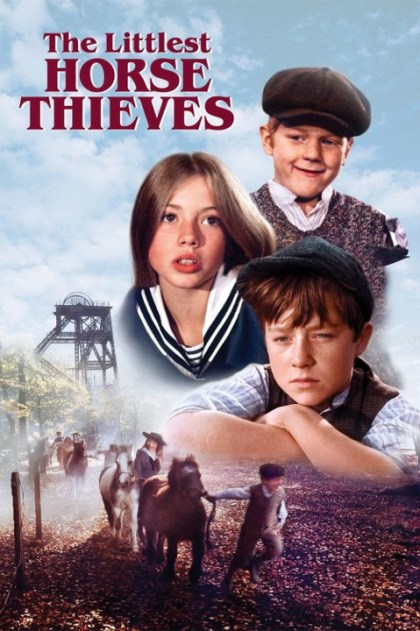
The Littlest Horse Thieves poster
The Littlest Horse Thieves poster created by Walt Disney Productions and Buena Vista Distribution. © Disney•Pixar. All rights reserved. Image found at https://movies.disney.com/the-littlest-horse-thieves.

Things I liked about the film:

The acting: When it comes to casting young actors in lead roles, those performances can be hit or miss. In The Littlest Horse Thieves, the performances of all three leads were really good! Chloe Franks, Andrew Harrison, and Benjie Bolgar portray the titular horse thieves. Throughout the film, their characters were endearing and likable. The emotions these actors displayed appeared very genuine, as if their characters were real people. It was really sweet to watch the characters’ friendship evolve over the course of the film. Because of these factors, it made it easy for me to root of Alice, Dave, and Tommy.

Historical accuracy: The Littlest Horse Thieves takes place in, I believe, the early 1900s. Every aspect of this movie reflected that particular time-period really well! The sets looked like the audience could step back in time, that this point in history was not too far away. Things like wardrobe, dialect, and even the artwork on the walls brought the early 1900s to life again. Even the issues surrounding mining and employee well-being seemed to come directly from that decade. What made the historical accuracy work in this film was the creative team’s attention to detail. It shows how much care was put into this project.

Not so perfect plans: In a lot of children’s/family-friendly films, the young protagonists’ plans always work out in their favor. This is not exactly the case for The Littlest Horse Thieves. I’m not going to spoil the movie in case you want to see it. But the children sometimes overlook important details relating to their plan to save the ponies. I liked how the protagonists’ efforts didn’t go according to plan. This made the characters and their situation seem realistic and relatable.

Pony Face near the Tree
Close-up of pony image created by Flatart at freepik.com. <a href=”https://www.freepik.com/free-photos-vectors/background”>Background photo created by flatart – http://www.freepik.com</a>. Image found at freepik.com.

What I didn’t like about the film:

A drawn-out story: The Littlest Horse Thieves had a drawn-out story that seemed to last too long. The first half of the movie focused on the children finding out about the conflict and figuring out how to solve it. The act of rescuing/stealing the ponies didn’t happen until the film’s halfway point. It also only lasted for a few minutes. The second half of the movie shifted the focus from the children to the adults. The overall narrative talked about everything but the most exciting part of the movie.

The editing: During the first half of the film, I noticed how less-than-stellar the editing was. It made conversations feel cut-off and transitions between scenes less smooth. These two aspects made the overall flow of the film seem choppy.

The conflict between Dave and his stepdad: Within The Littlest Horse Thieves, there was a conflict between Dave and his stepdad. It’s not the conflict itself I didn’t like. How little time was devoted to it is my biggest issue. In the first half of the film, Dave and his stepdad dislike each other. While the stepdad’s reason is never explained, Dave feels his reasons can be justified. His dislike toward his stepdad also affects his younger brother, Tommy. After the ponies are rescued/stolen, Dave and Tommy’s stepdad automatically becomes supportive of the children and their cause. The aforementioned conflict was not fully explored and felt it was there for the sake of being there.

The Costume Drama Blogathon banner
The Costume Drama Blogathon poster created by Debbie from Moon in Gemini. Image found at https://debravega.wordpress.com/2019/07/14/announcing-the-costume-drama-blogathon/.

My overall impression:

Every studio has those films that don’t always get talked about. Disney is no exception to this. That’s why I try to go out of my way to address these films on my blog. Some of them are better than others. But you never know what’s in store until you give the film a chance. For this particular blogathon, I chose to watch The Littlest Horse Thieves with an open mind. Now that I have seen it, I can honestly say that it was just ok. It’s not one of the worst things that the studio has ever made. But it’s not one of Disney’s strongest efforts. In fact, I could see children, especially younger ones, becoming bored by this movie. However, people who like British and/or historical fiction films will probably like it. Its historical accuracy is pretty satisfying and there are moments that I found educational. I could tell that the creative team behind this film tried their best to make something worthwhile. But it wasn’t as impressive as it could have been.

Overall score: 6 out of 10

Have you seen The Littlest Horse Thieves? Which film from a major studio do think is underrated? Please share your thoughts in the comment section!

Have fun at the movies!

Sally Silverscreen