Take 3: Finding Forrester Review

One of the available categories for the Leap Year Blogathon was to talk about “any movie or TV show you’ve always wanted to review but never had the chance to”. This is the approach I’ve chosen to take with Rebecca’s event. As I was scrolling through my DVR, I came across a movie called Finding Forrester. Ever since I read the film’s synopsis on BYUtv’s website several years ago, I have wanted to see this movie because the story sounded interesting. I even recorded it on my DVR in the hopes of watching it someday. Well, it looks like 2020 is the time when I’m finally getting around to talking about this film! I’ll be honest, I haven’t seen a lot of Sean Connery’s movies. The Russia House and The Great Train Robbery are the only films I’ve seen with Sean as one of the leads. While I thought the former was ok, I enjoyed the latter more than I thought I would. Now that this is the third picture of Sean’s I’ve watched, it’ll be interesting to see where Finding Forrester ranks among the other two films.

Finding Forrester poster
Finding Forrester poster created by Sony Pictures Releasing and Columbia Pictures. Image found at https://www.sonypictures.com/movies/findingforrester.

Things I liked about the film:

The acting: Finding Forrester is a story that grounds itself in reality. Because of this, the acting performances in this film come across as realistic portrayals. What this means is all the characters feel like real people. The genuine expressions and behaviors of each character shine through because of the quality of the actors’ talents. How the characters interact with each other is evident of this, especially within the friendship of Jamal and William. Depth was added to the characters because of the interactions they share. The dialogue was well-executed by the actors, causing the conversations to sound authentic. What works in this cast’s favor are the various personalities presented and the character development that takes place. A sense of intrigue is brought forth as a result of all of these elements.


The cinematography: Whenever this film’s creative team wanted the audience to focus on a particular person or object, they would adopt medium shots or close-ups to place a greater emphasis on that subject. During basketball tryouts, Jamal was playing against a senior team member from the private school. The rivalry between these two characters is the highlight of this scene, so medium shots are used to present them to the audience. When Jamal is removing his notebooks from his backpack, after the bag was retrieved from William’s apartment, close-ups implemented the importance of writing that serves as a consistent idea throughout the film. In two scenes, the reflection of Jamal can be seen from William’s binoculars. This is meant to foreshadow the connection these characters will share through their friendship. These cinematic techniques helped make the cinematography stand out in this project!


The incorporation of knowledge: Like writing, the idea of knowledge is consistent in Finding Forrester. The way it was incorporated into this story was seamless and showed how important it can be to any individual. One example is when Jamal is explaining a brief history of the BMW to William’s acquaintance. This information not only helped Jamal stand up for himself, but it also educated the audience about one of the world’s most iconic car companies. The knowledge that William and Jamal share about writing is another great example. During a debate about the rules of writing, they are able to express their ideas and view the perspective of the other person. This scene shows that, with knowledge, one can be a part of something greater than themselves. It also shows that knowledge can create a connection between people.

Leap Year Blogathon banner
The Leap Year Blogathon banner created by Rebecca from Taking Up Room. Image found at https://takinguproom.wordpress.com/2019/12/06/announcing-the-leap-year-blogathon/.

What I didn’t like about the film:

The lighting: Most of the lighting in Finding Forrester is dim. This allows the overall color palette to appear darker on screen. However, it also makes it difficult to see what is happening in the film. The scenes taking place in William’s apartment experienced this issue. Because of the dimmed lighting, it was sometimes difficult to see Jamal’s and William’s face in these scenes. Half of this movie is centered around Jamal and William’s friendship, which means that half of the overall picture features the dim surroundings of William’s apartment.


Scenes that become padding: There are several scenes in Finding Forrester that become padding. One example is when Jamal’s friends are shown spending time together at a restaurant. This moment had no bearing on the story and didn’t progress the plot forward. It also doesn’t have a strong need to exist in the narrative. Scenes like these felt like they were placed in the movie for the sake of satisfying the run-time. If some of these scenes were cut, the film would have been shorter and the script could have been a bit tighter.

05
Typewriter image created by Freepik at freepik.com. <a href=’https://www.freepik.com/free-vector/typewriter-and-paper-sheet_713020.htm’>Designed by Freepik</a>. <a href=”https://www.freepik.com/free-photos-vectors/vintage”>Vintage vector created by Freepik</a>. Image found at freepik.com.

My overall impression:

Someone I know once told me that knowledge is one of the most valuable possessions a person can own. When it’s earned, it can never be taken away from you. This is expressed very well in Finding Forrester, a solid and satisfying picture! While this movie is more of a character study, this concept works in the film’s favor. The delivery of the script and acting performances gave me an opportunity to stay invested in the characters and their interactions. The messages of integrity, self-worth, and knowledge have the potential to be relatable among audience members. They can also inspire people to pursue their talents and believe in their strengths. Finding Forrester is a movie that I’m glad I made the time to see. I’d like to thank Rebecca for giving me this opportunity through her Leap Year Blogathon!


Overall score: 8.2 out of 10


Is there a movie you’ve always to see, but never made time for? What are your plans for Leap Year? Share your thoughts in the comment section!


Have fun at the movies!

Sally Silverscreen

Take 3: The Adventurer: The Curse of the Midas Box Review

Because I wrote an editorial for the Ultimate 2000s Blogathon, I decided to write a movie review for the Ultimate 2010s Blogathon. The Adventurer: The Curse of the Midas Box is a film I had never heard of until I researched titles for this event. Since it was released in early 2014, I knew it would be a good entry! While learning more about the film, it sounded like a mix between The Librarian trilogy and Sherlock Holmes. Because I enjoy both of those stories, I figured I might get some enjoyment out of this movie! As I’ve stated on countless occasions, I try to use my blog to give lesser-known films the “standing ovation” they might deserve. Talking about The Adventurer: The Curse of the Midas Box definitely fits that goal of mine! But is this movie truly worthy of a “standing ovation”? Please join me on this journey as we’re about to find out in this review!

The Adventurer -- The Curse of the Midas Box poster
The Adventurer: The Curse of the Midas Box poster created by Entertainment Motion Pictures (E-MOTION), Arcadia Motion Pictures, Matador Pictures, Telefonica Producciones, The Kraken Films, Nix Films, International Pictures Two, Cronos Entertainment AIE, Cinema One, Afrodita Audiovisual, A.I.E., uFilm, Le Tax Shelter du Gouvernement Federal de Belgique, Mogambo, Propulsion, Umedia, and The Film Arcade. Image found at en.wikipedia.org/wiki/File:Adventurer_the_curse_of_the_midas_box_poster.jpg

Things I liked about the film:

The acting: The cast in The Adventurer: The Curse of the Midas Box was solid! I had never heard of Aneurin Barnard prior to watching this film. However, I was impressed with his portrayal of Mariah! His performance was expressive in a subtle way. A good example is when Mariah is explaining to Sacha why he wants to find his brother, Felix. The audience can tell that Mariah is about to cry, but Aneurin primarily relies on expressing those feelings of sadness and loneliness through his eyes. I was also not familiar with Mella Carron before seeing this movie. Like Aneurin, I was impressed with her performance as Sacha! Her overall portrayal was well-rounded. Similar to Aneurin’s performance, she was also expressive in subtle ways. One example is when she’s sharing her problems with Mariah. When she is talking about her father’s troubling behavior, Sacha’s eyes fill with tears, showing how much this situation upsets her. I thought Sam Neill portrayed a convincing villain! I’ve only seen a few of Sam’s films, so I have only seen him portray protagonists or characters that were not villainous. While bringing the character of Otto to life, Sam’s demeanor was arrogant and cunning. These are the qualities you’d likely find in a villain, as these kinds of characters sometimes see themselves as being better than everyone else.


Historical accuracy: The Adventurer: The Curse of the Midas Box takes place in 1885. While watching this movie, I noticed how everything looked and felt like that period in time. The wardrobe and set designs definitely fit within the world the film’s creative team created. The metalwork within the hotel seemed like it came straight from the 1880s. Even the font on posters and signs looked accurate to that time period. The ways this aspect of the film was handled shows that no detail was ignored during any part of the movie’s creative process.


The element of mystery: In The Adventurer: The Curse of the Midas Box, there was a mystery within the main plot. This mystery element was one of the most interesting parts of the film! It allowed me to stay invested in what was happening in the story and to the characters. The mystery also created a sense of wonder as to what would happen next. This element brought intrigue to the overall story!

OQECW90
Sketch of London image created by Archjoe at freepik.com. <a href=’https://www.freepik.com/free-vector/hand-drawn-houses-of-parliament_1133950.htm’>Designed by Archjoe</a>. <a href=”https://www.freepik.com/free-photos-vectors/background”>Background vector created by Archjoe – Freepik.com</a>. Image found at freepik.com.

What I didn’t like about the film:

Lack of lighting: While the cinematography was mostly good in this film, there were some scenes that had little to no lighting. They were so dark, I had difficulty seeing what was on screen. One example is toward the beginning of the movie, when Mariah and Felix are having a conversation outside. This scene was so poorly lit, Mariah face was hidden by the darkness. Whenever this happened, I found it to be frustrating.


A misleading title: As I said in my Halloween Double Feature, a film’s title can act as a promise to a film’s audience. When a creative team makes an effort to put a subject in their movie’s title, they need to deliver on that “promise” to their audience. For The Adventurer: The Curse of the Midas Box, I didn’t really feel like there was an adventure taking place in the story, despite the film being called The Adventurer. There were some scenes that had a sense of adventure to them. But it never seemed like the characters were going on a journey or allowing the audience to go on a quest with them. The majority of this movie took place in one location. This made the story feel condensed. All these elements presented the overall narrative like it belonged to a mystery movie and not an adventure one.


Two separate mysteries: Like I previously stated, I liked the mystery element within this movie. However, I think it was a mistake to feature more than one mystery in the film. In this story, there is a second mystery that exists while the main mystery is being solved. For most of the film, these mysteries were separate from one another. While they eventually connected, this didn’t happen until it was almost time for the film’s climax. The second mystery also felt like it combined with the first mystery out of plot convenience. I thought both mysteries were intriguing. But they should have been in their own separate films.

Ultimate 2010s Blogathon banner
The Ultimate 2010s Blogathon banner created by Kim from Tranquil Dreams and Drew from Drew’s Movie Reviews. Image found at https://klling.wordpress.com/2020/01/13/announcement-ultimate-2010s-blogathon-sign-up-now/.

My overall impression:

The Adventurer: The Curse of the Midas Box is a fine, enjoyable film! There were things about it that I liked, such as the acting and the historical accuracy within the project. However, I can think of movies with adventure stories that were executed better than this one. The fact that this film was light of the adventure was, for me, a disappointment. It also doesn’t help that the film’s title features the word “adventurer”. If you do plan on watching this movie, approach it with the notion that you’re going to watch a mystery movie. That way, the condensed nature of the story and the limited amount of adventure will make more sense. I’m not sure if this film was given a sequel. If it was, I’ll definitely consider reviewing it on 18 Cinema Lane!


Overall score: 7 out of 10


Have you ever heard of The Adventurer: The Curse of the Midas Box? What movie from the 2010s is your favorite? Let me know in the comment section!


Have fun at the movies!

Sally Silverscreen

Take 3: Batman: Mask of the Phantasm Review

For February’s Genre Grandeur, the selected theme was “Animated Comic Book/Strip Movies”. Chosen by Bubbawheat from Flights, Tights, and Movie Nights, this theme required some thought. To search for a possible title, I headed to Bubbawheat’s blog and discovered the list of “every superhero and comic book movie in chronological order”. While scrolling through the list, I came across one movie that I had heard of, but had never seen: Batman: Mask of the Phantasm. This cinematic Batman entry has acquired a great amount of praise over its twenty plus year existence. However, it also has a reputation of not performing well at the box office. Any movie fan knows that box office performance does not always equal quality. But what is the quality of Batman: Mask of the Phantasm? Is it truly as good as other people say it is? Has it become overrated through the power of nostalgia? These are the questions I’ll answer in this review!

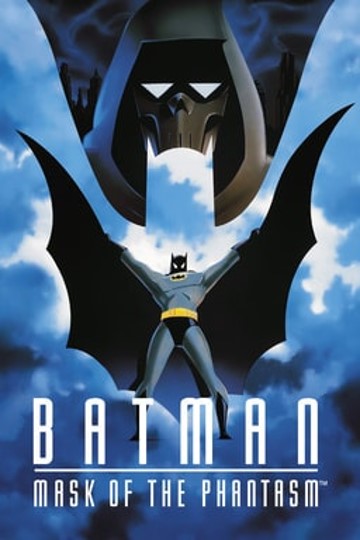
Batman -- Mask of the Phantasm poster
Batman: Mask of the Phantasm poster created by Warner Bros., Warner Bros. Animation, and Warner Bros. Family Entertainment. Image found at https://www.warnerbros.com/movies/batman-mask-phantasm/.

Things I liked about the film:

The voice acting: When it comes to animated films, the audience’s attention is so focused on what’s happening on screen, that they don’t think twice about the voice acting. Even though it seems like a small piece of the overall project, it actually can make or break the characters’ and their memorability. Batman: Mask of the Phantasm had an exceptional cast! Each actor brought more than enough emotion to match the facial expressions presented in the movie. These two components felt they were paired perfectly, with the voices themselves feeling like they belonged to that character! The casting itself couldn’t have been better! All of the actors effortlessly embodied their character through their voice talents. They were able to successfully gave life to their roles and enhance their memorability!


The animation: Batman: Mask of the Phantasm is filled with great animation! Its 2-D style still holds up twenty-seven years later! What works in this movie’s favor is the color palette found throughout the project. Most Batman stories adopt a dark color scheme, to showcase the destruction and dismay that has overcome Gotham City. While Batman: Mask of the Phantasm does feature darker colors, the way lighter colors are paired with them is visually interesting. A great example is when a criminal named Buzz Bronski visits the cemetery. The entire scene is filled with the hues of black, gray, and dark blue. The red roses on a wreath are one of the few light colors that can be found in that scene. This makes the wreath pop with color and forces the audience’s attention toward the flowers. It also gives the film a style similar to movies with a “film noir” label.


The music: Another element in animated films that sometimes gets overlooked is the music. For Batman: Mask of the Phantasm, a piece of music that really stood out was the official score. Composed by Shirley Walker, this score was powerful and helped the overall production gain its own identity. An orchestral composition and an operatic choir make this piece of music, as well as the overall film, feel grand in scale. This score was used during the opening credits, with similar tunes featured in two climatic moments of the film. Batman movies have historically incorporated orchestral scores into their projects. The score from The Dark Knight is one of the most iconic pieces of music in film history. Shirley Walker’s musical contributions to Batman: Mask of the Phantasm help keep that tradition alive.


The writing: I was really impressed by the writing in Batman: Mask of the Phantasm, as it was clever and well thought-out! The film’s overarching mystery is a perfect example of this. It’s the kind of mystery that allows the audience to take a journey alongside Bruce/Batman. They get to experience events and situations when Bruce/Batman does. At times when a surprise comes, it catches the audience off-guard, as they are so invested in Batman winning over evil that they don’t see a surprise coming. Despite the movie’s darker tone, there was room in the script for humor to be included. One great example is when a party guest believes that the word “engagement” starts with the letter i. Because of how the joke was written and the delivery of the voice actor’s performance, the joke itself was executed flawlessly!

112444-OO5FAM-333
Rose illustration image created by Freepik at freepik.com. <a href=”https://www.freepik.com/free-photos-vectors/background”>Background vector created by freepik – http://www.freepik.com</a>. Image found at freepik.com.

What I didn’t like about the film:

An unclear timeline: Throughout Batman: Mask of the Phantasm, it was difficult to determine when this film took place. In a flashback scene, Bruce and Andrea visit the Gotham World’s Fair, mirroring World’s Fairs that have taken place in decades past (for a point of reference, a World’s Fair was featured in Captain America: The First Avenger). That same flashback scene showed Andrea using a car-phone, an invention known for its popularity in the ‘80s. At two separate moments in the movie, Bruce uses a computer to solve the film’s overarching mystery. Batman stories, more often than not, make a conscious effort to ground themselves in reality. Since this film was released in 1993, the story should have taken place in the early ‘90s, in order to reflect its “current” setting.


Too many flashbacks: Flashback scenes are meant to provide additional context to the film’s plot. They are placed at certain points in the story, so they can present their full impact on the audience. In Batman: Mask of the Phantasm, several flashback scenes were shown, explaining the nature of certain relationships and giving clues to the film’s mystery. However, I feel there were too many of them. More than three flashback scenes existed in this narrative. At times, it seemed like every other scene in the movie was a flashback. It also didn’t help that some of them were a little too long. One example is when Bruce meets Andrea’s father for the first time. I liked the scenes themselves, but they made the flow of the film a little clunky.

2 joker cards
Pair of joker playing cards created by Outanmax at freepik.com. <a href=’https://www.freepik.com/free-photo/2-joker-cards_1127202.htm’>Designed by Freepik</a>. <a href=”https://www.freepik.com/free-photos-vectors/background”>Background image created by Outanmax – Freepik.com</a>. Image found at freepik.com.

My overall impression:

Batman: Mask of the Phantasm is not just a solid Batman film. It’s also a solid animated film in general! For my first time watching an animated movie starring the world’s favorite ‘Caped Crusader’, I really enjoyed what I saw! It contained a lot of elements I look for in good animated projects, such as the quality in animation and the story itself. What’s great about this film is how Bruce/Batman was allowed to be a detective within the story. This aspect of the character is not often seen in cinema, as Warner Bros. has usually placed more emphasis on making Batman an action-hero. In Batman: Mask of the Phantasm, it was nice to see Bruce/Batman use multiple talents to save the day. This is definitely one of the better of the Batman cinematic entries! It has stood the test of time and is an enjoyable picture! I want to thank Bubbawheat and MovieRob for giving me a chance to finally see this film! Looking back on it, I have to wonder, where has Batman: Mask of the Phantasm been all my life?


Overall score: 8.4 out of 10


Do you have a favorite Batman film? Is there an animated movie you’d like me to talk about? Share your thoughts in the comment section!


Have fun at the movies!

Sally Silverscreen
Take 3: The Cabin Review

Before I start the introduction of this review, I want to remind everyone that you have until Thursday, February 20th, to cast your vote for the Gold Sally Awards’ Best On-Screen! Here is the link to the poll:


The Second Poll of the 2020 Gold Sally Awards is here!


As the 2nd So Bad It’s Good Blogathon rolls around, my quest to find a “so bad it’s good” movie continues. Last year, I reviewed All Dogs Go to Heaven 2 in the hopes of finding a film that deserved the aforementioned title. However, the film itself was just ok. This year, I decided to pick a less-than-stellar movie from Hallmark. There have been some good Hallmark projects made over the years. But not all of them are created equal. In fact, some of them are downright polarizing. Originally, I was going to review Three Wise Women, a Hallmark production from 2010. Due to technical difficulties, the movie disappeared from my DVR. So, I chose a back-up option instead. The Cabin is a Hallmark movie from 2011 that is equally as polarizing as Three Wise Women. People who have seen this movie either genuinely enjoy it or they genuinely don’t. Because I had never seen the film prior to 2020, I figured the So Bad It’s Good Blogathon would be an appropriate time to see where my opinions fell on this particular spectrum.

20200212_203558[1]
If you’re wondering why the faces on the poster look washed out, it’s because the photo is a screenshot from my television. Screenshot taken by me, Sally Silverscreen.
Things I liked about the film:

The scenery: According to IMDB, The Cabin was filmed in Ireland, even though the movie takes place in Scotland. Despite this, I absolutely loved the scenery! Everything was captured so well on film, accentuating the natural features of each location. When both families spend time in a local town, all of the buildings looked so quaint and inviting. A church and castle are also featured in this film, with picturesque grounds to match their stunning nature. The castle was a massive gray structure paired with a small garden of hedges. The greens of this garden nicely complimented the color of the castle. The foyer of the castle was shown, boasting an impressive interior with interesting features, such as a large fireplace and colorful floor tiles. Similar to the castle, a gray stoned church was complimented by the greens of the grass in the cemetery. The foliage surrounding the cabins and in the forest definitely stole the show! Their rich greens and browns were attention-grabbing and appealing to the eye. The creative team behind this movie made the most of their surroundings!


The inclusion of Scottish culture: As I already mentioned, The Cabin takes place in Scotland. Because of this, pieces of Scottish culture are incorporated in the story. Elements like attire, food, and activities are showcased on screen. The reason why both families go to Scotland is to participate in an event called the “Meeting of the Macs”, a series of games that are inspired by traditional Scottish sports. Throughout the movie, each family takes the time to experience what Scotland has to offer, from trying the local cuisine to attending a dance party. Toward the end of the film, all of the male characters from each family are seen wearing a traditional kilt. The way these components of the Scottish culture were woven into the film not only served as an introduction for the audience, but was also executed in a respectful and appreciative way.

Scotland Travel Background
Essentials of Scotland image created by macrovector_official at freepik.com. <a href=”https://www.freepik.com/free-photos-vectors/background”>Background vector created by macrovector_official – http://www.freepik.com</a>. Image found at freepik.com.

What I didn’t like about the film:

Lack of consistency: In romantic comedies, the consistency of the lead characters and their relationship can help gain fans within the audience. The Cabin, however, lacked that important ingredient. During the duration of the film, Lea Thompson and Steven Brand’s characters, Lily and Conor, are constantly arguing and making up. This is exhausting to watch and it makes it difficult to determine if Lea and Steven have any on-screen chemistry. This part of the movie was more distracting than it needed to be.


Weak acting: Half of the cast in The Cabin gave a performance that ranged from fine to good. The other half ended up giving weak performances. One of them came from Lea Thompson, whose portrayal of Lily consisted of smiling, arguing, and looking confused. This is not the kind of well-rounded performance I’ve usually come to expect from the leading actresses in Hallmark projects. Most of the young actors in this cast also gave weak performances, as they often appeared flat and unexpressive. I understand that casting younger actors in films can be hit or miss. But, in this case, it just didn’t work.


Two plot ideas that should have been separate: The Cabin contained two good plot ideas; a family going to Scotland for vacation and a family competing in a series of games. Both of these ideas had the ability to stand on their own, providing conflicts and series of events to compliment the story itself. Because of this, these plot ideas should have been placed in their own respective movies. During the first half of the film, the narrative was so dedicated to showing the families sightseeing in Scotland, that little attention was given to the “Meeting of the Macs” event. In the second half of the film, the story revolved around the exercise/training montages of the families to the point where the sights of Scotland were practically ignored. Since these ideas ended up clashing for attention, both of them were given a disadvantage.


The audio: Background noise and music can bring a sense of realism or emotion to a scene through various sounds. However, it’s called “background” noise or music for a reason, as it is loud enough to be heard, but quiet enough to not overpower the character’s speech. In The Cabin, the audio was so loud that I found it difficult to understand what some of the characters were saying. Because of this, I had to rewind the movie a few times just to hear or try to guess what was being said. The more I rewound the film, the tiresome it became.


Limited presence of the games: Throughout this review, I’ve mentioned the “Meeting of the Macs” event, the athletic competition that provides the reason for the families’ presence in Scotland. Before watching this film, I had expected the event to have a consistent presence in the story. Sadly, that was not the case. The first segment of the games, the preliminaries, didn’t appear until forty minutes into the movie. The final event doesn’t show up until the last twenty minutes of the film. For the rest of the project, the narrative focuses on other things, from one of Lily and Conor’s many arguments to one of the children dealing with a personal issue. While the games themselves were interesting, it wasn’t enough to make up for the script’s other flaws.

2nd Annual So Bad It's Good Blogathon banner
The Second So Bad It’s Good Blogathon banner created by Rebecca from Taking Up Room. Image found at https://takinguproom.wordpress.com/2019/11/10/announcing-the-second-so-bad-its-good-blogathon/.

My overall impression:

The Cabin is one of the most polarizing films in Hallmark history. Some people truly enjoy it, while other people don’t. Now that I have finally seen it, I can honestly say that I belong in the latter camp. This is not a well-constructed film. It has far more negatives than positives, with those negatives being painfully obvious. But in this movie’s defense, I have seen Hallmark productions that are worse than The Cabin. If anything, I would place it in Dishonorable Mentions. It’s not a good movie, but there were two things about it that I liked. Truthfully, I can’t say this film is worthy of the “so bad it’s good” title. This is because I didn’t enjoy the movie, for better or worse. So, it looks like I’ll have to go back to square one in my quest to find a project that I would personally consider “so bad it’s good”.


Overall score: 5.5 out of 10


Have you any Hallmark films that were less-than-stellar? What is the most polarizing film you’ve seen? Please share your thoughts in the comment section!


Have fun at the movies!

Sally Silverscreen
Take 3: Hallmark Hall of Fame’s Promise Review

When Gill from Realweegiemidget Reviews announced that her blogathon would focus on James Garner, I found the perfect excuse to talk about one of his Hallmark Hall of Fame movies! For this review, I chose to write about the first one he starred in called Promise. This entry from the Hallmark Hall of Fame collection is one of the most beloved. It has not only received critical praise, but several awards as well. Movies that achieve a lot of praise can be hit or miss. I either find myself not liking the film as much as other people (in the case of The Christmas Card) or I gain understanding for why people like the movie so much (in the case of The Nine Lives of Christmas). With Promise, I wanted to judge it for myself. Is it worth its praise or is it overrated? I was lucky enough to find a copy of this movie on DVD, so I could bring this review to my readers and followers!

20200205_100611[1]
When getting this DVD, I was surprised by how rarer it was to find than other Hallmark Hall of Fame titles. Screenshot taken by me, Sally Silverscreen.
Things I liked about the film:

The acting: The acting in Promise was definitely one of the best parts of this film! Throughout the movie, James Garner and James Woods go toe-to-toe with their acting prowess. What brought believability to these respective roles were the versatility and emotionality of Garner and Woods. When it comes to the acting, the best scene in this movie is when Bob discovers D.J. having a psychological catatonic break. James Garner’s portrayal of Bob was heart-breaking, as his voice was battling sobs and his eyes were full of fear. As for James Woods’ portrayal of D.J., he was so listless and still that I honestly thought this character had died. Piper Laurie did a really good job bringing the character of Annie to life! What worked in her favor was the on-screen personality she presented. Since it was so sweet and gentle, it made Annie a likable individual. Even though she had a limited presence in Promise, Barbara Niven portrayed her character, Joan, wonderfully! The great thing about Barbara’s acting abilities is how expressive she is. A perfect example is when Joan spots D.J. watching her and Bob having an intimate moment, as she quickly changes from a passionate and flirty attitude to screaming in fear.


The set design: There were some interesting creative choices made when it came to the set design. For the interior design, I really liked the look of the restaurant where Bob visits his co-workers. The use of red and gold was magnificent, from the rich red carpet to the way the light illuminated off the gold details on the wall. There were also some visually appealing choices made for the film’s exterior design. On Annie’s porch, there was a large, white, multi-paned window at one end of it. It made that space feel like an outdoor room! It also provided a unique look from the other porches that were featured in this film. At one point in the movie, D.J. and Bob discover an abandoned castle. The way this castle looked was mysterious, but not scary. It reminded me of the abandoned places that are shown in urban exploring videos. Because of the look and feel of this place, it made me want to explore the castle alongside Bob and D.J.!


The scenery: Another appealing element of Promise was the scenery! My favorite place in this movie was the lake Bob and D.J. visit. This location was shown at different times of the day. It was even shown in the rain. But the lake always appeared serene and peaceful. Mixed with the forest’s foliage, it looked like an inviting environment! Long shots were used to showcase various landscapes. The field in front of D.J. and Bob’s mother’s house is one of them. The way this location was framed brought up the feelings of possibility and hope. This fit within the context of the story.

James Garner Blogathon banner
James Garner Blogathon banner created by Gill from Realweegiemidget Reviews. Image found at https://weegiemidget.wordpress.com/2019/11/26/james-garner-blogathon/.

What I didn’t like about the film:

The secondary storyline: In Promise, Bob tries to sell his and D.J.’s mother’s house. This part served as a secondary storyline. I wasn’t a fan of this narrative for a few reasons. Personally, I didn’t find it to be very interesting. Also, it felt distant from the main plot. I’m glad this story didn’t adopt a cliché similar to the “woman from the city coming back to her small hometown” cliché. However, I wish this movie kept its focus on Bob and D.J.’s story.


The discussion of Mental Illness: Promise’s discussion of Mental Illness is similar to A Time to Remember’s discussion of Alzheimer’s. I commend this film and its creative team for addressing the ways Mental Illness can affect an individual and the people around them. But I honestly think this discussion could have been executed better. For starters, D.J. ends up being a supporting character in the story instead of an equal co-lead. This does a disservice not only to D.J., but also to members of the audience who have been affected by Mental Illness in some fashion. Within the first half of the movie, D.J. is called “crazy” by Bob because he has Schizophrenia and because his beliefs happen to be different from his brother’s. I understand that stories like this are meant to feature unlikable protagonists, in an effort to showcase their personal growth throughout the movie. However, Bob’s attitude and views toward D.J. were unfair and they did not sit well with me. In one scene, D.J. explains to Bob what having Schizophrenia is like. While this monologue was well written and delivered, I think this explanation would have been a little more effective if the audience could see at least one of D.J.’s hallucinations and/or hear the audio from his “voices”. It would have shown and told the audience an idea of how Schizophrenia affects someone.


The editing: As I was watching Promise, the overall film felt uneven. This was caused by some scenes ending too quickly. One example is the scene where D.J. tells Bob that he feels normal again. Right after he says this, the next scene immediately starts. This not only felt abrupt, but there also wasn’t a smooth transition provided. The presentation of these scenes was the equivalent of stop-and-go traffic.

397576-PCQ5QP-924
Love of mental health image created by freepik at freepik.com. <a href=”https://www.freepik.com/free-photos-vectors/people”>People vector created by freepik – http://www.freepik.com</a>. Image found at freepik.com.

My overall impression:

As the cover of Promise’s DVD says, this movie is “the most-honored television movie of all time”. However, I thought the film was just ok. This is certainly not one of the worst projects Hallmark Hall of Fame has created. Elements like the acting, set design, and scenery prevent it from being unenjoyable. However, I can think of other Hallmark Hall of Fame stories that are stronger than this one. The primary focus of Promise should have remained on Bob and D.J.’s story. It also should have given D.J. an equal portion of the narrative as Bob. This way, he could have a bigger voice and more perspective to share in the film. Since this is one of four Hallmark Hall of Fame movies James Garner starred in, I would be interested to see how those movies compare to Promise. I have Decoration Day on my DVR, so I might have to review it in the near future!


Overall score: 6.9 out of 10


Have you seen any Hallmark Hall of Fame movies? Are there any Hallmark Hall of Fame films you’d like me to review? Share your thoughts in the comment section!


Have fun at the movies!

Sally Silverscreen

Take 3: High Society Review

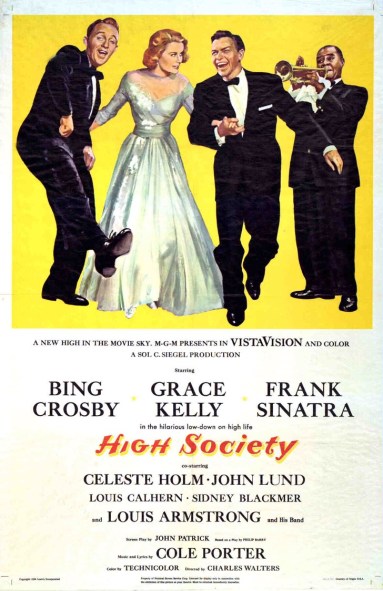
I interrupt my Youth-Led Film Double Feature to bring you my review for The Wedding Bells Blogathon! One day, as I was searching Turner Classic Movies’ (TCM’s) schedule, I came across a film called High Society. Through its description, I learned it was a musical remake of The Philadelphia Story. Since I have enjoyed that movie, I figured there was a good chance I might like this picture from 1956. In my review of Marriage on the Rocks, I mentioned I would be reviewing the movie later this month. I also said in that review that I did not like Marriage on the Rocks. High Society is now the second film of Frank Sinatra’s and Grace Kelly’s that I’ve seen! While I knew that Frank and Bing Crosby had musical talents, it would be interesting to see what Grace had to offer to a movie musical. Now, as you’re waiting for the wedding to start, please take a moment to read this review of High Society.

High Society poster
High Society poster created by Sol C. Siegel Productions, Bing Crosby Productions, and Metro-Goldwyn-Mayer. Image found at http://www.tcm.com/tcmdb/title/78008/High-Society/#.

Things I liked about the film:

The acting: It’s no secret that Grace Kelly is one of the most versatile actresses to ever exist! Her performance in High Society helps her maintain that reputation. Grace has the ability to adapt her emotions to any scene. When Grace’s character, Tracy, is talking with her father by the pool, she can go from angry to crying with sadness within a matter of minutes. Because of her experience working with various actors and actresses, Grace never had difficulty keeping up with her co-stars. Speaking of co-stars, I have seen Frank Sinatra and Bing Crosby in at least one film prior to watching High Society (Frank in Marriage on the Rocks and Bing in scenes from White Christmas). Similar to what I said in my Marriage on the Rocks review, both Frank and Bing appeared at ease in their respective roles. This allowed them to bring a natural charm to their characters, C. K. Dexter-Haven and Mike Connor. What also helped was how their singing talents complimented their acting talents. Even though he portrayed himself in the film, Louis Armstrong did a good job with the material he was given. He had a delightful on-screen personality and great musicality. These things made me enjoy Louis’s presence in the movie!


The sets: In High Society, the sets were absolutely gorgeous! Not only did they fit the environment the film’s creative team wanted to create, but these sets also looked magnificent on film! The great part about them are the textures, colors, and materials that were used in each space. In one of the Lord family’s sitting rooms, the sea green walls worked really well with the white wood paneling and crown molding. Another great set was Tracy’s uncle’s library. While the dark wood walls and bookshelves were beautifully crafted, it’s the hidden bar within the bookshelves that steals the show. The sets in High Society certainly made the movie visually appealing!


The musical numbers: For the most part, I enjoyed the musical numbers in High Society. They sounded pleasant and were, more often than not, lively. My favorite musical number is “Who Wants to Be a Millionaire?”, as it was one of the funniest scenes in the movie. In this number, Frank and Celeste Holm, the actress who portrayed Liz Imbrie, had really good on-screen chemistry and comedic timing. Frank and Celeste’s singing voices also sounded great together. I was pleasantly surprised by Grace’s singing abilities in the duet, “True Love”. She sounded excellent alongside Bing Crosby and the song itself sounded nice. I’m not sure how much singing experience Grace had prior to being cast in this movie. But it’s nice to see her trying different things and going out of her comfort zone.

Jewels sparkle in the golden wedding rings lying on the leather
Fancy jewelry image created by Freepic.diller at freepik.com. <a href=”https://www.freepik.com/free-photos-vectors/wedding”>Wedding photo created by freepic.diller – http://www.freepik.com</a>. Image found at freepik.com.

What I didn’t like about the film:

Unacknowledged commentary: In my Rich Kids review, I shared that one of the film’s messages was how wealth didn’t equal invincibility. This message can also be found in High Society, as Tracy shows Mike various houses in her neighborhood that are either boarded up or for sale due to homeowners no longer affording them. While this commentary added something interesting to the story, there was no room in the script for it to be explored or discussed. I understand there’s only so much you can do in an hour and fifty-one minutes. However, it was disappointing to see this commentary get ignored.


Few dance numbers: When I learned that High Society was a musical remake of The Philadelphia Story, I was excited for the song-and-dance fest that would take place. But, as I was watching the movie, I discovered it only contained two dance numbers. These numbers were a short solo performed by Frank and a short duet performed by Frank and Grace. Since White Christmas premiered two years prior, I’m surprised Bing wasn’t given at least a waltz with Grace, especially since that film featured both singing and dancing. Personally, I had expected more dance sequences in High Society. But I’m guessing there was no room in the budget to recruit a choreographer.


Dialogue-heavy scenes that felt a little drawn out: Within musicals, dialogue-heavy scenes are meant to give the audience a break from the high energy that can sometimes come from the musical numbers. However, in the case of High Society, these scenes felt a little drawn out. The scene where Mike and Liz meet the Lord family is one example. The pace of the scenes feel slower than I hoped. It also caused the film’s overall pace to seem uneven. Issues with pace and length of scenes are some reasons why I think this script was weaker than it could have been.

Wedding Bells Blogathon banner
The Wedding Bells Blogathon banner created by Annette from Hometowns to Hollywood. Image found at https://hometownstohollywood.com/2020/01/03/the-wedding-bells-blogathon/.

My overall impression:

High Society is a fine, enjoyable film! While it’s not one of my favorite musicals, I certainly liked it for what it was. It was also far more entertaining than Marriage on the Rocks! Because High Society is a remake of The Philadelphia Story, there are bound to be similarities between the two. However, there are also differences that give each movie their own identity. For the 1956 picture, this was the incorporation of the message that even wealthy people can experience hardship. Combined with the song, “Who Wants to Be a Millionaire?”, the film tells its audience to count their blessings and to focus less on what they don’t have. This shows that the film’s creative team not only wanted to bring something new to the story, but also respect the source material that came before it. As I end this review, I’d like to quote Louis Armstrong by saying “end of story”.


Overall score: 7.2 out of 10


Which movie musical is your favorite? Are there any you’d like me to review? Let me know in the comment section!


Have fun at the movies!

Sally Silverscreen

Take 3: Rich Kids Review (Youth-Led Film Double Feature Part 1)

Welcome to the first part of my Youth-Led Film Double Feature! This review will contain spoilers and here is the link to the double feature’s introduction:

Introducing My Youth-Led Film Double Feature!

Rich Kids poster
Rich Kids poster created by Lion’s Gate Films and United Artists. Image found at en.wikipedia.org/wiki/File:Rich_Kids_(film).jpg

1. In your double feature’s introduction, you mentioned the fact both Rich Kids and Over the Edge were released in 1979. Is there anything from this time period that could have influenced these films?

The film, Rich Kids, explores how wealth does not make an individual or a family invincible, as well as how money does not solve every problem. These morals can also be found within the Getty kidnapping case, which was showcased in the movie, All the Money in the World. Wealth could not prevent John Paul Getty III’s parents from divorcing or experiencing personal conflicts. Money doesn’t take away the trauma John Paul Getty III likely dealt with as a result of the kidnapping incident. Because this situation took place on July 10th, 1973, six years before the premiere of Rich Kids, I would guess the creative team behind Rich Kids absorbed these messages, contemplated on their importance, and wove a fictional, dramatic story around them.


2. In this introduction, you also mentioned how you originally thought Rich Kids “was a documentary style film about a group of rich kids growing up over a period of time”. Despite being different than what you expected, were you able to find some enjoyment in this film?

Rich Kids is a character-driven character study. When a film’s creative team decides to adopt this kind of story-telling, it’s important they create a cast of characters that the audience wants to spend their time with. Because these characters were well acted and written, it encouraged me to stay invested in their stories and journeys. In my opinion, I think it’s better that Rich Kids wasn’t the story I was expecting. Since this group of characters was smaller, it allowed the audience to not only become familiar with them, but to also truly know them. Had this film been about a group of children over the course of several years, it might have felt like they were competing against each other for attention.


3. Do the socio-economics of each film’s world affect the characters or the story?

While there was wealth being flaunted within this film, it didn’t happen as often as I thought it would. Rich Kids’ creative team places the wealth in the story to simply show it exists. But their primary focus is to present their characters as human, flawed, and inexperienced in life. When Franny visits Jamie at his father’s apartment for the first time, she is entranced by the magnificence of its existence. Even though she questions the cost of everything within that environment, her initial reaction is representative of how most people would react when entering a fantastical looking space. In reality, the characters influence the wealth, not the other way around.


4. Do you agree or disagree with Siskel and/or Ebert’s views on these films? Why?

In their review of Rich Kids, both Siskel and Ebert agree that the overall film should have kept its focus on the children. I second these opinions, as I found Franny and Jamie’s story to be more interesting than those of the adults. Because the divorce of Franny’s parents was inevitable and because Jamie’s parents were already divorced, there was no sense of intrigue from that part of the script. However, I do disagree with Siskel and Ebert on their views of the adults in this film. I wouldn’t go so far as to call them “boobs” (Gene’s words, not mine), but I would say they are uninvolved in the lives of their children. They are so caught up in their own problems and stress, that they easily and quickly lose sight of what is really important.


5. When it comes to both films, Siskel and Ebert agreed on their views of the adult characters in each story. Did these characters have any significance within their respective movie?

As I said in answer number four, these adults were so caught up in their own issues, that they lost focus on their most important priorities. This part of the story highlighted the importance of young people having a parent, guardian, or mentor that maintains a healthy amount of involvement in their lives. Because these adults weren’t involved in the lives of their children, both Franny and Jamie lacked the guidance that they desperately needed. They ended up finding guidance and life lessons elsewhere.

101994-OM0XMB-226
Money image created by Freepik at freepik.com. <a href=’https://www.freepik.com/free-vector/bills-and-coins-in-isometric-design_1065328.htm’>Designed by Freepik</a>. <a href=”https://www.freepik.com/free-photos-vectors/business”>Business vector created by Freepik</a>. Image found at freepik.com.

6. Besides having young actors as the leads, do these films share any similarities?

I haven’t seen Over the Edge yet, but based on Siskel and Ebert’s review of that movie, I can confidently say that one similarity between these films is the frustration the young protagonists feel about not being heard or understood by the adults. In one conversation, Franny tells Jamie how they have few rights because of their young ages. This statement makes them feel powerless and limited in their abilities and resources. Both Franny and Jamie are twelve years old, an age when most adolescents want to be seen less as children and hope to achieve a little more independence. Through their behavior and choices, these aspects of growing up are incorporated in Franny and Jamie’s story, as they are trying to form their own identities.


7. Did you develop any thoughts and/or questions while watching this film?

I don’t have any questions, but I did come up with two thoughts while watching Rich Kids. The first is how I loved the set design of Jamie’s dad’s apartment! From the tropical inspired oasis which is the first room characters encounter to the eccentric and eye-catching media room, these sets were both imaginative and impressively caught on film. My second thought revolves around the psychological well-being of the children. During one conversation, Franny confesses to Jamie that she named her dog after an imaginary world she created in her mind. The more she visits Jamie at his dad’s apartment, the more she uses that space to materialize her imaginary world. Later in the film, Franny shares with Jamie that prior to the start of their friendship, she lost her sister due to medical issues. I wish this script would have left some room to talk about how divorce and even a death in the family can affect a child’s psychological state, especially since Jamie’s stepdad was a psychologist. But I guess there’s only so much you can do in an hour and thirty-six minutes.


8. Is there anything about this movie that you liked or didn’t like?

Like I said in answer number two, I thought the characters were well acted and written. Because of these components, it felt like the audience took a glimpse into the lives of real-life people. This script also gave these characters a chance to come across as relatable. As Ebert said in the Rich Kids review, the conversations of the children “have a ring of truth to them”. I feel this way not just with Franny and Jamie’s conversations, but with every person in this project. The characters and their journeys were one of the strongest parts of this film!


As for what I didn’t like about this movie, I was not a fan of how Franny’s parents didn’t explore other options before deciding to get a divorce. At one moment in the film, Franny’s father’s lawyer suggests that Franny’s parents attend marriage counseling. They don’t even bother thinking that idea over and choose to treat divorce as the “end all, be all” of their problems. Like I’ve said on more than one occasion, I feel that ending a romantic relationship is a decision that shouldn’t be chosen lightly, especially if children or those who are dependent on the couple are involved. While this story is about how children deal with divorce, I think Franny’s parents should have discussed other options first.


9. Is there any aspect of either film that could be seen as relevant today?

An overarching theme that I noticed in this movie was the idea of knowing you’re not alone when dealing with a serious issue. Throughout their relationship, Jamie helps Franny deal with her parents’ inevitable divorce. Because his parents divorced prior to the start of their friendship, Jamie is able to use his experiences to show Franny that she is not the only one who has traveled down that road. They both become a shoulder to lean on and a listening ear for each other. This idea is definitely just as relevant in 2020 as it was in 1979.


10. After watching Rich Kids, is there anything you can take away from your movie viewing experience?

The biggest takeaway for me is how everyone experiences hardship, no matter who you are or what your economic status is. But as Rafiki from 1994’s The Lion King said, “you can either run from it, or learn from it”. In Rich Kids, Franny and Jamie try to handle their problems the best they realistically can. They do this by relying on one another and providing insight when necessary. Because of this, they are able to temporarily escape their issues and build a lasting friendship.

exploding heart 0912
Breaking heart image created by Kjpargeter at freepik.com. <a href=’https://www.freepik.com/free-vector/broken-heart-valentine-background_1041991.htm’>Designed by Freepik</a>. <a href=”https://www.freepik.com/free-photos-vectors/background”>Background vector created by Kjpargeter – Freepik.com</a>. Image found at freepik.com.

Have fun at the movies!

Sally Silverscreen

Introducing My Youth-Led Film Double Feature!

In my post called ‘Goodbye 2019, Hello 2020!’, I shared that every time I publish 100 posts, I coordinate a double feature in honor of the accomplishment. Because I published 300 posts at the end of last year, I scheduled the double feature for January. In my aforementioned post, I also mentioned the reason why this series of reviews and articles were focusing on youth-led films. This is because January’s theme for MovieRob’s Genre Grandeur is “Youth-Led Movies”. Since I’ll be participating in that blogathon, I figured it would a good idea to use my achievement to highlight my involvement.

V211-social media
Youth wearing 3D glasses image created by rawpixel.com at freepik.com. <a href=”https://www.freepik.com/free-photos-vectors/background”>Background vector created by rawpixel.com – http://www.freepik.com</a>. Image found at freepik.com.

While creating my first blogathon, “Siskel and Ebert at the Blogathon”, I came across a video on Youtube of one of their episodes of “Sneak Previews”. While watching that video, I became fascinated by how two youth-led films, Rich Kids and Over the Edge, were not only released in the same year, but also around the same time (according to the Siskel and Ebert video). Not knowing whether or not this scheduling choice was intentional, I chose these two films for my next double feature! While I had never heard of Over the Edge before, I was aware of  Rich Kids‘ existence. When I watched Siskel and Ebert’s discussion of this film, I was surprised to discover that it was about a completely different story from what I expected. Before choosing to watch this film, I thought the movie was a documentary style film about a group of rich kids growing up over a period of time.

For these reviews, I’ll be answering a series of ten questions related to the movies I watched. However, the three questions that will receive primary focus are the following:


Is there any aspect of either film that could be seen as relevant today?


Besides having young actors as the leads, do these films share any similarities?


Do the socio-economics of each film’s world affect the characters or the story?


Before I end this introduction, I’d like to say that there will be no pre-movie thoughts and/or questions for this double feature.

06
Kite in the sky background created by Freepik at freepik.com. <a href=”https://www.freepik.com/free-photos-vectors/pattern”>Pattern vector created by freepik – http://www.freepik.com</a>. Image found at freepik.com.

Have fun at the movies!

Sally Silverscreen


If you want to watch the video I referenced in this introduction, type ‘WTTW Channel 11 – Sneak Previews – “Real Life, Rich Kids, & More” (Complete Broadcast, 9/20/1979)’ into Youtube’s search bar. Siskel and Ebert’s discussion on Rich Kids starts at 1:41 and ends at 7:01. Their discussion on Over the Edge starts at 21:48 and ends at 24:49. If you are planning on watching this video, I just want to let you know there are sensitive topics that do get brought up at some points of the episode.

Take 3: In Name Only Review

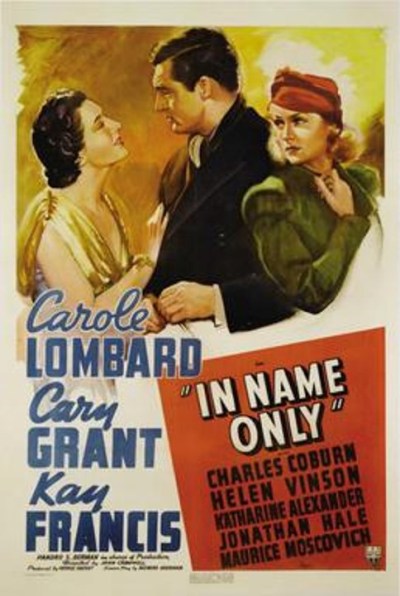
One of the reasons why I love participating in blogathons is because it gives me the opportunity to watch films I might have never seen otherwise. In Name Only is a fantastic example! Before signing up for The Carole Lombard Memorial Blogathon, I had no idea that this film existed. After searching Carole’s filmography on IMDB and discovering the ability to rent the movie, I felt that In Name Only was a good choice for this review. Even though I had heard of Carole Lombard before, I had never seen any of her films. My participation in this particular blogathon gave me the opportunity to finally check out her acting work! Another surprise I discovered was that the film is based on a book! The source material for the project is Memory of Love by Bessie Breuer. Similar to my discovery of the film, I was not aware of this book’s existence before I watched the movie. Maybe in the future, I’ll check this story out! But, for now, let’s check out this review of In Name Only!

In Name Only poster
In Name Only poster created by RKO Radio Pictures. Image found at en.wikipedia.org/wiki/File:In_Name_Only.jpg

Things I liked about the film:

The acting: Like I said in the introduction, this is the first film from Carole’s filmography I’ve ever seen. Despite this, I was impressed with her performance in this film! Her portrayal of Julie Eden showcased an on-screen personality that appeared down-to-earth. Whenever her character was frustrated by the divorce process, her performance became heart-breaking. Carole’s sad demeanor created the opportunity for audience members to sympathize with Julie. Prior to watching In Name Only, the only film from Cary Grant’s filmography I’d seen was The Philadelphia Story. Because that movie was a romantic-comedy, it gave me the chance to see Cary take on a more dramatic role in this picture. Throughout the story, Cary’s character, Alec Walker, embodied the serious and charming nature of a gentlemen. For more sad and heart-breaking moments, his performance was very captivating to watch. A great example is when Alec is staying at the hospital. Since his health is deteriorating, his mental health is also affected. This is portrayed very well by Cary, as he adopts a distant stare and disjointed speech pattern that reflect his character’s state.


The on-screen chemistry: I enjoyed watching the on-screen performances of Carole Lombard and Cary Grant! One reason is their on-screen chemistry. Every time they appeared in a scene together, there was always a sense of genuine sweetness between them. This allowed their characters to appear like they truly loved one another. It also makes viewers want to see this on-screen couple resolve their issues. For me, the quality of Carole and Cary’s on-screen chemistry helped me stay invested in their characters and their relationship!


How the topic of divorce was handled: In my review of Marriage on the Rocks, I talked about how the movie’s view on divorce made me feel uncomfortable. This was because of the one-sided perspective the movie presented. When it comes to In Name Only, the topic of divorce was handled with maturity and reverence to all the parties involved in the film’s story. While there was an antagonist, this creative choice was meant to show the audience that divorce can sometimes become messy and complicated. Unlike Marriage on the Rocks, In Name Only treats divorce as a realistic yet difficult situation. I’ve never read the book this movie is based on. However, I’m hoping the book handled the subject of divorce as well as the film did.

20191230_135329[1]
When I saw this postcard, I knew it had to make an appearance in this review! Screenshot taken by me, Sally Silverscreen.
What I didn’t like about the film:

A drawn-out conflict: I understand the divorce process can be very time-consuming. But within the context of the film’s story, this conflict was drawn-out for the majority of the run-time. It got to the point where I could see audience members becoming just as frustrated as the protagonists were. Now, I’m not sure if this shared frustration was intentional on the screenwriter’s or author’s part. However, I do know that because of this creative choice, it didn’t leave a lot of room for a pay-off.


Under-utilized characters: As I was watching this film, I came across some under-utilized characters. Maida’s friend, Suzanne, is just one example. The actress who portrayed this character, Helen Vinson, did a really good job with the role she was given. But her character wasn’t able to do much in the story. This caused Helen to have very little material to work with.


Run-time that was a little too long: IMDB says that In Name Only is an hour and thirty-four minutes. However, I feel some minutes could have been shaved off. Had this movie’s run-time been an hour and fifteen or twenty minutes, certain events in the movie could have happened sooner. It also could have gotten rid of scenes that felt like time-wasters. One of these scenes, to give you an example, was when Maida was talking to her in-laws during a car-ride.

Carole Lombard Blogathon banner
The Carole Lombard Memorial Blogathon banner created by Crystal from In The Good Old Days Of Classic Hollywood and Vincent from Carole & Co. Image found at https://crystalkalyana.wordpress.com/2019/09/25/announcing-the-carole-lombard-memorial-blogathon/

My overall impression:

Even though In Name Only is the first film of Carole Lombard’s I have seen, it is a film that I did like! There are aspects of the movie that could have made the overall project stronger. However, its merits overshadow them. The biggest highlight is how the story handles the subject of divorce. Throughout the story, I could sense the creative team knew exactly what they were doing. The screenwriting provided a sense of realism to the narrative, giving the characters thoughts and feelings that might emerge from a situation like this. The divorce itself was also taken very seriously. If you’re interested in watching a film about this topic, please pick In Name Only over something like Marriage on the Rocks. As I’ve said before, I feel that starting or ending a romantic relationship is not something that should be taken lightly. In Name Only not only recognizes that, but highlights that through the interactions of the characters.


Overall score: 7.4 out of 10


Have you ever seen Carole Lombard’s movies? If so, which one is your favorite? Share your thoughts in the comment section!


Have fun at the movies!

Sally Silverscreen

Take 3: Marriage on the Rocks Review

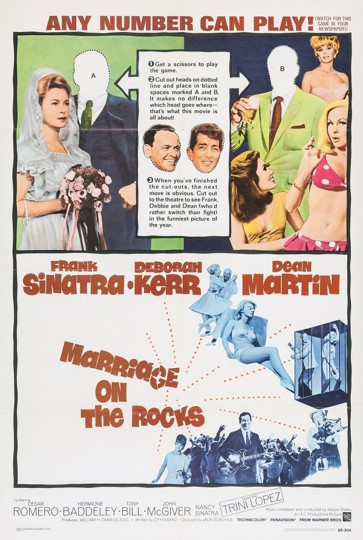
When Maddy, from Maddy Loves Her Classic Films, announced her 2nd Deborah Kerr Blogathon, I was eager to participate! I had reviewed Edward, My Son last February, so I was familiar with who Deborah is as an actress. Originally, I was going to review Black Narcissus. But due to technical difficulties with my DVR, I chose to write about Marriage on the Rocks instead. The idea of a struggling couple working through their problems in Mexico sounded like an interesting concept for a comedy. I was curious to see what effect this particular location would have on the aforementioned couple and how they would be transformed along the way. Also, I haven’t reviewed a comedy in a little while, so I thought it would be a good idea to expand the cinematic horizons of 18 Cinema Lane. Since this is my first blogathon in 2020, let the review for Marriage on the Rocks begin!

Marriage on the Rocks poster
Marriage on the Rocks poster created by A-C Productions, Sinatra Enterprises, and Warner Bros. Image found at http://www.tcm.com/tcmdb/title/24787/Marriage-on-the-Rocks/#.

Things I liked about the film:

The acting: This is the second acting performance of Deborah Kerr’s I have seen (the first was from the movie, Edward, My Son). What I’ve noticed about both performances is how much effort she puts into her roles. Even if the movie itself doesn’t hold up, Deborah still puts every piece of acting talent she has into each of her characters. In her role as Valerie Edwards, she was very expressive with her facial expressions and actions. This added to the memorability of her performance! Marriage on the Rocks is the first movie of Frank Sinatra’s I’ve ever seen. While I am familiar with Frank as a singer, I had never seen any of his acting performances before. The most notable aspect of Frank’s portrayal of Dan Edwards was how at ease he was in this role. His performing experiences related to stage presentations and programs like The Ed Sullivan Show, as well as prior movie experience, seemed to work in his favor when it came to his performance in Marriage on the Rocks! The aforementioned film is also the first time I have seen Caesar Romero act in a movie. I liked his performance because of how lively and energetic it was. It was also consistent throughout the movie, just like the performances from the rest of the cast!


Ernie Brewer’s house: The house of Ernie Brewer, portrayed by Dean Martin, was featured in the film on several occasions. Despite the living room being the only shown part of the house, I really liked the architecture within this space! When characters enter the house, they and viewers are greeted by walls and columns of exposed stone. As characters walk into the living room, they will come face-to-face with the room’s most prominent feature: the fire pit in the center of the room. Another fantastic element of this space is the wrap-around deck. While the deck itself is featured in only one scene, it serves the purpose of giving characters and viewers a perfect view of the ocean. Whether this location is a real-life home or a pre-constructed set, it definitely could make almost anyone want those elements as part of their own living space!


The opening credits: Sometimes, creative teams will come up with interesting ways to present their film’s opening credits. Marriage on the Rocks is a perfect example of this. Throughout this segment of the movie, stick figure cartoons can be seen next to people’s names and roles within the project. These stick figures were not only given to the cast, but also to the crew. When the director was introduced in the credits, he was given his own stick figure, which presented him sitting in a director’s chair. I found this to be a cute and creative way to grab the audience’s attention before the official start of the film!

2nd Deborah Kerr Blogathon banner
The 2nd Deborah Kerr Blogathon banner created by Maddy from Maddy Loves Her Classic Films. Image found at https://maddylovesherclassicfilms.wordpress.com/2019/10/08/announcing-the-2nd-deborah-kerr-blogathon/.

What I didn’t like about the film:

Comedy that was barely funny: On IMDB, Marriage on the Rocks is classified as a comedy. However, as I was watching this film, I found myself laughing only four times. Like I’ve said before, comedy is subjective. But, for me, I don’t find dysfunctionality to be hilarious. Also, the jokes themselves go on for too long. It feels like the screenwriter was having difficulty finding the punchline. There are also no breaks from the comedy, which made these jokes seem like run-on sentences. Personally, I found this aspect of the film to be an unenjoyable part to my movie-viewing experience.


The movie’s view on marriage and divorce: I watch movies to be entertained. While I appreciate a good message/lesson within a cinematic story, that’s not what compels me to watch any particular film. In Marriage on the Rocks, however, the overarching view on marriage and divorce made me feel uncomfortable. I personally feel that starting or ending a romantic relationship should not be taken lightly. This movie would say otherwise, portraying these two aforementioned concepts like they are effortless. Even the way most of the characters talk about marriage and divorce is concerning. One example is how David Edwards sees divorce as a way to manipulate his parents into giving him anything he wants. There were a few characters in this movie whose views were different from the overarching ones the film itself adopts. But, for most of the film, these characters are looked down upon. All the things I talked about made the views of the movie seem one-sided and skewed.


Problems that almost never get resolved: While watching Marriage on the Rocks, I could tell the screenwriter was trying to adopt a “comedy of errors” kind of story. But if any screenwriter is going to write a script with this kind of comedy, they need to remember that the errors have to reach a resolution. In this film, the majority of these errors don’t achieve a satisfying solution. In the rare case when one does, other problems arise because of it. The Hallmark movie, Holiday Date, is a great example of how this type of story can be executed well. In the 2019 release, the male and female protagonist experience a series of mishaps while visiting her family for Christmas. Despite this, they always found a solution that made everyone happy. Unfortunately, this never happens in Marriage on the Rocks. If anything, it made the characters’ situations even more complicated.


A drawn-out story: According to IMDB, Marriage on the Rocks is an hour and forty-nine minutes. To me, though, it felt like the movie was three hours. The problem here is how drawn-out the story is. This script takes a simple sounding concept and makes a bigger deal out of it than necessary. The narrative of this film could have been either a mini-series or a short film. This would have allowed the necessary plot points to be reached sooner and the script to be tighter. When I look back on it, there were things that happened in this movie just to satisfy the film’s run-time. The ongoing “second honeymoon” joke is a good example of what I’m talking about.

66
Colorful travel suitcase image created by Pikisuperstar at freepik.com. <a href=’https://www.freepik.com/free-vector/beautiful-illustration-of-travel_2686674.htm’>Designed by Freepik</a>. <a href=”https://www.freepik.com/free-photos-vectors/watercolor”>Watercolor vector created by Pikisuperstar – Freepik.com</a>. Image found at freepik.com.

My overall impression:

When I chose to review Marriage on the Rocks, I thought this would be a comedic version of Expecting a Miracle. While I haven’t seen the 2009 released Hallmark film, I’m aware of what the story is about. Unfortunately, Marriage on the Rocks was not even close to what I expected. Yes, there were things about it that I liked. Ernie Brewer’s house is just one example. But, for me, this movie contained more negatives than positives. As I said in my review, the movie’s view on marriage and divorce is one of the biggest missteps this project took. I didn’t find it to be funny or entertaining, just one-sided and out of touch. Later this month, I’ll be reviewing another Frank Sinatra picture called High Society. Hopefully that one will be more enjoyable than Marriage on the Rocks was. Despite the fact it’s only the beginning of the year, I think I found a contender for worst film of 2020.


Overall score: 4.7 out of 10


Have you seen Marriage on the Rocks? Do you have a favorite film from Deborah Kerr’s filmography? Let me know in the comment section!


Have fun at the movies!

Sally Silverscreen