Take 3: The Sundowners (1960) Review

Here at 18 Cinema Lane, I try to go out of my way to watch, and review, as many film recommendations as possible. In fact, I have a board on Pinterest dedicated to these recommendations. Two years ago, when I reviewed Marriage on the Rocks, Maddy, from Maddy Loves Her Classic Films, suggested I check out the 1960 picture, The Sundowners. Shortly after Debbie, from Moon in Gemini, invited me to her Foreign Western Blogathon, I finally found an opportunity to write about the movie! The Sundowners fits two of the four blogathon categories: ‘directed by foreign directors’ and ‘shot in a foreign country’. According to IMDB, the film’s director, Fred Zinnemann, is from Austria-Hungary. The movie was also filmed in Australia, where the story takes place. Foreign westerns are not a new concept on 18 Cinema Lane. Neither are Australian films. Within the four years of my movie blogging journey, I reviewed Another Man, Another Chance, Interrupted Melody, and Hallmark Hall of Fame’s Durango. If you’re interested, I’ll provide the links to these reviews toward the beginning of this article.

Take 3: Another Man, Another Chance Review

Take 3: Interrupted Melody Review

Take 3: Hallmark Hall of Fame’s Durango Review

The Sundowners (1960) poster created by Warner Bros.

Things I liked about the film:

The cinematography: Like I said in the introduction, The Sundowners was filmed in Australia. The movie’s creative team took advantage of the country’s natural surroundings through cinematography! One long shot showcased Australia’s farmlands. What made this shot beautiful were the rays of sunlight showering over the green landscape, offering a light only nature could provide. The cinematography also did a good job putting things into perspective. During a forest fire, Ida is driving her family’s wagon away from the forest. While this maneuver is taking place, the camera is situated inside the back of the wagon. It looks out toward the road, giving the audience the illusion they are riding in the wagon with Ida.

Higher stakes: When I reviewed Hallmark Hall of Fame’s Durango last year, I talked about low stakes being one of the film’s biggest flaws. In The Sundowners, higher stakes were featured in a few scenes! A notable example is the forest fire I previously mentioned. While the Carmody family is herding sheep, a nearby forest fire breaks out. This leads all the characters to be in danger. The scene chronicled the entire process of the fire, starting from the detection of smoke and ending in the fire’s aftermath. Cut-away shots of scared wildlife are spliced into the story, emphasizing the other lives in harm’s way. Dramatic music can be heard in the background, elevating the sense of urgency. With all these elements combined, this scene was the perfect example of the higher stakes I expect from a western film!

The historical accuracy: With any “period film”, the historical accuracy can make or break that production. In the case of The Sundowners, the story takes place in the 1920s. From the looks of it, the 1960 project appears historical accurate! The forms of transportation are one indicator. While the Carmody family is working on the sheep farm, the employees sometimes rode in antique trucks with open beds. At least one motorcycle is featured in the story, revealing exposed gears and a model very different from the motorcycles of today. A covered wagon is the preferred vehicle of the Carmody family, with Paddy and Sean riding horses on a few occasions. This aspect of the film’s historical accuracy reminded me of a production like The Grapes of Wrath.

The Foreign Western Blogathon banner created by Debbie from Moon in Gemini

What I didn’t like about the film:

A “slice of life” story: Westerns, like any genre, contain a wide range of narratives. If given the choice, I’d rather watch a western with, at least, one conflict instead of a story that’s more “slice of life”. Unfortunately, the majority of The Sundowners is a “slice of life” story. The script primarily focuses on the daily operations of sheep farming. At first, this topic was interesting. But as the film carried on, the elements of sheep farming became repetitive. Had this movie contained one or two major conflicts, I might have found this story more intriguing.

Lack of Irish accents: According to Wikipedia, the Carmody family is Irish, a fact Sean tells Rupert early in the film. Michael Anderson Jr., Robert Mitchum, and Deborah Kerr must have missed that detail in the script, as none of them could successfully carry an Irish accent. Throughout The Sundowners, Deborah sounded like she was speaking in a British accent. Meanwhile, Robert and Michael sounded Australian. I don’t think Robert, Deborah, and Michael are bad actors. In fact, pulling off any accent can be a difficult skill to master. However, their lack of Irish accents was, for me, jarring.

The run-time: The Sundowners contains a straight-forward story about a family searching for employment in order to afford a place of their own. With that said, I found it unnecessary for the film’s run-time to be two hours and thirteen minutes. Some scenes felt drawn out in an attempt to satisfy this run-time, the shearing contest Paddy enters being one example. That scene lasts about five minutes, even though it could have only featured the most exciting parts of the contest. If scenes like that one had been cut shorter, the movie could have had a run-time of about an hour and thirty minutes.

A “bait and switch” ending: In my review of 1961’s The Pit and the Pendulum, I incorporated spoilers to explain my thoughts on a specific portion of the movie. Similarly, I will be including spoilers in this part of my review. If you haven’t seen The Sundowners, please skip this part and continue reading where it states “My overall impression”.

As I stated earlier in this review, The Sundowners contains a straight-forward story. I also stated how the movie is two hours and thirteen minutes. Within that run-time, the Carmody family receives the funds to afford a farm that was featured toward the beginning of the film. All seems to be going well until the last ten minutes in the story. While in a drunken state, Paddy makes several I-O-Us, losing the family’s finances in the process. In an attempt to earn back some of those funds, the family enters their race-horse, Sundowner, in an upcoming horse race. Not only does Sundowner and Sean win the race, Paddy also wins a bet. Even though they have enough money to make a down payment on the aforementioned farm, Ida changes her mind, saying Paddy can keep the race horse instead. This statement contradicts Ida’s goal throughout the movie; getting a place to put down roots. Moments later, an announcement declares Sundowner is disqualified from the race due to a pass interference. This means the Carmody family lost all the money they just won. The movie ends exactly how it begins; with the family on the road looking for employment and a place to stay. If I had known the story would end this way, I wouldn’t have become invested in the Carmody family’s ordeal.

Horse with saddle photo created by Topntp26 at freepik.com. <a href=’https://www.freepik.com/free-photo/stallion-black-equine-race-sky_1104246.htm’>Designed by Freepik</a>. <a href=”https://www.freepik.com/free-photos-vectors/background”>Background image created by Topntp26 – Freepik.com</a>. Image found at freepik.com.

My overall impression:

When it comes to film-making, one of the worst things you can do is waste the audience’s time. The way I feel about The Sundowners is similar to how I felt about The Birds; like I truly wasted two hours and thirteen minutes. I understand circumstances in western films aren’t always fair. Heck, life itself is sometimes unfair. But what is also not fair is giving your characters and audience hope for two hours, then taking that hope away in the film’s last ten minutes. With the way The Sundowners turned out for me, it almost seemed like history repeated itself. As I mentioned in this review, I wrote about Hallmark Hall of Fame’s Durango last year. That 1999 presentation was a foreign western I didn’t like. Both Durango and The Sundowners have one thing in common. Even though there were things about each film I liked, they contained a weak script. A script is the foundation of any cinematic production. If it isn’t strong, there’s only so much you can do to remedy the issue. Before I end this review, I want to make it clear that I have nothing against foreign westerns or Australian cinema. I’m confident there are stellar Australian and foreign western pictures I haven’t seen yet. Unfortunately, The Sundowners isn’t one of them.

Overall score: 4.7 out of 10

Have you watched any foreign westerns? If so, which ones would you recommend? Let me know in the comment section!

Have fun at the movies!

Sally Silverscreen

Take 3: The Pit and the Pendulum (1961) Review

For The Corman-Verse Blogathon, I was originally going to review the 1996 film Kyoko/Because of You. The only way I could watch the movie is if I purchased a DVD copy. Unfortunately, the copy I bought would not arrive in time for the blogathon. Even though I do plan to review Kyoko/Because of You in the near future, I needed to select a back-up film to write about for the event. While scrolling through Roger Corman’s filmography, I discovered he directed the 1961 adaptation, The Pit and the Pendulum. Since no other participant had selected the film, I chose to review this movie instead. Vincent Price is no stranger to 18 Cinema Lane. As of the publication of this review, The Pit and the Pendulum is the ninth movie of Vincent’s I’ve seen. The majority of his films have been enjoyable to varying degrees. So, where does the 1961 title lie? You won’t know that answer unless you read this review!

The Pit and the Pendulum (1961) poster created by Alta Vista Productions and
American International Pictures

Things I liked about the film:

The acting: As I said in the introduction, The Pit and the Pendulum is the ninth movie of Vincent’s I’ve seen. Among most of these films, Vincent’s acting talents have been on full display, allowing the audience to witness just how versatile of an actor he is. In the 1961 adaptation, Vincent portrays Nicholas Medina. Throughout the story, Nicholas is overcome not only by the loss of his wife, but also by trauma he experienced as a child. When Francis Barnard, the film’s protagonist, questions the cause of his sister’s death, Nicholas’ eyes appear both concerned and wounded. This is because he wants to protect Francis from the truth and himself from the grief. During Francis’ stay in the Medina Castle, Nicholas shows Francis Elizabeth’s (his wife and Francis’ sister) room. While reminiscing over his time with Elizabeth, Nicholas is suddenly overcome with sorrow. With a quivering lip and tear-filled eyes, he bursts out crying, longing for his dearly beloved.

 Like I previously mentioned, Francis Barnard is the film’s protagonist. Portrayed by John Kerr, this character was a good representative of the audience. What I mean by this is he and the audience were in the same boat, figuring things out as they go along. That element of the story gave viewers an opportunity to connect with the character. What also worked in John’s favor is how consistent his performance was. Throughout The Pit and the Pendulum, Francis was suspicious of the Medina Castle and the people who lived there. His face was set in a serious expression; mouth displaying a tight, straight line and eyes in a scowling manner.

Nicholas’ sister, Catherine, is one of the people Francis meets. Catherine, portrayed by Luana Anders, reminded me of Snow White from the 1937 animated classic, Snow White and the Seven Dwarfs. This is because she showcased a gentle concern toward the characters around her. But unlike the cartoon princess, Catherine contributed more to the story, instead of being a more passive participant. When she and her brother are first confronted by Francis about Elizabeth’s death, Catherine shows worry on her face. However, the reason for her facial expression was different from Nicholas’, as she wonders how she will reveal the truth to Francis. Later in the film, Catherine explains Nicholas’ past trauma to Francis, in an effort to show him her brother is being honest. This time, her expressions show more understanding, appearing calmer and sure of herself.

The set design: The Pit and the Pendulum takes place inside the Medina Castle, during the year 1547. While I’m not a historian when it comes to this particular era, I will say the set design appeared historically accurate! Each room of the castle was spacious, presented in long to medium shots to showcase their size and scope. Though the walls were a mix of white and caramel marble, they were covered with exquisite artwork. In Francis’ room, there was a wall-sized piece of tapestry. Elizabeth’s room boasted her portrait, which captured her in blue and purple hues. The rooms in Medina Castle also included elaborate pieces of furniture. A gold canopy bed in Elizabeth’s room displayed small, detailed carvings on the footboard.

The mystery: When I talked about John Kerr’s performance, I said his character, Francis, was in the same boat as the audience. That’s because this is the type of mystery story where the audience figures things out alongside the protagonist. Out of the mystery movies I’ve seen in my life, I find these types of stories to be some of the more engaging ones in the genre. They give viewers the illusion they are experiencing a journey with the main character. The mystery in The Pit and the Pendulum started right away and was carried until the movie’s end. As the story moved forward, the reveal of certain secrets was evenly paced throughout the script. This allowed the film’s momentum to remain consistent and keep the story intriguing!

The flash-back scenes: In a few moments of the movie, flash-back scenes were used to explain things that happened in Nicholas’ past. One example is when Nicholas himself is telling Francis how Elizabeth passed away. Those flash-back scenes were narrated by Vincent Price and were coated in a single-color hue. For instance, in the days of Nicholas and Elizabeth’s happier times, the scenes were displayed in either green or blue. The way the flash-backs were presented made them feel distinct from the “current” events. They also brought Nicholas past to life.

The Corman-Verse Blogathon banner created by Gill from Realweegiemidget Reviews and Barry from Cinematic Catharsis

What I didn’t like about the film:

The prolonged appearance of The Pit and The Pendulum: I’ve gone on record to say a movie’s title, sometimes, serves as a promise to the audience. There is a pit and pendulum in this film. But they appeared in the movie’s last eleven minutes. It’s been years since I’ve read anything by Edgar Allan Poe, so I’m not sure which parts of the story are straight from the source material. However, I kind of wish the pit and pendulum would have appeared in the movie sooner.

A somewhat confusing climax: For this part of the review, I will be bringing up spoilers. While I typically try to leave spoilers out of my reviews, I feel I can’t fully explain my points without including them. If you haven’t seen 1961’s The Pit and the Pendulum, please skip this part and continue reading where it states “The underutilization of Maximillian”.

In The Pit and the Pendulum, Francis, and the audience, learn Elizabeth died of shock. But throughout the film, Nicholas is convinced he killed his wife. To prove Nicholas didn’t kill Elizabeth, Francis and Doctor Leon open Elizabeth’s grave, revealing a skeleton. But toward the end of the movie, Nicholas discovers Elizabeth had been alive that whole time. Even though he is overcome by shock, Nicholas pulls out of it, believing he is his father, Sebastian. Looking back on the film, I wonder if Nicholas assumed his father’s identity because the grief and trauma made him take a psychological turn for the worse? Or did Nicholas know about Elizabeth and Leon’s affair that entire time, using the “shock” as the perfect opportunity for revenge? Also, where did Leon and Elizabeth find a skeleton for their plan?

The underutilization of Maximillian: In a handful of moments, a servant named Maximillian appeared in the movie. At one point, I honestly thought he would play a bigger role in the mystery. Unfortunately, Maximillian was underutilized throughout the story. It felt like this character was included in the movie just for the sake of it.

Castle photo created by Photoangel at freepik.com. <a href=’https://www.freepik.com/free-photo/old-castle-in-the-mountians_1286237.htm’>Designed by Freepik</a>. <a href=”https://www.freepik.com/free-photos-vectors/tree”>Tree image created by Photoangel – Freepik.com</a>. Image found at freepik.com.

My overall impression:

When it comes to movie blogging, things don’t always go according to plan. That was the case when I chose to review The Pit and the Pendulum. Looking back on the film, I realize this change of plans ended up being a good thing. For starters, I had the opportunity to review one of Vincent’s films on his birthday, which happens to be today. The film in question was also a pleasant surprise because of how good it was! The Pit and the Pendulum is an engaging and intriguing mystery from start to finish. This is one of the more effective horror movies, similar to titles like 1962’s Cape Fear. Vincent Price is one of those actors I’ve come to appreciate the more of his films I watch. After watching The Song of Bernadette, I thought it would be so cool to hear Vincent read some of Edgar Allan Poe’s work. Because of his involvement in The Pit and the Pendulum, my wish kind of came true. I also discovered, in 1970, Vincent was the narrator of An Evening of Edgar Allan Poe. Since I enjoyed the 1961 adaptation so much, I’ll have to seek that production out!

Overall score: 8.1-8.2 out of 10

Have you seen any adaptation of The Pit and the Pendulum? Did you read Edgar Allan Poe’s literary work? Let me know in the comment section!

Have fun at the movies!

Sally Silverscreen

Take 3: The Disappearance of Flight 412 Review

Aviation is one of the broadest topics when it comes to the world of cinema. However, I was determined to find a movie to review for Taking Up Room’s Aviation In Film Blogathon. While visiting the Youtube channel, Cult Cinema Classics, I came across a film titled The Disappearance of Flight 412. As this title suggests, there is a plane within the story. But the story itself is what led me to ultimately select the movie for this review! The idea of the military possibly crossing paths with a UFO is fascinating, especially in film. I also don’t receive many opportunities to review tv movies from the 1970s. So, fasten your seatbelts and get ready for takeoff, as we’re about to start this review of The Disappearance of Flight 412!

The Disappearance of Flight 412 poster created by Cine Films Inc., Cinemobile Productions, and NBC

Things I liked about the film:

The use of time-stamps and a voice-over: Throughout the movie, a male voice-over can be heard explaining what was happening on screen. His tone is serious, which complemented the film’s tone. The inclusion of this technique reminded me of The Twilight Zone, where the narrator is presenting the film as a case study. Another technique used in this film was time-stamps. These showed how much time had passed since the mystery started. The time-stamps also shared locations, informing the audience when a scene transition took place. This technique added to the film’s intended delivery; a classified file the audience is given exclusive access to.

A different side of the military: When one thinks of the military’s presence in a film, movies involving war/combat typically come to mind. However, there are films that depict the military in less combative environments. The Disappearance of Flight 412 is one of those films, as members of the Air Force are performing daily operations or testing a plane. The 1974 tv movie also focuses on the leadership within the military. As the story revolves around the military’s approach to unexplained phenomena, various military leaders handle the situation in a way they feel is best. With all that said, The Disappearance of Flight 412 presents a different side of the military, allowing the film to have its own unique identity!

The mystery’s start time: I’ve stated before how I prefer mysteries start sooner rather than later. This is so the audience can get, and stay, invested in the mystery. In The Disappearance of Flight 412, the mystery started six minutes into the movie. Because of this, it allowed the audience to get hooked into the story. It also allowed the story to get straight to the point sooner.

Military plane image created by Brgfx at freepik.com. <a href=”https://www.freepik.com/free-photos-vectors/background”>Background vector created by brgfx – http://www.freepik.com</a>. Image found at freepik.com.

What I didn’t like about the film:

A misleading title: This movie is titled The Disappearance of Flight 412. But throughout the story, the audience follows the members of the titular flight. Therefore, they know exactly where this plane ended up. There were two fighter jets, named Tango 1 and Tango 2, that did disappear. However, the title does not acknowledge those jets. With that said, I found this movie’s title misleading.

Few opportunities to know the characters: According to both IMDB and the title of the Youtube video, The Disappearance of Flight 412 is classified as a mystery. But because the story primarily revolves around this mystery, there aren’t many opportunities to get to know the characters. Sure, the audience learns a little bit of information about them, such as some of their military history. However, this information isn’t enough to truly get to know the characters. If anything, the audience simply becomes familiar with them.

The prolonged mention of UFOs: At the beginning of the movie, the aforementioned voice-over provides explanations and details about possible UFO sightings. This sets the stage for what’s to come in the story. After this introduction, though, the subject of UFOs isn’t brought up until about thirty-seven minutes into the movie. If that introduction hadn’t been included in the film, the first mention of UFOs would have been an unexpected surprise for the audience. But because of the introduction’s inclusion and because the introduction felt more like a news reel, it, in a way, presented false expectations of more serious UFO discussion.

Detective work image created by Photoroyalty at freepik.com. <a href=’https://www.freepik.com/free-vector/investigation-background-design_1041877.htm’>Designed by Freepik</a>. <a href=”https://www.freepik.com/free-photos-vectors/background”>Background vector created by Photoroyalty – Freepik.com</a>. Image found at freepik.com.

My overall impression:

There are movies where the subject itself is more interesting than the film. Some examples are Over the Edge and The Last Full Measure. In my opinion, The Disappearance of Flight 412 fits in this category. As I mentioned in my review, the story primarily revolves around the mystery of the disappearing fighter jets. Since the movie also covers the subject of the military dealing with unexplained phenomena, I think this topic would serve as an interesting documentary. That way, more time could be given to the subject, while also exploring the debates and perspectives surrounding it. At the end of the movie, a series of text states how the film’s characters and events are fictional. Maybe if The Disappearance of Flight 412 had been based on a real-life story, the project would be more memorable than it was.

Overall score: 6.2 out of 10

Have you seen The Disappearance of Flight 412? Are there any films involving aviation you like? Let me know in the comment section!

Have fun at the movies!

Sally Silverscreen

Thank You for Boarding the ‘Travel Gone Wrong’ Blogathon!

I know my fourth blogathon, the ‘Travel Gone Wrong’ Blogathon, ended two weeks ago. However, I wanted to provide enough time for participants to submit later entries. But now that the event has come and gone, I’d like to say thank you to everyone who “boarded” this year’s blogathon! As usual, the ‘Travel Gone Wrong’ Blogathon was successful, with a variety of topics being discussed. I enjoyed reading every article sent in, as they provided a great collection of written work! The fun continues because I’ll be hosting my fifth blogathon! But that official announcement will come later this year. Stay tuned!

Created by Sally Silverscreen at Adobe Creative Cloud Express

Have fun on vacation!

Sally Silverscreen

Take 3: Children of a Lesser God Review

May’s theme for Genre Grandeur is ‘Best Picture Nominated Movies that didn’t win’. As the Oscars have been around for more than fifty years, there were plenty of titles for me to choose from. But I knew the main-stream, bigger name films were going to get selected by other participants of Genre Grandeur. So, I decided to choose a movie that was not only off the beaten path, but also less talked about than other films. This is one of the reasons why I’m reviewing Children of a Lesser God. Eric Binford, from Diary of A Movie Maniac, is another reason why I chose to write about the 1986 project. While talking about non-preachy movies containing messages, I brought up the Hallmark Hall of Fame production, Sweet Nothing in My Ear. After Eric mentioned how he loves Marlee Matlin, I realized I have never reviewed any project from Marlee’s filmography. I have seen Sweet Nothing in My Ear, as well as a handful of Switched at Birth episodes. But I’ve never discussed the ABC Family show on 18 Cinema Lane and I didn’t review the 2008 Hallmark Hall of Fame film. It should also be noted how the last time I wrote about an ’80s movie was last September.

Children of a Lesser God poster created by Paramount Pictures

Things I liked about the film:

The acting: Since Marlee Matlin is one of the reasons why I chose to review Children of a Lesser God, I will talk about her performance first. While portraying Sarah, Marlee’s facial expressions and body language were expressive. They were also as fluid as her sign language. During an assembly, Sarah witnesses a performance from James’ students. At first, she appears content, not seeing any issue with the performance. But as the performance goes on, Sarah’s face progressively changes, appearing angry for reasons not yet revealed. In fact, Sarah becomes so upset by this performance, she ends up breaking a mirror. The strength of Marlee’s acting abilities not only allowed her to stand on her own, talent-wise, but also go toe-to-toe with William Hurt!

In Children of a Lesser God, William Hurt portrays James. The first thing I noticed about his acting performance was how he was able to balance the light-hearted and serious moments of the story! Toward the beginning of the film, James is explaining to his students why they should learn to speak. To demonstrate a likely scenario, James does a hand-stand, in an attempt to make his point. Later in the film, James learns more about Sarah. She explains how, in high school, her male peers would desire an intimate relationship with her, yet refuse to take the time to get to know her. During this conversation, James becomes frustrated over things he can’t change, such as Sarah’s past. Similar to what I said about Marlee’s performance, William was also expressive in his role. The expressive nature of his performance is what helped him maintain a consistent portrayal!

Several scenes show James interacting with the students in his speech class. These scenes are meant to serve as the more light-hearted moments of the film. One of the students in this class is Lydia. Portrayed by Allison Gompf, Lydia was not afraid to try new things. In fact, she was one of the first students to try speaking. What helped Allison and her character be memorable was her on-screen personality. It was so bubbly and up-beat, you can’t help but smile every time she appears on screen!

The on-screen chemistry: As I just mentioned, both Marlee and William gave solid performances individually. However, they also performed well together! The strength and expressiveness of their acting abilities worked in their favor and complimented one another. These aspects of their combined performance allowed them to showcase a relationship that felt realistic. One of my favorite scenes in Children of a Lesser God takes place when James wants to listen to one of his records. But shortly after he puts on a Bach record, he is overcome with guilt. James turns off the record, telling Sarah he can’t enjoy the music because she can’t hear it. A few moments later, Sarah puts the record back on, as she knows how much James enjoys the music. Through the acting, as well as the screenwriting, this scene is a great example of the sacrifices and compromises that can take place within a romantic relationship.

 An introduction to deaf culture: Whenever I talk about a movie highlighting a specific culture/community, I try to remind my readers that the film in question is not the “end all, be all” when it comes to discussing that culture/community. This is the case when talking about Children of a Lesser God. The students in James’ speech class are their own individuals, displaying distinct styles and expressing unique perspectives. These students, including Sarah, have their reasons why they either want or don’t want to speak. At one point in the film, James’ students perform in their school’s assembly. Throughout this performance, they sing, dance, and sign while on stage. The joy expressed by these characters can be seen and felt. This scene shows one can experience joy when they’ve found a place to belong.

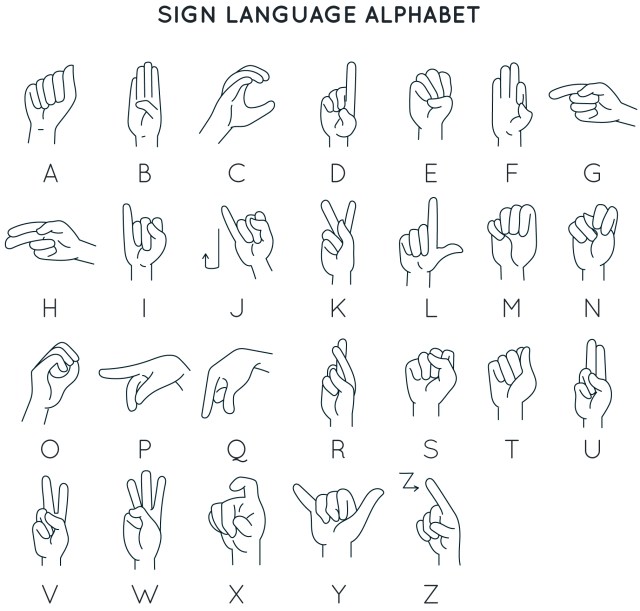
Sign language alphabet image created by Freepik at freepik.com. Hand sign vector created by freepik – www.freepik.com

What I didn’t like about the film:

A confusing title: With a title like Children of a Lesser God, I’m going to safely assume “children” is referencing deaf people, with the title itself emphasizing how deaf people are just as important to society as hearing people. But in the movie, Sarah is the only deaf character the story revolves around. Yes, there are deaf characters featured throughout the film. However, these characters are shown as well-adjusted individuals who aren’t prejudiced or mistreated. As I mentioned before, Sarah recounts a situation that happened to her in high school. Sarah’s mother, portrayed by Piper Laurie, shares traumatic events Sarah experienced in her life. But all of these events happened prior to the film. With all this said, the title, Children of a Lesser God, seems confusing.

A limited presence of James’ students: As I said earlier in this review, the moments where James interacts with his students were meant to be the more light-hearted moments of the film. But throughout the movie, the presence of the students themselves were limited. I really liked the camaraderie between these characters, as it made their connection seem believable. Because of the student’s limited presence, it left few opportunities to get to know them. Sure, we learn about them through their experiences in James’ speech class. But compared to James and Sarah, I felt like I, as an audience member, only became familiar with James’ students. I kind of wish they had received their own subplot.

No appearances from Ruth: When Sarah’s mom is talking to James about Sarah’s past, she mentions her other daughter, Ruth. She also mentions how, in high school, Ruth’s male peers were more interested in Sarah. Despite Ruth getting brought up in the story, Sarah’s sister never appears in the film. Personally, I think this was a missed opportunity. It would have been interesting to hear the perspective of a sibling of someone with a disability. I also wanted to know how Ruth felt about what Sarah went through in high school. In the movie’s opening credits, I learned Children of a Lesser God was based on a Broadway play. I haven’t seen this play, so I don’t know if Ruth is a character that is meant to be in the story. But, like I said, it still feels like a missed opportunity.

Orange cat image created by Freestockcenter at freepik.com. <a href=’https://www.freepik.com/free-photo/ginger-cat_883376.htm’>Designed by Freestockcenter</a>. <a href=”https://www.freepik.com/free-photos-vectors/gold”>Gold image created by Freestockcenter – Freepik.com</a>. Image found at freepik.com.

My overall impression:

Children of a Lesser God is a character-driven movie. With these types of films, you need a cast that is so strong, it gives the audience a reason to stay invested in the overall story. That is exactly what this 1986 production achieved! Even though Children of a Lesser God primarily revolves around Sarah and James, the supporting cast was great to watch. Presenting an introduction to the deaf culture also helps. Though I liked this movie, there were some aspects of this project that could have been stronger. I wish James’ students had received their own subplot and Ruth had appeared in the story. But as I said in this review, Children of a Lesser God is based on a Broadway play. Therefore, I don’t know what was in the original source material. As I close this review, I’d like to say I can’t speak for whether Children of a Lesser God should have received the Best Picture award. That’s because I haven’t seen Platoon or the other films nominated in 1987.

Overall score: 7.7-7.8 out of 10

Have you seen Children of a Lesser God? Which movie do you think should have won Best Picture in 1987? Please let me know in the comment section below!

Have fun at the movies!

Sally Silverscreen

Take 3: The Song of Bernadette Review

Shock and sadness. That’s how I felt when I discovered the passing of Patricia, from Caftan Woman, on Twitter. Upon hearing the announcement of the Caftan Woman Blogathon, I wanted to participate as a way to pay my respects to a fellow blogger. Over the years, Patricia has recommended several films for future reviews. So, it was only fitting for me to choose one of her suggestions for the event. Since the blogathon is commemorating a loss, I felt The Song of Bernadette was the most appropriate choice out of the recommendations on my Pinterest board. This also compliments other religious/faith-based films I’ve reviewed in the past, such as Ben-Hur and The Carpenter’s Miracle. With all that said, let’s start this review of The Song of Bernadette.

The Song of Bernadette poster created by 20th Century Fox

Things I liked about the film:

The acting: One of my favorite movies is Portrait of Jennie. Jennifer Jones’ consistent and captivating performance is one of the reasons why I love that film so much. In The Song of Bernadette, Jennifer’s portrayal of the titular character reminded me of her portrayal of Jennie. This is because she has a talent for pulling off an innocent demeanor without coming across as childish or immature. Throughout the film, Bernadette claims she is dumb. Yet, when asked what a sinner is, she tells the local reverend a sinner “is someone who loves sin”. The reverend even comments how Bernadette chose to say “loves sin” instead of “commits sin”. Personality wise, Jennifer brought a gentleness to her character. When speaking with one of Lourdes’ members of police, the policeman gets details of Bernadette’s story wrong. In a polite manner, Bernadette corrects him, pointing out the policeman’s errors in a soft-spoken voice. This innocence and gentleness allowed Bernadette to be taken seriously by the audience.

On 18 Cinema Lane, I have reviewed several of Vincent Price’s films. In most of these movies, Vincent portrays a character that can exude a sense of fear for the audience. But in The Song of Bernadette, his role of Vital Dutour was very different from his other roles. One reason is how Vincent is a part of an ensemble instead of a main focus in the story. Another reason is how Vital’s actions and choices were not chosen to cause fear. Despite all of this, Vincent carries his character with elegance and arrogance. In an effort to get to the bottom of Bernadette’s “visions”, Vital questions her story in his office. He speaks to Bernadette with a stern voice and presents a no-nonsense attitude. By interacting with her in this way, Vital is attempting in enforce his authority, thinking he will get his way. But because of Bernadette’s strength in her faith and her innocent demeanor, she is able to stand up to Vital. With that, both Jennifer Jones and Vincent Price are able to, acting-wise, go toe-to-toe with each other!

The set design: The Song of Bernadette takes place in the French countryside of 1858. But according to IMDB, the movie was filmed in California. Despite this, the set didn’t look like a set. Instead, it looked like a small French town from the 1850s! The architecture of Lourdes’ buildings was simple. Materials such as stone cover these structures. A traditional roof shingle design is displayed on top of these buildings. Like any well-researched production, the attention to detail was not overlooked! Vital’s office boasts two impressive things: a large desk and fireplace. The desk is a big piece of furniture that is coated in darker wood. Small, gold detailing can be found on the side of the desk. The fireplace is a massive marble structure, with etched detailing just below the mantle. Attention to detail and thorough research made this on-screen world an immersive environment!

Correlations with Biblical stories: When I reviewed the 1959 film, Ben-Hur, I talked about how certain Biblical events were incorporated into the overall story. With The Song of Bernadette, I could pick out moments that felt like unintentional correlations with some stories from the Bible. Toward the beginning of the film, Bernadette’s father is hired to dispose dirty rags from hospital patients. Shortly after being hired, Bernadette’s father can be seen pulling the wagon filled with dirty rags up a hill. This scene reminded me of the Crucifixion story, when Jesus is carrying the cross. The scene can also serve as a reminder how everyone has their own cross to bear, literally or figuratively. After Bernadette sees her first “vison”, Bernadette’s neighbors offer Bernadette’s family extra food they had acquired. The neighbors’ multiplying of food is reminiscent of the story where Jesus multiplied two fish and five loaves. Because this scene takes place after the first “vision”, I saw it as a miracle similar to the aforementioned Biblical story.

Using little to no dialogue: In two scenes, the movie’s creative team did a great job using little to no dialogue! One of them was the aforementioned scene where Bernadette’s father climbed up the hill. Orchestral music replaces any dialogue, which captures the emotions of Bernadette’s father. A long shot showcases the journey, elaborating how small Bernadette’s father is compared to the hill. This scene visually explained how difficult his life is. Another scene that used no dialogue is when Bernadette experiences her first “vision”. Not only is orchestral and choir music incorporated, the creative team uses a spotlight to accentuate Jennifer’s facial expressions. At one point in this scene, wind blew unexpectedly, signaling something was about to happen. Both scenes were able to say so much while saying so little!

The Caftan Woman Blogathon banner created by Lady Eve from Lady Eve’s Reel Life and Jacqueline from Another Old Movie Blog

What I didn’t like about the film:

The under-utilization of Antoine and his mother: In The Song of Bernadette, the titular character appears to be friends with a man named Antoine. Antoine also appears to be close with his mother. These two characters were only shown in a handful of scenes. Even when they were included in the story, their significance in the overall plot was weaker. The under-utilization of Antoine and his mother was disappointing, as I felt they could have offered more to the story. But since this movie was based on a book I haven’t read, I’m not sure if the limited presence of these characters is close to the source material.

A few ignored details: Toward the beginning of the movie, a friend of Bernadette’s explains to their teacher how Bernadette has asthma. This diagnosis is brought up on a few occasions by Bernadette’s family throughout the movie. But, for the most part, this detail was ignored and had little significance in the story. There were times when Vital Dutour was seen wiping his nose with a handkerchief. At one point in the story, he claims it’s “influenza”. However, it isn’t clearly explained what he’s medically dealing with. As I already said, The Song of Bernadette is based on a book I haven’t read. But if the creative team knew they weren’t going to utilize these details, it makes me wonder why they would include them in the movie?

Rose illustration image created by Freepik at freepik.com. <a href=”https://www.freepik.com/free-photos-vectors/background”>Background vector created by freepik – http://www.freepik.com</a>. Image found at freepik.com.

My overall impression:

Incorporating faith into film can be a tricky task. On the one hand, you don’t want to run the risk of alienating those who aren’t religious. At the same time, you want to acknowledge the beliefs of those who choose to include religion in their lives. The Song of Bernadette finds a way to achieve “the best of both worlds”! Bernadette’s story is shown as a procession, a good exploration of how religious phenomena can affect a small town. The film doesn’t seem to take sides when it comes to the actual topic. Yes, some people make fun of Bernadette because of her “visions”. But there’s no antagonist or villain in the movie. Lourdes’ mayor and his friends don’t believe Bernadette. However, none of the men are religious, approaching the situation from a legal and literal perspective. Even the town’s reverend isn’t quick to assume the “visions” are religious. Out of all the movies I’ve seen this year, so far, I’d say The Song of Bernadette is the strongest one! If you are interested in checking this film out, I think Easter would be an appropriate time to see it. Personally, I wish I had seen it sooner, especially since I can no longer thank Patricia for the recommendation.

Overall score: 8.2-8.3 out of 10

Rest in Peace Patricia

Sally Silverscreen

Travel Lessons I Learned from Movies and TV

Movies and television not only provide entertainment, they also tell a story through a visual medium. Something else movies and television do is teach lessons through those stories. Throughout my life, I have learned so many lessons from various movies and television shows. How to travel smart has been one of them. As my blogathon’s theme this year is ‘Travel Gone Wrong’, I have decided to share a list of six travel related lessons I’ve learned over the years! This is especially exciting, as it’s the first list I’ve created for one of my blogathons! The list is based off of movies and shows I have personally watched. I also tried to present a combination of programs where the mishaps were met with either hilarious or horrifying results. Now, have your boarding ticket ready, as we’re about to start this list!

Created by Sally Silverscreen at Adobe Creative Cloud Express

Never Tell Strangers Where You Will be Staying (Especially if You’re Traveling Alone)

When I reviewed the 1962 film, Cape Fear, I said the most effective “scary movies” are the ones that involve real-life situations. A movie that definitely belongs in that discussion is the classic, Taken. The 2008 title showcases the dangers that can sometimes present themselves in international travel, without coming across as a PSA/cautionary tale/“after school special” type story. This is because the film places more emphasis on the action within the project. Every time I think of this movie, I always speculate how Kim and Amanda might have avoided their plight had they not told a group of strangers, who ended up being human traffickers, which hotel they were staying at. It also didn’t help how they revealed they were both traveling alone. There’s a saying that goes “Strangers are friends you haven’t met yet”. Well, as Kim and Amanda’s situation shows, that isn’t always the case, especially since some people’s intentions are not great. Watching Taken reminded me how you should only share your hotel and travel status with people you know and trust.

Pink travel backpack image created by Pikisuperstar at freepik.com. <a href=”https://www.freepik.com/free-photos-vectors/watercolor”>Watercolor vector created by Pikisuperstar – Freepik.com</a>. <a href=’https://www.freepik.com/free-vector/travel-lettering-with-watercolor-pink-backpack_2686676.htm’>Designed by Freepik</a>. Image found at freepik.com.

If You Want to Start any Relationships with the “Locals”, Take the Time to Know Them First

When I refer to “locals”, I’m referring to anyone who is from a particular travel destination, whether it’s “across the pond” or across town. For this point, I have two examples to share. The first is from a movie I reviewed back in January, Red Corner. While in China for business related reasons, Jack becomes attracted to a woman he briefly met at a nightclub. Attraction gets the better of them, as they end up sharing intimate relations with one another. The woman is discovered dead the following morning, with Jack declared a suspect in her murder. The second example, which also involves a man named Jack, is the Lost episode “Stranger in a Strange Land”. Within the flashbacks from that episode, Jack forms a month-long, intimate relationship with Achara, a character I mentioned in my latest Sunset Over Hope Valley re-cap. During their relationship, Jack becomes frustrated that Achara won’t share what her “gift” is with him. Taking matters into his own hands, he barges into her place of employment and demands an explanation. When Achara’s revelation isn’t enough, Jack forces her to give him a tattoo, even though she initially refuses his request. Their relationship ends disastrously, with Achara in tears and Jack unofficially banned from Thailand.

Screenshot taken by me, Sally Silverscreen. Photo originally found at https://www.thehollywoodroosevelt.com/pool/tropicana-pool-cafe.

I’ve said before that, in my opinion, starting or ending a relationship shouldn’t be taken lightly. I’ve also said that both members of a relationship should be equal to one another. Taking that into account, it’s important to remember when two people come together to form a relationship, they bring with them elements of their lives, which includes their respective cultures. This is where my two examples come in. Despite Jack from Red Corner spending such a short amount of time with the aforementioned woman, he had to deal with her government, a government he was not familiar with. He was also not familiar with the Chinese language and cultural beliefs. This, to an extent, left Jack at a disadvantage. Meanwhile, in Thailand, Jack from Lost didn’t respect Achara’s cultural boundaries. As I mentioned earlier, she initially refused his tattoo request. During their confrontation, Achara told Jack her tattoos are “not decoration, it is definition”. Achara also said Jack couldn’t receive a tattoo because he was “an outsider”. Though she doesn’t provide details to her comments, Achara implies her tattoos have a strong connection to her culture. But whenever Jack and Achara are shown having a conversation, they seem to purposefully avoid talking about anything personal. When I first reflected on “Stranger in a Strange Land”, I knew Achara and Jack’s relationship didn’t last for a reason. Rewatching it years later reminded me why. Honestly, both parties from both relationships could have avoided so much heartache if they had taken the time to learn about and from one another. Sometimes, the best way to know more about a specific culture is to interact with those who are a part of it. Seems to me both aforementioned relationships missed a great opportunity.

Illustrated African landscape image created by Macrovector at freepik.com. Background vector created by macrovector – www.freepik.com

Be Mindful Who You Place Your Valuable Belongings With

Traveling with valuable belongings is inevitable. This has been the case since the concept of traveling was born. A valuable belonging can be almost anything, especially according to the decade. In the 1980s, one of these valuable belongings was camcorders/video cameras. Priceless, irreplaceable family memories were captured on these devices. At the time, they also carried an expensive price tag. I’ve only seen about half of National Lampoon’s European Vacation. The one scene I vividly remember is when the Griswald family have their video camera stolen. Clark asks a passerby to take his family’s picture with the camera. During this photo session, the passerby suggests the family stand in a nearby fountain. After the Griswalds take this suggestion, the passerby runs away with their video camera. While this scene is meant to be played for laughs, a serious point is to be made. There’s nothing wrong with asking someone to take a picture of you with your chosen electronic device. However, if you are in possession of a valuable item, being mindful is key. If something doesn’t add up, don’t hesitate to say or do something about the situation. Similar to what I said about Taken, place your belongings with those you trust.

Travel suitcase image created by Freepik at freepik.com. <a href=’https://www.freepik.com/free-vector/water-color-travel-bag-background_1177013.htm’>Designed by Freepik</a>. <a href=”https://www.freepik.com/free-photos-vectors/background”>Background vector created by Freepik</a>. Image found at freepik.com.

On Your Trip, Know Where Every Member of Your Party Is

A movie I have never talked about on my blog before is the live-action adaptation, Madeline. I’ll admit it has been years since I’ve seen this film. But from what I remember, there is one scene that perfectly fits this discussion. The titular character and her classmates are at a local carnival on a field trip. Toward the end of this trip, Madeline is late for their bus ride home. To avoid getting in trouble, one of Madeline’s classmates holds up a hat to look like Madeline was sitting in her seat. This leads Miss Clavel to assume Madeline was with the rest of the class. But, in reality, she was somewhere else. During any trip, there is so much to think about. Keeping your party together is one of them. If Madeline had told one of her classmates or even Miss Clavel where she was going or how long she would be gone for, the school community would have one less thing to worry about. There’s no “modern” technology present in this film. But if Madeline had access to a cell phone, she should have kept it on and with her at all times. Miss Clavel is known for saying “Something is not right”. Had Madeline been in worse danger than was depicted in the movie, something would have been very wrong.

Snowy mountain image created by Freepik at freepik.com. <a href=’https://www.freepik.com/free-vector/landscape-background-of-snow-track-and-mountains_968656.htm’>Designed by Freepik</a>. <a href=”https://www.freepik.com/free-photos-vectors/background”>Background vector created by Freepik</a>. Image found at freepik.com.

Leave Enough Time to Gather All Your Belongings

A running joke on The Middle is “the blue bag”. This blue bag contains important items, such as snacks, and is meant to travel with the Heck family whenever they go on a trip. Unfortunately, this bag is, more often than not, forgotten. When this realization occurs, the family typically asks in unison, “You forgot the blue bag”? A reason why this bag gets left behind is because the Heck family usually rushes to get to their destination. In my years of travelling and watching The Middle, I know how essential it is to be prepared. This is why I always pack the day before I leave for a trip. The day before I plan to leave, I also gather what I know I will pack and put those items in one place. This has saved me so much headache and stress.

Colorful travel suitcase image created by Pikisuperstar at freepik.com. <a href=’https://www.freepik.com/free-vector/beautiful-illustration-of-travel_2686674.htm’>Designed by Freepik</a>. <a href=”https://www.freepik.com/free-photos-vectors/watercolor”>Watercolor vector created by Pikisuperstar – Freepik.com</a>. Image found at freepik.com.

Take Advantage of the Opportunities Around You

Ok, so I know I’ve been sharing lessons I’ve learned relating to more serious, travel related situations. Well, this lesson is serious, but not in the same way. Travelling, whether near or far, can give you opportunities to explore new places, meet new people, and grow as an individual. Two characters who take advantage of this are Brooklyn and Joe from Anchors Aweigh! For the majority of this story, Joe and Brooklyn travel to Los Angeles/Hollywood after receiving permission to leave their Navy base. During their travels, they make new friends, fall in love, even helping make a dream come true. Brooklyn and Joe also visit places not highlighted in a travel guide. But none of that would have been possible if they hadn’t been open to the possibilities of their surroundings. So many discoveries are waiting to be found when you travel. They can come in all different shapes and sizes. How do you find them, you ask? Just be aware of what your surroundings have to offer.

Have fun on your travels!

Sally Silverscreen

Take 3: Brian’s Song (1971) Review

When MovieRob announced ‘Sports Themed Films’ as April’s Genre Grandeur theme, I knew right away which movie I would review: the 1971 tv movie, Brian’s Song! One reason for this decision was the fact I had this film on my DVR. But when I recently checked my DVR, Brian’s Song was nowhere to be found. This is not the first time this has happened to me, where a recorded program on my DVR has suddenly disappeared. But it did not deter me from reviewing Brian’s Song. On a recent trip to the library, I found a DVD copy of the film. It was perfect timing, as I was soon going to watch and write about the movie! In the world of made-for-tv film productions, there are those that are well-known, for better or worse. Brian’s Song is one of the more respected titles, garnering praise since its 1971 release. But will I join the choir and sing this movie’s praises? Or will I skip a trip on the bandwagon? You won’t know if Brian’s Song scored a touchdown unless you read this review!

Before I begin this review, I would like to point out there will be a few spoilers within this article.

This is a screenshot of the DVD copy of Brian’s Song I mentioned in my review. Screenshot taken by me, Sally Silverscreen.

Things I liked about the film:

The acting: I really liked the cast of Brian’s Song! But because this story primarily revolves around Brian and Gale’s friendship, this review will focus on the performances of James Caan and Billy Dee Williams. When I think of Billy Dee Williams, I think of Lando from Star Wars! It has been years since I’ve seen the original trilogy in the Star Wars franchise. But from what I remember, Billy’s on-screen personality was charismatic and larger-than-life. His portrayal of Gale Sayers was very different from his portrayal of Lando, as it was more reserved. However, it was packed with emotion! When Gale first meets Brian, he is taken aback by Brian’s outgoing personality. Gale’s eyes contain the awkwardness of the situation and his body language appeared tenser than Brian’s. Gale also spoke with few words, carefully choosing what to say next. Meanwhile, as I’ve just said, Brian was outgoing and confident. In this first meeting, Brian walks up to Gale, immediately recalling a conversation they had prior to training. At the first team dinner, Brian sings his alma mater’s fight song, not afraid to look silly in front of his team members. This on-screen personality was different from James’ westerns I’ve seen, where his character has typically been rugged and serious.

One of the best scenes in Brian’s Song is when Brian is building exercise equipment for Gale. Before this gesture, Gale injured his leg during a game. Angry about the situation, he is bitter toward Brian. Gale angrily objects to Brian’s plan, with this objection meeting Brian’s reason for the gesture. Brian recalls how, in high school, he was demoted on his football team due to a more talented team member. He also shares how he was demoted again, as Gale is the stronger player among the two of them. Now that Brian has a top position on the Chicago Bears, he would rather help Gale heal from his injury, as Brian claims his recent top position was given to him “for the wrong reasons”. This is one of those scenes where the audience can understand both characters’ reasoning. Through Billy’s expressions, Gale is less reserved, gaining some of Brian’s confidence to angrily explain his objections. James shows a side of gentle humbleness, as Brian recounts moments of self-doubt. It is a good example of how the differences in acting performances can complement both of them!

The football game footage: Brian’s Song featured game footage whenever the Chicago Bears made a game appearance. I’m not sure if this footage was taken from actual games or if it was filmed for the sake of the movie. Either way, its inclusion added a sense of realism to the overall narrative. In one scene, Gale and Brian are talking to each other on the sidelines. This scene was filmed as if it was part of a television broadcast, captured in a grainier image. This cinematography felt consistent to the game footage I talked about. It also presented a different way to include football games in a story, as most football themed movies place, at least, one football game during their story’s climax.

The voice-overs: During the aforementioned game footage, voice-overs of Brian and Gale could be heard. These voice-overs consisted of conversations between the two, with different topics being discussed. I like how the voice-overs were added over the footage. It reminded me of sports commentators, except the game itself was never brought up in these conversations. The voice-overs provided insight into Brian and Gale’s friendship. Their humor and perspectives could be picked up in these voice-overs, allowing the audience to learn more about them.

Image of football essentials created by bamdewanto at freepik.com. American football vector created by bamdewanto – www.freepik.com

What I didn’t like about the film:

Glossed over racism: After football training for the Chicago Bears begins, Gale is told by the team’s head coach that he and Brian will be the first interracial roommates in professional football history. Because of this, Chicago Bears’ staff prepare Gale for the racism he will likely experience. I know there is only so much to cover in a made-for-tv movie, especially one that is about an hour and thirteen minutes. But when it comes to the racism Gale encounters, there was more telling than showing. Besides the staff’s preparations, the only racism present in the story is when Brian reads Gale a mean letter through a voice-over. The glossing over of racism surprised me, since the story takes place in 1965, a year within a decade known for the Civil Rights Movement.

Confusing aspects of the football training process: The story of Brian’s Song starts at the beginning of Chicago Bears’ training. When this process began, I found myself confused by what was happening on screen. I wondered why a professional football team was gathering on a college campus? Why was the coach and his staff talking about cutting team members? Was a draft supposed to take place before training began? I know a certain amount of information about professional football. However, the training process isn’t one of those subjects. It also doesn’t help how the script was written as if expecting the audience to know that kind of information from that specific period in time. I wish explanations were provided in the dialogue.

Omitted grief of the team: Remember when I said there were a few spoilers in this review? Well, this is where I will bring those up. At one point in the story, Brian is diagnosed with cancer. After learning of Brian’s diagnosis, Gale makes an emotional pep talk to the Bears, vowing to dedicate their upcoming game to Brian. At the end of the movie, Gale reveals through a voice-over Brian passed away. In the aforementioned scene featuring Gale’s pep talk, the sadness of the news could be seen on the faces of the team members. While they all carried long, heartbroken faces, some of them even held tears in their eyes. With that said, I would guess Brian’s passing would leave everyone involved with the team devastated. As I said before in this review, there is only so much to cover in a made-for-tv movie. But I think a final scene/epilogue showing how the Bears dealt with Brian’s passing should have been included. Was Brian’s jersey honorably retired? Did he receive a posthumous MVP award? I’m not familiar with Chicago Bears’ history, so I’m not sure how the team responded to Brian’s passing in real life. However, omitting it from the script seems like a disservice to the team members who knew him.

Heartbeat image created by Freepik at freepik.com. <a href=’https://www.freepik.com/free-vector/medical-logo_763775.htm’>Designed by Freepik</a>. <a href=”https://www.freepik.com/free-photos-vectors/logo”>Logo vector created by Freepik</a>. Image found at freepik.com.

My overall impression:

Before Billy Dee Williams entered a galaxy far, far away and before James visited the wild, wild west, there was a little made-for-tv film called Brian’s Song. Fifty-one years after this movie debuted, it has still held a favorable reputation, regarded as one of the most beloved television films of all time. Brian’s Song is a fine production with its heart in the right place. But I wasn’t as emotionally affected by it as I expected. Yes, this movie’s story is a sad one. However, I was familiar with Brian and Gale’s story before I saw the film. This knowledge prevented me from being emotionally caught off guard when a sadder, more dramatic moment happened. Like I just said, this movie had its heart in the right place. One way this statement is put into action is how the cast appears to truly care about the respective material. The film also features interesting creative decisions, such as football game footage and voice-overs over that footage. Before I end this review, I would like to point out how accessible Brian’s Song is, as I happened to chance upon a copy of it on DVD. Not every made-for-tv movie is lucky, as some of them are either harder to find or lost to time.

Overall score: 7.1 out of 10

Have you seen Brian’s Song? Which made-for-tv movie would you consider a “classic”? Let me know in the comment section!

Have fun at the movies!

Sally Silverscreen

Take 3: The Bridge on the River Kwai Review

William Holden is an actor who I am familiar with. I have seen some of the films on his filmography and have even reviewed a few. So, when I came across the announcement post for The 5th Golden Boy Blogathon, I saw it as a great opportunity to explore William’s filmography some more! As I was signing up, though, I noticed how The Bridge on the River Kwai hadn’t been selected yet. Surprised by this, I found another good opportunity to check out a “classic”! For years, I had heard of the 1957 film. It is even featured on the American Film Institute’s list of The 100 Greatest American Movies Of All Time. At the publication of this review, I have seen twenty-nine of the movies on this list, in their entirety. Some of these titles have been enjoyable, but there are others I wasn’t a fan of. Where does The Bridge on the River Kwai fall on that spectrum? Keep reading to find out!

The Bridge on the River Kwai poster created by Horizon Pictures and Columbia Pictures

Things I liked about the film:

The acting: Since William Holden is one of the reasons why I chose to watch The Bridge on the River Kwai, I’ll talk about his performance first. This is not the first war film William has starred in. Four years prior to the release of The Bridge on the River Kwai, he appeared in Stalag 17. What makes his portrayal of Shears different from Sgt. J.J. Sefton is the material allowed William to expand his acting abilities. While on a beach at a nearby hospital, Shears is flirting with a female nurse. In this scene, William turns on the charm, sharing nice on-screen chemistry with Ann Sears. In the next scene, Shears carries a serious demeanor as he is called upon for a military mission. Out of Williams’ films I have seen, his character presents one of two personas: the “charmer” or the serious, no-nonsense man. In The Bridge on the River Kwai, Shears displayed both.

One of my favorite scenes is when Colonels Nicholson and Saito are attempting to make a negotiation. Colonel Saito, portrayed by Sessue Hayakawa, wants every member of Nicholson’s team to work on the bridge. Colonel Nicholson, portrayed by Alec Guinness, refuses this order. Prior to this scene, Nicholson stood his ground. He was even locked in a small hut because of his refusal. But Nicholson persevered, even carrying a dignified persona that ends up boosting the morale of his team. He consistently maintains this persona, especially during his meeting with Colonel Saito. This dignified, confident demeanor of Nicholson angers Saito. Up until that point, Saito presents himself in a professional manner. He is no-nonsense and doesn’t allow anyone to step out of line. But in his meeting with Nicholson, his anger becomes visible. Both Sessue and Alec gave different performances, portraying two different military leaders. Yet the strength of their acting abilities allowed them to go toe-to-toe with one another.

The scenery: The Bridge on the River Kwai had such magnificent scenery, it honestly stole the show! There are two locations I loved so much, I wanted to talk about them in my review. The first location is the hospital I just mentioned. The Mount Lavinia Hotel was the stand-in for the hospital. When looking at the exterior and grounds, one could see why this location was chosen. The trimmed lawn was a great contrast to the small white structure. The manicured gardens surrounding the hospital created a pleasant outdoor space. In the scene the hospital was featured in, a nearby beach was primarily showcased. The clear blue waters and bright sandy shore paired with the garden-esque surroundings illustrated a tropical oasis!

The second location is Major Warden’s office! Any time a scene took place in his office, glass windows in wooden frames were always open. This allowed the audience to see the beautiful view! Major Warden’s office overlooked a river. Sloping green hills sat on the sides of this river, contributing to the visually appealing view. Similar to the aforementioned hospital, Warden’s office also oversaw a trimmed lawn and manicured gardens. The spacious surroundings of this location presented the audience a peaceful atmosphere!

The music: There were some scenes in The Bridge on the River Kwai that included little to no dialogue. This decision led the film’s creative team to use music to elevate a scene’s tone. While stumbling through the jungle, Shears notices a group of vultures sitting on a nearby tree. As he walks through this environment, quiet orchestral music becomes louder. A “bird” appears out of nowhere, adding to the scene’s tension. The music gets even louder when Shears crosses paths with the “bird”. When the “bird” is revealed as a bird-shaped kite, the music stops. The tension and suspense of this scenario was accomplished by a combination of music and visuals!

The 5th Golden Boy Blogathon banner created by Virginie from The Wonderful World of Cinema, Emily from The Flapper Dame, and Michaela from Love Letters to Old Hollywood

What I didn’t like about the film:

A confusing first half: During the first half of The Bridge on the River Kwai, I was confused by what was happening in the story. This confusion was caused by the lack of explanations. At the prisoner camp, Colonel Saito continuously mentioned the importance of the titular bridge. He stresses how the bridge needs to be built on a specific day, even going so far as to claim he’ll commit suicide if the bridge isn’t built. What Colonel Saito failed to mentioned is the bridge’s purpose. Even though an explanation was eventually provided, it is given at the film’s half-way point. Had this information been given sooner, so much confusion could have been avoided.

A limited amount of urgency: In war films or films that involve a significant amount of action, a strong sense of urgency can be felt throughout the story. This sense of urgency encourages the audience to care about the safety and wellbeing of the characters. But because some scenes in The Bridge on the River Kwai were drawn out, the sense of urgency was limited. Toward the end of the movie, a climactic moment involving the story’s major players takes place. While I won’t spoil the movie, I will say this moment was drawn out a little longer than necessary. The action moved at a slower pace, which also effected the urgency. It seems like this creative decision was made to build suspense. However, it left me, at times, frustrated.

Inconsistent halves: Earlier in this review, I said William Holden was one of the reasons why I chose to watch The Bridge on the River Kwai. Interestingly, his character’s story was the one I found the most engaging. This movie features two major storylines: Colonel Nicholson’s team in the prisoner camp and Shears’ experiences in the military. Since Shears’ story was prominently featured in the film’s second half, I found that half the most interesting. With Shears’ story, there was a strong conflict and an even stronger part of the plot. Meanwhile, Colonel Nicholson’s story seemed to remain at a standstill. Like I also mentioned in this review, the film’s first half was confusing due to the lack of explanations. If The Bridge on the River Kwai had just focused on Shears’ story, the film as a whole would have been more intriguing.

Military plane image created by Brgfx at freepik.com. <a href=”https://www.freepik.com/free-photos-vectors/background”>Background vector created by brgfx – http://www.freepik.com</a>. Image found at freepik.com.

My overall impression:

Why is The Bridge on the River Kwai on AFI’s list of The 100 Greatest American Movies Of All Time? I’m not asking this to be disrespectful or mean. I’m asking out of curiosity. When I think of lists like AFI’s, I think of movies that fit one of two categories: those that represent the time they were released and those that brought something new to the cinematic table. With The Bridge on the River Kwai, I can’t see this film fitting into either category. As I mentioned in this review, Stalag 17 was released four years prior to The Bridge on the River Kwai. Heaven Knows, Mr. Allison was also released in 1957. With that said, what makes those two films less deserving of being on AFI’s list than The Bridge on the River Kwai? Off the top of my head, I can’t think of any cinematic advancements The Bridge on the River Kwai had to offer. The more films I watch from AFI’s list and the more I think of lists of this nature, I wonder what the criteria is? Was there criteria to begin with or is the list purely subjective? As I explore more “classics”, those are questions I will keep in mind.

Overall score: 7-7.1 out of 10

Have you watched any of William Holden’s movies? If so, which one would you like me to review next? Please tell me in the comment section!

Have fun at the movies!

Sally Silverscreen