Comparing with the Critics – Worst of 1976 – Gable and Lombard

This review is from my series, Comparing with the Critics. If you’d like to learn more about the series, click on the link below.

Introducing my new series, Comparing with the Critics!

In the ‘Best Films of 1976’ episode of Opening Soon…at a Theater Near You, Gene Siskel stated “1976 was a pretty lousy year for movies”. He emphasized that statement by saying “the year was littered with dogs”. Since I haven’t seen a lot of movies from 1976, I can’t agree or disagree with Siskel’s claim. But what I can do is talk about one of Siskel’s choices for worst movies of 1976. As I said in my 1976 introduction of Comparing with the Critics, one episode was primarily focused on discussing the best movies from a given year. This left Siskel and Ebert with only a few minutes to talk about some of the year’s worst films. Despite the 1976 episode’s limited selection of “bad” movies, I chose Gable and Lombard for this edition of Comparing with the Critics Worst of review. What made Gable and Lombard the most interesting title from the episode’s collection of “bad” movies was the story’s emphasis on Clark Gable and Carole Lombard’s relationship. I am somewhat familiar with Clark and Carole, as I have reviewed at least one of their movies on 18 Cinema Lane. Because I hadn’t heard of Gable and Lombard until I saw the ‘Best Films of 1976’ episode of Opening Soon…at a Theater Near You, I viewed the film as a way to expand my cinematic horizons and learn more about Carole and Clark. Now that I have seen the movie for myself, I believe Siskel’s, and even Roger Ebert’s, thoughts on the film were a tad harsh.

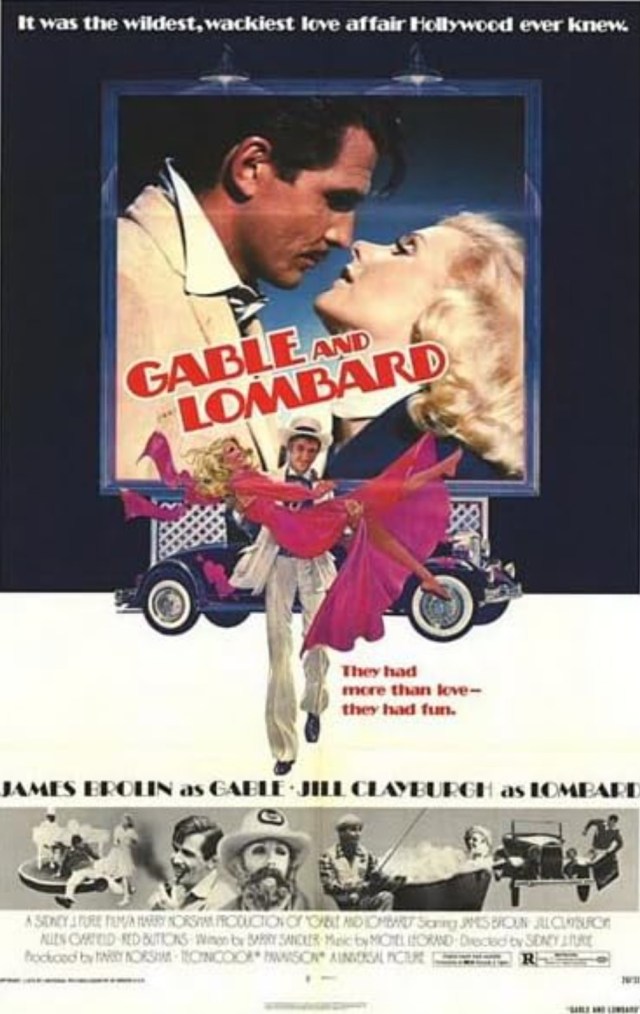
Gable and Lombard poster created by Universal Pictures

Before revealing his choices for the worst movies of 1976, Siskel says the year featured “two kinds of cinematic canines: cheap, lousy pictures and expensive, lousy pictures”. Based on what films he chose, Gable and Lombard was placed in the latter category. According to Wikipedia, the film’s budget was $4.5 million. It appears most of the budget was spent on Gable and Lombard’s set design. One scene took place outside, with the guests at a ball wearing white. Small candles surrounded the pool’s perimeter. In the pool were small islands of white flowers and candles, along with swans peacefully gliding through the water. Overall, this part of the set was absolutely gorgeous! Throughout Gable and Lombard, some scenes took place in Clark or Carole’s dressing room. These dressing rooms looked more like condominiums; distinct spaces that appear livable. Carole’s dressing room boasted a color combination of yellow and white. Featuring design choices like a white dining room set gave the dressing room a feminine style. Meanwhile, dark wood surrounded the fireplace in Clark’s dressing room. There was even a pool table located near the fireplace. These design choices created a more masculine space. Carole and Clark’s dressing rooms provided a good visual representation of how different they were despite having a similar career path.

In Name Only poster created by RKO Radio Pictures. Image found at en.wikipedia.org/wiki/File:In_Name_Only.jpg

While Roger Ebert never shared his thoughts on Gable and Lombard in the ‘Best Films of 1976’ episode, he did write a review for the movie, which can be found on rogerebert.com. In his review, Ebert states “Brolin does, indeed, look a lot like Gable – but imitation here has nothing to do with flattery”. While I agree with Ebert’s opinion on James Brolin’s appearance in the movie, I disagree with the rest of Ebert’s statement. Not only did James look like Clark, he even sounded like him too! It almost felt like James transformed into another person. During Gable and Lombard, James consistently carried an easy-going attitude. This choice in acting and directing showcased Clark’s down-to-earth personality. Meanwhile, Carole was a comedic, life of the party. Portrayed by Jill Clayburgh, Carole’s up-beat personality made her one of the most popular actresses of her time. But behind closed doors, Carole had her doubts and insecurities. In one scene, Carole is sharing with Clark how she feels undeserving of a recent achievement. Her eyes reveal a sense of worry. Concern, even sadness, can be heard in her voice. During her conversation with Clark, Carole looks and sounds truly discouraged. Clark, with a warm smile and calming tone of voice, reassures Carole what’s most important is surrounding herself with people who support her. Jill’s and James’ performance is one of the reasons why this scene is one of my favorites in Gable and Lombard!

China Seas poster created by Metro-Goldwyn-Mayer.

Sidney J. Furie, the director of Gable and Lombard, chose to make “a movie about just folks”, primarily focusing on the personal lives of Clark Gable and Carole Lombard. While Ebert says this decision gave “the movie a certain originality”, he also criticizes Sidney’s choice, claiming that “by limiting itself to this aspect of their lives the movie never deals with the reasons we find them interesting in the first place”. As I said in this review’s introduction, I am somewhat familiar with Clark and Carole. Because I don’t know which parts of Gable and Lombard are factual or creative liberty, I took the story of Carole and Clark’s relationship with a grain of salt. From the way Louis B. Mayer (portrayed by Allen Garfield) talked to Clark about groups of people demanding certain elements of films be changed due to “indecency”, I knew he was talking about the Breen Code, a series of morality related guidelines enforced in Hollywood from 1934 to 1954. Therefore, I saw Gable and Lombard as a character study of how a portion of the Breen Code era affected the professional and personal lives of the Hollywood landscape, with Carole and Clark serving as just two examples. When Clark is accused of having an affair with a waitress, Carole volunteers to testify in court. Everyone from her inner circle knows if she testifies, she will expose her and Clark’s relationship as well as end her career. While explaining why he doesn’t want Carole to testify, Louis B. Mayer shares with Clark the ugly truth about what happened to some actresses after their careers ended. This scene is honest about the consequences if the Breen Code was broken. By viewing the film from the lens of the Breen Code, Gable and Lombard’s narrative is not only compelling, it is given higher stakes.

Twentieth Century poster created by Columbia Pictures.

I said earlier in this review how Ebert and Siskel were only given a few minutes to talk about the year’s worst films. This made Siskel’s discussion of Gable and Lombard sound vague, as he states “in real life, you can get arrested for playing around with dead bodies. The same should be true for movie-makers who desecrate the memory of great, dead actors”. Because this review affords me more time to elaborate on my opinion, I will now discuss what I didn’t like about Gable and Lombard. At the beginning of the movie, Clark is told Carole was in a plane crash, but her whereabouts are unknown. The very next scene shows Carole riding in an ambulance, alive and appearing uninjured. That scene took place years before the plane crash happened. With no on-screen text acknowledging the story’s time and place, it was sometimes difficult to figure out the story’s timeline. I liked James’ and Jill’s portrayal of Clark and Carole. However, I found their on-screen chemistry inconsistent. When their story began, Carole and Clark went from enemies to lovers. For the rest of the story, they continuously broke up then got back together. I recognize Gable and Lombard is based on a real-life relationship. But because of the back-and-forth nature of that relationship, I couldn’t stay fully invested in the relationship of Clark and Carole.

Comparing with the Critics banner created by me, Sally Silverscreen. TV show title cards created by WTTW National Productions, WTTW, Public Broadcasting Service (PBS), Lifetime Television, Tribune Entertainment, Buena Vista Television, and Disney-ABC Domestic Television

Looking back on Gable and Lombard, I believe Siskel’s, and even Roger Ebert’s, thoughts on the film were a tad harsh. I wouldn’t call it a “dog” or “lousy”, as the movie does have its merits. But I do believe the marketing is a bit misleading. The quotes on Gable and Lombard’s poster are “It was the wildest, wackiest love affair Hollywood ever knew” and “They had more than love – they had fun”. In the ‘Best Films of 1976’ episode of Opening Soon…at a Theater Near You, Carole dumped salad on Clark’s head, one of the more humorous scenes from the film. While there were comedic moments sprinkled throughout the story, the movie’s marketing presents the false idea it is solely a comedy. Seen from the lens of the Breen Code, Gable and Lombard presents a character study of how a portion of the Breen Code era affected the professional and personal lives of the Hollywood landscape. With the story emphasizing Carole and Clark’s relationship, they navigate complicated decisions, as well as honesty about feelings and emotions. The balance of comedy and tragedy adds a sense of maturity to the overall story. At worst, the movie prioritizes style over substance. as most of the budget seems to be put toward the set design. But, at best, Gable and Lombard is just ok.

This review was brought to you by

Sally Silverscreen

Take 3: Million Dollar Mermaid Review

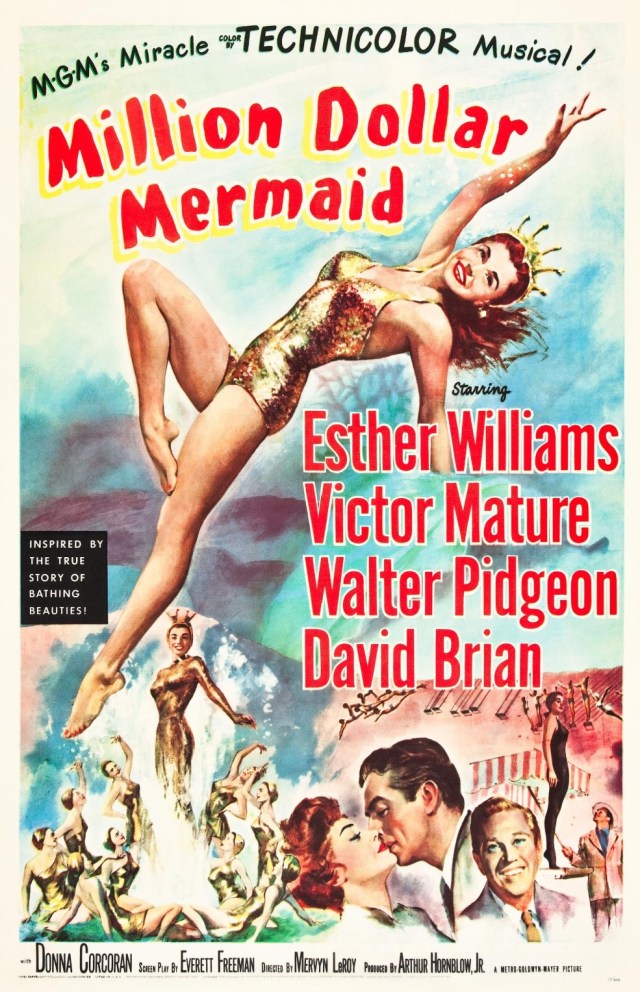
From Esther Williams’ filmography, I’ve only seen (and reviewed) three of her pictures; Take Me Out to the Ball Game, Bathing Beauty, and Easy to Wed. When it comes to the aqua musical, one of Esther’s claims to fame, that component was far and few between in those movies. Wanting to see an Esther Williams production where the aqua musical was more center stage (no pun intended), I selected Million Dollar Mermaid to review for the We Love Musicals Week Blogathon! The 1952 presentation was recommended by The Classic Movie Muse. Before researching titles to write about for Hamlette’s (from Hamlette’s Soliloquy) event, I had no idea the movie was a biopic. As I made this discovery, I was reminded how much luck I had finding good biopics last year. On my list of the best movies I saw in 2024, three biopics earned a spot on my list, with two of those films ending up in my top five. Could Million Dollar Mermaid find a place on 2025’s best movies list? Read my review to find out!

Million Dollar Mermaid poster created by Metro-Goldwyn-Mayer (MGM)

Things I liked about the film:

The acting: As I said in this review’s introduction, I’ve seen (and reviewed) three of Esther Williams’ films; Easy to Wed, Take Me Out to the Ball Game, and Bathing Beauty. What these titles have in common is how Esther’s on-screen personality has been consistently friendly and warm. Her performance in Million Dollar Mermaid maintains that consistency in personality! Esther portrays Annette Kellerman, an Australian swimmer who defied the odds and created a successful career. Through the ups and downs of Annette’s life, Esther’s on-screen personality highlighted how Annette saw the glass half full. However, there were times when Annette became frustrated. In one scene, she is understandably upset because she was falsely accused of indecent exposure (due to the style of her swimsuit). At first, Annette tearfully refuses to speak with any newspaper reporter. But after receiving advice from her father and James Sullivan, courage rises in Annette’s voice as she not only agrees to be interviewed, she decides to be interviewed while wearing her swimsuit. With Esther adopting a variety of emotions and expressions throughout her performance, she brought humanity back to Annette’s name!

Speaking of Annette’s father, let’s talk about Walter Pidgeon’s character, Frederick Kellerman! Frederick was one of Annette’s biggest cheerleaders. Though he had his reasons for wanting to protect his daughter, Frederick led by example when it came to following dreams. But Annette’s father had his fair share of struggles. While waiting for Annette and James’ meeting to end, Frederick becomes exhausted. His eyelids continuously rise and fall as he sometimes slumps toward the ground. Visibly concerned, James’ associate, Doc (portrayed by Jesse White) suggests they return home. Scenes like this one showed how Walter brought believability to his role! Similar to Esther’s on-screen personality, Walter made the likability of his character consistent. This was achieved through a strong acting performance!

Victor Mature portrays James Sullivan in Million Dollar Mermaid. When he is first introduced on a boat ride to London, James’ showmanship is on full display. Quick witted and having a way with words, James knew an opportunity when he saw one. Though he had the charisma of a circus ring leader, James also had a caring side to him. In order to promote a new show, Annette agrees to swim through the Thames River. During the swim, James and Doc row alongside Annette. Toward the end of the swim, James notices how tired Annette appears. He’s also aware of an incoming current, which could push Annette back. A sharp tone in his voice, furrowed eyebrows, and an intense look in his eyes perfectly show how concerned James is for Annette’s wellbeing. These emotional elements emphasize James’ sense of urgency for protecting Annette as well. This scene is just one example of how Victor’s acting talents helped create a memorable portrayal of James Sullivan!

The dialogue: One of the challenges Annette had to overcome was polio. As a child, Annette wished she could dance with her peers inside of staying at home practicing the piano. To cheer his daughter up, Frederick says how music should be a source of joy. The way this line was written and spoken seemed so profound, it made me wonder if Frederick’s belief is the reason why some musicals are joyful in nature? Years later, Frederick accepts a job at a music conservatory. But once he and Annette move to London, they discover the conservatory is actually closed. Looking at the glass half full, Annette reminds her father how the conservatory’s gate is only one closed gate. While she was talking about the literal gate, she was also speaking figuratively, seeing it as yet another puzzle to solve. These are just two examples of how well-written the dialogue was in Million Dollar Mermaid!

The aqua musical numbers: I stated in the introduction of my Million Dollar Mermaid review how one of Esther’s claims to fame is the aqua musical. This type of unique musical presentation is another reason why I chose this film for the We Love Musicals Week Blogathon, as I wanted to bring something different to the event’s table. The aqua musical numbers in Million Dollar Mermaid were captivating! The blend of pyrotechnics, color, and aquatic choreography created musical spectacles that were close to perfection. In one number, Esther emerges from the water on a giant pillar covered with sparks. Another number shows Esther performing a ballet routine under water. My favorite number boasted a color scheme of red and yellow. A memorable part of that number was when swimmers jumped into the water from various swings. The aqua musical numbers were certainly one of the strengths of Million Dollar Mermaid!

We Love Musicals Week Blogathon banner created by Hamlette from Hamlette’s Soliloquy

What I didn’t like about the film:

Limited presence of aqua musicals: Like I mentioned in my review’s introduction, I wanted to watch an Esther Williams movie where the aqua musical was more center stage (again, no pun intended). This component received more inclusion in Million Dollar Mermaid than in Esther’s other three movies I’ve seen (and reviewed). However, the overall presence of aqua musicals seemed limited. In the 1952 film, there were three aqua musical numbers. Only one of them was shown in its entirety. It also doesn’t help how the first aqua musical number appears a little over an hour into an hour and fifty-five-minute movie. I recognize the film’s creative team tried their best to find a balance between providing musical spectacle and telling Annette’s story. But as someone who came to Million Dollar Mermaid for the aqua musical, I was, kind of, disappointed.

An open-ended finish: The intended purpose of a biopic is to tell the story of a historical or public figure. In the case of Million Dollar Mermaid, that figure is Annette Kellerman. Toward the end of a typical biopic, that story will either reach the conclusion of that figure’s life or explain what happened to the people involved in the story, through a voice-over or on-screen text. But Million Dollar Mermaid didn’t adopt any of these examples. Within the last ten minutes of the movie, a major conflict takes place. Because there’s not enough time to reach a resolution to this conflict, a resolution is not provided on screen. An explanation if a resolution was reached at all is not provided as well. These creative choices left some questions unanswered.

A confusing interaction: For this part of my review, I will spoil Million Dollar Mermaid. If you have not seen this movie and are planning on watching it, please skip ahead to the part of this review titled “my overall impression”.

James Sullivan becomes Annette’s manager in Million Dollar Mermaid. Over time, Annette and James develop romantic feelings for each other. But their relationship doesn’t last, as Annette ends up marrying a man named Alfred. Toward the end of the film, James visits Annette in the hospital after she experiences an accident on a movie set. He gives her the engagement ring he intended to give her years prior. Annette not only accepts the ring, she and James share a kiss. I was confused by this romantic exchange because Annette and Alfred already got married. I was also surprised Million Dollar Mermaid would include this romantic interaction, as it was released during the Breen Code era, where the reverence toward martial vows is upheld. But, like I said when talking about the film’s open-ended finish, some questions were left unanswered.

Sketch of London image created by Archjoe at freepik.com. <a href=’https://www.freepik.com/free-vector/hand-drawn-houses-of-parliament_1133950.htm’>Designed by Archjoe</a>. <a href=”https://www.freepik.com/free-photos-vectors/background”>Background vector created by Archjoe – Freepik.com</a>. Image found at freepik.com.

My overall impression:

Biopics are not created equally. Some of them are solid productions, like 1984’s Amadeus. But there have been biopics that left me underwhelmed, such as I Dream of Jeanie from 1952. With Million Dollar Mermaid, I thought it was just fine. The aqua musical numbers were a highlight of this presentation! As I said in my review, the blend of pyrotechnics, color, and aquatic choreography created musical spectacles that were close to perfection. However, I didn’t like how these aqua musical numbers had such a limited presence in the movie. I will admit I had no idea who Annette Kellerman was before watching Million Dollar Mermaid. Through the acting performances, screenwriting, and the story itself, I was introduced to this incredible woman and the world according to her. I do wish the ending hadn’t been so open-ended. Though I guess that’s what Wikipedia is for, finding answers that weren’t provided in the film. Prior to participating in the We Love Musicals Week Blogathon, the last time I reviewed one of Esther Williams’ films was back in 2022. So, re-visiting her filmography was long overdue.

Overall score: 7.1-7.2 out of 10

Have you seen Million Dollar Mermaid? What are your thoughts on aqua musicals? Let me know in the comment section!

Have fun at the movies!

Sally Silverscreen

Comparing with the Critics – Best of 1984 – Amadeus

This review is from my series, Comparing with the Critics. If you’d like to learn more about the series, click on the link below.

Introducing my new series, Comparing with the Critics!

I was intrigued to review Amadeus for a number of reasons. One of those reasons was the song, “Rock Me Amadeus” by Falco. For years, I thought the song was created to promote the movie, given the coincidence of two pieces of Amadeus related media debuting in the ‘80s. With the song released in 1985, a month before Amadeus won Best Picture at the 57th Academy Awards, I’d like to believe I was kind of right. In At The Movies’ ‘Best of 1984’ episode, both Gene Siskel and Roger Ebert liked the glamourous, musical biopic. Roger made the film his “personal choice for the best film of 1984”. Like Network and Harry & Son, I had never seen Amadeus, so I approached the movie with little to no expectations. Though I heard good things about the picture since its premiere in 1984. As I write this review after watching the movie, I can definitely see why Amadeus was, at least, nominated for an Oscar.

Amadeus poster created by The Saul Zaentz Company, AMLF, and Orion Pictures

When I reviewed RKO 281 last July, I complimented Liev Schreiber’s portrayal of Orson Welles. In that review, I said Liev brought humanity back to Orson’s name, finding the heart of the “genius” and putting some genuine emotion behind it. This is the same way I felt while witnessing Tom Hulce’s portrayal of the titular man. Reading about an iconic figure like Amadeus can make one wonder what his personality was like. Similar to Orson Welles, Amadeus can be thought of as more than just a man with a gift. Through good times and bad times, Tom shows the film’s audience how Amadeus was, simply, human. As his father comes to visit him in Vienna, Amadeus expresses pure joy when he sees his father at the top of the stairs. Amadeus’ smile alone showcases the happiness within his heart. One evening, when Amadeus is composing an opera, he slowly slips into exhaustion. His eyelids rise and fall, he sways out of rhythm, and his face looks as white as the lace on his shirt. Roger claimed Tom’s portrayal of Amadeus was “one of the year’s most engaging performances”. Tom’s performance serves as an example where Roger, the Academy, and I were on the same page.

F. Murray Abraham’s portrayal of Antonio Salieri reminded me of Gloria Swanson’s portrayal of Norma Desmond in Sunset Boulevard. What I mean by this is the character in question’s search for fame is so strong, it forces the character to become increasingly obsessive, even making questionable choices. Throughout Amadeus, Antonio reflects on his life and how it was impacted by the success of Amadeus. At the beginning of his story, wistfulness can sometimes be heard in Antonio’s voice as he shares his dream of making music for God. As his reflected encounters with Amadeus continue, the tone in Antonio’s voice evolves into bitterness, hinting at the frustration he bottled up over the years. This frustration can also be seen if one looks closely at Antonio’s facial expressions. Before a scene from the movie was shared in the ‘Best of 1984’ episode, Roger called F. Murray’s portrayal “a brilliant performance”. The Academy certainly agreed with Roger, as F. Murray won the Best Actor Oscar instead of Tom at 1985’s Academy Awards. Personally, I liked both F. Murray’s and Tom’s performance for various reasons. Through their portrayals, Tom and F. Murray displayed how fame can negatively impact the human soul.

It’s In The Name Of The Title Blogathon banner created by Gill from Realweegiemidget Reviews and Rebecca from Taking Up Room

As I mentioned in this review’s introduction, Roger chose Amadeus as his “personal choice for the best film of 1984”. One reason why is how “this movie doesn’t contain one bit of the pretentious, solemnity that we usually associate with movie biographies of classical musicians”. To add to Roger’s comment, I’d like to point out how the film serves as an immersive, detail-oriented character study of how the music industry can be both rewarding and cruel. When Antonio shares his life story with a visiting priest, he emphasizes how he was the only member of his family who was interested in music. This organic talent and rise to prominence provide an opposite view of how Amadeus claimed his fame. Scenes and dialogue illustrate how Amadeus was raised to be a star, with his father providing both the music education and connections for a comfortable future. While discussing a new opera with the Emperor, Amadeus successfully argues why his opera should be performed. He states how he worked many hours on the project and how the opera’s lack of politics will prevent the audience from being alienated. The examples I provided in this paragraph show how, sometimes, talent isn’t enough when it comes to the music industry. It also highlights the effort that goes into making music, let alone one song.

String of musical notes image created by Freepik at freepik.com. <a href=’https://www.freepik.com/free-vector/pentagram-vector_710290.htm’>Designed by Freepik</a> <a href=”https://www.freepik.com/free-photos-vectors/background”>Background vector created by Freepik</a>. Image found at freepik.com. 

While sharing his thoughts on Amadeus, Roger stated how the film was “a cheerful, rambunctious, irreverent film”.  I disagree with his statement to an extent. There are cheerful moments within the movie. However, I wouldn’t claim the movie itself is “cheerful”. The overall story contains darker, sadder moments as well, especially toward the end of Amadeus’ life. One part of the story revolves around someone masquerading as a deceased loved one Amadeus knows. Due to his grief and unresolved issues, Amadeus truly believes the masquerading imposter is the loved one brought back from the dead. This imposter is so cruel to use Amadeus’ pain for their own personal gain. Another statement of Roger’s I disagree with is about how the movie views Amadeus himself. Roger claims how the film “doesn’t so much concern with the actual details of Mozart’s life as with its own feelings about his genius, his personality”. The movie allows the characters, including Amadeus, to be flawed. But there were a few instances where the story seemed one sided. After a successful opera performance, Antonio’s student is upset because she learned Amadeus was engaged to a woman named Constanze. This leads Antonio to believe Amadeus and the student had a relationship. However, the story never clarifies if Antonio’s belief was true. In fact, Antonio stated he didn’t know how his student and Amadeus met or how long they knew each other. To me, this goes against what a cinematic biography should do; introducing an audience to a historical figure through an unopinionated lens.

Comparing with the Critics banner created by me, Sally Silverscreen. TV show title cards created by WTTW National Productions, WTTW, Public Broadcasting Service (PBS), Lifetime Television, Tribune Entertainment, Buena Vista Television, and Disney-ABC Domestic Television

Before moving on to the next featured film in At The Movies’ ‘Best of 1984’ episode, Once Upon A Time in America, Gene tells Roger “what I love about the film is that it celebrates creativity and that is a subject that most Hollywood movies are simply not concerned with”. As I was about to disagree with Gene by bringing up RKO 281, I remembered that a) RKO 281 was an HBO made-for-TV movie and b) RKO 281 was released in 1999, a decade after Amadeus. But this review is not debating how much creativity is incorporated into Hollywood’s films, especially during the mid-80s. This article is simply an exploration of whether I agree or disagree with Roger and Gene’s thoughts on Amadeus. Earlier in this review, I mentioned how the film was an immersive, detail-oriented character study of how the music industry can be both rewarding and cruel. The movie’s immersion and focus on detail can be seen in the production’s costume and set design. These elements make the entire picture look and feel historically accurate. While Amadeus is a beautiful looking film, it also contains substance. The script provides thought-provoking material, exploring themes like how success can affect someone both positively and negatively. The glamourous and not-so-glamourous sides of the music industry are shown through the stories of both Amadeus and Antonio. Like I previously brought up in this review, Amadeus successfully argued why his opera should be performed. With everything I said, it makes me wonder how much Falco argued in favor of his song, “Rock Me Amadeus”?

This review was brought to you by

Sally Silverscreen
The 6th Annual Gold Sally Awards are Here!

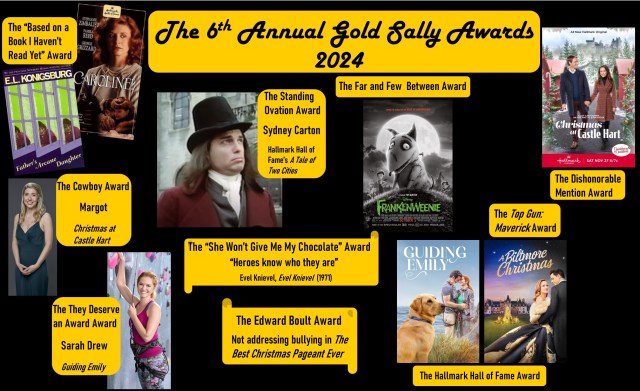
Since 2024 is a Leap Year, I wasn’t going to miss the opportunity to publish the Gold Sally Awards on Leap Day! For new readers of 18 Cinema Lane, the Gold Sally Awards are one of my blog’s annual traditions to commemorate 18 Cinema Lane’s anniversary. These award categories are created by me, based on topics I’ve brought up on my blog. While most of the awards are the same as in 2023, a few of them have changed. For those awards, I’ll explain the significance of those categories. But just like last year, I will discuss why I chose each recipient. So, now, the moment you’ve been waiting for! The 6th Annual Gold Sally Awards are about to begin!

6th Annual Gold Sally Awards Winners created by me, Sally Silverscreen.

The “She Won’t Give Me My Chocolate” Award

(Best Quote from a Movie)

“Heroes know who they are” – Evel Knievel, Evel Knievel (1971)

In my review of the 1971 biopic, Evel Knievel, I mentioned how surprised I was by the story’s messages and themes. One example I provided was when Evel explained to Linda why he doesn’t want a lettermen sweater. To elaborate how he doesn’t need to prove he’s a hero, Evel says to Linda, “heroes know who they are”. This quote is not only though-provoking, it is also profound without trying too hard to be. To me, that quote (as well as that scene) was given a lot of thought by the biopic’s creative team!

The Standing Ovation Award

(Character Most Deserving of Receiving Their Full Potential)

Sydney Carton from Hallmark Hall of Fame’s A Tale of Two Cities

My favorite character from Hallmark Hall of Fame’s A Tale of Two Cities is Sydney Carton! Because of his personality, I wanted to know more about him. I was also curious to see where his story would go. Without spoiling this movie, though, all I’ll say is Sydney deserved more than the story provided him. Similar to Kili from The Hobbit trilogy, Sydney is, in my opinion, the MVP of A Tale of Two Cities!

The They Deserve an Award Award

(An Actor or Actress Who Deserves Recognition)

Sarah Drew (for her performance in Guiding Emily)

In the Hallmark Movies & Mysteries film, Guiding Emily, the protagonist loses her eyesight. This prevented Sarah Drew, the actress who portrayed Emily, from using her eyes for emotional expression. However, she used other acting techniques to her advantage; such as body language, vocal inflections, and movements of the mouth. Sarah’s performance in Guiding Emily was so good, I specifically highlighted it in my review of the 2023 movie! Through versatility in her acting abilities, Sarah’s portrayal of Emily appeared believable! In fact, I think Sarah should have, at least, been nominated for an award.

The Cowboy Award

(Character Who Makes an Unnecessary, Drastic Change)

Margot from Christmas at Castle Hart

Cowboy, from the Hallmark Hall of Fame movie, A Painted House, is a character I’ve mentioned on 18 Cinema Lane. The context was when he was featured in the dishonorable mentions section of my list of the top ten characters ruined by Hallmark. Because I won’t spoil the aforementioned Hallmark Hall of Fame film, all I will say is Cowboy makes an unnecessary, drastic change that, in my opinion, was jarring to witness. It was also jarring to watch Margot, from Christmas at Castle Hart, drastically change. For most of the 2021 movie, Margot comes across as a somewhat annoying character obsessed with Irish stereotypes. But when her sister, Brooke, confronts her about how they should stop lying, Margot becomes a selfish and manipulative person. She even convinces Brooke into believing that if their lies fall apart, it will be Brooke’s fault. In an instant, Margot became a character who cared more about her career than about how others would be affected by her lies.

The “Based on a Book I Haven’t Read Yet” Award

(Movie Based on Source Material I Have Not Yet Read)

Hallmark Hall of Fame’s Caroline?

Hallmark Hall of Fame’s Caroline? became my favorite movie of 2023! After watching the film, I remembered how it was based on the book, Father’s Arcane Daughter by E. L. Konigsburg. As well as trying to check out as many Hallmark Hall of Fame movies as I realistically can, I’d like to read as many books based on Hallmark Hall of Fame movies as possible. In fact, I even created a Hallmark Hall of Fame reading challenge! Since I haven’t read Father’s Arcane Daughter yet, I need to find an excuse to finally seek this book out.

The Edward Boult Award

(Missed Opportunity in Cinema)

Not Addressing Bullying in The Best Christmas Pageant Ever

If you’re going to create a story for a younger audience, you need to be mindful when it comes to addressing serious, real-world issues. That’s because a younger audience can be very impressionable. The creative team behind the 1983 television production, The Best Christmas Pageant Ever, should have kept this in mind when they chose to not address bullying in their film. As I talked about in my review, the Herdman children bully their peers. The bullied children don’t stand up for themselves against the Herdmans. It also doesn’t help how the adults in the story do not resolve this issue. Because of everything I just said, some younger audience members might believe they shouldn’t bring up bullying if it occurs in their life.

The Top Gun: Maverick Award

(Movie That Exceeded My Low Expectations)

A Biltmore Christmas

When I included Top Gun: Maverick in my list of the top ten best movies I saw in 2022, I admitted how skeptical I was about the movie’s quality. As I said in that list, sequels released over ten years after their predecessor can be hit or miss. But Top Gun: Maverick exceeded my expectations, becoming my second favorite picture from that year! In 2023, I was skeptical about A Biltmore Christmas due to its hype and publicity. Similar to Top Gun: Maverick, A Biltmore Christmas was so good, it ended up in the top three of my year end best movies list! Like I said in my list of the best movies I saw in 2023, there were so many things Hallmark got right in this Christmas movie. It also helps how the story provided a different type of narrative for Hallmark’s Christmas presentations. Because of how much I liked A Biltmore Christmas, I’m looking forward to seeing what Hallmark has in store for this year’s Christmas season!

The Dishonorable Mention Award

(Worst Movie from the Dishonorable Mention Category)

Christmas at Castle Hart

Because I didn’t see enough movies to include an honorable mention category, I wasn’t able to award a winner for the Honorable Mention Award. Since my worst movies of 2023 list featured a dishonorable mention category, I was able to find a recipient for this year’s Gold Sally Awards. Christmas at Castle Hart is the most disappointing film to not make my worst films of the year list. In my review of that movie, I stated how I had waited since 2018 to see Stuart Townsend star in a Hallmark production. Sadly, the final product Hallmark gave me wasn’t worth the wait. Stuart’s acting talents were underutilized to the point where his character, Aiden, spent most of the story driving the female protagonist around Ireland. Christmas at Castle Hart contained other flaws, such as bad CGI and an underutilized subplot. Looking back on the Dishonorable Mention Award, I realized how both recipients were Hallmark films.

The Far and Few Between Award

(Best Movie from a Genre, Film Category, or Decade Not Often Covered on 18 Cinema Lane)

Frankenweenie (2012)

Even though 18 Cinema Lane has been around for six years, there are some areas of cinema that are not often covered on my blog. One of those areas is animation. While it’s rare for an animated movie to receive a movie review, it’s even rarer for an animated movie to appear on my best films of the year list. 2012’s Frankenweenie achieved these feats in 2023, presenting a collection of good creative choices as well as heart. This movie was such a pleasant, memorable surprise, which surpassed my expectations. I’m thankful I took the chance to write about it!

The Hallmark Hall of Fame Award

(Movie That Feels Like It Belongs in the Hallmark Hall of Fame Collection)

Guiding Emily and A Biltmore Christmas

When I shared my overall impression of Guiding Emily, I said how the movie felt reminiscent of Hallmark Hall of Fame projects of yesteryear. This is because the film tells a more unique story from what Hallmark typically creates today. In the case of A Biltmore Christmas, the story provided a different type of narrative within Hallmark’s Christmas films. It also included a historical component to the story. When Hallmark Hall of Fame was in its prime, historical/period films or movies with inspirational themes were added to the Hallmark Hall of Fame collection. If this collection still existed, Guiding Emily and A Biltmore Christmas would have been chosen as 2023’s Hallmark Hall of Fame presentations.

Have fun at the movies!

Sally Silverscreen
Take 3: Shadowlands (1985) Review

Films are a way to visually tell a story. The subjects can range from the fictional to the historical. With movies belonging in the non-fiction genre, that story can introduce viewers to a particular person, event, or time period. This is the case for the 1985 made-for-TV film, Shadowlands! I will admit I knew very little about C.S. Lewis prior to The Two Jacks Blogathon, hosted by Taking Up Room. While I was aware of his contribution to literature, creating the Chronicles of Narnia series, my knowledge of the author was surface-level. By participating in this blogathon and by choosing to review Shadowlands, I hoped to learn more about C.S. Lewis and the literary world he created! Now, it’s time to open the wardrobe door and step into this review!

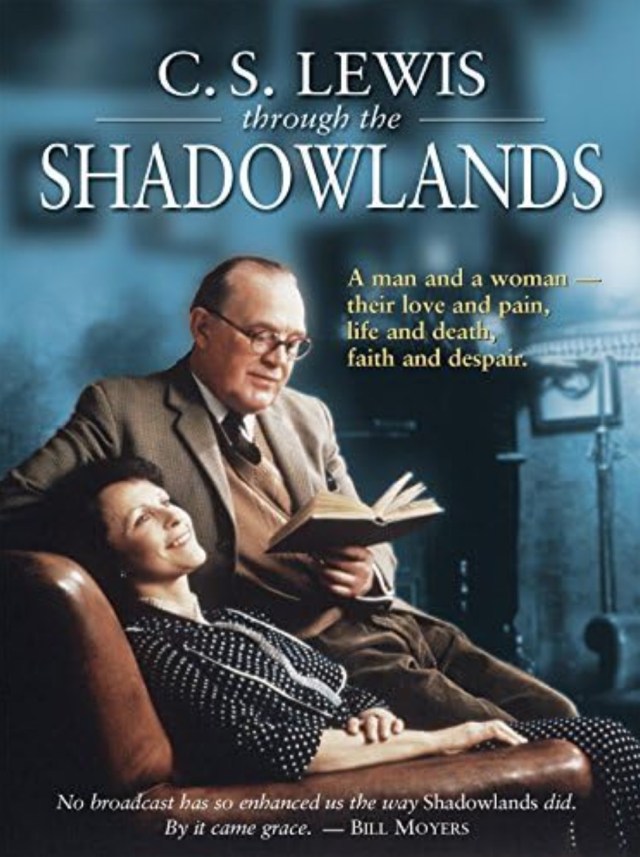
For some reason, Shadowlands has two titles: Shadowlands and C.S. Lewis Through the Shadowlands. Because the movie doesn’t have an offical poster on IMDB, I chose this poster for my review. Shadowlands (1985) poster created by British Broadcasting Corporation (BBC) and BBC Enterprises.

Things I liked about the film:

The acting: In past reviews, when I talked about a movie’s acting performances, I’ve mentioned the believability of those portrayals. This believability comes from the actors displaying an understanding for their roles, as well as for the talents of their co-stars. As I watched Shadowlands, I could sense the believability from the cast. This element was so strong, it allowed the interactions to come across as realistic. Whenever C.S. Lewis and Joy Gresham shared conversations with one another, it seemed like they shared a mutual connection, being on the same page and even on the same paragraph. The combination of Joss Ackland and Claire Bloom’s talents allowed these performances to compliment each other! There were other interactions that appeared realistic in Shadowlands. When a medical situation takes place in the family, Douglas, portrayed by Rupert Baderman, asks C.S. Lewis about the situation itself. Douglas’ eyes display a longing look, desperate for things to get better. As C.S. Lewis reveals the answer, he has a serious expression on his face. These emotional expressions from both actors brought a sense of honesty to the interaction.

C.S. Lewis’ perspective: Because Shadowlands is based on a part of C.S. Lewis’ life, some of his perspectives are included in the script. The delivery of these perspectives and how they were incorporated into the story was insightful and thought-provoking. In a letter to Joy, C.S. Lewis explains how Narnia is a part of something bigger. From how I interpreted this statement, C.S. Lewis is pointing out how Narnia is a key component of the overarching story. It was interesting to hear Narnia referenced this way, as that world plays such a large role in its series, it seems like the star of the show. Amongst a group of colleagues during Christmastime, C.S. Lewis acknowledges how the birth of Jesus is considered a miracle. But he also points out how Springtime is a miracle, when plants are reborn and the world around the characters comes alive. Looking back on C.S. Lewis’ statement, it can be easy to take Springtime for granted, as it is a natural occurrence that happens on its own.

Historical accuracy: The historical accuracy in a historical/period drama can be found in the visual details. These details can also provide clues for the specific time a story takes place. Several scenes of Shadowlands show a rotary dial phone on a desk or on a table. The phones in the film are black, even though these types of phones can boast any colorful hue. In a scene where one of the characters is in the hospital, the bed is built with a silver metal frame. Even the knobs on a medical machine feature a simplistic design and make a loud, clicking sound. With these observations in mind, it appears that Shadowlands takes place in the 1950s or 1960s.

The Two Jacks Blogathon banner created by Rebecca from Taking Up Room

What I didn’t like about the film:

Sudden jumps in time: Shadowlands has a run-time of an hour and thirty-two minutes. This means progression of time is forced to be condensed for the sake of satisfying the run-time. Within the film’s first thirty minutes, however, the condensation of time was jarring, causing events to happen too quickly. After C.S. Lewis and Joy Gresham first become acquainted with each other, she tells him that she’ll return to England with her sons, in order for them to meet C.S. Lewis. In the very next scene, Joy has returned to England with her children. Several scenes later, Joy makes plans with C.S. Lewis about spending Christmas with him. A scene after that, Christmastime was already arrived.

An overshadowed brother: When I talked about this film’s sudden jumps in time, I mentioned Joy having two sons. These sons, David and Douglas, travel with their mother to England and eventually make England their permanent residence. Throughout the story, Douglas’ perspective is the one that is prioritized, as he is a fan of the Chronicles of Narnia series. The audience even sees how Douglas deals with a tragic situation. David’s thoughts about this tragic situation are referenced, but never showcased. I know there is only so much story to tell in an hour and thirty-two minutes. But I wish David’s perspective hadn’t been ignored.

Things left unexplained: In my review’s introduction, I said I hoped to learn more about C.S. Lewis by watching Shadowlands. While I did learn some things about the famous author, the story assumed the viewer already had basic knowledge about him. One example of this is how some things were left unexplained. There is a scene where C.S. Lewis is lecturing a group of students in a classroom. No explanations were provided for why he was lecturing these students or why he was teaching in the first place. It wasn’t until after I saw the movie that I learned C.S. Lewis was a professor at Oxford.

Sketch of London image created by Archjoe at freepik.com. <a href=’https://www.freepik.com/free-vector/hand-drawn-houses-of-parliament_1133950.htm’>Designed by Archjoe</a>. <a href=”https://www.freepik.com/free-photos-vectors/background”>Background vector created by Archjoe – Freepik.com</a>. Image found at freepik.com.

My overall impression:

A person or event featured in a movie may be so fascinating, they deserve their own documentary. Some examples are the events that inspired Over the Edge and Evel Knievel. C.S. Lewis is one of these people that deserves a documentary, as he is an interesting literary figure. In fact, I think the story of Shadowlands should have been a documentary instead of a film. Even though I learned some information about the famous author, the movie assumed the audience already knew about him. This was the cause of things within the story not being explained. If the story of Shadowlands had been a documentary, important events could be discussed and prioritized without the program’s run-time being a concern. But reflecting on Shadowlands as a film, there are aspects of the project I can appreciate, such as the acting performances and hearing about C.S. Lewis’ perspective. With all that said, I thought the movie was just ok.

Overall score: 6 out of 10

Have you seen 1985’s Shadowlands? Would you like to see me talk about C.S. Lewis’ stories on my blog? Please tell me in the comment section!

Have fun in Narnia!

Sally Silverscreen

Take 3: Evel Knievel (1971) Review

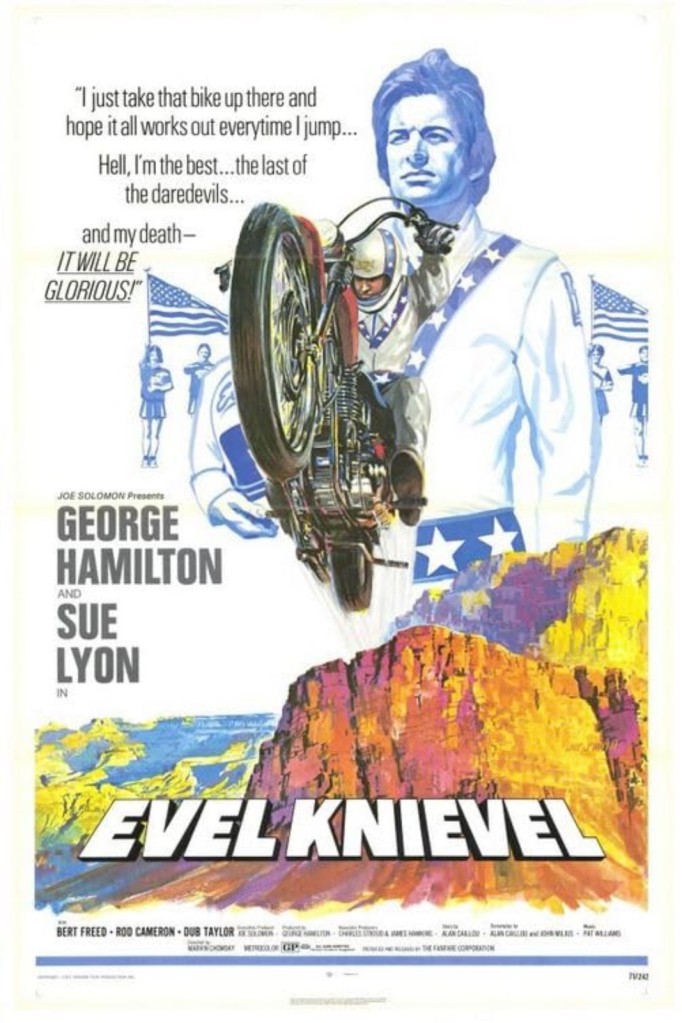
When it comes to movies from the 1970s, I haven’t had the best of luck, this year, finding a film I actually like. While I thought Days of Heaven and The White Buffalo were ok, I wasn’t impressed with The Last Child and Double Nickels. However, I was still determined to search for a movie from the ‘70s I enjoyed. During this search, I stumbled upon the 1971 film, Evel Knievel, a biopic about the stuntman of the same name. Since August’s theme of Genre Grandeur is ‘bikers, bikes, and motorcycles’, I had a great excuse to check this movie out! Choosing the 1971 title for Genre Grandeur also gave me an excuse to learn more about Evel Knievel. Before watching this film, I was familiar with who Evel is and why he was famous. But that basic information was all I knew. Besides broadening my cinematic horizons, I used my entry for Genre Grandeur to learn something new.

Evel Knievel (1971) poster created by The Fanfare Corporation, Fanfare Films, and American Broadcasting Company (ABC)

Things I liked about the film:

The acting: In my review of RKO 281, I talked about Liev Schreiber bringing humanity to his portrayal of Orson Welles, finding the heart of the “genius” and putting some genuine emotion behind it. This was successfully done to highlight Orson as more than just a legend. During his career, Evel Knievel became a celebrity, performing stunts that most people would never dream of attempting. Similar to Liev Schreiber, George Hamilton found the man behind the famous name and presented the human side of him. Toward the beginning of the film, Evel is at a local bar, talking to his friends how “something big” is going to happen in town. From furrowing his eyebrows to showing a good-hearted smirk, Evel talks about this upcoming, unknown event with ease and confidence. Through George’s performance, Evel is shown as more than just the famous stuntman, adding a sense of charm to his portrayal.

Throughout the film, Evel interacts with his wife, Linda. Portrayed by Sue Lyon, Linda and Evel’s encounters were pleasant to watch! This is because George and Sue had nice on-screen chemistry! Evel and Linda kind of reminded me of Abby and Bill from Days of Heaven. In the 1978 movie, it felt like Bill and Abby truly got along with one another, with a shared gentleness understood between them. The 1971 shows Linda and Evel respecting one another and, more often than not, being on the same page.

Despite appearing in the movie for a short period of time, Dub Taylor left a memorable impression as Turquoise Smith! The ring-master of a local rodeo, Turquoise had a larger-than-life personality. But this personality never felt over-the-top, thanks to the way Dub portrayed Turquoise. Even when there was a tragedy at the rodeo, Turquoise maintained professionalism and showmanship. Because of the quality of Dub’s acting talents, these components of the character remained consistent.

The stunt footage: During Evel Knievel, a montage of stunt footage is featured. This footage shows Evel performing various stunts throughout his career, with some stunts more successful than others. The montage is used as a bridge between his early years and “present day”, as the footage emphasizes the dedication and willpower Evel put into his stunts. Since the movie is a bio-pic about a real-life person that existed at one point in time, the montage added contextual depth to the story. It also provides a nice connection between the film and the actual Evel Knievel.

The messages and themes: As I said in this review’s introduction, I chose to write about Evel Knievel because I wanted to learn more about the titular man. However, I was surprised by the messages and themes that came out of this story. While reflecting on his relationship with Linda, Evel recalls a time when he visited Linda at her high school. During this encounter, Evel explains why he doesn’t play basketball. He feels that in basketball, you don’t have much to lose, as all the stakes are lower. He also confesses how he doesn’t want a lettermen sweater, as Evel doesn’t need to prove he’s a hero. With this, he tells Linda, “heroes know who they are”. Letterman sweaters/jackets have been known for being something high schoolers can earn through academic and athletic achievement. But until watching Evel Knievel, I’ve gained a newfound perspective on this subject.

Illustrated image of Arizona desert created by pikisuperstar at freepik.com. Background vector created by pikisuperstar – www.freepik.com

What I didn’t like about the film:

Transitions between past and “present”: The story of Evel Knievel is told through Evel’s recollections of his past as he’s preparing for an upcoming stunt. But the way the film jumped between past and “present” was confusing. During one of Evel’s recollections, he remembers a tragedy that took place toward the beginning of his career. As soon as the tragedy occurs, the story is brought back to the “present”, showing Evel nervous about the upcoming stunt and dealing with an injured leg. It took me a little while to realize the story had transitioned between the past and “present”, as the scene changed so abruptly. Personally, I think the story should have been told through a chronological order.

The past more interesting than the “present”: Like I mentioned in my previous point about the story’s transitions between past and “present”, Evel is preparing for an upcoming stunt in the “present”. But aside from seeing Linda and Evel interact and the aforementioned stunt, I didn’t find the “present” interesting. In fact, I found Evel’s recollections of his past more interesting, as it was an opportunity for me to learn more about Evel Knievel. Even though the stunt in the “present” is shown, it doesn’t take place until the story’s last ten minutes. So, the audience is forced to wait almost the entire movie for that moment.

An omission of a “where are they now” segment: In most biopics, there is a segment toward the end of the movie which explains what happened to the story’s key people after the events of the movie. But this segment was omitted from Evel Knievel. During the “present”, Evel talks about how he wants to perform a stunt in the Grand Canyon. I was hoping there would be a sense of closure about whether this stunt actually took place. Sadly, no explanation about the fruition of this stunt was provided. I don’t know where Evel’s career was at the time of the film’s release. However, I still think a “where are they now” segment should have been included.

Children holding American flags during a sunset image created by rawpixel.com at freepik.com. <a href=”https://www.freepik.com/free-photos-vectors/people”>People photo created by rawpixel.com – http://www.freepik.com</a>. Image found at freepik.com.

My overall impression:

I’ve seen some movies where I felt the subject would have been better served through a documentary, as the subject itself is quite fascinating. This is how I felt while watching Evel Knievel. I was able to learn more about the “king of stuntmen” through his recollections of his past. In fact, I found the past more interesting than the “present”, as I was kind of bored by the weak conflict. Despite the confusing jumps between past and “present”, Evel Knievel provided an introduction to the titular man. As this is one of the reasons why I watched the film, the 1971 title does its job. When it comes to biopics, Evel Knievel doesn’t really reinvent the wheel, with the story being pretty straight-forward. The acting, stunt footage, and messages and themes prevent the movie from becoming unmemorable.

Overall score: 6.1 out of 10

Have you seen or heard of Evel Knievel? Which biopic do you think is well-made? Tell me in the comment section!

Have fun at the movies!

Sally Silverscreen
The Top 10 Worst Movies I Saw in 2021

When it comes to my best and worst of the year lists, 2021 is a little different. For one, this is the first year where I don’t have any Dishonorable Mentions. This is because I didn’t see enough movies to justify having this portion on the list. For another, my list has the least number of movies that were “so bad they were bad”. The reason is most of the films on this year’s list were disappointments. When I look back on my movie viewing in 2021, I feel most of the titles I saw and/or reviewed were either ok or fine/decent. Sure, I did see several films I liked. But some of those will be discussed on my best of the year list. Speaking of lists, let’s start counting down the top ten worst movies I saw in 2021!

Two disclaimers:

  1. As I’ve said in past lists, I did not write this list to be mean-spirited or negative. It’s simply a way to expressive my own, honest opinion.
  2. Some of the movies on this list have been reviewed on my blog. I will include a link to my reviews of these films.
<a href=”http://<a href=’https://www.freepik.com/vectors/background’>Background vector created by pikisuperstar – http://www.freepik.com</a>&quot; data-type=”URL” data-id=”<a href=’https://www.freepik.com/vectors/background’>Background vector created by pikisuperstar – http://www.freepik.comColorful 2021 image created by Pikisuperstar at freepik.com.

10. I Dream of Jeanie (1952)

This movie made me wish I had saved an hour and twenty-nine-minutes by reading Stephen Foster’s Wikipedia page. For a “biopic”, I Dream of Jeanie wasn’t very informative. While I did learn a few things, the story didn’t capture an almost complete picture of the famous composer. It also showcased him in a not-so-favorable light. Because he was portrayed as a desperate push-over, Stephen was a character that exuded sympathy to the audience. What did not help was how the film placed more focus on other characters and events as well, such as the oh so annoying Edwin P. Christy. Speaking of Edwin, this movie would be called “The Edwin P. Christy Show” if given an honest title.

Take 3: I Dream of Jeanie (1952) Review

9. Country at Heart

This movie is notorious among the Hallmark fans for having more than one release date between 2019 to 2020. Too bad it wasn’t worth the wait. What could have been an interesting story turned out to be another tale of a woman from the city coming back to her small hometown. This is also one of those films where the protagonist says they are going to do something, but ends up spending most of the movie not doing the aforementioned thing. Country at Heart’s biggest flaw, though, lay in the singing abilities of the main character, Shayna. Throughout the story, Shayna’s talents were treated as if she were the next great undiscovered talent. But, in reality, her talents were, at best, fine. I don’t know if Jessy Schram sang in the movie or if there was a singing double. However, this part of the film dissuaded me from buying what the movie was selling.

8. The Trap (1959)

What a weird coincidence for another movie from the ‘50s to end up on my worst list. Even though The Trap is classified as a drama, the creative team placed more emphasis on the drama within the story. When you have gangsters in your film, this is not the genre you want to place your movie in. Since my warning came way too late, the 1959 title was a boring combination of a Suddenly rip-off and a road trip picture. Adding insult to injury, the excitement and action you’d expect from a gangster film was so far and few between. I’m honestly surprised I didn’t fall asleep during this movie, as I wanted to on more than one occasion.

Take 3: The Trap (1959) Review

7. Jane Doe: Ties That Bind

It is possible to make a good movie revolving around a debate. The Hallmark Hall of Fame film, Sweet Nothing in My Ear, is a beautiful example of this. With Jane Doe: Ties That Bind, however, adding a debate to a mystery story doesn’t work. This is because it goes against the very nature of the mystery genre, which emphasizes finding a concrete resolution to the story’s conflict. Unfortunately for the 2007 movie, a debate was the most focused part of the script. Because of that decision, the debate overshadowed the mystery itself. When everything was said and done, the debate wasn’t resolved. If I could summarize this film in one meme, it would be the one where the woman asks “You did this for what”?

6. Hometown Hero

It’s a shame that not one, but two PixL movies ended up on my list, especially since I rarely talk about their films on my blog. The reason why Hometown Hero is considered one of the worst movies I saw this year is because of how bland it was. This caused me not to care about any of the characters or their stories. It also doesn’t help that the main actor and actress had such weak on-screen chemistry, it felt like their characters were becoming good friends instead of romantic significant others. Similar to what I said about choice number seven, I would choose the meme of the woman asking “Where’s the flavor”? if I needed to summarize Hometown Hero in one meme.

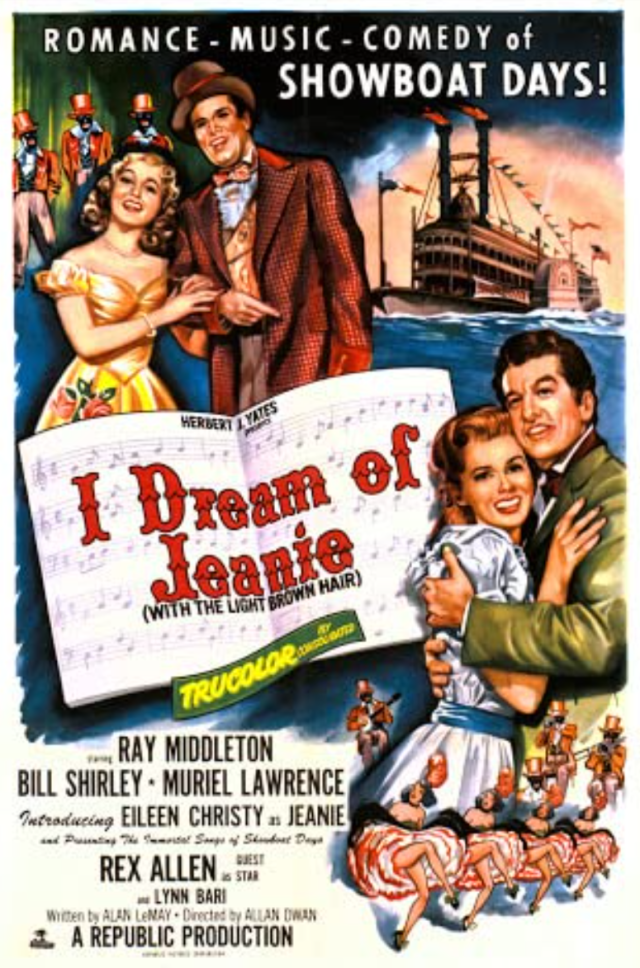
I Dream of Jeanie (1952) poster created by Republic Pictures

5. The Price of Fitting In

Lifetime has an infamous history of creating PSA/“after school special”/cautionary tale movies, which cover a variety of serious, real world subjects. When I came across this 2021 title, I was curious to see what new topics and issues would be discussed in this film, especially considering it’s been a long while since Lifetime created a movie of this nature. But unlike the network’s other PSA/“after school special”/cautionary tale productions from decades past, The Price of Fitting In suffers from an identity crisis. The script spends the entire movie trying to figure out what type of story it wants to adopt. This led several parts of the narrative to either be underdeveloped or unresolved. The Price of Fitting In does recognize how a robotics team can experience similar peer-related situations like other extracurriculars, so I’ll give the movie credit where it’s due. I just wish that idea had belonged in a better film.

4. Raising Arizona

The best way to describe how I feel about this movie is by using an analogy: You’re listening to someone tell a joke. But when it’s time to deliver the punchline, that person forgets what it is. So instead, they either try to come up with a new punchline on the spot or they attempt to figure out what the original punchline was.  In Raising Arizona, the comedic moments lasted so long, the punchline got lost in translation. Some of the jokes didn’t make sense because of this. The characters were not charming or likable enough to make their dysfunctionality tolerable for the audience. If anything, they were one-dimensional and uninteresting. The only part of the movie that prevented me from DNFing (did not finish) it was Leonard Smalls. He was such a mysterious and intriguing character, that I wish I watched a movie about a character like Leonard.

3. Durango

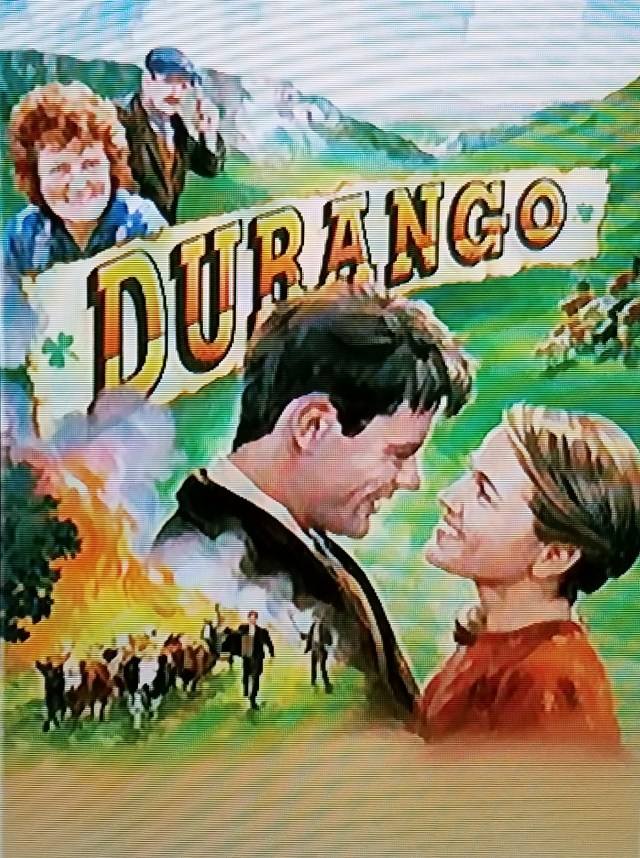
As I said in my review from July, Hallmark Hall of Fame’s Durango is “the first western set in Ireland”, according to IMDB. For the first of its kind, it was a step in the wrong direction. Stories in the western genre are known for having higher stakes, giving the audience an excuse to stay invested in the characters’ well-being. Durango didn’t get that memo because most of the stakes were so low, the characters’ plans worked out too perfectly. Despite never reading the book this Hallmark Hall of Fame title is based on, I can tell how weak this script was. What was also weak was Matt Keeslar’s performance and his on-screen chemistry with Nancy St. Alban. Watching this movie on Hallmark Drama was a blessing in disguise. I may not have saved some time, but at least I saved some money.

Take 3: Hallmark Hall of Fame’s Durango Review

2. Chasing Leprechauns

Yet another Hallmark movie set in Ireland joins the list. Since the network doesn’t create many St. Patrick’s Day themed movies, it is frustrating when a story relating to this particular holiday doesn’t stick the landing. With Chasing Leprechauns, the creative team wanted to include a whimsical element without making the movie too whimsical. Like I said in my review of the 2012 film, those involved with the project wanted to have their cake and eat it too. When I look at the movie’s poster, it feels like false advertising. For one, Chasing Leprechauns is a drab looking picture, not the lush, green paradise the poster wants you to believe. For another, there are no leprechauns in the story, despite the word ‘leprechauns’ being in the title. Hallmark is known for releasing some of their movies on DVD. As far as I know, Chasing Leprechauns was never made available for purchase. Maybe its poor quality is the reason why?

Take 3: Chasing Leprechauns Review

Remember when I said there were two PixL movies on my worst list? Well, The Cookie Mobster is the second film. For those who are not familiar with PixL, this is an entertainment company that typically creates “rom-coms” similar to those on Hallmark Channel. Because of that, this 2014 film was way too ambitious for the company’s own good. The light-hearted tone of the scouting troop’s story and the darker tone of the former gangster’s story ended up clashing with each other. Adding to that, the screenwriters didn’t display an understanding for several of the movie’s subjects. The weak script caused me to question the story’s validity, which took away any opportunity for me to stay invested in the story. The more I think about The Cookie Mobster, the more I wish it had been created by INSP or Hallmark Movies & Mysteries.

Since I’m talking about Durango again, I’m re-posting my screenshot of the film’s poster. Screenshot taken by me, Sally Silverscreen.

Have fun in 2022!

Sally Silverscreen

Take 3: I Dream of Jeanie (1952) Review

I’m participating in two blogathons; the Musicals: With A Song And A Dance In My Heart Blogathon and The Biopic Blogathon. Because of this choice, I wanted to review a movie that was “the best of both worlds”. One day, while on Youtube, I came across the 1952 film, I Dream of Jeanie. After learning it was a musical biopic about the composer, Stephen Foster, I knew I had found the perfect entry! Prior to these events, I had never heard of I Dream of Jeanie. In fact, I was not familiar with Stephen Foster either. But I wanted to use my participation as an opportunity to learn more about him. I also wanted to be introduced to films that were newer to me. Did my plan work? Continue reading if you want to find out!

I Dream of Jeanie (1952) poster created by Republic Pictures

Things I liked about the film:

The acting: Bill Shirley is an actor I’m not familiar with. While I have seen Disney’s Sleeping Beauty, I have never seen any of his live-action films. Despite this, I did enjoy watching his acting performance! His mannerisms and line delivery reminded me of Jimmy Stewart. This is because of the tender-hearted nature Bill presented. His singing talents were amazing in this movie! One of his best performances was his solo, “Beautiful Dreamer”. With his deeper vocals and the heart-felt lyrics, there was emotion found in the song. He also sang beautifully with Eileen Christy, who portrayed Jeanie. Toward the beginning of the film, they sang a duet of “Oh! Susanna”. Bill and Eileen displayed good harmony during their performance. Having nice on-screen chemistry also worked in their favor.

While we’re on the subject of Jeanie, let’s talk about Eileen Christy’s performance. Throughout the film, she presented her character with a likable persona. Jeanie was sometimes the film’s “comic relief” as well. When a script adopts a “comic relief” character, that individual can either be goofy or be seen as dumber than the protagonist. With Jeanie, that was never the case. Even though she was silly, her intelligence never faltered. Another actress who gave a good performance is Muriel Lawrence. Portraying Jeanie’s sister, Inez, she provided an embodiment of a “diva”. Her strong will and determination to get her way made Inez one of the film’s more unlikable characters. But as an actress, Muriel had star qualities!  Whenever she appeared on screen, Muriel was able to garner the camera’s attention, even when her character wasn’t the focus of a scene. It also helps that she sang beautifully in this movie.

The musical numbers’ inclusion in the story: In some musicals, a musical number can make the story feel paused. With I Dream of Jeanie, the musical numbers pushed the story forward and made sense within the context of the story. A perfect example is Muriel’s solo, “Lo, Hear the Gentle Lark”. Toward the beginning of the movie, Inez and Stephen talk about an upcoming recital, where Stephen hopes Inez will agree to an engagement. When the event arrives, the performance is used to make Inez shine, showing how she craves attention. During the recital, unpublished songs by Stephen are introduced. The secret of Stephen’s involvement with “Oh! Susanna” is revealed at this event as well. Similar to “Lo, Hear the Gentle Lark”, the inclusion of these aforementioned songs also fit within the story.

A glimpse into the legal side of the music industry: One of the conflicts Stephen experiences is his lack of royalties from “Oh! Susanna’s” success. Whenever the song is performed, Stephen’s name is never mentioned. This surprises everyone in his life, including his brother. Stephen also faces legal threats due to the song’s copyright. This is because he presented the song to multiple publishers. Since I’m not well versed in the legalities of the music world, I found this brief exploration fascinating! That part of the story allowed me to learn something new. It also showed how different copyright laws and royalty agreements were in the 1840s.

The Musicals: With A Song And A Dance In My Heart Blogathon banner created by Neil from Thoughts From The Music(al) Man

What I didn’t like about the film:

Not really biographical: The purpose of a “biopic” is to provide some education to an audience about a particular individual. In the case of I Dream of Jeanie, this movie is meant to tell the story of Stephen Foster. But I ended up not learning much about the composer. While I discovered he wrote ‘Oh! Susanna’, I was expecting to learn more about Stephen. How did he become interested in music? Did he receive any professional training? This film doesn’t answer these questions. Instead, the script focuses more on other characters and events.

The characterization of Stephen Foster: No main individual in any “biopic” is meant to be seen as “perfect”. However, one of the staples of a “biopic” is to present the admirable aspects of a given individual. With I Dream of Jeanie, Stephen Foster, more often than not, came across as a desperate push-over. I don’t blame Bill Shirley for this, as he did a good job with the acting material he received. But I will put blame on the film’s screenwriter, Alan Le May. For the majority of the movie, Stephen loves a woman named Inez. She not only doesn’t like the type of music he makes, she also hates “Oh! Susanna”. In an attempt to win her love, Stephen announces how he’s trying to achieve a “redemption” by only playing classical music. He does this instead of standing up for himself or trying to compromise with Inez. This is, sadly, just one example of Stephen’s characterization.

The character of Edwin P. Christy: Not every character is meant to be likable. Sometimes, a character’s likability is based on personal preference. In my opinion, Edwin P. Christy was annoying. Once again, blame is given to Alan Le May. Edwin was a flamboyant and over-the-top showman. But what made him unlikable for me was how he used every opportunity to put the spotlight on himself. During Inez’s recital, Edwin disrupts the event by loudly playing one of Stephen’s songs at Stephen’s nearby stable. Edwin then crashes the recital and performs some of Stephen’s unpublished music, with no granted permission from Stephen. After some time, Edwin’s antics became unpleasant. It almost felt like Edwin tried to make the story about himself as well.

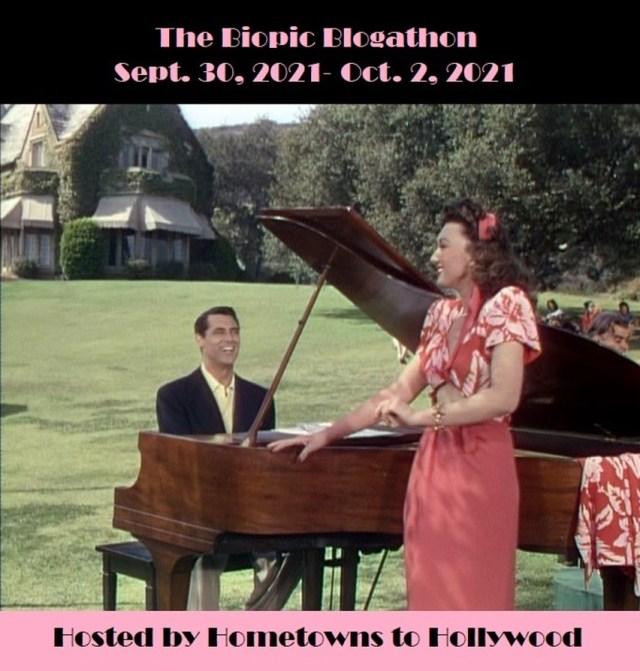
The Biopic Blogathon banner created by Annette from Hometowns to Hollywood

My overall impression:

In my introduction, I said I wanted to use my participation in these blogathons to learn more about Stephen Foster. Unfortunately, that’s not what happened. Don’t get me wrong, I did learn a few things about him and about some of the legalities of the music world’s early years. But it wasn’t enough to justify an hour and twenty-nine-minute movie. If anything, it almost seems like this film was about anything but Stephen. When characters like Edwin P. Christy try to take the spotlight for themselves, it makes the project look less biographical. As I mentioned in this review, some of the blame falls on the screenwriting. The quality of a project’s script is what makes or breaks it. If the script is weak, there’s only so much the other members of the creative team can do to salvage it. Now, as I wrap up this review, I must take a detour to Wikipedia.

Overall score: 5.6 out of 10

Have you seen any biopics? If so, which one is your favorite? Let me know in the comment section below!

Have fun at the movies!

Sally Silverscreen