Take 3: Vertigo (1958) Review

Alfred Hitchcock is a man who needs no introduction. Director by choice and legend by chance, Alfred has single-handedly become a house-hold name in the world of cinema. While I have seen (and reviewed) some of his films, there are still plenty of titles I have yet to see. One of those films was 1958’s Vertigo, which was recommended by Charity from The Sacred in the Secular! This is a movie I had been meaning to write about for a while. With The 3rd Master Of Suspense Blogathon on its way, I found a great time to finally review Vertigo! As I already mentioned, I have reviewed some of Alfred’s films. While I still think Strangers on a Train is his best movie, The 39 Steps is one of my least favorite. Now, the time has come to share my thoughts on Alfred Hitchcock’s 1958 presentation!
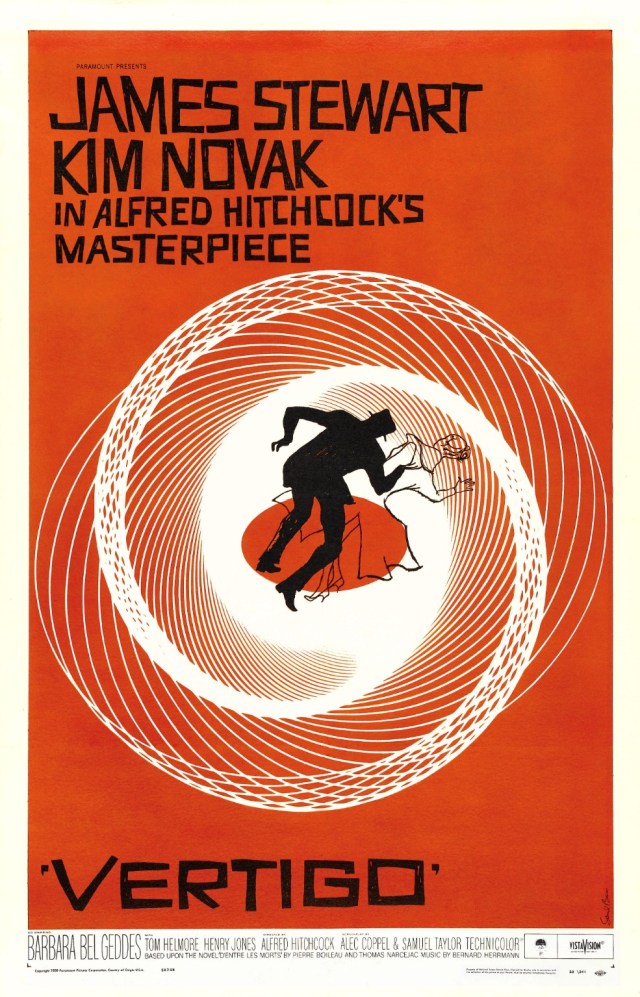
Vertigo (1958) poster created by Alfred J. Hitchcock Productions and Paramount Pictures

Things I liked about the film:

The use of music: Music can be a powerful film-making tool. Through a combination of sound, instrumentals, and even lyrics, music can elevate a scene’s mood, foreshadow parts of the story, or emphasize events happening in a scene. In Vertigo, music was utilized to compliment a scene’s given mood. A perfect example is when Scottie follows Madeleine to a flower shop. While he walks through a flower shop’s storage room, suspenseful orchestral music builds up to the moment Scottie reaches the flower shop’s door. This type of music acknowledges Scottie’s fear of the unknown, as he doesn’t know what he’ll find on the door’s other side. But once he opens the door, he discovers Madeleine is in a flower shop, purchasing a bouquet of flowers. This discovery causes calming, orchestral music to play in the background, stressing how Madeleine and the shop itself are nonthreatening to Scottie.

Incorporation of culture: The mystery in Vertigo revolves around Madeleine being obsessed with a woman named Carlotta Valdes. Scottie follows clues from art and local history in an attempt to solve the mystery. The “local history” in this movie is a fictionalized version of San Francisco’s history. However, the blending of these aforementioned cultural elements gave Vertigo a unique identity from other Hitchcock productions. The creative team’s incorporation of culture can also spark thought-provoking analysis about how culture can influence or even solve mysteries. As someone who reviews mystery films and even has a series called Sally Solves a Mystery, this aspect of Vertigo has made me look at the subject of mysteries somewhat differently.

The set design: There was some impressive set design in Vertigo! One of my favorite examples is Gavin’s office. Wood paneling covers every wall. The entire floor is covered in red carpeting, which actually compliments the wood paneling. A large, dark wood desk with intricate detailing becomes the showstopper of the space! Other design choices, such as a large model of a ship, red chairs, and a huge window overlooking the cargo ship dock emphasize Gavin’s importance in the company he inherited. Artwork and photographs covering every wall presents a glimpse into Gavin’s artistic taste.
The 3rd Master Of Suspense Blogathon banner created by Maddy from Classic Film And TV Corner

What I didn’t like about the film:

Questions left unanswered: For this part of my review, I will spoil Vertigo. If you have not seen this movie and are planning on watching it, skip to the part titled ‘The underutilization of Barbara Bel Geddes’.

After Madeleine dies, Scottie meets a woman named Judy, believing she looks like his deceased love. Shortly after Judy and Scottie meet for the first time, she writes a letter and confesses being Madeleine. In the letter, Judy claims parts of the story she and Gavin told Scottie were true. But she never specifies which parts of their story they were honest about. The creative team’s decision to leave questions unanswered frustrated me. This is because I was curious to see how the mystery of Madeleine’s psychological connection to Carlotta Valdes would be resolved.

The underutilization of Barbara Bel Geddes: In Vertigo, Barbara Bel Geddes portrays Marjorie ‘Midge’ Wood. A designer who is passionate about art, Midge was engaged to Scottie in the past. Even though their engagement didn’t last, they remain on friendly terms. Barbara’s on-screen chemistry with James was pleasant. Her performance effectively sold the idea Midge was good friends with Scottie. This made me hope Scottie and Midge would work together to solve Vertigo’s mystery. But that did not happen because Barbara was only in a handle of scenes. I think Midge is an interesting character, so this creative decision disappointed me. Not giving Barbara more material to work with was, in my opinion, a missed opportunity.

An unsolved mystery: For this part of my review, I will, once again, spoil Vertigo. If you have not seen this movie and are planning on watching it, skip to the part titled ‘My overall impression’.

At the beginning of Vertigo, Scottie is asked by Gavin to solve the mystery of why Madeleine is obsessed with a woman named Carlotta Valdes. This obsession gets to the point where Madeleine goes to places she has no memories of visiting. Because of how the fictionalized San Francisco culture and supernatural elements were combined in the mystery, I was curious to see how the mystery would be resolved. But, about halfway through Vertigo, Madeleine dies. Shortly after Madeleine passes away, the mystery of Judy’s identity begins. By the end of the movie, this new mystery is solved. If the screenwriters knew their script would contain more than one mystery, they should have resolved the first mystery before moving on the next one. The creative team’s decision to abandon Madeleine’s mystery left several questions unanswered.

Art tools image created by Freepik at freepik.com. <a href=’https://www.freepik.com/free-vector/flar-art-tools-pack_835368.htm’>Designed by Freepik</a>.  <a href=”https://www.freepik.com/free-photos-vectors/paint”>Paint vector created by Freepik</a>. Image found at freepik.com.

My overall impression:

Have you ever watched a movie where you found yourself deceived by the movie’s end? That’s how I felt after watching 1958’s Vertigo. Without spoiling the movie, I will say how even though the story contained two mysteries, only one of them is solved. This is one of the reasons why the script left questions unanswered. I also didn’t like how Barbara Bel Geddes’ acting talents were underutilized. However, there were aspects of Vertigo I liked. The film’s creative team displayed an understanding for how to effectively utilize music. Incorporating culture into the story gave Vertigo a unique identity among Hitchcock’s collection of films. I was impressed by the movie’s set design as well. But when it comes to titles created by Alfred Hitchcock, especially those starring James Stewart, I think Rear Window is stronger than Vertigo. Not only was the talent of Rear Window’s cast well utilized, the mystery was solved as well as prioritized.

Overall score: 6.5 out of 10

Have you seen Vertigo? Which film of Alfred Hitchcock’s is your favorite? Let me know in the comment section below!

Have fun at the movies!

Sally Silverscreen

The Top Ten Worst Movies I Saw in 2024

While 2024 was, for me, a better year for movies, I still saw some movies I didn’t like. Similar to my worst movies list of 2023, most of the films on this year’s list were disappointing or average. But, unlike 2023, the top four titles are from different genres. The dishonorable mentions section has returned! This time, however, there are more DNFs (did not finish). Like I have said in past lists, my top ten worst movies I saw in 2024 list is not intended to be mean-spirited, negative, or disrespectful. It’s just a list of my own, honest opinion. Since I reviewed some of the movies on my list, I will provide the links to those reviews in this article.

Dishonorable Mentions

The Reluctant Debutante, The Gambler: Luck of the Draw, Jazz Ramsey: A K-9 Mystery, Million Dollar Lethal Listing, CrimeTime: Freefall (I turned it off after about forty minutes), Mermaid Down (I turned off this movie after about twenty minutes), Blood, Sweat and Cheer (I turned it off after about eighteen minutes), and Temptation Under the Sun (I turned off this movie after about twenty-two minutes)

Image by starline on Freepik

10. Crimes of Fashion: Killer Clutch

In the 2020s, Hallmark has come up with story ideas that worked well enough for a stand-alone mystery movie, but unsustainable for a multi-chapter series. One of these ideas came from Crimes of Fashion: Killer Clutch. This film made the same mistake as Mystery Island: not allowing the protagonist to use her skills to solve the case. For Lauren, the main character in Crimes of Fashion: Killer Clutch, her psychology skills were so underutilized, she seemed more like an over glorified intern. Thick French accents making several characters difficult to understand is another major flaw of the film. It prevented me from being fully invested in the story. Crimes of Fashion: Killer Clutch was, in my opinion, a disappointing movie. But compared to the other titles on 2024’s worst of the year list, Hallmark’s production was, simply, ‘underwhelming’.

Take 3: Crimes of Fashion: Killer Clutch Review

9. Boy in the Walls

When I first read the synopsis for Boy in the Walls, I thought the film would be a spookier version of 2016’s Boy in the Attic. Sadly, this was not the case. The 2023 Lifetime presentation contained a mystery that was drawn out for too long. It also doesn’t help how the protagonist made one dumb decision after another. Without spoiling the film, all I’ll say is the title is misleading. If you haven’t watched either referenced movie, I’d recommend Boy in the Attic.

8. The 39 Steps

In my review of The 39 Steps, I said the 1935 picture was the most “meh” title from Alfred Hitchcock’s filmography. This statement was made due to the limited sense of urgency and intrigue within the story. As I also said in my review, The 39 Steps seems longer than an hour and twenty-six minutes. The drawn-out nature of the movie created a slow and boring build-up to a reveal that feels kind of ridiculous and anti-climactic. While romance has been incorporated in some of Alfred’s films, it didn’t work in The 39 Steps. Richard and Pamela’s attraction for one another was too abrupt, welcoming the presence of the “insta-love” trope. Even though The 39 Steps was a disappointing movie, I gave it a lower placement on my list. Comparing the 1935 film to Alfred’s other productions, Hitchcock’s filmography shows how much he improved as a director.

Take 3: The 39 Steps Review

7. Hallmark Hall of Fame’s Pack of Lies

There are some movies that, in my opinion, should have been documentaries instead. The 1987 Hallmark Hall of Fame presentation, Pack of Lies, is just one example. This film in the Hallmark Hall of Fame collection is based on a true story. While “based on a true story” movies can be engaging, intriguing, and even thought-provoking, Pack of Lies was disappointing. Like I said in my review of the 1987 production, the film was a two hour slow and tedious build-up to a resolution that was underwhelming and anti-climactic. The creative team’s decision to choose telling over showing caused other flaws, from little lapse in time to things not making sense. Pack of Lies proves Hallmark Hall of Fame movies are not created equally. However, there are other Hallmark Hall of Fame presentations from the 1980s I like, such as the adaptations of The Secret Garden and A Tale of Two Cities.

Take 3: Hallmark Hall of Fame’s Pack of Lies Review

6. One Bad Apple: A Hannah Swensen Mystery

While A Sprinkle of Deceit: A Hannah Swensen Mystery was slightly better than One Bad Apple: A Hannah Swensen Mystery, I was still disappointed in the latter film. For starters, Victor Webster and Alison Sweeney had no on-screen chemistry. A character (not Hannah) solves the mystery by making an assumption about the case and being conveniently correct. But the worst part about One Bad Apple: A Hannah Swensen Mystery was Delores’ subplot. Up until this film, Delores was very against Hannah getting involved in cases, as well as dating Mike. So, for Delores to become a private investigator and seem to treat her new job as a joke completely went against her character. In fact, this was such a bad creative idea, Delores’ private investigating career was barely mentioned in A Sprinkle of Deceit: A Hannah Swensen Mystery. If there are more Hannah Swensen films in the works, I really hope Delores receives better story ideas.

Hallmark Hall of Fame’s Pack of Lies poster created by Hallmark Hall of Fame Productions, Robert Halmi, and CBS

5. My Life Is on the Line

This Lifetime movie had one of the network’s most creative story ideas. The 2024 picture was about a woman who tried to solve a mystery on her computer at her office cubicle. But the longer I watched this movie, the sooner I realized that aforementioned idea wasn’t sustainable for a feature-length production. Instead, the novelty of how the mystery was solved got old very quickly. My Life Is on the Line is yet another Lifetime film where the protagonist makes a collection of dumb choices. Her decision-making is so bad, other characters in the story, including her boss, call her out for it. Lifetime’s 2024 presentation was, for me, the most disappointing movie of the year.

4. Network

Network holds the honor of not only being the first film I reviewed for my Comparing with the Critics series, it’s also the first film I disagreed with the critics on. Even though Gene Siskel and Roger Ebert placed the movie in their list of the top five films from 1976, I would call Network one of the “Dogs of the Year”. For me, it was more of an endurance test, where the story’s first half was a drawn-out search for a resolution to the movie’s conflict and the second half was a yelling contest. Being a pretentious picture by taking itself too seriously and telling a dry, boring story didn’t work in Network’s favor. There are movies from the 1970s I like. Unfortunately, Network isn’t one of them.

Comparing with the Critics – Best of 1976 – Network

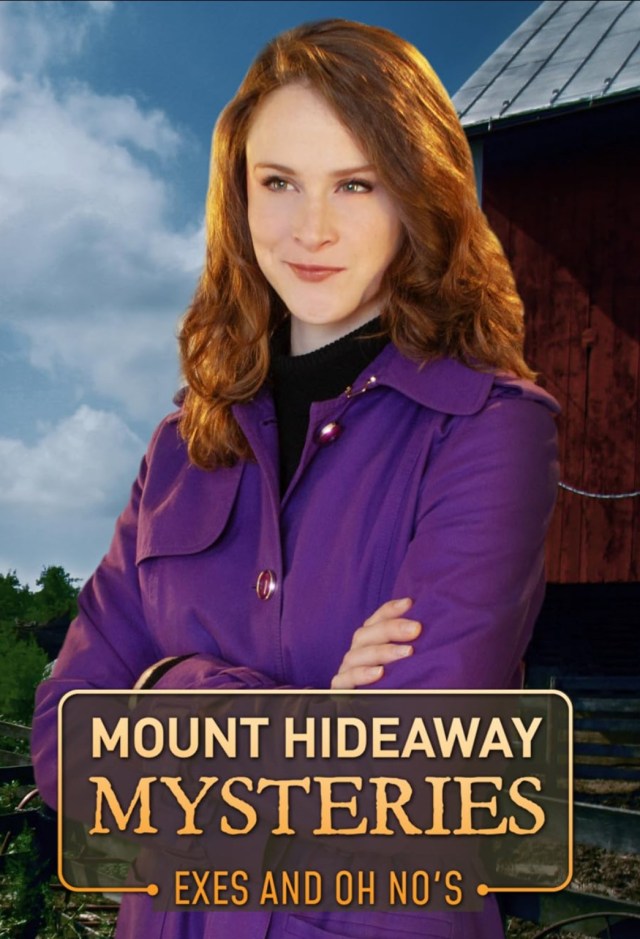
3. Mount Hideaway Mysteries: Exes and Oh No’s

It’s ironic that Mount Hideaway Mysteries: Heartache and Homecoming became the third worst movie of 2023 and now Mount Hideaway Mysteries: Exes and Oh No’s became the third worst movie of 2024. When you look past this irony, you’ll see how Mount Hideaway Mysteries: Exes and Oh No’s shares some of the same flaws as its sequel, like not understanding how technology works. Mount Hideaway Mysteries: Exes and Oh No’s contains its own flaws, with poor special effects as one example. While this movie is so bad, it’s, at times, unintentionally funny, I do acknowledge how challenging it can be to create a cinematic project. In fact, the best way to sum up Mount Hideaway Mysteries: Exes and Oh No’s is the quote, “Mistakes are proof that you are trying”.

Take 3: Mount Hideaway Mysteries: Exes and Oh No’s Review

2. Revenge Best Served Chilled

This Lifetime movie from 2022 had a very misleading title and synopsis. Not only is there no revenge in the story, there’s also nothing being chilled throughout the film. According to a plot summary I read, Revenge Best Served Chilled is about a series of murder mysteries taking place at a wine expert competition, with the protagonist trying to clear her name and solve the mysteries. The movie actually emphasizes the wine expert competition to the point where there is little to no mystery involved. Like Boy in the Walls and My Life Is on The Line, the protagonist, Emily, makes so many dumb decisions. I, honestly, should have turned this movie off after Emily doesn’t lock her family’s restaurant’s front doors as she’s spending the night at the restaurant. But I naively thought Revenge Best Served Chilled was going to be a better movie.

1. Frankenstein (2004)

I referenced this movie while reviewing the Hallmark adaptation of Frankenstein, as I was pointing out a technical error on Wikipedia. When I saw the version of Frankenstein starring Vincent Perez, I immediately knew it was going to be the worst movie I saw in 2024. While this movie contains some interesting ideas, those ideas are bogged down by other ideas. The excessive number of ideas made the story feel like a series of vignettes either loosely connected to each other or not connected at all. What also makes the overall story weak is how nothing is explained. The ending is one of the most “sequel bait” endings I’ve seen in a long time. I would strongly discourage readers from checking out this version of Frankenstein. More time will be spent being frustrated than entertained.

Mount Hideaway Mysteries: Exes and Oh No’s poster created by Glass House Distribution

Have fun in 2025!

Sally Silverscreen

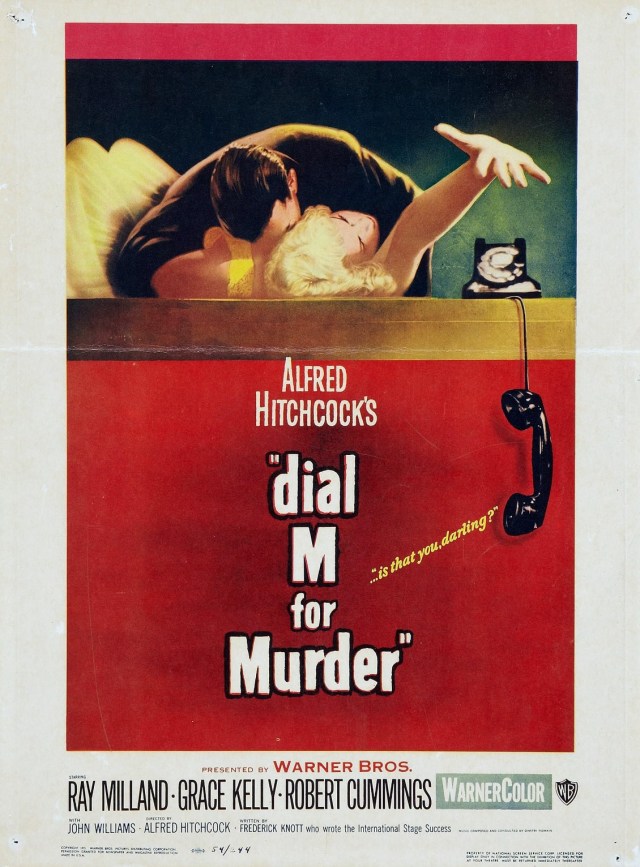
Take 3: Dial M for Murder Review

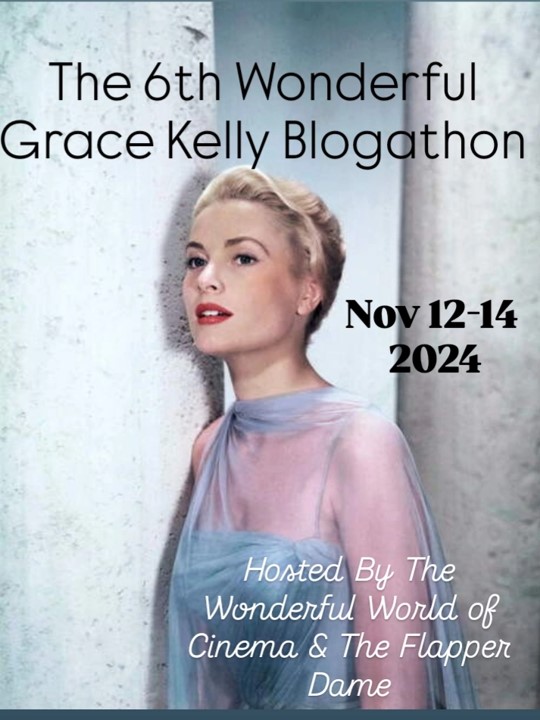
For this movie review, I chose to write about the 1954 film, Dial M for Murder, for two reasons. The first is how I selected this specific title for The 6th Wonderful Grace Kelly Blogathon, as Grace Kelly stars in the film. The second reason is how, prior to this review, I had never seen Dial M for Murder. Grace and Alfred are no strangers to 18 Cinema Lane. As of mid-November, 2024, I have reviewed two of Grace’s films; High Society (which I thought was fine) and To Catch a Thief (which I found just ok). Meanwhile, four of Alfred Hitchcock’s movies have been covered on my blog. Out of those titles, Strangers on a Train is, in my opinion, still the best one. But how does Dial M for Murder compare to any of Alfred’s films featured on 18 Cinema Lane? Find out by reading my review!

Dial M for Murder poster created by Warner Bros.

Things I liked about the film:

The acting: Since Grace Kelly is the reason why I chose to review Dial M for Murder, I will talk about her performance first. Out of her movies I’ve seen, I’ve noticed how her character portrayals have appeared at ease. Her performance in Dial M for Murder is no different, as her adopted mannerisms and reactions came across as realistic! While sharing a conversation with Mark (portrayed by Robert Cummings), Grace’s character, Margot, seems comfortable in his presence. She effortlessly moves around her apartment and, at times, stands close to him. But when she talks with Mark about how her husband, Tony, has changed, Margot appears to stare into the distance. The combination of her aforementioned stare and frown indicates how Tony’s behavior has troubled her. It also shows the audience how effective Grace’s acting talents are!

As I just said in this review, Robert Cummings portrays Mark, a close friend of Margot. Though they shared only a few scenes together, Grace and Robert displayed nice on-screen chemistry! The strength of Robert’s and Grace’s acting abilities helped their characters appear to truly get along with each other. While I liked Robert’s performance in Dial M for Murder, I was also impressed with Ray Milland’s performance! Similar to Grace’s portrayal of Margot, Ray’s portrayal of Tony showcases how adaptable his acting skills are. For example, Tony looks annoyed while at a restaurant with Mark. From the tone in his voice to constantly checking his watch, Tony clearly appears impatient. A few scenes later, as he’s on the phone with Margot, his demeanor quickly changes to concern due to what he hears over the phone. Throughout his performance, Ray effortlessly brought his character to life!

The use of lighting: Over the course of his career, Alfred Hitchcock has received the title of “Master of Suspense”. One reason why he was given this title is because of how he utilizes lighting to stir up a mood, present visually interesting concepts, or add suspense. In one scene, someone enters Margot and Tony’s apartment. This moment takes place at night, so the only light comes from the fireplace in the living room. An orange glow only providing light to certain areas of the room creates a suspenseful environment, giving the intruder places to hide. I brought up earlier in this review how Mark and Margot shared a conversation. Their conversation takes place in Tony and Margot’s apartment. Right before Tony returns home, Margot’s and Mark’s shadow departs from each other, keeping the closeness of their relationship a secret.

The use of color: Dial M for Murder’s opening credits reveal how the film’s creative team used “WarnerColor” in their project. I’m glad this movie was presented in color because it gave the creative team opportunities to utilize this visual technique to their advantage! Sometimes, the color red was incorporated into a character’s wardrobe. This ranged from Margot wearing a red dress at the beginning of the movie to Tony sporting deep red suspenders. One of the pieces of décor in Margot and Tony’s apartment were dark green curtains. In these examples, color was chosen to draw the audience’s attention to a person, object, or location in the room.

The 6th Wonderful Grace Kelly Blogathon banner created by Virginie from The Wonderful World of Cinema and Emily from The Flapper Dame

What I didn’t like about the film:

Exposition heavy: At the beginning of the movie, Margot shares with Mark how she recently lost her purse. She also tells him when her purse was returned, a letter Mark wrote her was missing. But shortly after Margot made this confession, an exposition heavy scene revealed the letter’s whereabouts, as well as who the story’s perpetrator was. Because this information was revealed so early in the movie, it took away a lot of the story’s suspense. So much exposition given within the film’s first ten minutes may also overwhelm the audience, possibly missing important information if they don’t actively pay attention to the dialogue.

A mystery that isn’t interactive: While talking about Dial M for Murder’s exposition heavy story, I said the perpetrator was revealed so early in the movie. This creative choice takes away the audience’s opportunity to solve the mystery of whodunit alongside the characters. What Dial M for Murder became was a story of how the perpetrator would get caught, similar to programs like Columbo and Diagnosis Murder. That creative decision forces the audience to simply watch the characters solve the story’s mystery. With everything I said, the mystery in Dial M for Murder wasn’t interactive.

A less intimidating antagonist: In some of Alfred Hitchcock’s movies, the antagonist is an intimidating person for a variety of reasons. Their intimidation can add suspense and intensity to a given film’s story. I will not spoil Dial M for Murder. However, I can honestly say I did not find the movie’s antagonist intimidating. Throughout the story, the antagonist kept making dumb decisions, which distracted from their attempts to be an intimidating character. It also didn’t help how the exposition heaviness of the film’s first ten minutes took away a lot of the story’s suspense. If anything, the antagonist in Dial M for Murder was annoying.

Colorful image of key created by orchidart at freepik.com. Flower vector created by orchidart – www.freepik.com

My overall impression:

As of the publication of this review, I have seen eight of Alfred Hitchcock’s films. While I was disappointed by The 39 Steps, I ended up liking Strangers on a Train. When it comes to Dial M for Murder, though, the movie lies somewhere in the middle. Grace Kelly’s performance was, once again, one of the best parts of the production! Her portrayal of Margot was so strong, her reactions and expressions appeared realistic! The use of lighting and color gave Alfred and his creative team ways to present visually creative ideas. But what held Dial M for Murder back from being a more intriguing project is how the first ten minutes of the story was exposition heavy, with this decision impacting the film’s suspense. The mystery not being interactive also takes away some of Dial M for Murder’s intrigue. Alfred’s film felt reminiscent of shows like Columbo and Diagnosis Murder, where the audience simply waits for the perpetrator to get caught. Personally, I prefer mystery stories where I’m left guessing whodunit.

Overall score: 6-6.1 out of 10

Have you seen Dial M for Murder? Which movie of Alfred Hitchcock’s would you like to see me review next? Tell me in the comment section!

Have fun at the movies!

Sally Silverscreen

Take 3: The 39 Steps Review

For the first annual Master of Suspense Blogathon (hosted by Maddy from Classic Film And TV Corner), I wrote about the 1955 film, To Catch a Thief. While I addressed how it was a “pretty looking movie”, I found To Catch a Thief prioritizing style over substance. In this year’s event, I have selected the 1935 production, The 39 Steps, which was recommended by Maddy from Maddy Loves Her Classic Films! There are several titles in Alfred Hitchcock’s filmography that have gained popularity over the years. But The 39 Steps has been overshadowed by Alfred’s more well-known projects. In fact, before signing up for the second annual Master of Suspense Blogathon, I knew very little about the film. However, I was familiar with Alfred’s forte for mystery and suspense, assuming I was, at least, going to see a creative concept come to life on screen. Was I correct in my assumption? Keep reading my review of The 39 Steps to find out!

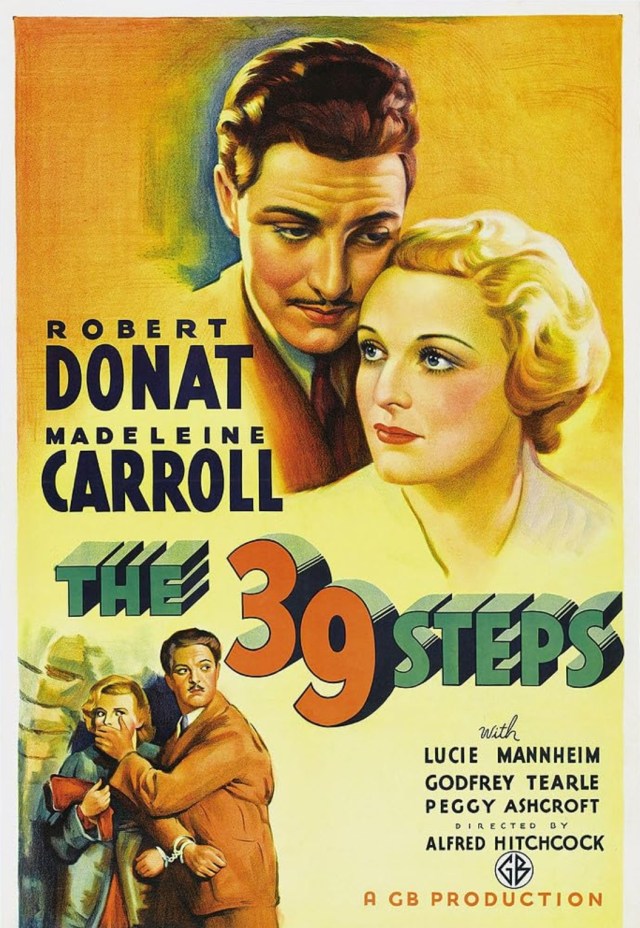
The 39 Steps poster created by Gaumont British Picture Corporation and Gaumont British Picture Corporation of America

Things I liked about the film:

Robert Donat’s performance: Throughout The 39 Steps, I found the acting performances ranging from fine to well-done. However, I did like Robert Donat’s portrayal of Richard Hannay! What stood out to me was how at ease Robert appeared on screen. A perfect example is when Richard shares some of his family history with Pamela, who was portrayed by Madeleine Carroll. While telling Pamela about his family, Richard was comfortable giving this information, despite barely knowing Pamela. His body language appears relaxed and his facial expressions presented on his face effortlessly. The story itself rolled off Richard’s tongue as if he had told it multiple times. During this conversation, Richard was also yawning, indicating how tired he was by the events surrounding him during the film’s story.

The set design of Alt-na-Shellach: During the movie, Richard visits Alt-na-Shellach, the home of a man named Professor Jordan. The only room shown on screen was the sitting room, where a party was taking place. Despite appearing in only one scene, the room boasted nice set design pieces! Characters were greeted by a large, carved, wooden door. These carvings were intricately detailed, showing how much care went into creating that door. A big, ornate rug covered the majority of the floor, nicely complimenting the space. But the showstopper was the huge window overlooking a nearby river and featuring stained glass designs. I wish more scenes had taken place at Alt-na-Shellach, as I’m pretty sure other rooms would have looked great on screen too!

The mise-en-scène: For those who aren’t familiar with the term, mise-en-scène, it means how a scene is presented in a movie. In The 39 Steps, mise-en-scène was utilized in clever and visually intriguing ways. A great example is when Richard boards a train. On this trip, Richard is sitting across from two men. To avoid eye contact, Richard hides his face behind a newspaper. Wondering if the two men are watching him, Richard peeks over the top of the newspaper, where the audience can only see the men’s eyes. These visuals symbolized how Richard was hiding something behind the windows of his soul, how the eyes are sometimes described.

The Second Master Of Suspense Blogathon banner created by Maddy from Classic Film And TV Corner

What I didn’t like about the film:

Limited sense of urgency: Based on Alfred Hitchcock’s films I’ve seen, I’ve come to expect his stories to be filled with mystery and suspense. Because of these elements, I also expect a given story to contain a strong sense of urgency. While there were suspenseful, urgent moments sprinkled throughout The 39 Steps, these moments were not consistent. This made the story take its time being told instead of getting straight to the point sooner. During these suspenseful, urgent moments, there was no music playing in the background. A low amount of adrenaline and excitement was present in these moments partly due to the lack of music.

The “Insta-love” trope: In my recent review of Easter Parade, I explained what the “insta-love” trope was and why it was a major flaw in the 1948 movie. The “insta-love” trope was a major flaw in The 39 Steps as well. Richard and Pamela do not like each other. Even after being arrested, they continue to dislike one another. When they check into a hotel and pose as a married couple, Pamela and Richard’s dislike carries on. But hours later, they act like they’ve always been in a romantic relationship. The inclusion of the “insta-love” trope caused Richard and Pamela’s attraction to be abrupt, with the abruptness preventing on-screen chemistry between Robert and Madeleine.

An over-shadowed mystery: As I just mentioned in this review, I have come to expect stories filled with mystery based on Alfred Hitchcock’s movies I’ve seen. Because of those selected titles from Alfred’s filmography, I expect the mystery to be the story’s primary focus. In The 39 Steps, however, the story’s mystery was overshadowed due to the film’s creative team emphasizing Richard being on the run from the authorities. The mystery taking a backseat in the movie means the mystery itself wasn’t solved until the very end of the film. A longer wait time for answers causes The 39 Steps to feature a limited amount of intrigue.

Essentials of Scotland image created by macrovector_official at freepik.com. <a href=”https://www.freepik.com/free-photos-vectors/background”>Background vector created by macrovector_official – http://www.freepik.com</a>. Image found at freepik.com.

My overall impression:

Alfred Hitchcock has obtained a reputation for creating memorable productions. Whether it’s incorporating “modern” technology in The Birds or showcasing a pretty location in To Catch a Thief, Alfred’s movies have boasted his stamp of approval through various creative ideas. But out of Alfred’s films I have seen, and even reviewed, The 39 Steps is the most “meh” title from his filmography. The 1935 picture had such a limited sense of urgency and intrigue, I almost fell asleep while watching it. Richard and Pamela’s relationship was heavily affected by the “insta-love” trope, causing the relationship to feel like it belonged in a different film. This is a movie that seems longer than an hour and twenty-six minutes, creating a slow and boring build-up to a reveal that feels kind of ridiculous and anti-climactic. With all the flaws I discussed in this review, it’s a shame The 39 Steps turned out this way. That’s because there were aspects of this movie I liked, such as Robert Donat’s performance.

Overall score: 5 out of 10

Have you seen The 39 Steps? Are there any films of Alfred Hitchcock’s you like or don’t like? Let me know in the comment section!

Have fun at the movies!

Sally Silverscreen
Take 3: To Catch a Thief Review

For The Master Of Suspense Blogathon, I was originally going to review the 1958 classic, Vertigo. I selected this film because it had been recommended by one of my readers. Unfortunately, my plans fell through at the last minute. So, I had to quickly choose an alternative. As I looked back at the blogathon’s participant list, I discovered the 1955 film, To Catch a Thief, hadn’t been selected. That is the film I am now reviewing for The Master of Suspense Blogathon. I have seen some of Alfred Hitchcock’s movies before this event. From what I know of To Catch a Thief, the 1955 production is different from other titles such as Psycho and Rear Window. But will this difference impact the quality of the film? Keep reading my review in order to solve this mystery!

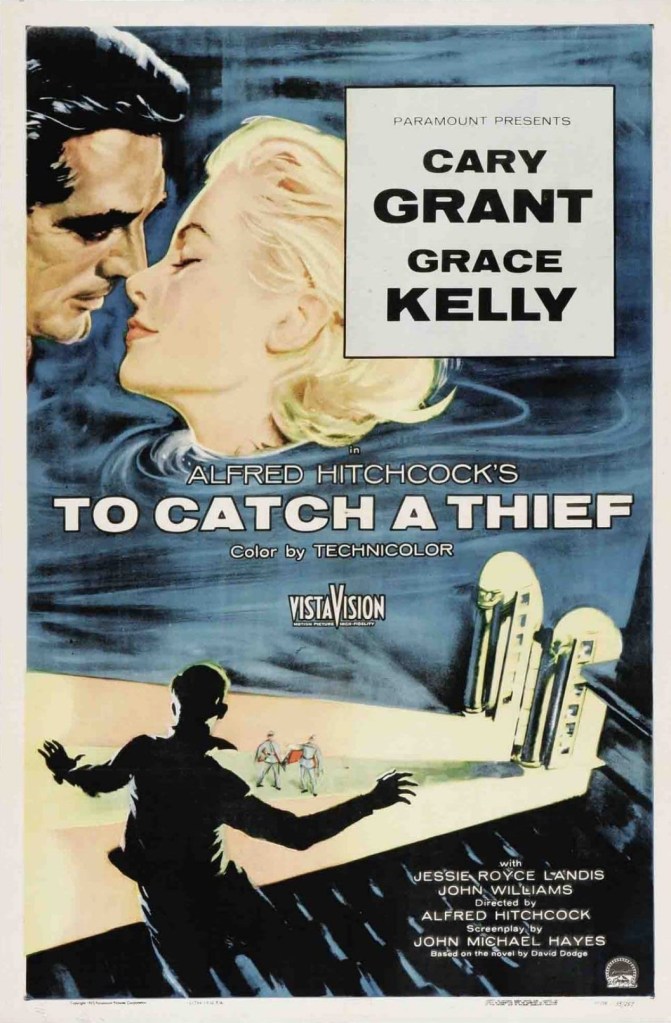
To Catch a Thief poster created by Paramount Pictures

Things I liked about the film:

The acting: In To Catch a Thief, Cary Grant portrayed John Robie, a former jewel thief looking to clear his name. A man of suave charisma, John was afraid of being accused of something he didn’t do. But he never lets this fear get to him. Instead, with the talents of Cary Grant, John was confident and intelligent. Grace Kelly was also cast in To Catch a Thief, portraying Frances Stevens. Frances carried herself with dignified confidence. However, this confidence did not come across as snobbish or arrogant. It added to Frances’ likability, along with her gentle demeanor and respectful elegance. Danielle Foussard is a friend of John’s. Portrayed by Brigitte Auber, Danielle had a spunky streak in her, adding liveliness to her and John’s interactions. A scene I really liked was when John, Frances, and Danielle are swimming in the ocean together. This scene perfectly showcased their personalities, as their banter bounced among each other like a soaring beach ball. What made that scene great to watch was the joining of the acting talents of Cary Grant, Grace Kelly, and Brigitte Auber!

The scenery: Most of the car chases in To Catch a Thief are captured in long, establishing shots. This is very different from car chases in other films, where the chases are shown in medium or close up shots. To Catch a Thief’s approach to car chases emphasizes the scenery surrounding these chases. Looking back on this film’s scenery, I can understand why To Catch a Thief’s creative team would make that decision. With the majority of the production filmed in France, the story shows pieces of the French countryside and seaside. Giant green mountains and deep blue waters present an isolated oasis. A smattering of orange roofed houses perched on these mountains add to the movie’s vibrant color palette. On the French seaside, bright yellow sands welcome the deep blue waters of the ocean. Most of the story’s exterior shots feature a blue sky with a handful of clouds. Even the flowers are appealing bursts of color, boasting shades of red, pink, and even purple. To Catch a Thief is a pretty looking movie and it knows it!

The dialogue: During discussions of Alfred Hitchcock’s movies, use of music, cinematography, and lighting are typically talked about by fans and film enthusiasts. But one area of film-making I feel is overlooked, specifically when it comes to Alfred’s work, is the dialogue. This element of story-telling was a pleasant surprise in To Catch a Thief! It not only suited the characters respectively, it also sounded like the screenwriters put a lot of thought into what the characters told each other. While driving through the French countryside, John and Frances are discussing Frances’ past. As the discussion carries on, John accuses Frances of looking for a husband on her trip. But Frances responds by saying, “The man I want doesn’t have a price”. This statement represented the respectful elegance Grace consistently carried throughout the film. It also hinted at foreshadowing.

The Master Of Suspense Blogathon banner Maddy from Classic Film And TV Corner

What I didn’t like about the film:

Limited amount of urgency: At the beginning of To Catch a Thief, John learns he is accused of stealing valuable jewelry. He evens claims to have ten days in order to clear his name. You’d think with this tight timeline, there would be a strong sense of urgency in the story. But this urgency to find the truth is, unfortunately, inconsistent. Instead, more emphasis is placed on the scenery, the romance, and the “finer things in life”. While the mystery was resolved, the limited amount of urgency held the story’s suspense and intrigue back.

A small amount of suspense and intrigue: Alfred Hitchcock’s productions are known for incorporating suspense and intrigue. This reputation has earned Alfred the title of “Master of Suspense”. In To Catch a Thief, however, suspense and intrigue were only served in small amounts. Part of this problem results from the limited amount of urgency I previously talked about. Another reason for this problem is how suspense and intrigue were used sparingly instead of evenly spread out throughout the story. It got to the point where I almost forgot this story had a mystery.

Lack of suspects: A typical mystery will include a collection of suspects, individuals who may or may not have a reason to be the guilty party. These characters are presented as uniquely as possible, in order to help the audience remember them and their reasoning. To Catch a Thief lacked this ingredient. Because the mystery was not as prioritized as in other works from Alfred Hitchcock, no room was made to include suspects. There was a red herring in To Catch a Thief, but this reveal felt random. Even the reveal of the mystery’s guilty party wasn’t completely surprising.

Illustration of Paris, France created by Freepik at freepik.com. <a href=”https://www.freepik.com/free-photos-vectors/travel”>Travel vector created by freepik – http://www.freepik.com</a>. Image found at freepik.com.

My overall impression:

As I said in this review, To Catch a Thief is a pretty looking movie and it knows it. While the scenery was the film’s crown jewel, there were other aesthetically pleasing components of this production, like the costume design and the set design. When it comes to the story, though, it wasn’t as suspenseful and intriguing as other Alfred Hitchcock movies. The visuals ended up overshadowing the script. I will give Alfred Hitchcock credit where it’s due, as it seems like he tried to take a different approach to cinematic story-telling. But out of his films I have seen, I prefer titles like Strangers on a Train.

Overall score: 6.3-6.4 out of 10

Have you seen To Catch a Thief? Which titles of Alfred Hitchcock’s do you prefer? Please tell me in the comment section!

Have fun at the movies!

Sally Silverscreen
Word on the Street: ‘To Catch A Thief’ Remake and Film about Beanie Babies on the way

When I write a Word on the Street story, I sometimes talk about stories that were covered on the Youtube channel, Clownfish TV. I not only like Kneon and Geeky Sparkle’s commentary, but I also learn about subjects I never would have known about before. So, when I watched one of their newer videos, I figured it would be an interesting topic to discuss on 18 Cinema Lane! In the video, ‘Elizabeth Banks Doing a BEANIE BABIES Movie?!’, my initial assumption was the movie being similar in execution to the 2014 hit, The Lego Movie. But as I watched the video, I learned the film would revolve around the popularity of Beanie Babies in the ‘90s. While analyzing an article from The Hollywood Reporter, Kneon and Geeky share how actors Elizabeth Banks and Zach Galifianakis are going to headline a film based on The Great Beanie Baby Bubble: Mass Delusion and the Dark Side of Cute, a book written by Zac Bissonnette.  According to the original article, the movie will focus on the production and consumption of the classic stuffed animals, including “a celebration of the women who helped power Ty Warner’s success”.

Tiger stuffed animal image created by alesia17 at freeimages.com. “FreeImages.com/alesia17.”

While watching Kneon and Geeky’s video, ‘Elizabeth Banks Doing a BEANIE BABIES Movie?!’, they brought up a documentary titled Beanie Mania. In this documentary, the rise and fall of Beanie Babies are explored. From “a lot of drama” to “the one woman even has a rap song she wrote” (referring to a rap song dedicated to the Beanie Babies), Beanie Mania presents the perspectives of those heavily affected by the iconic toy. As I watched Kneon and Geeky’s video and listened to their commentary, I couldn’t help but feel Elizabeth and Zach’s project was a re-hash of the HBO Max documentary. When speculating which direction the film was headed, Geeky says “I think their take on it’s going to be very similar, cause I think the one guy that wrote the book they’re basing it on was in the documentary”. With this and everything else said, it makes me wonder what is the point of Elizabeth and Zach’s movie? What can they offer to the conversation that Beanie Mania didn’t? Personally, I’d like to see a documentary about Tickle Me Elmo, the coveted toy that dominated 1996.

Preschool classroom image created by Vectorpocket at freepik.com. <a href=”https://www.freepik.com/free-photos-vectors/background”>Background vector created by vectorpocket – http://www.freepik.com</a>. Image found at freepik.com.

Speaking of re-hashed ideas, this next story I found in Kneon and Geeky’s video, as it was an advertised article on Deadline’s website. According to the aforementioned site, Justin Kroll writes about a “remake of the classic thriller To Catch a Thief” in the pre-production stages. The Paramount Pictures project has recruited Gal Gadot to star in the film and produce it. Eileen Jones will pen the script, with Jaron Varsano and Neal Moritz also producing the movie. Similar to what I said about the Beanie Baby film, I wonder what the point of this remake is? I know you can ask that about any cinematic production. But what can this creative team bring to the table that Alfred Hitchcock and his team hasn’t already? Personally, I think the remake seems unnecessary.

Image of vintage movie camera created by Macrovector at freepik.com. <a href=”https://www.freepik.com/free-photos-vectors/background”>Background vector created by macrovector – http://www.freepik.com</a>. Image found at freepik.com.

What are your thoughts on these movie news stories? Are you anticipating any of the projects mentioned in this article? Let me know in the comment section!

Have fun at the movies!

Sally Silverscreen
Sources to articles referenced in this article:

https://www.hollywoodreporter.com/movies/movie-news/zach-galifianakis-elizabeth-banks-starring-in-apple-film-the-beanie-bubble-1235073361/

deadline.com/2022/01/eileen-jones-paramounts-to-catch-a-thief-reboot-gal-gadot-1234908113/

Take 3: Marnie Review (A Month Without the Code — #1)

For the 4th Alfred Hitchcock Blogathon, I wanted to review a movie that was released after 1954 or before 1934. This is because I’m also participating in Pure Entertainment Preservation Society’s A Month Without the Code Blogathon. While searching through Alfred’s filmography, I came across the 1964 film Marnie. The idea of the female protagonist being the center of the film’s mystery was something I hadn’t seen in the other Alfred Hitchcock projects I saw. As of August 2020, I have seen five of his movies, including Marnie. Two years ago, I said The Birds was the worst film I saw in 2018. However, Strangers on a Train appeared in my Honorable Mentions for my 2018 best movies list. Will Marnie appear on my best or worst of 2020 list? That mystery will get solved by reading this review!

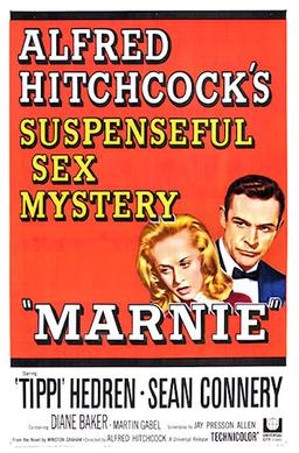
Marnie poster created by Universal Pictures and Geoffrey Stanley Productions. Image found at en.wikipedia.org/wiki/File:Marnie1.jpg

Things I liked about the film:

The acting: Tippi Hendren worked with Alfred Hitchcock when she starred in The Birds. In Marnie, she knew what to expect with the direction of her performance because of this pre-existing partnership. Tippi was given more acting material to work with in this film compared to the previous one from 1963. Her portrayal of the titular character was well-rounded, allowing her to express a variety of emotions. Marnie and Mark’s honeymoon serves as a good example of this. During a nice evening dinner, Tippi displays feelings of content. But when her character is having a heated argument, she provides a fierceness and strength to Marnie that projects off the screen. Before watching this movie, I had seen some of Sean Connery’s films. Even when the film surrounding him doesn’t hold up, he still gives his performance everything he has, talent wise. When I watched Marnie, Sean’s portrayal of Mark reminded me of Rhett Butler from Gone with the Wind. What I mean by this is Sean had a commanding presence that captured the attention of the audience. He also carried himself with confidence throughout the film. Despite appearing in the movie for about two scenes, I thought Louise Latham’s performance was strong! Without giving away any spoilers, I’ll say her portrayal of Marnie’s mother, Bernice, was powerful in the movie’s climax. It was captivating to watch and had a good amount of emotionality.

The cinematography: One of the staples of an Alfred Hitchcock film is the interesting uses of cinematography that can be seen. Marnie features camera work that was creative and appealing to the eye. My favorite example is when Marnie is stealing the money from the office. While she’s doing this, a custodian is mopping the floor in the same vicinity. The shot shows the custodian on the left side of the screen and Marnie on the right side. As this part of the story played out, it built suspense and left me on the edge on my seat. Another good use of cinematography happened at the beginning of the film. When Marnie is first introduced, her face is not shown on screen. This creates a sense of mystery that surrounds her presence. It’s not until she changes her hair color from black to blonde that we finally see Marnie’s face.

The use of the color red: Throughout the movie, the color red appears in various forms. When a red object crosses paths with Marnie, she reacts with panic and fear. One example is when Marnie and Mark go to a horse race. As soon as she notices the red dots on a jockey’s shirt, she immediately wants to leave. This aspect served as a consistent component of this character. It also allows the audience to engage in the mystery surrounding this visual choice.

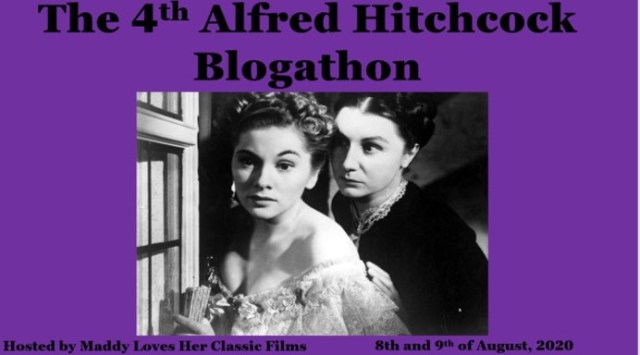
The 4th Alfred Hitchcock Blogathon banner created by Maddy from Maddy Loves Her Classic Films. Image found at https://maddylovesherclassicfilms.wordpress.com/2020/06/18/announcing-the-4th-alfred-hitchcock-blogathon/.

What I didn’t like about the film:

The scene transitions: When a cinematic story moves from one scene to another, that transition can make or break the movie’s overall flow. In Marnie, some scenes ended abruptly, causing the transitions to feel clunky. A good example is when Marnie is leaving the office after she steals some money. As soon as she walks down the stairs, an employee shows up and greets a custodian. All of a sudden, the next scene begins. Had these transitions been smoother, the film wouldn’t feel like it was in stop-and-go traffic.

Light on thrills: Before watching this movie, I knew it was classified as a thriller. Because Marnie was directed by Alfred Hitchcock, I was expecting a mysterious and suspenseful tale that fits the brand he created. While it did have moments of suspense, the film as a whole was not thrilling. The majority of the story focused on the drama within the narrative. In fact, Marnie felt like it belonged in the drama genre. If Alfred wanted to try something new and go out of his comfort zone, that’s understandable. Unfortunately, this movie seemed out of character for him.

The run-time: Alfred Hitchcock once said “the length of a film should be directly related to the endurance of the human bladder”. However, it seems like Alfred forgot his quote when he directed this movie. Marnie is two hours and ten minutes. Because of this creative decision, some scenes were drawn out longer than necessary in order to satisfy the run-time. One example is a conversation between Mark and Lil after Marnie goes horse-riding. Personally, I thought this scene went on for too long. Had scenes like that one been trimmed down, it might have put the film’s run-time under two hours.

A Month Without the Code Blogathon banner created by Tiffany and Rebekah Brannan from Pure Entertainment Preservation Society. Image found at https://pureentertainmentpreservationsociety.wordpress.com/2020/07/27/announcing-amonthwithoutthecode2020/.

My overall impression:

Alfred Hitchcock is a director who has created a distinct brand for himself. Known as the “Master of Suspense”, Alfred’s work consists of mystery and thrills. This decision is the reason why Marnie sticks out like a sore thumb. I want to make it clear that this is not Alfred’s worst film. The mystery itself was intriguing and the creative choices involving visuals were interesting. But the drama in this story overshadows the thrills, making the overall project feel like it should have been classified as a drama. As I said in my review, this felt out of character for Alfred. It would be like if an author like Debbie Macomber, an author known for writing heart-warming stories, published a gruesome murder mystery novel out of the blue. This would feel out of the character for the brand she created. Because this is my first review for A Month Without the Code, it’s time for me to point out how Marnie could be “breened”! I believe this story could be made into a Breen Code era film. However, these are the things that need to be changed in order for this to happen:

  • Throughout the film, there is language used that does not belong in a Breen Code era film. This ranges from swearing to using God’s name in vain. These words would either be removed or switched to more appropriate choices.
  • There is one scene that heavily implies Mark and Marnie had sex. Even though this happens after they get married, the scene itself would need to be rewritten or omitted.
  • One scene shows Marnie attempting suicide. Because this is a sensitive subject, this scene would to be removed or rewritten.
  • The robe Lil wears has a low-cut neckline. Changes to the style of the robe would need to take place before filming begins.
  • A large amount of blood is featured in one scene. The use of blood would need to be reduced.
  • A horse gets injured and killed in two inter-connected scenes. This would have to get omitted or the scene would have to be rewritten.

Overall score: 6.4 out of 10

What are your thoughts on Alfred Hitchcock’s filmography? Do you have a favorite movie from the “Master of Suspense”? Share your thoughts in the comment section!

Have fun at the movies!

Sally Silverscreen

The Top 10 Worst Movies I saw in 2018

Like I said in my post of The Top 10 Best Movies I saw in 2018, I’ve had a pretty good year in terms of movie-viewing. However, there were a few “stinkers” along the way. All movie bloggers will, inevitably, come across at least one film that either lets them down or was just less-than-stellar. This leads me to talk about this list of movies before 2018 is over. As the title suggests, the Top 10 Worst Movies I saw in 2018 will be discussed in this post. This list is very similar to the list of the best films I saw in 2018, where the list is based on my opinion and movies that I have personally seen. Also, like I said in my aforementioned list, this list was not created to be mean-spirited or negative toward anyone’s opinions/cinematic preferences. It is just a way for me to be honest about some of the films I saw in 2018. Now, let’s start off this list by looking at 2018’s Dishonorable Mentions:


One Winter Weekend, Frozen in Love, Love at Sea, Lilith, Pride, Prejudice, and Mistletoe, Mingle All the Way, and Island of Grace (this movie was so bad, I could only sit through about 5 minutes of it)

abstract 2018 text effect in broken style
2018 with broken pieces image created by Starline at freepik.com. <a href=’https://www.freepik.com/free-vector/abstract-2018-text-effect-in-broken-style_1472367.htm’>Designed by Starline</a>. <a href=”https://www.freepik.com/free-photos-vectors/background”>Background vector created by Starline – Freepik.com</a>. Designed by Starline. Image found at freepik.com.

Now, let the official list of 2018’s worst movies begin! Starting with number 10:


10. Marrying Mr. Darcy

I’m going to be honest; I thought Unleashing Mr. Darcy was decent, at best. Therefore, I was not asking Hallmark to give this movie a sequel. However, I was hoping Marrying Mr. Darcy would be better than the first movie, so this series could grow and progress as time went on. Unfortunately, that was not the case. As I’ve mentioned before, one of my least favorite Hallmark movie clichés is the “planning-a-wedding-in-an-unrealistic-time-period” cliché. In Marrying Mr. Darcy, this cliché serves as the film’s plot. The dog-show element of Unleashing Mr. Darcy’s narrative was something that I really liked about the first movie, as dog-shows had not been featured in a Hallmark movie until that film. But, in Marrying Mr. Darcy, dog-shows are pretty much non-existent, taking away an important part of the first movie’s identity. If I had liked or loved Unleashing Mr. Darcy anywhere near as much as other people did, maybe I would find Marrying Mr. Darcy to be more disappointing that it was. But, because I wasn’t really a fan of the first film, its sequel received a low placement on this list.


9. Christmas on Holly Lane

In 2018, I watched about 19 newly released Christmas films. Out of all of those, Christmas on Holly Lane was the worst one. As I said in my review, Christmas is given such little emphasis in the story. This movie also has an assortment of other issues that I talked about in my review, from too much focus on the “doom and gloom” of the protagonist’s realities to having too many plots. What’s really disappointing about this specific placement is this is the second year in a row where my least favorite Christmas movie of the year has been an UP Network movie (I also didn’t like The Christmas Calendar). This channel has what it takes to create films that are really good in quality. So, hopefully, in 2019, UP Network can put together a movie that doesn’t end up on my Worst Movies of the Year list.


8. Waffle Street

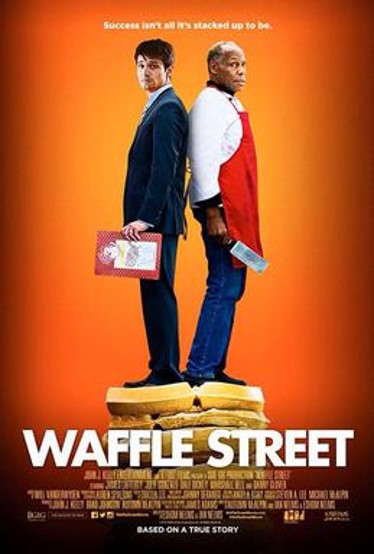
Yet, another movie I’ve reviewed that joins the list. What’s so disappointing about Waffle Street, even more disappointing than movies 10 and 9, is the movie is based on a true story. Not only that, the story itself sounds really fascinating. Too bad the movie was no where near as interesting. The biggest problem with Waffle Street is the poor execution that was placed on the film. This led the movie to have creative issues, such as very little character development and a toilet scene that went too far. While the cast in Waffle Street did a pretty good job with the acting material they were given, there was nothing anyone could do to save this film. Maybe if this story was placed into the hands of a network like Hallmark, the movie could have done this true story justice.


7. The Graduate

I am fully aware that this choice is going to be controversial, especially since The Graduate is well-liked by a lot of people and is ranked in the Top 10 of AFI’s Top 100 Movies of All Time list. But, as I reflect on this film, I can’t help but wonder why this movie was made and what the creative team behind this movie was trying to say to its respective audience. To me, the majority of The Graduate feels like it was a product of its time. Also, there are several elements within this movie that feel like they were incorporated just for the sake of shock value. When I think about The Graduate, as well as the other movies I’ve seen in 2018, I’ve come to realize that I’m not a fan of the story-telling trope where situations or things are placed in a film just for the sake of shock value/ getting a reaction out of the audience. I will admit that Simon and Garfunkel have some really good songs, but I just think that their music felt out of place in this movie.


6. Collateral 

This movie has the distinction of getting worse as the story goes on. What starts out as an intriguing, action-packed mystery story slowly turns into a philosophical discussion on why people do the things they do. The character of Vincent is more annoying than menacing, with things happening way too conveniently in his favor. Similar to what I said about Waffle Street, I think the cast did a good job with the acting material they were given. But, also like I said about Waffle Street, there was nothing anyone could do to save this film. I won’t spoil this movie for you (even though I would not recommend this film), but all I will say is the ending was way too ridiculous for my liking.

Waffle Street poster
Waffle Street poster created by MarVista Entertainment. Image found at https://en.wikipedia.org/wiki/File:Waffle_Street_Official_Movie_Poster.jpg

5. Saturday Night Fever

Yes, another controversial choice for this list, especially because of how well-liked this movie is and how iconic this film’s opening scene is. When you take away the acting (which was good), the dancing sequences (which were really good), and the soundtrack (which is great), you are left with a movie that feels very long, is filled with unlikable characters, and has way too much swearing for my liking. I saw this movie on television and there was so much swearing in this film, I honestly thought the audio on my TV was broken. Another thing I’d like to add is the film’s climax is so predictable, that I, personally, didn’t find it to be emotionally affective. In 2018, I found out Saturday Night Fever was given a sequel a few years after its 1977 release. However, I have no intention of watching this sequel because a) I’ve heard a lot of negative things about the film and b) I didn’t like Saturday Night Fever anywhere near enough to want to give the sequel a chance.


4. Logan Lucky

Out of all the movies on this list, Logan Lucky is the only one that I just couldn’t finish watching. Maybe if I had finished watching it, the movie probably would have ended up in the Top 3. The biggest fault of Logan Lucky is how boring of a movie it is. Despite the fact that this a heist film, there is no excitement to be found. I will admit that this movie had the pieces to, potentially, be a good film. Unfortunately, because of a poorly written script, this entire concept was really poorly executed. Even as I start to think about the Top 3 Worst films I saw in 2018, I’m still trying to figure out how Logan Lucky received a score of 92 to 93 percent on Rotten Tomatoes.


3. Menu for Murder

This is a Lifetime movie from 1990 that I’m not sure how many people are aware of. What enticed me to watch this film was how similar the synopsis sounded to the mystery films on Hallmark Movies & Mysteries. Also, Menu for Murder had an interesting concept (a murder that takes places amongst a PTA group) set against an interesting backdrop (Encino, California). With all of those pieces put together, this movie sounded like something I would like; an engaging mystery story that has a good amount of creativity. But, all of this potential was wasted on a poorly written script. Not only was the mystery itself very lackluster, but all of the characters in the PTA group were defined by stereotypical personalities. The film’s climax was not suspenseful at all, but instead silly, over-the-top, and ridiculously bad to the point of not taking the climax seriously. To me, this was the most disappointing movie I saw in 2018.


2. Yes, I Do

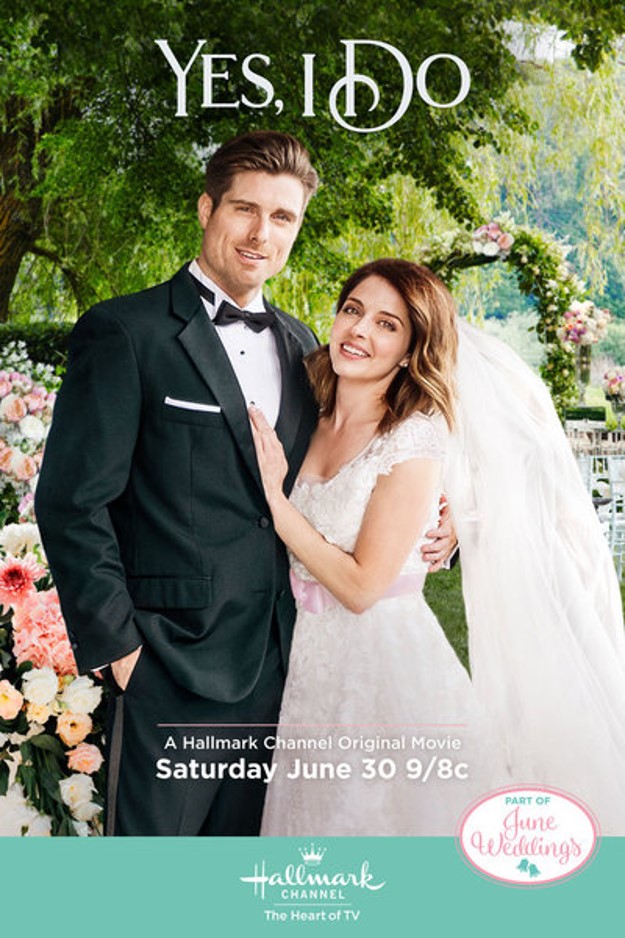
If you have followed my blog for a significant period of time, you would have seen this movie coming a mile a minute. While Yes, I Do is the worst Hallmark movie I saw in 2018, it is now the second worst Hallmark movie I’ve ever seen (bumping Firelight off of my Top 10 Worst Hallmark Movies of All Time list). As I said in my review, this movie was so bad, I had to fast forward through certain parts of the movie just to get through it. The film’s narrative is not good, even by made-for-TV movie standards. There were other issues I had with this movie as well, from a very unlikable protagonist to really poor screen-writing. Like I also mentioned in my review, this is the second year in a row where Hallmark’s “June Weddings” line-up ended with a movie that I didn’t like. Hopefully, in 2019, the last “June Weddings” movie can help the line-up end on a positive note.


1. The Birds 

This has got to be the most controversial choice on this list. When I think about the movies I saw in 2018, The Birds is the only one to truly make me feel like I wasted my time watching it. Prior to seeing this film, I had watched Rear Window, Psycho, and Strangers on a Train. Because of this, I was familiar with the directing style of Alfred Hitchcock and the cinematic tone of his films. However, The Birds ended up being a 2-hour, slow, and boring build-up to absolutely nothing. No plot twist, no shocking ending, no explanation for why the birds were causing so much chaos in the first place. Nothing. For me, it felt like all of the characters were placed within this narrative just because they were obligated to be there. Their dialogue and subplots did not interest me at all. The only parts of the film that I liked were anytime at least one bird showed up, as the love birds leaning in the direction of the car’s turns was one of the best scenes in this film (because it was that hilarious). While I am all for watching Hitchcock’s films with an open mind, I feel bummed out that, in 2018, I found a Hitchcock film that I didn’t like.

Yes I Do poster
Yes, I Do poster created by Crown Media Family Networks and Hallmark Channel. Image found at https://www.hallmarkchannelpress.com/Shows/PRShowDetail?SiteID=142&FeedBoxID=845&NodeID=302&ShowType=&ShowTitle=Yes%2c+I+Do

What did you think of my list? What is the worst film you saw in 2018? Please share your thoughts in the comment section!


Have fun in 2019!

Sally Silverscreen