Take 3: From the Mixed-Up Files of Mrs. Basil E. Frankweiler (1973) Review

All the way back in 2019, I reviewed the 1995 adaptation of From the Mixed-Up Files of Mrs. Basil E. Frankweiler. After I shared my thoughts on the film, Gill, from Realweegiemidget Reviews, recommended the 1973 adaptation, which is sometimes titled The Hideaways. Whenever Virginie, from The Wonderful World of Cinema, has hosted the Ingrid Bergman Blogathon, I have wanted to check out the 1973 adaptation, due to Ingrid Bergman starring in the film. Now, for the 110 Years of Ingrid Bergman Blogathon, I finally received the opportunity to write about the movie! While I still haven’t read the book, I am familiar with the story because I covered the 1995 adaptation on 18 Cinema Lane. Back in 2019, I said the film was just ok, as one of my biggest criticisms was the underutilization of Lauren Bacall’s acting talents. Will I give similar criticisms to the 1973 adaptation of From the Mixed-Up Files of Mrs. Basil E. Frankweiler? To solve this mystery, keep reading my review!
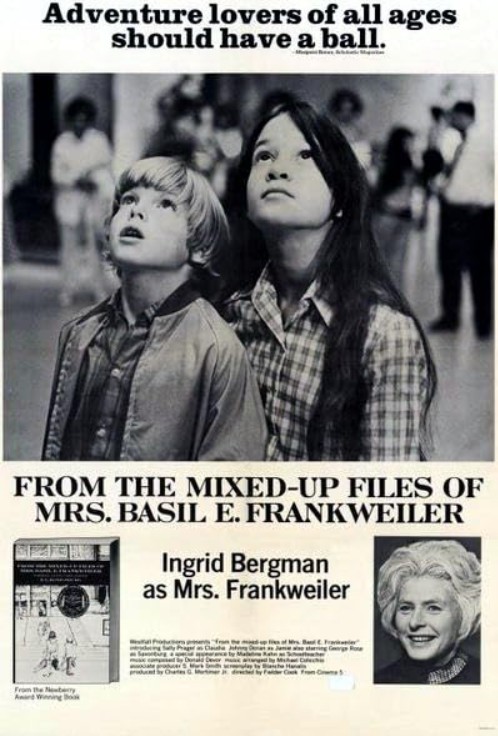
From the Mixed-Up Files of Mrs. Basil E. Frankweiler (1973) poster created by Cinema 5, Westfall Productions, and Cinema 5 Distributing

Things I liked about the film:

Sally Prager’s and Johnny Doran’s acting performance: Starring in From the Mixed-Up Files of Mrs. Basil E. Frankweiler as the protagonists, Claudia and Jamie Kincaid, Sally Prager and Johnny Doran carry about 95% of the film. Because of how strong their performances were, they successfully carried the movie by presenting their characters believably! One example takes place toward the beginning of the film. Jamie is telling his sister, Claudia, about a movie he had recently seen. As he talks about the movie, his speech becomes increasingly animated. Even after Claudia kicks him out of her room, Jamie talks even louder, his excitement never faltering. After Jamie and Claudia arrive in New York City, they go to the Metropolitan Museum of Art. When Jamie asks her why she wants to go to the museum, Claudia enthusiastically describes the museum as a castle like the tales of King Arthur. This scene perfectly showcases how Sally effectively portrayed Claudia as precocious; containing enough self-awareness to know exactly what she wants, yet displaying that sense of wonder one would expect from a child her age.

The cinematography: When I reviewed the 1995 adaptation of From the Mixed-Up Files of Mrs. Basil E. Frankweiler, I complimented the film’s cinematography. That adaptation’s creative team made some interesting choices when presenting certain scenes, like using close-ups to present the museum’s artifacts. The 1973 adaptation of From the Mixed-Up Files of Mrs. Basil E. Frankweiler features good cinematography as well! Similar to the 1995 adaptation, some scenes were shown from Claudia and Jamie’s perspective. While hiding on the school bus, Jamie constantly peeks from behind the seat to see if the bus driver has spotted them. A few shots look like they’re from Jamie’s point of view, with the camera peering around the seat to catch a glimpse of the bus driver. When Jamie and Claudia are at the Metropolitan Museum of Art, they look over the railing at the museum’s employees and security guards in the lobby. Once again, the scene is presented from the point of view of the children. The camera peers over the museum’s railing, looking down at the security guards and employees. Shots like the ones I described make the audience feel like they’re with the characters, creating the illusion of immersion.

The dialogue: A pleasant surprise in 1973’s From the Mixed-Up Files of Mrs. Basil E. Frankweiler was the dialogue! Some lines were so well-written, they became a memorable part of the movie. In one scene, as Jamie navigates through the museum, a janitor asks him where he came from. Speaking confidently in a matter-of-fact way, Jamie tells the janitor, “My mother said I came from Heaven”. I not only found this response a clever comeback, it was also a creative way to answer the question. Another scene shows Jamie sharing with Claudia one of the reasons why he ran away with her. While spending a night in the museum, Jamie tells his sister how concerned he was by the thought of her traveling alone, as he believed she would be afraid. Claudia responds to her brother’s belief by saying, “Being self-sufficient doesn’t automatically make a person brave”. This quote showcases an eloquent way of addressing how anyone at any age can be afraid of something.

Angelic statue image created by Marcelo Gerpe at freeimages.com. “FreeImages.com/Marcelo Gerpe.”

What I didn’t like about the film:

Telling instead of showing: In both adaptations of From the Mixed-Up Files of Mrs. Basil E. Frankweiler, Jamie and Claudia go to Mrs. Basil E. Frankweiler’s house, searching for an angel statue’s legitimacy. From what I remember of the 1995 movie, a scene shows Claudia and Jamie looking for answers about the statue by rummaging through Mrs. Basil E. Frankweiler’s mixed-up files. The 1973 version, on the other hand, has Mrs. Basil E. Frankweiler telling the answer of the mystery instead of showing the children putting the mystery’s pieces together. Because the creative team behind the 1973 adaptation chose telling over showing, some of the excitement of seeing the protagonists achieve their goal was taken away.

Less emphasis on the mystery: An overarching part of From the Mixed-Up Files of Mrs. Basil E. Frankweiler’s story is the mystery surrounding an angelic statue. However, this mystery received less emphasis in both the 1973 and 1995 adaptations. Specifically speaking about the 1973 version, the story focused more on Claudia and Jamie’s adventures in New York City. In fact, the angel statue doesn’t make an appearance until 44 minutes in an hour and forty-five-minute film. Like I said in my review of the 1995 version, this creative decision took a lot of intrigue out of the film, causing the story not to be as engaging or interactive.

The underutilization of Ingrid Bergman: During this review’s introduction, I brought up one of my biggest criticisms of 1995’s From the Mixed-Up Files of Mrs. Basil E. Frankweiler; the underutilization of Lauren Bacall’s acting talents. Sadly, I have the same criticism for the 1973 version. Just like the 1995 adaptation, Ingrid Bergman is the top-billed actor in the adaptation from 1973. Yet she doesn’t appear in the story until an hour and fourteen minutes in an hour and forty-five-minute movie. I recognize the 1973 version of From the Mixed-Up Files of Mrs. Basil E. Frankweiler premiered toward the end of Ingrid’s career. I also acknowledge the story prioritizes the adventures of Claudia and Jamie Kincaid. But as I said about Lauren Bacall in my review of the 1995 movie, this underutilization not only does Ingrid’s acting talents a disservice, it also comes across as misleading.

110 Years of Ingrid Bergman Blogathon banner created by Virginie, from The Wonderful World of Cinema

My overall impression:

For the 5th Annual Gold Sally Awards, I introduced the Nosferatu vs. Dracula Award. This award is given to two movies that feel like you’re watching the same one. Looking back on my experience watching the 1973 adaptation of From the Mixed-Up Files of Mrs. Basil E. Frankweiler and reflecting on my review of the 1995 adaptation, the Nosferatu vs. Dracula Award will likely be brought back for 2026’s edition of the Gold Sally Awards. The 1973 movie shares a lot of the same strengths and flaws as the 1995 version. These similarities made me feel like I was watching the same film twice. I knew what to expect from the story, due to seeing From the Mixed-Up Files of Mrs. Basil E. Frankweiler from 1995. However, I still wish both adaptations contained stronger differentiations between them. The films I’ve seen of Ingrid Bergman’s from the 1970s have, in my opinion, been underwhelming. While I found A Walk in the Spring Rain a flavorless picture, I think A Matter of Time and now From the Mixed-Up Files of Mrs. Basil E. Frankweiler are just ok.

Overall score: 6 out of 10

Have you seen 1973’s From the Mixed-Up Files of Mrs. Basil E. Frankweiler? Which book adaptation do you wish starred a “classic” film star? Tell me in the comment section!

Have fun at the movies!

Sally Silverscreen
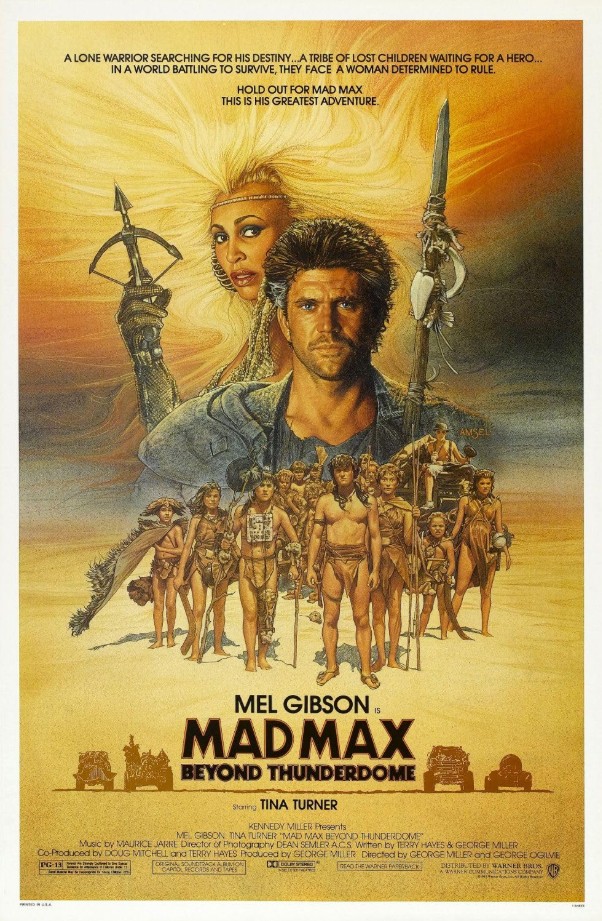
Comparing with the Critics – Best of 1985 – Mad Max Beyond Thunderdome

This review is from my series, Comparing with the Critics. If you’d like to learn more about the series, click on the link below.

Introducing my new series, Comparing with the Critics!

In my Comparing with the Critics review of Amadeus, I mentioned the Falco song, “Rock Me Amadeus”, being one of the reasons why I was intrigued to review the movie. I actually have a similar experience with Mad Max Beyond Thunderdome. Every time I think of this film, I think of the Tina Turner song, “We Don’t Need Another Hero (Thunderdome)”. This is an ironic coincidence, as “We Don’t Need Another Hero (Thunderdome)” and “Rock Me Amadeus” were released in 1985. Another ironic coincidence is how, for the Comparing with the Critics series, I, once again, selected an ‘80s film both Roger Ebert and Gene Siskel liked. Though Mad Max Beyond Thunderdome only appeared on Roger’s list of the top ten best films of 1985, each critic gave the movie a thumbs-up when they reviewed it on an episode of At The Movies. Before this Comparing with the Critics review, I had never seen any of the Mad Max movies, let alone Mad Max Beyond Thunderdome. Therefore, I couldn’t agree or disagree when Roger stated that Mad Max Beyond Thunderdome was “the best of the Road Warrior movies” or when Gene declared it was “a great, violent, fun picture”. Now that I have seen the film, I can honestly say I don’t agree with Gene’s and Roger’s praise. It’s not that Mad Max Beyond Thunderdome is a bad movie, I just didn’t like or love it as much as the critics did.

Mad Max Beyond Thunderdome poster created by Kennedy Miller Productions and Warner Bros.

While sharing his opinion on Mad Max Beyond Thunderdome in an episode of At The Movies, Gene complements the directors, George Miller and George Ogilvie, as both of them “successfully creates a complete alien world on film”. To add to Gene’s statement, Roger commented how the film’s “world is as rich as Casablanca or as rich as Oz”. I admit one of the strengths of Mad Max Beyond Thunderdome was its set design, as the movie’s creative team presented an atmosphere that felt immersive! One of the conflicts in the story is Max battling in a duel against a character named Blaster, in order to retrieve his stolen items. They fight within the titular Thunderdome, a circular caged structure built out of steel-like material. What adds to the scene’s immersion is the medium and close-up shots captured within the Thunderdome. The combination of these creative choices helps the audience feel like they are right in the middle of the excitement! Even the sign advertising the Thunderdome is a blend of color, light, and dirt. This specific prop captures the thrill of the dueling action while also consistently displays the film’s aesthetic.

Image by Freepik

As I said in this review’s introduction, Mad Max Beyond Thunderdome ended up on Roger’s list of the top ten best films of 1985. One of his reasons was how he “was overwhelmed by the wealth of new ideas they came up with in the third picture”. Specifically speaking about Max and Blaster’s aforementioned duel, Roger explains how this scene presents two new ideas; “a new place to put the audience, which is over the top of the dome, and a new way to fight by putting the people on elastic bands so they have a three or a four dimensional, if you will, fight instead of regular punching it out”. Adding to Roger’s explanation, both Max and Blaster were given more freedom to move around the Thunderdome because of their elastic harnesses. While there was fist-fighting in the duel, flips and large jumps were incorporated in the fight choreography. Blaster and Max were presented with a variety of weapons, which added to the duel’s unpredictability. It also shows how the duel itself was a battle of strategy. This scene is definitely one of the most memorable from Mad Max Beyond Thunderdome!

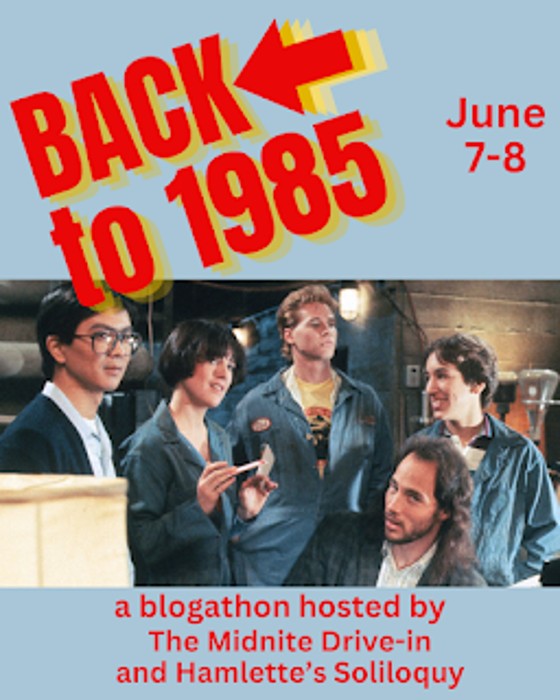
Back to 1985 Blogathon banner created by Quiggy from The Midnite Drive-In and Hamlette from Hamlette’s Soliloquy

While Gene and Roger sang the praises of Mad Max Beyond Thunderdome, I was disappointed they ignored Tina Turner’s portrayal of Aunty Entity. Personally, I think Tina is a better actress than some people give her credit for. Her performance in this film proves that. A great example is when Master confronts Aunty Entity about the true leadership of Bartertown. Before this confrontation, Aunty Entity is confident in her ability to rule over this little community. Master calls her out by questioning who’s in charge. Aunty’s confidence gradually turns into anger. She develops a stern look on her face, the anger itself filling her eyes. There’s even a point where Aunty’s bottled-up anger causes her to shake. This scene shows how Tina’s performance was able to say so much while utilizing very little dialogue.

Illustrated image of Arizona desert created by pikisuperstar at freepik.com. Background vector created by pikisuperstar – www.freepik.com

Like I brought up in my review’s introduction, I didn’t like or love Mad Max Beyond Thunderdome as much as Roger and Gene did. A reason for my opinion is how the script left several questions unanswered. When Max meets the children of the Planet Erf tribe, the children believe he is Captain Walker. They describe Captain Walker as a plane pilot who will lead them to a better land. Because Jedediah was introduced in Mad Max Beyond Thunderdome as a man who could successfully fly a plane, I thought he could be Captain Walker, connecting him to the Planet Erf tribe’s part of the story. But this wasn’t the case, leaving questions about Captain Walker’s whereabouts. I was also not a fan of the creative team’s decision to prioritize telling over showing. A good example is when Blaster is about to be defeated in his and Max’s duel. Master begs Max not to kill Blaster, as he has a lot of respect for Blaster. However, this respect isn’t shown leading up to that scene. The only interactions with Master and Blaster are Master simply using Blaster as a means of transportation. Had the respect and camaraderie between Blaster and Master been better displayed, the duel itself and even its aftermath would have carried more emotional weight.

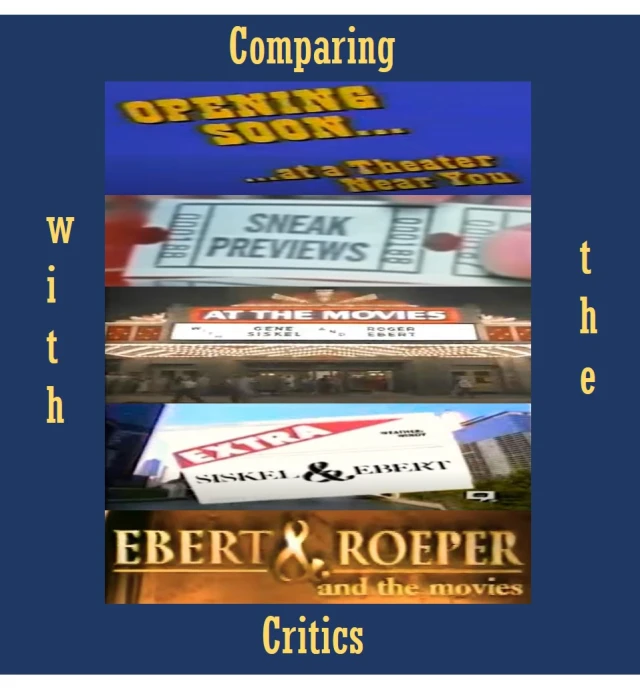
Comparing with the Critics banner created by me, Sally Silverscreen. TV show title cards created by WTTW National Productions, WTTW, Public Broadcasting Service (PBS), Lifetime Television, Tribune Entertainment, Buena Vista Television, and Disney-ABC Domestic Television

When Roger Ebert placed Mad Max Beyond Thunderdome on his list of the top ten best films of 1985, he called it “a great looking, high styled thriller”. Gene Siskel even claimed that “kids are gonna want toys out of this film” and “people are gonna dress like out of this film”. I can only speak for myself, but I wouldn’t go out of my way to seek out merchandise related to this movie or even revisit this movie. That’s because I thought Mad Max Beyond Thunderdome was just a fine, well-made picture. I couldn’t become fully invested in this story because of the collection of unanswered questions, which left me confused. I did not like the creative team’s decision to emphasize telling over showing as well. But the movie does have its merits. The world-building was one of the strongest aspects of the production, as the directors helped create an on-screen world that felt immersive. I not only liked the acting, I also believe the Thunderdome duel was one of the film’s most memorable scenes. So, this is yet another review where I didn’t agree with the critics. Now, if you’ll excuse me, I’ve got to go sing along to Tina Turner’s song, “We Don’t Need Another Hero (Thunderdome)”!

This review was brought to you by

Sally Silverscreen

Take 3: A Little Romance (1979) Review

Back in 2022, I wrote a list of the top ten movies I’d love to review. One of the films on that list was 1979’s A Little Romance. Since publishing that article three years ago, I haven’t gotten around to reviewing the movie. But Gill’s (from Realweegiemidget Reviews) and Barry’s (from Cinematic Catharsis) blogathon, Adventure-A-Thon, finally gave me an opportunity to check A Little Romance out! When it comes to “adventure” in cinema, that term can have different meanings depending on who you ask. For me, an “adventure” movie is when the story’s characters go on a journey to achieve something. In the case of A Little Romance, the protagonists, Daniel and Lauren, travel to Italy to prove the legitimacy of a legend. The 1979 film is not the only picture I’ve reviewed this year involving Italian travel. I wrote about Roman Holiday back in January. In my opinion, the movie was just ok, as I wanted to like it more than I did. Was A Little Romance ok like Roman Holiday? Let’s start the adventure of this review!

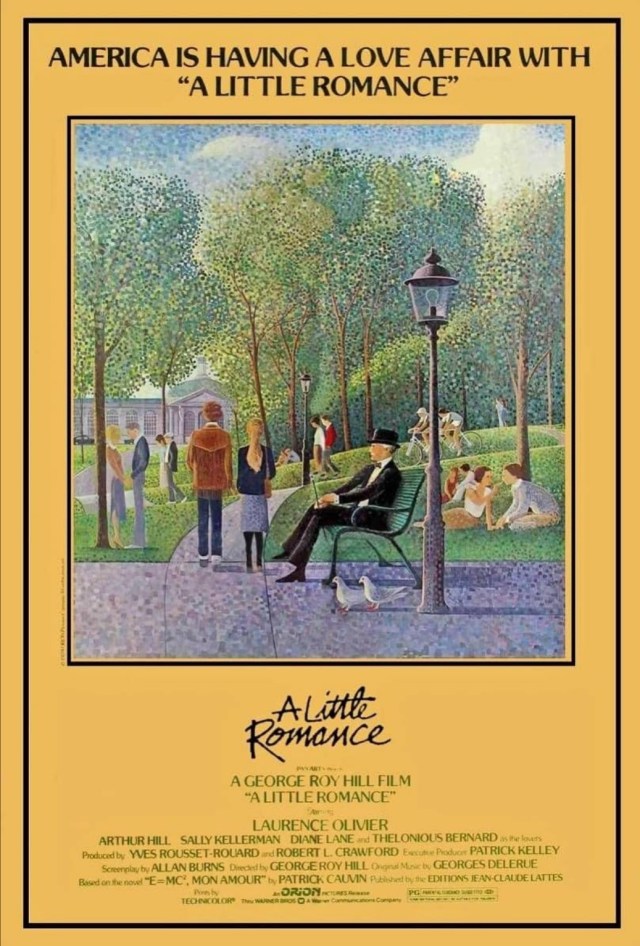
A Little Romance (1979) poster created by Orion Pictures, Pan Arts, Trinacra Films, and Warner Bros.

Things I liked about the film:

The acting: When it comes to teenagers in movies, it can be easy for a creative team to present those characters stereotypically. If written or directed to adopt certain behaviors and attitudes, teenage characters could even come across as caricatures. Fortunately, this was not the case in A Little Romance! Though there are only four teenage characters in the movie, their interactions didn’t feel scripted, making the characters themselves seem realistic. One example shows Lauren (portrayed by Diane Lane) and her friend, Natalie (portrayed by Ashby Semple), looking at sculptures during a class trip. As they observe the sculptures, Lauren nonchalantly tells tall tales about her time spent with Daniel. Natalie naively believes Lauren, her eyes becoming wide and her tone of voice revealing how shocked she is. Lauren, with a casual smile on her face and a giggle in her voice, then shares with Natalie how her tall tales were fabricated. This exchange between the two friends illustrates how teenagers can sometimes tease and joke with each other.

In this review’s introduction, I mentioned how the protagonists, Daniel and Lauren, travel to Italy to prove the legitimacy of a legend. Their journey was enjoyable to watch because of how strong Diane Lane and Thelonious Bernard’s on-screen chemistry was! Every time Lauren and Daniel interacted with one another, they always looked like they got along so well. There was a sweetness to their relationship that was wholesome and charming. It also helps how both Daniel and Lauren had likable personalities that complimented each other. While Thelonious and Diane deserve credit for their performances, credit should also be given to the screenwriting.

An appreciation for film: Before watching A Little Romance, I knew what the basic premise was about. But when I finally saw the 1979 picture, I was pleasantly surprised by the appreciation for film woven into the script! As soon as the movie starts, the audience sees Daniel watching a collection of films in a local cinema. As the story progresses, he sometimes quotes the movies he sees and even wants Lauren to call him “Boggie”, as he believes Humphrey Bogart and Lauren Bacall were meant to be together. Daniel’s decisions and perspectives are also influenced by the world of film. When Daniel receives rude comments about his relationship with Lauren from a movie director named George de Marco, Daniel punches George. Not only does Daniel strongly dislike George’s films, Daniel believes George’s comments cheapen the meaning of love he’s learned from movies.

The dialogue: In some of the movies I’ve reviewed this year, one of the strengths was the dialogue. The way it was written and delivered allowed this film-making component to be memorable for the right reasons. The dialogue was also a strength in A Little Romance! Through the screenwriting, the audience can tell how much thought was put into this aspect of the 1979 production. While Lauren talks about her family, Daniel asks her why she calls her stepfather ‘Richard’. Lauren replies by saying “It’s easier to lose a Richard than a dad”. From that one quote, Lauren is able to express how her mother’s multiple marriages have affected the family dynamic. In order to make enough money for their trip to Italy, Daniel and Lauren plan to bet on race horses. They want to figure out the betting odds to increase their chances of choosing a winning horse. When Lauren suggests using a computer to get these numbers, Daniel says “I am not a computer”. This simple quote stresses how humans, as well as betting odds, don’t always provide the correct answers.

The Adventure-A-Thon banner created by Gill from Realweegiemidget Reviews and Barry from Cinematic Catharsis

What I didn’t like about the film:

The adventure’s prolonged delay: Like I said in this introduction, Daniel and Lauren travel to Italy to prove the legitimacy of a legend. But their Italian journey doesn’t begin until a little over an hour into an hour and fifty-minute story. That’s because the first half of the movie is devoted to setting up the motives for the journey and building up to the trip itself. It’s important for any creative team to set up their movie’s premise and provide build up to significant parts of the presentation. For A Little Romance, however, that set up/build up took a little too long.

Lack of subtitles: About half of A Little Romance takes place in France. This means some scenes feature characters speaking in French to one another. But when the story presented French dialogue, subtitles did not appear on screen. For viewers who are not fluent in French, they may feel like the creative team is withholding context from them. Even though clues such as body language can help the audience assume what is happening in the story, I still wish subtitles had been included in A Little Romance.

An absence of Daniel’s father: At the beginning of A Little Romance, the audience is introduced to Daniel and his father, Michel. According to Daniel, Michel is a taxi driver who watches horse races from time to time. Throughout the movie, however, Michel’s appearances are so far and few between, I almost forgot he was in the movie. Meanwhile, Lauren’s parents, Richard and Kay, are consistently involved in the story. I recognize A Little Romance revolves around Daniel and Lauren’s relationship and adventure. But I still think Michel should have received a larger role in the film. Perhaps his involvement in the story could have related to one of the movie’s central themes.

Colorful travel suitcase image created by Pikisuperstar at freepik.com. <a href=’https://www.freepik.com/free-vector/beautiful-illustration-of-travel_2686674.htm’>Designed by Freepik</a>. <a href=”https://www.freepik.com/free-photos-vectors/watercolor”>Watercolor vector created by Pikisuperstar – Freepik.com</a>. Image found at freepik.com.

My overall impression:

When I first brought up A Little Romance in 2022, I said the story seemed like a light-hearted version of Rich Kids. While there is some truth to this statement, my initial claim now seems a bit too simplistic. Both Rich Kids and A Little Romance revolve around adolescent characters relying on themselves and each other to navigate the world around them. But unlike Rich Kids, there’s a hopeful optimism in A Little Romance! Because the story emphasizes Daniel and Lauren’s Italian journey, the audience witnesses Lauren and Daniel’s relationship grow throughout the story. The acting performances and screenwriting allow these characters to share meaningful and heart-felt moments together. Strong messages and themes are sprinkled into the script, from the importance of being your authentic self to having the courage to achieve dreams. Though it took a little over an hour for the journey to begin, A Little Romance is a delightful, pleasant film! A significant point the film makes is how adventure can come in different forms. The 1979 picture can also cause viewers to think about what it truly means to be a “legend”.

Overall score: 7.3 out of 10

Have you seen A Little Romance? What does the term “adventure movie” mean to you? Let me know in the comment section!

Have fun at the movies!

Sally Silverscreen

Why Kili is the MVP of Tolkien’s Middle-Earth

MVP, an abbreviation of “most valuable player” or “most valuable person”, is typically used in the world of sports. When a team member goes above and beyond for their respective team, they usually earn this title. Last year, when I was introduced to The Hobbit trilogy, the Company reminded me of a football team. With Gandalf in the role of coach and Thorin in the quarterback position, Kili is the one who, in my opinion, would be the Company’s MVP. In my “Flaming Hot…5 Reasons Why” tag post I published earlier this year, I stated Kili is my favorite character from The Hobbit trilogy. I even mentioned in that post how I felt Kili was the MVP of Middle-Earth. But claiming Kili is the MVP of Tolkien’s Middle-Earth is not purely based on personal bias. In fact, I will use examples from the trilogy to prove that Kili has, in my eyes, earned the title of MVP!

Image of Kili created by New Line Cinema, Metro-Goldwyn-Mayer Pictures, WingNut Films, and Warner Bros. Pictures

Humbleness

When I watched The Hobbit trilogy for the first time, I did not know Kili was a prince. I didn’t even know he and Thorin were related. So, imagine my shock when Thorin told Kili and Fili they were his “sister’s sons” in The Hobbit: The Battle of the Five Armies! Kili’s humbleness is the reason for my shock. Up until that aforementioned moment between Thorin and his nephews, Kili never brought up his royal lineage. Even in The Hobbit: The Desolation of Smaug, when he was interacting with Tauriel in Rivendell’s dungeon, Kili didn’t use his royal connections to impress her. Yes, he did bring up his mom in his and Tauriel’s conversation. But Kili never stated how he and his mom were related to Thorin.

Kili’s humbleness goes beyond his royal heritage. In The Hobbit: The Desolation of Smaug, after his leg became injured, Kili didn’t want any help from the Company. Anytime his health was questioned, Kili would say “I’m fine”. When Thorin instructed Kili to stay in Lake Town because of his injury, Kili was frustrated he couldn’t continue on the journey. Even when he was forced to flee from Lake Town in The Hobbit: The Battle of the Five Armies, Kili wanted to walk by himself, not wanting to rely on anyone for support. This sequence of events shows how Kili didn’t want to be treated differently from the other members of the Company. He also didn’t want his injury to hold the Company back. Kili, simply, wanted to do his part and help his uncle and the Company in any way he could.

Image of Kili created by New Line Cinema, Metro-Goldwyn-Mayer (MGM), WingNut Films, and Warner Bros.

Having More Than One Skill

Throughout The Hobbit trilogy, each member of the Company had a skill to share, which allowed the Company to get closer to their ultimate goal. For Kili, he ended up having more than one skill to offer. Not only was he a swordsman, he was also an archer. In order to master just one of these skills, it requires many hours of training and a large amount of dedication. To master both sets of skills, Kili had to double his training hours and work twice as hard. The Hobbit trilogy consistently presents Kili’s talents, giving him opportunities to prove his worth as a competent swordsman and archer. One example is when Kili faced Orcs, as using his archery skills allowed him to showcase his mastery of hand eye coordination.

Image of Kili created by New Line Cinema, Metro-Goldwyn-Mayer Pictures, WingNut Films, and Warner Bros. Pictures
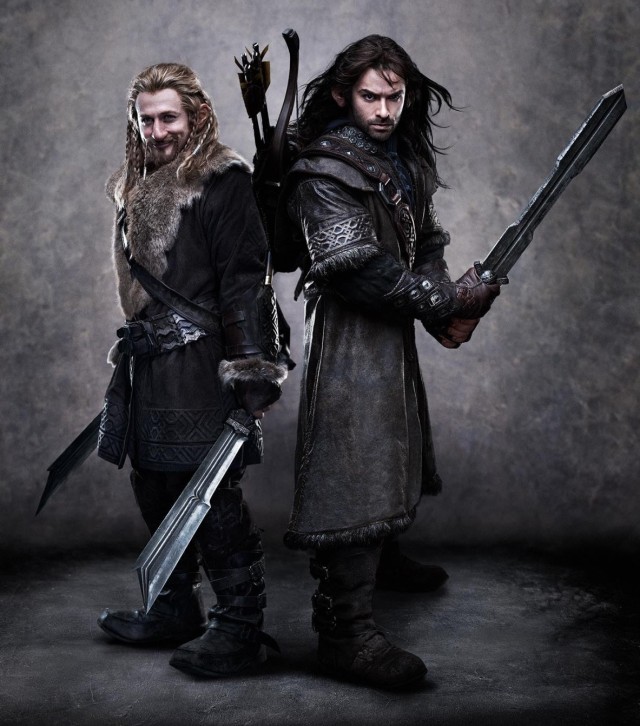
Image of Kili and Fili created New Line Cinema, Metro-Goldwyn-Mayer Pictures, WingNut Films, and Warner Bros. Pictures

Becoming the Voice of Reason

Kili was not known as “the voice of reason” in The Hobbit trilogy. He did not often make statements that would make others think “he has a point”. But in The Hobbit: The Battle of the Five Armies, Kili found the courage to become “the voice of reason”, being one of the few people to stand up to Thorin during his “dragon sickness” period. While in Erebor, Thorin ordered the Company to build a fortress, in order to prevent Erebor from being taken again. Kili points out how Thorin is not the only one who has lost his home, stating “The people of Lake Town have nothing. They came to us in need, they have lost everything”. Despite Thorin failing to acknowledge Kili’s point by reminding his nephew how he lost Erebor, Kili wasn’t dissuaded by his uncle’s stubbornness. After Thorin snapped out of his “dragon sickness”, Kili stands up to his uncle again, saying “I will not hide behind a wall of stone while others fight OUR BATTLES FOR US! It is not in my blood, Thorin”. This time, Thorin agreed with his nephew, leading the Company into battle. When he became “the voice of reason”, Kili was honest and told Thorin what he needed to hear. Even though he was “the voice of reason” for a short period of time, Kili’s statements provided a glimpse into the kind of leader he could have been.

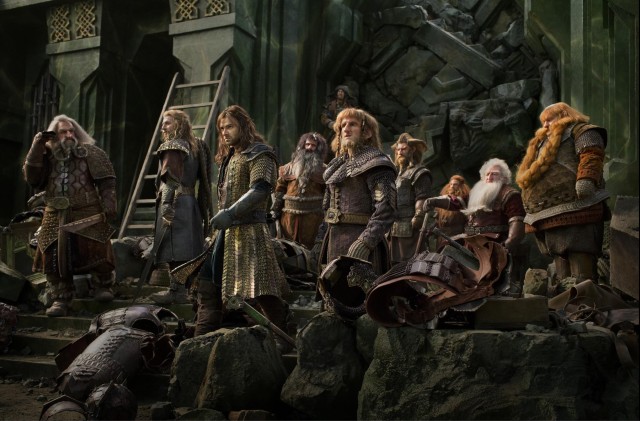
Image of The Company created by New Line Cinema, Metro-Goldwyn-Mayer (MGM), WingNut Films, 3Foot7, and Warner Bros.

Taking One for the Team

When attempting to escape the Rivendell dungeon in The Hobbit: The Desolation of Smaug, the Company needed to open an underwater gate. Kili volunteered to open the gate, climbing out of the water and onto the top of the gate, where the gate’s lever was located. During this process, an Orc shot Kili in the leg, causing Kili to be the only member of the Company to become seriously injured. After the Company’s escape, Tauriel and the audience learn the arrow that shot Kili contained fatal poisons. As the story of The Hobbit: The Desolation of Smaug continued, Kili’s health deteriorated, bringing him on the verge of death. Yet, when a group of Orcs invaded Lake Town, Kili and Tauriel worked together to defeat an Orc. These two scenarios show how Kili took one for the team, risking his health and safety by putting the well-being of others before himself.

A Tolkien Blog Party banner created by Hamlette from The Edge of the Precipice

In the 1971 biopic, Evel Knievel, Evel Knievel states “heroes know who they are”. He made this statement to make a point how true heroes don’t need to show off their hero status. The more I think about Evel’s quote, the more the quote fits who Kili is. Kili never flaunted his royal title because he didn’t think doing so would be necessary. What Kili did instead was let his actions and choices speak for themselves. As I said in the introduction, the Company in The Hobbit trilogy reminded me of a football team. With Kili as the MVP, that means he’d be the one to not only receive a brand-new truck at the end of the game, but also proclaim his team was going to a theme park at the end of the season. But anyone who knows Kili’s story would know Kili didn’t get to do any of these things. As I conclude this editorial, I would like to say that whenever I think of the abbreviation, MVP, I will think of Kili carrying the title of “most valuable prince”.

Have fun in Middle-Earth!

Sally Silverscreen

Take 3: The Lost Empire/The Monkey King Review

Last month, I wrote a list of movies I’d love to review someday. One of those films was The Lost Empire/The Monkey King. Originally, I was going to review the 2001 picture for Bai Ling’s birthday, as it is in October. But because July’s theme for Genre Grandeur is ‘Fantasy Movies of the 21st Century’, I found a reason to see this movie three months early! In my aforementioned list, I said the story of The Lost Empire/The Monkey King is based on Chinese folklore. This is very different from the types of films Hallmark creates today, which seem to, mostly, be recycled, predictable material. In fact, the only new Hallmark movies I’ve seen this year, so far, are Cut, Color, Murder, Aurora Teagarden Mysteries: Haunted by Murder, and Curious Caterer: Dying for Chocolate. The Lost Empire/The Monkey King was created during a time when Hallmark wasn’t afraid to take creative risks. But did those risks lead to cinematic rewards? Let’s journey through this review as we find that answer together!

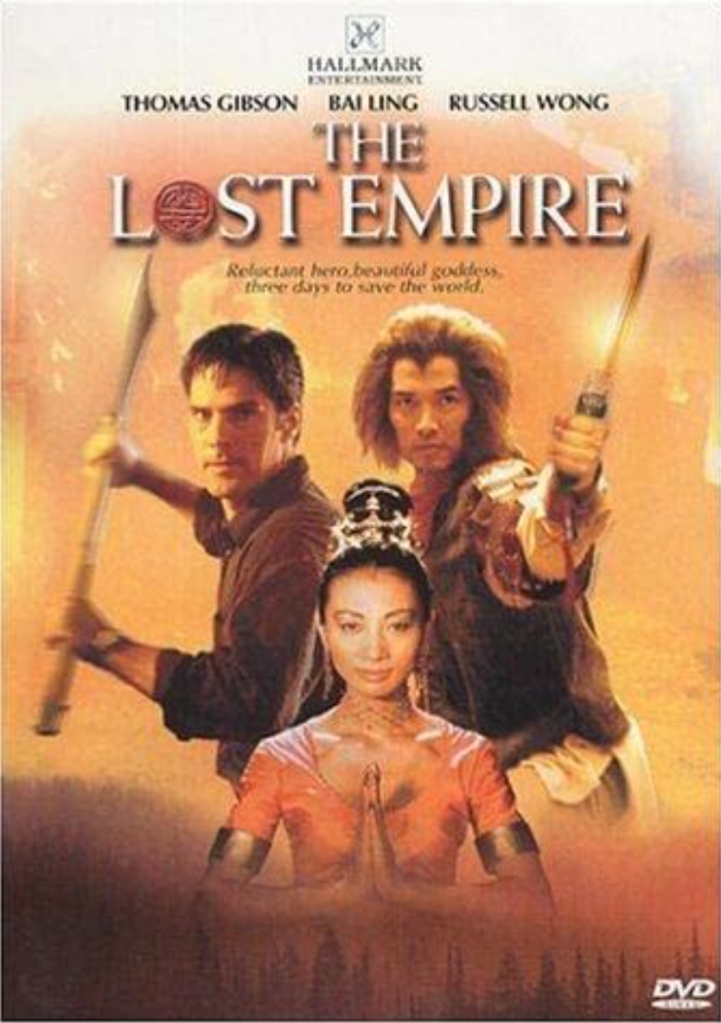
The Lost Empire/The Monkey King poster created by Hallmark Entertainment, RTL, Babelsberg International Film Produktion, Milk & Honey Pictures, National Broadcasting Company (NBC), and Hallmark Home Entertainment

Things I liked about the film:

The acting: When I reviewed Point of Origin last month, I was disappointed by Bai Ling’s limited presence in that film. To me, it seemed like her talents were underutilized. In The Lost Empire/The Monkey King, however, Bai was given more acting material to work with. This allowed her talents to be satisfyingly showcased! I’ve said in the past how Bai Ling has a strong sense of emotionality when it comes to her acting abilities. This was not only incorporated into her portrayal of Kwan Ying, but her on-screen performance was also fluid. A great example is when Kwan and Nicholas “Nick” Orton interact for the first time. While sharing drinks at a local restaurant, Kwan’s demeanor is giggly and somewhat flirty, reflecting her drunken state. She holds hands with Nick as she casually leans across the table. But as soon as Nick asks Kwan why she needed to see him, her mood changes without missing a beat. Kwan becomes very serious, as she sits up in her seat and even looks over her shoulder. This change in Kwan’s demeanor also indicates what’s to follow in the story.

Years ago, I read American Born Chinese by Gene Luen Yang. From what I remember, the Monkey King was portrayed as an older, wiser character who younger characters looked up to. Russell Wong’s portrayal of the Monkey King was much different from what I expected. However, it was enjoyable to watch in The Lost Empire/The Monkey King! The Monkey King in the 2001 film was a humorous character. Russell’s dryer sense of humor and one liners worked in the story’s favor, as it provided a break from the tenser moments in the movie. The humor itself also fit within that movie’s world. When Nick first meets the Monkey King, he is taken aback by his change of scenery. The Monkey King uses that interaction to explain what is happening. Nick asks the Monkey King when the book, The Journey to the West will be destroyed. The Monkey King casually responded by saying, “Midnight. Next Thursday”. What also worked in Russell’s favor was his comedic timing. All of the Monkey King’s humorous moments were delivered at the right place and time. This was not only the result of the screenwriting, but the strength of Russell Wong’s acting abilities as well!

One of the most relatable stories is the “fish out of water” story. In order for this story to work in film, you need an actor or actress who can believably sell this idea to the audience. Thomas Gibson in his portrayal of Nick did just that! The way Thomas expressed emotion appeared more realistic, adding to the believability of his performance. Thomas’ ability to adapt to each situation was strong, allowing the audience to witness Nick grow over the course of the movie. The Lost Empire/The Monkey King is not only a “fish out of water” story, but also a “hero’s journey” story. That means the protagonist makes a significant change in his or her life. Throughout the film, Nick makes a personal transformation, gaining confidence as he encounters each obstacle. The way Nick reacts to these changes adds a sense of relatability to the character.

The set design: Immersive and imaginative worlds are a staple within the fantasy genre. The quality of a project’s set design can successfully present that illusion to the audience. I loved the set design in The Lost Empire/The Monkey King because it was able to pull the aforementioned illusion off! Nick is on a business trip to China. Some scenes showcased a typical Chinese city, with smaller details emphasizing the realism of this location. String lights and red lanterns can be seen overhead, which brings a softer glow in the middle of the evening. Vending booths line the streets, elaborating a greater number in population as extras and background characters walk by. Banners and signs in Chinese indicate how that specific part of the city is popular for business.

As the story progresses, more fantastical worlds are shown on-screen. One of these worlds is Jade City. Massive structures boast an ancient Chinese architecture. The ground beneath the characters’ feet displays a pale green hue, subtly reminding the audience of the city’s name. Bright pink flowered trees nicely contrasted the buildings and landscape, bringing a pop of color to the city. Nearby lanterns and window screens are smaller details that show the craftmanship that went into the film’s set design!

The discussion of literature: The main conflict in The Lost Empire/The Monkey King was the fate of the original copy of The Journey to the West. The villains want the book destroyed, while Nick and his friends are trying to save it. This main conflict led to a discussion of censorship versus preservation. The way the discussion is brought up, verbally and visually, was interesting. What was also interesting was the author of The Journey to the West, Wu Ch’eng En, receiving the opportunity to witness the impact of his literary work. I found this part of the story thought-provoking, as it made me think of authors who didn’t really have the chance to see their stories effect the world. The script’s focus on literature brought a sense of depth to a fantastical and whimsical story!

Traditional Chinese dragon image created by Freepik at freepik.com. <a href=”https://www.freepik.com/free-photos-vectors/design”>Design vector created by freepik – http://www.freepik.com</a>. Image found at freepik.com.

What I didn’t like about the film:

Some of the special effects: When creating a television movie, there’s only so much technological resources at the creative team’s disposal. I’m also aware cinematic technology was not as strong in the early 2000s as it is in the 2020s. Despite these setbacks, the special effects in The Lost Empire/The Monkey King were not a consistent issue. But when they were an issue, it was noticeably rough. While Nick was trying to find a way back to his world, he encounters a tiger in a nearby forest. This tiger appears to have been created through computer technology. Instead of resembling a real-life tiger, it resembled one from a computer game from the time of the movie’s release. The longer the tiger was on screen, the more dated it looked.

Lack of acknowledgment for Pigsy’s mistake: Pigsy is a character that tags along with Nick on his journey. During this journey, Pigsy makes a mistake that negatively impacts his friends and their mission. There were moments where Pigsy appears guilty about his choice. However, the mistake itself was not acknowledged like I hoped it would. Pigsy’s situation does get resolved. But this resolution was glossed over instead of being properly addressed. That was an underutilization of one of the movie’s themes, which was truth.

Mentioning Nick’s ex: On more than one occasion, Nick’s ex-girlfriend is brought up in the story through flashbacks. At a more climatic moment, her inclusion made sense. But, personally, I found it unnecessary for the ex-girlfriend to be brought up more than once. These parts of the story reminded me of a Hallmark movie cliché I’ve talked about in the past: the “protagonist’s ex showing up unannounced” cliché. Nick’s ex-girlfriend is only shown through flashbacks, as I’ve already mentioned. However, I’ve also mentioned how pointless it is to bring up a protagonist’s ex when those characters have no plans to get back together.

Tiger image created by Chevanon at freepik.com.  <a href=’https://www.freepik.com/free-photo/tiger-looking-straight-ahead_999674.htm’>Designed by Freepik</a>. <a href=”https://www.freepik.com/free-photos-vectors/pattern”>Pattern image created by Chevanon – Freepik.com</a>. Image found at freepik.com.

My overall impression:

As I watched The Lost Empire/The Monkey King, I noticed some parallels between this movie and The Wizard of Oz.  In the Hallmark production, the characters travel to Jade City. Meanwhile, in The Wizard of Oz, Dorothy and her friends seek out The Emerald City. But comparing The Lost Empire/The Monkey King to The Wizard of Oz does the 2001 film such a disservice. This is because the Hallmark film holds up on its own! I found this production so imaginative, creative, and one of the more unique pictures I’ve seen this year! It was entertaining, engaging, sometimes thought-provoking, and even somewhat educational. The Lost Empire/The Monkey King makes me wish Hallmark would make more movies like this instead of what they’re currently creating. Like I said in the introduction, the 2001 production was made during a time when Hallmark wasn’t afraid to take creative risks. In more recent years, Hallmark has over-relied on one genre to the point where it seems like they don’t want to try anything new. I, honestly, find this to be a shame, as there are so many more stories Hallmark could tell.

Overall score: 7.9-8 out of 10

Have you seen The Lost Empire/The Monkey King? Are there any older Hallmark films you wish received more recognition? Please tell me in the comment section!

Have fun at the movies!

Sally Silverscreen
Take 3: Dr. Phibes Rises Again Review + 420, 425, and 430 Follower Thank You

While looking for a movie to review for my next Blog Follower Dedication Review, I realized it’s been a month since I wrote about a “spooky” title. It’s also been two months since I reviewed a sequel. Because of those factors, I choose to review the 1972 movie, Dr. Phibes Rises Again! Last year, I saw the predecessor, The Abominable Dr. Phibes, after one of my readers recommended it to me. In my opinion, the film was just fine, as I found the horror in the horror-comedy classification heavily emphasized. The fact The Abominable Dr. Phibes received a sequel was surprising to me. That’s because I had no idea the 1971 title received a second chapter until I recently stumbled across it. What other surprises are in store? Let’s take a trip through this review of Dr. Phibes Rises Again in order to find out!

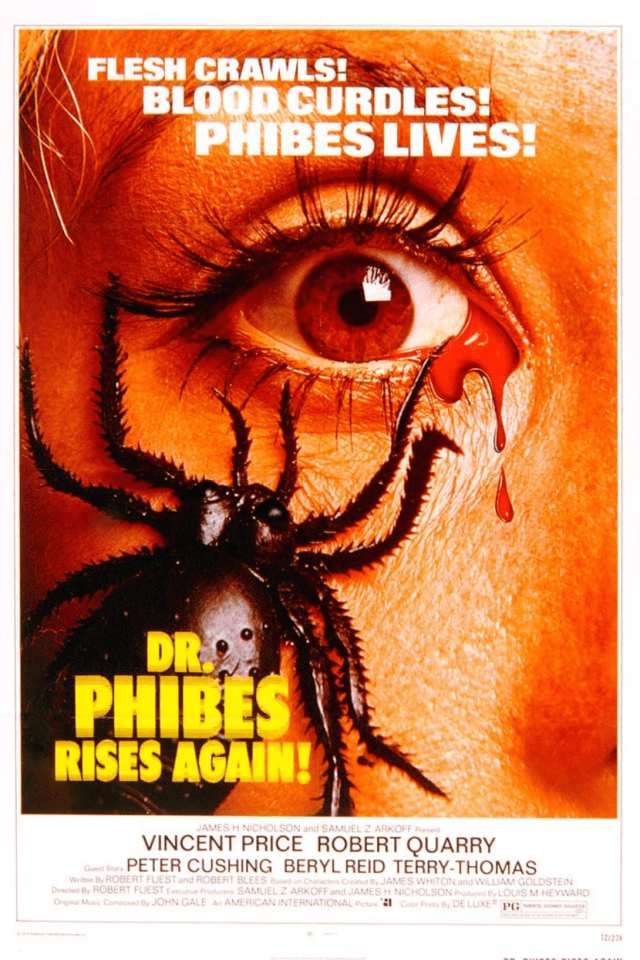
Dr. Phibes Rises Again poster created by
American International Pictures and Anglo-EMI Film Distributors Ltd./MGM-EMI

Things I liked about the film:

A mystery-adventure: In my review of The Abominable Dr. Phibes, I stated how the story was more of a horror-mystery due to the limited incorporation of comedy. Like its predecessor, the sequel also features a mystery. But this time, an adventure story is included in the script, as the characters travel to Egypt. The change in scenery allowed something new to be brought to the overall story. It also added an exciting component, with the audience receiving an opportunity to witness new sights and join the ride with the characters. A new setting made the film’s twists and turns interesting, as Dr. Phibes came up with different ways to attempt to reach his goal. A distinct identity was given to Dr. Phibes Rises Again because of these creative decisions!

Toned down character demises: One of The Abominable Dr. Phibes’ flaws was how over-the-top demises of characters were, as they came across more gross than scary. These demises also overshadowed Vincent Price’s performance, which led to his talents being underutilized. While Dr. Phibes continued to go after anyone who stood in his way in Dr. Phibes Rises Again, the execution of his plan was toned down. Not only were there less demises, but there was also less on-screen gore compared to the first film. Vincent’s acting abilities received more emphasis because of this creative decision. That creative decision also allowed me, as a viewer, to focus on Vincent’s body language, facial expressions, and vocal inflections. Vincent’s role in Dr. Phibes Rises Again felt more like lead actor material compared to The Abominable Dr. Phibes.

Robert Quarry’s portrayal of Darius Biederbeck: When I talked about Queen of the Damned in my article, Twentieth Century vs. Queen of the Damned at the Against the Crowd Blogathon, I said the movie presented Lestat as a more likable protagonist. Stuart Townsend’s portrayal of Lestat helps make this statement accurate, as his consistent suave, confidence added to Lestat’s likability. Robert Quarry’s portrayal of Darius Biederbeck in Dr. Phibes Rises Again reminded me of Stuart Townsend’s portrayal of Lestat. This is because Darius’ suave, confidence was similar to Lestat’s. Darius was a goal-driven man, believing in himself and his mission. Even when those around him had their doubts, his confidence was unwavering, presented consistently by Robert. What also helped was how strong Robert’s acting abilities were, giving him an opportunity to present a stand-out performance. These aspects of Robert’s portrayal of Darius made it enjoyable for me to watch!

Egyptian hieroglyphic image created by wirestock at freepik.com. Luxor photo created by wirestock – www.freepik.com

What I didn’t like about the film:

A somewhat rehashed story: Dr. Phibes’ story in The Abominable Dr. Phibes revolved around trying to find a solution for his deceased wife, Victoria. This quest for a solution drove Dr. Phibes to go after those he felt wronged him and his wife. In Dr. Phibes Rises Again, Dr. Phibe travels to Egypt. But his mission is similar to the first film: find a solution for Victoria. I won’t claim this story is a carbon copy of The Abominable Dr. Phibes. However, I wish it had less similarities to the predecessor.

Confusing parts of the story: A confusing part of Dr. Phibes Rises Again is the return of Vulnavia. Dr. Phibes’ assistant, Vulnavia, was one of the key characters in The Abominable Dr. Phibes. Without spoiling the first movie, I will say something happens that prevents Vulnavia from appearing in the sequel. Yet, she does appear in Dr. Phibes Rises Again, with no clear explanation provided. This is just one example of confusing parts of the story that should have received more context.

An unresolved mystery: While in Egypt, Dr. Phibes discovers a sarcophagus. When he opens the sarcophagus, it appears a mummy had been removed. Dr. Phibes even questions what happened to the aforementioned mummy. But after this scene took place, the mystery is never resolved. In fact, it was never brought up after Dr. Phibes’ initial discovery. This made me wonder why the film’s creative team would include that mystery in their script if they had no intentions to solve it on screen?

Scary movie screening image created by Freepik at freepik.com. <a href=’https://www.freepik.com/free-photo/small-skeleton-with-popcorn-and-tv_1323292.htm’>Designed by Freepik</a>. <a href=”https://www.freepik.com/free-photos-vectors/background”>Background image created by Freepik</a>. Image found at freepik.com.

My overall impression:

Before I share my overall impression of Dr. Phibes Rises Again, I’d like to thank all my followers! I appreciate your support of 18 Cinema Lane! Now, on to my thoughts on Dr. Phibes Rises Again. On the one hand, the sequel tries to go in a different direction from the first movie. It even fixes some of the predecessor’s flaws. On the other hand, though, Dr. Phibes’ story was similar to his story in The Abominable Dr. Phibes. It also doesn’t help how parts of the story were confusing and a mystery was unresolved. Therefore, I will say this: as a movie, Dr. Phibes Rises Again is fine. As a sequel, it is slightly better than the first film.

Overall score: 7.2 out of 10

Have you seen The Abominable Dr. Phibes or its sequel? Are there any sequels you think are better than their predecessor? Please tell me in the comment section!

Have fun at the movies!

Sally Silverscreen

The 4th Annual Gold Sally Awards Has Arrived!

18 Cinema Lane recently celebrated its fourth anniversary! To commemorate such an important milestone, I am, once again, hosting the Gold Sally Awards! As I said last month, each award post will feature two polls at a time. This decision was made to help the voting process move at a faster pace. With that said, this year’s Gold Sally Awards will begin with the Best Movie and Story polls! Because I didn’t post any announcements for the Gold Sally Awards, the first two polls will be available for two weeks; from February 16th to March 2nd. Like years past, you are allowed to vote for more than one nominee. But you can only vote once per person. The link to the polls will be located under each poll. Just click on the word ‘PollMaker’.

Similar to last year, I thought featuring this anniversary image was appropriate for the start of the Gold Sally Awards! Anniversary image created by WordPress.
What was the Best Movie of 2021?
1. The Karate Kid (1984)
2. The Three Musketeers (1948)
3. The Love Letter
4. Perry Mason: The Case of the Telltale Talk Show Host
5. Sincerely, Yours, Truly
6. Rigoletto
7. Holly and Ivy
8. The King and I (1956)
9. A Star Is Born (1937)
10. Poisoned in Paradise: A Martha’s Vineyard Mystery
 
Created with PollMaker
What was the Best Story of 2021?
1. The Karate Kid (1984)
2. The Three Musketeers (1948)
3. The Love Letter
4. Perry Mason: The Case of the Telltale Talk Show Host
5. Sincerely, Yours, Truly
6. Rigoletto
7. Holly and Ivy
8. The King and I (1956)
9. A Star Is Born (1937)
10. Poisoned in Paradise: A Martha’s Vineyard Mystery
 
Created with PollMaker

Have fun voting!

Sally Silverscreen

Take 3: Plymouth Adventure Review

When I participated in the Fourth Van Johnson Blogathon last year, I reviewed the three episodes of Murder, She Wrote Van appeared in. For this year’s blogathon, I wanted to do something different by writing about one of his films. While looking through my Pinterest board of movie recommendations, I was reminded of the 1952 movie, Plymouth Adventure. This film was introduced to me by the Brannan sisters from Pure Entertainment Preservation Society, when they reviewed the movie during my blogathon, ‘A Blogathon to be Thankful For’. The Mayflower journey is one of the most important events in U.S. history. However, it is rarely covered in cinema. This is one of the reasons why I wanted to check this film out! I also liked reading what the Brannan sisters had to say about Plymouth Adventure. Therefore, I was curious to see if my opinion was similar to theirs.

Plymouth Adventure poster created by Metro-Goldwyn-Mayer

Things I liked about the film:

The acting: The blogathon I am participating in celebrates the filmography of Van Johnson. So, talking about his performance first makes sense. What I liked about Van’s portrayal of a carpenter named John Alden was how his emotions represented the audience, expressing the thoughts and feelings we might experience if we were in his shoes. The moment John boards the Mayflower provides a perfect example. As he is walking around the deck, he is in awe of the ship’s magnitude. When he crosses paths with Spencer Tracy’s character, Captain Christopher Jones, John distinguishes himself from the other passengers as a carpenter, wanting to stand out for his skills and talents. Van’s on-screen personality highlights this distinction among the film’s ensemble!

My favorite character in Plymouth Adventure is Gilbert Winslow, portrayed by John Dehner. John carried his character with class and wisdom, like a true sophisticated gentleman. These characteristics are highlighted well in a scene between Gilbert and Christopher. In this scene, they are discussing the settlers’ reasons for partaking in the journey. Christopher feels they are foolish for throwing their lives away for the unknown. But Gilbert respectfully rebuts that argument by saying the settlers are brave because they sacrificed so much in order to achieve a better, more free life. Dawn Addams portrayed one of these settlers, a woman named Priscilla Mullins. While she was only in the movie for a limited amount of time, Priscilla brought a kind gentleness to the story. This presented a good counterpart to the harshness of the journey itself. I also liked seeing Dawn and Van perform together! They had nice on-screen chemistry and I was interested in seeing where Priscilla and John’s relationship would go. I was not expecting a romance in this film, so that was a pleasant surprise!

The use of color in the costumes: When I think about the 1600s, I think of articles of clothing that look plain and unimpressive. Outfits made for royal family members are an exception, as they were meant to stand-out among a sea of commoners. In Plymouth Adventure, I was happy to see pops of color in the film’s costumes! It was also interesting to see which colors were used. As I mentioned before, Gilbert Winslow is my favorite character in this movie. Throughout the story, he wore an outfit that was covered in an emerald green material. That creative decision not only helped John stand out among the ensemble cast, but the costume itself also complimented his dark hair. Noel Drayton’s costume also complimented his hair! Because his hair is a lighter hue, his costume was a nice burnt orange. Because of this creative choice, I can remember who Miles Standish, Noel Drayton’s character, was, as I am able to pick him out from the crowd. During the Mayflower journey, Priscilla can be seen wearing a simple, yet modest dress. This dress was pink and light yellow, a color combination I liked seeing. Dawn’s costume contrasted nicely against the dark waters from the ocean. It also highlights the character’s kind gentleness.

Showing the journey’s reality: When a movie portrays a historical event or period in time, the serious parts of that story can sometimes get glossed over or even omitted. With Plymouth Adventure, the creative team didn’t shy away from bringing up the harsher, sadder realities of that titular trip. During the journey, the Mayflower is caught in the middle of a storm. One of the settlers fears her son might have gone onto the deck. In an attempt to rescue him, William Bradford makes the selfless choice to find the settler’s son. I won’t spoil the movie, but I will say, at one point, I didn’t think William was going to survive his mission. That scene did a good job highlighting the fear that was constantly present on the Mayflower. History will tell you that the Mayflower journey was a harsh one, with sickness, hunger, and even death boarding the famous ship. So, I appreciate the creative team’s attempts at making the story feel as accurate as possible.

The Fifth Annual Van Johnson Blogathon banner created by Michaela from Love Letters to Old Hollywood

What I didn’t like about the film:

Not enough character development: When a movie’s creative team contains an ensemble cast, it can be a challenge to give each actor or actress involved the recognition they deserve. But with Plymouth Adventure, the screen time each actor received felt inconsistent. This caused the story’s character development to be limited. When Gilbert was first introduced, I was excited to see what his role on the Mayflower would be. Even during his conversation with Christopher about the settlers, I knew Gilbert was important in some way. But as the film went on, he was reduced to being the story’s narrator. These narrations were presented as journal entries, as if he were recording the journey’s history. I’m not denying the importance of keeping historical records. However, I was expecting more for Gilbert Winslow.

How the settlers were referenced: At the beginning of the film, there was an on-screen message which stated Plymouth Adventure was dedicated to the adventurous settlers. As I was watching the movie, I questioned how honest that message was. The settlers in the story were referenced as “fools”. Their motives for taking the trip were constantly in question, even by the ship’s captain. Despite having supporters on their side, like Gilbert Winslow and William Brewster, the settlers faced more disrespect than I expected. Even Christopher Jones accused the settlers of running away in fear from their government, when, from what I remember, they were running to a place where they felt they could create a better government. I’m aware that the settlers probably did face criticism back when the Mayflower journey actually took place. But in the context of the movie and how the Mayflower journey actually played out, that aforementioned message kind of feels disingenuous.

Christopher and Dorothy’s relationship: Because the Mayflower journey was long and grueling, it makes sense for the film’s creative team to create subplots within the script. But out of everything that happened in this movie, Christopher and Dorothy’s relationship is my least favorite. There was one scene where, after a drunken escapade, Christopher approaches Dorothy in the middle of the night. I’m not going to lie, this exchange made me feel uncomfortable. As the story progresses, we learn that Christopher has fallen in love with Dorothy. However, Dorothy is married to William Bradford. Once again, I won’t spoil the movie for anyone who hasn’t seen it yet. But, honestly, that subplot was scandalous for a Breen Code era film. I also wish some of that story time had been given to Priscilla and John, a couple who actually had potential to form a lasting, romantic relationship.

Paper Boats in the Sea image created by Freepik at freepik.com. <a href=’https://www.freepik.com/free-vector/background-of-paper-boats-with-hand-drawn-waves_1189898.htm’>Designed by Freepik</a>. <a href=”https://www.freepik.com/free-photos-vectors/background”>Background vector created by Freepik</a>. Image found at freepik.com.

My overall impression:

Blogathons can be a great way to discover new films and share the ones you love. From my event, ‘A Blogathon to be Thankful For’, I discovered a movie that I had, honestly, never heard of before. With that same title being chosen for the Fifth Annual Van Johnshon Blogathon, it seems like things are coming full circle. When it comes to that title, Plymouth Adventure, I thought it was just ok. For the most part, it appears the movie’s creative team had good intentions for the project. However, I can think of period/historical films that are stronger than this one. I appreciate the creative team’s decision to show the harsher parts of this story, as it illustrates just how difficult the journey was. But there are areas of the script that could have been improved, such as giving Christopher and Dorothy a different subplot. As I finish writing this review, I now realize I need to search for another film to write about for Thanksgiving.

Overall score: 6.1 out of 10

Take 3: The Three Musketeers (1948) Review

Last year, I participated in the Classic Literature On Film Blogathon. Since I was reading To Kill a Mockingbird at the time, I chose to review the book’s film adaptation. For this year’s event, I selected the 1948 version of The Three Musketeers! Because I’m using my TBR Tin to choose which book to read next, I wasn’t able to read the source material before I saw the movie, as I’m currently reading The Shadowy Horses by Susanna Kearsley. I was recommended this film by Patricia from Caftan Woman. As I try to see as many film suggestions as I can, this became one reason why I selected The Three Musketeers for this blogathon. I have seen the 1993 adaptation of the story. But I can’t give an honest opinion on that film, as I haven’t seen the movie in years. What will my thoughts be on the 1948 adaptation of The Three Musketeers? Keep reading to find out!

The Three Musketeers (1948) poster created by Metro-Goldwyn-Mayer and Loew’s, Inc.

Things I liked about the film:

The acting: Because The Three Musketeers contained an ensemble cast, it’s difficult to choose a favorite performance. However, I will still mention a few of them. For me, Gene Kelly is always going to be known for his performances in musicals. Seeing him work with different acting material was very interesting, as it forced him to utilize his expressions and emotions more. Out of Gene’s films I’ve seen so far, his portrayal of D’Artagnan has become one of my favorites! This performance was so well-rounded, D’Artagnan came across as a mutli-layered character. As Gene had a variety of expressions at his disposal, he was able to adapt to any situation D’Artagnan faced. I am not familiar with Van Heflin as an actor. But I was impressed with his portrayal of fellow Musketeer, Athos! Van’s best scene was when Athos drunkenly tells a story of an aristocrat who was betrayed by a woman from the country he fell in love with. Even though Athos is disoriented by the alcohol, you can tell there is deep emotion in his voice and eyes. Another performance that also became a favorite came from Lana Turner, who portrayed Countess de Winter! Her standout scene was when her character was in prison. The Countess appears disheveled as she begs for her life to end. What made this scene so memorable was the amount of emotion Lana put into her role. She presented a character that was so desperate, she’d be willing to do anything to get out of it.

The costumes: When it comes to scene-stealers, the costumes in The Three Musketeers definitely stole the show! I liked how colorful they were, as bright hues were used on various pieces of apparel. It not only made the characters stand out, but it also helped when telling characters apart from one another. The amount of detail on these costumes was also exquisite! In one scene, the Duke of Buckingham wore a purple shawl. Gold embroidery complimented the shawl’s shade of purple and prevented the piece from becoming plain. At a dinner party, Queen Anne wore a white gown. This gown also contained gold details, which were found on the skirt and bodice. Small jewels near the top of the dress completed Queen Anne’s elegant look!

The set design: If you’re going to create a period film, you have to pay attention to the finer details that go into each set. These details will reflect the effort, research, and care that went into how these sets look. The sets in The Three Musketeers show how much the film’s creative team cared about the presentation of their final product! What I love about the sets in this movie are the fine details that can be found. Carved images are shown in the Duke of Buckingham’s study, covering the fireplace and doorframe in these wooden pictures. They can also be found in other rooms and on other materials, such as on a tin-plated cabinet in a General’s office. My favorite design detail can be found in Queen Anne’s sitting room. As Queen Anne and the Duke of Buckingham are standing near the fireplace, Queen Anne turns a knob found near the top of the fireplace. This action reveals a secret compartment that hides a box of diamonds.

The fight choreography: Any action movie is just as good as its fight choreography. The performative presentation of the fights in The Three Musketeers helped make these fights so memorable! Because of Gene Kelly’s dancing skills, he was able to incorporate leaps into his fight sequences. Watching D’Artagnan leap from place to place gave him a natural superpower that he was able to use to his advantage! Humor can also be found during these fight sequences, which prevented them from being too dark or serious. D’Artagnan’s first duel was against the head of the French police. During this duel, hilarity ensued, from D’Artagnan splashing water in his opponent’s face to pushing his opponent in a pond. This inclusion of humor in the fight choreography allowed the creative team to present these fights in creative and interesting ways!

The 2021 Classic Literature On Film Blogathon banner created by Paul from Silver Screen Classics.

What I didn’t like about the film:

D’Artagnan’s romantic relationships: After rescuing Constance from a home invasion, D’Artagnan falls in love with her. He not only tells Constance he loves her, but they also share a romantic kiss. While I liked Constance and D’Artagnan’s relationship, I felt it was developed too quickly. Later in the film, Constance is kidnapped. In order to save her, D’Artagnan pretends to fall in love with Countess de Winter. However, after his initial meeting with the Countess, D’Artagnan tells Athos how much he loves her. If D’Artagnan was romantically interested in Constance, why would he even bother having feelings for the Countess? That part of the story was confusing.

A weaker villain: There are two villains in The Three Musketeers; Countess de Winter and Richelieu. But one of them definitely outshined the other. Countess de Winter was the stronger villain. She is a criminal by legal context and the audience can witness her committing several crimes. Richelieu, on the other hand, is not presented in the same way. The audience does see him commit a crime of theft, but it is never explained how this was done. Richelieu was also friends with the King of France, a character that was not written or portrayed as a villain. This made me puzzled as to what Richelieu’s true intentions were, whether he was a villain or simply a man who follows his own rules.

The Musketeers spending little time together: When you think of The Three Musketeers, you think of these heroes fighting alongside each other and saving the day together. As I watched this film, I noticed how they spent more time apart. I was disappointed to discover this because that team dynamic the Musketeers are known for had a limited presence. While this separation did allow the audience to get to know these characters individually, we didn’t really get to see this group of friends grow over time. Though there was a lot of content in this movie, I wish more time was given to show the Musketeers together.

Castle photo created by Photoangel at freepik.com. <a href=’https://www.freepik.com/free-photo/old-castle-in-the-mountians_1286237.htm’>Designed by Freepik</a>. <a href=”https://www.freepik.com/free-photos-vectors/tree”>Tree image created by Photoangel – Freepik.com</a>. Image found at freepik.com.

My overall impression:

Anchors Aweigh was the best movie I saw in 2020. This was a pleasant surprise, as I never expected one of Gene Kelly’s films to receive this honor. Even though it’s only April, the 1948 adaptation of The Three Musketeers has now become the best movie I’ve seen so far! There is so much effort that was put into this project, which is reflected in many parts. The costumes and set designs were impressive because of the detail that was incorporated into them. Many good acting performances can be found, making it difficult to choose the best one. These actors not only did a good job individually, but they also worked well together as a group! Similar to what I said in my Oliver! review, I might read The Three Musketeers because of how much I enjoyed its film adaptation! For now, my top priority is reading the books that are currently on my TBR shelf.

Overall score: 8 out of 10

Have you read or seen The Three Musketeers? What adaptations of classic literature do you like? Please let me know in the comment section!

Have fun at the movies!

Sally Silverscreen
The We Heart Pirates Week Tag 2021

When I found out Hamlette, from Hamlette’s Soliloquy, was hosting another blogathon, I knew there would be a tag. I was curious what questions would be asked when I discovered the blogathon would be pirate themed. However, I was looking forward to creating another tag post! Last year, I participated in The Legends of Western Cinema Week, which was partially hosted by Hamlette. During that event, I was introduced to my first blogathon tag! While I don’t watch a lot of westerns, I still answered the tag questions based on the films and television shows I have seen. Because I’ve seen and read more pirate related content, I found it easier to answer the questions in the We Heart Pirates Week Tag than those from The Legends of Western Cinema Week Tag. So, hop onboard this ship as we set sail through my answers!

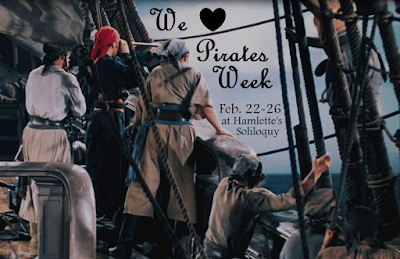
We Heart Pirates Week blogathon banner created by Hamlette from Hamlette’s Soliloquy
  1. What are your favorite pirate movies or books?

While I haven’t seen these movies in a while, I have enjoyed the Pirates of the Caribbean trilogy! I remember them being a lot of fun and intriguing. Each character is memorable and the stories are well written. When it comes to pirate books, I recall liking To Catch a Pirate by Jade Parker! It was so good, I could honestly see it adapted into a film!

2. Who are your favorite fictional pirates?

My favorite character from the Pirates of the Caribbean trilogy is Calypso/Tia Dalma! I know she’s not a pirate, but she does play an integral role within that series. Naomie Harris did such a great job portraying Calypso/Tia Dalma, which is one of the reasons why she’s my favorite character from a pirate movie!

3. What do you like best about pirate stories? (Themes, costumes, aesthetic, etc.)

I’d say the adventure the characters embark on. In any of the pirate movies I’ve seen, there is always a journey that is filled with adventure. It’s interesting to see where the story goes and how the characters deal with their conflicts along the way.

4. If you were going to play a pirate on the stage or screen, what would your costume look like?

I don’t know what it would look like exactly. However, I do know I want it to be elegant. In my review of China Seas, I talk about how beautiful the pirate captain’s costume is. This is because two pieces of his costume were a silk blouse and a detailed jacket. Pieces like those would definitely be in my pirate wardrobe!

5. What pirate ship would you like to serve on?

The Black Pearl from the Pirates of the Caribbean trilogy, of course! It’s too iconic of a ship not to catch a ride.

For this tag post, I thought this picture was appropriate. Screenshot taken by me, Sally Silverscreen.

6. Any favorite sea shanties or pirate songs?

I don’t listen to sea shanties or pirate songs. However, I do like the Nightcore version of Lady in Black by Blackmore’s Night, which sounds like it could fit in a pirate movie.

7. Have you ever participated in International Talk Like a Pirate Day?

No, I haven’t.

8. Would you like to go sailing on a real tall ship?

I don’t sail, but the idea of boarding on a real tall ship sounds fun!

9. Have you ever learned anything about real pirates, or do you tend to stick to the fictional kind?

I’ve learned there were several female pirates who roamed the Seven Seas. However, I don’t spend a lot of time learning about real pirates because I’ve been focusing on the fictional ones and their stories, such as Calypso/Tia Dalma and Davy Jones’ relationship.

10.  Why is the rum gone?

Simple, Captain Jack Sparrow drank it all.

Ship steering wheel pattern image created by Jemastock at freepik.com. <a href=”https://www.freepik.com/free-photos-vectors/background”>Background vector created by jemastock – http://www.freepik.com</a>. Image found at freepik.com.

What are your thoughts on this tag? Do you enjoy watching pirate films? Share your thoughts in the comment section!

Have fun at the movies!

Sally Silverscreen