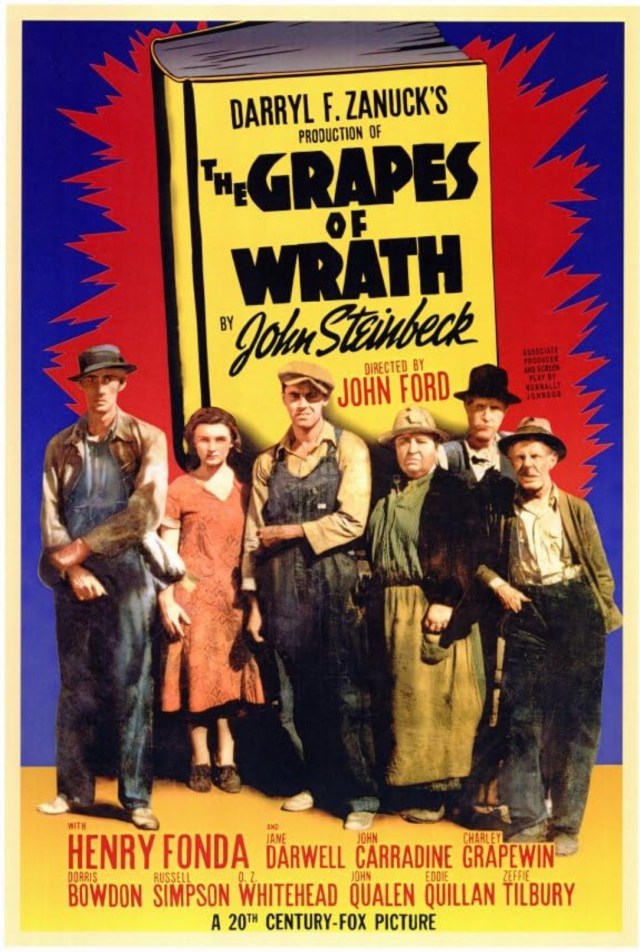
Take 3: The Grapes of Wrath Review

Back in May, I published a late review of John Steinbeck’s The Grapes of Wrath, my choice for the Buzzwordathon readathon. In that review, I stated how I wouldn’t plan on reading the book again, as I found the book mundane. For this year’s Classic Literature on Film Blogathon, hosted by Silver Screen Classics, I figured it would be a good idea to revisit the 1940 adaptation! Years ago, I saw The Grapes of Wrath movie. Because I only had vague recollections of the film, I wasn’t able to give an honest opinion on it. Besides that reason, I was curious to see how different or similar the adaptation was from its source material. Adaptations can be hit or miss, ranging from being unrecognizable from the book to being better than the book. Where does The Grapes of Wrath rank among these adaptations? Turn the page on this review in order to find out!

The Grapes of Wrath poster created by Twentieth Century Fox

Things I like about the film:

The acting: Toward the beginning of the movie, Tom Joad, portrayed by Henry Fonda, is being driven home by a truck-driver. Suspicious of the truck-driver’s possible prejudice against him, Tom is uneasy and irritated. Just as he’s leaving the truck, Tom tells the truck-driver why he went to prison. While Tom is revealing the answer, his eyes are set in a serious stare and his mouth is presented crookedly. Speaking his answer with a loud, serious, even a bit agitated tone, the impression Tom left on the truck-driver and me, as a viewer, was chilling. However, this impression was a strong one, as it allows Tom to stand out and be remembered among the film’s large cast of characters!

A common strength I saw among the movie’s cast was how expressive the actors and actresses were. John Carradine’s portrayal of Casy serves as a great example! When he was telling Tom about his past sermons, Casy’s eyes went wide and his voice sounded animated. He even demonstrated gestures from his former services, such as jumping over a fence after a baptism. While John’s portrayal of Casy was expressive, it never felt over-the-top. This gives the audience a reason to take this character seriously. The audience can also take Ruthie and Winfield, the only children in the Joad family, seriously because their expressions seem genuine. At a fancier camp, Winfield and Ruthie are overwhelmed by the luxurious nature of the communal bathroom. When they flush a toilet for the first time, Ruthie and Winfield run out of the bathroom and hide behind the door frame, a mixture of shock and fear on their faces. The genuineness of these two characters was made possible through the screenwriting, as well as the performances of Shirley Mills and Darryl Hickman!

Similarities to the book: When it comes to film adaptations, there are some that share more similarities than differences with its respective source material. As someone who has read the book, I felt this way about the 1940 adaptation of The Grapes of Wrath! When Tom returns home, he and Casy come across Muley, one of the Joad family’s neighbors. Muley explains how several neighboring families were forced off their land by the bank. Through flashbacks, Muley’s recollection of events shows the heartlessness of land developers and the desperate nature of one tractor-driver. Readers would remember this part of the story as a separate chapter from the main narrative, not relating to any particular character. Adapting this chapter through a secondary character’s perspective was an interesting way for the movie’s creative team to respect their project’s source material!

The music: The story of The Grapes of Wrath takes place during the Great Depression, with the setting being rural. Music that can sometimes be heard in a scene’s background is reflective of the story’s time and setting. String instruments, such as guitars and banjos, make up the film’s soundtrack. These instruments helped elevate the tone of a given scene. As a member of the Joad family passes away, an acoustic guitar melody is softly playing as the Joad family is mourning their loved one. This simple tune emphasized the somberness surrounding the event itself. With the way the music fit so well in the movie, it shows how the film’s creative team cared about the presentation of their film!

The 2023 Classic Literature on Film Blogathon banner created by Paul from Silver Screen Classics

What I didn’t like about the film:

A broken illusion: Because The Grapes of Wrath was released during the Breen Code era, several parts of the story had to be changed from page to screen. Rosasharn’s pregnancy was one of them. Through a variety of medium and close-up camera angles, the cinematographer, Gregg Toland, carried the illusion Rosasharn was pregnant. But audience members can tell Rosasharn wasn’t visibly pregnant due to a handful of medium and long shots. These shots broke the aforementioned illusion, taking away the authenticity of characters’ comments about Rosasharn’s pregnancy.

Things left unexplained: Within the story, and even the dialogue, there were things left unexplained. At the beginning of the movie, the audience is introduced to Tom’s brother, Noah. Halfway through the movie, Noah disappears, with no other character questioning his whereabouts or concerned about his disappearance. For those who have read the book, they would know where Noah went; abandoning his family to live near the river, as he fell in love with that location. Viewers who didn’t read the book would assume Noah’s absence was a result of poor screenwriting.

The run-time: The Grapes of Wrath has a run-time of a little over two hours. Since the story is a “slice-of-life” tale, I, personally, felt this movie didn’t need to be that length of time. There were parts of the film that consisted of shots of the Joad family’s vehicle driving down the road. Some of these shots could have been cut from the movie, as they sometimes seemed like padding. Had that creative decision been made, The Grapes of Wrath might have been about an hour and forty-five to fifty minutes.

The Grapes of Wrath book cover found on Goodreads.

My overall impression:

There are some adaptations where if you’ve seen the movie, you’ve already read the book. This is due to the adaptations’ shared similarities with their source material. After reading The Grapes of Wrath and seeing the 1940 film, I can honestly say my aforementioned statement rings true for the movie. While I appreciate the creative team’s attempts to respect the source material, as well as adapt it during the Breen Code era, it felt like I was consuming the same story again. I also think the movie was a bit drawn out, receiving an unnecessary run-time of a little over two hours. However, the music, set design, and costume design were good visual reflections of the story’s time and place. It did feel immersive, like the audience could be transported to that world. I’m glad to have received the opportunity to re-visit this film! Now, I can form an honest opinion about The Grapes of Wrath.

Overall score: 6-6.1 out of 10

Have you seen or read The Grapes of Wrath? If so, what are your thoughts on the story? Let me know in the comment section!

Have fun at the movies!

Sally Silverscreen

Top 10 Christmas Movies I’d Love to Review

Last June, I published a list of the top ten movies I’d love to review someday. Since publishing that list, I have written about some of the films I talked about! Now that it is “Christmas in July”, it seemed like the perfect time to write about the top ten Christmas movies I’d love to review in the future! The films on my list were distributed through various studios and movie companies, varying in accessibility. But this time, I’ll be listing the movies based on the year they were released. While there are plenty of Hallmark productions I either have never seen or haven’t seen in years, I tried not to include too many Hallmark titles on this list. That’s because I could create a top ten list entirely comprised of Hallmark films. So, while Santa is checking which films are worthy of his nice list, let’s look at the top ten Christmas movies I’d love to review!

Santa stationary image created by Freepik at freepik.com. <a href=’https://www.freepik.com/free-vector/creative-christmas-letter-and-envelope-template_3281562.htm’>Designed by Freepik</a>. <a href=”https://www.freepik.com/free-photos-vectors/christmas”>Christmas vector created by Freepik</a>. Image found at freepik.com. 

10. Holiday Inn (1942)

There are few very Christmas movies I’ve been recommended by my readers. 1942’s Holiday Inn is one of those films. I will admit I have heard of this movie over the years, but never checked it out. Now that I think of it, I’ve reviewed only a handful of Christmas movie musicals. Holiday Inn would definitely make up for that. Plus, it would give me an excuse to seek out more of Fred Astaire’s projects from his filmography. There is a part of the story that takes place during Thanksgiving, from what I’ve heard. So, I might review Holiday Inn around Thanksgiving!

9. Emmet Otter’s Jug-Band Christmas (1977)

I brought up Emmet Otter’s Jug-Band Christmas in a past Word on the Street story. But while creating this list, I realized how I still haven’t seen this movie. I have written about some animated films on my blog. However, few of those films were animated through puppetry. This would make the 1977 film a more unique picture to write about. Back in January, I saw and reviewed The Great Muppet Caper, a film I genuinely enjoyed. Since Emmet Otter’s Jug-Band Christmas is a Jim Henson production, it makes me wonder if I’ll like this movie as much as The Great Muppet Caper?

8. Bush Christmas (1983) and Miracle Down Under (1987)

I stumbled upon Miracle Down Under (also known as Bushfire Moon or The Christmas Visitor) while searching for movies to review. When looking for more information on the 1987 film, I discovered the 1983 movie, Bush Christmas. Thinking about the Christmas productions I’ve seen, I tend to think of these stories taking place somewhere in the United States. If a Christmas film is set outside the United States, the location is typically Canada or Europe. Australia is a country rarely included in the Christmas movie landscape. Therefore, Miracle Down Under and Bush Christmas offers a yuletide perspective that is unique from other Christmas titles! This shared connection makes these movies perfect choices for a double feature!

7. Mrs. Santa Claus (1996)

As I was writing this list, I remembered how I’ve seen few of Angela Lansbury’s live-action projects from her filmography. Yes, I’ve seen my fair share of Murder, She Wrote episodes. But I’m talking about Angela’s live-action films. I have come across the poster for Mrs. Santa Claus on multiple occasions. Yet, I have never seen this movie. Because of this, I didn’t know that a) the 1996 film is a musical and b) it is a historical fiction story. When I talked about Holiday Inn, I mentioned reviewing only a handful of Christmas movie musicals on my blog. Not only would Mrs. Santa Claus make up for that, but it would also give me an opportunity to talk about a movie that seems underrated in the world of Christmas cinema.

6. Little Men (1998)

For years, I knew there was a continuation to Louisa May Alcott’s classic story, Little Women. I also knew this continuation was given a film adaptation. But the aforementioned continuation, Little Men, is one I haven’t seen or read. With that said, I was unaware the 1998 movie was a Christmas production. While creating my list, I noticed how a lot of the movies were made-for-TV or straight-to-video/streaming presentations. As Little Men was theatrically released, I thought it would add some variety to my list. Maybe I’ll write a double feature review for Little Men and Little Women. Question is, which version of Louisa’s story would pair well with the 1998 movie?

Holly berry Christmas wish-list image created by Freepik from freepik.com. Christmas vector created by freepik – www.freepik.com

5. Three Days (2001)

Three Days is similar to the 1999 film, If You Believe; these are Christmas movies that don’t rely on the tropes and cliches found in typical Christmas projects. In the 2001 story, a workaholic man is taking his life and wife for granted. After his wife dies, the man is given a second chance to re-live the previous three days of his life, in order to save his wife and turn his life around. I haven’t seen this movie in years, but I do remember liking it. As of the publication of this list, though, the only place Three Days is available is through the streaming service, Disney+. I hope Freeform (formerly known as ABC Family) airs this film again during their annual ‘25 Days of Christmas’ line-up. That way, I could talk about a film that is, in my opinion, one of the most underrated in Christmas movie history.

4. The Night Before The Night Before Christmas (2010)

The Night Before The Night Before Christmas is one of the first movies I was ever recommended by one of my readers. Since then, I have been trying to find the perfect opportunity to review the film. But as far as I know, the 2010 presentation isn’t airing on any of Hallmark’s networks during their ‘Christmas in July’ line-ups. So, I hope the film airs sometime during the Christmas season. I have found DVD copies of The Night Before The Night Before Christmas. Therefore, if Hallmark doesn’t air the movie again, I still have a chance to write about this production.

3. An Old Fashioned Christmas (2010)

I included this movie in my list of the top ten movies I’d love to review. In that list, I mentioned how I have come across a few DVD copies of An Old Fashioned Christmas. But these DVDs were included in Christmas movie box sets, which tend to be expensive. While this statement is still true, the movie has been uploaded on Youtube, as of mid-July, 2023. Now I might be able to review the film sooner than I expected! Similar to The Night Before The Night Before Christmas, An Old Fashioned Christmas isn’t airing during Hallmark’s ‘Christmas in July’ line-ups. So, I hope the 2010 movie makes an appearance during this year’s Christmas season.

2. Christmas with Tucker (2013)

Christmas with Tucker is a prequel to the 2009 Hallmark Hall of Fame movie, A Dog Named Christmas. I have seen the latter film, which I remember liking. However, it’s been several years since I’ve seen the Hallmark Hall of Fame presentation. Since I also haven’t seen Christmas with Tucker, I don’t know how the 2013 movie and the 2009 movie connect with each other. I might review these films in a future double feature in order to solve that mystery.

1. An American Girl Story: Maryellen 1955 – Extraordinary Christmas (2016)

Years ago, I wrote an editorial about how Jiggy Nye was not an effective villain in Felicity: An American Girl Adventure. Since publishing that editorial, I have not reviewed any of American Girl’s films. I did see some of their films, but An American Girl Story: Maryellen 1955 – Extraordinary Christmas was not one of them. When this film was released, it was only available on Amazon Prime. But American Girl’s Amazon Prime exclusive movies, including An American Girl Story: Maryellen 1955 – Extraordinary Christmas, were recently removed from the streaming service for reasons unknown. For the time being, this film is considered “lost media”. But I hope it either is re-released on DVD or available on another streaming service.

Group of Christmas figures image created by Pikisuperstar at freepik.com. <a href=”https://www.freepik.com/free-photos-vectors/christmas”>Christmas vector created by Pikisuperstar – Freepik.com</a>. <a href=’https://www.freepik.com/free-vector/hand-drawn-cute-christmas-character_3188970.htm’>Designed by Pikisuperstar</a>. Image found at freepik.com.

Have fun at the movies!

Sally Silverscreen

Take 3: Susannah of the Mounties Review + 465 Follower Thank You

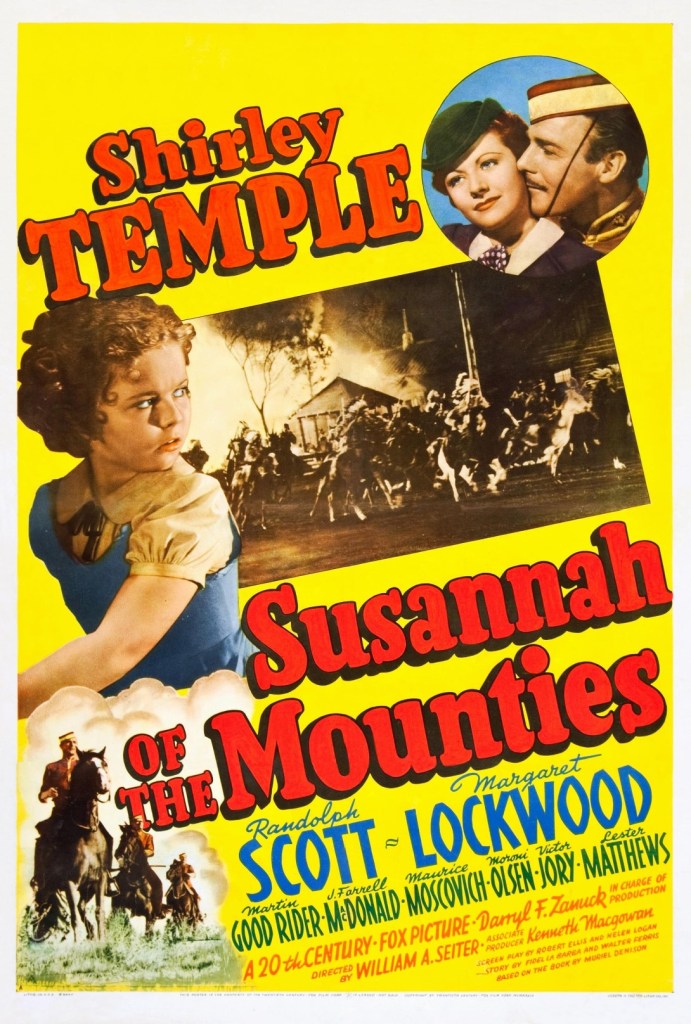
When it comes time for movie reviews, I try to select titles that will either encourage my readers to check them out for the first time or give my readers a reason to re-visit them. I also select titles in the hopes they are good films. While looking for a movie for this Blog Follower Dedication Review, I realized I hadn’t written about a Shirley Temple film since 2019. Because of that and with When Calls the Heart’s tenth season on the horizon, I felt Susannah of the Mounties was a suitable choice for this review! Anytime I think of Shirley’s movies, her musicals typically come to mind. Susannah of the Mounties is a different production from her filmography, as the 1939 film is a western. On 18 Cinema Lane, the western genre is underappreciated. Though I do try to review a western movie every now and then, I haven’t written about a western film since February, when I reviewed The White Buffalo. As I write this Blog Follower Dedication Review, I want to thank every follower of 18 Cinema Lane! Your enthusiasm for these movie reviews is always appreciated!

Susannah of the Mounties poster created by Twentieth Century Fox

Things I like about the film:

The acting: Out of Shirley’s movies I’ve seen, including Susannah of the Mounties, I recall her performances containing a certain amount of genuine sincerity. This aspect makes Shirley’s characters worthy of support from the audience. At the beginning of the movie, the Mounties discover Susannah is the only survivor of an attack on a wagon camp. She is understandably terrified, shrinking away from the Mounties in order to get away from them. Susannah is tearfully telling the Mounties to leave her alone, as her grandfather died during the attack. Through this portrayal, the heartbreak and fear Susannah experiences can be seen and heard. Her reaction to the Mounties’ encounter visually represents how a child might respond to a traumatic situation. With everything said, the audience is given a reason to feel sympathetic toward the film’s protagonist.

Randolph Scott portrays Inspector Angus “Monty” Montague, one of the Mounties who rescues Susannah. Throughout the story, he serves as Susannah’s father figure, teaching her good values and trying to protect her from danger. In one of the film’s funniest scenes, Monty and Susannah are eating breakfast. During breakfast, Susannah doesn’t hesitate to ask if he’ll marry Vicky, a woman who is temporarily staying at Monty’s Mountie camp. Snapping to attention, Monty gives Susannah a startled expression, his reaction to Susannah’s question on point for the situation. This scene serves as a good example of how Randolph’s performance never missed a beat!

Another performance that didn’t miss a beat was Martin Good Rider’s! Portraying Little Chief, son of Chief Big Eagle, Martin’s performance was consistent throughout the movie. During his time in the Mountie camp, Little Chief carries himself with a serious demeanor. Any time he explained an aspect of his culture to Susannah, his tone of voice and facial expression are stern. However, Little Chief does express happiness from time to time. When he is calling Susannah a baby in his language, he is smiling and even giggling at Susannah’s frustrations over not knowing how to ride a pony. One of the reasons why I liked seeing Little Chief and Susannah’s friendship progress in this story is because of Martin’s and Shirley’s performance!

The cinematography: In Susannah of the Mounties, there were three shots I thought were captured very well through a cinematic lens. One morning, as the British flag is raised over the Mountie camp, a Mountie is shown, through a medium shot, standing on the balcony of a nearby log cabin. As the flag rises in the air, its shadow is reflected off the cabin and even the Mountie himself. Another scene shows Susannah smoking a pipe for the first time. When she is looking out on the Mountie camp, the shot of the camp is captured through a fuzzy, uneven lens. This creative decision was made to show this location from Susannah’s perspective, as she is light-headed after smoking the pipe. Later in the movie, some members of the Blackfoot tribe are horseback riding near a body of water. While riding during dusk, a blue-purple sky and a large, white-gray mountain are in the scene’s background. In a sweeping long shot, the riders are reflected against the mirror stillness of the water. These details allowed this scene to be the most beautiful one in the movie!

Messages of fairness and learning from one another: After meeting Little Chief for the first time, Susannah becomes frustrated by the way he treats her. She doesn’t think she and Little Chief could be friends. But during a heart-to-heart conversation, Monty explains to Susannah how the Mounties try to learn from Little Chief’s Blackfoot tribe in order to work with them. Before Little Chief stays at the Mountie camp, the Mounties and his Blackfoot tribe attempt to find a solution to the film’s overarching conflict. During this meeting, the Mountie’s Superintendent, Andrew Standing, makes it clear that the Mounties are not blaming Chief Big Eagle’s tribe for the crimes committed near the Mountie camp. Andrew explains how the Mounties are turning to Chief Big Eagle’s tribe for help catching the perpetrator. Susannah of the Mounties was released in the late 1930’s, with a story taking place in the 1880s. Therefore, I was not expecting the inclusion of timeless messages such as fairness and learning from one another.

Mountie face image created by Bakar015 at freepik.com. <a href=’https://www.freepik.com/free-vector/a-set-of-canada-icons_1050671.htm’>Designed by Freepik</a>. <a href=”https://www.freepik.com/free-photos-vectors/food”>Food vector created by Bakar015 – Freepik.com</a>. Image found at freepik.com.

What I didn’t like about the film:

Susannah’s dislike for Vicky: Vicky Standing is a woman who visits her father at his Mountie camp. Portrayed by Margaret Lockwood, she ends up capturing Monty’s heart. Susannah does not like the idea of Monty and Vicky falling in love. In fact, Susannah dislikes Vicky so much, she wants Vicky to go back home to Toronto. Susannah’s negativity toward Vicky felt out of character for a Shirley Temple film. When a male and female parental figure are romantically interested in each other, Shirley’s character will typically find a way for those characters to fall in love. Her character does this in an attempt to gain a family for her to belong to. Because Susannah is an orphan, it would have made more sense for her to want Monty and Vicky to become a couple, in the hopes they will get married and adopt Susannah.

A disjointed story: An overarching story in Susannah of the Mounties is the Mounties figuring out who is murdering and looting near their camp. They work with a local Blackfoot tribe in their efforts to catch the perpetrator. This part of the story is serious, complicated, and even violent. With Susannah being one of the few children in the story, the film’s protagonist isn’t able to provide much assistance to the Mounties. Instead, Susannah spends her time befriending Little Chief, Chief Big Eagle’s son. Susannah’s story and the Mountie’s story felt like two separate stories that belonged in their own movies. The contrasting tones of these stories kind of made the film feel tonally inconsistent.

A misleading title: As I just mentioned in this review, Susannah isn’t able to provide much assistance to the Mounties as they attempt to stop crime. This is because a) Susannah is a child and b) the Mountie’s story is serious and even violent at times. Yet this movie is titled Susannah of the Mounties, implying the protagonist and the Mounties would work together to save the day. I know the film is based on a novel of the same name by Muriel Denison. However, I still feel the title is misleading.

Canada postage stamp image created by Ibrandify at freepik.com <a href=’https://www.freepik.com/free-vector/canadian-flag-stamp-template_836872.htm’>Designed by Freepik</a> <a href=”https://www.freepik.com/free-photos-vectors/template”>Template vector created by Ibrandify – Freepik.com</a> Image found at freepik.com

My overall impression:

In the western genre, a component that is typically present is higher stakes. This is when a conflict is large enough in scope to affect the well-being of the characters. Susannah of the Mounties is a story with higher stakes, as the lives and careers of the characters are in danger. Because of this, it doesn’t give the movie’s protagonist, Susannah, much to do. In fact, Susannah’s story and the Mountie’s story feel like separate tales from their own films. When I look back on Shirley’s movies I liked, such as Rebecca of Sunnybrook Farm and Heidi, I think about what made those titles work. Then I remember how those stories had lower stakes, which allowed Shirley’s character to play a larger role in the story. I also reflect on other aspects of Susannah of the Mounties I didn’t like, such as the misleading title and Susannah’s dislike for Vicky. With everything I said in this review, I think this is one of Shirley’s weakest movies I’ve seen.

Overall score: 6.6 out of 10

Have you seen Susannah of the Mounties? Are there any western films you’d like to see me review? Let me know in the comment section!

Have fun at the movies!

Sally Silverscreen

Take 3: Hallmark Hall of Fame’s A Tale of Two Cities Review

For this year’s edition of the Broadway Bound Blogathon, I wanted to write about a Hallmark film based on a pre-existing Broadway play. My original plan was to read a play and then watch its adaptation, creating an editorial on how these works are similar or different. But, to my surprise, the films I wanted to talk about were based on plays that premiered off-Broadway. During my search for another option, I learned the Charles Dickens story, A Tale of Two Cities, was adapted into a Broadway musical in 2008. For this review, I’ve decided to write about the 1980 Hallmark Hall of Fame version of the aforementioned story. Though I haven’t read A Tale of Two Cities, I have enjoyed seeing the adaptations of Charles Dickens’ literary work. In fact, I liked 1968’s Oliver! so much, I ended up reading Oliver Twist after seeing the movie! So, where does this Hallmark Hall of Fame production stand among other stories by Charles Dickens? Turn the page on this review to find out!

Hallmark Hall of Fame’s A Tale of Two Cities poster created by Hallmark Hall of Fame Productions, Marble Arch Productions, Norman Rosemont Productions, and Columbia Broadcasting System (CBS)

Things I liked about the film:

The acting: One of the strongest scenes in A Tale of Two Cities is when Lucie (portrayed by Alice Krige) reunites with her father, Dr. Alexander Manette (portrayed by Peter Cushing), for the first time in over ten years. After mistaking Lucie as the jailer’s daughter, Alexander goes to his bed, in an attempt to avoid Lucie. As Lucie slowly approaches her father, Alexander’s voice is shaky and he is flinching, unsure of what to make of this visitor. But as soon as he discovers Lucie’s hair matches a lock of hair he kept for many years, Alexander realizes Lucie is, indeed, his daughter. Alexander’s expression changes from fear to shock, as he is in awe about seeing Lucie again. He even gives his daughter a hug. Meanwhile, Lucie is overcome with emotion, tears falling down her face and her voice quivering. Both Alice and Peter were able to effectively sell this on-screen relationship as believable and genuine. The emotions expressed felt realistic as well, which allowed this scene to be so strong!

In A Tale of Two Cities, Chris Sarandon portrays both Sydney Carton and Charles Darnay. Out of these two characters, my favorite was Sydney Carton! Throughout the story, Sydney carried himself with a laid-back confidence that made his personality appealing. Yet, more often than not, he displayed a sad look on his face. Even his eyes looked sad, giving the audience an idea of what he wasn’t saying. This made Sydney brooding and mysterious, making me want to know more about him and curious to see where his story would go. The likability of Sydney Carton can be attributed to Chris’ strong acting talents!

Attention to detail: What can make or break a historical drama is a creative team’s attention to detail. This element in the film-making process can make that story’s world feel immersive, transporting the audience to a specific period in time. The Hallmark Hall of Fame adaptation of A Tale of Two Cities takes place in the late 1700s. Jarvis Lorry’s office provides a great example of this film’s attention to detail when it comes to historical accuracy. On a nearby table, there is a large book, boasting a weathered brown cover. Rolled up paper documents and more brown covered books are scattered in the office’s foreground. In the background, Jarvis can be seen working at a desk similar to that of Ebenezer Scrooge. Though the room invites natural light through a dome shaped window, a small candle chandelier and a multi-candle candle stick provide the office with additional light.

The pacing: The Hallmark Hall of Fame adaptation of A Tale of Two Cities is two hours and thirty-six minutes. This is longer than a typical Hallmark production, which is about an hour and thirty to forty minutes. But A Tale of Two Cities never felt like a long movie to me. That’s because I was so invested in what the characters were doing, as well as the story itself. Though this is a character driven film, there was a satisfying amount of suspense, intrigue, even action. Where these elements were placed in the story made the movie feel evenly paced. The way scenes were filmed, written, and edited also contributed to the overall pace, never making parts of the story feel drawn out or wrapped up too quickly. I was so engaged watching A Tale of Two Cities, the run-time was the last thing on my mind!

The Sixth Broadway Bound Blogathon banner created by Rebecca from Taking Up Room

What I didn’t like about the film:

Inconsistent inclusion of the French Revolution: An overarching conflict in A Tale of Two Cities is the rise of the French Revolution. In the first half of the movie, this conflict seemed like an afterthought, as the primary focus was placed on events happening in England, such as Charles’ court hearing. When a certain situation causes Charles to return to France, the French Revolution played a larger role in the film’s second half. The movie’s creative team built up to the event itself, visually presenting the harsh reality of the French public versus the upper-crust of French society. However, I wish this conflict had a more consistent presence within the story.

Lack of French accents: Because the French Revolution plays a role in A Tale of Two Cities, some of the story’s key characters are French. But the 1980 Hallmark Hall of Fame presentation is one of those films where every character speaks in a British accent, despite the cultural differences. After a while, I became used to the similarity in accents. I don’t blame the actors, as all I can expect from any actor or actress is for them to try their best with the material given. In my opinion, though, I fault the movie’s casting director for not encouraging the use of French accents.

Unexplained parts of the story: On a few occasions, there were parts of A Tale of Two Cities that confused me, due to their lack of explanations. One perfect example involves Monsieur Ernest Defarge’s wife, Therese. While a man is being guillotined, Therese tells her friend she has recorded the Evrémonde family in her stitching. After this scene takes place, Therese’s statement is never clarified. In fact, that particular stitching isn’t brought up again. Parts of the story like this one should have included explanations within the dialogue.

Hand-written letter image created by Veraholera at freepik.com. <a href=”https://www.freepik.com/free-photos-vectors/background”>Background vector created by Veraholera – Freepik.com</a>. <a href=’https://www.freepik.com/free-vector/love-letter-pattern_1292902.htm’>Designed by Freepik</a>. Image found at freepik.com.

My overall impression:

Most of Charles Dickens’ adaptations I’ve reviewed on 18 Cinema Lane have garnered favorable results. Both Oliver! and Nicholas Nickelby left such a good impression on me, they respectively found a place in my year-end best movies lists! Now that I have seen A Tale of Two Cities, I can honestly say that tradition will continue! The 1980 Hallmark Hall of Fame production tells an immersive story, taking the audience on a journey through time. What also adds to the experience is the strength of the characters, as the acting and the screenwriting worked well together. From the featured props to the costume design, the creative team’s attention to detail was on full display in this film, showing the care and effort that went into this project. Looking back on A Tale of Two Cities, I can see how the story could be adapted into a Broadway musical. As a matter of fact, I think a musical movie adaptation of A Tale of Two Cities would be very interesting to watch!

Overall score: 8.9 out of 10

Have you seen any adaptations of A Tale of Two Cities? Which story Charles Dickens’ is your favorite? Let me know in the comment section below!

Have fun on Broadway!

Sally Silverscreen

The Top Ten Best Hallmark Hall of Fame Movies from the 1990s

Whenever I’ve been nominated for The Pick My Movie Tag, the theme has revolved around Hallmark movies. First, I wrote a list of the top five Hallmark films based on a true story. Then, I published an editorial why Francesca Quinn, PI is the worst Hallmark movie I’ve ever seen. Now, after being nominated for The Pick My Movie Tag for a third time, I’m creating another Hallmark related list! Tagged by Rebecca from Taking Up Room, I was given the option to either write about my first Hallmark film or a favorite Hallmark film from the 90s. While reflecting on all the Hallmark movies released during the 1990s, I realized I had seen enough presentations from the Hallmark Hall of Fame collection to curate a top ten list. So, with a gracious thank you to Rebecca, I will share my list of the top ten best Hallmark Hall of Fame films from the 1990s! Before I start this list, I’d like to remind my readers that this article is not only based on my opinion, it is also based on the Hallmark Hall of Fame projects I’ve seen. Each movie will be listed based on when they were released on television. Since this list was written for a tag, I need to include the official tag rules, which are featured below:

The Tag’s Rules

  • Nominate one or more people to review the film or films of your choice. Or you can request they review something from a certain year, genre, or star. Everyone can review the same thing, or you can request each person cover something different. As long as it’s something they haven’t written about yet, you’re good.
  • Nominees are allowed to request a different pick for whatever reason no more than five times. Stuff happens. We all know it.
  • Nominees must thank the person who nominated them and provide a link their blog.
  • Nominees may nominate others to keep the tag going. Picking the person who nominated them is allowed, or they can nominate someone else. Maybe both.
  • All participants need to include these rules in their post, whether they’re nominees or picking nominees.
  • All participants should use the “Pick My Movie” banner or something similar in their posts.
  • Have fun!
The Pick My Movie Tag banner created by Rebecca from Taking Up Room

1. Caroline?

Released April 29th, 1990

Two months ago, I reviewed Caroline? for a Blog Follower Dedication Review. When I chose to write about this film, it was an opportunity to share another VHS exclusive Hallmark Hall of Fame title with my readers. But after I saw Caroline?, it quickly became one of my favorite movies from the Hallmark Hall of Fame collection! The combination of strong acting performances and a mysterious plot made the story intriguing to watch! The inclusion of messages and themes such as learning from the past and respecting the wishes of others gave the story more depth. Even the creative team’s attention to detail was reflective in the set design, showcasing the differentiation of time within the story. If I were introducing someone to the Hallmark Hall of Fame collection, I would tell them about Caroline?!

2. Sarah, Plain and Tall

Released February 3rd, 1991

Hallmark Hall of Fame has a history of adapting pre-existing, literary source material. Based on the works I have read, these films are typically respectful toward the source material or better than the source material. From what I remember, Sarah, Plain and Tall belongs in the first category. Like Caroline?, the creative team’s attention to detail could be seen in the set and costume design. The cast as a whole was strong as well. The success of Sarah, Plain and Tall not only led to the start of the only trilogy in Hallmark Hall of Fame history, it also led to the adaptation of other stories from the Western genre within the 1990s. This is one of those titles from the collection that earned a “classic” status!

3. An American Story/After the Glory

Released November 29th, 1992

My review of An American Story/After the Glory is one of my popular movie reviews, garnering over a thousand views and counting! Looking back on my thoughts on this movie, I have an idea why it’s so popular. As I said in that review, An American Story/After the Glory kind of feels ahead of its time. That is due to the inclusion of veteran’s mental health within the story. The way veteran’s mental health, as well as the transition period from soldier to civilian, was written was done with reverence and realism. The script also emphasizes how each veteran is their own unique individual. Out of Hallmark’s miliary related projects, An American Story/After the Glory is one of their better ones!

4. Redwood Curtain

Released April 23rd, 1995

When talking about Sarah, Plain and Tall, I said Hallmark Hall of Fame’s adaptations are typically respectful toward the source material or better than the source material. In the case of Redwood Curtain, the 1995 film falls in the latter category. Hallmark Hall of Fame adapted this story from a pre-existing play. Redwood Curtain’s transition to the screen allowed the world surrounding the characters to expand, exclusively providing the Riordan landscape to the movie. Other changes in the script include a different personality for Gerri, the story’s protagonist. In the film, Gerri is a more empathetic and understanding character, which gives the audience a reason to want to root for her. Music plays a bigger role in Gerri’s life as well, showing her dedication toward her dreams.

5. The Boys Next Door

Released February 4th, 1996

Besides adapting pre-existing, literary source material, Hallmark Hall of Fame has a history of adapting pre-existing plays. 1996’s The Boys Next Door is one of those plays that made the transition to the screen. Similar to Redwood Curtain, the world surrounding the characters expands beyond the limits of the stage. This emphasizes the idea the men in the group home (Barry, Lucien, Norman, and Arnold) are trying to find their place in the world. What also works in The Boys Next Door’s favor is the strength of its cast. Through a blend of facial expressions, vocal inflections, and body language, each character is distinct from one another. These characters are also well written, which made them cherished individuals in the story!

Hallmark Hall of Fame’s Caroline? poster created by Hallmark Hall of Fame productions, CBS, and Republic Pictures Home Video

6. What the Deaf Man Heard

Released November 23rd, 1997

It has been a while since I’ve seen What the Deaf Man Heard. From what I remember, I was impressed with the 1997 presentation! This is another film with a strong cast. The interactions between the characters felt believable, making the performances interesting to watch. What the Deaf Man Heard successfully presents the idea of appearances being deceiving, this idea given in a wholesome way. I would love to revisit this movie in the future!

7. Ellen Foster

Released December 14th, 1997

Ellen Foster is another Hallmark Hall of Fame production I haven’t seen in several years. However, this is a movie I highly regard! Like a lot of Hallmark Hall of Fame titles on this list, the cast in Ellen Foster was very talented. But Jena Malone, the actress who portrayed the titular character, stole the show, as she provided a versatile performance! Because this story discusses the subjects of child abuse and neglect, the nature of the film is going to be sadder. Therefore, those who are interested in watching the movie should approach it with the right mind-set. While I won’t spoil the story, I will say the story’s resolution feels earned.

8. The Love Letter

Released February 1st, 1998

Fantasy/Magical Realism is rarely incorporated into Hallmark’s films, let alone their Hallmark Hall of Fame projects. This makes 1998’s The Love Letter stand out among the collection! The idea of time manipulation adds creativity to the movie’s identity. Historical accuracy within the story embellishes the aforementioned identity of the film. Campbell Scott and Jennifer Jason Leigh succeeded in carrying this movie, as they sold the illusion their characters were attracted to each other. With the consistent focus in the character of Scott and Elizabeth’s graceful maturity beautifully paired with her “romantic dreamer” persona, it was fascinating to watch these two characters communicate with one another!

9. Grace & Glorie

Released December 13th, 1998

As I said in the past, I am not a fan of the Hallmark movie cliché where a woman from a big city moves to a small town. Grace & Glorie contains this cliché, but doesn’t emphasize its presence in the story. Instead, the film focuses on the friendship between the titular characters. The quality of Diane Lane and Gena Rowlands’ performances made their characters’ friendship feel realistic. This made their interactions interesting to watch. Grace & Glorie contains a simpler plot that ends up working in the story’s favor. All these factors come together to create a Hallmark Hall of Fame movie that is an underrated gem!

10. Sarah, Plain and Tall: Winter’s End

Released November 21st, 1999

Between Sarah, Plain and Tall: Winter’s End and Skylark, I always thought the third movie in this trilogy was the more memorable sequel, even though I think this trilogy is one of the strongest ever made. Similar to Sarah, Plain and Tall, the 1999 film revolves around conflicts within the family, such as the arrival of Jacob’s father. However, there were moments of humor and joy that prevented the story from being too serious. The scene where Cassie says grace serves as a perfect example. It was nice to see the Witting family together again, as, from what I remember, the family was split up in Skylark. It almost feels like coming home after a long trip!

Now, the moment you’ve been waiting for, the announcing of the nominees! As I share which bloggers will receive The Pick My Movie Tag, they will be asked to write about a movie from the 1990s they don’t like. So, these five nominees are:

Screenshot of The Love Letter‘s poster taken by me, Sally Silverscreen.

Rebecca from Taking Up Room

Hamlette from The Edge of the Precipice

MovieRob from MovieRob

Cameron from The Blog Complainer

Kim from Tranquil Dreams

Have fun at the movies!

Sally Silverscreen

Take 3: To Catch a Thief Review

For The Master Of Suspense Blogathon, I was originally going to review the 1958 classic, Vertigo. I selected this film because it had been recommended by one of my readers. Unfortunately, my plans fell through at the last minute. So, I had to quickly choose an alternative. As I looked back at the blogathon’s participant list, I discovered the 1955 film, To Catch a Thief, hadn’t been selected. That is the film I am now reviewing for The Master of Suspense Blogathon. I have seen some of Alfred Hitchcock’s movies before this event. From what I know of To Catch a Thief, the 1955 production is different from other titles such as Psycho and Rear Window. But will this difference impact the quality of the film? Keep reading my review in order to solve this mystery!

To Catch a Thief poster created by Paramount Pictures

Things I liked about the film:

The acting: In To Catch a Thief, Cary Grant portrayed John Robie, a former jewel thief looking to clear his name. A man of suave charisma, John was afraid of being accused of something he didn’t do. But he never lets this fear get to him. Instead, with the talents of Cary Grant, John was confident and intelligent. Grace Kelly was also cast in To Catch a Thief, portraying Frances Stevens. Frances carried herself with dignified confidence. However, this confidence did not come across as snobbish or arrogant. It added to Frances’ likability, along with her gentle demeanor and respectful elegance. Danielle Foussard is a friend of John’s. Portrayed by Brigitte Auber, Danielle had a spunky streak in her, adding liveliness to her and John’s interactions. A scene I really liked was when John, Frances, and Danielle are swimming in the ocean together. This scene perfectly showcased their personalities, as their banter bounced among each other like a soaring beach ball. What made that scene great to watch was the joining of the acting talents of Cary Grant, Grace Kelly, and Brigitte Auber!

The scenery: Most of the car chases in To Catch a Thief are captured in long, establishing shots. This is very different from car chases in other films, where the chases are shown in medium or close up shots. To Catch a Thief’s approach to car chases emphasizes the scenery surrounding these chases. Looking back on this film’s scenery, I can understand why To Catch a Thief’s creative team would make that decision. With the majority of the production filmed in France, the story shows pieces of the French countryside and seaside. Giant green mountains and deep blue waters present an isolated oasis. A smattering of orange roofed houses perched on these mountains add to the movie’s vibrant color palette. On the French seaside, bright yellow sands welcome the deep blue waters of the ocean. Most of the story’s exterior shots feature a blue sky with a handful of clouds. Even the flowers are appealing bursts of color, boasting shades of red, pink, and even purple. To Catch a Thief is a pretty looking movie and it knows it!

The dialogue: During discussions of Alfred Hitchcock’s movies, use of music, cinematography, and lighting are typically talked about by fans and film enthusiasts. But one area of film-making I feel is overlooked, specifically when it comes to Alfred’s work, is the dialogue. This element of story-telling was a pleasant surprise in To Catch a Thief! It not only suited the characters respectively, it also sounded like the screenwriters put a lot of thought into what the characters told each other. While driving through the French countryside, John and Frances are discussing Frances’ past. As the discussion carries on, John accuses Frances of looking for a husband on her trip. But Frances responds by saying, “The man I want doesn’t have a price”. This statement represented the respectful elegance Grace consistently carried throughout the film. It also hinted at foreshadowing.

The Master Of Suspense Blogathon banner Maddy from Classic Film And TV Corner

What I didn’t like about the film:

Limited amount of urgency: At the beginning of To Catch a Thief, John learns he is accused of stealing valuable jewelry. He evens claims to have ten days in order to clear his name. You’d think with this tight timeline, there would be a strong sense of urgency in the story. But this urgency to find the truth is, unfortunately, inconsistent. Instead, more emphasis is placed on the scenery, the romance, and the “finer things in life”. While the mystery was resolved, the limited amount of urgency held the story’s suspense and intrigue back.

A small amount of suspense and intrigue: Alfred Hitchcock’s productions are known for incorporating suspense and intrigue. This reputation has earned Alfred the title of “Master of Suspense”. In To Catch a Thief, however, suspense and intrigue were only served in small amounts. Part of this problem results from the limited amount of urgency I previously talked about. Another reason for this problem is how suspense and intrigue were used sparingly instead of evenly spread out throughout the story. It got to the point where I almost forgot this story had a mystery.

Lack of suspects: A typical mystery will include a collection of suspects, individuals who may or may not have a reason to be the guilty party. These characters are presented as uniquely as possible, in order to help the audience remember them and their reasoning. To Catch a Thief lacked this ingredient. Because the mystery was not as prioritized as in other works from Alfred Hitchcock, no room was made to include suspects. There was a red herring in To Catch a Thief, but this reveal felt random. Even the reveal of the mystery’s guilty party wasn’t completely surprising.

Illustration of Paris, France created by Freepik at freepik.com. <a href=”https://www.freepik.com/free-photos-vectors/travel”>Travel vector created by freepik – http://www.freepik.com</a>. Image found at freepik.com.

My overall impression:

As I said in this review, To Catch a Thief is a pretty looking movie and it knows it. While the scenery was the film’s crown jewel, there were other aesthetically pleasing components of this production, like the costume design and the set design. When it comes to the story, though, it wasn’t as suspenseful and intriguing as other Alfred Hitchcock movies. The visuals ended up overshadowing the script. I will give Alfred Hitchcock credit where it’s due, as it seems like he tried to take a different approach to cinematic story-telling. But out of his films I have seen, I prefer titles like Strangers on a Train.

Overall score: 6.3-6.4 out of 10

Have you seen To Catch a Thief? Which titles of Alfred Hitchcock’s do you prefer? Please tell me in the comment section!

Have fun at the movies!

Sally Silverscreen

Take 3: Fried Green Tomatoes Review

When it comes to this year’s Genre Grandeur reviews, I have chosen not to write about Hallmark films, even though I could have. This trend is the result of wanting to expand my cinematic horizons. But that is not the only trend among my Genre Grandeur reviews this year. Most of the movies I’ve talked about, so far, were recommended by my readers. With April’s Genre Grandeur theme being “Films About Food”, I selected a movie suggested by Jillian from The Classic Film Connection. That title is 1991’s Fried Green Tomatoes! At first, I had no idea how food was significant to this story. While I knew Fried Green Tomatoes was based on a pre-existing book, I had not read the book prior to watching the film. As I watched the movie, though, I began to see how the story prioritizes food. So, set the table and get the entrée ready, for I’m about to review Fried Green Tomatoes!

Fried Green Tomatos poster created by Universal Pictures, Act III Communications, Avnet/Kerner Productions, Electric Shadow Productions, and Fried Green Tomatoes Productions

Things I liked about the film:

The inclusion of food: As I mentioned in the introduction, I did not know the role food would play in Fried Green Tomatoes. But as the story progressed, the significance of food became clearer! This aspect of the film is included in two ways. The first is forming connections between the characters, building bridges of communication and even camaraderie. When Evelyn and Ninny first meet, Evelyn shares one of her candy bars with Ninny. This exchange served as the starting point for these characters’ friendship. Food also represented the world surrounding the characters. When Ninny is first telling Idgie and Ruth’s story to Evelyn, the story starts at a wedding. At the wedding reception, a table of decadent desserts is shown on screen, from a variety of pies to the wedding cake itself. The picture-perfect presentation of these desserts emphasized the affluent backdrop these characters existed in. Those two ways food was placed into the story allowed food to be the thread that kept the movie together!

The acting: I’ve seen some of Kathy Bates’ films prior to watching Fried Green Tomatoes. Out of those movies, I noticed Kathy has portrayed characters who were head-strong and confident. But with her portrayal of Evelyn in Fried Green Tomatoes, this performance was different. That’s because Evelyn slowly, but surely, became confident over time. Kathy’s approach to her character was very reminiscent of a chameleon. This was achieved through a combination of body language, emotions, and facial expressions. Another great aspect of Kathy’s performance was her on-screen camaraderie with Jessica Tandy! With Jessica’s effortless portrayal of Ninny, the interactions between Evelyn and Ninny appeared so natural, as if their friendship was always meant to be. I also felt this way about Idgie and Ruth’s friendship. Portrayed by Mary Stuart Masterson and Mary-Louise Parker, these characters presented a classic example of “opposites attract”! One of my favorite scenes in Fried Green Tomatoes was when Ruth and Idgie are giving non-perishable food items to members of a homeless camp. At first, Ruth is alarmed by Idgie’s actions, believing Idgie is stealing. But Idgie explains how people at church only say they do good work instead of practicing what they preach. This explanation shows Ruth how Idgie’s free-spirited nature could be directed toward helping others, as Idgie sees Ruth is in her corner and willing to support her.

The addition of a mystery: In Fried Green Tomatoes, there is a murder mystery woven into Ruth and Idgie’s story. In fact, the movie begins with the murder victim’s car being pulled out of a river. But this murder mystery is simply a part of the story, not the main focus. Because it is drawn out throughout the film, it gave the audience a reason to stay invested in what was happening on screen. The mystery unfolded as the story progressed, with pieces revealed as Ninny told Evelyn Idgie and Ruth’s story. Since the audience is learning information alongside Evelyn, a shared experience is created between viewers and the characters.

Picnic basket in Autumn image created by Stockgiu at freepik.com. Picnic basket vector created by stockgiu – www.freepik.com

What I didn’t like about the film:

Confusing parts of the story: For this part of my review, I will share some spoilers for Fried Green Tomatoes. If you haven’t seen this movie or read the book and are interested in checking this story out, please skip this paragraph and resume at the paragraph titled ‘Ninny’s unknown involvement in Idgie and Ruth’s story’.

There were some parts of Fried Green Tomatoes I found confusing. One example is Ruth’s reaction to train tracks. At the beginning of Ruth and Idgie’s story, they witness their friend, Buddy, get run over by a train. His foot got caught in the train track, preventing him from escaping his demise. Years later, Ruth has a son named Buddy Jr., naming her son after her and Idgie’s deceased friend. But Buddy Jr. loses his arm after playing on a train track. This begs the question; why would Ruth allow her son anywhere near train tracks, especially after what her friend went through?

Ninny’s unknown involvement in Idgie and Ruth’s story: When Ninny first introduces herself to Evelyn, she claims she married into Idgie’s family. Yet throughout Idgie and Ruth’s story, a younger version of Ninny is nowhere to be seen. None of the characters in Ruth and Idgie’s story mention Ninny either. This left me confused as to what Ninny’s involvement in Idgie and Ruth’s story was. Even the movie’s ending made me question Ninny’s identity.

Some unsmooth scene transitions: Fried Green Tomatoes features two timelines: one for the past (Ruth and Idgie’s story) and one for the “present” (Ninny and Evelyn’s story). While it was interesting to see these timelines unfold, I did not like the scene transitions from the past to the present. They were too abrupt, with little to no indication of the change in time. No voiceovers brought the audience, as well as Evelyn, out of the past. These unsmooth scene transitions felt jarring.

Illustrated beekeeper image created by macrovector at freepik.com. Business vector created by macrovector – www.freepik.com

My overall impression:

In the 1990s, it seems like a popular cinematic trend was stories that primarily took place in the past. In these movies, a protagonist is either telling a story to other characters or a protagonist is reflecting on their life. Fried Green Tomatoes is one of these films, as there are two timelines in the story: one from the past and one from the “present”. But among these types of movies, there are titles I feel are stronger than Fried Green Tomatoes. With the inclusion of two timelines, it felt like they were competing for the audience’s attention. In fact, I thought Idgie and Ruth’s story was more interesting than Ninny and Evelyn’s story. There were also confusing parts of the movie, such as Ninny’s involvement in Ruth and Idgie’s story. Despite these flaws, though, I found Fried Green Tomatoes to be a fine, well-made film.

Overall score: 7.4 out of 10

Have you seen or read Fried Green Tomatoes? Are there any food related movies you’d like me to check out? Tell me in the comment section below!

Have fun at the movies!

Sally Silverscreen

Take 3: The Raven (1963) Review

April Fool’s Day; a time for jokes, pranks, and laughter. On such a day, a comedic film would be most appropriate. Therefore, it’s time to introduce my selection for The ‘Favorite Stars in B movies’ Blogathon: 1963’s The Raven! Recommended by the late Patricia from Caftan Woman, I discovered this particular title was considered a “B movie” while searching for the perfect movie to write about. It just so happens to star an actor that is no stranger to 18 Cinema Lane; Vincent Price! The Raven is the tenth film of Vincent’s I have seen and reviewed. Most of his projects I have enjoyed to various degrees. But how will the 1963 title turn out? Don’t fly away from this review, as the review is about to begin!

The Raven (1963) poster created by Alta Vista Productions and American International Pictures

Things I liked about the film:

Interactions between characters: When creating a movie, it’s important to cast actors and actresses who not only perform well individually, but also within a group. If the quality among the cast is strong, the interactions between their characters will appear realistic to the audience. This is the impression I received as I watched The Raven. Scenes shared by Vincent Price and Peter Lorre serve as one great example. In one scene, Vincent’s character, Dr. Erasmus Craven, has attempted to reverse the spell placed on Dr. Adolphus Bedlo, Peter Lorre’s character. Unfortunately, Craven’s attempt doesn’t go according to plan. Bedlo is distraught at having wings for arms. His face bears a frown, eyes filled with a sad look. With disdain and concern is his voice, Bedlo is afraid the spell’s effects will be permanent. Meanwhile, Craven bears a look of concern on his face. But with a worried look in his eyes, Craven appears to care about the well-being of his friend. Through interactions like the one I described, Craven and Bedlo’s friendship felt believable. That was made possible with a combination of screen-writing and the performances of Vincent and Peter!

The humor: I knew The Raven was classified as a “horror-comedy” before I watched it. However, I was surprised by how the comedy was incorporated into the story! The humor in The Raven was mostly found within the dialogue. But the movie’s climax is where the humor really shines! In this scene, Craven and Dr. Scarabus, portrayed by Boris Karloff, participate in a magical duel. When it was Craven’s turn to use his magic, his responses to Scarabus became sillier as the duel continued. I won’t spoil this part of the story, for readers who haven’t seen this movie yet. All I will say is the humor was so well executed, I burst out laughing on numerous occasions.

Following the characters’ journey: The Raven is about Craven and his friend, Bedlo, traveling to Scarabus’ castle to reclaim Bedlo’s magic and save the spirit of Craven’s late wife, Lenore. As the story unfolds, the audience witnesses the steps Bedlo and Craven take in order to make the trip a reality. Seeing this step-by-step process allows viewers to feel like they are traveling alongside the characters. That creative decision adds interactivity to the story!

The ‘Favorite Stars in B movies’ Blogathon banner created by Brian from The Films from Beyond the Time Barrier

What I didn’t like about the film:

Inconsistent parts of the story: Within the The Raven, there were times when parts of the story were inconsistent. In one example, Craven and Bedlo need hair from a dead man. So, they take some hair from Craven’s deceased father. In order to open the casket of Craven’s father, Craven uses a knife to pry open the casket’s lid. A few scenes later, when Bedlo and Craven want to open Lenore’s casket, they are easily able to lift the lid. While these inconsistencies were not a common flaw, I believe this issue could have been avoided.

A drawn-out first half: As I already mentioned in this review, I liked how the characters’ journey allowed the audience to feel like they were traveling alongside the characters. But because of the movie’s hour and twenty-six-minute run-time, this journey was drawn out. Within the story’s first half, the sense of urgency was limited. There was also a small conflict that prolonged the journey. With those flaws addressed, it makes me wonder if this story would have worked better as a short film?

A random plot twist: For this part of my review, I will spoil a plot twist in The Raven. If you are interested in watching this movie, but have not seen it yet, please skip ahead to the section titled ‘My overall impression’.

While spending the night at Scarabus’ castle, Bedlo helps Scarabus trap Craven, his daughter, Estelle, and Bedlo’s son, Rexford. After Scarabus and Bedlo succeed, Bedlo confesses he tricked Craven into coming to Scarabus’ castle, in order to gain more magic from Scarabus. While this plot twist was unexpected, it felt random. There was no indication Bedlo would be that under-handed. Plus, this plot twist came right after another plot twist had been revealed. In my opinion, the plot twist involving Bedlo felt like it was included in the story just for the sake of it.

Image of crow at sunset created by Rayudu NVS at freeimages.com. Photo by <a href=”/photographer/rayudu238-57835″>rayudu NVS</a> from <a href=”https://freeimages.com/”>FreeImages</a&gt;. Image found at freeimages.com.

My overall impression:

As of early April, 2023, I have seen two Corman productions based on the works of Edgar Allan Poe; The Pit and the Pendulum and The Raven. A sense of wonder exudes from these two movies. What I mean by this is, I am amazed by how these creative teams were able to take simple stories and turn them into feature films! While I liked The Raven, I still prefer The Pit and the Pendulum. This is because of the movie’s flaws, such as the drawn-out first half and the random plot twist. However, there were strengths in The Raven, like the interactions between characters and the humor. I’m aware of Vincent Price’s other movies based on Edgar’s work. I’ll have to check those out another day!

Overall score: 7.3 out of 10

Have you seen or read The Raven? Are there any adaptations of Edgar Allan Poe’s work you’d like me to review? Let me know in the comment section below!

Have fun on April Fool’s Day!

Sally Silverscreen

Take 3: Hallmark Hall of Fame’s Caroline? Review + 460 Follower Thank You
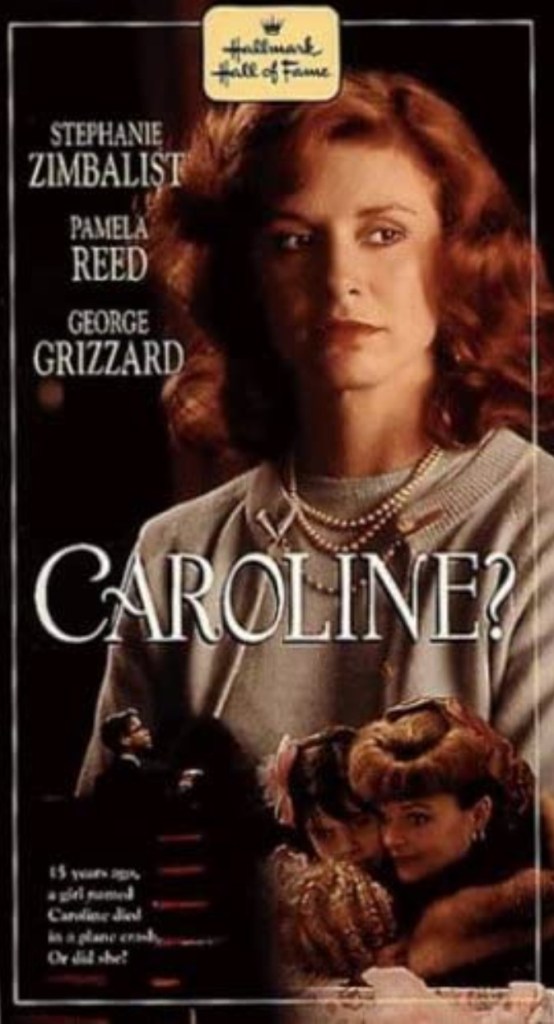
As I seek out Hallmark’s “older” content (“older” as in older than ten years old), I find myself gravitating toward Hallmark Hall of Fame’s VHS exclusive titles. For those who are not familiar with the history of Hallmark Hall of Fame, there are several movies from this collection that were only released on VHS. Caroline? from 1990 is one of those films. All I knew about this particular title was how the story revolved around a woman claiming to be a long-lost family member. Since I haven’t reviewed a Hallmark Hall of Fame movie in several months, I thought reviewing Caroline? for my latest Blog Follower Dedication Review would be perfect! Over my five years of movie blogging, I’ve noticed how my Hallmark related content has become some of my most popular content. In fact, one of my Hallmark Hall of Fame reviews, After the Glory, has garnered over a thousand views and counting! But will I like Caroline? as much as I liked 1992’s After the Glory? Keep reading my review in order to find out!

Hallmark Hall of Fame’s Caroline? poster created by Hallmark Hall of Fame productions, CBS, and Republic Pictures Home Video

Things I liked about the film:

The acting: When portraying a titular character, that movie’s actor or actress needs to use their talents to not only carry the production, but also shine on their own. While I’m not familiar with Stephanie Zimbalist’s filmography, she did succeed in this task! In Caroline?, Stephanie’s portrayal of the titular character was so naturally presented, her interactions with the other characters were fluid. One great example is when Caroline is being questioned about her past whereabouts. In a calm voice, she answers every question given to her. As she sits upright in her chair, Caroline recounts how she survived a plane crash, looking away from Grace and Paul Carmichael as she’s remembering what happened. When Paul confronts Caroline over her selfishness, her face effortlessly turns to sadness. Caroline’s mouth conforms into a frown and her eyes appear to be on the verge of tears.

While watching Caroline?, I was fascinated by the interactions among the characters. This was achieved because of the strength of the cast! But two performances that impressed me the most came from Shawn Phelan and Jenny Jacobs! When a younger character plays a significant role in a story, the likability of that character can depend on an actor or actress’ performance. With Heidi and Winston, their interactions felt so realistic! A perfect example is when Winston is looking through a family photo album. Curious about Caroline’s true identity, Winston sneaks into his father’s office in the middle of the night. Several minutes later, Heidi comes into the office, wanting to look at the photo album as well. Throughout this scene, there is tension between Winston and Heidi. Winston is frustrated by Heidi’s constant questions and comments about the photos. He also does not like the fact he can’t look at the photo album independently. Meanwhile, Heidi is frustrated at the idea of being left out of Winston’s activity. She even looks defeated after Winston doesn’t believe her claims that she can read. With a combination of vocal inflections, facial expressions, and emotions, both Shawn and Jenny were able to present a sibling relationship that felt believable!

The element of mystery: As I mentioned in the introduction, Caroline? is about a woman claiming to be a long-lost family member. Even though I wouldn’t consider this film as a part of the mystery genre, the mystery of Caroline’s identity is spread out throughout the story. This creative decision allowed the audience to witness the interactions between the characters. Through these character interactions, the audience is left guessing if Caroline is who she says she is. All I can about the mystery’s resolution is it ended on a plot twist I didn’t see coming. The combination of these creative decisions presented a movie that was captivating to watch!

The messages and themes: Hallmark films, especially Hallmark Hall of Fame productions, are known for featuring strong messages and themes that most people can support. Caroline? is no different, as this story contains a collection of great themes and messages! While in the Carmichael family’s attic, Winston and Caroline are talking about the past. During their interaction, Winston tells Caroline, “My history teacher tells me that the secret to the future is often found in the past”. This quote resonated with me, as I, more often than not, talk about films from the past on 18 Cinema Lane! Later in the movie, Winston is frustrated with Heidi because she won’t receive academic assistance from Caroline. When Winston comes to Caroline with his frustrations, Caroline tells him, “I can’t force her to. I can’t help her unless she wants me to”. That quote alone highlights the importance of respecting one’s wishes. At the same time, Winston’s desire to see his sister academically succeed shows how necessary it is to support those you care about.

The differentiation of time: The story of Caroline? features two time periods: the “present” (1990, when the film was released) and the past (late 1940s to early 1950s). Because of choices in styling and presentation, these time periods appeared distinct from one another. In one scene, Mr. and Mrs. Carmichael (Winston and Heidi’s parents) are debating the legitimacy of Caroline’s claims. This scene takes place in their bedroom, which contains two separate beds. That specific choice in the movie’s set design is a strong reflection of the ‘40s to ‘50s, as it was more common for married couples to have separate sleeping arrangements. It also boasts the historical accuracy between these aforementioned time periods.

Library image created by Freepik at freepik.com. <a href=’https://www.freepik.com/free-photo/stack-of-books-on-library-desk_2509490.htm’>Designed by Freepik</a>. <a href=”https://www.freepik.com/free-photos-vectors/school”>School image created by Freepik</a>. Image found at freepik.com.

What I didn’t like about the film:

Questions left unanswered: Any story containing a mystery will raise some questions within the script. Usually, these questions are answered as the film progresses. But in Caroline?, there were some questions I wish were addressed. While shopping at a bookstore, Winston purchases a book of poems for Caroline. Yet, at Caroline’s party, he gives the book to Heidi. Speaking of Heidi, she is called “Heidi” by her mother, despite her name being Hilary. These are two examples of questions that weren’t explained.

Fancy jewelry image created by Freepic.diller at freepik.com. <a href=”https://www.freepik.com/free-photos-vectors/wedding”>Wedding photo created by freepic.diller – http://www.freepik.com</a>. Image found at freepik.com.

My overall impression:

The story of a character claiming to be a long-lost family member is nothing new. The ‘90s, the decade when Caroline? was released, saw the premiere of 1997’s Anastasia, which revolves around this same type of story. But Hallmark Hall of Fame’s presentation makes several creative decisions that allow their story to travel down different avenues. It goes beyond simply figuring out if the protagonist is the claimed long-lost family member, as the film discusses reaching one’s full potential and helping those that need help. As I mentioned in my review, I was fascinated by the interactions among the characters because of the strength of the cast. That combined with the intriguing nature of the story is what kept me invested in the film! Caroline? is a movie I was Hallmark had re-released on DVD. In fact, I wish more people knew about this movie. With that, I’d like to thank all of my followers, as you are the reason why this review exists!

Overall score: 9 out of 10

Have you seen or heard of Caroline? Which Hallmark Hall of Fame movie would you like to see reviewed on 18 Cinema Lane? Please tell me in the comment section below!

Have fun at the movies!

Sally Silverscreen
Take 3: The White Buffalo Review

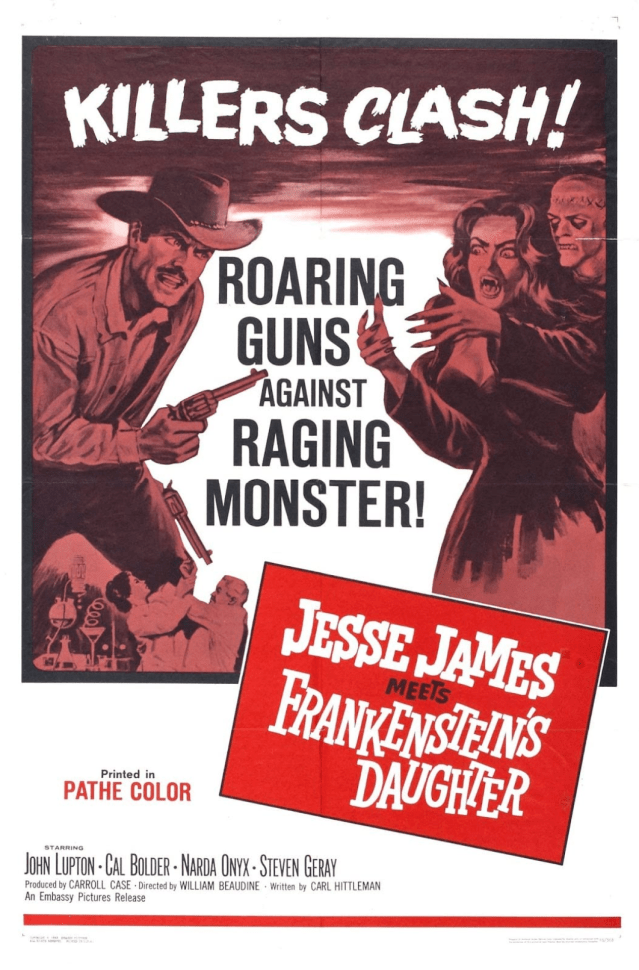
Though it’s only February, it seems like 2023 has become the year where movies that sound “bonkers” end up getting reviewed on 18 Cinema Lane. First, it was the Lifetime movie, Sea Change. Most recently, it was Jesse James Meets Frankenstein’s Daughter. Now, for Classic Movie Muse’s Kim Novak Blogathon, it’s The White Buffalo. If it wasn’t for this event, I would have never heard of this film, as I happened to stumble upon it on Kim’s IMDB filmography. Based on the title, synopsis, and poster, The White Buffalo seemed like it would be “bonkers”. But as Sea Change and Jesse James Meets Frankenstein’s Daughter have taught me, just because a movie sounds “bonkers”, doesn’t mean it will be “bonkers”. So, I was curious to see if The White Buffalo met my expectations. I’ve also mentioned in the past how westerns aren’t often reviewed on 18 Cinema Lane. So writing about The White Buffalo for the Kim Novak Blogathon has given me an excuse to check out more western films!

The White Buffalo poster created by Dino De Laurentiis Company and United Artists

Things I liked about the film:

Kim Novak and Charles Bronson’s on-screen chemistry: In The White Buffalo, Kim portrays Poker Jenny, a widow from the town of Cheyenne. When Bill, portrayed by Charles Bronson, arrives in town, he pays Jenny a visit. Though these characters spent only a brief period of time together, I felt Kim and Charles had strong on-screen chemistry! There was camaraderie between Jenny and Bill, a shared history only they knew. Confident personalities complimented one another, highlighting how well they get along. Because of their strong acting performances, both Kim and Charles successfully sold this relationship! I wish their characters shared more screen time together.

Using the buffalo sparingly: The White Buffalo has gained legend status in the world within this movie. This is because of the terror it inflicts on people who have crossed its path. The buffalo itself is only shown in a handful of scenes, while the majority of the film shows the characters either talking about the buffalo or searching for its existence. That creative decision was a good way of building tension and suspense for the audience. Limited presentation of the buffalo highlights how this creature is a threat who can show up unexpectedly. It is also a film-making technique from the horror genre, where the unseen can be scarier than what is seen. This reminds me of films such as Jaws.

Building atmosphere: In any film, the atmosphere can compliment the world the characters and story exist in. It can also elevate the movie’s intended tone. In the opening scene of The White Buffalo, a snowy landscape is presented at night-time. Slow camera movements travel over the landscape, building up to the audience’s first look of the White Buffalo. Suspenseful music is heard on top of the footage, providing a reason for the viewer to be scared of the titular creature. When the buffalo finally appears on screen, it’s an explosive moment where adrenaline and terror collide. The opening scene of this movie lays down the foundation for what this story is about!

The Kim Novak Blogathon: A 90th Birthday Celebration banner created by Ari from The Classic Movie Muse

What I didn’t like about the film:

Limited sense of urgency: Throughout the film, Bill and Crazy Horse, portrayed by Will Sampson, are seeking the White Buffalo in order to destroy it. This quest serves as the main conflict in The White Buffalo. While there was a sense of urgency in the story, it wasn’t consistently featured in the movie. Along with the film’s main conflict, sub-conflicts share the run-time, such as Bill’s encounter with a criminal from his past. Because of this creative decision, those sub-conflicts took away from the urgency toward finding the White Buffalo.

The under-utilization of Kim Novak: In past blogathons, I have reviewed a movie because of a certain actor’s involvement, only to see that actor’s talents under-utilized. This was the case when watching The White Buffalo, as Kim Novak is one of the reasons why I sought out this film. As I mentioned earlier in this review, Jenny and Bill spent only a brief period of time together. During this hour and thirty seven minute movie, Kim appeared in about three to four scenes. She did a good job with the acting material she was given. However, I was disappointed by her limited on-screen appearances.

The run-time: When talking about Kim’s few appearances in The White Buffalo, I said the movie was an hour and thirty seven minutes. With the story itself being straight-forward, the run-time doesn’t need to be very long. This could have been achieved had the sub-conflicts been eliminated from the script. The run-time could have also been shortened if some scenes were cut down. One example is when Bill meets Charlie for the first time, a scene that lasts about fifteen minutes.

Snowy mountain image created by Freepik at freepik.com. <a href=’https://www.freepik.com/free-vector/landscape-background-of-snow-track-and-mountains_968656.htm’>Designed by Freepik</a>. <a href=”https://www.freepik.com/free-photos-vectors/background”>Background vector created by Freepik</a>. Image found at freepik.com.

My overall impression:

In the introduction of this review, I said just because a movie sounds “bonkers”, doesn’t mean it will be “bonkers”. That is what happened when I saw The White Buffalo. At best, the movie is ok. The atmosphere was well-built and the acting was strong. The film even does a better job at combining the western and horror genres than Jesse James Meets Frankenstein’s Daughter! But the film isn’t without its flaws. The story contains a limited sense of urgency and the movie is a bit drawn out. I was also disappointed by the under-utilization of Kim’s talents. However, watching The White Buffalo did give me an opportunity to seek out more projects from Will Sampson’s filmography, as I am familiar with his performance in One Flew Over the Cuckoo’s Nest. Like I said in this review’s introduction, I was also given an excuse to watch more western movies. Therefore, I’m grateful I was able to expand my cinematic horizons!

Overall score: 6-6.1 out of 10

Have you seen The White Buffalo? Are there any westerns you’ve checked out that also feature the horror genre? Please tell me in the comment section!

Have fun at the movies!

Sally Silverscreen