Back in May, my post called “A Bucky Fan’s Response to one of Looper’s Avengers: Endgame related videos” became my 200th published post! Whenever I publish a hundred posts, I coordinate a double feature where I try to answer a thought-provoking question through the viewing of two similar films. But, around the time when I published my aforementioned post, I discovered that I would soon reach the milestone of 100 published reviews. So, I postponed my Double Feature until that milestone was reached. It was achieved in July when I published my review of Christmas Camp! However, that post was published just before I embarked on an out-of-town trip. So, I postponed my Double Feature until after the trip. But August became my busiest month, as I participated in four blogathons. Because of that, the Double Feature had to be pushed back again. Now that I have set aside some time to coordinate my Double Feature, I can finally announce that it will be published this week! Since I’m celebrating two milestones, I will be writing about three films.
I am fully aware of the irony that comes with reading The Secret Garden from the Hallmark Gift Books collection before watching the Hallmark Hall of Fame adaptation. Screenshot taken by me, Sally Silverscreen.If you ask anyone what the best adaptation of The Secret Garden is, most of them will tell you that it’s the Hallmark Hall of Fame version from 1987. For years, I have heard this statement from many people on the internet. In fact, when I asked a search engine which adaptation of The Secret Garden was the best one, the Hallmark Hall of Fame version was the film that came up as the answer. But is this movie really the best adaptation? That’s what I wanted to find out for myself! The most well-known versions of The Secret Garden that I will be watching are the 1949 release, the Hallmark Hall of Fame presentation, and the 1993 project. I read The Secret Garden prior to watching these films, so I could gain a better understanding of how similar or different each adaptation is from the source material. Because I’m going to talk about three versions of the same story, I will ask myself fewer questions than I did for my Halloween Double Feature. I will also not be giving these films any score ratings because I’m judging them as adaptations. There will be no pre-movie thoughts, questions, or predictions this time because I know what the movies are about before I’ve seen them.
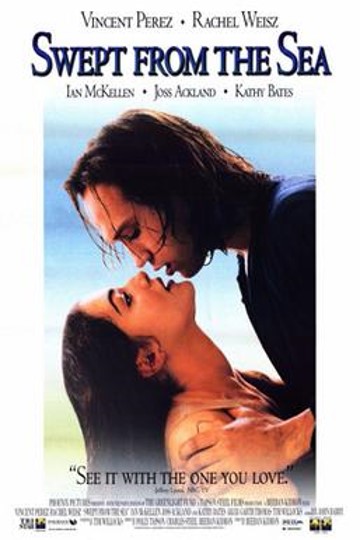
Out of all the movies that I’ve chosen for the A Month Without the Code Blogathon, this film is the one that I’m the most excited to talk about! I had never heard of Swept from the Sea until I discovered it on Pinterest this year (by the way, Pinterest is a great place to discover movies). When I first saw the film’s poster, I immediately noticed that Vincent Perez not only starred in the movie, but he also was the film’s top-billed actor. For those of you who are not familiar with this particular actor, Vincent portrayed Marius in Queen of the Damned, which I reviewed last Halloween. Since I enjoyed his performance in Queen of the Damned, I wanted to see what his acting talents had to offer in other films. When I was about to read the movie’s synopsis, I decided to watch the movie knowing as little about it as possible. I did this when I reviewed Hush…Hush, Sweet Charlotte and I ended up having a really good movie-viewing experience. Will history repeat itself with Swept from the Sea? I’m glad you joined me for my last A Month Without the Code review because we’re about to find the answer to this question!
Swept from the Sea poster created TriStar Pictures, Phoenix Pictures, and Tapson Steel Films. Image found at en.wikipedia.org/wiki/File:Sftspost.jpg
Things I liked about the film:
The acting: Among all of the movies I’ve seen in my life and among all the movies I’ve reviewed on 18 Cinema Lane, Vincent Perez’s acting performance in Swept from the Sea is one of the best I’ve ever seen! Throughout the entire film, he gave a captivating performance that was both heart-warming and heart-breaking. There were even times where, through the use of emotion, he was able to say so much without saying anything at all. One example is when Amy, Rachel Weisz’s character, gives Yanko, Vincent’s character, some food after they officially meet for the first time. Even though Vincent was the one who stole the show, I enjoyed seeing the other acting performances in this film. Despite the fact that Kathy Bates appears in the movie for a limited amount of time, her portrayal of Miss Swaffer was excellent! Not only was her performance well-rounded, but she also did a really good job pulling off an English accent. Performances like these made the characters come across like they were real-life individuals!
The cinematography: Swept from the Sea had some interesting cinematography that I was not expecting to see. At one point in the movie, all of the dead bodies from a recent tragedy at sea are featured on screen. In this particular scene, the camera pans outward in order to show Dr. James Kennedy, Ian McKellen’s character, standing in the middle of the area where these dead bodies were placed. Because of the cinematography, this moment showed the magnitude of the tragedy. Another great use of cinematography was when Amy was running through a rain-storm. What I liked about this scene was how it was dark enough to create the feelings of fear and dread, but not dark enough where one could barely see what’s happening on screen. Swept from the Sea’s cinematography made the film visually engaging!
The scenery: The majority of this movie takes place in the English countryside. Everything about this location was beautiful to look at! From the never-ending fields to the titular sea, all of the countryside’s natural landscapes were captured very well on film. Even the snowy environment that is briefly shown during Yanko’s journey is visually appealing. Because of the care that was taken in recording these locations, especially the sea, it gave the impression that the scenery was its own character. It also helped to create a stunning picture!
The on-screen chemistry: Because this story puts a good amount of focus on a romance, it’s important for the actors portraying the characters in that relationship to have good on-screen chemistry. As I’ve already said in this review, Vincent Perez’s acting performance stole the show! I was also impressed with Rachel Weisz’s portrayal of Amy Foster. Not only were they talented individually, but they were also a very talented pair! Anytime Amy and Yanko interacted with one another, their relationship was brought to life in a very sweet and genuine way. Amy and Yanko were an adorable couple without trying too hard to be. While some of the credit goes to the screenwriter, the rest of it belongs to Vincent and Rachel. What helped them was how different their acting styles were. These differences ended up complimenting each other instead of competing against them.
The dialect: Swept from the Sea takes place in the late 1800s, so the dialect reflects that particular time-period. This aspect of the movie sounded authentic to that decade. However, because I’m not used to hearing it in films very often, I had difficulty, at times, understanding what the characters were saying. This is not the fault of the film, but the fault of me, as a viewer, for not being familiar with the dialect.
Have you ever seen a movie that was so great, that all you wanted to do was tell everyone you knew about it? Well, that is exactly how Swept from the Sea made me feel! So far, this is the best movie I’ve seen this year! It’s endearing and emotional, grabbing hold of my attention from start to finish. So many components came together to make this film as entertaining as it was. From the acting to the scenery, there were so many things I liked about this movie. It is truly a hidden gem that I’m thankful to have discovered. Like I said about The Nun’s Story, Swept from the Sea is one of the “cleaner” films out of the ones I’ve chosen for A Month Without the Code. I found this to be pretty surprising, considering the fact that this is the only PG-13 rated movie in this roster. Despite this, I think the movie could be “breenable” with a few changes. These are the following:
There were about three times when characters were heard swearing and one time where Christ’s name was used in vain. These words would need to be omitted from the script.
Toward the beginning of the film, Miss Swaffer has a bloody wound on her leg and is having it taken care of by Dr. James Kennedy. While the scene itself is fine, the wound would have to be hidden on screen.
In one scene, a man is making an unflattering joke about Amy. While Amy and Yanko express their disgust over this joke, the joke itself would have to meet the standards of the Breen Code.
On the ship, at the beginning of the storm, Yanko is seen throwing up. To fit within the qualifications of the Breen Code, this image would have to be removed.
Because there is a tragedy at sea, there are several dead bodies that are shown on screen. There is one other part of the film that features a dead body as well. These scenes would need to be revised to fit with the Breen Code.
Yanko and Amy’s kisses are more passionate and last longer than kisses from the Breen Code era’s films. These kisses would have to be shorter in time-length.
There are two scenes that heavily imply that Yanko and Amy are having sex. Even though these scenes take place after they become married, these scenes would need to rewritten to make the implication more subtle.
Overall score: 9.6 out of 10
How do you feel about A Month Without the Code? Which review from this blogathon has been your favorite? Please tell me in the comment section!
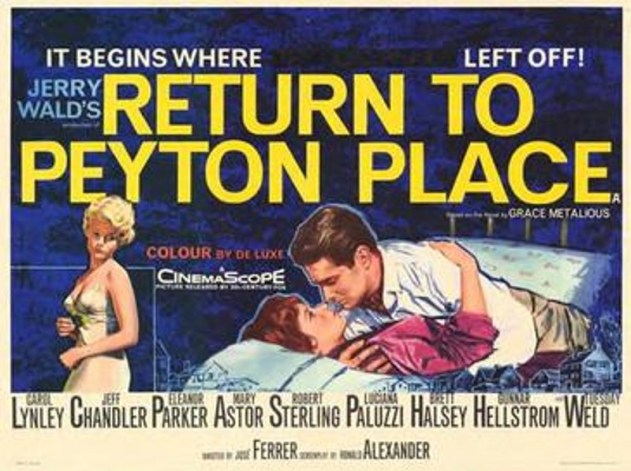
It seems fitting that my last review for the Summer Under the Stars Blogathon would be published at the end of the month. While looking through the marathon roster for Turner Classic Movies’ (TCM’s) marathon, I came across a film titled, Return to Peyton Place. Despite the fact that I was not familiar with who Mary Astor is, as an actress, I found the film’s description to be interesting. When I was learning more about this film, I discovered that it was the sequel to Peyton Place. So, I decided to watch the 1957 production in order to educate myself on the movie I was about to watch. To me, Peyton Place was just ok. The run-time was too long and the story felt like it belonged on a television show. How will the sequel compare to the first movie? Read my review of 1961’s Return to Peyton Place to find out!
Return to Peyton Place poster created by 20th Century Fox. Image found at en.wikipedia.org/wiki/File:ReturnToPeytonPlaceFilm.JPG
Things I liked about the film:
The acting: Some of the cast members from the first film didn’t return to reprise their roles. Two of them are Diane Varsi, who portrayed Allison MacKenzie, and Hope Lange, who portrayed Selena Cross. Taking their places in the sequel are Carol Lynley and Tuesday Weld. The great thing about their performances is how they were able to bring a sense of continuity to their characters. Just like in the first movie, Allison is a head-strong woman who is determined to make a name for herself. Meanwhile, Selena is trying her best to move forward from her traumatic past. While returning faces made their appearances in Return to Peyton Place, new characters were also introduced. One character is Mrs. Roberta Carter, who is the mother of Ted Carter. Portrayed by Mary Astor, Roberta was one of the most memorable characters in this movie! Mary effectively brought the unlikeable qualities that Roberta contains. With her demeanor, facial expressions, and reactions, Mary gave the audience a reason to dislike Roberta.
The subplots: Like Peyton Place, the sequel featured several subplots that come together to create one larger plot. What’s different about the subplots in this movie is they were much more interesting than those from the first movie. Return to Peyton Place features three subplots; Allison becoming a best-selling author, Roberta dealing with her son and his new wife, and Selena rebuilding her life after the events of the first film. These subplots led to the main plot, which revolved around the controversy of Allison’s book. These stories not only propelled the narrative from the predecessor forward, but also added depth to the returning characters. It gave new characters a reason to participate as well, providing some interesting interactions and conversations.
The ideas expressed: What I liked about Peyton Place was the ideas that were expressed in the story. A few examples are honesty, the effects of gossip, and reaching out to those in need. This was also a highlight in Return to Peyton Place! Through each story, realistic and relatable ideas were presented. For example, during the main plot, where the town is deciding what to do about Allison’s book, the subjects of censorship and which version of the truth should be respected are brought up. The way they were incorporated into the overall narrative felt natural and made sense within the movie. It also gives the audience the ability to connect with the characters as well as the world they reside in.
The run-time: Return to Peyton Place is a little over two hours. While it is shorter than the first film, I still think this story didn’t need to be that long. Personally, I believe that Return to Peyton Place should have had a run-time of about one hour and thirty minutes. This would allow the narrative to get to the point sooner.
Overshadowed subplots: As I previously mentioned, Return to Peyton Place is told through several subplots. However, some of these subplots received less screen-time than others. Because Allison is the film’s protagonist, her subplot is focused on the most. While this creative decision made sense, it put the other subplots at a disadvantage. Ted and Raffaella’s subplot is a good example of this. Since their story was explored for a limited amount of time, it didn’t receive a satisfying conclusion. I also felt the same way about Selena and Nils’ subplot.
No explanation provided: When Allison published her book, some of the people in Peyton Place had a problem with the novel’s content. While they complained about how the book was “vulgar” and “lewd”, an explanation for why the book was bad was never given. This frustrated me because, as a viewer, I wanted to understand both perspectives on the issue. Because the book’s content was barely referenced in the movie, it made the argument against the book seem weak. This part of the movie reminded me of Chesapeake Shores’ third season, where the O’Brien family had an issue with Bree’s book, but never shared what exactly was in the book.
As a movie, I thought Return to Peyton Place was decent. But as a sequel, I liked it more than the first movie! With more interesting stories, a smaller cast, and a tighter script, this movie was entertaining and enjoyable. Like its predecessor, Return to Peyton Place is a film that has something to say, providing ideas that are thought-provoking and relatable. While it does have its flaws, it also has its merits. There are things this movie does that improves upon the first one. One example is featuring a collective story that feels more cinematic. I’m really glad that I watched Peyton Place before watching Return to Peyton Place because I would have been so confused if I hadn’t. While there is less problematic content in Return to Peyton Place, some things would need to change if it were released in the Breen Code era. These things are:
There were several instances where unpleasant or questionable statements and phrases were spoken by the characters. One example is when Lewis says to Allison, “It takes two to make a love affair”. Statements like this would need to be rewritten.
On two separate occasions, Selena’s traumatic past is talked about by Selena herself. Because it involves dark subjects, this part of the story would have to be revised in order to meet Breen Code standards.
There is one scene where Ted and Raffaella are seen passionately kissing while laying on a bed. Even though these characters are married to each other and this act never leads to sex, this scene would have to be changed. The kiss itself would be shorter and would not take place on the bed.
Kisses in this movie are more passionate and last longer than kisses in Breen Code films. If Return to Peyton Place premiered during the years of 1934 to 1954, the kisses would be shorter in time length.
Some of the female characters wear outfits that have low necklines. These outfits would need to be changed to reflect more modesty.
There are two times when Allison is seen disrobing on screen. Even though she is shown wearing a full-body slip, these moments would end up being removed from the film.
Overall score: 7.1 out of 10
What are your thoughts on Turner Classic Movies’ Summer Under the Stars marathon? Which review from this blogathon has been your favorite? Share your thoughts in the comment section!
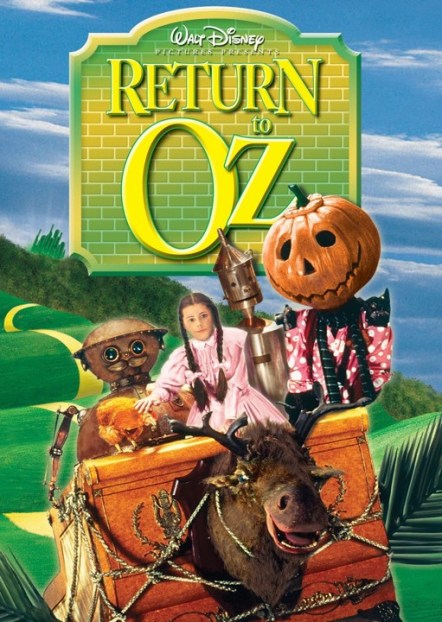
It could be seen through the window of a local video store. It’s VHS cover had a whitish-bluish tint, a sign that the Sun had stolen its colors. After entering the store, the video was located on the right-hand side of an incoming customer’s view. When they made that turn and walked through the first aisle, it could be seen front and center on the shelf. For someone who has never heard of this movie, but had seen its predecessor, they will have so many questions flooding their mind. Why is Dorothy wearing whitish-silvery shoes instead her iconic ruby-red slippers? Why has Toto been replaced with a chicken? Why do the pictures on the back of the VHS cover appear so creepy? These questions may be so overpowering, that the movie could be passed over for another, less odd-looking film. Long after the video store closed its doors, the movie in our discussion has gained a notorious reputation. Whether or not that’s a good thing is open for debate. What reputation has this film garnered? It has been known as one of the creepiest children’s/family-friendly films of all time. If you haven’t guessed already, that film is none other than Return to Oz.
The acting: When an actor or actress accepts a role that was made famous by another actor or actress, there’s a good chance that comparisons in acting performances will be made. However, that actor or actress could end up portraying that character so well, that they may bring something new to the role. This is the case for Fairuza Balk, who took on the role of Dorothy. What’s so great about her performance is how it wasn’t an impersonation of Judy Garland’s performance. Instead, Fairuza captured the essence of Dorothy’s child-like innocence and demeanor, while bringing a haunted nature to the character. Because Return to Oz takes place six months after the tornado sent Dorothy to Oz, this character is now tainted with trauma. The beginning of the movie presents a good example of this portrayal. Even though Dorothy gets excited when talking about her “friends” from Oz, there are times when she can be seen staring at nothing in particular, like the world around her has disappeared.
The sets: This movie has some of the most magnificent sets I’ve ever seen on film! One that easily comes to mind is Princess Mombi’s castle. The room featuring mirrors wrapped in gold was just exquisite, making the scenes featuring this location appear photogenic. Other scenes were atmospheric, giving the audience the impression that the world on screen had truly come to life. When Dorothy discovers that the Yellow Brick Road has been demolished, that moment created a sense of dread about the fate of Oz. I’d also like to point out that the sets featured outside of Oz looked like an accurate replica of the story’s time-period. From the antique furniture to the machinery, everything reflected the world that The Wizard of Oz had previously established.
The use of Claymation: Claymation isn’t often incorporated into films. When it is, this can lend itself to some interesting film-making. In Return to Oz, Claymation was primarily used for rocks, the Nome King, and his mountain. This creative decision was a unique way to compensate for the limited use and quality of the special effects of the ‘80s. This particular art form did provide some unsettling moments for the protagonists. In some scenes, a face on a red stone background can be seen talking to the Nome King, who is off-screen. When Dorothy and her friends arrive at the Nome King’s mountain, the environment is dark and grey. Little color and light can be seen when the Nome King is around. These examples prove that Claymation can help enhance a film’s tone and a scene’s mood.
References to the predecessor: Return to Oz is the sequel to The Wizard of Oz. I was pleasantly surprised to see that this story made an effort to reference the movie that came before it. For one thing, the tornado that was featured in the previous film is the cause of Dorothy’s trauma. Characters from the predecessor make their appearances, such as Toto and the Cowardly Lion. Familiar places are visited, like the Emerald City and even Dorothy’s house that fell in Oz. Whenever a new place, person, or situation was introduced in the story, Dorothy would admit that she doesn’t remember them or hasn’t heard of them before. All of these things helped the story keep a sense of continuity.
Limited or no screen-time for beloved characters: As I just mentioned, characters from the previous film make an appearance in Return to Oz. However, they’re only on screen for a limited amount of time. Because the Nome King turned the Tin Man and Cowardly Lion into stone, they are frozen in place for most of the film. Since the Scarecrow was kidnapped by the Nome King himself, he didn’t appear in the movie until the climax. As for Glinda, the Munchkins, and the Flying Monkeys, they are nowhere to be found. This decision was probably made to let new characters shine and find their own place in the story. But I don’t think this should have been done at the expense of the previous film’s characters.
Some damaging messages: Another thing that I’ve talked about was Dorothy becoming traumatized by the tornado from the previous film. In an effort to help her move forward from the trauma, Auntie Em and Uncle Henry think it’s a good idea to take Dorothy to a psychiatric hospital where she is scheduled to receive electroshock therapy. I understand that this part of the story represents a belief from the late 1800s to early 1900s. However, presenting this idea to an audience in the mid ‘80s or today could give people the wrong message. This message could be interpreted as how not utilizing the power of imagination and make-believe to help traumatized individuals, especially traumatized children, is a good idea. Another scene where the message could be misinterpreted happens at the end of the movie. Princess Ozma tells Dorothy that she can go back to Oz whenever she wants, as long as she keeps it a secret. Messages like holding back on creativity will help one become “normal” and bottling up ideas and feelings is accepted could also be damaging. Prior to the release of Return to Oz, Disney has been known for promoting creativity. They also have incorporated important themes into their stories, such as honesty and respect. I think that the creative team behind this film should have taken a stance on how imagination and make-believe should be a complimentary component of someone’s journey through healing from a traumatic situation.
The story from this review’s introduction is my story of how this movie came into my life. Because of something so simple as a VHS cover, I passed on the opportunity to watch this film. Fortunately, because of the Wizard of Oz Blogathon, I was granted that second chance to experience what this movie had to offer. Prior to watching Return to Oz, I had heard about its reputation on countless occasions. Curious enough to find out the truth for myself, I volunteered to review the film for the Blogathon. While there are unsettling moments, they never overshadowed my enjoyment of the movie. In fact, this film was a better sequel than I ever expected! Now that I have finally seen Return to Oz, I feel that, over the years, it has been judged unfairly, to a certain extent. I’m not denying that this movie has things about it that could frighten children. But let’s not forget that Disney films and even the original, The Wizard of Oz, had scary elements to them as well. The idea of someone’s house easily falling on anyone is a terrifying thought. The Wicked Witch of the West had a very unsettling presence throughout The Wizard of Oz. The first Disney animated film, Snow White and the Seven Dwarfs, was so terrifying for some young audience members, that employees at Radio City Music Hall had to change the upholstery on the chairs because of how the children reacted to the scene where Snow White is alone in the forest. My experience of watching Return to Oz shows that you never know what’s in store until you look past the VHS cover.
Overall score: 8.2 out of 10
Have you ever seen Return to Oz? What’s the creepiest children’s/family-friendly film you’ve ever watched? Please tell me in the comment section!
I was introduced to the book, I Never Promised You a Rose Garden, over five years ago. When I heard what it was about, I became intrigued with the premise. Since then, the book has been added to my TBR (to be read) list. While I haven’t read I Never Promised You a Rose Garden yet, I wasn’t going to miss the opportunity to see the film. So, I recorded it on my DVR when it was airing on television. Out of all the movies in my roster of films for A Month Without the Code, this is the only movie that’s rated R. It’ll be interesting to see if it could be “breened”. I also wanted to see if the movie would encourage me to read the book. Film adaptations can be better or worse than its source material. While comparing them is fine, judging them on their own merit is also important.
I Never Promised You a Rose Garden poster created by New World Pictures. Image found at en.wikipedia.org/wiki/File:Film_Poster_for_I_Never_Promised_You_a_Rose_Garden.jpg
Things I liked about the film:
The acting: For films that deal with serious subject material, you need a lead actor or actress that will give it their all, talent wise. Personally, I feel that Kathleen Quinlan did just that in her role of Deborah! Seeing this character experience trials and triumphs shows just how seriously Kathleen took this role. Her performance was so well-rounded, emotional, and powerful, that her on-screen presence was captivating. What surprised me about Kathleen’s portrayal was that Deborah seemed like a young woman who was beyond her years. Because I haven’t read the book yet, I don’t know if the character is like this in the book. However, Kathleen brought this aspect of the character to life with such realism.
The realistic depiction of mental health: When incorporating a real-life topic like mental health into a film, it’s better to depict it as realistically as possible. In I Never Promised You a Rose Garden, the portrayals of mental health appeared realistic. For Deborah’s schizophrenia, audience members can hear the “voices” in her head and see her imagined world come to life. Something that I noticed was how the patients had a sense of humanity to them. Some of them seemed to be lost in their own worlds more than others. But, at the end of the day, they had something important to say and a mind of their own.
The discussion of abuse toward patients: I’ve seen several films that talk about mental health, especially where the main setting is a psychiatric hospital. Usually, the treatments themselves end up being abusive toward the patients. In this film, some of the patients are abused because of a cruel employee. I’m glad the movie didn’t shy away from addressing this particular subject. In the films that I’ve seen about mental health, I don’t recall this topic ever being brought up. The fact that a movie from the ’70s that takes place in the ’50s would incorporate this issue in their film is pretty interesting.
A weaker plot: Like I’ve said before, I haven’t read I Never Promised You a Rose Garden. But, I know what the general premise is about from reading the book’s synopsis. After doing that, I believed that the story would be an insightful and thought-provoking tale of someone’s experience with schizophrenia. The movie’s plot, however, wasn’t as interesting as I had thought it would be. The story was very straight-forward, leaving little room for interpretation. While there were interesting ideas and concepts featured throughout the film, they weren’t thoroughly explored. Personally, I thought the movie was driven by a premise and not a plot.
The randomness of the “dream sequences”, To represent the imagined world inside Deborah’s mind, a series of “dream sequences” would appear at various moments in the movie. I think these “dream sequences” were important to the character of Deborah. But how these sequences were incorporated into the film was very random. Sometimes, they would suddenly appear without any warning or build-up. While the imagined world was addressed, it was never explored and dissected. I understand that this was meant to give audience members an idea of what living with schizophrenia is like. But the suddenness of these “dream sequences” was somewhat off-putting.
Very little character development: Because this story revolves around Deborah, she is going to receive the most character development. While this is true, she ends up becoming the only character the audience gets to really know. There’s about two or three other characters that also receive character development. However, the audience doesn’t get to know them as well as Deborah. For the rest of the characters, members of the audience just become familiar with them. This is very different from something like One Flew Over the Cuckoo’s Nest, where the audience gets to know each of the characters in the story. Because of I Never Promised You a Rose Garden’s nature, most of the characters felt like they were there just for the sake of moving the plot forward.
Rushing the recovery process: In I Never Promised You a Rose Garden, the story was about Deborah’s experience in a psychiatric hospital. For most of the movie, it seems like whenever she took one step forward in her treatment, she would then take five steps backward. It wasn’t until about the last twenty minutes when Deborah experienced a break-through in her recovery process. Because Deborah’s end result happened way too quickly, it felt like it was achieved too easily. This reminded me of The Three Faces of Eve, where it seemed like everything was wrapped up in a neat little package. It’s understandable that, in a film, there’s only so much time to tell a novel long story. But maybe this is where the book succeeds more than the movie.
I Never Promised You a Rose Garden is the only rated R movie in my A Month Without the Code roster. I figured this was because of how the subject of mental health was realistically depicted. While this is one of the reasons for the film’s rating, it was also rated R for content related reasons. As for the quality of the movie, I thought it was just ok. It’s not the worst thing to be put on film, but it didn’t impress me either. The story wasn’t as intriguing as I hoped it would be. However, there were things about the film that I did like. One of them is Kathleen Quinlan’s performance, which was one of the highlights of the movie! Despite how I feel about the film, I still want to read the book. Who knows? Maybe the book will be better than the adaptation. Speaking of the adaptation, we need to talk about the film’s content. Sure, I Never Promised You a Rose Garden could be “breened”. But only if several aspects of the movie were to change. These aspects are:
Language: There were several times when characters either swore or spoke unpleasant words. The words themselves would need to be omitted and replaced with better choices.
Blood: In the film, there were a few instances when blood was shown on screen. This would need to be reduced by a significant amount.
Violence: Some violent moments are featured in the movie. They would need to be significantly reduced.
Unpleasant imagery: In one of the “dream sequences”, there is a dead body featured on screen. This part of the film would have to be omitted.
Nudity: There are two scenes with brief nudity. These scenes would need to be removed.
Sexual references: At the psychiatric hospital, there was one character that constantly made sexual references. Their lines would be rewritten before production begins. In a “dream sequence”, it is heavily implied that Deborah has sex with a male from her imagined world. This part of that scene would either be completely eliminated or rewritten.
Overall score: 6 out of 10
What are your thoughts on this review? Do you think this film could be “breenable”? Share your thoughts in the comment section!
When I published my review of Meet Me in St. Louis, I posted my 75th movie review! In honor of this accomplishment and because it’s still National Reading Month, I’ve decided to participate in a book related tag! I’ve never done a tag on 18 Cinema Lane before, so this will be an exciting post not only to write, but also to share with my readers and followers! For this tag, I will answer a list of questions relating to book adaptations. I first saw this tag on the blog, Madame Writer. Before I begin, I just want to say that all of my answers are based on honesty and my own opinion. This post is not meant to be mean-spirited or negative toward anyone’s opinions/preferences. So, with that said, let The Book Adaptation Tag begin!
Meet Me in St. Louis. I didn’t even know this movie was based on a book until I saw the opening credits.
What book movie are you most excited for?
There’s actually two. The first movie is Rome in Love. While I haven’t read this book yet, it has been on my TBR (to be read) list for a while. Because this book is being adapted into a film, it’s actually encouraging me to read Anita Hughes’ book! The second movie is Words on Bathroom Walls. I haven’t read this book either, but I’ve heard really good things about it. According to his IMDB filmography, it appears that Charlie Plummer will star as the lead character! I’ve seen All the Money in the World and, in that movie, I was really impressed with Charlie’s performance. Like with Rome in Love, the novel’s aforementioned positive word of mouth and Charlie’s involvement in the film are encouraging me to read the book!
Which upcoming book movie will you definitely NOT see?
After. Based on what I’ve heard about the book (I haven’t read it and don’t plan to) and the teaser trailer that was released a few months ago, the movie appears way too inappropriate for my liking. Also, I have a feeling that the main relationship might be promoted as a romantic one, even though it appears to be problematic. Personally, I just think there are better cinematic stories that are worth my time.
Which book movie would you NEVER watch again?
The Twilight series and The Hitchhiker’s Guide to the Galaxy. For me, the quality of the Twilight films seemed to get worse as the movies went on. I thought the third movie was so bad, I didn’t even bother to watch the last two films. The third movie was also the worst movie I’ve ever seen in the theater. The Hitchhiker’s Guide to the Galaxy was the first movie I saw this year (I had never seen it before) and I did not enjoy it. The only two things I liked about the movie were the acting performances and the special effects (both practical and CGI). I have never read any of the Twilight books (nor do I plan on it) or The Hitchhiker’s Guide to the Galaxy.
Is there a movie you saw that made you want to read the book, if you hadn’t yet?
Last year, I saw Oliver! and reviewed it when I received 50 followers. I enjoyed this movie so much, that it was not only one of the best movies I saw in 2018, it also made me want to read Oliver Twist! Yes, I know that the book will probably not have as many light-hearted moments as in the movie. But as long as the story is as engaging as it was in the film, I think I might like the book.
Conversely, is there a movie that made you never want to read the book?
Lifetime’s adaptations of the Flowers in the Attic series and My Sweet Audrina. As I said in a Word on the Street post last month, these movies are not “Hallmark appropriate”. So, there’s a good likelihood that the books are also inappropriate.
My copy of The Beach House novel. Photo taken by me, Sally Silverscreen.
Name an adaptation that has almost nothing to do with the book it’s supposedly based on.
I can think of two; Something Wicked This Way Comes and The Count of Monte Cristo (2002). Both of these movies made the exact same mistake: they only adapted 50% of the book. While the first half of The Count of Monte Cristo did a really good job at translating the literary material to the screen, the second half of the movie was just a mess. Several important details and story elements were either left out or completely changed. In Something Wicked This Way Comes, some of the plot points and details were exactly like the book. However, there were others that were changed just for the sake of being changed. One example is a character in the film that wasn’t in the book. Anyone who has read the book and seen the movie would know exactly what I’m talking about.
Have you ever left the theater during a movie adaptation because it was so bad?
No. I don’t go to the theater often, so I try to see films that I either have a strong feeling I will like or that are from a movie series I’ve seen before.
Do you prefer to watch the movie first or read the book first?
Personally, I try to read the book first so that I can form my own ideas about the text before the movie creates its own ideas about it. But I’m not opposed to reading a book after I’ve seen its respective film.
How do you feel about movie adaptations that age characters up? (ex. characters that are in middle-school, but in the movies they’re all 18)
I think it’s a case-by-case scenario. For an opposite example, in The Beach House, some of the characters were younger than they were in the book. At first, I was not a fan of this decision. But, when I watched the movie, I ended up ignoring this detail because I was more focused on how good the acting performances were.
Do you get angry when the actors don’t look like how you thought the characters should have looked?
Again, it’s a case-by-case scenario. I remember when Shailene Woodley was cast as Hazel in The Fault in Our Stars. Her portrayal of the character did not look anything like I had imagined the character to look in the book. However, this difference did not bother me because Hazel’s physical appearance was not emphasized within the book.
Is there a movie you liked better than its book?
Hallmark Hall of Fame’s The Beach House. I’m currently reading this book (I’m more than half-way through the novel) and I think it’s just ok. The biggest issue I have with this novel is how unnecessarily long it is. In my opinion, I don’t think this particular story needed to be 400+ pages. Because of the story’s page length, it makes the chapters and even the book itself feel longer than it might have been intended. Also, there were things that were included in the book just to satisfy this 400+ page length. In the movie, however, it felt like the screen-writing improved upon the narrative from the text. Only the important story-lines were translated to the screen and the length of the movie was just right. Also, the narrative felt more like a Hallmark Hall of Fame story in the film than it did in the book.
Name a book that you would love to see as a movie.
Definitely Hurt Go Happy by Ginny Rorby! I think that book would make a great Hallmark Hall of Fame movie!
If you have never read Hurt Go Happy, I would highly suggest that you, at least, give it a chance. Screenshot taken by me, Sally Silverscreen.Have you ever participated in a tag? What are your thoughts on book adaptations? Let me know in the comment section!

![20190904_161300[1]](https://18cinemalane.com/wp-content/uploads/2019/09/20190904_1613001-e1567629333829.jpg?w=406&h=641)







![20181212_175220[1]](https://18cinemalane.com/wp-content/uploads/2018/12/20181212_1752201-e1544671201495.jpg?w=485&h=645)
 18 Cinema Lane