Take 3: The Night Before the Night Before Christmas Review + 515 Follower Thank You

With today being Thanksgiving, I wanted to share my thanks to all the followers of 18 Cinema Lane. I am grateful for having a reason to keep writing and sharing my thoughts on film! For this Blog Follower Dedication Review, I decided to select a movie from one of my recommendations. In fact, the film I chose has been on my Pinterest Film Recommendation board for so long, it has been on the very bottom. That movie in question is 2010’s The Night Before the Night Before Christmas! Suggested by a reader named T. Ann, this is a film I actually recall watching before. Though the only clear memory I had of the movie was the teenage daughter being upset over receiving a hamburger phone for Christmas. This isn’t the first time (nor will it be the last time) I revisited a film from Christmas past. One of my more recent movie reviews was The Christmas Choir, a title I had expressed interest in watching again. But in that review, I shared how I didn’t find the film as strong as I had initially believed. What will my thoughts be on The Night Before the Night Before Christmas? Keep reading my review to find out!

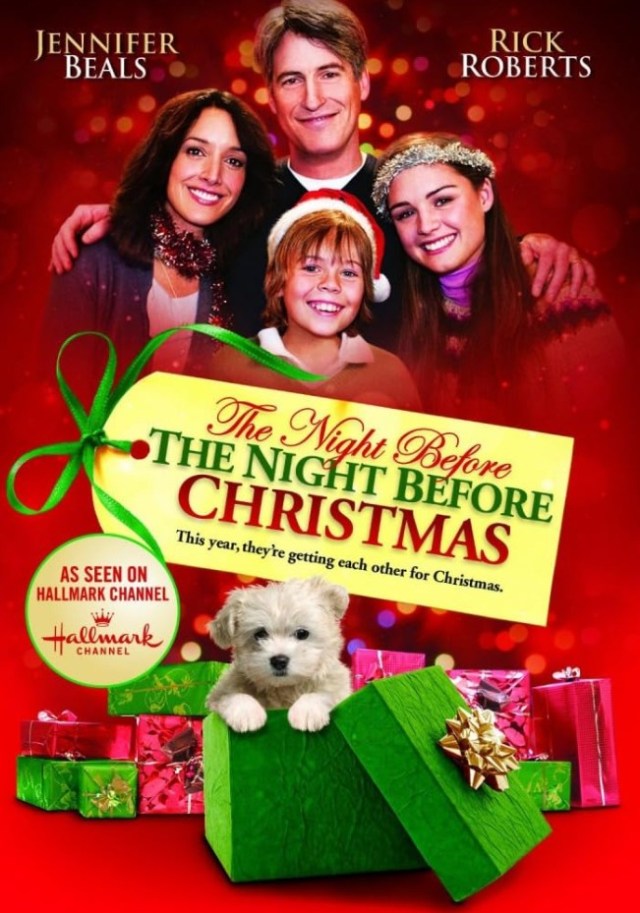
The Night Before the Night Before Christmas poster created by Muse Entertainment Enterprises and Hallmark Channel

Things I liked about the film:

The acting: The Night Before the Night Before Christmas is one of those movies where I found it difficult to choose a favorite acting performance. That’s because the cast as a whole was strong! Expressions and emotions appeared genuine. Whether it was Hannah (portrayed by Rebecca Williams) looking forlorn when her younger brother, Toby, runs away or a volunteer named Yolanda (portrayed by Kim Roberts) being surprised when she receives an unexpected donation, the acting performances made watching the story unfold more enjoyable. There were even times when the strength of the acting talents helped characters become more likable. Two great examples are Toby and Nigel. The youngest member of the Fox family, Toby has such a sweet personality. Gage Munroe, the actor who portrayed Toby, does an excellent job showing what’s in his character’s heart through his face. In a scene where Toby and his mom are having a heart-to-heart conversation, Toby’s tear-streaked face and tear-filled eyes present how troubled he’s been over his parents’ decision to prioritize their jobs over their family. Meanwhile, Jordan Prentice’s portrayal of Santa’s head elf, Nigel, was very animated. His liveliness and comedic timing made Nigel one of the most memorable characters I’ve seen in a Hallmark, let alone Christmas, presentation! Out of the films I’ve seen (and reviewed) this year, so far, Jordan’s performance was one of the best.

Emphasis on giving: One of the interconnected conflicts in The Night Before the Night Before Christmas is the disappearance of Santa’s sack of presents. This particular conflict could have produced one of two types of stories; a villain stealing Santa’s sack in order to ruin Christmas or a selfish character taking the sack of presents for themselves. Instead, Santa’s sack of presents is mistaken for donations to those less fortunate. The recipients of the gifts and the volunteers of various non-profits are surprised and even grateful for the “donations” received. This decision in story-telling helps emphasize the movie’s major theme of giving. Toward the beginning of the film, Toby tells Hannah if they want Santa to give them presents, they should consider giving presents to others. What Toby said, as well as the movie itself, frames Santa in a way I hadn’t really thought of before; someone who has a reputation for giving. These two examples show the clever and thoughtful ways the creative team behind The Night Before the Night Before Christmas remind their viewers of an important component of the Christmas season!

How Christmas activities were incorporated: In Hallmark’s more recent Christmas offerings, activities related to the holiday feel like they’re incorporated into the story just for the sake of completing an unspoken checklist. This creative decision contributes to the network’s Christmas projects feeling repetitive. But in The Night Before the Night Before Christmas, whenever a Christmas activity was featured in the movie, it was there to compliment the story itself as well as the themes of the film. Santa losing his memory is the movie’s major conflict. In order to help Santa reclaim his memory, the other characters partake in activities like decorating a Christmas tree and baking cookies. Before the tree is decorated, Hannah and her mom talk about choosing a very tall tree because it looked similar to a tree the family had years prior. The activity of picking out a Christmas tree expresses one of the story’s main themes of sharing and keeping memories. What I selected as the examples for this review show how the creative team behind The Night Before the Night Before Christmas put effort and thought into how the aforementioned activities were included in the script.

Adorable Santa image created by Freepik at freepik.com. <a href=’https://www.freepik.com/free-vector/christmas-background-with-funny-santa_1324597.htm’>Designed by Freepik</a>. <a href=”https://www.freepik.com/free-photos-vectors/background”>Background vector created by Freepik</a>. Image found at freepik.com.

What I didn’t like about the film:

A drawn-out sense of urgency: As I mentioned earlier in my review, the major conflict in The Night Before the Night Before Christmas is Santa losing his memory. What gives the film a sense of urgency is how Santa must reclaim his memory before Christmas Eve so he can successfully deliver presents. While this conflict was eventually resolved, it ended up being drawn-out. The drawn-out nature of the conflict was caused by the story trying to divide its time between Santa searching for his memory, the whereabouts of his missing sack of presents, and the Fox family learning to reconnect. At one point in the movie, Nigel, as well as the other characters, frantically search for Santa’s sack of presents. The search then becomes interrupted by the characters’ attempts to help Santa get his memory back. These attempts last for about fifteen to twenty minutes, with the characters going back to looking for the sack of presents. This balancing act between the main conflict and subplots stretched out the story’s sense of urgency as well.

Things that don’t make sense: Christmas movies, like any fictional story, require the audience to suspend a certain amount of disbelief. But in The Night Before the Night Before Christmas, a few things didn’t make sense, sometimes requiring more than enough disbelief to be suspended. Like I said earlier in this review, Toby runs away. Santa and Toby’s mom find him riding on a carousel. As Toby’s mom and Santa are about to share a heart-to-heart conversation with Toby, the carousel is still moving. This raises the question of how Santa and Toby’s mom got on the carousel while it was still in motion?

Mrs. Claus’ minimal involvement: At the beginning of The Night Before the Night Before Christmas, Santa shares a heartfelt moment with Mrs. Claus. The on-screen chemistry between R.D. Reid and Marcia Bennett was so sweet and adorable, they effectually sold the idea of the loving relationship between Mrs. Claus and Santa. This aforementioned moment with Santa and Mrs. Claus is one of the few times she appears in the movie, as she is only featured in two scenes within the hour and twenty-eight-minute film. Personally, I found Mrs. Claus’ minimal involvement in the story disappointing. She could have played a larger role in helping Santa regain his memory sooner or locating his sack of presents faster.

Image of Thanksgiving dinner created by Freepik at freepik.com. <a href=”https://www.freepik.com/free-photos-vectors/background”>Background vector created by freepik – http://www.freepik.com</a>. Image found at freepik.com.

My overall impression:

In the introduction of this review, I said The Night Before the Night Before Christmas was suggested by one of my readers. Looking back on the 2010 picture, I can honestly say I’m glad it was recommended to me! The Night Before the Night Before Christmas is, in my opinion, one of Hallmark’s better films, especially among their collection of “older” titles! The acting alone helped make my movie-viewing experience enjoyable, as every actor and actress gave a solid performance. How Christmas activities were incorporated into the story was a breath of fresh air. They ended up complimenting the story itself and the film’s themes instead of trying to complete an unspoken checklist. The story’s emphasis on giving was woven into the script in clever and thoughtful ways as well. Even though The Night Before the Night Before Christmas has its flaws, it felt like the movie’s creative team got more right than wrong. A film like this one makes me wish Hallmark went back to creating titles that didn’t rely too much on a formula, tropes, and/or cliches.

Overall score: 8 out of 10

Have you seen The Night Before the Night Before Christmas? What “older” Hallmark Christmas movie would you like to check out this Christmas/holiday season? Share your thoughts in the comment section!

Have fun on Thanksgiving!

Sally Silverscreen

Take 3: Let Me In (2010) Review

I apologize to my readers for my lack of blog posts these past two weeks. I’ve been working on an editorial I’m publishing on Halloween. Researching, writing, and curating that editorial has taken up a lot of time. But I wasn’t going to miss out on participating in Taking Up Room’s Secret Places and Trippy Houses Blogathon, especially since my selected film is a perfect choice for Halloween! When I learned one of the eligible subjects was “strange neighbors”, I was reminded how I was recommended the 2010 movie, Let Me In. Suggested by John L. Harmon, I had heard it was one of the better vampire films in the world of cinema. Since I had heard of the movie, but never saw it, I couldn’t agree or disagree with that statement. But now that I’ve finally seen Let Me In, I can now give my honest opinion about the film!

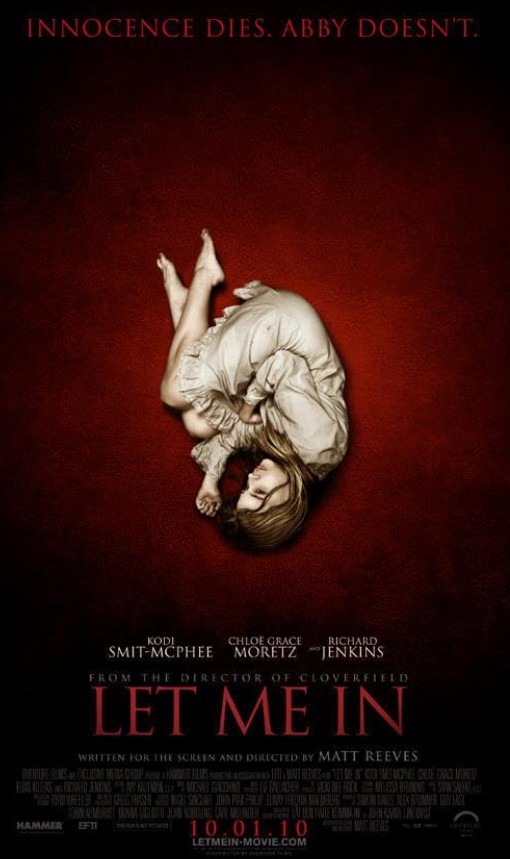
Let Me In (2010) poster created by Overture Films, Exclusive Media Group, Hammer Films, EFTI, and Relativity Media

Things I liked about the film:

The mise-en-scène: As I explained in my review of 1955’s The End of the Affair, mise-en- scène is how a film’s scene is presented to the audience. Throughout Let Me In, the way mise-en- scène was utilized presented scenes in visually creative ways. At the very beginning of the movie, a snowy forest was shown during the night. The only source of light comes from two police cars and an ambulance. A long shot slowly becomes a close-up shot, giving the audience a reason to focus on the bright vehicles. Anytime Owen and Abby look through the peephole of their apartment door, the shot is shown in a fish-eye lens. This film-making technique puts the audience in Abby and Owen’s perspective, allowing them to see what the children are seeing. It also emphasizes how, despite their differences, Owen and Abby have shared experiences like seeing who is at their door.

How music was incorporated: Music can be an effective component of film-making. It can elevate a scene’s emotions or set a scene’s tone. In Let Me In’s opening scene I just referenced in this review, a rhythmic drumbeat is one of the first sounds the audience can hear. That specific sound creates a sense of urgency, signifying danger is on the horizon. When Abby moves into Owen’s apartment building, gentle angelic-sounding singing can be heard. This is symbolic of how Owen sees Abby; an angel who will provide a light in his darkness. The two examples from Let Me In I discussed add additional context to the scenes themselves. How the film’s creative team incorporated music into the 2010 picture shows the understanding they had for how music can work in their project’s favor.

Disguising Abby’s vampire identity: Before watching Let Me In, I knew it was a vampire movie. But I was pleasantly surprised by how Abby’s vampire identity was disguised. Most of Abby and Owen’s interactions take place at night, at first seeming like just a coincidence. When Owen notices Abby isn’t wearing shoes, she states how she doesn’t feel cold. Abby even tells Owen she’s stronger than he thinks. These verbal and visual clues creatively signified how Abby was a vampire. But because of the clues’ subtlety, it leaves the audience guessing why, on the surface, Abby seems so strange. New twists on vampire cliches, like vampires avoiding sunlight, made Let Me In more unique from other vampire films.

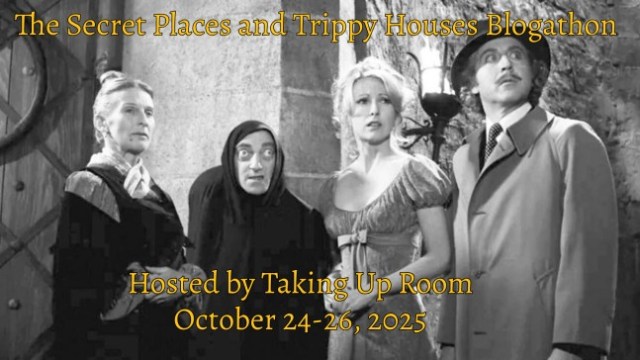
The Secret Places and Trippy Houses Blogathon banner created by Rebecca from Taking Up Room

What I didn’t like about the film:

The audio: When I reviewed Fist of Fury, I talked about the film’s audio being one of the major flaws. I had to turn up my television’s volume in order to hear what the characters were saying. Let Me In shares this same issue. Once again, I had to raise my television’s volume just to hear the dialogue, as the characters’ speech was quiet. As I suggested in my review of the Hallmark Hall of Fame movie, Face to Face, Let Me In’s creative team should have used ADR (automated dialog replacement).

The bullying subplot: One of the subplots in Let Me In involves Owen dealing with bullies. This subplot gave Owen a conflict to resolve, with the conflict eventually reaching a resolution. But because the script prioritized Abby and Owen’s friendship, the bullying subplot wasn’t consistently focused on. In fact, Owen stands up to his bullies about an hour into this hour and fifty-six minute movie. The inconsistency of the bullying subplot also drew that story out longer than necessary.

Underutilized religious undertones: In a scene taking place at a hospital, President Ronald Reagan is delivering a speech on television. During the speech, he talks about evil being present in the world and how people are joined together by Scripture. Owen’s mother says prayers during mealtime and features religious relics in her apartment. These are some examples of the religious undertones in Let Me In. With the movie set in early 1983, I thought the “Satanic Panic” was going to play a large role in this story, especially with Abby being a vampire. However, the religious undertones present in the script were underutilized, not providing any commentary or interesting perspective. In fact, it felt like this part of the film was there just for the sake of being there.

Happy vampire image created by Freepik at freepik.com. <a href=’https://www.freepik.com/free-vector/several-vampires-ready-for-halloween_1317599.htm’>Designed by Freepik</a>. <a href=”https://www.freepik.com/free-photos-vectors/party”>Party vector created by Freepik</a>. Image found at freepik.com.

My overall impression:

Vampires are no stranger to 18 Cinema Lane. Out of the vampire movies I’ve seen (and reviewed), these projects have shown that this type of story can be as creative as film-makers want it to be. 2010’s Let Me In is an interesting and creative vampire film! Abby’s vampire identity was disguised in very clever ways, even putting new twists on vampire cliches. How mise-en-scène and music were incorporated into the movie showcases the creative team’s more unique approach to a familiar type of story. While Let Me In has its merits, it also has its flaws. Religious undertones that could have provided commentary or an interesting perspective to the script were underutilized instead. Poor audio and an overshadowed subplot also didn’t help. But the 2010 project does stand out from other vampire titles. If you don’t mind a slow-burn story that primarily focuses on the power of friendship, then I’d say give Let Me In a chance.

Overall score: 7 out of 10

Have you seen Let Me In? What kinds of movies do you like to watch around Halloween? Let me know in the comment section!

Have fun at the movies!

Sally Silverscreen

Take 3: Saving the Titanic Review

When it comes to the Titanic, the sinking of the “unsinkable” ship and the tragedy that followed are the two most emphasized parts of the watercraft’s history. During the one hundred and thirteen years since the infamous disaster, multiple survivors (either real or fictional) have shared their stories through various forms of media. However, I have observed how the majority of these recollections have been from the perspectives of the passengers. While the passengers’ point of view is important, it seems like the media rarely captures the perspective of Titanic’s employees. This is the reason I chose to review Saving the Titanic for The Titanic In Pop Culture Blogathon. Whenever I participate in a blogathon, I will sometimes review a made-for-TV film. This decision is made because television movies are rarely included in blogging events. I also try to write about a subject that presents a blogathon’s theme in a more unique way. As I already mentioned, Saving the Titanic addresses a point of view that seems less frequent. So, without further delay, let’s begin my review of the 2012 TV production.

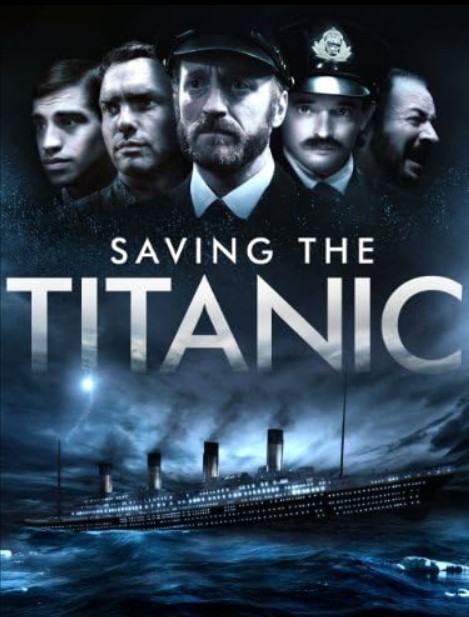
Saving the Titanic poster created by Gebrueder Beetz Filmproduktion, Tile Films, and Public Broadcasting Service (PBS)

Things I liked about the film:

How the lower budget was utilized: Made-for-TV movies have historically received lower budgets. According to IMDB, the estimated budget for Saving the Titanic was €1,600,000 (or $1.8 million). Despite the limited funds, the creative team behind the 2012 television production saw this aspect as a challenge instead of a hinderance. The story revolves around the Titanic’s electricians, engineers, and “firemen” (those who feed fire to the ship’s boilers). Because their roles take place below deck, there’s only a few locations where the employees either reside or work. This allowed the movie’s creative team to recycle sets, featuring a handful of locations in multiple scenes. Medium and close-up shots of the employees and the ship’s machinery not only encourage the audience to focus on how the Titanic operated, they also show how frugal the creative team was with the space they were given. Because of the clever ways the budget was utilized in Saving the Titanic, it was easy to forget how low the budget was.

Use of mixed media: If I had to classify Saving the Titanic, I would call it a “docudrama”. While the majority of the film is a dramatization of the events surrounding the Titanic, the movie features mixed media, which is sometimes found in documentaries. From time to time, blueprints of the Titanic would appear onscreen as a voice-over explained the significance of each featured area. Real-life photographs emphasized how actual lives were impacted by every aspect of the ship. Even the Titanic’s first distress call was typed out on screen, giving the audience an idea of what nautical communication looked like in the 1910s. The inclusion of mixed media created an enriching viewing experience. That element highlights how the Titanic is as multi-faceted as the stories surrounding it.

Learning something new: Over the years, I’ve learned a lot about the Titanic. From discovering the ship did, indeed, have a swimming pool to what the last dinner was served in first class, I thought I knew a satisfying amount of information. But by watching Saving the Titanic, I learned even more about the titular ship, partly due to the perspective of the employees. The fourth funnel on the ship was fake. However, this design choice was a blessing in disguise for one of Titanic’s crew members. A greaser named Alfred White refuses to climb to the top of the fourth funnel due to his fear of heights. Later in the movie, he is ordered by Joseph Bell to report everything happening above deck. This order helps Alfred overcome his fear and accomplish his task, as he had to climb up the same funnel he refused to climb before. Had it not been for Alfred’s part of the story, I might have never known only three of Titanic’s funnels were functional.

The Titanic In Pop Culture Blogathon banner created by Rebecca from Taking Up Room

What I didn’t like about the film:

No explanation for surviving crew members: Toward the beginning of Saving the Titanic, a small group of Titanic’s surviving crew members are at the White Star Line Office. Two of those crew members are featured throughout the film, Alfred White and Frederick Barrett. On screen text revealed the movie was “based on testimonies from surviving crew of RMS Titanic”. So, I was curious about what happened to Frederick and Alfred after they arrived in New York. Unfortunately, the film doesn’t address this information. Instead, the end of the film acknowledged the deceased crew members, such as Joseph Bell. Even though recognizing the crew members who persisted is important, I wish the crew members who survived were recognized as well.

Thick accents: When I reviewed Crimes of Fashion: Killer Clutch last year, I pointed out how difficult it was to understand characters who spoke with thick French accents.  Saving the Titanic has a similar issue. A voice-over explains how the majority of Titanic’s employees came from Southampton. This means the ship’s crew members spoke to one another with English accents in varying degrees of thickness. For employees with thick accents, I, once again, found it difficult to understand what they were saying. While this wasn’t a consistent issue, it was enough for me to point it out.

Frederick Barrett’s “plot twist”: For this part of my review, I will spoil Saving the Titanic. If you have not seen this movie and are planning on watching it, skip ahead to the part of my review titled “My overall impression”.

Throughout his time on the Titanic, Frederick Barrett is very secretive about his past. When he is asked about his life before boarding the famous ship, his answers are vague. In a tense moment while the Titanic is sinking, Frederick explains to Joseph Bell how his wife cheated on him. He wanted to kill his wife and her lover, but chose to join the Titanic’s crew instead. As I mentioned earlier in this review, Saving the Titanic was “based on testimonies from surviving crew of RMS Titanic”. Therefore, the crew members featured in the film were actual people. The way the aforementioned part of Frederick’s story was presented felt like the movie’s creative team wanted to include a plot twist in a real-life story. Not only was this delivery unnecessary, I, personally, think there were better ways to write facts about Frederick’s life into the script.

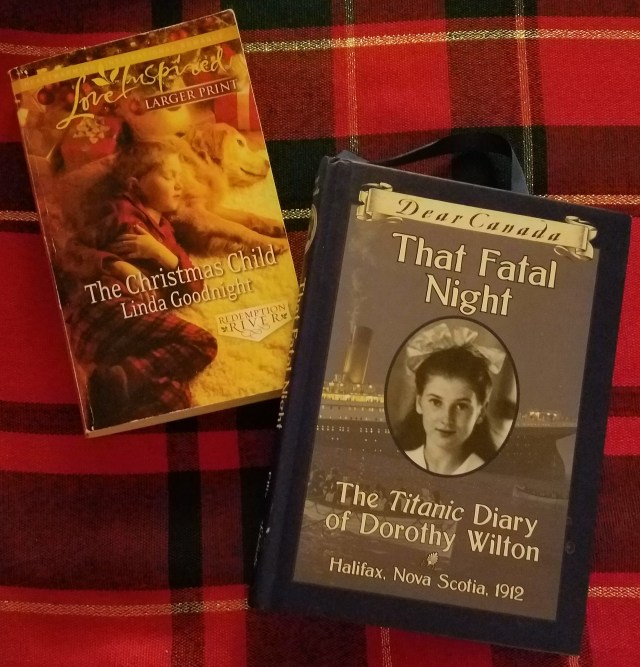
Since I’m reviewing a movie about the Titanic and its history, I thought including a picture of That Fatal Night: The Titanic Diary of Dorothy Wilton was appropriate. Screenshot taken by me, Sally Silverscreen.

My overall impression:

At the beginning of Saving the Titanic, Frederick Barrett is being interviewed about the Titanic disaster. Members of White Star Line tell Frederick they want to reassure the public of White Star Line’s nautical quality by bringing up heroes who helped rescue lives on that infamous April night. But, later in the film, Frederick calls out White Star Line’s members for trying to find heroes to fit the company’s narrative. He also refers to himself as a survivor, not a hero. The story of the Titanic is wrapped in tragedy, fear, and cruel irony. So much emphasis is placed on these aspects of the Titanic’s history, it may be easy to forget there were, indeed, people boarding the ship who were heroes in someone else’s eyes. Whether they are known or not, these people guided someone toward a lifeboat, fetched a life vest for a passenger who might not have received one, or simply tried to ease a frightened crew member’s anxiety. Saving the Titanic brings up some of those names and allows their stories to be told. Like I mentioned in my review’s introduction, the 2012 television presentation addresses a point of view that seems less frequent, which is Titanic’s employees in this case. Though the movie is flawed, I am thankful a production like this exists. It not only teaches viewers about the Titanic from a different perspective, it also shares a side of the story that seems rarely covered in media.

Overall score: 7.1 out of 10

Have you seen Saving the Titanic? Are there aspects of the Titanic’s story you’d like to hear more from? Please tell me in the comment section.

Have fun at the movies.

Sally Silverscreen

That’s a Wrap for my Second Chance Christmas Double Feature

Now we’ve come to the end of another double feature, as both chosen titles, Young at Heart and An Old Fashioned Christmas, have been watched and reviewed! In the introduction, I brought up the following question:

Did these two movies deserve a second chance?

For my answer, I’ll say Young at Heart was more deserving of a second chance than An Old Fashioned Christmas. With Young at Heart, I not only received an opportunity to check out more projects from Frank Sinatra’s and Alan Hale Jr.’s filmography, I was also given an official introduction to Doris Day’s movies. I found a good excuse to see more musicals, as well as films from the 1950s. Overall, I enjoyed Young at Heart more than Hallmark’s 2010 presentation. As someone who loves An Old Fashioned Thanksgiving, the sequel left a lot to be desired. Despite being titled An Old Fashioned Christmas, the film didn’t feel like a Christmas film. Instead of prioritizing the messages and themes of the holiday, the script primarily focused on stories that could have taken place any time of year. It also doesn’t help how so much of the story revolves around a love triangle. Looking back on An Old Fashioned Christmas, it makes me wonder if the sequel’s poorer quality, as well as becoming forgotten by time and Hallmark themselves, is the reason why I’ve, more often than not, seen DVD copies of the movie included in Christmas movie box sets?

Christmas themed movie tickets image created by Kraphix at freepik.com. <a href=’https://www.freepik.com/free-vector/movie-tickets-christmas_971544.htm’>Designed by Kraphix</a>. <a href=”https://www.freepik.com/free-photos-vectors/christmas”>Christmas vector created by Kraphix – Freepik.com</a>. Image found at freepik.com.

Have fun at the movies!

Sally Silverscreen
Take 3: An Old Fashioned Christmas Review (Second Chance Christmas Double Feature Part 2)

Thank you for joining me for the second part of my Second Chance Christmas Double Feature! Unlike my review of Hallmark’s Frankenstein, this review of An Old Fashioned Christmas will contain a few spoilers. If you’re curious about why I chose An Old Fashioned Christmas  for this double feature, you can check out the introduction in the link below.

Coming Soon to a Blog Near You; The Second Chance Christmas Double Feature!

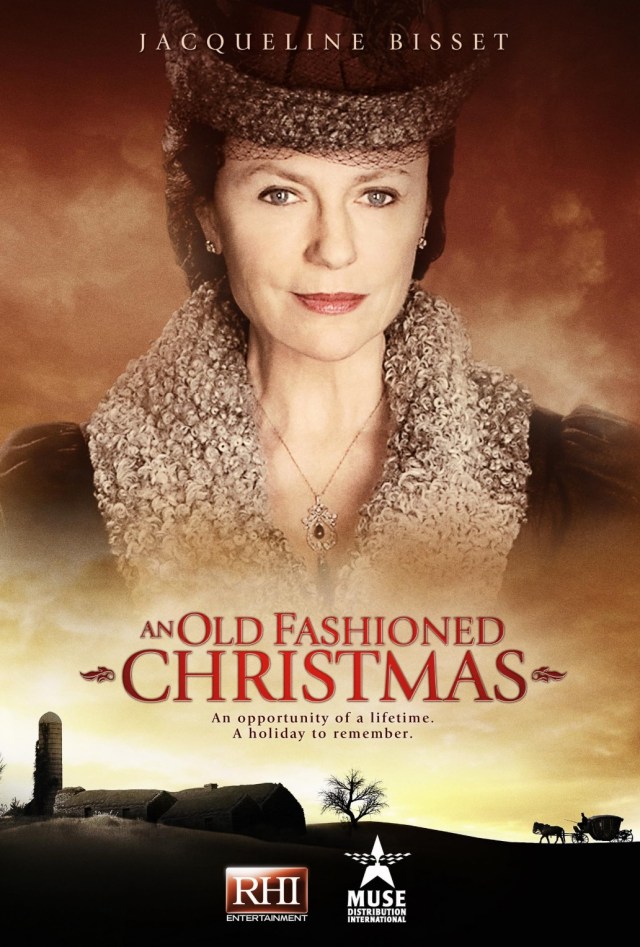
An Old Fashioned Christmas poster created by RHI Entertainment, The Government of Ireland, Parallel Film Productions, MNG Films, Muse Entertainment Enterprises, and Hallmark Channel

1. How were you introduced to An Old Fashioned Christmas and why was it selected for this double feature?

I have declared An Old Fashioned Thanksgiving as one of my favorite Hallmark movies. Years ago, when I discovered the 2008 film received a sequel, I was eager to check that movie out. But as time went on, Hallmark gave the sequel fewer airings during their Christmas line-ups, making it more difficult to watch the film. I’ve always looked for the right time to write about An Old Fashioned Christmas. I even included it on two lists; 2022’s top ten movies I’d love to review and 2023’s top ten Christmas movies I’d love to review. On both lists, I said I found a few DVD copies of the 2010 title. But, more often than not, these DVDs were included in Christmas movie box sets, which, typically, are expensive. Fortunately, An Old Fashioned Christmas was uploaded on Youtube, which is how I watched it.

2. You’ve mentioned An Old Fashioned Thanksgiving being one of your favorite Hallmark movies. Did An Old Fashioned Christmas contain any elements that made you like the 2008 film?

One of the reasons why I love An Old Fashioned Thanksgiving is how immersive the production is! The attention to detail and historical accuracy created the illusion of taking the audience to another time and place. This same strength was found in An Old Fashioned Christmas! One simple, yet effective, example were the props. Anytime Tilly and Isabella shared a meal with the Shannon family, the table was covered with fine china dishes, crystal goblet-style glasses, and even a shiny silver teapot. These specific props reflected the story’s time period, which appears to be the late 1800s. They also symbolized the prestigious family history of the Shannons.

3. Is the theme of “second chances” incorporated in An Old Fashioned Christmas’ story? If so, how?

One of the reasons why Tilly wanted to travel to Ireland was to meet her father’s side of the family. After she gets to know her paternal grandfather and uncle, Tilly writes a letter in the hopes Isabella will make amends with Sean (Tilly’s grandfather). So, in An Old Fashioned Christmas, not only is Tilly given a second chance to connect with her father’s side of the family, Isabella received a second chance to build a bridge between herself and Tilly’s grandfather.

4. Was there anything about An Old Fashioned Christmas you liked or didn’t like?

Similar to Young at Heart, the dialogue was one of the best parts of An Old Fashioned Christmas! Because of the thought and effort put into this film-making aspect, conversations between characters sounded intelligent and eloquent. During breakfast one morning, Lady Shannon asks, “Wouldn’t it be lovely for Americans to have titles”? This question relates to how her son, Cameron, will become an Earl someday. Isabella responds by saying, “Actually, we do. We all share the same title: American”. The way Isabella answered Lady Shannon’s question carried a sense of confidence and grace, simply stating a major difference between her world and the world of the Shannon family. I also thought Isabella’s response to Lady Shannon’s question was pretty clever.

Speaking of Lady Shannon’s son, Cameron, I found him to be the worst character in An Old Fashioned Christmas. He always acted like he had something to prove. Plus, Cameron attempted to get the last word in every argument or conversation. The longer I watched An Old Fashioned Christmas, the more annoying Cameron became. I recognize the film’s creative team was trying to create a male character different from Gad (Tilly’s fiancé). However, this goal can be achieved without making that male character completely unlikable.

Blue sparkly Christmas tree image created by Macrovector at freepik.com. <a href=”https://www.freepik.com/free-photos-vectors/frame”>Frame vector created by Macrovector – Freepik.com</a>. <a href=’https://www.freepik.com/free-vector/merry-christmas-card_2875396.htm’>Designed by Macrovector</a>. Image found at freepik.com.

5. On 18 Cinema Lane, you’ve covered plenty of Christmas films. How is An Old Fashioned Christmas similar to or different from other Christmas pictures written about on your blog?

As I answered for question number three, meeting her father’s side of the family was the reason Tilly wanted to travel to Ireland. Like I also answered for question number four, Isabella responded to Lady Shannon’s question by stating Americans share the same title: American. The story of an American protagonist traveling to Ireland to learn more about her father’s side of the family felt very reminiscent of Christmas at Castle Hart. Another similarity these films share is how a majority of their stories take place in an Irish castle.

6. Did you develop any thoughts and/or questions while watching this film?

What makes An Old Fashioned Thanksgiving such a great movie is how the story embraces the Thanksgiving holiday. The film boasts a Thanksgiving dinner and showcases themed decorations, like a handmade blanket. But the 2008 picture also weaves the messages and themes of the holiday into the story and dialogue, truly making An Old Fashioned Thanksgiving feel like a Thanksgiving movie. An Old Fashioned Christmas definitely looked like a Christmas movie, as decorations and themed activities were sprinkled throughout the film. However, it did not feel like a Christmas picture. That’s because the majority of the story emphasized the love triangle between Tilly, Gad, and Cameron. An Old Fashioned Christmas is a Hallmark presentation where the protagonist says they are going to do something, but spends the majority of the film not doing what they said they were going to do. One of the reasons for Tilly and Isabella’s trip to Ireland was for the Earl of Shannon to mentor Tilly in her writing, in the hopes of getting Tilly’s work published. But throughout the one hour and fifteen-minute movie, Tilly barely accomplishes any writing goals. In fact, the only writing Tilly does is composing letters to her mother.

7. How would the story of An Old Fashioned Christmas change if it revolved around another holiday?

I just mentioned for question number six how the majority of An Old Fashioned Christmas’ story emphasized the love triangle between Tilly, Gad, and Cameron. Other stories, such as the Earl of Shannon mentoring Tilly, didn’t really have anything to do with the Christmas holiday. Therefore, changing the plot of An Old Fashioned Christmas to another time of year wouldn’t make a difference.

8. Did An Old Fashioned Christmas deserve a second chance? If so, why?

Now that I have seen An Old Fashioned Christmas, this is, honestly, a tough question to answer. On the one hand, I received some closure for how the story continues after An Old Fashioned Thanksgiving. I also developed my own, honest opinion about the sequel. But, on the other hand, An Old Fashioned Christmas, kind of, let me down. The Christmas holiday almost seems like an afterthought in the 2010 title. There were underutilized aspects of the story, like Tilly pursuing her writing dreams. So, to answer this question, I’m thankful I received an opportunity to check out An Old Fashioned Christmas. However, I don’t think it was worth the wait.

9. After watching An Old Fashioned Christmas, is there anything you can take away from your movie viewing experience?

If you ignore the fact An Old Fashioned Christmas was created as a sequel to An Old Fashioned Thanksgiving, this is an ok film. The attention to detail and historical accuracy create a visually immersive experience. The dialogue was also well written and delivered. But if you intend to watch An Old Fashioned Christmas as a sequel to An Old Fashioned Thanksgiving, you will be underwhelmed. With Tilly, Gad, and Isabella as the only returning characters, the family dynamic between Tilly’s family and Isabella is absent. Like I said for questions number six and seven, the majority of An Old Fashioned Christmas’ story emphasizes the love triangle between Gad, Tilly, and Cameron. It did not help that Cameron was such an unlikable character. Honestly, this movie will likely be a one-time watch for me. Since I still love An Old Fashioned Thanksgiving, I’ll just stick with the 2008 picture.

Irish heart image created by Freepik at freepik.com. <a href=”https://www.freepik.com/free-photos-vectors/label”>Label vector created by freepik – http://www.freepik.com</a>. Image found at freepik.com.

Have fun at the movies!

Sally Silverscreen
Coming Soon to a Blog Near You; The Second Chance Christmas Double Feature!

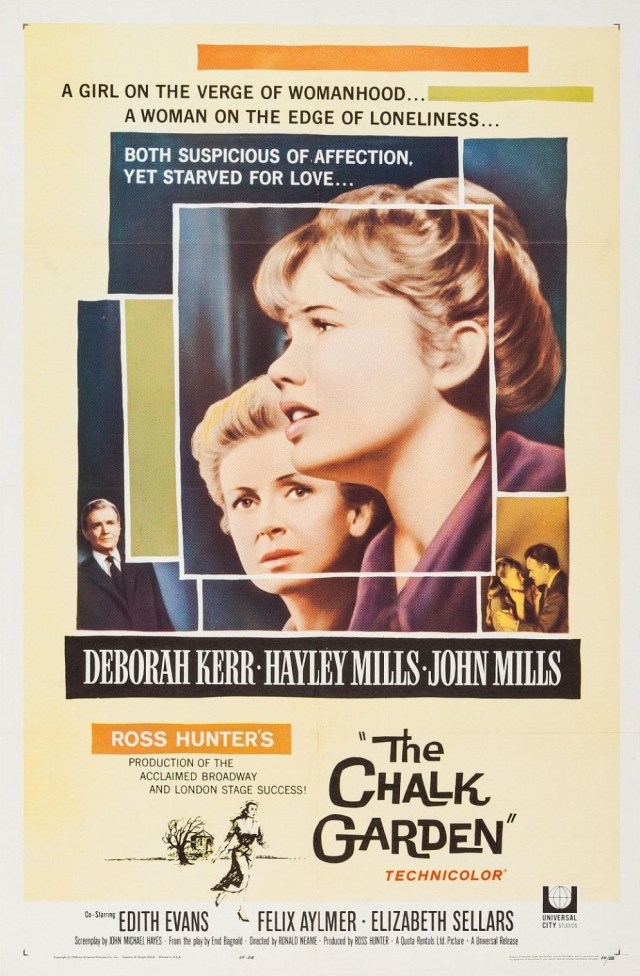
Whenever I publish one hundred posts, I commemorate the achievement by creating a double feature! The two movies are chosen based on a shared theme. My 900th post was a Comparing with the Critics introduction to 1976. But my review of The Chalk Garden is what inspired this edition’s double feature. When I reviewed the 1964 film earlier this month, I talked about receiving a second chance to write about the movie. This opportunity caused me to think about other titles I’ve been meaning to check out. Looking back on all the blogathons I participated in, I realized I still haven’t seen 1954’s Young at Heart. Upon discovering it was a Christmas movie, I immediately found the perfect excuse to finally see An Old Fashioned Christmas. After selecting and watching these films, I will try to answer the following question:

Did these two movies deserve a second chance?

Christmas Tree with boxes image created by Freepik at freepik.com. <a href=’https://www.freepik.com/free-vector/christmas-tree-out-of-gift-boxes_1448089.htm’>Designed by Freepik</a>. <a href=”https://www.freepik.com/free-photos-vectors/background”>Background vector created by Freepik</a>. Image found at freepik.com

Have fun at the movies!

Sally Silverscreen

It’s Time for the 7th Annual Gold Sally Awards!

Here at 18 Cinema Lane, I maintain several annual traditions to give my readers something to look forward to. One of those traditions is the Gold Sally Awards, which commemorates my blog’s anniversary! The award categories are created by me and based on topics I’ve brought up on my blog. With two new awards in 2025, I’ll explain the significance of those categories. Like in 2024, I will discuss why I chose each recipient. Now, let the 7th Annual Gold Sally Awards begin!

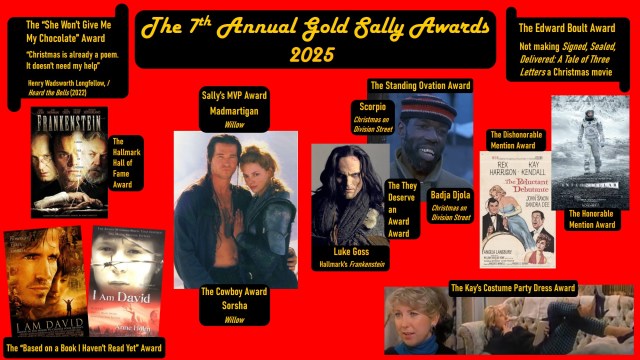
7th Annual Gold Sally Awards Winners created by me, Sally Silverscreen.

The Kay’s Costume Party Dress Award

(Best Outfit from a Movie)

Helen’s Christmastime Outfit from Hallmark Hall of Fame’s Pack of Lies

When I thought about the various categories of the Gold Sally Awards, I realized there was no category recognizing the wardrobe department of the movie industry. To fix that, I created the Kay’s Costume Party Dress Award! The name of this award references the dress Kay (Joan Collins’ character) wore at a costume party in the 1983 tv movie, Making of a Male Model. I loved this dress so much, it was featured in 2021’s Movie Blogger’s Christmas Wish-List! From the films I saw in 2024, there were several outfits I really liked. The one that was the most memorable, however, came from the Hallmark Hall of Fame presentation, Pack of Lies! The outfit in question was featured in my Movie Blogger’s Christmas Wish-List from last year; the black and blue ensemble Helen (portrayed by Teri Garr) wore during Christmastime. This timeless outfit was worn in only one scene. That fact is why Helen’s outfit earned the inaugural Kay’s Costume Party Dress Award!

The Edward Boult Award

(Missed Opportunity in Cinema)

Not making Signed, Sealed, Delivered: A Tale of Three Letters a Christmas movie

Last June, I speculated how Signed, Sealed, Delivered: A Tale of Three Letters could be a Christmas film. In my editorial about my speculation, I explained how the movie’s title could be a reference to either the Nativity story or A Christmas Carol. I also wondered if Signed, Sealed, Delivered: A Tale of Three Letters and “Signed, Sealed, Delivered: To the Moon and Back” could be a two-part adaptation of A Christmas Carol, with the rock star character intended to be a Marley-like character. The official marketing for Signed, Sealed, Delivered: A Tale of Three Letters proved my speculation wrong. But the more I think about how this movie could have been a Christmas picture, the more I wish it had been a Christmas production. As of early February, 2025, the Signed, Sealed, Delivered series has received only one Christmas movie. Plus, my aforementioned editorial provided ideas for a potential Christmas script. With Hallmark Mystery’s ‘Miracles of Christmas’ viewership numbers lower in 2024 than 2023, maybe the network will consider creating another Signed, Sealed, Delivered Christmas film.

The They Deserve an Award Award

(An Actor or Actress Who Deserves Recognition)

Luke Goss (for his performance in Hallmark’s Frankenstein) and Badja Djola (for his performance in Christmas on Division Street)

There were several good acting performances I saw in 2024. So, it was difficult to choose just one recipient for this year’s Gold Sally Awards. Both Luke Goss’ and Badja Djola’s performance was so impressive! In Hallmark’s Frankenstein, Luke’s use of emotion allowed The Creature to speak without actually speaking. An example I used in my review of the 2004 television film was when The Creature bursts into tears while seeking refuge in a barn. Luke’s acting skills made his character as complicated as he was in Mary Shelley’s source material. Badja made his character, Scorpio, so memorable, despite having limited appearances in Christmas on Division Street. With a consistently commanding presence, Scorpio was a character I looked forward to seeing on screen. That’s because Badja used his acting talents to give Scorpio captivating interactions with other characters. The scene where Scorpio shares some of his backstory with Cleveland is the example I used in my Christmas on Division Street review.

The Cowboy Award

(Character Who Makes an Unnecessary, Drastic Change)

Sorsha from Willow

You’re probably wondering why I gave Sorsha the Cowboy Award, even though I grew to like her as a character. While I found her transformation from villain to hero necessary, it was drastic. In my Comparing with the Critics review of Willow, I shared how Sorsha’s aforementioned evolution was too abrupt. The transformation gave Sorsha some character development, but it left some questions unanswered. For this flaw, blame lies in the screenwriting.

Sally’s MVP Award

(Character Who Left a Memorable, Showstopping Impression)

Madmartigan from Willow

When I watch a movie, there is, sometimes, a character who leaves such a memorable impression on me, they end up stealing the show. I have called these types of characters “MVP”. To acknowledge the “MVPs” of 18 Cinema Lane, I created the new Sally’s MVP Award! One of these “MVPs” was Madmartigan from Willow. In my Comparing with the Critics review of the 1988 film, I talked about how Madmartigan was the story’s comic relief. His personality and comedic timing captivated my attention and kept me invested in his story. What helped Madmartigan become the “MVP” of Willow was the screenwriting and Val’s performance.

The “She Won’t Give Me My Chocolate” Award

(Best Quote from a Movie)

“Christmas is already a poem. It doesn’t need my help” – Henry Wadsworth Longfellow, I Heard the Bells (2022)

In the 2022 movie, I Heard the Bells, Fanny (portrayed by Rachel Day Hughes) encourages her husband, Henry, to create a Christmas themed poem. Henry (portrayed by Stephen Atherholt) told his wife, “Christmas is already a poem. It doesn’t need my help”. When Henry said this, I started to think about what his quote meant. Poems require planning and putting the right pieces together, in order for that poem to have good flow and writing structure. Christmas festivities require a certain amount of planning, whether it’s a local church’s Nativity play or a family’s Christmas party. Using these two examples, finding the right pieces is important, such as who will portray the Three Wise Men or what will be the entrée of Christmas dinner. Poems can also tell stories. One classic example is ‘‘Twas the Night Before Christmas’. Christmastime is filled with stories, from the Nativity story to A Christmas Carol. Henry’s aforementioned quote made me see Christmas in a completely different way! Plus, a quote from a Christmas movie has never won the “She Won’t Give Me My Chocolate” Award before.

The Honorable and Dishonorable Mention Award

(Best and Worst Movie from the Honorable and Dishonorable Mention Category)

Best – Interstellar

Worst — The Reluctant Debutante

For last year’s Gold Sally Awards, there was only the Dishonorable Mention Award. That’s because I didn’t see enough movies to include an honorable mention category. With the honorable mention category returning in 2024, the Honorable Mention Award is also coming back! Science fiction stories about space exploration will typically emphasize the thrills and wonder of the galaxy. This can make it easy for a movie’s audience to get caught up in how adventurous and exciting outer space can seem. In Interstellar, a major focus is space travel’s effect on human beings. So, themes of family, sacrifice, and the price of scientific achievement are woven into the script. That, along with quality acting performances and impressive special effects, is why I liked Interstellar!

Out of all the movies that ended up in the dishonorable mention category, I had the highest expectations for The Reluctant Debutante. This is because I not only reviewed the film for The John Saxon Blogathon, there was some well-known talent involved with the project. Unfortunately, the 1958 movie fell short of those expectations. The Reluctant Debutante was a premise driven story that felt longer than one hour and thirty-four minutes, due to the jokes being drawn-out. It also didn’t help how some story ideas were overlooked. When I reviewed the 1958 film, I shared how movies from the 1950s are covered so infrequently on 18 Cinema Lane. So, it’s disappointing when a production from the ‘50s is weaker than expected.

The Hallmark Hall of Fame Award

(Movie That Feels Like It Belongs in the Hallmark Hall of Fame Collection)

Hallmark’s Frankenstein

There are different kinds of stories in the Hallmark Hall of Fame collection. One kind of story is adaptations of pre-existing literature. Sometimes, “classic” literature became Hallmark Hall of Fame presentations, like The Secret Garden and A Tale of Two Cities. When these adaptations are good, they can be an immersive experience. This is how I would describe Hallmark’s Frankenstein! Due to the combination of screenwriting, acting performances, set design, and costume design, the movie made me feel like I was transported to another time and place. I also appreciate how close to the source material the 2004 television film is. Looking back on Hallmark’s Frankenstein and the Hallmark Hall of Fame collection, I’m actually surprised Mary Shelley’s novel wasn’t adapted into a Hallmark Hall of Fame project. Everything I said is why I chose Hallmark’s Frankenstein for the Hallmark Hall of Fame Award!

The “Based on a Book I Haven’t Read Yet” Award

(Movie Based on Source Material I Have Not Yet Read)

I Am David

Movies that won the “Based on a Book I Haven’t Read Yet” Award were first placed on a best films of the year list. I Am David is continuing that tradition! The 2004 film earned the top spot on my best movies list of 2024. This is the second time a number one movie of the year received the “Based on a Book I Haven’t Read Yet” Award! After I reviewed I Am David, I learned the movie was based on a book. I’m not sure how affective the story’s plot twists will be, as I already know what they are because I saw the film. However, I’d still be interested in reading I Am David someday!

The Standing Ovation Award

(Character Most Deserving of Receiving Their Full Potential)

Scorpio from Christmas on Division Street

When the Gold Sally Awards presented the Standing Ovation Award, the recipients were characters who should have received their “standing ovation”, but were denied that for various reasons. Scorpio (from Christmas on Division Street) actively worked toward getting where he wanted to go. As I said during the They Deserve an Award Award, Scorpio had limited appearances in the 1991 made-for-TV movie. Despite that, the audience learned enough about him to know what he had gone through. During this limited period of time, Scorpio attempts to overcome his obstacles. While I won’t spoil Christmas on Division Street, I will say those attempts earned Scorpio the Standing Ovation Award!

Have fun at the movies!

Sally Silverscreen
The Top Ten Worst Movies I Saw in 2024

While 2024 was, for me, a better year for movies, I still saw some movies I didn’t like. Similar to my worst movies list of 2023, most of the films on this year’s list were disappointing or average. But, unlike 2023, the top four titles are from different genres. The dishonorable mentions section has returned! This time, however, there are more DNFs (did not finish). Like I have said in past lists, my top ten worst movies I saw in 2024 list is not intended to be mean-spirited, negative, or disrespectful. It’s just a list of my own, honest opinion. Since I reviewed some of the movies on my list, I will provide the links to those reviews in this article.

Dishonorable Mentions

The Reluctant Debutante, The Gambler: Luck of the Draw, Jazz Ramsey: A K-9 Mystery, Million Dollar Lethal Listing, CrimeTime: Freefall (I turned it off after about forty minutes), Mermaid Down (I turned off this movie after about twenty minutes), Blood, Sweat and Cheer (I turned it off after about eighteen minutes), and Temptation Under the Sun (I turned off this movie after about twenty-two minutes)

Image by starline on Freepik

10. Crimes of Fashion: Killer Clutch

In the 2020s, Hallmark has come up with story ideas that worked well enough for a stand-alone mystery movie, but unsustainable for a multi-chapter series. One of these ideas came from Crimes of Fashion: Killer Clutch. This film made the same mistake as Mystery Island: not allowing the protagonist to use her skills to solve the case. For Lauren, the main character in Crimes of Fashion: Killer Clutch, her psychology skills were so underutilized, she seemed more like an over glorified intern. Thick French accents making several characters difficult to understand is another major flaw of the film. It prevented me from being fully invested in the story. Crimes of Fashion: Killer Clutch was, in my opinion, a disappointing movie. But compared to the other titles on 2024’s worst of the year list, Hallmark’s production was, simply, ‘underwhelming’.

Take 3: Crimes of Fashion: Killer Clutch Review

9. Boy in the Walls

When I first read the synopsis for Boy in the Walls, I thought the film would be a spookier version of 2016’s Boy in the Attic. Sadly, this was not the case. The 2023 Lifetime presentation contained a mystery that was drawn out for too long. It also doesn’t help how the protagonist made one dumb decision after another. Without spoiling the film, all I’ll say is the title is misleading. If you haven’t watched either referenced movie, I’d recommend Boy in the Attic.

8. The 39 Steps

In my review of The 39 Steps, I said the 1935 picture was the most “meh” title from Alfred Hitchcock’s filmography. This statement was made due to the limited sense of urgency and intrigue within the story. As I also said in my review, The 39 Steps seems longer than an hour and twenty-six minutes. The drawn-out nature of the movie created a slow and boring build-up to a reveal that feels kind of ridiculous and anti-climactic. While romance has been incorporated in some of Alfred’s films, it didn’t work in The 39 Steps. Richard and Pamela’s attraction for one another was too abrupt, welcoming the presence of the “insta-love” trope. Even though The 39 Steps was a disappointing movie, I gave it a lower placement on my list. Comparing the 1935 film to Alfred’s other productions, Hitchcock’s filmography shows how much he improved as a director.

Take 3: The 39 Steps Review

7. Hallmark Hall of Fame’s Pack of Lies

There are some movies that, in my opinion, should have been documentaries instead. The 1987 Hallmark Hall of Fame presentation, Pack of Lies, is just one example. This film in the Hallmark Hall of Fame collection is based on a true story. While “based on a true story” movies can be engaging, intriguing, and even thought-provoking, Pack of Lies was disappointing. Like I said in my review of the 1987 production, the film was a two hour slow and tedious build-up to a resolution that was underwhelming and anti-climactic. The creative team’s decision to choose telling over showing caused other flaws, from little lapse in time to things not making sense. Pack of Lies proves Hallmark Hall of Fame movies are not created equally. However, there are other Hallmark Hall of Fame presentations from the 1980s I like, such as the adaptations of The Secret Garden and A Tale of Two Cities.

Take 3: Hallmark Hall of Fame’s Pack of Lies Review

6. One Bad Apple: A Hannah Swensen Mystery

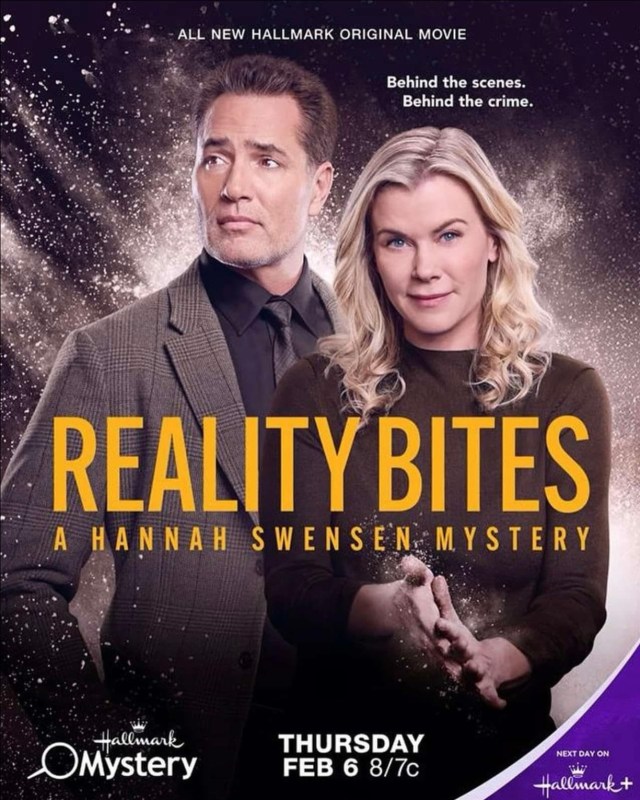
While A Sprinkle of Deceit: A Hannah Swensen Mystery was slightly better than One Bad Apple: A Hannah Swensen Mystery, I was still disappointed in the latter film. For starters, Victor Webster and Alison Sweeney had no on-screen chemistry. A character (not Hannah) solves the mystery by making an assumption about the case and being conveniently correct. But the worst part about One Bad Apple: A Hannah Swensen Mystery was Delores’ subplot. Up until this film, Delores was very against Hannah getting involved in cases, as well as dating Mike. So, for Delores to become a private investigator and seem to treat her new job as a joke completely went against her character. In fact, this was such a bad creative idea, Delores’ private investigating career was barely mentioned in A Sprinkle of Deceit: A Hannah Swensen Mystery. If there are more Hannah Swensen films in the works, I really hope Delores receives better story ideas.

Hallmark Hall of Fame’s Pack of Lies poster created by Hallmark Hall of Fame Productions, Robert Halmi, and CBS

5. My Life Is on the Line

This Lifetime movie had one of the network’s most creative story ideas. The 2024 picture was about a woman who tried to solve a mystery on her computer at her office cubicle. But the longer I watched this movie, the sooner I realized that aforementioned idea wasn’t sustainable for a feature-length production. Instead, the novelty of how the mystery was solved got old very quickly. My Life Is on the Line is yet another Lifetime film where the protagonist makes a collection of dumb choices. Her decision-making is so bad, other characters in the story, including her boss, call her out for it. Lifetime’s 2024 presentation was, for me, the most disappointing movie of the year.

4. Network

Network holds the honor of not only being the first film I reviewed for my Comparing with the Critics series, it’s also the first film I disagreed with the critics on. Even though Gene Siskel and Roger Ebert placed the movie in their list of the top five films from 1976, I would call Network one of the “Dogs of the Year”. For me, it was more of an endurance test, where the story’s first half was a drawn-out search for a resolution to the movie’s conflict and the second half was a yelling contest. Being a pretentious picture by taking itself too seriously and telling a dry, boring story didn’t work in Network’s favor. There are movies from the 1970s I like. Unfortunately, Network isn’t one of them.

Comparing with the Critics – Best of 1976 – Network

3. Mount Hideaway Mysteries: Exes and Oh No’s

It’s ironic that Mount Hideaway Mysteries: Heartache and Homecoming became the third worst movie of 2023 and now Mount Hideaway Mysteries: Exes and Oh No’s became the third worst movie of 2024. When you look past this irony, you’ll see how Mount Hideaway Mysteries: Exes and Oh No’s shares some of the same flaws as its sequel, like not understanding how technology works. Mount Hideaway Mysteries: Exes and Oh No’s contains its own flaws, with poor special effects as one example. While this movie is so bad, it’s, at times, unintentionally funny, I do acknowledge how challenging it can be to create a cinematic project. In fact, the best way to sum up Mount Hideaway Mysteries: Exes and Oh No’s is the quote, “Mistakes are proof that you are trying”.

Take 3: Mount Hideaway Mysteries: Exes and Oh No’s Review

2. Revenge Best Served Chilled

This Lifetime movie from 2022 had a very misleading title and synopsis. Not only is there no revenge in the story, there’s also nothing being chilled throughout the film. According to a plot summary I read, Revenge Best Served Chilled is about a series of murder mysteries taking place at a wine expert competition, with the protagonist trying to clear her name and solve the mysteries. The movie actually emphasizes the wine expert competition to the point where there is little to no mystery involved. Like Boy in the Walls and My Life Is on The Line, the protagonist, Emily, makes so many dumb decisions. I, honestly, should have turned this movie off after Emily doesn’t lock her family’s restaurant’s front doors as she’s spending the night at the restaurant. But I naively thought Revenge Best Served Chilled was going to be a better movie.

1. Frankenstein (2004)

I referenced this movie while reviewing the Hallmark adaptation of Frankenstein, as I was pointing out a technical error on Wikipedia. When I saw the version of Frankenstein starring Vincent Perez, I immediately knew it was going to be the worst movie I saw in 2024. While this movie contains some interesting ideas, those ideas are bogged down by other ideas. The excessive number of ideas made the story feel like a series of vignettes either loosely connected to each other or not connected at all. What also makes the overall story weak is how nothing is explained. The ending is one of the most “sequel bait” endings I’ve seen in a long time. I would strongly discourage readers from checking out this version of Frankenstein. More time will be spent being frustrated than entertained.

Mount Hideaway Mysteries: Exes and Oh No’s poster created by Glass House Distribution

Have fun in 2025!

Sally Silverscreen

Take 3: Cancel Christmas Review

When choosing to review a Hallmark Christmas film, I sometimes select an “older” production that isn’t featured during “Miracles of Christmas” or “Countdown to Christmas” as often as it used to. I figure if either Hallmark Channel or Hallmark Mystery continues to prioritize their “newer” movies, 18 Cinema Lane will take the time to give these “older” pictures their much-needed recognition. Cancel Christmas is one of these films. Premiering in the early 2010s, Cancel Christmas was released during a time when Hallmark Channel aired less than twenty movies during their “Countdown to Christmas” line-up. This movie was also released during a time when Hallmark’s Christmas projects weren’t mandated by the network’s brand, allowing each movie to be as creative as their respective creative team desired. When I wrote about hoops&yoyo’s Haunted Halloween, I mentioned how Hoops & Yoyo would appear in an article of things you can no longer find from Hallmark. If this article existed, Christmas movies featuring Santa would also be included. Comparing today’s Hallmark Channel with the network of yesteryear, Santa’s appearances in Christmas cinema have become rarer. So, similar to hoops&yoyo’s Haunted Halloween, Cancel Christmas serves as a time capsule of how different Hallmark Channel was over ten years ago.

Cancel Christmas poster created by Chesler/Perlmutter Productions, Daro Film Distribution, and Hallmark Channel

Things I liked about the film:

The acting: Since the dawn of cinema, there have been countless portrayals of Santa. How Santa carries himself on screen depends on the actor, screenwriting, and director. In Cancel Christmas, Judd Nelson presented Santa in a way I don’t often see in the world of Christmas cinema. This movie shows Santa as softer-spoken, displaying jolliness through actions instead of just words. His overall demeanor was that of a “wise elder”; thoughtful, reflective, and willing to be a mentor when necessary. Judd’s portrayal of Santa stresses one of the themes of Cancel Christmas; it doesn’t matter what Santa looks like, what matters is the goodness in his heart. Working alongside Santa is an elf named Randal. Portrayed by Justin Landry, Randal ended up stealing the show! He was the perfect opposite to the character of Santa, being enthusiastically joyful and wearing a smile with an up-beat attitude. Randal’s laugh was infectious, making me laugh along with him. I, honestly, wish this movie had been about Randal!

If a Christmas movie features a “Scrooge” type character (a character whose heart changes over the course of the story), the character’s gradual change needs to feel genuine. The more genuine this transformation is, the more opportunities the audience receives to have empathy for that character. Sante Scaletta portrayed a “Scrooge” type character in Cancel Christmas. Farley Morgan is known as a bully at his school. Around his friend and authoritative figures, Farley carries an arrogant attitude. He presents himself as more invincible than he really is. But behind closed doors, the emotional walls surrounding Farley become dismantled. From happily playing with his dog, Kip, to tearfully sharing family memories with his father, Farley’s emotional range broadens. Because of Sante’s impressive performance, Farley’s gradual change in Cancel Christmas truly felt believably genuine!

The messages and themes: In a typical Christmas film, especially from Hallmark, important messages and themes are sprinkled throughout the story. These messages and themes serve as lessons for the audience to learn. They’re also ways for the audience to relate to the characters. As I mentioned earlier in this review, Farley is a bully at his school. Toward the beginning of Cancel Christmas, he and his friend, Steve, attempt to pull a prank on their teacher, Mrs. Claymore. However, Mrs. Claymore is spared from the prank because the prank ends up affecting someone else. At school one day, Mrs. Claymore tells Steve if she had been affected by the prank, it would have made her cry. She shares this to remind Steve how his and Farley’s actions have consequences.

The setting: On-screen text reveals how Cancel Christmas takes place in Atlanta, Georgia. This was a nice change of scenery from the backgrounds of most of Hallmark’s Christmas productions! Snowy, small towns have become a staple in the network’s Christmas cinema. The reality, though, is how not everyone’s environment reflects what Hallmark projects. By placing Cancel Christmas in Atlanta, Georgia, the movie’s creative team gives the audience an idea of what the Christmas season is like in one of America’s southern states. Relatable Christmas activities, such as making Christmas dinner and decorating the school, are emphasized throughout the story. Among Hallmark’s collection of Christmas films, southern states have rarely made an appearance. So, I appreciate Cancel Christmas’ creative team filling this particular creative void!

Adorable Santa image created by Freepik at freepik.com. <a href=’https://www.freepik.com/free-vector/christmas-background-with-funny-santa_1324597.htm’>Designed by Freepik</a>. <a href=”https://www.freepik.com/free-photos-vectors/background”>Background vector created by Freepik</a>. Image found at freepik.com.

What I didn’t like about the film:

A weak villain: Constance is introduced as the villain at the beginning of Cancel Christmas. She informs Santa his job is in jeopardy because of how spoiled the world’s children have become. While Santa speculates Constance’s motive for endangering his job, a clear explanation is never provided. Constance’s appearance in only three scenes prevented her from having a more intimidating presence. Jean Yoon, who portrayed Constance, gave a good performance with the provided script. But when it came to Constance being a weak villain, I fault the screenwriter.

Too many stories: Sometimes, a Hallmark Christmas movie will feature multiple stories within its script. The collection of stories can range from having one main plot and one or two sub-plots to a variety of characters crossing paths with one another. What makes some of these movies work is how all those stories are woven together. But, in Cancel Christmas, the threads between the stories were unimpressive, causing the script’s abundance of stories to be noticeable. Besides the main plot of Santa trying to save his job, there were about five sub-plots, from a news reporter trying to find the “real” Santa to Farley’s friend, Steve, organizing a fundraiser. There was creativity found within these sub-plots. In fact, some of them belonged in their own movie. However, all these stories ended up competing against each other in Cancel Christmas. It also doesn’t help how the film has a run-time of an hour and twenty-seven minutes. Having so many stories in one script made the movie feel kind of overwhelming.

Unnecessary clichés: I will commend the creative team behind Cancel Christmas for trying to incorporate as much creativity as possible into their project. But there were a few clichés that could have been left on the cutting room floor. As I mentioned in my list of the top ten worst clichés from Hallmark movies, the “business person is a jerk and/or out of touch” cliché has become one of the network’s more over-used clichés. It has, more often than not, been included in rom-coms, in order to make the businessman seem less desirable than the male protagonist. The “business person is a jerk and/or out of touch” cliché found a place in Cancel Christmas. In this movie, the cliché was connected to a story that has been adopted by a lot of entertainment media; the bully/antagonist having a tragic backstory and/or being misunderstood. To me, these parts of the story were more predictable than they needed to be. However, I understand their purpose in the movie was to instill compassion and empathy to the film’s audience.

Dog collection image created by Freepik at freepik.com. <a href=”https://www.freepik.com/free-photos-vectors/dog”>Dog vector created by freepik – http://www.freepik.com</a>. Image found at freepik.com.

My overall impression:

Hallmark Channel’s Christmas movies have changed since the network began in 2001. In the earlier years, these movies didn’t follow a pre-determined formula or adopt as many of the clichés viewers see today. Hallmark’s “older” productions were given more opportunities to find their respective audience because there were fewer Christmas films airing during the Christmas season. Like I said in my review, I commend the creative team behind Cancel Christmas for trying to incorporate as much creativity as possible into their project. From Judd Nelson’s portrayal of Santa to the story taking place in Atlanta, Georgia, these creative choices felt like a breath of fresh air compared to the network’s more recent offerings. Though there were things I liked about this film, it contained noticeable flaws. Not only was the villain weak, the movie featured too many stories. There were also some clichés that were, in my opinion, unnecessarily added to the film. I wish Hallmark would go back to making creativity the rule itself. So many stories and ideas could be told through the network’s programs. But with Hallmark making the same types of projects, the network seems content with creating repetitive and predictable presentations.

Overall score 7.1-7.2 out of 10

Have you seen Cancel Christmas? Are there any “older” Hallmark Christmas movies you enjoy watching? Please tell me in the comment section!

Have fun at the movies!

Sally Silverscreen

Take 3: Love at the Thanksgiving Day Parade Review

With Thanksgiving just around the corner, I decided to choose a Thanksgiving film as the first seasonal movie to review this Christmas/holiday season! While searching for options, the 2012 Hallmark presentation, Love at the Thanksgiving Day Parade, crossed my path. I hadn’t seen this film in its entirety prior to 2024. But over the years, I had heard good things about it. Within the Hallmark fan community, Love at the Thanksgiving Day Parade has received the title of “classic”. Because of that, I wanted to see for myself if the film’s hype was legitimate. Whenever a Hallmark movie becomes popular, I try to check out the movie in order to form my own opinion. Sometimes, I feel the hype was earned, like with the 2014 film, The Nine Lives of Christmas. But I have found myself disagreeing with popular opinion, such as with 2006’s The Christmas Card. What will be my thoughts on Love at the Thanksgiving Day Parade? If you want to know the answer, you have to keep reading my review!

Love at the Thanksgiving Day Parade poster created by Hallmark Channel, Pitchblack Pictures, and LaCanada

Things I liked about the film:

The acting: In a story that primarily revolves around the male and female protagonist, the likability of those characters is determined by the performance of the lead actor and actress. With their portrayal of Emily and Henry, Autumn Reeser and Antonio Cupo effortlessly carried Love at the Thanksgiving Day Parade! Emily is a bright, energetic, and up-beat woman. Her enthusiasm for Chicago’s Thanksgiving parade is charming, with that charm radiating off the screen. Throughout the movie, Autumn displays an understanding for her character’s emotional range. Emily’s energetic bubbliness is showcased enough to keep the character likable. Meanwhile, Antonio’s character, Henry, boasts a more serious personality. This seriousness doesn’t prevent Henry’s suave charisma from shining through. What Autumn’s and Antonio’s performance share in common is how consistent they are. That consistency helped make Henry and Emily strong characters!

Antonio and Autumn are not the only actors giving consistent performances in Love at the Thanksgiving Day Parade! From time to time, Emily interacts with a co-worker named Donna. Similar to Emily, Donna has a bubbly personality. Because of April Telek’s acting strengths, I looked forward to seeing Donna show up in the story. In fact, I wish Donna received a larger role in the film. Another likable character was Emily’s friend, Jaclyn. Despite appearing in the movie for a limited period of time, Ali Liebert helped her character shine by presenting Jaclyn with a warm, friendly personality. I wish Jaclyn was given her own sub-plot to be more involved in the story.

The on-screen chemistry: As I just talked about in this review, Autumn Reeser and Antonio Cupo effortlessly carried Love at the Thanksgiving Day Parade. Another reason why I believe this statement is because of their on-screen chemistry. This movie uses the trope of “opposites attract”. Because of the aforementioned performances of Antonio and Autumn, the attraction of Henry and Emily felt believable! Their banter went back-and-forth like a ping-pong game, providing lively, even funny interactions. The more time they spent together, the more Emily and Henry’s feelings for each other naturally progressed. Despite being “opposites”, these characters found common ground and tried to get on the same page. Henry and Emily kind of reminded me of Oliver and Shane from the Signed, Sealed, Delivered series.

Emily’s wardrobe: Throughout Love at the Thanksgiving Day Parade, Emily consistently wears vintage attire. I liked this creative decision because Emily’s wardrobe not only complimented Autumn, it made Emily a unique character! One of these outfits was a pink dress with matching jacket. Paired with a pink pillbox hat, this outfit represents the classy and sophisticated way Emily presents herself. Even when she takes a simple trip to the grocery store, Emily sports a deep teal, long-sleeved dress with a pleated skirt. When Henry invites her to a basketball game, Emily stays true to herself by wearing a red, short-sleeved blouse, dark blue jeans, and a red belt. The only “modern” part of the ensemble is a Chicago Bulls cap.

Image of Thanksgiving dinner created by Freepik at freepik.com. <a href=”https://www.freepik.com/free-photos-vectors/background”>Background vector created by freepik – http://www.freepik.com</a>. Image found at freepik.com.

What I didn’t like about the film:

A secondary holiday and parade: Hallmark does not create Thanksgiving movies often, especially this decade. So, when I watch one of their Thanksgiving pictures, I hope the holiday is featured similarly to Christmas in their Christmas productions. As the story progressed in Love at the Thanksgiving Day Parade, however, I quickly took notice of how Emily and Henry’s relationship was prioritized over Thanksgiving and the titular parade. The Thanksgiving holiday was barely referenced in this movie. There were no Thanksgiving decorations to be seen and I don’t recall any of the characters saying the word “turkey”. While parade preparations were shown throughout the film, they were only featured in short segments. This is a shame because aspects of the parade, such as “parade camp” or a group of clowns visiting children at the hospital, could have served as the story of their own movie. I wish the parade and/or Thanksgiving had been more involved in the plot. With Emily sharing a brief history of the parade early in the film, Love at the Thanksgiving Day Parade could have had a story similar to A Biltmore Christmas.

The “it’s not what you think” cliché: Among Hallmark’s collection of clichés is the “it’s not what you think” cliché. This is when the protagonist sees or hears something out of context and automatically assumes the worst. Hallmark has sometimes used this cliché in a way that complements the story, like in Easter Under Wraps and Rome in Love. But there are times when this cliché has been included in a movie just for the sake of it. In the case of Love at the Thanksgiving Day Parade, I understand the “it’s not what you think” cliché was intended to create conflict between Henry and Emily. However, I don’t think the cliché’s inclusion in the story was necessary because it happened right after Emily experienced a difficult time in her life. To me, that part of the film seemed cruel and a bit mean-spirited toward Emily.

A rushed backstory: One of the themes of Love at the Thanksgiving Day Parade is “looks can be deceiving”. Despite this theme being utilized well at times, the overall utilization of this theme was not consistent. During the film’s climax, important pieces of a character’s backstory are presented in a rushed manner. That information helps another character change their perception of the character in question. Instead of rushing to deliver this information before the end of the movie, it should have been given over the course of the film. That way, the audience has time to digest and ponder the character’s backstory.

Group of clowns image created by Freepik at freepik.com. Image by Freepik

My overall impression:

Because Hallmark creates so few Thanksgiving movies, I’m always rooting for their Thanksgiving pictures to be good. But, like Hallmark’s Christmas productions, these films are not created equal. As I’ve mentioned in the past, An Old Fashioned Thanksgiving is one of my favorite Hallmark films. One reason why is how Thanksgiving is acknowledged throughout the story. Unfortunately, Love at the Thanksgiving Day Parade did not follow in the footsteps of the 2008 film. In fact, Thanksgiving and the titular parade were overshadowed by Emily and Henry’s relationship. This is one of those movies where a better story idea can be found within the script. But the reason why I kept watching the film is because of the acting performances! Autumn Reeser and Antonio Cupo shined bright together, carrying the movie with their acting talents and on-screen chemistry. The supporting cast was strong as well. I liked Emily’s wardrobe because it helped make her such a memorable character. The combination of Autumn’s performance and the screenwriting contributed to that too. Out of Hallmark’s Thanksgiving projects I’ve seen, Love at the Thanksgiving Day Parade falls somewhere in the middle. While the 2012 picture isn’t bad, it could’ve been stronger.

Overall score: 6.7 out of 10

Have you seen Love at the Thanksgiving Day Parade? Has Hallmark created a Thanksgiving movie you’d like to see me review? Share your thoughts in the comment section!

Have fun on Thanksgiving!

Sally Silverscreen