Comparing with the Critics – Best of 1984 – Amadeus

This review is from my series, Comparing with the Critics. If you’d like to learn more about the series, click on the link below.

Introducing my new series, Comparing with the Critics!

I was intrigued to review Amadeus for a number of reasons. One of those reasons was the song, “Rock Me Amadeus” by Falco. For years, I thought the song was created to promote the movie, given the coincidence of two pieces of Amadeus related media debuting in the ‘80s. With the song released in 1985, a month before Amadeus won Best Picture at the 57th Academy Awards, I’d like to believe I was kind of right. In At The Movies’ ‘Best of 1984’ episode, both Gene Siskel and Roger Ebert liked the glamourous, musical biopic. Roger made the film his “personal choice for the best film of 1984”. Like Network and Harry & Son, I had never seen Amadeus, so I approached the movie with little to no expectations. Though I heard good things about the picture since its premiere in 1984. As I write this review after watching the movie, I can definitely see why Amadeus was, at least, nominated for an Oscar.

Amadeus poster created by The Saul Zaentz Company, AMLF, and Orion Pictures

When I reviewed RKO 281 last July, I complimented Liev Schreiber’s portrayal of Orson Welles. In that review, I said Liev brought humanity back to Orson’s name, finding the heart of the “genius” and putting some genuine emotion behind it. This is the same way I felt while witnessing Tom Hulce’s portrayal of the titular man. Reading about an iconic figure like Amadeus can make one wonder what his personality was like. Similar to Orson Welles, Amadeus can be thought of as more than just a man with a gift. Through good times and bad times, Tom shows the film’s audience how Amadeus was, simply, human. As his father comes to visit him in Vienna, Amadeus expresses pure joy when he sees his father at the top of the stairs. Amadeus’ smile alone showcases the happiness within his heart. One evening, when Amadeus is composing an opera, he slowly slips into exhaustion. His eyelids rise and fall, he sways out of rhythm, and his face looks as white as the lace on his shirt. Roger claimed Tom’s portrayal of Amadeus was “one of the year’s most engaging performances”. Tom’s performance serves as an example where Roger, the Academy, and I were on the same page.

F. Murray Abraham’s portrayal of Antonio Salieri reminded me of Gloria Swanson’s portrayal of Norma Desmond in Sunset Boulevard. What I mean by this is the character in question’s search for fame is so strong, it forces the character to become increasingly obsessive, even making questionable choices. Throughout Amadeus, Antonio reflects on his life and how it was impacted by the success of Amadeus. At the beginning of his story, wistfulness can sometimes be heard in Antonio’s voice as he shares his dream of making music for God. As his reflected encounters with Amadeus continue, the tone in Antonio’s voice evolves into bitterness, hinting at the frustration he bottled up over the years. This frustration can also be seen if one looks closely at Antonio’s facial expressions. Before a scene from the movie was shared in the ‘Best of 1984’ episode, Roger called F. Murray’s portrayal “a brilliant performance”. The Academy certainly agreed with Roger, as F. Murray won the Best Actor Oscar instead of Tom at 1985’s Academy Awards. Personally, I liked both F. Murray’s and Tom’s performance for various reasons. Through their portrayals, Tom and F. Murray displayed how fame can negatively impact the human soul.
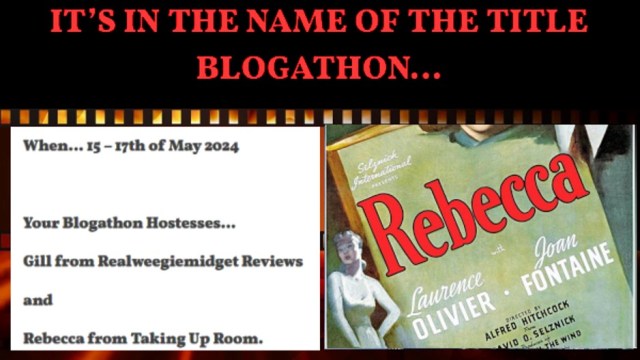
It’s In The Name Of The Title Blogathon banner created by Gill from Realweegiemidget Reviews and Rebecca from Taking Up Room

As I mentioned in this review’s introduction, Roger chose Amadeus as his “personal choice for the best film of 1984”. One reason why is how “this movie doesn’t contain one bit of the pretentious, solemnity that we usually associate with movie biographies of classical musicians”. To add to Roger’s comment, I’d like to point out how the film serves as an immersive, detail-oriented character study of how the music industry can be both rewarding and cruel. When Antonio shares his life story with a visiting priest, he emphasizes how he was the only member of his family who was interested in music. This organic talent and rise to prominence provide an opposite view of how Amadeus claimed his fame. Scenes and dialogue illustrate how Amadeus was raised to be a star, with his father providing both the music education and connections for a comfortable future. While discussing a new opera with the Emperor, Amadeus successfully argues why his opera should be performed. He states how he worked many hours on the project and how the opera’s lack of politics will prevent the audience from being alienated. The examples I provided in this paragraph show how, sometimes, talent isn’t enough when it comes to the music industry. It also highlights the effort that goes into making music, let alone one song.

String of musical notes image created by Freepik at freepik.com. <a href=’https://www.freepik.com/free-vector/pentagram-vector_710290.htm’>Designed by Freepik</a> <a href=”https://www.freepik.com/free-photos-vectors/background”>Background vector created by Freepik</a>. Image found at freepik.com. 

While sharing his thoughts on Amadeus, Roger stated how the film was “a cheerful, rambunctious, irreverent film”.  I disagree with his statement to an extent. There are cheerful moments within the movie. However, I wouldn’t claim the movie itself is “cheerful”. The overall story contains darker, sadder moments as well, especially toward the end of Amadeus’ life. One part of the story revolves around someone masquerading as a deceased loved one Amadeus knows. Due to his grief and unresolved issues, Amadeus truly believes the masquerading imposter is the loved one brought back from the dead. This imposter is so cruel to use Amadeus’ pain for their own personal gain. Another statement of Roger’s I disagree with is about how the movie views Amadeus himself. Roger claims how the film “doesn’t so much concern with the actual details of Mozart’s life as with its own feelings about his genius, his personality”. The movie allows the characters, including Amadeus, to be flawed. But there were a few instances where the story seemed one sided. After a successful opera performance, Antonio’s student is upset because she learned Amadeus was engaged to a woman named Constanze. This leads Antonio to believe Amadeus and the student had a relationship. However, the story never clarifies if Antonio’s belief was true. In fact, Antonio stated he didn’t know how his student and Amadeus met or how long they knew each other. To me, this goes against what a cinematic biography should do; introducing an audience to a historical figure through an unopinionated lens.
Comparing with the Critics banner created by me, Sally Silverscreen. TV show title cards created by WTTW National Productions, WTTW, Public Broadcasting Service (PBS), Lifetime Television, Tribune Entertainment, Buena Vista Television, and Disney-ABC Domestic Television

Before moving on to the next featured film in At The Movies’ ‘Best of 1984’ episode, Once Upon A Time in America, Gene tells Roger “what I love about the film is that it celebrates creativity and that is a subject that most Hollywood movies are simply not concerned with”. As I was about to disagree with Gene by bringing up RKO 281, I remembered that a) RKO 281 was an HBO made-for-TV movie and b) RKO 281 was released in 1999, a decade after Amadeus. But this review is not debating how much creativity is incorporated into Hollywood’s films, especially during the mid-80s. This article is simply an exploration of whether I agree or disagree with Roger and Gene’s thoughts on Amadeus. Earlier in this review, I mentioned how the film was an immersive, detail-oriented character study of how the music industry can be both rewarding and cruel. The movie’s immersion and focus on detail can be seen in the production’s costume and set design. These elements make the entire picture look and feel historically accurate. While Amadeus is a beautiful looking film, it also contains substance. The script provides thought-provoking material, exploring themes like how success can affect someone both positively and negatively. The glamourous and not-so-glamourous sides of the music industry are shown through the stories of both Amadeus and Antonio. Like I previously brought up in this review, Amadeus successfully argued why his opera should be performed. With everything I said, it makes me wonder how much Falco argued in favor of his song, “Rock Me Amadeus”?

This review was brought to you by

Sally Silverscreen

Comparing with the Critics – Worst of 1984 – Harry & Son

This review is from my series, Comparing with the Critics. If you’d like to learn more about the series, click on the link below.

Introducing my new series, Comparing with the Critics!

Toward the end of At The Movies’ ‘Stinkers of 1984’ episode, Gene Siskel and Roger Ebert share a collection of films they felt were some of the worst movies of 1984. One of the films Roger brought up was Harry & Son. In a brief segment about the movie, Roger refers to the picture as a “sincere, but misguided dream”. Roger also calls Harry & Son “a painfully contrived tear-jerker”. Gene responds before the segment ends that “he and Burt Reynolds are two of the worst in ‘84”, likely referring to Paul Newman. I honestly hadn’t heard of this film until I watched this episode of At The Movies. Therefore, I approached the title with little to no expectations. But now that I have seen Harry & Son, I think calling the picture one of the worst of 1984 is, actually, a bit harsh.

Harry & Son poster created by Orion Pictures

While briefly talking about Harry & Son, Roger brings up Robby Benson. But instead of simply referring to Robby by his name, Roger says “Robby “gee Dad, want a diet pop” Benson”, even saying it in a mocking tone. By addressing Robby’s name in this way, Roger gives the impression Robby’s character, Howard “Howie” Keach, is just a stereotypical surfer jock. As I got to know this character while watching Harry & Son, I discovered this assumption was far from the truth. Throughout the story, Howie always has his heart in the right place. More often than not, he brings a burst of positivity, choosing to look at the glass half full. In a scene where Howie and his father, Harry, are on their porch, Harry orders his son to find a job, a bitter tone in his voice due to his frustrations over his declining health. In a positive, yet matter-of-fact way, Howie informs his dad how he already has a job washing cars. Another scene shows Howie coming home, excited to see his dad arrive so early from work. A big smile is spread across his face and his eyes shine bright with joy. But as he learns his dad has just lost his job, Howie’s face changes to display confusion and fear. This change in persona is seamless, never missing an emotional beat. Moments like this one were made possible by Robby’s acting abilities, showcasing a wide range of emotions and expressions. In my opinion, I think Robby should have, at least, been nominated for his performance in Harry & Son.

It’s In The Name Of The Title Blogathon banner created by Gill from Realweegiemidget Reviews and Rebecca from Taking Up Room

As I just mentioned in the previous paragraph, Harry is frustrated over his declining health. After an incident at a construction site, Harry is forced to be honest about his poor eyesight. One scene has Harry talking with one of his co-workers about his health issues, raising concerns over how these issues will affect his employment. In the 21st century, specifically the 2020s, there has been a risen awareness for men to address their medical issues. So, for Harry to talk to a peer about his health in a movie from the ‘80s is kind of ahead of its time. Later in the story, Howie learns his friend doesn’t have health insurance. When he takes his friend to the hospital, Howie is frustrated by the rejection his friend faces due to the hospital’s policies. The importance of health insurance is another medical topic that has gained attention in the 21st century, including the 2020s. Similar to what I said about Harry’s honesty about his health, I appreciate these brief, yet necessary moments to bring up these serious health subjects, especially in a time when they weren’t found in common societal conversations yet.

Since Harry & Son takes place in Florida, I thought this picture of a Florida shaped pool would make sense for this review. Screenshot taken by me, Sally Silverscreen. Image originally found at https://www.youtube.com/watch?v=tiBkULOrf7Y.

In the introduction of my review, I quoted Roger Ebert’s statements about Harry & Son, with Roger saying the film was a “sincere, but misguided dream” and “a painfully contrived tear-jerker”. I will agree with Roger about the movie being sincere. There were some sweet moments that were written, acted, and directed with a strong amount of sincerity. One example is when Howie goes to a high-end clothing store to purchase a suit jacket. When I first saw that scene, I honestly thought Howie had bought the jacket for himself, showing his dad how he can afford nicer attire. So, imagine my shock when Howie gave the jacket to his dad as a birthday present.

Where Roger and I disagree is how the movie is a “misguided dream” and a “painfully contrived tear-jerker”. I will admit Harry & Son has its flaws, such as scenes ending too quickly and emphasizing showing without telling. But I wouldn’t go so far as to say the movie is “misguided” or “painfully contrived”. With scenes ending too quickly, it felt like the characters were expected to say more. When Nina (Harry’s daughter and Howie’s sister) is talking with a client at a hair salon, I thought Nina was going to respond to the client’s story about their estranged father. But the moment is quickly forgotten as the story moves on. As Howie is reconnecting with Katie, an ex-girlfriend, their conversation is one of the most cryptic pieces of dialogue I’ve ever heard in a movie. While I could see these characters still cared for one another, by observing their expressions and displayed emotions, it took me a few minutes to figure out what Katie and Howie were saying to each other. This is just one example of showing without telling.

Comparing with the Critics banner created by me, Sally Silverscreen. TV show title cards created by WTTW National Productions, WTTW, Public Broadcasting Service (PBS), Lifetime Television, Tribune Entertainment, Buena Vista Television, and Disney-ABC Domestic Television

Gene added his thought on Harry & Son, stating “he and Burt Reynolds are two of the worst in ‘84”, as he possibly referred to Paul Newman. Since I haven’t seen many of Paul’s or Burt’s films, I can’t agree or disagree with Gene’s statement. But what I can do is share my overall thoughts on Harry & Son. This is an ok, slice of life story, which, in my opinion, would have worked better as a stage play. My reason is how the cast is smaller and the story seems more condensed. While I liked the acting performances in this film, Robby Benson ended up being the star of the show. If anyone has an interest in watching Harry & Son, I’d recommend the film for Robby’s performance alone. With the flaws I already mentioned, I also felt like there was too much happening in a short amount of time. However, the story itself was easier to understand. Harry & Son will not become one of the best movies I’ve seen this year, so far. But compared to some of the films I’ve, so far, seen, there are far worse titles than Harry & Son.

This review was brought to you by

Sally Silverscreen

Comparing with the Critics – 1984 – Introduction

In the history books of cinema, 1984 is considered one of
the strongest years at the theater. This statement is based on the belief that an
abundance of quality films were released in 1984, with some of these titles
even earning the distinction of being a “classic”. A few of these movies
include, but are not limited to The Karate Kid, Indiana Jones and the
Temple of Doom
, and the highest grossing film of the year, Ghostbusters.
Though 1984 may have been a strong year in cinema, it definitely was not a
perfect year. In December of 1984, movie audiences were introduced to the
infamous “so bad it’s good” picture, Breakin’ 2: Electric Boogaloo. Sylvester
Stallone and Dolly Parton’s feature film, Rhinestone, failed to sparkle.
The movie was so bad, Sylvester earned a Golden Raspberry Award for Worst
Actor. For this edition of Comparing with the Critics, my choice for Best and
Worst of 1984 share one thing in common: each film features a name in the
title. The similarity between these movies is not a coincidence, as I’m
reviewing them for the upcoming event, It’s In The Name of The Title blogathon.
In this event, I’ve selected Harry & Son as the Worst of 1984 and
the Oscar winning movie, Amadeus, as the Best of 1984.

Comparing with the Critics banner created by me, Sally Silverscreen. TV show title cards created by WTTW National Productions, WTTW, Public Broadcasting Service (PBS), Lifetime Television, Tribune Entertainment, Buena Vista Television, and Disney-ABC Domestic Television