Take 3: Alice in the Cities Review + 210 & 215 Follower Thank You

Three weeks ago, 18 Cinema Lane received 210 followers! Because I was in the middle of coordinating my PB & J Double Feature and reviewing films for Pure Entertainment Preservation Society’s Clean Movie Month, I postponed my 210-follower dedication review. During that time, my blog also received 215 followers! This caused me to combine my 210 and 215 follower dedications into one review. Since last March, I’ve had a recording of Alice in the Cities on my DVR. As you can tell by the title of this post, this is the film I have chosen to write about. Every so often, I try to watch and/or review a movie that was created outside of North America. Most of these films have come from Europe. Prior to watching Alice in the Cities, the only German film I’ve written about on 18 Cinema Lane was Nosferatu. What’s interesting is how, like the 1922 movie, Alice in the Cities was restored as a result of two different versions of the project. According to a message at the beginning of the film, the movie was filmed in two separate millimeters.

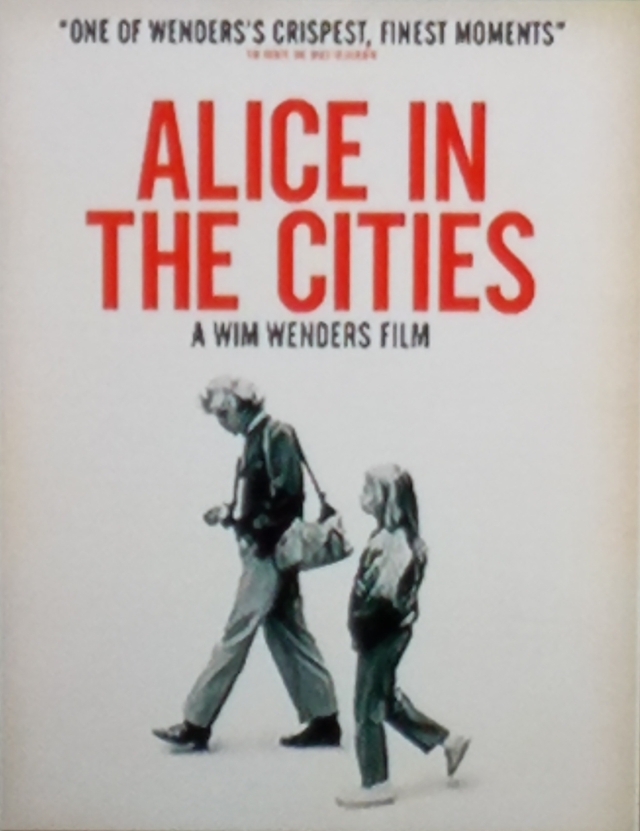
This is a screenshot of the poster I took with my phone that happened to be featured on my television. Screenshot taken by me, Sally Silverscreen.

Things I liked about the film:

The acting: According to an article from Turner Classic Movies’ (TCM’s) website, Wim Wenders, the director of Alice in the Cities, was inspired to create this film after watching Rüdiger Vogler and Yella Rottländer perform together in a previous project. Having these two actors reunite for Alice in the Cities was a smart decision! I liked Rüdiger’s portrayal of Philip because it was consistent. Not only that, but he had a coolness about him as his character moved from one scene to the next. No matter what scenario was thrown in his path, Philip was calm and collected. This made Rüdiger’s performance appear effortless! Something that I noticed while watching Yella’s performance was how believable it was. Whether she was questioning Philip’s “scribbles” or asking for food, Yella’s body language, facial expressions, and overall demeanor appeared as one would expect from a child in Alice’s particular situation. It also helps that Yella worked with Wim and Rüdiger prior to this movie. Because of this, Yella appeared comfortable in the role she was given!

The cinematography: Alice in the Cities is filmed in black-and-white. This was done not only because of a personal decision by the director, but also to avoid having Alice in the Cities be compared to Paper Moon, a movie that was released a year before Wim’s project. When film fans think about black-and-white movies, productions that were released before 1965 will likely come to mind. However, it’s important to remember those titles were presented in black-and-white because filming in color was rarely an option. With Alice in the Cities, its presentation was purposefully chosen, which proved to be more interesting than I would have expected. It caused the story to be frozen in time, allowing the narrative to serve as a time-capsule. Having a few characters appear on screen at a given moment makes each interaction feel intimate, like the audience is directly a part of these verbal exchanges. I also liked how some scenes looked like the view came straight from Philip’s perspective. One great example is when Philip is boarding a train in Amsterdam.

Philip and Alice’s interactions: The majority of this story revolves around Philip’s search for Alice’s grandmother, which results in Philip and Alice spending a significant amount of time together. As I mentioned before, Rüdiger and Yella had worked together in a previous film. This helped their interactions come across as realistic. In the aforementioned TCM article, one of Wim’s inspirations for Alice in the Cities was his friend, who happened to be a single parent. This explains why Philip and Alice’s interactions feel like they are between father and daughter. Because of the quality of their acting abilities, Rüdiger and Yella were able to bring this idea to life in their performance! They were also able to equally carry the film.

Map of Germany image created by Macrovector at freepik.com. Background vector created by macrovector – www.freepik.com. Image found at freepik.com.

What I didn’t like the film:

Scenes feeling like padding: There were some scenes in Alice in the Cities that ended up feeling like padding. One example is when Philip and Alice go to an ice cream shop. Within this scene, a shorter scene of a child eating their ice cream next to a juke box is included. This scene didn’t serve the overall story and felt like it was there just to be there. Personally, I think scenes like the shorter one I mentioned should have been cut from the film.

The run-time: IMDB lists Alice in the Cities with a run-time of one hour and fifty minutes. To me, this caused the movie to feel a bit too long. Like I previously stated, there were scenes in this film that felt like padding. Their purpose seemed to be that of satisfying this run-time. The story itself was also straight-forward. These two factors made me believe that, at least, ten minutes of this movie could have been shaved off.

An inconsistent exploration of Philip’s beliefs: At certain points in Alice in the Cities, Philip expresses his beliefs about topics like his dislike toward television and why he takes photos. Philip presents an interesting way of looking at things that most people wouldn’t think twice about. Unfortunately, these beliefs were not explored to a satisfying extent. As the story places a primary emphasis on Philip’s search for Alice’s grandmother, this exploration gets lost in the shuffle. It also creates an inconsistent inclusion of this part of the story.

New York City skyline with letters image created by Freepik at freepik.com. <a href=’https://www.freepik.com/free-vector/new-york-skyline-typographic-silhouette_719554.htm’>Designed by Freepik</a>. <a href=”https://www.freepik.com/free-photos-vectors/background”>Background vector created by Freepik</a>. Image found at freepik.com.

My overall impression:

Turner Classic Movies (TCM) features an interesting article about Wim Wenders and the creation of Alice in the Cities. After reading about Wim’s personal struggles as a filmmaker and after learning about this film’s restoration efforts, it makes me glad that Alice in the Cities was able to see the light of day! Movies involving road trips usually don’t interest me. But because of Rüdiger Vogler and Yella Rottländer’s performance, I found myself invested in the journey of their characters! Creative cinematography and addressing Philip’s beliefs also help make this film likable and well-made. Even though Alice in the Cities is a fine film, there were things about it that prevented the overall project from being better. The main plot didn’t allow Philip’s beliefs to be explored to their fullest extent. It also doesn’t help that some scenes felt like padding. However, I’m thankful to have been given the opportunity to share this film with my followers! Thank you for helping 18 Cinema Lane reach these milestones! This blog would not be the same without you!

Overall score: 7.4 out of 10

Have you seen any movies created outside your home country? If so, what was your movie-viewing experience? Share your thoughts in the comment section below!

Have fun at the movies!

Sally Silverscreen

Here’s a link to the article from Turner Classic Movies that I mentioned in my review:

http://www.tcm.com/this-month/article/719889%7C0/Alice-in-the-Cities.html

Take 3: Audrey Rose Review

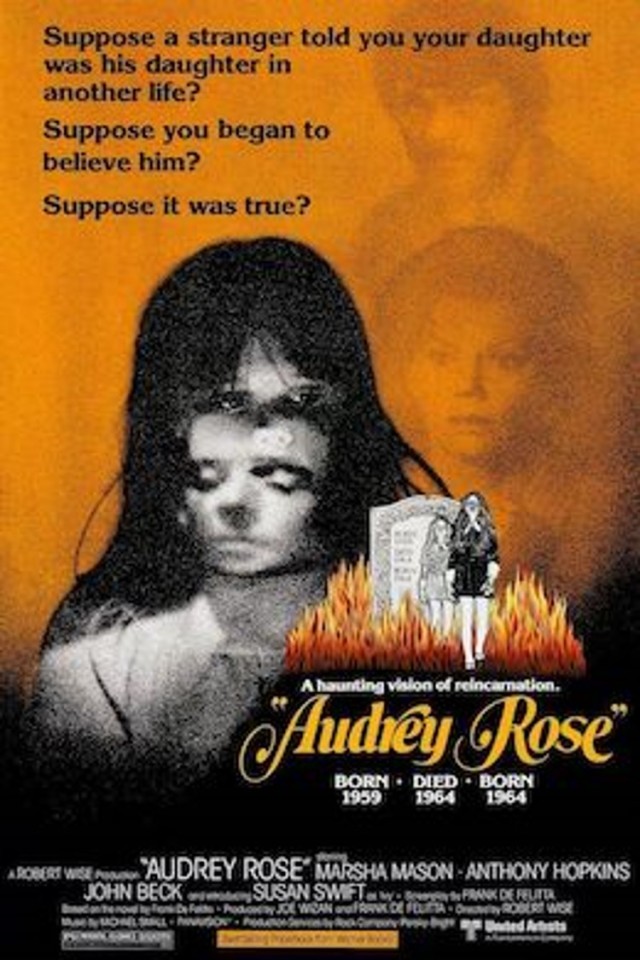
For June’s Genre Grandeur, the chosen theme is “New York Films of the 70’s”. After searching through a list on Wikipedia, I selected Audrey Rose as my submission! This is a film I have heard about in passing, but have never seen. What caught my attention is how the movie was classified as a horror film. I don’t always review movies in this genre, as a portion of them are too dark for my liking. However, I do try to go out of my comfort zone every so often. The synopsis also intrigued me, as I wondered where the story would go. Mysteries are a staple on this blog, so I was looking forward to helping the characters solve the case. Is Audrey Rose worthy of being included in Genre Grandeur? Keep reading my review so you can solve the mystery too!

Audrey Rose poster created by Sterobcar Productions and United Artists. Image found at en.wikipedia.org/wiki/File:Audrey_Rose_movie_poster.jpg

Things I liked about the film:

The acting: One of Anthony Hopkins’ most iconic roles is Hannibal Lector in Silence of the Lambs. Through his performance, he brought to life a character that was eerie and unsettling. In Audrey Rose, Anthony’s portrayal of Elliot Hoover was also unsettling, but for different reasons. During the events of the film, Elliot seemed to have power over the situation. This is because he had the answers Ivy’s parents were desperately looking for. Unlike Hannibal, Elliot was never meant to come across as scary. Anthony’s facial expressions, body language, and the way his character interacted with others supports this claim. When it comes to stories focusing on young characters, it’s important for a creative team to cast a young actor or actress who can carry a character’s emotional weight. Despite appearing in the film for a limited amount of time, Susan Swift impressed me with her portrayal of Ivy Templeton! It was heartbreaking to watch Ivy experience one of her nightmarish episodes, as Susan’s performance was that believable. However, that level of emotionality added to the captivation of this character.

The Templeton family’s apartment: I’ve seen a variety of apartments in television and film. But the Templeton family’s apartment in Audrey Rose is one of the best! An aspect that immediately caught my eye was the grand, wood staircase. This design feature is usually found in on-screen homes from the suburbs or wealthier neighborhoods. So, seeing this staircase in an apartment was unique. Speaking of woodwork, the fireplace in the living room was adorned with fine detailing. It shows how the apartment’s woodwork can compliment the space’s interior design. The showstopper of this living environment was the paintings on the ceiling! Exquisite is the word I would use to describe the art itself. I would be willing to guess that pictures and videos would not do it justice. Whoever created the apartment’s interior design should be commended for their work!

Elemental consistency: Throughout this movie, there were two elements that had a consistent presence. When Elliot first enters the Templeton family’s lives, the weather is very rainy. This is also the case when Ivy is experiencing nightmarish episodes. The incorporation of rain reminded me of The Crow, as this element served as symbolism in Audrey Rose. Not only did rain highlight sadness, it also showed how some situations should run their course. Fire is the other element that was consistently featured in the story. This was present during a tragic event and it emphasized how ignoring some situations only allows them to manifest. These elements created visual interest as well provide depth to the narrative.

New York City skyline with letters image created by Freepik at freepik.com. <a href=’https://www.freepik.com/free-vector/new-york-skyline-typographic-silhouette_719554.htm’>Designed by Freepik</a>. <a href=”https://www.freepik.com/free-photos-vectors/background”>Background vector created by Freepik</a>. Image found at freepik.com.

What I didn’t like about the film:

Not a horror film: On Wikipedia and IMDB, Audrey Rose is classified as a “horror” film. Even the film’s poster gives the impression that someone is coming back from the dead, which is a classic horror movie concept. However, this couldn’t be farther from the truth. Two traits that have defined the horror genre are stories where characters get away from or get rid of something bad. None of these traits are found in Audrey Rose. The primary focus of this movie surrounded the idea of reincarnation. This idea is presented in a positive way, as a course that needs to run on its own term. While horrifying things happen to Ivy, in the form of nightmarish episodes, it was caused by fearing the unknown. Even though this aspect can be found in horror films, it can also be found in other genres. Audrey Rose is a film that I, personally, did not find scary.

A drawn-out story: Like I already said, the story of Audrey Rose revolves around the idea of reincarnation. While this provides the overall narrative with an interesting debate, the majority of the story focuses on whether reincarnation is legitimate. A solution to the Templeton family’s problem wasn’t found until the last thirty minutes of the film. This drawn-out story was the result of an almost two-hour run-time. Had about twenty or thirty minutes been shaved off of this production, the story would have gotten straight to the point sooner.

Scenes that felt like padding: Because Audrey Rose has a run-time of an hour and fifty-three minutes, there were a few scenes that felt like padding. One example is when Ivy is trying to talk to Audrey Rose through a mirror. This scene didn’t have a strong need to exist within the story. It also didn’t fit the overall flow of the film. If anything, this particular scene felt like a weak attempt at making the movie feel like it belonged in the horror genre.

Rose illustration image created by Freepik at freepik.com. <a href=”https://www.freepik.com/free-photos-vectors/background”>Background vector created by freepik – http://www.freepik.com</a>. Image found at freepik.com.

My overall impression:

Horror movies are not often found on 18 Cinema Lane. This is the reason why I chose Audrey Rose for June’s Genre Grandeur, as I try to explore various genres. Unfortunately, this was not the horror film I expected it to be. The project itself was interesting, exploring a topic in the form of a debate. But classifying it in a genre where it doesn’t belong is misleading. I can describe Audrey Rose in two ways. The first is a medical/spiritual mystery, similar to Lorenzo’s Oil. The second is a debate presented in the form of a movie, like Hallmark Hall of Fame’s Sweet Nothing in My Ear. The idea behind this film makes it worth watching. However, don’t go into this movie expecting a story with spooky atmospheres and sinister tones.

Overall score: 7 out of 10

Have you seen any ’70s films set in New York? Which movies do you think are incorrectly classified? Please tell me in the comment section!

Have fun at the movies!

Sally Silverscreen