Take 3: Dial M for Murder Review

For this movie review, I chose to write about the 1954 film, Dial M for Murder, for two reasons. The first is how I selected this specific title for The 6th Wonderful Grace Kelly Blogathon, as Grace Kelly stars in the film. The second reason is how, prior to this review, I had never seen Dial M for Murder. Grace and Alfred are no strangers to 18 Cinema Lane. As of mid-November, 2024, I have reviewed two of Grace’s films; High Society (which I thought was fine) and To Catch a Thief (which I found just ok). Meanwhile, four of Alfred Hitchcock’s movies have been covered on my blog. Out of those titles, Strangers on a Train is, in my opinion, still the best one. But how does Dial M for Murder compare to any of Alfred’s films featured on 18 Cinema Lane? Find out by reading my review!

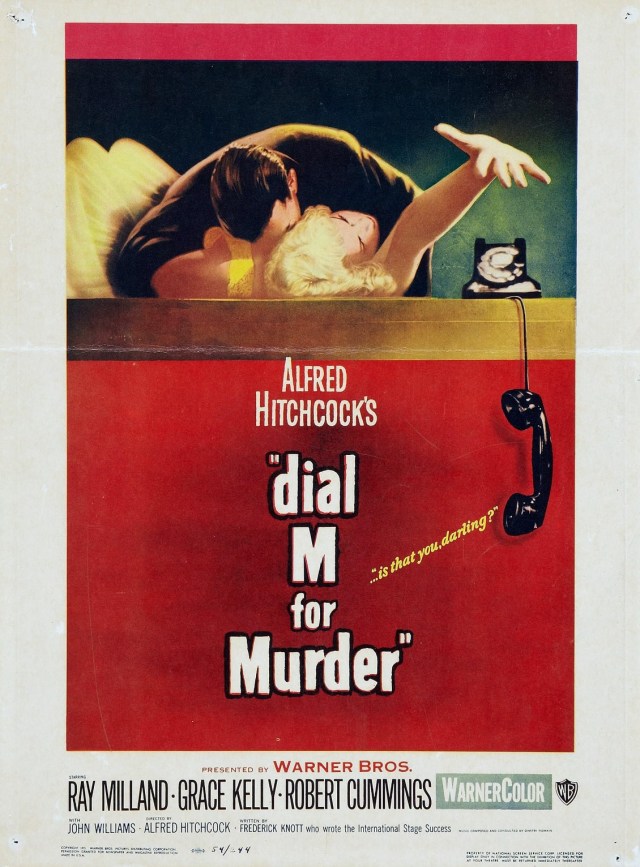
Dial M for Murder poster created by Warner Bros.

Things I liked about the film:

The acting: Since Grace Kelly is the reason why I chose to review Dial M for Murder, I will talk about her performance first. Out of her movies I’ve seen, I’ve noticed how her character portrayals have appeared at ease. Her performance in Dial M for Murder is no different, as her adopted mannerisms and reactions came across as realistic! While sharing a conversation with Mark (portrayed by Robert Cummings), Grace’s character, Margot, seems comfortable in his presence. She effortlessly moves around her apartment and, at times, stands close to him. But when she talks with Mark about how her husband, Tony, has changed, Margot appears to stare into the distance. The combination of her aforementioned stare and frown indicates how Tony’s behavior has troubled her. It also shows the audience how effective Grace’s acting talents are!

As I just said in this review, Robert Cummings portrays Mark, a close friend of Margot. Though they shared only a few scenes together, Grace and Robert displayed nice on-screen chemistry! The strength of Robert’s and Grace’s acting abilities helped their characters appear to truly get along with each other. While I liked Robert’s performance in Dial M for Murder, I was also impressed with Ray Milland’s performance! Similar to Grace’s portrayal of Margot, Ray’s portrayal of Tony showcases how adaptable his acting skills are. For example, Tony looks annoyed while at a restaurant with Mark. From the tone in his voice to constantly checking his watch, Tony clearly appears impatient. A few scenes later, as he’s on the phone with Margot, his demeanor quickly changes to concern due to what he hears over the phone. Throughout his performance, Ray effortlessly brought his character to life!

The use of lighting: Over the course of his career, Alfred Hitchcock has received the title of “Master of Suspense”. One reason why he was given this title is because of how he utilizes lighting to stir up a mood, present visually interesting concepts, or add suspense. In one scene, someone enters Margot and Tony’s apartment. This moment takes place at night, so the only light comes from the fireplace in the living room. An orange glow only providing light to certain areas of the room creates a suspenseful environment, giving the intruder places to hide. I brought up earlier in this review how Mark and Margot shared a conversation. Their conversation takes place in Tony and Margot’s apartment. Right before Tony returns home, Margot’s and Mark’s shadow departs from each other, keeping the closeness of their relationship a secret.

The use of color: Dial M for Murder’s opening credits reveal how the film’s creative team used “WarnerColor” in their project. I’m glad this movie was presented in color because it gave the creative team opportunities to utilize this visual technique to their advantage! Sometimes, the color red was incorporated into a character’s wardrobe. This ranged from Margot wearing a red dress at the beginning of the movie to Tony sporting deep red suspenders. One of the pieces of décor in Margot and Tony’s apartment were dark green curtains. In these examples, color was chosen to draw the audience’s attention to a person, object, or location in the room.

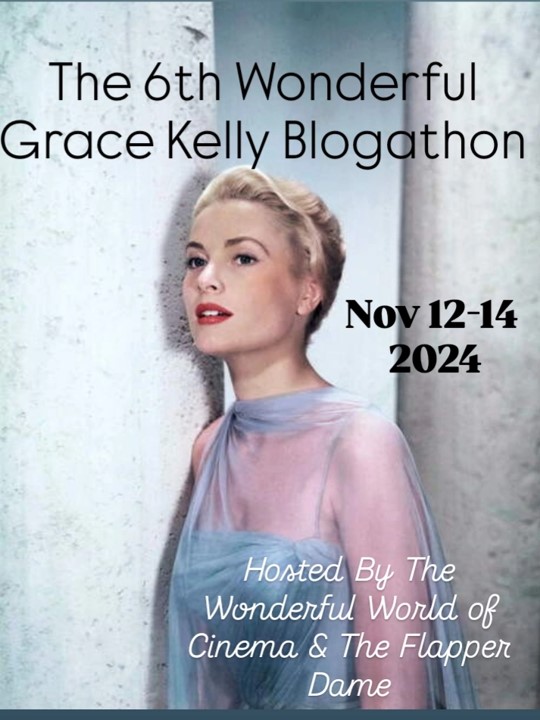
The 6th Wonderful Grace Kelly Blogathon banner created by Virginie from The Wonderful World of Cinema and Emily from The Flapper Dame

What I didn’t like about the film:

Exposition heavy: At the beginning of the movie, Margot shares with Mark how she recently lost her purse. She also tells him when her purse was returned, a letter Mark wrote her was missing. But shortly after Margot made this confession, an exposition heavy scene revealed the letter’s whereabouts, as well as who the story’s perpetrator was. Because this information was revealed so early in the movie, it took away a lot of the story’s suspense. So much exposition given within the film’s first ten minutes may also overwhelm the audience, possibly missing important information if they don’t actively pay attention to the dialogue.

A mystery that isn’t interactive: While talking about Dial M for Murder’s exposition heavy story, I said the perpetrator was revealed so early in the movie. This creative choice takes away the audience’s opportunity to solve the mystery of whodunit alongside the characters. What Dial M for Murder became was a story of how the perpetrator would get caught, similar to programs like Columbo and Diagnosis Murder. That creative decision forces the audience to simply watch the characters solve the story’s mystery. With everything I said, the mystery in Dial M for Murder wasn’t interactive.

A less intimidating antagonist: In some of Alfred Hitchcock’s movies, the antagonist is an intimidating person for a variety of reasons. Their intimidation can add suspense and intensity to a given film’s story. I will not spoil Dial M for Murder. However, I can honestly say I did not find the movie’s antagonist intimidating. Throughout the story, the antagonist kept making dumb decisions, which distracted from their attempts to be an intimidating character. It also didn’t help how the exposition heaviness of the film’s first ten minutes took away a lot of the story’s suspense. If anything, the antagonist in Dial M for Murder was annoying.

Colorful image of key created by orchidart at freepik.com. Flower vector created by orchidart – www.freepik.com

My overall impression:

As of the publication of this review, I have seen eight of Alfred Hitchcock’s films. While I was disappointed by The 39 Steps, I ended up liking Strangers on a Train. When it comes to Dial M for Murder, though, the movie lies somewhere in the middle. Grace Kelly’s performance was, once again, one of the best parts of the production! Her portrayal of Margot was so strong, her reactions and expressions appeared realistic! The use of lighting and color gave Alfred and his creative team ways to present visually creative ideas. But what held Dial M for Murder back from being a more intriguing project is how the first ten minutes of the story was exposition heavy, with this decision impacting the film’s suspense. The mystery not being interactive also takes away some of Dial M for Murder’s intrigue. Alfred’s film felt reminiscent of shows like Columbo and Diagnosis Murder, where the audience simply waits for the perpetrator to get caught. Personally, I prefer mystery stories where I’m left guessing whodunit.

Overall score: 6-6.1 out of 10

Have you seen Dial M for Murder? Which movie of Alfred Hitchcock’s would you like to see me review next? Tell me in the comment section!

Have fun at the movies!

Sally Silverscreen
The Top 10 Worst Movies I Saw in 2023

I’m going to be honest with my readers; in 2023, I saw more movies I disliked than liked. Luckily, I saw enough films to create a top ten best movies of the year list! When it comes to the movies I disliked, the majority of these titles were disappointing or average. This is different to my list of the worst movies of 2022. What’s also different about this year’s list is how my top three worst films are not all Hallmark projects. Like I have said in past lists, my top ten worst movies I saw in 2023 list is not intended to be mean-spirited, negative, or disrespectful. It’s just a list of my own, honest opinion. Since I reviewed some of the movies on my list, I will provide the links to those reviews in this article.

Dishonorable Mentions

Family History Mysteries: Buried Past, Sea Change, Murder 101: College Can Be Murder, Murder 101: The Locked Room Mystery, She Inherited Danger, My Diary of Lies, Double Nickels, A Zest for Death: A Hannah Swensen Mystery, Blackbeard, the Pirate, Christmas at Castle Hart, Shadow Island Mysteries: Wedding for One, and A Hidden Life (I turned this movie off after 42 minutes)

Image by starline on Freepik

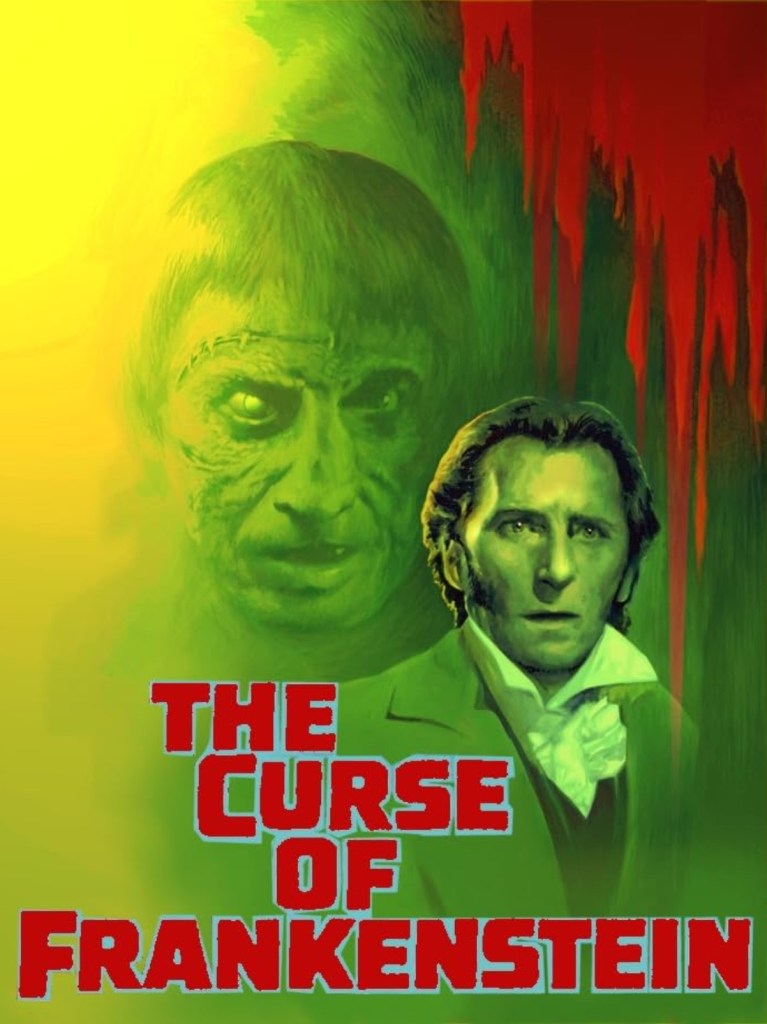
10. The Curse of Frankenstein

After I watched and reviewed Frankenweenie, I was hoping the creative team of The Curse of Frankenstein would follow Mary Shelley’s source material closer than the Disney animated film did. Instead of doing that, they relied more on creative liberties. As I said in my review of The Curse of Frankenstein, I found this distracting, especially since I read the book prior to watching the film. Some of these creative liberties were adopted just for the sake of it. One of them was presenting Victor Frankenstein’s creature as a bumbling, destructive machine. This creative decision was a disservice not only to Mary Shelley’s work, but also to Christopher Lee, the actor who portrayed Frankenstein’s creature.

Take 3: The Curse of Frankenstein Review

9. The Last Child

I selected The Last Child for the Futurethon blogathon because of the film’s creative presentation; a futuristic story surrounded in a “contemporary” aesthetic. Unfortunately, the creativity of the 1971 made-for-TV movie didn’t reach beyond the surface. Despite the concern of population control within the story, there was little sense of urgency. That caused the movie to have too many low-stakes. It also didn’t help how the future in The Last Child wasn’t explained. This is another television film from the ‘70s that failed to impress.

Take 3: The Last Child Review

8. A Walk in the Spring Rain

Out of all the movies I saw and reviewed this year, A Walk in the Spring Rain is the most flavorless film. Even though this is a movie where the audience waits for the inevitable to happen, the meandering nature of the script forces viewers to focus on drawn-out subplots, such as the protagonists’ daughter, Ellen, thinking about law school. What adds to the film’s meandering nature are stretched out scenes, making A Walk in the Spring Rain feel longer than necessary. Like I said in my review of the 1970 production, every beloved film star has at least one project on their IMDB filmography that is lesser known. For Ingrid Bergman, A Walk in the Spring Rain is one of her more forgettable films.

Take 3: A Walk in the Spring Rain Review

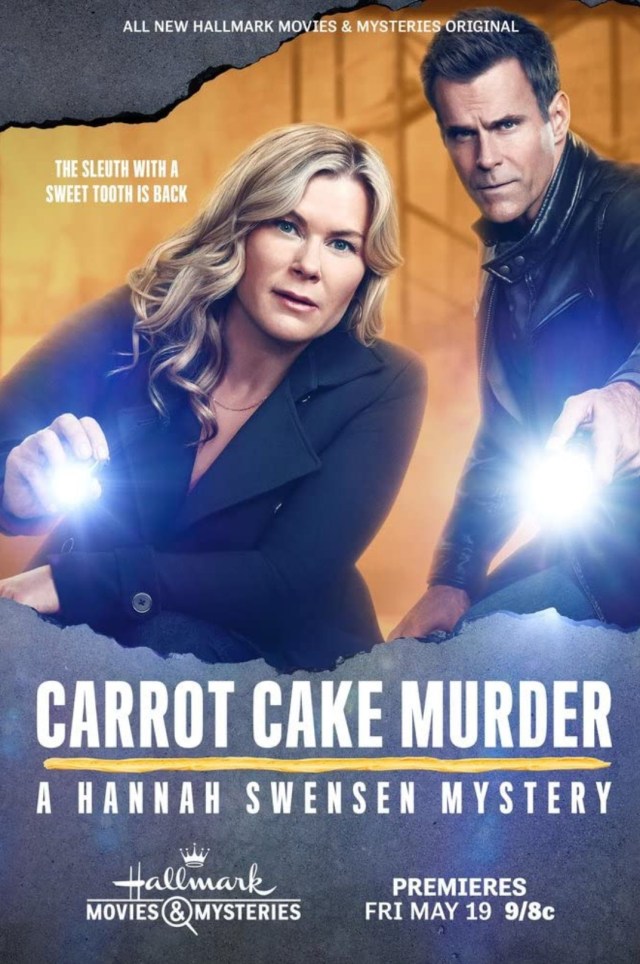
7. Carrot Cake Murder: A Hannah Swensen Mystery

In 2023, Hallmark Movies & Mysteries released two new chapters in the Murder She Baked/Hannah Swensen series: Carrot Cake Murder: A Hannah Swensen Mystery and A Zest for Death: A Hannah Swensen Mystery. While I found both entries disappointing, Carrot Cake Murder: A Hannah Swensen Mystery was the most disappointing movie out of the two. Other than solving a mystery, this story didn’t progress the series forward. Something happens in Mike and Hannah’s relationship that is resolved in A Zest for Death: A Hannah Swensen Mystery. This made Carrot Cake Murder: A Hannah Swensen Mystery an even more pointless chapter in the series. If you’ve never watched the Murder She Baked/Hannah Swensen series, skip this film, as you wouldn’t be missing much.

Take 3: Carrot Cake Murder: A Hannah Swensen Mystery Review

6. Silent Night, Fatal Night

Silent Night, Fatal Night is a Lifetime movie that is basically a gender-swapped, Christmas version of Misery, with a bit of a twist. Unlike the 1990 film, almost every character in Silent Night, Fatal Night makes one dumb decision after another. While the antagonist in the Lifetime film was unsettling, he was more annoying. Plus, I found it difficult to believe the protagonist, a mystery author, wouldn’t have more intuition to save herself. This isn’t the first time Lifetime has told a story similar to Misery. However, I wish the network would create stories that are less reminiscent of other, better movies from the 1990s.

Carrot Cake Murder: A Hannah Swensen Mystery poster created by Lighthouse Pictures, Looking Glass Productions, and Hallmark Movies & Mysteries

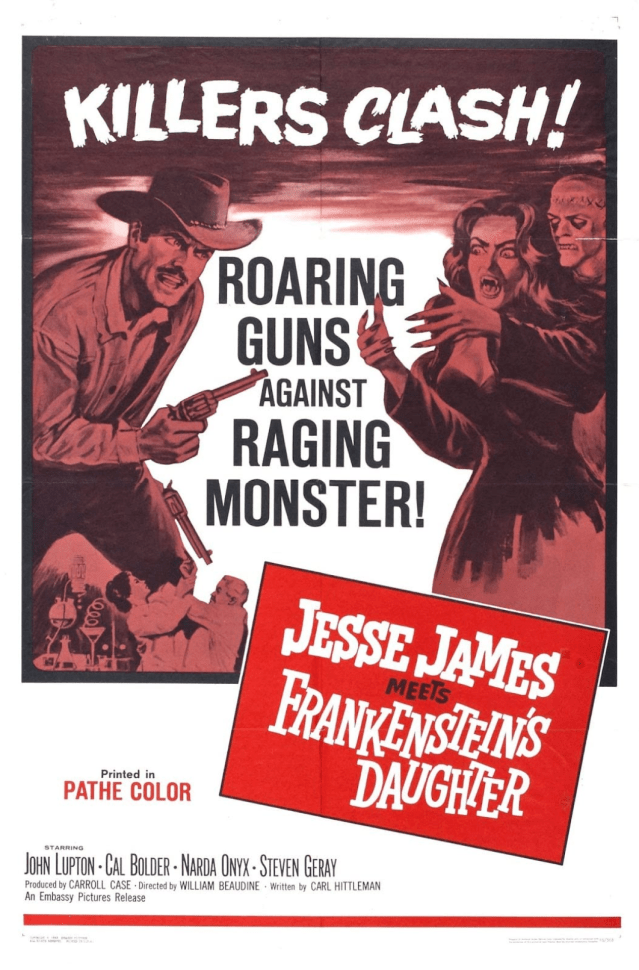
5. Jesse James Meets Frankenstein’s Daughter

Chosen for the Fifth So Bad It’s Good Blogathon, Jesse James Meets Frankenstein’s Daughter was built on a gimmick. Instead of embracing the silliness of that gimmick, the movie’s creative team took their project a little too seriously. Their project was misleading as well, no friendship or romance forming between Jesse and Frankenstein’s granddaughter. Though Jesse James Meets Frankenstein’s Daughter is classified under the western and horror genre, the western genre is emphasized more, preventing a balance between the two genres. The 1966 film is not my “so bad it’s good” movie. Since I did giggle a few times while watching it, I took a step in the right direction to find my “so bad it’s good” film!

Take 3: Jesse James Meets Frankenstein’s Daughter Review

4. Jesse Stone: Night Passage

For me, 2023 was not the year for mysteries, as the top four worst movies on my list are mystery films. The main issue with Jesse Stone: Night Passage is how none of the detectives do any detective work. What they do instead is pull assumptions out of their pockets, with those assumptions being conveniently correct. Subplots were prioritized over the mystery itself. This creative decision caused the story to lack any sense of urgency. It was nice to see familiar faces like Saul Rubinek (who portrayed Artie on Warehouse 13) and Liisa Repo-Martell (who portrayed Maida Flynn on Emily of New Moon). Sadly, there wasn’t much the cast could do to save Jesse Stone: Night Passage.

3. Mount Hideaway Mysteries: Heartache and Homecoming

This movie is so bad, it was, at times, unintentionally funny. Parts of the script reminded me of The Cookie Mobster, with the screenwriters not displaying an understanding for how some things worked. One such example is how Game Boy Color video game consoles were incorporated into the story. The film was riddled with other flaws, such as the color of a character’s earrings changing from scene to scene. Another, more consistent, flaw was telling instead of showing, like other characters mentioning how good looking the male protagonist is every time he appears in a scene. Also, just because the protagonist is a veterinarian does not mean she has to hold an animal every time a scene takes place at the veterinary clinic.

2. The Abigail Mysteries

I have never reviewed or talked about a movie from Great American Family on 18 Cinema Lane. So, it’s a shame that when I do talk about one of their movies, it’s because the project is bad. It is possible to create a good mystery story with elements of faith. But because The Abigail Mysteries heavily prioritized the elements of faith, the mystery was overshadowed, causing the overall story to lack a sense of urgency. From no on-screen chemistry to inconsistent audio quality, The Abigail Mysteries was filled with flaws. There were even times when actors would deliver their lines too quickly, making it difficult to understand what they were saying. I know this is the network’s first attempt at making a mystery movie. But if Great American Family is serious about creating more mystery projects, their efforts need to be better than The Abigail Mysteries.

1. Mystery Island

This is the second year in a row where a newly released Hallmark Movies & Mysteries movie is the worst film I saw. With Hallmark no longer prioritizing the mystery genre, I can’t say I’m that surprised. The poor writing is the biggest problem of Mystery Island. The mystery’s reveal is so ridiculously written, it makes the entire story feel pointless. Emilia Priestly, the film’s protagonist, has a legitimate reason to get involved in the movie’s mystery, as she is a psychiatrist for Scotland Yard. Instead of using her skills to solve the case, Emilia a) flips through books, b) eavesdrops on other characters’ conversations, and c) follows people into the jungle and runs out of that same jungle in wedge sandals. I’d like to think Hallmark will find the motivation to create better mystery productions. But as of late 2023/early 2024, I’m not getting my hopes up.

Jesse James Meets Frankenstein’s Daughter poster created by Circle Productions, Embassy Pictures, and Embassy Home Entertainment

Have fun in 2024.

Sally Silverscreen
Take 3: The Curse of Frankenstein Review

When I was first introduced to the world of Hammer-Amicus films, it was through the Third Hammer-Amicus Blogathon, hosted by Gill and Barry, from Realweegiemidget Reviews and Cinematic Catharsis. For that event, I reviewed the 1972 movie, Vampire Circus, which I thought was just ok. With the return of the aforementioned blogathon, I’ve decided to choose a Hammer-Amicus production that was recommended to me. Back when I wrote about Vampire Circus, Barry, from Cinematic Catharsis, suggested I check out several films, with 1957’s The Curse of Frankenstein being one of them. In my review of Frankenweenie, I mentioned how I haven’t seen many adaptations of Mary Shelley’s Frankenstein. To make up for lost time, I selected The Curse of Frankenstein for the blogging event!

The Curse of Frankenstein poster created by Hammer Films and Warner Bros.

Things I liked about the film:

The use of WarnerColor: When discussing “classic” cinema, there has been a debate over whether a film should remain with black-and-white imagery or if it should receive the Technicolor treatment. In my opinion, I’m glad The Curse of Frankenstein was released in WarnerColor, which I believe was the studio’s version of Technicolor. This creative decision allowed certain elements within scenes to appear vibrant! In Victor’s laboratory, various jars and bottles were scattered throughout the room. Liquid filled these bottles and jars, boasting bright colors like red, blue, even purple. These hues provided a nice contrast to the gray walls of the laboratory. The incorporation of color worked in the favor of the film’s wardrobe department! While working on his experiment, Victor wore a beige three-piece suit. He also wore a maroon neck scarf, which gave his outfit a pop of color. Another character who wore a mostly beige outfit is Elizabeth, whose gown was covered in a silky beige material. Her dress featured a light blue bow and sash, providing the gown with a nice color combination!

Historical accuracy: Mary Shelley’s Frankenstein was published in 1818. Reflecting on The Curse of Frankenstein, it seems like the movie’s creative team kept this fact in mind as the project looked and felt historically accurate! Remember when I mentioned Victor wore a three-piece suit with a maroon neck tie? His friend, Paul, also wore a three-piece suit. Victor even wore a pocket watch, an accessory that he occasionally used. The attire of both Paul and Victor highlighted how men dressed in the 1800s. Home décor is also reflective of when a story takes place. In the upstairs hallway and in the sitting room of Victor’s house, the walls were covered in intricate wallpaper. The wallpaper, which featured elegant patterns, showcases the artistic details that homeowners in the 1800s favored.

The acting: From what I remember of Mary Shelley’s story, Elizabeth’s presence was very limited. Her appearances in the book were so small, readers only became familiar with her. In The Curse of Frankenstein, Elizabeth was given more appearances in the story. This allowed Hazel Court, the actress who portrayed Elizabeth, to present her character as a friendly woman with a likable personality! One scene I liked was when Elizabeth is having a debate with Victor and Professor Bernstein. Professor Bernstein warns Victor about being consumed by science, also reminding Victor of how he should use science for good. Elizabeth adds to the debate by stating it would be better for Victor to go outside and get some fresh air. The way she suggests this to Victor is of kind encourage. A pleasant smile is shown on her face and she is comfortably sitting in an armchair.

In order to bring his experiment to life, Victor recruits the help of his friend, Paul. Because of how often Paul interacts with Victor, Peter Cushing and Robert Urquhart share several scenes together. What Robert’s and Peter’s performance have in common is how effective they utilized emotion! As Victor is conducting his first experiment, bringing a puppy to life, Victor’s face is filled with curiosity. Realizing his experiment was a success, his face slowly transforms into happiness. Victor is so happy, even his eyebrows move. Anytime Paul is upset over Victor’s obsession with his experiment, Robert consistently presents his face with a stern look. His voice also sounds stern, with a hint of anger detected. Based on their performance in The Curse of Frankenstein, I was impressed by Peter and Robert’s acting talents!

The Hammer-Amicus Blogathon IV banner created by Gill from Realweegiemidget Reviews and Barry from Cinematic Catharsis

What I didn’t like about the film:

A prolonged appearance of Frankenstein’s creature: Within Mary Shelley’s novel, a key character is Frankenstein’s creature himself. Through interactions between the creature and Victor Frankenstein, readers are reminded of how some good intentions can lead to bad results, a message that overarches Mary’s story. In The Curse of Frankenstein, however, so much time is spent showing Victor creating the creature to the point where the creature doesn’t become alive until almost fifty minutes into this hour and twenty-three-minute movie. Even when the creature, portrayed by Christopher Lee, appears in the film, he is only on screen for a handful of scenes. He also doesn’t have many interactions with Victor.

Changed context: After watching Oliver! from 1968, I read Charles Dickens’ novel. Comparing the book to the film, I discovered how the creative liberties made to the adaptation changed the context of certain parts of the story. Since I have read Mary Shelley’s novel before seeing The Curse of Frankenstein, I took notice of how the 1957 movie changed the context of certain narrative parts. A great example is Victor’s motivation for creating the creature. Mary Shelley’s book explains how the inspiration for Victor’s experiment came to him at college. Victor was curious about whether he could, from a scientific perspective, create a human being out of nothing. The adaptation shows Victor being encouraged by his tutor to bring people back from the dead, after Victor and his tutor bring a puppy back to life. Looking back on The Curse of Frankenstein, it seems like some of these creative liberties were made just for the sake of it.

Some inconsistent parts of the story: There were some parts of The Curse of Frankenstein that were inconsistent. One example is Victor’s quest to create the creature. When his tutor encourages him to bring people back to life, Victor declares he will set out to create “the perfect man”, using the “hands of an artist” and the “brain of a genius”. Several scenes later, when Victor shows his friend, Paul, his progress, Paul is disgusted by what he sees. Victor states how the looks don’t matter, but how he brought the creature to life at all. But when Paul criticizes Victor for the creature’s lack of intelligence, Victor blames Paul for destroying the creature’s brain. If Victor’s goal was to bring the creature to life at all, why would he be so upset over the creature’s brain? Victor’s motivation for creating the creature should have been consistent like it was in the book.

Scared audience image created by Katemangostar at freepik.com. <a href=’https://www.freepik.com/free-photo/terrified-friends-watching-horror-movie-in-cinema_1027311.htm’>Designed by Freepik</a>. <a href=”https://www.freepik.com/free-photos-vectors/people”>People image created by Katemangostar – Freepik.com</a>. Image found at freepik.com.

My overall impression:

When a book or pre-existing story is being adapted into a form of visual media, there are bound to be creative liberties included in the final product. Sometimes, these creative liberties can improve upon the source material, making the piece of visual media more entertaining. But there are times when creative liberties are incorporated just for the sake of it. When I chose to review The Curse of Frankenstein, I was hoping the creative team behind the 1957 film would display a stronger understanding for Mary Shelley’s story, especially after seeing Frankenweenie. Instead, the film’s creative team relied so much on creative liberties, I found it distracting. What also didn’t help was prolonging the appearance of Frankenstein’s creature. Based on the movie’s appearance, it looks like the creative team cared about how their project was presented. I not only liked the acting performances, I also appreciate the project’s historical accuracy and the use of WarnerColor. But, unfortunately, The Curse of Frankenstein is another movie that emphasizes style over substance.

Overall score: 5.1 out of 10

Have you seen The Curse of Frankenstein? Would you like to see me review more films from Peter Cushing’s or Christopher Lee’s filmography? Please tell me in the comment section!

Have fun at the movies!

Sally Silverscreen
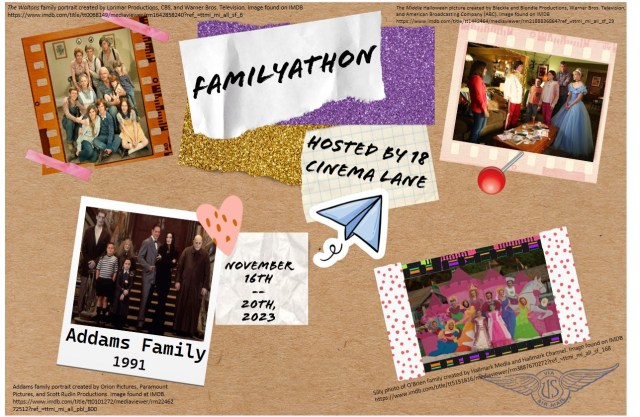
It’s Finally Here; the Familyathon Blogathon!

Welcome to the Familyathon Blogathon! With Thanksgiving on the horizon and the Christmas/holiday season on the way, the theme of family is recognized and celebrated! Even outside of special occasions, family has been a popular topic in entertainment media for decades. From these on-screen families, familiar faces and beloved characters have won over the hearts of fans. Their stories have served valuable lessons and even stood the test of time. Every entry in this event showcases how the subject of family has been incorporated into movies and television! From the underrated tv films to silver screen classics, let the blogathon begin!

Familyathon blogathon banner created by Sally Silverscreen of 18 Cinema Lane
Realweegiemidget Reviews — LISTS…Films Made With Their Own Kind of Family

The Midnite Drive-In — The Family That Slays Together Stays Together

Poppity Talks Classic Film — ‘Sabrina’ (1954): It’s All in the Family

Taking Up Room — Andy Hardy in the Big City

18 Cinema Lane — Take 3: …and Your Name Is Jonah (1979) Review

The Maidens of Green Gables — this is family ❤ (Katherine), Five of My Favorite Families (Grace)

Top 10 Films — The Bonds Of Family In “Running On Empty”

Silver Screenings — Old Yeller: Making the Tough Choices in Life

Hamlette’s Soliloquy — Hamlette’s Soliloquy: “Mr. Mom” (1983)

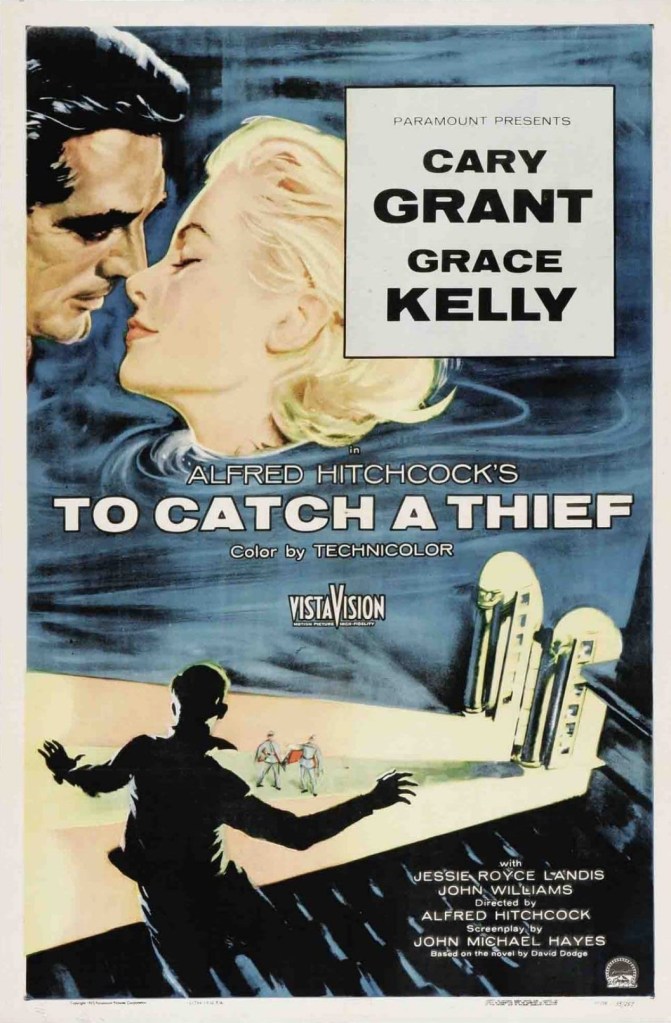
Take 3: To Catch a Thief Review

For The Master Of Suspense Blogathon, I was originally going to review the 1958 classic, Vertigo. I selected this film because it had been recommended by one of my readers. Unfortunately, my plans fell through at the last minute. So, I had to quickly choose an alternative. As I looked back at the blogathon’s participant list, I discovered the 1955 film, To Catch a Thief, hadn’t been selected. That is the film I am now reviewing for The Master of Suspense Blogathon. I have seen some of Alfred Hitchcock’s movies before this event. From what I know of To Catch a Thief, the 1955 production is different from other titles such as Psycho and Rear Window. But will this difference impact the quality of the film? Keep reading my review in order to solve this mystery!

To Catch a Thief poster created by Paramount Pictures

Things I liked about the film:

The acting: In To Catch a Thief, Cary Grant portrayed John Robie, a former jewel thief looking to clear his name. A man of suave charisma, John was afraid of being accused of something he didn’t do. But he never lets this fear get to him. Instead, with the talents of Cary Grant, John was confident and intelligent. Grace Kelly was also cast in To Catch a Thief, portraying Frances Stevens. Frances carried herself with dignified confidence. However, this confidence did not come across as snobbish or arrogant. It added to Frances’ likability, along with her gentle demeanor and respectful elegance. Danielle Foussard is a friend of John’s. Portrayed by Brigitte Auber, Danielle had a spunky streak in her, adding liveliness to her and John’s interactions. A scene I really liked was when John, Frances, and Danielle are swimming in the ocean together. This scene perfectly showcased their personalities, as their banter bounced among each other like a soaring beach ball. What made that scene great to watch was the joining of the acting talents of Cary Grant, Grace Kelly, and Brigitte Auber!

The scenery: Most of the car chases in To Catch a Thief are captured in long, establishing shots. This is very different from car chases in other films, where the chases are shown in medium or close up shots. To Catch a Thief’s approach to car chases emphasizes the scenery surrounding these chases. Looking back on this film’s scenery, I can understand why To Catch a Thief’s creative team would make that decision. With the majority of the production filmed in France, the story shows pieces of the French countryside and seaside. Giant green mountains and deep blue waters present an isolated oasis. A smattering of orange roofed houses perched on these mountains add to the movie’s vibrant color palette. On the French seaside, bright yellow sands welcome the deep blue waters of the ocean. Most of the story’s exterior shots feature a blue sky with a handful of clouds. Even the flowers are appealing bursts of color, boasting shades of red, pink, and even purple. To Catch a Thief is a pretty looking movie and it knows it!

The dialogue: During discussions of Alfred Hitchcock’s movies, use of music, cinematography, and lighting are typically talked about by fans and film enthusiasts. But one area of film-making I feel is overlooked, specifically when it comes to Alfred’s work, is the dialogue. This element of story-telling was a pleasant surprise in To Catch a Thief! It not only suited the characters respectively, it also sounded like the screenwriters put a lot of thought into what the characters told each other. While driving through the French countryside, John and Frances are discussing Frances’ past. As the discussion carries on, John accuses Frances of looking for a husband on her trip. But Frances responds by saying, “The man I want doesn’t have a price”. This statement represented the respectful elegance Grace consistently carried throughout the film. It also hinted at foreshadowing.

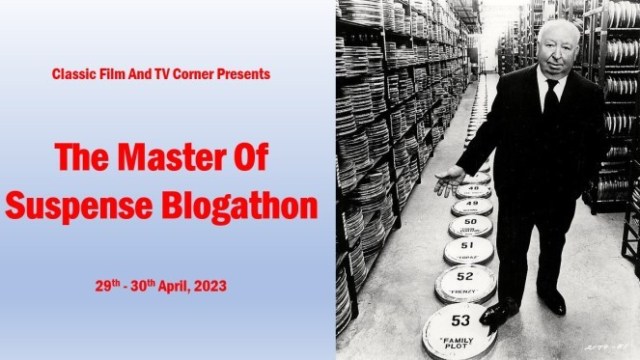
The Master Of Suspense Blogathon banner Maddy from Classic Film And TV Corner

What I didn’t like about the film:

Limited amount of urgency: At the beginning of To Catch a Thief, John learns he is accused of stealing valuable jewelry. He evens claims to have ten days in order to clear his name. You’d think with this tight timeline, there would be a strong sense of urgency in the story. But this urgency to find the truth is, unfortunately, inconsistent. Instead, more emphasis is placed on the scenery, the romance, and the “finer things in life”. While the mystery was resolved, the limited amount of urgency held the story’s suspense and intrigue back.

A small amount of suspense and intrigue: Alfred Hitchcock’s productions are known for incorporating suspense and intrigue. This reputation has earned Alfred the title of “Master of Suspense”. In To Catch a Thief, however, suspense and intrigue were only served in small amounts. Part of this problem results from the limited amount of urgency I previously talked about. Another reason for this problem is how suspense and intrigue were used sparingly instead of evenly spread out throughout the story. It got to the point where I almost forgot this story had a mystery.

Lack of suspects: A typical mystery will include a collection of suspects, individuals who may or may not have a reason to be the guilty party. These characters are presented as uniquely as possible, in order to help the audience remember them and their reasoning. To Catch a Thief lacked this ingredient. Because the mystery was not as prioritized as in other works from Alfred Hitchcock, no room was made to include suspects. There was a red herring in To Catch a Thief, but this reveal felt random. Even the reveal of the mystery’s guilty party wasn’t completely surprising.

Illustration of Paris, France created by Freepik at freepik.com. <a href=”https://www.freepik.com/free-photos-vectors/travel”>Travel vector created by freepik – http://www.freepik.com</a>. Image found at freepik.com.

My overall impression:

As I said in this review, To Catch a Thief is a pretty looking movie and it knows it. While the scenery was the film’s crown jewel, there were other aesthetically pleasing components of this production, like the costume design and the set design. When it comes to the story, though, it wasn’t as suspenseful and intriguing as other Alfred Hitchcock movies. The visuals ended up overshadowing the script. I will give Alfred Hitchcock credit where it’s due, as it seems like he tried to take a different approach to cinematic story-telling. But out of his films I have seen, I prefer titles like Strangers on a Train.

Overall score: 6.3-6.4 out of 10

Have you seen To Catch a Thief? Which titles of Alfred Hitchcock’s do you prefer? Please tell me in the comment section!

Have fun at the movies!

Sally Silverscreen
The Top 10 Worst Movies I Saw in 2022

My worst movies list of 2022 is different from that of the previous year. This time, I’ll be talking about more films that were “so bad they were bad”, as only three of these movies were disappointments. The Dishonorable Mentions portion of the list has also returned! Though I did see more good movies than bad, I couldn’t avoid coming across a “stinker” every now and then. I like to think I’ll, one day, see less than ten films for my annual worst list. But someday has not come this year, as the title of this article suggests. As I’ve stated in past lists, I did not write my list to be mean-spirited or negative. It’s just a way to express my own, honest opinion. Since some of these films have been reviewed on my blog, I will provide links to those reviews.

Dishonorable Mentions

Signed, Sealed, Delivered: The Vows We Have Made, A Place for Annie, Swim Instructor Nightmare, Nikki & Nora: Sister Sleuths, The Corsican Brothers (1985), and Donnie Brasco (I only watched forty minutes of the film before turning it off)

<a href=”http://<a href=’https://www.freepik.com/vectors/new-year’>New year vector created by freepik – http://www.freepik.com</a>&quot; data-type=”URL” data-id=”<a href=’https://www.freepik.com/vectors/new-year’>New year vector created by freepik – http://www.freepik.com2022 Changing numbers image created by Freepik at freepik.com

10. The New Adventures of Heidi

In 2022, I was hoping to finally find my coveted “so bad, it’s good” movie. Sadly, The New Adventures of Heidi was not it. As I said in my review, this film is “spectacularly average”. The more I think about the 1978 made-for-tv movie, the less justifiable reasons I can think of for the project’s existence. Yes, The New Adventures of Heidi was intended as a “modern” re-telling of Johanna Spyri’s story. But the movie didn’t feel unique enough, despite all the changes. Every year I’ve participated in the So Bad It’s Good Blogathon, there has been a pattern between movies that turned out ok and movies that were just disappointing. Hopefully, in 2023, I can break this pattern.

Take 3: The New Adventures of Heidi Review

9. Love in Wolf Creek

When I first read the synopsis for Love in Wolf Creek, I was excited at the idea of a “cozier” story filled with adventure and excitement. The 2022 television film seemed better on paper than in practice. For a movie titled Love in Wolf Creek, there was very little romance in the story. The writing was weaker than I hoped, filled with scenarios that were too unrealistic for my liking. This project was too ambitious for INSP, the network who created the film. It was so disappointing, I didn’t bother watching its sequel, Christmas in Wolf Creek.

8. Harvey (1950)

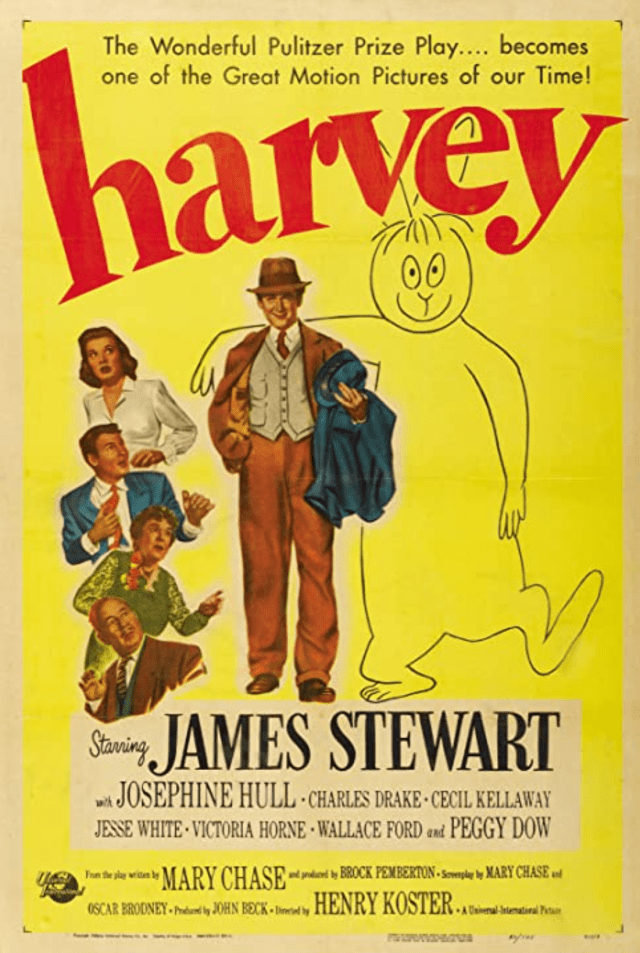
I think the 1972 Hallmark Hall of Fame adaptation of Harvey is better than its 1950 predecessor. While I’m aware how controversial my opinion is, the 1972 film had more success executing its intended points. A mistake the 1950 movie makes is trying to be a comedy and a drama. This decision led the comedy to not only be underutilized, but also showcased medical negligence in a way that didn’t sit well with me. “Magical realism” was lacking in the 1950 film. This took away any opportunity for the story to be charming and whimsical. When I reviewed Harvey back in January, it was the most disappointing movie I saw in 2022. Now, eleven months later, the 1950 picture still holds that title.

Take 3: Harvey (1950) Review

7. Journey

The 1995 Hallmark Hall of Fame presentation made the same mistake Durango did: not giving the audience a reason to care about the characters and their story. In the case of Journey, the creative team failed to provide explanations for the characters’ choices. At the beginning of the film, the protagonist’s mother, Min, abandons her family, claiming she hates her parents. But the script never explains why she made this decision. Even when there are cut-away scenes featuring Min, she isn’t doing anything significant. How am I expected to care about Min’s choice affecting her family when I don’t even know why she left in the first place?

6. My Mom Made Me Do It

According to a synopsis I read for this 2022 Lifetime film, the protagonist, Jade, turns to stealing in order to help her mom pay the bills. Both the title and synopsis turned out to be a lie because 1) Jade’s decisions were made on her own and 2) Jade never steals anything. What she does instead is crash wealthy people’s parties and photographs their belongings. Other issues contained in this movie are weak lead performances and characters who make one dumb choice after another. I will admit there was at least one effective plot twist. But I wish it had taken place in a better film.

Harvey (1950) poster created by Universal Pictures

5. The Sundowners (1960)

For a little while, I thought The Sundowners was going to be the worst movie I saw this year. Even though I was proven wrong, the 1960 film has still remained in my top five. Like I said in my review, one of the worst things you can do as a film-maker is waste your audience’s time. The story felt longer than necessary, which made the movie two hours and thirteen minutes not well spent. One of my biggest issues with The Sundowners was its “bait and switch” ending. While I won’t go into detail about the ending, as I don’t want to spoil the film, I will say it was cruel for both the characters and the audience.

Take 3: The Sundowners (1960) Review

4. The North Avenue Irregulars

This movie attempts to answer the question; “Wouldn’t it be funny if a group of women came together to solve a mystery”? By the time The North Avenue Irregulars was released in 1979, that question made the film dated on arrival, as there were several television programs from the ‘70s featuring at least one female character solving mysteries or fighting crime. The movie’s creative team told too many types of stories, yet failed at all of them. One minute, the film felt like a precursor to the Mitford series, revolving around a preacher trying to live his best life. The next minute, the film turns into a gangster heist picture, paired with car chases that were longer than necessary. Honestly, I wish this movie was a Scooby Doo-esque story about the film’s fictional band, Strawberry Shortcake. Maybe then the movie would seem more timeless.

3. Lake Effects

For the first time in 18 Cinema Lane history, all the movies in my worst list’s top three are Hallmark productions. Accepting the bronze is the 2012 film, Lake Effects. This movie has so many Hallmark movie clichés, you could create a bingo game around them. You could also create a bingo game around the many storylines found in this script. Lake Effects is a production that relies on style over substance. While Smith Mountain Lake, Virginia was captured well on film, there’s only so much the movie’s creative team could do with the weak script at their disposal. In my review from August, I stated how the movie seemed forgotten over the years. Its poor quality makes it not worth remembering.

Take 3: Lake Effects Review

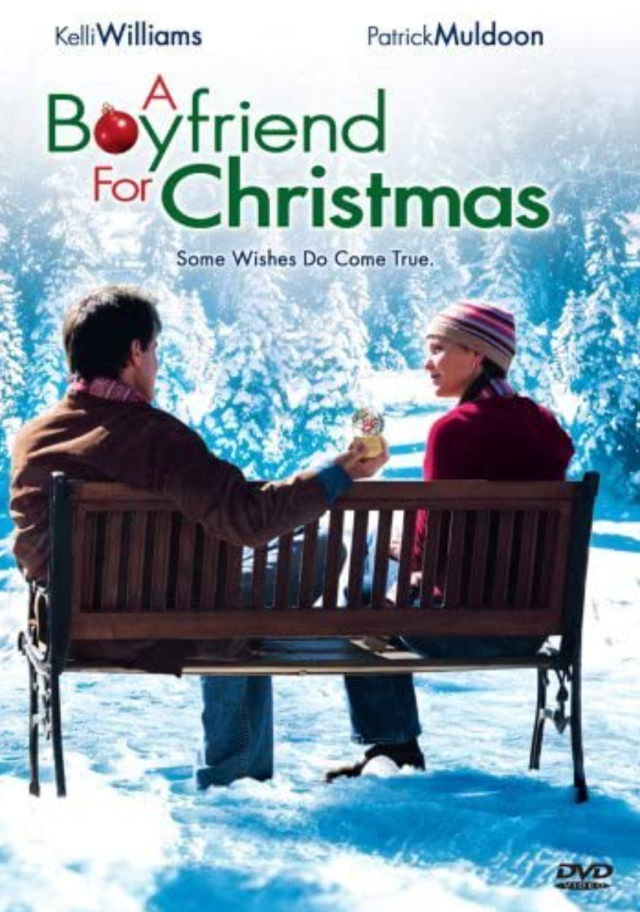
2. A Boyfriend for Christmas

In 2019 and 2020, a Hallmark Christmas movie ended up in the top three of my annual worst movies list. History is kind of repeating itself with A Boyfriend for Christmas in second place. Like Lake Effects, the 2004 film contained a weak script. But in A Boyfriend for Christmas, I only liked two minor parts of the story. The lack of Christmas magic made my movie viewing experience unenjoyable. It was one of those stories that became worse the longer I watched it. I know this movie is one of the most beloved titles in Hallmark’s cinematic library. Honestly, though, I found it over-rated.

Take 3: A Boyfriend for Christmas Review

1. Francesca Quinn, PI

Remember when I said one of the worst things a film-maker can do is waste their audience’s time? Well, another worst thing a film-maker can do is disrespect their audience’s intelligence. As I watched Francesca Quinn, PI, I was given the impression the film’s creative team didn’t want me to solve the mystery alongside the protagonist. That’s because Francesca explained things that didn’t need explaining. Despite Francesca being a professional private investigator, she constantly made decisions an amateur detective would likely make. Her lack of personality didn’t help either. According to IMDB, Francesca Quinn, PI could replace the Mystery 101 series. The reason is “the main characters’ relationship and the crime at the end of Deadly History are the same as the main characters’ relationship and crime in Francesca Quinn, PI”. If this is the case, the Mystery 101 fans, including myself, deserve so much better.

A Boyfriend for Christmas poster created by Hallmark Entertainment,  MAT IV,  Alpine Medien Productions, Larry Levinson Productions, Gaiam Entertainment, and Hallmark Channel 

Have fun in 2023.

Sally Silverscreen
Ten Classic Movies I Watched Because of My Blog

18 Cinema Lane is almost five years old. In that time, I have reviewed many films; from the blockbuster to the underrated and everything in between. Sometimes, I had the opportunity to talk about “classic” films. These opportunities were formal introductions to these titles. This list highlights some of the “classic” movies I watched because of my blog. Whether it was a blogathon entry or a Blog Follower Dedication Review, I’m thankful I was able to see these films. That way, I can now have an honest opinion about them. Since I have reviewed all the films on my list, I will provide links in this article. I will also be sharing my thoughts on these films, so anything I say is not meant to be mean-spirited or negative.

The Discovering Classic Cinema Blogathon banner created by Maddy from Classic Film and TV Corner

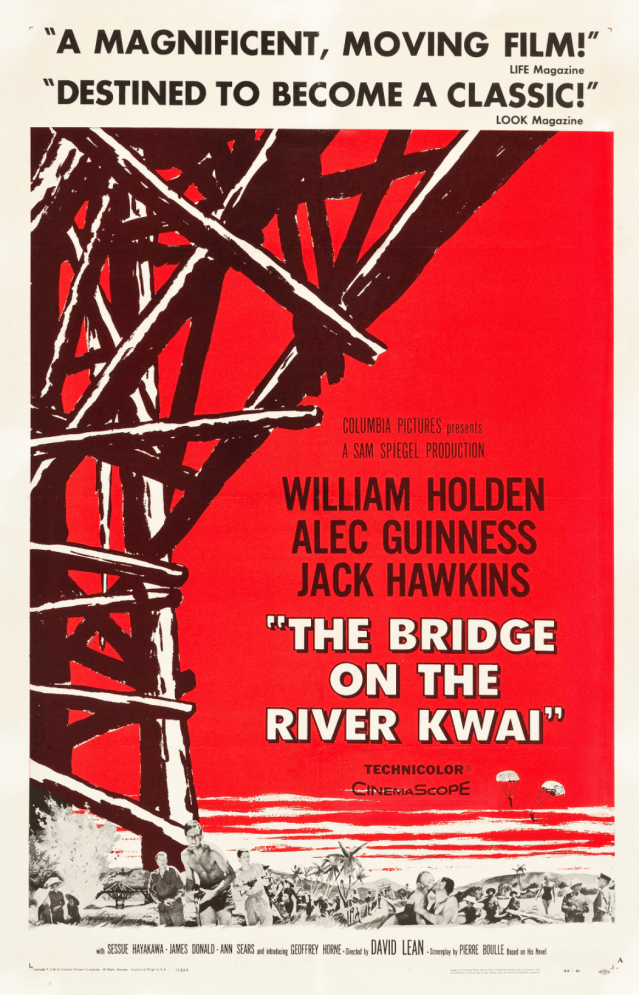
The Bridge on the River Kwai

The Bridge on the River Kwai poster created by Horizon Pictures and Columbia Pictures

Starting this list is the most recent “classic” I reviewed. I chose to write about The Bridge on the River Kwai for The 5th Golden Boy Blogathon, where I was the only participant to select it. This movie made me question why some movies do or don’t end up on AFI’s list of The 100 Greatest American Movies Of All Time. Until I watched The Bridge on the River Kwai, I believed these titles met one of two criteria: those that represent the time they were released and those that brought something new to the cinematic table. With the 1957 film, I still haven’t figured out why it’s on the list. I am not saying this is a bad movie. But, at best, I thought it was just fine.

Take 3: The Bridge on the River Kwai Review

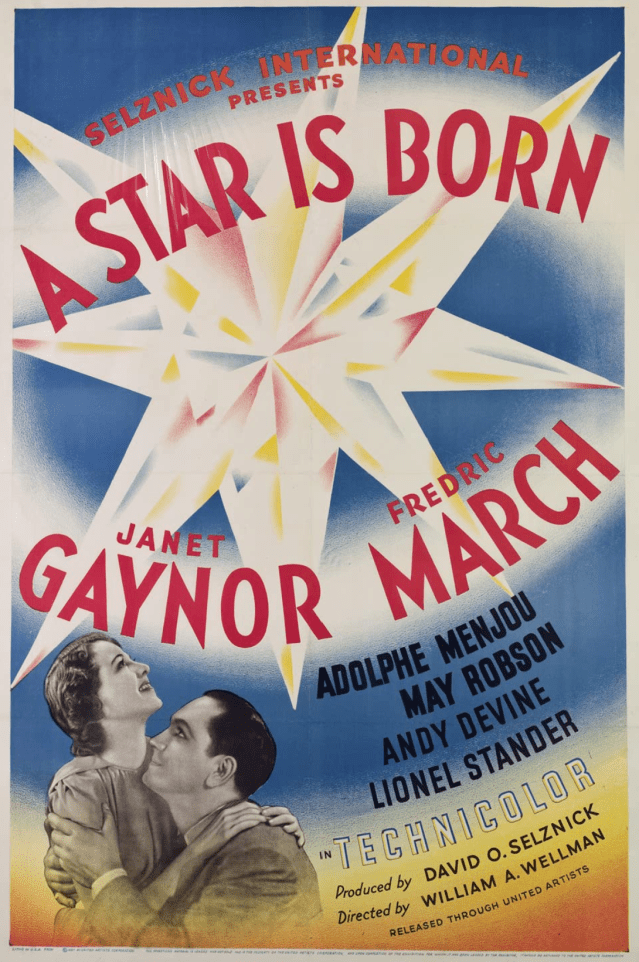
A Star Is Born (1937)

A Star Is Born (1937) poster created by Selznick International Pictures and United Artists

Before participating in the Fredric March Blogathon, I didn’t have an interest in watching any version of A Star Is Born. Because this story has been remade on more than one occasion, I thought each version was going to share a recycled plot, with little variation among them. As of this list’s publication, I’ve only seen the 1937 original. However, I was surprised by how impressive the movie was! Fredric March’s performance was so strong, not just among the Breen Code era films I’ve seen, but among any movie I have seen. He worked well alongside Janet Gaynor, sharing really good banter between each other. A Star Is Born made me want to actively seek out more films from Fredric’s filmography!

Take 3: A Star Is Born (1937) Review

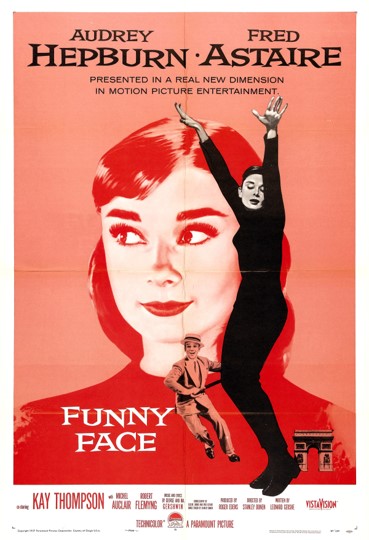
Funny Face

Funny Face poster created by Paramount Pictures.

As Fred Astaire famously said, “Do it big, do it right, and do it with style”. When it comes to his movie, Funny Face, that’s exactly what happened. This is a pleasant looking production! I remember loving the use of color, as pops of color were placed in scenes with a primarily plain color palette. The musical numbers were also entertaining to watch, with creative ideas woven through them. Though I haven’t seen many of Audrey Hepburn’s films, Funny Face is one of her projects I like. She appeared to be enjoying whatever she was doing, whether it was dancing in the “Basal Metabolism” number or portraying Jo traveling to Paris. Then again, Audrey did famously say “I believe that happy girls are the prettiest girls”.

Take 3: Funny Face Review (Fred Astaire and Gene Kelly Blogathon Part 2)

All About Eve

All About Eve poster created by 20th Century Fox. Image found at https://www.foxmovies.com/movies/all-about-eve.

As the last movie I reviewed for 2019’s Clean Movie Month, All About Eve is a film I thought was just fine. A peek behind the theater world’s curtain was refreshing, providing the story with interesting perspectives. The use of voice-overs not only allowed the audience to witness Eve develop as an individual, but connect with the other characters as well. However, I found the title to be misleading, as the story was led by Margo. As I said in my review, the film would be called “Mostly About Margo” or “Sometimes About Eve” if given an honest title.

Take 3: All About Eve Review (Clean Movie Month — #5)

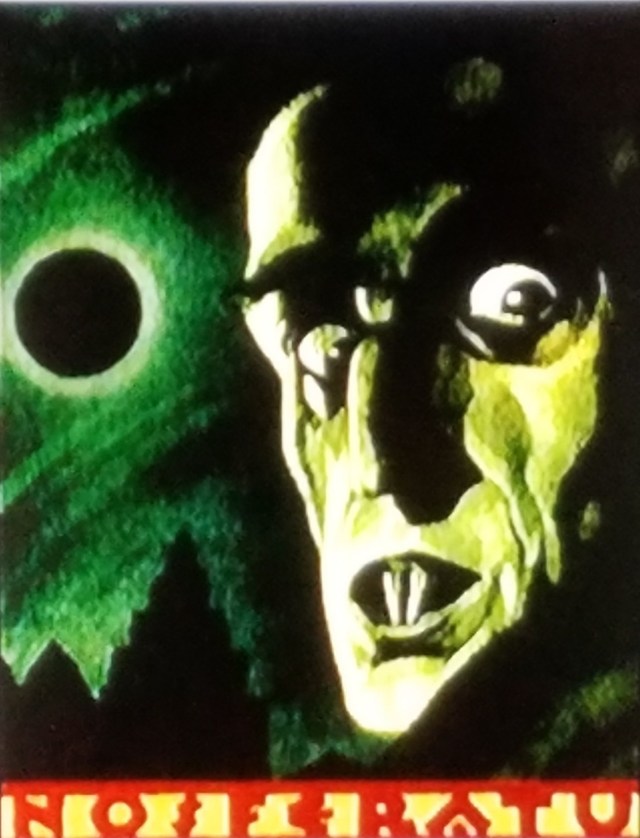
Nosferatu

Screenshot taken by me, Sally Silverscreen.

The same year I reviewed All About Eve, I also wrote about Nosferatu. My review of the 1922 “classic” was for 2019’s A Month Without the Code. I’m thankful for the opportunity I had to see Nosferatu, as the film was not only created under strict copyright rules, but has also been preserved over time. This film serves as a stone in cinema’s foundation, showcasing elements still found in today’s movies, such as using music to elevate the story’s tone. I don’t often talk about horror films on 18 Cinema Lane. But out of the ones I have reviewed, Nosferatu is definitely one of the better titles!

Take 3: Nosferatu Review (A Month Without the Code — #1)

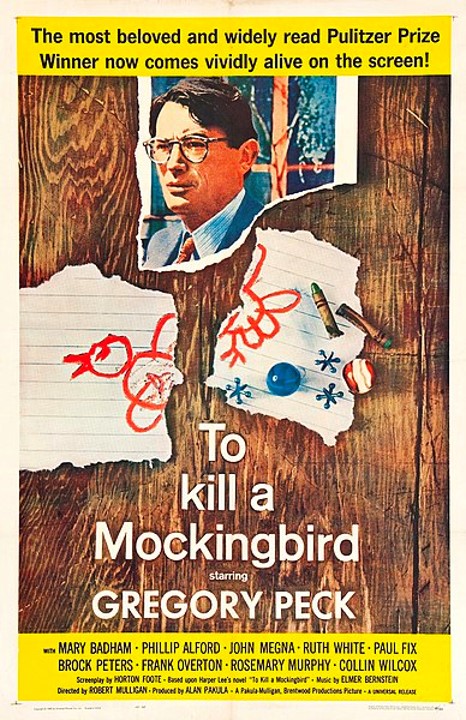
To Kill a Mockingbird

To Kill a Mockingbird poster created by Brentwood Productions, Pakula-Mulligan, and Universal Pictures. Image found at commons.wikimedia.org/wiki/File:To_Kill_a_Mockingbird_(1963_US_theatrical_poster).jpg

Like I recently said in my list, ‘The Top 10 Best Movies I Saw in 2022’, there are few movies I found better than their source material. To Kill a Mockingbird is one of those films! I like this adaptation because the script gets straight to the point sooner than the book did. It also places more emphasis on the trial, the part of the book I found the most interesting. The visual nature of film elevated the suspenseful moments from the original story, presenting realistic situations with an intensified level of uncertainty. This is one of those times where I would suggest skipping the book and going straight to the film.

Take 3: To Kill a Mockingbird Review

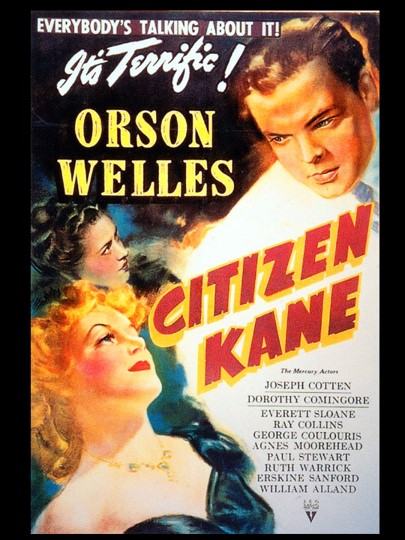
Citizen Kane

Citizen Kane poster created by Mercury Productions and RKO Radio Pictures. Image found at http://www.tcm.com/tcmdb/title/89/Citizen-Kane/#.

In my opinion, Citizen Kane is an over-hyped movie. I know that’s a controversial opinion. But when I reviewed the movie in 2019, I didn’t find it the flawless masterpiece others have made it out to be. For starters, I don’t think the film needed an hour and fifty-nine-minute run-time. I also found it difficult to connect with the characters. Despite my view on Citizen Kane, I don’t think it’s a bad movie. If anything, I thought it was decent. But like I said with The Bridge on the River Kwai, I wonder why Citizen Kane is number one on AFI’s list of The 100 Greatest American Movies Of All Time?

Take 3: Citizen Kane Review (Clean Movie Month — #2)

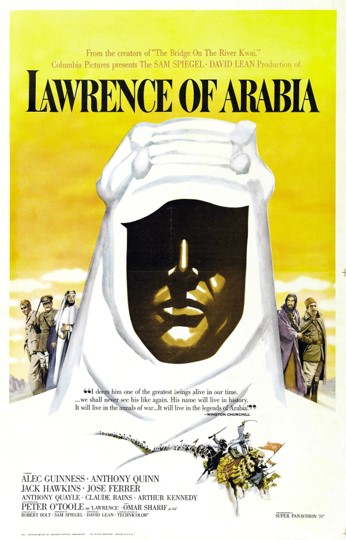
Lawrence of Arabia

Lawrence of Arabia poster created by Columbia Pictures. Image found at http://www.tcm.com/tcmdb/title/4455/Lawrence-of-Arabia/#

This is another “classic” I feel is over-hyped. However, the over-hyped status of Lawrence of Arabia is not to the same degree as Citizen Kane, in my opinion. The 1962 film is one of the most iconic “sword and sandal” titles. But beyond this simplified distinction is a World War I story from a unique perspective. Reviewing Lawrence of Arabia for The World War One On Film Blogathon was not my first choice. I had actually planned to review a different movie, which ended up being released on DVD after the blogathon took place. This last-minute decision was a blessing in disguise, as it gave me an excuse to check out Lawrence of Arabia!

Take 3: Lawrence of Arabia Review

Ben-Hur (1959)

Ben-Hur (1959) poster created by Metro-Goldwyn-Mayer and Loew’s, Inc. Image found at https://commons.wikimedia.org/wiki/File:Ben_hur_1959_poster.jpg

When I chose to watch this movie for a Blog Follower Dedication Review, I had no idea how much I would love it! I remember being so invested in Judah’s journey, I wasn’t too bothered by the film’s three-hour run-time. This is another iconic “sword and sandal” picture. But only referring to this film by that simplified title does it such a disservice. That’s because the movie is, in my opinion, one of the better faith-based films! I’ve heard 1959’s Ben-Hur is a remake of a film from the ’20s. Maybe that version will be covered in a future review!

Take 3: Ben-Hur (1959) Review + 60 Follower Thank You

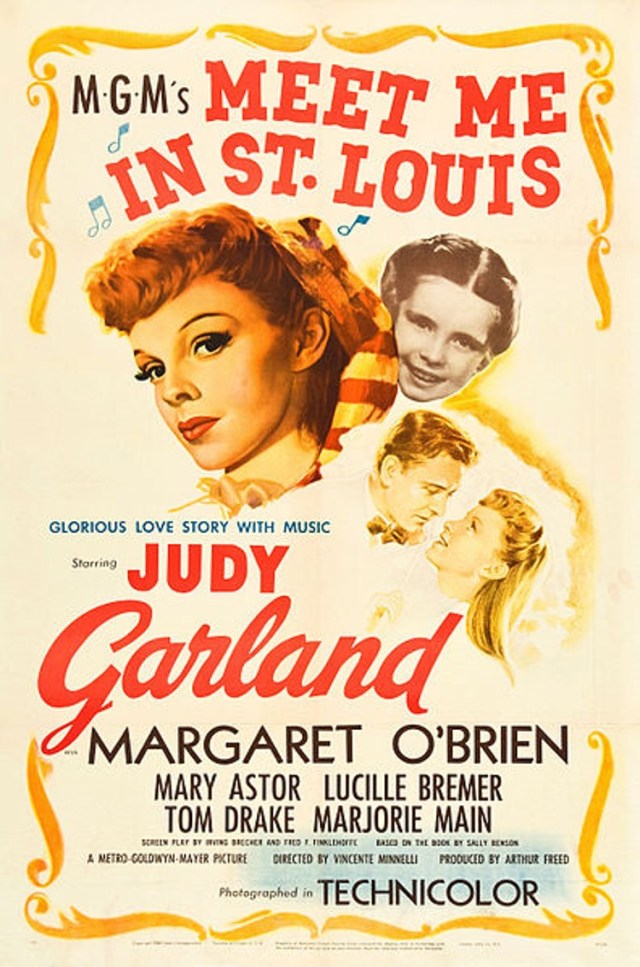
Meet Me in St. Louis

Meet Me in St. Louis poster created by Metro-Goldwyn-Mayer and Loew’s, Inc. Image found at https://commons.wikimedia.org/wiki/File:Meet_Me_in_St._Louis_poster.jpg

The Breen Code era gave us some good musicals. Meet Me in St. Louis is no exception! A musical is only as strong as its musical numbers. In the 1944 film, there was an assortment of enjoyable songs. From Judy’s iconic rendition of “Have Yourself a Merry Little Christmas” to my favorite, “Under the Bamboo Tree”, this part of the story added to my movie viewing experience. While the film does have its flaws, it is a pleasant production. If I were introducing someone to the Breen Code era, Meet Me in St. Louis is a film I would recommend!

Take 3: Meet Me in St. Louis Review + 75 Follower Thank You

Have fun at the movies!

Sally Silverscreen
Watching ‘Singin in the Rain’ for the First Time

Throughout my years of movie viewing (and blogging), I have received the opportunity to check out films boasting a “classic” status. This status has, in my opinion, been earned on some occasions, as I gained an understanding for why a particular movie was granted its praise. However, there were certain titles I found myself unable to figure out why it is considered a “classic”. Out of all these “classic” films, I have been meaning to see one specific picture. That title is Singin in the Rain. The 1952 production needs no introduction. From the song, “Good Morning”, being featured in an orange juice commercial to a replica of Gene Kelly’s umbrella in Disney MGM/Hollywood Studios, Singin in the Rain has carved out a slice in America’s pop culture pie. But for someone, like me, who hasn’t seen this iconic film before, these references are going to seem like a company, individual, or creative team is, simply, taking advantage of the movie’s 50+ year popularity. That replica is just used for tourists to have their photo taken. That song was just an appropriate selection to promote a beverage primarily found at breakfast-time. With the arrival and fruition of the Singin in the Rain Blogathon, I finally have a wonderful excuse to watch Singin in the Rain. It also gives me an opportunity to gain more context of the film’s respective songs, images, and quotes.

Singin in the Rain poster created by
Metro-Goldwyn-Mayer and Loew’s Inc.

Creative Musical Numbers

Singin in the Rain is not just one of the most iconic movies of all time, it’s one of the most iconic musicals of all time! A musical with a “classic” status will bring something unique and creative to the table. The Wizard of Oz took on the power of Technicolor, in a time when that specific technology was more of a luxury. Xanadu showed the world roller skating can be magical. When it comes to Singin in the Rain, the creativity lies in the musical numbers themselves, presenting performances that hadn’t really been seen before 1952. Toward the beginning of the film, Gene and Donald perform a duet, “Fit as a Fiddle (And Ready for Love)”, at a vaudeville show. Throughout this musical number, Donald and Gene not only tap danced, but played the fiddle as well. For the 21st century viewer, dancing and playing an instrument at the same time doesn’t seem like a new concept, as Lindsey Stirling has capitalized on those talents. Within the realm of cinematic musicals, however, a routine like Gene and Donald’s isn’t often included.

Gene Kelly’s famous solo isn’t the first musical number featuring rain. Two decades prior, in Just Around the Corner, Shirley Temple performed “I Love to Walk in the Rain”, her film’s big musical number that represented the spirit of the movie. Looking back on “Singin in the Rain”, I, personally, feel Shirley’s number walked (no pun intended) so Gene’s solo could soar! The solo from the 1952 production takes place after Gene’s character, Don, takes Kathy home. Despite it raining outdoors, Don is head-over-heels in love with Kathy. Gene tap danced in his solo. But unlike “I Love to Walk in the Rain”, “Singin in the Rain” felt more immersive, as it wasn’t just a performative routine. Because the number takes place within the story’s context, it feels grounded in reality, a downtown street replacing a glamourized stage. Watching Gene jumping and splashing in puddles added uniqueness to the routine. Even though “Singin in the Rain” wasn’t the big musical number for its respective movie, it represents the film’s spirit, reminding the audience to see the good in a not-so-good situation.

String of musical notes image created by Freepik at freepik.com. <a href=’https://www.freepik.com/free-vector/pentagram-vector_710290.htm’>Designed by Freepik</a> <a href=”https://www.freepik.com/free-photos-vectors/background”>Background vector created by Freepik</a>. Image found at freepik.com. 

Strong Camaraderie

In most of my reviews, I talk about the acting. I will choose a few performances to discuss and write about what I liked about them. For this review, I want to talk about a different acting component. While the overall acting in Singin in the Rain was strong, what stood out to me more was the on-screen camaraderie between Gene Kelly, Debbie Reynolds, and Donald O’Connor! One of my favorite scenes is when Don, Kathy, and Cosmo are concocting a plan to save Don’s film. Each character’s personality shines through during this brainstorming session. Cosmo encourages Don to turn the film into a musical, as he spontaneously breaks out into song. Meanwhile, Kathy attempts to keep the group’s good spirits lifted, her kind demeanor certainly helping the situation. After hearing Cosmo’s idea, Don is open-minded about it, joyously realizing he can use his talents to his advantage. This scene, as well as the “Good Morning” musical number, is just one example of Gene, Debbie, and Donald’s on-screen camaraderie. Through their interactions, it felt like Don, Kathy, and Cosmo had been friends all along. This on-screen bond was so pleasant, I looked forward to each time these characters crossed paths!

Couple performing the waltz image created by Macrovector at freepik.com. <a href=”https://www.freepik.com/free-photos-vectors/background”>Background vector created by macrovector – http://www.freepik.com</a>. Image found at freepik.com.

Learning about Cinema’s Early Years

Singin in the Rain takes place in the 1920s, during the transitional period between silent films and “talkies” (movies with sound). Even though the 1952 film is a musical that takes time to focus on its numbers, it lifts the figurative curtain enough to educate the audience on how film-making was executed in that time period. Don’s respective studio, Monumental Pictures, adopted sound after Warner Bros. took a chance with their film, The Jazz Singer, a high risk that was met with high rewards. Because of that one creative decision, it forever changed the cinematic landscape. As emphasized in the musical number, “Moses Supposes”, actors had to not only memorize their lines, they also had to remember to annunciate those lines. Singin in the Rain also shows the audience how dialogue is incorporated into a movie. As someone who appreciates the film-making process, it was nice to see this part of movie-making shown in steps. This step-to-step process was a good introduction to some of the work that goes on behind the camera.

Image of vintage movie camera created by Macrovector at freepik.com. <a href=”https://www.freepik.com/free-photos-vectors/background”>Background vector created by macrovector – http://www.freepik.com</a>. Image found at freepik.com.

The Context of “Broadway Melody” in Don’s Film

While working to adapt his film, The Dancing Cavalier, into a musical, Don proposes the movie’s new opening scene. This scene is presented as the musical number “Broadway Melody”. As a musical number in Singin in the Rain, I liked this performance! It had colorful set and costume design, as well as strong choreography. But as an opening scene in The Dancing Cavalier, the musical number, in my opinion, doesn’t work. “Broadway Melody” is too long, my guess is ten minutes. The number itself kind of feels like an extension of Don’s past, as his journey to Hollywood came from simpler beginnings. Based on what the characters said about The Dancing Cavalier, Don’s proposed opening scene seems to have little connection to that film’s story. If Don’s movie were a real picture, some audience members might become bored with the film before the story began.

New York City skyline with letters image created by Freepik at freepik.com. <a href=’https://www.freepik.com/free-vector/new-york-skyline-typographic-silhouette_719554.htm’>Designed by Freepik</a>. <a href=”https://www.freepik.com/free-photos-vectors/background”>Background vector created by Freepik</a>. Image found at freepik.com.

No Subplot for Cosmo

As I mentioned earlier in this review, I liked the on-screen camaraderie of Gene, Debbie, and Donald. In fact, I liked Donald’s character, Cosmo! Not only was he hilarious and charming, but he was talented as well! The story of Singin in the Rain primarily revolved around the main plot; Monumental Pictures attempting to save their latest film. There is a subplot in the movie, but it mostly focuses on Lina, Don’s co-star. I would have loved to see Cosmo receive his own subplot. Since his contribution to the studio is musical, Cosmo’s part of the story would have pulled back that figurative curtain a little further to show the audience cinematic work behind the camera. I’ve said in previous reviews how important music is in film. Without it, there isn’t an opportunity for viewers to become emotionally affected by a given scene. Because Cosmo is a musician, that aspect of film-making could have been explored.

Masks of comedy and tragedy images created by freepik at freepik.com. <a href=”https://www.freepik.com/free-photos-vectors/background”>Background vector created by freepik – http://www.freepik.com</a>. Image found at freepik.com.

A Love Interest That Wasn’t Meant to be

In my point about Cosmo not receiving a subplot, I mentioned how Singin in the Rain’s subplot mostly focused on Don’s co-star, Lina. Personally, I think more of that time should have been given to Cosmo. I know Lina is meant to be the film’s antagonist. I also know her actions and choices are intended to fuel the movie’s conflict. But why would Lina receive so much time when she and Don were never meant to be? Before and after the premiere of The Royal Rascal, people speculate about Lina and Don’s relationship. Even Lina carries the assumption she and Don are romantically involved with one another. But Don makes it pretty clear he is not romantically interested in Lina. This part of the story reminded me of a Hallmark movie cliché I’ve talked about in the past: the “protagonist’s ex showing up unannounced” cliché.

The Singin in the Rain Blogathon banner created by Ari from The Classic Movie Muse

In Conclusion

Before the Singin in the Rain Blogathon, I had never seen the event’s namesake. That means if someone were to tell me one of the movie’s quotes or if I heard one of the film’s songs, I wouldn’t have thought much of it. Now that I have finally seen Singin in the Rain, I have gained an understanding and appreciation for it! When Kathy first meets Don, she claims, when referring to films, that “when you’ve seen one, you’ve seen them all”. However, I’d argue the 1952 musical built a solid identity that affords it a distinction from other musical movies. Even though Singin in the Rain was released within the Breen Code era, I was pleasantly surprised by the good messages and themes in the story. When I talked about the movie’s on-screen camaraderie, I shared one of my favorite scenes; where Kathy, Don, and Cosmo were figuring out how to save Don’s film. Through this interaction, the message of being one’s self is stressed. This message also allowed Don to use his talents in his favor. When I reviewed The Bridge on the River Kwai, I wondered what the criteria was for lists such as AFI’s 100 Greatest  American  Movies of All Time. One of my speculations was titles that brought something new to the cinematic table. It should be noted that Singin in the Rain is on AFI’s list. While I don’t know for certain how it got there, I think I have a pretty good idea why it’s there.

Have fun at the movies!

Sally Silverscreen
Take 3: The Bridge on the River Kwai Review

William Holden is an actor who I am familiar with. I have seen some of the films on his filmography and have even reviewed a few. So, when I came across the announcement post for The 5th Golden Boy Blogathon, I saw it as a great opportunity to explore William’s filmography some more! As I was signing up, though, I noticed how The Bridge on the River Kwai hadn’t been selected yet. Surprised by this, I found another good opportunity to check out a “classic”! For years, I had heard of the 1957 film. It is even featured on the American Film Institute’s list of The 100 Greatest American Movies Of All Time. At the publication of this review, I have seen twenty-nine of the movies on this list, in their entirety. Some of these titles have been enjoyable, but there are others I wasn’t a fan of. Where does The Bridge on the River Kwai fall on that spectrum? Keep reading to find out!

The Bridge on the River Kwai poster created by Horizon Pictures and Columbia Pictures

Things I liked about the film:

The acting: Since William Holden is one of the reasons why I chose to watch The Bridge on the River Kwai, I’ll talk about his performance first. This is not the first war film William has starred in. Four years prior to the release of The Bridge on the River Kwai, he appeared in Stalag 17. What makes his portrayal of Shears different from Sgt. J.J. Sefton is the material allowed William to expand his acting abilities. While on a beach at a nearby hospital, Shears is flirting with a female nurse. In this scene, William turns on the charm, sharing nice on-screen chemistry with Ann Sears. In the next scene, Shears carries a serious demeanor as he is called upon for a military mission. Out of Williams’ films I have seen, his character presents one of two personas: the “charmer” or the serious, no-nonsense man. In The Bridge on the River Kwai, Shears displayed both.

One of my favorite scenes is when Colonels Nicholson and Saito are attempting to make a negotiation. Colonel Saito, portrayed by Sessue Hayakawa, wants every member of Nicholson’s team to work on the bridge. Colonel Nicholson, portrayed by Alec Guinness, refuses this order. Prior to this scene, Nicholson stood his ground. He was even locked in a small hut because of his refusal. But Nicholson persevered, even carrying a dignified persona that ends up boosting the morale of his team. He consistently maintains this persona, especially during his meeting with Colonel Saito. This dignified, confident demeanor of Nicholson angers Saito. Up until that point, Saito presents himself in a professional manner. He is no-nonsense and doesn’t allow anyone to step out of line. But in his meeting with Nicholson, his anger becomes visible. Both Sessue and Alec gave different performances, portraying two different military leaders. Yet the strength of their acting abilities allowed them to go toe-to-toe with one another.

The scenery: The Bridge on the River Kwai had such magnificent scenery, it honestly stole the show! There are two locations I loved so much, I wanted to talk about them in my review. The first location is the hospital I just mentioned. The Mount Lavinia Hotel was the stand-in for the hospital. When looking at the exterior and grounds, one could see why this location was chosen. The trimmed lawn was a great contrast to the small white structure. The manicured gardens surrounding the hospital created a pleasant outdoor space. In the scene the hospital was featured in, a nearby beach was primarily showcased. The clear blue waters and bright sandy shore paired with the garden-esque surroundings illustrated a tropical oasis!

The second location is Major Warden’s office! Any time a scene took place in his office, glass windows in wooden frames were always open. This allowed the audience to see the beautiful view! Major Warden’s office overlooked a river. Sloping green hills sat on the sides of this river, contributing to the visually appealing view. Similar to the aforementioned hospital, Warden’s office also oversaw a trimmed lawn and manicured gardens. The spacious surroundings of this location presented the audience a peaceful atmosphere!

The music: There were some scenes in The Bridge on the River Kwai that included little to no dialogue. This decision led the film’s creative team to use music to elevate a scene’s tone. While stumbling through the jungle, Shears notices a group of vultures sitting on a nearby tree. As he walks through this environment, quiet orchestral music becomes louder. A “bird” appears out of nowhere, adding to the scene’s tension. The music gets even louder when Shears crosses paths with the “bird”. When the “bird” is revealed as a bird-shaped kite, the music stops. The tension and suspense of this scenario was accomplished by a combination of music and visuals!

The 5th Golden Boy Blogathon banner created by Virginie from The Wonderful World of Cinema, Emily from The Flapper Dame, and Michaela from Love Letters to Old Hollywood

What I didn’t like about the film:

A confusing first half: During the first half of The Bridge on the River Kwai, I was confused by what was happening in the story. This confusion was caused by the lack of explanations. At the prisoner camp, Colonel Saito continuously mentioned the importance of the titular bridge. He stresses how the bridge needs to be built on a specific day, even going so far as to claim he’ll commit suicide if the bridge isn’t built. What Colonel Saito failed to mentioned is the bridge’s purpose. Even though an explanation was eventually provided, it is given at the film’s half-way point. Had this information been given sooner, so much confusion could have been avoided.

A limited amount of urgency: In war films or films that involve a significant amount of action, a strong sense of urgency can be felt throughout the story. This sense of urgency encourages the audience to care about the safety and wellbeing of the characters. But because some scenes in The Bridge on the River Kwai were drawn out, the sense of urgency was limited. Toward the end of the movie, a climactic moment involving the story’s major players takes place. While I won’t spoil the movie, I will say this moment was drawn out a little longer than necessary. The action moved at a slower pace, which also effected the urgency. It seems like this creative decision was made to build suspense. However, it left me, at times, frustrated.

Inconsistent halves: Earlier in this review, I said William Holden was one of the reasons why I chose to watch The Bridge on the River Kwai. Interestingly, his character’s story was the one I found the most engaging. This movie features two major storylines: Colonel Nicholson’s team in the prisoner camp and Shears’ experiences in the military. Since Shears’ story was prominently featured in the film’s second half, I found that half the most interesting. With Shears’ story, there was a strong conflict and an even stronger part of the plot. Meanwhile, Colonel Nicholson’s story seemed to remain at a standstill. Like I also mentioned in this review, the film’s first half was confusing due to the lack of explanations. If The Bridge on the River Kwai had just focused on Shears’ story, the film as a whole would have been more intriguing.

Military plane image created by Brgfx at freepik.com. <a href=”https://www.freepik.com/free-photos-vectors/background”>Background vector created by brgfx – http://www.freepik.com</a>. Image found at freepik.com.

My overall impression:

Why is The Bridge on the River Kwai on AFI’s list of The 100 Greatest American Movies Of All Time? I’m not asking this to be disrespectful or mean. I’m asking out of curiosity. When I think of lists like AFI’s, I think of movies that fit one of two categories: those that represent the time they were released and those that brought something new to the cinematic table. With The Bridge on the River Kwai, I can’t see this film fitting into either category. As I mentioned in this review, Stalag 17 was released four years prior to The Bridge on the River Kwai. Heaven Knows, Mr. Allison was also released in 1957. With that said, what makes those two films less deserving of being on AFI’s list than The Bridge on the River Kwai? Off the top of my head, I can’t think of any cinematic advancements The Bridge on the River Kwai had to offer. The more films I watch from AFI’s list and the more I think of lists of this nature, I wonder what the criteria is? Was there criteria to begin with or is the list purely subjective? As I explore more “classics”, those are questions I will keep in mind.

Overall score: 7-7.1 out of 10

Have you watched any of William Holden’s movies? If so, which one would you like me to review next? Please tell me in the comment section!

Have fun at the movies!

Sally Silverscreen
Take 3: Cyrano de Bergerac (1950) Review

Two years ago, when I reviewed the 1990 adaptation of Cyrano de Bergerac, I was given a movie recommendation by Le from Crítica Retrô. That recommendation was Cyrano de Bergerac’s 1950 adaptation! Like any film suggestion I’m given, I wanted to make the time to watch and/or review this title. The opportunity finally came this month! March’s film for Genre Grandeur is Oscar Nominated /Winning Films. From what I’ve gathered, 1950’s Cyrano de Bergerac was nominated for and won an Oscar for Best Actor. Then I discovered The Bonnets and Bustles: Costume Blogathon. While thinking about what to write for the event, I realized Cyrano de Bergerac would be an eligible topic. Therefore, I’ve decided to review this movie for both blogathons!

Cyrano de Bergerac (1950) poster created by Stanley Kramer Productions and United Artists

Things I liked about the film:

The acting: I am not familiar with José Ferrer’s filmography. Despite this, the one word I would use to describe his performance in Cyrano de Bergerac is confident! The confidence within José’s portrayal helped him stand out against Gérard Depardieu’s portrayal in the 1990 adaptation. This confidence was also a consistent component that made Cyrano a force to be reckoned with! Toward the beginning of the film, Cyrano engages in a duel at the local theater. Throughout this scene, the protagonist speaks eloquently and with sophistication. He holds his own in the duel, with his posture and skills showing the audience that he knows what he’s doing. But this aforementioned confidence never comes across as cocky. Instead, Cyrano is presented as being sure of himself, despite his flaws and imperfections.

Christian de Neuvillette is portrayed by William Prince. What makes his portrayal stand out from Vincent Perez’s performance is how Christian came across as a hopeless romantic. This can be seen when he visits Roxane one evening. During their conversation, Christian becomes tongue-tied. He struggles to find the right words without Cyrano’s help. But the passion he feels for Roxane is displayed on his face. William’s body language also proved how much his character wanted to be with Roxane. Speaking of Roxane, let’s talk about Mala Powers’ performance. In this adaptation of Cyrano de Bergerac, Roxane was mesmerized by the romantic words of Cyrano and passionate gestures of Christian. The balcony scene is a perfect example. As Christian quotes Cyrano’s poetry, Roxane is overcome by her feelings. Her voice contains emotion, expressing through words what is in her heart. Roxane’s body language longs for a romantic embrace, as she searches in the night for the one she loves. Mala’s performance is one of the reasons why that scene packed such a punch!

The sword fights: In this adaptation of Cyrano de Bergerac, there were some exciting sword fights! Part of that excitement comes from the quality of the choreography! As I said earlier in this review, I talked about Cyrano’s involvement in a duel at a theater. While that fight was captivating to watch, that wasn’t the only fight to feature good choreography. One evening, Cyrano guards a local baker on his way home. Along the way, they become surrounded by the baker’s enemies. Throughout this scene, the fight choreography is sharp, fast-paced, and precise. These elements allow the fights to appear professional, like the actors involved are taking this part of their performance seriously. What also made these fights exciting was the different camera angles used to capture the shots. The various angles let the audience witness the fights from different perspectives.

Cyrano and Roxane’s interactions: Because Cyrano and Roxane have known each other prior to the events of the film, they have a pre-existing friendship. The on-screen camaraderie between José Ferrer and Mala Powers made my experience watching Cyrano and Roxane’s interactions enjoyable! During these interactions, Roxane and Cyrano share a genuine tenderness that comes across as sweet and good-natured. At the bakery one day, Cyrano learns Roxane has developed feelings for Christian. Even though he is not pleased to learn this news, Cyrano seems to place Roxane’s happiness before his own. Later in the film, when Roxane is sharing Christian’s “poetry” with Cyrano, Cyrano adopts a protectiveness toward Roxane. Meanwhile, Roxane doesn’t miss a beat. She recites Cyrano’s words in a heart-felt way, her vocal inflections indicating how much she enjoys the words. Interactions like this one make me wish Roxane appeared more in the film.

Bustles and Bonnets: Costume Blogathon banner created by Pale Writer from Pale Writer and Paul from Silver Screen Classics

What I didn’t like about the film:

An orange tint: Throughout the film, the picture was coated in an orange tint. Though this tint was not consistently present, it was somewhat distracting. The colors of the costumes and set design appeared faded because of this tint. However, I’m not sure if the tint was caused by the use of lighting or the cinematic technology of the ‘50s.

Few interactions with Christian and Roxane: A major plot-point in Cyrano de Bergerac is the growing relationship between Roxane and Christian de Neuvillette. What makes this plot-point so memorable is how Roxane is smitten by Christian’s words, which were composed by Cyrano. In this adaptation of the story, Christian and Roxane don’t spend much time together. Looking back on the film, I can think of only three scenes featuring their interactions. Because of Roxane and Christian’s limited time together, Mala and William’s on-screen chemistry wasn’t as strong as it could have been.

No build-up to the war storyline: When I reviewed the 1990 adaptation of Cyrano de Bergerac, I wrote about the war storyline that dominated the movie’s second half. In my review, I said this storyline pulled a “bait and switch” with the film’s overall tone. I also said the build-up toward the war and the reasoning behind it felt too “inside baseball”. While there is a war in the 1950 adaptation, there is no build-up or reason for this event. It feels like the war was placed in the middle of the movie for the sake of providing more action in the story. I still have not read this story’s source material, so I don’t know the historical context of this text. However, some build-up and/or a reason for the war would have been appreciated in the 1950 adaptation.

Movie award essentials image created by Freepik at freepik.com. <a href=”https://www.freepik.com/free-photos-vectors/background”>Background psd created by freepik – http://www.freepik.com</a>. Image found at freepik.com. 

My overall impression:

A singular adaptation of any story is not the “end all, be all”. Part of that is due to film itself being so subjective. Cyrano de Bergerac from 1950 is the second adaptation of this narrative I’ve seen. But I ended up liking it about as much as the 1990 version. 1950’s Cyrano de Bergerac follows similar beats to 1990’s adaptation. But the movie itself is distinct enough to stand out on its own. The differences in the 1950 version added enjoyment to the overall project, such as the sword fights. But, like the 1990 film, the 1950 project had its flaws. I will say Cyrano de Bergerac from 1950 is the more accessible movie of the two. But no matter which version you choose, the romance, wit, and ways with words are still the same.

Overall score: 7.5 out of 10

Have you seen any adaptation of Cyrano de Bergerac? If so, which one is your favorite? Let me know in the comment section!

Have fun at the movies!

Sally Silverscreen