Take 3: To Be or Not to Be (1942) Review

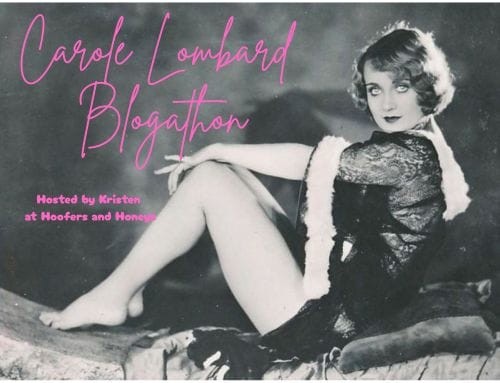
When one of my readers recommends a movie to me, I add that title to my film recommendation board on Pinterest and then write about it in one of my reviews. A movie that has been featured on the board for a while is 1942’s To Be or Not to Be. This presentation was suggested by Patricia (from Caftan Woman), Vincent (from Carole & Co.) and Allen Rizzi. Originally, I was going to select it for an upcoming Blog Follower Dedication Review. But when I learned about Hoofers and Honeys’ Carole Lombard Blogathon, I found a good reason to write about the movie sooner! While I received recommendations of Carole’s films, I’ve only reviewed two of those which she received a starring role. The first picture, In Name Only, was fine and likable. Meanwhile, Twentieth Century, is one of the worst movies I’ve ever seen. Now that To Be or Not to Be is the third film of Carole’s I’m discussing on 18 Cinema Lane, it’ll be interesting to see where I rank this title compared to Twentieth Century and In Name Only.

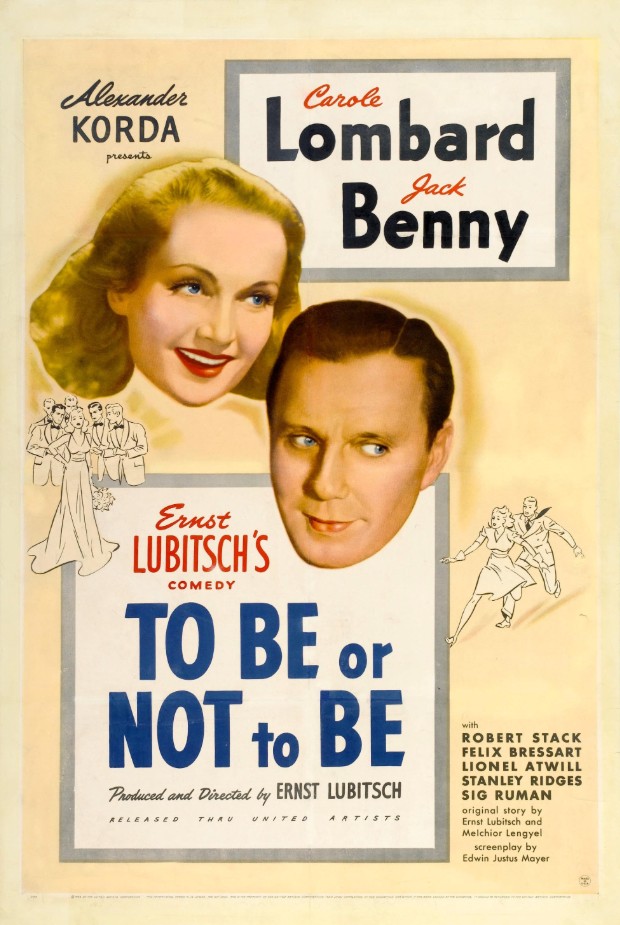
To Be or Not to Be (1942) poster created by Romaine Film Corporation and United Artists

Things I liked about the film:

The on-screen chemistry of Carole Lombard and Robert Stack: In To Be or Not to Be, Carole Lombard portrays a Polish actress named Maria Tura. Toward the beginning of the movie, Maria develops an attraction for a Lieutenant named Stanislav Sobinski. Portrayed by Robert Stack, Stanislav is enthusiastic to meet Maria, especially since he’s never met an actress before. Though they shared very few scenes together, the on-screen chemistry between Carole and Robert was pleasant! The scene where Stanislav and Maria first meet is a perfect example, as their interaction felt so realistic. During the conversation, Maria confidently talks about her career, carrying an easy-going personality. But when Stanislav asks her about a farm she brought up in an interview, she is caught off guard, but uses her acting skills to adapt to what Stanislav told her. Meanwhile, Stanislav is so happy to see Maria. A genuinely bright smile is displayed on his face and his eyes light up. Because of the strength of Carole’s and Robert’s acting abilities, they sold the idea of their characters sharing a mutual relationship.

Clever writing: While good writing receives praise and accolades, clever writing can, sometimes, become underappreciated. This is why I take the time to address when a movie’s script contains clever writing. That was certainly the case for To Be or Not to Be, as I was impressed with some of the writing in the film. A great example can be heard during a conversation between Maria and her husband, Joseph. She accuses him of seeking opportunities to steal attention away from her. Maria even claims, “if we should ever have a baby, I’m not so sure I’d be the mother”. Joseph reassuringly tells his wife, “I’m satisfied to be the father”. The aforementioned conversation could have been straightforward, which would have made it sound typical. But the screenwriting, as well as Jack Benny’s delivery, allowed scenes like this one to be memorable!

How war was incorporated in the film: Some of the opening shots in To Be or Not to Be focus on shops in Warsaw, Poland, specifically the names of those who own these shops. When, later in the movie, war breaks out in Poland, those same shops are burned down, torn to shreds, or collapsed. The names on those shops are also destroyed. These shots are a good representation of how war ruins not just buildings, but livelihoods, daily routines, and human connections. One of the actors who performs alongside Maria and Joseph is Greenberg. When he first observes the destruction in his neighborhood, he quotes Shylock’s monologue from the play, The Merchant Venice. This quote spoken against the backdrop of Poland during World War II changes the context of the quote itself, making it seem relevant to the story of To Be or Not to Be. Through visuals and the script, the film’s creative team addressed the seriousness of war and its impact on anyone of any profession.

The Carole Lombard Blogathon banner created by Kristen from Hoofers and Honeys

What I didn’t like about the film:

A dialogue heavy story: Dialogue is an important component of any movie. It helps the audience learn more about the characters, discover potential plot twists, and follow along with the story. But in the case of To Be or Not to Be, the script was very dialogue heavy. There were long stretches of time where characters shared conversations with each other. This is the result of how much the creative team relied on telling instead of showing. If one isn’t actively paying attention to the story, they may miss important details. Had play performances or more action-focused scenes been evenly sprinkled throughout To Be or Not to Be, it would have created a balance between what the characters say and what the characters do.

The run-time: IMDB lists To Be or Not to Be’s run-time as an hour and thirty-nine minutes. This run-time, to me, seemed much longer. The long stretches of time of characters’ conversations I already mentioned made the film feel drawn-out. There are also parts of the story that don’t lead anywhere, such as Maria’s concerns about Joseph trying to steal attention away from her. If the script had been trimmed down, the run-time of To Be or Not to Be could have been an hour and thirty minutes or less.

Inconsistent sense of urgency: As I discussed earlier in this review, To Be or Not to Be takes place in Poland during World War II. The characters are directly impacted by this global conflict, even going undercover to stop the Nazis. These parts of the story create a sense of urgency. But this sense of urgency isn’t consistent within the 1942 presentation. That flaw was caused by the dialogue-heavy scenes I referenced in my review. These scenes’ length of time takes away from moments where immediate situations can be resolved. The imminent threat of war is also placed to the side because of the dialogue-heavy scenes. Having a more consistent sense of urgency would have strengthened the suspense and intrigue in To Be or Not to Be.

Theater seats image created by weatherbox at freeimages.com. “FreeImages.com/weatherbox.”

My overall impression:

Last year, I reviewed For Me and My Gal, a film I ended up liking. One of the reasons why I gave that movie a good review is because of how World War I was incorporated into the script. With a steady progression and subtle changes, realism was woven into a musical like For Me and My Gal. I’d actually prefer that movieover To Be or Not to Be. Though To Be or Not to Be is a fine, interesting film, the run-time felt longer than an hour and thirty-nine minutes. The story’s sense of urgency was inconsistent and the script was too dialogue-heavy. However, there are merits within the 1942 title. I wish Carole and Robert shared more screen-time together because their on-screen chemistry was pleasant. How war was incorporated in the film allowed the creative team to show the seriousness of war and its impact on anyone of any profession. I also liked the movie’s clever writing. Compared to the other films of Carole’s I’ve written about, Twentieth Century and In Name Only, To Be or Not to Be is somewhere in the middle. With over seventy movies on her IMDB filmography, I have plenty more projects of Carole’s to check out!

Overall score: 7 out of 10

Have you seen To Be or Not to Be? Would you like to see me review more of Carole Lombard’s movies? Let me know in the comment section!

Have fun at the movies!

Sally Silverscreen
Take 3: Kind Hearts and Coronets Review

2025 is my fourth year participating in the Rule, Britannia Blogathon. Two of my previously chosen films, Nicholas Nickleby and Kingdom of Heaven, were released in the 2000s. Meanwhile, Tommy premiered in 1975. For this year’s event, I selected a film that is much older than the ones I mentioned. That movie is 1949’s Kind Hearts and Coronets! I was recommended the film by Eric Binford from Diary of a Movie Maniac. Reflecting on my blogathon participation this year, so far, I have made a stronger effort to select films that were recommendations from my readers. Most of the recommended titles I selected for these blogging events were ok or fine. The only exception was She Wore a Yellow Ribbon, which I found disappointing. How will Kind Hearts and Coronets compare with the other titles? Keep reading my review to find out!

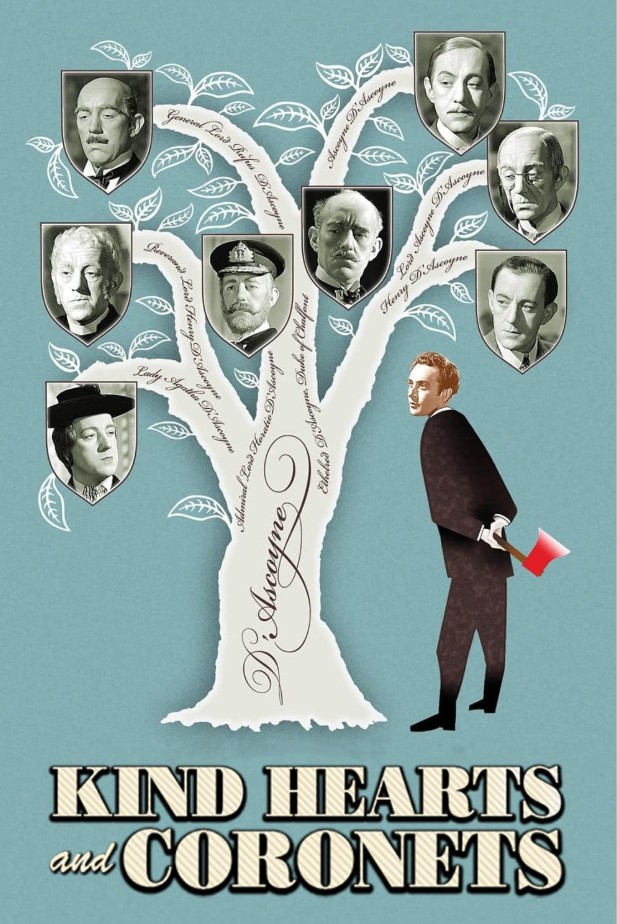
Kind Hearts and Coronets poster created by Ealing Studios, Michael Balcon Productions, General Film Distributors (GFD), and Eagle-Lion Films

Things I liked about the film:

The acting: Dennis Price portrays Louis in Kind Hearts and Coronets. Throughout the story, Louis consistently carries a calm, collected persona. Even a prison warden points out how calm Louis is before his execution. Along with the aforementioned persona, Louis possesses a certain charm that allows his true intentions to be undetected. These qualities fool the other characters into welcoming him into their lives and giving him exactly what he wants. The strength of Dennis’ acting abilities effectively showed how Louis could fake it until he made it. One of the characters fooled by Louis was Edith. Despite becoming a widow, she never let grief consume her. Instead, Edith had a gentle persona and was kind to everyone. During a conversation she shares with Louis, she sympathizes with his estrangement from his family. The tone in her voice indicates how hurt she is to learn this about Louis’ life. Even the look on her face shows sadness and concern. Similar to Dennis’ performance, Valerie Hobson (the actress who portrayed Edith) presented a consistent portrayal of Edith. However, the acting overall was well done!

The dialogue: When the dialogue in a script is good, it can make conversations between characters sound natural. But when the dialogue is really good, it can leave a memorable impression on the audience. In Kind Hearts and Coronets, there was some dialogue that I thought was well-written! One example is when Edith learns how Louis and his mother were estranged from the D’Ascoyne family. Disgusted to discover Louis’ rejection, Edith says “they think too much of the rights of the nobility and too little of its duties”. Through that quote, she eloquently stated how family connections should have been a top priority. In another scene, Louis is giving his friend, Sibella, compliments. He tells her she has “a face that a man could see in his dreams for the whole of his life”. During this conversation, Louis could have simply said Sibella had a beautiful or pretty face. The creative team’s effort to provide some of the dialogue with quality, however, made Louis’ compliment sound like genuine thought was put into it.

Historical accuracy: Kind Hearts and Coronets takes place in England during the Edwardian era. This means the film’s creative team needed to adopt attention to detail in order to make their production look as historically accurate as possible. Through the set and costume design, that goal was achieved, making the movie feel immersive! The women’s wardrobe serves as one example. Sometimes, Edith and Sibella wear hats when out in public. These hats are larger in size and boast intricate designs. Using materials like flowers, ribbon, and even lace, the hats symbolize the wealth Sibella and Edith possess. They also perfectly represent the fashion in the world of Kind Hearts and Coronets.

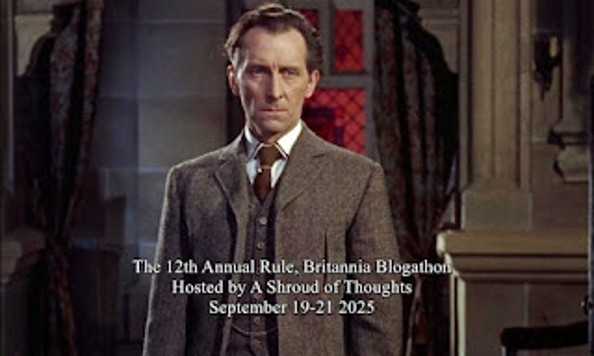
The 12th Annual Rule, Britannia Blogathon banner created by Terence from A Shroud of Thoughts

What I didn’t like the film:

Lack of suspense and intrigue: According to IMDB, Kind Hearts and Coronets is about “a distant poor relative of the Duke D’Ascoyne plots to inherit the title by murdering the eight other heirs who stand ahead of him in the line of succession”. Keeping this synopsis in mind, I expected a story where Louis’ scheme provided suspense and intrigue came from how Louis would face accountability for his actions. But as I watched the 1949 movie, I found the story lacking these elements. What the script focused on instead was the “slice of life”, mundane parts of Louis’ life. In fact, so much emphasis was placed on this aspect of the story, potential suspense and intrigue were an afterthought.

Little emphasis on the story’s moral: In Kind Hearts and Coronets, Edith quotes Lord Tennyson by stating “Kind hearts are more than coronets, and simple faith than Norman blood?” Based on that quote, I thought the moral of the film would be if Louis had just chosen kindness, maybe he could have enjoyed a duke title instead of facing repercussions for his choices. Sadly, this assumed moral was barely referenced throughout the story. Such little focus was placed on the moral of practicing kindness, I don’t even know what the moral of this story was supposed to be. Looking back on Kind Hearts and Coronets, I’m not entirely sure what this movie was trying to say.

The cliffhanger ending: For this part of my review, I will spoil Kind Hearts and Coronets. If you haven’t seen this movie and are planning on watching it, skip ahead to the part of my review titled “My overall impression”.

Louis is charged for the murder of Sibella’s husband, Lionel. Before his scheduled execution, Louis is told Lionel actually committed suicide, leaving behind a note. This discovery leads Louis to be released from prison. Upon leaving the prison, a writer approaches Louis with an offer to publish his memoir. This is when Louis realizes in horror he left his self-written life story, including his murder confessions, back in his jail cell. Then the movie ends. Louis’ realization was suspenseful, providing intrigue for who will discover Louis’ story. This suspense and intrigue could have been overarching elements throughout the movie. Therefore, I found the cliffhanger ending frustrating.

Sketch of London image created by Archjoe at freepik.com. <a href=’https://www.freepik.com/free-vector/hand-drawn-houses-of-parliament_1133950.htm’>Designed by Archjoe</a>. <a href=”https://www.freepik.com/free-photos-vectors/background”>Background vector created by Archjoe – Freepik.com</a>. Image found at freepik.com.

My overall impression:

As a movie blogger, I have reviewed films I tried to like, only to be met with disappointment. Sadly, Kind Hearts and Coronets is one of those films. IMDB classifies the 1949 movie as a “comedy”. But I didn’t laugh at all while watching it. In fact, I almost fell asleep as I watched Kind Hearts and Coronets. I was let down by the story’s lack of intrigue and suspense. What doesn’t help either is how little focus was placed on the moral to the point where I didn’t know what the moral was supposed to be. While I won’t spoil the ending, I will say it left me frustrated. There were strengths within Kind Hearts and Coronets, however. The acting overall was well-done, some of the dialogue was well-written, and I liked the film’s historical accuracy. When the script is weak, though, there’s only so much these strengths can do to save the film.

Overall score: 5.2 out of 10

Have you seen Kind Hearts and Coronets? What productions from the United Kingdom would like to check out? Let me know in the comment section!

Have fun at the movies!

Sally Silverscreen
Take 3: She Wore a Yellow Ribbon Review

I have been participating in the Legends of Western Cinema Week Blogathon since 2020. Because films from the western genre aren’t covered on 18 Cinema Lane often, this blogathon has given me a reason to seek out titles from the western genre to review. But when the Legends of Western Cinema Week ends, another blogathon begins; the Hit The Road Blogathon. Since I wanted to participate in both events, I decided to review one film for both blogathons. That film is 1949’s She Wore a Yellow Ribbon! The movie perfectly fits the themes of both events, as it is not only considered a “classical western” (according to IMDB), multiple characters travel by horse throughout the story. She Wore a Yellow Ribbon was also recommended to me by Eric Binford from Diary of a Movie Maniac. While this is the fourth movie of John Wayne’s I’ve seen, this is only the third one I’ve reviewed. The other two titles, El Dorado and Allegheny Uprising, were, in my opinion, just ok. How does She Wore a Yellow Ribbon compare to these other films? Keep reading my review to find out!

She Wore a Yellow Ribbon poster created by Argosy Pictures and RKO Radio Pictures

Things I liked about the film:

The acting: Whenever I discuss the acting in a given movie, I will usually talk about a scene that showcases the strength of the acting performances. My favorite example from She Wore a Yellow Ribbon takes place toward the beginning of the film. John Wayne portrays Captain Nathan Brittles, a man who goes on one last mission before he retires. During an evening visit to the local cemetery, Nathan talks to the graves of his wife, Mary, and his daughters, Elizabeth and Jane. While he talks to his deceased family, he consistently has a sad look in his eyes. Yet, the inflection of his voice changes depending on the type of news he has to share. Joanne Dru’s character, Olivia Dandridge, also visits the cemetery to give Nathan some potted flowers. Olivia’s persona is kind and gentle throughout this scene. Her conversation with Nathan perfectly displays the on-screen camaraderie between Joanne Dru and John Wayne. Because of this on-screen camaraderie and how strong John’s and Joanne’s acting performance was, I wish they shared more screen time.

The scenery: Most of She Wore a Yellow Ribbon takes place outdoors, with the movie being filmed in Utah and Arizona (according to IMDB). Looking back on the 1949 picture, I can definitely see why the film’s creative team would want to take advantage of the story’s natural landscape. Large, rustic red rocks impressively stood against a blue sky filled with white clouds. There were greens spots where foliage popped within the rocky terrain. The most memorable presentation of the scenery was during a storm. The bright, blue lighting blinked against the two-toned gray sky and the sand-colored ground provided a bright hue to the space. She Wore a Yellow Ribbon was a pretty looking film because of its scenery!

The dialogue: In She Wore a Yellow Ribbon, Corporal Quayne’s life is spared after being rescued from an attack. Olivia shares with Lieutenant Flint Cohill how happy she is Corporal Quayne survived. Lieutenant Cohill asks her why she cares about Corporal Quayne, especially since she doesn’t know him or is aware if he frequents the Lieutenant’s Bar. Olivia responds to this question by saying just because a man frequents the Lieutenant’s Bar doesn’t automatically make him a gentleman. Lieutenant Cohill then accuses Olivia of caring about Corporal Quayne’s well-being because his survival fits the happy ending she can write home about. This conversation between Olivia and Lieutenant Cohill was thought-provoking, as it addresses motivations for caring about others, as well as how someone’s personal situation can fuel another person’s narrative. That is just one example of the well-written nature of the dialogue!

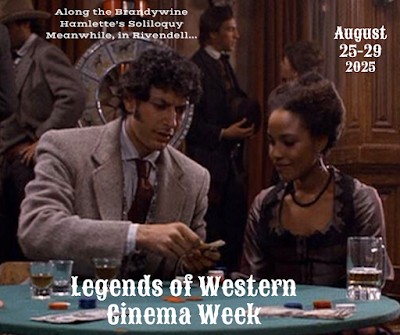
The Legends of Western Cinema Week Blogathon banner created by Hamlette from Hamlette’s Soliloquy, Heidi from Along the Brandywine, and Olivia from Meanwhile, in Rivendell…

What I didn’t like about the film:

Limited amount of action: A movie from the western genre, especially one starring John Wayne, carries a set of expectations. One of those expectations is the amount of action within the story. Scenes of battles, duels, and even bar fights will typically be sprinkled through a western genre story to maintain the suspense and intrigue of what’s happening on screen. But in She Wore a Yellow Ribbon, the action was far and few between. The majority of the story consisted of characters either having conversations with one another or riding from place to place. When an action scene does happen, it lasts for a very short period of time. These creative decisions caused She Wore a Yellow Ribbon to lack intrigue and suspense.

Not truly getting to know the characters: So much of She Wore a Yellow Ribbon’s story focuses on Captain Nathan Brittles and his impending retirement. While the audience receives the opportunity to learn more about Captain Brittles and understand his motivations, it comes at the expense of getting to truly know the other characters. One character I felt was overlooked was Top Sergeant Quincannon. He was retiring around the same time as Captain Brittles. But the script never addresses how the story’s patrol mission impacted Top Sergeant Quincannon and his career. Instead, the film prioritizes his enjoyment of drinking alcohol. Because of this emphasis, I only became familiar with Top Sergeant Quincannon instead of truly getting to know him.

The run-time: She Wore a Yellow Ribbon has a run-time of an hour and forty-four minutes. As I watched the movie, however, it felt longer than this stated run-time. Part of this flaw stems from the insertion of scenes just for the sake of satisfying the film’s length. Toward the end of the movie, there is a bar fight involving Top Sergeant Quincannon. This scene lasts about five minutes and, in my opinion, feels out of place. That’s because the scene is intended to be comedic, even though She Wore a Yellow Ribbon is not a comedy or a light-hearted story. The movie’s run-time could have been shorter had the bar fight scene either been omitted or trimmed down.

The Hit The Road Blogathon banner created by Quiggy from The Midnite Drive-In

My overall impression:

She Wore a Yellow Ribbon is the third film I’ve reviewed this month where the scenery was a stand-out strength. In the case of the 1949 picture, the natural landscape of Utah and Arizona was presented through long and medium shots, capturing the grand scale of the desert’s rock formations and large expanse of rustic red and sand-colored land. But as I’ve said in past reviews, “the scenery can’t save you”. If a movie contains a weak script, there’s only so much the pretty landscape can do to salvage that script. In my opinion, She Wore a Yellow Ribbon is an underwhelming picture. What I expected to be an action-packed, suspenseful, and even intriguing story turned out to be a drawn-out tale that felt longer than necessary. It also doesn’t help how I wasn’t able to truly get to know the characters, but only become familiar with them. Even though the 1949 film does feature strengths, like the acting and the dialogue, there were times while watching the movie where I almost fell asleep. With a filmography of over one hundred projects, I’ll, hopefully, find a title of John Wayne’s I actually like.

Overall score: 5.2 out of 10

Have you seen She Wore a Yellow Ribbon? What film from John Wayne’s filmography do you like watching? Please tell me in the comment section!

Have fun at the movies!

Sally Silverscreen

The Top Ten Best Movies I Saw in 2024

For me, 2024 was a better year for movies. That’s because I saw more movies I liked, compared to 2023! Another difference from 2023 is how, on 2024’s list, more movies are theatrical pictures. However, there are still some made-for-TV productions that found a spot on my list. With more likable movies comes the return of the honorable mentions section! In that part of my list, most of the films are television projects. Since I reviewed almost all the movies on this year’s list, I will provide links to those reviews in this post. So, with 2025 on the horizon, let’s begin my list of the top ten best movies I saw in 2024!

Honorable Mentions

Legend of the Lost Locket, My Baby Is Missing, My Mother’s Split Personalities, Christmas on Division Street, and Interstellar

Image by starline on Freepik

10. I Heard the Bells

I Heard the Bells achieved so much in a short amount of time. The 2022 movie was chosen for my 500 Blog Follower Dedication Review. Then, I Heard the Bells became my 400th published movie review, as I recently revealed in my list of the ten movie trends I don’t understand. Now, the film is the only Christmas picture to earn a place on 2024’s best movies of the year list! When I wrote about I Heard the Bells, I compared it to It’s a Wonderful Life. Both titles are not only about more than just the Christmas holiday, they also cared about their overall presentation. I Heard the Bells was a visually immersive movie because of the attention to detail placed on historical accuracy. The strength of the acting performances allowed the story to be engaging. While it’s too early to say right now, I think I Heard the Bells could be a Christmas classic!

Take 3: I Heard the Bells Review + 500 Follower Thank You

9. Easter Parade

If I could choose one word to describe Easter Parade, it would be “colorful”. With the movie’s creative team taking advantage of Technicolor, costumes and décor boasted vibrant hues that complimented the story’s spring season! The musical numbers provide another strength in Easter Parade. From Fred’s festive and creative solo, “Drum Crazy”, to Ann’s energetic and fast-paced solo, “Shakin’ the Blues Away”, the movie’s musical numbers were enjoyable because of their choreography and delivery. The reason the 1948 film is placed lower on my list is due to the premise-driven story and the limited inclusion of Easter. However, Easter Parade’s positives outweigh the negatives!

Take 3: Easter Parade Review

8. For Me and My Gal

In my review of For Me and My Gal, I mentioned how Breen Code era movie musicals contain simpler stories. These simpler stories will typically feature lower stakes. But in For Me and My Gal, the story of Harry and Jo included stakes that were higher. The story wasn’t afraid to show Jo and Harry making difficult decisions when it came to their dreams. Along their journey, the duo even deals with regret and heartbreak. The way World War I was incorporated into For Me and My Gal gave the script a sense of realism. Creative decisions like that one gave the 1942 picture emotional depth!

Take 3: For Me and My Gal Review

7. Willow

When I started my Comparing with the Critics series, I knew there were some movies I would disagree with the critics on. What I didn’t know was how much I would like Willow. Now that I’ve seen the 1988 film, I can understand why some people have given it the coveted title of “classic”. Likable elements, such as humor and unique perspectives on familiar story ideas, provide arguments for the aforementioned claim. The simplistic and straight-forward nature of the story made it easier to follow what was happening on screen. For me, Madmartigan stole the show! Movies like Willow make me thankful for my Comparing with the Critics series.

Comparing with the Critics – Worst of 1988 – Willow

6. Curious Caterer: Forbidden Fruit

2024 saw the premiere of two Curious Caterer films; Curious Caterer: Foiled Plans and Curious Caterer: Forbidden Fruit. Though I liked Curious Caterer: Foiled Plans more than Curious Caterer: Forbidden Fruit, Curious Caterer: Forbidden Fruit was still a good movie. The fifth chapter in the series consistently carried the strong components of the Curious Caterer story, like the acting, humor, and prioritizing the mystery. A peek behind the music industry’s curtain and the incorporation of serious, real-world topics helped make the identity of Curious Caterer: Forbidden Fruit unique. As of the publication of this list, Hallmark has not provided any 2025 dates to the Curious Caterer series. If there are going to be more Curious Caterer films, I hope at least one of them is a seasonal picture.

Take 3: Curious Caterer: Forbidden Fruit Review

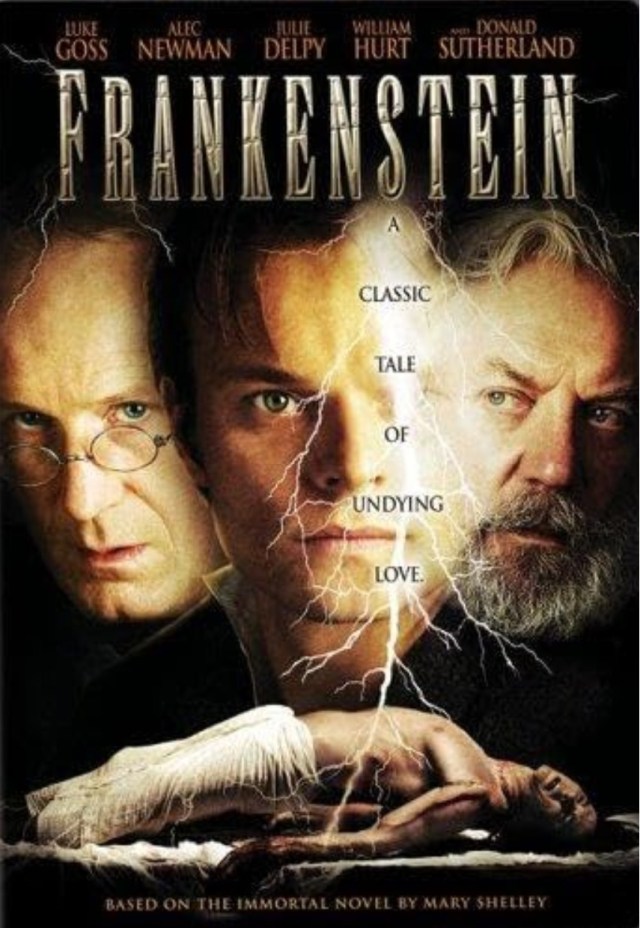
Hallmark’s Frankenstein poster created by Hallmark Entertainment, Hallmark Channel, Silverstar Ltd., Larry Levinson Productions, and RTL

5. Hallmark’s Frankenstein (2004)

Back in March, I called Hallmark’s adaptation of Frankenstein a “hidden gem”. This claim was based on my observation of how a good movie was not only forgotten by time, but also overshadowed by other titles released in 2004. What makes this version of Frankenstein a good movie, in my opinion, is how respectful it was toward Mary Shelley’s novel. One great example is Luke Goss’ portrayal of The Creature, as the way emotion was utilized throughout Luke’s performance highlighted how complicated The Creature is. Hallmark’s adaptation of Frankenstein is another movie where the visual presentation created an immersive experience. Combining set design, costume design, and attention to historical accuracy, the movie made me feel like I was transported to another time and place.

Take 3: Hallmark’s Frankenstein (2004) Review (Double Feature: 2004 Edition Part 2)

4. The Boys in the Boat

If you’re going to create a sports movie involving a team sport, it’s important to make the camaraderie among the team believable. An on-screen team with believable camaraderie helps the audience stay invested in the story, as well as the team’s journey. Because the acting performances were strong in The Boys in the Boat, the camaraderie within the team dynamic felt genuine. The 2023 film also makes rowing look exciting! This was accomplished through cinematography, editing, and music selection. The Boys in the Boat is a “based on a true story” film that, in my opinion, is worth the time! This is yet another production where historical accuracy was a top priority.

3. Amadeus

Out of all the movies I reviewed for my Comparing with the Critics series, Amadeus is, so far, the only movie I agreed with the critics on. While the biopic is a glamourous spectacle, it also contains substance. Thought-provoking material can be found in the script, such as how fame can negatively impact the human soul. The story is an immersive, detail-oriented character study that explores the good and bad sides of the music industry. The creative team’s focus on detail made Amadeus look and feel historically accurate, as can be seen in the costume and set design. F. Murray Abraham and Tom Hulce each gave a strong performance. I can, honestly, say the 1984 movie is one of the best biopics I’ve ever seen!

Comparing with the Critics – Best of 1984 – Amadeus

2. Curious Caterer: Foiled Plans

Remember when I said I liked Curious Caterer: Foiled Plans more than Curious Caterer: Forbidden Fruit? One reason why I said this is Goldy’s consistent involvement in Curious Caterer: Foiled Plans’ case. Other reasons why I liked the fourth chapter in the series are the creativity of the mystery, the quality of the acting performances, and how humor was written into the story. Looking back on Hallmark’s mystery films I saw in 2024, this Curious Caterer movie is pretty unique. That’s because, as I mentioned in my review, it’s a locked room mystery revolving around a costume party. In 2023’s best movies of the year list, I claimed Curious Caterer: Grilling Season was the best film in the series. I certainly changed my mind after I saw Curious Caterer: Foiled Plans!

Take 3: Curious Caterer: Foiled Plans Review

1. I Am David

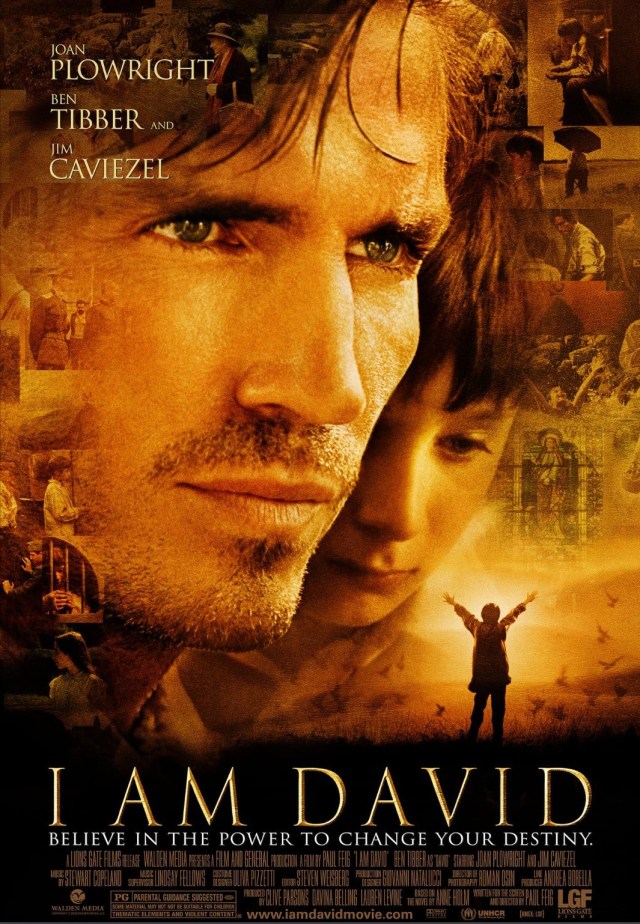
It’s amazing how I Am David became 2024’s best movie in March and clung on to the number one spot all these months later! This impressive film allowed the story of David and his journey to be told with genuine emotion and sincerity. This was achieved through every aspect of the production, like the acting performances and the screenwriting. Exploring light and darkness, as well as showcasing Europe’s natural landscape, gave the production visual depth. Timeless, universal messages were also woven into the script. As I said in my review, I wish more people knew about this movie. Hopefully, my review or maybe this list can encourage someone to check out I Am David!

Take 3: I Am David Review (Double Feature: 2004 Edition Part 1)

I Am David poster created by Walden Media, Film and General Productions, Lionsgate Films, Artisan Entertainment, and David Productions Ltd.

Have fun in 2025!

Sally Silverscreen
Take 3: For Me and My Gal Review

Looking back on Judy Garland’s movies I’ve seen, I can
honestly say I haven’t seen a movie I didn’t like. Even though some pictures were
better than others, I can’t say any of Judy’s films were “bad”. Hoping this
streak will continue, I joined the Third Judy Garland Blogathon by reviewing For
Me and My Gal
! This film was recommended by the Brannan sisters from Pure
Entertainment Preservation Society. They not only introduced me to this film,
they introduced me to the Breen Code era! Between 1934 to 1954, the Breen Code
served as a set of guidelines for film-makers. These guidelines addressed the
dos and don’ts of movie-making based on a series of morals. Within that period
of time, Hollywood gave their audience films that have stood the test of time
and even become “classics”. But will this statement hold true for For Me and
My Gal
? Keeping reading my review to find out!

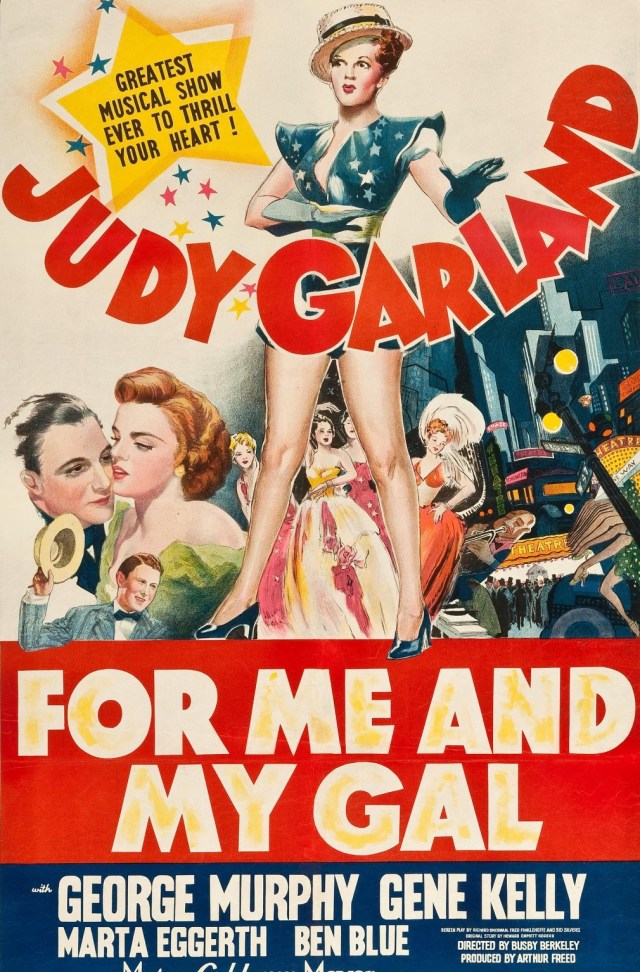
For Me and My Gal poster created by Metro-Goldwyn-Mayer (MGM)

Things I liked about the film:

The on-screen chemistry: Since I chose to review this movie
for the Third Judy Garland Blogathon, I want to discuss Judy’s performance in For
Me and My Gal
. However, I want to talk about her performance in relation to
her on-screen chemistry with Gene Kelly. When a movie musical features a
romantic relationship, the on-screen chemistry of the lead actor and actress
can sell the idea their characters truly love one another. This is what Gene
and Judy achieved through their portrayals of Harry Palmer and Jo Hayden! One
perfect example is presented during the musical number, “For Me and My Gal”.
Through facial expressions, the choreography, and their singing abilities, Jo
and Harry realize they share the same dream, despite being complete strangers
only hours ago. This musical number emphasizes how these characters were always
meant to be together.


How World War I was incorporated: For Me and My Gal takes place in the middle of the 1900s, the time when World War I took place. The story revolves around civilian perspectives; vaudeville
performers trying to make their dreams come true. At the beginning of the
movie, newspaper headlines broadcast events related to World War I. But the
newspaper’s front page is turned away from the characters, as they are more
concerned with how their performances were reviewed by the critics. As the
story progresses, World War I starts to take center stage in their lives,
affecting each character differently. This progression is steady and the
changes happen more subtly. The way World War I was incorporated into For Me
and My Gal
felt realistic. Though fictional musical movies require a
certain amount of disbelief to be suspended, it was refreshing for realism to
be woven into the film.


A story with stakes: Movie musicals, especially those from
the Breen Code era, contain simpler stories. These stories range from looking
for another member of a talent group or characters expressing their love for
each other. In For Me and My Gal, the overarching
story focuses on characters working toward their dreams. Throughout the movie,
Jo and Harry experience obstacles and attempt to overcome them. At one point in
the film, Harry receives an offer to perform at The Palace, a theatre in New
York every vaudeville performer aspires to go. While the offer itself sounds
amazing, the problem is Harry would no longer be able to perform with Jo. This
is one example of For Me and My Gal containing a story with stakes. In
the case of the aforementioned conflict, there were stakes not only for Harry’s
career, but also for his relationship with Jo.

The Third Judy Garland Blogathon banner created by Crystal from In The Good Old Days Of Classic Hollywood and Kristen from Hoofers and Honeys

What I didn’t like about the film:

The “insta-love” trope: In stories where a romantic
relationship in included, part of the story is devoted to showcasing the
progression of that relationship. If a story’s relationship moves too quickly,
it may be difficult for the audience to become invested in that relationship or
determine if the actors have on-screen chemistry. While Judy Garland and Gene
Kelly had good on-screen chemistry, I found their characters’ initial attraction
to happen too quickly. In fact, this attraction happened so quickly, it almost
felt unbelievable. I recognize there’s only so much story to tell in an hour
and forty-four minutes. However, I wish Harry and Jo’s attraction for one
another had taken its time.


An unresolved debt: Toward the beginning of For Me and My
Gal
, Jo’s brother, Danny, pays Jo a visit after one of her shows. During
their conversation, Jo tells Danny she will pay him back after she becomes a
big vaudeville star. But this is the only time throughout the movie where this
debt is mentioned. The debt is not revisited or resolved as the story progresses.
That part of the story ended up becoming a loose end that was left behind by
the end of the movie.


A confusing conflict: For this part of my review, I will
spoil For Me and My Gal. If you have not seen this movie and are
interested in watching it, skip this part of my review and continue reading where
it says “My overall impression”.


After Jo and Harry discover their love for each other, they
receive a telegram congratulating them on their upcoming performance at The
Palace, a theatre in New York they have dreamed about for so long. When they
arrive at The Palace, Harry and Jo learn there was a misunderstanding. They
received a gig at The Palace theatre in Newark, New Jersey. In the telegram, its
sender stated The Palace was in New York. But any performer on the vaudeville
scene would know there’s only one Palace theatre, the one in New York City.
That quote in the telegram references how Eve Minard, a singer Jo and Harry met
on a train trip, brought up the idea of more than one Palace theatre. For Me
and My Gal
was released during the Breen Code era. When a character makes a
poor choice within a film from this time period, they either face accountability
for that choice or learn from their mistake. However, Eve is never confronted
about the telegram. This leaves me confused, wondering if Eve was intentionally
ruining Harry and Jo’s plans or if she was genuinely trying to help, but her
message became lost in translation?

Children holding American flags during a sunset image created by rawpixel.com at freepik.com. <a href=”https://www.freepik.com/free-photos-vectors/people”>People photo created by rawpixel.com – http://www.freepik.com</a>. Image found at freepik.com.

My overall impression:

The term, “The Golden Age of Hollywood”, gets thrown around
from time to time in conversations about the film industry. This term’s
definition depends on who you ask, as film itself can be subjective. In my
opinion, one of Hollywood’s “golden ages” was the Breen Code era. For Me and My Gal serves as one example to prove my point. The 1942 picture sets itself apart from other musical films by
presenting a story with stakes. It also incorporates World War I in a realistic
way. As I’ve stated in past reviews, the strength of a musical movie lies in
its musical numbers. For the most part, For Me and My Gal features
musical numbers that are pleasant to watch! This is the second Judy Garland
production I reviewed this year I was not only recommended, but ended up liking
as well. The streak of enjoyable Judy Garland movies I mentioned in this review’s
introduction is still going strong!


Overall score: 7.6 out of 10


Have you seen For Me and My Gal? What is your
favorite movie of Judy Garland’s? Please let me know in the comment section!


Have fun at the movies!

Sally Silverscreen


Take 3: Easter Parade Review

With today being Easter, I’m reviewing the 1948 musical, Easter Parade! But this is not the only reason why I’m writing about this movie. Since the protagonists would be considered a “mismatched couple”, the film was eligible for Realweegiemidget Reviews’ and Cinematic Catharsis’ Mismatched Couples Blogathon. Easter Parade was also recommended by Michaela from Love Letters to Old Hollywood. Prior to this year, the only Easter themed movie I wrote about was the Hallmark production, Easter Under Wraps. While I have reviewed faith-based films, those pictures were not about the Easter holiday. Because this was my first time watching Easter Parade, I was curious how Easter would play a role in this story. I was also curious how the film would compare to other musicals from the Breen Code era. So, without delay, let’s begin this review of Easter Parade!

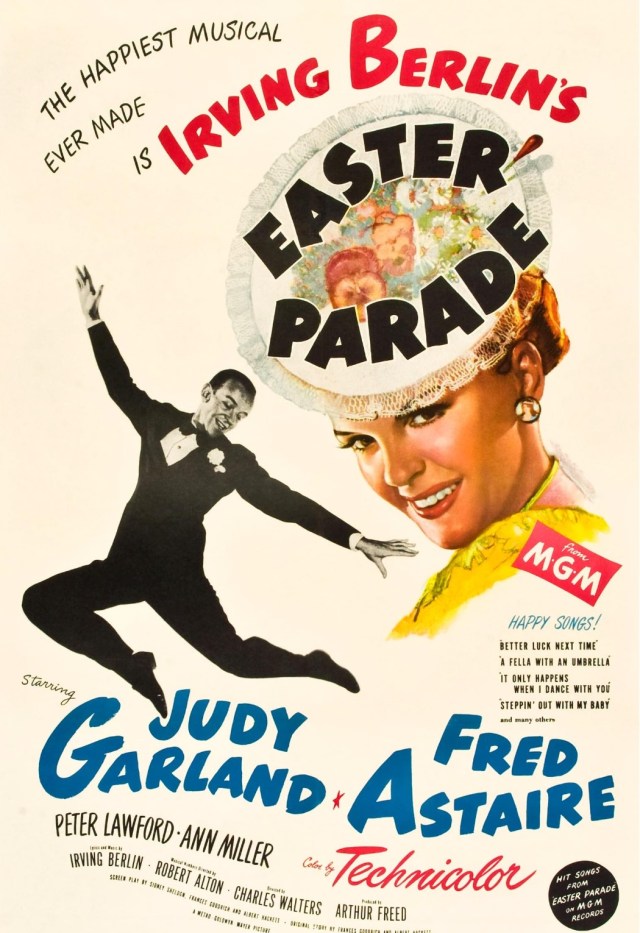
Easter Parade poster created by Metro-Goldwyn-Mayer and Loew’s, Inc.

Things I liked about the film:

The acting: Fred Astaire portrays Don Hewes in Easter Parade, a veteran dancer who is looking for a new dance partner. In this same movie, Judy Garland portrays Hannah Brown, a singer who is trying to make a name for herself in the entertainment industry. Together, Judy and Fred are an on-screen pair that not only works well together, but also dances well together! One of my favorite scenes is when Don mentions to Hannah how she doesn’t capture men’s attention. In an effort to prove Don wrong, Hannah walks in front of him, at first looking discouraged by her fruitless efforts. A few minutes later, Don sees men are taking notice of Hannah. He looks confused and even baffled at how Hannah could prove him wrong. When Don catches up with Hannah, he discovers she is making funny faces, explaining why men were noticing Hannah. This scene was hilarious because of Fred’s and Judy’s expressions and interactions!

Even though Judy and Fred worked well together, I think Judy and Peter Lawford had strong on-screen chemistry! Despite Hannah being from a small-town farm and Johnny being from the city, their interactions make it seem like they have a deep understanding for one another. While on a dinner date, Hannah confesses she dreams her true love will give her flowers and sweep her off her feet. When she reflects on her time with Don, she realizes Don only gives her flowers and sweeps her off her feet when it relates to dancing. During this reflection, Hannah looks defeated and sad by how she didn’t receive what she wanted the way she wanted it. Meanwhile, Johnny looks genuinely sympathetic toward Hannah. As I watched this scene, I wanted Johnny and Hannah to fall in love with each other!

The use of color: In Easter Parade’s opening credits, Technicolor was revealed to be incorporated into the production. I’m thankful Technicolor was used in this movie because capturing scenes in black-and-white would not have done this picture justice! Because parts of Easter Parade’s story take place around Easter, creative decisions such as costume designs and décor are very colorful. Toward the end of the film, Fred and a large group of dancers perform a number to “Steppin Out with My Baby”. Every performer’s costume boasted bright hues, from one dancer’s yellow shoes to another dancer’s blue gloves. At the beginning of the movie, during the musical number, “Happy Easter”, flowers in vibrant shades are present as Don makes his trip to the store. Though it’s a small detail, these flowers play a role in complimenting the colorful landscape of the story’s spring season!

The musical numbers: Musical numbers can make or break a given film. But in Easter Parade, the musical numbers are a major strength because of the choreography and delivery of the numbers themselves. One of the most creative numbers I’ve ever seen was Fred’s solo, “Drum Crazy”. This solo shows his character, Don, tap dancing and playing drums in an attempt to trick a child into giving him a stuffed bunny toy. The combination of dancing and instrument playing provides a captivating performance that not only highlights Fred’s signature talent, but also pairs dancing with other artistic mediums. Another strong solo was Ann Miller’s solo, “Shakin’ the Blues Away”. While portraying Don’s former dance partner, Nadine, Ann’s solo was a tap number that involved a lot of turning. What makes this musical number so memorable is how the cinematography closely follows Ann during her performance. This focus forces the audience to give their undivided attention to Ann and her number. The number itself is fast-paced and energetic, with Ann consistently delivering the choreography in precise and fluid movements!

Cute Easter image created by Freepik at freepik.com. <a href=”https://www.freepik.com/free-photos-vectors/background”>Background vector created by freepik – http://www.freepik.com</a>. Image found at freepik.com.

What I didn’t like about the film:

A premise-driven story: When I reviewed The National Tree last year, I explained the difference between a premise-driven story and a plot-driven story. After watching Easter Parade, I can confirm the movie has a premise-driven story. The premise of Don transforming Hannah into a star entices viewers to watch Fred and Judy acting and dancing together. But the film doesn’t really make the audience ask “and then what happened”? Even though the story is simpler and easier to follow, the story itself lacked a compelling hook, making it feel less intriguing. I wish the characters were given a conflict to resolve, similar to musicals like Singin’ in the Rain and Anchors Aweigh.

The “insta-love” trope: The romantic-comedy genre carries a collection of tropes and cliches. One of them is the “insta-love” trope, which features characters falling in love in a very short period of time. I understand there’s only so much story you can tell in an hour and forty-three minutes. But I thought Hannah and Don’s relationship progressed too quickly. I even thought the attraction between Hannah and Johnny happened too fast. The fast pace of these relationships made it seem like situations weren’t really resolved. Serious conversations and heart-felt discussions were either conveniently ignored or never brought up. The “insta-love” trope also affected how characters changed over the course of the story. Progressions in character development took place so quickly, it almost seemed too convenient.

Easter’s limited inclusion: With a movie called Easter Parade, I expected Easter to play a significant role in the story. While Easter is included enough to get the point across, I was disappointed by how limited its presence was. There were even scenes I could picture taking place within other holidays. Though the purpose of “Drum Crazy” was for Don to purchase a stuffed bunny toy, I found myself imagining this same musical number set during Christmas. Easter Parade is a story that could take place in almost any time of year and it wouldn’t make much difference.

The Mismatched Couples Blogathon banner created by Gill from Realweegiemidget Reviews and Barry from Cinematic Catharsis

My overall impression:

Some of the best, most iconic musicals were released during the Breen Code era. Their strong musical numbers and their overall timelessness have captured the hearts of viewers for decades. Easter Parade is one of these timeless musicals, showcasing its strengths through various creative departments! The colorful palette sprinkled throughout the story perfectly compliments the springtime atmosphere the film’s creative team was striving to present. Every musical number was well choreographed and performed, which definitely made the movie worth watching. Compared to other Breen Code era musicals, though, Easter Parade’s story was weaker. This flaw was due to the story being more premise-driven. Despite this and its other weaknesses, the 1948 film is an entertaining, mostly joyful production that is an appropriate selection for the Easter holiday!

Overall score: 7.6 out of 10

Have you seen Easter Parade? Is there an Easter themed movie you like to watch? Let me know in the comment section!

Have fun on Easter!

Sally Silverscreen

It’s Finally Here; the Familyathon Blogathon!

Welcome to the Familyathon Blogathon! With Thanksgiving on the horizon and the Christmas/holiday season on the way, the theme of family is recognized and celebrated! Even outside of special occasions, family has been a popular topic in entertainment media for decades. From these on-screen families, familiar faces and beloved characters have won over the hearts of fans. Their stories have served valuable lessons and even stood the test of time. Every entry in this event showcases how the subject of family has been incorporated into movies and television! From the underrated tv films to silver screen classics, let the blogathon begin!

Familyathon blogathon banner created by Sally Silverscreen of 18 Cinema Lane

Realweegiemidget Reviews — LISTS…Films Made With Their Own Kind of Family

The Midnite Drive-In — The Family That Slays Together Stays Together

Poppity Talks Classic Film — ‘Sabrina’ (1954): It’s All in the Family

Taking Up Room — Andy Hardy in the Big City

18 Cinema Lane — Take 3: …and Your Name Is Jonah (1979) Review

The Maidens of Green Gables — this is family ❤ (Katherine), Five of My Favorite Families (Grace)

Top 10 Films — The Bonds Of Family In “Running On Empty”

Silver Screenings — Old Yeller: Making the Tough Choices in Life

Hamlette’s Soliloquy — Hamlette’s Soliloquy: “Mr. Mom” (1983)

Take 3: Blackbeard, the Pirate Review

Pirate films are rarely covered on 18 Cinema Lane. In fact, the only three I’ve reviewed are The Princess and the Pirate (which I liked), Captain Sabertooth and the Treasure of Lama Rama (which I found disappointing), and China Seas (which was just ok). This is one of the reasons why I chose to write about the 1952 movie, Blackbeard, the Pirate! The other reason is Linda Darnell’s involvement, as she is the subject of the Linda Darnell Centennial Blogathon, hosted by Musings of a Classic Film Addict! Blackbeard, the Pirate is the second film of Linda’s I covered on my blog. The first one was The Song of Bernadette, which was also reviewed for a blogathon. The 1943 film was one of the best I saw last year! But because Linda’s role was smaller in that movie, I had to remind myself which character she portrayed. Since her role in Blackbeard, the Pirate was bigger, it was easier for me to remember her performance!

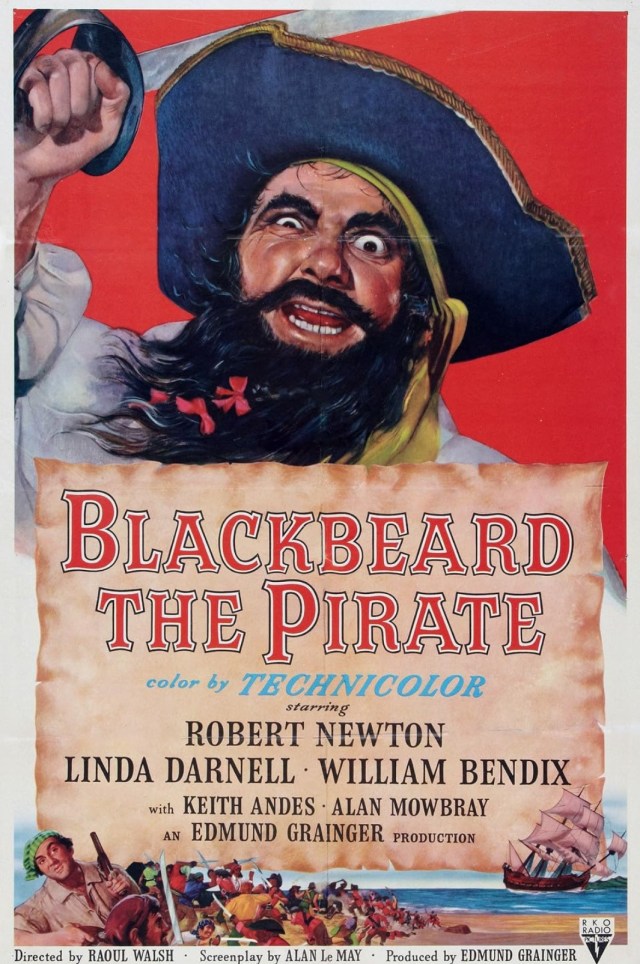
Blackbeard, the Pirate poster created by RKO Radio Pictures

Things I liked about the film:

The acting: Since Linda Darnell is one of the reasons why I reviewed Blackbeard, the Pirate, I’ll talk about her performance first. Linda was cast as the lead female protagonist, portraying a character named Edwina. Throughout the film, she consistently carried her character with confidence that radiated off the screen! Edwina was also a head-strong character, going toe-to-toe with characters like Blackbeard and sharing banter with them. Speaking of Blackbeard, Robert Newton shined in this role! What made his portrayal work was how animated and energetic it was. That consistent energy made Blackbeard interesting to watch! Linda shared a lot of scenes with Keith Andes, who portrayed Robert Maynard. I liked his performance for two reasons. The first reason is how calm Robert appeared while under pressure, a protagonist who didn’t let his feelings get the better of him. The second reason is how Keith’s on-screen chemistry with Linda was nice!

Clever dialogue: There were some moments in Blackbeard, the Pirate where I found the dialogue cleverly written! A great example is when Edwina meets Blackbeard for the first time. During this introductory encounter, Blackbeard asks Edwina what her name is. She then says Blackbeard’s name, in disbelief because she’s standing in his presence. Blackbeard replies by telling Edwina she can’t have the name ‘Blackbeard’, as that is his name. That scene was not only funny, it was also an interesting glimpse into Blackbeard’s perspective!

Historical accuracy: Most pirate films take place prior to the 19th century. This means the historical accuracy of the project can make or break that story. In the case of Blackbeard, the Pirate, it looked like the creative team cared about the presentation of their film! There are many ways historical accuracy can be featured in a movie. One way is through the cast’s wardrobe. While trying to escape from Blackbeard, Edwina asks Robert to untie her dress. This is so she can navigate around the ship in less layers. This scene reveals how Edwina was wearing a corset, an article of clothing that was common in the 17th century. Edwina’s outfit alone showed how much research was done to make this project look and feel historically accurate!

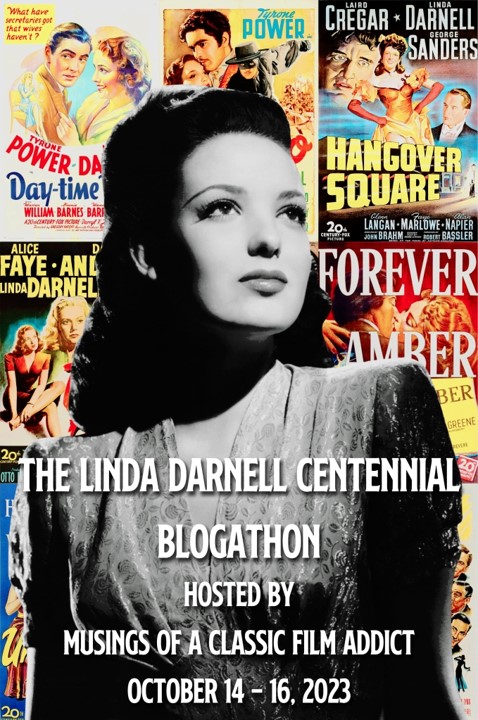
The Linda Darnell Centennial Blogathon poster created by Samantha from Musings of a Classic Film Addict

What I didn’t like about the film:

A misleading synopsis: According to a synopsis I read, Blackbeard, the Pirate is about Sir Henry Morgan’s attempt to capture Blackbeard and stop his pirating ways. This synopsis turns out to be a lie, as Henry doesn’t appear until fifty-seven minutes into this hour and thirty-eight-minute movie. Even while Henry is involved in the story, he isn’t given much to do. It made me wonder why Henry was included in the film in the first place?

An unclear story: Like any genre, there are several types of stories that can be told in a pirate film. But in Blackbeard, the Pirate, the movie’s creative team tried to tell several types of stories in one production. These include a quest for treasure, a “cat and mouse” chase between Henry and Blackbeard, and the hero rescuing the female protagonist from the villain. The creative team’s attempt to incorporate different types of stories prevented their movie from developing its own identity. The story itself isn’t clearly defined because of this creative choice.

A meandering protagonist: I’ve stated before how some Hallmark movies will center around a protagonist who says they’re going to do something, but spends most of the movie not doing the thing they said they were going to do. This isn’t just an issue in Hallmark films, as that was also an issue in Blackbeard, the Pirate. Through a voiceover toward the beginning of the movie, Robert claims he wants to bring Henry to the authorities, as he wants to receive the reward money. Unfortunately, Robert doesn’t make any attempts to capture Henry. In fact, he does everything but make Henry face accountability for his past actions. This meandering subplot is the result of the creative team trying to tell too many types of stories at once.

Ship steering wheel pattern image created by Jemastock at freepik.com. <a href=”https://www.freepik.com/free-photos-vectors/background”>Background vector created by jemastock – http://www.freepik.com</a>. Image found at freepik.com.

My overall impression:

I mentioned in my review’s introduction how I don’t talk about pirate films often. So, it’s disappointing when one of these movies turn out less than stellar. Blackbeard, the Pirate was, sadly, underwhelming. This was due to the weak screenwriting. Too many story ideas were incorporated into one script, preventing the film from adopting its own identity. That creative decision also caused the protagonist to not reach his goal. However, there were aspects of the movie I liked, such as the acting and the historical accuracy. But, in my opinion, the cast deserved better material. I’d like to check out more films from Linda’s filmography. Hopefully, I’ll find a movie better than Blackbeard, the Pirate.

Overall score: 5.3 out of 10

Have you seen Blackbeard, the Pirate? Are there any pirate films you like to watch? Let me know in the comment section!

Have fun at the movies!

Sally Silvrescreen

Take 3: The Third Man Review

When the terms “American Film Institute”, “classic”, and “Austria” are put in the same sentence, most people would think of the 1965 film, The Sound of Music. While that movie has become a beloved staple in cinema, there’s another title that fits the aforementioned criteria; 1949’s The Third Man. This film also fits the criteria for Hometowns to Hollywood’s Celluloid Road Trip Blogathon: International Edition. I’ve seen several movies from American Film Institute’s list of the top one hundred films of all time. Some of these films have, in my opinion, earned their respective places on that list. Other films have left me confused, questioning why a given film is on the list in the first place. While American Film Institute’s list comes across as objective, I have learned that almost any movie list is subjective. Therefore, I’m checking out The Third Man for myself, determining if I think the 1949 film should be on American Film Institute’s list!

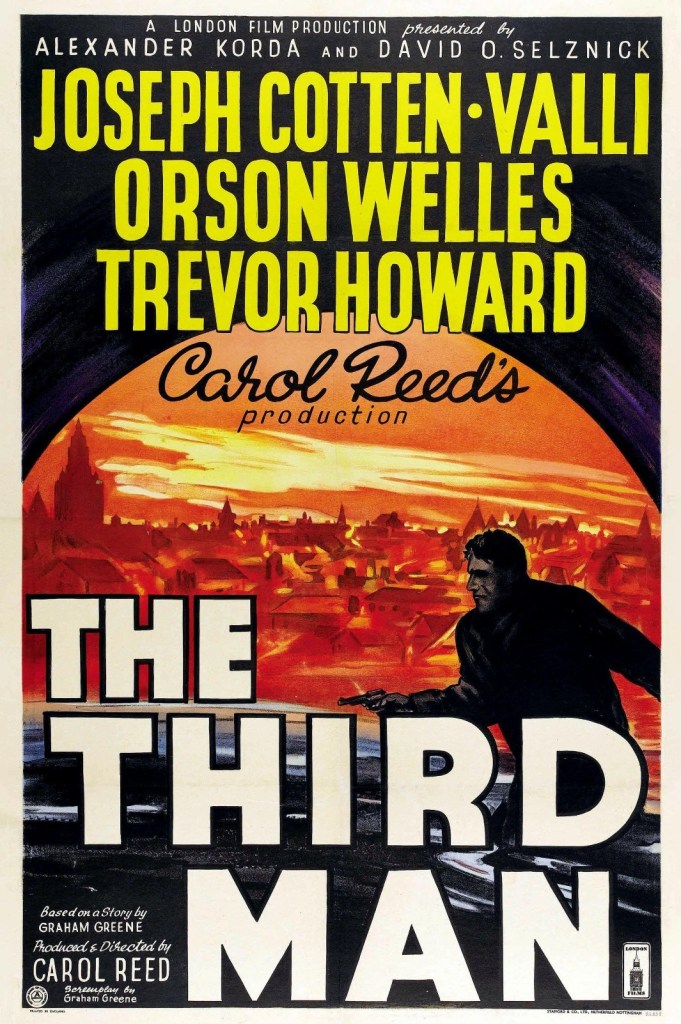
The Third Man poster created by London Film Productions, StudioCanal International, and Selznick Releasing Organization

Things I liked about the film:

The acting: In The Third Man, Ernst Deutsch portrayed Baron Kurtz, a friend of Harry Lime. Despite appearing in the film for a limited period of time, Ernst, in my opinion, stole the show! Anytime he appeared on screen, Ernst’s facial expressions were very fluid and expressive, allowing his character’s reactions to be on point. His performance makes me wish he had more appearances in The Third Man! Individual portrayals were not the only memorable performances, as I liked the on-screen chemistry between Joseph Cotten and Alida Valli. One scene shows Holly and Anna discussing Holly’s friend, Harry. This scene gave Alida and Joseph the opportunity to give their characters genuine emotion, from Anna shedding tears over how the world grew up around Harry to Holly smiling over a past memory of his friend. Their performances made their characters feel like they were meant to be together.

The set design: As mentioned in the introduction, The Third Man takes place in Austria. With the story set in Vienna, the landscape is urban, boasting a European charm that is reflective in the set design. Toward the beginning of the film, Holly goes to a restaurant in the middle of the city. The crown jewel of this location is the marble columns holding up the ceiling. Carved detailing bordered the edges on the ceiling, adding quaint elegance to the restaurant. Even the police station featured elegant design choices, such as the patterned wallpaper. The set design of The Third Man serves as a visual example of timeless beauty, still holding up 74 years later!

An honest glimpse of post-World War II Europe: The story of The Third Man takes place after World War II. Through visual presentation and the dialogue, the state of Vienna, Austria is showcased in an honest way. In one scene, Holly is being chased through the city. During this chase, Holly runs over rubble and hides in an abandoned car. Holly’s hiding place, as well as the rubble, are remnants of the war. Featuring these remnants prominently in the chase scene highlights the aftermath Vienna, Austria faced.

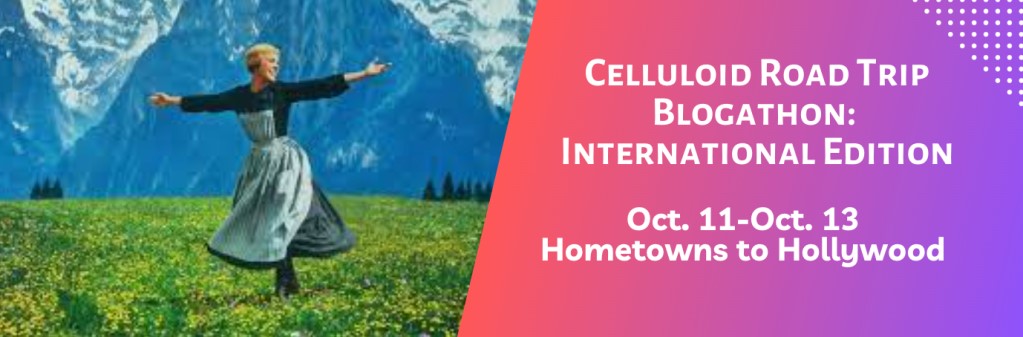
The Celluloid Road Trip Blogathon: International Edition banner created by Annette from Hometowns to Hollywood

What I didn’t like about the film:

Tilted angles: The role of a cinematographer is to present a scene in visually appealing ways. Creative decisions relating to cinematography can make a scene memorable, allowing the audience to bring up specific moments. In The Third Man, several scenes stood out because of cinematography, as these scenes were delivered at a tilted angle. However, there was no reason for those scenes to be presented that way. In fact, the tilted angles came randomly. It felt like those scenes were filmed that way simply for the sake of it.

Tonally unfit music: Acoustic guitar served as the only soundtrack for The Third Man. While this sound was pleasant to hear in some scenes, it was jarring to hear in other scenes. When the police, in one scene, dig up a grave in order to solve a mystery, the acoustic guitar sound gave off a cheerful tone. Yet, the scene itself was very serious in tone, as the film’s mystery is a murder mystery. This is just one example of the music being tonally unfit.

Inconsistent sense of urgency: As I just mentioned, the mystery in The Third Man is a murder mystery. In these types of stories, there is typically a strong sense of urgency, as the protagonist wants to stop the guilty party from hurting other people. But in The Third Man, the sense of urgency was inconsistent. Chase scenes and the climax are where the urgency was present. However, these moments were far and few between. Most scenes featured characters talking with one another. While there can be urgency included in these moments, urgency was not prioritized in the script.

My overall impression:

In 2008, the American Film Institute released a revised list of their one hundred films of all time. On this list, The Third Man was replaced by other titles. However, it does make me wonder why this film was on American Film Institute’s original list in the first place? As I stated in my review of The Bridge on the River Kwai, movies that appear on lists such as American Film Institute’s should, in my opinion, fit one of two categories; those that represent the time they were released and those that brought something new to the cinematic table. The only explanation I can think of is how The Third Man shows Europe post-World War II. Yet Roman Holiday takes place in Italy post-World War II and never appeared on any of American Film Institute’s lists. As for bringing something new to the cinematic table, I can’t think of how The Third Man achieved that. Similar to The Bridge on the River Kwai, this movie has left me confused.

Overall score: 6-6.1 out of 10

Have you seen The Third Man? How many movies from American Film Institute’s lists have you watched? Please share your thoughts in the comment section below!

Have fun at the movies!

Sally Silverscreen

Take 3: The Grapes of Wrath Review

Back in May, I published a late review of John Steinbeck’s The Grapes of Wrath, my choice for the Buzzwordathon readathon. In that review, I stated how I wouldn’t plan on reading the book again, as I found the book mundane. For this year’s Classic Literature on Film Blogathon, hosted by Silver Screen Classics, I figured it would be a good idea to revisit the 1940 adaptation! Years ago, I saw The Grapes of Wrath movie. Because I only had vague recollections of the film, I wasn’t able to give an honest opinion on it. Besides that reason, I was curious to see how different or similar the adaptation was from its source material. Adaptations can be hit or miss, ranging from being unrecognizable from the book to being better than the book. Where does The Grapes of Wrath rank among these adaptations? Turn the page on this review in order to find out!

The Grapes of Wrath poster created by Twentieth Century Fox

Things I like about the film:

The acting: Toward the beginning of the movie, Tom Joad, portrayed by Henry Fonda, is being driven home by a truck-driver. Suspicious of the truck-driver’s possible prejudice against him, Tom is uneasy and irritated. Just as he’s leaving the truck, Tom tells the truck-driver why he went to prison. While Tom is revealing the answer, his eyes are set in a serious stare and his mouth is presented crookedly. Speaking his answer with a loud, serious, even a bit agitated tone, the impression Tom left on the truck-driver and me, as a viewer, was chilling. However, this impression was a strong one, as it allows Tom to stand out and be remembered among the film’s large cast of characters!

A common strength I saw among the movie’s cast was how expressive the actors and actresses were. John Carradine’s portrayal of Casy serves as a great example! When he was telling Tom about his past sermons, Casy’s eyes went wide and his voice sounded animated. He even demonstrated gestures from his former services, such as jumping over a fence after a baptism. While John’s portrayal of Casy was expressive, it never felt over-the-top. This gives the audience a reason to take this character seriously. The audience can also take Ruthie and Winfield, the only children in the Joad family, seriously because their expressions seem genuine. At a fancier camp, Winfield and Ruthie are overwhelmed by the luxurious nature of the communal bathroom. When they flush a toilet for the first time, Ruthie and Winfield run out of the bathroom and hide behind the door frame, a mixture of shock and fear on their faces. The genuineness of these two characters was made possible through the screenwriting, as well as the performances of Shirley Mills and Darryl Hickman!

Similarities to the book: When it comes to film adaptations, there are some that share more similarities than differences with its respective source material. As someone who has read the book, I felt this way about the 1940 adaptation of The Grapes of Wrath! When Tom returns home, he and Casy come across Muley, one of the Joad family’s neighbors. Muley explains how several neighboring families were forced off their land by the bank. Through flashbacks, Muley’s recollection of events shows the heartlessness of land developers and the desperate nature of one tractor-driver. Readers would remember this part of the story as a separate chapter from the main narrative, not relating to any particular character. Adapting this chapter through a secondary character’s perspective was an interesting way for the movie’s creative team to respect their project’s source material!

The music: The story of The Grapes of Wrath takes place during the Great Depression, with the setting being rural. Music that can sometimes be heard in a scene’s background is reflective of the story’s time and setting. String instruments, such as guitars and banjos, make up the film’s soundtrack. These instruments helped elevate the tone of a given scene. As a member of the Joad family passes away, an acoustic guitar melody is softly playing as the Joad family is mourning their loved one. This simple tune emphasized the somberness surrounding the event itself. With the way the music fit so well in the movie, it shows how the film’s creative team cared about the presentation of their film!

The 2023 Classic Literature on Film Blogathon banner created by Paul from Silver Screen Classics

What I didn’t like about the film:

A broken illusion: Because The Grapes of Wrath was released during the Breen Code era, several parts of the story had to be changed from page to screen. Rosasharn’s pregnancy was one of them. Through a variety of medium and close-up camera angles, the cinematographer, Gregg Toland, carried the illusion Rosasharn was pregnant. But audience members can tell Rosasharn wasn’t visibly pregnant due to a handful of medium and long shots. These shots broke the aforementioned illusion, taking away the authenticity of characters’ comments about Rosasharn’s pregnancy.

Things left unexplained: Within the story, and even the dialogue, there were things left unexplained. At the beginning of the movie, the audience is introduced to Tom’s brother, Noah. Halfway through the movie, Noah disappears, with no other character questioning his whereabouts or concerned about his disappearance. For those who have read the book, they would know where Noah went; abandoning his family to live near the river, as he fell in love with that location. Viewers who didn’t read the book would assume Noah’s absence was a result of poor screenwriting.

The run-time: The Grapes of Wrath has a run-time of a little over two hours. Since the story is a “slice-of-life” tale, I, personally, felt this movie didn’t need to be that length of time. There were parts of the film that consisted of shots of the Joad family’s vehicle driving down the road. Some of these shots could have been cut from the movie, as they sometimes seemed like padding. Had that creative decision been made, The Grapes of Wrath might have been about an hour and forty-five to fifty minutes.

The Grapes of Wrath book cover found on Goodreads.

My overall impression:

There are some adaptations where if you’ve seen the movie, you’ve already read the book. This is due to the adaptations’ shared similarities with their source material. After reading The Grapes of Wrath and seeing the 1940 film, I can honestly say my aforementioned statement rings true for the movie. While I appreciate the creative team’s attempts to respect the source material, as well as adapt it during the Breen Code era, it felt like I was consuming the same story again. I also think the movie was a bit drawn out, receiving an unnecessary run-time of a little over two hours. However, the music, set design, and costume design were good visual reflections of the story’s time and place. It did feel immersive, like the audience could be transported to that world. I’m glad to have received the opportunity to re-visit this film! Now, I can form an honest opinion about The Grapes of Wrath.

Overall score: 6-6.1 out of 10

Have you seen or read The Grapes of Wrath? If so, what are your thoughts on the story? Let me know in the comment section!

Have fun at the movies!

Sally Silverscreen