Take 3: The End of the Affair (1955) Review

When you have a show as iconic and successful as I Love Lucy, well-known guest stars are likely to pay the show a visit. On the aforementioned show itself, a collection of guest stars graced the screen, crossing paths with Lucy, Ricky, and their friends. One of those stars was Van Johnson, an actor I’m familiar with due to reviewing some of his films and his episodes of Murder, She Wrote. Since I haven’t written about any project from Van’s filmography since 2022, I found the I Love Lucy Blogathon as the perfect opportunity to check out another of his movies! A film of Van’s I’ve been meaning to review for years is the 1955 presentation, The End of the Affair. Recommended by Maddy from Maddy Loves Her Classic Films, I was intrigued by the mystery woven into the synopsis. Who is this third man Deborah Kerr’s character may be having a relationship with? The only way I was going to find an answer to that question is by watching The End of the Affair and sharing my honest opinion about it!

The End of the Affair (1955) poster created by Coronado Productions and Columbia Pictures

Things I liked about the film:

The acting: Like I mentioned in this review’s introduction, I have written about some of Van Johnson’s films as well as his episodes of Murder, She Wrote. What I’ve noticed from these projects is how Van has strong adaptability to his character’s experiences. This was also the case in The End of the Affair. While spending time with Deborah Kerr’s character, Sarah, Van’s character, Maurice, is all smiles and appears to be in a good mood. But when a neighbor named Mrs. Tomkins unexpectedly arrives to give Sarah some food, Maurice’s mood quickly changes. His eyes are downcast, not even looking at the neighbor. Maurice’s mouth displays a worried look as he frets over his secret relationship with Sarah being discovered. Even his tone of voice with Sarah is sharp, desperately trying to contain his feelings. This scene is just one example of Van’s versatility when it comes to his acting talents!

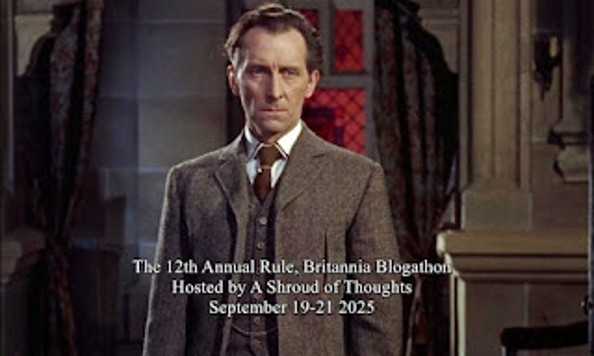
I was pleasantly surprised to discover Peter Cushing starred in The End of the Affair! Based on what I know about Peter’s career from his filmography, he either portrayed a character in a horror movie or he appeared for a limited period of time in a film. Comparing The End of the Affair with other projects of Peter’s I’ve seen, he was given a slightly larger role in the 1955 movie. My other observation is how his character, Henry, had a consistently friendly personality. Even when he suspects Sarah of having an affair, Henry’s demeanor is that of concern, with a worried look on his face. Speaking of Sarah, I want to discuss Deborah Kerr’s performance. In The End of the Affair, there were times when Deborah’s face said so much without the use of dialogue. A great example is when Sarah and Maurice reconnect after being apart for a year. During their walk together, fear shown through Sarah’s eyes. Her mouth was even tightly pursed, revealing little to no information to Maurice. In this scene, Sarah appears to keeping a secret, a secret she’s afraid might be discovered.

The mise-en-scène: Mise-en- scène is how a film’s scene is presented to the audience. One example from The End of the Affair is how mirrors were sometimes used as a form of foreshadowing. Toward the beginning of the film, Maurice spots Sarah hugging another man. She and the man can be seen through a near-by mirror. Because the creative team emphasized this interaction, Maurice’s suspicions of Sarah are hinted at. Later in the movie, when Sarah disappears from Maurice’s life, he calls her home, hoping she’ll pick up the phone. But every time Sarah is unavailable, the camera consistently shows a close-up of Maurice’s face, emphasizing his building frustration. This built-up frustration makes Maurice’s suspicions of Sarah grow even more. Because of how well mise-en-scène was utilized by the film’s creative team, the story was able to maintain a certain degree of intrigue.

The character of Albert Parkis: In movies like The End of the Affair, where serious topics are brought up, the detective character will usually carry a persona that matches the tone of the film. But in the 1955 movie, Albert Parkis provided a bright light to a darker story. Portrayed by John Mills, Albert was the private investigator hired by Maurice to solve the mystery of Sarah’s whereabouts. Any time he appeared on screen, Albert had such a cheerful, friendly personality. He sometimes brought his son along on investigations, in order to teach him how to solve mysteries. Albert’s interactions with Maurice were so lively, they were a joy to watch unfold. I wish Albert Parkis was given a larger role in The End of the Affair, as his involvement in the story was limited.

The I Love Lucy Blogathon banner created by Ari from The Classic Movie Muse

What I didn’t like about the film:

The “insta-love” trope: As I said earlier in this review, Maurice and Sarah share a secret romantic relationship. Their affair provides the basis for the film’s overarching conflict. But it was difficult for me to determine Van and Deborah’s on-screen chemistry. This flaw was due to the movie’s creative team choosing to adopt the “insta-love” trope. The beginning of the film shows Maurice being introduced to Sarah. In this introduction, Maurice hopes Sarah will provide insight to a book he’s writing. Several minutes later, they are starting to form their relationship. Sarah and Maurice even share a kiss within the first fifteen minutes of the story. With their relationship moving so quickly, I didn’t find myself as emotionally invested in Maurice and Sarah’s story as I could have been.

The underutilization of John Mills: When I talked about Albert Parkis, I said I wish he was given a larger role in The End of the Affair, as his involvement in the story was limited. This means the acting talents of John Mills were underutilized. On the film’s poster, you will see John Mills’ name listed as one of the top three billed actors in the production. However, this poster is somewhat misleading, as Peter Cushing receives more screen-time than John. After reviewing The Chalk Garden, I was looking forward to seeing another movie from John’s filmography. I was even curious about how John’s character’s story connected to Deborah’s character’s story. While I found out how these stories connected, I was disappointed by John’s limited involvement in the project.

A randomly produced reveal: The major conflict of The End of the Affair is figuring out the identity of the third man Sarah may be having a relationship with. I will not spoil this movie, in case any of my readers haven’t seen it yet. But what I will say is the mystery’s reveal was randomly produced. When Sarah’s secret is discovered, the answers are given toward the end of the story. Since there is no build-up leading into the reveal, the reveal itself almost feels like a major tonal shift. To prevent this flaw, information or clues related to the reveal should have been sprinkled throughout the movie. That way, the transition between the mystery and its reveal could have been smoother.

Vintage detective desk photo created by Olivier Bourgeois at freeimages.com. Photo by <a href=”/photographer/ornicar69-54520″>Olivier Bourgeois</a> from <a href=”https://freeimages.com/”>FreeImages</a&gt; Image found at freeimages.com.

My overall impression:

Van Johnson is one of the reasons why I selected The End of the Affair, as he was a guest star on I Love Lucy. When it comes to his movies, I thought those I saw were mostly ok. The 1955 project is no different. I was disappointed by the underutilization of John Mills’ acting talents, as well as the adoption of the “insta-love” trope. The mystery’s randomly produced reveal felt like a major tonal shift. However, The End of the Affair does have its strengths. The acting alone was one of the highlights of the film, from Van’s versatility to Deborah’s ability to convey ideas without using dialogue. The way mise-en-scène was used by the creative team allowed the story to maintain a certain degree of intrigue. I also liked Albert Parkis as a character. When it comes to character-driven stories involving serious topics, I find The Chalk Garden and Hallmark Hall of Fame’s A Tale of Two Cities as stronger titles. But, so far, I’ve only seen a handful of Van’s movies, so maybe I need to keep looking for a film of his I like.

Overall score: 6.1 out of 10

Have you seen The End of the Affair? Which is your favorite movie from Van Johnson’s filmography? Tell me in the comment section!

Have fun at the movies!

Sally Silverscreen

Word on the Street: Movie Theaters in Spain Hosting Eurovision’s Grand Final Again

I wrote a Word on the Street story three days ago about movie theaters in the United Kingdom broadcasting Eurovision’s Grand Final for a third year. Last February, I wrote another Word on the Street story about Eurovision’s Grand Final being presented in Spanish cinemas. Like the United Kingdom, Spain will continue their cinematic tradition! Eurovoix News reports Cine Yelmo, a “cinema company” from Spain, “will be airing the Grand Final of the contest live in their 42 cinemas across the country”. Those interested in attending the event can “buy tickets through a pre-sale on the company’s website”. Also like the United Kingdom, Spain is taking advantage of their participation in the Eurovision Song Contest. Because they are one of the “big five” countries, they are automatic qualifiers of the contest’s Grand Final. Spain is hosting PrePartyES, from April 17th to April 19th.

Movie process chart created by Vectorpocket at freepik.com <a href=’https://www.freepik.com/free-vector/vector-set-of-isometric-illustrations-making-movies-and-watching-a-movie-in-the-cinema_1215936.htm’>Designed by Freepik</a> <a href=”https://www.freepik.com/free-photos-vectors/business”>Business vector created by Vectorpocket – Freepik.com</a> Image found at freepik.com

What are your thoughts on this piece of news? Are there any Eurovision participating countries you wished screened the Grand Final at their theaters? Tell me in the comment section!

Have fun at the movies!

Sally Silverscreen

Article referenced in this post: https://eurovoix.com/2025/04/09/spain-eurovision-2025-final-cinemas/

Word on the Street: Eurovision’s Grand Final Returning to U.K. Cinemas

Last April, I wrote a Word on the Street story about multiple cinemas in the United Kingdom (U.K.) broadcasting Eurovision’s Grand Final. This year, the tradition continues! In an article from Eurovoix News, it’s reported that “CinemaLive who are distributing the contest in cinemas, will for a third year in a row enable fans of the contest to watch the Eurovision Song Contest on the big screen in the United Kingdom”. John Travers, who helped bring the experience to fruition in 2024, said, “There’s simply no better way to enjoy the biggest night in music than in a cinema, surrounded by fellow fans”. The U.K. is, once again, capitalizing on their involvement in the Eurovision Song Contest. They are one of the “big five” countries, so they automatically qualify for the contest’s Grand Final. United Kingdom will also host London Eurovision Party on April 13th.

Coming soon movie image created by Macrovector at freepik.com. <a href=”https://www.freepik.com/free-photos-vectors/background”>Background vector created by macrovector – http://www.freepik.com</a>. Image found at freepik.com.

What are your thoughts on this piece of news? Which Eurovision participating country do you wish screened the Grand Final at their theaters? Please tell me in the comment section!

Have fun at the movies!

Sally Silverscreen

Article referenced in this post: https://eurovoix.com/2025/04/03/united-kingdom-cinemas-eurovision-2025/

That’s a Wrap for my Second Chance Christmas Double Feature

Now we’ve come to the end of another double feature, as both chosen titles, Young at Heart and An Old Fashioned Christmas, have been watched and reviewed! In the introduction, I brought up the following question:

Did these two movies deserve a second chance?

For my answer, I’ll say Young at Heart was more deserving of a second chance than An Old Fashioned Christmas. With Young at Heart, I not only received an opportunity to check out more projects from Frank Sinatra’s and Alan Hale Jr.’s filmography, I was also given an official introduction to Doris Day’s movies. I found a good excuse to see more musicals, as well as films from the 1950s. Overall, I enjoyed Young at Heart more than Hallmark’s 2010 presentation. As someone who loves An Old Fashioned Thanksgiving, the sequel left a lot to be desired. Despite being titled An Old Fashioned Christmas, the film didn’t feel like a Christmas film. Instead of prioritizing the messages and themes of the holiday, the script primarily focused on stories that could have taken place any time of year. It also doesn’t help how so much of the story revolves around a love triangle. Looking back on An Old Fashioned Christmas, it makes me wonder if the sequel’s poorer quality, as well as becoming forgotten by time and Hallmark themselves, is the reason why I’ve, more often than not, seen DVD copies of the movie included in Christmas movie box sets?

Christmas themed movie tickets image created by Kraphix at freepik.com. <a href=’https://www.freepik.com/free-vector/movie-tickets-christmas_971544.htm’>Designed by Kraphix</a>. <a href=”https://www.freepik.com/free-photos-vectors/christmas”>Christmas vector created by Kraphix – Freepik.com</a>. Image found at freepik.com.

Have fun at the movies!

Sally Silverscreen

The Top Ten Best Stand-Alone Films

On this day in 2000, The Road to El Dorado made its official debut. While the movie didn’t meet or exceed DreamWorks’ expectations, it certainly found an audience, which stuck with the film for all these years. I once heard The Road to El Dorado was intended to be the first story in a trilogy. But fate decided it worked better as a stand-alone picture. This caused me to think about the other stand-alone movies I’ve come to love. So, in honor of The Road to El Dorado’s 25th anniversary, I have compiled a list of what I believe are the top ten best stand-alone films! For my list, the criteria for a stand-alone film is not only a title that didn’t receive a sequel, but also isn’t affiliated with a series/franchise. If I covered a film on 18 Cinema Lane, I will provide a link to that article or review in this list. Each title will be presented in order of release year and each choice is based on my opinion.

The Road to El Dorado poster created by Dreamworks Pictures, DreamWorks Animation, and DreamWorks Distribution

1. Singin in the Rain (1952)

    I start my list with a classic I was introduced to because of my blog. Now that I have finally seen Singin in the Rain, I have an understanding and appreciation for why the movie is so beloved. Gene Kelly’s iconic musical number, “Singin in the Rain”, should provide enough explanation for why you should check the film out! The number itself feels immersive, as it takes place within the story’s context. Gene adds uniqueness to the number by jumping and splashing in puddles. “Singin in the Rain” successfully represents the spirit of the film, while also delivering the message of seeing the good in a not-so-good situation. That number is just one reason why Singin in the Rain is a solid musical!

    Watching ‘Singin in the Rain’ for the First Time

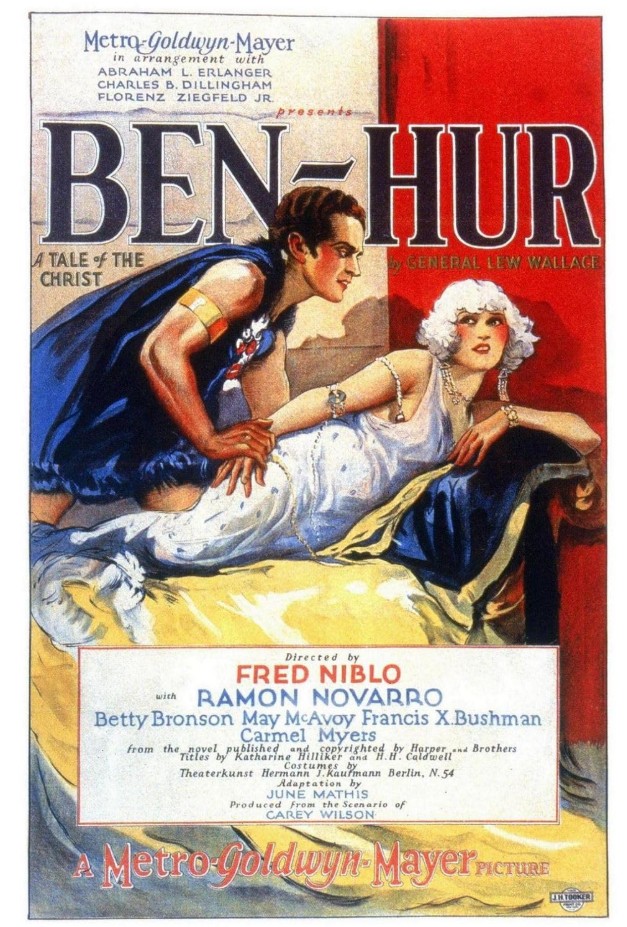
    2. Ben-Hur (1959)

    If you’re going to watch any classics, you have to see 1959’s Ben-Hur! Though the three-hour run-time can seem intimidating, that time flew by for me, as I was so engrossed in the story. The emotional intensity of Charlton Heston’s, Stephen Boyd’s, and Haya Harareet’s performance complimented the scope of the overall film. Ben-Hur contains other likable qualities as well, from the magnificent sets/scenery to the interesting cinematography. How Christianity/faith was incorporated into the story sets the 1959 production apart from other “sword and sandal” pictures. Those who celebrate Easter may find Ben-Hur an appropriate seasonal title.

    Take 3: Ben-Hur (1959) Review + 60 Follower Thank You

    3. To Kill a Mockingbird (1963)

    While the book, To Kill a Mockingbird, received a sequel, the film adaptation did not. The 1963 movie presents one of the few times where, in my opinion, the film was better than its source material. Getting straight to the point a lot sooner was a main focus for the creative team. The film’s visual nature worked in the favor of certain elements from the book. Showing suspenseful moments from the source material makes those moments seem real, as well as intensifies uncertainty. Leaving out scenes that feel like padding helps the movie maintain a steadier pace.

    Take 3: To Kill a Mockingbird Review

    4. The Boy Who Could Fly (1986)

    When I first saw The Boy Who Could Fly, it subverted my expectations. That’s because the 1986 picture aged surprisingly well! Through Milly and Eric’s friendship, the script shows how people with Autism can create and maintain meaningful relationships. Helping someone with Autism based on their personal preferences and accommodations may have seemed ahead of its time back in the mid to late ‘80s. Timeless messages and themes make up one of the reasons why I love the 1986 film. Showing compassion for others, dealing with grief, and understanding people’s differences take center stage.

    Take 3: The Boy Who Could Fly Review (PB & J Double Feature Part 2)

    5. The Bodyguard (1992)

    In 2022, I wrote an editorial explaining why The Bodyguard held up thirty years later. Because I love the 1992 film, finding explanations wasn’t difficult. “The kitchen scene” is, in my opinion, the best scene from any action movie. One reason why is how the kitchen’s smaller space is seen by the actors as a challenge instead of a hindrance. What also worked in The Bodyguard’s favor was Whitney Houston’s portrayal of Rachel Marron. Throughout the story, Whitney realistically showcases emotions and expressions. This helped Rachel become a multi-layered character.

    I Will Always Love You: ‘The Bodyguard’ at 30

    The Boy Who Could Fly poster created by Lorimar Motion Pictures and 20th Century Fox. Image found at https://www.imdb.com/title/tt0090768/?ref_=nv_sr_srsg_0.

    6. Swept from the Sea (1998)

    Swept from the Sea was one of the earliest hidden gems I discovered in 2019. It’s a movie that’s so great, I just had to include it on this list. There are so many things to like about Swept from the Sea. From Vincent Perez’s captivating performance to the beautiful scenery, the film’s components came together to create an endearing and emotional presentation! The 1998 film is a character-driven story, relying on on-screen chemistry in order to work. Because of Vincent Perez’s and Rachel Weisz’s differing acting styles, the on-screen chemistry between Yanko and Amy was very sweet and genuine.

    Take 3: Swept from the Sea Review (A Month Without the Code — #8)

    7. Phantom of the Megaplex (2000)

    This is another movie I just had to include on my list. But this time, it’s because Phantom of the Megaplex is also celebrating its 25th anniversary this year! The Disney Channel picture showed that the movie-going experience can be fun. As I explained in my editorial celebrating the film’s 20th anniversary, the made-for-TV movie also serves as a time capsule of how the cinema operated in the beginning of the millennium. Phantom of the Megaplex even shows how movies can influence our lives. Though I’m not sure if that aspect of the story was intentional, it makes the 2000 title, somewhat, thought-provoking.

    ‘Phantom of the Megaplex’ at 20: A Reflection on the Movie-Going Experience

    8. I Am David (2004)

    I Am David was the biggest pleasant surprise of 2024. It became the year’s best movie in March and stayed number one until the very end! What set I Am David apart was the film’s genuine emotion and sincerity. This was seen and felt through every aspect of the production. The 2004 movie emphasized visual depth. Achieved by exploring light and darkness, as well as showcasing Europe’s natural landscape, the creative team used the visual nature of film to their project’s advantage. Two effective plot twists are another reason why I liked I Am David. Their delivery in the story was well-written.

    Take 3: I Am David Review (Double Feature: 2004 Edition Part 1)

    9. From Up on Poppy Hill (2011)

    This 2011 presentation is one of Studio Ghibli’s stronger projects. A reason is one of the overarching themes; honoring the past. The film intelligently and creatively shows its audience how important history is in our lives and our world. Whether referencing the 1964 Olympics or focusing on the characters’ relationships, the theme of honoring the past acts as an umbrella sheltering Poppy Hill and its surrounding areas. Studio Ghibli’s signature colorful palette is consistently on display in the 2011 film. The strong understanding for how and when to use color makes scenes look like priceless pieces of art! Personally, I think movies like From Up on Poppy Hill present an argument why 2-D animation still has its time and place.

    Take 3: From Up on Poppy Hill Review + 200 Follower Thank You

    10. The Wild Robot (2024)

      I think it’s fitting to close this list with a DreamWorks movie, as a DreamWorks movie is the reason why I created this list in the first place. Though this was a recent watch for me, The Wild Robot is, so far, the best film I’ve seen this year! The animation itself is absolutely gorgeous! Sometimes, scenes look like paintings and other times, they look like priceless photographs. I was not expecting the story to contain as much emotional depth as it did. An abundance of good messages and themes add a sense of timelessness to the production. Though it’s unknown right now if The Wild Robot will gain an audience like The Road to El Dorado has, I can confidently say it was a really good movie!

      Phantom of the Megaplex poster created by the Walt Disney Company and Disney Channel. © Disney•Pixar. All rights reserved. Disney XD© Disney Enterprises, Inc.

      Have fun at the movies!

      Sally Silverscreen

      Take 3: Orca (1977) Review

      When I participated in the first ‘Favorite Stars in B movies’ Blogathon two years ago, I reviewed the 1963 film, The Raven. I found Vincent Price’s picture to be a fine, likable one, which left me amazed how a simple story from Edgar Allan Poe could be turned into a feature presentation. For this year’s Third ‘Favorite Stars in B movies’ Blogathon, there were plenty of movies from Vincent Price’s filmography for me to choose from. But this time, I decided to go in a different direction. As I looked back at the history of my blog, I came to realize none of Richard Harris’ films have been covered on 18 Cinema Lane. I also remembered how the 1977 movie, Orca, was recommended to me by Eric Binford (from Diary of a Movie Maniac). With these two facts in mind, I found the perfect title to write about for the Third ‘Favorite Stars in B movies’ Blogathon! When Eric suggested Orca to me, he said the film steals from Jaws. Because I’ve seen the 1975 blockbuster, I imagined Orca to be a knock-off/rip-off of the iconic movie. But is the 1977 picture a copy of Jaws? Let’s dive into this review and find out!

      Orca (1977) poster created by Famous Films (II), Dino De Laurentiis, and Paramount Pictures

      Things I liked about the film:

      Richard Harris’ performance: Because Richard Harris is one of the reasons why I chose to review Orca, I will now take the time to highlight his performance. In the 1977 movie, Richard portrays Captain Nolan, a fisherman who desires catching a whale in order to receive a large sum of money. His versatile acting abilities helped create a multi-layered character, one that is both tragic and complicated. After killing a pregnant whale, Nolan is very remorseful of his actions. One evening, he confides with Rachel Bedford (portrayed by Charlotte Rampling) over how he’d apologize to the dead whale’s mate. During this confession, Nolan adopts a somber look on his face, his eyes on the verge of tears. He even boasts a long frown. Nolan’s tone of voice is serious, sounding like he’s pleading for forgiveness. This one exchange presents a perfect example of Richard using his acting talents to bring his character to life!

      An introduction to Orca Whales: Toward the beginning of the movie, Rachel Bedford lectures a group of students (and the film’s audience) about Orca Whales. This lecture is packed with information, from an explanation of the word ‘orca’ in Latin to showing a picture of an Orca fetus. On Captain Nolan’s boat, Annie (portrayed by Bo Derek) shares with Nolan how Orca Whales stay with their mate for life. He even receives a book from Rachel about whales in mythology. While some of the movie’s information may be dated (due to what’s been discovered about Orcas since the film’s release), it does provide an introduction to Orca Whales. Including this information into the script feels like the creative team made an effort to educate their audience.

      Tonal variety in music: One of the most iconic pieces of music in film history is the theme from Jaws. John Williams’ score and the image of the titular shark sneaking up on its victims created a perfect, memorable combination. But compared to Orca, this piece of music seems to sensationalize the shark itself, as the suspenseful tune is the only music heard whenever the shark comes around. The first shot of the 1977 picture shows a group of Orcas swimming in their natural habitat. Peaceful, orchestral music plays in the background anytime whales are, simply, gliding from place to place. The only time suspenseful music is heard is when the titular Orca is causing chaos and destruction. This creative choice emphasizes how the whale has been provoked. Tones between different pieces of music show that while Orca Whales can have dangerous behavior, they can also be a great source of fascination.

      The Third ‘Favorite Stars in B movies’ Blogathon banner created by Brian from Filmsfrombeyond.com

      What I didn’t like about the film:

      Inconsistent voice-overs: In Orca, Rachel narrates what is happening in the story. I actually liked this creative decision, especially since she was one of the most educated characters when it came to Orca Whales. What I didn’t like was how Rachel’s voice-overs were inconsistent. In fact, she only narrated about three times throughout the one hour and thirty-two-minute film. Had these voice-overs been more consistent, they could have been used as a bridge between scenes.

      The underutilization of Will Sampson: Another reason why I wanted to review Orca is Will Sampson’s involvement in the project. After seeing One Flew Over the Cuckoo’s Nest and The White Buffalo, I was looking forward to watching another movie from Will’s filmography. When I finally checked out Orca, I was disappointed by how Will’s acting talents were underutilized. Not only did he appear in the film for a limited amount of time, he also received very few lines in the script. I, honestly, wish Will’s character, Jacob, had played a larger in the story, especially since he shared great insight about Orca Whales.

      Limited character development: The story of Orca primarily revolves around the battle between the titular whale and Nolan. Because of this creative decision, Nolan becomes the only (human) character to receive character development. Other characters are simply known by their profession or an experienced scenario. Rachel is characterized as the scientist who is educated about Orca Whales. Annie is known as the lady who broke her leg. I understand there is only so much story to tell in one hour and thirty-two-minutes. However, I still believe a little more character development should have been included in the script.

      Orca Whale image created by Freepik at freepik.com. Label vector created by freepik – www.freepik.com. Image found at freepik.com.

      My overall impression:

      In the introduction of my review, I said I imagined Orca to be a knock-off/rip-off of Jaws. But now I have seen the 1977 picture, calling it that does the film a disservice. I never got the impression Orca’s creative team was intentionally trying to copy the 1975 blockbuster. Instead, the film serves as a cautionary tale of how one’s actions toward animals and their natural environment have consequences. As I said in my review, including information about Orca Whales into the script feels like the creative team made an effort to educate their audience. This is different from Jaws, where (as far as I remember) education about sharks was far and few between. With that said, I wonder what would have happened if Orca had received anywhere near as much attention as Jaws? On the one hand, society’s perspective and treatment of Orca Whales may have changed much sooner. More knowledge and awareness may have already been reached before the 21st century. But, seeing how much merchandising and commercialism Jaws has produced in a fifty-year timespan, maybe Orca’s intended message would have gotten lost among the shuffle.

      Overall score: 6 out of 10

      Have you seen Orca? What are some of your favorite films with animals in title roles? Let me know in the comment section!

      Have fun at the movies!

      Sally Silverscreen

      Take 3: An Old Fashioned Christmas Review (Second Chance Christmas Double Feature Part 2)

      Thank you for joining me for the second part of my Second Chance Christmas Double Feature! Unlike my review of Hallmark’s Frankenstein, this review of An Old Fashioned Christmas will contain a few spoilers. If you’re curious about why I chose An Old Fashioned Christmas  for this double feature, you can check out the introduction in the link below.

      Coming Soon to a Blog Near You; The Second Chance Christmas Double Feature!

      An Old Fashioned Christmas poster created by RHI Entertainment, The Government of Ireland, Parallel Film Productions, MNG Films, Muse Entertainment Enterprises, and Hallmark Channel

      1. How were you introduced to An Old Fashioned Christmas and why was it selected for this double feature?

      I have declared An Old Fashioned Thanksgiving as one of my favorite Hallmark movies. Years ago, when I discovered the 2008 film received a sequel, I was eager to check that movie out. But as time went on, Hallmark gave the sequel fewer airings during their Christmas line-ups, making it more difficult to watch the film. I’ve always looked for the right time to write about An Old Fashioned Christmas. I even included it on two lists; 2022’s top ten movies I’d love to review and 2023’s top ten Christmas movies I’d love to review. On both lists, I said I found a few DVD copies of the 2010 title. But, more often than not, these DVDs were included in Christmas movie box sets, which, typically, are expensive. Fortunately, An Old Fashioned Christmas was uploaded on Youtube, which is how I watched it.

      2. You’ve mentioned An Old Fashioned Thanksgiving being one of your favorite Hallmark movies. Did An Old Fashioned Christmas contain any elements that made you like the 2008 film?

      One of the reasons why I love An Old Fashioned Thanksgiving is how immersive the production is! The attention to detail and historical accuracy created the illusion of taking the audience to another time and place. This same strength was found in An Old Fashioned Christmas! One simple, yet effective, example were the props. Anytime Tilly and Isabella shared a meal with the Shannon family, the table was covered with fine china dishes, crystal goblet-style glasses, and even a shiny silver teapot. These specific props reflected the story’s time period, which appears to be the late 1800s. They also symbolized the prestigious family history of the Shannons.

      3. Is the theme of “second chances” incorporated in An Old Fashioned Christmas’ story? If so, how?

      One of the reasons why Tilly wanted to travel to Ireland was to meet her father’s side of the family. After she gets to know her paternal grandfather and uncle, Tilly writes a letter in the hopes Isabella will make amends with Sean (Tilly’s grandfather). So, in An Old Fashioned Christmas, not only is Tilly given a second chance to connect with her father’s side of the family, Isabella received a second chance to build a bridge between herself and Tilly’s grandfather.

      4. Was there anything about An Old Fashioned Christmas you liked or didn’t like?

      Similar to Young at Heart, the dialogue was one of the best parts of An Old Fashioned Christmas! Because of the thought and effort put into this film-making aspect, conversations between characters sounded intelligent and eloquent. During breakfast one morning, Lady Shannon asks, “Wouldn’t it be lovely for Americans to have titles”? This question relates to how her son, Cameron, will become an Earl someday. Isabella responds by saying, “Actually, we do. We all share the same title: American”. The way Isabella answered Lady Shannon’s question carried a sense of confidence and grace, simply stating a major difference between her world and the world of the Shannon family. I also thought Isabella’s response to Lady Shannon’s question was pretty clever.

      Speaking of Lady Shannon’s son, Cameron, I found him to be the worst character in An Old Fashioned Christmas. He always acted like he had something to prove. Plus, Cameron attempted to get the last word in every argument or conversation. The longer I watched An Old Fashioned Christmas, the more annoying Cameron became. I recognize the film’s creative team was trying to create a male character different from Gad (Tilly’s fiancé). However, this goal can be achieved without making that male character completely unlikable.

      Blue sparkly Christmas tree image created by Macrovector at freepik.com. <a href=”https://www.freepik.com/free-photos-vectors/frame”>Frame vector created by Macrovector – Freepik.com</a>. <a href=’https://www.freepik.com/free-vector/merry-christmas-card_2875396.htm’>Designed by Macrovector</a>. Image found at freepik.com.

      5. On 18 Cinema Lane, you’ve covered plenty of Christmas films. How is An Old Fashioned Christmas similar to or different from other Christmas pictures written about on your blog?

      As I answered for question number three, meeting her father’s side of the family was the reason Tilly wanted to travel to Ireland. Like I also answered for question number four, Isabella responded to Lady Shannon’s question by stating Americans share the same title: American. The story of an American protagonist traveling to Ireland to learn more about her father’s side of the family felt very reminiscent of Christmas at Castle Hart. Another similarity these films share is how a majority of their stories take place in an Irish castle.

      6. Did you develop any thoughts and/or questions while watching this film?

      What makes An Old Fashioned Thanksgiving such a great movie is how the story embraces the Thanksgiving holiday. The film boasts a Thanksgiving dinner and showcases themed decorations, like a handmade blanket. But the 2008 picture also weaves the messages and themes of the holiday into the story and dialogue, truly making An Old Fashioned Thanksgiving feel like a Thanksgiving movie. An Old Fashioned Christmas definitely looked like a Christmas movie, as decorations and themed activities were sprinkled throughout the film. However, it did not feel like a Christmas picture. That’s because the majority of the story emphasized the love triangle between Tilly, Gad, and Cameron. An Old Fashioned Christmas is a Hallmark presentation where the protagonist says they are going to do something, but spends the majority of the film not doing what they said they were going to do. One of the reasons for Tilly and Isabella’s trip to Ireland was for the Earl of Shannon to mentor Tilly in her writing, in the hopes of getting Tilly’s work published. But throughout the one hour and fifteen-minute movie, Tilly barely accomplishes any writing goals. In fact, the only writing Tilly does is composing letters to her mother.

      7. How would the story of An Old Fashioned Christmas change if it revolved around another holiday?

      I just mentioned for question number six how the majority of An Old Fashioned Christmas’ story emphasized the love triangle between Tilly, Gad, and Cameron. Other stories, such as the Earl of Shannon mentoring Tilly, didn’t really have anything to do with the Christmas holiday. Therefore, changing the plot of An Old Fashioned Christmas to another time of year wouldn’t make a difference.

      8. Did An Old Fashioned Christmas deserve a second chance? If so, why?

      Now that I have seen An Old Fashioned Christmas, this is, honestly, a tough question to answer. On the one hand, I received some closure for how the story continues after An Old Fashioned Thanksgiving. I also developed my own, honest opinion about the sequel. But, on the other hand, An Old Fashioned Christmas, kind of, let me down. The Christmas holiday almost seems like an afterthought in the 2010 title. There were underutilized aspects of the story, like Tilly pursuing her writing dreams. So, to answer this question, I’m thankful I received an opportunity to check out An Old Fashioned Christmas. However, I don’t think it was worth the wait.

      9. After watching An Old Fashioned Christmas, is there anything you can take away from your movie viewing experience?

      If you ignore the fact An Old Fashioned Christmas was created as a sequel to An Old Fashioned Thanksgiving, this is an ok film. The attention to detail and historical accuracy create a visually immersive experience. The dialogue was also well written and delivered. But if you intend to watch An Old Fashioned Christmas as a sequel to An Old Fashioned Thanksgiving, you will be underwhelmed. With Tilly, Gad, and Isabella as the only returning characters, the family dynamic between Tilly’s family and Isabella is absent. Like I said for questions number six and seven, the majority of An Old Fashioned Christmas’ story emphasizes the love triangle between Gad, Tilly, and Cameron. It did not help that Cameron was such an unlikable character. Honestly, this movie will likely be a one-time watch for me. Since I still love An Old Fashioned Thanksgiving, I’ll just stick with the 2008 picture.

      Irish heart image created by Freepik at freepik.com. <a href=”https://www.freepik.com/free-photos-vectors/label”>Label vector created by freepik – http://www.freepik.com</a>. Image found at freepik.com.

      Have fun at the movies!

      Sally Silverscreen

      Sunset Over Hope Valley: If the Time Comes

      In the finale of When Calls the Heart’s twelfth season, Elizabeth receives a letter from her mother-in-law, Charlotte Thornton. Within the letter, Charlotte encourages Elizabeth and Jack Jr. to move to Cape Fullerton, in order to live closer to Diabetes related medical facilities. Turning to Rosemary for advice, Elizabeth is unsure of what to do. Rosemary reassures her friend how she’ll know what to do if the time comes. As I watched this episode, I considered talking about how When Calls the Heart’s future is unknown, similar to how Elizabeth and Jack Jr.’s future is unknown. But, during the airing of the season finale, an official commercial declared a thirteenth season coming in 2026. So, in a way, the Hearties received closure. However, while we know another chapter is on the horizon, we don’t yet know what will happen in that chapter. So, for now, there is still some uncertainty. Like any season finale, this episode of When Calls the Heart leaves Hearties with a variety of questions. The unknowns of the next season may cause some fans to be concerned over their favorite characters. What we do know is how the show will likely go into production from mid-summer to late autumn, with the season possibly premiering during the first half of 2026. This speculation is based on the schedules of past seasons. We also know we’ll get answers to, at least, some of our questions when the time comes.

      Just a reminder: If you did not see the season finale of When Calls the Heart, there will be spoilers within this re-cap.

      When Calls the Heart season twelve poster created by Hallmark Media, Crown Media Family Networks and Hallmark Channel

      Season: 12

      Episode: 12

      Name: Must be Gold

      Major stories:

      The stolen gold coins are still at large. Not wanting to leave a mystery unsolved, Rosemary interviews Edie, hoping she knows something about the treasure. Unfortunately, Edie knows about as much as Rosemary: nothing. But after Rosemary reexamines a map with Bill and Nathan, they figure out the treasure’s likely hiding place; a wishing well. Edie and Lucas also come to this conclusion when they visit Ernie’s ranch. Among a jar of coins, they find a double-headed eagle gold coin, similar to the one found earlier in season twelve. Remembering how Ernie always put coins in the wishing well, Edie leads Lucas there. When all five people discover they’re at the wishing well for the same reason, they work together to dig up a large metal box. Later, at Hope Valley’s Mountie office, it is discovered the box contains the missing gold coins. Edie also discovers Ernie left her a secret message on the back of the map, explaining how he came to possess the treasure. Because there is a reward for the return of the coins, Lucas suggests Edie claim the reward to pay off Ernie’s loan.

      As graduation approaches, Minnie is anxious about Angela’s departure to college. Both Elizabeth and Mei have picked up on Minnie’s recent mannerisms. They, along with Mike and Florence, agree to create a surprise for Minnie and her daughter. Throughout the episode, Mei and Mike collect answers to a series of questions about Angela’s favorite things. These answers are used to create a quilt for Angela to bring to college. Minnie is both emotionally moved and appreciative of the gesture. Meanwhile, after graduation, Jack Jr. passes out. This is the result of a recent batch of Insulin not being refrigerated properly. Elizabeth decides to make an emergency trip to Cape Fullerton, in order to help Jack Jr. feel better. Because Nathan is on Mountie rounds, Elizabeth writes a letter explaining what happened. As Elizabeth and Jack Jr. journey to the train station, Allie and Nathan join them on the trip, in support of both Jack Jr. and Elizabeth.

      Sewing pattern image created by Nenilkime at freepik.com. <a href=”https://www.freepik.com/free-photos-vectors/background”>Background vector created by Nenilkime – Freepik.com</a>. <a href=’https://www.freepik.com/free-vector/sewing-color-background_1380853.htm’>Designed by Freepik</a>. Image found at freepik.com.

      Minor story:

      Because of Oliver’s progress and his help arresting the Garrisons, Nathan reveals how he’ll help Oliver graduate early. Not only that, Nathan also tells Oliver he’ll be stationed at Fort McNeil. Realizing the possibility of leaving Hope Valley (and Allie) behind, Oliver fails his examinations on purpose. When Elizabeth confronts him about his exam performance, Oliver confesses how living in Hope Valley has made him feel normal, as he never really had a childhood. However, Elizabeth figures out Oliver’s most important reason for staying in town; Allie. Eventually, Nathan realizes Elizabeth is correct in her speculation. In an effort to make a compromise, Nathan offers Oliver a promotion to Mountie Deputy.

      Mountie face image created by Bakar015 at freepik.com. <a href=’https://www.freepik.com/free-vector/a-set-of-canada-icons_1050671.htm’>Designed by Freepik</a>. <a href=”https://www.freepik.com/free-photos-vectors/food”>Food vector created by Bakar015 – Freepik.com</a>. Image found at freepik.com.

      Some thoughts to consider:

      • Is it just me or did this episode, kind of, feel like a series finale? As I mentioned in this re-cap’s introduction, When Calls the Heart will receive a thirteenth season. But the scene showing Elizabeth turning off the light in her house, her letter to Nathan, and Elizabeth’s last line about finding a way to come back to Hope Valley gave an unintended sense of finality to the episode. Now that we know another season is on the horizon, this episode leaves a lot of questions. Will Elizabeth and Jack Jr. permanently move to Cape Fullerton? If so, will season thirteen take place in more than one location, similar to season two? Will Charlotte Thornton return to When Calls the Heart?
      • During Elizabeth’s graduation speech, she says she remembers the little faces of the graduates; Angela, Timothy, and Emily, on her first day of teaching in Hope Valley. However, this information is incorrect. While Timothy and Emily have been Elizabeth’s students since the earliest days of Elizabeth’s time in Hope Valley, Angela made her debut on When Calls the Heart in season eight. I know television shows have their continuity errors from time to time. But I was surprised no one from the show’s creative team caught this error.
      • Like I said in this re-cap, Angela receives a quilt, with each square representing her favorite things. The name of the town, ‘Hope Valley’, is embroidered in braille and the images on the quilt are sewn with a raised material, so Angela can feel their shapes. But this is not the only thoughtful present on this episode of When Calls the Heart. At the graduation party, Elizabeth thanks Mike and Mei for sacrificing their second honeymoon to help Jack Jr. Elizabeth, along with some of Hope Valley’s residents, pay for Mei and Mike’s third honeymoon to Miami.
      • When season twelve started, I had my concerns that the national park project wasn’t going to get completed. Now that the season is over, my concerns were proven correct. I’m aware large projects, like creating a national park, take time to come to fruition. But after the short-lived hotel project from season eleven, I am becoming tired of major plans on When Calls the Heart being left unfinished. Perhaps the national park will make its debut in season thirteen. But, at this point, only time will tell.
      Sunset image created by Photoangel at freepik.com. <a href=”https://www.freepik.com/free-photos-vectors/background”>Background image created by Photoangel – Freepik.com</a>.<a href=’https://www.freepik.com/free-photo/red-sunset-clouds-over-trees_1254327.htm’>Designed by Freepik</a>. Image found at freepik.com.

      What are your thoughts on this season finale? Where do you think Elizabeth and Jack Jr.’s journey will take them? Let me know in the comment section!

      Have fun in Hope Valley!

      Sally Silverscreen

      Sally Watches…Highway to Heaven

      Have you read a synopsis for a movie or television episode that sounded so “bonkers” or over-the-top, you just had to check it out? That’s what happened when I came across the Highway to Heaven episode, “Ghost Rider”. I’ve seen enough episodes of this show to have an idea of what to expect. But then I read the synopsis for “Ghost Rider” on Hallmark Family’s website, which is the following:

      “A lonely female novelist is in love with a legendary spy hero who has been dead for 20 years. She buys his sports car, that is being auctioned off, only to find out that his ghost comes with the car.”

      For the 11th Annual Favourite TV Show Episode Blogathon, I had an excuse to not only check out “Ghost Rider”, but to also write about it. However, just because a movie or tv episode sounds “bonkers”, doesn’t mean it will be. Two examples from 18 Cinema Lane are the Lifetime movie, Sea Change, and the 1977 picture, The White Buffalo. Will “Ghost Rider” prove to be as “bonkers” as it sounds? Let’s travel down the highway of this review!

      The 11th Annual Favourite TV Show Episode Blogathon banner created by Terence from A Shroud of Thoughts

      Episode Name: Ghost Rider

      Season 3, Episode 24

      Premiere Date: April 1st, 1987

      What I liked about this episode:

      As I mentioned in this review’s introduction, the synopsis for “Ghost Rider” sounded “bonkers”, due to the story containing a car inhabited by a ghost. But that was not the primary focus of the story. Instead, the creative team behind Highway to Heaven placed more emphasis on Mark and Jonathan helping Birdy Belker. Birdy is a mystery writer who is not only interested in espionage, she’s obsessed with a special agent named Roger Bolt. Jonathan and Mark attempt to give Birdy the courage to live a more satisfying life, one where she can thrive and tell her own tales of adventure. Birdy’s story reminded me of Tracy’s story from the Touched by an Angel episode, “Perfect Little Angel”. A similarity between these episodes is how a major theme is being brave enough to reach your potential.

      What I didn’t like about this episode:

      Toward the beginning of the episode, Jonathan explains to Mark (and the audience) who Birdy is and why she needs their help. This explanation is presented as a voice-over, as if Jonathan were talking about events from a story in the mystery/noir genre. The voice-over was a good creative choice, making the episode unique from others of Highway to Heaven. However, this voice-over was included in only one part of the story. I wish that creative element was more consistently incorporated into the episode, with Jonathan’s voice-over appropriately fitting Birdy’s interest in espionage.

      Typewriter image created by Freepik at freepik.com. <a href=’https://www.freepik.com/free-vector/typewriter-and-paper-sheet_713020.htm’>Designed by Freepik</a>. <a href=”https://www.freepik.com/free-photos-vectors/vintage”>Vintage vector created by Freepik</a>. Image found at freepik.com.

      The story itself:

      When I talked about what I liked about “Ghost Rider”, I said the story placed more emphasis on Jonathan and Mark helping Birdy develop the courage to reach her potential. While the episode features a car inhabited by a ghost, these elements were woven together in a way that fit within the established brand/tone of Highway to Heaven. The reason for Birdy possessing the car was because Mark encouraged her to purchase it, in an effort to help her find a new perspective on life. The ghost’s existence in the story had less to do with haunting and more to do with their place in the Afterlife. There was also a creative approach to the type of story about “never meeting your heroes”. In the case of “Ghost Rider”, the reality of who Roger Bolt was affects Birdy’s fantasy of him.

      The other factors from this episode:

      • I already mentioned in this review how Birdy is a mystery writer. However, she uses the pen name ‘Natasha Gudonov’. When you say that last name quickly, it sounds like “good enough”. This joke is even acknowledged by the ghost after they learn more about Birdy. Personally, I found the joke to be the most cringe-worthy part of this episode.
      • In a typical Highway to Heaven episode, Jonathan will reveal his true identity as an angel toward the end of the story. He will discreetly use his angelic abilities throughout the episode as well. But in “Ghost Rider”, Jonathan is more honest with Birdy, sharing the truth about himself shortly after they meet. He’s even straightforward about his angelic abilities. I liked this change in storytelling! It gave “Ghost Rider” some creativity and allowed the story to stand out from other Highway to Heaven episodes!
      • For this part of my review, I will be spoiling “Ghost Rider”. If you have not seen this episode and are interested in watching it, skip ahead to the part of my review titled “my overall thoughts”.

      Earlier in this review, I said there was a creative approach to the type of story about “never meeting your heroes”. In “Ghost Rider”, Birdy receives the opportunity to meet Roger Bolt, as he is the ghost inhabiting the car she purchases. During this initial meeting, Jonathan reveals how, during Roger’s life, he was an arrogant womanizer. This information shocks Birdy. However, earlier in the episode, Birdy tells Jonathan and Mark how she knows everything about Roger. With that said, wouldn’t Birdy have known about Roger’s true persona?

      Antique car image created by Freepik at freepik.com. <a href=’https://www.freepik.com/free-vector/red-classic-car_803652.htm’>Designed by Freepik</a>. <a href=”https://www.freepik.com/free-photos-vectors/vintage”>Vintage vector created by Freepik</a>. Image found at freepik.com.

      My overall thoughts:

      In my review’s introduction, I talked about wanting to check out “Ghost Rider” because of the synopsis on Hallmark Family’s website. But looking back on this episode, I feel that synopsis does the story a disservice. Yes, a story of a ghost inhabiting a car sounds “bonkers” on paper. How that concept was incorporated into “Ghost Rider”, let alone Highway to Heaven, actually worked better than I expected! As I said in my review, more emphasis was placed on Mark and Jonathan helping Birdy thrive in life. This part of the story, along with the ghost inhabiting the car, fit within the established brand/tone of the show. “Ghost Rider” does have its flaws, such as Jonathan’s voice-over being inconsistent. But, overall, I found this episode to be fine and pleasant!

      Rating: A 3.5 out of 5

      Have fun on television!

      Sally Silverscreen

      Take 3: Young at Heart Review (Second Chance Christmas Double Feature Part 1)

      Thank you for joining me for the first part of my Second Chance Christmas Double Feature! Similar to last year’s review of I Am David, my review of Young at Heart is spoiler-free. If you’re curious about why I chose Young at Heart for this double feature, you can check out the introduction in the link below.

      Coming Soon to a Blog Near You; The Second Chance Christmas Double Feature!

      Young at Heart poster created by Arwin Productions and Warner Bros.

      1. How were you introduced to Young at Heart and why was it selected for this double feature?

      I was introduced to Young at Heart back in January of 2020, through a recommendation from Maddy (of the blog, Maddy Loves Her Classic Films). Several months later, I received another recommendation for Young at Heart. This time, the suggestion came from Moviecriticqueen (of the blog, Movies Meet Their Match). For five years, this movie has stayed on my movie recommendation board on Pinterest. But I have tried to find the right opportunity to write about the film. When I participated in the Sixth Annual Barrymore Trilogy Blogathon, I was originally going to review two movies; Young at Heart and Twentieth Century. Due to technical difficulties, I only had time to write about one film, which I selected the 1934 title. In 2021, I wanted to participate in the Star/Genre Of The Month Blogathon, as January’s featured star was Doris Day. But a busy schedule prevented me from joining the event.

      2. You discovered Young at Heart was a Christmas movie after you learned more about the film on IMDB. What else have you discovered about the 1954 picture?

      While watching Young at Heart, I discovered Alan Hale Jr. portrayed a character named Bob. Those familiar with their television history would recognize Alan from his starring role (‘Skipper’) on Gilligan’s Island. I will admit the only projects from his filmography I’ve seen are Gilligan’s Island and The North Avenue Irregulars. Even though I’m more familiar with Alan’s appearances on Gilligan’s Island, it was a pleasant surprise to see him star in a different medium!

      3. Is the theme of “second chances” incorporated in Young at Heart’s story? If so, how?

      Yes, specifically in Barney’s part of the story! When he’s introduced in Young at Heart, Barney (portrayed by Frank Sinatra) is a very pessimistic man. He feels no matter what he does, he will never find success. Throughout the film, one of the few people who believes in Barney is Doris Day’s character, Laurie. During their initial meeting, Laurie tells Barney how anyone can control their own fate. She also encourages him to complete one of his songs. By befriending Barney, Laurie gave him a second chance to prove how valuable he is. Without spoiling the movie, Laurie and Barney’s friendship pays off!

      4. Was there anything about Young at Heart you liked or didn’t like?

      One of the best aspects of Young at Heart was the dialogue! The writing and delivery were so sharp and witty, it made interactions between the characters interesting! When Barney first arrives at the Tuttle family’s house, he meets Aunt Jessie. During their conversation, Barney nonchalantly asks Aunt Jessie what kind of aunt she is. With a stern tone in her voice, Aunt Jessie promptly tells him her name came first and the curtains came later. This simple exchange between Aunt Jessie and Barney shows some of their character development, as well as the dynamic these characters share.

      As I answered for question number three, Barney is a very pessimistic man who believes he can’t find success. I recognize how overcoming insecurities and doubts takes time. But, in Young at Heart, Barney spends most of the movie being pessimistic. He doesn’t change his perspective until the end of the film. This creative choice made Barney a static character. I wish his transformation had gradually taken place over the course of the story.

      Adorable Christmas card image created by Rawpixel.com at freepik.com. <a href=’https://www.freepik.com/free-vector/christmas-greeting-card-vector_2824854.htm’>Designed by Rawpixel.com</a>. <a href=”https://www.freepik.com/free-photos-vectors/christmas”>Christmas vector created by Rawpixel.com – Freepik.com</a>. Image found at freepik.com.

      5. On 18 Cinema Lane, you’ve covered plenty of Christmas films. How is Young at Heart similar to or different from other Christmas pictures written about on your blog?

      It is true that Christmas has a place in Young at Heart. However, the story spans over the course of several months. This means only a portion of the movie is set during Christmas. So, if I had to compare Young at Heart to any of the Christmas films I’ve reviewed, it would be Meet Me in St. Louis. The 1944 movie not only takes place over a year, there is one scene set during Christmas.

      6. Did you develop any thoughts and/or questions while watching this film?

      As I was watching Young at Heart, I found moments of irony when it came to Barney. When Barney first meets Laurie, he talks about serving in the military during World War II. This reminded me of how Frank’s character, Clarence “Brooklyn” Doolittle, was in the Navy in Anchors Aweigh. During his conversation with Laurie, Barney says he’s never created a hit song. Throughout Frank’s career, he had several hit songs to his name. One notable example is “New York, New York”, which has become the unofficial theme song for New Year’s in Times Square. Any time Barney performed at a restaurant, the patrons didn’t pay him any attention. I’d like to think if Frank had shown up at any restaurant, most of the patrons would have stopped what they were doing to focus on Frank.

      7. How would the story of Young at Heart change if it revolved around another holiday?

      Like I answered for question number five, Young at Heart spans over the course of several months, with Christmas playing a role in only a portion of the movie. Therefore, I don’t think the story would change much had another holiday served as the primary focus.

      8. Did Young at Heart deserve a second chance? If so, why?

      I do believe Young at Heart deserved a second chance! By finally checking this movie out, it gave me an opportunity to see more projects from Frank Sinatra’s and Alan Hale Jr.’s filmography. Young at Heart also became my introduction to Doris Day’s films, as I had never seen any of her movies before 2025.

      9. After watching Young at Heart, is there anything you can take away from your movie viewing experience?

      Young at Heart and The Chalk Garden share one thing in common; a character-driven story that works because of the strength of the cast. But a major difference between these films is how Young at Heart’s script is more “slice of life”. There were conflicts woven into the story. However, these conflicts were either abandoned or resolved at the very end of the movie. I wish Young at Heart had put a little more emphasis on problem-solving among the characters. Another thing The Chalk Garden and Young at Heart have in common is the dialogue, as it was well-written and delivered in both films. There was, clearly, thought and effort put into this film-making component, which made interactions between characters interesting. While I found The Chalk Garden good, Young at Heart was, in my opinion, just fine. The 1954 production could be used as an introduction to Doris Day’s filmography.

      Group of puppies image created by Rawpixel.com at freepik.com. <a href=”https://www.freepik.com/free-photos-vectors/background”>Background photo created by rawpixel.com – http://www.freepik.com</a>. Image found at freepik.com.

      Have fun at the movies!

      Sally Silverscreen