It’s that time of year again; time to choose the best actor and actress of this year’s Gold Sally Awards! Like I stated before, these polls will run together. But voting for this round will only take place within a week’s time. It will start today, on March 8th, and end on Tuesday, March 15th. Even though you can only vote once per person, you can vote for more than one nominee. The link to the polls will be located under each poll. Just click on the word ‘PollMaker’.
Who is the Best Actor of 2021?
1. Ralph Macchio — The Karate Kid (1984)
2. Gene Kelly — The Three Musketeers (1948)
3. Campbell Scott — The Love Letter
4. Raymond Burr — Perry Mason: The Case of the Telltale Talk Show Host
5. Marshall Williams — Sincerely, Yours, Truly
6. Joseph Paur — Rigoletto
7. Jeremy Jordan — Holly and Ivy
8. Yul Brynner — The King and I (1956)
9. Fredric March — A Star Is Born (1937)
10. Jesse Metcalfe– Poisoned in Paradise: A Martha’s Vineyard Mystery
When you go for a walk, what do you see? Maybe the familiar sights that make your walk so enjoyable. Or maybe you’re on a new path, excited for what you might see. Whatever path you’re taking, you know it’ll be a memorable experience! Watching When Calls the Heart is a lot like going for a walk. There are sights and people we’ve come to know, such as the church/school, the café, and Bill Avery. New faces and places are also included. Every episode contains its own twists and turns, just like a walking path. But, like walking, the journey can be more memorable than the destination itself! Because When Calls the Heart just started a new season, we don’t yet know where this story will go. But I hope this will be a journey worth taking! To get this re-cap journey started, let’s begin the first re-cap of season nine!
Just a reminder: If you did not see the season premiere of When Calls the Heart, there will be spoilers within this re-cap.
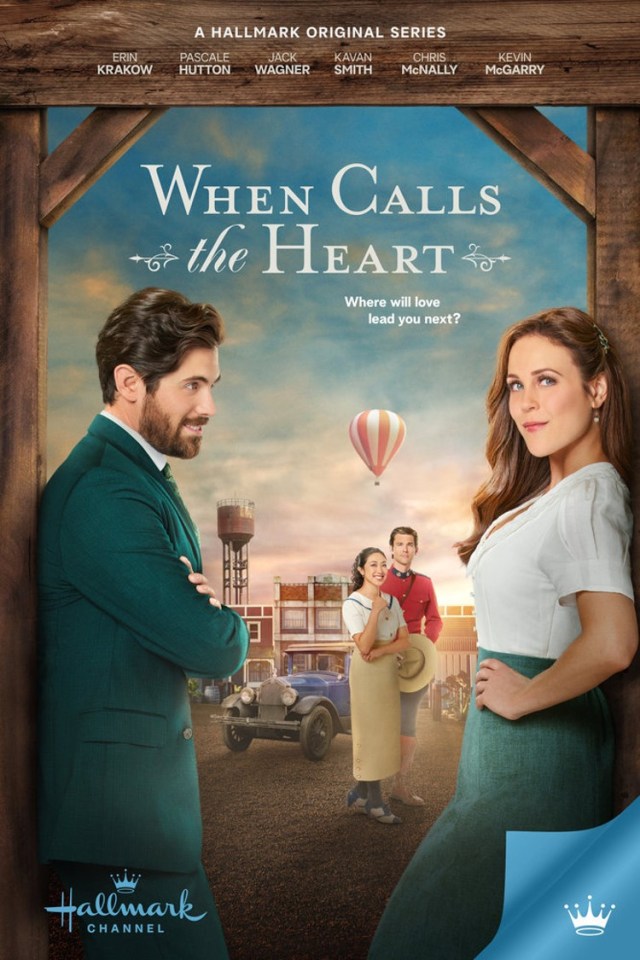
When Calls the Heart season nine poster created by Crown Media Family Networks and Hallmark Channel
Season: 9
Episode: 1
Name: In Like a Lion
Major stories:
Mr. Winkler and his team land their hot air balloon in front of the church/school. This visit causes a commotion in Hope Valley. Rosemary takes advantage of this opportunity by writing about it for the Valley Voice. The hot air balloon also catches the attention of Jack Jr., who just arrived in Hope Valley with Elizabeth, after spending a month in Hamilton with her family. But the hot air balloon isn’t the only thing making waves in this little Canadian town. A potential business partner named Jerome Smith arrives in Hope Valley to form a business partnership with Lucas. Jerome is interested in getting involved in the town’s oil business. But when Henry returns to Hope Valley and discovers Jerome’s invitation, he wants nothing to do with the visitor. This is because Henry claims Jerome hired him to oversee the coal mines years ago. Out of earshot from Henry, Fiona reveals to Lucas that she knew about Henry and Jerome’s business relationship, but believed they could put their differences aside and work together again. She also reveals this information to Mike, who was previously unaware of this news. The arrival of Jerome has consumed a lot of Lucas’ time, even forgoing a dinner with Elizabeth, despite both of them being at the Saloon at the same time. During this saloon trip, Jerome and Henry get into a fist fight, with Jerome pressing charges. This means Henry is taken to prison. Meanwhile, Mike is disappointed that Fiona didn’t tell him about Henry and Jerome’s business relationship. But he’s also concerned about his mayoral prospects. Toward the end of the episode, Lucas surprises Elizabeth with a ride in Mr. Winkler’s hot air balloon. On this ride, he tells Elizabeth he is leaving the oil business, in an attempt to spend more time with her and Jack Jr.
Bill informs Nathan that all Mounties will have to know how to drive a vehicle. Nathan doesn’t feel this change is necessary, with Bill hoping the mayoral election has a satisfactory outcome. When Nathan shares his lack of driving skills with Elizabeth, she volunteers to help him, as she feels she is more than qualified to be a good driving instructor. Later that day, while Nathan rides on the trail, another rider zooms past him. Because of how fast this rider, who is later revealed to be Mei Sou, raced by, Nathan wasn’t able to identify them. That evening, at the saloon, Nathan officially introduces himself to Mei, learning that she was the fast rider from earlier in the day. Despite being friendly with Nathan, Mei keeps herself guarded, revealing very little information about herself. While visiting Ned and Florence at the Mercantile, Mei shares that she will be Hope Valley’s pharmacist. Ned is confused by this because he was led to believe a man named Jeffrey would be arriving in town. Mei clarifies she was corresponding in her husband’s, Jeffrey’s, place the whole time. She also shares how she attended the same medical school as Faith (hence how the two characters know each other) and graduated at the top of her class. But when anyone attempts to learn more about Jeffrey, Mei cuts them off and quickly changes the subject. She does ask Faith for her help, but Faith is unsure how she can help Mei. At the end of the episode, Nathan gets into a car accident, a car colliding with Nathan and his horse.
At breakfast one morning, Bill reveals through a letter that Jesse and Clara moved to Montana in order to start their own homestead. This means that the Canfield family have moved into the café. While Elizabeth was away, Minnie was the school’s substitute teacher. She also has been helping run the café. Minnie not only misses Clara, but she also wonders if Bill will sell the café. Meanwhile, Joseph is preaching in Hope Valley’s church, gaining friendship and trust. Both Angela and Cooper are students of the school, implying Elizabeth gained her certification to teach Angela. But Cooper has acquired a bit of a defiant streak, which worries Joseph. As Bill is a candidate for Hope Valley’s mayor, he makes a promise with Lee not to campaign at the grand opening of a brand-new business. But at the grand opening, Bill does try to campaign, with Lee calling him out. Meanwhile, Lee is also serious about his mayoral candidacy. When he hears from Rosemary how Bill is leading a poll, Lee becomes discouraged. He even brings up his broken promise to give Rosemary her theater, wondering what other promises he hasn’t fulfilled. But Rosemary reassures him of how great of a mayor he would be and that she’s always by his side.
Because Dottie’s Dress Shop is no longer in business (for reasons that are never explained), that means a new business will take its place. Ned and Florence have purchased the property, with Joseph helping renovate the space. Leading up to the grand opening, the three of them have been very secretive about the nature of the business. This is done to keep an element of surprise. In an effort to spruce up the grand opening, Florence tells Ned she used to be a dancer years ago. She comes up with the idea of performing a song and dance duet. On the day of the grand opening, Ned and Florence perform their duet to great fanfare. It is also revealed that Dottie’s Dress Shop will now be replaced with a pharmacy and ice cream parlor. This decision is met with much success, as it brings residents older and newer closer together.
In honor of Hope Valley’s Ice Cream Parlor, I thought this picture from my 2019 attempt at making coffee ice cream would fit the occasion! Screenshot taken by me, Sally Silverscreen.
Some thoughts to consider:
Overall, season nine’s premiere is stronger than season eight’s was! While there were some stories that felt like “filler”, some stories got the ball rolling for the rest of the season. These stories brought a sense of intrigue for what’s to come, making me look forward to how they will play out! From Mei’s mysterious arrival to Henry’s troubles, the show provides reasons to come back for more!
I’m glad we finally got the ice cream parlor in Hope Valley! But though I’ve been waiting to see this business since season five, I don’t like how it came at the expense of Dottie’s Dress Shop. However, the dress shop going under kind of makes sense, story wise. With Dottie and Clara no longer on the show and Rosemary becoming editor-in-chief of the Valley Voice, there aren’t any characters who could run the dress shop. Then again, a clothing store is an important business in any town. While I’m looking forward to seeing the ice cream parlor thrive, I’d like to see a clothing store return to Hope Valley. Who knows? Maybe Rachel will return and open her own shop someday!
Speaking of Rosemary, I got a little bit excited when Lee mentioned her theater! If you read my list of the Top 10 things I’d like to see in When Calls the Heart’s ninth season, you’d know how much I want to finally see Rosemary’s theater. This idea was first brought up in season two and hasn’t been mentioned in a long time. If Lee does become Hope Valley’s mayor, I wonder if he’ll fulfill that promise?
Even though the oil business subplot has been going on for several seasons, it has become more confusing. Henry is constantly leaving and coming back to the business. Lucas is now leaving the business, likely focusing more on the saloon’s operations. With that said, it makes me wonder who will take responsibility for the oil business? Maybe it will be Mike and/or Fiona? Perhaps a new character will show up?
What are your thoughts on When Calls the Heart‘s ninth season premiere? Which storyline are you most excited about? Let me know in the comment section below!
When Gill, from Realweegiemidget Reviews, invited me to join the Wilhelm Scream Blogathon, I had no idea the “Wilhelm Scream” was even a thing. However, I was determined to find the perfect selection for the event! After searching high and low on the internet, it was down to two choices: F9 and Sailor Moon S: The Movie. I ultimately selected the latter because it’s been some time since I last reviewed an animated movie. As a matter of fact, the most recent animated film reviewed on 18 Cinema Lane was 1990’s The Nutcracker Prince back in December of 2021. I was also surprised to discover the “Wilhelm Scream” was featured in Sailor Moon S: The Movie! Even though this is my first time writing about anything Sailor Moon related, I have watched the English dub version of the show years ago. With that said, it has been years since I’ve seen anything Sailor Moon related. To avoid confusion for my readers, I will refer to the characters by their Japanese and Americanized names, if applicable. The version of Sailor Moon S: The Movie I watched is the English dub version. So, “in the name of the moon”, let’s start this review!
The animation: Despite Sailor Moon being released in the ‘90s and 2000s, the animation quality still holds up! One consistent element was the use of color! Princess Snow Kaguya, the film’s villain, wants to blanket the world in an infinite layer of snow and ice. Even though wintery environments typically don’t feature an expansive color palette, Kaguya was presented in hues of blue, green, and purple. The wardrobe of the Sailor Guardians/Sailor Scouts boasted bright hues; from Makoto’s/Lita’s orange sweatshirt to Usagi’s/Serena’s pale green sweater. This showed the creative team’s incentive to use as much color as possible. In some scenes, sparkles were added to provide a layer of dimension to a specific piece of animation. One example is when Luna is looking out at the ocean, as the sparkles give the illusion of the water moving. Another example involving Luna is when she is crying, with the sparkles emphasizing Luna’s emotions. Though the sparkles don’t make the animation 3-D, they do bring depth, in varying degrees, to the film. The fluidity of the animation’s movements also showcase the impressiveness of the movie! In some scenes, snow falls from the sky. The snowflakes fall in a steady progression, to the point where you forget it was likely added as an extra layer of animation. The fluid movement of these snowflakes brought realism to a given scene as well as the world of Sailor Moon!
Interconnected stories: Sailor Moon S: The Movie contains three plots. But it never felt like these plots were clashing or in competition with one another. Instead, they were interconnected, woven together by a strong thread! Two of the plots, Luna’s growing feelings for Kakeru and Himeko’s space journey were heavily affected by Kaguya’s attempts to cover Earth in snow and ice. While Kaguya’s plans provided the tenser moments of the movie, the other two plots served gentler moments, where the scripts messages of selflessness, dreams, and doing the right thing are instilled on the audience. The Sailor Guardians/Sailor Scouts are the glue that keeps the stories together, as they have some connection to each one. All of these components help the script move in a cycle.
Differing views on astronomy: In the Diagnosis Murder episode, “An Education in Murder”, Dr. Mark Sloan explains to his class how medicine is both an art and a science. This statement, though applying to astronomy this time, is brought to life in Sailor Moon S: The Movie! As I just mentioned, Himeko, a local astronaut, is preparing to make a journey to space. Her approach to astronomy is more scientific, as she chooses to think logically and “by the book”. Her friend, Kakeru, is also an astronomer. But his approach to the subject is more artistic. This is because he uses his knowledge and skills to prove the existence of a moon princess. These characters don’t see eye-to-eye when it comes to their respective scientific field. However, they not only care about one another, but they also recognize the importance of space exploration. Himeko and Kakeru’s story shows the audience how everyone can come to any subject differently.
Not feeling cinematic: When I choose to watch a movie, I expect that production to feel cinematic in some capacity. However, that wasn’t really the case for Sailor Moon S: The Movie. Most of the story was episodic, as these plots could have also been featured on the show. As good as the animation was, it looked like it came straight from one of the show’s episodes. The moment that truly felt cinematic was the final battle, with the Sailor Guardians/Sailor Scouts going up against Kaguya. Every member of the Sailor Guardians/Sailor Scouts present and the high energy excitement serve as two reasons for the cinematic feel. Even Usagi’s/Serena’s monologue about protecting life made that scene feel larger in scale. But outside that moment, Sailor Moon S: The Movie feels more like an extended episode.
The limited presence of Haruka/Amara, Michiru/Michelle, and Setsuna/Trista: The Sailor Guardians/Sailor Scouts from the Outer Planets, Haruka/Amara, Michiru/Michelle, and Setsuna/Trista make an appearance in Sailor Moon S: The Movie. But outside of their transformations as Sailor Uranus, Sailor Neptune, and Sailor Pluto, they only appeared in the film twice. Their limited presence was a missed opportunity to learn more about Haruka/Amara, Michiru/Michelle, and Setsuna/Trista. It also prevented these characters from having a stronger connection to the three aforementioned plots. If anything, the presence of Haruka/Amara, Michiru/Michelle, and Setsuna/Trista make it feel like they were there for plot convenience.
Confusion over the moon princess: As I mentioned earlier, Kakeru uses his knowledge and skills to prove the existence of a moon princess. While this part of the movie was easy to understand, I was confused over the true identity of who this princess was. Based on what some of the characters said, it seemed like Kaguya claimed to be the moon princess. Her place of origin happened to be the moon itself. But Luna planned on pretending to be the moon princess, in order to make Kakeru’s dream come true. When everything was said and done, I don’t feel like I received a definitive answer of who the moon princess was meant to be.
Many years ago, I purchased these Sailor Moon S VHS tapes at a video store sale. However, I’d like to call them relics. Screenshots taken by me, Sally Silverscreen.
My overall impression:
One of my reasons for reviewing Sailor Moon S: The Movie was the inclusion of the “Wilhelm Scream”. Unfortunately, I didn’t hear this scream while watching the film. Then again, I was so engrossed in the story that I must have missed it. As I said in the introduction, it has been years since I’ve seen anything Sailor Moon related. However, it was nice to revisit the series, even for an hour! The animation still holds up, maintaining its color, depth, and fluidity over twenty years later. Like the show, Sailor Moon S: The Movie features important messages and themes. But it also contained differing views on astronomy, a topic that wouldn’t typically be found in the Sailor Moon series. Despite all these strengths, I wish the movie felt like a movie, instead of an extended tv episode. I also wish Haruka/Amara, Michiru/Michelle, and Setsuna/Trista had more appearances in the story. If you are a fan of Sailor Moon, ‘90s entertainment, or animation in general, then this is worth an hour of your time!
Overall score: 7.5 out of 10
Have you watched Sailor Moon? Do you prefer the Japanese version or the English dubbed version? Let me know in the comment section!
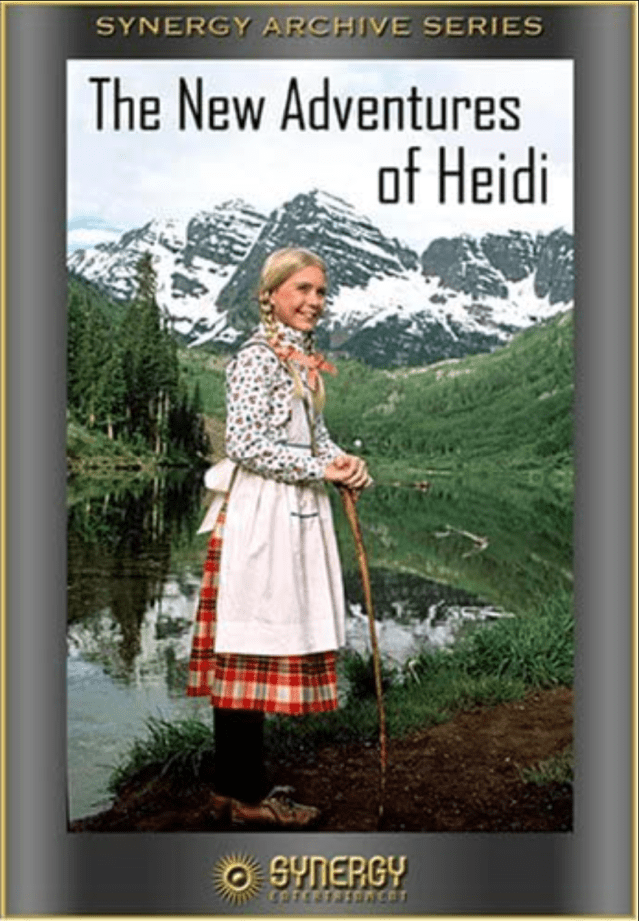
First, it was All Dogs Go to Heaven 2. Then, it was The Cabin, followed by Scarlett. Now, for the fourth So Bad It’s Good Blogathon, I am continuing my saga to find the one movie that can rightfully claim this coveted title! As you can see by the aforementioned films, my track record has been two ‘90s projects that were just ok and one 2011 Hallmark movie that was so bad, it was unenjoyable. This time around, I traveled further back in time to choose my fourth attempt at finding my “so bad it’s good” movie. In my review of The Lion, I mentioned Leonard Maltin’s TV Movies & Video Guide 1989 Edition. This is because that book introduced me to the 1962 title. Through this publication, Leonard introduced me to another movie. That film is 1978’s The New Adventures of Heidi! According to Leonard’s review of this picture, the movie contains the following:
A) A “modern” retelling of a well-known story
B) Musical numbers
C) New York City
D) Christmas
To me, these facts sounded like the ingredients of a “so bad it’s good” project. But has The New Adventures of Heidi finally claimed this sought-after title? Keep reading to see what’s on the other side of the mountain!
The acting: When it comes to acting performances in made-for-tv movies, it can be hit or miss. But in The New Adventures of Heidi, the acting was stronger than initially expected! Portraying the titular character, Katy Kurtzman gave a performance that appeared genuine, like the character’s goodness was true all along. Whenever Heidi is with her friend, Elizabeth, you can see they truly enjoy spending time together. Elizabeth meets Heidi after running away from school. Despite knowing each other for a short amount of time, they display a strong camaraderie. This camaraderie was displayed through a down-to-earth personality, pleasant facial expressions, and a kind demeanor from Katy. Executed with consistency, Katy also displayed authentic emotion. When Heidi first learns about her grandfather’s plans to send her away, her emotions effortlessly change over the course of the scene. Happiness turns to thoughtful concern, her eyes intently set on her grandfather. As the conversation continues, Heidi’s eyes grow sadder, eventually leading to shed tears. Because of Katy’s acting strength, her overall performance was enjoyable to watch!
Since I mentioned Elizabeth, I’ll talk about Sherrie Wills’ performance! On the surface, Elizabeth seems like aspoiled child who is rough around the edges. But beyond the surface, she doesn’t seem like a stereotype. Because of Sherrie’s acting abilities, Elizabeth is a character that gives the audience a reason to be sympathetic toward her. A great example is when she and Heidi go Christmas shopping. When they arrive toa toy store, they are overcome with happiness and wonder at the sights of the season. But as soon as Elizabeth sees a carousel music box, she immediately bursts into tears. This is because Elizabeth’s mother, who passed away before the film’s events, used to give her father a music box every Christmas. It is scenes like this one that show how there is more than meets the eye.
Back in 2019, I reviewed Summer Magic, a Disney production from 1963. One of the reasons why I wanted to see that particular film was Burl Ives’ involvement in the project. When I discovered he was cast in The New Adventures of Heidi, I was curious to see how his performance differed from Osh Popham of Summer Magic. Like his previous performance, I liked his portrayal of Heidi’s grandfather! While his acting abilities were expressive, there was a lot of heart in his performance. This heart can be seen during the musical number, “Heidi”. In that number, Heidi’s grandfather is singing about how thankful he is to have Heidi in his life. Throughout this scene, he appears genuinely happy, reminiscing over all the joy Heidi brought so far. A warm smile appears on his face and a pleasant demeanor is heard in his voice. Heidi’s grandfather seems approachable, showing him as a friendly man and lovable parental figure. Even though he was in a handful of scenes, Burl Ives did a good job with his role!
The messages and themes: The original Heidi is known for containing messages and themes of family, friendship, and finding a silver lining. Like the original, The New Adventures of Heidi also features themes and messages that are timeless and relatable! Before Christmas, Elizabeth’s father, Dan, tells his secretary how he’ll be too busy to celebrate the holiday with his daughter. His secretary, Mady, tells him “But no two are the same. And you’ll never have this one back again”. This simple statement reminds the audience how unpredictable time is. Therefore, it is wise to spend that time with those you love. When Heidi comes home, she is upset because her grandfather hasn’t returned. Dan shares with Heidi how even though it’s important to hold on to the memory of lost loved ones, time needs to be made to open hearts for those still living. This message is just as meaningful today as it was in 1978. That could also be said about all the messages and themes in The New Adventures of Heidi!
The scenery: This movie was filmed in California and Colorado, according to IMDB. For the scenes taking place in the Alps, my guess is they were filmed in Snowmass, Colorado. Despite this, the setting looked like a pretty convincing Switzerland! In some establishing shots, large mountains and dark green hills are captured in long to medium shots. A color palette of greens, browns, and white illustrated a natural landscape whose justice likely can’t be done through filmography. Red poppies are sprinkled around Heidi and her grandfather’s home. They can also be seen in expansive green fields. The vibrant hue of the flowers provide a striking component to this landscape. When all this is added together and paired with a bright blue sky, a welcoming and picturesque environment is presented to the audience!
Glaring cases of discontinuity: What makes or breaks any story is its continuity. This component is like a thread, tightly holding each piece of the story together, if strong enough. But when it comes to The New Adventures of Heidi, there were a few aspects that caused this thread to be looser. In the introduction, I mentioned the movie was a “modern” retelling of Heidi. While this statement is true, it looks like Heidi, hergrandfather, and Peter didn’t get the memo. That’s because their attire reflects the time period of the originalstory, which is set in the 1880s. Even Heidi and her grandfather’s home is reflective of an era gone by. During the movie, Heidi’s grandfather begins to lose his eyesight. Because of this, he decides to send Heidi to live with her cousins. But while singing the song, “Let Me Stay/Let Her Stay”, Heidi’s grandfather prays to God to have Heidi stay in the Alps, even going so far as to sacrifice his eyesight just to make his prayer a reality. It seems like he has forgotten that this decision was in his control since the very beginning. This example shows howdiscontinuity can muddy the waters of character development.
The musical numbers: As I mentioned in the introduction, there are musical numbers in The New Adventures of Heidi. I can tell the film’s creative team wanted to include musical numbers in an effort to give their project its own unique identity. In all honesty, though, I don’t think this movie needed musical numbers. My reason is how weak these numbers were. Some of these musical numbers were performed by Katy and Sherrie. I’m not going to give these actresses too much criticism, as they were children at the time of the movie’s production. But I will say they are better actresses than singers. Sherrie’s voice was flat, unable to reach higher notes. Meanwhile, Katy’s voice was stronger, but she couldn’t reach some higher notes either. This highlighted the actresses’ weaknesses, giving the audience the impression of how Katy and Sherrie werelikely not professionally trained singers. Even professional singers couldn’t catch a break either. Burl Ives is a talent who can do no wrong, singing wise. But he was caught up in one major weakness in these numbers: talking throughout the song instead of singing. This happened during the song, “Let Me Stay/Let Her Stay”, where Heidi’s grandfather is speaking his prayer when he’s meant to be singing it. Marlyn Mason also fell into this trap with the song, “That Man”. Because she tried to sing and talk through her lyrics at the same time, she performed the song faster than the music. To me, this felt so jarring, as the music and execution of the lyrics seemed like they belonged to two separate pieces.
A regurgitated story: This film is titled The New Adventures of Heidi. If you take the time to watch it, you’d see how the movie rehashes most of the story points fromJohanna Spyri’s original. Take for instance, the character of Elizabeth. In The New Adventures of Heidi, she’s meant to be a Clara representative; a wealthy young girl dealing with her own conflict that Heidi helps to resolve. But instead of dealing with a serious medical situation, Elizabeth wants to spend more time with her workaholic father, especially after the death of her mother. Similar to the original story, there is a medical situation present in The New Adventures of Heidi. But this time, Heidi’s grandfather is losing his eyesight, as I explained in my paragraph about the film’sdiscontinuity. The longer I watched this movie, the more I questioned what it’s intended point was.
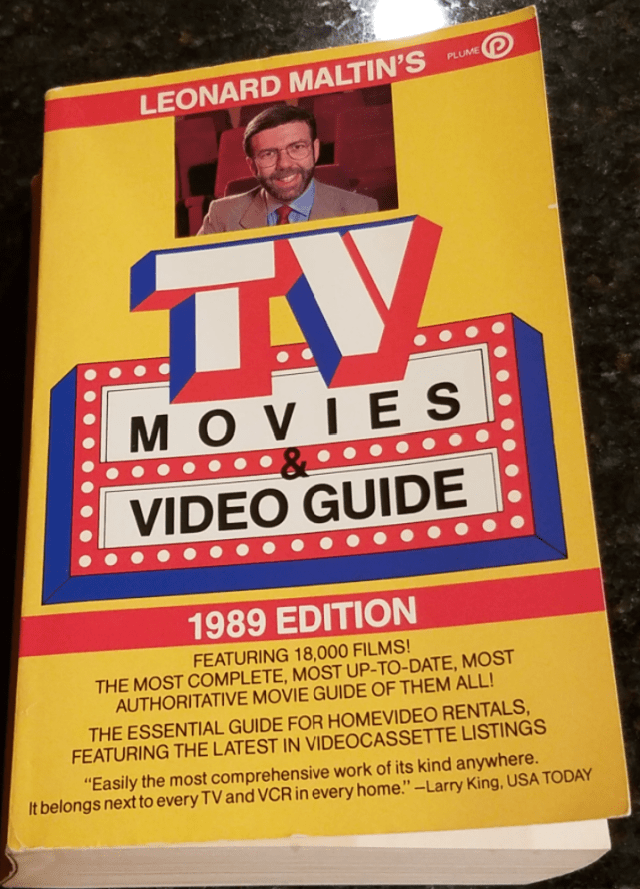
A screenshot of my copy of Leonard Maltin’s TV Movies & Video Guide 1989 Edition. Screenshot taken by me, Sally Silverscreen.
My overall impression:
And now, the moment you’ve been waiting for! The answer to whether The New Adventures of Heidi will claim the title of “so bad it’s good” is…an unfortunate no. The longer I think about this film, the more I see how spectacularly average it is. As I mentioned throughout my review, there were musical numbers included in this production. I also noted how Christmas makes an appearance in the story. But when you look past allthe silver and gold decorations (that Burl Ives reference was definitely intentional), the movie is the same story as the original wrapped in pretty Christmas paper. Despite the title boasting “new adventures” with theworld’s favorite Swiss mountain girl, the script spends more time repeating history. At the same time, parts ofthe movie are treated as if the project were a sequel, the creative team expecting the audience to know exactly what is happening on screen. Reflecting on my fourth attempt at finding my “so bad it’s good” movie,I realize a script’s strength can determine a film’s overall quality. In the case of The New Adventures of Heidi,the acting was strong and the film itself did have other merits. But not even Burl Ives himself could save this picture. Bottom line is if a cinematic project chooses to use bells and whistles, that may mean the creative team is trying to make up for a loss in another department.
Overall score: 5.1 out of 10
Do you have a “so bad it’s good” film in your life? If so, what is it? Please share your thoughts in the comment section!
The theme of February’s Genre Grandeur is “College Themed Films”. While looking for ideas through a general internet search, I came across titles I had either heard of or seen before. But, for this month’s event, I wanted to choose one that was new to me. Toward the bottom of an IMDB list of “college films”, one movie caught my eye. That would be the 2015 Japanese film, Flying Colors! Prior to 2022, I had reviewed two Japanese productions; Howl’s Moving Castle and From Up on Poppy Hill. But anyone who knows anything about film would know Studio Ghibli is not the “end all, be all” when it comes to Japanese cinema. With that said, this will be the first time a live-action Japanese movie has been reviewed on 18 Cinema Lane! Because I don’t watch and/or review international movies often, I had never heard of Flying Colors. According to IMDB, this is a “fact-based tale” that, to me, sounded uplifting and inspirational. Those aforementioned words usually don’t come to mind when the subject of “college films” is brought up. So, before hitting the books and cramming for that upcoming test, take some time to read this review of Flying Colors!
The acting: Flying Colors revolves around Sayaka, a struggling student who receives the opportunity to improve her grades and apply to one of the top universities in Japan. Since this is a “coming-of-age” story, the project needed an actress who could effectively show the changes and growth happening within Sayaka’s life. Kasumi Arimura did just that, allowing this on-screen growth to appear natural! Specifically referring to the college application process, there are ups and downs along the way. One of those downs is academic burn-out. Sayaka becomes so frustrated by a stand-still in her academic journey, she chooses to take a break. This frustration is met with yelling at the tutor, Tsubota-Sensei, and an angry look on her face. Through Kasumi’s performance, the audience can see this frustration is not directed toward the tutor, but is coming from a place of self-doubt and insecurity. Later, when Sayaka shows up at her mother’s place of employment, she bursts into tears as soon as her mother approaches. This is in response to those earlier feelings of self-doubt and insecurity bubbling to the surface.
Because I brought up Tsubota-Sensei, I’m now going to talk about Atsushi Itô’s performance next! The on-screen camaraderie between Atsushi and Kasumi was strong, which made Sayaka and Tsubota-Sensei’s interactions memorable and enjoyable! In preparation for college entrance exams, Tsubota-Sensei creates a game where Sayaka has to give answers in a short amount of time. During one of these games, Sayaka lost, so she had to remove the false eyelashes she was wearing that day. This game is just one example of how Tsubota-Sensei not only created a lesson/study plan that was tailored to Sayaka’s interests, but also gave her the freedom to evolve as a student and young lady. At a restaurant with an investor, Tsubota-Sensei was given doubt about the effectiveness of his tutoring program. The investor also shares insults about Sayaka. Tsubota-Sensei comes to her and the program’s defense, appearing sure of Sayaka, himself, and the rest of his students. But if you look closely at his eyes, you can see how hurt Tsubota-Sensei is by the investor’s comments. These moments show how Atsushi Itô is a good actor individually and within an ensemble!
The messages and themes: As I said in the introduction, Flying Colors sounded uplifting and inspirational. This statement is true because of the messages and themes found within the story! Before seeking Tsubota-Sensei’s help, Sayaka was a junior in high school, whose grades were suffering. Her father feels she is a hopeless cause and her teacher is confident she won’t graduate high school. Despite all this doubt, Sayaka still puts effort into her academics, realizing there is more to her life than she initially thought. Her story shows the audience how it’s not too late to write a new chapter in their story. Throughout Flying Colors, Sayaka’s father pushes her brother, Ryuta, to become a professional baseball player. This has happened since he was a child, so Ryuta becomes burned out by all the pressure coming his way. The burn-out causes a dispute between him and his father, which ends up upsetting the whole family. Ryuta’s part of the film serves as a cautionary tale of how it isn’t wise to place all your eggs in one basket.
Sayaka’s wardrobe: When I talked about Atsushi Itô’s performance, I said his character, Tsubota-Sensei, allowed Sayaka the freedom to evolve as a student and young lady. One area of evolution is her wardrobe. At the beginning of the film, Sayaka places more emphasis on her looks than her grades. This is reflective in outfits that are colorful and considered “fashionable”. While at a tutoring session, Sayaka wears a yellow sundress covered in small pink and blue flowers. Complimenting the dress is a large, robin’s egg blue, flower necklace and a pair of yellow wedge shoes. As Sayaka grows into a studious, college hopeful, her outfits adopt an appearance that some would say is more “conversative”. Toward the end of the film, she wears a black and white plaid sweater dress, which looks more like a longer coat. Paired with black boots and a light blue scarf, this outfit shows how much Sayaka has matured since her story’s start.
Confusion over the college applications process: Because Flying Colors takes place in Japan, the college applications process is reflective of the Japanese educational system. While I appreciate the opportunity to learn more about Japan’s college applications process, there were times when I found myself confused. After taking some practice tests, Sayaka is frustrated when she receives a “E” score. But when she receives a “C” score, Sayaka becomes more confident in her academic abilities. Since I’m not familiar with Japan’s educational system, I wasn’t sure what these “E” and “C” scores meant. I also didn’t know the importance of the numbers and symbols on those practice tests. If you are unfamiliar with Japan’s educational system and/or college applications process, you might be as confused as I was.
An unresolved relationship: While attending Tsubota-Sensei’s tutoring sessions, Sayaka meets a male student who is taking the tutoring program for similar reasons. Like Sayaka, this student also changes his appearance over time, to reflect his new-found focus on his academics. As the story progresses, these characters become friendly with one another, with the script implying they might form a relationship. However, their interactions doesn’t really lead anywhere. I know not every on-screen relationship is meant to be romantic. But I wish the script had clarified where Sayaka and this male student stood in their bond.
The run-time: Flying Colors is an hour and fifty-six minutes. Even though it is a “coming-of-age” story, it is also a straight forward narrative. Because of this, I don’t think the movie needed to be almost two hours. Some of the practice testing scenes could have been eliminated, an example of how the run-time can be reduced. A few scenes related to Ryuta’s baseball training could have been cut too. With that said, the film’s run-time might be an hour and twenty-five to thirty minutes. This solution would have allowed the story to get straight to the point sooner.
How I feel about Flying Colors is similar to how I feel about Red Corner. Both films have something important to say, while presenting strong acting performances and an intriguing story. But they were held back by their flaws. In the case of Flying Colors, the run-time is a bit too long. The college applications process of Japan was also confusing, as I’m not familiar with the components of this process. However, like Red Corner, I would recommend Flying Colors to anyone seeking international films, especially those from Japan! The delivery of the messages and themes feel genuine, making the audience feel good about what they watched. The interactions between the characters appear realistic, giving viewers a reason to stay invested in their journey. While I’m not sure how “fact-based” Flying Colors is, I’m glad I discovered this movie! Thanks to MovieRob and Jason from Agent Palmer, this review might not have existed if it wasn’t for Genre Grandeur.
Overall score: 7.2 out of 10
Do you watch Japanese films? If so, are there any you’d like to recommend to me? Please tell me in the comment section!
For the We Love Detectives Week Blogathon, I was originally going to create a tier rank list of every film from Hallmark Movies & Mysteries I’ve seen. But the more I thought about this idea, the more ambitious it became. Instead of following through on such a daunting task, I decided to submit an entry that was simpler in nature. I’m currently reading The Magician’s Accomplice by Michael Genelin. But I might not finish the book within the blogathon timeframe. So that’s how I came up with my back-up plan! Recently, while on Hallmark Movies & Mysteries’ website, I came across an episode of Diagnosis Murder titled “An Education in Murder”. What caught my attention was the episode’s synopsis, as it reminded me of an episode of Murder, She Wrote I reviewed back in 2019: “School for Murder”. Curious to see how similar or different “An Education in Murder” was to “School for Murder”, I thought now would be a good time to introduce myself to a “new” mystery show! Before I continue with my review, I’d like to point out the irony of the situation. That aforementioned review of “School for Murder” was not only the first time I had watched Murder, She Wrote, but that was my submission for a mystery themed blogathon!
Episode Name: An Education in Murder
Season 5, Episode 19
Premiere Date: March 5th, 1998
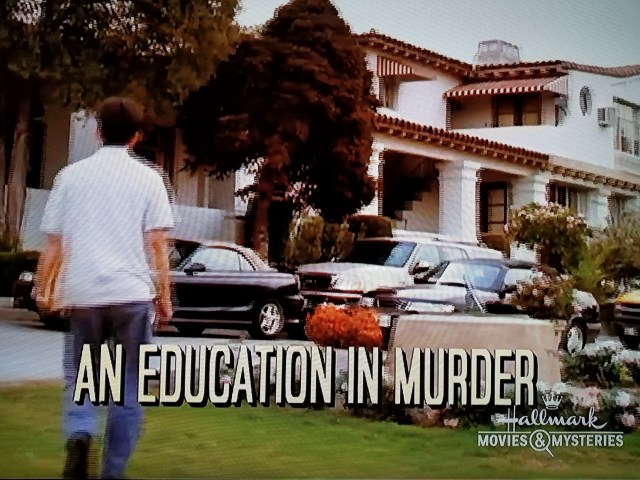
The title card for “An Education in Murder”. Screenshot taken by me, Sally Silverscreen.
What I liked about this episode:
I was impressed by the acting in “An Education in Murder”! But there was one performance that really outshined the rest. Portraying a student named Noelle, Danielle Harris did such a great job with the acting material given! When it comes to describing her character, think Cher from Clueless but more manipulative. There were two sides to Noelle; the sweet, good-natured side she used to give a good first impression and the edgy, sadistic side that causes her fellow classmates to face a living nightmare. Throughout this episode, Danielle effortlessly wove in between these polar opposites, changing her character’s demeanor like a chameleon. It was also interesting to see Noelle interact with the other characters, her unpredictability leaving me wondering what she’ll do next. Danielle’s strong acting talents worked in her favor, as she helped bring to life one of the most memorable characters I’ve seen in any tv show!
What I didn’t like about this episode:
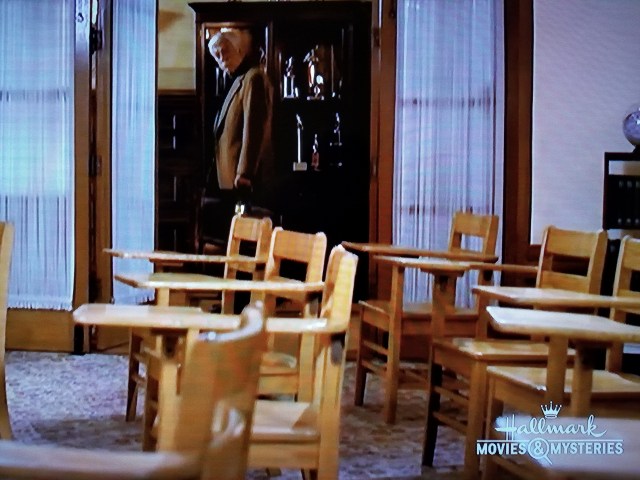
Similar to “School for Murder”, “An Education in Murder” took place at an affluent private school. Kelly, one of the students of the school, explains to Dr. Mark Sloan, the show’s protagonist, just how affluent the student body is. After class, she says that if a student doesn’t keep up with current events, their GPA will suffer. She also tells Mark how she doesn’t have a wealthy father. Despite these words, Norrington Hall, the school featured in this episode, didn’t feel like an affluent private school. I know there are a variety of private schools with their own unique communities, traditions, and ways of operating on a day-to-day basis. But I couldn’t find anything about Norrington Hall that screamed “look how much money can be dumped into a child’s education”. For one, all the students in this episode didn’t behave or interact any differently from public school students in a typical movie or television show. Mark’s science class at Norrington Hall seems like a standard AP (advanced placement) science class. Sure, the school’s interior and exterior had a nice appearance. But if entertainment media and real-life have taught me anything, public school buildings can look just as nice as those belonging to private schools. The way the characters’ words didn’t match up with the visuals reminded me of Chippewa Falls Library from the Hallmark Christmas movie, Holly and Ivy.
The reason I included this screenshot is to show readers how nice the interior of Norrington Hall is. Screenshot taken by me, Sally Silverscreen.
The mystery itself:
I’m glad “An Education in Murder” wasn’t a carbon-copy of “School for Murder”! Even though the Diagnosis Murder episode had a main plot and two subplots, similar to Murder, She Wrote’s episode, thestory felt unique from the predecessor. Despite having three stories in one episode, it never seemed overwhelming. Each of these plots held a connection to the mystery. Unfortunately, that mysterywas so painfully obvious, you might as well place the guilty party under the brightest neon sign you can find. Because of the mystery’s painful obviousness, the resolution was anti-climactic. This led to a weak mystery. While watching “An Education in Murder”, I was hoping the guilty party was a red herring, with an unexpected twist hiding around the corner. Sadly, this episode was “cut-and-dry”, leaving little room for intrigue.
The other factors from this episode:
“An Education in Murder” brought up several messages relating to medicine and murder mysteries I hadn’t thought of before. For instance, after a classmate from Norrington Hall passes away, Mark tells his students how that student’s death is going to make a difference. As morbid as that sounds, he brings up a good point about murder mysteries. Because we, the audience, are so caught up in the story, the murder mystery’s effect on the characters and their surroundings can sometimes be overlooked. This can, to an extent, also be said about real-life cases.
At certain points in the episode, Mark gives Kelly advice, ranging from how to prevent dizzy spells to figuring out her life after high school. He helps her in an attempt to provide a trustworthy figure in Kelly’s life. This served as a major difference between Diagnosis Murder and Murder, She Wrote. Out of theepisodes of Murder, She Wrote I’ve seen, I don’t recall Jessica Fletcher giving noteworthy advice to younger characters. Maybe the infrequent presence of younger characters on that show was a reason why? Even though this is my first time watching Diagnosis Murder, it makes me wonder how often younger characters appeared on the show.
In one scene, Mark’s son, Steve, gives Mark information about the guilty party’s background. This information was used to explain the motive behind the guilty party’s behavior. After hearing this explanation, it made me wonder if the show was implying the guilty party had RAD (reactive attachment disorder)? I’m not asking this to diagnose a character, but simply out of curiosity. If the guilty party did have RAD, why wouldn’t any of the characters mention this? I know this show doesn’t revolve around the psychological aspect of the medical world. Still, I’m surprised the disorder wasn’t openly stated in this episode.
My overall thoughts:
For my first time watching Diagnosis Murder, I was left desiring more from the mystery. Even though it was a different story from Murder, She Wrote’s “School for Murder”, it was painfully obvious who the guilty party was. Because of that, I didn’t find the mystery interactive. However, the parts of the story surrounding the mystery made up for the episode’s weaknesses! “An Education in Murder” was more thought-provoking than I expected, sharing interesting ideas about murder mysteries and medicine. Each plot was connected to the mystery, allowing these stories to share importance in the script. But, as I said in the review, the amount of stories never felt overwhelming. Based on the series synopsis I read on Hallmark Movies & Mysteries’ website, it seems like Diagnosis Murder wanted to enjoy the fruits of Murder, She Wrote’s labor. I came to this conclusion because each show shares some common aspects, such as featuring an older protagonist. Like with Murder, She Wrote, I might check out more episodes from Diagnosis Murder.
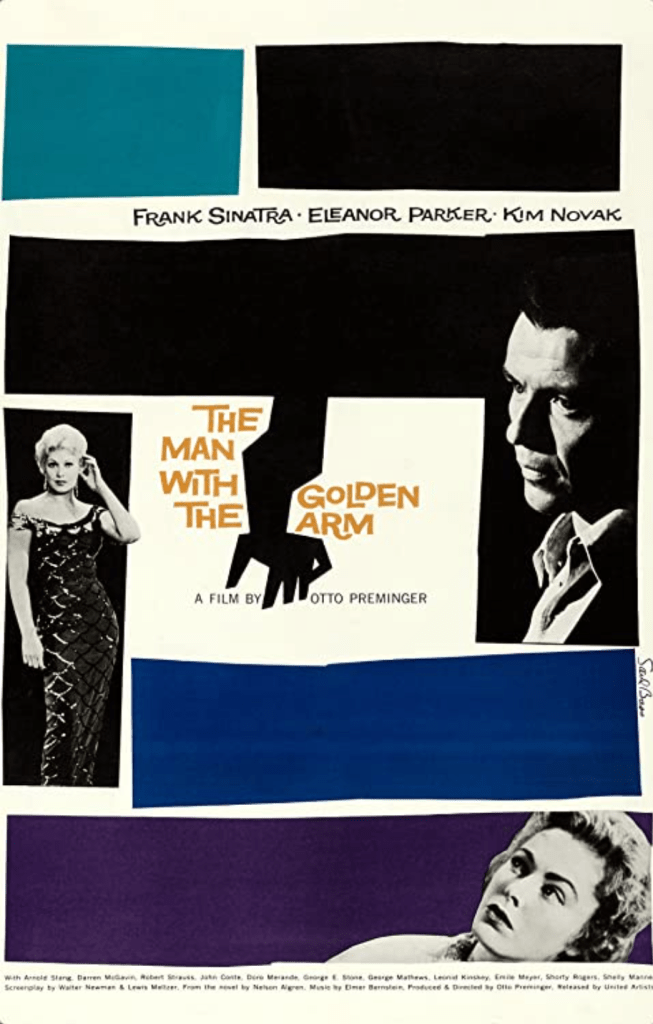
On my Movie Recommendations board on Pinterest, I have 107 films listed. The Man with the Golden Arm is one of those films. Maddy, from Maddy Loves Her Classic Films, recommended the 1955 movie to me years ago. With all my movie recommendations, I try to find the perfect opportunity to review them, as a way to show respect to the people who suggested those movies. When the Kim Novak Blogathon was announced, I immediately went to my aforementioned Pinterest board, to see if any of Kim’s films were on there. Sure enough, I came across the poster for The Man with the Golden Arm! This is not the first time I’ve reviewed one of Kim’s films. Back in 2019, I wrote about the 1954 title, Phffft, a movie I thought was just ok. How will the 1955 film compare to Phffft? The only way to find out to keep reading my review!
The acting: Because Kim Novak is one of the reasons why I’m reviewing this movie, I’ll talk about her performance first. Portraying Frankie’s lover, Molly, Kim adopted a different persona from her role in Phffft. In The Man with the Golden Arm, she traded flirty for headstrong! Molly is a woman who knows what she wants and finds a way to get it. One of these things is for Frankie to get clean. She says it likes it is by telling Frankie what he needs to hear instead of what he wants to hear. Whenever this happens, Kim uses a tone of voice that is stern enough to be taken seriously. Her approach to emotions in The Man with the Golden Arm is more subtle. However, Kim’s facial expressions and body language perfectly showed the audience what was on her character’s mind. While working at a nightclub, Molly is disappointed by Frankie’s lateness. Her eyes are more downcast, like she doesn’t want Frankie to see her disappointment. Also, her face carries a serious expression, as if she’s tired of being let down.
Most of Kim’s scenes show Molly interacting with Frankie. These scenes presented an on-screen chemistry between Kim Novak and Frank Sinatra I liked seeing! This on-screen chemistry was a strong friendship where both parties seemed to have a deep understanding for one another. It kind of reminded me of the on-screen chemistry between Mercedes Ruehl and Jamey Sheridan in the Hallmark Hall of Fame movie, The Lost Child. While we’re on the subject of Frank Sinatra, let me talk about his performance next! The Man with the Golden Arm is the seventh movie of Frank’s I’m reviewing. In the previous six, he carries this suave charisma that presents an illusion of his character having an effortless existence. While his character, Frankie, does have charisma, it is toned down. What overshadows it is a persona that is more downtrodden and beaten. This makes sense for this particular story, as Frankie is attempting to overcome a drug addiction. Despite the change in acting material, Frank effortlessly pulls it off! His performance was versatile, allowing Frank to adapt to whatever his character faced. His performance was also consistent.
Another consistent performance came from Eleanor Parker! Prior to watching this movie, I had seen and reviewed InterruptedMelody. In that review, I said Eleanor’s portrayal of Marjorie Lawrence was emotional. I can also say that about her portrayal ofZosh, but for different reasons. Zosh is a woman who became paralyzed due to a car accident. While she also wants to see Frankie get clean, she has her own reasons why. Because of the emotionality Eleanor possesses, her portrayal of Zosh caused a ripple affect among the characters. The best example of Eleanor’s emotionality can be seen when Frankie returns from rehab. As their interaction carries on, Eleanor’s demeanor changes over time. It starts with Zosh being excited about Frankie’s return, then leads to concern and frustration over his and her future. Zosh’s reactions ripple through Frankie, presenting some obstacles on his journey to recovery.
Showing the negative effects of drug use: The subject of drug use/drug addictions is one that requires a certain amount of seriousness. Not only is that seriousness found within the story of The Man with the Golden Arm, but it can also be seen in Frank’s performance. When Frankie experiences a relapse, his right hand shakes. Shortly before he relapses, his pupils change in size. Frankie’s attitude changes to agitation, as he attempts to get the “monkey” of his back. He even becomes desperate to appease this “monkey”, putting himself, Zosh, and Molly in danger. Besides being referred to as a “monkey”, Frankie’s addiction is also compared to sugar by a member of the card dealing world. He tells Frankie giving up the addiction is like giving up sugar for the rest of his life, giving Frankie the illusion he can quit whenever he wants. However, these words cause more harm than good. It was interesting to hear the characters in this film talk about drug addictions in a more open sense. The Man with the Golden Arm was released in 1955, a time when drug addictions/drug use wasn’t talked about as openly as today. Therefore, this subject’s inclusion in the script felt ahead of its time.
The use of music: Throughout The Man with the Golden Arm, I noticed how music was used to elaborate on a scene’s particular tone. The music also built up to a tense filled moment. A great example is when Frankie relapses. While on his way to consume drugs, an orchestral tune can be quietly heard in the background. When he gets closer to his destination, the background music gets louder, stopping once Frankie gets what he wants. This specific tune plays every time Frankie relapses, serving as an indicator to the audience what’s to come. A big band tune could be heard when Frankie is looking for Molly later in the film. This tune highlighted Frankie’s urgency to find Molly. It also reflected Frankie’s musical desires and Molly’s place of employment. The use of music I described in this paragraph shows the cleverness incorporated into the movie!
The underutilization of Kim Novak: Earlier in this review, I talked about how I enjoyed watching Kim’s performance. While I still stand by this statement, I feel her talents were underutilized. Kim appeared in a handful of scenes. Even though she was cast as a main supporting actress and she was one of the few actresses in the film, I was disappointed by how limited Kim’s on-screen appearances were. The Man with the Golden Arm is Frankie’s story, as he is the titular character. Therefore, I knew Frank Sinatra’s character would be focused on the most in this movie. But Eleanor Parker had much more screen time than Kim did. If you’re planning on watching this film specifically for Kim’s performance, like I did, you may be a bit let down.
Too many plots: The Man with the Golden Arm contained five plots, each having something important to say. Because there was no distinction of focus between these plots, they ended up spending the movie’s run-time competing against one another. The competition among the five plots caused them to be resolved in an unsatisfactory way or too conveniently. One example involves a secret Zosh carries throughout the story. This secret will not be shared in this review, in an effort to prevent the film from being spoiled. But when the secret is revealed to the rest of the characters, the timing of this reveal feels presented simply to tie up loose ends. Had some of these plots either been written out or relegated to subplot status, maybe Zosh’s secret would have been revealed sooner.
Limited inclusion of musical talents: I don’t believe there is an unspoken rule that Frank Sinatra has to sing and/or have a musical number whenever he stars in a film. But I do feel there was a missed musical opportunity in The Man with the Golden Arm. At the beginning of the movie, Frankie shares how, while in rehab, he learned how to play the drums. He even plans on joining a band. After these words were spoken, I was so excited to see Frank step out of his comfort zone and try his hand at playing an instrument that may have been new to him. But as the story progressed, Frank was shown playing the drums for a handful of seconds. In one of these scenes, it seemed like Frank was playing the drums alongside the radio, which made it difficult to discern what sounds truly came from the radio. The other two scenes presented a force that prevented me from seeing Frank perform a full drum solo. That excitement I felt toward the beginning of the movie slowing but surely fizzled.
Throughout my years of movie blogging, I have seen films that tried to say so much, but ended up saying so little. The Man with the Golden Arm is one of those films. I recognize the important messages the creative team wanted to share with the audience. But because the movie had five plots, these messages did not have a strong delivery. I can, however, commend the production for addressing a serious issue in a time when that issue was not openly talked about. The strong acting performances and use of music can be acknowledged as well. Kim Novak’s performance was one of the strongest in this film. So, it was disappointing to see Kim receive a limited amount of screen-time, especially since she was one of the reasons why I chose to watch this movie. In the future, I want to seek out Kim’s other film work. I’d also like to watch Frank’s and Eleanor’s other work too.
Overall score: 6.1 out of 10
Have you seen any of Kim Novak’s films? If so, which one would you recommend I review next? Tell me in the comment section below!
18 Cinema Lane recently celebrated its fourth anniversary! To commemorate such an important milestone, I am, once again, hosting the Gold Sally Awards! As I said last month, each award post will feature two polls at a time. This decision was made to help the voting process move at a faster pace. With that said, this year’s Gold Sally Awards will begin with the Best Movie and Story polls! Because I didn’t post any announcements for the Gold Sally Awards, the first two polls will be available for two weeks; from February 16th to March 2nd. Like years past, you are allowed to vote for more than one nominee. But you can only vote once per person. The link to the polls will be located under each poll. Just click on the word ‘PollMaker’.
Similar to last year, I thought featuring this anniversary image was appropriate for the start of the Gold Sally Awards! Anniversary image created by WordPress.
What was the Best Movie of 2021?
1. The Karate Kid (1984)
2. The Three Musketeers (1948)
3. The Love Letter
4. Perry Mason: The Case of the Telltale Talk Show Host
5. Sincerely, Yours, Truly
6. Rigoletto
7. Holly and Ivy
8. The King and I (1956)
9. A Star Is Born (1937)
10. Poisoned in Paradise: A Martha’s Vineyard Mystery
The last time I reviewed a Hallmark Movies & Mysteries film was last August, when I wrote about Poisoned in Paradise: A Martha’s Vineyard Mystery. To make up for that, I thought it made sense to review one of the network’s newest titles. As of February 2022, Hallmark Movies & Mysteries only has two new mystery releases; Cut, Color, Murder and Aurora Teagarden Mysteries: Haunted by Murder. Like the title of this review says, I’ll be writing about Cut, Color, Murder! For years, I’ve been waiting for Hallmark to create a movie that revolved around pageants. Sure, I received Signed, Sealed, Delivered: The Impossible Dream back in 2015. But the pageant in that movie played such a minor role in the overall story. I’ve also heard some of the network’s series have been cancelled, such as Picture Perfect Mysteries, Hailey Dean Mysteries, and Matchmaker Mysteries. So, the idea of a new series is exciting! But is Cut, Color, Murder worthy of the crown? Let’s solve this mystery by starting this review!
Cut, Color, Murder poster created by Crown Media Family Networks and Hallmark Movies & Mysteries
Things I liked about the film:
The chemistry among the cast: In most of my movie reviews, I talk about specific acting performances. But this time, I’ll be writing about the chemistry among the cast in Cut, Color, Murder! Within Hallmark Movies & Mysteries’ movie series, the chemistry and camaraderie between the characters has been a consistent component. This is especially true when it comes to the network’s newest mystery film! At the beginning of the movie, the protagonist’s sister, Chelsea, is concerned about an upcoming college tuition payment. After the protagonist, Ali, suggests working on pedicures at the salon in order to make extra money, Chelsea sarcastically responds to her sister by saying, “I’ve seen some of those women’s feet. I’d rather drop out”. The interaction I just described came across as realistic, like a conversation two siblings might typically have. This is because Julie Gonzalo’s and Grace Beedie’s acting talents complimented one another. At a restaurant called ‘The Jackson’, Ali and Chelsea have lunch with their mom and some of Ali’s co-workers. Their conversation during this meal revolves around Chelsea possibly joining the Miss Golden Peak Pageant. In this scene, each character is presented with their own unique personality. Ali’s co-workers play a specific role at the salon, as each one volunteers to help Chelsea on pageant day. The way these characters interacted with one another feels like a family, with each member giving Chelsea their love and support. Interactions like this one feel genuine and believable because of the cast’s acting strength!
The banter: A component that can make or break a film is the banter among the characters. With Cut, Color, Murder, the banter was one of the strongest aspects of the overall production! While at the aforementioned restaurant, ‘The Jackson’, Ali meets Golden Peak’s newest detective, Kyle Crawford. During their initial interaction, Ali makes educated analyzes about Kyle’s background based on her observations about him. The way these analyzes were delivered was sharp and precise, showcasing the strength of Julie’s acting abilities and the screen-writing. Kyle takes Ali’s words in stride, as Ryan McPartlin, the actor who portrays Kyle, remains consistent in his performance. At the salon, Ali talks with Golden Peak’s resident officer, Fred Wright, about new develops in the film’s murder mystery. As they exchange details with one another, their banter sounds like an exciting game of ping-pong! Both Julie and Fred Henderson, the actor who portrays Fred Wright, are quick with their line delivery, with each actor effectively meeting with other at their level. The screen-writing also helps with the strength of Ali and Fred’s banter!
How the subject of death was handled: When a mystery story revolves around a murder, death is going to be one of the story’s overarching themes. In the case of Cut, Color, Murder, I’m referring to how the movie’s creative team handled the subject of a deceased spouse, which was unrelated to the movie’s main mystery. During the film, Ali reveals how she lost her husband, Dan, in the line of duty. Whenever this subject was brought up, it was spoken by the characters with a serious tone in their voices. But it was also brought up with a sense of reverence and respect. At two points in Cut, Color, Murder, Ali visits Dan’s gravesite. She has conversations with him as if Dan was sitting right next to her. Ali does try to move forward from Dan’s passing, as his death took place two years prior. Ali decides to move forward on her own terms and she doesn’t receive any negativity for visiting Dan’s gravesite. With the strong acting performances and screen-writing, Ali’s gravesite visits and the characters’ reactions to Ali’s grief felt realistic. The inclusion of Dan’s passing also emphasized how death can impact a community and the people within it.
A limited insight on pageantry: When I discovered Cut, Color, Murder would take place during a pageant, I was excited to see the world of pageants shown through a Hallmark lens. While I did receive some insight into this particular industry, I was left desiring more. It was interesting to see how local businesses and aspiring professionals were affected by a pageant. But other aspects related to this subject felt surface level, such as squabbling pageant mothers. The majority of the story focused on the mystery itself. Because Ali’s sister was the one entering the Miss Golden Peak Pageant, the pageantry in this story felt like a subplot. Looking back on this film, it makes me wish the story had been set in the pageant world, instead of being a bystander to it.
An unclear setting: The majority of Hallmark Movies & Mysteries’ movie series take place in a small town. While this is true for Cut, Color, Murder, I was unsure where this story took place. For about half the movie, I was confused over the story’s location. When I first saw the salon Ali works at, I thought the story took place in New York City. Because Fred Wright consistently wore a cowboy hat, I then thought Ali’s town was situated in Texas. Before realizing the owner of ‘The Jackson’ shared the restaurant’s name, I also thought the town was in Jackson Hole, Wyoming. At the film’s half-way point, I learned Ali, her family, and her co-workers lived in Idaho. Despite receiving this knowledge, the setting didn’t feel like Idaho. In fact, it looked and felt like any other small town from any other Hallmark production.
Few interactions with Ali and Kyle: A lot of mystery films from Hallmark Movies & Mysteries feature a male and female protagonist who eventually form a romantic relationship. In the case of Cut, Color, Murder, these protagonists are Kyle Crawford and Ali Bowden. Since it’s unknown at this time if this movie will lead to a series, it’s unclear if Kyle and Ali will come together as a couple. But compared to other Hallmark Movies & Mysteries projects, these characters didn’t spend much time together. Their limited interactions mostly took place in a professional context, whether at the police station or while crossing paths interrogating suspects. Unprofessionally, Ali and Kyle stayed in their own worlds and focused on their own careers. I liked the on-screen chemistry between Julie Gonzalo and Ryan McPartlin. Because of their short amount of time together on-screen, however, I don’t know how this chemistry is going to work in a long-term series.
As the saying goes, “put your best foot forward”. This can apply to any movie, television, or book series. From what I remember, most of the series from Hallmark Movies & Mysteries have not only put their “best foot forward”, but have also presented a collection of films I enjoyed watching. Like I said in my review, it’s unknown at this time if Cut, Color, Murder will lead to a series. But if it is, the movie certainly was a strong start to a potential one! This film gave the audience a variety of suspects, providing many possible directions to the final outcome. Sometimes, clues were discovered through the characters’ dialogue, which showcased the unique inclusion of some of these clues. Cut, Color, Murder displayed other strong qualities, such as the banter and chemistry among the cast. The work of salon employees hasn’t often been featured in Hallmark films. Depending on who you ask, this work can also be seen as important. But as I said in my review, I wish the story had been set in the pageant world. While watching Cut, Color, Murder, I kept thinking how different this story/potential series would be if it had been from Chelsea’s perspective. Come to think of it, Chelsea’s perspective would have made the story a little more interesting. But what will also be interesting, though, is what will happen if this story receives a second chapter.
Overall score: 7.5 out of 10
Have you seen Cut, Color, Murder? Would you like to see this movie become a series? Please let me know in the comment section below!
Another month means another Buzzwordathon review! For February, the theme is ‘Pronouns & Possessive Pronouns’. Because one of the eligible words is ‘you’, my selection is Wish You Well by David Baldacci! Prior to participating in Buzzwordathon, I have read The Christmas Train, which I loved. I also enjoyed its respective film adaptation from Hallmark Hall of Fame. So, when I purchased Wish You Well at a garage sale back in 2019, I thought I might like it. But, in all honesty, I found the book just ok. One of the reasons is about 80% of the book is a “slice of life” story, a type of story I, personally, don’t find as interesting as other stories. Since some parts of the “slice of life” story revolve around farm life, there were times when Wish You Well felt repetitive. Another way the overall story felt repetitive was when the protagonist, Lou, runs away anytime something bad happens. Lou is named after her great-grandmother, Louisa. Because of how similar these names are, it was sometimes difficult to tell which character David was referring to. A few coincidences that seemed too convenient also hurt this book’s case, such as how a restaurant in the small town of Dickens just so happened to be named after the state Lou and her brother, Oz, are from. Wish You Well’s page count is 399. For a story of this nature, I thought this page count made the book longer than necessary.
Here is a screenshot of my copy of Wish You Well. Screenshot taken by me, Sally Silverscreen.
David’s writing style in Wish You Well is lyrical, to the point where it almost feels flowery. So, if you’re not paying attention to the text, you might find yourself confused by what is happening in the story. Fortunately, I never found this to be a problem, as the story itself is straight forward. David uses the chosen writing style in his favor, putting that effort toward his book’s world building and character development! The way locations are described help the reader picture them in their mind. One example is when David writes about a train station as being “a glorified pine-studded lean-to”. Through his writing, David is able to create characters that are unique to one another. With the descriptive details he chooses, a character like Louisa, for example, sounds as if David is talking about a real-life individual. There are tense moments sprinkled into the story, which held my interest. A court case that takes place toward the end of the book was a tense part of the story that held higher stakes. Because I had never read Wish You Well before, I was curious of the court case’s outcome.
In the afterword material from my copy of the book, David explained how learning about his family’s history was his inspiration for Wish You Well. From the sounds of that, it seems like his intentions were good and his heart was in the right place. But I wish David had written a memoir about his family’s history and his journey through learning about that history, instead of penning a fictional version of it. While reading Wish You Well, I could see how the book inspired a non-profit organization of the same name; the Wish You Well Foundation. However, as I stated earlier, I thought this book was just ok. In the future, I do plan to seek out more of David’s literary work, especially his mysteries/thrillers, as I haven’t read any of those yet. Hopefully, the next book of David’s I read, as well as March’s Buzzwordathon pick, is stronger than Wish You Well.
Overall score: 3 out of 5 stars
Have fun during Buzzwordathon!
Sally Silverscreen
Disclaimer: Wish You Well contains some content that some readers may find offensive. This content is the following:
One character who uses racial slurs on more than one occasion*
The use of the word “hobos”*
A chapter focusing on a woman giving birth
At least one mention of an animal passing away
At least one mention of a child passing away
A child smoking on a few occasions
The use of swear words on some occasions
References to child abuse
References to a car accident
(* — This is in relation to the book’s time period, 1940)

















 18 Cinema Lane