July’s theme of the Buzzwordathon readathon is ‘weather related words’. Since some areas of the world experience weather related occurrences such as icy rain and icy roads, I chose to read the second book in the Figure Skating Mysteries series, On Thin Ice! Several years ago, I read the first book in this series, Murder on Ice. In fact, I brought it up in my 2019 edition of my Movie Blogger’s Christmas Wish List. In that book, the main mystery was a murder mystery. While there is a murder mystery in On Thin Ice, there was not one, but two missing persons cases that were given primary focus. This creative decision allowed Alina to tell a different type of story, instead of copying and pasting a similar story from the first book. There are nice connections between the first and second books, such as mentioning characters that were introduced in the predecessor. That connectivity helps the Figure Skating Mysteries series maintain a sense of continuity.
While the aforementioned connectivity assists the series in achieving a sense of consistency, the sense of urgency in On Thin Ice is not consistent. As I mentioned, there are two missing persons cases in this story. However, one of these cases occurred prior to the events of the book. Meanwhile, the text provides a logical explanation why another missing persons case isn’t more pressing to the characters. On Thin Ice doesn’t lack urgency. But when it is featured in the book, its presence is far and few between. This major flaw makes the sequel weaker than Murder on Ice. However, I think On Thin Ice is a fine, well-written continuation. The Figure Skating Mysteries series is still one of the most unique cozy mystery collections I’ve come across. Plus, I plan on reading the rest of the books in the series. I’m glad I decided to participate in this year Buzzwordathon, as it gave me an excuse to come back to the Figure Skating Mysteries series!
Overall score: 3.8 out of 5
Have fun during Buzzwordathon!
Sally Silverscreen
Disclaimer: As I mentioned in my review, there is a murder mystery in On Thin Ice. There are other aspects of the book that might not make On Thin Ice readers’ “cup of tea”, which is:
The discussion of abusive relationships, including the topics of physical and sexual abuse
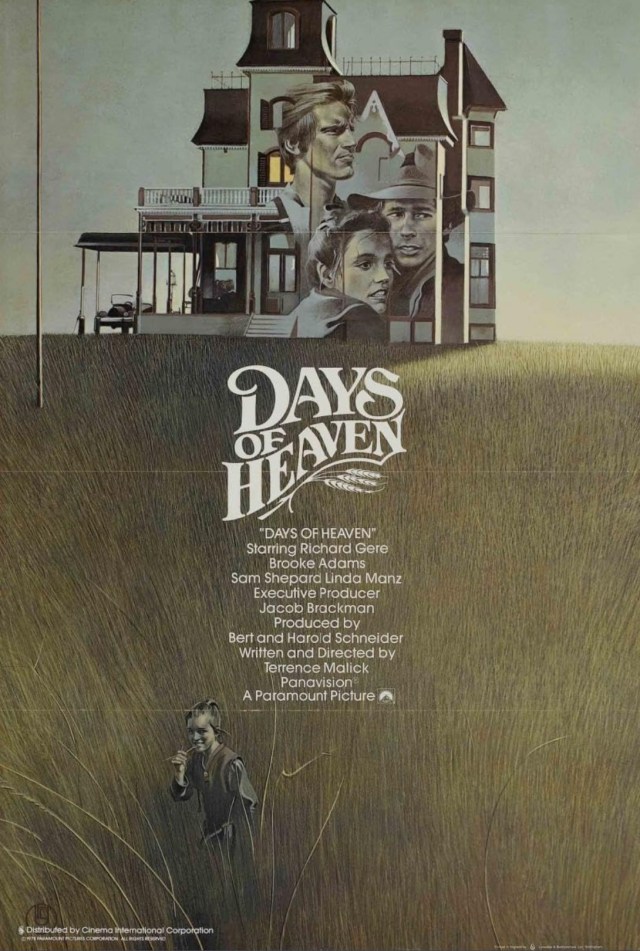
Have you ever stumbled upon a film that was “new to you” and think, “I’ve never even heard of this”? That was my experience discovering the 1978 movie, Days of Heaven. Prior to the Legends of Western Cinema Week Blogathon, I had never heard anyone talk about the aforementioned Western. With the blogathon fast approaching, Days of Heaven crossed my path at the right time! This is my fourth year participating in the Legends of Western Cinema Week. Looking back on the programs I reviewed for the event, I realized the stories fell into one of two categories: cowboys seeking justice or some aspect of farming. While Days of Heaven belongs in the latter category, the primary perspective focuses on the actual farming. This is different from a movie like O Pioneers!, where the story’s priority was the relationships between the characters. How does Days of Heaven rank among the films I reviewed for the Legends of Western Cinema Week? Before traveling on those “happy trails”, let’s read my review!
The scenery: The majority of Days of Heaven takes place in the wheat fields of Texas. Despite how monotonous that type of location may sound, the wheat fields offered up many glimpses of natural beauty! My favorite shot in the movie was when a storm cloud approached the story’s wheat fields. Large, gray clouds dominated the sky, appearing larger than life on screen. The presence of these clouds provided a small window into the blue sky above the fields. The golden yellow of the wheat was a pop of bright hue against the sky’s blue and gray palette. This shot was so beautifully captured, it, honestly, looked like a painting!
The historical accuracy: Days of Heaven is set in the 1910s. Like any historical period film, it’s important for the story to feel immersive due to its historical accuracy. Based on what the movie presented, the creative team behind Days of Heavenpaid attention to how historically accurate their project looked! The finer details visually prove that point! In a scene where the story’s protagonists, Bill, Abby, and Linda, go swimming, their swimsuits are reflective of the clothing styles of the early 1900s. While Bill wore what would be described as a short-sleeved unitard, Linda and Abby wore swimming dresses, complete with stockings. When it came to transportation, the trains and tractors appeared to be coal powered. Even their exterior designs looked industrial, considered antique be the standards of today. The historical accuracy paired with the aforementioned scenery made Days of Heaven an appealing film to look at!
Richard Gere and Brooke Adams’ on-screen chemistry: As I mentioned in my previous point about the movie’s historical accuracy, Bill and Abby are two of the protagonists in Days of Heaven. Portrayed by Richard Gere and Brooke Adams, these characters are in a romantic relationship. When Abby and Bill are together in a romantic context, the on-screen chemistry between Brooke and Richard was sweet. It felt like the on-screen couple truly got along with one another. During their interactions, there was a gentleness shared and understood between them. Whether walking in the water or cuddling on top of a train, Abby and Bill’s relationship was pleasant to watch because of Brooke and Richard’s acting abilities. Without spoiling Days of Heaven, I will say Bill and Abby’s relationship was not consistent throughout the story. This is a shame, as I liked seeing these characters together.
Legends of Western Cinema Week 2023 banner created by Olivia from Meanwhile, in Rivendell, Heidi from Along the Brandywine, and Hamlette from Hamlette’s Soliloquy
What I didn’t like about the film:
An unclear motive: According to the film’s synopsis, Bill, his younger sister, Linda, and his girlfriend, Abby, plan to con a farmer out of his money and wheat fields. Throughout the movie, however, their motive for conning The Farmer (what Sam Shepard’s character is referred to) is not made clear. I understand Bill, Abby, and Linda don’t like working under someone’s thumb. But the man who they try to con doesn’t seem to deserve a comeuppance. In fact, The Farmer, more often than not, is respectful toward Abby, even going so far as to allow Bill and Linda to live in his house, in order to keep Abby’s “family” together. In a series of voice-overs, Linda claims The Farmer is dying of an unnamed illness. Later in the film, though, she states how The Farmer’s health is staying the same, neither improving or regressing. Yet again, it is never made clear if The Farmer’s health issues are the reason for the con. I wonder why I was supposed to care about Bill, Linda, and Abby’s conning scheme when I don’t even know why The Farmer was being conned in the first place?
A drawn-out story: Days of Heaven has a run-time of about an hour and thirty minutes. Yet the story itself was drawn-out longer than necessary. This issue was caused by establishing shots littered throughout the movie, which served as the production’s padding. I know establishing shots are meant to set up a given scene. But if the creative team of Days of Heaven had cut some of the film’s establishing shots, the run-time would have been trimmed down to about an hour and ten to twenty minutes.
Distance from characters: Through a combination of acting talent, screenwriting, and direction, a movie’s audience can not only be introduced to a character, they can also get to know that character as the story progresses. In Days of Heaven, however, it feels like the characters are kept at a distance from the audience. Sure, the characters share pieces of information about themselves. But this information only allows the audience to become familiar with them. Because of the aforementioned distance, the audience is prevented from connecting with the characters. That disconnection also prevents emotional investment in the story.
The first movie I reviewed for a blogathon this year was Black Narcissus. In my review of the 1947 movie, I said that while Black Narcissus was a competently made film, it was one of the most confusing movies I’d ever seen, due to the story providing little to no explanations. I feel similarly about Days of Heaven. The film itself is very photogenic, from the scenery to the presentation of the story’s historical accuracy. But the story was confusing. No motive for why Bill, Abby, and Linda are conning The Farmer is made clear in the script. Emphasis on style over substance affected any connection the audience could have had with the characters. Throughout the movie, several questions arose that weren’t really answered, such as how The Farmer knew a group of circus performers who came to visit his home. This added to the story’s confusion. As a film, I thought it was just ok. But as a Western, it provides a perspective that is different from the typical cowboy or cattle farmer.
Overall score: 6 out of 10
Have you seen Days of Heaven? Which Westerns would you like to see me review? Tell me in the comment section!
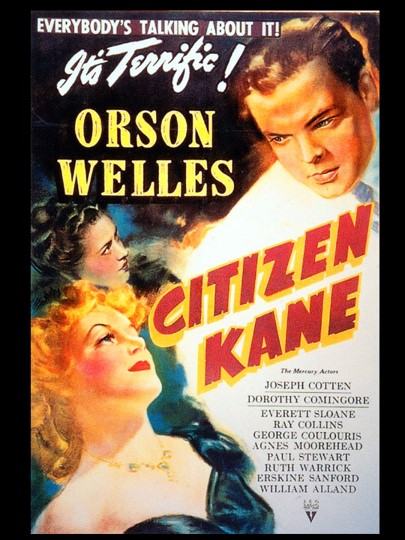
Once upon a time, in 2019, I saw Citizen Kane for the first time. In my review of the film, and even in my list of ten classic movies I watched because of my blog, I stated how, in my opinion, Citizen Kane is not the flawless masterpiece almost everyone has made it out to be. As you’re reading this introduction, you’re probably wondering, “What does Citizen Kane have to do with July’s theme of Genre Grandeur? That movie isn’t about making movies”. No, it’s not. But the 1999 HBO movie, RKO 281, is. While looking for a title to review for the aforementioned blogathon, I stumbled upon RKO 281, a film I had never heard of prior to the event. When I learned the movie was about the creation of Citizen Kane, I knew I’d appreciate the 1999 project, especially since I saw and wrote about the 1941 film. It also gave me a reason to check out one of HBO’s made-for-tv titles. So, without any delay, let’s start this show of my RKO 281 review!
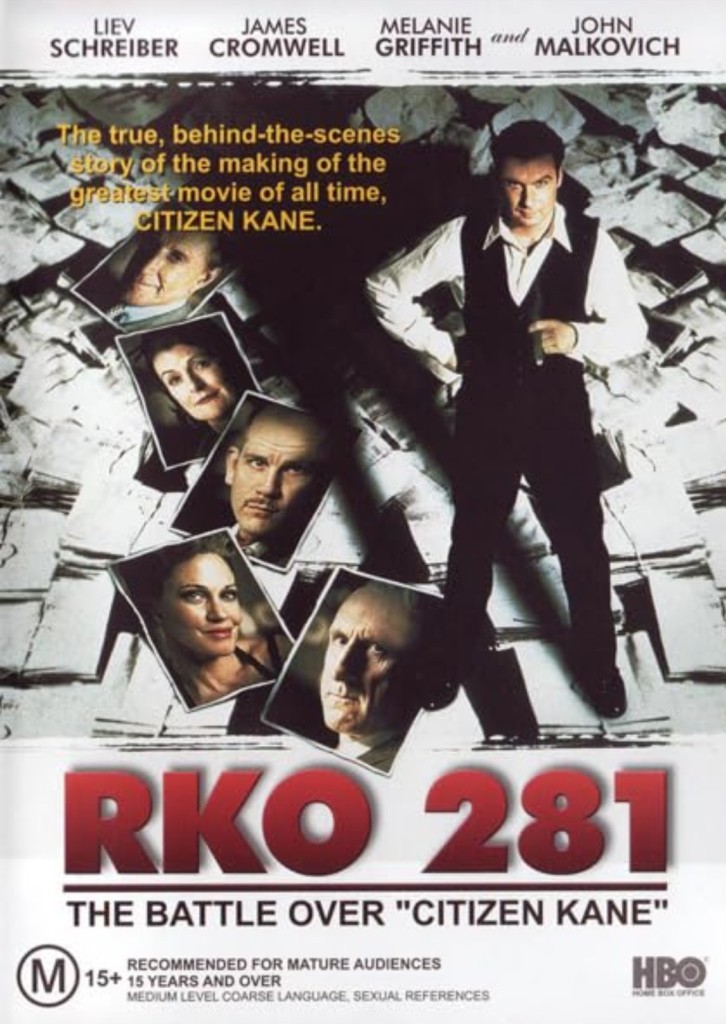
RKO 281 (1999) poster creatd by HBO Pictures, WGBH, Scott Free Productions, Labrador Films, BBC Films, and Home Box Office (HBO)
Things I liked about the film:
The acting: When we think about a name like Orson Welles, it can sometimes be easy to think of him as more than just a man with a dream. As Orson’s name became a staple of cinematic history, it also became what legends are made of. But Liev Schreiber, the actor portraying Orson, brought humanity back to that name, finding the heart of the “genius” and putting some genuine emotion behind it. While apologizing to Herman Mankiewicz after a falling-out between them, Orson shares a personal recollection about his father. After sharing a part of his soul with his friend, a smile appears on Orson’s face, relieved Herman has agreed to work on Citizen Kane. At the same time, you can see a tear has escaped Orson’s eye. This gives another meaning to Orson’s relief; the burdens of guilt and regret have lifted off his shoulders.
Liev Schreiber is not the only actor to use facial expressions and emotion to their advantage. Portraying William Randolph Hearst, James Cromwell was able to use these tools of acting to present William as more than just the story’s antagonist. When he finds out Citizen Kane is based on him, William is upset by this news. While talking about the situation with a woman named Louella, there is a sharpness to his voice, clearly indicating his bitterness toward the film. But the look in his eyes is that of defeat, questioning how someone was able to successfully build a bridge across the moat of his castle. In this scene, William’s face told more than dialogue could share; a man who gave everyone the impression he was in control, but was really unsure of what the future held.
Marion Davies was the mistress of William Randolph Hearst. Introduced to the audience in a party scene, Marion carried herself with a bubbly personality, almost being mistaken for “ditzy”. But Melanie Griffith prevented Marion from becoming a stereotype or caricature. With a variety of emotions, body language, and facial expressions, Melanie showed Marion as, simply, a woman in a complicated situation. One of my favorite scenes in RKO 281 was when Marion confronted William about his spending habits. Though in a drunken state, Marion addresses some excellent points. As she faces William, her voice is pleading. The desperation in Marion’s voice contains brutal honesty, giving her tone of voice some depth. She never breaks eye contact with William, showing how she isn’t afraid of standing up to “Pops”. Even though she does raise her voice, she only does this to emphasis her points. This scene elaborates how easily someone like Marion could be underestimated. While William saw Marion’s part of their conversation as “excessively theatrical”, I saw it as a woman who knew more about the situation than others were led to believe.
The set design: I’ve heard Hollywood referred to as the “Land of Dreams”. If that’s true, then the set design in RKO 281 was meant to visually represent a fairy tale! William Randolph Hearst’s castle is one of the most divine sets I’ve ever seen! So many details went into this location, it makes every space of the castle feel larger than life. From the marble fireplace held up by carved marble statues, to the large stained-glass windows boasting intricate colorful designs, to even a bath room with blue and green hued walls, William’s castle is a place beyond imagination. While the castle certainly stole the show, there were other sets that looked great on camera. During RKO 281, Orson travels to New York. In a scene showcasing Orson’s hotel room, his large, wooden bed was smartly paired with a red and beige blanket. The bed isn’t the only wooden piece of furniture in the room, as the desk, matching bedside tables, and even the walls display a warm shade of wood. Because of the tall window, the illusion of the room having a high ceiling is given to the audience. Filling the room with warm light from the lamps and the wall sconces, this high-end hotel room gave off a cozy atmosphere!
The film-making process: One of my favorite episodes of Murder, She Wrote is ‘Film Flam’. Watching the process of premiering a film is what made that episode fascinating to me. RKO 281 showed a similar process in their story. But this time, the entire film-making process was revealed. Glimpses of how Citizen Kane was made were woven into RKO 281. I learned some things about Citizen Kane because the film-making process was shown. For instance, I didn’t know Orson dug a hole into the floor just to get the shot he wanted. I also didn’t know that filming of Citizen Kane started two days ahead of schedule. It was interesting to see the various components that go into creating a film, especially during a time when technology wasn’t at a film-maker’s disposal. This peek behind Hollywood’s curtain can make one appreciate the work that goes into making a movie.
The dialogue: There is a lot of work that goes into writing a script. One important area of any script is the creation and delivery of dialogue. As I’ve said in past reviews, dialogue can be hit or miss, especially in a made-for-tv movie. In RKO 281, you can tell there was thought put into the dialogue of the script. In fact, I would go so far as to say the dialogue was, at times, profound. Remember when I said one of my favorite scenes was when Marion confronted William about his spending habits? One of the reasons why I like that scene is because of how well the dialogue was written and delivered. During the confrontation between Marion and William, Marion reminds him of the difference between wanting and needing something. She elaborates on this point by questioning how much a nearby statue cost, not caring about details such as where it was made or the style of the statue, details only William would bring up. Even at the very beginning of this scene, when Marion says, “Millions of dollars a year on art and statues, and there is nothing to explain” illustrates how Marion recognizes the severity of the situation. Meanwhile, as William responds to Marion by stating, “We are in no pickle, as you so euphemistically put it”, the script emphasizes William’s choice to use big words to not only belittle Marion’s intelligence, but also brush his problems under the rug.
The omission of the Breen Code: If you’ve read my movie reviews, you’d sometimes see the term ‘Breen Code’ mentioned in the text. For those unfamiliar with this concept, the Breen Code is a set of moral guidelines that had to be applied to film-making. Movies released between 1934 and 1954 formed the Breen Code era. Because Citizen Kane was released in 1941, I was hoping the Breen Code would play a role in the process of Citizen Kane’s creation. Unfortunately, the Breen Code wasn’t even mentioned. To me, the Breen Code is an underrated component in cinematic history. It would have been nice to hear it referenced in RKO 281’s dialogue.
Some parts of the story not receiving closure: Louella Parsons works for William Randolph Hearst as his “eyes and ears of Hollywood”. After she sees a rough cut of Citizen Kane, she informs William about the film resembling his life. Louella vows to get revenge against Orson for creating the movie, even going so far as to use blackmail in an attempt to cancel the film. But when William’s financial troubles come to light, her role in William’s life seems to have diminished. What happened to Louella after William’s financial situation was made public? Did she still work for him or did she end up working for someone else? This is just one part of RKO 281 that didn’t receive closure.
Keeping track of who’s who: As I mentioned in this review’s introduction, RKO 281 chronicles the creation of Citizen Kane. Therefore, the story follows those individuals connected to the project itself. Throughout the movie, though, members of the film industry from the late 1930s to the early 1940s were brought up in the dialogue. While I was familiar with some of these people, other names I did not recognize. It almost felt like RKO 281’s creative team expected the audience to know the film industry scene of that time. When I watch a film, I want to be told a story. If I end up learning something valuable by watching a movie, I feel that is time well spent. However, I don’t want to feel like I need to do homework prior to watching the film.
Not all made-for-tv movies are created equal. Sometimes, a low amount of effort will be given to a made-for-tv production, making a presentation look and feel cheap. But there are made-for-tv projects that are solid, despite the limited resources and finances. RKO 281 is so well-made, it is easy to forget this is an HBO film, as this movie looked and felt theatrical! The creative team behind RKO 281 went above and beyond to make their project the best it could be! From the actors and the screenwriters to the set designers, every person involved with the 1999 movie stepped up their A game and it shows. The style and substance of RKO 281 go hand in hand. While I still don’t believe Citizen Kane is a flawless masterpiece, I’ve gained an appreciation for the efforts it took to make this film exist at all. Toward the end of RKO 281, Orson says “Pretty speeches make history”. If that’s true, then good films leave a lasting impression.
Overall score: 8 out of 10
Have you seen RKO 281 or Citizen Kane? Are there any HBO movies you’d like to see me review? Tell me in the comment section below!
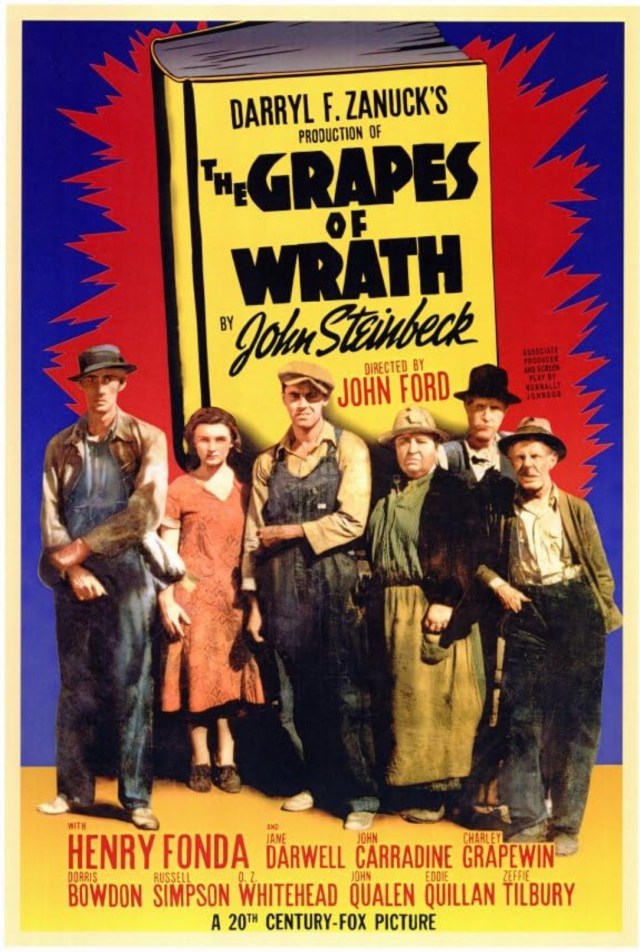
Back in May, I published a late review of John Steinbeck’s The Grapes of Wrath, my choice for the Buzzwordathon readathon. In that review, I stated how I wouldn’t plan on reading the book again, as I found the book mundane. For this year’s Classic Literature on Film Blogathon, hosted by Silver Screen Classics, I figured it would be a good idea to revisit the 1940 adaptation! Years ago, I saw The Grapes of Wrath movie. Because I only had vague recollections of the film, I wasn’t able to give an honest opinion on it. Besides that reason, I was curious to see how different or similar the adaptation was from its source material. Adaptations can be hit or miss, ranging from being unrecognizable from the book to being better than the book. Where does The Grapes of Wrath rank among these adaptations? Turn the page on this review in order to find out!
The acting: Toward the beginning of the movie, Tom Joad, portrayed by Henry Fonda, is being driven home by a truck-driver. Suspicious of the truck-driver’s possible prejudice against him, Tom is uneasy and irritated. Just as he’s leaving the truck, Tom tells the truck-driver why he went to prison. While Tom is revealing the answer, his eyes are set in a serious stare and his mouth is presented crookedly. Speaking his answer with a loud, serious, even a bit agitated tone, the impression Tom left on the truck-driver and me, as a viewer, was chilling. However, this impression was a strong one, as it allows Tom to stand out and be remembered among the film’s large cast of characters!
A common strength I saw among the movie’s cast was how expressive the actors and actresses were. John Carradine’s portrayal of Casy serves as a great example! When he was telling Tom about his past sermons, Casy’s eyes went wide and his voice sounded animated. He even demonstrated gestures from his former services, such as jumping over a fence after a baptism. While John’s portrayal of Casy was expressive, it never felt over-the-top. This gives the audience a reason to take this character seriously. The audience can also take Ruthie and Winfield, the only children in the Joad family, seriously because their expressions seem genuine. At a fancier camp, Winfield and Ruthie are overwhelmed by the luxurious nature of the communal bathroom. When they flush a toilet for the first time, Ruthie and Winfield run out of the bathroom and hide behind the door frame, a mixture of shock and fear on their faces. The genuineness of these two characters was made possible through the screenwriting, as well as the performances of Shirley Mills and Darryl Hickman!
Similarities to the book: When it comes to film adaptations, there are some that share more similarities than differences with its respective source material. As someone who has read the book, I felt this way about the 1940 adaptation of The Grapes of Wrath! When Tom returns home, he and Casy come across Muley, one of the Joad family’s neighbors. Muley explains how several neighboring families were forced off their land by the bank. Through flashbacks, Muley’s recollection of events shows the heartlessness of land developers and the desperate nature of one tractor-driver. Readers would remember this part of the story as a separate chapter from the main narrative, not relating to any particular character. Adapting this chapter through a secondary character’s perspective was an interesting way for the movie’s creative team to respect their project’s source material!
The music: The story of The Grapes of Wrath takes place during the Great Depression, with the setting being rural. Music that can sometimes be heard in a scene’s background is reflective of the story’s time and setting. String instruments, such as guitars and banjos, make up the film’s soundtrack. These instruments helped elevate the tone of a given scene. As a member of the Joad family passes away, an acoustic guitar melody is softly playing as the Joad family is mourning their loved one. This simple tune emphasized the somberness surrounding the event itself. With the way the music fit so well in the movie, it shows how the film’s creative team cared about the presentation of their film!
A broken illusion: Because The Grapes of Wrath was released during the Breen Code era, several parts of the story had to be changed from page to screen. Rosasharn’s pregnancy was one of them. Through a variety of medium and close-up camera angles, the cinematographer, Gregg Toland, carried the illusion Rosasharn was pregnant. But audience members can tell Rosasharn wasn’t visibly pregnant due to a handful of medium and long shots. These shots broke the aforementioned illusion, taking away the authenticity of characters’ comments about Rosasharn’s pregnancy.
Things left unexplained: Within the story, and even the dialogue, there were things left unexplained. At the beginning of the movie, the audience is introduced to Tom’s brother, Noah. Halfway through the movie, Noah disappears, with no other character questioning his whereabouts or concerned about his disappearance. For those who have read the book, they would know where Noah went; abandoning his family to live near the river, as he fell in love with that location. Viewers who didn’t read the book would assume Noah’s absence was a result of poor screenwriting.
The run-time: The Grapes of Wrath has a run-time of a little over two hours. Since the story is a “slice-of-life” tale, I, personally, felt this movie didn’t need to be that length of time. There were parts of the film that consisted of shots of the Joad family’s vehicle driving down the road. Some of these shots could have been cut from the movie, as they sometimes seemed like padding. Had that creative decision been made, The Grapes of Wrath might have been about an hour and forty-five to fifty minutes.
There are some adaptations where if you’ve seen the movie, you’ve already read the book. This is due to the adaptations’ shared similarities with their source material. After reading The Grapes of Wrath and seeing the 1940 film, I can honestly say my aforementioned statement rings true for the movie. While I appreciate the creative team’s attempts to respect the source material, as well as adapt it during the Breen Code era, it felt like I was consuming the same story again. I also think the movie was a bit drawn out, receiving an unnecessary run-time of a little over two hours. However, the music, set design, and costume design were good visual reflections of the story’s time and place. It did feel immersive, like the audience could be transported to that world. I’m glad to have received the opportunity to re-visit this film! Now, I can form an honest opinion about The Grapes of Wrath.
Overall score: 6-6.1 out of 10
Have you seen or read The Grapes of Wrath? If so, what are your thoughts on the story? Let me know in the comment section!
Last June, I published a list of the top ten movies I’d love to review someday. Since publishing that list, I have written about some of the films I talked about! Now that it is “Christmas in July”, it seemed like the perfect time to write about the top ten Christmas movies I’d love to review in the future! The films on my list were distributed through various studios and movie companies, varying in accessibility. But this time, I’ll be listing the movies based on the year they were released. While there are plenty of Hallmark productions I either have never seen or haven’t seen in years, I tried not to include too many Hallmark titles on this list. That’s because I could create a top ten list entirely comprised of Hallmark films. So, while Santa is checking which films are worthy of his nice list, let’s look at the top ten Christmas movies I’d love to review!
There are few very Christmas movies I’ve been recommended by my readers. 1942’s Holiday Inn is one of those films. I will admit I have heard of this movie over the years, but never checked it out. Now that I think of it, I’ve reviewed only a handful of Christmas movie musicals. Holiday Inn would definitely make up for that. Plus, it would give me an excuse to seek out more of Fred Astaire’s projects from his filmography. There is a part of the story that takes place during Thanksgiving, from what I’ve heard. So, I might review Holiday Inn around Thanksgiving!
9. Emmet Otter’s Jug-Band Christmas (1977)
I brought up Emmet Otter’s Jug-Band Christmas in a past Word on the Street story. But while creating this list, I realized how I still haven’t seen this movie. I have written about some animated films on my blog. However, few of those films were animated through puppetry. This would make the 1977 film a more unique picture to write about. Back in January, I saw and reviewed The Great Muppet Caper, a film I genuinely enjoyed. Since Emmet Otter’s Jug-Band Christmas is a Jim Henson production, it makes me wonder if I’ll like this movie as much as The Great Muppet Caper?
8. Bush Christmas (1983) and Miracle Down Under(1987)
I stumbled upon Miracle Down Under (also known as Bushfire Moon or The Christmas Visitor) while searching for movies to review. When looking for more information on the 1987 film, I discovered the 1983 movie, Bush Christmas. Thinking about the Christmas productions I’ve seen, I tend to think of these stories taking place somewhere in the United States. If a Christmas film is set outside the United States, the location is typically Canada or Europe. Australia is a country rarely included in the Christmas movie landscape. Therefore, Miracle Down Under and Bush Christmas offers a yuletide perspective that is unique from other Christmas titles! This shared connection makes these movies perfect choices for a double feature!
7. Mrs. Santa Claus (1996)
As I was writing this list, I remembered how I’ve seen few of Angela Lansbury’s live-action projects from her filmography. Yes, I’ve seen my fair share of Murder, She Wrote episodes. But I’m talking about Angela’s live-action films. I have come across the poster for Mrs. Santa Claus on multiple occasions. Yet, I have never seen this movie. Because of this, I didn’t know that a) the 1996 film is a musical and b) it is a historical fiction story. When I talked about Holiday Inn, I mentioned reviewing only a handful of Christmas movie musicals on my blog. Not only would Mrs. Santa Claus make up for that, but it would also give me an opportunity to talk about a movie that seems underrated in the world of Christmas cinema.
6. Little Men (1998)
For years, I knew there was a continuation to Louisa May Alcott’s classic story, Little Women. I also knew this continuation was given a film adaptation. But the aforementioned continuation, Little Men, is one I haven’t seen or read. With that said, I was unaware the 1998 movie was a Christmas production. While creating my list, I noticed how a lot of the movies were made-for-TV or straight-to-video/streaming presentations. As Little Men was theatrically released, I thought it would add some variety to my list. Maybe I’ll write a double feature review for Little Men and Little Women. Question is, which version of Louisa’s story would pair well with the 1998 movie?
Three Days is similar to the 1999 film, If You Believe; these are Christmas movies that don’t rely on the tropes and cliches found in typical Christmas projects. In the 2001 story, a workaholic man is taking his life and wife for granted. After his wife dies, the man is given a second chance to re-live the previous three days of his life, in order to save his wife and turn his life around. I haven’t seen this movie in years, but I do remember liking it. As of the publication of this list, though, the only place Three Days is available is through the streaming service, Disney+. I hope Freeform (formerly known as ABC Family) airs this film again during their annual ‘25 Days of Christmas’ line-up. That way, I could talk about a film that is, in my opinion, one of the most underrated in Christmas movie history.
4. The Night Before The Night Before Christmas (2010)
The Night Before The Night Before Christmas is one of the first movies I was ever recommended by one of my readers. Since then, I have been trying to find the perfect opportunity to review the film. But as far as I know, the 2010 presentation isn’t airing on any of Hallmark’s networks during their ‘Christmas in July’ line-ups. So, I hope the film airs sometime during the Christmas season. I have found DVD copies of The Night Before The Night Before Christmas. Therefore, if Hallmark doesn’t air the movie again, I still have a chance to write about this production.
3. An Old Fashioned Christmas (2010)
I included this movie in my list of the top ten movies I’d love to review. In that list, I mentioned how I have come across a few DVD copies of An Old Fashioned Christmas. But these DVDs were included in Christmas movie box sets, which tend to be expensive. While this statement is still true, the movie has been uploaded on Youtube, as of mid-July, 2023. Now I might be able to review the film sooner than I expected! Similar to The Night Before The Night Before Christmas, An Old Fashioned Christmas isn’t airing during Hallmark’s ‘Christmas in July’ line-ups. So, I hope the 2010 movie makes an appearance during this year’s Christmas season.
2. Christmas with Tucker (2013)
Christmas with Tucker is a prequel to the 2009 Hallmark Hall of Fame movie, A Dog Named Christmas. I have seen the latter film, which I remember liking. However, it’s been several years since I’ve seen the Hallmark Hall of Fame presentation. Since I also haven’t seen Christmas with Tucker, I don’t know how the 2013 movie and the 2009 movie connect with each other. I might review these films in a future double feature in order to solve that mystery.
1. An American Girl Story: Maryellen 1955 – Extraordinary Christmas (2016)
Years ago, I wrote an editorial about how Jiggy Nye was not an effective villain in Felicity: An American Girl Adventure. Since publishing that editorial, I have not reviewed any of American Girl’s films. I did see some of their films, but An American Girl Story: Maryellen 1955 – Extraordinary Christmas was not one of them. When this film was released, it was only available on Amazon Prime. But American Girl’s Amazon Prime exclusive movies, including An American Girl Story: Maryellen 1955 – Extraordinary Christmas, were recently removed from the streaming service for reasons unknown. For the time being, this film is considered “lost media”. But I hope it either is re-released on DVD or available on another streaming service.
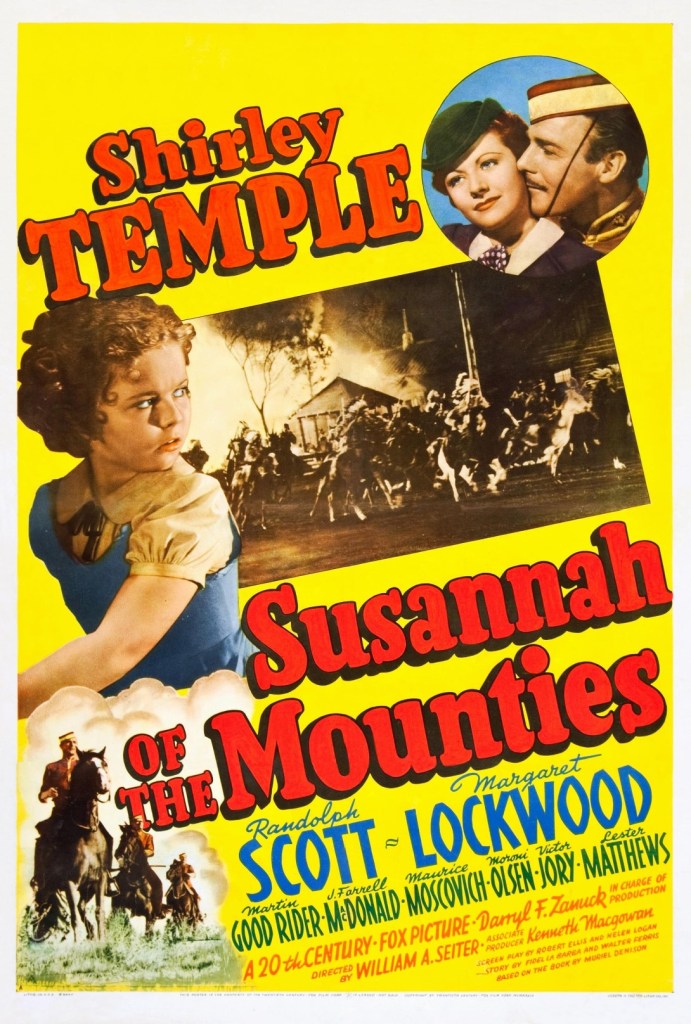
When it comes time for movie reviews, I try to select titles that will either encourage my readers to check them out for the first time or give my readers a reason to re-visit them. I also select titles in the hopes they are good films. While looking for a movie for this Blog Follower Dedication Review, I realized I hadn’t written about a Shirley Temple film since 2019. Because of that and with When Calls the Heart’s tenth season on the horizon, I felt Susannah of the Mounties was a suitable choice for this review! Anytime I think of Shirley’s movies, her musicals typically come to mind. Susannah of the Mounties is a different production from her filmography, as the 1939 film is a western. On 18 Cinema Lane, the western genre is underappreciated. Though I do try to review a western movie every now and then, I haven’t written about a western film since February, when I reviewed The White Buffalo. As I write this Blog Follower Dedication Review, I want to thank every follower of 18 Cinema Lane! Your enthusiasm for these movie reviews is always appreciated!
The acting: Out of Shirley’s movies I’ve seen, including Susannah of the Mounties, I recall her performances containing a certain amount of genuine sincerity. This aspect makes Shirley’s characters worthy of support from the audience. At the beginning of the movie, the Mounties discover Susannah is the only survivor of an attack on a wagon camp. She is understandably terrified, shrinking away from the Mounties in order to get away from them. Susannah is tearfully telling the Mounties to leave her alone, as her grandfather died during the attack. Through this portrayal, the heartbreak and fear Susannah experiences can be seen and heard. Her reaction to the Mounties’ encounter visually represents how a child might respond to a traumatic situation. With everything said, the audience is given a reason to feel sympathetic toward the film’s protagonist.
Randolph Scott portrays Inspector Angus “Monty” Montague, one of the Mounties who rescues Susannah. Throughout the story, he serves as Susannah’s father figure, teaching her good values and trying to protect her from danger. In one of the film’s funniest scenes, Monty and Susannah are eating breakfast. During breakfast, Susannah doesn’t hesitate to ask if he’ll marry Vicky, a woman who is temporarily staying at Monty’s Mountie camp. Snapping to attention, Monty gives Susannah a startled expression, his reaction to Susannah’s question on point for the situation. This scene serves as a good example of how Randolph’s performance never missed a beat!
Another performance that didn’t miss a beat was Martin Good Rider’s! Portraying Little Chief, son of Chief Big Eagle, Martin’s performance was consistent throughout the movie. During his time in the Mountie camp, Little Chief carries himself with a serious demeanor. Any time he explained an aspect of his culture to Susannah, his tone of voice and facial expression are stern. However, Little Chief does express happiness from time to time. When he is calling Susannah a baby in his language, he is smiling and even giggling at Susannah’s frustrations over not knowing how to ride a pony. One of the reasons why I liked seeing Little Chief and Susannah’s friendship progress in this story is because of Martin’s and Shirley’s performance!
The cinematography: In Susannah of the Mounties, there were three shots I thought were captured very well through a cinematic lens. One morning, as the British flag is raised over the Mountie camp, a Mountie is shown, through a medium shot, standing on the balcony of a nearby log cabin. As the flag rises in the air, its shadow is reflected off the cabin and even the Mountie himself. Another scene shows Susannah smoking a pipe for the first time. When she is looking out on the Mountie camp, the shot of the camp is captured through a fuzzy, uneven lens. This creative decision was made to show this location from Susannah’s perspective, as she is light-headed after smoking the pipe. Later in the movie, some members of the Blackfoot tribe are horseback riding near a body of water. While riding during dusk, a blue-purple sky and a large, white-gray mountain are in the scene’s background. In a sweeping long shot, the riders are reflected against the mirror stillness of the water. These details allowed this scene to be the most beautiful one in the movie!
Messages of fairness and learning from one another: After meeting Little Chief for the first time, Susannah becomes frustrated by the way he treats her. She doesn’t think she and Little Chief could be friends. But during a heart-to-heart conversation, Monty explains to Susannah how the Mounties try to learn from Little Chief’s Blackfoot tribe in order to work with them. Before Little Chief stays at the Mountie camp, the Mounties and his Blackfoot tribe attempt to find a solution to the film’s overarching conflict. During this meeting, the Mountie’s Superintendent, Andrew Standing, makes it clear that the Mounties are not blaming Chief Big Eagle’s tribe for the crimes committed near the Mountie camp. Andrew explains how the Mounties are turning to Chief Big Eagle’s tribe for help catching the perpetrator. Susannah of the Mounties was released in the late 1930’s, with a story taking place in the 1880s. Therefore, I was not expecting the inclusion of timeless messages such as fairness and learning from one another.
Susannah’s dislike for Vicky: Vicky Standing is a woman who visits her father at his Mountie camp. Portrayed by Margaret Lockwood, she ends up capturing Monty’s heart. Susannah does not like the idea of Monty and Vicky falling in love. In fact, Susannah dislikes Vicky so much, she wants Vicky to go back home to Toronto. Susannah’s negativity toward Vicky felt out of character for a Shirley Temple film. When a male and female parental figure are romantically interested in each other, Shirley’s character will typically find a way for those characters to fall in love. Her character does this in an attempt to gain a family for her to belong to. Because Susannah is an orphan, it would have made more sense for her to want Monty and Vicky to become a couple, in the hopes they will get married and adopt Susannah.
A disjointed story: An overarching story in Susannah of the Mounties is the Mounties figuring out who is murdering and looting near their camp. They work with a local Blackfoot tribe in their efforts to catch the perpetrator. This part of the story is serious, complicated, and even violent. With Susannah being one of the few children in the story, the film’s protagonist isn’t able to provide much assistance to the Mounties. Instead, Susannah spends her time befriending Little Chief, Chief Big Eagle’s son. Susannah’s story and the Mountie’s story felt like two separate stories that belonged in their own movies. The contrasting tones of these stories kind of made the film feel tonally inconsistent.
A misleading title: As I just mentioned in this review, Susannah isn’t able to provide much assistance to the Mounties as they attempt to stop crime. This is because a) Susannah is a child and b) the Mountie’s story is serious and even violent at times. Yet this movie is titled Susannah of the Mounties, implying the protagonist and the Mounties would work together to save the day. I know the film is based on a novel of the same name by Muriel Denison. However, I still feel the title is misleading.
In the western genre, a component that is typically present is higher stakes. This is when a conflict is large enough in scope to affect the well-being of the characters. Susannah of the Mounties is a story with higher stakes, as the lives and careers of the characters are in danger. Because of this, it doesn’t give the movie’s protagonist, Susannah, much to do. In fact, Susannah’s story and the Mountie’s story feel like separate tales from their own films. When I look back on Shirley’s movies I liked, such as Rebecca of Sunnybrook Farm and Heidi, I think about what made those titles work. Then I remember how those stories had lower stakes, which allowed Shirley’s character to play a larger role in the story. I also reflect on other aspects of Susannah of the Mounties I didn’t like, such as the misleading title and Susannah’s dislike for Vicky. With everything I said in this review, I think this is one of Shirley’s weakest movies I’ve seen.
Overall score: 6.6 out of 10
Have you seen Susannah of the Mounties? Are there any western films you’d like to see me review? Let me know in the comment section!
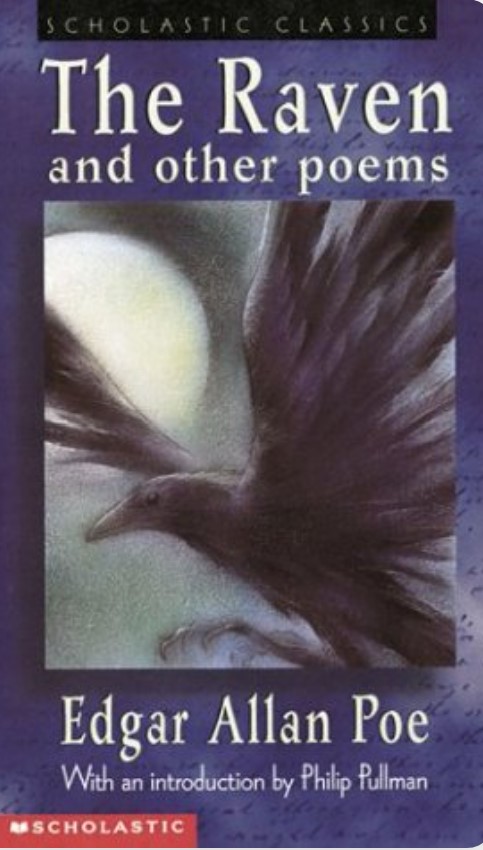
June’s theme for Buzzwordathon is ‘other’. That means the word itself, not words like ‘brother’ or ‘mother’, has to appear somewhere in the title. Since I happened to own a copy of The Raven and Other Poems, I had the perfect book for Buzzwordathon! Having read Edgar’s work in the past, I knew what to expect from this collection of poems. But the one poem that caught me by surprise is ‘The Coliseum’! From how I interpreted it, the narrator is describing an abandoned facility. Through a series of voices, the narrator is reminded how the history, stories, and people associated with the titular coliseum should be remembered, otherwise they will be lost forever. Using carefully selected prose, Edgar accomplishes the delivery of this idea. Lines such as “Of lofty contemplation left to Time” and “Here, where a hero fell, a column falls!” illustrate how the coliseum’s best years are behind it. The fifth and final stanza is devoted to the voices of the coliseum’s past, with one statement from the voices being “Not all our power is gone – not all our fame”. This stanza allows the reader to contemplate the importance any location holds.
As the title suggests, ‘The Raven’ is one of the poems featured in this book. If I had to be honest, though, I found this poem a bit overrated. The story itself was simplistic and surface-level, revolving around the narrator questioning the identity and whereabouts of the titular Raven. The poem was also very repetitive, with the words “nevermore” and “nothing more” used consistently. While reading ‘The Raven’, I was reminded of the film adaptation from 1963. Though that movie had its flaws, I found myself appreciating it more. The 1963 adaptation included a plot in the script, which gave the story some depth. This creative decision also prevented the narrative from becoming repetitive.
Image of crow at sunset created by Rayudu NVS at freeimages.com. Photo by <a href=”/photographer/rayudu238-57835″>rayudu NVS</a> from <a href=”https://freeimages.com/”>FreeImages</a>. Image found at freeimages.com.
I typically don’t seek out poetry. The genre’s open-endedness and limited amount of closure are two reasons why. Other than ‘The Coliseum’, I didn’t connect with the other poems in this book. This is because I found the majority of poems ok or fine. As I read The Raven and Other Poems, I noticed Edgar wrote about one of three topics; death, dreams, and Paradise/Heaven. That caused the poems to lack variety. The uniqueness of ‘The Coliseum’ is why I liked that poem, with the poem itself focusing on history. The abandoned coliseum set the stage for an eerie location, yet doesn’t rely on the typical spookiness expected in Edgar’s work. I’d be curious to see ‘The Coliseum’ adapted as a movie or mini-series.
Overall score: 3 out of 5
Have fun during Buzzwordathon!
Sally Silverscreen
Disclaimer: As I mentioned in this review, some of Edgar’s poems include the subject of death. Reader discretion is encouraged.
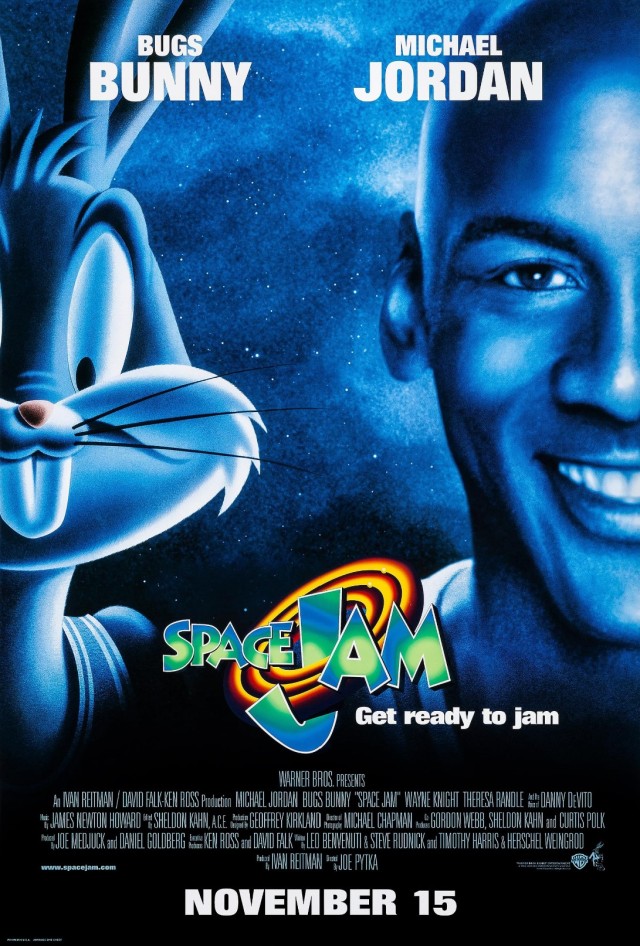
Some of my readers will know Michael Jordan as the reason why they cared about the Chicago Bulls. Other readers are familiar with Michael because of the infamous meme where Michael says in a calm and friendly way, “Stop it. Get some help”. Then there are my readers who are fans of Michael because of his appearance in the 1996 movie, Space Jam. Michael’s involvement in this film is one of the reasons why I’m reviewing it, as “movies where a star is playing themselves” is June’s theme for Genre Grandeur. Another reason why I chose to write about Space Jam is how I don’t often receive the opportunity to talk about animated films on 18 Cinema Lane. While I am familiar with this movie and what it’s about, I had never seen it in its entirety before. Now that I have checked out Space Jam, I can now give an honest opinion about it. So, sit back in your courtside seats, as this review is about to begin!
Space Jam (1996) poster created by Warner Bros. Family Entertainment, Northern Lights Entertainment, Courtside Seats Productions, and Warner Bros.
Things I like about the film:
The animation: In the 1990s, a trend in animation was the adoption of bright colors. Whether it was the Disney Renaissance or the first creatures in the world of Pokémon, bold hues and color schemes dominated both big and small screens. Space Jam follows this trend in various ways. One great example is the locations in the film’s animated world. There is a shot in the movie of the gym where Michael and the Looney Tunes train for their upcoming basketball game. The gym itself boasts a bright coral exterior, with the building set against a blue sky and a green, grassy lawn. The film’s colors emphasize the fun and energetic nature of it’s animated landscape. They also provide pops of color that make animated characters and their world interesting to look at.
Before the release of Space Jam, the Looney Tunes were an animated collection with their distinct histories, stories, and even voice acting performances. When bringing these characters into one overarching story, it could have been difficult to adapt them from one medium to another. Yet, every Looney Tunes character featured in the movie looked, sounded, and acted consistently with their pre-established shows. This crucial creative decision allowed the story to maintain a strong sense of continuity. It also gave audience members of all ages an opportunity to enjoy watching the Looney Tunes and their antics.
The messages and themes: At the beginning of Space Jam, Michael Jordan decides to take a break from the world of basketball to pursue a baseball career. According to the movie’s introduction, baseball is a sport Michael cared about. Yet, joining Major League Baseball (MLB) was a new direction in Michael’s career. His baseball endeavors aren’t as fruitful as his basketball endeavors. Yet, there are people surrounding Michael who are supportive of his decision. What this part of the story showed me was how one shouldn’t be afraid to try new things. Even when someone has a forte and has achieved their full potential, it could be beneficial to expand their horizons. That message can be a valuable lesson for younger viewers and a message older viewers can appreciate!
The humor: Animation and humor typically go hand in hand. Space Jam is no exception, as there were moments within this story I found genuinely funny. One way humor was incorporated into the film was through the dialogue. After Bugs Bunny and Daffy Duck retrieve Michael’s basketball attire, Daffy said they should name their team ‘The Ducks’. Bugs then responds by asking “Why would a Mickey Mouse corporation name their team ‘The Ducks’”? This question was meant to poke fun at Disney’s program, The Mighty Ducks. What added to the humor of this conversation was how the dialogue fit the personality of these characters.
Parts of the story that don’t make sense: In Space Jam, several basketball athletes have mysteriously lost their athletic abilities. This causes concern amongst the league’s other basketball teams. It gets to the point where the basketball season ends early. Here’s where the story doesn’t make sense: the film shows the National Basketball Association’s (NBA’s) season taking place at the same time as the Major League Baseball’s (MLB’s) season. A typical MLB season will take place between April to October, while the NBA runs their season from about fall to early summer. The only time these leagues’ schedules overlap is when the NBA Finals happen. With all that said, the basketball season in Space Jam would almost be over, with the Finals on the horizon. Yet, none of the characters bring up the Finals. This is just one example where the story doesn’t make sense.
A disjointed story: As I just mentioned, some basketball athletes have mysteriously lost their athletic abilities in Space Jam. Meanwhile, the Looney Tunes recruit Michael Jordan to compete in a basketball game in space. Because Michael spends most of the movie in the animated world, his story and the story of the basketball athletes feel like two separate stories, with a very loose connection to one another. When the film goes back and forth between the stories, the transitions are abrupt, with little segue provided. These creative decisions led Space Jamto feel disjointed.
The underutilization of Lola Bunny: Lola Bunny has found a place for herself in the world of Looney Tunes. From what I remember, she was prominently featured in Space Jam’s marketing. Yet in the movie, prior to the basketball game itself, Lola appears in only two scenes. Her first appearance took place forty minutes into an hour and twenty-seven-minute film. I’m unsure when Lola made her debut in the Looney Tunes universe. But if Space Jam was meant to be her introduction, I was disappointed by how unceremonious it was.
There are two categories for films that are products of their time; those that are dated on arrival and those that serve as a visual time capsule for when the movie was released. Space Jam belongs in the latter category, presenting a slice of the ‘90s through a combination of animation, athletics, and intergalactic silliness. Speaking of the animation, I was surprised by how the character designs, background designs, and blend with live-action mostly aged well. Though innovative at the time, this blend serves as an example of the creativity ‘90s animation has to offer. It was also interesting to see Michael Jordan’s career incorporated into the story, showing the audience how anyone, even the most celebrated of athletes, can try new things. Space Jam is, in my opinion, a fine film. Even though I won’t reflect on this movie as fondly as other films, I am glad I finally saw it in its entirety.
Overall score: 7.1 out of 10
Have you watched Space Jam? Which animated film from the 1990s do you like? Tell me in the comment section below!
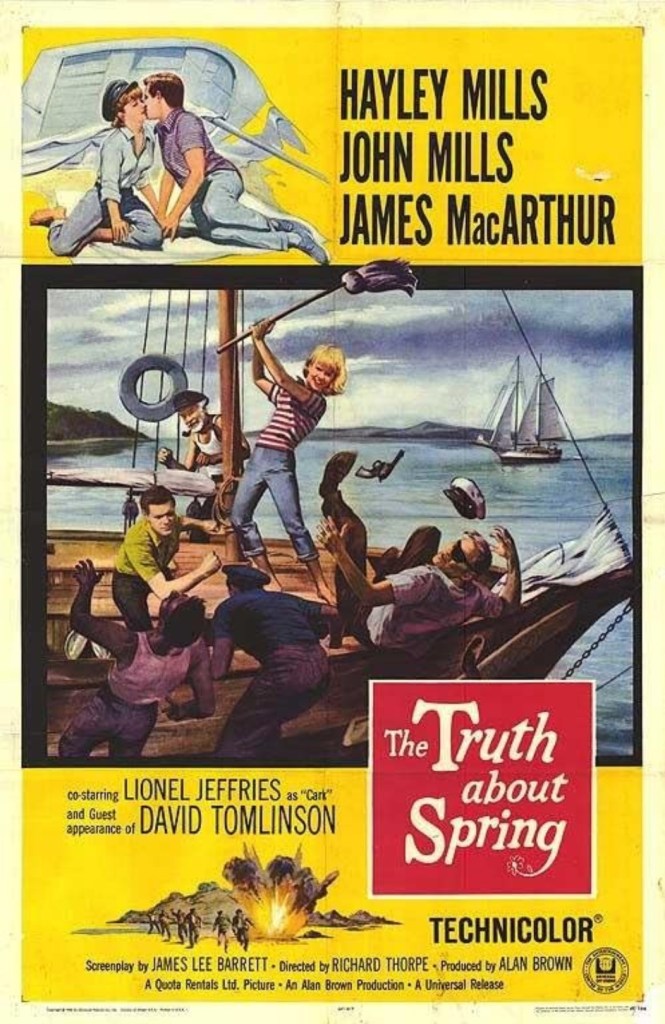
It’s been a while since I last wrote a movie review. As I just wrote about a Hallmark Hall of Fame film, I wanted to talk about something beyond the realm of Hallmark. I recently remembered a movie I had heard good things about for years. That movie is 1965’s The Truth About Spring! I have covered some of Hayley Mills’ films in past reviews on my blog. These titles are Summer Magic, TheMoonspinners, and The Trouble with Angels. While I found Summer Magic to be just ok, I did like The Trouble with Angels and TheMoonspinners. Since The Truth About Spring revolves around Hayley’s character traveling, I wondered if I’d like this film as much as TheMoonspinners. That answer will be discovered as we sail through this review of The Truth About Spring!
The acting: In The Truth About Spring, Hayley portrays the protagonist, Spring Tyler. One of the few characters she interacts with is William Ashton, portrayed by James MacArthur. When William prepares for his voyage on Tommy’s ship, Spring is curious about an outfit William packed. After she asks about the outfit in question, William explains it is a set of pajamas, which he wears for sleep. Spring’s face goes from inquisitiveness to sad realization, as she confesses how she doesn’t own pajamas. This subtle change in facial expressions shows how Spring is being exposed to a different way of living life. Because of Hayley’s acting abilities, the aforementioned realization appeared realistic!
Spring is not the only character William interacts with. Another key character in The Truth About Spring is Spring’s father, Tommy, portrayed by John Mills. During their voyage, Tommy witnesses William in his pajamas for the first time. Because Tommy is also not used to the idea of pajamas, he gives William a confused look. Meanwhile, William displays an embarrassed facial expression, as he wasn’t expecting Tommy to walk into the room. The interaction between these characters creates a moment that is awkward for both of them. John’s and William’s acting talents allow this awkwardness to radiate off the screen, making the scene feel believable!
The interior design: The majority of The Truth About Spring takes place outdoors, as the characters sail to various locations. However, there are a few scenes featuring the interior design of the characters’ ships. The sitting room in the yacht of William’s uncle is surrounded in bleached wood. Paired with beige chairs and a large painting of flowers, this room is reflective of the affluent lifestyle of the Ashton family. On Tommy’s ship, the cabin has dark wood walls. Tommy, Spring, and William sit around a table covered in a red and white checkered pattern. The small windows are gifted with green curtains. These combined design details showcase the humbleness of Tommy and Spring’s surroundings.
The discussion of educational experiences: A consistent topic between Spring and William is education. During one of their discussions, Spring learns there are different types of lawyers. This lesson came after William told her and Tommy he had graduated from law school and passed his bar exam. On a trip to the beach, Spring explains to William how it is the seagulls’ nesting season. She knows this information because of her experiences at sea. These conversations highlight how these characters’ life experiences shaped their educational foundations. I hadn’t thought about this concept until I saw The Truth About Spring!
Sailing on the sea image created by Michele L at freeimages.com. “FreeImages.com/Michele L.”
What I didn’t like about the film:
A missed opportunity: Throughout The Truth About Spring, the characters engage in a treasure hunt. This treasure hunt was, unfortunately, not emphasized in the story. Instead, the movie splits its time between the interactions of Spring and William, as well as Tommy’s conning schemes. For me, this was disappointing because a treasure hunt can give a story intrigue, suspense, and a sense of adventure. Not emphasizing the treasure hunt is, in my opinion, a missed opportunity.
A limited amount of urgency: As I mentioned in my previous point, the film’s treasure hunt wasn’t emphasized. That creative decision caused The Truth About Spring to contain a limited amount of urgency. Within the movie’s hour and forty-two-minute run-time, a strong sense of urgency was featured in only three scenes. Most of the movie ended up feeling like an unexciting journey.
A drawn-out story: Like I said in this review, The Truth About Spring is an hour and forty-two-minutes. But the story itself was straight-forward, primarily focusing on three key characters. Therefore, this combination made the film feel drawn-out. Personally, I feel the movie should have been given a run-time of an hour and ten to fifteen minutes. That way, the script would been tighter.
As I stated in the introduction, I have reviewed some of Hayley Mills’ films. These films range from ok to enjoyable. When it comes to The Truth About Spring, I thought it was just ok. There are aspects of the 1965 movie I like, such as the discussion of educational experiences between Spring and William. However, I didn’t find the story itself very interesting. Instead of emphasizing the treasure hunt, more focus is given to Tommy’s conning schemes. Giving this simplistic story a run-time of almost two hours didn’t help either. If you’re looking for a movie where Hayley’s character falls in love and goes on an adventure, I’d recommend TheMoonspinners over The Truth About Spring. TheMoonspinners contains suspense and intrigue, as well as a tighter script.
Overall score: 6 out of 10
Have you seen The Truth About Spring? What is your favorite movie starring Hayley Mills? Please tell me in the comment section!
For this year’s edition of the Broadway Bound Blogathon, I wanted to write about a Hallmark film based on a pre-existing Broadway play. My original plan was to read a play and then watch its adaptation, creating an editorial on how these works are similar or different. But, to my surprise, the films I wanted to talk about were based on plays that premiered off-Broadway. During my search for another option, I learned the Charles Dickens story, A Tale of Two Cities, was adapted into a Broadway musical in 2008. For this review, I’ve decided to write about the 1980 Hallmark Hall of Fame version of the aforementioned story. Though I haven’t read A Tale of Two Cities, I have enjoyed seeing the adaptations of Charles Dickens’ literary work. In fact, I liked 1968’s Oliver! so much, I ended up reading Oliver Twist after seeing the movie! So, where does this Hallmark Hall of Fame production stand among other stories by Charles Dickens? Turn the page on this review to find out!
Hallmark Hall of Fame’s A Tale of Two Cities poster created by Hallmark Hall of Fame Productions, Marble Arch Productions, Norman Rosemont Productions, and Columbia Broadcasting System (CBS)
Things I liked about the film:
The acting: One of the strongest scenes in A Tale of Two Cities is when Lucie (portrayed by Alice Krige) reunites with her father, Dr. Alexander Manette (portrayed by Peter Cushing), for the first time in over ten years. After mistaking Lucie as the jailer’s daughter, Alexander goes to his bed, in an attempt to avoid Lucie. As Lucie slowly approaches her father, Alexander’s voice is shaky and he is flinching, unsure of what to make of this visitor. But as soon as he discovers Lucie’s hair matches a lock of hair he kept for many years, Alexander realizes Lucie is, indeed, his daughter. Alexander’s expression changes from fear to shock, as he is in awe about seeing Lucie again. He even gives his daughter a hug. Meanwhile, Lucie is overcome with emotion, tears falling down her face and her voice quivering. Both Alice and Peter were able to effectively sell this on-screen relationship as believable and genuine. The emotions expressed felt realistic as well, which allowed this scene to be so strong!
In A Tale of Two Cities, Chris Sarandon portrays both Sydney Carton and Charles Darnay. Out of these two characters, my favorite was Sydney Carton! Throughout the story, Sydney carried himself with a laid-back confidence that made his personality appealing. Yet, more often than not, he displayed a sad look on his face. Even his eyes looked sad, giving the audience an idea of what he wasn’t saying. This made Sydney brooding and mysterious, making me want to know more about him and curious to see where his story would go. The likability of Sydney Carton can be attributed to Chris’ strong acting talents!
Attention to detail: What can make or break a historical drama is a creative team’s attention to detail. This element in the film-making process can make that story’s world feel immersive, transporting the audience to a specific period in time. The Hallmark Hall of Fame adaptation of A Tale of Two Cities takes place in the late 1700s. Jarvis Lorry’s office provides a great example of this film’s attention to detail when it comes to historical accuracy. On a nearby table, there is a large book, boasting a weathered brown cover. Rolled up paper documents and more brown covered books are scattered in the office’s foreground. In the background, Jarvis can be seen working at a desk similar to that of Ebenezer Scrooge. Though the room invites natural light through a dome shaped window, a small candle chandelier and a multi-candle candle stick provide the office with additional light.
The pacing: The Hallmark Hall of Fame adaptation of A Tale of Two Cities is two hours and thirty-six minutes. This is longer than a typical Hallmark production, which is about an hour and thirty to forty minutes. But A Tale of Two Cities never felt like a long movie to me. That’s because I was so invested in what the characters were doing, as well as the story itself. Though this is a character driven film, there was a satisfying amount of suspense, intrigue, even action. Where these elements were placed in the story made the movie feel evenly paced. The way scenes were filmed, written, and edited also contributed to the overall pace, never making parts of the story feel drawn out or wrapped up too quickly. I was so engaged watching A Tale of Two Cities, the run-time was the last thing on my mind!
Inconsistent inclusion of the French Revolution: An overarching conflict in A Tale of Two Cities is the rise of the French Revolution. In the first half of the movie, this conflict seemed like an afterthought, as the primary focus was placed on events happening in England, such as Charles’ court hearing. When a certain situation causes Charles to return to France, the French Revolution played a larger role in the film’s second half. The movie’s creative team built up to the event itself, visually presenting the harsh reality of the French public versus the upper-crust of French society. However, I wish this conflict had a more consistent presence within the story.
Lack of French accents: Because the French Revolution plays a role in A Tale of Two Cities, some of the story’s key characters are French. But the 1980 Hallmark Hall of Fame presentation is one of those films where every character speaks in a British accent, despite the cultural differences. After a while, I became used to the similarity in accents. I don’t blame the actors, as all I can expect from any actor or actress is for them to try their best with the material given. In my opinion, though, I fault the movie’s casting director for not encouraging the use of French accents.
Unexplained parts of the story: On a few occasions, there were parts of A Tale of Two Cities that confused me, due to their lack of explanations. One perfect example involves Monsieur Ernest Defarge’s wife, Therese. While a man is being guillotined, Therese tells her friend she has recorded the Evrémonde family in her stitching. After this scene takes place, Therese’s statement is never clarified. In fact, that particular stitching isn’t brought up again. Parts of the story like this one should have included explanations within the dialogue.
Most of Charles Dickens’ adaptations I’ve reviewed on 18 Cinema Lane have garnered favorable results. Both Oliver! and Nicholas Nickelby left such a good impression on me, they respectively found a place in my year-end best movies lists! Now that I have seen A Tale of Two Cities, I can honestly say that tradition will continue! The 1980 Hallmark Hall of Fame production tells an immersive story, taking the audience on a journey through time. What also adds to the experience is the strength of the characters, as the acting and the screenwriting worked well together. From the featured props to the costume design, the creative team’s attention to detail was on full display in this film, showing the care and effort that went into this project. Looking back on A Tale of Two Cities, I can see how the story could be adapted into a Broadway musical. As a matter of fact, I think a musical movie adaptation of A Tale of Two Cities would be very interesting to watch!
Overall score: 8.9 out of 10
Have you seen any adaptations of A Tale of Two Cities? Which story Charles Dickens’ is your favorite? Let me know in the comment section below!
















 18 Cinema Lane