Take 3: Ainsley McGregor Mysteries: A Case for the Watchmaker Review

Great American Family’s Ainsley McGregor Mysteries series has become a pleasant surprise for 18 Cinema Lane. My review of Ainsley McGregor Mysteries: A Case for the Winemaker became one of my most popular movie reviews of all time, garnering over seven thousand views in almost two years. The positive reception of this review led me to cover the sequel, Ainsley McGregor Mysteries: A Case for the Yarn Maker. That review has also been well received, obtaining over two hundred views so far. When I discovered Great American Family was not only releasing a third chapter, they were also premiering the third chapter in January 2026, I knew that’d be one of the first movies to be written about in the New Year! Though there’s only been two movies in the Ainsley McGregor Mysteries series, so far, the series as a whole has been quite enjoyable. What has worked in the series’ favor is improving upon the flaws of the previous chapter and providing consistent strengths. Will the third chapter, Ainsley McGregor Mysteries: A Case for the Watchmaker, continue this pattern? Let’s find out in this review!

Ainsley McGregor Mysteries: A Case for the Watchmaker poster created by Candy Rock Entertainment, Happy Accidents, Syrup Studios, and Great American Family

Things I liked about the film:

Subtle hints of Texas: When I reviewed Ainsley McGregor Mysteries: A Case for the Winemaker, I criticized the film for its constant reminders of the story’s Texas setting. To me, these reminders tried to make the movie’s setting a little too obvious for the audience. This flaw was remedied in Ainsley McGregor Mysteries: A Case for the Watchmaker! References to the series’ Sweet River, Texas setting were represented through some of the women’s wardrobe. One of the Book Club members, Maria, sometimes dons turquoise jewelry. Another Book Club member, Lily, wears a sweatshirt featuring a cowboy/cowgirl hat and cowboy/cowgirl boots. Even Ainsley herself can be seen wearing a blouse similar to those worn by country music stars. Besides the wardrobe, there were other subtle hints of Texas found in Ainsley McGregor Mysteries: A Case for the Watchmaker. A great example is when one of the Book Club members uses a pen shaped like a cactus.

Selecting a cold case: While seeking another mystery to solve, the Book Club decides on a cold case. As they mentioned in the movie, the cold case provided a nice change of pace for them. Not only did this decision benefit the Book Club, it also benefitted Ainsley McGregor Mysteries: A Case for the Watchmaker! By having a cold case as the movie’s main mystery, it prevents the series from becoming repetitive, as the previous two chapters revolved around murder mysteries that happened in the present. This creative choice shows other ways mysteries can become solved as well. In the case of Ainsley McGregor Mysteries: A Case for the Watchmaker, most of the clues were found within the dialogue. Selecting a cold case for the characters to solve was definitely an interesting decision for the third film in the Ainsley McGregor Mysteries series!

Rance Moseby: A new character that was introduced in Ainsley McGregor Mysteries: A Case for the Watchmaker was Rance Moseby, the proprietor of a local pawn shop. At first, Ainsley and Jake believe Rance may be up to no good. But as the story progresses, Rance proves that looks can be deceiving. While I was watching Ainsley McGregor Mysteries: A Case for the Watchmaker, I grew to like Rance as a character. David Milchard, the actor who portrayed Rance, had great on-screen chemistry with the movie’s cast. The strength of David’s acting talents helped make Rance seem like he was always meant to exist in the world of the Ainsley McGregor Mysteries series. Rance’s drier sense of humor nicely provided the film’s comic relief as well. If there are more Ainsley McGregor Mysteries movies in the works, I really hope Rance Moseby becomes a part of the series’ regular cast!

Pocket watch with confetti image created by Freepik at freepik.com. Christmas clock photo created by freepik – www.freepik.com

What I didn’t like about the film:

An unnecessary subplot: Throughout Ainsley McGregor Mysteries: A Case for the Watchmaker, a subplot revolved around Jake’s past romantic relationship with the mayor of Sweet River, Jane Reval. Even though it was interesting to see how this new character connected to an established character like Jake, I found this subplot unnecessary. Because Jake and Ainsley are currently dating, Jake has no interest in reuniting with Jane. This fact prevents the subplot from going anywhere. It also doesn’t help that the subplot has a loose connection to the main mystery. In my opinion, the least interesting part of Ainsley McGregor Mysteries: A Case for the Watchmaker was the subplot between Jane and Jake.

Inconsistent humor: In my review of Ainsley McGregor Mysteries: A Case for the Yarn Maker, I praised the movie’s inclusion of humor. It was not only sprinkled throughout the story, it was also woven into the dialogue. While there was humor in Ainsley McGregor Mysteries: A Case for the Watchmaker, it wasn’t consistently featured in the story. In fact, most of the movie’s humor was found in the second half of the film, when Rance becomes more involved in the mystery. This flaw kind of makes me wish Rance debuted in Ainsley McGregor Mysteries: A Case for the Watchmaker sooner.

Limited screen-time for George: One of the aspects I liked in Ainsley McGregor Mysteries: A Case for the Winemaker was Ainsley’s dog, George. Moments where Ainsley talks to George gave viewers a break from the heaviness of the story’s murder mystery. Plus, his larger role in the first chapter gave the film a more unique identity. But in the second movie, Ainsley McGregor Mysteries: A Case for the Yarn Maker, George’s screen-time was reduced. I was hoping this flaw would be corrected in Ainsley McGregor Mysteries: A Case for the Watchmaker. But, unfortunately, George received even less screen-time, only appearing in two scenes. The reduction of George’s screen-time as the Ainsley McGregor Mysteries series continues disappoints me, especially since George is one of my favorite parts of this series.

Magnifying glass image created by Freepik at freepik.com. <a href=’https://www.freepik.com/free-vector/magnifying-glass-with-fingerprint-in-flat-style_2034684.htm’>Designed by Freepik</a>. <a href=”https://www.freepik.com/free-photos-vectors/flat”>Flat vector created by Freepik</a>. Image found at freepik.com.

My overall impression:

When I talked about Mystery by the Book in my list of The Best and Worst Movies I Saw in 2025, I brought up how Great American Family’s Ainsley McGregor Mysteries series is growing stronger in quality. The third chapter, Ainsley McGregor Mysteries: A Case for the Watchmaker, proves my statement correct, as I found it the best movie in the series so far! Selecting a cold case as the movie’s main mystery prevented the overarching story of Ainsley McGregor Mysteries from becoming repetitive. The creative team behind the 2026 film improved upon flaws from the previous titles, such as making subtle references to the series’ Texas setting. Even though the acting was, once again, one of the strengths of Ainsley McGregor Mysteries: A Case for the Watchmaker, David Milchard’s portrayal of Rance Moseby stole the show. In fact, I’d say Rance was the MVP of this movie! Despite the film having its flaws, the film itself shows the Ainsley McGregor Mysteries series is moving in the right direction. I do hope this series continues, as I believe there are many more stories to tell!

Overall score: 7.5-7.6 out of 10

Have you seen Ainsley McGregor Mysteries: A Case for the Watchmaker? What would you like to see happen if the series continues? Let me know in the comment section!

Have fun at the movies!

Sally Silverscreen
Sally Watches…Miami Vice

I was first introduced to Michael Wincott as an actor when I saw The Crow for the first time. Because his portrayal of Top Dollar left such a memorable impression, I wanted to seek out other projects from his filmography. I also wanted to review one of his projects on his birthday. But, until this year, I hadn’t gotten around to doing that. When I discovered Michael had guest-starred on an episode of Miami Vice, I became interested in checking out his performance. Seeking out this episode also gave me an introduction to Miami Vice, as I have never watched the show before. So, in honor of Michael’s birthday, I am publishing this special tv show episode review! Like my other television related reviews, I will discuss what I liked about the episode, what I didn’t like about the episode, the story itself, the other factors from this episode, and my overall thoughts. So, before we can start singing the “Happy Birthday” song, let’s begin this review!

Miami Vice logo created by Michael Mann Productions, Universal Television, and National Broadcasting Company (NBC)

Episode Name: Blood & Roses

Season 4, Episode 19

Premiere Date: April 1st, 1988

The title card for “Blood & Roses“. Screenshot taken by me, Sally Silverscreen.

What I liked about this episode:

In this episode of Miami Vice, a detective named Gina goes undercover as the love interest of a criminal named Frank Mosca. But the longer she stays undercover, the more the mission takes its toll on her. It gets to the point where Frank makes unwanted romantic advances on Gina. One day at the station, Gina tearfully confesses to another detective named Trudy how what she’s doing makes her feel guilty. She is still shaken up by what Frank did to her. If a character goes undercover or is given a top-secret mission on a police/detective procedural show like Miami Vice, the allure and thrill of the mission itself is given so much emphasis, its effect on the characters is rarely addressed, especially if the character is a woman. Gina’s confession to Trudy honestly highlights how, at the end of the day, the characters on police/detective procedural shows are human, complete with emotional limits and breaking points. It also helps how that scene was well-acted and well-written.

What I didn’t like about this episode:

As I said in the introduction of this review, Michael Wincott is the reason why I sought out this episode of Miami Vice. His performance was one of the best parts of this episode because he displayed chameleon-like control over his character’s emotions, which was reminiscent of his portrayal of Top Dollar. But within this forty-seven-minute episode, Michael only appeared in a total of four scenes. Plus, his portrayal of Wilson Cook became overshadowed by Stanley Tucci’s portrayal of Frank Mosca. It was disappointing to watch another project from Michael’s filmography where his talents were underutilized.

Birthday cake image created by Freepik at freepik.com. <a href=’https://www.freepik.com/free-vector/chocolate-birthday-cakes-collection_765437.htm’>Designed by Freepik</a>. <a href=”https://www.freepik.com/free-photos-vectors/birthday”>Birthday vector created by Freepik</a>. Image found at freepik.com.

The story itself:

Frank Mosca is laundering money through the various banks he owns. Based on the dialogue in this episode of Miami Vice, Frank has crossed paths with the protagonists of the show before. So, the story in “Blood & Roses” is similar to a storyline from the show, Columbo; waiting for the other shoe to drop by determining how the guilty party will get caught. For the majority of Miami Vice’s forty-seven-minute episode, however, the story contained a lack of urgency. A stronger sense of urgency didn’t arrive until the last six minutes of the episode. But this creative decision caused the conflict’s resolution to feel rushed. Plus, the way Frank’s defeat was achieved by the protagonists was a little too easily reached. That creative choice seemed like it was chosen just to satisfy the episode’s run-time.

The other factors from this episode:

  • Like I said earlier in this review, Gina goes undercover as Frank’s love interest. One of her reasons for spending so much time with Frank is how she is posing as an interior designer. During one of their conversations, Gina brings up potential design themes like “Santa Fe” and “Nashville” Frank could adopt for his house. With Miami Vice taking place in Miami, Florida in the 1980s, I’m surprised Gina didn’t suggest Frank select an aesthetic the city, let alone the state, is known for. Miami is famous for its bright color schemes and vibrant energy. Based on the rooms from Frank’s house that were shown on screen, I’m pretty sure at least one of the aesthetics of Miami could have been effortlessly woven into Frank’s house.
  • Speaking of Frank’s house, some of the design choices featured in this episode were, in my opinion, strange. Frank’s office prominently features a wall length mirror behind where Frank is sitting. If he’s not even utilizing the mirror as a reflective tool, like in a dance studio, why does his office need a mirror in the first place? Right next to the house’s main staircase is a koi pond. To me, having a koi pond so close to the staircase seems like a tripping hazard, especially considering there isn’t a buffer between the floor and the edge of the pond. Had Frank’s house contained a connected greenhouse where the koi pond was located, it would have made more sense.
  • I said in the introduction of this review how I have never watched Miami Vice before. Despite this, I thought Don Johnson and Saundra Santiago’s on-screen chemistry was one of the best parts of this episode! Even though their characters, James and Gina, shared very little screen-time together, I could sense a radiant spark between them. Because Don’s and Saundra’s acting talents were so strong together, I wish Gina and James’ relationship had been featured more in “Blood & Roses”. However, I recognize there’s only so much story you can tell in forty-seven-minutes.
Since I’m reviewing this episode of Miami Vice on Michael Wincott’s birthday, I thought including a picture of his character, Wilson Cook, in this review made sense. Screenshot taken by me, Sally Silverscreen.

My overall thoughts:

Even though this is my first time watching Miami Vice, I was familiar with the general concept of the show. Therefore, I had an idea of what to expect. Based on these expectations, I thought “Blood & Roses” was going to contain a strong sense of suspense, intrigue, and action. What I ended up getting was a forty-seven-minute episode that mostly lacked a sense of urgency. Because a stronger sense of urgency didn’t appear until the last six minutes of the episode, the conflict’s resolution felt rushed and the defeat of Frank (the episode’s villain) was too easily achievable for the protagonists. But out of the television episodes I’ve reviewed on 18 Cinema Lane, “Blood & Roses” isn’t one of the worst episodes I’ve covered. There were elements of the episode I liked, such as how the show honestly addressed how undercover missions can affect the characters. I even liked some of the acting performances, especially between Don Johnson and Saundra Santiago. However, I wish I had more to say about Michael Wincott’s involvement in this episode, since I’m reviewing it on his birthday.

Ratings: A 3 out of 5

Have fun in Miami!

Sally Silverscreen

Sunset Over Hope Valley: Creating a Routine

Before school begins in Hope Valley, Elizabeth states how she wants to create a routine for the students of Benson Hills so they can have a sense of normalcy in their lives. When I first heard what Elizabeth said, I remembered how When Calls the Heart has created their own routine. For Hearties, it’s the fact the show itself premieres each episode at a consistent time on a consistent day of the week. Behind the scenes, this routine looks like a block of days or months set aside for filming, screenwriting, and editing. These routines created by the show give the cast, crew, and Hearties expectations, a sense of predictability, but most importantly, something to look forward to. Even when this routine has become interrupted, the creative team behind When Calls the Heart has adapted to the best of their abilities so the routine carries on as smoothly as possible. Few television shows have survived past ten seasons like When Calls the Heart. What seems to have worked in When Calls the Heart’s favor is building a strong and stable routine.

Just a reminder: If you did not see this episode of When Calls the Heart, there will be spoilers within this re-cap.

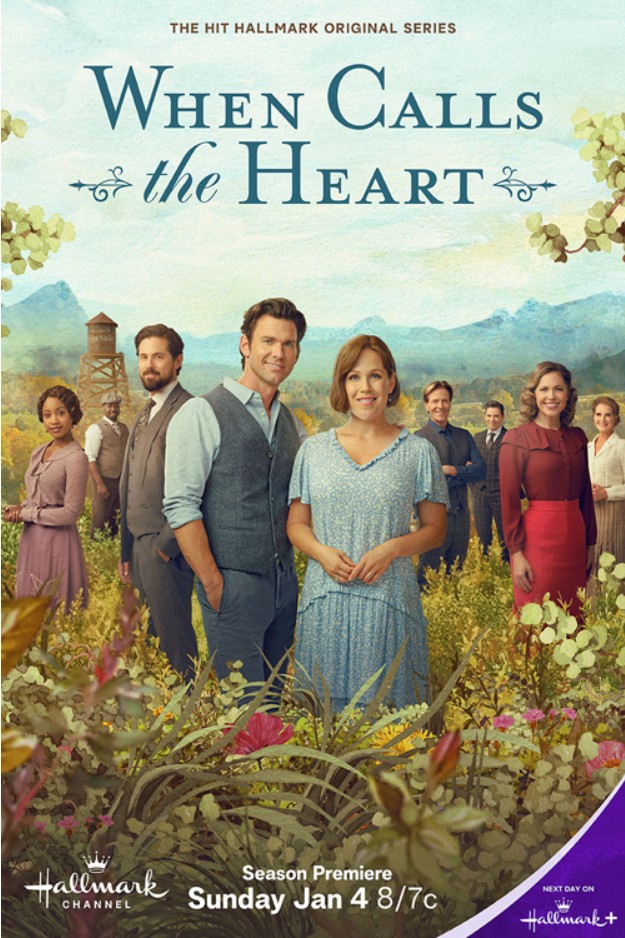
When Calls the Heart season thirteen poster created by Hallmark Media, Crown Media Family Networks and Hallmark Channel

Season: 13

Episode: 3

Name: Back to School

Major stories:

The children of Hope Valley and Benson Hills are going back to school. But for the students of Benson Hills, they are having a difficult time adjusting to their new educational surroundings. One young girl tells Elizabeth how she’s tired of receiving people’s sad faces. Gwendolyn, who likes to be called Gwen, is carving into one of the desks with a fork belonging to Rosemary. Elizabeth encourages Hope Valley’s students to sit with the students from Benson Hills in an effort to integrate Benson Hills’ children into her class. But Elizabeth feels there is more she can do to make all her students feel like they are part of a community. Later in the episode, Elizabeth, Nathan, and Jack Jr. organize a field day. Everyone participates in the activities except for Cooper and Toby. They turn to Elizabeth toward the end of the episode to reveal they made a small cooking fire during their hike in the national park. However, Toby and Cooper reassure Elizabeth they put the fire out. As they reflect on what happened, they second guess if their fire was what caused the national park, Rosemary’s Playhouse, and Benson Hills to burn.

Lee is convinced someone intentionally started the fire in Goldie National Park. One day, at the saloon, Mollie confesses to Lee how, on the day of the fire, she saw an older gentleman entering the park carrying what looked like a kerosine can. Even though Bill and Nathan are currently conducting an investigation, Lee wants McGinty to be held accountable, as he believes McGinty is responsible for the fire. But when Lee confronts McGinty about the fire at the saloon, McGinty is appalled by Lee’s accusations. Nathan arrests Lee after Lee punched McGinty. When Rosemary picks up Lee from the jail, Lee shares how all he wants is for the guilty party to be held responsible for what they did. Rosemary reminds her husband how they don’t know all the answers yet.

Chalkboard image created by Freepik at freepik.com. <a href=’https://www.freepik.com/free-photo/mathematical-operation-written-on-blackboard_1357576.htm’>Designed by Freepik</a>. <a href=”https://www.freepik.com/free-photos-vectors/background”>Background image created by Freepik</a>. Image found at freepik.com.

Minor stories:

The residents of Benson Hills are literally and figuratively picking up the pieces of their lives after the fire. Some of Hope Valley’s residents, including Mei, volunteer to take Benson Hills’ residents back to Benson Hills to reclaim their lost possessions. Maisie, Benson Hills’ mayor and Mike’s sister, is trying to acquire relief funds to rebuild Benson Hills. When Mei offers Maisie a place to stay at her and Mike’s apartment, Maisie turns down the offer at first because she doesn’t want Benson Hills’ residents to believe she gave up on them. But after Mei finds a baby portrait of Mike from what was Maisie’s house, Maisie realizes her family is just trying to support her. Meanwhile, Lucas agrees to appear at a meeting about insurance claims, organized by Edie and Maisie. But due to a scheduled dinner that runs longer than planned, Lucas ends up missing the meeting.

Breaking heart image created by Kjpargeter at freepik.com. <a href=’https://www.freepik.com/free-vector/broken-heart-valentine-background_1041991.htm’>Designed by Freepik</a>. <a href=”https://www.freepik.com/free-photos-vectors/background”>Background vector created by Kjpargeter – Freepik.com</a>. Image found at freepik.com.

Some thoughts to consider:

  • Like I mentioned in this re-cap post, Gwen carves into one of the desks with a fork belonging to Rosemary. Later in the episode, at the Coulter family’s house (where Gwen is currently residing), Gwen tries her hand at woodcarving under Lee’s guiding eye. The two instances I brought up make me wonder if Gwen will eventually take up woodcarving as a hobby? Maybe this new hobby will help Gwen pass the time and make new friends until she can be reunited with her father?
  • Rupert is one of Elizabeth’s newest students from Benson Hills. During class, he brings up his past studies about ancient Rome. Rupert even talks about a class project he made that became lost in the fire. In my list of the Thirteen Questions for When Calls the Heart’s 13th Season, I wondered if another student would receive the Hope Valley Scholarship. With Rupert’s expressed desire for learning, could Rupert be the next Hope Valley Scholarship recipient? Though he is one of Benson Hills’ students, perhaps he could be the exception to the rule.
  • In this episode of When Calls the Heart, Elizabeth brings up the idea of a poetry club, in order to encourage Oliver to read William Shakespeare’s work. Reflecting on Elizabeth’s idea, it would be great if Hope Valley had a book club! The library would be the club’s official meeting spot. Different stories and genres could be explored within the club. Maybe they could even solve mysteries like in the Ainsley McGregor Mysteries series! Since Hearties know a fourteenth season is on the horizon, perhaps Hope Valley could see its first book club come to fruition.
Sunset image created by Photoangel at freepik.com. <a href=”https://www.freepik.com/free-photos-vectors/background”>Background image created by Photoangel – Freepik.com</a>.<a href=’https://www.freepik.com/free-photo/red-sunset-clouds-over-trees_1254327.htm’>Designed by Freepik</a>. Image found at freepik.com.

What are your thoughts on this episode of When Calls the Heart? What lessons do you hope Elizabeth’s students learn in their upcoming school year? Please tell me in the comment section!

Have fun in Hope Valley!

Sally Silverscreen

Sunset Over Hope Valley: From Hope Valley to Hope Sanctuary

I’ve heard Hope Valley referred as a “sanctuary” in this episode of When Calls the Heart. While this was a reference to Benson Hills’ evacuees coming to Hope Valley, I’ve thought about the town as a “sanctuary” for other characters on the show. When Mei was introduced back in season nine, Hope Valley became her “sanctuary” as she was escaping from a bad relationship. Hope Valley was also a “sanctuary” for both Jesse and Clara, as they found a second chance and love in this very town. And, recently, Hope Valley has turned into a “sanctuary” for Jack Jr. and Elizabeth, providing Jack Jr. with a healthy place to live and Elizabeth peace of mind. Hope Valley has been plentiful for its residents, giving them what truly needed. Whether it was forgiveness, extra help on math homework, or an opportunity to give back, everyone in Hope Valley has been provided for.

Just a reminder: If you did not see this episode of When Calls the Heart, there will be spoilers within this re-cap.

When Calls the Heart season thirteen poster created by Hallmark Media, Crown Media Family Networks and Hallmark Channel

Season: 13

Episode: 2

Name: Up in Smoke

Major stories:

Allie, Cooper, Toby, and Opal are lost within a fiery Goldie National Park. Attempting to find their way out of the park, Opal and Allie travel in one direction while Toby and Cooper go in another direction. Fortunately, all four children are rescued by Nathan, Bill, Oliver, and Joseph. Meanwhile, Lucas leads some of Hope Valley’s residents to create a fire trap in order to stop the fire. With the fire potentially spreading to Hope Valley, evacuation plans are made. Edie even rescues her animals from her cabin. But because winds eventually move easterly, Hope Valley is out of the fire’s path. However, the changing winds make Benson Hills the fire’s next target. Rosemary warns the town through a radio broadcast, giving residents enough time to flee. Though the fire burns past the fire trap and destroys Benson Hills’ main street, as well as half the town’s houses, there are no casualties. But Benson Hills is not the only location to be affected by the fire. Goldie National Park is destroyed and Rosemary’s Playhouse went up in smoke.

Hope Valley literally and figuratively opens its doors to the evacuated residents of Benson Hills. One of those residents is a young girl named Gwendolyn. During the evacuation, Gwendolyn and her father became separated. Until her father comes to Hope Valley to reunite with his daughter, Gwendolyn vows to stay at the saloon. As the day carries on, however, Gwendolyn’s father doesn’t show up in Hope Valley. But Gwendolyn agrees to stay with the Coulters and be Goldie’s babysitter. The next day, Gwendolyn learns from Nathan her father is staying at a hospital in Buxton. At the moment, though, Gwendolyn is advised not to visit her father yet, as doctors don’t want his injuries to become infected.

Everyone in Hope Valley lends a helping hand during the fire at Goldie National Park. Besides the rescue and fire trap efforts, Lee and Mike also attempt to put out the fire with the town’s fire truck. As the fire spreads to Benson Hills, donations for the evacuees are given and organized. Even Minnie cooks hot meals for them. With the day turning into night, other residents of Hope Valley make big impacts through small acts. Rosemary and Lucas host a magic show to entertain the children. When the power goes out, Faith makes sure the Infirmary’s refrigerator is properly working with the help of a back-up generator. This way, Jack Jr. can always have Insulin available. Even though the power returns the following day and everyone is accounted for, the timing of everything doesn’t feel like a coincidence to Lee. He brings up the idea of an investigation to Bill and Nathan, believing McGinty is responsible for starting the fire.

Image of magic show essentials created by Macrovector at freepik.com. <a href=”https://www.freepik.com/free-photos-vectors/card”>Card vector created by macrovector – http://www.freepik.com</a>. Image found at freepik.com.

Minor stories:

There were no minor stories in this episode because all the stories revolved around the fire at Goldie National Park.

Campfire with marshmellows and shooting stars image created by macrovector at freepik.com.

Some thoughts to consider:

  • As I said in this re-cap post, Rosemary’s Playhouse went up in smoke. When Lee told Rosemary what happened, I became incredibly disappointed, especially after expressing excitement in the last re-cap post over finally seeing Rosemary’s theater come to life. What’s also disappointing is how the theater itself wasn’t shown on screen yet. I’d like to think Rosemary’s Playhouse could get rebuilt by the end of the season. But When Calls the Heart does not have a strong track record when it comes to keeping promises. One such example is when the show promised to give Jesse and Clara an outdoor wedding despite the show’s creative team knowing the weather would prevent them from filming any outdoor events. At this point, I’m cautiously optimistic.
  • On social media, I’ve read some comments from Lucas’ fans expressing their disinterest in seeing Lucas and Edie falling in love. They believe Miranda MacDougall and Chris McNally, the actress and actor who portray Edie and Lucas, lack on-screen chemistry. While I wouldn’t mind seeing Lucas and Edie become a couple, they haven’t shared enough screentime together for me to determine if Chris and Miranda truly share on-screen chemistry that is strong. Even though this is only the second episode, I hope Edie and Lucas get to spend more time together this season.
  • Despite only being season thirteen’s second episode, the episode itself was very strong! Higher stakes were consistently incorporated into the story. The characters well-being was in danger without the screenwriters believing they had to kill characters off the show. Plus, the outcome of the fire leaves a lot of questions for the rest of the season. It’ll be interesting to see where the story goes from here.
Sunset image created by Photoangel at freepik.com. <a href=”https://www.freepik.com/free-photos-vectors/background”>Background image created by Photoangel – Freepik.com</a>.<a href=’https://www.freepik.com/free-photo/red-sunset-clouds-over-trees_1254327.htm’>Designed by Freepik</a>. Image found at freepik.com.

What are your thoughts on this episode of When Calls the Heart? Do you think the fire at Goldie National Park was intentionally started? Leave your thoughts in the comment section!

Have fun in Hope Valley!

Sally Silverscreen

Take 3: Lovey: A Circle of Children, Part II (1978) Review

As I explained in my recent review of A Circle of Children, I’m covering the sequel, Lovey: A Circle of Children, Part II for the Film. Release. Repeat. Blogathon. Because I’ve been meaning to review the 1978 television film since 2022, I believed the blogathon was a great time to finally check the movie out! But as I also mentioned in my review of A Circle of Children, I haven’t found a made-for-tv movie from the 1970s I actually like. Whenever I’ve selected this particular type of film to write about, I find the film itself either fine, ok, or underwhelming. This is one of the reasons why I put “1970s Made-for-TV movie” on my Year-Long Bingo card, so I could, hopefully, find a television movie I enjoy from that decade. When I saw and reviewed A Circle of Children, I thought it was just ok. Will its sequel be better? Let’s begin this review to find out!

Lovey A Circle of Children, Part II title card created by Time-Life Television Productions and CBS

Things I liked about the film:

A smaller cast: In my review of A Circle of Children, I mentioned the film containing a large cast of characters. This is one of the reasons why the audience was forced to either only become familiar with the characters or not getting to know them at all. This flaw became remedied in Lovey: A Circle of Children, Part II! In the 1978 sequel, the cast is much smaller. Even Mary’s class contains fewer students. Because the story has less characters to keep track of, it gives the audience an opportunity to truly get to know the characters. The audience also has more time to spend with characters like Mary’s students and even Mary’s boyfriend, Cal, because of a tightly written script.

Progression that’s written gradually: When I reviewed A Circle of Children, I talked about how Sarah’s sudden achieved progress taking place after being a static character for half the movie felt like it was written into the story for the sake of plot and time convenience. Even though I was happy to see Sarah achieving progress, I wish that progress was gradually woven into the script. It seems like the creative team behind Lovey: A Circle of Children, Part II felt the same way I did, as Hannah’s/Lovey’s progression was gradual. Hannah/Lovey joins Mary’s class as an unruly child who is very unpredictable. But as the film goes on, Mary’s influence takes effect on Hannah/Lovey as she becomes more responsive, less violent, and even participates in class. The smaller cast size I talked about earlier certainly influenced this part of the story. It allowed Hannah’s/Lovey’s progression to receive emphasis instead of competing against other stories. The transformative power of Mary’s teaching abilities is also on full display because of the gradually written progression of Hannah/Lovey.

The dialogue: Like I said in my list of The Best and Worst Movies I Saw in 2025, how well-written the dialogue was in The Chalk Garden allowed me to remember what Laurel said about the term “good morning”. The quality of the screenwriting was also a strength in Lovey: A Circle of Children, Part II! Some of the dialogue in the 1978 movie sounded profound without trying too hard to be philosophical. A great example can be heard during a conversation between Mary and a fellow teacher named Patty. Patty feels discouraged over the lack of progress from her students. Mary reassures Patty that her impact on the students has been positive, reminding Patty how hope comes from believing the children can learn something. Patty then tells Mary, “Yeah, but you can’t mop the floors with hope”. Mary experiences her own period of discouragement after Hannah/Lovey has an angry outburst involving paint. In a voice-over, Mary says, “For a moment, my dreams and plans for Hannah shattered. But paint is only paint and never worth a dream. Besides, a teacher’s dream dies hard”. The two examples I provided show how Mary’s and Patty’s frustrations and concerns were eloquently and thoughtfully written into the script.

The Film. Release. Repeat. Blogathon banner created by Quiggy from The Midnite Drive-In and Hamlette from Hamlette’s Soliloquy

What I didn’t like about the film:

How Hannah was introduced: As I’ve already said in this review, Hannah/Lovey joins Mary’s class as an unruly child who is very unpredictable. However, I found her introduction in Lovey: A Circle of Children, Part II to be distasteful. As Mary walks down the hallway to retrieve Hannah/Lovey, suspenseful music plays over the scene. The music itself sounds as if it came straight out of a horror movie. The reveal of Hannah’s/Lovey’s face was prolonged because of specific camera angles that were utilized. When Hannah’s/Lovey’s face was finally revealed, a frozen close-up shot was presented to intentionally appear frightening. To me, the introduction I described felt sensationalized to the point of being counterproductive of what Lovey: A Circle of Children, Part II was trying to achieve; making the audience feel empathetic toward Hannah/Lovey by looking past her horrific behavior. I truly believe there was a more tasteful way Hannah/Lovey could have been introduced in the story, especially compared to how some of the students were introduced in A Circle of Children.

Doris’ limited involvement in the story: A Circle of Children introduced Doris as the director of the Children’s School for Special Education. Though she appeared in only a handful of scenes, Doris’ role was pivotal as she literally and figuratively opened the door for Mary to the world of Special Education. Doris was one of the few characters from the first movie to return in the sequel. But she was given even more limited involvement in the second film. While she was still the director of the Children’s School for Special Education, her role in Mary’s story had a reduced significance. I wish Doris received more to do in Lovey: A Circle of Children, Part II because I think she could have made a bigger impact.

Lack of further progression: I said earlier in this review how Hannah’s/Lovey’s progression was written gradually into the story. Even though this was one of the movie’s strengths, I didn’t like how there was a lack of further progression for two of Mary’s students. While Hannah/Lovey was improving her reading skills and Brian (from the first movie) was learning how to board the bus by himself, Rufus and Jamie were at a standstill in their education. With a smaller cast size I talked about in this review, there should have been room in the script to give Jamie and Rufus at least a small victory. At the end of Lovey: A Circle of Children, Part II, Mary reveals through a voice-over what happened to her students. However, not showing Rufus and Jamie achieving further progression in the movie was a missed opportunity.

Preschool classroom image created by Vectorpocket at freepik.com. <a href=”https://www.freepik.com/free-photos-vectors/background”>Background vector created by vectorpocket – http://www.freepik.com</a>. Image found at freepik.com.

My overall impression:

Sometimes, a sequel ends up becoming better than its predecessor. Lovey: A Circle of Children, Part II just so happens to be one of those films! Some of the flaws of A Circle of Children were improved upon in the second chapter, such as containing a smaller cast and the script featuring a gradual progression for Hannah/Lovey. The sequel even had its own unique strengths from its predecessor, like how well-written the dialogue was. But despite these positive aspects, Lovey: A Circle of Children, Part II did have its flaws. I believe there are more respectful ways Hannah/Lovey could have been introduced into the story, as her debut in the film was too sensationalized for my liking. I not only wish Jamie and Rufus had received further progression in the movie, I also wish Doris was given a greater significance in the script. But similar to what I said in my review of A Circle of Children, I’m grateful Lovey: A Circle of Children, Part II exists at all. The 1978 film gives the audience a glimpse into what Special Education was like in the 1970s. It’s a made-for-tv movie that was spared from getting lost to time as well.

Overall score: 7.2 out of 10

Have you seen Lovey: A Circle of Children, Part II? Are there any made-for-tv movies from the 1970s you’d like to see me cover on 18 Cinema Lane? Please tell me in the comment section!

Have fun at the movies!

Sally Silverscreen

Take 3: A Circle of Children (1977) Review

Back in 2022, I wrote a list of the Top 10 Movies I’d Love to Review. Each chosen film was categorized based on how accessible they are. Reflecting on this list, I realized that as of early January 2026, the only more “accessible” titles not yet covered on my blog were A Circle of Children and Lovey: A Circle of Children, Part II. With the Film. Release. Repeat. Blogathon (an event about remakes and sequels) on the horizon, I finally found a reason to review the 1978 sequel. However, I’ve never seen its predecessor, A Circle of Children. So, in preparation for my review of Lovey: A Circle of Children, Part II, I’m also writing about the first film. As I said in my list of the Top 10 Movies I’d Love to Review, both A Circle of Children and Lovey: A Circle of Children, Part II are based on the true story of a teacher named Mary MacCracken. Like I also said in my list, Mary’s books were not only the source material for these movies, Mary was also one of the screenwriters for both films. But over these eight years of 18 Cinema Lane’s existence, I haven’t found a made-for-tv movie from the 1970s I actually like. Will A Circle of Children change that? Let’s begin the first movie review of 2026 to find out!

A Circle of Children (1977) title card created by Edgar Scherick Productions, 20th Century Fox Television, and CBS

Things I liked about the film:

The acting: In A Circle of Children, the protagonist, Mary, visits the mother of a student named Brian O’Connell. During Mary’s conversation with Mrs. O’Connell, Brian’s mother consistently has a worn look on her face. Not only did Mrs. O’Connell’s eyes look heavy, her mouth was set in a straight line as well. Her voice almost sounded monotone, lacking emotion over her situation. Though she admits to Mary that she’s tired, Mrs. O’Connell was able to express how tired she was without relying too much on dialogue. That’s because Judy Lewis, the actress who portrayed Mrs. O’Connell, effectively utilized vocal inflection, facial expression, and even her eyes to emphasize what her character was going through.

Speaking of Brian O’Connell, I want to talk about Matthew Labyorteaux’s performance! I am familiar with his portrayal of Albert on Little House on the Prairie. Therefore, Matthew’s acting capabilities are already known to me. Mary teaching Brian to speak presents a great display of Matthew’s acting talents. When Mary is using a tape recorder in order to help Brian learn to speak, Brian has a blank look on his face. But when a teacher named Dan sings a song to the students, he offers the microphone to Brian. This time, Brian has a determined look on his face, as he intensely looks at the microphone and makes a great effort of trying to repeat Dan’s song. The next scene shows Brian receiving a second chance to speak into the microphone. His eyes become really wide and a smile spreads across his face, excited by the opportunity given by Mary and Dan. As I watched A Circle of Children, it made me believe Little House on the Prairie’s creative team chose wisely when they cast Matthew as Albert!

Since A Circle of Children is based on the true story of Mary MacCracken, I must discuss Jane Alexander’s portrayal of Mary. Throughout the movie, Jane’s performance brought empathy and relatability to her role. One great example happens when Mary encourages Brian to say his name. Brian puts together a puzzle resembling a short story he was reading earlier in the film. Because one of the characters in that story was named Brian, Mary uses this fact to motivate Brian to say his name for the first time since coming to the Children’s School for Special Education. When this plan fails, Mary develops a look of defeat on her face. Her mouth is turned into a frown and her eyes present a mixture of sadness and concern. This medium shot of Mary’s face not only says so much without saying anything at all, it also shows the audience how much she cares about the students, especially Brian.

The chemistry of Mary and Dan: When Mary first visits the Children’s School for Special Education, she meets a teacher named Dan. Over the course of A Circle of Children, Dan and Mary develop a friendship that is shown in only a handful of scenes. Despite this, their chemistry highlights how the two have become kindred spirits, bringing thoughtfulness and understanding to their friendship. The chemistry between Mary and Dan works because the on-screen chemistry between Jane Alexander and David Ogden Stiers (the actor who portrays Dan) works! The strength of their acting abilities allows David and Jane to effectively present a friendship that looked and felt believable. Because of how well they seemed to get along, I was hoping Dan and Mary’s friendship would gradually become a romance. Mary and Dan’s chemistry was such a pleasant surprise in A Circle of Children!

Creating a complex character: One of the teachers at the Children’s School for Special Education is Helga. At first, she and Mary don’t see eye to eye due to how Helga treats the students. Some examples include making a child plunge the toilet and intentionally hiding a young girl’s (literal) security blanket. But as the story goes on, Mary, as well as the audience, learns Helga actually has good intentions for the students. In fact, she wants the children to succeed just as much as Mary does. It would have been so easy for A Circle of Children’s creative team to present Helga as a one-dimensional mean teacher. Instead, the screenwriting and Rachel Roberts’ performance created a character that was complex, representing how, sometimes, approaches to education aren’t straightforward. Helga’s complexity made her a memorable character as well!

Preschool classroom image created by Vectorpocket at freepik.com. <a href=”https://www.freepik.com/free-photos-vectors/background”>Background vector created by vectorpocket – http://www.freepik.com</a>. Image found at freepik.com.

What I didn’t like about the film:

Only becoming familiar with characters: A Circle of Children consists of a large cast of characters. That’s because most of the characters are students from the Children’s School for Special Education. But A Circle of Children has a run-time of an hour and thirty-six minutes, leaving the audience with not enough time to truly get to know the characters. The film’s run-time actually forces the audience to either only become familiar with the characters or not getting to know them at all. Had A Circle of Children received a longer run-time, more opportunities to show Mary getting to know her students and help them could have been provided in the story.

Scene transitions that weren’t smooth: If a movie features smooth transitions between scenes, they can not only help the audience process the story unfolding, they can also maintain the film’s overarching pace. But in the case of A Circle of Children, choppy scene transitions sometimes created emotional whiplash. In one glaring example, Mary and her husband, Larry, confess to their daughter, Liz, of their recent separation. This confession is so upsetting, Mary herself appears to be on the verge of crying. However, the very next scene shows Mary being interviewed for a teaching aide position at the Children’s School for Special Education. This scene is intended to be less sad than the scene I previously described. To me, the transition between these two scenes felt jarring because the transition itself was choppy and abrupt.

Solutions happening for the sake of plot and time convenience: Within the first fifteen minutes of A Circle of Children, a young girl named Sarah is enrolled at the Children’s School for Special Education. According to Sarah’s mother, Sarah is unable to stand or walk. She’s also so attached to a blanket that she continuously screams at the top of her lungs if the blanket is taken away from her. For half the movie, though, Sarah is a static character. She’s either shown lying on the floor sucking her thumb or screaming because she can’t find her blanket. But at a Christmas party that takes place a little more than halfway through the movie, Sarah not only randomly starts walking, she also willingly trades her blanket for a doll. While I was happy to see Sarah achieving progress, I wish this progress was gradually woven into the script. Because Sarah suddenly achieved progress after being a static character for half the movie, the moment itself felt like it was written into the story for the sake of plot and time convenience.

String of musical notes image created by Freepik at freepik.com. <a href=’https://www.freepik.com/free-vector/pentagram-vector_710290.htm’>Designed by Freepik</a> <a href=”https://www.freepik.com/free-photos-vectors/background”>Background vector created by Freepik</a>. Image found at freepik.com. 

My overall impression:

In the introduction of this review, I said I haven’t found a made-for-tv movie from the 1970s I actually like. Sadly, A Circle of Children will not be the film to change that. The 1977 production isn’t a bad movie. In fact, it has its merits, especially when it comes to the acting performances. But I found the story itself to be too “slice of life” for my liking. Plus, there were other flaws that stood out to me, such as the run-time and choppy scene transitions. Looking back on A Circle of Children, however, I will admit my gratitude for its existence at all. This movie is like a time capsule when it comes to Special Education, giving viewers a glimpse into how this specific topic was approached in the 1970s. Though the film only shares one teacher’s perspective, it does express themes of helping others reach their full potential, working together to achieve a common goal, and not giving up on others. The creative team behind A Circle of Children definitely had their hearts in the right place. Now that I’ve finally seen this movie, it’ll be interesting to see where the story in Lovey: A Circle of Children, Part II goes from here.

Overall score: 6 out of 10

Have you seen A Circle of Children? Are you looking forward to my review of Lovey: A Circle of Children, Part II? Let me know in the comment section!

Have fun at the movies!

Sally Silverscreen

Sunset Over Hope Valley: Sharing Your Heart with Everyone

In the season thirteen premiere of When Calls the Heart, Rosemary and Lee have a conversation about Rosemary’s new Playhouse. She’s discouraged by a news article from the Benson Hills Beatle calling the Playhouse a “vanity project”. Lee reassures his wife by reminding Rosemary how opening the Playhouse is her way of sharing her heart with everyone. As I’ve mentioned in past Sunset Over Hope Valley re-cap posts, my introductions are inspired either by what a character says, something that happens in an episode, or an observation I’ve made while watching the show. When Lee’s conversation with Rosemary made her theater finally seem like a reality, I knew I had to bring it up in my re-cap’s introduction! As a Heartie who’s been watching When Calls the Heart since literally day one, I have been waiting for Rosemary’s dream of opening a theater to come true for over ten years. I’ve even brought it up in some of my re-cap posts as well as articles related to the show. Though few details were revealed about the Playhouse, I’m excited to see Rosemary’s dream come to life in Hope Valley! Having a long-awaited wish granted is definitely a good way to start the New Year!

Just a reminder: If you did not see the season premiere of When Calls the Heart, there will be spoilers within this re-cap.

When Calls the Heart season thirteen poster created by Hallmark Media, Crown Media Family Networks and Hallmark Channel

Season: 13

Episode: 1

Name: Up In the Air

Major stories:

Over the summer, Elizabeth, Jack Jr., Nathan, and Allie have been living at Charlotte’s boarding house in Cape Fullerton while Jack Jr. has received Diabetic treatment. This living situation was meant to be temporary, however, because the Infirmary in Hope Valley was being prepared to become a certified Diabetic center. But this plan is literally and figuratively derailed, as the country’s only medical inspector, Marvin, is unable to travel due to a railroad strike. So, the trip to Hope Valley for Allie, Nathan, Jack Jr., and Elizabeth is planned as a weekend excursion. Assuming she won’t come back to Hope Valley in time for the start of the school year, Elizabeth prepares to give Minnie her lesson plans. But during a conversation with Rosemary, Nathan comes up with an idea to keep his and Elizabeth’s family permanently in Hope Valley. Remembering what a boarder named Skeet Rivington said about his nephew, Nathan recruits Skeet’s nephew to fly Marvin to Hope Valley’s Infirmary. His plan is successful, as not only is the trip safely executed, the Infirmary officially becomes a certified Diabetic center. This allows Jack Jr., Elizabeth, Allie, and Nathan to stay in Hope Valley for good.

The grand opening of Goldie National Park is just around the corner. Hope Valley has been preparing for this day, from Rosemary and Lee posing for press photos to the town being decorated for the occasion. Even the younger residents of Hope Valley are looking forward to Goldie National Park’s grand opening. Oliver sketches a map of the park to include in the children’s park guidebook. Even Jack Jr. draws pictures for the guidebook covers. But when Toby, Cooper, Opal, and Allie go for a hike in the park, the residents of Hope Valley notice smoke coming from the park’s direction. Concerned over the well-being of Cooper, Allie, Toby, and Opal, the Mounties of Hope Valley (Bill, Nathan, and Oliver) ride toward the park to figure out what is going on.

Theater seats image created by weatherbox at freeimages.com. “FreeImages.com/weatherbox.”

Minor stories:

Henry’s son, Christopher, returns to Hope Valley. This time, he is installing the town’s first traffic light. Christopher likes working at the electric company that helped install the traffic light in Hope Valley. While the money is good, he enjoys being able to help others. During a conversation over lunch at the saloon, Christopher tells Henry about a job offer he’s interested in. Henry reminds his son how he’s more than just his job.

Summer was a busy season for Lucas and Edie. While Lucas prepared for his re-election campaign, Edie dealt with land related legal disputes. Edie utilized Lucas’ office at the saloon whenever he worked on governor duties. However, the idea of Edie and Lucas sharing an office was brought up. During a conversation between Lucas and Lee, as well as during a conversation among Edie, Mollie, and Florence, Lucas and Edie discuss how despite both of them being busy, they miss each other’s company. Though the true nature of Edie and Lucas’ relationship is still up in the air.

Small, western town image created by Freepik at freepik.com. <a href=”https://www.freepik.com/free-photos-vectors/background”>Background vector created by freepik – http://www.freepik.com</a>. Image found at freepik.com.

Some thoughts to consider:

  • As I mentioned in the introduction of this re-cap post, Rosemary’s dream of opening a theater will finally come true. This could not have come at a better time for me. Lately, I’ve been heart-broken and frustrated about Eddie Munson being denied a second chance at receiving his full potential in the fifth and final season of Stranger Things. So, seeing Rosemary’s theater come to fruition has not only given me some much needed joy, it has also given me something to look forward to for the rest of season thirteen!
  • McGinty, the disgruntled land-owner from season twelve, has returned to Hope Valley in the season thirteen premiere of When Calls the Heart. His conversation with Bill suggests he’s still bitter about how much prime farmland the national park is taking up. Based on the synopsis for upcoming episodes, the wildfire at the national park will be investigated. If the fire was intentionally started, I hope McGinty isn’t the guilty party because that would make the mystery’s outcome predictable. Personally, I’d like to see an interactive and engaging mystery, so the audience can try to solve the mystery alongside the show’s characters.
  • Like I said in this re-cap post’s introduction, I’ve been watching When Calls the Heart since literally day one. Looking back on how past seasons have begun, season thirteen has one of the better season premieres! This season’s first chapter does a nice job reintroducing Hearties to the world of Hope Valley without feeling overwhelming. Resolutions to conflicts also feel earned instead of being created for the sake of plot convenience. With a cliff-hanger conclusion and some pleasant surprises, season thirteen’s premiere provides enough story points to give the rest of the season intrigue!
  • Last July, I created a list of thirteen questions for When Calls the Heart’s thirteenth season. One of those questions was whether Edie would actually start her law firm in Hope Valley. Based on how Edie’s story has turned out, so far, in the season thirteen premiere, that law firm hasn’t become a reality yet. But since the season has just started, only time will tell where Edie’s story will go.
Sunset image created by Photoangel at freepik.com. <a href=”https://www.freepik.com/free-photos-vectors/background”>Background image created by Photoangel – Freepik.com</a>.<a href=’https://www.freepik.com/free-photo/red-sunset-clouds-over-trees_1254327.htm’>Designed by Freepik</a>. Image found at freepik.com.

What are your thoughts on When Calls the Heart’s thirteenth season premiere? What are you looking forward to this season? Let me know in the comment section below!

Have fun in Hope Valley!

Sally Silverscreen
18 Cinema Lane Embarks on 2026!

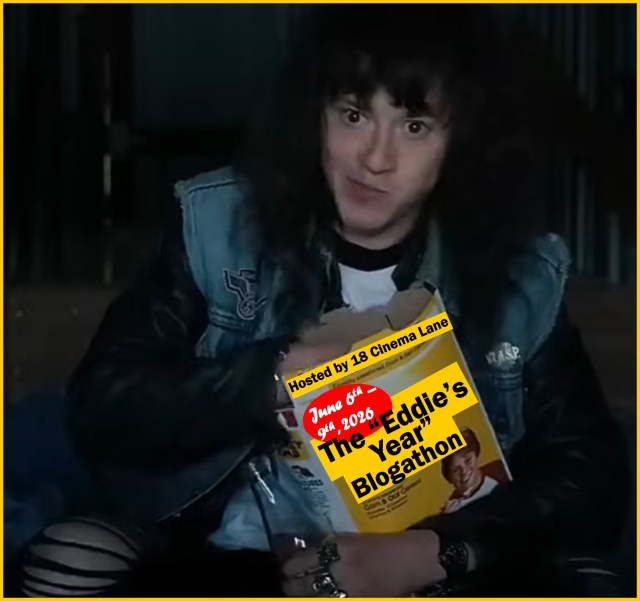
Happy New Year and welcome to 2026! Since a new year has begun, it’s time for my annual beginning of the year blog update! When a new year begins, I create a post like this one to inform my readers what they can expect for the rest of that year. In these posts, major announcements about new projects and changes to the blog have been made. Unlike last year, I have three major announcements. But before I make those announcements, here are my blog stats from 2025!

Royal 2026 image created by starline at freepik.com

2025

Total Blog Posts: 88

Total followers: 12

Total Comments: 310

Total Likes: 298

Awards: 1

Participated Blogathons: 28

Total Movie Reviews: 439

Total Word on the Street stories: 10

Retiring from the Eurovisionathon readathon

For three years, I have participated in the Eurovisionathon readathon. This event has given me the opportunity to expand my literary horizons by introducing me to new stories and authors. But what my readers may not know is how much preparation and time go into taking part in Eurovisionathon. From researching and acquiring books that fit the event’s criteria to keeping track of which books are eligible to receive points, there are several moving parts involved. Due to this commitment, I haven’t allowed myself to check out other books that weren’t related to the readathon. For this reason, I’ve decided to retire from participating in Eurovisionathon.

My Year-Long Bingo

For 2026, I decided to create a new year-long project. This project is a personalized Bingo card filled with blog post, article, and movie review ideas that I’d to fulfill in this new year. Throughout 2026, I’ll try to complete as many of the squares to create a ‘Bingo’. At the end of the year, it will be interesting to see how many ‘Bingo’s’ I receive!

This is what my new year-long Bingo card looks like! Sally Bingo card created by me, Sally Silverscreen
My Annual Blogathon

When I wrapped up my blogathon last October, I announced I was hosting a new blogathon in 2026. I also said the event’s details wouldn’t be revealed until sometime the following February. Now that 2026 is here, I’d like to remind my readers that I will soon announce the details for my annual blogathon! The only hint I’m providing is how the event will revolve around a character I’ve talked about on 18 Cinema Lane before.

Sparkly 2026 image created by Creative_hat at freepik.com

Have fun in 2026!

Sally Silverscreen
The Best and Worst Movies I Saw in 2025

2025 has been a strange year for 18 Cinema Lane. That’s because most of the movies I’ve seen and/or reviewed this year have been ok or fine. After seeing so few good or bad films in 2025, I wasn’t able to create separate top ten best and worst movies lists like in years past. So, instead, I wrote a combined list where I discuss the movies I saw this year that I liked and didn’t like. What’s also different about this year’s end of year list is how there are no Honorable Mentions, due to how few good movies I saw in 2025. But there are two Dishonorable Mentions; Recipe for Murder and Black Bag. The only reason why these films are considered Dishonorable Mentions is because I DNFed (did not finished) both of them. For this year’s list, I will start talking about 2025’s worst movies then end the list by talking about 2025’s best movies. If I reviewed any of the movies on my list, I will provide a link to those reviews.

Worst Movies I Saw in 2025

7. Stalked by My Amish Boyfriend

Lifetime movies, like Hallmark movies, are not created equally. The 2024 film, Stalked by My Amish Boyfriend, is just one example of this statement. While it was interesting to see and hear how information about Amish culture was woven into the story, that part of the script couldn’t overshadow the major flaws of the movie. I was frustrated by how some characters would make dumb decisions simply for the sake of making dumb decisions. Stalked by My Amish Boyfriend was also, in my opinion, a mostly forgettable film. This is the reason why the 2024 picture is at the bottom of my list.

6. She Wore a Yellow Ribbon

As I said in my review of She Wore a Yellow Ribbon, I expected the 1949 movie to be an action-packed, suspenseful, and even intriguing story. What I got instead was an underwhelming film that prioritized presentation over product. I praised She Wore a Yellow Ribbon for its pretty looking scenery. But a photogenic background was unable to save the film from its weak script. A limited amount of action took away a lot of the story’s suspense and intrigue. It also doesn’t help how I only became familiar with most of the characters instead of truly getting to know them. She Wore a Yellow Ribbon is one of two movies I saw this year that almost made me fall asleep.

Take 3: She Wore a Yellow Ribbon Review

5. Kind Hearts and Coronets

Kind Hearts and Coronets is the second film I saw in 2025 that almost made me fall asleep. But the flaws in this movie greatly differ from She Wore a Yellow Ribbon’s emphasis on scenery over substance. Despite Kind Hearts and Coronets being classified as a “comedy”, I didn’t laugh at all while watching the film. I also had no idea what the story’s moral was supposed to be, due to the moral being treated as an afterthought. Like I said in my Kind Hearts and Coronets review, I’m not entirely sure what this movie was trying to say. That lack of clarity not only makes the movie underwhelming, it also makes the movie confusing.

Take 3: Kind Hearts and Coronets Review

4. Reality Bites: A Hannah Swensen Mystery

Having Reality Bites: A Hannah Swensen Mystery on my worst movies of the year list and finding Pie To Die For: A Hannah Swensen Mystery slightly better than its predecessor feels like déjà vu. That’s because One Bad Apple: A Hannah Swensen Mystery was placed on my worst of 2024 list, with its follow-up, A Sprinkle of Deceit: A Hannah Swensen Mystery, being slightly better. Though Reality Bites: A Hannah Swensen Mystery had its own set of flaws. Forced humor felt straight out of a sit-com, especially when Delores was involved in the story. As I said in my review, I wondered why a laugh track was missing. Both of the film’s mysteries contained such a small sense of urgency, the run-time felt a bit drawn-out. The story’s overall intrigue was weaker due to this flaw. If the Murder, She Baked/Hannah Swensen series continues in 2026, I’d like to see the quality become more consistent.

Take 3: Reality Bites: A Hannah Swensen Mystery Review

Reality Bites: A Hannah Swensen Mystery poster created by Hallmark Movies & Mysteries

3. Perry Mason: The Case of the Heartbroken Bride

Perry Mason: The Case of the Heartbroken Bride is the most disappointing movie I saw in 2025. There were so many missed creative opportunities in this story, the film itself was under-cooked and uninspired. The movie was sometimes boring because of the lack of urgency. Seeing Perry, Della, and even Kevin meanderingly take their time building a legal case sucked the energy out of the story. I said in my review how any movie series boasting over ten titles was going to have at least one “bad day at the office”. I also said in my review how Perry Mason: The Case of the Heartbroken Bride was one of those days for the fictional detective.

Take 3: Perry Mason: The Case of the Heartbroken Bride Review

2. My Gal Sunday

This 2014 movie is a perfect example of Hallmark putting the cart before the horse. Instead of creating a solid stand-alone film that could have naturally led to more chapters, the network put more effort into trying to build the foundation for a potential series. Parts of this story didn’t make sense. One glaring example is when an itinerary shows the protagonist couple’s plans of going dancing at 11 p.m. on Saturday then going to church at 8 a.m. on Sunday, begging the question of when these characters were supposed to go to sleep. The on-screen chemistry between Cameron Mathison and Rachel Blanchard made their characters, Henry and Sunday, feel less like a married couple and more like a couple who are about to start dating. It’s, honestly, a shame My Gal Sunday wasn’t a stronger picture. Mystery stories about married couples are uncommon from Hallmark, so this 2014 story could have offered something unique to the network’s table.

1. Mystery by the Book

This film actually has two titles; Mystery by the Book and Key to Love. However, I saw the movie on Great American Family under the title, Mystery by the Book. Therefore, I will be referring to that title for the sake of my list. For a movie with the word ‘mystery’ in the title, the story’s mystery is an afterthought, which makes the title itself very misleading. Instead, the characters develop other priorities, like playing dress-up and tapping glasses four times during one dinner date. Parts of the script don’t make sense, like how the protagonists find a treasured antique key. Mystery by the Book is even so bad, it’s, at times, unintentionally funny. A perfect example is when Corey Sevier’s character, Josh, is looking for a set of keys, only to find a set of keys seconds later on a key hook labeled “Keys”. Thank goodness Great American Family’s Ainsley McGregor Mysteries series is growing stronger in quality. But if the network wants to expand their mystery library, they have a long road ahead of them.

Perry Mason: The Case of the Heartbroken Bride poster created by Fred Silverman Company, Viacom Productions, Dean Hargrove Productions, National Broadcasting Company, and Viacom

Best Movies I Saw in 2025

8. The Phantom of the Opera (1925)

I’m still shocked by how the 1925 version of The Phantom of the Opera was never included on any of American Film Institute’s 100 movies lists, even months after I reviewed the film. Looking at everything the movie has to offer, I believe there is an argument to be made for its inclusion on, at least, one of those lists. Lon Chaney’s performance alone highlights how make-up, body language, and even the eyes can enhance an acting performance. Each area of the Opera House was presented through color coded film, which gave the movie a unique identity. What also helps 1925’s The Phantom of the Opera standout is how the cinematic lens showed the audience the expansive nature of storytelling. This is why, in my opinion, the story of the Phantom and his opera house is better suited for film than the stage.

Take 3: The Phantom of the Opera (1925) Review (Silent Pioneers Double Feature Part 2)

7. Fist of Fury

For an introduction to Bruce Lee’s filmography, I think Fist of Fury is a good one! The martial arts choreography was definitely one of the strengths of this film. But the movie contained other aspects I liked as well. Bruce’s portrayal of Chen is a reason why Fist of Fury was so memorable. Clever writing and higher stakes woven into the script create a story that was clever, suspenseful, and intriguing. Because of how much I enjoyed watching Fist of Fury, I hope to check out more of Bruce’s movies in 2026!

Take 3: Fist of Fury Review

6. The Chalk Garden

Even though I reviewed this film back in February, I still think about what Laurel said about not liking being told “good morning”. How well-written the dialogue was is one of the reasons why I remember Laurel saying, “what is a good morning to someone else is rarely a good morning to me”. Speaking of Laurel, Hayley Mills’ utilization of animated expressions and a variety of emotions helped the audience see how complex her character truly is. But Hayley is not the only actress whose performance was strong. The Chalk Garden is a movie where every actor and actress does a great job with the acting material they were given. The 1964 presentation is part character study, part mystery that works!

Take 3: The Chalk Garden Review + 505 Follower Thank You

5. The Night Before the Night Before Christmas

The Night Before the Night Before Christmas is another movie I saw (and reviewed) this year where it was difficult to choose a favorite acting performance. The strength of the cast’s acting abilities not only made watching the story unfold more enjoyable, it even helped characters become more likable. Emphasizing the theme of giving painted a portrait of Santa I hadn’t really thought of before; someone who has a reputation for giving. It was also a clever way to remind viewers of one of the Christmas season’s important components. How Christmas activities were included in the script was a breath of fresh air as well. As I said in my review, I wish Hallmark went back to creating titles that didn’t rely too much on a formula, tropes, and/or cliches.

Take 3: The Night Before the Night Before Christmas Review + 515 Follower Thank You

The Chalk Garden poster created by Quota Rentals Limited, Ross Hunter Productions, and Universal Pictures

4. Ben-Hur: A Tale of the Christ (1925)

It’s amazing how two movies on this year’s best films list not only turned 100 years old, they also utilized color coded film to their advantage! But what sets Ben-Hur: A Tale of the Christ apart from The Phantom of the Opera is how title cards went above and beyond in Ben-Hur: A Tale of the Christ due to how well-written they were. Another aspect that distinguishes Ben-Hur: A Tale of the Christ is the cinematography’s capturing of the scope of the film. Long and medium shots effectively showcased a world that looked and felt larger than life. The visual presentation of the movie was certainly impressive. However, Ben-Hur: A Tale of the Christ found a balance between style and substance!

Take 3: Ben-Hur: A Tale of the Christ (1925) Review

3. The Man Who Invented Christmas

Despite being the most recently reviewed movie on my list, The Man Who Invented Christmas is one of the best biopics I’ve ever seen! How the creation of A Christmas Carol lent itself to exploring Charles Dickens’ life story brought a unique element to the biopic genre. Watching Charles’ iconic tale come to live, literally and figuratively, provided the film a creative and memorable identity. The “Easter Eggs” related to A Christmas Carol sprinkled throughout the story was an engaging way to stay invested in the movie. The Man Who Invented Christmas is a solid Christmas title that would make a good double feature with I Heard the Bells.

Take 3: The Man Who Invented Christmas Review

2. The Wild Robot

I first talked about The Wild Robot in my list of The Top Ten Best Stand-Alone Films. Even though I published that list back in March, the 2024 animated movie has still held up as one of the best titles I saw this year! Like I said in The Top Ten Best Stand-Alone Films list, the animation was gorgeous, appearing as a blend of paintings and priceless photographs. A pleasant surprise was how much emotional depth the story contained. What adds a sense of timelessness to the production was the abundance of good messages and themes. While it’s too early to say how The Wild Robot will stand in the test of time, I think it has potential.

1. An Old Fashioned Thanksgiving

I actually revisited this film in preparation for my review of An Old Fashioned Christmas. Watching An Old Fashioned Thanksgiving again after so many years reminded me why I love this movie! Attention to detail and historical accuracy created the illusion of taking the audience to another time and place. How the messages and themes of the Thanksgiving holiday were woven into the story allow An Old Fashioned Thanksgiving to truly embrace the holiday itself. The more I think about the 2008 movie, it makes me surprised it wasn’t a Hallmark Hall of Fame presentation. My belief is due to An Old Fashioned Thanksgiving containing elements that would likely be found in a Hallmark Hall of Fame project, such as strong acting performances and a historical fiction lens.

The Man Who Invented Christmas poster created by The Mazur Kaplan Company, The Mob Film Company, Ingenious Media, Nelly Films, Parallel Films, Rhombus Media, and Bleecker Street Media

Have fun in 2026!

Sally Silverscreen

Sally Solves a Mystery: Why Have One ‘Anastasia’ (1997) Mystery When You Can Have Two?

Imagine: You’re scrolling through the forum department of the website, Lost Media Wiki. As you’re scrolling, you discover a piece of lost media related to one of your favorite movies. You don’t recall the lost media itself, but you’re bothered by what you read. Because of how much you love your favorite movie, you want that movie and material connected to that movie (such as merchandise, promotional content, or related media) to be accessible to everyone. This way, more people can discover the movie and may even enjoy it as much as you do. So, the idea of your favorite movie being associated with the world of lost media creates a spark of desire to find that piece of lost media in question. But when you search for that piece of lost media, you learn there is another piece of lost media related to your favorite movie. Instead of becoming discouraged or overwhelmed, you make it your mission to find that other piece of lost media too.

The 1997 film, Anastasia, had one major goal: take “the world by surprise” on November 21st. With a $140 million worldwide profit, the film not only accomplished that goal, it surpassed expectations. Looking back on our entertainment landscape, Anastasia’s pop cultural footprint seems small compared to other animated movies. But what its success proved was how other studios besides Disney could create animated films that were profitable and memorable for the right reasons. Like most feature presentations, Anastasia had its fair share of advertisements. But there is one teaser trailer believed to have been shown only in movie theaters, its existence neither confirmed or denied. Meanwhile, when Anastasia accomplished its goal of “taking the world by surprise”, an ice-skating show based on the movie debuted in 1998 to capitalize on this feat. However, the show itself has become so lost to time, only a small handful of footage has been archived. In this article, I will be discussing these two Anastasia related mysteries! Through the utilization of research, theories over why these pieces of lost media haven’t been found yet will also be addressed.

Anastasia (1997) title card image created by Twentieth Century Fox, Fox Animation Studios, Twentieth Century Fox Animation, Fox Family Films, and The Big Gun Project. Anastasia Mysteries image created by Sally Silverscreen.

Mystery #1: Anastasia’s Lost Theatrical Teaser Trailer

On the Reddit forum titled r/lostmedia, someone named NowheresNomad described a lost teaser trailer advertising Anastasia’s upcoming premiere. According to NowheresNomad, the teaser trailer primarily featured an “animated portrait, or one similar, of Anastasia as a child”. However, “there was no other person in it with her”. Anastasia’s “portrait appeared to be in a dark room as a thunderstorm roared in the background and lightning flashed, occasionally illuminating the painting as if there were a nearby window while slowly zooming in on her face”. This “30-second teaser” also featured the film’s title after the portrait’s presentation. NowheresNomad claims Anastasia’s teaser trailer not only “played in front of multiple family films”, they remember seeing it “in front of 101 Dalmatians (1996)”.

I discovered this specific piece of lost media on Lost Media Wiki’s forum department. A commenter named blipsycat first brought it up there on September 27th, 2023. The Lost Media Wiki discussion about the teaser trailer ended on February 8th, 2024, with the last commenter, beastboyrules52, coming up empty-handed. However, a chance visit to Lost Media Wiki led me to discover a theory that could explain why Anastasia’s teaser trailer hasn’t resurfaced yet, if it exists. On Lost Media Wiki, the only article related to Anastasia I could find was about the partially found live-action reference material featured in the 2005 documentary, ‘The Making of Anastasia’. The article itself included a video of the documentary from the Youtube channel, DVDXtras. Within the documentary, two pieces of concept art appeared to fit NowheresNomad’s description of Anastasia’s portrait in the teaser trailer.

Anastasia (1997) concept art found in the video, ‘The Making of Anastasia (1997)’ (from the Youtube channel, DVDXtras)

In this first portrait, Anastasia not only appears by herself, she also appears as a child.

Anastasia (1997) concept art found in the video, ‘The Making of Anastasia (1997)’ (from the Youtube channel, DVDXtras)

In this second portrait, Anastasia appears older than NowheresNomad’s description. However, Anastasia is the only character in the portrait and the darker hues suggest the portrait itself is located in a dark room.

NowheresNomad speculated in the comment section of their Reddit post how Anastasia’s teaser trailer could have been “released in theaters for a brief time, tested poorly because it was genuinely creepy, and was pulled until they had some completed animation”. They also speculate the portrait “was a piece resembling the character in the film created specifically for this teaser”. Based on my findings and what NowheresNomad said, my theory is one of the portraits I brought up was featured in the teaser trailer. To create the illusion the portrait was placed in a dark room, lighting and sound effects were added over the piece of concept art. With the concept art not official footage from the movie, the teaser trailer was simply created as a placeholder until Anastasia’s creative team was ready to release official marketing that better reflected the true spirit of the film. If what I’m saying is correct, it would explain why the teaser trailer hasn’t been archived or made available on Anastasia’s DVD/Blu-Ray.

Promotional image for Anastasia On Ice found in the video, ‘Anastasia On Ice Commercial (1998)’ from the Youtube channel, Commerical Collections.

Mystery #2: Anastasia On Ice Full Show Footage

In 1998, Feld Entertainment debuted Anastasia On Ice, an ice-skating show based on the movie from 20th Century Fox. At the time, adapting animated films for the skating rink was nothing new for Feld Entertainment, as the company created Disney On Ice in 1981. While Anastasia On Ice is mentioned in the historical timeline on Feld Entertainment’s website, no videos or photos of the show are available on this same website. However, some videos on Youtube have kept the memory of Anastasia On Ice alive through archived footage. These videos are the following:

  • Anastasia On Ice – 1998 Today Show Feature (from the Youtube channel, Skate Guard Blog)
  • Anastasia On Ice – Primeira Parte –  http://www.anastasiabrasil.com (from the Youtube channel, anastasiabrasil)
  • Anastasia On Ice Commercial (1998) (from the Youtube channel, Commercial Collections)
  • WFSB: Anastasia On Ice –Promo (1998) (from the Youtube channel, Archival WFSB-TV3)
  • Anastasia on Ice Ad- Buffalo, New York (1999) (from the Youtube channel, Classic90sfan)
  • Anastasia On Ice (from the Youtube channel, The Anastasia Archive) (This video only features photos from the show)

Even though footage of Anastasia On Ice has been archived, the full show has yet to surface. But based on my research, I’ve created three theories to explain why the full footage of Anastasia On Ice has likely not been preserved.

The dates for the Anastasia On Ice show are circled in this image to emphasize the short lifespan of the show itself. Promotional image for Anastasia On Ice found in the video, ‘Anastasia On Ice Commercial (1998)’ from the Youtube channel, Commerical Collections.

Theory #1: Limited Lifespan

According to the archived commercials for Anastasia On Ice, the show dates were the following:

  • September 23rd to 27th
  • September 29th to October 4th
  • January 7th to 10th
  • March 31st to April 4th

Anastasia On Ice was primarily held in 1998, according to my research. This greatly differs from a show like Disney On Ice, which premiered over the course of multiple years. While contrasting Anastasia On Ice and Disney On Ice, it should be noted that Anastasia On Ice is based on a singular movie. Meanwhile, Disney has a large collection of animated film titles, allowing Disney On Ice to host a variety of ice-skating shows. With all this said, the demand for repeat performances of Anastasia On Ice was probably low.

In this photo, from the ‘Anastasia On Ice – Primeira Parte –  http://www.anastasiabrasil.com’, Emrah Polatoglu’s solo is captured through medium and long shots. Video found on the Youtube channel, anastasiabrasil.

Theory #2: Poor Visual Quality

In the video, ‘Anastasia On Ice – Primeira Parte –  http://www.anastasiabrasil.com’, a skater named Emrah Polatoglu performs a solo in what appears to be the number, “A Rumor in St. Petersburg”. When I watched Emrah’s performance for the first time, I immediately took notice of the video’s poor visual quality. This is likely due to film-making technology (especially for sports programs involving a lot of motion) not being as advanced then as today. I noticed how poor visual quality was also a problem for the number, “Paris Holds the Key (To Your Heart)” in the video ‘Anastasia On Ice – 1998 Today Show Feature’. However, the “Paris Holds the Key (To Your Heart)” number was captured through medium and close-up shots, giving a television audience specific parts of the performance to focus on. Meanwhile, Emrah’s performance was presented through medium and long shots, emphasizing the scope of the live ice-skating show. Even though there is clearer footage of Anastasia On Ice in the show’s commercials, the intent of showcasing that footage is to entice a television audience to go see the live show, similar to the “Paris Holds the Key (To Your Heart)” number on Today Show. If Anastasia On Ice was never intended to be shown on television or even home media, recording and archiving the live performance was likely not a top priority.

This picure from video, ‘Anastasia On Ice – 1998 Today Show Feature’, the skaters are shown through medium and close-up shots. Video found on the Youtube channel, Skate Guard Blog.

Theory #3: Licensing Rights

A 2018 article from Playbill explains a lawsuit stating similarities between the Broadway version of Anastasia and the adaptations of the story from 1952 and 1956. The article says the “original play [from 1952] was licensed by Fox for the 1956 film adaptation of Anastasia, the agreement stipulated that the playwright and translator Guy Bolton retained “rights to the production on the spoken stage””. It is also stated in the article how “a retroactive license was obtained in 1998 for Anastasia On Ice”. But ever since Disney purchased 20th Century Fox, they hold the distribution rights to films from that studio, including Anastasia. However, the 1997 film hasn’t been utilized by Disney in any fashion since purchasing the studio. Therefore, Disney may not prioritize providing an opportunity to broadcast Anastasia On Ice.

Since this edition of Sally Solves a Mystery revolves around 1997’s Anastasia, I thought including a picture of my VHS copy of the movie made sense. Screenshot taken by me, Sally Silverscreen.

Once upon a December (though the movie premiered in November), Anastasia literally and figuratively took “the world by surprise”. Its success showed animation studios besides Disney anything and everything that was possible at the box office. Well-liked and successful movies are going to have behind-the-scenes secrets, little known facts, and unanswered questions. They may even be associated with lost media, as is the case for Anastasia. At the time of this article’s publication, the full show footage of Anastasia On Ice and/or Anastasia’s theatrical teaser trailer has not been found. However, this doesn’t discourage me. I’d like to find these pieces of lost media by November 21st,2027, Anastasia’s 30th anniversary. I’m hoping by then, the “journey to the past” would have been worth it.

Sources:

https://forums.lostmediawiki.com/thread/12559/anastasia-1997-teaser-trailer (the link to the Reddit post about the Anastasia theatrical teaser trailer is included in the thread)

‘The Making of Anastasia (1997)’ (from the Youtube channel, DVDXtras)

https://www.feldentertainment.com/company/History/ https://playbill.com/article/anastasia-copyright-lawsuit-heads-toward-trial

https://lostmediawiki.com/Anastasia_(partially_found_live-action_reference_material_for_Don_Bluth_animated_film;_1997)

https://playbill.com/article/anastasia-copyright-lawsuit-heads-toward-trial