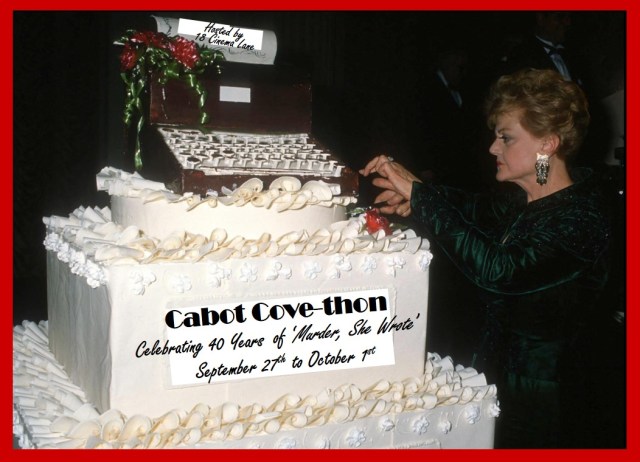
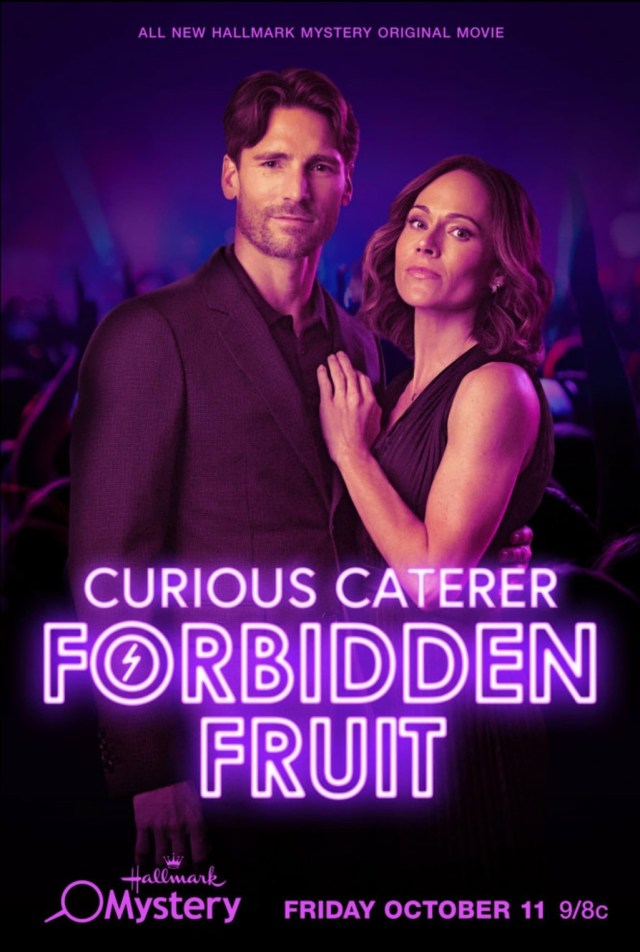
Are you a fan of Murder, She Wrote? Do you want to participate in a blogathon that is fun and creative? If you answered yes to these questions, then come join my blogathon, Cabot Cove-thon! The event starts on September 27th, so you still have time to sign up. Plus, there are plenty of topics to choose from! To learn more about Cabot Cove-thon, click on the link below.
2024 is a historic year for 18 Cinema Lane. This year, I have been nominated for the Sunshine Blogger Award a total of four times, breaking the previous record of two nominations for any given award! The first nomination of 2024 came from Hamlette (from Hamlette’s Soliloquy) back in March. Then, in April, I received a nomination from Rebecca (of Taking Up Room). Three months later, I acquired two more nominations; another one from Rebecca and one from Virginie (from The Wonderful World of Cinema). Because of how many times I’ve been nominated, I have curated the list of questions by choosing at least one question from every nominator. So, before I finally answer these questions, I’d like to thank Hamlette, Rebecca, and Virginie for the nominations and present the award’s official rules!
The Rules:
1. Display the award’s official logo somewhere on your blog.
2. Thank the person who nominated you.
3. Provide a link to your nominator’s blog.
4. Answer your nominator’s questions.
5. Nominate up to 11 bloggers.
6. Ask your nominees 11 questions.
7. Notify your nominees by commenting on at least one of their blog posts.
1. What movie do you really want to change the ending of?
Oh, definitely The Hobbit: The Battle of the Five Armies. Out of courtesy for my readers who may not have seen this trilogy, I will not spoil the aforementioned movie. But if you have seen the film or are a fan of Thorin, Fili, Kili, and/or Tauriel, you’d know why I chose this movie for this question.
2. It’s MGM’s one hundredth birthday this month (April 2024) and you’re off to visit their original studio lot. Where do you go first?
The Archives! I find the subject of “lost media” fascinating. For every released movie from any given studio, there are likely three films that are either “lost” or “partially lost”. If I were granted access to MGM’s Archives, I would try to restore as many “partially lost” or “lost” films as realistically possible!
3. What do you think was the most deserving Best Picture Oscar, and why?
I can’t really choose a Best Picture winner that was “most deserving”, as I haven’t seen every film that was nominated for the prize. But I can agree the 1984 movie, Amadeus, was a good Oscar choice! While the film is a glamourous looking picture, it also contains depth. An important part of the story explores the music industry, from the work that goes into making music to how fame can affect the heart and soul. I’d actually make the claim Amadeus is one of the best biopics I’ve ever seen!
4. Have you ever changed your opinion of a movie and if so, which movie was it?
This has happened on some occasions throughout my blogging journey. The most recent example is when I reviewed 1983’s The Best Christmas Pageant Ever. I mentioned in that review’s introduction how I was revisiting the film after a long period of time, as I remembered liking it in the past. But when I watched the movie again, I found it to be just ok. Like I said when I shared my overall impression on the film, The Best Christmas Pageant Ever felt more like a “very special episode” of a television show than a movie.
5. What movie do you wish had a sequel, but it doesn’t?
It’s such a coincidence I get asked this question, as I created a list of the top ten Hallmark movies that should have received a sequel back in January! If I had to choose one film from that list, it would be 2021’s Mystery 101: Deadly History. In my list, I explained how Hallmark choosing not to create, at least, one more Mystery 101 movie was a missed opportunity. This is because a final film would have performed well in viewership numbers and given fans some closure.
6. Which film has been the biggest surprise this year, good or not good?
When it comes to good surprises, that would definitely be 2004’s I Am David! In fact, it is, so far, still the best film I’ve seen this year! Every aspect of the production came together to create a movie that truly felt genuine. There were even some creative decisions that elevated the story, such as the importance given to Europe’s natural landscape. What also makes this film special are the plot twists that were effectively woven into the story!
I Am Davidposter created by Walden Media, Film and General Productions, Lionsgate Films, Artisan Entertainment, and David Productions Ltd.
7. You are a mixologist and create a cocktail honouring a movie star. Who do you honour, and how do you make your cocktail? It can be without alcohol!
Four years ago, I wrote an editorial on how the movie-going experience changed between when Phantom of the Megaplex premiered in 2000 and 2020. One of these changes was the addition of bars in movie theaters. While the theater in Phantom of the Megaplex doesn’t serve alcohol, especially since the movie is a family friendly picture, Movie Mason (portrayed by Mickey Rooney) is one of its patrons. With all that said, I would a craft a non-alcohol beverage called “The Movie Mason”. Some of the drink’s ingredients would include candy found at the movie theater. The beverage’s texture would be similar to a milkshake/slushie.
8. Which movie of 2024 has been your favorite so far? Your least favorite?
As I mentioned in answer number six, 2004’s I Am David is, so far, still the best film I’ve seen this year! Meanwhile, the 2004 adaptation of Frankenstein (starring Vincent Perez) is still the worst film I’ve seen this year, so far. I explained in my review of the Hallmark adaptation of Frankenstein (which was also released in 2004) how a technical error on Wikipedia led me to believe Vincent’s movie was the Hallmark version. The reason why I’ve brought up this error is to prevent people who are interested in watching Hallmark’s adaptation from making the same mistake I did.
9. Are there any movies coming out in 2024 that you are looking forward to?
Yes, the next Curious Caterer film, Curious Caterer: Drumstick Drama! According to Net from It’s a Wonderful Movie, the film is currently in production and will likely premiere this Fall. Because Curious Caterer:Foiled Plans was such a good movie, I’m excited for this series’ next chapter!
10. One of my local theaters is going to exhibit a UFC fight next month (May 2024). What are your thoughts on movie theaters showing sporting events?
This February, I wrote a Word on the Street story about a Spanish theater chain broadcasting Eurovision’s Grand Final in their theaters. Two months later, I wrote another Word on the Street story about U.K. cinemas choosing to premiere Eurovision’s Grand Final. Even though Eurovision and UFC are two completely different events, the decision to show these events in movie theaters accomplishes the same thing: providing a memorable experience for those who can’t attend the event live. Another thing these theater screened events accomplish is providing extra revenue for movie theaters, especially those from smaller chains or independently owned.
11. Is there a film you think could have been made into a tv series as well? (Like M*A*S*H* or Fargo)?
Going back to my list of the top ten Hallmark movies that should have received a sequel, I will choose 2016’s For Love & Honor! Because the film is about a school’s commandant and academic dean working together to save their facility, the story could lay the foundation for a series that primarily focuses on a group of academy faculty as they navigate personal and professional problems. Stories about the school’s students may have served as subplots on the show.
Amadeus poster created by The Saul Zaentz Company, AMLF, and Orion Pictures
The Nominees
— Heidi from Along the Brandywine
— Olivia from Meanwhile, in Rivendell…
— Virginie from The Wonderful World of Cinema
— Neil “The Musical Man” Powell from Thoughts From The Music(al) Man
— Paul from Silver Screen Classics
— A Vintage Nerd from A Vintage Nerd
— Net from It’s a Wonderful Movie
— Eric from Diary of A Movie Maniac
— Le from Crítica Retrô
— Debbie from Moon In Gemini
— John from UK Film Nerd
The Best Christmas Pageant Ever title card created by Comworld Productions, Schaefer/Karpf Productions, and American Broadcasting Company (ABC)
My New Questions
1. You’re about to introduce someone to a film genre. Which movie will you choose as the respective introduction?
2. What episode comes to mind when the subject of “bad” episodes from “good” tv shows is brought up?
3. Which series (movie, book, or television) do you feel has gotten “too big for its boots” (a.k.a. overrated/unenjoyable)?
4. If a location from a book, movie, or television show was your dream vacation, where would your travels take you?
5. You have the opportunity to travel back in time and visit the moment you started your blog. What piece of advice would you give to yourself?
6. If you could revive a defunct business/store, which one would you bring back?
7. With Halloween on the horizon, which character would you dress up as if invited to a Halloween party?
8. In honor of my upcoming blogathon, Cabot Cove-thon, which actor or actress do you wish made a guest appearance on Murder, She Wrote?
9. On April 14th, 2024, Turner Classic Movies celebrated their 30th anniversary. Which film would you like to see the channel air more often?
10. You’ve been given a once in a lifetime chance to design a theme park attraction! But here’s the twist: the theme park attraction can only be based on a stand-alone movie. Which movie will receive the honor of getting their own theme park attraction?
11. You have the power to give your favorite character a podcast! Who will host the podcast and what will it be about?
Now that 2024 is at the halfway point, I can share my honest thoughts on Hallmark Mystery’s programming. As of late July 2024, the best mystery movie is still Curious Caterer: Foiled Plans! I also thought Tipline Mysteries: Dial 1 for Murder has potential to start a series. But other than those titles, most of Hallmark’s mystery films, so far, have either been ok, disappointing, or (in the case of CrimeTime: Freefall) unwatchable. This emphasizes what I’ve been saying since I published my editorial about why Francesca Quinn, PI is the worst Hallmark movie I’ve ever seen; the network no longer prioritizes the mystery genre. However, I watch as many of Hallmark’s mystery projects as possible hoping they are good. With that said, I have decided to review Signed, Sealed, Delivered: A Tale of Three Letters. In an editorial as well as a Word on the Street story, I speculated what the movie could be about based on quotes and scenes from the trailer and even past creative decisions from Hallmark themselves. While some of these speculations were proven wrong, it was interesting to see how these creative choices differed from my own ideas. I also approached this newest chapter in the Signed, Sealed, Delivered series hoping it was good, as the overall quality of the series, in my opinion, has been inconsistent. Did Signed, Sealed, Delivered: A Tale of Three Letters raise my hopes or fall short of my expectations? Keep reading my review to find out!
The overarching theme: When I shared my thoughts on the Signed, Sealed, Delivered: A Tale of Three Letters trailer last month, I talked about how the film’s main plot seemed like a redemption story based on the featured scenes and quotes. As I watched the movie, I was proven wrong on what the story was about. Instead, the overarching theme of Signed, Sealed, Delivered: A Tale of Three Letters discussed when to get involved in someone’s life as well as their problems. This was an interesting creative choice because this is the first time in the series’ eleven-year history the POstables have questioned their work at the Dead Letter Office. The creative decision also highlights how the POstables’ actions have consequences. The thought-provoking nature of the overarching theme, plus its relatability, gives the audience something to think about not only during the movie, but after the story ends.
Recognition of therapy: Therapy can be a useful resource for people who genuinely need it. Though in the twenty-year history of Hallmark Mystery, this idea is rarely included in their programming. Signed, Sealed, Delivered: A Tale of Three Letters shows both POstable couples utilizing therapy for personal reasons. For Norman and Rita, therapy is a part of the process toward starting a family. Meanwhile, Oliver and Shane attend therapy in order to solve a problem. The incorporation of therapy in the newest Signed, Sealed, Delivered movie addresses how multifaceted therapy can be. It also acknowledges a topic typically overlooked by Hallmark. Therapy’s inclusion in Signed, Sealed, Delivered: A Tale of Three Letters gave this story a more unique identity within the series!
Charley’s subplot: In my Word on the Street story about the trailer for Signed, Sealed, Delivered: A Tale of Three Letters, I speculated if Rhiannon Fish’s character, Charley, would become a fifth member of the POstables. This speculation was based on quotes and scenes directly from the trailer. Charley does not become an official member of the POstables in Signed, Sealed, Delivered: A Tale of Three Letters. However, she did receive her own subplot! Charley’s part of the story shared a connection to the film’s main plot. Plus, Charley received more character development, which allowed the audience to learn more about her and her backstory. Because of this creative decision, Charley became more involved in the overall story of the movie. It also gave Rhiannon more acting material to work with!
Since I included screenshots of the Signed, Sealed, Delivered: A Tale of Three Letters trailer in my aforementiond Word on the Street story, I will also include them in my review of the movie. This screenshot is taken by me, Sally Silverscreen.
What I didn’t like about the film:
Shane and Oliver’s relationship problems: Throughout the eleven-year lifespan of the Signed, Sealed, Delivered series, Oliver and Shane have embodied the “opposites attract” trope sometimes adopted in romance or “rom-com” stories. Despite their differences, the couple was able to find common ground to help and love each other. Sadly, this previously established aspect of Shane and Oliver’s relationship was lacking in Signed, Sealed, Delivered: A Tale of Three Letters. For most of the story, the couple were either arguing with each other or were bitter toward one another. Their problems got to the point where Oliver and Shane didn’t seem compatible like in past films. Though the couple did go to therapy to resolve these problems, Shane and Oliver’s relationship woes soured the movie’s overall tone.
Predictable parts of the story: The Signed, Sealed, Delivered series has a more unique identity compared to Hallmark Mystery’s other movie series. One reason is the exclusion of murder mysteries. But no matter the mystery a movie series adopts, the mystery itself has to be intriguing enough for the audience to stay invested in the program. An approach to this idea is not making the story too predictable. Unfortunately, there were predictable parts of Signed, Sealed, Delivered: A Tale of Three Letters’ story. Charley knows exactly how the Great Mailbox Breach of 2017 started. Seconds after I predicted the reason, she ended up proving my prediction right when she shared this revelation with Shane and Oliver. Speaking of Shane, she has a surprise to share in this film. The surprise wasn’t effective for me because I correctly guessed the surprise within the movie’s first twenty minutes based on presented clues. These predictable parts of the story caused the film’s intrigue to decrease.
Too convenient situations: Earlier in this review, I mentioned Rita and Norman going to therapy as part of the process toward starting a family. Their part of Signed, Sealed, Delivered: A Tale of Three Letters’ story revolved around their desire to adopt a child. At one point, Rita even mentions having to deal with a lot of paperwork. But along the way, the POstables meet someone who, conveniently, finds the perfect solution for Norman and Rita. This causes their conflict to be resolved by the end of the movie. Situations happening too conveniently is another reason for the film’s decreased intrigue.
Since I included screenshots of the Signed, Sealed, Delivered: A Tale of Three Letters trailer in my aforementiond Word on the Street story, I will also include them in my review of the movie. This screenshot is taken by me, Sally Silverscreen.
My overall impression:
Hallmark brought the Signed, Sealed, Delivered series out of a three year hiatus to air Signed, Sealed, Delivered: A Tale of Three Letters on Hallmark Mystery. While it’s good to see Hallmark continuing a mystery series instead of cancelling or abandoning it, the newest Signed, Sealed, Delivered chapter needed more time to develop a stronger story. This movie did improve upon some of the flaws of the predecessor, Signed, Sealed, Delivered: The Vows We Have Made, such as providing Charley with more character development. Good creative decisions were expressed on screen, like the overarching theme and the recognition of therapy. But as I watched Signed, Sealed, Delivered: A Tale of Three Letters, I realized what the film was missing was the cozy charm that helped create Signed, Sealed, Delivered’s brand. The elements of religion/faith Signed, Sealed, Delivered has been known for was lacking, with God being referenced only once. Even Stevie Wonder’s song, which has become the unofficial theme song of the series, was nowhere to be heard. In all honesty, I have seen films in the Signed, Sealed, Delivered series that were weaker than Signed, Sealed, Delivered: A Tale of Three Letters. At the same time, there were stronger films in this series than Signed, Sealed, Delivered’s newest installment. Hopefully, next year’s chapter, “Signed, Sealed, Delivered: To the Moon and Back” is a better movie.
Overall score: 6 out of 10
Have you seen Signed, Sealed, Delivered: A Tale of Three Letters? Are you looking forward to “Signed, Sealed, Delivered: To the Moon and Back”? Please tell me in the comment section!
Whenever I’ve participated in the Legends of Western Cinema Week Blogathon, I, more often than not, review a movie from the Western genre. Since I review Western genre films so infrequently, this blogathon serves as a good opportunity to expand my cinematic horizons. For the 2024 edition, I decided to select a title that has been recommended to me. Suggested by J-Dub from Dubsism, I am reviewing the 1966 film, El Dorado! Years ago, I saw pieces of this movie. At the time, I thought it was boring. But I was willing to give El Dorado a second chance, wondering if my perspective had changed. I also have seen very few films from John Wayne’s filmography. So, reviewing this film gave me a chance to check out more of his movies!
El Dorado(1966) poster created by Paramount Pictures, Laurel Productions, and Polyphony Digital
Things I liked about the film:
The on-screen chemistry: Relationships in movies, whether romantic or platonic, can come across believably on screen if there is a strong sense of chemistry between the actors. This is what happened in El Dorado! Toward the beginning of the movie, J.P., portrayed by Robert Mitchum, meets up with Cole, portrayed by John Wayne, to talk about a potential job opportunity. Cole and J.P. carry no-nonsense demeanors, but their cordialness to each other shows the respect between them. The scene’s mood becomes lighter when Maudie, portrayed by Charlene Holt, shows up. Her friendly, playfulness emphasizes the friendship these characters share. When Maudie talks about her late husband and Cole with J.P., the empathetic reflection indicates how much she cares about both Cole and J.P.. Not only was there strong on-screen chemistry among the actors, this strong on-screen chemistry was consistent throughout the film. The on-screen relationships were interesting to watch because of these factors!
The dialogue: One of the most important components of a movie’s script is the dialogue. Through dialogue, characters can memorably stand-out, important information can be shared, and characters’ problems can be solved. The quality of a script’s dialogue depends on how well written it is. While watching El Dorado, I took note of the cleverness of the dialogue. After a son from the MacDonald family dies, Cole visits the family to share the sad news. The patriarch of the family, Kevin, asks what happened, with Cole telling him how he got “a boy to do a man’s work”. Later, when Cole returns to El Dorado, he reconnects with J.P.. When J.P. asks Cole what he’s doing back in El Dorado, Cole tells his friend, “I’m lookin’ at a tin star with a…drunk pinned on it”. Dialogue like the two examples I provided show how cleverly words were used as well as the eloquent ways intended points were phrased.
Breen Code Era moments: As I’ve explained before on 18 Cinema Lane, the Breen Code was a series of guidelines studios had to follow between 1934 and 1954. El Dorado was released in 1966, a decade after the Breen Code Era ended. However, there were moments sprinkled throughout the movie that felt reminiscent of the Breen Code Era. Before Cole leaves El Dorado, he kisses Maudie. The kiss itself isn’t shown on-screen because Cole’s hat is blocking their faces. When Mississippi, portrayed by James Caan, is first introduced to the audience, he uses a knife in self-defense against a man he claims killed his friend. As Mississippi retrieves his knife, the aforementioned man is hidden behind a table to prevent some of the violence from being shown on screen. The way these moments were written and presented were thoughtful presentations of an era gone by.
Legends of Western Cinema Week Blogathon banner created by Hamlette from Hamlette’s Soliloquy, Heidi from Along the Brandywine, and Olivia from Meanwhile, in Rivendell
What I didn’t like about the film:
A prolonged conflict: Before watching El Dorado, I had seen two of John Wayne’s films: Stagecoach and Allegheny Uprising. In those movies, the story revolves around an overarching conflict some of the characters are consistently trying to resolve. While there was an overarching conflict in El Dorado, it primarily resided in the film’s second half. The first half of the movie consisted of a series of loosely connected vignettes. These vignettes, more often than not, contained low stakes. El Dorado’s first and second halves felt like they belonged in their own separate movies.
Inconsistent sense of urgency: Like I just said when talking about El Dorado’s prolonged conflict, the first half of the movie was a series of loosely connected vignettes, while the film’s overarching conflict resided in the story’s second half. Within the second half of the movie, scenes containing low stakes were woven into the production. One example is Cole addressing a back injury he received earlier in the story. El Dorado’s two halves and the low stakes scenes from the film’s second half are two reasons why this movie’s sense of urgency was inconsistent.
Enabling the Sheriff: J.P., the Sheriff of El Dorado, develops an alcohol addiction due to a romantic relationship gone wrong. When Cole and Mississippi go to El Dorado, they, as well as Bull, try to help J.P. overcome his addiction. Mississippi even creates a liquid concoction to sober J.P. up. But hours after receiving Mississippi’s concoction, J.P. is looking for alcohol. Bull tells J.P. exactly where a bottle of alcohol is located, in the upper left-hand drawer of his desk. Later that evening, Cole allows J.P. to go to the local saloon by himself, where he not only purchases a whole bottle of alcohol, he’s also laughed at by the film’s antagonists. J.P. does eventually become sober in order to help his friends. But toward the end of the movie, J.P. shares a shot of alcohol with Bull. If a screenwriter is going to incorporate a serious topic like addiction into their script, they need to be mindful about how that topic is included in the film. In my opinion, the way addiction was addressed in El Dorado could have been more thoughtful.
El Dorado is not only the third film of John Wayne’s I’ve seen, it’s the second film of John’s I’ve reviewed. Out of these three films, Stagecoach, Allegheny Uprising, and El Dorado, I haven’t found a title that’s left a strong impression on me. Looking back on Stagecoach, I think the movie is just fine. Allegheny Uprising was ok. Now that I’ve seen El Dorado in its entirety, I feel the 1966 project is also ok. The two halves of this movie and the low stakes scenes woven into the movie’s second half are likely the reason for El Dorado’s inconsistent sense of urgency. The topic of addiction could have been handled in a more thoughtful way. However, the movie does have its strengths. Some of these strengths are the on-screen chemistry among the cast and how well the dialogue was written. Personally, I found El Dorado to be a mixed bag. Hopefully, the next film of John’s I watch and review will be stronger than this one.
Overall score: 6 out of 10
Have you seen El Dorado? Which film from John Wayne’s filmography would you like me to review? Let me know in the comment section!
Imagine: You’ve been introduced to an actor while watching a popular television show. Impressed by their performance, you go to IMDB and look through their filmography. There, you discover this actor starred on a now defunct soap opera. You know soap operas aren’t as accessible as traditional tv shows due to the frequent release of episodes. So, you do the next best thing: go to the internet to learn more about the character the actor portrayed on the soap opera. But this proves to be trickier than you expected. Whichever website you go to, there is barely any information available. In fact, there’s so little information, it seems like this character doesn’t exist. You know this character does exist, as the character’s name and list of their episodes is featured on the actor’s IMDB filmography. So, why is it near impossible to learn more about the character in question?
Between 1956 and 2010, As the World Turns followed several families. One of those families was the Walsh family, a collection of some of the wealthier characters on the show. As the title of this article suggests, a character named Bianca eventually joined the Walsh family. But as this article’s introduction suggests, finding information about Bianca was near impossible. On websites like Soap Central and As The World Turns Wiki, Bianca’s name is listed, but she doesn’t have her own page. In an article about Lucinda Walsh from the website, Soap Hub, the only time Bianca is mentioned is when the article states Lucinda took Bianca in. Unfortunately, the article doesn’t explain why Bianca was taken in by Lucinda. Through extensive, thorough research, I was able to learn more about Bianca by discovering many archived episodes of As the World Turns on Youtube! From these episodes, I will try to solve these four interconnected mysteries:
Who is Bianca Marquez Walsh?
What is Bianca’s story?
How is Bianca connected to the Walsh family?
Why did Bianca leave Oakdale?
As the World Turns title card created by Procter & Gamble Productions (PGP) and CBS. ‘Who is Bianca Marquez Walsh?: An As the World Turns Mystery’ image created by Sally Silverscreen

B.O. – Before Oakdale
As the World Turns is primarily set in the Illinois town of Oakdale. But there were times when the story took place in locations beyond the borders of the show’s fictional town. One of these locations was a Central American country called Montega. Some of the show’s characters were from Montega, including Bianca. Her story begins in Montega, with her parents working as servants for a man named Antonio Reyes. Growing up, Bianca grew close to Antonio’s wife, Sierra. She was allowed to play with Sierra’s dolls and even turned to Sierra when her kitten was hurt. As years went on, a war broke out. Since Antonio and Sierra fought in the early days of the war, they were seen by fellow Montegans, including Bianca, as heroes. With the war raging on, Bianca lost her family, even her brother, Pedro, who fought in the war alongside Sierra. Antonio’s reputation and Bianca’s loss of family created the perfect storm for Bianca to become sponsored by Antonio and join him in the United States in the spring of 1988.
Bianca and Sierra reminiscing over their shared past in Montega. Screenshot from the Youtube channel, Oakdalian. As the World Turns was created by Procter & Gamble Productions (PGP) and CBS
1989 – Oakdale Welcomes Bianca
In the previous paragraph, I stated that Bianca came to the United States in the spring of 1988. Wikipedia claims Karina Arroyave, the actress who originally portrayed Bianca, made her debut on As the World Turns in late 1988. However, on Karina’s IMDB filmography, Bianca made her first appearance in 1989. According to As the World Turns’ archived episodes from 1988, Bianca is not featured. In fact, one of the show’s major stories focuses on Lien Hughes’ introduction, as she debuted on As the World Turns on February 2nd, 1988. Based on the available episodes, Bianca’s earliest known appearance took place on July 17th, 1989, the day after Karina’s 20th birthday. However, the first known reference of Bianca happened on May 26th, 1989. In this episode, Lucinda, the matriarch of the Walsh family, learns from Antonio her daughter, Lily, has traveled to Montega to look for her missing sister, Sierra. Antonio starts saying “Bianca had no right to–”, then followed that up with “According to Bianca, Lily said she didn’t have much more to live for. She would sacrifice her own life to find Sierra”. Before making her first known appearance on July 17th, Bianca was referenced again on the July 13th, 1989 episode. In this episode, two employees of a business firm named Emily and Paul talk about a charity ball that will take place that night. Emily asks Paul “Is Bianca looking forward to it?”, with Paul responding “I guess so”. Because Antonio is out of town, Paul wasn’t able to ask his permission to take Bianca to the event, which makes Paul concerned. With the way Bianca is referenced in these aforementioned episodes and even how characters interact with Bianca at the charity ball in the July 17th episode, Bianca’s introduction, as well as her existence, has already been acknowledged. This leads me to believe Bianca’s earliest days in Oakdale either took place off-screen or happened in an unarchived episode.
As I previously stated in this article, Antonio sponsored Bianca, which led her to come to the United States. At the start of her story in the show’s 1989 season, Bianca resided in Antonio’s penthouse apartment. While there, she receives her education from a tutor. Antonio also gives her clothes and a roof over her head. But the longer Bianca stays at Antonio’s apartment, the more she discovers things aren’t as they seem. Antonio repeatedly reminds Bianca not to share the origins of a wedding ring he claims is Sierra’s. When Bianca questions the legitimacy of the ring, Antonio tells her “I know you have doubts about that ring, about whether Sierra is alive. But you have to keep those doubts to yourself. If you were to share them with Craig and Lucinda now, it would be very bad. It would destroy their faith in me and worse yet, their belief that Sierra is alive.” Eventually, Antonio hires multiple security guards and even forbids Bianca from seeing Paul, who became one of her first friends. Antonio justifies these measures by telling Bianca that it’s “for your own protection”. Confused by these protective measures, Bianca asks “I thought we were safe in America”, to which Antonio replies, “It’s not only in Montega that people live in fear”. After a bodyguard named Walters was found dead at Antonio’s apartment building and believing a criminal named James was contacting Antonio, Bianca ran away to the Earl Mitchell Center, where Bianca then resided.
While staying at the Earl Mitchell Center, Bianca appears to be thriving. She’s making friends, such as a young man who is referred to as “Hey You”, and enjoying herself at the Center’s Halloween party. However, a dark storm cloud looms just around the corner. After learning Paul killed James in self- defense, Bianca is questioned by police about Antonio’s connection to James. Even though James never entered Antonio’s apartment, Bianca recalls seeing James’ picture in the pocket of one of Antonio’s security guards. Meanwhile, Antonio claims Bianca’s brother, Pedro, may still be alive. Even though she’s now residing at the Earl Mitchell Center, Bianca still relies on Antonio for any information from Montega, with her claiming, “You’re my only source, Senor Tonio”. Despite Antonio continuously reassuring Bianca Pedro may be living, Lucinda and Craig come to the Center to tell Bianca Pedro actually passed away. This news is later reconfirmed by Sierra when Bianca and Antonio go to Montega to learn of Pedro’s fate.
After sharing the sad news of Pedro’s death with Bianca, Lucinda is troubled by Bianca’s situation. Desperate to help Bianca out, Lucinda decides to adopt her. When Lucinda and her lawyer, Ambrose, propose the idea to Bianca, Bianca at first believes Lucinda wants to adopt her to work in the kitchen at the Walsh house. Lucinda clarifies how she wants to adopt Bianca as her daughter. Initially, Bianca tells Lucinda, “Senora, thank you, I’m so grateful. But I-I’m not worthy to be your daughter. My-My mother was a servant to-to people like you”. But after thinking the decision over, enough convincing from Lucinda, and discovering Antonio was giving her false hope about Pedro, Bianca eventually accepts Lucinda’s adoption offer. By the end of the 1989 season, Bianca is caught in a whirlwind. She not only testifies in Paul’s trial, she also moves into the Walsh house. Bianca then experiences her first Christmas and New Year’s in Oakdale.
Bianca being questioned by Duncan in her first known appearance in the July 17th, 1989 episode. As the World Turns was created by Procter & Gamble Productions (PGP) and CBS
1990 – Bianca Joins the Family
Even though Bianca is now a member of the Walsh family and living in the Walsh house, she is still friends with the residents of the Earl Mitchell Center. In fact, Bianca is dating “Hey You” by the end of the 1989 season. At a New Year’s party, “Hey You” suddenly runs away. This decision was caused by “Hey You” spotting a man named Brock, who “Hey You” believes murdered his family in September of 1988. Toward the beginning of the 1990 season, a major story revolves around “Hey You” (who ends up being identified as Bruce Dreyfuss) and Brock’s murder case. Because of her relationship with “Hey You”/Bruce, Bianca testifies in court. While volunteering at the Earl Mitchell Center, Bianca learns from a counselor named Frannie “Hey You”/Bruce is going back to his hometown in South Bend, Indiana. When Bianca wonders how difficult it would be for “Hey You”/Bruce to return home after everyone there knows about his past, Frannie reminds Bianca, “sometimes the only way that you can go on with your life is to face up to the things that are hardest for you”. In one of their final on-screen moments together, Bianca reminds “Hey You”/Bruce how he’s been kind to her and how she believes in him.
Despite her heartbreak toward the beginning of the 1990 season, things are looking up for Bianca. She hosted her first party at the Walsh house and found a friend in Lien Hughes. Bianca has also started applying for classes at Oakdale High School. Before taking the school’s placement exam, Bianca reconnects with a fellow new student named Courtney. The two met the night before at a restaurant called “The Cellar”. For the remainder of Bianca’s time on the show, she and Courtney are friends. However, their differences slowly but surely cause them to grow apart over time. In the May 1st, 1990 episode, Bianca and Courtney go to “The Cellar” on a school night. Bianca doesn’t think they should stay long not only because it’s a school night, but also because Lucinda doesn’t know where Bianca is. Courtney tells Bianca she worries too much and reminds her she aced her placement exam. In this same episode, Courtney and Bianca talk about Paul, who happens to be at “The Cellar”. When Courtney comments how Paul doesn’t act like he has money, Bianca asks her, “Oh yeah, well what is someone with money supposed to act like”? Courtney responds by telling her friend, “if you got it, flaunt it”.
Among the archived episodes of As the World Turns, Bianca’s age is never explicitly stated. But based on Bianca and Courtney going prom dress shopping in the May 17th, 1990 episode and based on a tutor named Mrs. McClausky commenting how Courtney and Bianca will be freshman at Oakdale University next fall, it is assumed Bianca is either 17 or 18 years old. Between her high school graduation and her acceptance into Oakdale University, Bianca works as a waitress alongside Courtney at Oakdale’s Yacht Club. During her time working at the Yacht Club, Bianca learns of Courtney’s other priority besides money: Andy, a student at Oakdale University. Courtney becomes so obsessed with Andy, she even plans on taking a photography class at college, with photography conveniently being Andy’s special interest. But Courtney isn’t the only young lady with a special man in her life. Starting in the August 31st, 1990 episode, Bianca goes on dates with a young man named Zach. The only known information about Zach is that, according the Bianca, Zach is a gentleman. Beyond school, falling in love with Zach, and developing a newfound social life, Bianca finds a new passion: singing. By the end of the 1990 season, Bianca is performing in her choir’s Christmas concert, as revealed in the December 18th, 1990 episode.
Consistent threads in Bianca’s story in the 1990 season are Bianca adjusting to her new life in America and Bianca reminiscing about her past life in Montega. While at the Yacht Club in the June 20th, 1990 episode, Paul reflects on how, in the previous season, Antonio wouldn’t let Bianca out of his sight. Paul’s statement also references how Bianca used to appear nervous and even afraid of Antonio whenever near him, as noted by multiple characters. At Lily’s surprise birthday party in the August 21st, 1990 episode, Courtney expresses her envy for Andy and his supportive family, as Courtney’s parents passed away when she and her brother, Sean, were younger. This envy prompts Bianca to tell Courtney, “I think you’re very lucky to have Sean, Courtney. I-I really miss my brother”. Sadly, Courtney’s priority for money overshadows her self-awareness as Courtney tells Bianca, “Well sorry, but, um, you’re lucky. Here, look at this place you live”. After Bianca’s date with Zach in the aforementioned August 31st, 1990 episode, Lucinda confesses she wishes she knew Bianca sooner, as she feels she missed out on watching Bianca grow up and spending time with her. Bianca reassures Lucinda by telling her, “I mean, you know, this time that-that I’ve been here, that I’ve spent with you has been very special to me and I feel as if I’ve lived with you, like, for an eternity”. Lucinda says to Bianca “but I want the heartache to be behind you” and vows to help make Bianca’s dreams come true. Bianca then replies “My-My dreams have already come true”.
A magazine clipping adversing As the World Turns. Based on Karina’s long hair and Heather Rattray portraying Lily Walsh, this image appears to promote the 1990 season. As the World Turns was created by Procter & Gamble Productions (PGP) and CBS
1991 – Changing Faces
It seems like the longer Bianca stayed on As the World Turns, the less involved she became in the show’s stories. The first time Bianca is referenced in the 1991 season is when, in the March 25th, 1991 episode, Lucinda says she’s on her way home to see Bianca. Because the March 25th, 1991 episode is partially archived, it’s unknown what Bianca’s role in the story was. This is also the case for the March 27th, 1991 episode, an episode IMDB claims Karina starred on. This claim is supported by Karina’s name appearing in the episode’s credits. According to the available episodes from this season, Bianca’s first appearance in 1991 was in the April 3rd, 1991 episode, when Bianca shares with Lucinda how she found out Antonio died. During a heart-to-heart conversation, Lucinda and Bianca talk about how Antonio was a complicated man. One moment, he was supporting Montega during their tumultuous years and the next, he was guilty of several crimes. But Bianca and Lucinda can agree on one thing. While consoling her daughter, Lucinda says to Bianca, “Best thing about Tonio, the greatest thing he ever did was to be good to you when you first came to this country.”
During her job at the Yacht Club, Bianca learns from Lily and Holden that three of Lucinda’s employees, Kirk, Evan, and Connor, staged a takeover of Walsh Enterprises, kicking Lucinda out of her own company. Disgusted by these employees’ behavior, especially from Kirk (who helped Bianca get her waitress job), Bianca quits working at the Yacht Club and goes to work at the clothing store, Fashions, instead. After the June 28th, 1991 episode, Bianca and Courtney grow further apart. This is also the last time Bianca is present on the show until November 1991, when she attends Lily and Holden’s wedding as a bridesmaid. But this time, Bianca is portrayed by a different actress named Christine Langer. The events surrounding Holden and Lily’s wedding reveal Bianca became friends with a woman named Tess. Because of the huge gap in time between late June to early November of 1991, it’s unknown how Bianca became friends with Tess or even when Christine made her debut on As the World Turns. With these November episodes being the only available evidence Bianca was re-cast, it is likely Christine’s debut took place sometime during the second half of 1991. It’s also known that Bianca did not appear in 1991’s Christmas episode. Not only was her name not listed in the credits, no explanation was provided for her lack of appearance.
Bianca telling Lucinda she loves her in the April 3rd, 1991 episode. As the World Turns was created by Procter & Gamble Productions (PGP) and CBS
Christine Langer portraying Bianca in the November 1991 episodes. As the World Turns was created by Procter & Gamble Productions (PGP) and CBS
1992 – Dreaming of Montega
IMDB claims Bianca appeared in four episodes from 1992: on January 21st, February 21st, October 2nd, and December 24th. But based on the available archived episodes from Youtube, Bianca only appears in two of these episodes. It should also be noted that Karina reprised her role as Bianca in the 1992 season. In the February 21st, 1992 episode, Bianca shares with Lucinda an incident that took place at an event the night before, where Andy punched Courtney’s date, Evan, in the face. Later, at Oakdale University, Bianca crosses paths with Courtney. While Courtney and Bianca are still friendly to each other, this scene reveals Bianca is now friends with two women named Simone and Meredith. Another important note is how Bianca is now being acknowledged in As the World Turns’ credits as Bianca Marquez Walsh, when her name was listed as Bianca Marquez until this point.
The October 2nd, 1992 episode is the first and only time Bianca expressed any interest in leaving Oakdale since becoming a member of the Walsh family. During the 1992 season, Bianca became friends with Inez, a pregnant Montegan woman who’d like to have her baby in Montega. Bianca wants to return to Montega to help Inez with the arrival of her child. But this return doesn’t happen due to Lucinda disapproving of the idea. Not only does Lucinda remind Bianca of the upcoming school term, Lucinda tells her daughter “I need you, you got to be my stalwart with Lily when she gets back from Zurich”. Though Lucinda’s reasoning seems selfish, it was actually a blessing in disguise for Bianca. This is because Bob and Dr. Stewart, the doctors who traveled to Montega with Inez, were kidnapped by Antonio, who had been alive until that point. The reason Antonio kidnapped Dr. Stweart and Bob is because he needed appendicitis surgery, which he received. Antonio later tried to kidnap Sabrina, a woman he developed a past romantic relationship with. This plan is thwarted by a resident of Oakdale named Duncan who tripped Antonio, causing him to hit his head. Antonio ended up dying due to his head injury.
Bianca telling Dr. Stewart she can’t go to Montega in the October 2nd, 1992 episode. As the World Turns was created by Procter & Gamble Productions (PGP) and CBS
1993 and 1994 – The Departure of Bianca Marquez Walsh
1993 was the final year As the World Turns’ head writer, Douglas Marland, wrote for the show. This is due to Douglas passing away earlier that year. At the end of the May 5th, 1993 episode, a commemorative montage highlighted some of the most memorable moments during Douglas’ time writing for As the World Turns. But throughout this montage, Bianca is nowhere to be found. In fact, she only appeared in four episodes in 1993. When it comes to Bianca’s story, the only new development is that she is now a junior at Oakdale University. But for the most part, Bianca is simply responding to other character’s stories. Whether sharing her thoughts on Lucinda and John possibly getting back together (despite John and Lucinda recently getting divorced) or being happy for Lily in her new relationship with a man named Damien, Bianca is not as involved in the show’s stories like toward the beginning of her time on the show. Even when a new character named Royce joins the Walsh family, Bianca still has little to do in Oakdale. Sure, she receives a Christmas ornament from Royce in the 1993 Christmas episode. Bianca also attends a New Year’s party with Lucinda, where she asks Lucinda about Royce’s search for his twin brother. For Karina Arroyave’s last year portraying Bianca, however, this departure was pretty underwhelming.
Though Karina’s last year portraying Bianca was 1993, 1994 was the final year Bianca appeared on As the World Turns. Like in 1991, Bianca was portrayed by Christine Langer. But similar to the 1993 season, Bianca was given little to do within the show’s stories. Once again, the only update about Bianca is how she’s still in school. She does learn from Craig that the phone system in Montega is “temporarily permanently out of order”. However, there is no explanation provided for Bianca leaving Oakdale. As the curtain closed on Bianca Marquez Walsh’s story, this tale ended on a whimper.
One of Karina’s last scenes portraying Bianca in the December 30th, 1993 episodes. As the World Turns was created by Procter & Gamble Productions (PGP) and CBS
One of the few known scenes of Christine Langer portraying Bianca in the 1994 season. As the World Turns was created by Procter & Gamble Productions (PGP) and CBS
When trying to solve the mystery of why Bianca left Oakdale, there are two ways of looking at this mystery: from a story-telling perspective and from a production perspective. Based on the story-telling perspective, Bianca has made her wishes known all along. Before learning of Pedro’s fate at the Earl Mitchell Center, Bianca tells Lucinda and Craig she wants to go back to Montega after the war. She says “Thank you, but I-I want to go back. And I want to be a part of the rebuilding, just like Sierra was”. As I mentioned earlier in this article, Bianca wanted to return to Montega to help her friend, Inez. However, from a production perspective, Bianca Marquez Walsh was too wholesome for As the World Turns. Soap operas are not known for being “family oriented” content. These types of programs are also designed to keep their audience invested in the stories for as long as realistically possible. When there’s a character on the show that doesn’t feed into a story’s intrigue, it is difficult for that character to get or remain involved in any of the featured stories. This not only does a disservice to the character in question, it also does a disservice to the actor or actress portraying that character.
From the archived episodes of As the World Turns, Bianca Marquez Walsh appeared in an estimated total of sixty-eight episodes over the course of five years. Without these episodes, this mystery would not be partially solved. This article would not exist at all. But the more episodes I watched and the more I learned about Bianca, my article took on a different purpose besides solving the mystery of who Bianca Marquez Walsh is. Through this article, a purpose to preserve Bianca’s story and prevent it from becoming lost to time was born. The story of Bianca Marquez Walsh is an important one. A reason is for its recognition of international adoption as well as the adoption of teenagers during a time when those subjects weren’t widely discussed as they are today. Another reason is for the lessons to be learned from Bianca’s story. At the very beginning of Bianca’s journey, she had been through so much in a short amount of time. Once she got to Oakdale, there were people who let her down, such as Antonio Reyes. But the way she responded to all of this was out of peace and hope. Instead of living in fear of Antonio, Bianca chose family, as she stood up for Lucinda when she needed her daughter the most. Instead of remaining sad over what she had lost, Bianca focused on what she had gained, as she grew to become a student at Oakdale University. And instead of being angry at what Montega had gone through, Bianca chose peace, as she desired to make her country a better place than how it was given to her. In the book, Wonder, the protagonist, Auggie, stated “Everyone in the world should get a standing ovation at least once in their life because we all overcometh the world”. From the way I see it, Bianca Marquez Walsh did, indeed, overcometh the world, even as it turned.
Bianca telling Lucinda her dreams have already come true in the August 31st, 1990 episode. As the World Turns was created by Procter & Gamble Productions (PGP) and CBS
Last April, I started my annual series, Sally Solves a Mystery. For the first entry in the series, I wrote about Ana Lucia from Lost, questioning why she wears a ring on her wedding ring finger despite not being engaged or married. When I published my article, the mystery was unsolved. But I now have an update about an aspect of Ana Lucia’s ring! In that aforementioned article, I described the ring itself and questioned if the designs on the ring was a production error or an intentional creative decision. Upon further reflection, I believe the ring boasting different designs was an intentional decision from the show’s creative team.
Lost title card image created by Bad Robot, Touchstone Television, and ABC Signature. ‘Ana Lucia’s Ring: A Lost Mystery’ image created by Sally Silverscreen
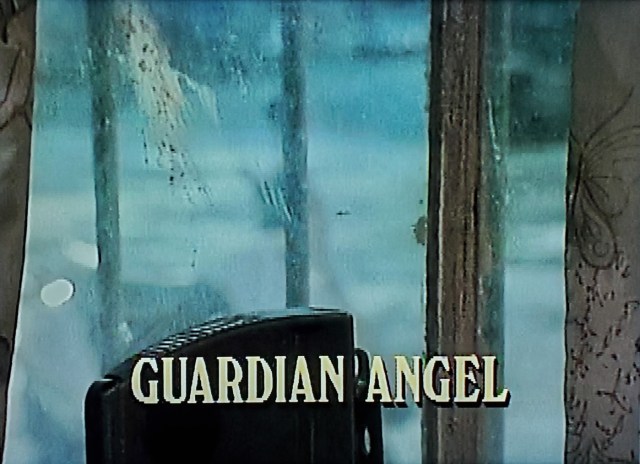
In the episode, “Two for the Road”, Ana Lucia’s ring bears the image of a butterfly. The wings of the butterfly appear black. According to the websites, Symbols and Meanings and Color Meanings, black butterflies symbolize death. The butterfly design on Ana Lucia’s ring was shown prior to Ana Lucia dying at the end of “Two of the Road”. Therefore, the ring is foreshadowing what was to come later in that episode.
Screenshot of Ana’s ring taken by Sally Silverscreen. Image from “Two for the Road”
Ana Lucia’s ring showcases what appears to be a cursive V in the episode, “Collision”. However, it would make more sense if this design was a Roman numeral five. In my Sally Solves a Mystery article, I talked about how Ana Lucia is typically associated with the number three. Five times three equals fifteen, one of the “Lost numbers”.
Screenshot of Ana’s ring taken by Sally Silverscreen. Image from “Collision”
As of the publication of this update, there are no explanations why Ana Lucia’s ring would boast different designs in the first place. The mystery of why Ana Lucia wears a ring on her wedding ring finger is still unsolved. But this update emphasizes how that ring is purposefully on Ana Lucia’s wedding ring finger. In the special feature segment, “Mysteries, Theories, and Conspiracies” from the Lost season two DVD, one of the show’s writers, Christina M. Kim said, “Things do happen for a reason. And there is this sort of force that’s in play that connects all our characters together”. Perhaps I was correct in my original speculation about Ana Lucia’s ring or could her ring have been connected to one of the show’s bigger mysteries?
To read the full articles from Symbols and Meanings, Color Meanings, or my original Sally Solves a Mystery article, you can visit these links:
One of the best parts about participating in blogathons is being introduced to movies that may be new to you. This is my experience with the 1989 film, In Country! For Taking Up Room’s Norman Jewison Blogathon, I wanted to choose a movie that was more underrated. While searching through Norman’s IMDB filmography, I came across the aforementioned ‘80s title. The synopsis reminded me of My Girl 2, where Vada is attempting to learn more about her mother. What sets In Country apart from the 1994 sequel is how the 1989 movie explores the aftermath of the Vietnam War by having the protagonist search for answers about her father. In 2024, I have reviewed four other films from the 1980s, so far. Similar to titles like Amadeus and Hallmark Hall of Fame’s Pack of Lies, In Country incorporates historical elements into the story. But will the 1989 movie be a pleasant surprise like Amadeus or a disappointment like Pack of Lies? Keep reading my review to find out!
In Country(1989) poster created by Warner Bros. and Yorktown Productions
Things I liked about the film:
The acting: In any story, especially one that features a young protagonist, the main character’s likability can determine if the story is worth investing time in. I can only speak for myself, but I liked Samantha “Sam” Hughes’ personality! Though naïve at times, Sam was like a bright ray of sunshine, caring about the people in her life and trying to make her world a better place. What made Sam a likeable character was how genuine her emotions were. After finding a box of her father’s belongings in her mother’s room, Sam leaves a voice message on the phone explaining to her mother how upset she is by her mother’s silence about her father. When she hangs up the phone, the sad look in her eyes and the slight frown perfectly show how hurt Sam feels about her mother’s choices. This is just one example of Emily Lloyd bringing that genuineness to life, allowing her performance to be memorable!
Prior to watching and reviewing In Country, I had seen some of Bruce Willis’ films. His portrayal of Emmett Smith is different from some of his other roles, as he had to rely on emotion instead of action to carry his character through the story. A thunderstorm is causing chaos outside Emmett’s home one evening. Because of his time serving in the Vietnam War, he flinches whenever thunder strikes due to the flashbacks he is experiencing. At the same time, Emmett carries irritation in his voice because he wants the storm to stop and he wants to avoid Sam’s questions. Similar to what I said about Emily Lloyd’s performance, Bruce’s performance felt genuine. Beneath the tough exterior Emmett consistently displayed, he was a man who was trying to live a civilian life as best as he knew how.
Honesty about war and its impact on veterans: Like I just mentioned in this review, Emmett experiences flashbacks one stormy evening due to his time serving in the Vietnam War. These flashbacks not only cause Emmett to flinch every time thunder strikes, they also cause him to go outside, climb up a tree, and yell for someone to show their face. Throughout this scene, Sam asks Emmett questions about what is happening. Unfortunately for Sam, these questions are left unanswered. When Emmett goes outside, Sam calls for Emmett to come back in the house. As Emmett’s mind and heart are beyond the borders of his Kentucky home, Sam feels powerless, unsure of how to help Emmett. The scene I just wrote about is one example of the film’s honesty when discussing war and its impact on veterans. The candid way these subjects were talked about in the movie shows how the movie’s creative team understood the subjects’ significance.
The mise-en-scène: I’ve explained before that mise-en-scène is how a scene is presented in a movie. Mise-en-scène was utilized in several scenes’ favor in In Country. Toward the beginning of the film, a group of U.S. soldiers are wading through the swamps of Vietnam. This moment is presented as a long shot with the view appearing as if the camera is hiding behind the swamp’s foliage. How this scene is showcased to the audience emphasizes the soldiers’ need to stay unseen. Sam, Emmett, and Mamaw travel to Washington D.C. to visit the Vietnam Veterans Memorial. While walking past the monument, a close-up shot captured Mamaw as the names on the monument were gliding past her face. The visuals symbolized how the Vietnam veterans have touched the lives of not just their loved ones, but those in their communities as well.
Sam’s attraction for Tom: While trying to learn more about her father, Sam turns to a veteran named Tom. At the Vietnam veterans’ dance, Sam invites Tom to share a slow-dance with her, where they get a little too close for comfort. After the dance, Sam spends the night at Tom’s house and has sex with him. Up until the slow-dance at the veterans’ dance, Sam never expressed any romantic interest in Tom. Plus, she just graduated from high school and Tom appears old enough to be her father. Not only was this part of the story random, its inclusion in the film was unnecessary, especially since it has no impact on the plot.
The “slice of life” parts of the story: As I’ve been saying in this review, Sam wants to learn more about her father who served and died in the Vietnam War. This part of the story, as well as the parts exploring the veterans’ perspective, was interesting. But those parts made up half the movie. The other half revolved around subplots that were more “slice of life”. When the story turned to the “slice of life” events, I found myself wishing the movie would go back to Sam learning more about her father or Emmett interacting with the other veterans. In fact, I think the movie should have primarily focused on those aforementioned parts of the story.
On-the-nose songs: The inclusion of songs in a movie can make or break a given scene. Sometimes, a song can be so on-the-nose, it doesn’t leave the intended emotional impact. This happened on more than one occasion in In Country. The opening lines of the Bruce Springsteen song, “I’m On Fire” are “Hey, little girl, is your daddy home? Did he go away and leave you all alone?”. This song can be heard on two occasions after Sam decides to learn more about her father, pointing out what the audience already knows. Earlier in this review, I brought up how Sam invites Tom to share a slow-dance with her, where they get a little too close for comfort. The song they dance to is Hank Williams Jr.’s “Ain’t Misbehavin’”, which narrates what’s happening on screen and foreshadows what’s about to come. That song paired with the events that unfold created a scene that left me uncomfortable.
When I watch a movie, I sometimes imagine how the story would turn out if it was presented in a different way. One recent example is how Hallmark Hall of Fame’s Brush with Fate would have, in my opinion, benefitted by being presented as a multi-part mini-series. I feel similarly about 1989’s In Country. For the most part, the creative team behind the movie appeared to have their hearts in the right place. The honesty about war and its impact on veterans was included in the story in such a candid way, it showed the movie’s creative team understanding the significance of the subjects woven into the script. But this aforementioned honesty, as well as Sam’s search for answers about her father, should have been the film’s primary focus. Therefore, I wish this story had been a road-trip movie, where Sam, Emmett, and Mamaw go to visit the Vietnam Veterans Memorial in Washington D.C., with Sam learning about her father and important life lessons along the way.
Overall score: 6.1 out of 10
Have you seen 1989’s In Country? What’s your favorite film from 1989? Tell me in the comment section!
Recently, I published a list of the top ten “icks” from Hallmark Hall of Fame movies. The list consisted of ten aspects of Hallmark Hall of Fame films I don’t like. One of these “icks” is when a movie from this collection glosses over a serious subject. Shortly after I published my list, I found I wasn’t the only blogger to not like this particular “ick”. A fellow blogger, Ospreyshire, brought up the 2003 Hallmark Hall of Fame production, Brush with Fate, as an example of how Hallmark Hall of Fame can incorporate serious issues into their stories. Since I hadn’t seen the film yet, I chose Brush with Fate for this Blog Follower Dedication Review! This is only the second project from the Hallmark Hall of Fame collection I’ve reviewed this year, so far. A month ago, I wrote about the 1987 movie, Pack of Lies. Unfortunately, I found the film disappointing, as the story was a two-hour build-up to an underwhelming resolution. So, here’s hoping Brush with Fate is a more enjoyable picture!
Hallmark Hall of Fame’s Brush with Fateposter created by CBS and Hallmark Hall of Fame Productions
Things I liked about the film:
An immersive experience: A movie’s creative team has the potential to provide an immersive experience for their audience. To achieve this, attention to detail must be emphasized. That piece of advice can work in the favor of a historical period film. Brush with Fate explores several time periods and how a valuable painting exists within a given period. Each time period represented looked and felt historically accurate! Not only does every featured period appear well researched, every detail was tended to. From the architecture to the machinery, even right down to the characters’ shoes, the aforementioned attention to detail was adopted by Brush with Fate’s creative team. The effort the creative team took to make each part of the story appear authentic helped create an immersive experience for the viewer!
Visual transitions: When a story moves from one point to another, scenes will transition using visual cues to let the audience know when the story is moving forward. Because Brush with Fate explores several time periods, there are multiple transitions throughout the movie. These transitions are creative and use visually interesting parallels. Toward the beginning of the story, Cornelia puts her hand on her family’s prized painting. As she begins to share the history of the painting, the next part of the story begins with Laurens putting his hand on the same painting, signaling a change in time periods. The transitions during Brush with Fate were also seamless, allowing the story to maintain a steady flow.
Lessons taught by the painting: More often than not, Hallmark Hall of Fame movies weave important lessons into their stories. While Brush with Fate is no different, the way the story’s lessons were incorporated was unique compared to other Hallmark Hall of Fame titles. In the 2003 film, different characters learn a different lesson based on their experience with the painting. In one part of the story, a woman from 1717 struggles to feed her family. At the same time, she adores a painting she and her husband found. Turning to her mother for advice, the woman is reminded how the painting is not a blessing. This statement expresses that paintings are replaceable luxuries compared to irreplaceable things like family.
Characters touching the painting with their bare hands: Fictional movies typically make their audience suspend their disbelief. Sometimes, though, audiences are asked to suspend more disbelief than they bargained for. Brush with Fate revolves around a Vermeer painting that is known for being valuable in historical and monetary importance. But throughout the movie, multiple characters touch the painting with their bare hands, including Cornelia , who is well aware of the painting’s value. It may seem petty of me to critique the movie for this small detail. However, this happened enough times in the movie that I couldn’t look past it.
An unchronological story: As I mentioned earlier in this review, Brush with Fate explores several time periods and how a valuable painting exists within a given period. However, this story is not told in chronological order. Instead, Cornelia shares the painting’s history by bouncing around between time, going backwards and then forwards. Not telling the story in chronological order raises unanswered questions, such as what happened to the baby from the family in 1717 and who acquired the painting after Laurens’ daughter and her fiancé. Without spoiling the movie, I will say I know why this creative decision was made. But I still wish Brush with Fate was told in chronological order.
An abrupt ending: Most Hallmark Hall of Fame movies are stand-alone stories where the conclusions are definitive. However, there are exceptions to the rule, such as Sweet Nothing in My Ear and A Painted House. Brush with Fate is one of these exceptions. But, in my opinion, I don’t think this movie should have received an open ending. The purpose of showcasing the painting in multiple time periods is to elaborate how the painting’s history is long-lasting. With the rather abrupt ending, this purpose seems defeated, like the painting’s history has stopped short. It also leaves some unresolved loose ends.
Before I share my thoughts on Brush with Fate, I want to thank every follower of 18 Cinema Lane! With each movie review, including these Blog Follower Dedication Reviews, I try to find films I can recommend to my readers. Looking back on this Hallmark Hall of Fame picture, I think I could recommend it. This is a project where attention to detail was emphasized so much, some parts of the movie felt theatrical. The creative team behind Brush with Fate allowed their production to be an immersive experience for their audience. However, I think this story would be benefitted by being presented as a multi-part mini-series. With several time periods being explored, as well as many heavy subjects woven into the script, there’s only so much story to tell in two hours. By giving each time period their own episode, more time could be spent getting to know the characters and receiving answers to certain questions. Like many Hallmark Hall of Fame movies, Brush with Fate is based on a pre-existing book I haven’t read yet. Therefore, I can only review this film as a film and not an adaptation.
Overall score: 7.1-7.2 out of 10
Have you seen Brush with Fate? Which book do you think should have been adapted into a Hallmark Hall of Fame movie? Let me know in the comment section!
To address the elephant in the room (or on the blog in this case), the lack of blog posts this past week is due to how much time I’ve spent collecting research for my upcoming Sally Solves a Mystery article. While I have been working to solve a television-related mystery, the subject of Hallmark Hall of Fame movies came to mind. I’ve seen over fifty films from the Hallmark Hall of Fame collection. At this point, I, as a viewer, know what I like and don’t like when it comes to storytelling from this particular branch of Hallmark entertainment. These preferences are what inspired me to create this list of the top ten “icks” from Hallmark Hall of Fame movies! For my list, I will share which aspects of Hallmark Hall of Fame films I am not a fan of, providing examples from various titles in this collection. Before I begin the list, I want to address how this list is not meant to be mean-spirited or negative. My article is, simply, a way to express my opinion.
In past movie reviews, I have pointed out when I felt an actor or actress’s talents were underutilized. What I’ve meant by this is an actress or actor’s talents not being incorporated into a film to the fullest extent. This can range from an actor or actress being miscast to an actor or actress having a limited presence in the movie, the latter serving two examples for this list. Marguerite Moreau’s involvement in 2002’s The Locket is one of the reasons why I wanted to check the film out. Because she was cast as the movie’s main supporting actress, I expected Marguerite to have a more consistent presence in the film than she actually did. As I said in my review of The Locket, Marguerite’s character barely appeared in the movie’s second half. Based on her performances I have seen from a variety of movies and television shows, I think Karina Arroyave’s acting talents could have lent themselves to a larger role in 2000’s Missing Pieces. Sadly, Karina’s on-screen appearances were so short, they seemed like “don’t blink or you’ll miss her” moments. While she was given a little more screen-time in the 1993 film, Blind Spot, I still feel Karina’s acting talents were underutilized.
2. Films That Feel like Televised Plays
When I choose to watch a Hallmark Hall of Fame movie, I expect to see a cinematic production of an original or pre-existing story. Some of these pre-existing stories happen to be plays. But there are times when a project’s creative team didn’t take advantage of how expansive film-making can be. Instead, they kept their adaptation as limited as the boundaries of the stages these plays came from. Like I pointed out in my review of the 1987 film, Foxfire, the cast is smaller and the story is condensed, forcing the characters to remain near or in Annie’s house. With the story surrounded by the natural beauty of Appalachia, I wish the movie’s emphasis had been placed on showcasing a variety of locations from this region. The 1972 remake of Harvey made similar creative choices, such as showing fewer locations throughout the story. This is different from the 1950 version of Harvey, where Elwood moves to multiple places.
3. Oversimplifying Adoption/Foster Care
Back in 2022, when I published my list of the top ten worst movies I saw that year, 1994’s A Place for Annie ended up as a Dishonorable Mention. One reason why I didn’t like this film is how the subject of adoption/foster care was oversimplified. For those who have never seen or heard of the movie, A Place for Annie is about a woman taking in a baby who is HIV positive. Over the course of the story, the woman, portrayed by Sissy Spacek, is in the process of adopting the baby. But she experiences an unexpected conflict when the baby’s biological mother shows up. The way Sissy’s and Mary-Louise Parker’s characters were portrayed and written presented a “good” mother vs. “bad” mother dynamic, even right down to the way each character dressed. Sissy’s character, Susan, becomes upset at the idea of Mary-Louise’s character, Linda, reuniting with her daughter, even though the intended purpose of foster care is for children to be reunited with their biological families. Because of the oversimplification of adoption/foster care in A Place for Annie, I couldn’t take the movie seriously.
4. Characters Not Receiving Their Full Potential
Speaking of articles from 2022, I’ll now bring up my list of top ten characters who didn’t reach their full potential. When I published this list, I explained when a character doesn’t receive their full potential, they aren’t given the opportunity to reach their goals, make their dreams come true, and allow their stories to be told to a satisfying extent. This list featured two characters from Hallmark Hall of Fame movies; Barry Klemper from The Boys Next Door and Amédée Chevalier from O Pioneers!. In the case of these characters, their stories were adapted from pre-existing source material. While I haven’t seen or read a stage version of The Boys Next Door, I have read O Pioneers!. I can understand why Willa Cather made certain creative decisions related to Amédée, as well as Hallmark Hall of Fame’s desire to keep the adaptation as close to the source material as possible. However, I still wish Amédée had received his full potential.
5. Rehashed Stories
For this part of my list, I am not talking about Hallmark Hall of Fame productions that are adapted from pre-existing plays or books. I am referring to Hallmark Hall of Fame movies that seem to copy stories from other films. Earlier in this list, I referenced the 1972 and 1950 versions of Harvey. After watching both versions, it feels like I watched the same movie twice, due to little variation between the two versions. I also felt this way about the 1996 film, The Summer of Ben Tyler. The movie seemed so similar to To Kill a Mockingbird, I wondered if Hallmark Hall of Fame was trying to remake the aforementioned film. I know story ideas are bound to get repeated over time. But, in my opinion, the Hallmark Hall of Fame productions should strive to create unique, distinct projects.
Harvey(1972) poster created by Foote, Cone and Belding Productions, Hallmark Hall of Fame Productions, Talent Associates-Norton Simon, and National Broadcasting Company (NBC)
6. Terrible Grandparents
Grandparents, like any family member in a protagonist’s life, should, in my opinion, be a kind, friendly character that the audience can root for. Unfortunately, some protagonists aren’t so lucky. For the fifth annual Gold Sally Awards, when I created the inaugural Edwin P. Christy Award for most annoying character in film, I gave that award to Grandpa Marcus from 1995’s Journey. I explained how obsessed he became of his photography hobby, to the point where he became negligent of his grandchildren’s safety. In one scene, Grandpa Marcus makes his grandson, who doesn’t appear old enough to obtain a driver’s permit yet, drive a car so Grandpa Marcus can take pictures. The grandchildren make a joking comment about how their grandpa will photograph their car accident if something should happen to them, with the scene itself meant to be played as a wholesome, hilarious moment.
Leonora Nelson is a bitter, mean-spirited woman in the 1997 film, Ellen Foster. At her daughter’s burial, Leonora blames her son-in-law for her daughter dying. She yells and screams at her son-in-law just seconds after her daughter’s casket was buried. As the story progresses, Leonora’s hatred for her son-in-law grows. Her actions range from smashing his Purple Heart medal with a hammer to telling her granddaughter, the titular Ellen Foster, she hates her because she looks like her father. I recognize Leonora is intended to be an awful character, serving as one of the many obstacles Ellen had to overcome. But that doesn’t take away from how, in my opinion, Leonora Nelson is one of the worst characters in Hallmark movie history.
7. Productions That Feel Like Hallmark Channel Films
Hallmark Hall of Fame movies began to premiere on Hallmark Channel in 2014. While there are films from this time period I like, such as Love Takes Flight and The Beach House, I am aware how, more often than not, these projects bear a formula similar to those from Hallmark Channel. One such example is how a romance is usually the center of a given story. The identities of films like The Beach House and Love Takes Flight are not as unique as Hallmark Hall of Fame movies from years past. Take, for instance, Missing Pieces and Caroline? from 1990. Both of these films revolve around mystery stories. However, each title presents its own distinct identity, with these two movies bringing something different to the Hallmark Hall of Fame collection.
8. Unsupportive Parents
Similar to what I said earlier about grandparents, parents of protagonists should, in my opinion, at least be supportive. Sadly, a protagonist’s parents may be unsupportive for a variety of reasons. In my list of top ten characters who didn’t reach their full potential, I mentioned how Barry Klemper’s father destroyed the momentum Barry had in The Boys Next Door. Long before his father showed up, Barry dreaded the meeting because of how unsupportive his father is. On the day of the meeting, Barry’s father intimidated and belittled his son, even making Barry feel incapable of performing a simple golf maneuver. There are times, however, when a protagonist’s unsupportive parents do not intend to be unsupportive. Heidi and Winston’s mother is a perfect example. In the 1990 movie, Caroline?, Winston and Heidi’s mother is overprotective due to Heidi having a disability. Her good intentions not only lead Heidi to be treated younger than her age, but also prevent Heidi’s academic needs from being met.
9. Glossing Over Serious Subjects
The Hallmark Hall of Fame collection has covered its fair share of serious subjects, ranging from the aforementioned adoption/foster care to terminal illnesses. But sometimes, a Hallmark Hall of Fame production will miss a good opportunity to address an important topic by glossing it over. The subject of racism is woven into the text of The Flamingo Rising book, with racism causing the protagonist, Abraham, to have self-image related issues. When the book was adapted into a Hallmark Hall of Fame movie in 2001, all mentions of racism were eliminated from the script. This decision was likely made to keep The Flamingo Rising movie “Hallmark appropriate”. At a very random moment in the 1996 film, Calm at Sunset, Russell Pfeiffer admits he has a drug addiction. There was no lead up to this revelation and the revelation itself was never addressed afterward. Calm at Sunset is based on a book I haven’t read. Therefore, I don’t know how the subject of addiction was addressed in the source material compared to the adaptation.
10. A Dysfunctional Family for the Sake of It
Six years ago, when I published my list of the top ten worst Hallmark movies of all time, I put the 2004 film, Back When We Were Grownups, at number one. As I mentioned in that list, the story’s family seems dysfunctional just for the sake of it. From what I remember, there was no clear reason for the family to be dysfunctional. This is very different from another Hallmark Hall of Fame production, 1998’s Saint Maybe. In that movie, a death in the family causes a ripple effect which leads to the family becoming dysfunctional. The dysfunctional nature of the family serves as motivation for various characters to make impactful changes in their lives. Comparing these two Hallmark Hall of Fame films, which are both adaptations of Anne Tyler’s books, I think Saint Maybe did a better job at showcasing how a dysfunctional family live their lives and work through their problems.
The season eleven finale of When Calls the Heart shows Minnie confronting Elizabeth about Angela’s desire to go to teaching college in Hamilton. Though Minnie is concerned about the distance between Hamilton and Hope Valley, Elizabeth reminds Minnie how Angela still has a few years before she has to make a decision about her future. Minnie then states to Elizabeth how their children’s childhood are precious years. The statement Minnie made in this episode was reminiscent of the “precious years” the show has aired on Hallmark Channel. Time, like childhood, is fleeting. So, the memories made over time are important. As a Heartie, there are so many memories that come to mind as I write this re-cap of season eleven’s finale. Just in this season alone, fans have seen Tom Thornton return, Lily find a home, and Nathan singing a song with Allie. They’ve also witnessed Henry transform into Hope Valley’s Voice of Reason and Lee become the town’s mayor. Throughout When Calls the Heart, a quilt of memories has spread over the story, connecting each character by the thread of friendship. With the chapter of season eleven closing and season twelve’s chapter beginning, it will be exciting to see what new memories will be made on When Calls the Heart!
Just a reminder: If you did not see the season finale of When Calls the Heart, there will be spoilers within this re-cap.
When Calls the Heartseason eleven poster created by Hallmark Media, Crown Media Family Networks and Hallmark Channel
Season: 11
Episode: 12
Name: Anything for Love
Major story:
Mei and Mike prepare for their upcoming wedding. One surprise is the return of Fiona, who delivers Mei’s dress from the Mercantile. Her arrival is the result of being chosen as Mike’s Best Woman. Before he and Mei get married, Mike claims he is traveling to Benson Hills to share tea with his family. But he actually has other plans. The next day, hours before the wedding, Mike is nowhere to be found. While the men in the wedding party search for the groom, Fiona and the women from the wedding party help Mei get ready for her big day. Eventually, Mike returns to Hope Valley. However, he didn’t come back empty handed. Before the ceremony, several residents of Hope Vally arrive at the café with traditional Chinese drums and gongs. Mike surprises Mei with an engagement ring and the return of her brother, who shares how he ended his shipping contract early. Both the wedding and the reception are a successful time for everyone involved.
Elizabeth and Nathan want to go on a picnic, hoping to spend some more time together. When Jack Jr. overhears the idea of a picnic, Nathan and Elizabeth decide to invite Jack Jr. and Allie. Over the course of the episode, Elizabeth and Nathan tell their children about their new relationship. While Allie is supportive, Jack Jr. likes the thought of seeing Allie and Nathan more often. One evening, Nathan and Elizabeth share one secret to each other. Elizabeth tells Nathan how she didn’t want to like Nathan at first because she was still missing Jack. Nathan reveals he almost took an inspector job because of Elizabeth. At the end of the episode, a Mountie with a higher ranking approaches Elizabeth and Nathan. Originally, this Mountie wanted to speak with Nathan in private. But after Elizabeth expresses interest in what the Mountie has to say, the Mountie shares how his news relates to Jack Thornton.
After Jeanette’s arrest, Lucas’ approval is declining. Lucas loses confidence in his ability to be a good Governor. Wanting to help Lucas in his time of need, Lee comes up with a solution to replace the cancelled hotel. At the Queen of Hearts Hotel, Rosemary and Lee share the idea of creating a national park. This idea came from wanting to give Goldy and her generation a legacy of their own. Despite the national park providing fewer job opportunities and less revenue than the hotel would have, Lucas is open to the idea. In fact, Lucas invites Lee to come to Capital City to work on this national park project.
During Fiona’s visit to Hope Valley, she reconnects with Faith and Mei. She shares her experience with the Suffragette Movement in Nashville. Because the movement is still looking for more women, especially those that are doctors, Fiona invites Faith to join her in Tennessee. At the wedding reception, Faith tells Fiona she’d love to come to Nashville with her friend. However, Lily has become her purpose for staying in Hope Valley.
Looking back on the eleventh season, this chapter of When Calls the Heart was enjoyable to watch! However, the season’s second half was stronger than the first half, as the writing was tighter and the stories wrapped up sooner. The biggest critique of season eleven is the pacing of the stories, as some of the them lasted longer than necessary. In next year’s season, I hope the writing is more consistent.
As I mentioned in this re-cap, Mei’s brother shared how he ended his shipping contract early. This reveal makes me wonder if Mei’s brother will become a series regular in When Calls the Heart’s twelfth season? If he does make consistent appearances in Hope Valley, perhaps Mei’s brother and Faith could form a romantic relationship? It’s way too early to speculate any answers, especially since the twelfth season hasn’t received a release date yet. My hope is Mei’s brother, as well as Mei herself, receiving opportunities to create new memories on the show!
I know Lee’s idea for a national park will likely serve a plot for the twelfth season. But, in my opinion, this part of the story doesn’t make sense. The hotel project was indefinitely cancelled because of the danger of Casimir Shaw. But now that Casimir and Jeanette were the same person and Jeanette, as well as her henchman, was arrested for the committed crimes, there is nothing preventing people from placing bids for the hotel. Montague could even reconsider placing his bid and working alongside Lucas. One of Lucas’ reasons for creating a hotel was to provide more job opportunities for the Benson Hills residents who recently lost their jobs. As I mentioned in this re-cap, the national park will have fewer job opportunities and generate less revenue. To me, this seems like a step away from Lucas’ “grand vision”. Based on what was presented on screen, the land Lee gave Lucas isn’t big enough to host a national park. Personally, I think finally giving Rosemary her long awaited theatre would have been more beneficial not just for Hope Valley, but for the neighboring towns as well.
One of the biggest surprises of this season finale was the Mountie’s news about Jack Thornton. Because the news itself was not shared, the information could be anything. During the commercials for this episode, Erin Krakow and Daniel Lissing’s new Christmas movie, Santa Tell Me, was advertised. I wonder if Jack will return to When Calls the Heart, with the aforementioned Christmas film testing the waters to see if Hearties would welcome Jack’s return? Again, it’s way too early to speculate any answers. But I’m curious if the viewership numbers for Santa Tell Me have any influence over the creative process of When Calls the Heart’s twelfth season.