Sunset Over Hope Valley: Figuring It Out Together

When Angela takes a tour of the Schwartzman School, she meets a fellow student named Miss Gamble. Angela also meets some of the school’s other students, who share their enthusiasm for solving mysteries. One of these students tells Angela how the best part of mysteries is working together to figure them out. This statement made me think about how problems, conflicts, and even mysteries were solved on When Calls the Heart. If a character needs to figure something out, they will, more often than not, turn to their family or friends for help. Just in season twelve alone, the characters have relied on one another to make things possible. Oliver turned to Elizabeth for guidance when his writing sample needed improvement. Fiona sought out advice from her friends when her life was at a crossroad. Even Lee needed reassurance from Faith when he feared receiving the same medical diagnosis as his father. These three examples showcase another overarching theme on When Calls the Heart; working together to solve Hope Valley’s conflicts, problems, and mysteries!

Just a reminder: If you did not see this episode of When Calls the Heart, there will be spoilers within this re-cap.
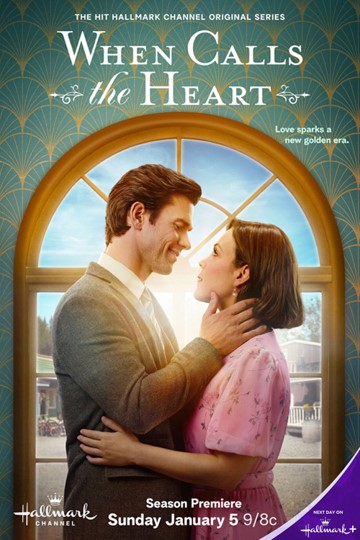
When Calls the Heart season twelve poster created by Hallmark Media, Crown Media Family Networks and Hallmark Channel

Season: 12

Episode: 9

Name: Buried Treasure

Major stories:

A man named Woody has recently come to Hope Valley. When he overhears Allie and Oliver talking about their map, Woody asks them to take him to a tree bearing his parents’ initials. Oliver and Allie agree to take Woody there, especially since they were planning on going hiking anyway. During the hike, the trio cross paths with Sonny Garrison, Woody’s cousin who just escaped from prison. He forces Allie and Oliver to join him and Woody on a treasure hunt. Meanwhile, Elizabeth organizes a search party with Mike and Henry when she discovers Oliver and Allie’s whereabouts. Thankfully, Elizabeth is able to find the duo because of Allie’s hair ribbon, which Allie put on a branch. Sonny is upset there is no treasure to be found. In retaliation, he desires to keep Allie, Oliver, and even Elizabeth as hostages. This plan is prevented due to the arrival of Nathan, Bill, and several other Mounties. Later, in Hope Valley, Nathan shares he was able to find Allie and Oliver because of Allie’s hair ribbon, which he returns to his daughter.

Lucas is struggling to find a solution for the national park project. So, he turns to Henry for advice. Henry suggests making an Executive Order, to make the planning process move a bit faster. He also tells Lucas by asking the ranchers for permission, they’re just going to keep finding ways to prevent the project from happening. Lucas shares this plan with Lee. He reveals how the Executive Order could cost him his Governor position, but keeping his promise to Lee is more important. When Lucas shares his plan with Edie, she tells him she will still be his friend. But she also warns Lucas how McGinty will continue finding ways to get what he wants.

Minor stories:

At the Mercantile, Ned informs Ava of another traveler who lost a trunk similar to hers. Even though she insists the trunk belongs to her, Ava tries getting rid of it by throwing it over the hotel balcony. After Mike discovers the trunk in a nearby wagon, Ava comes clean about who she really is. While Ava’s name is actually Ava, she is not the heiress she has claimed to be. Before coming to Hope Valley, Ava was an assistant to Clive Maxwell, a well-known magician. His “trick” was to steal valuable items from the audience. When Clive tried stealing from a Pinkerton, he put blame on Ava. So, she ran away to Hope Valley to protect her name and because she read such good things about the town through Elizabeth’s book. Since Ava confessed, Nathan agrees to recruit a Mountie to escort Ava to court, in order to testify against Clive.

Angela, Joseph, and Minnie take a tour of the Schwartzman School. While there, they meet a student named Miss Gamble. Angela is led by Miss Gamble through the school facility and even meets some of the other students. Minnie, Angela, and Joseph were given a good first impression of the Schwartzman School. But when they arrive home, Angela has her doubts about living independently and going to school in another town. To encourage her daughter, Minnie reminds Angela of the time when she was nervous about sledding down a hill. Angela was eager to go sledding by herself after she and her mom went sledding. Minnie tells Angela to, at least, give living independently a try.

Image of magic show essentials created by Macrovector at freepik.com. <a href=”https://www.freepik.com/free-photos-vectors/card”>Card vector created by macrovector – http://www.freepik.com</a>. Image found at freepik.com.

Some thoughts to consider:

  • Back in my re-cap for this season’s seventh episode, I said I was worried all the build-up in Ava’s story may lead to an underwhelming reveal of who Ava truly is. While I’m thankful the Hearties finally received closure to this mystery, I think my worries proved somewhat true. Ava’s actual backstory was interesting. However, it wasn’t shocking or exciting enough to justify being drawn-out for nine out of twelve episodes. In fact, some of those nine episodes had me forgetting there was a mystery surrounding Ava in the first place. If When Calls the Heart receives a thirteenth season, I hope this screenwriting flaw is improved.
  • As I said in this re-cap, and even in this re-cap’s introduction, Angela and her parents take a tour of the Schwartzman School. If she decides to attend the school, I wonder how Angela’s story will be included in future seasons? Will some scenes cut away to the Schwartzman School or will Angela be temporarily written off the show? Perhaps Hallmark would consider giving Angela her own spinoff series?
  • Is it just me or does it seem like Earl Wyatt has vanished from Hope Valley without a trace? Since his last appearance in this season’s sixth episode, none of the other characters have brought him up. He hasn’t appeared in any scenes either. This sudden disappearance makes me wonder how his story will conclude at the end of season twelve? Maybe the creative team’s intention for Earl is have him stick around in Hope Valley for another season?
Sunset image created by Photoangel at freepik.com. <a href=”https://www.freepik.com/free-photos-vectors/background”>Background image created by Photoangel – Freepik.com</a>.<a href=’https://www.freepik.com/free-photo/red-sunset-clouds-over-trees_1254327.htm’>Designed by Freepik</a>. Image found at freepik.com.

What are your thoughts on this episode? Do you think Angela will attend the Schwartzman School? Please tell me in the comment section!

Have fun in Hope Valley!

Sally Silverscreen
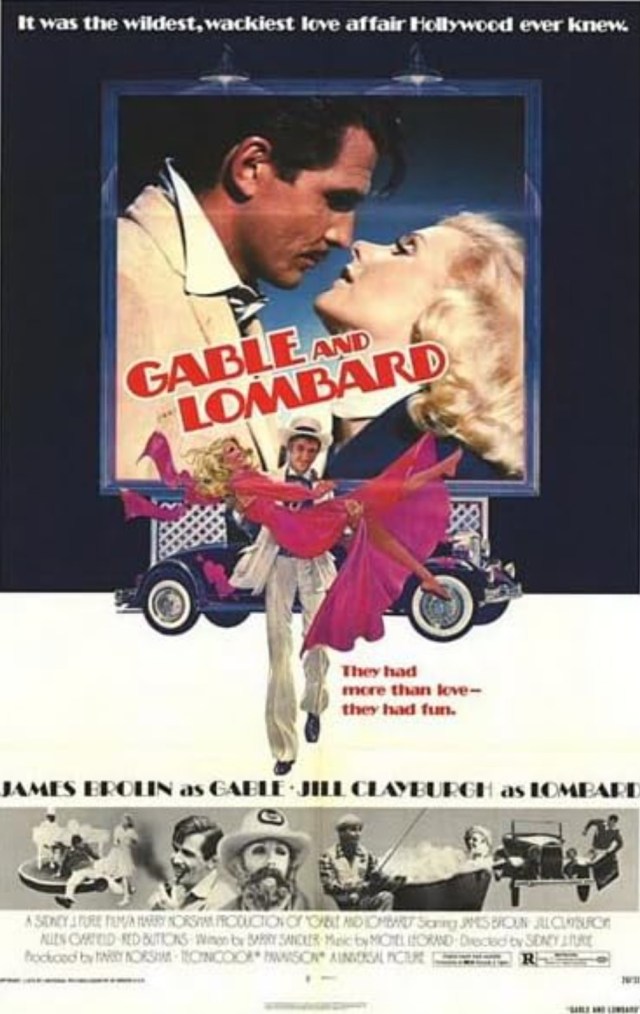
Comparing with the Critics – Worst of 1976 – Gable and Lombard

This review is from my series, Comparing with the Critics. If you’d like to learn more about the series, click on the link below.

Introducing my new series, Comparing with the Critics!

In the ‘Best Films of 1976’ episode of Opening Soon…at a Theater Near You, Gene Siskel stated “1976 was a pretty lousy year for movies”. He emphasized that statement by saying “the year was littered with dogs”. Since I haven’t seen a lot of movies from 1976, I can’t agree or disagree with Siskel’s claim. But what I can do is talk about one of Siskel’s choices for worst movies of 1976. As I said in my 1976 introduction of Comparing with the Critics, one episode was primarily focused on discussing the best movies from a given year. This left Siskel and Ebert with only a few minutes to talk about some of the year’s worst films. Despite the 1976 episode’s limited selection of “bad” movies, I chose Gable and Lombard for this edition of Comparing with the Critics Worst of review. What made Gable and Lombard the most interesting title from the episode’s collection of “bad” movies was the story’s emphasis on Clark Gable and Carole Lombard’s relationship. I am somewhat familiar with Clark and Carole, as I have reviewed at least one of their movies on 18 Cinema Lane. Because I hadn’t heard of Gable and Lombard until I saw the ‘Best Films of 1976’ episode of Opening Soon…at a Theater Near You, I viewed the film as a way to expand my cinematic horizons and learn more about Carole and Clark. Now that I have seen the movie for myself, I believe Siskel’s, and even Roger Ebert’s, thoughts on the film were a tad harsh.

Gable and Lombard poster created by Universal Pictures

Before revealing his choices for the worst movies of 1976, Siskel says the year featured “two kinds of cinematic canines: cheap, lousy pictures and expensive, lousy pictures”. Based on what films he chose, Gable and Lombard was placed in the latter category. According to Wikipedia, the film’s budget was $4.5 million. It appears most of the budget was spent on Gable and Lombard’s set design. One scene took place outside, with the guests at a ball wearing white. Small candles surrounded the pool’s perimeter. In the pool were small islands of white flowers and candles, along with swans peacefully gliding through the water. Overall, this part of the set was absolutely gorgeous! Throughout Gable and Lombard, some scenes took place in Clark or Carole’s dressing room. These dressing rooms looked more like condominiums; distinct spaces that appear livable. Carole’s dressing room boasted a color combination of yellow and white. Featuring design choices like a white dining room set gave the dressing room a feminine style. Meanwhile, dark wood surrounded the fireplace in Clark’s dressing room. There was even a pool table located near the fireplace. These design choices created a more masculine space. Carole and Clark’s dressing rooms provided a good visual representation of how different they were despite having a similar career path.

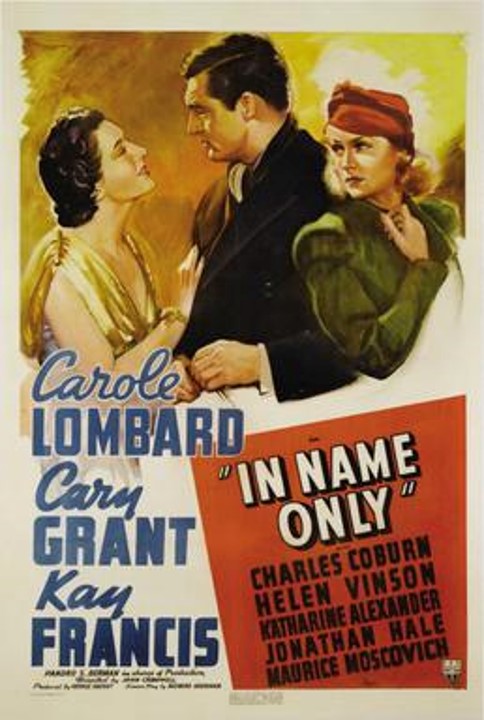
In Name Only poster created by RKO Radio Pictures. Image found at en.wikipedia.org/wiki/File:In_Name_Only.jpg

While Roger Ebert never shared his thoughts on Gable and Lombard in the ‘Best Films of 1976’ episode, he did write a review for the movie, which can be found on rogerebert.com. In his review, Ebert states “Brolin does, indeed, look a lot like Gable – but imitation here has nothing to do with flattery”. While I agree with Ebert’s opinion on James Brolin’s appearance in the movie, I disagree with the rest of Ebert’s statement. Not only did James look like Clark, he even sounded like him too! It almost felt like James transformed into another person. During Gable and Lombard, James consistently carried an easy-going attitude. This choice in acting and directing showcased Clark’s down-to-earth personality. Meanwhile, Carole was a comedic, life of the party. Portrayed by Jill Clayburgh, Carole’s up-beat personality made her one of the most popular actresses of her time. But behind closed doors, Carole had her doubts and insecurities. In one scene, Carole is sharing with Clark how she feels undeserving of a recent achievement. Her eyes reveal a sense of worry. Concern, even sadness, can be heard in her voice. During her conversation with Clark, Carole looks and sounds truly discouraged. Clark, with a warm smile and calming tone of voice, reassures Carole what’s most important is surrounding herself with people who support her. Jill’s and James’ performance is one of the reasons why this scene is one of my favorites in Gable and Lombard!

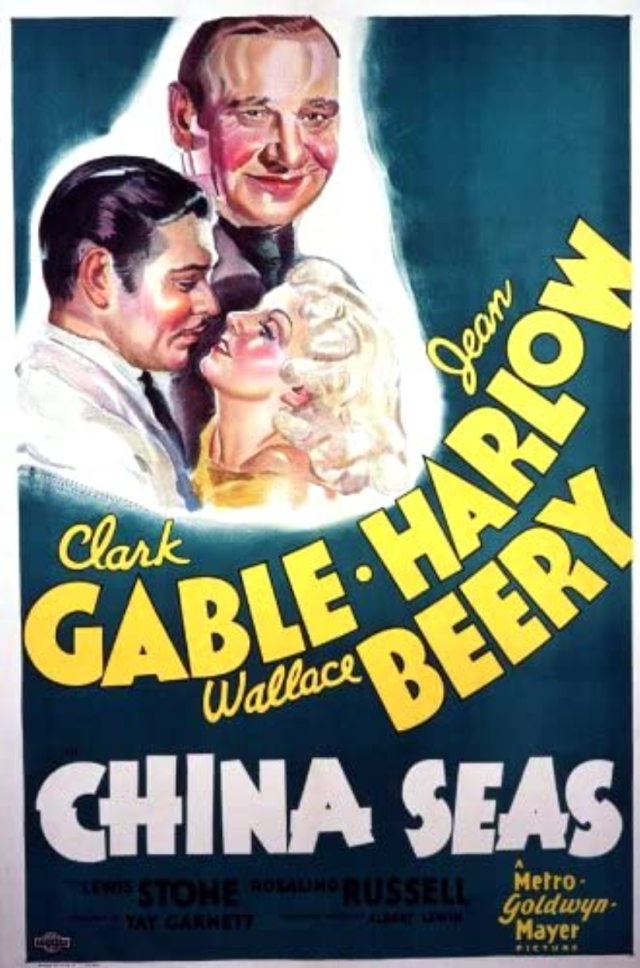
China Seas poster created by Metro-Goldwyn-Mayer.

Sidney J. Furie, the director of Gable and Lombard, chose to make “a movie about just folks”, primarily focusing on the personal lives of Clark Gable and Carole Lombard. While Ebert says this decision gave “the movie a certain originality”, he also criticizes Sidney’s choice, claiming that “by limiting itself to this aspect of their lives the movie never deals with the reasons we find them interesting in the first place”. As I said in this review’s introduction, I am somewhat familiar with Clark and Carole. Because I don’t know which parts of Gable and Lombard are factual or creative liberty, I took the story of Carole and Clark’s relationship with a grain of salt. From the way Louis B. Mayer (portrayed by Allen Garfield) talked to Clark about groups of people demanding certain elements of films be changed due to “indecency”, I knew he was talking about the Breen Code, a series of morality related guidelines enforced in Hollywood from 1934 to 1954. Therefore, I saw Gable and Lombard as a character study of how a portion of the Breen Code era affected the professional and personal lives of the Hollywood landscape, with Carole and Clark serving as just two examples. When Clark is accused of having an affair with a waitress, Carole volunteers to testify in court. Everyone from her inner circle knows if she testifies, she will expose her and Clark’s relationship as well as end her career. While explaining why he doesn’t want Carole to testify, Louis B. Mayer shares with Clark the ugly truth about what happened to some actresses after their careers ended. This scene is honest about the consequences if the Breen Code was broken. By viewing the film from the lens of the Breen Code, Gable and Lombard’s narrative is not only compelling, it is given higher stakes.

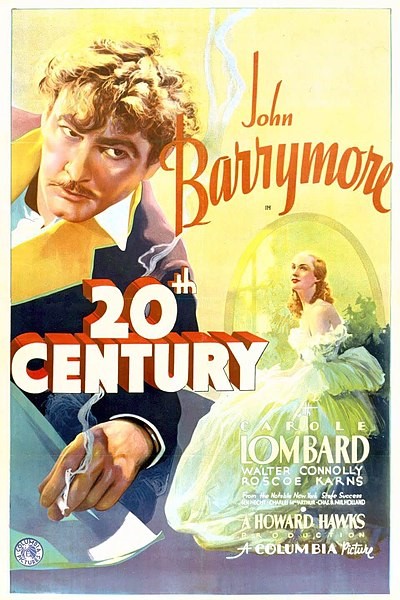
Twentieth Century poster created by Columbia Pictures.

I said earlier in this review how Ebert and Siskel were only given a few minutes to talk about the year’s worst films. This made Siskel’s discussion of Gable and Lombard sound vague, as he states “in real life, you can get arrested for playing around with dead bodies. The same should be true for movie-makers who desecrate the memory of great, dead actors”. Because this review affords me more time to elaborate on my opinion, I will now discuss what I didn’t like about Gable and Lombard. At the beginning of the movie, Clark is told Carole was in a plane crash, but her whereabouts are unknown. The very next scene shows Carole riding in an ambulance, alive and appearing uninjured. That scene took place years before the plane crash happened. With no on-screen text acknowledging the story’s time and place, it was sometimes difficult to figure out the story’s timeline. I liked James’ and Jill’s portrayal of Clark and Carole. However, I found their on-screen chemistry inconsistent. When their story began, Carole and Clark went from enemies to lovers. For the rest of the story, they continuously broke up then got back together. I recognize Gable and Lombard is based on a real-life relationship. But because of the back-and-forth nature of that relationship, I couldn’t stay fully invested in the relationship of Clark and Carole.

Comparing with the Critics banner created by me, Sally Silverscreen. TV show title cards created by WTTW National Productions, WTTW, Public Broadcasting Service (PBS), Lifetime Television, Tribune Entertainment, Buena Vista Television, and Disney-ABC Domestic Television

Looking back on Gable and Lombard, I believe Siskel’s, and even Roger Ebert’s, thoughts on the film were a tad harsh. I wouldn’t call it a “dog” or “lousy”, as the movie does have its merits. But I do believe the marketing is a bit misleading. The quotes on Gable and Lombard’s poster are “It was the wildest, wackiest love affair Hollywood ever knew” and “They had more than love – they had fun”. In the ‘Best Films of 1976’ episode of Opening Soon…at a Theater Near You, Carole dumped salad on Clark’s head, one of the more humorous scenes from the film. While there were comedic moments sprinkled throughout the story, the movie’s marketing presents the false idea it is solely a comedy. Seen from the lens of the Breen Code, Gable and Lombard presents a character study of how a portion of the Breen Code era affected the professional and personal lives of the Hollywood landscape. With the story emphasizing Carole and Clark’s relationship, they navigate complicated decisions, as well as honesty about feelings and emotions. The balance of comedy and tragedy adds a sense of maturity to the overall story. At worst, the movie prioritizes style over substance. as most of the budget seems to be put toward the set design. But, at best, Gable and Lombard is just ok.

This review was brought to you by

Sally Silverscreen

Coming Soon to a Blog Near You; The Second Chance Christmas Double Feature!

Whenever I publish one hundred posts, I commemorate the achievement by creating a double feature! The two movies are chosen based on a shared theme. My 900th post was a Comparing with the Critics introduction to 1976. But my review of The Chalk Garden is what inspired this edition’s double feature. When I reviewed the 1964 film earlier this month, I talked about receiving a second chance to write about the movie. This opportunity caused me to think about other titles I’ve been meaning to check out. Looking back on all the blogathons I participated in, I realized I still haven’t seen 1954’s Young at Heart. Upon discovering it was a Christmas movie, I immediately found the perfect excuse to finally see An Old Fashioned Christmas. After selecting and watching these films, I will try to answer the following question:

Did these two movies deserve a second chance?

Christmas Tree with boxes image created by Freepik at freepik.com. <a href=’https://www.freepik.com/free-vector/christmas-tree-out-of-gift-boxes_1448089.htm’>Designed by Freepik</a>. <a href=”https://www.freepik.com/free-photos-vectors/background”>Background vector created by Freepik</a>. Image found at freepik.com

Have fun at the movies!

Sally Silverscreen

Sunset Over Hope Valley: The World is Hope Valley’s Microphone

Whenever a new tool, idea, or concept has been introduced in Hope Valley, it has been used for the greater good of the town. The more recent addition of radio technology serves a perfect example. In this episode of When Calls the Heart alone, the radio has educated listeners, provided a platform for debates and discussions, even entertained. The radio has become a positive inclusion to Hope Valley. Other ideas have made Hope Valley a better place, from the iconic Jack Thornton School to the town’s Christmas festivities. While some of these ideas are not frequently presented on the show, they have left their mark on the history of When Calls the Heart. I haven’t given much thought to the overarching theme of new ideas serving Hope Valley’s greater good until I reflected on this episode, as well as the show as a whole.

Just a reminder: If you did not see this episode of When Calls the Heart, there will be spoilers within this re-cap.

When Calls the Heart season twelve poster created by Hallmark Media, Crown Media Family Networks and Hallmark Channel

Season: 12

Episode: 8

Name: The Show Must Go On

Major stories:

Rowlin Rockwell (Randell’s cousin), from Benson Hills Broadcasting, pays Rosemary and Fiona a visit in Hope Valley. He informs the ladies of the Daily Dialogue’s low listenership numbers, even lower than a radio show about animal sounds. In order to impress Rowlin, Rosemary quickly comes up with the idea of bringing her production of The Importance of Being Earnest to the radio. Rowlin is so impressed with this idea, he tells Rosemary she has to present the play the next day. At rehearsal later that day, when Rosemary announces this change in plans, Mike confesses he has a sore throat. Ava recommends Mike pay the hot springs a visit. Lee and Bill also take Ava’s advice. But the next day, Mike, Bill, and Lee end up sick with Laryngitis. This stresses Rosemary out because this means about half of the play’s cast is too unwell to perform. After some encouragement from the ladies of Hope Valley, Rosemary decides to host an all-female radio production of The Importance of Being Earnest instead. The performance ends up being a success! Even Rowlin’s family liked it!

Lucas hosts a meeting with the local ranchers about Allie and Oliver’s proposal. The most vocal objection comes from a rancher named McGinty. He doesn’t believe the ranchers should move their cows to a new pasture to cater to the local wildlife. The other ranchers agree with him, even Edie stands by McGinty’s opinion. But later in the episode, Edie reveals to Lucas McGinty has tricked the other ranchers, including her uncle, into signing a loan to use his land. This is the result of a mudslide destroying a path to a pasture years ago. At the meeting, Allie recognizes McGinty’s boots, believing he helped cover up cow tracks near the river back in this season’s sixth episode. Meanwhile, Nathan shares with Bill how Toddy claims a rancher gave him small batches of gold coins for five to six years. When the rancher passed away, Toddy stopped receiving the coins. Nathan tells Bill the remaining coins were sold in Amsterdam and the identity of the rancher is Ernest “Ernie” Martell, Edie’s uncle. When Bill and Nathan question Edie about Ernie’s acquisition of the coins, she claims to have no idea what they are talking about.

Masks of comedy and tragedy images created by freepik at freepik.com. <a href=”https://www.freepik.com/free-photos-vectors/background”>Background vector created by freepik – http://www.freepik.com</a>. Image found at freepik.com.

Minor stories:

Elizabeth is scheduled to appear on an episode of the Daily Dialogue. During the recording of the episode, Elizabeth discusses her project-based learning idea with Eileen Bennett, a Superintendent from the Department of Education. Eileen doesn’t think Elizabeth’s idea is bad. However, Eileen believes the classroom’s purpose is to prepare students to be academically competitive. This lack of whole-hearted support makes Elizabeth feel discouraged. For most of this episode of When Calls the Heart, Elizabeth focuses on assisting Rosemary with the play. But after the radio performance, Elizabeth discovers a collection of letters from teachers who listened to her Daily Dialogue episode. The letters are supportive of Elizabeth’s idea, with some teachers even adopting project-based teaching. Using Nathan’s suggestion, Elizabeth reads some of the letters on The Valley Voice Radio Hour.

After selling her barber shop, Fiona still plans on marrying a man named Harold. She confesses to Faith her reason for wanting to get married; Harold is a lawyer who could help Fiona make a difference. Fiona even asks Faith to be her Maid of Honor. Later in the episode, Elizabeth shares with Fiona her reason for breaking up with Lucas in season ten; the relationship didn’t feel right in her heart. She also encourages Fiona to follow her heart and tells her how she should spread her wings to fly. After the radio performance of The Importance of Being Earnest, Rowlin is not only thrilled with the success of the play, he also likes the successful response of Elizabeth’s Daily Dialogue episode. He reveals to Fiona and Rosemary he just acquired a license for a new radio station in Port Townsen and wants to recruit them to be in charge of the station’s programming. While Rosemary turns down the offer, Fiona accepts. Before leaving for her new adventure, Fiona mentions calling off her engagement to Harold. As a going away present, Faith gives Fiona a locket, so she can fill the locket with what her heart desires.

Colorful dinosaur image created by Rawpixel.com at freepik.com. <a href=’https://www.freepik.com/free-photo/various-animal-toy-figures-in-a-colorful-background_3011200.htm’>Designed by Rawpixel.com</a>. <a href=”https://www.freepik.com/free-photos-vectors/background”>Background image created by Rawpixel.com – Freepik.com</a>. Image found at freepik.com.

Some thoughts to consider:

  • Now that When Calls the Heart is more than halfway through season twelve, I’ve noticed parts of the story introduced earlier in the season have been abandoned. Back in this season’s third episode, Lee reveals to Faith how his father died of an unnamed medical condition. He even shares his concerns of developing the medical condition himself. Since then, the story has not acknowledged this part of Lee’s medical history. With four episodes left in season twelve, I’m not sure how that can be resolved?
  • In this season’s second episode, Allie was concerned about not having a special interest. But what started as a chance encounter with an animal print in the dirt led to Allie’s interest in the Great Timber Wolf. Allie’s story in season twelve has been well-written. It has provided her with character development, helped her make a new friend, and connected with one of the season’s major stories. I do wonder if Allie will, indeed, find a way for the Great Timber Wolves to return?
  • As I mentioned in this re-cap, Elizabeth receives letters from teachers who support her project-based learning idea. Some teachers even claimed they were already utilizing project-based teaching in their classroom. Based on those letters, I got the impression those teachers were using project-based teaching before Elizabeth came up with her idea. With that said, why did Elizabeth submit her idea for publication if her idea already exists?
Sunset image created by Photoangel at freepik.com. <a href=”https://www.freepik.com/free-photos-vectors/background”>Background image created by Photoangel – Freepik.com</a>.<a href=’https://www.freepik.com/free-photo/red-sunset-clouds-over-trees_1254327.htm’>Designed by Freepik</a>. Image found at freepik.com.

What are your thoughts on this episode? Do you think the Great Timber Wolves will return near Hope Valley? Let me know in the comment section!

Have fun in Hope Valley!

Sally Silverscreen
Take 3: Tarzan in Manhattan Review

During my search for my “so bad, it’s good” movie, I’ve learned to find two things: a film that is built on a gimmick and a film that is unintentionally funny. Though these things have helped me get one step closer to finding my “so bad, it’s good” movie, a film has yet to earn that coveted title. For the annual So Bad It’s Good Blogathon, I had several selected movies to choose from. But, in the end, I picked the 1989 film, Tarzan in Manhattan! That title alone gives away the project’s gimmick; an iconic character existing in a more contemporary setting. Based on the movie’s synopsis, there seems to be elements that could be unintentionally funny, such as Jane becoming more street-smart when she’s usually known for being book-smart. But what made me ultimately select Tarzan in Manhattan for the So Bad It’s Good Blogathon were the reviews on IMDB. According to what I read, it seemed like the movie’s creative team didn’t take their project seriously because they acknowledged the film’s gimmick. With all of that said, let’s see if this movie could become my “so bad, it’s good” film!

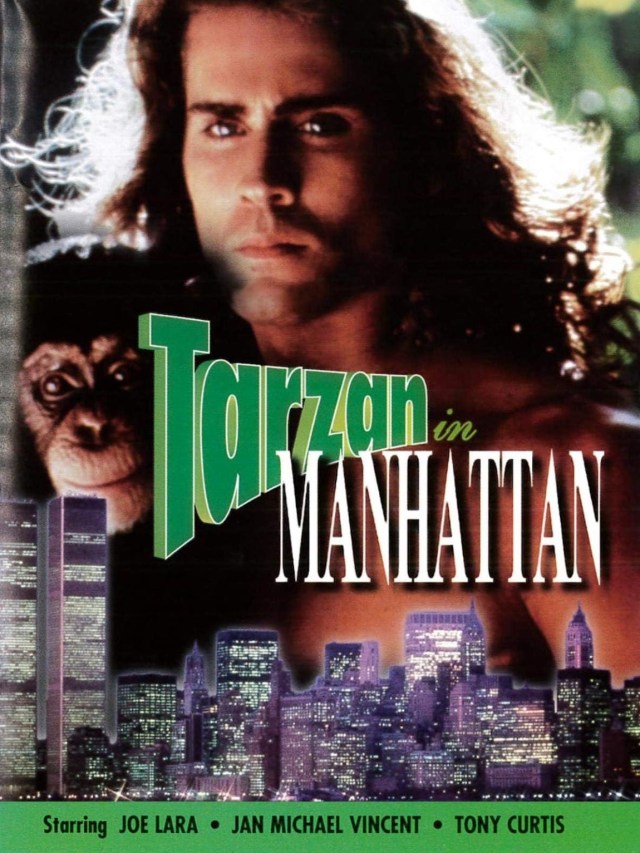
Tarzan in Manhattan poster created by American First Run Studios and CBS

Things I liked about the film:

The acting: When I reviewed The Chalk Garden earlier this month, I said I was invested in the story because of the acting performances’ quality. I also said each acting performance was good for different reasons. In Tarzan in Manhattan, the cast made a strong effort to make their performances as entertaining as possible. In my opinion, these efforts worked, as their performances kept me invested in the story! Joe Lara used emotion well while portraying the titular character. A great example comes from the first ten minutes of the movie. Tarzan experiences a tragedy, as he discovers someone close to him passed away. Upon making this discovery, Tarzan is understandably upset. His eyes are brimming with tears and his mouth presents a frown. Quickly realizing what possibly happened, Tarzan’s sadness turns into anger within seconds. He then grits his teeth and the rest of his facial features become tense.

Kim Crosby portrays Jane in Tarzan in Manhattan. In my review’s introduction, I pointed out how Jane became more street-smart. Because of this creative decision, Kim adopts a down-to-earth, laid-back personality she consistently carried throughout the movie. When Jane meets Tarzan, she’s unfazed by the situation. Her whole persona presented the idea she, as a cab driver, has seen it all. Portraying Jane’s father, Archimedes, is Tony Curtis. Similar to Kim’s performance, Tony’s on-screen no-nonsense attitude was consistent. What also worked in Tony’s favor was how believable his on-screen interactions were. Anytime Archimedes and Jane shared a conversation, it felt like a realistic discussion between father and daughter. The strength of Kim’s and Tony’s acting talents helped make that possible!

Respect toward the source material: While I haven’t read the book Tarzan in Manhattan is based on, I have seen another adaptation of the Tarzan story. Based on that experience, it appears the creative team of the 1989 film made efforts to respect the source material their project is based on. Remember when I said in this review’s introduction how Jane became more street-smart when she’s usually known for being book-smart? It is true she is street-smart in Tarzan in Manhattan. However, the book-smart aspect of her character actually worked in harmony with the street-smarts. Around the time she and Tarzan first meet, Jane shares how she has a Bachelor’s degree in Computer Science from NYU. Her book-smarts, along with problem-solving skills, help Tarzan find an important clue in figuring out Cheetah’s whereabouts. Throughout his New York City trip, Tarzan carries a bag of expensive jewelry as a form of currency. It is revealed the collection of jewelry belonged to Tarzan’s parents, the Lord and Lady of Greystone, before they passed away.

How humor was incorporated: I mentioned in my review’s introduction how Tarzan in Manhattan’s IMDB reviews were the reason I chose the film for the So Bad It’s Good Blogathon. Based on those reviews, it seemed the movie’s creative team didn’t take their project seriously because they acknowledged the film’s gimmick. As I watched the 1989 picture, I could detect a sense of self-awareness. From the dialogue to the “Easter Eggs”, it felt like the movie’s creative team recognized how much of a gimmick their project was built on. During the plane ride to New York City, Tarzan is reading a book about surviving in New York on five dollars a day. This “Easter Egg” calls out how expensive the Big Apple can be. After somersaulting his way into a locked room, Tarzan leaves that same room by escaping through an open window. This situation causes Archimedes to ask Jane why Tarzan can’t leave through the door like other people. The aforementioned self-awareness in Tarzan in Manhattan made comedic moments genuinely hilarious!

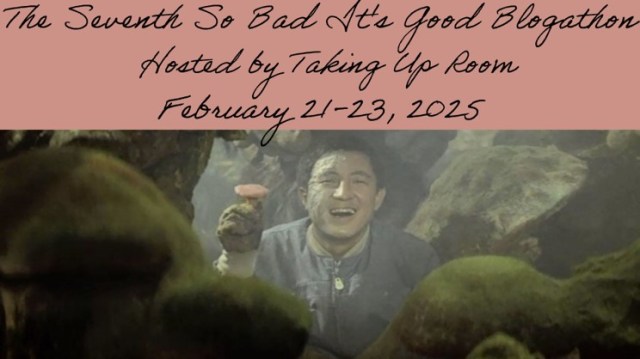
The Seventh So Bad It’s Good Blogathon banner created by Rebecca from Taking Up Room

What I didn’t like about the film:

Things that don’t make sense: There were some parts of Tarzan in Manhattan that didn’t make sense. One example takes place toward the beginning of the film. Within the first five minutes of the story, Tarzan is shown living a secluded life from civilization, how Tarzan is usually portrayed in other adaptations. Then, all of a sudden, a man named Joseph shows up to give Tarzan and Cheetah a pair of books. Based on their interaction, it seems like Joseph and Tarzan’s friendship has lasted even before the events of the movie. If Tarzan lives close enough to civilization where walking to Joseph’s store is possible, why does he still live isolated in the jungle?

Inconsistent sense of urgency: A reason why Tarzan travels to New York City is to rescue Cheetah. This part of the film’s synopsis would warrant a sense of urgency throughout the story. But Tarzan, along with Jane and Archimedes, don’t figure out what likely happened to Cheetah until more than twenty minutes into an hour and thirty-four-minute film. While there is a sense of urgency in Tarzan in Manhattan, it appears at certain moments in the movie. These creative choices made the story’s sense of urgency inconsistent.

Part of the story that doesn’t lead anywhere: On more than one occasion, the audience is reminded how Tarzan is the son of the Lord and Lady of Greystone. Jane even purchases a book featuring his family’s portrait. I appreciate the creative team’s efforts to respect the source material their project is based on. However, the part of the film about Tarzan’s family history didn’t lead anywhere. The story’s main conflict had nothing to do with the Greystone estate. Tarzan’s family weren’t even featured in a subplot. I wish that part of Tarzan in Manhattan had a stronger connection to the overall story.

New York City skyline with letters image created by Freepik at freepik.com. <a href=’https://www.freepik.com/free-vector/new-york-skyline-typographic-silhouette_719554.htm’>Designed by Freepik</a>. <a href=”https://www.freepik.com/free-photos-vectors/background”>Background vector created by Freepik</a>. Image found at freepik.com.

My overall impression:

When I started this review, I said I learned to find two things when looking for my “so bad, it’s good” movie; a film that is built on a gimmick and a film that is unintentionally funny. Tarzan in Manhattan is definitely built a gimmick, with enough self-awareness in the movie to acknowledge this. But what the film isn’t is unintentionally funny. The way the story’s humor was written and delivered gave the audience a reason to laugh with the creative team, not at them. Humorous moments felt like they were intended to be comedic. This is one of the reasons why Tarzan in Manhattan was as entertaining as it was! Though there were flaws in the 1989 picture, there were aspects of the project I liked. A few examples are the acting performances and the on-screen chemistry between Joe Lara and Kim Crosby. Even though moments with high-stakes and a sense of urgency are sprinkled throughout the story, Tarzan in Manhattan is, for the most part, silly and goofy fun. Out of all the movies I reviewed for the So Bad It’s Good Blogathon, I’d say Tarzan in Manhattan is the best one. So, when it comes to finding my “so bad, it’s good” movie, I ended up taking a detour this time.

Overall score: 7 out of 10

Have you seen Tarzan in Manhattan? Which adaptation of the Tarzan story is your favorite? Please tell me in the comment section!

Have fun at the movies!

Sally Silverscreen

Comparing with the Critics – 1976 – Introduction

In the 1970s, when Gene Siskel and Roger Ebert’s show was called Opening Soon…at a Theater Near You and then Sneak Previews, there were no separate episodes for the year’s best and worst movies. Instead, one episode would show Ebert and Siskel devoting most of their time to talking about the best films of a given year. In the last few minutes of that episode, Siskel and Ebert would briefly mention some of their choices for the year’s worst titles. The first episode of any iteration of Ebert and Siskel’s show premiered in late November, 1975. That made 1976 the first year to receive a year-end episode of the best and worst movies. This is an interesting coincidence, as Network became the first movie I reviewed for my Comparing with the Critics series. For worst of 1976, I didn’t have many films to choose from due to the episode’s limited selection. But after seeing which pictures Siskel and Ebert selected, I chose Gable and Lombard as the Worst of 1976. As I already said in this introduction, I reviewed Network. That movie was picked as the Best of 1976.

Comparing with the Critics banner created by me, Sally Silverscreen. TV show title cards created by WTTW National Productions, WTTW, Public Broadcasting Service (PBS), Lifetime Television, Tribune Entertainment, Buena Vista Television, and Disney-ABC Domestic Television

Sunset Over Hope Valley: Making Everything Seem Possible

In Elizabeth’s opening monologue in this When Calls the Heart episode, Elizabeth says Fiona “makes everything seem possible”. Looking back on Fiona’s time on this show, there’s truth to Elizabeth’s statement. Ever since her debut in season six, Fiona has accomplished whatever she’s set her mind to. She has helped bring telephone technology to Hope Valley, started her own business, and even assisted Rosemary with her radio show. Fiona has also been a friend to lean on, a provider of advice, and a contributing member of Hope Valley. Fiona is just one example of how the show’s characters have found success not only in Hope Valley, but in the world of When Calls the Heart. In fact, I can’t think of a character on this show who hasn’t received a success story. I haven’t read the books this series is based on. However, I would assume some of the overarching themes in those books are achieving personal success and accomplishing goals.

Just a reminder: If you did not see this episode of When Calls the Heart, there will be spoilers within this re-cap.

When Calls the Heart season twelve poster created by Hallmark Media, Crown Media Family Networks and Hallmark Channel

Season: 12

Episode: 7

Name: Dance the Night Away

Major stories:

Elizabeth surprises Nathan with tickets to Buster Keaton’s new movie! So, the pair travel to the city to embark on their adventure. After enjoying the movie, Nathan and Elizabeth cross paths with Toddy Davis, who still believes Nathan is an estate dealer named Danny. When Toddy’s wife, Trudy, approaches the group, she invites Elizabeth and Nathan to a party she and Toddy are hosting that night. Keeping up the appearance of Danny and his wife, Diane, Nathan and Elizabeth accept the invitation. At the Davis’ party, Elizabeth and Nathan make up their relationship’s backstory as they go along. As Elizabeth and Nathan talk about “their song”, Trudy encourages them to sing it. So, the pair effortlessly perform “their song” in front of the party guests. Before Elizabeth and Nathan leave, Toddy offers Nathan some gold pocket watches with a double-headed bird on them. Toddy claims the watches came from a rancher who passed away the previous year. Nathan tells Toddy he’ll check in with his “buyer”.

After seeing a performance of The Importance of Being Earnest in Cape Fullerton, Rosemary is inspired to host her own presentation of that play. She recruits some of Hope Valley’s residents to fill each role. One eager participant is Ava. One evening, at rehearsal, Ava presents her knowledge of the play by reciting some lines from the script. She claims she performed The Importance of Being Earnest at her boarding school in Maryland. Surprised by Ava’s acting experience, Rosemary puts her in charge of the prop department. Ever since Ava came to Hope Valley, Rosemary hasn’t liked her. That evening, after rehearsal, Rosemary shares with Lee how she thinks Ava is too dramatic. Lee reminds his wife how she was once known for being too dramatic and how there’s no one like her. Eventually, Rosemary decides to give Ava a part in her production.

Theater seats image created by weatherbox at freeimages.com. “FreeImages.com/weatherbox.”

Minor stories:

While hiking in the forest, Oliver and Allie discover an unclaimed pasture. This discovery inspires the duo present their findings to Lucas. Allie and Oliver propose a solution for the cows to roam and the salmon to spawn. Lucas actually likes their idea, believing it could be the best of both worlds. He even presents the idea to Edie. She encourages Lucas to draft a proposal for the idea to, at least, be considered. But later in the episode, during a card game, Edie tells him to forget the unclaimed pasture even exists. When Lucas asks her why, Edie says it’s lawyer/client confidentiality. Not happy with this response, he ends the card game early.

Fiona receives an offer for her barber shop. Before she can accept the offer, Fiona needs to check with her business partner, Mr. Weaver, first. While she’s waiting for Mr. Weaver’s approval, Mei pays Fiona a visit at the barber shop. Sensing Fiona may be sacrificing her own happiness, Mei reminds her friend how she has a spark and must follow it. After hearing this advice, Fiona gets the call from Mr. Weaver approving of the barber shop’s offer. A few moments later, a sold sign to put on the barber shop’s door.

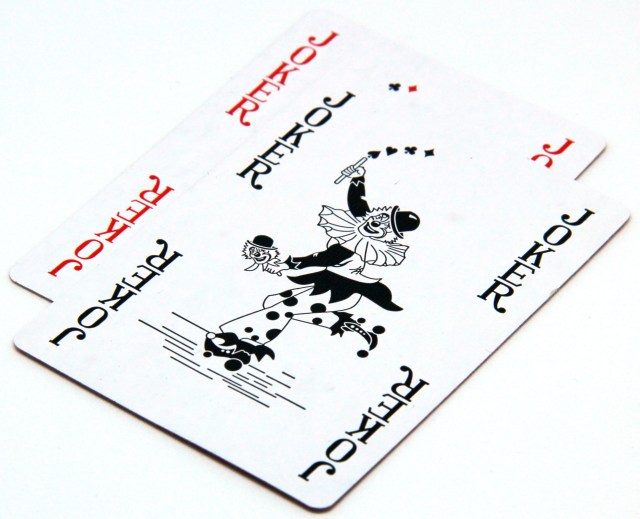
Pair of joker playing cards created by Outanmax at freepik.com. <a href=’https://www.freepik.com/free-photo/2-joker-cards_1127202.htm’>Designed by Freepik</a>. <a href=”https://www.freepik.com/free-photos-vectors/background”>Background image created by Outanmax – Freepik.com</a>. Image found at freepik.com.

Some thoughts to consider:

  • As I said in this re-cap, Elizabeth and Nathan play the roles of Diane and Danny. What works in their favor is how no one at the party knew who they were. But I find it hard to believe no one recognized Elizabeth, especially after she became an author. Elizabeth’s book about living in Hope Valley drew Ava to visit the town for herself. She even recognized Elizabeth the moment they met. It’s unknown if Elizabeth’s book was a bestseller in the world of When Calls the Heart. If her book or even her project-based learning lesson plans bring her any amount of celebrity status, the idea of Elizabeth being unrecognizable seems unrealistic.
  • Season twelve of When Calls the Heart is now a little past the half-way point. At this time, Hearties are no closer to learning the truth about Ava, as her story has just given them more questions. I understand the show’s creative team need to keep their audience invested in the story throughout the season. But I’m worried all this build-up may lead to an underwhelming reveal of who Ava truly is. This, kind of, feels reminiscent of how Mei’s story was drawn-out back in season nine.
  • In this re-cap, I mentioned Fiona selling her barber shop. While it’s sad to see a beloved Hope Valley business sold, I wonder what the fate of the barber shop will be? Will it remain as a barber shop or become a completely different establishment? With Elizabeth and Nathan going to the movies and Rosemary producing a play, could this be foreshadowing Hope Valley finally receiving a theater?
Sunset image created by Photoangel at freepik.com. <a href=”https://www.freepik.com/free-photos-vectors/background”>Background image created by Photoangel – Freepik.com</a>.<a href=’https://www.freepik.com/free-photo/red-sunset-clouds-over-trees_1254327.htm’>Designed by Freepik</a>. Image found at freepik.com.

What are your thoughts on this episode? What new business would you like to see in Hope Valley? Tell me in the comment section!

Have fun in Hope Valley!

Sally Silverscreen
The Winter Wonderland Book Tag!

At first, I was going to create a post about a Valentine’s Day book tag. But the Valentine’s themed book tags I found either heavily emphasized romance books or I couldn’t find an answer to all the provided questions. So, I decided to write about a winter themed book tag instead, as Valentine’s Day takes place within the winter season. When I came across the Winter Wonderland Book Tag, I could immediately think of answers for each question! Even though one of the questions mentions Christmas, the majority of the questions simply relate to the season of winter. Within these six questions, I will talk about books that have either been brought up on 18 Cinema Lane or books that haven’t been mentioned before. Now, let the book tag begin!

Ski lodge during winter-time image created by Freepik at freepik.com. <a href=’https://www.freepik.com/free-vector/ski-station-background_3423830.htm’>Designed by Freepik</a>. <a href=”https://www.freepik.com/free-photos-vectors/background”>Background vector created by Freepik</a>. Image found at freepik.com.

1. What book is so happy & sweet that it warms your heart?

    As soon I read this question, I immediately thought of The Christmas Child by Linda Goodnight! Having read this book back in 2018, I remember how sweet this story was. It, honestly, felt like I was reading a Hallmark movie. What I mean by that is The Christmas Child was heart-warming and wholesome. There were emotional moments woven into the text, but the book never felt too emotionally heavy. Plus, the relationship between Kade and Sophie was sweet!

    2. What is your favorite book with a white cover?

    Because there’s a lot of snow on the cover of David Baldacci’s The Christmas Train, that’s the book I’ll choose for this question. This is one of the few books I’ve ever given five out of five stars to! Though it’s been years since I read The Christmas Train, I recall how intriguing the mystery was and how distinctive the characters were. In fact, I think this book serves as a good introduction to David Baldacci’s literary work! I would also recommend the Hallmark Hall of Fame adaptation, as I remember how respectful it was toward the source material.

    3. You’re sitting in a nice comfy chair, wearing a onesie, with a lovely warm hot chocolate but what MONSTER read are you reading?

    When I read the term, “MONSTER read”, I interpreted it as a book with a large page count. Due to that interpretation, I chose All the Light We Cannot See by Anthony Doerr. Even though I thought the book was just ok, I liked the author’s use of descriptive imagery and attention to detail. Like I said in my review of All the Light We Cannot See from 2022, I, as a reader, could picture the story in my head because of the aforementioned elements. It also helps how each part contained a collection of shorter chapters, giving the book a steadier pace.

    Snowboarder on the slopes image created by Freepic.diller at freepik.com. <a href=’https://www.freepik.com/free-photo/woman-in-ski-suit-looks-over-her-shoulder-going-down-the-hill-on-her-snowboard_1620624.htm’>Designed by Freepic.diller</a>. <a href=”https://www.freepik.com/free-photos-vectors/tree”>Tree image created by Freepic.diller – Freepik.com</a>. Image found at freepik.com.

    4. It started snowing so you decided to have a snowball fight! What fictional character would you love to have the snowball fight with?

    My favorite character from Murder, She Wrote: The Fine Art of Murder is Victorio! He not only has a fascinating backstory, he also has a lively personality. Victorio was such a memorable character, I wish he received his own spin-off series. When participating in a snowball fight, it helps to surround yourself with people who have a good sense of humor and don’t take things too seriously. With everything I said, I would choose Victorio for this question!

    5. Sadly, your fire is beginning to go out. So what book would you tear the last few chapters out to throw into the fire?

    If you’re going to create stories for a younger audience, you need to be mindful about the content incorporated into that story. This is due to how impressionable a younger audience can be. In Smoke Screen by Amy Goldman Koss, I found some poor lessons found among the text. A few examples are it’s ok to not be a person of your word, breaking promises is fine as long as it benefits you, and making compromises is a waste of time. It also does not help how Mitzi, the protagonist, is a static, self-centered, and entitled character throughout the book. If younger readers were to read this book, they may get the wrong idea about how the world, problem-solving, and interactions with other people work. So, to answer the question, I would select the last few chapters of Smoke Screen and recommend a better ending.

    6. What book is so close to your heart that you would gift to someone this Christmas who hasn’t read before but wants to get into reading?

    Last year, I talked about The Princess Spy by Larry Loftis on more than one occasion. The book was featured in my post about the Finally Fall Book Tag and in my annual Movie Blogger’s Christmas Wish-List. Larry Loftis’ book, The Princess Spy, was the best book I read for last year’s Eurovisionathon readathon! As I said in the Finally Fall Book Tag, it was both educational and entertaining, showcasing the research and literary skill Larry incorporated. I would recommend The Princess Spy to readers who like nonfiction books or stories taking place during WWII. If one wants to read about WWII from a woman’s perspective, this book would be a good choice.

    Snowy mountain image created by Freepik at freepik.com. <a href=’https://www.freepik.com/free-vector/landscape-background-of-snow-track-and-mountains_968656.htm’>Designed by Freepik</a>. <a href=”https://www.freepik.com/free-photos-vectors/background”>Background vector created by Freepik</a>. Image found at freepik.com.

    Have fun during Winter!

    Sally Silverscreen

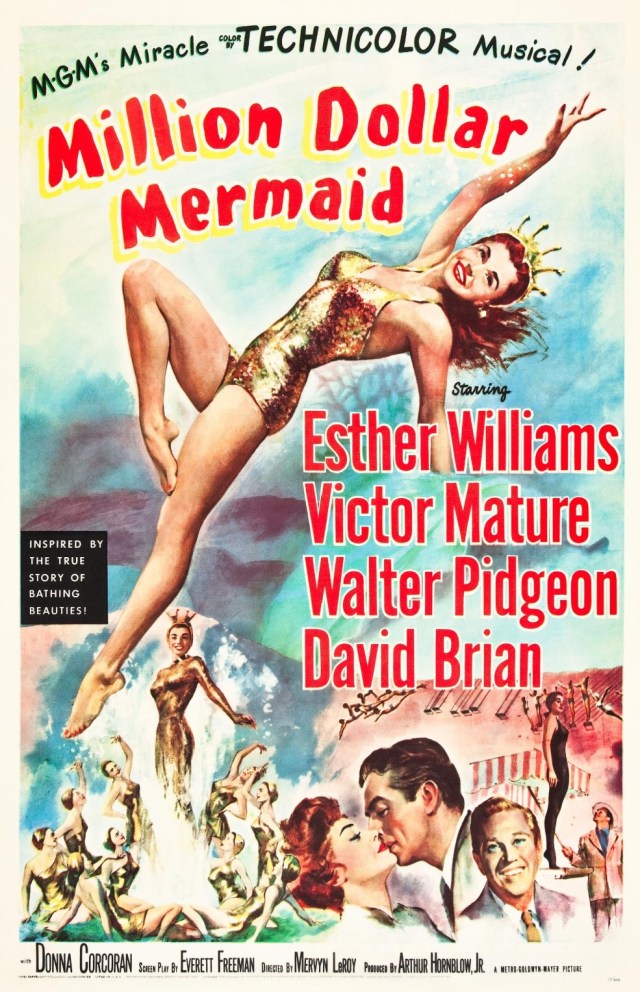
    Take 3: Million Dollar Mermaid Review

    From Esther Williams’ filmography, I’ve only seen (and reviewed) three of her pictures; Take Me Out to the Ball Game, Bathing Beauty, and Easy to Wed. When it comes to the aqua musical, one of Esther’s claims to fame, that component was far and few between in those movies. Wanting to see an Esther Williams production where the aqua musical was more center stage (no pun intended), I selected Million Dollar Mermaid to review for the We Love Musicals Week Blogathon! The 1952 presentation was recommended by The Classic Movie Muse. Before researching titles to write about for Hamlette’s (from Hamlette’s Soliloquy) event, I had no idea the movie was a biopic. As I made this discovery, I was reminded how much luck I had finding good biopics last year. On my list of the best movies I saw in 2024, three biopics earned a spot on my list, with two of those films ending up in my top five. Could Million Dollar Mermaid find a place on 2025’s best movies list? Read my review to find out!

    Million Dollar Mermaid poster created by Metro-Goldwyn-Mayer (MGM)

    Things I liked about the film:

    The acting: As I said in this review’s introduction, I’ve seen (and reviewed) three of Esther Williams’ films; Easy to Wed, Take Me Out to the Ball Game, and Bathing Beauty. What these titles have in common is how Esther’s on-screen personality has been consistently friendly and warm. Her performance in Million Dollar Mermaid maintains that consistency in personality! Esther portrays Annette Kellerman, an Australian swimmer who defied the odds and created a successful career. Through the ups and downs of Annette’s life, Esther’s on-screen personality highlighted how Annette saw the glass half full. However, there were times when Annette became frustrated. In one scene, she is understandably upset because she was falsely accused of indecent exposure (due to the style of her swimsuit). At first, Annette tearfully refuses to speak with any newspaper reporter. But after receiving advice from her father and James Sullivan, courage rises in Annette’s voice as she not only agrees to be interviewed, she decides to be interviewed while wearing her swimsuit. With Esther adopting a variety of emotions and expressions throughout her performance, she brought humanity back to Annette’s name!

    Speaking of Annette’s father, let’s talk about Walter Pidgeon’s character, Frederick Kellerman! Frederick was one of Annette’s biggest cheerleaders. Though he had his reasons for wanting to protect his daughter, Frederick led by example when it came to following dreams. But Annette’s father had his fair share of struggles. While waiting for Annette and James’ meeting to end, Frederick becomes exhausted. His eyelids continuously rise and fall as he sometimes slumps toward the ground. Visibly concerned, James’ associate, Doc (portrayed by Jesse White) suggests they return home. Scenes like this one showed how Walter brought believability to his role! Similar to Esther’s on-screen personality, Walter made the likability of his character consistent. This was achieved through a strong acting performance!

    Victor Mature portrays James Sullivan in Million Dollar Mermaid. When he is first introduced on a boat ride to London, James’ showmanship is on full display. Quick witted and having a way with words, James knew an opportunity when he saw one. Though he had the charisma of a circus ring leader, James also had a caring side to him. In order to promote a new show, Annette agrees to swim through the Thames River. During the swim, James and Doc row alongside Annette. Toward the end of the swim, James notices how tired Annette appears. He’s also aware of an incoming current, which could push Annette back. A sharp tone in his voice, furrowed eyebrows, and an intense look in his eyes perfectly show how concerned James is for Annette’s wellbeing. These emotional elements emphasize James’ sense of urgency for protecting Annette as well. This scene is just one example of how Victor’s acting talents helped create a memorable portrayal of James Sullivan!

    The dialogue: One of the challenges Annette had to overcome was polio. As a child, Annette wished she could dance with her peers inside of staying at home practicing the piano. To cheer his daughter up, Frederick says how music should be a source of joy. The way this line was written and spoken seemed so profound, it made me wonder if Frederick’s belief is the reason why some musicals are joyful in nature? Years later, Frederick accepts a job at a music conservatory. But once he and Annette move to London, they discover the conservatory is actually closed. Looking at the glass half full, Annette reminds her father how the conservatory’s gate is only one closed gate. While she was talking about the literal gate, she was also speaking figuratively, seeing it as yet another puzzle to solve. These are just two examples of how well-written the dialogue was in Million Dollar Mermaid!

    The aqua musical numbers: I stated in the introduction of my Million Dollar Mermaid review how one of Esther’s claims to fame is the aqua musical. This type of unique musical presentation is another reason why I chose this film for the We Love Musicals Week Blogathon, as I wanted to bring something different to the event’s table. The aqua musical numbers in Million Dollar Mermaid were captivating! The blend of pyrotechnics, color, and aquatic choreography created musical spectacles that were close to perfection. In one number, Esther emerges from the water on a giant pillar covered with sparks. Another number shows Esther performing a ballet routine under water. My favorite number boasted a color scheme of red and yellow. A memorable part of that number was when swimmers jumped into the water from various swings. The aqua musical numbers were certainly one of the strengths of Million Dollar Mermaid!

    We Love Musicals Week Blogathon banner created by Hamlette from Hamlette’s Soliloquy

    What I didn’t like about the film:

    Limited presence of aqua musicals: Like I mentioned in my review’s introduction, I wanted to watch an Esther Williams movie where the aqua musical was more center stage (again, no pun intended). This component received more inclusion in Million Dollar Mermaid than in Esther’s other three movies I’ve seen (and reviewed). However, the overall presence of aqua musicals seemed limited. In the 1952 film, there were three aqua musical numbers. Only one of them was shown in its entirety. It also doesn’t help how the first aqua musical number appears a little over an hour into an hour and fifty-five-minute movie. I recognize the film’s creative team tried their best to find a balance between providing musical spectacle and telling Annette’s story. But as someone who came to Million Dollar Mermaid for the aqua musical, I was, kind of, disappointed.

    An open-ended finish: The intended purpose of a biopic is to tell the story of a historical or public figure. In the case of Million Dollar Mermaid, that figure is Annette Kellerman. Toward the end of a typical biopic, that story will either reach the conclusion of that figure’s life or explain what happened to the people involved in the story, through a voice-over or on-screen text. But Million Dollar Mermaid didn’t adopt any of these examples. Within the last ten minutes of the movie, a major conflict takes place. Because there’s not enough time to reach a resolution to this conflict, a resolution is not provided on screen. An explanation if a resolution was reached at all is not provided as well. These creative choices left some questions unanswered.

    A confusing interaction: For this part of my review, I will spoil Million Dollar Mermaid. If you have not seen this movie and are planning on watching it, please skip ahead to the part of this review titled “my overall impression”.

    James Sullivan becomes Annette’s manager in Million Dollar Mermaid. Over time, Annette and James develop romantic feelings for each other. But their relationship doesn’t last, as Annette ends up marrying a man named Alfred. Toward the end of the film, James visits Annette in the hospital after she experiences an accident on a movie set. He gives her the engagement ring he intended to give her years prior. Annette not only accepts the ring, she and James share a kiss. I was confused by this romantic exchange because Annette and Alfred already got married. I was also surprised Million Dollar Mermaid would include this romantic interaction, as it was released during the Breen Code era, where the reverence toward martial vows is upheld. But, like I said when talking about the film’s open-ended finish, some questions were left unanswered.

    Sketch of London image created by Archjoe at freepik.com. <a href=’https://www.freepik.com/free-vector/hand-drawn-houses-of-parliament_1133950.htm’>Designed by Archjoe</a>. <a href=”https://www.freepik.com/free-photos-vectors/background”>Background vector created by Archjoe – Freepik.com</a>. Image found at freepik.com.

    My overall impression:

    Biopics are not created equally. Some of them are solid productions, like 1984’s Amadeus. But there have been biopics that left me underwhelmed, such as I Dream of Jeanie from 1952. With Million Dollar Mermaid, I thought it was just fine. The aqua musical numbers were a highlight of this presentation! As I said in my review, the blend of pyrotechnics, color, and aquatic choreography created musical spectacles that were close to perfection. However, I didn’t like how these aqua musical numbers had such a limited presence in the movie. I will admit I had no idea who Annette Kellerman was before watching Million Dollar Mermaid. Through the acting performances, screenwriting, and the story itself, I was introduced to this incredible woman and the world according to her. I do wish the ending hadn’t been so open-ended. Though I guess that’s what Wikipedia is for, finding answers that weren’t provided in the film. Prior to participating in the We Love Musicals Week Blogathon, the last time I reviewed one of Esther Williams’ films was back in 2022. So, re-visiting her filmography was long overdue.

    Overall score: 7.1-7.2 out of 10

    Have you seen Million Dollar Mermaid? What are your thoughts on aqua musicals? Let me know in the comment section!

    Have fun at the movies!

    Sally Silverscreen

    Sunset Over Hope Valley: Change of Plans

    As I stated in my last re-cap post, the premiere of this episode of When Calls the Heart aired on a different day at a different time. Even though this change in schedule was temporary, it likely gave the fans quite a surprise. But Hearties were not the only ones who had to change their plans. In this episode, Nathan and Elizabeth wanted to go to the hot springs before autumn arrived. Their trip never happened, as Elizabeth developed a cold. Every television show has experienced a change in plans at least once. When Calls the Heart has been no exception. What matters, though, is how one adapts to their plans changing. From Daniel Lissing departing from the show to working around the Writers’ and Actors’ Strikes of 2023, When Calls the Heart’s creative team has adapted the best they could. The show’s ability to adapt has rewarded them with twelve seasons and a devoted fanbase. That has been one of the many strengths of When Calls the Heart!

    Just a reminder: If you did not see this episode of When Calls the Heart, there will be spoilers within this re-cap.

    When Calls the Heart season twelve poster created by Hallmark Media, Crown Media Family Networks and Hallmark Channel

    Season: 12

    Episode: 6

    Name: When Autumn Leaves Begin to Fall

    Major stories:

    Allie is upset the salmon from a nearby river haven’t spawned. She claims if the salmon don’t spawn, the bears and wolves will have nothing to eat. Oliver volunteers to help Allie solve this mystery. When they get to the river, it is discovered cows from a pasture close by have been using the river for drinking water, causing the silt to rise and disturb the salmon. During their trip, while hiding in a ‘no trespassing zone’, Allie and Oliver witness two men covering up cow tracks located next to the river. After the men leave, Oliver confesses how he chooses to follow the rules because his mother is in prison. Later in the episode, Allie makes a guest appearance on Rosemary’s new radio segment; The Daily Dialogue. On the inaugural segment, Allie raises her concerns about the salmon with Lucas. She even shows him a map of where the cows have traveled. When Allie visits Oliver at the stables, she shares how Lucas will look into the salmon situation. Allie also tells Oliver how her father (not Nathan) is currently in jail.

    A forensic investigator named Georgie McGill comes to Hope Valley to help Bill solve the mystery of the coin. Because she’s been working on the case of the Rocky Mountain train robbery of 1907 for years, Georgie is eager to lend a helping hand. She and Bill agree to visit a prisoner named Sonny, who they believe could give them information about the coin and/or Toddy Davis. Once they get to prison, the duo learn more from Sonny. According to the prisoner, Toddy hosts operations in stolen goods in Fullerton and Union City. He also works with rare coins, like the one that mysteriously arrived in Hope Valley. Bill and Georgie made a step in the right direction. But now the question remains; where did Toddy get the coin?

    Detective work image created by Photoroyalty at freepik.com. <a href=’https://www.freepik.com/free-vector/investigation-background-design_1041877.htm’>Designed by Freepik</a>. <a href=”https://www.freepik.com/free-photos-vectors/background”>Background vector created by Photoroyalty – Freepik.com</a>. Image found at freepik.com.

    Minor stories:

    Joseph receives an informative brochure about a school Angela is interested in attending. He has also requested a tour of the school. When Minnie discovers the brochure, she doesn’t like how she and her husband haven’t discussed it first. She also shares her concerns about Angela being in a new environment all by herself. Joseph, on the other hand, has an open mind when it comes to his daughter’s future. Eventually, Minnie checks out the brochure for herself. After being impressed with the school’s accolades, Minnie confesses to Joseph how all she wants is for Angela to live a good, independent life. Joseph reassures his wife how intelligent and confident their daughter is. They agree to pray about Angela’s educational journey. Meanwhile, Ava’s trunk has been found at a station in Buxton. But when the trunk arrives at the Queen of Hearts hotel, the trunk is filled with men’s clothing.

    At the beginning of the episode, Elizabeth and Nathan plan on taking Jack Jr. and Allie to the hot springs before autumn begins. But the very next day, Elizabeth develops a cold. Throughout the episode, Rosemary and Nathan take turns caring for Elizabeth. From time to time, Elizabeth dreams about Nathan and her being together. Rosemary also volunteers to substitute Elizabeth’s class, where her students create get well cards. While Elizabeth, Rosemary, and Fiona read the cards, Elizabeth shares her project-based learning idea with Fiona. When Fiona suggests Elizabeth write about her teaching idea and publish her work, Elizabeth takes this suggestion into consideration.

    Breakfast tray image created by Freepik at freepik.com. <a href=’https://www.freepik.com/free-photo/composed-healthy-fruit-and-coffee-on-tray_1441643.htm’>Designed by Freepik</a>. <a href=”https://www.freepik.com/free-photos-vectors/background”>Background image created by Freepik</a>. Image found at freepik.com.

    Some thoughts to consider:

    • Ever since Earl Wyatt came back to Hope Valley, some of the characters have talked about him antagonistically. Even in this episode, the way Allie was talking about going on a hike with Oliver seemed like she was intentionally trying to make Earl jealous. Personally, I don’t understand the dislike toward Earl. Throughout his time in season twelve, he has, so far, done no wrongdoing. In fact, the first thing Earl did when he returned to Hope Valley was apologize to Opal for bullying her all those years ago. As of the half-way point of When Calls the Heart’s twelfth season, the negativity toward Earl Wyatt doesn’t seem warranted.
    • Based on fan reception, Ava hasn’t received a warm welcome on the show. Hearties don’t trust her and think she’s up to no good. However, I could see Ava’s story going either way. Sure, she could be a scammer, especially since her arrival in Hope Valley conveniently mirrors Elizabeth’s introduction. But maybe Ava is, indeed, telling the truth. Like I mentioned in this re-cap post, Ava’s trunk is filled with men’s clothing. Perhaps this was a genuine mistake, as another traveler could have had a trunk similar to Ava’s. If Ava is being honest, I wonder if she’ll become a series regular on When Calls the Heart?
    • As I said in this re-cap post, Oliver shares how his mother is in prison. This is the reason why he chooses to follow the rules, as he doesn’t want to prove his doubters right. Oliver also tells Allie how he’s never had a birthday party. The more Oliver’s backstory is revealed, the more it feels reminiscent of Perry Miller’s story from the television show, Emily of New Moon. Not only was Perry’s mother in prison, he also tried to create a better future for himself, like Oliver. Come to think of it, I don’t recall Perry ever having a birthday party on Emily of New Moon.
    Sunset image created by Photoangel at freepik.com. <a href=”https://www.freepik.com/free-photos-vectors/background”>Background image created by Photoangel – Freepik.com</a>.<a href=’https://www.freepik.com/free-photo/red-sunset-clouds-over-trees_1254327.htm’>Designed by Freepik</a>. Image found at freepik.com.

    What are your thoughts on this episode? Who do you think gave Toddy the mysterious coin? Please let me know in the comment section!

    Have fun in Hope Valley!

    Sally Silverscreen