Hi, I'm Sally Silverscreen!
As long as I can remember, I have loved movies and the movie-going experience. Talking about movies, something dear to my heart, brings me so much joy. I am a fan of Hallmark and do enjoy watching their movies from time to time. When Calls the Heart is one of my favorite television shows and I am proud to call myself a Heartie! I look forward to sharing my thoughts about movies, When Calls the Heart, and Chesapeake Shores with you. To everyone who visits this blog, I hope you have a great experience when you come to 18 Cinema Lane!
-- Sally Silverscreen
Profile picture created by K from K at the Movies
https://katthemovies.wordpress.com/2019/03/30/graphic-design-is-my-passion/
So far, I’ve seen nine of Hallmark’s Christmas films from this year. To me, most of them have ranged from ok to decent, with a few standouts. Since I haven’t reviewed a Christmas movie from Hallmark Channel yet, I decided to talk about one of the network’s more recent pictures, Christmas Under the Stars! This film was one of my most anticipated of the season. Jesse Metcalfe and Autumn Reeser reuniting as co-leads was one of my reasons why. I really enjoyed their first movie together, A Country Wedding, especially since they had good on-screen chemistry. Jesse and Autumn have never starred in a Christmas movie together, so I thought this would help make Christmas Under the Stars an interesting project.
The acting: Christmas Under the Stars had a solid cast! I enjoyed seeing each actor’s performance immensely, as they brought the best of what they had to offer, talent wise, to their roles. One example is how Jesse Metcalfe brings more emotionality to his portrayal of Nick than I expected. At some dramatic moments, it looked like Jesse was about to cry. Because he stars on a television show that features a variety of situations, it helps prepare Jesse for roles that require a certain amount of versatility. Clarke Peters is another example of how talented this cast is. His portrayal of Clem was very endearing, making this character easy to root for. Clarke also appeared to have good camaraderie with his co-stars. Speaking of camaraderie, what worked in this cast’s favor was the on-screen chemistry and interactions between the characters. These encounters felt believable, like they had come directly from real life.
The business side of Christmas tree lots: When Christmas tree lots are featured in Hallmark movies, they are either on screen for a short amount of time or the business aspect of them gets glossed over. In this movie, however, the story allows the business side of Christmas tree lots to be explored. It provides a unique perspective that is educational and intriguing for the audience. This also adds something that most Hallmark movies don’t incorporate. More often than not, I say that Hallmark needs to take more creative risks and think outside the box. The interesting way that a Christmas tree lot was showcased in this film is a good example of this.
The discussion of foster parenting: If a single parent is included in a Hallmark movie, that character’s relationship status is usually caused by divorce or becoming a widow/widower. Autumn Reeser’s character, Julie, is a single parent because she chose to be a foster parent. Even though this discussion of foster parenting was very brief, it represented a family dynamic that is rarely seen in Hallmark productions. It also provided an interesting component to Julie’s backstory. Because Julie adopted her foster child, Matt, it makes Christmas Under the Stars the second 2019 Hallmark Christmas film to include adoption in their respective film’s narrative.
A semi-misleading synopsis: While I liked this film’s story, I felt the synopsis bent the truth to a certain extent. One example is the basic premise, where Nick loses his job. This idea reminded me of a movie I reviewed last year called Waffle Street. In that film, the protagonist not only loses his job, but the event was catastrophic on his life. The protagonist in Christmas Under the Stars didn’t have the same experience. Yes, Nick did lose his job. But he was still able to keep his high-rise penthouse apartment and his vintage Porsche. Another example is Julie’s occupation. When I was led to believe that she was an astronomer, I was so excited to see this profession incorporated into a Hallmark story. However, Julie’s job ended up being a science teacher. While this is an important career, the astronomy aspect was overshadowed.
The protagonists spending so little time together: Jesse and Autumn had good on-screen chemistry. What helped was them starring in 2015’s A Country Wedding together. But the difference between this movie and Christmas Under the Stars is how little time the protagonists spend with each other in the latter. Nick and Julie do become a couple, because that’s how Hallmark movies work. But when they eventually end up together, their union doesn’t feel earned. That’s because there was no build-up leading up to that part of their relationship. What also doesn’t help was how they barely identify the other person as a potential love interest. I understand that the screenwriter wanted to try something different. But, in this case, it didn’t work in the film’s favor.
An under-utilized subplot: In the film, Autumn’s character is trying to help a student who is always late to class. When this subplot was first introduced, I thought it would play an interesting role in the overall story. Since this is a Christmas film, the subplot had potential to be impactful and uplifting. But as the movie went on, it became too simplistic and was resolved way too easily. Because this subplot was competing with other story-lines, it felt more forgettable than it should have. This resulted in the subplot being under-utilized.
Before watching this film, I was highly anticipating Christmas Under the Stars. This was a film that I thought I was going to fall in love with. While I liked the movie, it probably won’t become one of my favorite Christmas films from this year. Sure, it was good. The film had its strengths, such as the cast and some of the topics that were incorporated in the project. But the movie had flaws that prevented it from being great. Christmas Under the Stars is certainly one of the stronger picks from Hallmark’s Christmas line-up, as it is one of the network’s more memorable presentations. The creative team behind the film did a good job with the material they were given. It’ll be interesting to see what the quality of the rest of Hallmark’s Christmas films looks like.
Overall score: 7.7 out of 10
What do you think of Hallmark’s Christmas line-ups so far? Are there any movies that you are fond of? Please share your thoughts in the comment section!
Yes, I know it’s been several months since I talked about a movie news story related to Hallmark. Also, the last time I discussed a movie news story that had something to do with a Christmas movie was back in April. But, when I discovered that very few people were talking about the stories in this Word on the Street post, I knew that I had to talk about them. In this article, I will share one movie news story about an upcoming Hallmark film and two movie news stories about future Christmas films. I will try my best to share my opinion on these stories, as well as report what I know about them. Now, let the movie news discussion begin!
On November 12th, Sleepy Kitty Paw, from the Twitter account, Ho! Ho! Holiday Viewing!, shared a tweet from Hallmark actor, Chad Michael Murray. In this tweet, it’s revealed that he will star in Alice in Winterland! This movie was originally supposed to be a Christmas film called Alice in Christmasland. However, it looks like it will end up becoming a “Winterfest” movie. Sleepy Kitty Paw shared some of this information in their tweet. Chad’s tweet mentioned two fellow Hallmark actors, Jack Turner and Italia Ricci. This indicates that these particular actors will also star in the film. Jack’s involvement in this movie will raise some interesting questions about another potential “Winterfest” project. At Hallmark’s Summer TCA Event this year, Taylor Cole, one of the stars of the One Winter series, announced that One WinterWedding will be on its way. But the Twitter account, Hotline to Hallmark, revealed on November 5th that Taylor will be starring alongside Ryan Paevey in a Valentine’s Day movie on Hallmark Channel. In this specific thread, it was also revealed that, as of early to mid-November 2019, One WinterWedding has not gone into production. Now that both leads for this series are working on separate projects surrounding the “Winterfest” line-up, it makes the reality of One WinterWedding seem more distant. If this film is still being released in 2020, my guess is it will either be a “June Weddings” or a Christmas film.
You can visit the Twitter accounts of Sleepy Kitty Paws and Hotline to Hallmark by typing @SleepyKittyPaw and @HotlineHallmark into Twitter’s search bar. You can also visit Taylor Cole’s Instagram account by typing ‘taylorquinncole’ into Instagram’s search bar.
Three days ago, on November 11th, Candace Young, from soaps.sheknows.com, reported that Eileen Davidson will appear in a Christmas film. The Young and the Restless star will lead a movie called There Will Always Be Christmas. In this article, Candace shares the cast and the synopsis for the movie. As of November 15th, 2019, this film does not have a release date and/or a designated network or platform. All we know, so far, is that it will premiere sometime next year.
Here’s the link to the article I referenced in this paragraph:
On November 13th, Melissa Hill, author of books such as The Summer Villa and A Gift to Remember, released a tweet that certainly got my attention. In her tweet, she revealed that she has “just been sent first draft screenplay for #TheCharmBracelet”! This indicates that we could see a film adaptation of one of Melissa’s books, The Charm Bracelet! Melissa didn’t reveal where or when this movie could premiere. For me, it’s exciting because this particular book has been on my TBR (to be read) list for a few years. Now I have an excuse to finally read this book!
You can visit the Twitter account of Melissa Hill by typing @melissahillbks into Twitter’s search bar.
Because of several blog related projects, I haven’t gotten around to reviewing any of the Christmas movies. But now that I’ve completed those projects, I can finally start talking about some of these films! Since I didn’t review A Veteran’s Christmas last year, I thought I’d make up for that by reviewing Holiday for Heroes. I love Operation Christmas, a Hallmark Movies & Mysteries film that premiered in 2016. But since then, I’ve felt that the military related Christmas movies from Hallmark’s second network haven’t been as good as the aforementioned film. While I liked Home for Christmas Day, it was released during Hallmark Movies & Mysteries’ “Christmas in July” marathon. When Holiday for Heroes was first announced, I had to lower my expectations in order not to become disappointed. It also didn’t help that the story reminded me of The Christmas Card, a movie that I found to be just ok. But I hoped for the best as I gave this movie a fair chance. Was I pleasantly surprised or was the film as expected? It’s time to report for duty and read this review!
The acting: I’ve seen all of Marc Blucas’ Hallmark films. In these movies, Marc has always taken his roles seriously and presented the best of his acting abilities. This was no different in Holiday for Heroes, as Marc brought his character to life with believability and charm. While this is the second time where Marc has portrayed a member of the military, his performance was different in Holiday for Heroes. Marc’s character, Matt, was more light-hearted. He also had a more playful and fun personality. This was Melissa Claire Egan’s first Hallmark movie. Despite this, she did a great job portraying her character, Audrey. Her performance was very expressive, allowing the audience to witness the well-roundedness of her acting abilities. It was also emotional at dramatic moments, making those scenes effective. Both Marc and Melissa worked well with all of their co-stars, helping this cast become strong as a whole.
The on-screen chemistry: As soon as Audrey and Matt met in person for the first time, I knew that Marc and Melissa were going to have good on-screen chemistry! Throughout the film, the audience got to watch their relationship grow over the course of the Christmas season. Even though their reunion was inevitable, because that’s how Hallmark movies work, I liked seeing everything work in their favor. It was a joy to see Melissa and Marc come together to make this on-screen relationship a reality. Because their acting styles were similar, it allowed their characters to adopt similar personalities from one another. Out of all the Christmas movies I’ve seen this year, so far, this is one of the best on-screen pairs of 2019’s Christmas season!
A sense of reality: In my review of The Christmas Card, I said that the unrealistic nature of the titular card was one of the things I didn’t like about that film. This aspect of that story asked me to suspend my belief more than I wanted to. In Holiday for Heroes, the letter writing that took place between Audrey and Matt felt realistic. Because Audrey’s brother happened to be in the same division of the Army as Matt, their acknowledgement of one another makes sense. This movie featured other elements that also seemed realistic. One example is when Audrey and her friend, Jade, found out that their family members in the military would not be coming home for Christmas. When they both received the phone call, the look on their faces and the tone of the voices say everything that the audience needs to know. This was the result of good acting and good screenwriting.
A good level of sincerity: When it comes to Hallmark Christmas movies, there are some that try too hard to be sincere. For Holiday for Heroes, the sincerity in the story felt genuine. What worked in this movie’s favor was how the primary focus was placed on, simply, telling a good story. It also put emphasis on finding the right people to help tell this story, both in front of and behind the camera. The overall project gave me, as an audience member, the impression that the creative team’s heart was always in the right place. By watching the film, I could tell that there was a lot of care and effort that was put into it. These are the things that, I think, not only make a great Christmas movie, but also a great movie in general.
United States Army Monument image created by David Resseguie at freeimages.com. “FreeImages.com/David Resseguie.”
What I didn’t like about the film:
The “red herring” love interest: In some Hallmark films, there will be a “red herring” love interest placed in the story in an attempt to trick the audience into thinking the protagonist won’t fall in love with the other protagonist. In the case of Holiday for Heroes, this role was given to a character named Luke, who was portrayed by William Rubio. While the character himself was fine, I don’t think Luke needed to be a love interest. Because Hallmark movies almost always have the male and female protagonist fall in love, the idea of featuring any “red herring” love interest just doesn’t feel necessary. This creative tactic might be effective for audience members who don’t watch a lot of Hallmark projects. But for people, like myself, who consume a lot of Hallmark content, this could insult their intelligence.
The “it’s not what you think” cliché: In my list of The Top 10 Worst Clichés from Hallmark Movies, I talked about how the “it’s not what you think” cliché is hit or miss. This cliché’s inclusion in Holiday for Heroes was not needed. In the movie, Matt was led to believe that Audrey and Luke were falling in love based on their interactions he witnessed. Because of this, Matt automatically made assumptions instead of immediately addressing his issues. As I already said, Luke was the “red herring” love interest and most Hallmark movies feature the male and female protagonist falling in love. This makes me believe that Holiday for Heroes would have better off without this cliché.
Holiday for Heroes was a genuinely good film! Instead of reminding me of The Christmas Card, the movie reminded me of Operation Christmas more than I expected! What is great about this film is how it doesn’t rehash the story of the 2016 project. Holiday for Heroes tells a story that happens to share some of the same themes. There were several components that worked in this movie’s favor, from the acting to the film’s sincerity. These things added to my enjoyment of the movie! Even though we’re not half-way through the Christmas season yet, Holiday for Heroes is my favorite Christmas movie from 2019, so far! It was heart-warming without trying too hard to be and I think it’s a good movie for both Hallmark fans and casual viewers of Hallmark.
Overall score: 8.6 out of 10
What are your thoughts on Hallmark’s Christmas line-ups this year, so far? Which movie has been your favorite? Please tell me in the comment section!
I know what you’re probably thinking; what does Touched by an Angel have to do with the Marines? Well, that’s where my explanation comes in. When J-Dub invited me to join their Send in the Marines Blogathon, they explained that there are a lot of actors who served in the Marines. One of them is Brian Keith. Because I was not familiar with this actor, I looked at his filmography on IMDB to see what projects he appeared in. In the ‘90s, Brian guest-starred on an episode of Touched by an Angel. I said in my post about the book, California Angel, that I like the aforementioned show. Since I own the entire series on DVD and since I haven’t talked about Touched by an Angel on my blog yet, I knew J-Dub’s blogathon would be a good excuse to do so. Also, with today being Veterans Day, talking about an episode co-starring a former U.S. Marine seems fitting.
There were several character interactions that were interesting to watch. But the two that were my favorite were between young Leonard and Penny and older Leonard and Monica. The interactions between young Leonard and Penny were adorable, acting as a light during a literally and figuratively dark time. The actors who portrayed these characters, Sam Gifaldi and Scarlett Pomers, were very believable and reacted in a realistic way for children in that particular situation. The interactions between older Leonard and Monica were interesting because of how different their personalities were. Their overall perspectives also differed from one another. Despite this, they both had the same goal and were able to reach that by helping each other.
What I didn’t like about this episode:
This episode takes place on Halloween. Based on the topics that were discussed in the story and because “The Sky Is Falling” was released after the spooky holiday, it felt more like an All Souls Day episode. While children can be seen dressed in costumes and going trick-or-treating , it isn’t the primary focus of the story. Also, several characters mention that the “War of the Worlds” broadcast took place on October 30th, the day before Halloween. So, having this episode take place on the aforementioned holiday doesn’t seem to make sense.
The story itself:
At the beginning of “The Sky Is Falling”, there were three components that seemed confusing at first. That’s because they were presented as three separate subplots. As the story goes on, these components came together very nicely to create a well-written story. Sometimes on Touched by an Angel, the writers will take a historical situation, like the “War of the Worlds” broadcast, and draw an intriguing story from it. This allows the audience to be both entertained and educated. This concept was executed very well in this episode, allowing lessons and messages to organically grow within the narrative. I also liked seeing how Tess and Monica first met. This part of the story provided an addition to their backstories and gave the audience the opportunity to see how far these characters have come as individuals and friends.
The other factors from this episode:
In “The Sky Is Falling”, part of the story was told through flashbacks, reflecting on October 30th of 1938. All of these scenes looked and felt historically accurate, like the creative team behind this show went the extra mile to capture this specific moment in time. Even the jewelry appeared as if it came from the late ‘30s.
This episode was filled with good lessons and morals. One example is how one should think before they speak. This was explored in a direct and indirect way, showing how people can positively or negatively react to words. “The Sky Is Falling” also had some good quotes. My favorite is when Tess tells Monica that “The story isn’t over ‘till it says The End”. Since Brian Keith’s character is a writer, this quote makes a lot of sense.
“The Sky Is Falling” had some really atmospheric scenes. If you haven’t seen this episode, I won’t give anything away. All I’ll say is that these atmospheric scenes took place in a forest. The way this location was staged and filmed was excellent! It effectively conveyed the tone that the show’s creative team was trying to achieve.
My overall thoughts:
I enjoyed this episode of Touched by an Angel more than I expected! This is definitely one of the stronger stories from the show, featuring a good cast who worked well together. The way this story was told was memorable, as it taught the audience lessons that went beyond the historical aspect. It’s better if you watch “The Sky Is Falling” as an All Souls Day episode, as Halloween doesn’t play as big of a role as in the show’s other stories. “The Sky Is Falling” kind of reminded me of another episode called “Monica’s Bad Day”, where the overarching message is how one’s actions can affect the people around them. In Brian Keith’s episode, this message was converted to focus on the power of words. Speaking of Brian, his portrayal of Leonard was such a highlight in this episode! This emotionally effective performance worked in his favor, as I found myself staying invested in his character throughout this story. “The Sky Is Falling” would not be the same without Brian.
Rating: A solid 4 out of 5
This is just one of the Touched by an Angel DVDs that I own. Screenshot taken by me, Sally Silverscreen.Have you seen any projects from Brian Keith’s filmography? Are there any episodes of Touched by an Angel you’d like to see me review? Please let me know in the comment section.
When Tiffany from Pure Entertainment Preservation Society invited me to join The Second Annual Claude Rains Blogathon, I was familiar with Claude as an actor. I’ve seen five of his movies, as I reviewed Caesar and Cleopatra back in September. While looking through his filmography on IMDB, I discovered that Claude starred in a film called Twilight of Honor. Because I happened to have this movie on my DVR, I figured it would be a great choice for the blogathon. This isn’t the first time I’ve talked about a courtroom film. Last year, I reviewed two movies from Hallmark Movies & Mysteries’ Darrow Mystery series. What I enjoy about those films is the mystery component featured within the narrative. It creates an intriguing and interactive experience for the audience. Will I find a mystery in Twilight of Honor? Keep reading if you want to find out!
Twilight of Honor poster created by Metro-Goldwyn-Mayer. Image found at commons.wikimedia.org/wiki/File:Twilight_of_Honor_FilmPoster.jpeg.
Things I liked about the film:
The acting: The overall cast in this film was pretty good! Everyone’s performance appeared believable, especially for their character’s situation. Even though Claude Rains was in the film for a limited amount of time, his portrayal of Art Harper was memorable! He brought a pleasant persona to his character and was a joy to watch on screen. The lead star, Richard Chamberlain, also gave a good acting performance! His character, David Mitchell, had a healthy balance between the seriousness of a lawyer and the charm of a gentleman. That’s because his acting abilities were well-rounded enough to pull off this specific kind of portrayal. The supporting cast was just as talented as the starring cast! Joey Heatherton was a standout in this film as Laura-Mae Brown! With an on-screen personality that was feisty and bold, Joey found a way to shine among her co-stars. Her character certainly brought an interesting element to the story.
The dual screen special effect: Whenever one of the characters shared their perspective on the case, the screen was split to show the flashback on one side of the screen while the character was speaking. After this was shown, the flashback was presented in a full-screen format. This element made the project appear ahead of its time. Because the ‘60s weren’t known for experimentation with technology in film, it makes the creative team behind this movie appear innovative. I respect their decision to try something new. They took a creative risk and it worked in their favor.
The Clinton house: At one point in the movie, David visits the widow of the murder victim, Mrs. Clinton, at her house. Despite this location being featured on screen for a short amount of time, this house looked very appealing on film! The way it was staged and decorated gave the impression that the creative team was going for: the living environment of an affluent family. From the winding staircase to the large door-frame, everything about it spoke volumes about the characters that lived there. It was also just a nice-looking place in general. I’m not sure if this was a real location or a set, but the people associated with bringing this place to life did a good job in doing so.
The run-time: Twilight of Honor is almost two hours. Because of this, it makes the story feel drawn out and some scenes last longer than they need to. One example is some of the courtroom scenes. I understand that court cases in film take time to be explored and discussed. But, personally, I don’t think this particular story needed to be as long as it was. If this movie was an hour and ten or twenty minutes, then the script could have been a little bit tighter and the run-time would be more condensed.
Very little intrigue: When I first heard about this movie, I was expecting the story to have a mystery element. Similar to programs such as Matlock, Perry Mason, and Hallmark’s Darrow Mystery series, I was ready to figure out whodunit. Sadly, that’s not the kind of story Twilight of Honor is. It’s a courtroom drama with a surface level narrative that’s “cut and dry”. Because the story was so basic, I found the final verdict to be anti-climactic. It wasn’t a boring story, but it wasn’t exciting either.
David and Susan’s relationship: I have nothing against David and Susan’s relationship. The issue I have with it is how little emphasis it was given in the film. David and Susan’s relationship feels rushed and under-developed. They are seen spending so little time with each other that when their relationship does progress, it just comes out of nowhere. There’s no build-up to where this relationship ends up. It just seems like it was placed in the movie just for the sake of being there.
Twilight of Honor is not what I expected it to be. That intriguing, courtroom mystery that I was looking to ended up becoming a straight-forward drama with a simplistic story. Because of that, I found the movie to be just ok. While there were things about it that I liked, the story itself could have been stronger. But that doesn’t mean that the movie is void of purpose. Twilight of Honor does have its place in film history with the use of the dual screen special effect that was featured in the movie. It also gives people a good excuse to watch Claude Rains perform on screen. This isn’t one of the best movies I’ve seen this year, so far. But it’s definitely not one of the worst films I’ve seen either. I’m glad that I saw Twilight of Honor, though, because now I can have an honest opinion about it.
Overall score: 6 out of 10
What do you think of this review? Which movie from Claude Rains’ filmography is your favorite? Share your thoughts in the comment section!
Despite what the title suggests, this is not a joke. I actually came across this story when I saw Amber, from Hallmarkies Podcast, comment about it on Twitter. After the negative reaction this piece of movie news caused on the aforementioned social media platform, I knew I had to talk about it. There are several movie bloggers that I know who specialize in writing about the Classic Film Era, so I assume they’ll have thoughts on this topic as well. Two days ago, on November 6th, Alex Ritman, from the The Hollywood Reporter, reported that the creative team behind a film called Finding Jack will incorporate James Dean through the use of CGI. In this article, Alex wrote that the film’s directors, Anton Ernst and Tati Golykh, “obtained the rights to use Dean’s image from his family”. In relation to this, Anton Ernst said “We feel very honored this his family supports us and will take every precaution to ensure that his legacy as one of the most epic film stars to date is kept firmly intact. The family views this as his fourth movie, a movie he never got to make. We do not intend to let his fans down”. As for the specifics on how Finding Jack’s creative team will bring James back, Alex states “that Dean’s performance will be constructed via “full body” CGI using actual footage and photos. Another actor will voice him”. According to the article, Finding Jack will begin preproduction on November 17th, with the intent to release the film next Veterans Day.
I’m going to be honest, I’m not a fan of this decision for a number of reasons. Even though James Dean’s family approved of this idea, James Dean himself did not. Because he’s been gone for several decades, he has been unable to stand up for himself and give his consent. Bringing him back by using his image without his permission is not only exploitive, but also manipulative. This opportunity gives Finding Jack’s creative team the ability to use James’ image to their liking, not how James himself would have wanted. This situation kinds of reminds me of how I felt about the film, Edward, My Son. I mentioned in that review how, because of the creative team’s choice not to feature Edward on screen, it denied any actor the opportunity to receive a “standing ovation” they had probably worked hard to achieve. In the case of Finding Jack, any actor is denied a chance to add another project to their filmography because this creative team wants to capitalize on a deceased star’s popularity. The decision to bring back James is this manner is also quite cruel. Fans of James Dean are understandably upset that he passed away at such a young age. With Finding Jack’s creative team incorporating James into their film, they are giving his fans and their audience false hope, whether or not it was intentional. I’m guessing that this is a one-time decision, but fans would probably rather see him in more than one project. If fans of other decreased stars find out about this decision from Finding Jack’s creative team, they might want to see them come back in a similar fashion. Personally, I think this creative team’s intention could lead to bad results. It could also open up a can of worms that may never close again.
What are your thoughts on this story? How do you feel about the idea of bringing back deceased stars through technology? Share your thoughts in the comment section below!
Have fun at the movies!
Sally Silverscreen
Here is the link to the article I referenced in this post:
Because the Gold Sally Awards experienced technical difficulties when it came to the voting polls, I’ve decided to post two impromptu polls so the issue can be resolved for next year’s awards. These polls will be available from today, the 5th, to next week, on the 12th. If you come across any technical problems with the polls, please let me know. As a helpful tip, if you can’t vote on my blog, each poll features a link above them where you can vote.
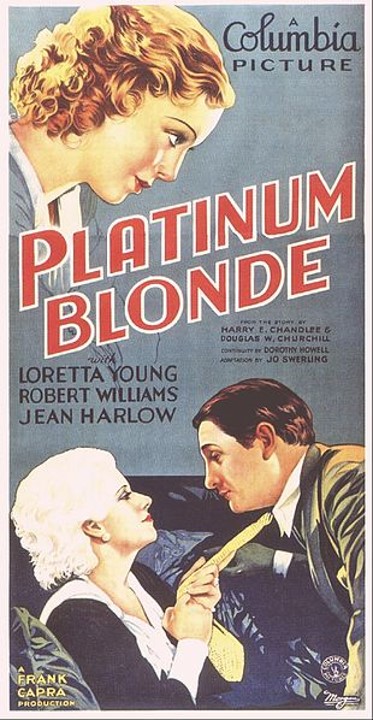
Last month, I received 150 followers! But because of how much time and energy was devoted to writing my editorial for Pale Writer’s Gothic Horror Blogathon, I decided to publish this review in early November. The movie I selected, Platinum Blonde, was released on Halloween in 1931. Since I reviewed Vampyr for my previous blog follower dedication review, I chose Platinum Blonde because, based on the synopsis, it gives the impression that it has a lighter tone. It’s also the first movie of Jean Harlow’s that I’ve ever seen. I discovered this actress through The Jean Harlow Blogathon, hosted by the blogs Musings of a Classic Film Addict and The Wonderful World of Cinema. Even though I didn’t participate in this blogathon, I was introduced to Jean and her contributions to the world of film. Before I begin this review, I want to thank each and every one of my followers! I’m not only impressed by how quickly I reached this milestone, but also by your continued support of 18 Cinema Lane!
Platinum Blonde poster image created by Columbia Pictures. Image found at commons.wikimedia.org/wiki/File:PlatBlonde.jpg
Things I liked about the film:
The acting: I was very impressed by the acting performances in Platinum Blonde! This is because all of the portrayals were consistent and expressive. One good example is Robert Williams’ performance. Throughout the film, his portrayal of Stew Smith was charismatic. He almost always had something witty to say and also had an appealing persona. Robert had good on-screen chemistry with both of his female co-stars as well. Jean Harlow had a pleasant on-screen presence while portraying Ann Schuyler. Her personality was charming and she helped create a character that was different from stereotypical expectations. Jean also had a good on-screen relationship with her co-stars. I really liked seeing this film’s supporting cast! Louise Closser Hale was a standout as Mrs. Schuyler! She was very expressive and her performance was memorable from start to finish! This cast would not have been the same without her.
The set design: Most of this story takes place in and around the Schuyler home. Despite this lack of variety in locations, the interior and exterior of the house was spectacular! The layout of the entryway and foyer reminded me of Norma Desmond’s house from Sunset Blvd., from the metal gate to the large, curving staircase. Everything in the Schuyler house was massive in scale. This environment represented how larger than life the family is. Even the small details found in the home highlighted this lavish lifestyle very well. One perfect example is the carved artwork on Ann and Stew’s headboard. While the exterior was shown on screen for a limited amount of time, it had a pleasant presence on film! In the scene where Ann and Stew share a kiss for the first time, the backyard appeared as a private oasis. From the lighted fountain to the flower arrangements, this space looked very inviting.
The cinematography: I wasn’t expecting anything special in Platinum Blonde when it came to the cinematography. But I was pleasantly surprised by the cinematography I did find in this film. In some scenes, when a character would walk up the stairs, the view from the camera looked down on the characters. This presented an illusion that the environment surrounding these individuals was grand in scale. Another scene that had interesting cinematography was when Mrs. Schuyler and the butler, Smythe, were on the balcony looking down on the living room. Because the camera angle came from a ground level perspective, it gave the audience the idea that most of Ann’s family looked down on Stew, both literally and figuratively. It also alluded to the differences in socio-economic standing.
Under-utilized characters: At the beginning of the film, the character of Bingy Baker was introduced. I thought he would experience one hilarious situation after another while also finding true love. Sadly, this particular character received a very minor role. It also seemed like he was there just for the sake of comic relief. Bingy is an example of how some characters in this movie were under-utilized. If this character were removed from the story, it wouldn’t have made much of a difference.
An unexplained conflict: The start of the film features a conflict about Ann’s brother’s, Michael’s, relationship with a dancer. This is how Stew came to be introduced to the Schuyler family. While the characters kept saying that the situation was bad, they failed to explain why it was bad. With the conflict of Ann and Stew getting married, the audience was given reasons why this was a problem through the visualization of certain events. But this was not the case for Michael’s conflict, as it evidently seemed to be swept under the rug.
A somewhat unhealthy relationship: As I already mentioned, Platinum Blonde’s major conflict revolved around Ann and Stew’s relationship. While there were times when it seemed like they cared about one another, there were also times when their relationship came across as unhealthy. For most of the film, Ann and Stew do not make compromises. The audience gets to see them talking to one another, but these two characters don’t communicate about important martial issues, such as which place they will call “home”. At one point, one member of this relationship becomes hypocritical toward their spouse. Even though this film was created in the early ‘30s, I still found elements of this relationship to be kind of concerning.
On Wikipedia, Platinum Blonde is labeled as a “romantic comedy”. But, in reality, the movie is a cautionary “fish out of water” tale. The reason why I chose to review this film is because I thought it would be lighter in tone. However, Platinum Blonde wasn’t as light-hearted as I expected. Sure, there was at least one romance and some humorous moments. But it wasn’t enough to live up to the title of “romantic comedy”. Despite this disappointment, I did like some elements of this movie. One of these was the cinematography. Because of the camera angles, the scenery was not only complimented, but ideas and themes were able to visually present themselves. Platinum Blonde wasn’t the worst thing to be put to film, but it definitely could have been stronger.
Overall score: 6 out of 10
Are you a fan of Jean Harlow? Which film from the ‘30s do you want me to review? Tell me in the comment section!
Now that the first day of November has finally arrived, it’s time for me to reflect on my participation in this year’s ‘31 Spooks of October’. First of all, I’d like to thank K, from K at the Movies, for allowing me to contribute to their event. I enjoyed reading their thoughts on various short stories and I can’t wait to see what’s in store for next year’s line-up. As I look at the collection of articles that I’ve published, I can honestly say that I’m proud of what I accomplished. While I didn’t complete everything I wanted to, I did create a variety of posts that are interesting and, hopefully, entertaining. These articles are:
What disappoints me is how I wasn’t able to complete my reading goal. But this experience has taught me a lesson. Before the month of October started, I thought that I would be able to read five books in one month. However, several blog related projects prevented this from happening. I did read more for this year’s Spookathon readathon by reading two books instead of just one! Also, this was my first year taking part in the Sbooktober readathon! After this experience, I think it would be better to focus on reading two books a month. As for the books I didn’t read? I’ll read them this November, especially since I have started Murder on Ice. If I were to participate in ‘31 Spooks of October’ again, I think publishing a post a week is a good idea. That way, I can contribute to the event and complete others projects that I want to publish.
This is a question that I asked when I saw Queen of the Damned for the first-time last year. I was curious how this particular character was able to afford his lavish lifestyle while balancing his endeavors as a rock-star. The more I thought about my question, the more I thought about the wealth of the other characters from this movie. How did they acquire their wealth? What is their net worth? Since I haven’t seen a post like this on WordPress before, I decided to write an editorial where I attempt to figure out these characters’ net worth. I’m not a historical or financial expert, so my information will be based on guesses and assumptions. I haven’t read any of the source material that Queen of the Damned is based on, so I turned to Vampire Chronicles Wiki only to determine birth dates and the years when these characters became vampires. However, I didn’t rely too much on this site because the film and the source material share more differences than similarities. To determine net worth, I looked at items from the auction website, Sotheby’s, that correlated with these significant years of the characters. All of the items’ prices will be included with its United States Dollar value. Because we don’t know the year when the film takes place, we will assume it takes place around Halloween of 2002, especially since Marius was seen reading a magazine where the back cover says “All Hallow’s Eve”. I also turned to Jen, from the blog, Bookworm, because she has read the books and seen the movie. This means that she would know these characters better than me. Here’s the link to Jen’s blog if you want to check it out!
This post is not only created for the Gothic Horror Blogathon, it also corelates with ‘31 Spooks of October’ and my recent achievement of publishing 125 movie reviews! Before we begin, I just want to let you know that this is probably the longest editorial I’ve ever written. Also, all of the pictures that are featured in this editorial are screenshots that I took with my cellphone.
Here is photo evidence that the concert took place around Halloween. Screenshot taken by me, Sally Silverscreen.
Khayman
In the Queen of the Damned film, Khayman is one of members of the Ancients group. According to Vampire Chronicles Wiki, Khayman was Akasha’s chief steward. But this detail was not brought up in the film, so we will assume that this was his occupation before he became a vampire. The reason for Khayman’s negative feelings toward Akasha is unknown in the movie, but it seems like she made a decision that did not sit well with Khayman. On Sothebys, I found three items that shared the date of or around 4,000 B.C.; the approximate date when Khayman was born and became a vampire. The first item, An Anatolian Figure, was sold in 2001 for $6,600. For the sake of this discussion, we will assume that if Khayman owned this item, the aforementioned price will be the worth of the item. Another item that sold in 2001 was a set of Three Stone Mace-heads. This set had a final price tag of $2,700, so this will the worth of the set for this conversation. The last item, an Egyptian Hardstone Jar, has an approximate worth somewhere between $8,000 and $12,000, so we’ll just say that it’s worth $12,000. If we add these prices up, it totals to $21,300. Remember when I mentioned that Khayman was Akasha’s chief steward? Well, let’s say that throughout his career, he received a third of her finances, which would be approximately $11,944. When we include that number with the prices of the previously stated items, Khayman’s net worth totals to the amount of $33,244.
Before starting this project, I had assumed that Akasha would be one of the film’s more wealthier vampires. But Jen, from Bookworm, brought up an excellent point that changed my perspective on Akasha’s net worth. Jen told me that Akasha wouldn’t have any money due to Marius taking care of her while she was in her semi-comatose, statuesque state. In the film, Akasha was seen in this state and stayed that way for the majority of the story. For this editorial, however, we’re going to assume that she was able to keep at least three possessions before she turned into a statue. The first possession would be an Egyptian Cosmetic Case, which sold for $1,693 in 2002. One year earlier, in 2001, a Stone Figure from the 6th Millennium sold for $19,150. An Egyptian Porphyritic Diorite Vase, which has a date of around the time when Akasha became a vampire, is worth $10,000 to $15,000. For this project, we will guess that this vase is worth $15,000. Adding up those numbers together, the total worth of these items would be $35,843. This means that this number represents Akasha’s total net worth.
For the first vampire ever created, this financial amount seems low. But, in the movie, Akasha spent more time in a semi-comatose, statuesque state than she did ruling over Egypt. Because she broke out of this state in 2002 after thousands of years, she probably wouldn’t be able to access the money she had as easily as the other vampires. In fact, she probably squatted the California house that she took Lestat to after taking him from his concert. Jen, from Bookworm, brought up another good point that puts Akasha’s financial situation into an interesting perspective. Even though, in the film, she doesn’t have any known family or children in existence, we would assume that she had a will. But if she did have a will, it wouldn’t be effective when she eventually died at the end of the film. Akasha traveled to Death Valley, California to take Lestat from his concert and she later died in Maharet’s house in the Sonoma area. As Jen told me, there’s a good chance that Akasha did not have any sort of legal U.S. citizenship, so any legal documents relating to finances would likely not be accounted for.
Not much is known about this particular character. Even in the movie, the only information that’s shared about him is that he’s an Ancient. But, according to Vampire Chronicles Wiki, Mael was born and became a vampire in 10 A.D. By taking a look at three items from this time period, we can guess his potential net worth. Two of these items are manuscripts. One of them is a Collection of Large Papyrus Documents, which has a worth of about $4,908 to $8,180. For this discussion, this collection will be worth $8,180. The other one, a Collection of Egyptian Papyrus Manuscripts, is worth $31,034 to $46,551. We’ll just say that if Mael owned this collection, it would have a worth of $46,551. The last item is a Roman Black-ware Miniature Amphora. For the sake of this project, let’s just say that this one item is worth $1,200. When these numbers are added up, Mael’s total net worth would be $55,931.
On the Vampire Chronicles Wiki website, it says that David was born in the 20th Century. Since his age is never mentioned in the movie, we are going to guess that David is 43 years old during the course of the film. The reason for choosing this age is because that’s how old Paul McGann, the actor who portrayed David, was in the year when the movie was released. As we can see in the film, David has a prominent position in a detective agency known as Talamasca. In fact, the Vampire Chronicles Wiki website clarifies his position is a “superior general”. Because salary was never brought up in the film, we’re going to assume that it would mirror the typical salary of an investigator. Since David’s standing in the Talamasca is pretty respectable, the assumption is that his salary is on the higher end of the spectrum. According to the website, SalaryList, this would be $189,592. Over his 43 years, David would probably have collected family heirlooms. For this project, we will highlight three items that could belong to him. The first item would be a Set of Danish Silver Dinner Plates. This collection is worth $12,000 to $18,000, so we’ll just say that the worth on the plates is $18,000. The next item is a Heriz Carpet, which has the exact same worth as the aforementioned dinner plates. Again, we’ll assume that this particular item is also worth $18,000. The final item is a Library Table, which has a worth of $20,000 to $30,000. Let’s make a guess that if David inherited this item, it would be worth $30,000. All of this means that David’s net worth is likely $255,592.
The Queen of the Damned movie reveals very little about Pandora. Even the Vampire Chronicles Wiki website doesn’t clearly state when she was born or when she became a vampire. After doing the necessary math based on what was written on the previously mentioned website, I assume that Pandora was born in 10 B.C. and that she became a vampire in 21 A.D. Though not mentioned in the film, the Vampire Chronicles Wiki website shares that her father was a Roman Senator, who happened to be wealthy. We’re going to assume that, after Pandora’s father died, she inherited $1,000,000. We’re also going to assume that she was able to hold on to some possessions she might have had before she became a vampire. One of these items would likely be a Conch Pearl Necklace. According to an article from Sotheby’s, “the Romans prized pearls as the ultimate status symbol”, so Pandora having pearls in her collection of heirlooms would make sense. This particular necklace has a worth of $305,784 to $407,712, so we’ll say that it’s worth the latter for this project. Speaking of jewelry, the next item would be a set of Lazuli, Beads, and Pendants from the 1st Millennium, when Pandora was born. This collection’s worth is between $3,000 and $5,000, so we’ll guess that it’s worth $5,000. The final item would be a Roman Marble Fragment, which has a worth of $19,288 to $32,147. In this discussion, we’ll just say that this item is worth $32,147. When we add these values, Pandora’s net worth ends up being $1,444,859.
As Pandora indicated in a deleted scene for the Queen of the Damned film, Armand was taken under Marius’ wing and became his vampire son. Because of this, there’s a chance that he would receive at least half of Marius’ net worth, which would be $3,959,059. Before becoming a member of Marius’ vampire family, Armand was born in 1480. After Armand was taken in by Marius, he became a vampire in 1497. Because we know very little about Armand’s biological family, we will guess that Armand was able to keep at least one item from them. This item, for the sake of this project, will be a Northern European Brass Pot. The brass pot is worth $2,000 to $3,000, so we’ll say that it’s worth $3,000.
In the film adaptation of Queen of the Damned’s predecessor, Interview with the Vampire, Armand owned the building where Theatre des Vampires, a group of performers who are also vampires, hosted shows. Armand was also the leader of this group. To determine the revenue that the theater possibly generated, I searched for theaters that had a similar date and location to Armand’s. The one I chose for this editorial is Théâtre de l’Ambigu-Comique, which, ironically, faced a similar fate to Armand’s theater. Before we talk about that, let’s go back to the discussion of revenue. In the 1800s, when Armand’s part of the story takes place, the cost of a theater ticket was around 30 cents. If there were 1,250 seats in Armand’s theater, the same number of seats that Théâtre de l’Ambigu-Comique had at one point, that means that the total sale of tickets for one show would be $375. If Armand’s theater hosted 36 shows throughout a single year, the total revenue would be $13,500. In the Interview with the Vampire film, Armand’s theater burns down and Armand becomes the only survivor of that situation. He even references this event in the aforementioned deleted scene. Because insurance has been around since the 2nd to 3rd millennia B.C. and because accident insurance existed in the 19th century, we’ll assume that Armand received an insurance settlement of $1,000,000. After all this is said, Armand’s net worth is revealed to be $4,975,559.
When he makes his debut in the Queen of the Damned film, Marius tells Lestat that he’s “a noble by nature”. Since we don’t exactly know what he meant by this statement, we’ll just assume that he was a literal noble before he became a vampire. If this were the case, it would make sense. One of the benefits of being a noble is having access to at least one estate. Through Lestat’s journalistic flashbacks, we see that Marius has a very large home on a private island. This estate would likely be valuable. In fact, I looked toward another structure that was built around the time when Marius became a vampire; 10 A.D., in order to determine the house’s worth. This structure is ‘Pyramid of the Sun’ from Mexico. One of the materials that was used to build this pyramid was limestone, so we’re going to assume that this material was also used to build Marius’s island home. In an article from History Channel, limestone was used to cover the pyramid’s walls. Also, according to Sotheby’s, a Limestone Head is worth somewhere between $6,706 to $10,730. Because one side of the pyramid is 733.2 feet, we’re going to multiply this number with the higher end of the price spectrum of the Limestone Head, which equals $7,867,236. This is the value that we will put on Marius’s island home for the sake of this discussion.
Marius’s house is not the only thing he owns that would be worth a lot of money. One of these items is likely be a pair of Egyptian Glass Eye Inlays, which is worth $7,715 to $10,287. For this project, we will say that this pair is worth the latter amount. Throughout the movie, we see Marius as an artist, creating a few paintings at various moments. Because of his status as an Ancient, let’s just guess that Marius is the Michelangelo of the vampire world. One work of Michelangelo’s, “Profile of a Man” has a worth of $1,504 to $2,257. Let’s say that Marius sold ten paintings for $1,504 each. This means that he collected a total of $15,040. Remember when I talked about Akasha’s net worth? Well, when she and Lestat got “married”, that marriage was not made legitimate. This is because their marriage was based on “he said, she said”. In one of Lestat’s flashbacks, Marius explains that he keeps Akasha and her husband in their statuesque states in his house. After she died, it would make sense for Marius to receive Akasha’s net worth. So, overall, Marius’s net worth rounds out to $7,918,119.
Another wealthy Ancient is Jesse’s aunt, Maharet. On the Vampire Chronicles Wiki website, she lived around the time of Akasha, becoming a vampire in 4,000 B.C. I found three items that share this date that we’re going to guess Maharet would own. The first item is a Porphyritic Diorite Vase that is similar to Akasha’s. Because I already talked about this vase’s worth, we’re going to restate that it’s worth $15,000. The next item is a Stone Figure, which is worth $15,000 to $25,000. For this article, we are going to say that it’s worth $25,000. The last item is a Basalt House Figure, which is worth six to nine thousand dollars. But because this item sold in 2001 for $19,150, let’s say that this is the worth of this figure.
The Queen of the Damned film never reveals how Maharet acquired her wealth. But the Vampire Chronicles Wiki website shares that she “could communicate with spirits”. I’m guessing that this is the equivalent to a “medium”. So let’s say, before she became a vampire, Maharet ran a business where she used her talents to help others. We’re going to assume that the price of these “communication sessions” cost a total of $10. If she conducted four of these sessions throughout a month, she would make $40. Now if she ran this business for a year, she would make $480. If she ran her business for 2,000 years, her total revenue would be $960,000. In the movie, the climax takes place at Marahet’s house, which is located in California. On realtor.com, there’s a listing for a house in a location and with a style similar to the one in the film. It’s listed at $6,700,000. If this was the worth of Maharet’s house, it would be included in her net worth of $7,719,150.
Shortly after meeting Marius for the first time, Lestat tells him that he’s the “lord of a great man”. Like what Marius said about being a “noble”, we’ll just assume that Lestat was being literal about being a lord. On the website, Prestige Property Group, I found two houses that look like a property that Lestat’s family could have owned. One of them has a price tag of $984,500 and the other one has a price tag of $2,267,100. For my editorial, we will guess that Lestat’s family home would be worth $3,251,600. Toward the beginning of the film, we see that Lestat has a run-down house in New Orleans, where his soon-to-be band mates are seen practicing. I found a listing for a house on realtor.com that could resemble the house in the film. In this listing, the New Orleans house is listed for $4,995,000. For the sake of this project, we will assume that this price is the worth of Lestat’s house. We’ll also assume that Lestat held on to three personal possessions from before he became a vampire. The first of these items is a Louis XV Giltwood Mirror, which is worth $3,000 to $5,000. We will say that this mirror has a worth of $5,000. A Louis XVI Tapestry is the next item, with an approximate worth of twelve to eighteen thousand dollars. In this discussion, we’ll just assume that the tapestry is worth $18,000. With a worth of $12,000 to $18,000, a George I Cabinet on Chest is the last item. Like I said about the tapestry, we’ll say that the worth of the cabinet is also $18,000. Because, in the film, Marius turned Lestat into a vampire, he could receive half of Marius’ net worth of $3,959,059.
One of the biggest factors of the Queen of the Damned film is Lestat being a rock star. This definitely plays into Lestat’s total net worth, even though he is a member of a five-person group. In the film, the band’s concert took place in Death Valley, California. The layout was different from that of a typical stadium, which sets separate prices based to where the seats are located. Also, this was the only concert that band was hosting, because Lestat didn’t want to repeat his performance. This means that tickets for this concert might have been very valuable. In an article from Princeton University, it was reported that “in 2001, the average concert ticket price was about $40, with the average high-end cost close to $60”. But because of what I just said about the aforementioned concert, we’re going to make a guess that the range of prices for this concert’s tickets were $50 and $100. Now, let’s say that 1,000 people attended the concert. Half of them bought the $50 tickets, while the other half purchased the $100. When we multiply the first half, we get a total of $25,000. The total of the other half would be $50,000. While the overall revenue would end up being $75,000, it’s important to figure out what Lestat’s piece of the pie would be. Not only do we see at least one music video from this band, we also see several pieces of advertising about the concert. Let’s say that some of the concert revenue went towards paying the music video’s filming team and covering the cost of marketing, which we’ll keep at 10% each. Divide this number with $75,000, this payment would be $7,500 each. This leaves the $60,000 to split between five people, which now means that Lestat would walk away with $12,000. If you think this is a low number, consider that Lestat’s band also made at least one CD. Based on an article from Electronic Musician, which reported in early 2002 that CD prices could be lowered to $9.99, we’ll assume that in the Queen of the Damned film, a typical CD costs $10. We’re also going to assume that a million copies of this CD were sold. When those numbers are multiplied, we get a total of $10,000,000. But remember, there’s five members in this band, so Lestat would end up receiving $2,000,000. After all of this information is accounted for, Lestat’s total net worth is likely $14,258,659.
The Vampire Chronicles Wiki website says that in the Queen of the Damned movie, Jesse was “in her early twenties”. So, for the sake of this discussion, we’ll guess that Jesse was 25 years old. This was the age of Marguerite Moreau, the actress who portrays Jesse, in 2002, so this is why I have chosen this age for this project. As we can see in the movie, Jesse works for the same Talamasca that David is the superior general of. But, since her position is that of an “apprentice”, her salary would be on the lower end of the spectrum. Going back to the website, SalaryList, it would likely be $39,370. Remember, Jesse is Maharet’s niece, so it’s possible that she would receive half of her aunt’s net worth. This number would be $3,859,575. Receiving this money would have allowed her to live in London, travel to California, and attend Lestat’s concert. Speaking of Lestat, he was the one that turned her into a vampire toward the end of the movie. This means that she could have access to half of Lestat’s net worth, which is $5,149,800. While the exact state of Lestat and Jesse’s relationship is unknown, it is assumed that they decided to pursue a romantic relationship at the end of the film. Jen, from Bookworm, told me that vampires do not marry, but it’s possible that Lestat and Jesse would have come up with a financial agreement if their relationship grew stronger. Overall, the grand total of Jesse’s net worth is going to be $9,048,745.










![20191110_131037[1]](https://18cinemalane.com/wp-content/uploads/2019/11/20191110_1310371-e1573410229997.jpg?w=401&h=574)






![20191029_225043[1]](https://18cinemalane.com/wp-content/uploads/2019/10/20191029_2250431-e1572404515583.jpg?w=533&h=396)
![20191029_225043[1]](https://18cinemalane.com/wp-content/uploads/2019/10/20191029_2250431-1-e1572404842636.jpg?w=456&h=397)
![20191029_224954[1]](https://18cinemalane.com/wp-content/uploads/2019/10/20191029_2249541-1-e1572405494914.jpg?w=512&h=405)
![20191029_225043[1]](https://18cinemalane.com/wp-content/uploads/2019/10/20191029_2250431-2-e1572405002374.jpg?w=530&h=441)
![20191029_224954[1]](https://18cinemalane.com/wp-content/uploads/2019/10/20191029_2249541-e1572405658224.jpg?w=544&h=372)
![20191029_224954[1]](https://18cinemalane.com/wp-content/uploads/2019/10/20191029_2249541-2-e1572405810844.jpg?w=664&h=331)
![20191029_225111[1]](https://18cinemalane.com/wp-content/uploads/2019/10/20191029_2251111-e1572406071945.jpg?w=715&h=289)
![20191029_224954[1]](https://18cinemalane.com/wp-content/uploads/2019/10/20191029_2249541-3-e1572406181940.jpg?w=640)
![20191029_225111[1]](https://18cinemalane.com/wp-content/uploads/2019/10/20191029_2251111-1-e1572406368579.jpg?w=640)
![20191029_223812[1]](https://18cinemalane.com/wp-content/uploads/2019/10/20191029_2238121-e1572406541122.jpg?w=640)
![20191029_223812[1]](https://18cinemalane.com/wp-content/uploads/2019/10/20191029_2238121-1-e1572406642131.jpg?w=640)
 18 Cinema Lane