Take 3: The Best Christmas Pageant Ever Review

1983 saw the release of A Christmas Story. In the forty years since that movie’s premiere, it has earned the coveted title of “classic” Christmas cinema. It has even become one of the most merchandized Christmas films of our time. But A Christmas Story was not the only Christmas movie released in 1983. That same year saw the premiere of The Best Christmas Pageant Ever! While figuring out which Christmas movies to review this year, I reflected on all the Christmas titles I’d seen in the past. During this reflection, I realized I hadn’t seen The Best Christmas Pageant Ever in a very long time. However, I remember liking the film. So, in this review, I’ll be evaluating whether this movie still holds up forty years later!

The Best Christmas Pageant Ever title card created by Comworld Productions, Schaefer/Karpf Productions, and American Broadcasting Company (ABC)

Things I liked about the film:

The acting: One of my favorite scenes in The Best Christmas Pageant Ever is when Grace Bradley, portrayed by Loretta Swit, explains the Nativity story to the Herdman children. Because religion is not prioritized in the Herdman household, the Herdman children become curious about the story behind the play they are starring in. While Grace is reading the Nativity story, the Herdman children ask questions and make assumptions. From Gladys stating to Imogene how the Wise Men were “the welfare” to Leroy asking why King Herod isn’t in the Nativity play, this scene shows how children are trying to grasp the basic understanding of the Nativity story. What makes this scene work is the candid and realistic portrayals of the actors and actresses portraying the Herdman children. With the Herdman children trying to connect the story to aspects of their own lives, the film’s audience can see the children attempting to make sense of what they are being told. The motherly persona and patience Loretta displays throughout the Nativity reading also helps. Grace is recognized as someone who is trying her best to do a good deed because of Loretta’s performance.

The messages and themes: Helen Armstrong, the Sunday School teacher and director of the Christmas pageant, tells Grace how every child participating in the pageant should feel important. Grace takes Helen’s advice to heart when she includes the Herdman children in the Christmas pageant. From telling the Herdman children about the Nativity story to giving the Herdman children major roles in the play, Grace tries her best to make the Herdmans feel important. Because of Grace’s efforts, the Herdman children begin to take the play seriously. They even start to change some of their ways. This part of the story showcases a central message of The Best Christmas Pageant Ever: making others in your life feel important and included. While this message can be found in movies from any season, it was nice to see it in a Christmas film.

Christmas from a religious perspective: Most Christmas movies, especially from Hallmark, will prioritize the secular components of the holiday. From Christmas trees to gift giving and even Santa Claus, these elements have become staples in Christmas cinema. While there are Christmas films that acknowledge the religious component of Christmas, few of them prioritize it. This is what sets The Best Christmas Pageant Ever apart! The story itself revolves around the production of a church’s Nativity play. As I previously mentioned, Grace Bradley explains the Nativity story to the Herdman children. While there are Christmas decorations throughout the movie, these decorations are far and few between. There is no mention of Santa Claus and none of the children discuss what they want for Christmas. Because of The Best Christmas Pageant Ever’s emphasis on the religious component of Christmas, the film avoided a lot of cliches and tropes typically found in Christmas films.
Three Wise Men themed wish list paper image created by Freepik at freepik.com. <a href=”https://www.freepik.com/free-photos-vectors/christmas”>Christmas vector created by freepik – http://www.freepik.com</a>. Image found at freepik.com.

What I didn’t like about the film:

Breaking the fourth wall: At certain points of the story, Beth Bradley breaks the fourth wall, talking directly to the audience about the Herdman children. While I recognize Beth is explaining things that came from the book, I found the broken fourth wall inconsistent. Even toward the end of the movie, Beth explains the Herdman’s actions through a voice-over. I wish parts of the story, such as the Herdman’s home life, had been brought up through dialogue. If there had to be a narrator, I wish the book’s author and film’s screenwriter, Barbara Robinson, had narrated the story.

Parts of the story that don’t lead anywhere: There were parts of The Best Christmas Pageant Ever that didn’t lead anywhere. One example is Alice’s role in the overall story. During rehearsals for the Christmas pageant, Alice records all of the Herdman children’s mischief in a notebook. She shows this notebook to Beth, explaining how she will show the notebook to the grown-ups in the parish if the Christmas pageant turns out to be a disaster. As the story progresses, nothing becomes of this notebook. After she shows it to Beth, Alice doesn’t bring up the notebook again. Instead of this unresolved subplot, Alice’s part of the story should have focused on Alice learning to stand up for herself and dealing with bullies.

Not addressing bullying: As I just mentioned in my previous point, Alice’s part of the story should have focused on Alice learning to stand up for herself and dealing with bullies. Had this idea been included in the script, the story would have showed younger audience members how to resolve the issue of bullying. In The Best Christmas Pageant Ever, the Herdman children bully their peers. The children affected by the Herdmans don’t stand up against them. Even when someone did speak up, such as Charlie telling his father about Leroy Herdman stealing his lunch, the grown-ups in the children’s lives don’t deal with the conflict. Because bullying was not addressed in The Best Christmas Pageant Ever, some younger audience members could walk away from this movie thinking they shouldn’t bother talking about bullying.

Necessary Christmas items image created by Moonstarer at freepik.com. <a href=’https://www.freepik.com/free-vector/christmas-elements-collection_994916.htm’>Designed by Moonstarer</a>. <a href=”https://www.freepik.com/free-photos-vectors/christmas”>Christmas vector created by Moonstarer – Freepik.com</a>. Image found at freepik.com.

My overall impression:

In television shows of yesteryear, a show’s creative team would create a “very special episode”. These episodes would either bring up a serious, real-world topic or would take place around a major holiday. When this type of episode premiered, it would sometimes feel like an event, with a show’s creative team inviting guest stars to add excitement or relevance to the episode’s story. The Best Christmas Pageant Ever felt more like a “very special episode” of a television show than a movie. As someone who watches and reviews movies, I found myself expecting more from the 1983 film. The adaptation does have merit, which can be seen in the acting performances and heard in the messages and themes. But there are parts of the story where the film falls short. Instead of having Alice record the Herdman children’s mischief in a notebook but not do anything about the notebook, Alice should have learned how to stand up for herself against bullies. The book’s author and film’s screenwriter, Barbara Robinson, should have narrated the story instead of having the fourth wall inconsistently broken. Looking back on the Christmas movies I’ve seen, it seems like The Best Christmas Pageant Ever has been forgotten by time. Then again, I don’t know how many people would purchase merchandise associated with this movie.

Overall score: 6 out of 10

Have you seen or read The Best Christmas Pageant Ever? Are there any Christmas movies from the 1980s you enjoy watching? Let me know in the comment section!

Have fun at the movies!

Sally Silverscreen

My Movie Blogger’s Christmas Wish-List 2023

As the season of Fall evolves into Winter and the Christmas/holiday season is upon us, it’s time for my annual Movie Blogger’s Christmas Wish-List! This is a tradition where I create a list of movie related things I’d like to receive for Christmas. Similar to last year’s list, there are four items on my wish-list. These items are a combination of realistic requests and wishful thinking. Each item has been placed in one of four categories, with the categories following the quote; “Something you want, something you need, something to wear, and something to read”. With explanations out of the way, let’s get into this year’s Christmas wish-list!

Image by Freepik

Something You Want

I wrote an editorial back in August about how Evan Williams and George Blagden should go to Eurovision 2024. I even mentioned this in my review of The National Tree. One of my arguments in that editorial was the writers and actors strikes that took place during the time I published my editorial. But as of mid to late December 2023, both the actors and writers strikes have ended. Even if George and Evan had the time to participate in Eurovision, there is no guarantee a participating delegation will select them as their representatives. Therefore, I really hope a delegation sees Evan and George’s potential and sends them to Eurovision! If you’re interested, you can read my editorial at the link below.

Why Evan Williams and George Blagden should go to Eurovision 2024

Portrait of Evan Williams created by Victoria Lemmus. Portrait of George Blagden created by Charlie Carter – © Charlie Carter 2020. Both portraits found on IMDB.

Something You Need to See

When I watched Curious Caterer: Fatal Vows, I was pleasantly surprised to discover Max Lloyd-Jones starred in the film! Though I liked his performance, I wondered why he hasn’t been cast in a Hallmark mystery movie as a detective? Based on his projects I have seen, I think Max has what it takes, talent wise, to portray this type of character. Another performance I was impressed with was Madeleine Arthur’s from 3 Bed, 2 Bath, 1 Ghost! In that movie, Madeleine’s portrayal of Ruby Baker stole the show, as her performance was one of the best parts of that film! I would like to see Madeleine and Max star as the lead actress and actor in a Hallmark mystery film! Even if the movie was a stand-alone picture, I would be curious to see Max and Madeleine work together on a Hallmark project!

Magnifying glass image created by Freepik at freepik.com. <a href=’https://www.freepik.com/free-vector/magnifying-glass-with-fingerprint-in-flat-style_2034684.htm’>Designed by Freepik</a>. <a href=”https://www.freepik.com/free-photos-vectors/flat”>Flat vector created by Freepik</a>. Image found at freepik.com.

A movie related piece of clothing or accessory I’d want to wear

Speaking of 3 Bed, 2 Bath, 1 Ghost, I want to talk about one of Ruby’s pair of shoes! Toward the beginning of the movie, Ruby wore a cute pair of white high heeled shoes at her birthday party. These heels were covered in a white lacy material. Topped with a little black bow, Ruby’s shoes had a timeless style that allow them to work with an outfit from the 1920s or the 21st century!

Because Ruby wore this pair of shoes while dancing, it was difficult to find a good photo of the shoes. Photo found on Hallmark Channel

A book I’ve read that I’d like to see adapted into a film

For this year’s Christmas Wish-List, I’ve selected a poem I’d like to see adapted into a film. When I reviewed Edgar Allan Poe’s The Raven and Other Poems, I talked about how I liked ‘The Coliseum’. From my interpretation, the narrator is describing an abandoned facility, with a series of voices reminding the reader how the history, stories, and people associated with the titular coliseum should be remembered. This is one of those poems I think could lend itself well to visual media! Flashbacks would showcase the coliseum’s past or the voices could be shown on screen as ghosts. Since the poem itself is open to interpretation, the story could fit into almost any genre. It seems like ‘The Coliseum’ is one of Edgar’s more underrated pieces of literature, so it would be interesting to see how it’s adapted!

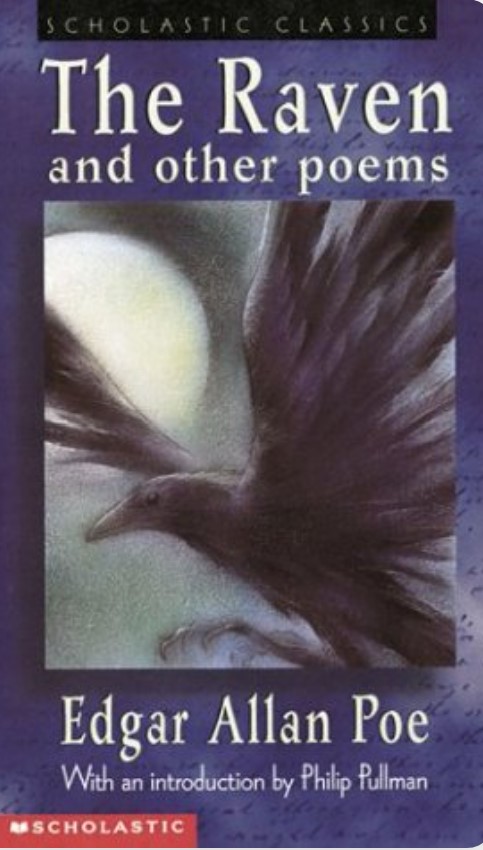
The Raven and Other Poems book cover found on Goodreads

What are your thoughts on my Christmas wish list? Are there any movie related things you’d like to receive during the Christmas/holiday season? Tell me in the comment section!

Have fun during the Christmas/holiday season!

Sally Silverscreen

Take 3: The Curse of Frankenstein Review

When I was first introduced to the world of Hammer-Amicus films, it was through the Third Hammer-Amicus Blogathon, hosted by Gill and Barry, from Realweegiemidget Reviews and Cinematic Catharsis. For that event, I reviewed the 1972 movie, Vampire Circus, which I thought was just ok. With the return of the aforementioned blogathon, I’ve decided to choose a Hammer-Amicus production that was recommended to me. Back when I wrote about Vampire Circus, Barry, from Cinematic Catharsis, suggested I check out several films, with 1957’s The Curse of Frankenstein being one of them. In my review of Frankenweenie, I mentioned how I haven’t seen many adaptations of Mary Shelley’s Frankenstein. To make up for lost time, I selected The Curse of Frankenstein for the blogging event!

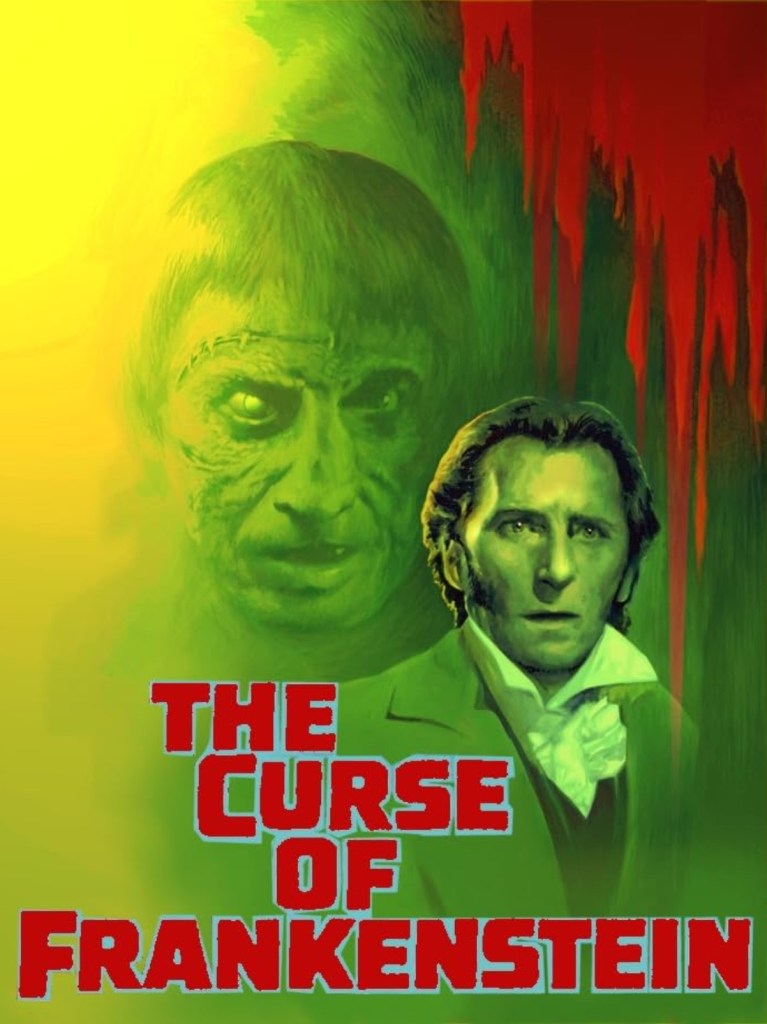
The Curse of Frankenstein poster created by Hammer Films and Warner Bros.

Things I liked about the film:

The use of WarnerColor: When discussing “classic” cinema, there has been a debate over whether a film should remain with black-and-white imagery or if it should receive the Technicolor treatment. In my opinion, I’m glad The Curse of Frankenstein was released in WarnerColor, which I believe was the studio’s version of Technicolor. This creative decision allowed certain elements within scenes to appear vibrant! In Victor’s laboratory, various jars and bottles were scattered throughout the room. Liquid filled these bottles and jars, boasting bright colors like red, blue, even purple. These hues provided a nice contrast to the gray walls of the laboratory. The incorporation of color worked in the favor of the film’s wardrobe department! While working on his experiment, Victor wore a beige three-piece suit. He also wore a maroon neck scarf, which gave his outfit a pop of color. Another character who wore a mostly beige outfit is Elizabeth, whose gown was covered in a silky beige material. Her dress featured a light blue bow and sash, providing the gown with a nice color combination!

Historical accuracy: Mary Shelley’s Frankenstein was published in 1818. Reflecting on The Curse of Frankenstein, it seems like the movie’s creative team kept this fact in mind as the project looked and felt historically accurate! Remember when I mentioned Victor wore a three-piece suit with a maroon neck tie? His friend, Paul, also wore a three-piece suit. Victor even wore a pocket watch, an accessory that he occasionally used. The attire of both Paul and Victor highlighted how men dressed in the 1800s. Home décor is also reflective of when a story takes place. In the upstairs hallway and in the sitting room of Victor’s house, the walls were covered in intricate wallpaper. The wallpaper, which featured elegant patterns, showcases the artistic details that homeowners in the 1800s favored.

The acting: From what I remember of Mary Shelley’s story, Elizabeth’s presence was very limited. Her appearances in the book were so small, readers only became familiar with her. In The Curse of Frankenstein, Elizabeth was given more appearances in the story. This allowed Hazel Court, the actress who portrayed Elizabeth, to present her character as a friendly woman with a likable personality! One scene I liked was when Elizabeth is having a debate with Victor and Professor Bernstein. Professor Bernstein warns Victor about being consumed by science, also reminding Victor of how he should use science for good. Elizabeth adds to the debate by stating it would be better for Victor to go outside and get some fresh air. The way she suggests this to Victor is of kind encourage. A pleasant smile is shown on her face and she is comfortably sitting in an armchair.

In order to bring his experiment to life, Victor recruits the help of his friend, Paul. Because of how often Paul interacts with Victor, Peter Cushing and Robert Urquhart share several scenes together. What Robert’s and Peter’s performance have in common is how effective they utilized emotion! As Victor is conducting his first experiment, bringing a puppy to life, Victor’s face is filled with curiosity. Realizing his experiment was a success, his face slowly transforms into happiness. Victor is so happy, even his eyebrows move. Anytime Paul is upset over Victor’s obsession with his experiment, Robert consistently presents his face with a stern look. His voice also sounds stern, with a hint of anger detected. Based on their performance in The Curse of Frankenstein, I was impressed by Peter and Robert’s acting talents!

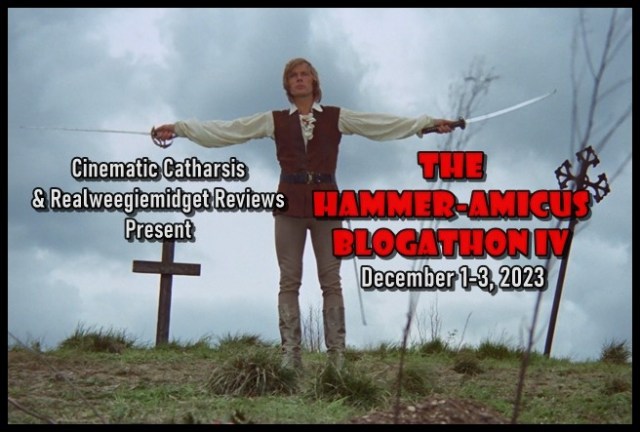
The Hammer-Amicus Blogathon IV banner created by Gill from Realweegiemidget Reviews and Barry from Cinematic Catharsis

What I didn’t like about the film:

A prolonged appearance of Frankenstein’s creature: Within Mary Shelley’s novel, a key character is Frankenstein’s creature himself. Through interactions between the creature and Victor Frankenstein, readers are reminded of how some good intentions can lead to bad results, a message that overarches Mary’s story. In The Curse of Frankenstein, however, so much time is spent showing Victor creating the creature to the point where the creature doesn’t become alive until almost fifty minutes into this hour and twenty-three-minute movie. Even when the creature, portrayed by Christopher Lee, appears in the film, he is only on screen for a handful of scenes. He also doesn’t have many interactions with Victor.

Changed context: After watching Oliver! from 1968, I read Charles Dickens’ novel. Comparing the book to the film, I discovered how the creative liberties made to the adaptation changed the context of certain parts of the story. Since I have read Mary Shelley’s novel before seeing The Curse of Frankenstein, I took notice of how the 1957 movie changed the context of certain narrative parts. A great example is Victor’s motivation for creating the creature. Mary Shelley’s book explains how the inspiration for Victor’s experiment came to him at college. Victor was curious about whether he could, from a scientific perspective, create a human being out of nothing. The adaptation shows Victor being encouraged by his tutor to bring people back from the dead, after Victor and his tutor bring a puppy back to life. Looking back on The Curse of Frankenstein, it seems like some of these creative liberties were made just for the sake of it.

Some inconsistent parts of the story: There were some parts of The Curse of Frankenstein that were inconsistent. One example is Victor’s quest to create the creature. When his tutor encourages him to bring people back to life, Victor declares he will set out to create “the perfect man”, using the “hands of an artist” and the “brain of a genius”. Several scenes later, when Victor shows his friend, Paul, his progress, Paul is disgusted by what he sees. Victor states how the looks don’t matter, but how he brought the creature to life at all. But when Paul criticizes Victor for the creature’s lack of intelligence, Victor blames Paul for destroying the creature’s brain. If Victor’s goal was to bring the creature to life at all, why would he be so upset over the creature’s brain? Victor’s motivation for creating the creature should have been consistent like it was in the book.

Scared audience image created by Katemangostar at freepik.com. <a href=’https://www.freepik.com/free-photo/terrified-friends-watching-horror-movie-in-cinema_1027311.htm’>Designed by Freepik</a>. <a href=”https://www.freepik.com/free-photos-vectors/people”>People image created by Katemangostar – Freepik.com</a>. Image found at freepik.com.

My overall impression:

When a book or pre-existing story is being adapted into a form of visual media, there are bound to be creative liberties included in the final product. Sometimes, these creative liberties can improve upon the source material, making the piece of visual media more entertaining. But there are times when creative liberties are incorporated just for the sake of it. When I chose to review The Curse of Frankenstein, I was hoping the creative team behind the 1957 film would display a stronger understanding for Mary Shelley’s story, especially after seeing Frankenweenie. Instead, the film’s creative team relied so much on creative liberties, I found it distracting. What also didn’t help was prolonging the appearance of Frankenstein’s creature. Based on the movie’s appearance, it looks like the creative team cared about how their project was presented. I not only liked the acting performances, I also appreciate the project’s historical accuracy and the use of WarnerColor. But, unfortunately, The Curse of Frankenstein is another movie that emphasizes style over substance.

Overall score: 5.1 out of 10

Have you seen The Curse of Frankenstein? Would you like to see me review more films from Peter Cushing’s or Christopher Lee’s filmography? Please tell me in the comment section!

Have fun at the movies!

Sally Silverscreen

Take 3: The National Tree (2009) Review + 475 and 480 Follower Thank You

Back in August, I published an editorial about why Evan Williams and George Blagden should go to Eurovision 2024. While doing research for that editorial, I discovered Evan had starred in a Hallmark Christmas movie! Since that film, 2009’s The National Tree, is one I haven’t seen before, I decided to choose it for my next Blog Follower Dedication Review! Reflecting on Hallmark’s Christmas line-ups over the past few years, it seems like the network isn’t making a strong effort to include older Christmas movies in their programming. This, in my opinion, is a shame because some of those older films are more creative than most of the newer Hallmark projects. The National Tree is a part of this conversation, as the film was not only released fourteen years ago, it also doesn’t include a lot of tropes and cliches found in Hallmark’s Christmas pictures. Before we take a trip through this review, I want to thank all the followers of 18 Cinema Lane!

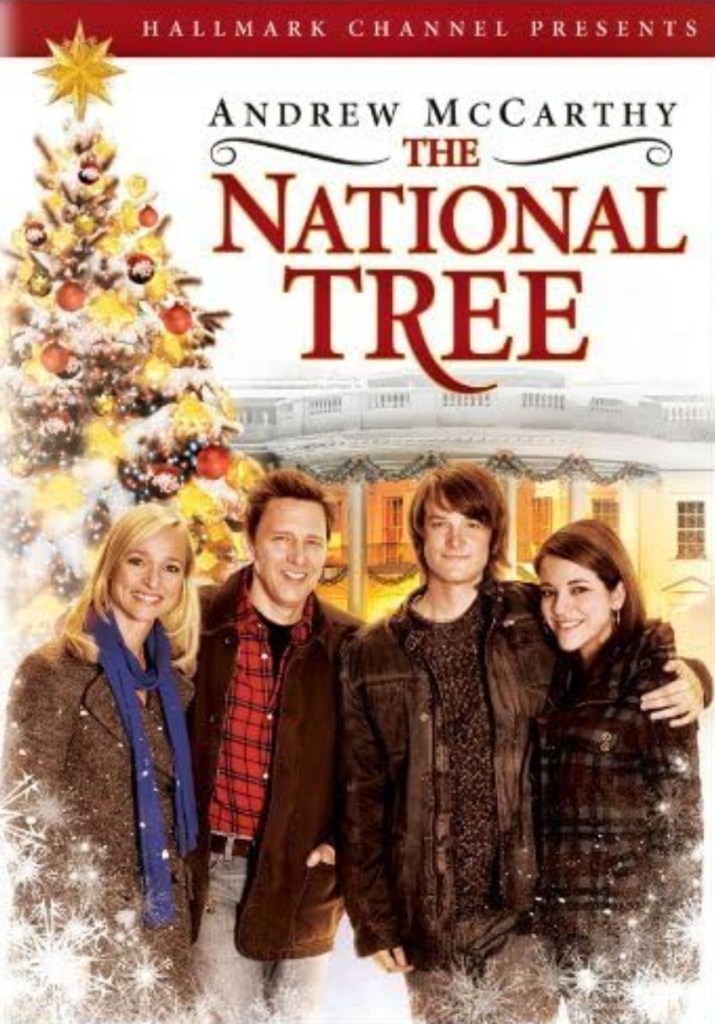
The National Tree (2009) poster created by Hallmark Channel, QVF, and Cypress Point Productions

Things I liked about the film:

Evan Williams’ performance: There are times when an actor or actress gives such a strong performance, they practically carry the movie they’re starring in. This was the case for Evan’s portrayal of Rock in The National Tree! In my opinion, Evan shined the brightest in this film! Rock’s charismatic personality made him a memorable character. Along with that, Evan gave a versatile performance that showcased a variety of expressions and emotions. From being terrified of driving a semi-truck during a forest fire to expressing gratitude over people’s interest in the soon-to-be National Tree, these moments felt realistic, which allowed me to stay engaged in Rock’s story. Because The National Tree premiered over ten years ago, I’d be interested in seeing Evan star in a Christmas movie in the near future!

Creative storytelling: In most of Hallmark’s Christmas movies from the past five, maybe ten, years, the same tropes and cliches have been incorporated into the script. Whether it’s the inclusion of the “woman from the city going back to her small hometown” cliché, showcasing a bundle of Christmas activities, or focusing on planning a party, those elements cause little creativity among these stories. With The National Tree, however, the story revolves around Rock and his father delivering their tree from Oregon to Washington D.C. in order for their tree to become the National Tree. A lot of cliches and tropes that typically find a place in Hallmark’s Christmas programming were avoided because of this story’s more creative approach. Even though there is a romance in The National Tree, it isn’t a primary focus like in other Hallmark projects. The movie provides a different perspective of how people can spend their time during the Christmas season, which creates variety among Christmas projects!

Rock’s interest in filmmaking: During their trip from Oregon to Washington D.C., Rock claims to his father how film is his life. There are several examples and references throughout The National Tree that prove Rock’s point. At the beginning of the movie, the audience witnesses Rock’s award-winning video, the same video that got his tree selected as the National Tree. Segments of the video are filmed in black-and-white imagery, appearing as scenes from a western film. Rock even dresses the part, wearing attire from what looks like the 19th or early 20th century. Before and during his trip, Rock creates videos chronicling the journey. In one video, he uses postcards to show the viewer where he and his father will go. These postcards serve as animation in between scenes, giving visual representations of each state along the trip. Rock’s interest in filmmaking not only makes him an interesting character, it gives the movie a unique identity!

Blue sparkly Christmas tree image created by Macrovector at freepik.com. <a href=”https://www.freepik.com/free-photos-vectors/frame”>Frame vector created by Macrovector – Freepik.com</a>. <a href=’https://www.freepik.com/free-vector/merry-christmas-card_2875396.htm’>Designed by Macrovector</a>. Image found at freepik.com.

What I didn’t like about the film:

Things that don’t make sense: There were some parts of The National Tree that, to me, didn’t make sense. One example was the claims made by Rock’s father, Corey. During the trip, Corey believes people coming to see the tree are ripping off its branches. But throughout the movie, the tree is wrapped tightly in a big canvas sheet and bound to the truck in what appears to be heavy duty rope, bungee cord, and straps. Even Rock records a video of the tree being placed on the truck, providing proof that the tree was secure. There are no scenes in the movie showing anyone vandalizing the tree. With all that said, Corey’s claims seem confusing.

Lack of on-screen chemistry: In The National Tree, Corey works alongside Faith to transport the tree across multiple states. Since Faith’s company is sponsoring the contest that selected the titular tree, she volunteers to supervise the tree’s journey. As I watched this movie, I didn’t sense on-screen chemistry between Andrew McCarthy and Kari Matchett. This had to do with The National Tree adopting the same flaw as Christmas at Castle Hart: showing the characters spending more time in a professional context. Faith and Corey are, more often than not, professional acquaintances. While they do spend personal time together, these moments are far and few between. The lack of romantic connection between Corey and Faith prevented Kari and Andrew from sharing on-screen chemistry.

Relying more on a premise than a plot: Looking back on movies I’ve seen and even reviewed, I realize how I don’t gravitate toward road-trip films. My reason is the story focuses so much on the trip itself, there is little to no room for a conflict or a plot. The National Tree would be considered a road-trip film, as the story revolves around Rock and Corey’s trip to Washington D.C. While I appreciate how this story is more creative than others from Hallmark Christmas movies, The National Tree relied on a premise more than a plot. A premise is what entices a viewer to watch a film, which in this case is Rock and Corey traveling across the United States to transport a tree. But a story’s plot allows the audience to ask “and then what happened”. Like other road-trip movies, The National Tree focuses on the trip itself. The straight-forward nature of the story didn’t leave room for the audience to ask questions.

Children holding American flags during a sunset image created by rawpixel.com at freepik.com. <a href=”https://www.freepik.com/free-photos-vectors/people”>People photo created by rawpixel.com – http://www.freepik.com</a>. Image found at freepik.com.

My overall impression:

In recent years, older Christmas movies have made fewer appearances during Hallmark’s Christmas line-ups. The National Tree is one of these films, as it was created during a time when the network didn’t release forty movies in one season. This has allowed the 2009 project to display a more creative story, not relying on the usual tropes and cliches from Hallmark’s Christmas programming. However, the story doesn’t leave much room for a plot or conflict, as the script focuses on the road-trip. There are even parts of the story that don’t make sense and lack of on-screen chemistry. But there are good things about The National Tree. One of them was Evan Williams’ performance, as he carried the film from start to finish! If you are interested in watching this movie, I’d recommend viewing it as a Thanksgiving film, as the story takes place around Thanksgiving. There is even a scene where some of the characters share Thanksgiving dinner. I’d also recommend watching this movie for Evan’s performance, which was the brightest star of this production!

Overall score: 6 out of 10

Have you seen The National Tree? Would you like to see Evan Williams star in another Christmas movie? Tell me in the comment section!

Have fun at the movies!

Sally Silverscreen

A Familyathon Thank You + Blogathon Announcement

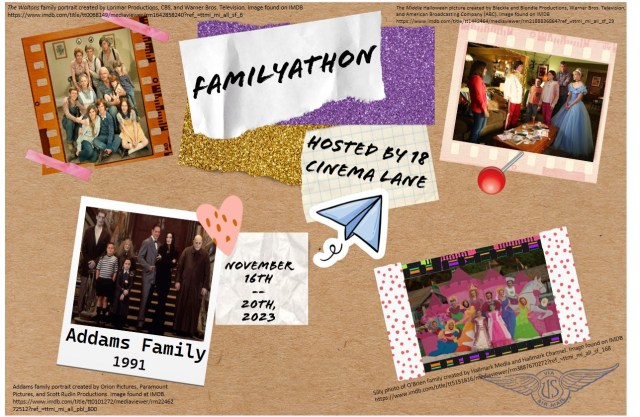
Hello everyone! I apologize for this belated post, as I’ve working on a blog related project. I wanted to take the time to thank every blogger who participated in my blogathon, Familyathon! This year’s event was such a success and I liked reading all the articles. I will definitely host another blogathon in 2024! More details about the event will be revealed earlier in the new year.

Familyathon blogathon banner created by Sally Silverscreen of 18 Cinema Lane

Have fun at the movies!

Sally Silverscreen
Take 3: Shadowlands (1985) Review

Films are a way to visually tell a story. The subjects can range from the fictional to the historical. With movies belonging in the non-fiction genre, that story can introduce viewers to a particular person, event, or time period. This is the case for the 1985 made-for-TV film, Shadowlands! I will admit I knew very little about C.S. Lewis prior to The Two Jacks Blogathon, hosted by Taking Up Room. While I was aware of his contribution to literature, creating the Chronicles of Narnia series, my knowledge of the author was surface-level. By participating in this blogathon and by choosing to review Shadowlands, I hoped to learn more about C.S. Lewis and the literary world he created! Now, it’s time to open the wardrobe door and step into this review!

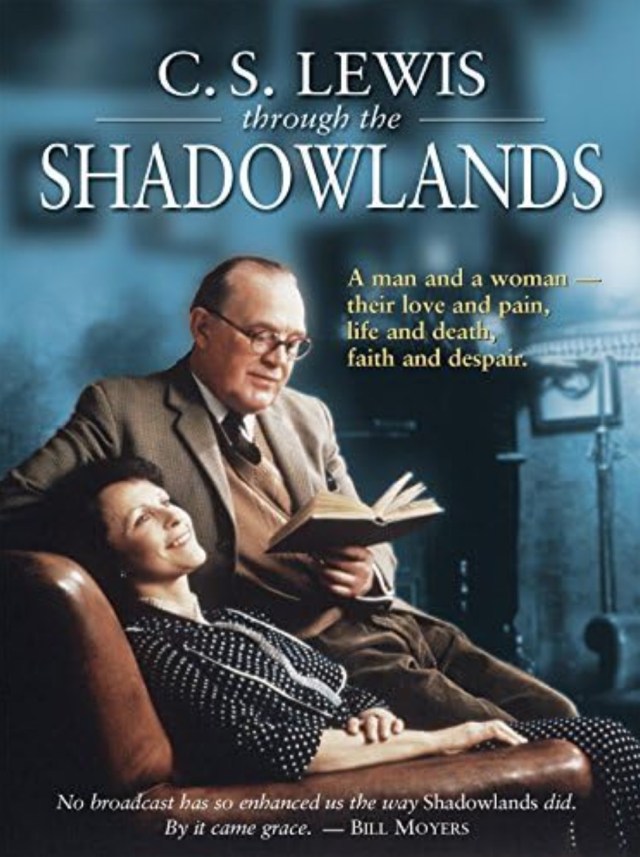
For some reason, Shadowlands has two titles: Shadowlands and C.S. Lewis Through the Shadowlands. Because the movie doesn’t have an offical poster on IMDB, I chose this poster for my review. Shadowlands (1985) poster created by British Broadcasting Corporation (BBC) and BBC Enterprises.

Things I liked about the film:

The acting: In past reviews, when I talked about a movie’s acting performances, I’ve mentioned the believability of those portrayals. This believability comes from the actors displaying an understanding for their roles, as well as for the talents of their co-stars. As I watched Shadowlands, I could sense the believability from the cast. This element was so strong, it allowed the interactions to come across as realistic. Whenever C.S. Lewis and Joy Gresham shared conversations with one another, it seemed like they shared a mutual connection, being on the same page and even on the same paragraph. The combination of Joss Ackland and Claire Bloom’s talents allowed these performances to compliment each other! There were other interactions that appeared realistic in Shadowlands. When a medical situation takes place in the family, Douglas, portrayed by Rupert Baderman, asks C.S. Lewis about the situation itself. Douglas’ eyes display a longing look, desperate for things to get better. As C.S. Lewis reveals the answer, he has a serious expression on his face. These emotional expressions from both actors brought a sense of honesty to the interaction.

C.S. Lewis’ perspective: Because Shadowlands is based on a part of C.S. Lewis’ life, some of his perspectives are included in the script. The delivery of these perspectives and how they were incorporated into the story was insightful and thought-provoking. In a letter to Joy, C.S. Lewis explains how Narnia is a part of something bigger. From how I interpreted this statement, C.S. Lewis is pointing out how Narnia is a key component of the overarching story. It was interesting to hear Narnia referenced this way, as that world plays such a large role in its series, it seems like the star of the show. Amongst a group of colleagues during Christmastime, C.S. Lewis acknowledges how the birth of Jesus is considered a miracle. But he also points out how Springtime is a miracle, when plants are reborn and the world around the characters comes alive. Looking back on C.S. Lewis’ statement, it can be easy to take Springtime for granted, as it is a natural occurrence that happens on its own.

Historical accuracy: The historical accuracy in a historical/period drama can be found in the visual details. These details can also provide clues for the specific time a story takes place. Several scenes of Shadowlands show a rotary dial phone on a desk or on a table. The phones in the film are black, even though these types of phones can boast any colorful hue. In a scene where one of the characters is in the hospital, the bed is built with a silver metal frame. Even the knobs on a medical machine feature a simplistic design and make a loud, clicking sound. With these observations in mind, it appears that Shadowlands takes place in the 1950s or 1960s.

The Two Jacks Blogathon banner created by Rebecca from Taking Up Room

What I didn’t like about the film:

Sudden jumps in time: Shadowlands has a run-time of an hour and thirty-two minutes. This means progression of time is forced to be condensed for the sake of satisfying the run-time. Within the film’s first thirty minutes, however, the condensation of time was jarring, causing events to happen too quickly. After C.S. Lewis and Joy Gresham first become acquainted with each other, she tells him that she’ll return to England with her sons, in order for them to meet C.S. Lewis. In the very next scene, Joy has returned to England with her children. Several scenes later, Joy makes plans with C.S. Lewis about spending Christmas with him. A scene after that, Christmastime was already arrived.

An overshadowed brother: When I talked about this film’s sudden jumps in time, I mentioned Joy having two sons. These sons, David and Douglas, travel with their mother to England and eventually make England their permanent residence. Throughout the story, Douglas’ perspective is the one that is prioritized, as he is a fan of the Chronicles of Narnia series. The audience even sees how Douglas deals with a tragic situation. David’s thoughts about this tragic situation are referenced, but never showcased. I know there is only so much story to tell in an hour and thirty-two minutes. But I wish David’s perspective hadn’t been ignored.

Things left unexplained: In my review’s introduction, I said I hoped to learn more about C.S. Lewis by watching Shadowlands. While I did learn some things about the famous author, the story assumed the viewer already had basic knowledge about him. One example of this is how some things were left unexplained. There is a scene where C.S. Lewis is lecturing a group of students in a classroom. No explanations were provided for why he was lecturing these students or why he was teaching in the first place. It wasn’t until after I saw the movie that I learned C.S. Lewis was a professor at Oxford.

Sketch of London image created by Archjoe at freepik.com. <a href=’https://www.freepik.com/free-vector/hand-drawn-houses-of-parliament_1133950.htm’>Designed by Archjoe</a>. <a href=”https://www.freepik.com/free-photos-vectors/background”>Background vector created by Archjoe – Freepik.com</a>. Image found at freepik.com.

My overall impression:

A person or event featured in a movie may be so fascinating, they deserve their own documentary. Some examples are the events that inspired Over the Edge and Evel Knievel. C.S. Lewis is one of these people that deserves a documentary, as he is an interesting literary figure. In fact, I think the story of Shadowlands should have been a documentary instead of a film. Even though I learned some information about the famous author, the movie assumed the audience already knew about him. This was the cause of things within the story not being explained. If the story of Shadowlands had been a documentary, important events could be discussed and prioritized without the program’s run-time being a concern. But reflecting on Shadowlands as a film, there are aspects of the project I can appreciate, such as the acting performances and hearing about C.S. Lewis’ perspective. With all that said, I thought the movie was just ok.

Overall score: 6 out of 10

Have you seen 1985’s Shadowlands? Would you like to see me talk about C.S. Lewis’ stories on my blog? Please tell me in the comment section!

Have fun in Narnia!

Sally Silverscreen

Take 3: …and Your Name Is Jonah (1979) Review

I will admit I was a bit overwhelmed by my blogathon theme. With the theme of family being so broad, I could have chosen almost any movie, television episode, or book to write about. On a trip to IMDB, however, I came across the 1979 made-for-tv film, …and Your Name Is Jonah. Since I had never seen, let alone heard of, this movie prior to the event, that is what I selected for Familyathon! As I’ve stated before on 18 Cinema Lane, I haven’t had the best of luck finding a television film from the ‘70s I like. Out of these titles, they have ranged from fine, ok, or disappointing. During my search for my Familyathon topic, I also realized how I’ve heard of few programs revolving around a family dealing with a misdiagnosis. So, reviewing …and Your Name Is Jonah is bringing something new to my blog’s table!

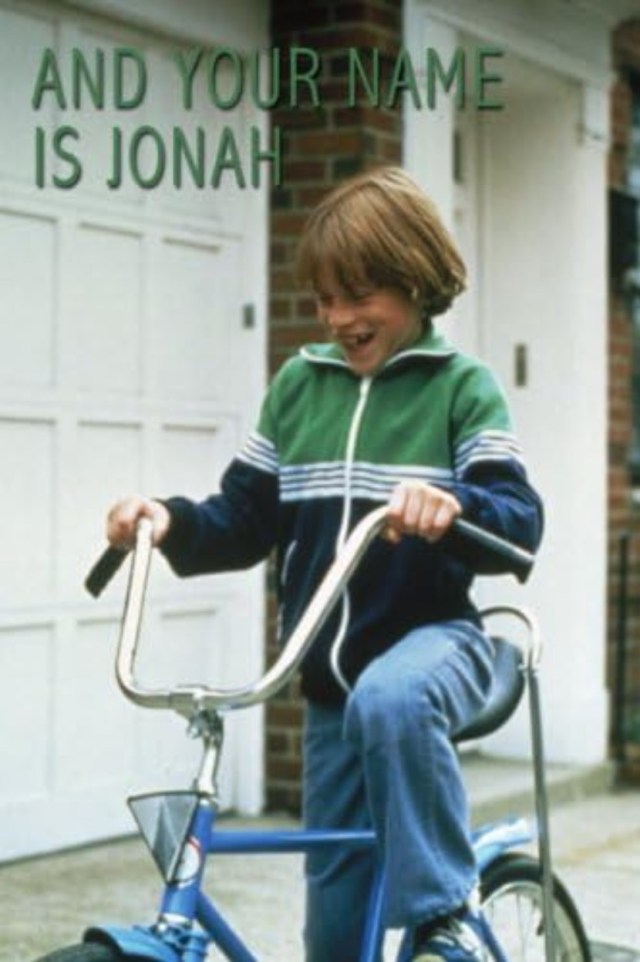
…and Your Name Is Jonah poster created by Charles Fries Productions and CBS

Things I liked about the film:

The acting: Like I mentioned in my review’s introduction, …and Your Name Is Jonah is about a family dealing with a misdiagnosis. At the beginning of the movie, Jenny and Danny, the titular character’s parents, learn their son is deaf after years of believing he had an intellectual disability. Learning about a misdiagnosis and adjusting to a new diagnosis can be overwhelming for a family. Through their portrayal of Jonah’s parents, Sally Struthers and James Woods make these feelings of stress and frustration come across realistically. During dinner, Jonah throws his peas on the floor, indicating how he doesn’t want to eat them. Genuine confusion can be seen on Danny’s face and heard in his voice as he takes Jonah’s plate away, in order to stop Jonah from throwing his food on the floor. Meanwhile, Jenny tells her son to stop making a mess in a calm, yet stern voice. She even points to her own plate, trying to get Jonah to eat his food. After Jonah receives his plate of food back, he continues to throw the peas on the floor. Agitation grows in Danny’s voice when he finds out the behavior hasn’t stopped. When Jenny decides to move Jonah’s plate into the kitchen, informing her husband about her plan in a calm manner, Jonah has a temper tantrum. This causes Danny to become frustrated over the situation, even sounding agitated with his other son, Anthony. Jenny, simply trying to keep the peace, attempts to stand up for Jonah, her voice sounding like she’s begging her husband for understanding. She also looks exhausted and overwhelmed.

When given a role that has little to no dialogue, an actor or actress must use facial expressions, emotions, and body language in order to show what their character is not saying. Jeffrey Bravin, the actor who portrayed Jonah, effectively utilized these acting techniques! This allowed the audience to learn more about Jonah, even knowing more information than his parents did. When Jonah wears his hearing aid for the first time, Danny and Jenny get into an argument over the hearing aid. Meanwhile, Jonah removes the hearing aid, his face expressing discomfort while doing so. His face continues to express discomfort when Jenny puts the hearing aid back into his ear. Jonah then looks sad and confused as he’s trying to figure out what his parents are saying. Through Jonah’s perspective, the audience can hear that, to him, Danny and Jenny sound like they’re arguing underwater. This scene helps the audience learn, before Jenny and Danny, that the hearing aid is not helping Jonah like it was intended to.

An introduction to deaf culture: Last year, when I reviewed Children of a Lesser God, I discussed how the film served as an introduction to deaf culture. This was achieved by the audience getting to know the characters and learning why they do or don’t want to learn to speak. …and Your Name Is Jonah also serves as an introduction to deaf culture. However, the introduction came from Danny and Jenny learning more about their son’s diagnosis. Toward the beginning of the movie, Jenny and Danny discover Jonah might benefit from using a hearing aid. An audiologist explains to Jonah’s parents how a hearing aid will help their son hear sounds he can just barely hear. This explanation provides a basic understanding of hearing aids for both Jonah’s parents and the audience. Later in the movie, Jenny gets invited to attend a deaf club. While attending one of the club’s meetings, Jenny learns some signs, ranging from describing animals to feelings. This demonstration was a beneficial introduction to sign language for Jenny as well as the audience.

Diversity in education: The idea of education not being “one size fits all” has gained attention in the 21st century. That idea included as an overarching theme in …and Your Name Is Jonah seems ahead of its time, as the film was released in 1979. Throughout the movie, Jonah’s family try to teach him to speak through speech. But these efforts are met with little to no results. Instead of letting frustration get the better of her, Jenny admits that her approach to education is not the right fit for her son. After this realization, she seeks out other options in order to help Jonah learn to speak. By Jenny seeking out a new approach, the story acknowledges how children learn differently and how various teaching techniques are available to best meet a child’s educational needs.

Familyathon blogathon banner created by Sally Silverscreen of 18 Cinema Lane

What I didn’t like about the film:

Prolonging Jonah’s break-through: In my review of I Never Promised You a Rose Garden, I talked about Deborah’s recovery process being rushed. This was the result of the film taking so long to show Deborah’s break-through, with that moment taking place in the movie’s last twenty minutes. Jonah’s break-through is also prolonged in …and Your Name Is Jonah. As I mentioned in this review, Jonah’s parents are overwhelmed by their son’s new diagnosis. However, for the majority of the story, they stubbornly try to use the same teaching technique with little to no results. While Jonah does receive a break-through, that moment takes place an hour and twenty-four minutes into an hour and thirty-three-minute movie. I wish this break-through had been reached sooner, so more time could be spent seeing Jonah thrive instead of struggling.

Lack of questions from Jonah’s parents: When Jonah is being released from the hospital, Danny and Jenny confess to the hospital’s director and the audience how their son has been at the hospital for “three years and four months”. When the hospital’s director tries to answer Jenny’s question of how Jonah got admitted in the first place, Jenny tells him, “You went over it and I just listened, and I still don’t understand”. This situation, along with Jonah’s new diagnosis, should have encouraged Jenny and Danny to ask more questions. Instead, they don’t dig beyond the surface. One example involves Jonah receiving a hearing aid. Earlier in this review, I brought up how Jonah’s parents learn about hearing aids and their intended purpose. While Jonah uses a hearing aid for the majority of the film, Danny and Jenny are frustrated by Jonah’s lack of progress. During one of Jenny and Danny’s arguments, the scene is presented from Jonah’s perspective, with the argument sounding like it’s taking place underwater. Had Jonah’s parents asked more questions about the hearing aid, they would have gained a better understanding why their son doesn’t seem to like wearing it.

An antagonistic speech therapist: One of the characters Jonah’s parents turn to for help is a speech therapist named Mrs. Marquardt. While Mrs. Marquardt had good intentions, I didn’t like how the film presented her as a more antagonistic character. When Mrs. Marquardt first meets Jenny and Jonah, Jenny tells Mrs. Marquardt how Jonah doesn’t seem to like wearing his hearing aid. Mrs. Marquardt tells Jenny how “he must learn to like it” and that his hearing aid is “his best friend”. While explaining the purpose of speech therapy to Jenny, Mrs. Marquardt tells her how children are not allowed to use sign language. Mrs. Marquardt explains how “once a child begins to use signs, he becomes lazy in learning how to use his voice and read lips”. I’m aware that some stories require the inclusion of an antagonistic character. But when a story like …and Your Name Is Jonah carries the overarching theme of how education is not “one size fits all”, the emphasis should be a teaching technique not working doesn’t necessarily mean it’s bad.

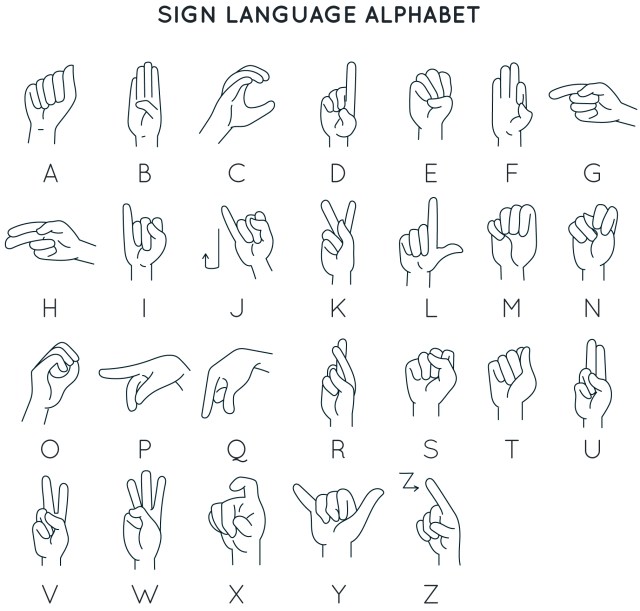
Sign language alphabet image created by Freepik at freepik.com. Hand sign vector created by freepik – www.freepik.com

My overall impression:

In my review, when I talked about the acting in …and Your Name Is Jonah, I mentioned how Jonah received a misdiagnosis. After learning their son is deaf, Danny and Jenny become so overwhelmed, they are desperate to find a solution. While watching the 1979 made-for-TV movie, I was reminded of the 2008 Hallmark Hall of Fame film, Sweet Nothing in My Ear, a story about parents trying to find a solution for their deaf son. However, I find myself preferring Sweet Nothing in My Ear over …and Your Name Is Jonah. In the 1979 film, Jonah’s break-through is prolonged, taking place in the film’s last nine minutes. For the majority of the story, Jonah’s parents don’t ask more questions, a cause for Jonah’s break-through being prolonged. This is different from Sweet Nothing in My Ear, where the parents spend that story exploring every available option for their child. Even though the conclusion of Sweet Nothing in My Ear is open-ended, that creative decision was made to allow the audience to form their own perspective. I will say …and Your Name Is Jonah provided a nice introduction to deaf culture. It also showcased good acting performances and a theme that made the film feel ahead of its time. But, overall, this movie was just fine, in my opinion.

Overall score: 7.2 out of 10

Have you seen …and Your Name Is Jonah? Are there any made-for-TV movies you’d like to see me review? Let me know in the comment section!

Have fun at the movies!

Sally Silverscreen

It’s Finally Here; the Familyathon Blogathon!

Welcome to the Familyathon Blogathon! With Thanksgiving on the horizon and the Christmas/holiday season on the way, the theme of family is recognized and celebrated! Even outside of special occasions, family has been a popular topic in entertainment media for decades. From these on-screen families, familiar faces and beloved characters have won over the hearts of fans. Their stories have served valuable lessons and even stood the test of time. Every entry in this event showcases how the subject of family has been incorporated into movies and television! From the underrated tv films to silver screen classics, let the blogathon begin!

Familyathon blogathon banner created by Sally Silverscreen of 18 Cinema Lane

Realweegiemidget Reviews — LISTS…Films Made With Their Own Kind of Family

The Midnite Drive-In — The Family That Slays Together Stays Together

Poppity Talks Classic Film — ‘Sabrina’ (1954): It’s All in the Family

Taking Up Room — Andy Hardy in the Big City

18 Cinema Lane — Take 3: …and Your Name Is Jonah (1979) Review

The Maidens of Green Gables — this is family ❤ (Katherine), Five of My Favorite Families (Grace)

Top 10 Films — The Bonds Of Family In “Running On Empty”

Silver Screenings — Old Yeller: Making the Tough Choices in Life

Hamlette’s Soliloquy — Hamlette’s Soliloquy: “Mr. Mom” (1983)

Two Sunshine Blogger Awards are Better Than One!

Back in August, Hamlette, from Hamlette’s Soliloquy, nominated me for the Sunshine Blogger Award! A month later, Rebecca, from Taking Up Room, also nominated me for this same award! Because I was nominated twice in a short amount of time, I’m accepting my eighth and ninth Sunshine Blogger Awards by answering half of Rebecca’s questions and half of Hamlette’s questions. Thank you, Rebecca and Hamlette for the nominations! It’s been over a year since I received a blogging award, so this was such a pleasant surprise for me! Before I start answering the award questions, here are the official award rules which are:

1. Thank the blogger who nominated you in the blog post and link back to their blog.

2. Answer the 11 questions the blogger asked you.

3. Nominate 11 new blogs to receive the award and write them 11 new questions.

4. List the rules and display the Sunshine Blogger Award logo in your post and/or on your blog.

Sunshine Blogger Award image found on Hamlette’s Soliloquy

1. What are your top five movies from this year? So far, anyway.

  1. Hallmark Hall of Fame’s Caroline?
  2. Hallmark Hall of Fame’s A Tale of Two Cities
  3. The Great Muppet Caper
  4. Haunted Harmony Mysteries: Murder in G Major
  5. RKO 281

2. What’s the last movie you watched?

I recently saw the Lifetime movie, Stalked by My Stepsister. While the film was ok, even somewhat predictable, I was impressed with Eva Igo’s portrayal of Devon, the titular stepsister! In Lifetime movies, a villainous character will typically have a more over-the-top personality as their true colors start to show. Eva consistently carried her character with a poised seriousness, her performance reminding me of performances I’ve seen in period dramas/historical fiction projects. Therefore, I’d like to see Eva star in a period drama/historical fiction program some day!

3. Which movies do you think deserve the Broadway treatment?

With the entertainment industry capitalizing on ‘80s nostalgia, I’m surprised no one has thought of remaking the 1985 movie, Girls Just Want to Have Fun. It’s been years since I saw the film. But from what I remember, I liked it! Since the story revolves around a dance competition, there are plenty of performing and choregraphing opportunities for a Broadway show. Plus, there’s always the option of either retelling the story in the ‘80s or putting the story in a new era!

4. What’s the next movie you plan to watch?

For my Familyathon blogathon, I’m planning on watching and reviewing the 1979 made-for-TV movie, …and Your Name Is Jonah! I haven’t had the best of luck finding a television film from the ‘70s I like, so I’m hoping this one is good!

5. Which movies are you looking forward to seeing next year?

The recent writers and actors strike have caused several movies to be pushed back from their original release dates. However, most of the films that have 2024 release dates seem to be unnecessary sequels. I also don’t know what’s in store for Hallmark, as the network has not announced any upcoming movies for 2024. Despite all this, there are things I’m looking forward to next year, such as season eleven of When Calls the Heart and the Eurovisionathon readathon!

6. Pirates or vampires?

Since I’ve reviewed more movies featuring vampires, that’s what I’ll choose.

Happy sun image created by Freepik at freepik.com. <a href=”https://www.freepik.com/free-photos-vectors/background”>Background vector created by freepik – http://www.freepik.com</a>. Image found at freepik.com.

7. Which movies (if any) do you regret watching this year?

Honestly, I can’t think of any films I’ve seen this year that I’ve regretted watching and/or reviewing. I approach every movie I see hoping it is good. Even if one turns out less than stellar, I still try to find things about the film I liked. This is the reason why I start every movie review talking about what I liked about the movie. No matter how a film turns out, I’m grateful for the opportunity to receive my own, honest opinion on it.

8. What TV show(s) have you seen every episode of at least once?

Definitely When Calls the Heart! This includes the Christmas/holiday films and the Hallmark movie from 2013.

9. You have the chance to be a guest host on TCM. Which show do you host or which kinds of movies do you want to introduce?

During these five years of movie blogging, I have reviewed many made-for-tv movies. Some of these titles have been hidden gems, such as the aforementioned RKO 281. While I don’t know if made-for-TV films would be considered “classic” cinema, I would want to host a made-for-TV movie marathon!

10. What new movie release are you looking forward to?

As I stated in answer number five, the recent writers and actors strike have caused several movies to be pushed back from their original release dates. Not only do most of the films with 2024 release dates seem to be unnecessary sequels, Hallmark also hasn’t announced any upcoming movies for 2024. But based on the trailers I’ve seen, Napolean looks like it has potential to be an interesting period drama. I’ll wait until I’ve heard reviews of the movie before I decide to check it out.

11. Do you have a favorite silent movie? If so, which one?

I haven’t reviewed many silent films on my blog. But out of the ones I’ve written about, I liked both Sunnyside and Wild Oranges! Since I reviewed each movie for a Blog Follower Dedication Review, I’ll link these reviews below if you’re interested in reading my opinion on the films.

Take 3: Wild Oranges Review + 95 Follower Thank You

Take 3: Sunnyside Review + 100 Follower Thank You

Woman celebrating victory image created by Freepik at freepik.com. <a href=”https://www.freepik.com/free-photos-vectors/gold”>Gold vector created by freepik – http://www.freepik.com</a>. Image found at freepik.com. 

The New Nominees are…

Ari from The Classic Movie Muse

Jillian from The Classic Film Connection

Paul from Silver Screen Classics

Eric Binford from Diary of a Movie Maniac

Heidi from Along the Brandywine

Annette from Hometowns to Hollywood

Samantha from Musings of a Classic Film Addict

MovieRob from MovieRob

Terence from A Shroud of Thoughts

The Metzinger Sisters from Silver Scenes

Erica from Poppity Talks Classic Film

The New Questions

Movie award essentials image created by Freepik at freepik.com. <a href=”https://www.freepik.com/free-photos-vectors/background”>Background psd created by freepik – http://www.freepik.com</a>. Image found at freepik.com. 
  1. What movie or tv show do you think is “bonkers”?
  2. You’re going on a trip to a theme park with your five favorite characters! Which characters are invited on this trip?
  3. What Christmas/holiday movie trope/cliché do you believe is overused?
  4. Which blog post is your most underrated?
  5. If you received a movie related gift from a loved one, what would it be?
  6. You have a chance to travel back in time to try a discontinued item from McDonald’s menu. What would you choose to order?
  7. Which family from a movie, book, or tv show would you like to share Thanksgiving dinner with?
  8. What is a movie or tv related mystery you’d love to receive the answer to?
  9. Which secondary character do you think deserves their own stand-alone film?
  10. What is the worst movie or tv show you’ve seen this year, so far?
  11. Is there a movie you’d love to re-watch in a theater? If so, which one?

Have fun at the movies!

Sally Silverscreen
Take 3: Frankenweenie (2012) Review + 470 Follower Thank You

Before I start this review, I would like to say thank you to each and every follower of 18 Cinema Lane! This blog would not be the success it is today without you, so I appreciate your support! For this Blog Follower Dedication Review, I wanted to choose a film that was Halloween themed, as the holiday is just around the corner. I also recognize how animated films are rarely covered on my blog. Combining the two concepts, I selected the 2012 Disney movie, Frankenweenie! While I have read Mary Shelley’s classic novel, I haven’t seen many adaptations of Frankenstein. Yes, I did review Jesse James Meets Frankenstein’s Daughter. But there were very few traces of Mary’s source material woven into that film. When it comes to Halloween fare, vampires, including Dracula himself, have made their home on 18 Cinema Lane. So, Frankenweenie serves as a nice change! Put on your costumes and grab your Trick-or-Treat buckets, it’s time for this Blog Follower Dedication Review!

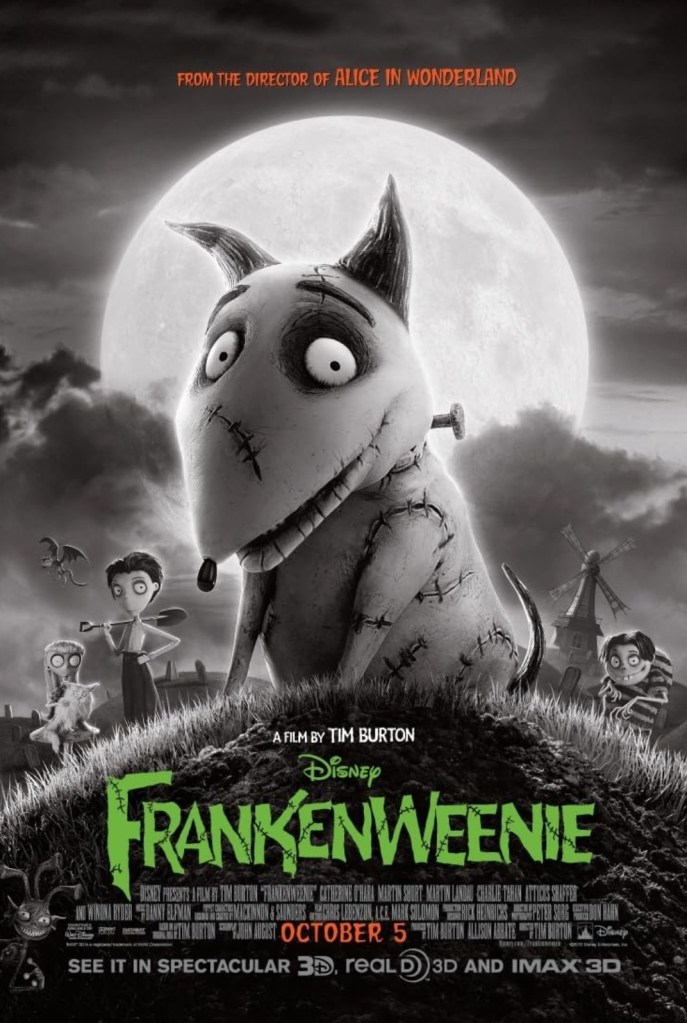
Frankenweenie (2012) poster created by Walt Disney Pictures, Tim Burton Productions, and Walt Disney Studios Motion Pictures

Things I liked about the film:

The animation: When it comes to animation, Tim Burton has a very distinct style. While this style shines in Frankenweenie, I want to talk about how the characters express emotion. Throughout the story, emotions are expressed through the mouth and eyelids. This prevented the characters from appearing static. One example is when Victor is working on his science experiment for the first time. After performing the experiment, Victor is curious about its effectiveness. When he thinks the experiment didn’t work, Victor’s mouth is turned in a frown and his eyelids are lowered. That combination created a facial expression that showcased Victor’s sadness and disappointment.

Creative ideas are typically found in Tim Burton’s animated films. In Frankenweenie, this creativity is found in the creatures who appear in the story! When Victor’s peers try to recreate his experiment, they receive unexpected results. A turtle comes back to life as a hybrid between a turtle and a dinosaur. Due to a mix-up, one girl’s cat turns into a combination of cat, werewolf, and bat. These creatures were so unique, as I have never heard or seen them in media before. Frankenweenie serves as an example of how imaginative the animation genre can be!

The “Easter Eggs”: “Easter Eggs” are references that are subtly woven into a piece of entertainment media. Disney and Tim Burton related “Easter Eggs” can be found in Frankenweenie! During Victor’s science experiment, he flies two kites in an attempt to capture lightening. One of these kites is shaped like a bat, a nod to when Tim directed Batman from 1989. In Victor’s room, there is a poster of 20,000 Leagues Under the Sea. This is a reference to when Disney adapted that story in 1954. I love when a film scatters “Easter Eggs” throughout the story, as it keeps the audience engaged in what they’re watching!

The messages and themes: Frankenweenie included several good messages and themes into the story! One of them appeared when Victor is interacting with his science teacher, Mr. Rzykruski. During this conversation, Victor explains how his science experiment worked the first time, but not the second time. Mr. Rzykruski helps Victor understand his dilemma by stressing how he should do science experiments for the right reasons. This message becomes an overarching theme in Frankenweenie, as characters’ intentions determine an outcome.

Group of puppies image created by Rawpixel.com at freepik.com. <a href=”https://www.freepik.com/free-photos-vectors/background”>Background photo created by rawpixel.com – http://www.freepik.com</a>. Image found at freepik.com.

What I didn’t like about the film:

No pops of color: Frankenweenie is presented in black-and-white imagery. This creative choice allowed the movie to boast a distinctive aesthetic. But what would have made the visuals even more interesting is if pops of color were included. Whenever lightening appears, a bright yellow flash could have graced the screen. If a character were holding a Sea Monkey packet, that packet could have delivered vibrant hues of blue and purple. Adding color to certain elements or objects would have emphasized important parts of the story. Those pops of color would have also stood out nicely against the black-and-white background.

An underutilized antagonist: In stories created for children/families, there will sometimes be a grown-up character as the main antagonist. A perfect example is Miss Trunchbull from Matilda. There is a grown-up antagonistic character in Frankenweenie, Mr. Burgermeister, the mayor of New Holland. But unlike Miss Trunchbull, Mr. Burgermeister was underutilized in the story. Victor faced more conflicts with his peers than with Mr. Burgermeister. Plus, the mayor’s appearances in the movie were far and few between. This makes me wish Victor’s peers had been the only antagonists in the film.

Parts of the story that are unexplained: For this part of my review, I will include a spoiler for Frankenweenie. If you have not seen this film and are interested in watching it, please skip this part and continue where it says “My overall impression”.

As I mentioned earlier, Victor’s peers receive unexpected results after they try to recreate his experiment. When these creatures cause chaos throughout the town, Victor helps his peers reverse the effects of their experiments. With the use of electricity, Victor is able to reverse the effects of the turtle/dinosaur hybrid, with the turtle becoming dead again. Yet, when Victor uses electricity on his dog, Sparky, the dog stays alive. Because the science wasn’t explained, this part of the story felt inconsistent.

Cute Halloween border created by Freepik at freepik.com. <a href=’https://www.freepik.com/free-vector/halloween-background-with-fun-style_1310632.htm’>Designed by Freepik</a>. <a href=”https://www.freepik.com/free-photos-vectors/background”>Background vector created by Freepik</a>. Image found at freepik.com.

My overall impression:

Disney has a history of re-telling pre-established stories. When re-telling these stories, whether it’s The Hunchback of Notre Dame or Oliver Twist, the delivery of these projects has adopted distinct identities and aesthetics, making the movie feel unique and creative. With Frankenweenie, it is a cute, unique take on Frankenstein! The combination of stop-motion animation and black-and-white imagery allow the movie to stand out among other versions of Mary Shelley’s story. “Easter Eggs” related to Tim Burton and Disney keep viewers engaged in the film they are watching. Yes, there are flaws within Frankenweenie, like unexplained parts of the story and an underutilized antagonist. However, this is a good choice for Halloween entertainment!

Overall score: 7.8 out of 10

Have you seen Frankenweenie? Are there any animated films you like watching during the Halloween season? Let me know in the comment section below!

Have fun during Halloween!

Sally Silverscreen