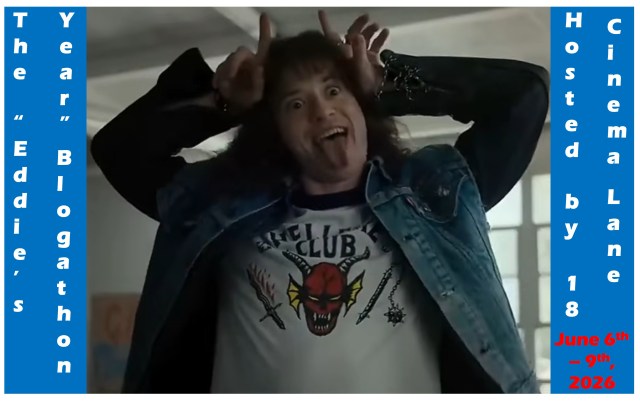
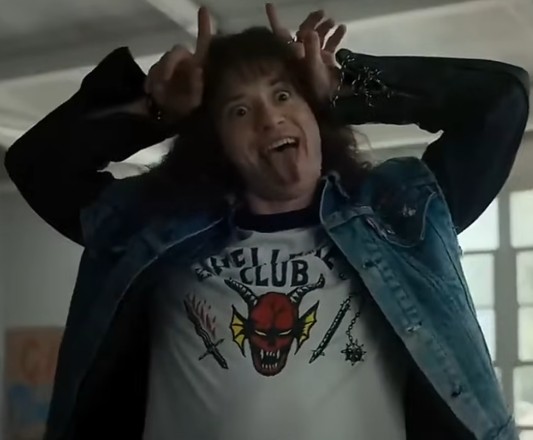
Eddie Munson and Harris Trinsky: Two Sides of the Same Coin

In our landscape known as entertainment, a select group of movies, television shows, or characters are given the title of “popular”, “iconic”, or even “classic”. Sometimes, I try to check out programs or learn more about characters that get these titles to try to gain an understanding for why that program or character is well-liked in the first place. Back in 2022, when Stranger Things’ fourth season was released, I remember seeing pictures of Eddie Munson making his famous goofy face sprinkled across the internet like confetti on New Year’s Eve. Since I don’t watch the show, I didn’t think much of it then. That changed, however, when I saw the trailer for the fifth and final season of Stranger Things. Seeing Eddie’s headstone left me confused; how did this guy who seemed so popular on the internet end up dead? Like I said, I don’t watch the show. Therefore, I didn’t think it had a reputation like Lost or Game of Thrones; where no character is safe from getting killed off. Curiosity got the better of me almost immediately and I learned anything and everything I could about Eddie. To my surprise, the more I learned about him, the more I realized Eddie shared an uncanny amount of similarities with Harris Trinsky, my favorite character from Freak and Geeks. My curiosity, paired with my being a Harris Trinsky fan, are what led to the conception of this editorial, where I will discuss in depth why Eddie Munson and Harris Trinsky are two sides of the same coin!

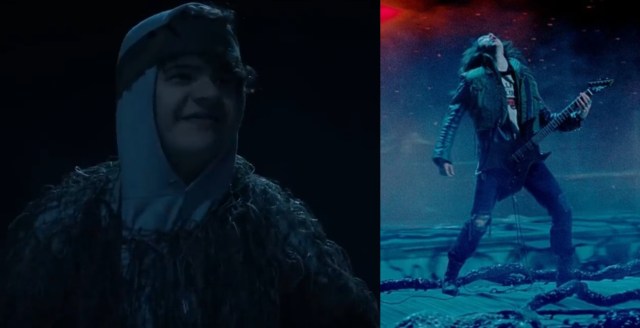
Is it just me or do Harris Trinsky and Eddie Munson look similar to one another? Original images created by 21 Laps Entertainment, Monkey Massacre, Netflix, Upside Down Pictures, Apatow Productions, DreamWorks Television, and National Broadcasting Company (NBC)

Who is Eddie Munson and Harris Trinsky?

Before I officially begin this editorial, we need to establish who Eddie Munson and Harris Trinsky are, especially for readers who are unfamiliar with these characters. Eddie Munson made his debut in the fourth season of the popular Netflix show, Stranger Things. He was introduced as the Dungeon Master of The Hellfire Club as well as the local “metalhead” (someone who like metal music). Since his debut in 2022, Eddie has become one of the most beloved characters not just from Stranger Things, but in television history. Eddie’s distinct appearance and personality have also made him a very marketable character. Harris Trinsky is a character the titular “geeks” are friends with on Freak and Geeks. Though he appears in ten of the show’s eighteen episodes, Harris has a reputation for being someone the “geeks” turn to for advice and guidance. Because of his inconsistent appearances on the show, only a portion of information is known about Harris. Despite this, his dry sense of humor and brutal honesty left a memorable impression.

This Stranger Things display in the Youtube video, ‘Spirit Halloween 2025 Store Tour’, from the Youtube channel, Spirit Halloween, proves how marketable Eddie is by prominently featuring his Hellfire Club shirt
From time to time, Harris joins the “geeks” at their lunch table on Freaks and Geeks. Original image created by Apatow Productions, DreamWorks Television, and National Broadcasting Company (NBC)

1. Eddie and Harris are Dungeon Masters

This similarity is what initially sparked the discovery of other similarities that exist between these two characters. In fact, when I learned Eddie was a Dungeon Master, the first thing I said was, “just like Harris Trinsky”. In Dungeons & Dragons, a game that relies on adventure and strategy, Dungeon Masters are the ones who essentially control the game (known to players as campaigns). On Freaks and Geeks and Stranger Things, both Harris’ and Eddie’s Dungeons & Dragons groups participate in a campaign. During these campaigns, each group welcomes a new member. In the Freak and Geeks episode, “Discos and Dragons”, Harris (who is affiliated with the “geeks”) invites Daniel (a member of the “freaks”) to join his group’s upcoming campaign. When Daniel experiences his first campaign, he realizes he enjoys Dungeons & Dragons and the company of Harris’ group, which consists of Sam, Neil, Gordon, and Bill. He even successfully completes his first campaign because Harris and the “geeks” explain the game along the way.

In the Stranger Things episode, “The Hellfire Club”, Lucas (one of the members of Eddie’s Dungeons & Dragons group) is unable to attend that night’s campaign due to a basketball game. Dustin and Mike (two other members of The Hellfire Club) invite Lucas’ sister, Erica, to stand in for Lucas. What works in Erica’s favor is how she is familiar with Dungeons & Dragons prior to being invited to The Hellfire Club. Her familiarity with the game, along with Eddie and the rest of The Hellfire Club’s support of her participation, help Erica win her first campaign.

Even though Harris and Eddie are Dungeon Masters of their respective Dungeons & Dragons groups, the way these groups are led is quite different. Harris’ approach is more casual, simply giving the “geeks” a reason to hang out on the weekends. Before the campaign in Freaks and Geeks, Harris reveals how “ancient Babylonia” is incorporated into the campaign itself. Not only does the campaign featured in “Discos and Dragons” take place at one of the character’s houses, the campaign schedule is also flexible, as the “geeks” agree to meet the following Saturday after Daniel expresses interest in playing again.

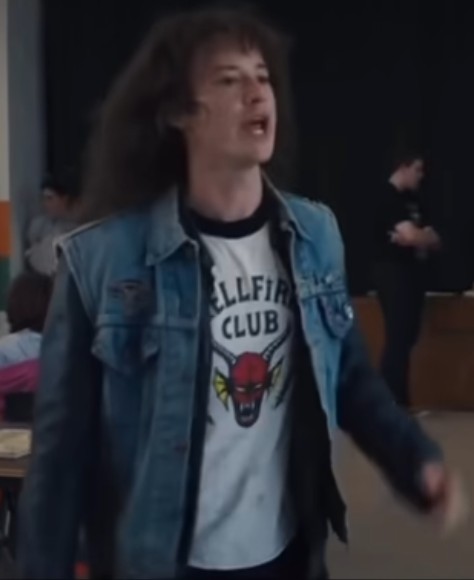
Eddie’s group, The Hellfire Club, is more established. It has an official name, an official logo printed on official shirts, an official yearbook photo, and even an official meeting room (located in the drama/theatre room at Hawkins High School). The “Cult of Vecna” campaign featured in the episode, “The Hellfire Club”, incorporates elements of fantasy and science fiction, which reflects Stranger Things itself. Despite these differences, another major similarity between Harris’ and Eddie’s story is how Dungeons & Dragons is included to serve an overarching theme. Freak and Geeks uses Dungeons & Dragons to promote themes of acceptance, friendship, and building bridges (with Daniel and Harris’ Dungeons & Dragons group building a bridge between the “freaks” and the “geeks”). Stranger Things’ creative team uses Dungeons & Dragons in season four’s script to provide commentary on the “Satanic Panic” that took place during the 1980s.

These photos from “The Hellfire Club” present Eddie’s Dungeons & Dragons group like a elaborate production. Notice the stage lights in the background? Original images created by 21 Laps Entertainment, Monkey Massacre, Netflix, and Upside Down Pictures
In this picture from “Discos and Dragons”, Harris’ Dungeons & Dragons group takes a more casual approach to the game. Original image created by Apatow Productions, DreamWorks Television, and National Broadcasting Company (NBC)

2. Harris’ and Eddie’s Stories Take Place in the 1980s, in High School, and in the Midwest

In the pilot episode of Freak and Geeks, “William McKinley High School”, “Michigan”, and “1980” are shown on screen. This text sets the stage for when and where Harris’ story (as well as the show) takes place. According to the video, “From CANCELED to CULT CLASSIC (Freaks and Geeks)”, from the Youtube channel, Media Pastimes, the characters live in the fictional town of Chippewa, Michigan. Because one of Freak and Geeks’ episodes is set on Halloween, the script establishes the story takes place specifically during the 1980-1981 school year. Through the dialogue, it’s revealed Harris is a sophomore at the aforementioned high school. Neil points out in “Tests and Breasts” how Harris is only a year older than the “geeks”. Harris also shares his story in the show’s pilot episode about how he faced his “freshman tormentor”, with the story being told in past tense.

Stranger Things is consistently set in the fictional town of Hawkins, Indiana. This major detail was established long before the show’s creative team even thought about including Eddie on the show. However, Stranger Things’ fourth season does provide the necessary information that determines when and where Eddie’s story takes place. Just in the first episode, “The Hellfire Club”, alone, the audience learns Eddie attends Hawkins High School. With the fourth season set during March 21st to 27th, 1986, it emphasizes Eddie’s story takes place during the 1985-1986 school year. This detail is emphasized again when it’s revealed Eddie is a “super senior”. In the episode, “The Hellfire Club”, Gareth and Jeff (two of The Hellfire Club’s members) call Eddie out for failing to graduate in 1984 and 1985. Despite this, Eddie expresses a desire to graduate in 1986.

If you begin watching Freaks and Geeks, these are the first images you’ll see. Original images created by Apatow Productions, DreamWorks Television, and National Broadcasting Company (NBC)
Hawkins High School and the “Leaving Hawkins” sign have become familiar landmarks for viewers of Stranger Things. Original images created by 21 Laps Entertainment, Monkey Massacre, Netflix, and Upside Down Pictures

3. Eddie and Harris Have An “Outsider” Status

Though Eddie and Harris are known as Dungeon Masters in their friend groups, they are both considered “outsiders” by those not affiliated with their personal circles. On Freaks and Geeks, Harris is labeled a “geek” primarily due to his association with the “geeks” (Sam, Neil, Gordon, and Bill). Meanwhile, Eddie admits he and the other members of The Hellfire Club are labeled as “freaks” when he says, “We’re the freaks because…we like to play a fantasy game?”

Harris and Eddie were not only mistreated in their respective shows for being “outsiders”, they were also bullied prior to the events of their stories. Though the only time Harris is treated poorly on Freaks and Geeks is when Alan (the “freshman tormentor” of the “geeks”) harasses the “geeks” in the episode, “Tricks and Treats”, Harris either admits to or implies other times he was bullied, such as when Harris shares his story about how he faced his “freshman tormentor”. Things got so out of hand, Harris’ “freshman tormentor” (Tom Cressman) broke Harris’ tailbone, which led to him getting expelled. When Daniel walks past Harris in the episode, “Looks and Books”, Harris asks Daniel, “You’re not gonna beat me up, are you?”

As mentioned before, Eddie was mistreated before and during his time on Stranger Things for being an “outsider”. Stranger Things Wiki states that “Upon beginning high school, Eddie found himself being targeted for bullies”. It’s unknown what the extent of the bullying was. In the episode, “The Hellfire Club”, when Eddie is delivering his famous monologue about the hypocrisy of forced conformity, one of Hawkins High School’s basketball players, Jason, calls Eddie a “prick” and a “freak”. This same character also creates false accusations against Eddie, such as claiming he is the leader of a Satanic cult. Jason takes things a step further when he not only kept a log of every location Eddie frequented, he and his friend, Patrick, also chased Eddie out of his hiding place while he had run away after Chrissy’s death.

Despite all the mistreatment Harris and Eddie have faced, neither is fazed by his “outsider” status. In fact, each wears it as a badge of honor by actively choosing to be his authentic self. This decision earns them respect and adoration from other characters in their stories. During their conversation in “Looks and Books”, Daniel commends Harris by telling him “you do your own thing”, you’re “comfortable with yourself”, and “You got it pretty wired, huh?” Keep in mind this conversation takes place before Harris invites Daniel to join his Dungeons & Dragons group. In a conversation from the Stranger Things episode, “The Piggyback”, Dustin shares with Eddie’s uncle, Wayne, “Even in the end, he never stopped being Eddie, despite everything”. Eddie also gains the friendship of characters outside of his social sphere, like Steve Harrington and Nancy Wheeler, due to his ability to help them when they needed him the most.

After writing this editorial, I now try to imagine how this conversation would go if Harris were talking to Eddie. Original images created by Apatow Productions, DreamWorks Television, and National Broadcasting Company (NBC)
As Clarence tells George in It’s a Wonderful Life, “Each man’s life touches so many other lives”. This image of Dustin giving Wayne his nephew’s guitar pick necklace is a beautiful representation of Clarence’s quote. Original images created by 21 Laps Entertainment, Monkey Massacre, Netflix, and Upside Down Pictures

4. Harris’ and Eddie’s Sense of Style

This similarity between Eddie and Harris is more trivial than the other similarities discussed in this editorial. However, it is still a similarity I noticed while conducting research for this article. As I said earlier, the fourth season of Stranger Things is set during March 21st to 27th, 1986. Therefore, Eddie’s story is more condensed than Harris’ story, which is more episodic and takes place over the course of several weeks. Despite this difference, both characters wear the same articles of clothing in multiple episodes. Harris can be seen wearing a gray plaid shirt in four episodes of Freaks and Geeks: “Discos and Dragons”, “Smooching and Mooching”, “Tricks and Treats”, and “Carded and Discarded”. Meanwhile, Eddie practically lives in his Hellfire Club shirt throughout his time on Stranger Things. It should also be noted how black is the most prominent color in both Eddie and Harris’ wardrobe. Every outfit Harris wears on Freaks and Geeks is either completely black or contains at least one article of clothing with the color black in it. Even though Eddie wears the same outfit for the entirety of Stranger Things’ fourth season, his articles of clothing containing the color black are the following:

  • Hellfire Club shirt (sleeves and collar of shirt are black)
  • Jeans
  • Watch
  • Leather jacket
  • Bracelet
  • Bandanna (Eddie wears this later in the season)

While we’re on the subject of Eddie’s wardrobe, a major difference is how his style is more personalized than Harris’. The shirt Eddie consistently wears promotes The Hellfire Club (his Dungeons & Dragons group). His denim vest features pins and patches of metal bands he’s a fan of, which are Motorhead, W.A.S.P., Judas Priest, Megadeth, Dio, Accept, Merciful Fate, and Iron Maiden. Though Eddie and Harris’ attire appears distinct from one another, their style is casual and low maintenance, promoting personal comfort and what makes them feel good about themselves.

These photos accurately show how many times Harris wears his gray plaid shirt. Original images created by Apatow Productions, DreamWorks Television, and National Broadcasting Company (NBC)
These pictures represent some examples of how the color black is incorporated into Harris’ wardrobe. Original images created by Apatow Productions, DreamWorks Television, and National Broadcasting Company (NBC)
In these photos, I point out how the color black is incorporated into Eddie’s wardrobe. Original images created by 21 Laps Entertainment, Monkey Massacre, Netflix, and Upside Down Pictures
In these three pictures, I point out the band pins and patches on Eddie’s denim vest. Original images created by 21 Laps Entertainment, Monkey Massacre, Netflix, and Upside Down Pictures

5. Eddie and Harris Possess a Rebellious Streak

Earlier in this editorial, I brought up Eddie’s famous monologue about the hypocrisy of forced conformity. If one were to watch that scene with little to no context, it might be easy to write Eddie off as a “rebel” or an “attention-seeker”. It is true Eddie has a prominent and consistent rebellious streak while on Stranger Things. But it’s important to pay attention to why Eddie possesses a rebellious streak. Eddie’s monologue is featured in the episode, “The Hellfire Club”. When he is introduced in this episode, Eddie reads a magazine article about the “dangers” of Dungeons & Dragons. The members of The Hellfire Club become discouraged over being considered “freaks” by the other students at Hawkins High School. This is when Eddie delivers his famous monologue, telling his friends;

“We’re the freaks because…we like to play a fantasy game? But as long as you’re into band, or science, or parties, or a game where you toss balls into laundry baskets! It’s forced conformity. That’s what’s killiiiiing the kiiiiids! That’s the real monster.”

During this monologue, Eddie climbs on the cafeteria table, yells loudly, and even makes his well-known goofy face I referenced in this editorial’s introduction. If you look past the theatrics and really listen to what Eddie is saying, he’s stressing how The Hellfire Club is treated differently due to the school community’s perception of the various extracurricular groups. By pointing out this hypocrisy, Eddie emphasizes the importance of embracing uniqueness and being a free-thinker. His monologue is such a beautiful example of how his rebellious streak is a product of his choices, as Eddie pursues his interest in Dungeons & Dragons despite the criticism and screaming the quiet parts out loud.

On Freaks and Geeks, Harris is known for having a laid-back personality. But he does show a glimmer of a rebellious streak in the episode, “Beers and Weirs”. Harris is a member of the group, McKinley High Sober Students, which discourages under-age drinking. Later in the episode, however, he attends a party hosted by Sam’s sister, Lindsay, that happens to be serving (non-alcoholic) beer. Before taking a large gulp of (non-alcoholic) beer, a party guest asks Harris if he’s a member of McKinley High Sober Students. Harris replies by telling the guest, “I only did that cause it looks good on my transcript for college.” Though this rebellious streak is brief, it is the result of Harris’ actions. Not only did he literally act in an improv performance hosted by McKinley High Sober Students, he also acts in his own interests by joining the group for academic gain instead of genuinely supporting the cause.

These two photos are from Eddie’s monologue about the hypocrisy of forced conformity. Though the theatrics make this monologue memorial, Eddie does bring up excellent points. Original images created by 21 Laps Entertainment, Monkey Massacre, Netflix, and Upside Down Pictures
One of the most popular pictures of Eddie, which has probably been seen all over the galaxy. Original image created by 21 Laps Entertainment, Monkey Massacre, Netflix, and Upside Down Pictures
Toward the beginning of “Beers and Weirs”, Harris performs in an improv presentation with two other group members named Cindy and Millie. Original image created by Apatow Productions, DreamWorks Television, and National Broadcasting Company (NBC)

6. Harris and Eddie Have a Healthy Sense of Confidence

What makes Harris and Eddie such likable characters is their healthy sense of confidence. Both of them consistently appear comfortable with themselves and satisfied with their skills and talents. After gym class, in the episode, “I’m with the Band”, Harris asks Sam if he’ll sign up for French next year. During this conversation, Harris expresses a desire to take German because he’s “a quarter German”. He then speaks German on two occasions: when he shares parting words with Sam and when he responds to Coach Fredericks’ roll call in gym class. Some people might feel intimidated or self-conscious about speaking a new language in front of their peers due to fear of judgement. But in “I’m with the Band”, Harris speaks German with confidence and ease. He prioritizes using the language in contexts he deems appropriate over other people’s reactions. Because of his healthy sense of confidence in his learning abilities, Harris receives an academic head-start, as he uses everyday situations to practice and master a new language.

Eddie has been the lead guitarist of the band, ‘Corroded Coffin’, since middle school. He even discusses his musical talents with a fellow student of Hawkins High School named Chrissy. In the Stranger Things episode, “The Piggyback”, Eddie’s guitar skills play a major and even lifesaving role. While in the Upside Down, the Demobats pose a huge threat to Eddie and his friends. In order to distract the Demobats so his friends can be protected, Eddie performs a solo of Metallica’s “Master of Puppets”. This plan ends up working, as his friends, Steve, Robin, and Nancy, are able to safely get away from the Demobats and reach their intended destination. Eddie’s healthy sense of confidence in his musical abilities allowed him to become a part of something greater than himself (which was the battle of good vs. evil). It also helped Eddie find a sense of belonging and purpose, especially after being considered an “outsider” and a “freak”. Eddie’s performance even left a good impression on Dustin, as he claims the “Master of Puppets” solo was the “most metal ever”.

Neil Schweiber was definitely caught off-guard when Harris spoke German in their gym class. Original images created by Apatow Productions, DreamWorks Television, and National Broadcasting Company (NBC)
Eddie’s solo was so “metal”, it earned Dustin’s stamp of approval. Original images created by 21 Laps Entertainment, Monkey Massacre, Netflix, and Upside Down Pictures

7. Eddie and Harris Display Self-Awareness

One quality that makes Eddie a great character is his self-awareness, which doesn’t get talked about enough. I will bring up two perfect examples where Eddie’s self-awareness shines through. When I said earlier how Eddie is a “super senior”, I mentioned Gareth and Jeff calling Eddie out for failing to graduate in 1984 and 1985. Eddie responds to this criticism by saying, “Yeah, yeah, and I was full of shit”. Anyone who knows anything about Eddie would know he’s been through some trauma in his young life. According to Stranger Things Wiki, Eddie experienced heartbreak at six years old when his mom, Elizabeth, passed away. His dad, Alan, became incarcerated, which led to Eddie’s uncle, Wayne, obtaining custody of his nephew. Keeping this information in mind, Eddie could have used his trauma as an excuse for not graduating high school sooner. He could have blamed others for his choices or given up by dropping out of school. But by admitting he was “full of shit”, he takes full accountability for his decisions and mistakes. At one point, Eddie states, “I am army crawling my way toward a D in Ms. O’Donall’s”, admitting how his grades aren’t the best, yet is trying to make some improvement in order to graduate. Later in season four, during a conversation with Steve, Eddie confesses, “…when the other dads were teaching their kids how to fish or play ball, my old man was teaching me how to hot-wire. Now, I swore to myself I wouldn’t wind up like he did…” Based on this quote alone, Eddie acknowledges two things. The first is how the way he grew up and the way his dad raised him isn’t “normal” or healthy. The second is how Eddie knows what kind of man he doesn’t want to be. This self-awareness I described explains some of Eddie’s decisions in Stranger Things’ fourth season, such as his sacrifice in “The Piggyback”. It fuels his objectives as well, like wanting to finally graduate high school.

Earlier in this editorial, when I brought up Harris’ explanation for why he’s a member of McKinley High Sober Students, it wasn’t just an act of rebellion for him. It was also Harris’ display of self-awareness for what he wants (to graduate high school) and how he’s going to achieve his goal. Other ways Harris works to achieve his goal are joining the William McKinley High School’s Audio/Visual Club (a group that consists of Harris and the “geeks”) and getting good grades (a fact he admits in his conversation with Daniel in the episode “Looks and Books”). On two separate occasions, Harris is in possession of a Dungeons & Dragons handbook: The Monster Manual (in “Looks and Books”) and Deities and Demigods (in “Discos and Dragons”). By owning these Dungeons & Dragons handbooks and taking the time to read them, Harris shows how eager he is to learn how to make campaigns as fun and engaging for everyone. He wants to truly understand the rules as well, so he can teach others how to play the game. These examples show Harris’ self-awareness for his role as a Dungeon Master and the responsibilities it entails.

Eddie responds to Gareth and Jeff’s criticism by showing his self-awareness. Original image created by 21 Laps Entertainment, Monkey Massacre, Netflix, and Upside Down Pictures
Harris stays involved in the school community of William McKinley High School by joining the Audio/Visual Club. Original image created by Apatow Productions, DreamWorks Television, and National Broadcasting Company (NBC)
On Freaks and Geeks, Harris reads more than one Dungeons & Dragons handbooks so he can learn as much as he can about the game. Original images created by Apatow Productions, DreamWorks Television, and National Broadcasting Company (NBC)

8. Harris and Eddie Assume a Leadership Role and Become Role Models for Their Stories’ Younger Characters

In their respective stories, Eddie and Harris earn a leadership role through their actions and choices. They both show their leadership through putting others before themselves. Alan (in the Freaks and Geeks episode, “Tricks and Treats”) claims he’ll leave the “geeks” alone if they give him their candy. Out of all the “geeks” Alan and his friends harassed, Harris is the only one to give Alan his candy. He even tries to tackle one of Alan’s friends in order to protect the younger “geeks”. Harris was willing to sacrifice his Halloween candy and fun so Sam, Neil, and Bill wouldn’t face further torment from Alan.

During Eddie’s monologue about the hypocrisy of forced conformity, he brings up three extracurricular groups: “band”, “science”, and the basketball team. What these three groups share in common is how their members are eligible to receive letterman jackets. Depending on the school, a student’s academic/extracurricular interests will be stitched somewhere on the jacket. Patches and medals related to those interests may be added to the jacket as well. Letterman jackets are representative of a student’s time spent in an extracurricular group, as well as symbolizes those members being a part of something greater than themselves. Eddie likely saw Hawkins High School’s letterman jackets and believed The Hellfire Club deserved something similar. So, he went the extra mile to create official Hellfire Club shirts and gave them to the group’s members. Though the gesture is simple, Eddie giving Hellfire Club shirts to each member makes them feel important, even when they don’t see themselves that way. Making his Dungeons & Dragons group inclusive through the little things makes Eddie a worthy Dungeon Master and an attentive leader.

These two photos from “Tricks and Treats” show how Harris tries everythins he can to protect the “geeks”. Original images created by Apatow Productions, DreamWorks Television, and National Broadcasting Company (NBC)
In these photos, I point out how every member of The Hellfire Club wears their official shirt to school. Original images created by 21 Laps Entertainment, Monkey Massacre, Netflix, and Upside Down Pictures

Before Sam, Neil, and Bill go trick-or-treating, Harris warns them of rumors he heard about candy potentially being contaminated. When the “geeks” eventually go trick-or-treating, Sam expresses interest in going to a wealthy neighborhood because “they hand out the best candy”. Harris then points out, “That’s not true. Rich people traditionally give out the cheapest candy. That’s how they stay rich”. These two examples from “Tricks and Treats” show Harris looking out for the best interests of the “geeks” by wanting them to stay safe and trying to help them think logically about how to best utilize their time. Harris being a role model for the “geeks” inspired them to look out for others, like when they swapped out actual beer for non-alcoholic beer before Lindsay’s party in “Beers and Wiers”.

Throughout his time in Stranger Things’ fourth season, Eddie proves to be a man of his word. One excellent example is how he is always willing to lend a helping hand. When Eddie instructs Dustin and Mike to look out for “little lost sheepies” to substitute for Lucas, he specifically encourages them to find those “who need help”. During his story, Eddie consistently helps other characters, no matter their social standing. From reassuring Chrissy she’s not the only one who feels like they’re losing their mind to encouraging Steve to work things out with Nancy, helping where help is needed is one of Eddie’s top priorities. This has influenced Dustin the most. Eddie also consistently roots for Dustin to be his genuine, authentic self, such as telling him to “never change” and pointing out how brave it was for Dustin to wear a Weird Al t-shirt to school. When Eddie dies at the end of season four, Dustin is understandably devastated, as he lost his role model.

Harris joined the “geeks” on their trick-or-treating excursion in the episode, “Tricks and Treats”. Original image created by Apatow Productions, DreamWorks Television, and National Broadcasting Company (NBC)
Eddie tells Dustin to “never change” in the episode, “Papa”. Original image created by 21 Laps Entertainment, Monkey Massacre, Netflix, and Upside Down Pictures

9. Eddie and Harris’ Stories Are Told in Only One Season

The fact Harris’ and Eddie’s story are told in only one season is the most heartbreaking similarity between these characters. There has been speculation, however, over whether Eddie could, somehow, return in Stranger Things’ fifth and final season. Eddie was introduced at the beginning of Stranger Things’ fourth season, but died at the end of season four due to his injuries caused by the Demobats. On the other hand, Harris’ story lasted for only one season because that’s how long Freaks and Geeks stayed on television. The show was cancelled after its first and last season due to a variety of issues, including leadership changes at NBC (the network that distributed Freaks and Geeks), creative differences between the show’s creative team and the network, an inconsistent schedule, and NBC failing to properly promote the show. These creative decisions, like cancelling Freaks and Geeks and killing off Eddie, leave questions that may never get answered, such as if Harris eventually married his “high school sweetheart”, Judith, and what Eddie’s life would look like after graduation. They not only deny the audience a satisfying conclusion, they also deny Eddie and Harris an opportunity to reach their full potential.

The last shots of Harris and Eddie on their respective shows. Original images created by 21 Laps Entertainment, Monkey Massacre, Netflix, Upside Down Pictures, Apatow Productions, DreamWorks Television, and National Broadcasting Company (NBC)

Conclusion

I initially spent hours researching Eddie Munson because I wanted to understand why he was so popular. Not only did I achieve that understanding, I found a connection between Eddie and Harris Trinsky. The more I think about these characters, the more I see them as a lighthouse among a stormy sea, proving reliable in times of need. But if I had to be brutally honest, I wish Harris and Eddie had been a lighthouse for each other. Maybe Eddie could have protected Harris from getting his tailbone broken by Tom Cressman. Maybe Harris could have encouraged Eddie to graduate high school sooner and make better choices with his life. And maybe, just maybe, every year could have been “Eddie’s year”. I wish there was an alternate/parallel timeline/universe/dimension/multiverse where Harris’ and Eddie’s stories overlapped and they also became best friends, perhaps even brothers. Because I could see that as “the beginning of a beautiful friendship”. Stranger Things and Freaks and Geeks didn’t just give us two likable characters. They didn’t just give us two heroes worth rooting for either. What these shows gave us are two sparkling, shooting stars in our landscape known as entertainment.

Harris Trinsky and Eddie Munson: two sparkling, shooting stars. Original images created by 21 Laps Entertainment, Monkey Massacre, Netflix, Upside Down Pictures, Apatow Productions, DreamWorks Television, and National Broadcasting Company (NBC)

Editorial References:

Stranger Things Wiki

I Willie Dont Know (Youtube channel)

“From CANCELED to CULT CLASSIC (Freaks and Geeks)” from the Youtube channel, Media Pastimes

“The IMPOSSIBLE musician, Eddie Munson” from the Youtube channel, RemGames

“Eddie Munson beinghimself for 6 minutes straight (contains ST4 spoilers)” from the Youtube channel, Will Breyers

“Top 10 Reasons We Love Eddie Munson on Stranger Things” from the Youtube channel, MsMojo

Take 3: Let Me In (2010) Review

I apologize to my readers for my lack of blog posts these past two weeks. I’ve been working on an editorial I’m publishing on Halloween. Researching, writing, and curating that editorial has taken up a lot of time. But I wasn’t going to miss out on participating in Taking Up Room’s Secret Places and Trippy Houses Blogathon, especially since my selected film is a perfect choice for Halloween! When I learned one of the eligible subjects was “strange neighbors”, I was reminded how I was recommended the 2010 movie, Let Me In. Suggested by John L. Harmon, I had heard it was one of the better vampire films in the world of cinema. Since I had heard of the movie, but never saw it, I couldn’t agree or disagree with that statement. But now that I’ve finally seen Let Me In, I can now give my honest opinion about the film!

Let Me In (2010) poster created by Overture Films, Exclusive Media Group, Hammer Films, EFTI, and Relativity Media

Things I liked about the film:

The mise-en-scène: As I explained in my review of 1955’s The End of the Affair, mise-en- scène is how a film’s scene is presented to the audience. Throughout Let Me In, the way mise-en- scène was utilized presented scenes in visually creative ways. At the very beginning of the movie, a snowy forest was shown during the night. The only source of light comes from two police cars and an ambulance. A long shot slowly becomes a close-up shot, giving the audience a reason to focus on the bright vehicles. Anytime Owen and Abby look through the peephole of their apartment door, the shot is shown in a fish-eye lens. This film-making technique puts the audience in Abby and Owen’s perspective, allowing them to see what the children are seeing. It also emphasizes how, despite their differences, Owen and Abby have shared experiences like seeing who is at their door.

How music was incorporated: Music can be an effective component of film-making. It can elevate a scene’s emotions or set a scene’s tone. In Let Me In’s opening scene I just referenced in this review, a rhythmic drumbeat is one of the first sounds the audience can hear. That specific sound creates a sense of urgency, signifying danger is on the horizon. When Abby moves into Owen’s apartment building, gentle angelic-sounding singing can be heard. This is symbolic of how Owen sees Abby; an angel who will provide a light in his darkness. The two examples from Let Me In I discussed add additional context to the scenes themselves. How the film’s creative team incorporated music into the 2010 picture shows the understanding they had for how music can work in their project’s favor.

Disguising Abby’s vampire identity: Before watching Let Me In, I knew it was a vampire movie. But I was pleasantly surprised by how Abby’s vampire identity was disguised. Most of Abby and Owen’s interactions take place at night, at first seeming like just a coincidence. When Owen notices Abby isn’t wearing shoes, she states how she doesn’t feel cold. Abby even tells Owen she’s stronger than he thinks. These verbal and visual clues creatively signified how Abby was a vampire. But because of the clues’ subtlety, it leaves the audience guessing why, on the surface, Abby seems so strange. New twists on vampire cliches, like vampires avoiding sunlight, made Let Me In more unique from other vampire films.

The Secret Places and Trippy Houses Blogathon banner created by Rebecca from Taking Up Room

What I didn’t like about the film:

The audio: When I reviewed Fist of Fury, I talked about the film’s audio being one of the major flaws. I had to turn up my television’s volume in order to hear what the characters were saying. Let Me In shares this same issue. Once again, I had to raise my television’s volume just to hear the dialogue, as the characters’ speech was quiet. As I suggested in my review of the Hallmark Hall of Fame movie, Face to Face, Let Me In’s creative team should have used ADR (automated dialog replacement).

The bullying subplot: One of the subplots in Let Me In involves Owen dealing with bullies. This subplot gave Owen a conflict to resolve, with the conflict eventually reaching a resolution. But because the script prioritized Abby and Owen’s friendship, the bullying subplot wasn’t consistently focused on. In fact, Owen stands up to his bullies about an hour into this hour and fifty-six minute movie. The inconsistency of the bullying subplot also drew that story out longer than necessary.

Underutilized religious undertones: In a scene taking place at a hospital, President Ronald Reagan is delivering a speech on television. During the speech, he talks about evil being present in the world and how people are joined together by Scripture. Owen’s mother says prayers during mealtime and features religious relics in her apartment. These are some examples of the religious undertones in Let Me In. With the movie set in early 1983, I thought the “Satanic Panic” was going to play a large role in this story, especially with Abby being a vampire. However, the religious undertones present in the script were underutilized, not providing any commentary or interesting perspective. In fact, it felt like this part of the film was there just for the sake of being there.

Happy vampire image created by Freepik at freepik.com. <a href=’https://www.freepik.com/free-vector/several-vampires-ready-for-halloween_1317599.htm’>Designed by Freepik</a>. <a href=”https://www.freepik.com/free-photos-vectors/party”>Party vector created by Freepik</a>. Image found at freepik.com.

My overall impression:

Vampires are no stranger to 18 Cinema Lane. Out of the vampire movies I’ve seen (and reviewed), these projects have shown that this type of story can be as creative as film-makers want it to be. 2010’s Let Me In is an interesting and creative vampire film! Abby’s vampire identity was disguised in very clever ways, even putting new twists on vampire cliches. How mise-en-scène and music were incorporated into the movie showcases the creative team’s more unique approach to a familiar type of story. While Let Me In has its merits, it also has its flaws. Religious undertones that could have provided commentary or an interesting perspective to the script were underutilized instead. Poor audio and an overshadowed subplot also didn’t help. But the 2010 project does stand out from other vampire titles. If you don’t mind a slow-burn story that primarily focuses on the power of friendship, then I’d say give Let Me In a chance.

Overall score: 7 out of 10

Have you seen Let Me In? What kinds of movies do you like to watch around Halloween? Let me know in the comment section!

Have fun at the movies!

Sally Silverscreen
Take 3: Ainsley McGregor Mysteries: A Case for the Yarn Maker Review

Last year, I reviewed Ainsley McGregor Mysteries: A Case for the Winemaker. At the time, I knew there would be people interested in the film, as Great American Family has found its audience over the past few years. But I was shocked by how popular that review became. In a year’s time, my review of Ainsley McGregor Mysteries: A Case for the Winemaker has garnered over 6,000 views and counting! When I learned a sequel was on the horizon, I immediately made plans to write about it. Now that review has come to fruition, as I have recently seen Ainsley McGregor Mysteries: A Case for the Yarn Maker! In my review of Ainsley McGregor Mysteries: A Case for the Winemaker, I said it looked like this series had the potential to tell many more stories. From exploring another artisan avenue to progressing Ainsley and Jake’s relationship, the sequel proved my statement right. But how does it compare to its predecessor? Keep reading my review to solve this mystery!

Ainsley McGregor Mysteries: A Case for the Yarn Maker poster created by Candy Rock Entertainment, Happy Accidents, Syrup Studios, and Great American Family

Things I liked about the film:

The chemistry among the cast: If you’re creating a book, tv, or movie series, it’s important to maintain chemistry among the characters. If this chemistry is believable, interactions and relationships between characters become more enjoyable to watch unfold. A lot of the same cast members from Ainsley McGregor Mysteries: A Case for the Winemaker returned in the sequel. That worked in Ainsley McGregor Mysteries: A Case for the Yarn Maker’s favor! The chemistry among the cast was so strong, it not only made every situation between the characters feel realistic, it also made their connections seem genuine! One of the best examples is the friendship of Jake and Ryan. Ainsley’s brother, Ryan, carries a serious, “business comes first” attitude due to being a police officer. Meanwhile, Jake’s personality is laid-back and a bit sillier. These characters’ differences allowed their friendship to be complimentary, especially when it came to Jake and Ryan’s comedic timing. This friendship was, honestly, one of the best parts of Ainsley McGregor Mysteries: A Case for the Yarn Maker!

Inclusion of humor: As I watched Ainsley McGregor Mysteries: A Case for the Yarn Maker, I took note of how the film’s creative team improved upon the flaws of the previous movie. One of those improvements was the inclusion of humor. Sprinkled throughout the story, humor was woven into the dialogue. How this humor was written and delivered prevented the story from becoming too dark. One great example is when Gladys, one of the members of the “book club”, is being questioned by the police. Because Gladys knew Ellie Mitchum (the murder victim), she is considered a potential suspect. During her interrogation, the police ask Gladys if she was aware of any allergies Ellie might have had, as allergies are ruled as a likely cause of death. In a sassy yet matter-of-fact way, Gladys tells the police, “She was allergic to being a nice person”. To me, this was one of the funniest lines in the movie, as it was a great comeback to the question!

Ellie Mitchum’s house: Ellie Mitchum is a successful businesswoman who visits her former school in Sweet River, Texas. But, unfortunately, she becomes the murder victim in Ainsley McGregor Mysteries: A Case for the Yarn Maker. Ellie’s funeral reception takes place at her house, where Ainsley, Jake, and Ryan attend. While not much of the house’s exterior is shown, it did contain an impressive stone porte-cochère (covered entryway). That entryway made the house look like a castle. One of the interior spaces presented in the movie was the foyer. This space was circular, featuring intricately designed stained-glass windows, stone railings with carved designs, and a deep cherry-stained wood floor under an ornate rug. Even the house’s deck, though only shown in one scene, had a stone arch framing a beautiful view of the luscious green backyard and what appeared to be a lake. I wish more scenes had taken place at Ellie Mitchum’s house, as it was so gorgeous.

Heart of yarn image create by macrovector at freepik.com.

What I didn’t like about the film:

Learning very little about the protagonist: In the second movie of a film series, the project’s creative team can present more information to help the audience learn more about the protagonist. Whether in the form of dialogue or flashbacks, this information can expand the protagonist’s backstory, give them extra motivation to solve a problem, or provide an overarching component of a story. But in Ainsley McGregor Mysteries: A Case for the Yarn Maker, very little new information was revealed about Ainsley McGregor herself. While her reason for leaving Chicago was given, Ainsley didn’t share this until almost an hour into the movie. That means the audience had to wait a long time to learn anything new about the titular character. Had more information been provided about Ainsley, the story would have become a bit more enriched.

Not enough George: When I reviewed Ainsley McGregor Mysteries: A Case for the Winemaker, I talked about how much I liked Ainsley’s dog, George. He played a larger role in the first movie, giving that film a more unique identity. While watching the sequel, Ainsley McGregor Mysteries: A Case for the Yarn Maker, I noticed George’s screen-time was reduced. Though I recognize how difficult it can be to incorporate an animal into a film production, I was disappointed by this creative decision. In my opinion, George steals every scene he’s in. Plus, times when Ainsley talks with George give the audience light-hearted moments that take a break from the heaviness of the murder mystery. Without George, the Ainsley McGregor Mysteries series wouldn’t be the same.

Limited time spent with the “book club”: I mentioned in my Ainsley McGregor Mysteries: A Case for the Winemaker review how Ainsley’s book club turns into an investigation club. The dynamic shared between Ainsley and these members is what encourages her to solve the mystery in the first film. Even though the “book club” still holds their meetings in Ainsley McGregor Mysteries: A Case for the Yarn Maker, Ainsley didn’t consult with them as much as she did in the first movie. In fact, there were only two scenes where a “book club” meeting was featured. In the sequel, Ainsley relied more on Ryan and Jake to help her solve the case. I hope Ainsley finds a balance between turning toward Jake and Ryan and discussing the mystery with the “book club” in future films, as each perspective makes a positive impact on the story.

Magnifying glass image created by Freepik at freepik.com. <a href=’https://www.freepik.com/free-vector/magnifying-glass-with-fingerprint-in-flat-style_2034684.htm’>Designed by Freepik</a>. <a href=”https://www.freepik.com/free-photos-vectors/flat”>Flat vector created by Freepik</a>. Image found at freepik.com.

My overall impression:

In some film series, the second chapter is better than the first one. Ainsley McGregor Mysteries: A Case for the Yarn Maker is a movie where that statement holds true! The sequel improved upon some of the flaws of its predecessor, such as including humor. Strong chemistry among the cast has become a consistent strength of this series, with Jake and Ryan’s friendship being one of the best parts of chapter two. While I won’t spoil the second film, I will say I liked how there were no obvious choices for the mystery’s culprit. That creative decision leaves the audience guessing whodunit. Though I liked Ainsley McGregor Mysteries: A Case for the Yarn Maker more than the first chapter, there is still room to grow. I wish the sequel gave the audience more information about Ainsley and showed George in a few more scenes. This film series is based on a book series, with one of those books titled A Case for the Toy Maker. Perhaps we could get a Christmas mystery movie from Great American Family?

Overall score: 7 out of 10

Have you seen Ainsley McGregor Mysteries: A Case for the Yarn Maker? Would you like to see Great American Family create a Christmas mystery movie? Let me know in the comment section!

Have fun at the movies!

Sally Silverscreen
It’s Closing Time for The Food & Film Blogathon

Hi everyone! Similar to restaurants, movie theaters, and other food establishments, it’s closing time for The Food & Film Blogathon. This event was a success, as the turn-out this year was larger ! To everyone who participated in The Food & Film Blogathon, thank you for your contribution. Whether it was a movie review or an editorial, the union between film and food was showcased in many different ways. I will host a new blogathon in 2026! But the event’s details won’t be revealed until sometime next February. Until then, you can check out my upcoming reviews, editorials, and lists!

The Food & Film Blogathon banner created by me, Sally Silverscreen. Original picture found on IMDB.

Have fun at the movies!

Sally Silverscreen
Take 3: To Be or Not to Be (1942) Review

When one of my readers recommends a movie to me, I add that title to my film recommendation board on Pinterest and then write about it in one of my reviews. A movie that has been featured on the board for a while is 1942’s To Be or Not to Be. This presentation was suggested by Patricia (from Caftan Woman), Vincent (from Carole & Co.) and Allen Rizzi. Originally, I was going to select it for an upcoming Blog Follower Dedication Review. But when I learned about Hoofers and Honeys’ Carole Lombard Blogathon, I found a good reason to write about the movie sooner! While I received recommendations of Carole’s films, I’ve only reviewed two of those which she received a starring role. The first picture, In Name Only, was fine and likable. Meanwhile, Twentieth Century, is one of the worst movies I’ve ever seen. Now that To Be or Not to Be is the third film of Carole’s I’m discussing on 18 Cinema Lane, it’ll be interesting to see where I rank this title compared to Twentieth Century and In Name Only.

To Be or Not to Be (1942) poster created by Romaine Film Corporation and United Artists

Things I liked about the film:

The on-screen chemistry of Carole Lombard and Robert Stack: In To Be or Not to Be, Carole Lombard portrays a Polish actress named Maria Tura. Toward the beginning of the movie, Maria develops an attraction for a Lieutenant named Stanislav Sobinski. Portrayed by Robert Stack, Stanislav is enthusiastic to meet Maria, especially since he’s never met an actress before. Though they shared very few scenes together, the on-screen chemistry between Carole and Robert was pleasant! The scene where Stanislav and Maria first meet is a perfect example, as their interaction felt so realistic. During the conversation, Maria confidently talks about her career, carrying an easy-going personality. But when Stanislav asks her about a farm she brought up in an interview, she is caught off guard, but uses her acting skills to adapt to what Stanislav told her. Meanwhile, Stanislav is so happy to see Maria. A genuinely bright smile is displayed on his face and his eyes light up. Because of the strength of Carole’s and Robert’s acting abilities, they sold the idea of their characters sharing a mutual relationship.

Clever writing: While good writing receives praise and accolades, clever writing can, sometimes, become underappreciated. This is why I take the time to address when a movie’s script contains clever writing. That was certainly the case for To Be or Not to Be, as I was impressed with some of the writing in the film. A great example can be heard during a conversation between Maria and her husband, Joseph. She accuses him of seeking opportunities to steal attention away from her. Maria even claims, “if we should ever have a baby, I’m not so sure I’d be the mother”. Joseph reassuringly tells his wife, “I’m satisfied to be the father”. The aforementioned conversation could have been straightforward, which would have made it sound typical. But the screenwriting, as well as Jack Benny’s delivery, allowed scenes like this one to be memorable!

How war was incorporated in the film: Some of the opening shots in To Be or Not to Be focus on shops in Warsaw, Poland, specifically the names of those who own these shops. When, later in the movie, war breaks out in Poland, those same shops are burned down, torn to shreds, or collapsed. The names on those shops are also destroyed. These shots are a good representation of how war ruins not just buildings, but livelihoods, daily routines, and human connections. One of the actors who performs alongside Maria and Joseph is Greenberg. When he first observes the destruction in his neighborhood, he quotes Shylock’s monologue from the play, The Merchant Venice. This quote spoken against the backdrop of Poland during World War II changes the context of the quote itself, making it seem relevant to the story of To Be or Not to Be. Through visuals and the script, the film’s creative team addressed the seriousness of war and its impact on anyone of any profession.

The Carole Lombard Blogathon banner created by Kristen from Hoofers and Honeys

What I didn’t like about the film:

A dialogue heavy story: Dialogue is an important component of any movie. It helps the audience learn more about the characters, discover potential plot twists, and follow along with the story. But in the case of To Be or Not to Be, the script was very dialogue heavy. There were long stretches of time where characters shared conversations with each other. This is the result of how much the creative team relied on telling instead of showing. If one isn’t actively paying attention to the story, they may miss important details. Had play performances or more action-focused scenes been evenly sprinkled throughout To Be or Not to Be, it would have created a balance between what the characters say and what the characters do.

The run-time: IMDB lists To Be or Not to Be’s run-time as an hour and thirty-nine minutes. This run-time, to me, seemed much longer. The long stretches of time of characters’ conversations I already mentioned made the film feel drawn-out. There are also parts of the story that don’t lead anywhere, such as Maria’s concerns about Joseph trying to steal attention away from her. If the script had been trimmed down, the run-time of To Be or Not to Be could have been an hour and thirty minutes or less.

Inconsistent sense of urgency: As I discussed earlier in this review, To Be or Not to Be takes place in Poland during World War II. The characters are directly impacted by this global conflict, even going undercover to stop the Nazis. These parts of the story create a sense of urgency. But this sense of urgency isn’t consistent within the 1942 presentation. That flaw was caused by the dialogue-heavy scenes I referenced in my review. These scenes’ length of time takes away from moments where immediate situations can be resolved. The imminent threat of war is also placed to the side because of the dialogue-heavy scenes. Having a more consistent sense of urgency would have strengthened the suspense and intrigue in To Be or Not to Be.

Theater seats image created by weatherbox at freeimages.com. “FreeImages.com/weatherbox.”

My overall impression:

Last year, I reviewed For Me and My Gal, a film I ended up liking. One of the reasons why I gave that movie a good review is because of how World War I was incorporated into the script. With a steady progression and subtle changes, realism was woven into a musical like For Me and My Gal. I’d actually prefer that movieover To Be or Not to Be. Though To Be or Not to Be is a fine, interesting film, the run-time felt longer than an hour and thirty-nine minutes. The story’s sense of urgency was inconsistent and the script was too dialogue-heavy. However, there are merits within the 1942 title. I wish Carole and Robert shared more screen-time together because their on-screen chemistry was pleasant. How war was incorporated in the film allowed the creative team to show the seriousness of war and its impact on anyone of any profession. I also liked the movie’s clever writing. Compared to the other films of Carole’s I’ve written about, Twentieth Century and In Name Only, To Be or Not to Be is somewhere in the middle. With over seventy movies on her IMDB filmography, I have plenty more projects of Carole’s to check out!

Overall score: 7 out of 10

Have you seen To Be or Not to Be? Would you like to see me review more of Carole Lombard’s movies? Let me know in the comment section!

Have fun at the movies!

Sally Silverscreen
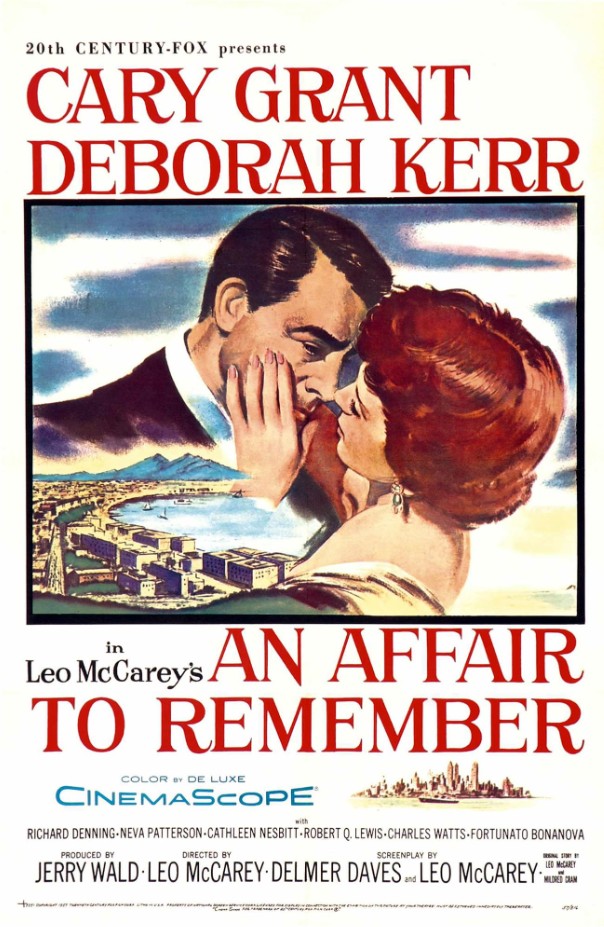
Now On The Menu: The Food & Film Blogathon!

Welcome to my Food & Film Blogathon! This year’s event celebrates the matrimony of culinary and cinematic! The union between film and food have taken on various forms, from the concept of “dinner and a movie” to scenes where characters prepare meals together. But, at the end of the day, the universal theme of food (or sharing food) through a cinematic lens has become popular as well as relatable. The participants of The Food & Film Blogathon created articles that explore this connection of food and film. With a collection of movie reviews and even a few editorials, let The Food & Film Blogathon begin!

The Food & Film Blogathon banner created by me, Sally Silverscreen. Original pictures found on IMDB.

18 Cinema Lane — A Movie Blogger Fixes Food Related Movie “Gimmicks”

The Midnite Drive-In — When Food Fights Back

Silver Screenings — IF YOU COULD ONLY COOK (1935): A DELICIOUS SCREWBALL COMEDY

Crítica Retrô — Tampopo: Brutes Also Eat Spaghetti (1985) / Tampopo (1985)

Hamlette’s Soliloquy — “Chocolat” (2000)

The Wonderful World of Cinema  A Suspicious Meal… Food in Hitchcock films

Taking Up Room — Order Up

Movies Meet Their Match — Movie Review: Kung Fu Panda (2008)

A Movie Blogger Fixes Food Related Movie “Gimmicks”

Whenever I participate or host a blogathon, I try to approach the selected topic from a unique perspective. For The Food & Film Blogathon, I wanted to observe the relationship between film and food through cinematic promotion. More often than not, food has been an advertiser when encouraging people to check out a particular title. Sometimes, creativity and ingenuity have shined through these promotions, leaving a memorable impression and even helping a film succeed at the box office. But as I was researching this promotional connection of food and film, I noticed how some food-related movie “gimmicks” could be improved. These “gimmicks” are not entirely weak or unsuccessful. In fact, some of them have held a special place in the hearts of customers. However, as I’ll explain in this editorial, these food-related movie “gimmicks” could be more productive and sustainable. Before I continue, I want to point out how my editorial is intended to be constructive, not mean-spirited or negative.

The Food & Film Blogathon banner created by me, Sally Silverscreen. Original pictures found in the video, “Fast Food Movie Tie-Ins and the History of the Summer Blockbuster!”, from the Youtube channel, PNP Videocast.

Popcorn Buckets and Reuseable Cups

When patrons enter the halls of their local movie theater, they are constantly bombarded with promotions for not just currently playing films, but upcoming films as well. From trailers on the big screen to posters and standees in the lobby, the cinema becomes an arena as studios battle for the attention of potential audience members. Two other forms of in-theater marketing are popcorn buckets and reuseable cups. Creativity and clever presentations build upon the basic design of a cup or bucket in an attempt to capture the spirit of the movie it’s promoting. But after movie-goers leave the theater, there are few opportunities to reuse the popcorn bucket. This increases the chances of popcorn buckets either clogging up landfills, collecting dust at thrift stores, or even getting buried in the desert like the Atari game, E.T. the Extra-Terrestrial. It also doesn’t help how popcorn buckets can, sometimes, be expensive. One infamous example is The Fantastic Four: First Steps’ Galactus popcorn bucket, which received a retail price of $80. Meanwhile, reuseable cups have a slightly longer shelf life than popcorn buckets. Though they can be expensive as well. I’ve seen a 24 oz. cup promoting the movie, Smurfs, listed for $29.99.

How to Fix It

Picture it: AMC theaters, a handful of days throughout the year (yes, that reference of The Golden Girls was intentional). If movie-goers bring their popcorn buckets and/or reuseable cups to their local theater’s concession stand, they can save a certain percentage off their concession purchases. This percentage could be low enough for theaters to not lose money, but enough for movie-goers to save some money. If these sale days were enforced, it would be a win-win for both movie-goers and theaters. Patrons are given a reason to consider purchasing a popcorn bucket and/or reuseable cup, seeing it as more of an investment and less as a collector’s item or “gimmick”. They also are encouraged to seek out the concession stand, as they would have a legitimate reason to save money during their movie-going experience. Because of concession stand sale days, theaters can sell more popcorn buckets and reuseable cups in the long run, which would increase their revenue. The aforementioned sale days would welcome repeat customers as well, adding even more revenue to the theater’s financial intake.

On the left is the infamous Galactus popcorn bucket, which was sold for $80. On the right is the Smurfs cup I referenced in this editorial, which received a retail price of $29.99.

Specialty Food Items

For the sake of this editorial, specialty food items directly connect to the movie they’re promoting. This can range from products bearing a character’s likeness to meals sharing a name that is significant to the film. An example that has received praise on the internet is The Batman Calzony from Little Caesars. In 2022, the pizza chain created a pizza shaped like Batman’s logo. The culinary creation was introduced leading up to the release of the movie, The Batman. Though this promotion existed for a short period of time, it left a positive impression. The video, ‘A Look at Bizarre Movie Tie-In Restaurant Foods’ from the Youtube channel, Seeker of The Lost, features comments in its comment section from viewers who either remember and/or love The Batman Calzony. One commenter even demanded the pizza be brought back.

How to Fix It

Like the aforementioned commenter from Seeker of The Lost’s video, I, too, think The Batman Calzony should be brought back. However, the context of the comeback can be either of three ways. Batman has had an established place in the pop cultural landscape for over fifty years. Whether it’s the comics or the films, there is sure to be a milestone anniversary Little Caesars could capitalize on, giving them a legitimate reason to bring back The Batman Calzony. I’ve heard a sequel to The Batman is in the works. That movie’s premiere could see The Batman Calzony’s return. If Little Caesars wanted to create a Halloween tradition, they could consider bringing back the pizza for Halloween. Not only are bats a popular Halloween motif, Batman has received his own Halloween costume over the years. Bringing back The Batman Calzony would give new customers a second chance to try the pizza. It would also make those who love the pizza repeat customers. Meanwhile, Little Caesars has an opportunity to create additional revenue, especially if The Batman Calzony was brought back annually or even biannually. Associating the pizza as part of a tradition would help Little Caesars build positive promotion and recognition of their brand.

Because of The Batman Calzony‘s unique shape (as well as its name), it is directly connected to the film it’s promoting, The Batman.

Limited-Edition Food Items

Limited-edition food items differ from specialty food items, as they don’t directly correlate with the movie they’re advertising. This allows the limited-edition food items to be sold in various contexts. 1998 saw the release of Disney Pixar’s A Bug’s Life. As part of the film’s promotion, McDonald’s found a reason to sell Apple Cinnamon McNuggets dipping sauce. But when the dipping sauce is removed from A Bug’s Life’s advertising equation, it can be sold in other promotions. A decade prior, in 1987, the Apple Cinnamon dipping sauce was incorporated into McDonald’s Holiday McNuggets seasonal campaign. Since these two promotions, though, McDonald’s has not brought this dipping sauce back.

How to Fix It

Based on my research for this editorial, McDonald’s hasn’t created any food items related to the Fall/Autumn season. While the Baked Apple Pie is a popular product on McDonald’s menu, it isn’t used to capitalize on Fall/Autumn. With apples and cinnamon typically associated with this time of year, McDonald’s could bring their Apple Cinnamon McNuggets dipping sauce back through a seasonal promotion. They could also create other Fall/Autumn themed food items to compliment the Apple Cinnamon dipping sauce’s return, such as an Apple Cinnamon milkshake. Creating a seasonal campaign around the re-release of their Apple Cinnamon dipping sauce would give McDonald’s good marketing and financial opportunities to take advantage of the Fall/Autumn season. It would also be a win for their customers, as those who love the dipping sauce receive a chance to revisit it and new customers are introduced to the dipping sauce.

Based on my research, a commerical from the Youtube channel, Media Closet, is one of the few references I could find of the Apple Cinnamon McNuggets dipping sauce’s inclusion in A Bug’s Life‘s McDonald’s promotion. Original picture found in the video, “1990s – McDonald’s A Bug’s Life Promo – Holiday Commercial”, from the Youtube channel, Media Closet.

Missing the Finer Details

Advertising plays a big role in the business of making movies. But movie marketing campaigns are not created equally. Some of them miss the finer details of the film they’re promoting. A perfect example is when Subway debuted their Fiery Footlong Collection to capitalize on the premiere of 2013’s The Hunger Games: Catching Fire. Through this collection, Subway introduced two new sandwiches; Sriracha Chicken Melt and Sriracha Steak Melt. The other two sandwiches, Buffalo Chicken and Turkey Jalapeno Melt, had been sold prior to the collection. Though Subway’s intention was to focus on the film’s theme of fire, the overall promotion came across as out of touch. This is because The Hunger Games: Catching Fire addresses topics like “inequality” and “food shortages”.

How to Fix It

The example I presented of Subway’s marketing misfire (cue the comedic drum sound) is not the first (or last) time a film’s marketing campaign missed finer, important details of the film itself. But blunders like this can be prevented. Working as a communicative bridge between a movie’s creative team and a marketing firm should be an official liaison. First, the liaison would talk with a movie’s creative team about the important elements of their project they’d want to see reflected in its promotional campaign, like certain themes within the script. Then, the liaison would take these notes to a marketing firm and work with them to weave the creative team’s important elements into the promotional campaign. If a liaison connected a movie’s creative team and a marketing firm, everyone involved in a film’s marketing campaign would be on the same page. More cinematic promotions would possess a deeper understanding for the promoted movies.

As I said in this editorial, Subway focused on the theme of fire for their promotion of The Hunger Games: Catching Fire. Hence the reason why all of the sub sandwiches have spicier flavors. Original picture found in the video, “A Look at Bizarre Movie Tie-In Restaurant Foods”, from the Youtube channel, Seeker of The Lost.

“Gimmicks” Becoming “Lost Media”

I once heard someone claim that food was a “temporary art form” and “old franchise food” was, over time, “lost to the ages”. Reflecting on what that person said, as well as the subject of this editorial, it seems like food associated with film promotion is its own form of “lost media”. Movie “gimmicks”, specifically those that are food-related, exist for an extremely short period of time. Once a movie has left theaters, that respective “gimmick” is gone. When it comes to food-related movie “gimmicks” in particular, only pictures, videos, and even memories are left. Some may even fade into obscurity. While there are a few that have been brought back on the meal, like Taco Bell’s Volcano Burrito (which later turned into the Volcano Double Beef Burrito), this has been the exception to the rule.

How to Fix It

In the comments section of Seeker of The Lost’s video, ‘A Look at Bizarre Movie Tie-In Restaurant Foods’, one person said it’d be sweet to have the recipes to the video’s featured foods collected in a cookbook. I have to agree with that commenter, especially since it would be a good way to restore and preserve these food-related movie “gimmicks”! Throughout the cookbook, meals associated with film promotion would have recipes chronicled in order of their respective movie’s release year. The cookbook can also feature interviews, perspectives, and tidbits of information from either those on a film’s creative team, a marketing firm that worked on a movie’s promotional campaign, or from a restaurant/food company or movie theater. Fans of any of the selected “gimmicks” would gain an opportunity to bring the food items back to life. Those who didn’t get to try a “gimmick” the first time around would receive a second chance to try these foods. The cookbook would also be a unique addition to any movie or food enthusiasts’ collection.

The Food & Film Blogathon banner created by me, Sally Silverscreen. Original pictures found in the video, “A Look at Bizarre Movie Tie-In Restaurant Foods”, from the Youtube channel, Seeker of The Lost.

If you want a movie to succeed, you have to promote it to your potential audience. While there are many ways to do this, food is one of the most tried-and-true of these advertising tactics. Because each movie is unique, food-related movie “gimmicks” are unique as well. As I mentioned in my editorial’s introduction, creativity and ingenuity have shined through these promotions. Food-related cinematic marketing is not perfect though. Mishaps have taken place, better decisions could have been made, and finer details were missed. With the ideas and suggestions featured in this editorial, food-related movie “gimmicks” can, hopefully, become more sustainable and productive. Reflecting on everything I’ve said, I’m curious to see how food-related film promotion evolves over time. It would also be interesting to see how marketing trends have impacted food-related movie “gimmicks” through the years.

Have fun at the movies!

Sally Silverscreen

Editorial References:

Articles — https://thedirect.com/article/popcorn-buckets-2025-movie-best, https://www.fantasylandnews.com/2025/07/08/the-smurfs-movie-popcorn-buckets-and-novelties-coming-to-theaters/, https://comicbook.com/dc/news/little-caesars-reveals-the-batman-calzony/, https://flavor365.com/the-1987-holiday-mcnuggets-a-deep-dive-into-a-legend/

Videos — “A Look at Bizarre Movie Tie-In Restaurant Foods” from Seeker of The Lost and “1990s – McDonald’s A Bug’s Life Promo – Holiday Commercial” from Media Closet

Take 3: Fist of Fury Review

Years ago, on 18 Cinema Lane, I admitted I had never seen any of Bruce Lee’s films. Since admitting that, I wanted to find the perfect opportunity to review a movie from his filmography. Now, I finally received that opportunity because of one man. In one of his interviews, Stefan “Princ” Zdravković said he watched Bruce Lee’s films when he was a kid. Ever since I saw that interview, I made a promise to review one of Bruce’s movies on Princ’s birthday. When I discovered Princ’s birthday was on September 29th, I knew I found a chance to fulfill that promise. Therefore, for this review, I have selected 1972’s Fist of Fury! Martial arts films are rarely covered on 18 Cinema Lane. Despite this, the ones I’ve seen (and reviewed) have been enjoyable. So, will I find Fist of Fury enjoyable as well? Read my review to find out!

Fist of Fury poster created by Golden Harvest Company, Nova Media, and Legend Films

Things I liked about the film:

The acting: Bruce Lee has earned a good reputation for his mastery of marital arts skills. However, based on my experience watching Fist of Fury, I believe Bruce is a stronger actor than most people give him credit for. A scene taking place after Huo Yuanjia’s funeral is the perfect example. Bruce’s character, Chen, is devastated by the loss of his martial arts teacher. He sits in silence and bears a serene yet sad look on his face as he tries to shut out the world around him. But as soon as his peers bring up how Huo Yuanjia died of pneumonia, Chen snaps into anger, shouting in denial with a fierce look in his eyes. This quick transition of emotions was flawless, making Bruce’s performance memorable! Another strong acting performance in Fist of Fury came from Ping-Ou Wei. Portraying an interpreter for a Japanese martial arts school named Wu, Ping-Ou effectively showcased a character that was smarmy and dislikable. This was achieved through vocal inflections, expressive eyes, and even tilts of the head. I actually looked forward to seeing Ping-Ou’s performance because it was that good!

Martial arts choreography: When I choose to watch a martial arts film, especially one starring Bruce Lee, I expect to see scenes featuring really good martial arts choreography. I can honestly say the choreography in Fist of Fury is excellent! All the execution of the movements are sharp and precise. Each duel looked like an intricate and calculated dance, with every opponent delivering strength and agility. Even the incorporation of swords and nunchucks showed how opponents use strategy to gain the upper hand. It also helps how each duel Chen battled in increased in intensity, building up to the movie’s climax. With everything I said, all the martial arts scenes maintained the excitement within the story!

Clever writing: Toward the beginning of Fist of Fury, Wu and two students from a Japanese martial arts school deliver a hand-written threat to Chen and his peers at the Chinese martial arts school. One of the students who accompanied Wu says if Chen defeats the Japanese martial arts school students, he’ll eat his words. Later in the film, when Chen goes to the Japanese martial arts school, he does defeat every student there. He then rips up the hand-written threat his school received earlier and forces two of the Japanese martial arts school students to, literally, eat their words. This is just one example of how some of the writing in Fist of Fury was clever!

Higher stakes: As I mentioned earlier in this review, Chen’s martial arts teacher, Huo Yuanjia, passed away. But Chen believes foul play was involved. Throughout the story, he vows to find the truth about what happened to his teacher. Meanwhile, a Japanese martial arts school wants to assert their dominance over the Chinese martial arts school. They go so far as to destroy property and threaten to close the Chinese martial arts school down. These parts of the story created higher stakes, giving the audience a reason to care about Chen and his wellbeing, as well as that of his peers. The higher stakes in Fist of Fury also brought suspense and intrigue to the overall presentation!

Birthday party set-up image created by Freepik at freepik.com. <a href=”https://www.freepik.com/free-photos-vectors/food”>Food photo created by freepik – http://www.freepik.com</a>. Image found at freepik.com.

What I didn’t like about the film:

The sporadic incorporation of the mystery: Like I brought up in my point about Fist of Fury’s higher stakes, Chen vows to find the truth about what happened to his teacher, as he believes foul play was involved. This mystery was one of the most intriguing parts of the story. But, unfortunately, it was sporadically incorporated into the movie. That creative decision led the mystery’s reveal to be somewhat underwhelming. It also made the mystery itself seem, at times, forgotten about. I wish the mystery had a more consistent presence in Fist of Fury.

The audio: I recognize technology in the 1970s was very different from the technology of today. However, a major flaw of Fist of Fury I couldn’t ignore was the audio. I had to turn up my television’s volume because it was difficult to understand what the characters were saying. They, sometimes, sounded muffled, almost like lines were recorded in a library and added in during the film’s post-production phase. Since this is my first time watching any of Bruce Lee’s films, I don’t know if the audio has been an issue in his other movies?

Introducing a character toward the end of the film: Petrov is a Russian martial artist who is friends with the administration at the Japanese martial arts school. Portrayed by Robert Baker, Petrov also performed impressive feats, like bending metal. Even though Petrov was an interesting character, I didn’t like how he was introduced toward the end of the film. This creative decision prevented him from making a bigger impact on the story. In my opinion, if Petrov had been written out of Fist of Fury, it wouldn’t have made much difference.

Martial arts image created by Freepik at freepik.com. <a href=”https://www.freepik.com/free-photos-vectors/red”>Red vector created by freepik – http://www.freepik.com</a>. Image found at freepik.com. 

My overall impression:

Like I said in this review’s introduction, I admitted I had never seen any of Bruce Lee’s films. So, for an introduction, I’d say Fist of Fury is a good one! Yes, the martial arts choreography was impressive. But what I also liked about the 1972 movie was how engaging the story itself was. While I wish the mystery had a more consistent presence in the script, it did provide the film with intrigue and suspense. The mystery also provided the characters with higher stakes to deal with. I not only thought some of the writing was clever, I also liked the acting performances, especially Bruce’s portrayal of Chen. In fact, Bruce’s performance made watching Fist of Fury a memorable and enjoyable experience! For me, 2025 has become a year where I’ve gone out of my way to check out movies I’ve been meaning to see. So, with that said, I’m glad I finally got to see at least one of Bruce Lee’s films!

Overall score: 7.7 out of 10

Have you seen Fist of Fury? Would you like to see more of Bruce Lee’s films reviewed on 18 Cinema Lane? Let me know in the comment section!

Have fun at the movies!

Sally Silverscreen

Take 3: Kind Hearts and Coronets Review

2025 is my fourth year participating in the Rule, Britannia Blogathon. Two of my previously chosen films, Nicholas Nickleby and Kingdom of Heaven, were released in the 2000s. Meanwhile, Tommy premiered in 1975. For this year’s event, I selected a film that is much older than the ones I mentioned. That movie is 1949’s Kind Hearts and Coronets! I was recommended the film by Eric Binford from Diary of a Movie Maniac. Reflecting on my blogathon participation this year, so far, I have made a stronger effort to select films that were recommendations from my readers. Most of the recommended titles I selected for these blogging events were ok or fine. The only exception was She Wore a Yellow Ribbon, which I found disappointing. How will Kind Hearts and Coronets compare with the other titles? Keep reading my review to find out!

Kind Hearts and Coronets poster created by Ealing Studios, Michael Balcon Productions, General Film Distributors (GFD), and Eagle-Lion Films

Things I liked about the film:

The acting: Dennis Price portrays Louis in Kind Hearts and Coronets. Throughout the story, Louis consistently carries a calm, collected persona. Even a prison warden points out how calm Louis is before his execution. Along with the aforementioned persona, Louis possesses a certain charm that allows his true intentions to be undetected. These qualities fool the other characters into welcoming him into their lives and giving him exactly what he wants. The strength of Dennis’ acting abilities effectively showed how Louis could fake it until he made it. One of the characters fooled by Louis was Edith. Despite becoming a widow, she never let grief consume her. Instead, Edith had a gentle persona and was kind to everyone. During a conversation she shares with Louis, she sympathizes with his estrangement from his family. The tone in her voice indicates how hurt she is to learn this about Louis’ life. Even the look on her face shows sadness and concern. Similar to Dennis’ performance, Valerie Hobson (the actress who portrayed Edith) presented a consistent portrayal of Edith. However, the acting overall was well done!

The dialogue: When the dialogue in a script is good, it can make conversations between characters sound natural. But when the dialogue is really good, it can leave a memorable impression on the audience. In Kind Hearts and Coronets, there was some dialogue that I thought was well-written! One example is when Edith learns how Louis and his mother were estranged from the D’Ascoyne family. Disgusted to discover Louis’ rejection, Edith says “they think too much of the rights of the nobility and too little of its duties”. Through that quote, she eloquently stated how family connections should have been a top priority. In another scene, Louis is giving his friend, Sibella, compliments. He tells her she has “a face that a man could see in his dreams for the whole of his life”. During this conversation, Louis could have simply said Sibella had a beautiful or pretty face. The creative team’s effort to provide some of the dialogue with quality, however, made Louis’ compliment sound like genuine thought was put into it.

Historical accuracy: Kind Hearts and Coronets takes place in England during the Edwardian era. This means the film’s creative team needed to adopt attention to detail in order to make their production look as historically accurate as possible. Through the set and costume design, that goal was achieved, making the movie feel immersive! The women’s wardrobe serves as one example. Sometimes, Edith and Sibella wear hats when out in public. These hats are larger in size and boast intricate designs. Using materials like flowers, ribbon, and even lace, the hats symbolize the wealth Sibella and Edith possess. They also perfectly represent the fashion in the world of Kind Hearts and Coronets.

The 12th Annual Rule, Britannia Blogathon banner created by Terence from A Shroud of Thoughts

What I didn’t like the film:

Lack of suspense and intrigue: According to IMDB, Kind Hearts and Coronets is about “a distant poor relative of the Duke D’Ascoyne plots to inherit the title by murdering the eight other heirs who stand ahead of him in the line of succession”. Keeping this synopsis in mind, I expected a story where Louis’ scheme provided suspense and intrigue came from how Louis would face accountability for his actions. But as I watched the 1949 movie, I found the story lacking these elements. What the script focused on instead was the “slice of life”, mundane parts of Louis’ life. In fact, so much emphasis was placed on this aspect of the story, potential suspense and intrigue were an afterthought.

Little emphasis on the story’s moral: In Kind Hearts and Coronets, Edith quotes Lord Tennyson by stating “Kind hearts are more than coronets, and simple faith than Norman blood?” Based on that quote, I thought the moral of the film would be if Louis had just chosen kindness, maybe he could have enjoyed a duke title instead of facing repercussions for his choices. Sadly, this assumed moral was barely referenced throughout the story. Such little focus was placed on the moral of practicing kindness, I don’t even know what the moral of this story was supposed to be. Looking back on Kind Hearts and Coronets, I’m not entirely sure what this movie was trying to say.

The cliffhanger ending: For this part of my review, I will spoil Kind Hearts and Coronets. If you haven’t seen this movie and are planning on watching it, skip ahead to the part of my review titled “My overall impression”.

Louis is charged for the murder of Sibella’s husband, Lionel. Before his scheduled execution, Louis is told Lionel actually committed suicide, leaving behind a note. This discovery leads Louis to be released from prison. Upon leaving the prison, a writer approaches Louis with an offer to publish his memoir. This is when Louis realizes in horror he left his self-written life story, including his murder confessions, back in his jail cell. Then the movie ends. Louis’ realization was suspenseful, providing intrigue for who will discover Louis’ story. This suspense and intrigue could have been overarching elements throughout the movie. Therefore, I found the cliffhanger ending frustrating.

Sketch of London image created by Archjoe at freepik.com. <a href=’https://www.freepik.com/free-vector/hand-drawn-houses-of-parliament_1133950.htm’>Designed by Archjoe</a>. <a href=”https://www.freepik.com/free-photos-vectors/background”>Background vector created by Archjoe – Freepik.com</a>. Image found at freepik.com.

My overall impression:

As a movie blogger, I have reviewed films I tried to like, only to be met with disappointment. Sadly, Kind Hearts and Coronets is one of those films. IMDB classifies the 1949 movie as a “comedy”. But I didn’t laugh at all while watching it. In fact, I almost fell asleep as I watched Kind Hearts and Coronets. I was let down by the story’s lack of intrigue and suspense. What doesn’t help either is how little focus was placed on the moral to the point where I didn’t know what the moral was supposed to be. While I won’t spoil the ending, I will say it left me frustrated. There were strengths within Kind Hearts and Coronets, however. The acting overall was well-done, some of the dialogue was well-written, and I liked the film’s historical accuracy. When the script is weak, though, there’s only so much these strengths can do to save the film.

Overall score: 5.2 out of 10

Have you seen Kind Hearts and Coronets? What productions from the United Kingdom would like to check out? Let me know in the comment section!

Have fun at the movies!

Sally Silverscreen
Take 3: Ben-Hur: A Tale of the Christ (1925) Review

Back in March, I reviewed 1925’s The Phantom of the Opera in honor of the film’s one hundredth anniversary. But this is not the only movie celebrating this particular milestone. When I discovered Ben-Hur: A Tale of the Christ was also turning one hundred this year, I wanted to write about the film on 18 Cinema Lane. With “Silent Films” the theme of September’s Genre Grandeur, I found a good reason to check out this movie! Another reason why I wanted to write about Ben-Hur: A Tale of the Christ is because of how much I liked 1959’s Ben-Hur. I reviewed this version in 2019, which I ended up really liking. It was not only covered in a Blog Follower Dedication Review, it was also included on my list of ten classic movies I watched because of my blog. So, how does the original compare to the remake? Keep reading to find out!

Ben-Hur: A Tale of the Christ (1925) poster created by Metro-Goldwyn-Mayer (MGM)

Things I liked about the film:

The acting: Actors in silent films are forced to rely on the physical appearance of their performance. This means they must utilize body language, facial expressions, and emotions to express what their characters are thinking and feeling. As I write this review, it’s difficult for me to choose a favorite performance in Ben-Hur: A Tale of the Christ. Each portrayal was so captivating, watching this movie was an engaging experience! When Judah Ben-Hur is sharing drinks with Messala, he displays a relaxed smile and sits in a comfortable position, believing Messala has his best interests at heart. But after learning he and Messala can no longer put their differences aside, Judah quickly becomes saddened by this reality. His eyes express the pain of losing a friend. He also adopts a slight frown, wondering why his friend would change. Because Ramon Novarro’s performance was so strong, it was able to speak where dialogue couldn’t.

In Ben-Hur: A Tale of the Christ, May McAvoy portrays Esther, the daughter of Simonides. What I loved about her performance was how expressive it was! During a conversation with her father, Esther learns some shocking information. Her eyes become wide as a horrified expression is painted on her face. The more information she learns, the more shocked Esther appears. This consistent portrayal shows concern on her face as well. Similar to what I said about Ramon Novarro’s performance, May’s performance said so much while saying so little.

Color coded film: When I reviewed 1925’s The Phantom of the Opera, I talked about how much I liked the movie’s color coded film. Color coding this presentation gave each part of the story its own distinct significance. Ben-Hur: A Tale of the Christ utilizes color coded film as well. The way the film-making technique was incorporated into the movie signified the time of day in the story. Parts of The Nativity were shown in blue tinted film, indicating these parts were set at night. Jerusalem is covered in a light-yellow tinted film, meaning Judah and Esther first meet in the daytime. Most of the scenes that were fully in color depicted Biblical events. The creative team behind Ben-Hur: A Tale of the Christ used color coded film in very clever and visually interesting ways!

The scope: “Sword and sandal” films have been known for large set pieces and presenting them in grand ways. This was accomplished in Ben-Hur: A Tale of the Christ through the use of long and medium shots. Through the streets of Jerusalem, soldiers from various countries march together in a parade. Some long shots show off a massive stone structure that makes the people look like toy figurines. Both long and medium shots capture the magnitude of the crowds, emphasizing how many people came to see the spectacle. There were even shots that showed each group of soldiers, presenting how the groups were great in size. Because of the cinematography, Ben-Hur: A Tale of the Christ looked and felt larger than life!

The title cards: A staple of silent films is the inclusion of title cards. Without the use of dialogue, these title cards feature conversations between characters and describe what was happening in the story. But what impressed me about the title cards in Ben-Hur: A Tale of the Christ is how some of them were written. Reflecting on his conversation with Messala, an accompanying title card shares Judah’s thoughts and states “In outward seeming you are the same. But in spirit – you are a stranger”. In my opinion, this was an eloquent way of stating how Messala has changed. Later in the film, Judah proclaims “I am revenged indeed, but to what profit!” This quote on the title card addresses how, to Judah, success isn’t everything. These are just two examples of how this aspect of Ben-Hur: A Tale of the Christ went above and beyond!

White horse image created by Gabor Palla at freeimages.com. “FreeImages.com/Gabor Palla.”

What I didn’t like about the film:

The randomness of Iras: Within the second half of Ben-Hur: A Tale of the Christ, the movie introduces a character named Iras. While I liked Carmel Myers’ performance, I found Iras’ inclusion in the story random. The film establishes she is in a romantic relationship with Messala. But this relationship doesn’t really lead anywhere, as these two characters only share one scene together. A scene later, Iras flirts with Judah. Even though he is initially attracted to Iras, Judah pursues his feelings for Esther. Looking back on Ben-Hur: A Tale of the Christ, I wonder what Iras’ significance in the story was supposed to be? Was she intended to represent temptation or did she originally have a bigger role in the film, only for some of her scenes to be left on the cutting room floor?

The downplaying of Christianity/faith: I talked about liking the incorporation of Christianity/faith when I reviewed 1959’s Ben-Hur. In that review, I discuss how certain Biblical events were included into the overall story and how faith affected the characters and their actions. There were Biblical events depicted in 1925’s Ben-Hur: A Tale of the Christ as well. But unlike the 1959 movie, Christianity/faith was more downplayed in the 1925 film. The story places emphasis on Judah’s quest for revenge instead of how faith guided his life. From what I remember, Balthasar (one of The Three Wise Men) plays a greater role in the 1959 movie. This creative decision was, in my opinion, disappointing, especially since Ben-Hur is one of the better faith-based films.

Chariot statue from the Roman Empire image created by Michel Meynsbrughen at freeimages.com. “FreeImages.com/Michel Meynsbrughen.”

My overall impression:

When it comes to cinema, a lot can happen in one hundred years. Trends come and go, technology changes, and color film becomes commonly used. But in those one hundred years, there are movies that stood the test of time. They achieved this by bringing something new to the table, finding their audience, or being at the right place at the right time. Ben-Hur: A Tale of the Christ from 1925 is one of these movies. It showed what “sword and sandal” films could and should be. Through cinematography, the scope of the project created a world that feels larger than life. The way some of the film’s title cards were written went above and beyond, showing how Ben-Hur: A Tale of the Christ’s creative team put thought and effort into their presentation. Though the movie has more flaws than its 1959 remake, the 1925 movie is a solid silent film! It was entertaining and engaging, due to the strengths of the project, like the acting and how color coded film was used. I’m also incredibly grateful for the restoration and preservation efforts made for Ben-Hur: A Tale of the Christ, especially since silent films have become less common in these one hundred years.

Overall score: 8.1-8.2 out of 10

Have you seen 1925’s Ben-Hur: A Tale of the Christ? Which silent films would you like to check out? Please tell me in the comment section!

Have fun at the movies!

Sally Silverscreen