Sunset Over Hope Valley: Lend a Helping Hand

This episode of When Calls the Heart shows Elizabeth planning a surprise party for Nathan. Because planning a party can be overwhelming, other residents of Hope Valley volunteer to help Elizabeth. Lending a helping hand is a common theme on the show. Hearties have witnessed individual characters act selflessly, from Rosemary donating bridesmaid dress material for bandages to Lucas sharing the magic of movies with Hope Valley’s residents. But when Hope Valley’s residents join together, Hearties see how anything is possible. Complications have reached solutions because the characters have worked together, putting their differences aside to reach a common goal. The help Hope Valley’s residents provide is genuine, coming from a place of goodness and charm. For me, this is what has made When Calls the Heart enjoyable to watch!

Just a reminder: If you did not see this episode of When Calls the Heart, there will be spoilers within this re-cap.

When Calls the Heart season eleven poster created by Hallmark Media, Crown Media Family Networks and Hallmark Channel

Season: 11

Episode: 2

Name: Tomorrow Never Knows

Major stories:

Elizabeth is reminded by Rosemary how Nathan’s birthday is just around the corner. When Elizabeth mentions this to Nathan, Nathan is convinced he’ll receive a surprise party due to Allie’s random decision to go fishing. After school one day, Elizabeth questions Allie about her plans for Nathan’s birthday. Allie confirms her plans only consist of going fishing. These plans change to both a fishing trip and a party because Nathan is still suspecting a party. Rosemary volunteers Elizabeth to plan the party, believing Elizabeth is capable of making this party a reality. As more residents find out about the party, they agree to help with party preparations. On Nathan’s birthday, he and Allie go fishing, where they don’t catch any fish. This works in Allie’s favor as she suggests having dinner at the saloon. At the saloon, Nathan is pleasantly surprised at how many people attended the party. He’s also surprised when Lucas later shows up.

Due to Lucas’ plans for the resort, he decides to sell the saloon. He feels hanging on the saloon would be a conflict of interest. This news makes Mike concerned for his job as saloon manager. When Lee looks at the saloon’s books, he discovers how profitable the establishment is due to Mike’s management. Lee plans on buying the saloon, but allowing Mike to continue managing it. Explaining this plan to Rosemary for the first time causes Rosemary to feel she and Lee don’t spend enough time together due to putting work first. He later explains to Rosemary how purchasing the saloon but allowing Mike to manage it would actually give them more time to spend together. Rosemary agrees to co-own the saloon after hearing Lee’s plan. She even suggests adding a stage to the saloon. When Mike learns of Lee and Rosemary’s plans, he is excited to keep his job.

Birthday cake image created by Freepik at freepik.com. <a href=’https://www.freepik.com/free-vector/chocolate-birthday-cakes-collection_765437.htm’>Designed by Freepik</a>. <a href=”https://www.freepik.com/free-photos-vectors/birthday”>Birthday vector created by Freepik</a>. Image found at freepik.com.

Minor stories:

Rosemary is frustrated at being “scooped” by another newspaper reporter. While some of Hope Valley’s residents are impressed with the competition, Rosemary reads between the lines, discovering how Lucas’ case’s official statement was copied word for word. She figures her problem is how she lacks a source. So, Rosemary turns to Bill for help. Bill questions Rosemary’s interest in Lucas’ case, wondering if all she cares about is creating an exciting headline. Rosemary reassures Bill how she just wants to protect Lucas because he’s her friend. Later in the episode, Rosemary receives a mystery board from Lee.

Bill calls Mei and Mike “newlyweds” as he passes by the pharmacy. Mike and Mei appear a bit uncomfortable by this comment due to how their relationship hasn’t become serious yet. After this comment, Mei has been distant with Mike. Mike thinks he did something wrong, but Mei is afraid to engage in a serious romantic relationship because to a past relationship, as she confesses to Faith. At Nathan’s birthday party, Mei shares her fears with Mike. But all Mike wanted to do was ask Mei to dance.

Faith has her hands full not only running the infirmary, but
also looking after Lily. She is sometimes frustrated by how frequently Lily
changes her mind about things. However, Faith recognizes how much joy Lily has
brought to Hope Valley. While Faith reads a story to Lily, Lily questions where
the parents of the story’s protagonist are. Faith explains how the story’s
protagonist went to live with her aunts. This encourages Lily to ask about her
grandmother. Faith tells Lily how her grandmother is being taken care of at the
hospital. When Lily asks how long her grandmother will stay in the hospital,
Faith suggests Lily close her eyes and picture her grandmother, trying to help
Lily overcome her homesickness. While Lily takes Faith’s advice, Faith closes
her eyes and pictures Fiona.

Happy reading place image created by Freepik at freepik.com. <a href=”https://www.freepik.com/free-photos-vectors/background”>Background vector created by freepik – http://www.freepik.com</a>. Image found at freepik.com.

Some thoughts to consider:

·       
I’ve always been confused on how to spell Allie’s
name. In When Calls the Heart’s promotional material, I have seen Allie’s
name spelled ‘Allie’ and ‘Ally’. To maintain consistency and prevent confusion
for my readers, I will be spelling Allie’s name ‘Allie’ for the remainder of
these re-caps.

At the café, Cooper and Toby study for a math test. Toby shares with Cooper how the test questions are the same as their math homework, so he feels he doesn’t have to study. Later in the episode, Minnie addresses what she overheard with Elizabeth as she’s grading the aforementioned math test. But this part of the story was not resolved. Toby is not confronted by Elizabeth and no lessons are learned. Because of everything I said, this subplot felt random.

·       
Henry comes back to Hope Valley! While talking
with Elizabeth, he shares how he visited Abigial and how Abigail wanted him to
be happy. Henry also volunteers to help the Canfields tend the trees in the café’s
backyard. During this episode, I noticed how much happier and calmer Henry
appeared. He seems to have adopted a genuine interest in Hope Valley’s agriculture
and foliage. Therefore, I’m curious to see how Henry’s story turns out this
season!

Sunset image created by Photoangel at freepik.com. <a href=”https://www.freepik.com/free-photos-vectors/background”>Background image created by Photoangel – Freepik.com</a>.<a href=’https://www.freepik.com/free-photo/red-sunset-clouds-over-trees_1254327.htm’>Designed by Freepik</a>. Image found at freepik.com.

What are your thoughts on this episode? How many changes do you
think the saloon will endure? Please tell me in the comment section!


Have fun in Hope Valley!

Sally Silverscreen


Introducing my new series, Comparing with the Critics!

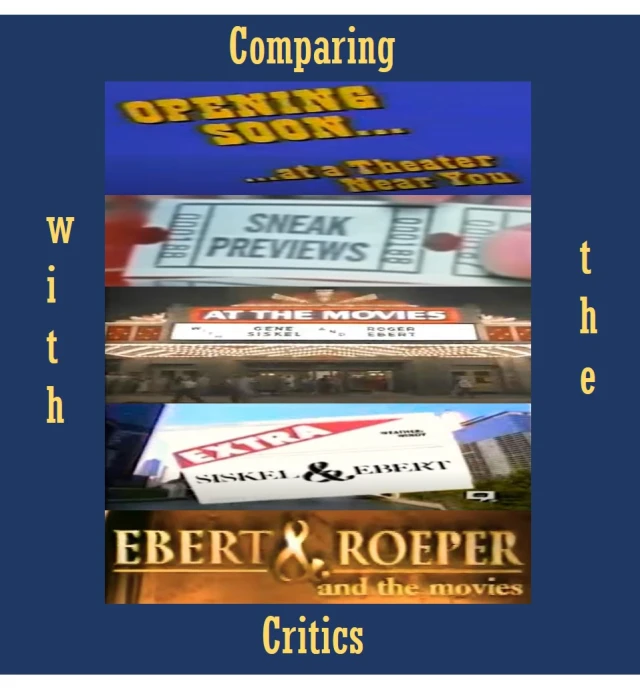
Comparing with the Critics banner created by me, Sally Silverscreen. TV show title cards created by WTTW National Productions, WTTW, Public Broadcasting Service (PBS), Lifetime Television, Tribune Entertainment, Buena Vista Television, and Disney-ABC Domestic Television


Back in January, I announced a new series I was starting
called Comparing with the Critics. A brief explanation was provided for what readers
could expect from the series. But this article will go into further detail
about how Comparing with the Critics will work. As I stated months ago, I will
choose one movie from each of the ‘Worst of’ and ‘Best of’ episodes of every
iteration of Gene Siskel and Roger Ebert’s show. After watching the chosen
films, I will write an editorial style review explaining why I agree or disagree
with Siskel, Ebert, or any critic that appeared on the program. Here are the
following guidelines of the movies that are and are not eligible for Comparing
with the Critics.


n 
Movies that are either featured on the show or
brought up by any of the critics

n 
Films I either have never seen, haven’t seen in
its entirety, or haven’t seen in over five years

n 
If a movie has been reviewed on 18 Cinema Lane
prior to Comparing with the Critics, it will not be re-reviewed for the series


In the reviews, I will be referencing the episode a chosen
movie was included in, incorporating quotes from the critics. For each year of
the show’s existence, I will provide an introduction explaining why I chose those
films and giving an overview of the year itself. While I try to write
spoiler-free reviews, I will inform readers if a review contains spoilers.


Have fun at the movies!

Sally Silverscreen


Word on the Street: Movie Theaters in the U.K. Broadcast Eurovision’s Grand Final

Two months ago, I wrote a Word on the Street story about how a movie theater chain in Spain will present Eurovision’s Grand Final in their cinemas. In that article, I said I hoped fellow Eurovision participating countries are inspired to provide experiences like the aforementioned Spanish theaters to their Eurovision fans. According to Eurovoix News, I kind of got what I wanted! Originally reported on April 6th, the second-year event will be broadcast “in over 100 cinemas across the United Kingdom”. An official statement from John Travers, from CinemaLive, said, “We want audiences to enjoy themselves, come along in groups, get your fancy dress on, and come together to enjoy this incredible occasion on the big screen!” Similar to Spain, the United Kingdom (U.K.) is capitalizing on their involvement in the song contest. Labeled as one of the “big five” countries, the U.K. is an automatic qualifier for Eurovision’s Grand Final. It is also one year since the U.K. delegation co-hosted Eurovision in 2023.

Theater seats image created by weatherbox at freeimages.com. “FreeImages.com/weatherbox.”

What are your thoughts on this piece of news? Which Eurovision participating country do you wish screened the Grand Final at their theaters? Please tell me in the comment section!

Have fun at the movies!

Sally Silverscreen

Article referenced in this post: https://eurovoix.com/2024/04/06/united-kingdom-eurovision-cinemas-2024/

Sunset Over Hope Valley: Nathan’s Standing Ovation

In this season premiere of When Calls the Heart, there were so many things that were inspiring enough to talk about in my re-cap’s introduction. However, I decided to focus on a quote I’ve referenced on my blog before. In the book, Wonder, the protagonist, Auggie, stated “Everyone in the world should get a standing ovation at least once in their life because we all overcometh the world.” After a criminal was caught by Nathan in this episode, everyone wants to give Nathan his “standing ovation”. But Nathan doesn’t feel he deserves it, as he thinks he just did his job. The idea of a worthy individual receiving a “standing ovation” is a nice one. However, in order for a “standing ovation” to take place, the person in question has to want it. This is a concept that isn’t explored often in stories. Therefore, I’m glad Nathan’s story gave me something to think about!

Just a reminder: If you did not see the season premiere of When Calls the Heart, there will be spoilers within this re-cap.

When Calls the Heart season eleven poster created by Hallmark Media, Crown Media Family Networks and Hallmark Channel

Season: 11

Episode: 1

Name: When Stars Align


Shortly after becoming Governor, Lucas gets shot by someone
he knows. When Bill learns of this news, he informs Nathan and Elizabeth of
what happened. During a phone call, Edwin, Lucas’ campaign assistant, shares
with Elizabeth how Lucas had to have surgery in order for the bullets to be
removed. After learning this, Elizabeth and Bill go to Capital City to visit
their friend. Lucas not only survives his ordeal, he is eager to start his new
journey as Governor. However, he doesn’t remember who shot him. While Lucas is
in the hospital, Henry pays him a visit. Lucas offers him a position on his
team. Though appreciative of Lucas’ offer, Henry turns it down. Later in the
episode, Lucas calls Rosemary and Lee. He informs them of an upcoming radio
announcement and thanks Lee for giving him a patch of land. On the day of the
announcement, Lucas reveals he will build a resort near Hope Valley, using the
land Lee gave him. It is a part of Lucas’ plan to improve Hope Valley and its
surrounding communities.


Four months after Lucas was shot, Nathan arrested Pike, a
man who confessed to shooting Lucas. A gun with Pike’s prints is also
discovered. Believing justice was served, everyone in Hope Valley congratulates
Nathan for saving the day. Everyone except Bill. He feels Lucas’ case was
solved too quickly. Bill also finds it odd how Montague was overlooked as a
potential suspect. During a private discussion, Bill shares his concerns with
Nathan. Nathan confesses how he has his own hunch about the case, as well as
requesting the case remain open. Nathan’s request was denied. Meanwhile,
Rosemary is desperate to become involved in the mystery. By questioning Bill,
she discovers his doubts about the case’s outcome.

Illustrated image of bicycle created by Freepik at freepik.com. Background vector created by freepik – www.freepik.com


Through a telegram, Faith learns Fiona has permanently moved
to Nashville. This news causes Faith to become lonely. She shares her feelings
with Minnie, who reminds Faith how she isn’t alone. In this same episode, Faith
takes care of a patient named Dora. Troubled by Dora’s cough, Faith listens to
Dora’s lungs. Discovering her patient has breathing issues, Faith prescribes
Dora medication. But the following day, Dora experiences a cardiac episode.
Concerned for her patient’s well-being, Faith calls the hospital in Benson
Hills. Because Dora came to Hope Valley with her young grand-daughter, Lilly,
Faith is worried about who will look after the girl. After Dora is sent to
Benson Hills, Dora sends a telegram informing how, during her recovery, Faith
she should look after Lilly.


Because of Fiona’s departure from Hope Valley, Mei has been
tasked with looking after the barber shop. Along with this responsibility, she also
has to maintain the pharmacy. Overwhelmed by everything on her plate, she asks
Mike for his help. He agrees to help, quickly taking note of Mei’s stress.
Offering another helping hand, Mike gives Mei a bike as a gift. He explains to
her how the bike will allow Mei to travel in a shorter amount of time. The
basket on the bike will also give Mei more room to store mud from Hope Springs.
Mei is appreciative of Mike’s gift. Their interaction causes Ned to comment how
Mike and Mei act like an old married couple.


With Lucas recovering in the hospital, Elizabeth reflects on
everything that happened in the four months since he was elected Governor. She
comes to the conclusion that life shouldn’t be taken for granted, as anything
can take place in the blink of an eye. In order to put actions to words,
Elizabeth decides to get a hair-cut. But with Fiona now in Nashville, Elizabeth
thinks the hair-cut will have to be postponed. Being the good friend that she
is, Rosemary volunteers to cut Elizabeth’s hair. Elizabeth accepts her friend’s
offer, but wants a hair-style that is simpler. The next day, Elizabeth reveals
her new hair-style with several of Hope Valley’s residents. The change with
Elizabeth’s hair receives positive results.

Colorful galaxy image created by Freepik at freepik.com. <a href=’https://www.freepik.com/free-vector/lovely-hand-drawn-galaxy-background_2943080.htm’>Designed by Freepik</a>. <a href=”https://www.freepik.com/free-photos-vectors/background”>Background vector created by Freepik</a>. Image found at freepik.com.

Some thoughts to consider:
This season premiere of When Calls the Heart was pleasant! Even though some of the stories were stronger than others, there are things to look forward to for the rest of the season. However, I found this episode’s trailer to be a bit cruel. Within this commercial, there was a clip of Lucas from the previous season. When this clip appeared, a voice-over stated how Lucas doesn’t remember anything. I can only speak for myself, but I thought Lucas had developed amnesia. However, this episode revealed how Lucas doesn’t remember anything about being shot. This isn’t the first time When Calls the Heart’s marketing tried to make its audience assume the worst about Lucas. Plus, Lucas’ fans are likely still disappointed by his and Elizabeth’s break-up from season ten. Personally, I found that part of the trailer to be an unnecessary way to spark an emotional reaction over Elizabeth’s relationships.


When Abigail Stanton was on the show, her café was called Abigail’s Café. Since she owned this establishment, it made sense for it to be named after her. But after she left Hope Valley and the Canfields bought her half of the café, I always wondered why the café was still named after Abigail. While watching the season premiere, I noticed in one scene how the café now boasts a sign stating ‘The Café’. Because this restaurant has been a staple of Hope Valley since, practically, the show’s beginning, it makes sense for the café to not feature any person’s name in the title, as the establishment, figuratively, belongs to everyone.

During one of Elizabeth’s classes, Elizabeth tells her
students how, in the following days, Venus and Jupiter will align in the sky,
causing them to be visible from Earth. I found this part of the story to be an
interesting coincidence because this episode premiered the day before April 8th’s
solar eclipse. This isn’t the first time a story on When Calls the Heart has
been unintentionally relevant with the time it aired on television. In the
seventh season’s fourth episode, ‘Sweet and Sour’, Hope Valley’s chickenpox
outbreak coincidently paralleled 2020’s Coronavirus.

As I mentioned in this re-cap, Lucas shares how he will
build a resort on the land Lee gave him. Even though I’m excited to see this
resort come to fruition, I hope Lucas plans on building a theater on that land.
At this point, it’s a pipe dream for Rosemary to receive her theater. But I’ve
always been hopeful of Rosemary’s dream finally coming true. If any character
is going to make that dream a reality, it’s Lucas. Not only does he have the
funds and resources, he did introduce Hope Valley’s residents to movies through
his saloon.

Sunset image created by Photoangel at freepik.com. <a href=”https://www.freepik.com/free-photos-vectors/background”>Background image created by Photoangel – Freepik.com</a>.<a href=’https://www.freepik.com/free-photo/red-sunset-clouds-over-trees_1254327.htm’>Designed by Freepik</a>. Image found at freepik.com.

What are your thoughts on season eleven’s premiere of When Calls the Heart? What are you looking forward to seeing this season? Let me know in the comment section below!

Have fun in Hope Valley!

Sally Silverscreen



Take 3: The 39 Steps Review

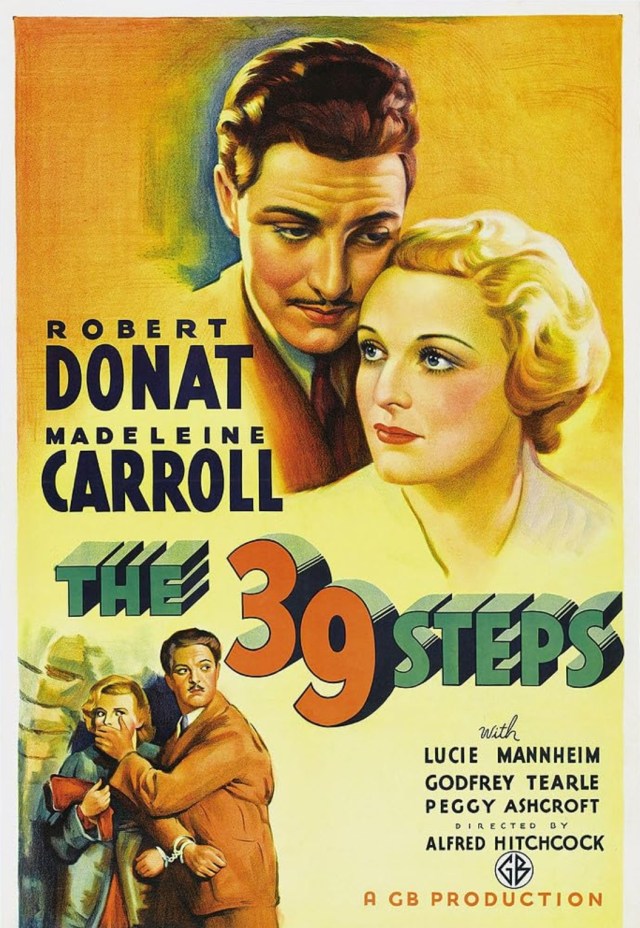
For the first annual Master of Suspense Blogathon (hosted by Maddy from Classic Film And TV Corner), I wrote about the 1955 film, To Catch a Thief. While I addressed how it was a “pretty looking movie”, I found To Catch a Thief prioritizing style over substance. In this year’s event, I have selected the 1935 production, The 39 Steps, which was recommended by Maddy from Maddy Loves Her Classic Films! There are several titles in Alfred Hitchcock’s filmography that have gained popularity over the years. But The 39 Steps has been overshadowed by Alfred’s more well-known projects. In fact, before signing up for the second annual Master of Suspense Blogathon, I knew very little about the film. However, I was familiar with Alfred’s forte for mystery and suspense, assuming I was, at least, going to see a creative concept come to life on screen. Was I correct in my assumption? Keep reading my review of The 39 Steps to find out!

The 39 Steps poster created by Gaumont British Picture Corporation and Gaumont British Picture Corporation of America

Things I liked about the film:

Robert Donat’s performance: Throughout The 39 Steps, I found the acting performances ranging from fine to well-done. However, I did like Robert Donat’s portrayal of Richard Hannay! What stood out to me was how at ease Robert appeared on screen. A perfect example is when Richard shares some of his family history with Pamela, who was portrayed by Madeleine Carroll. While telling Pamela about his family, Richard was comfortable giving this information, despite barely knowing Pamela. His body language appears relaxed and his facial expressions presented on his face effortlessly. The story itself rolled off Richard’s tongue as if he had told it multiple times. During this conversation, Richard was also yawning, indicating how tired he was by the events surrounding him during the film’s story.

The set design of Alt-na-Shellach: During the movie, Richard visits Alt-na-Shellach, the home of a man named Professor Jordan. The only room shown on screen was the sitting room, where a party was taking place. Despite appearing in only one scene, the room boasted nice set design pieces! Characters were greeted by a large, carved, wooden door. These carvings were intricately detailed, showing how much care went into creating that door. A big, ornate rug covered the majority of the floor, nicely complimenting the space. But the showstopper was the huge window overlooking a nearby river and featuring stained glass designs. I wish more scenes had taken place at Alt-na-Shellach, as I’m pretty sure other rooms would have looked great on screen too!

The mise-en-scène: For those who aren’t familiar with the term, mise-en-scène, it means how a scene is presented in a movie. In The 39 Steps, mise-en-scène was utilized in clever and visually intriguing ways. A great example is when Richard boards a train. On this trip, Richard is sitting across from two men. To avoid eye contact, Richard hides his face behind a newspaper. Wondering if the two men are watching him, Richard peeks over the top of the newspaper, where the audience can only see the men’s eyes. These visuals symbolized how Richard was hiding something behind the windows of his soul, how the eyes are sometimes described.

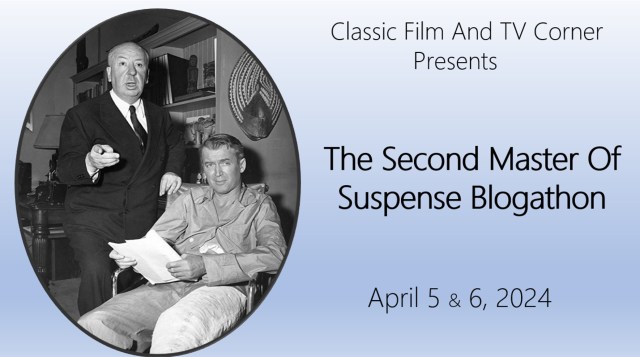
The Second Master Of Suspense Blogathon banner created by Maddy from Classic Film And TV Corner

What I didn’t like about the film:

Limited sense of urgency: Based on Alfred Hitchcock’s films I’ve seen, I’ve come to expect his stories to be filled with mystery and suspense. Because of these elements, I also expect a given story to contain a strong sense of urgency. While there were suspenseful, urgent moments sprinkled throughout The 39 Steps, these moments were not consistent. This made the story take its time being told instead of getting straight to the point sooner. During these suspenseful, urgent moments, there was no music playing in the background. A low amount of adrenaline and excitement was present in these moments partly due to the lack of music.

The “Insta-love” trope: In my recent review of Easter Parade, I explained what the “insta-love” trope was and why it was a major flaw in the 1948 movie. The “insta-love” trope was a major flaw in The 39 Steps as well. Richard and Pamela do not like each other. Even after being arrested, they continue to dislike one another. When they check into a hotel and pose as a married couple, Pamela and Richard’s dislike carries on. But hours later, they act like they’ve always been in a romantic relationship. The inclusion of the “insta-love” trope caused Richard and Pamela’s attraction to be abrupt, with the abruptness preventing on-screen chemistry between Robert and Madeleine.

An over-shadowed mystery: As I just mentioned in this review, I have come to expect stories filled with mystery based on Alfred Hitchcock’s movies I’ve seen. Because of those selected titles from Alfred’s filmography, I expect the mystery to be the story’s primary focus. In The 39 Steps, however, the story’s mystery was overshadowed due to the film’s creative team emphasizing Richard being on the run from the authorities. The mystery taking a backseat in the movie means the mystery itself wasn’t solved until the very end of the film. A longer wait time for answers causes The 39 Steps to feature a limited amount of intrigue.

Essentials of Scotland image created by macrovector_official at freepik.com. <a href=”https://www.freepik.com/free-photos-vectors/background”>Background vector created by macrovector_official – http://www.freepik.com</a>. Image found at freepik.com.

My overall impression:

Alfred Hitchcock has obtained a reputation for creating memorable productions. Whether it’s incorporating “modern” technology in The Birds or showcasing a pretty location in To Catch a Thief, Alfred’s movies have boasted his stamp of approval through various creative ideas. But out of Alfred’s films I have seen, and even reviewed, The 39 Steps is the most “meh” title from his filmography. The 1935 picture had such a limited sense of urgency and intrigue, I almost fell asleep while watching it. Richard and Pamela’s relationship was heavily affected by the “insta-love” trope, causing the relationship to feel like it belonged in a different film. This is a movie that seems longer than an hour and twenty-six minutes, creating a slow and boring build-up to a reveal that feels kind of ridiculous and anti-climactic. With all the flaws I discussed in this review, it’s a shame The 39 Steps turned out this way. That’s because there were aspects of this movie I liked, such as Robert Donat’s performance.

Overall score: 5 out of 10

Have you seen The 39 Steps? Are there any films of Alfred Hitchcock’s you like or don’t like? Let me know in the comment section!

Have fun at the movies!

Sally Silverscreen

Concluding my Double Feature: 2004 Edition

It’s time to wrap up another double feature, as both chosen titles, Hallmark’s Frankenstein and I Am David, have now been watched and reviewed! In the introduction, I brought up the following question:

Based on these two movies, how has the cinematic landscape changed in twenty years?

Looking back on each movie, a realization came to me. One thing I Am David and Hallmark’s Frankenstein have in common is the timelessness each story contains. It also helps how these stories are more straight-forward, which makes it easier for the audience to understand what is happening on screen. Realizing these statements could also be applied to The Polar Express, my answer to the aforementioned question is how, back in 2004, it seems like there was a desire on the cinematic landscape to create timeless entertainment. Now, twenty years later, studios and film companies are competing with one another to make the most relevant titles possible. On the current cinematic landscape, it’s all about capitalizing on trends and fads, creating titles for the here and the now. The problem with this film-making approach is how five, even ten plus years from that movie’s release, that movie will be dated on arrival. This film-making approach also makes movies seem more disposable instead of a long-lasting product with more opportunities to be revisited.

Popcorn and movie ticket image created by Freepik at freepik.com. <a href=’https://www.freepik.com/free-photo/cinema-tickets-in-bucket-with-popcorn_2303439.htm’>Designed by Freepik</a>. <a href=”https://www.freepik.com/free-photos-vectors/layout”>Layout image created by Freepik</a>. Image found at freepik.com.

Have fun at the movies!

Sally Silverscreen

Take 3: Easter Parade Review

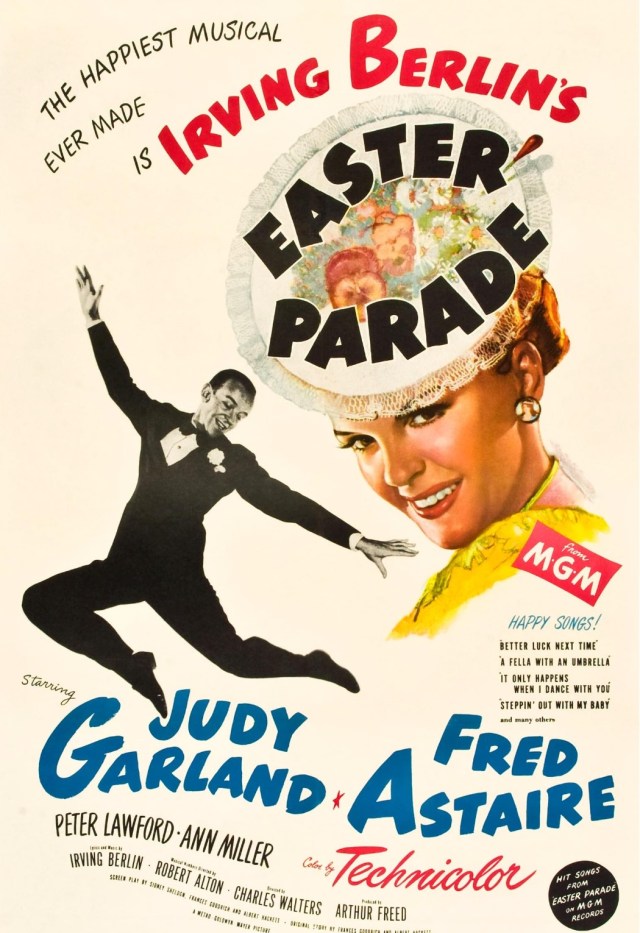
With today being Easter, I’m reviewing the 1948 musical, Easter Parade! But this is not the only reason why I’m writing about this movie. Since the protagonists would be considered a “mismatched couple”, the film was eligible for Realweegiemidget Reviews’ and Cinematic Catharsis’ Mismatched Couples Blogathon. Easter Parade was also recommended by Michaela from Love Letters to Old Hollywood. Prior to this year, the only Easter themed movie I wrote about was the Hallmark production, Easter Under Wraps. While I have reviewed faith-based films, those pictures were not about the Easter holiday. Because this was my first time watching Easter Parade, I was curious how Easter would play a role in this story. I was also curious how the film would compare to other musicals from the Breen Code era. So, without delay, let’s begin this review of Easter Parade!

Easter Parade poster created by Metro-Goldwyn-Mayer and Loew’s, Inc.

Things I liked about the film:

The acting: Fred Astaire portrays Don Hewes in Easter Parade, a veteran dancer who is looking for a new dance partner. In this same movie, Judy Garland portrays Hannah Brown, a singer who is trying to make a name for herself in the entertainment industry. Together, Judy and Fred are an on-screen pair that not only works well together, but also dances well together! One of my favorite scenes is when Don mentions to Hannah how she doesn’t capture men’s attention. In an effort to prove Don wrong, Hannah walks in front of him, at first looking discouraged by her fruitless efforts. A few minutes later, Don sees men are taking notice of Hannah. He looks confused and even baffled at how Hannah could prove him wrong. When Don catches up with Hannah, he discovers she is making funny faces, explaining why men were noticing Hannah. This scene was hilarious because of Fred’s and Judy’s expressions and interactions!

Even though Judy and Fred worked well together, I think Judy and Peter Lawford had strong on-screen chemistry! Despite Hannah being from a small-town farm and Johnny being from the city, their interactions make it seem like they have a deep understanding for one another. While on a dinner date, Hannah confesses she dreams her true love will give her flowers and sweep her off her feet. When she reflects on her time with Don, she realizes Don only gives her flowers and sweeps her off her feet when it relates to dancing. During this reflection, Hannah looks defeated and sad by how she didn’t receive what she wanted the way she wanted it. Meanwhile, Johnny looks genuinely sympathetic toward Hannah. As I watched this scene, I wanted Johnny and Hannah to fall in love with each other!

The use of color: In Easter Parade’s opening credits, Technicolor was revealed to be incorporated into the production. I’m thankful Technicolor was used in this movie because capturing scenes in black-and-white would not have done this picture justice! Because parts of Easter Parade’s story take place around Easter, creative decisions such as costume designs and décor are very colorful. Toward the end of the film, Fred and a large group of dancers perform a number to “Steppin Out with My Baby”. Every performer’s costume boasted bright hues, from one dancer’s yellow shoes to another dancer’s blue gloves. At the beginning of the movie, during the musical number, “Happy Easter”, flowers in vibrant shades are present as Don makes his trip to the store. Though it’s a small detail, these flowers play a role in complimenting the colorful landscape of the story’s spring season!

The musical numbers: Musical numbers can make or break a given film. But in Easter Parade, the musical numbers are a major strength because of the choreography and delivery of the numbers themselves. One of the most creative numbers I’ve ever seen was Fred’s solo, “Drum Crazy”. This solo shows his character, Don, tap dancing and playing drums in an attempt to trick a child into giving him a stuffed bunny toy. The combination of dancing and instrument playing provides a captivating performance that not only highlights Fred’s signature talent, but also pairs dancing with other artistic mediums. Another strong solo was Ann Miller’s solo, “Shakin’ the Blues Away”. While portraying Don’s former dance partner, Nadine, Ann’s solo was a tap number that involved a lot of turning. What makes this musical number so memorable is how the cinematography closely follows Ann during her performance. This focus forces the audience to give their undivided attention to Ann and her number. The number itself is fast-paced and energetic, with Ann consistently delivering the choreography in precise and fluid movements!

Cute Easter image created by Freepik at freepik.com. <a href=”https://www.freepik.com/free-photos-vectors/background”>Background vector created by freepik – http://www.freepik.com</a>. Image found at freepik.com.

What I didn’t like about the film:

A premise-driven story: When I reviewed The National Tree last year, I explained the difference between a premise-driven story and a plot-driven story. After watching Easter Parade, I can confirm the movie has a premise-driven story. The premise of Don transforming Hannah into a star entices viewers to watch Fred and Judy acting and dancing together. But the film doesn’t really make the audience ask “and then what happened”? Even though the story is simpler and easier to follow, the story itself lacked a compelling hook, making it feel less intriguing. I wish the characters were given a conflict to resolve, similar to musicals like Singin’ in the Rain and Anchors Aweigh.

The “insta-love” trope: The romantic-comedy genre carries a collection of tropes and cliches. One of them is the “insta-love” trope, which features characters falling in love in a very short period of time. I understand there’s only so much story you can tell in an hour and forty-three minutes. But I thought Hannah and Don’s relationship progressed too quickly. I even thought the attraction between Hannah and Johnny happened too fast. The fast pace of these relationships made it seem like situations weren’t really resolved. Serious conversations and heart-felt discussions were either conveniently ignored or never brought up. The “insta-love” trope also affected how characters changed over the course of the story. Progressions in character development took place so quickly, it almost seemed too convenient.

Easter’s limited inclusion: With a movie called Easter Parade, I expected Easter to play a significant role in the story. While Easter is included enough to get the point across, I was disappointed by how limited its presence was. There were even scenes I could picture taking place within other holidays. Though the purpose of “Drum Crazy” was for Don to purchase a stuffed bunny toy, I found myself imagining this same musical number set during Christmas. Easter Parade is a story that could take place in almost any time of year and it wouldn’t make much difference.

The Mismatched Couples Blogathon banner created by Gill from Realweegiemidget Reviews and Barry from Cinematic Catharsis

My overall impression:

Some of the best, most iconic musicals were released during the Breen Code era. Their strong musical numbers and their overall timelessness have captured the hearts of viewers for decades. Easter Parade is one of these timeless musicals, showcasing its strengths through various creative departments! The colorful palette sprinkled throughout the story perfectly compliments the springtime atmosphere the film’s creative team was striving to present. Every musical number was well choreographed and performed, which definitely made the movie worth watching. Compared to other Breen Code era musicals, though, Easter Parade’s story was weaker. This flaw was due to the story being more premise-driven. Despite this and its other weaknesses, the 1948 film is an entertaining, mostly joyful production that is an appropriate selection for the Easter holiday!

Overall score: 7.6 out of 10

Have you seen Easter Parade? Is there an Easter themed movie you like to watch? Let me know in the comment section!

Have fun on Easter!

Sally Silverscreen

Take 3: Hallmark’s Frankenstein (2004) Review (Double Feature: 2004 Edition Part 2)

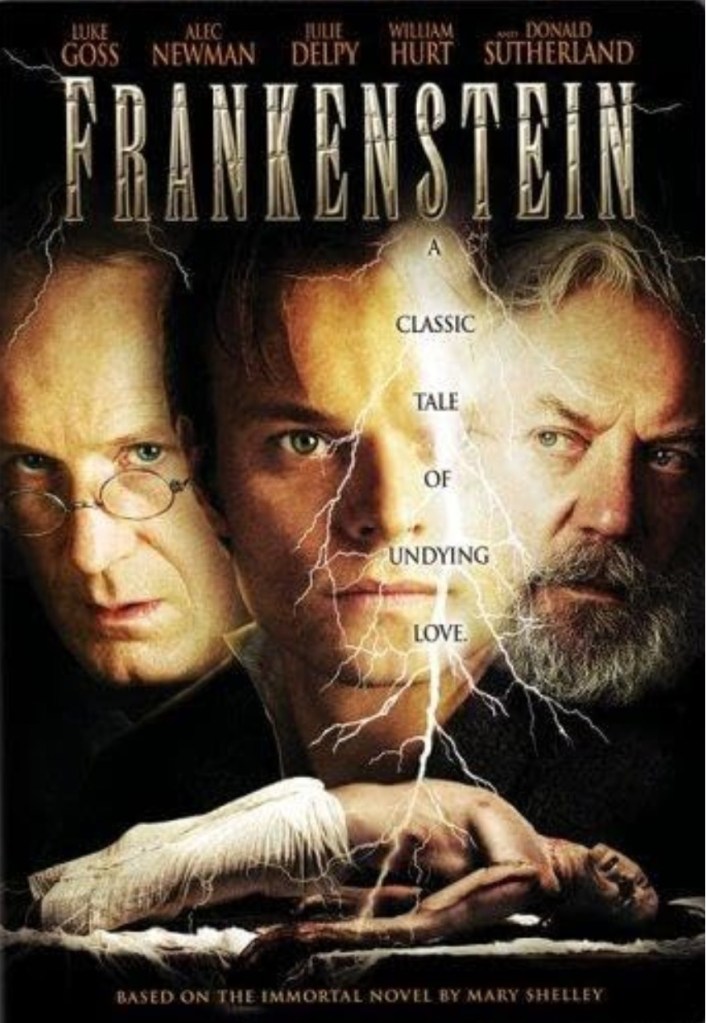
Thank you for joining me for the second part of Double Feature: 2004 Edition! Similar to my review of Sesame Street Presents: Follow That Bird, this review of Hallmark’s Frankenstein will be spoiler-free. If you’re curious about why I chose Hallmark’s Frankenstein for this double feature, you can check out the introduction in the link below.

Introducing my Double Feature: 2004 Edition!

Hallmark’s Frankenstein poster created by Hallmark Entertainment, Hallmark Channel, Silverstar Ltd., Larry Levinson Productions, and RTL

Before I start this review, I need to explain why I’m referring
to this version of Frankenstein as ‘Hallmark’s Frankenstein’. On
Wikipedia, there is a page chronicling all the Hallmark Channel movies released
between 2000 to 2015. In the section listing Hallmark Channel’s films from
2004, Vincent Perez is listed as one of the stars of Hallmark’s version of Frankenstein.
But if you click on the italicized title of Frankenstein, the link goes
directly to Wikipedia’s page about the Hallmark movie starring Alec Newman. While
Vincent did star in an adaptation of Frankenstein released in 2004, it
is not the Hallmark version. I didn’t discover this error until after I had
seen Vincent’s film.

The reason why I included this screenshot in my review is to show my readers how Hallmark’s Frankenstein is listed on Wikipedia. Screenshot taken by me, Sally Silverscreen.

1. What are your thoughts on 2004 as a cinematic year?

2004 was a year where “event entertainment” took place. When I say “event entertainment”, I mean television or movie premieres that are popular enough to become anticipated events. I remember when full print ads would boast a new Hallmark Hall of Fame production, marking the movie itself as “must see television”. Four sequels for popular predecessors were released in 2004, earning a spot among the top ten highest grossing films of the year. Twenty years later, consumers have more options when it comes to entertainment. This provides fewer opportunities for “event entertainment” to take place. Even events that have always been considered “event television” are struggling to capture audience’s attention.

2. Frankenstein premiered on Hallmark Channel on October 5th and 6th, 2004. How has the network evolved since the movie’s release?

When Hallmark’s adaptation of Frankenstein premiered, Hallmark Channel was three years old. At the time, the network didn’t have the distinct identity it does today.  This allowed content to be less restrictive when it comes to creativity. 2004 saw the debut of Hallmark’s second network, Hallmark Movie Channel. On that network, a lot of Hallmark Channel’s previously aired programming made up Hallmark Movie Channel’s catalogue, as well as Hallmark Hall of Fame titles and acquired content. But in the twenty years this second network has existed, the channel’s name has changed twice, with the network now known as Hallmark Mystery. With Hallmark creating two channels, it provided more opportunities to create movies. As time passed, both networks adopted a more distinguishable identity.

3. Is there anything about Frankenstein you liked or didn’t like?

While I think the acting was one of the strengths of this movie, the two strongest performances came from Alec Newman and Luke Goss! Alec’s portrayal of Victor Frankenstein was so captivating because of the wide range of emotions incorporated into the role. His versatility made Victor feel like an authentic human being. From crying over the loss of a loved one to playfully teasing Elizabeth, Alec’s performance allowed Victor’s interactions with other characters to be interesting, with each interaction appearing genuine. Meanwhile, Luke utilized emotion to make The Creature a complicated character like he was in the novel. In fact, Luke’s emotionality spoke volumes in scenes where dialogue wasn’t required. One example shows The Creature after he escapes from Victor’s laboratory. When he seeks refuge in a barn, The Creature bursts into tears, overwhelmed by the fear and rejection directed toward him.

When Frankenstein premiered on Hallmark Channel, it was released as a two-part mini-series. The first part revolved around Victor’s desire to create life, leading up to The Creature coming to fruition. But the second part was more drawn out, with scenes either longer than necessary or completely unnecessary. Frankenstein’s second part features a wedding reception that lasts about five minutes. I understand why that scene was included in the adaptation. In my opinion, though, the wedding reception should have been cut shorter or omitted from the script.

4. In your Word on the Street story about a potential sequel for The Polar Express, you talked about the technology applied to that film. Could you detect any technology incorporated into Frankenstein?

There were a few scenes where it appears CGI (computer generated images) was included in the film. Other than that, it didn’t look like technology (besides cinematography, sound editing, etc.) was relied on to create this adaptation.

Snowy mountain image created by Freepik at freepik.com. <a href=’https://www.freepik.com/free-vector/landscape-background-of-snow-track-and-mountains_968656.htm’>Designed by Freepik</a>. <a href=”https://www.freepik.com/free-photos-vectors/background”>Background vector created by Freepik</a>. Image found at freepik.com.

5. Did you develop any thoughts and/or questions while watching this film?

In one of Victor’s science classes, Victor claims the brain is the most important body part because of its electrical connections between nerves and other body parts. As he is attempting to create life, Victor collects various body parts from the morgue and the graveyard. When The Creature is awakened, wouldn’t he remember his life and identity prior to passing away? Wouldn’t The Creature recognize the body Victor gave him is not the body he was born with? With Victor’s statement about the brain, wouldn’t the nerves in The Creature’s brain not connect with the rest of his body? I never thought of these questions until I saw Hallmark’s adaptation of Frankenstein.

6. You’ve mentioned reading Frankenstein, but seeing few adaptations of the story. How does Hallmark’s version compare or contrast to the Frankenstein related movies you’ve seen?

Besides Hallmark’s adaptation of Frankenstein, I’ve seen three films that incorporate elements of Mary Shelley’s story. But because The Curse of Frankenstein follows the source material closer than the other two films, I’ll be discussing that movie alongside Hallmark’s version of Frankenstein. When I reviewed The Curse of Frankenstein last year, I was disappointed by the creative liberties the film’s creative team adopted. One of these creative liberties was presenting The Creature as a bumbling, destructive machine. As I mentioned in answer number three, The Creature was a complicated character in the novel. While he was destructive, The Creature’s actions were not always impulsive. In Hallmark’s adaptation of Frankenstein, Luke’s performance and the screenwriting illustrated how complicated The Creature is. The Creature’s intelligence was also highlighted in this adaptation, adding to The Creature’s complexity. Shortly after he escapes from Victor’s laboratory, the audience can hear how The Creature already understands the English language, grasping concepts like God and Heaven, as well as reading Paradise Lost.

7. Hallmark’s adaptation of Frankenstein is a made-for-TV production. Has there been a change in small screen cinema from 2004 to now?

In the same year Hallmark Channel premiered their version of Frankenstein, Hallmark Hall of Fame movies debuted on major networks. But fast forward to 2024, Hallmark Hall of Fame is no longer utilized by Hallmark, even after moving to Hallmark Channel in 2014. These decisions are examples of how made-for-TV programming has become more exclusive. Since 2004, Hallmark Channel has grown into one of the biggest creators of made-for-TV content. In fact, Hallmark Channel and its two networks, Hallmark Mystery and Hallmark Family, are three of the few places creating and/or distributing made-for-TV movies today. Rewinding to twenty years ago, major networks were still willing to include made-for-TV programs in their schedules. With the changing television landscape, including the invention of streaming services, major networks are just trying to stay afloat.

8. Now that it’s been twenty years since Frankenstein premiered, has it stood the test of time or become a product of its time?

For the most part, Hallmark’s adaptation of Frankenstein stands the test of time! It helps how this project is bringing to life a story that is iconic and timeless. I mentioned in my review of The Curse of Frankenstein how an overarching message in Mary Shelley’s novel is some good intentions possibly leading to bad results. This message also overarches Hallmark’s adaptation of Frankenstein, as Victor strives to do the impossible. There are other timeless messages in this version of Mary’s story, such as prioritizing what is irreplaceable.

9. After watching Frankenstein, is there anything you can take away from your movie viewing experience?

Similar to my review of I Am David, I will describe Hallmark’s version of Frankenstein in one word. That word would be ‘immersive’. This production made me feel like I was transported to another time and place. A combination of the acting performances, set design, costume design, and screenwriting achieved the illusion of an immersive experience. As someone who has read Mary Shelley’s novel, I appreciate how close to the source material Hallmark’s project is. From what I remember, the majority of the book’s key events and elements were included in the script. With that said, I understand why Hallmark chose to split Frankenstein into two parts. But, in my opinion, the second part was weaker than the first part. Looking back on Hallmark’s adaptation and I Am David, Frankenstein is a more underrated film that was not only forgotten by time, but also overshadowed by other titles released in 2004, like A Boyfriend for Christmas and Love’s Enduring Promise. I’m hoping my review inspires other fans of Hallmark to discover this hidden gem!

Popcorn and movie ticket image created by Freepik at freepik.com. <a href=’https://www.freepik.com/free-photo/cinema-tickets-in-bucket-with-popcorn_2303439.htm’>Designed by Freepik</a>. <a href=”https://www.freepik.com/free-photos-vectors/layout”>Layout image created by Freepik</a>. Image found at freepik.com.

Have fun at the movies!

Sally Silverscreen


Take 3: I Am David Review (Double Feature: 2004 Edition Part 1)

Thank you for joining me for the first part of Double Feature: 2004 Edition! Similar to last year’s review of The Great Muppet Caper, my review of I Am David is spoiler-free. If you’re curious about why I chose I Am David for this double feature, you can check out the introduction in the link below.

Introducing my Double Feature: 2004 Edition!

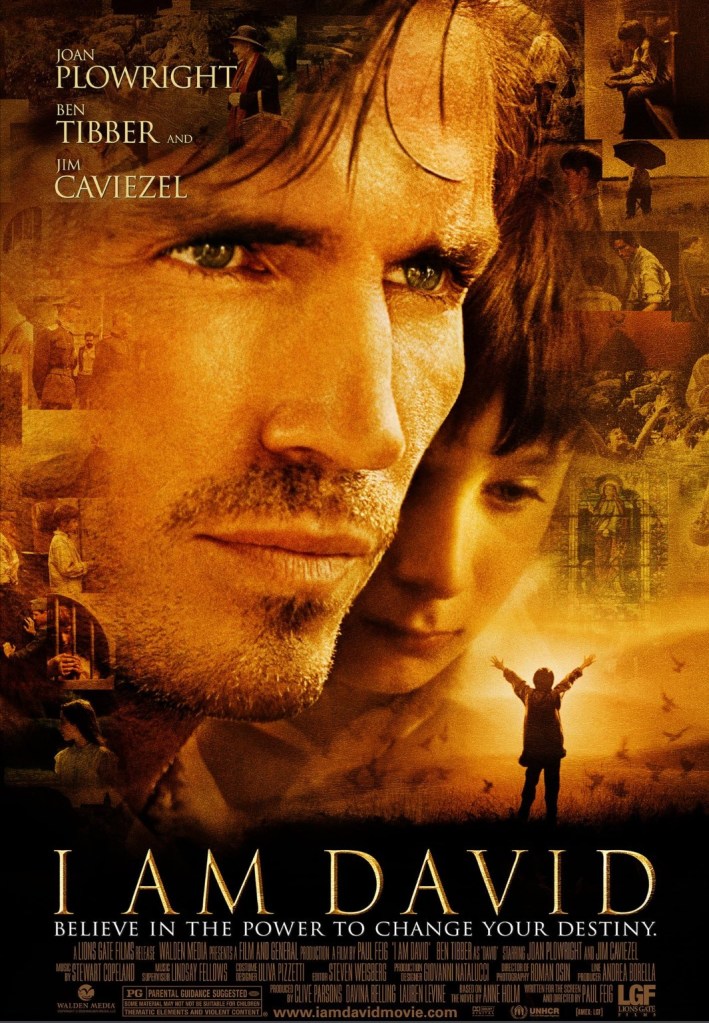
I Am David poster created by Walden Media, Film and General Productions, Lionsgate Films, Artisan Entertainment, and David Productions Ltd.

1. What are your thoughts on 2004 as a cinematic year?

When I look back on the cinematic landscape of 2004, my first thought is how studios and film companies were more willing to create stand-alone productions. Twenty years ago, about fifteen sequels were released in theaters. In 2024, that number has increased, with about twenty-three sequels scheduled to premiere. My second thought about 2004 is how creativity was celebrated at the box office. The Polar Express, the reason why this double feature exists, was the tenth highest grossing film of 2004. Even though that movie was based on a pre-existing book, the production was not a remake or a sequel of a preceding film. Plus, The Polar Express brought something new to the cinematic table, as the movie was created through motion-capture technology.

2. I Am David was released on December 3rd, 2004 (around “award season”). Why do you think the film was overlooked on the award circuit?

The 77th Academy Awards was a televised event. This means those involved with the creation of the show had to make decisions that would increase or maintain higher viewership numbers. Million Dollar Baby, the movie that won Best Picture, was a film the majority of the Academy Awards’ audience had either heard of or seen. The movie was directed by Clint Eastwood and starred Hilary Swank, two actors this same Academy Awards audience were familiar with. Because I Am David premiered around the same time as Million Dollar Baby and lacked the star power Million Dollar Baby had, I Am David became overshadowed by a bigger, more popular production.

2004 was when The Passion of the Christ made waves at the box office. Becoming the third highest grossing film of that year, it earned the distinction of being one of the most successful faith-based movies in history. Similar to Million Dollar Baby, The Passion of the Christ contained star power, directed by Mel Gibson and starring Jim Caviezel. I wouldn’t go so far as to call I Am David a faith-based movie. However, elements of faith are woven into the story. While Jim Caviezel stars in I Am David, his presence in this film is very limited. With all that said, I Am David became overshadowed by another big, more popular title.

3. Is there anything about I Am David you liked or didn’t like?

The story of I Am David revolves around the titular character escaping from a Bulgarian labor camp in 1952. Throughout his journey, David takes refuge in the natural landscape surrounding him. The natural environment in this film serves two purposes; protecting David and giving him a gateway to freedom. A peaceful scene where he casually walks through a tunnel of trees beautifully captures this idea, providing a symbolic light at the end of the tunnel. The importance given to Europe’s natural landscape allows it to become its own character, with the elements, more often than not, working in David’s favor. It also showcases a side of Europe that could be easily taken for granted.

I Am David is a story where the audience learns more about David as the film progresses. While this keeps the audience invested in the film, this creative decision means answers aren’t provided until toward the end of the movie. On the one hand, I, kind of, wish some of the revelations about David were revealed sooner. But, on the other hand, major questions were answered within two plot twists that I found effective. Even though the longer wait for answers is a flaw, I was able to, for the most part, overlook it because of the strength of the plot twists.

4. In your Word on the Street story about a potential sequel for The Polar Express, you mentioned the technology that was applied to the film. Could you detect any technology incorporated into I Am David?

As far as I could tell, I didn’t sense any technology within I Am David other than cinematography, sound, and editing. Because of the nature of the movie, though, I don’t think technological film-making techniques were necessary.

Italian countryside image created by Bill Silvermintz at freeimages.com. “FreeImages.com/Bill Silvermintz.” Photo by <a href=”/photographer/edudflog-58908″>Bill Silvermintz</a> from <a href=”https://freeimages.com/”>FreeImages</a&gt;.

5. I Am David is based on a book published in the 1960s. Has the entertainment industry changed its approach to adapting pre-established stories?

Throughout 2004, about twenty adaptations based on literature premiered in theaters. Out of those twenty, eleven adaptations contained a built-in audience for a variety of reasons. Observing which movies are scheduled to premiere in 2024, the entertainment industry is, once again, choosing source material with a built-in audience. But now this selection process has expanded beyond literature; with movies, tv shows, and popular characters receiving their own adaptations. Even though there were productions in 2004 based on popular IPs (intellectual properties), the number of adaptations based on IPs has doubled in twenty years, with about 44 of 2024’s films fitting this criterion. One of these films is the musical remake of Mean Girls. While the original movie was based on the book, Queen Bees and Wannabes by Rosalind Wiseman, the remake is based on the 2004 film.

6. Did you develop any thoughts and/or questions while watching this film?

I didn’t develop any questions while watching I Am David. But as I followed the story, I took note of the film’s exploration of light and darkness. When the film begins, David attempts his escape from the labor camp. This scene is intense, emphasizing David’s dire situation through limited lighting, cinematography, and music. Flashbacks are sprinkled throughout the story, showing only enough harshness to get the point across. When the lighter moments appear in the movie, they feel earned, taking place after David experiences a trial in his journey. Primarily showcased in bright lights and with peaceful, even cheery music playing in the background, these lighter moments address how our world can be a beautiful place. Showing the light and darkness taking place in the world, especially in Europe post World War II, is a more balanced way of presenting the environment surrounding David.

7. On Ebert & Roeper, I Am David was not covered. Why do you think the movie was omitted from the show?

Ebert & Roeper, one of the iterations of At the Movies, was a nationally televised program. Smaller titles with limited releases were sometimes featured on the show. But the types of movies that populated the program were mainstream productions with widespread releases. This decision was likely made to maintain the show’s viewership, similar to the aforementioned 77th Academy Awards. The choice to emphasize more mainstream films was also probably made to provide the show’s audience with a chance to check out the movies brought up on the show, as those titles would be showing in more theaters.

8. Now that it’s been twenty years since I Am David premiered, has the movie stood the test of time or become a product of its time?

This film has definitely stood the test of time! A major reason for this is due to the timeless, universal messages woven into the script. Perseverance, trying to find the goodness in our world, and kindness progressing the journey forward are messages most people can appreciate. These messages may also inspire audience members to apply them to their own lives.

9. After watching I Am David, is there anything you can take away from your movie viewing experience?

If I could describe I Am David in one word, it would be ‘genuine’. Every aspect of this film, from the acting performances to the screenwriting, allowed the story of David and his journey to be told with genuine emotion and sincerity! Creative decisions were delivered as pleasant surprises for me, such as the plot twists that caught me off guard. I was really impressed by the inclusion of Europe’s natural landscape, given enough emphasis to be its own character. The exploration of light and darkness provided a more balanced perspective on David’s world. I Am David is a movie I wish had been nominated during “award season”. In fact, I wish more people knew about this film! But if someone wanted to watch I Am David, I would suggest watching it knowing as little information about the story as possible, as I don’t want the film’s aforementioned plot twists to be spoiled for first time viewers.

Popcorn and movie ticket image created by Freepik at freepik.com. <a href=’https://www.freepik.com/free-photo/cinema-tickets-in-bucket-with-popcorn_2303439.htm’>Designed by Freepik</a>. <a href=”https://www.freepik.com/free-photos-vectors/layout”>Layout image created by Freepik</a>. Image found at freepik.com.

Have fun at the movies!

Sally Silverscreen

Take 3: Crimes of Fashion: Killer Clutch Review

I’m going to be honest; even though it’s only March, Hallmark has not impressed me with their new mystery films, so far. Both True Justice: Family Ties and Gilded Newport Mysteries: Murder at the Breakers were, in my opinion, just ok. I did not enjoy CrimeTime: Freefall, turning the movie off after about forty minutes. Hoping luck would turn itself around, I decided to check out the newest mystery title from Hallmark; Crimes of Fashion: Killer Clutch. In the 2020s, so far, Hallmark has come up with some interesting ideas for their mystery films. While some of those ideas could lead to a potential series, other ideas were not utilized to their full potential. With Crimes of Fashion: Killer Clutch, the movie contains several interesting ideas. Not only does the story take place in Paris, France, the protagonist is a psychologist in the world of fashion. Could these ideas come together to create a stylish and entertaining film? Keep reading my review to find out!

Crimes of Fashion: Killer Clutch poster created by Cineflix Media, Untitled Entertainment, and Hallmark Movies & Mysteries

Things I liked about the film:

Brooke D’Orsay and Gilles Marini’s on-screen chemistry: A staple of Hallmark’s mystery films is a male and female protagonist working together to solve a mystery. Sometimes, these protagonists will share a romantic relationship, with the initial spark taking place between these characters in a series’ first film. While it’s unknown at this time if Crimes of Fashion: Killer Clutch will lead to a series, I will say I liked Brooke D’Orsay and Gilles Marini’s on-screen chemistry! Brooke portrayed the protagonist, Lauren, with a warm and bubbly personality. Meanwhile, Gilles’ character, Andre, consistently carried his character with a serious demeanor. However, there were times when kindness broke through the seriousness. Together, Lauren and Andre shared a mutual understanding that allowed them to get along with each other. One scene shows Andre sharing a part of his life story with Lauren. Through the expression on her face and the look in her eye, Lauren appears sympathetic toward Andre. A subtle look of sadness is present in Andre’s eyes, yet he appears he can trust Lauren, despite barely knowing her.

The costume design: If a story is going to take place within the fashion world, the costume design should strive to look appealing to the eye. I can only speak for myself, but there were some style choices I liked seeing in this movie! More often than not, Lauren wears either red or pink. The pieces paired with these shades not only complimented the outfit itself, it also complimented Brooke D’Orsay. While walking home from a party, Lauren wears a red, silk gown with a halter top. As her jacket of choice, she wore a dark denim jacket that sparkled at just the right moments. Throughout the film, Lauren carried a red purse. In one scene, this purse was paired with a short, beige jacket. The dark and warm shades of the aforementioned jackets provided visually appealing color combinations!

Showcasing various facets of the fashion world: Throughout Hallmark’s cinematic history, there have been stories that explored the behind-the-scenes of a given industry. In the case of Crimes of Fashion: Killer Clutch, the world of the fashion industry is examined. When Lauren first arrives in Paris, she is introduced to many members of a fashion label, from a model scout to a financial adviser. This scene alone showcases the many moving parts associated with a fashion company. Lauren learns about counterfeits and how they affect the fashion industry. I’m glad the film’s creative team didn’t shy away from including the not-so-glamourous side of the fashion world, as a more balanced perspective of fashion was presented to the audience.

Sewing pattern image created by Nenilkime at freepik.com. <a href=”https://www.freepik.com/free-photos-vectors/background”>Background vector created by Nenilkime – Freepik.com</a>. <a href=’https://www.freepik.com/free-vector/sewing-color-background_1380853.htm’>Designed by Freepik</a>. Image found at freepik.com.

What I didn’t like about the film:

An underutilized profession: In Crimes of Fashion: Killer Clutch, Lauren is a “fashion psychologist”; meaning she applies her psychology skills to the world of fashion. The idea of a psychologist using their skills and expertise to question suspects and come up with motives makes sense for a mystery story. Featuring a psychological perspective within the fashion world is a unique angle for a Hallmark mystery production. Unfortunately, Lauren didn’t utilize any of her psychology skills toward solving the mystery. In fact, her skills were so underutilized, they became pointless. There were even some characters who refused to accept Lauren’s psychological help. If anything, Lauren seemed more like an over glorified intern.

Thick French accents: I’ve mentioned before on 18 Cinema Lane how the delivery of accents can make or break a production. What can also make or break a production is how thick an actor or actress’ accent is. Within Crimes of Fashion: Killer Clutch, several characters delivered thick French accents. This made it difficult to understand what they were saying and keep track of who was who. There were even subtitles, occasionally, shown on screen to help viewers understand what the characters were saying. However, some time was spent trying to figure out what the characters were saying that I wasn’t able to be fully invested in the film.

Underutilized characters: Riccardo Dolce is a fashion designer Lauren meets while working in Paris. With a striking appearance, Riccardo was surrounded in mystery. I genuinely wanted to know more about his designs, as well as his perspective on fashion. Sadly, Riccardo was featured in the movie only about two or three times total. Toward the beginning of Crimes of Fashion: Killer Clutch, Riccardo claimed he wanted to collaborate with the designer Lauren was hired by. His reasons for the collaboration are never explained. Riccardo is just one of several characters who were underutilized in this film.

Illustration of Paris, France created by Freepik at freepik.com. <a href=”https://www.freepik.com/free-photos-vectors/travel”>Travel vector created by freepik – http://www.freepik.com</a>. Image found at freepik.com.

My overall impression:

When I talked about Mystery Island in my list of the worst movies I saw in 2023, I hoped Hallmark would find the motivation to create better mystery productions. Despite it only being March 2024, I think Hallmark is still looking for that motivation. If I could describe Crimes of Fashion: Killer Clutch in one word, it would be ‘underwhelming’. Lauren’s psychology skills were not fully utilized, making her seem like an over glorified intern. The script caused several characters to be underutilized, sometimes featuring them in the movie for only a handful of scenes. Thick French accents made it difficult to understand what the characters were saying, which prevented me from becoming fully invested in the movie. Up until this point, Hallmark’s newer mystery films seemed to contain ideas that could allow more than one chapter. But now that I’ve seen Crimes of Fashion: Killer Clutch, I honestly don’t know how this story could lend itself to a multi-chapter series.

Overall score: 5.2 out of 10

Have you seen Crimes of Fashion: Killer Clutch? What are your thoughts on the current state of Hallmark’s mystery movies? Tell me in the comment section!

Have fun at the movies!

Sally Silverscreen